Embrace God's truth with our new book, The Lies that Bind

Proof of Heaven: True Near-Death Experiences

Trudy Harris, hospice nurse and best-selling author of Glimpses of Heaven and More Glimpses of Heaven, shares proof of life after death and near death experiences in these letters.

Hi Trudy, I have spent 22 years as a nurse and I have seen some strange and miraculous things happen at the bedside of dying patients.

Because of my experience, I have never questioned God’s authority over death. I have seen two personal instances of “glimpses of heaven.” My mother was very ill with pancreatitis and was placed in ICU, where we thought she would die.

When she got better, she told me a story: “I died in there, Patsy. I was walking up a hill with an angel. We didn’t speak but communicated anyway. When we reached the top of the hill, I saw a golden city. Nothing I have ever seen in my life prepared me for the beauty of it all. I wanted to hurry on to the city, but the angel said not yet. Then I woke up in the hospital room.” Mom was a wonderful Christian woman all her life and lived several years after her experience.

A few years later, my oldest brother had to have a toe amputated because of diabetes. I was with all of my brothers and my sister around his bed the night before surgery. We were laughing about childhood experiences. Suddenly my brother sat up in bed and pointed to the corner of the room and said, “Look, there’s Mom standing there.” We had always kidded Mom about our oldest brother being her favorite. I guess she came to take him to heaven, because he died after the surgery.

Now my husband of 29 years is dying of cancer. I hope I can be with him and hold his hand when it is his time and let Jesus take him home to heaven with Him.

Patsy Colter


Dear Patsy,
Thank you for your beautiful letter about your mom and family. God indeed allows His children to have these wonderful experiences for His own reasons. They always seem to comfort those who experience them, and they are remembered in great detail all their lives as if they happened yesterday.

When my oldest sister was dying, she started to smile. When my younger sister asked her why, she smiled again and said, “Oh, Mommy is sitting at the foot of my bed.” She died a few hours later.

When people speak of seeing heaven, they almost always say the exact same things. They speak of the beautiful city, usually surrounded by gold, often with colors for which they say we have no names. They tell of seeing loved ones who welcome them and of lovely music, choirs and flowers. It always amazes me that their language is so similar. They speak of the “light” that draws them forward and feeling the warmth and love radiating from it, which they understand to be God.

I know that when God sees fit to take your husband home to Himself, He will grant him a peaceful and happy homecoming, with you by his side.

I wish you both great peace,
Trudy Harris

Proof of Heaven

The following interview first appeared on Bookish.com, and is used here with permission.

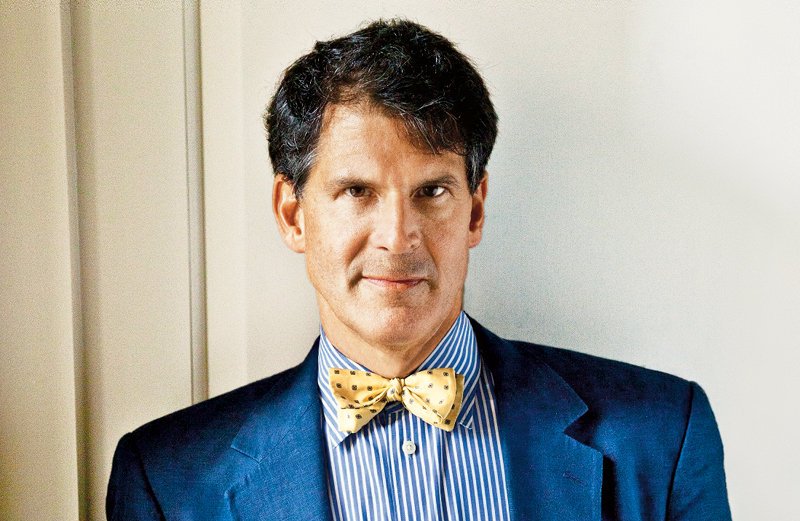
Since its publication, Proof of Heaven: A Neurosurgeon's Journey into the Afterlife by Eben Alexander, M.D., has taken readers by storm: The book, which details Alexander's experience of the afterlife during a five-day meningitis-induced coma, has spent 15 weeks on The New York Times' bestselling paperback nonfiction list and has won praise from the likes of Oprah Winfrey and Katie Couric.

The book joins numerous testaments of near-death experiences, but Alexander's status as a neurosurgeon makes his account of the afterlife especially compelling. In addition to poetic evocations of heaven, the experience has prompted him to proffer new theories of the human brain, consciousness and the "illusory nature of the material realm."

It should come as no surprise, of course, that Alexander has encountered criticism from skeptics in intellectual and scientific circles. And while he continues to push his message with confidence, he's not denying that the transition from cynic to believer has been a difficult one. Alexander talked to Bookish.com about his struggle to relate his experience to peers and what the next steps in his science career will be.

Bookish: You practiced Christianity prior to your experience of Heaven, but more so "in name than in actual belief" as you wrote in a recent essay in Newsweek—what was missing from your faith before that is in place now?

Eben Alexander: I saw no way for there to be any survival of consciousness after death of the body and brain—no way for any "afterlife" of the self, for any God or [for] heaven. I believed that consciousness emerges from the brain.

My odyssey proved that consciousness (soul/spirit) is primary, is actually freed to higher awareness when freed from the body/brain [and] that afterlife is a must. God is absolutely real, at the basis of our very conscious awareness. My revelation actually offers a more ready solution [to] some of the deepest questions known to human science and philosophy (i.e., the "Hard Problem of Consciousness" and the enigma of quantum mechanics).

Bookish: Do you remain a devout Christian? If so, why did you choose to return to the Christian faith?

EA: I attend a Christian church and enjoy participating in Christian ceremony. My journey showed me that the way to God is through love, compassion, oneness and forgiveness…. To the extent that a religion teaches the oneness that we all share…that religion is portraying the truth as I see it.

Bookish: You say that during your coma your cerebral cortex was completely offline, and that you therefore had no technical capacity for consciousness. How do you explain your awareness of what you saw?

EA: This is the heart of my revelation—my brain could not have manufactured this ultra-real, elaborate, life-changing odyssey. It really occurred, in a realm more fundamental than our physical world. All that I had come to believe—over 30 years of scientific experience—concerning the brain as the origin of consciousness had to be revised from the ground up.

Bookish: Skeptics have argued that your visions of the afterlife were random images produced by a brain under extreme duress. What is your response to this?

EA: Any physicians who have dealt with such severe cases of bacterial meningitis [as I had] will acknowledge that such patients have no brain capacity for ultra-real, extensive, interactive experience and memory…. It became clear that my story is the “exception that proves the rule,” that it validates so many of those other reports of near-death experiences as occurring…outside of the brain.

Bookish: You say in your book that when you were in this place, you had no memory of your life, your family, your own identity or even language. Did you still feel like "you," i.e., a single individual with a self? Do you remember having emotional reactions or thoughts about what you were seeing there? Do you recall feeling afraid, or distinctly unafraid?

EA: I was a "speck of awareness"…. There was no remnant of "Eben" as a person who had lived on Earth (no ego or "self")…. My personal identity and destiny were veiled from me during the experience. Emotional presence was very powerful there, much more so than in our earthly realm (emotions there are more "pure" and unfettered). But none of it attached to my personal "Eben" identity until I saw [my 10 year-old son] Bond’s face…. I did not recognize him in terms of remembering his name or that he was "my son" (I had no linguistic notion of a father and son at that point), but there was a…powerful bond of love between us that [served as] the catalyst that forced my return out of a sense of his need for me, and my responsibility to be there for him—that was the key to unlocking my temporary amnesia that had allowed for such a deep journey. The only true terror I felt during the entire journey was [upon] recognizing his face, because my only defense up to that point was that I had no attachments or responsibilities, that my existence could continue or cease, and that it did not matter. Bond’s face told me that it did all really matter, because of my love and responsibility to him—that I had to comprehend it all, and somehow survive to be there for him.

Bookish: Did you or do you now have a sense of how long you were there? Were you conscious of time passing?

EA: Time there was much more fluid. The entire odyssey seemed to go for weeks or months, very elaborate and interactive. There is indeed a causality and flow of events in that higher spiritual realm that is much more fundamental than causality in the earthly realm.

Bookish: Do you believe this consciousness without self, memory, language or time is inherently present within all of us? Or was this something you were only able to experience by crossing to the other side?

EA: Yes, experience and memory of experience are the essence of our very being and by their nature exist completely independent of the physical realm. Knowing and awareness in the spiritual realm are closer to the truth of our existence, compared with the pale reflection that we witness here in the earthly realm.

Bookish: Transitioning from this place of serenity back into a world full of stress, demands and complications must have been immensely difficult. What was the hardest part about "coming back"? How do you navigate the earthly day-to-day, now that you know what lies beyond?

EA: The hardest part about coming back occurred several months later when I realized the profound nature of my journey and how it…proves the reality of our eternal spirit/soul. Trying to keep a lid on that, given the astonishing and awe-inspiring ramifications, has been very difficult. We all have a purpose in this imperfect earthly room. It’s very easy to navigate day-to-day, knowing that my purpose is to share this revelation about the nature of our existence….

Bookish: When you regained your consciousness and health, were you motivated by your experience on the other side to make changes in your life? What were the first changes you made, and why?

EA: Yes…my experience changed my life fundamentally, just as it has done for thousands of other returning near-death experiencers. The skeptical response of my colleagues to my early sharing of my story steered me toward trying to explain the ultra-reality of my experience as a brain-based phenomenon. Within months, I came to realize the power of my journey and its message and that led [me to make] far more profound changes in my life. Fundamentally, I see this all-loving energy [that I witnessed] as healing energy that applies to self, family, others and patients…. Health is all about seeing the physical, mental, emotional, spiritual and Divine facets of us all. Disease, illness and hardships are opportunities for growth, allowing for the ascendance of our souls in the higher realm.

Bookish: What are some ways people can cultivate peace and serenity in their daily lives?

EA: Centering prayer, deep meditation—any means of turning off the self and ego, which foster anxiety and fear over past and future, coming to know the oneness that we all share that at its core is divine.

Bookish: Do you believe you were destined to have this experience of the afterlife?

EA: It took me more than a year to realize, but yes, I believe that this did occur for a reason—that I did return to tell the story and to validate the spiritual realm and the deeper meaning of our existence.

Bookish: Do you think there's any way for people to experience this "heaven," or at least get a sense of it, without undergoing a traumatic brain malfunction?

EA: Absolutely! This knowing is within each and every one of us by being conscious beings. We [can] come to know this same all-loving, all-powerful creative source of the universe…through centering prayer and deep meditation.

Bookish: You've taken an interest in other NDEs (near-death experiences) since having your own. What are some of the most noteworthy accounts you've come across?

EA: The writings of Raymond Moody, Elizabeth Kübler-Ross and P.M.H. Atwater and many others—the vast majority contribute something noteworthy.

Bookish: Several people have compared your story to that of Jill Bolte Taylor, the Harvard neuroanatomist who had a spiritual epiphany as a result of a stroke.

EA: I was most impressed when I read Jill Bolte Taylor’s book, My Stroke of Insight, especially because of her description of the actual hemorrhage and how she started becoming one with all the material objects around her in the room and her great sense of love for all.

To me, that revealed [a] strong sense of self and non-self that we form through our linguistic brain and all of its definitions in the objects and relationships of our physical reality. So much of my current knowing has to do with comprehending the illusory nature of the material realm and that so many of our limitations and hurdles to true knowing have to do with that linguistic brain and all of its boundaries.

Part of my lessons involved becoming all of the scene that was presented to me, which at times would involve facets of the higher dimensional universe through extended swaths of higher time outside of the earth time. I saw that at its deepest level it was all about love, to the point where love was an actual constituent, a law of affinity, like the law of gravity, or the laws of quantum mechanics that dictate atomic orbitals such as those of carbon (that gives us its symmetry, allowing for biology), and that Love was the most fundamental of these laws of affinity. By having a complete eradication of neocortical function, I was allowed a rich demonstration of the nature of our existence.

Bookish: What books (in addition to your own) or authors would you recommend to people who'd like to learn more about NDEs?

EA: My friend Ptolemy Tompkins was a great help in putting together Proof of Heaven, and his The Modern Book of the Dead is a great presentation of the significance of NDEs in the larger context of history.

Bookish: You've vowed to focus your scientific career on investigating the nature of consciousness. What are some of the research leads you're pursuing?

EA: Start by going to Eternea.org, which is there for public education about the physics of consciousness and for people to leave their own spiritually transformative experiences in a database that will allow for enriched study of these phenomena. My research currently involves…auditory enhancement of deep exploration of consciousness through Sacred Acoustics.

Bookish: Any plans for a second book?

EA: Yes, I’m working on a second book. It will elaborate on the nature of free will, on a divine plan, on the true power of unconditional love, reincarnation, the nature of causality in both the earthly realms and the higher realms, the fundamental nature of time and space and my greater understanding of human destiny and of the cosmic destiny of all consciousness.


Preparing for Eternity

Are we ever prepared to hear that our health is not good or that a family member has an illness for which there is no cure? I really don’t think so.

But when you have lived a long and fruitful life, at a certain point you begin to have loved ones and friends who receive terminal diagnoses and face the prospect of dying. Here are a few of those experiences for me.

My dad, who loved his God deeply, died at 68 totally unafraid, having only one concern: my mother. He told my sister Peggy to shave him good one morning, because his best friend—who had died a year earlier—told him, “It’s time to go.” He died that day. God was speaking to him.

My best friend, Diane, was diagnosed at 42 with widespread cancer and went to visit a healing priest. She had the experience of being “slain in the Spirit,” which was new to her. She told me two weeks later that God had chosen to heal her soul but not her body, and she accepted that. She died peacefully just a few weeks later. God had enlightened her.

Mina became a quadriplegic at 16 after being hit by a drunk driver. She persevered, eventually receiving her master’s degree, becoming a counselor and spending her life in service to others. She loved her Lord and relied on Him for everything. I visited her, on a ventilator, the day before she died. She told me she would soon be dancing in heaven. She died during the night. God was with her every day of her life and she knew Him well.

Sharon was a dedicated hospice nurse with whom I worked for many years. A diagnosis of cancer hit her hard, and she struggled for four years to be the very best she could be. She was loved and revered by those closest to her and by all the nurses she trained. I visited her late one afternoon and was thrilled to hear her say, in the middle of a bear hug, “Oh, thank you for coming; I am ready.” Sharon had spent many hours walking on the beach with her God. She was comfortable talking with Him in the place that was most natural to her. She died peacefully the next day.

Kelly was a beautiful young photographer when we first met. I asked if she would consider coming to our hospice and photographing the little children in our program who were dying. She came each and every time I called her and presented every family with beautiful keepsakes of their children. Thirty years later, Guideposts called to say a photographer would be coming to my house—guess who showed up! Kelly thought it was the hand of God who had put us together years before to do His work and who now, at the end of her life, put us together again. I believe it was His way of reminding her about how well she had cared for His children all those years. She died soon after, resting in the knowledge that she had served well.

Barbara was a bright, bubbly and loving woman who died one year after her diagnosis of ALS. As much as she loved life, her faithful and caring husband and her two daughters, she accepted her illness in a way I had never seen before. She declined very quickly and reflected a peace that simply was not of this world. While having coffee one morning, she wrote on her iPad, “I am dying now, Trudy.” I asked her what she wanted most and she said peace and freedom. Barbara knew God was with her and she relied on Him totally. She died one week to the day later, with her loving husband and daughters all around her.

My agent, Carol Susan Ross, was one of the sweetest gifts God ever gave to me. She represented me through the publication of my first two books and we became fast friends. You could not easily find two people who were less alike in our beliefs, but she understood the stories and all they meant from the start. Carol was diagnosed with a terminal illness but continued to live and love life, the way she always had, and now with a wonderfully loving husband by her side. A week before I planned to visit with her, I was speaking to her on the phone when she said, “Trudy, I was destined to represent you with both your books. I have come to a new and deeper understanding of God in the process.” She died peacefully, with friends and family, a few days later. I look forward to meeting her in heaven.

Prayers in the Sky

Fine time for a stomach ache. I was driving home to Houston from a family weekend in San Antonio with my wife and children. “Must be indigestion,” I said to my wife as the first cramp hit. “Maybe you should drive.”

By the time we reached Houston I was curled up in the backseat feeling like I might actually die. We saw a hospital sign and turned in. The doctors there weren’t sure at first what was wrong. By the time they determined I had acute pancreatitis caused by a tiny gall stone blocking the common bile duct, I was too weak to be transported to Houston’s Memorial Herman Hospital.

Time, for me, no longer had any meaning. I was barely aware of finally being moved to Memorial Herman. A combination of illness and medication sent me in and out of consciousness. I had dreams—vivid dreams that I thought were real. Stranger still, if I woke up the dreams would begin again the moment I dozed, picking up just where they left off.

People came and went from my hospital room. Sometimes they spoke about my condition, saying words like “lung failure” and “kidney failure.” And then “pancreatic fluid” and “infection.”

The words made little impression on me. My world had become the world of my dreams, and at some point I had one that changed my life.

In the dream I was seated at the head of a stunning valley. On either side of a thin, shining rivulet that ran through the base of the gorge, majestic mountains stretched up to the sky. In front of me the sun set like an orange ball of fire. The day was ending in the valley.

My attention focused on the mountain ranges. They were at war, I knew. A war that my life depended on. The mountains on one side of the river were Death. The mountains on the other side of the river were Life.

Each side was fighting over me, yet I couldn’t bring myself to care which side won. I’ll either live or die, I thought. I didn’t care which.

I caught my breath as a bolt of lightning struck the mountains of Life, throwing the whole valley into shadow. The mountain exploded from the hit. Great boulders tumbled down the side, smashing apart on the way down and crashing into the river.

The mountains of Life erupted in a volcano, spewing red hot lava into the sky and across the river. The rocks hissed and sizzled. A landslide hurtled down the slopes of Death, sending an avalanche of rocks over the side. The whole valley seemed to shake and rumble with their power.

I couldn’t take my eyes away from the sight, so beautiful and terrifying. I wasn’t afraid for my life. I was simply awed by the tremendous power on display in the battle before me. Which side will win? I wondered. Which will be the strongest?

The blazing sun sank below the horizon, taking its light with it. The mountains went quiet as night fell. Was this the end, or just a pause in the battle? All I could do was hold my breath and wait.

A tiny spark flew through the sky and exploded in a shower of lights. Fireworks? I thought. Here? Where did they come from? A second firework went off, followed by another, then another. They filled the sky like millions of shining angels. The show dwarfed the grand finale of any Fourth of July on the National Mall in Washington, D.C., or New Year’s celebration in Beijing’s Tiananmen Square. Showers of pink, green, red, blue and purple lit up the valley. As one pyrotechnic burst faded another took its place. Dying embers wafted on a breeze toward my spot at the head of the valley. The heat they brought seemed to penetrate my chest, comforting me with its warmth. What are they? I wondered.

The answer was explicitly revealed: prayers. The fireworks were the thoughts of people on earth praying for my recovery. They went on for what seemed like hours, and I never got tired of watching them flash and shimmer in the sky.

The last explosion of sparks died away. The valley was quiet. In that quiet I understood that the war was over. The message was clear: Life had won. I’m going to live. I knew it for certain.

When I woke from the dream, I was a long way from recovery. The doctors were still pessimistic about my chances. I continued to drift in and out of consciousness. I had more dreams, though none as vivid as the one in the valley.

One afternoon, weeks after I’d first arrived in the ICU, I opened my eyes and recognized my wife beside me. She took my hand. “Hang in there,” she said.

I was too weak to tell her not to worry about me, that I was going to be all right. The doctors still put my chances around 20 percent for survival. But I made it out of ICU. My recovery was slow. The pancreatic acid still caused infections. Over the next few months I lost 60 pounds, went on a feeding tube and had countless procedures to position, reposition and remove drain tubes from my abdomen. But I didn’t feel sorry for myself. I knew all the discomfort would end and I would be well. That battle had already been fought and won. Now I just needed to stick it out.

Today I’m back home with my family, and back at work at my office. You might say things are back to normal, but the truth is they’re not. I see things differently since I watched that war in the valley. Once you’ve seen life conquer death, you can’t get too worked up about inconveniences like traffic jams or spilled coffee. The biggest change is the way I see the people in my life. I never knew how many friends I had until I found out how they’d worried about me.

“Did you know you needed a blood transfusion in the hospital?” Lauren asked me one afternoon. “I sent out an email asking people to donate in your name. Turns out the blood bank was completely overwhelmed. The staff thought you must be a rock star or a professional athlete!”

I still remember those fireworks exploding in the sky for what seemed like hours. Each tiny spark representing a prayer offered for my healing. My friends didn’t know it, but their prayers had turned the tide in the battle. And I will never stop celebrating!

Download your FREE ebook, Messages from the Hereafter: 5 Inspiring Stories Offering Proof of the Afterlife.

One Last Blessing from Dad

Father of the groom didn’t quite have the same ring as mother of the bride, but I took my duties seriously. My oldest son, Josh, was getting married, and I wanted to do everything I could to make his wedding day the greatest, most perfect day of his life. Like my father did for my wedding.

Dad died years earlier and I still missed him. Maybe never more than I did now.

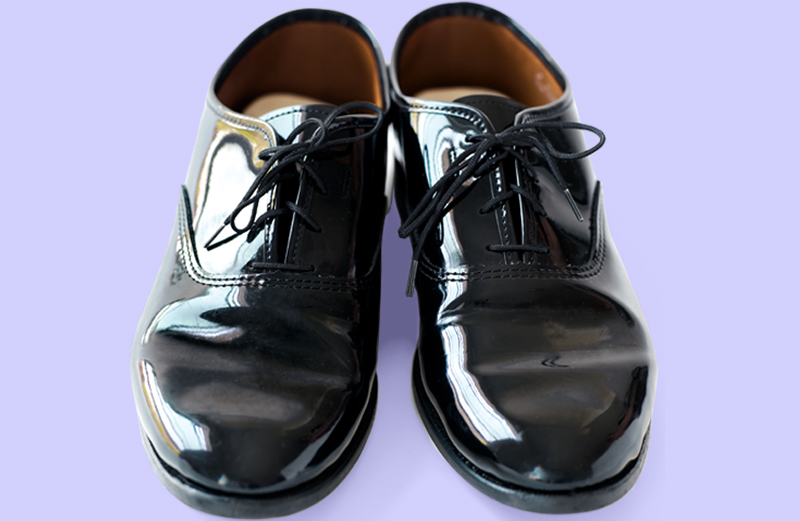
I stood outside the door of a shop I’d never been to and gave the shoes I was carrying another despairing glance. The shoes that went with my son’s tuxedo. That I had promised I’d take care of.

Josh and his bride-to-be, Tara, were about the same height. She planned to wear heels and Josh had confided to my wife, Debbie, and me that he didn’t want her to tower over him at the altar. Debbie had suggested putting stacked heels on his shoes.

I’d dropped the shoes off at the repair shop we usually used. I’d picked them up this morning and the heels were stacked, all right… into huge blocky platforms. They looked like Frankenstein shoes! And it was all my fault. I should have explained more carefully what needed to be done.

It was too late to order a new pair. What do I do now? I wondered.

I needed my dad, his ability to solve a problem, his calming voice. The one he had used on my own wedding day, some 33 years prior. Dad had seen not just my joy but my nerves. “Come here, son,” he had said, enveloping me in his arms. “You’re going to make a great husband. I love you.” My worries floated away.

Dad didn’t just look after his family. He sold insurance back in the days when you went door to door collecting weekly premiums and really got to know your customers. He believed providing insurance meant helping folks protect what they valued. Helping them, period. He practically invented “pay it forward.”

I’ll never forget the time he coached my Little League team and one boy showed up at practice wearing ragged sneakers. I overheard Dad ask quietly, “What size shoe do you wear, son?” At our next practice, the boy was wearing brand-new cleats. I never said a word to Dad but I was so proud to be his son.

Dad’s not here anymore, I told myself. It’s up to me. I found another shoe-repair shop in the Yellow Pages and drove there. Lord, let me come through for Josh the way Dad always did for me, I prayed, and walked in the door, Frankenstein shoes in hand.

The place was small and cluttered and looked like it had been there forever. A man my age stood at the counter. He wore a smudged smock and a gentle smile. “What can I do for you?” he asked.

I set the shoes on the counter and explained the problem. “All I want is to remove these platforms and get these shoes looking good enough so my son can wear them at his wedding,” I said. “I don’t care how much it costs. Can you help me?”

“I’ll do my best,” he said. He had me write my name and number on a ticket. “Come back tomorrow,” he told me.

I went back the next day. Josh’s shoes were ready. “They look as good as new!” I exclaimed, reaching for my wallet. “How much do I owe you?” The man shook his head. “There’s no charge.”

“What do you mean?”

He said, “You’re Buck Shear’s son, aren’t you?” He must have recognized the name on the ticket.

“Did you know my dad?” I asked.

“Not personally,” he said. “But my family will never forget him. My parents and grandparents bought insurance from your dad. Sometimes when they didn’t have the money, your dad would pay the weekly premiums for them.

“They were able to pay for my grandpa’s funeral because of your dad’s generosity. This is a small way I can say thanks.”

I left the store giving thanks of my own. To God, for letting Dad come through for me once again and reminding me how blessed I was to have the father I did. My son’s wedding day would be even more wonderful than I’d expected.

Download your FREE ebook, Rediscover the Power of Positive Thinking, with Norman Vincent Peale

Near-Death Experiences: Proof of Life After Death

Has anyone ever described to you a heavenly sojourn? Or a meeting with a deceased relative? Or floating above their body after an accident or while in surgery?

Diane Corcoran has heard such tales. In fact, the retired nurse estimates that she’s heard hundreds of stories of near-death experiences, real-life stories that describe what happens after death.

Corcoran was stationed in Vietnam at the 24th Evacuation Hospital, a neuro-surgery center for spine and head injuries, when she met a young man in the recovery area whose arm had been blown off. Drawn to speak to the young soldier, she asked him how he was doing.

“You’ll never believe me,” he replied. Urged on, he said that he when he was hit, he felt himself being lifted into the air. He looked down and could see bodies strewn about and he just knew which ones would make it and which ones were going to die.

Find Hope, Inspiration, and More in our Free eBooks

He then felt himself “going to another place.” With tears rolling down his cheeks, he described this place as “beautiful” and “wonderful.” But, he was told, he would have to go back, at which point he woke up in his body.

“It was real, it wasn’t a dream, it happened to me,” he insisted. Corcoran believed him.

Over time, Diane heard other soldiers recount their near-death experiences and she saw many similarities in their accounts.

For example, they described rising up and seeing their bodies below, traveling through a tunnel toward light, and meeting deceased loved ones.

Some people describe having a “life review” or seeing their life, from an outside perspective. And many of those who have near-death experiences say they were surrounded by a powerful light unlike anything on earth.

A near-death experience can change a person in many ways. Physically, they are often far more sensitive to loud noises, bright lights and sometimes medications.

They may feel more attuned to nature or compelled to serve humanity. Newly found altruism has caused people to change careers, like the former stock broker who became a respiratory therapist.

Discover Books with Inspiring Stories of Heaven and the Afterlife

Children with near-death experiences are also different afterward; they often seem mature beyond their years.

Corcoran can easily imagine how strange a child or adult must feel after having glimpsed the hereafter. That’s why she serves as the current president of the Association for Near-Death Studies (IANDS) and is so passionate about teaching clergy, the military and those in the medical and psychological fields about near-death experiences and helping those who have had those experiences come to terms with what they saw and how it may have affected them.

“I see myself as an end-of-life midwife,” says Corcoran. “I tell people, ‘You won’t have pain, it will be wonderful.’”

Watch as bestselling author Don Piper talks about his near-death experience.

Download your FREE ebook, Messages from the Hereafter: 5 Inspiring Stories Offering Proof of the Afterlife.

Mysterious Ways: One Last Gift

My husband and I were just two weeks away from our silver anniversary. It should have been a happy occasion. But that day my thoughts kept drifting back to our last big milestone, five years ago.

Mom had been part of that celebration. She’d never missed a birthday, anniversary or any other special occasion, and she’d written a heartfelt card and given a generous gift for our twentieth. It wasn’t long after that, however, that she passed away.

My sister, Steffie, and I had spent a few days after the funeral cleaning out the first floor of the duplex where Mom had lived so that my niece Nancy, Steffie’s daughter, could move in. We took all of Mom’s clothes out of the closet, cleared out the drawers, divided the keepsakes we treasured and donated everything else.

A phone call interrupted my thoughts. It was Steffie.

“I have something to show you,” she said. “Nancy was rummaging through the closet and she found something that you really need to see!”

What could it possibly be? I was sure we hadn’t left anything behind.

Soon Steffie arrived and I let her in. “What’s this all about?” I asked.

“Nancy was invited to a costume party,” Steffie began. “She was hoping she could mix and match some clothes for an outfit. That’s when she saw the box way in the back corner of the closet. She picked it up and looked inside. It was full of old denim scraps.”

“Mom used them to darn my boys’ jeans,” I recalled. “I guess we forgot to throw them out.”

“When Nancy put the box back down,” Steffie continued, “she heard a jingle. She dug around inside and discovered this…”

Steffie handed me a simple brown envelope. On the outside, in Mom’s distinctive handwriting, were the words, “To Joanne and Dick for their 25th Anniversary.”

I opened it up. Inside were five silver dollars, minted in the 1920s. And an anniversary card.

“I know I won’t be there for your anniversary,” she had written, “but I know you’ll have a wonderful celebration.”

Our silver anniversary was a happy occasion. Somehow, Mom’s last gift had been delivered, right on time.

Download your FREE ebook, Mysterious Ways: 9 Inspiring Stories that Show Evidence of God’s Love and God’s Grace.

Mysterious Ways: Mom’s Coffee Cup

“I want you to have this,” my brother said, and he handed me a coffee cup. White glazed, adorned with flowers and butterflies and inscribed with a saying: “Mothers are forever and I’m so glad you’re mine.” I clutched it tightly.

“This was Mama’s,” I said. Her favorite coffee cup.

Community Newsletter

Get More Inspiration Delivered to Your Inbox


Mama had just recently passed away, after a long battle with complications from diabetes. She was no longer in pain, no longer suffering but that thought didn’t comfort me. I missed her so much. Was she really in heaven? Could she hear me?

Mama was my best friend, my confidant, my everything. We talked on the phone twice a day—the first call always during her morning cup of coffee. So when I spotted that cup in a local store, I plucked it from the shelf to get a closer look. To my surprise, it played a little melody! I just knew Mama would enjoy it.

“Oh, how lovely!” she said, pulling it out of the box, its sweet song playing. “I’ll use it every day.”

And she did. Even though, after a few years, the music suddenly stopped. We tried and tried to fix it, but it was useless.

“Don’t worry,” I told her. “I’ll get you a new one.”

“No, that’s okay,” she said. “It means too much to me to ever get rid of.”

Now, holding it in my hand, the grief overwhelmed me. She’d kept this broken cup for years for no other reason than it was a gift from me. Now there would be no more visits, no more phone calls over her morning coffee.

A few nights later I was watching TV in bed, my thoughts still on Mama. God, I prayed, I know that Mama is with you, but I just wish I knew that she was happy. Suddenly, I was startled by a noise. Was somebody in the house? It sounded like someone was playing the piano. Except we didn’t have a piano… I got up and followed the sound around the house to the kitchen.

And there, on the table, was Mama’s coffee cup playing a happy melody once again.

My Son’s Comforting Angels

The Fourth of July holiday calls up memories of patriotic parades, the savory scents of smoky barbecue, sweet corn, and night skies bursting with showers of light. But for my family, the July Fourth weekend of 2003 was a big deal for other reasons.

My wife, Sonja, and I had planned to take the kids to visit Sonja’s brother, Steve, and his family in Sioux Falls, South Dakota. It would be our first chance to meet our nephew, Bennett. But the biggest deal of all was this: this trip would be the first time we’d left our hometown of Imperial, Nebraska, since a family trip to Greeley, Colorado, in March had turned into the worst nightmare of our lives.

To put it bluntly, the last time we had taken a family trip, one of our children almost died. But we packed up a weekend’s worth of paraphernalia in our blue Ford Expedition and got our family ready to head north. Cassie, age six, and Colton, four, were excited.

It wasn’t quite 10 p.m. when we pulled onto Jeffers Street in North Platte and I noticed we were passing through the traffic light where, if we turned left, we’d wind up at the Great Plains Regional Medical Center. That was where we’d spent fifteen nightmarish days in March, much of it on our knees, praying for God to spare Colton’s life.

“Do you remember the hospital, Colton?” Sonja said.

“Yes, Mommy, I remember,” he said. “That’s where the angels sang to me.”

Inside the Expedition, time froze. Sonja and I looked at each other, passing a silent message: Did he just say what I think he said?

Sonja leaned over and whispered, “Has he talked to you about angels before?” I shook my head. “You?” She shook her head.

I spotted an Arby’s, pulled into the parking lot, and switched off the engine. Twisting in my seat, I peered back at Colton. In that moment, I was struck by his smallness, his little boyness. He was really just a little guy who still spoke with an endearing (and sometimes embarrassing) call-it-like-you-see-it innocence.

Finally, I plunged in: “Colton, you said that angels sang to you while you were at the hospital?”

He nodded his head vigorously.

“What did they sing to you?”

Colton turned his eyes up and to the right, the attitude of remembering. “Well, they sang ‘Jesus Loves Me’ and ‘Joshua Fought the Battle of Jericho,’” he said earnestly. “I asked them to sing ‘We Will, We Will Rock You,’ but they wouldn’t sing that.”

As Cassie giggled softly, I noticed that Colton’s answer had been quick and matter-of-fact, without a hint of hesitation.

Sonja and I exchanged glances again. What’s going on? Did he have a dream in the hospital?

And one more unspoken question: What do we say now?

A natural question popped into my head: “Colton, what did the angels look like?”

He chuckled at what seemed to be a memory. “Well, one of them looked like Grandpa Dennis, but it wasn’t him, ’cause Grandpa Dennis has glasses.”

Then he grew serious. “Dad, Jesus had the angels sing to me because I was so scared. They made me feel better.”

Jesus?

I glanced at Sonja again and saw that her mouth had dropped open. I turned back to Colton. “You mean Jesus was there?”

My little boy nodded as though reporting nothing more remarkable than seeing a ladybug in the front yard. “Yeah, Jesus was there.”

“Well, where was Jesus?”

Colton looked me right in the eye. “I was sitting in Jesus’ lap.”

If there are Stop buttons on conversations, that was one of them right there.

I ventured another question. “Colton, where were you when you saw Jesus?”

He looked at me as if to say, Didn’t we just talk about this? “At the hospital. You know, when Dr. O’Holleran was working on me.”

“Well, Dr. O’Holleran worked on you a couple of times, remember?” I said. Colton had both an emergency appendectomy and then an abdominal clean-out. “Are you sure it was at the hospital?”

Colton nodded. “Yeah, at the hospital. When I was with Jesus, you were praying, and Mommy was talking on the phone.”

What?

That definitely meant he was talking about the hospital. But how in the world did he know where we had been?

“But you were in the operating room, Colton,” I said. “How could you know what we were doing?”

“’Cause I could see you,” Colton said matter-of-factly. “I went up out of my body and I was looking down and I could see the doctor working on my body. And I saw you and Mommy. You were in a little room by yourself, praying; and Mommy was in a different room, and she was praying and talking on the phone.”

Colton’s words rocked me to my core. Sonja’s eyes were wider than ever, but she said nothing, just stared at me and absently bit into her sandwich.

That was all the information I could handle at that point. I started the engine, steered the Expedition back onto the street, and pointed us toward South Dakota. Our little boy had said some pretty incredible stuff—and he had backed it up with credible information, things there was no way he could have known. We had not told him what we were doing while he was in surgery, under anesthesia, apparently unconscious.

Over and over, I kept asking myself, How could he have known? But by the time we rolled across the South Dakota state line, I had another question: Could this be real?

My Daughter’s Message

I was a bit uneasy when I couldn’t reach Heidi on the phone that snowy day in March 2001. But I’d long since gotten used to being anxious when it came to my 24-year-old daughter. Over the previous six years Heidi had disappeared repeatedly, without explanation. During that same period she’d had four children out of wedlock, each father out of her life before the baby was even born.

But the last few months it had seemed she was finally coming around, holding a steady job at the Greencroft retirement home, taking care of her newborn twins, coming to church with my husband, Jerry, and me on Sundays.

The snow was coming down fast as I headed down the main hallway of Parkside Elementary after grading some papers, so it took me a moment to make out the two figures approaching the door. Policemen. “We’re looking for Janet Hershberger,” one of them said.

“I’m Janet Hershberger,” I said, holding the door open.

“Is there a private place we can talk?” he asked quietly. And that’s when I knew, even before we went inside and they sat me down in an empty classroom telling me how Heidi had lost control of her car on a slippery road and careened into oncoming traffic. The fear that had haunted me all those long restless nights when I didn’t know where Heidi was had become reality. Heidi was never coming home again.

I wished I could turn back the years to shortly after Jerry and I adopted Heidi and her brother, J. D., when the two of them clung fast to my hands as we stood in that very spot just inside the door before school, Heidi’s pretty green eyes turned up to me eagerly as I admired her latest crayon drawing. I never dreamed that one day those eyes would cloud over with troubled secrets, that I would search them for a clue to what was going on in my daughter’s head, that Heidi would become more of a mystery to me than the impossible-seeming jigsaw puzzles she spent countless hours putting together.

The policemen drove me to the hospital, where one of Heidi’s twins, Jasmine, was in critical condition. I closed my eyes and prayed, just as I had so many times since Heidi first disappeared, the night before her final exams senior year. We called her friends from church. No one had seen her. We called the police, then Jerry and I held each other on the living room couch, asking God to wrap his arms around our daughter and keep her safe.

She came home the next morning as if nothing had happened. “What were you thinking, Heidi?” I demanded. “Do you have any idea how worried we were? Don’t you realize how disrespectful it is not even to pick up the phone and tell us you’re okay?” Heidi didn’t apologize, just sat stony-faced, answering in monosyllables, until finally tramping upstairs to her room.

It happened again that summer, but that time she vanished for two agonizing weeks. Jerry and I thought a change of scene might be the answer. We sent her to stay with family friends in Minnesota. “Mom, please forgive me for the way I acted,” she told me over the phone. But soon after returning home she took off again. One month passed, then two. The police couldn’t do much because she was over 18. I checked with her friends from her youth group, but the problem was Heidi had other friends, ones she kept hidden from us. The unfinished jigsaw puzzle in her room was a continual reminder of her sudden absence and our frustrated attempts to figure out where she was or indeed who she was. God, just give me a clue to help me find my daughter.

One day I reached into my jacket pocket and pulled out a phone number I didn’t recognize. Curious, I called it. To my amazement, Heidi answered. My joy was cut short when she said, “Mom, I have to tell you something. I’m pregnant.”

We encouraged her in the decision to put the child up for adoption. She went off to college. But there she ended up in an abusive relationship, and it resulted in another child, Joana. Jerry and I eventually took Joana into our home because Heidi’s behavior was too unpredictable. We suspected drugs or sexual addiction, but never knew for sure the cause of Heidi’s actions.

Over and over she tried to get back on track, returning home and to church. I’d slip into her room in the mornings and watch her sleeping, so innocent, so peaceful. But when she awoke I always saw turmoil in her eyes, some secret life that caused her to run off again and again.

Whether we were harsh or forgiving, confrontational or gentle, nothing Jerry and I said or did seemed to get through to her. In the end all I could do was pray—during the solitude of my morning devotions, in the fellowship of our church group, or at bedtime with Jerry, the plea was always the same: Lord, please give Heidi your protection and peace. Guide her back to you.

I thought maybe, just maybe, those prayers were finally being answered when Heidi moved in with two girls from church and took a job at a local retirement home. But then a letter in the mailbox the day after Christmas 2000 brought the news that she was about to deliver twins. Reeling, I went to the hospital to see her shortly after they were born. “I’m going to take care of them myself,” Heidi told me. “I have the job at the home now, and I’m going to stick with it. I’m going to move in with a really nice older couple. No more drama, I promise.”

Just two months later I arrived at the hospital to learn one of the twins, Joseph, had come through the car accident without a scratch, but Jasmine’s skull had been crushed. She was being kept alive by a respirator. I found Jerry and we wordlessly embraced. Pastor Layman from our church approached me. “I just wanted you to know that Heidi was in my office yesterday, and we had the most wonderful conversation. There is no doubt in my mind that Heidi is with the Lord.”

I felt an immense calm settle over me and his words resounded in my mind: “Heidi is with the Lord.” That assurance stayed with me while I held our tiny granddaughter, Jasmine, as she took her last breath. I imagined I was handing her over to Heidi.

That’s how we buried them, mother and child together. Hundreds of friends and relatives came to the funeral. Even some of the residents of the retirement home where Heidi worked showed up. After all the times Heidi had left without a good-bye, it was healing for me to be able to bid her one at last.

And what a blessing to come home not to silence but to the sounds of our grandchildren! Heidi and J. D. had been toddlers when we’d adopted them, so caring for two-month-old Joseph was a newfound joy. Jerry and I surrounded ourselves with mementos from Heidi’s life so the children would grow up knowing their mother.

We talked about her often. It’s strange, but Heidi’s presence in death seemed larger than when she was alive but always missing. Her old clothes and shoes, the tea party dishes she used to play with, her senior picture on the wall, even Joseph’s smile and Joana’s laugh—all brought to mind my daughter. But gone was the fear that used to darken every thought of her.

“Don’t you feel angry that it ended like this after everything you went through?” my friends asked. But the calm that had come over me in the hospital was still with me. Even though I missed Heidi, there was no anger, no crushing sorrow. How can I be so calm, Lord? I prayed. Shouldn’t I be grieving more for my daughter? How could I have tossed and turned so many nights over Heidi while she was alive, yet now feel such peace when I thought of her? And then the answer came, as clearly as if Jesus were speaking to me. You’ve been grieving for her for six years. She’s safe with me now.

The cards and visits from friends subsided as the months passed. But one afternoon a couple came to call. They were the ones Heidi had been staying with at the time of her death. “Heidi was halfway through this when she died,” the woman said, presenting me with a jigsaw puzzle depicting a wintry holiday scene. “There was a piece missing, but we finished the rest and thought you’d like to have it.”

I thanked them, but after they left, my eye was drawn to the empty spot in the puzzle. So like Heidi, I thought. Always a piece we didn’t see. The good girl doing her homework, playing on the soccer team, going to church on the one hand. And on the other… elusive, troubled, unknowable. Staring at the puzzle, I was suddenly right back in the midst of the doubts that had besieged me while Heidi was alive. What if she’d just been deceiving us all, telling Pastor Layman and me what she thought we wanted to hear? What if she was as troubled in death as she was in life?

My fears nagged at me, though I told no one about them except God. They were soon pushed aside, however, by an unexpected invitation. The composer of some music we’d used at Heidi’s funeral offered to fly me to Nashville to talk about Heidi and how the music had comforted us. I’d never flown alone before and was more than a little nervous about it. But Jerry thought it would be good for me to get away for a few days.

South Bend Airport was daunting enough—I didn’t know how I’d manage my connecting flight at bustling Detroit Metro. Lord, please send someone to help me find my way. The person sitting closest to me at the gate was a lovely white-haired woman who didn’t look any more worldly than I. Still, I felt drawn to speak to her. “Where are you headed?”

“Nashville, Tennessee,” she said with a smile. I introduced myself and learned her name was Luba. Since she was also flying to Nashville and was nervous about flying by herself, we agreed to help each other find the right connecting plane when we landed at Metro.

In Detroit, despite the crowds of strangers hurrying to make their flights, porters pushing luggage carts, and bewildering signs and monitors, I felt so at ease with Luba at my side. “So what brings you to Nashville?” she asked as we walked toward our gate. Oddly I didn’t feel the slightest awkwardness telling her about my daughter’s death. “It feels so natural to talk to you about Heidi,” I said.

Luba stopped suddenly, then turned to look right at me. “Heidi? Heidi Hershberger? You’re Heidi Hershberger’s mother?” I nodded. “My sister knew your daughter!”

Knew Heidi? In the middle of the rushing crowd, I was aware of nothing except Luba as she shared her story of Heidi. Her sister had been visiting a friend whom Heidi was looking after at the Greencroft retirement home. “She said she was really impressed by how caring Heidi was. So she started talking with her. Heidi told her she’d lived a troubled life, but had made things right with God. Later we were shocked to read about the accident in the paper, but heartened because we knew Heidi is with the Lord.”

It took a moment to sink in, for me to make sense of it all. Then I reached out and embraced Luba. Heidi is with the Lord. Pastor Layman had said it, I had felt it in my heart, but it was through an unlikely meeting with a kind stranger that I was given the final assurance that my daughter had found the piece that was missing in her life. At last she was home to stay.

My Blogging Debut: Sharing Life and Death Experiences

When Guideposts asked me recently if I would consider writing a blog for their website, I had to ask myself, “What is a blog?” One of my sons helped by sending examples of blogs with which he was familiar. I got the picture and so, I begin.

I’m a nurse, as are many of my family members. It is our history and a profession many Irish girls of my day entered. My Dad suggested nursing to me when I was fifteen, telling me it was a noble profession and one for which he felt God had equipped me. I loved him and trusted he always had my best interests at heart.

A three-year, Franciscan Nursing School degree, taught me to see Jesus in every patient I served and the constant reminder by Sister Naureen Marie, our nursing director that, “Jesus loves you, little one” gave me all the confidence I would ever need in nursing or in life. To be told at the tender age of 20 that “you belong at the bedside of God’s children” is to know the intimate tap on the shoulder, when you sense God’s own heart directing you.

You may have experienced this at some time in your lives when you know for sure that God is allowing you to experience or understand something greater than yourselves. You have only to be open to it and thankful for the opportunity to experience a “moment of light” during which God is directing you personally.

I knew I was where I belonged when hospice nursing came to call. To me, it is the purest nursing you can ever do and you feel you can reach up and touch the face of God. My patients knew me as the barefoot nurse because I always took off my shoes at the bedside of a dying patient. Everyone thought it was because I was tall, but in truth I felt I was standing on very holy ground, as I watched God draw His children home to Himself.

When people become terminally ill and begin to die, they develop entirely new ways of hearing and understanding life. There is no longer any reason to pretend or hide. Awareness occurs that life, as we know it, is coming to an end and a new life is about to begin. If you are listening carefully, you can tell that a person is on a very different plane and while they are still with us, they are experiencing eternity as well.

When Glimpses of Heaven was published in 2008, I got phone calls, emails and letters from people who had experienced the death of a loved one and had stories to tell. It seemed to me that a floodgate had opened and every question and experience came rolling out.

I invite you to share your story or ask questions related to end-of-life situations by emailing me at glimpsesofheaven@guideposts.org. I envision the Guideposts “Glimpses of Heaven” blog evolving into an interactive sharing of life and death experiences through which we come to understand that the face of God is as close to us as we are to ourselves.

Let us begin.

Messages from Heaven

The September sun was making the day unbearable. I swiped my hand across my forehead. Sweat stung my eyes. I dropped my keys. Somehow I broke a fingernail picking them up, and the storm door I had been propping open with one hip slammed into me, knocking me into the door. Just one more in the chain of horrendous days that had grown progressively worse since my husband Steve had died suddenly, without warning, of a massive heart attack.

It had happened in our living room during a birthday party we were hosting for our pastor. I had been in another room. He was only fifty-two. We had no idea anything was wrong with his heart. In shock, I tried to console myself with the knowledge that he was in heaven with his parents. Still, his loss left a huge hole in me. I was unable to eat or sleep. I lost twenty-five pounds. The house was cool at least, but quiet—too quiet—another reminder that my husband was gone and I was alone.

I made my way to the kitchen and dropped the groceries on the table. As I passed the phone, I noticed the blinking message light. I picked up the phone. My uncle’s and my best friend’s numbers appeared on the caller ID. But a monotone recorded voice told me I had three messages. Three? I looked again. My uncle’s message played and my friend’s message played. Then Steve’s voice said clearly and distinctly, “Steve Holderby.”

Stunned, I listened to the three messages five more times. The voice was definitely Steve’s. It sounded like the recorded voice-mail name on his cell phone. I stumbled upstairs to his office. The cell phone lay on the shelf behind his desk where Steve had placed it the night he died. I hadn’t touched it since.

A REDHEADED SIGN FROM HEAVEN

I picked it up now. The battery, of course, was dead. I tried to figure out a logical explanation. There was none. I called several friends. They were baffled too.

“Well, if anyone could do this, it would be Steve,” John, Steve’s best friend, said. He laughed. “And Steve would do this.”

He was right. And Steve could do this. Steve had been a broadcast engineer. When a radio station, 75 miles away, went off the air, Steve got it back on by punching some numbers into his cell phone. He was a genius when it came to electronics. And if he wanted to accomplish something, he wouldn’t let a little thing like death stand in his way.

“I didn’t get to say good-bye,” I whispered to John. “I can’t stand that.”

“Steve didn’t get to say good-bye either,” John reminded me. “I’m sure that bothers him too.”

“I didn’t think of that,” I said. “Yeah, it would.”

I put the phone call out of my mind for the next couple of months. Then on Christmas Day, a Sunday, I left my visiting daughter, son-in- law, and grandkids sleeping and went to church. When I came home, my daughter was in the kitchen getting a start on our Christmas dinner. The message light was flashing on the phone.

“Who called?” I asked.

“Nobody,” Amber yelled from the kitchen. “The phone didn’t ring all morning.”

I punched the play button: “Steve Holderby.” I was almost as shocked as the first time it happened. Again, no number on the caller ID.

“Steve called to wish us a Merry Christmas,” I said. A couple of months later, I had been at the church decorating the fellowship hall for the Valentine’s Day banquet. Steve had helped me the previous year and escorted me to the banquet.

I came home now exhausted and depressed, and collapsed into the nearest dining room chair. The phone lay on the table. Tears of grief, frustration, and rage streamed down my face. “Steve,” I screamed, “do you know how hard this is? Do you hear me? Do you even care?”

The message light on the phone began to flash. I picked it up. No caller ID. I pushed the message play button and heard Steve’s voice. Suddenly I knew in my heart of hearts that Steve was somehow doing this, letting me know he was with me. But I wanted proof.

I called the phone company and explained what had been happening. To her credit, the woman tried to act as though she didn’t think I was irrational. I played the message for her. “Well, it’s obviously recorded somewhere on your phone,” she said.

She checked a couple of places where she thought it might be. “Weird,” she muttered. “There’s nothing there.”

“Uh-huh.”

“Well, maybe someone recorded his voice and is playing a terrible trick on you.”

“If that were true, there would be a phone number on caller ID and the phone would ring. It doesn’t.”

“Well, you got me,” she finally admitted. “This just isn’t possible.”

“No logical explanation?”

“No logical explanation,” she said, confirming what I already knew. There were more deliberately placed calls. One on my birthday and a couple more when I was stressed beyond belief.

Then I met a man at church. We began seeing each other. After a whirlwind courtship, we were married. Steve knew I was okay. He never called again.