Embrace God's truth with our new book, The Lies that Bind

Lily from Heaven

Flowers filled my sister Betty’s hospital room: roses, tulips and carnations of all colors.

But the rubrum lily was her favorite. She knew she wasn’t long for this world, but whenever she looked at the vibrant, bright pink lilies, she assured me that a gentle peace washed over her.

After she died that summer, my husband bought a rubrum lily. He hoped that Betty’s favorite plant could comfort me as it did her.

Unfortunately the speckled, pink blooms brought me anything but peace. The flowers only reminded me of Betty in the hospital, getting weaker by the day. It seemed right that the plant withered by fall.

“Why don’t we plant the bulb outside?” Jim suggested. “If it survives the winter you might feel differently about it come spring. I have some other bulbs I should have already put in the ground too. It’s no trouble.”

Wisconsin winters are brutal. Even though lilies are hardy, we didn’t have much hope it—or anything else—would survive. But Jim planted the bulbs anyway.

Come spring we were pleasantly surprised: a single green shoot appeared. Only one out of all the new bulbs we planted, but it was something. Probably one of the daffodils, I figured. But as the shoot grew I saw I was wrong. What was this strong, brave plant? I got closer. It was my sister’s rubrum lily.

Betty had weakened during the last days of her life, but she was strong again in heaven. As strong as the bright pink lily that gave me peace. Just as Jim had hoped.

Download your FREE ebook, Angel Sightings: 7 Inspirational Stories About Heavenly Angels and Everyday Angels on Earth

Light Surrounded Him Before His Death

Dear Trudy,
My father passed away suddenly three years ago from an accident. He was only 60 years old and full of life.

The morning of his accident, my dad came into the kitchen to give my mother a kiss before he headed out to do some yard work.

My mom told me later that he looked so happy, and that she could see a wonderful warm light around him. Of course at the time she thought nothing about it.

My father was working on the roof of my parents’ house and unfortunately fell and was badly hurt. He passed away peacefully in the hospital with all his family around him the next day.

Do you think the light that my mother saw around my father was Jesus’ way of letting her know that he was about to be called home to heaven?

Sincerely,
Cynthia M.


Dear Cynthia,
Thank you for the beautiful letter about your dad. Although it is very sad to lose a parent so young, you know for sure he is in heaven now and did not have to suffer long. His reward is eternal peace and comfort with God.

I have seen the glow you speak of many times around patients just before they die. They often look as if they already have one foot in heaven, they are so peaceful. They develop an otherworldly look about them that appears to be so pure and holy. Their eyes often shine brightly and they look very happy.

How wonderful that your dad kissed your mother before he went outside to fix the roof. He left her with such a loving memory. God is so close to people as He calls them home that I often think it is His reflection that we see when that glow appears. How good He is to have allowed her to see your dad in this way just before he died, and to be comforted by that understanding.

Blessings,
Trudy Harris

Trudy gets so many questions from Guideposts readers, we decided to make her answers a regular feature on her blog. If you have a story about a “glimpse of heaven,” please share it with us. Send it to glimpsesofheaven@guideposts.org.

Knowing God in a New Way Before Death

When we step back to look at our lives and see how often God has graced us with his love, it is overwhelming. Time and time again, he places people in our path to better know and love him and to help us accomplish the things he has in mind for us.

One such person for me was Carol Susan Roth. Through God’s grace, our paths crossed just as I wondered how in the world to have a book published. Carol was one of the first people who said she understood my writing well and felt it had value. “This is more than storytelling,” she said to me one day. “These stories teach us much about living and dying.” She worked tirelessly on my behalf and enthusiastically represented me in every possible way.

Carol had only been married for a short time when multiple brain tumors changed her life forever. She was determined to live every day to the fullest until there were no more tomorrows left to her. Her background was Jewish, with lots of other spirituals leanings, and she came to rely on Catholic Masses and prayers said for her the way a thirsty child relies on mother’s milk. She was open, loving, faithful and totally unselfish until the end. She gave her all to the authors she represented and never held back.

I had planned to visit her in California following a vacation with my husband. I spoke with her by phone, thanking her for all she had done for me, and talking about finally meeting face to face for the first time the following week. It was not to be.

In our last conversation Carol said she felt destined to represent me with both Glimpses of Heaven and More Glimpses of Heaven, and that she’d come to new and deeper insights of God. “I have come to know God in a way I never understood him before,” she said to me that night.

She was at peace with both her life and death and although she did not want to leave her loving husband and family, she accepted God’s path for her. She was a loving and trusted friend and I thank God often that he allowed us to share the journey together.

Please join Trudy for a Magnificat Prayer Breakfast at the Church of Holy Apostles in McHenry, Illinois, on December 8. Tickets are $15 and available for purchase in advance; click here for more information.

“It Was Like Jesus Was Looking Right at Me”

Several years ago, when one of our sons was still a teenager, he was sitting with a friend downtown near the river. A man in his mid-thirties passed by and looked at him.

Pointing to the jail nearby, he said, “Son, I have been over there in that jail for several days and I need to get home to my family in Tennessee; can you help me?” Assuming the man would use the money for drugs or alcohol, he offered to walk him to the bus terminal and buy his ticket. He asked the agent if the ticket was redeemable; assured that it was not, he purchased one. As the man approached the stairs of the bus, he turned and said, “I will never forget your kindness.” My son told me later that “it was like Jesus himself was looking right at me.”

When people have had this kind of experience of seeing Jesus, they are certain he was right there in front of them. Often, as a patient is dying, they say that they are filled with warmth, light and love, which they feel is God. They seem so peaceful and happy and are totally unafraid.

When a patient named Fred told me that Jesus had been standing in the corner of his room, looking very gently at him, his words, his description and the look on his face left no doubt in my mind that he had indeed seen him. He died a day or two later.

When a good friend’s husband died recently, she told me she got into bed a little while later for comfort and when she looked up, Jesus was standing in her room looking tenderly at her. She says the memory of that moment will never leave her. Her heart was broken at the loss of her husband and God simply came to assure her of his presence and his love.

Glimpses of heaven happen more frequently than we know. Sometimes we even try to explain them away. This is a mistake; it is like a good friend knocking on our door to bring us a gift of love and support and we simply don’t answer the knock. But they are given to us at those moments when God knows we need them most.

“It’s Like Being in Heaven”

When a loved one or friend dies, it is always a solemn experience. Filled with memories, traditions, respect and love, one only has to close one’s eyes to remember their goodness.

One such man died recently and was remembered and honored by more than 1,000 people. He neither sought nor needed earthly honoring, as he was a gentle and humble man, but because he was who he was, they honored him.

With a strong work ethic from an early age, he became, in the American tradition, a very successful man. He married a beautiful young woman and together they raised a strong and committed Catholic family. Their lives reflected the peace and joy that comes from knowing Jesus Christ and following him all of their lives. Daily you would see them at early morning Mass when the children were small. In later years, their children’s children surrounded them every morning at the church they were raised in. Their example was quieting yet poignant; you could not help but be moved by them, their dignity and grace. Their six children gave them 47 grandchildren and one beautiful great grandson, born just months before he left them all for his heavenly reward.

The Catholic Mass celebrated in his honor was a very holy experience. Grandsons carried their grandfather’s coffin into the church. Younger grandsons were altar servers and others carried the gifts. A young granddaughter sang the Ave Maria with grace and tenderness; grandchildren read the sacred scriptures and his only son delivered his eulogy.

He began by first thanking his mother for caring so beautifully for their father and for giving them all the example of Jesus himself. He reminded the children that their grandfather’s legacy of God and family would be carried out by the lives they lived in remembrance of him. He then shared that his father said, “God bless you” to each and every visitor who stopped by to see him and say goodbye.

Since God had so richly blessed his whole life, he wanted to be sure that his parting gift would be to ask God to richly bless those he left behind. It was so like him. A friend attending the Mass was heard to say, “It’s like being in heaven.” It was.

How Similar Life and Death Are

A young woman wrote to me about the death of her mother the day before her 67th birthday. Her faith community believed strongly in physical healing, and as she got closer to her time of dying, she simply held on tighter and tighter, not realizing that the ultimate healing is of the soul and the spirit and not always our bodies. God sometimes has other plans for us.

She was not happy when her family called hospice care, because it felt to her that she was not trusting God enough. She was frustrated and angry at times that she was not physically healed. One day out of the blue she asked her daughter to put the books about “physical healing” away, and so she did.

“The Lord graciously gave her a beautiful glimpse of heaven before she died,” this young woman wrote. “Another sister stopped by for a visit with Mom on Thanksgiving night, and this is what she told her: ‘I was swinging with all of my dolls in my arms. My joy was back and it will never be taken away from me again. I saw all of your faces and they were sparkling; I wonder if it is like that for everyone?’ ”

She told her daughter that the colors were all so beautiful, like fresh vegetables on a plate on a warm summer’s day. Everything was beautiful and sparkling there. Her mother was happiest and most content about the fact that she had four children whom she loved fiercely. Now she was beginning to see and understand that the beauty and love she experienced with her children on Earth would continue forever. Her daughter sat with her mother and told her of her own belief about how similar life and death really are, and after that, her mother simply closed her eyes and died.

How Lee Strobel Makes the Case for Heaven

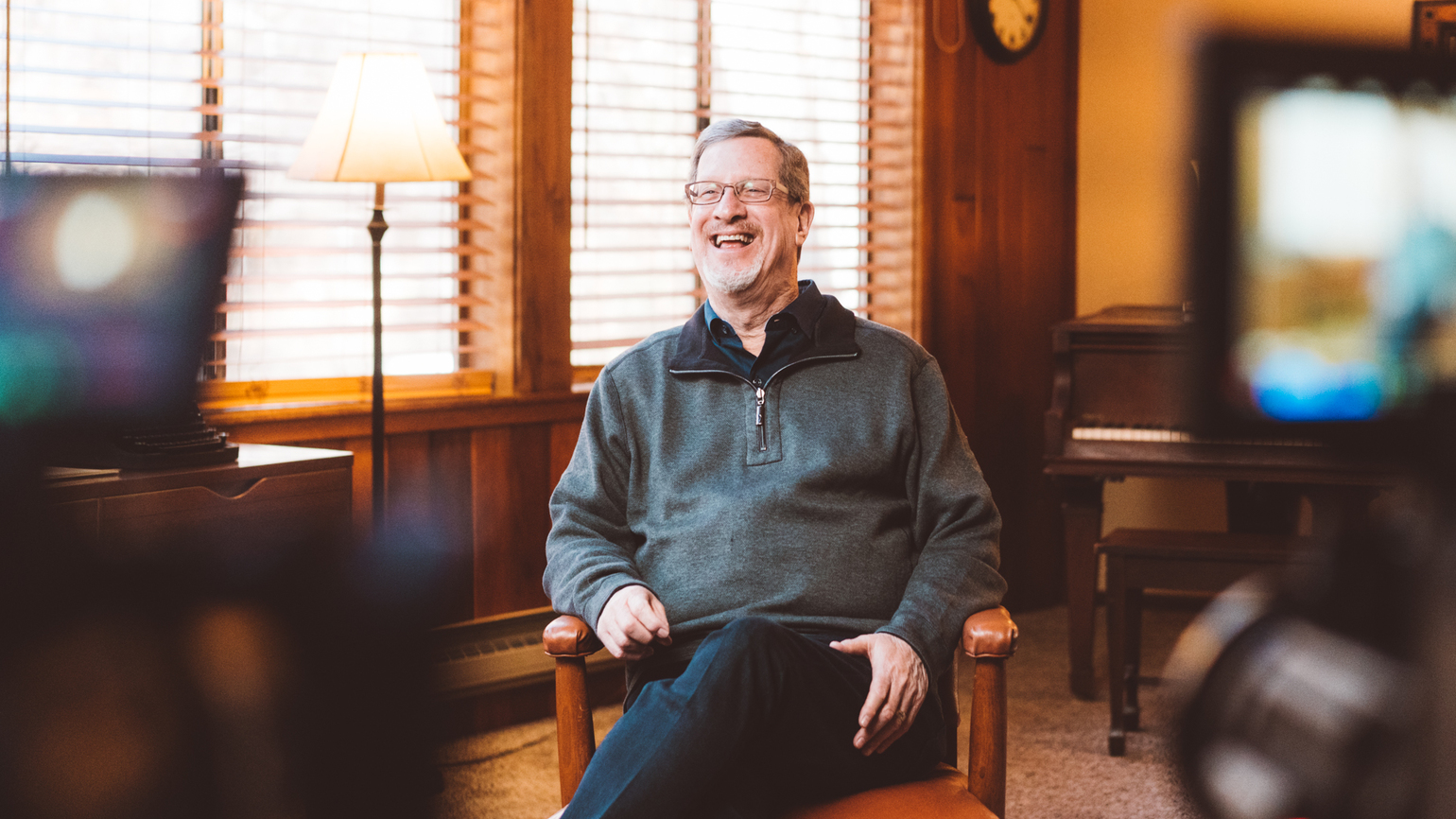
New York Times bestselling author Lee Strobel is a man in search of answers—and as a former investigative journalist for The Chicago Tribune, he is not afraid to ask hard questions. After a harrowing medical crisis, Strobel began a journey of understanding exactly what happens to us after we die. His bestselling book, The Case for Heaven, seeks to answer that all-important question. Now, the question is making its way to the big screen, in a new documentary film directed by Mani Sandoval, also titled The Case for Heaven. In it, Strobel interviews various experts and skeptics— like John Burke, Dr. Sharon Dirckx, and Francis Chan— about our understanding of heaven.

Lee Strobel talked with Guideposts.org about his experience, his new documentary, and the amazing evidence he found that proves heaven is real.

GP: You had a profound experience that set you on this journey. Can you tell us about that? 

Lee Strobel: Several years ago, my wife, Leslie, found me unconscious in our home. She called an ambulance, and I woke up in the emergency room. The doctor looked down at me and said, “You’re one step away from a coma, two steps away from dying.” Then I fell unconscious again.

I had an unusual medical condition called hyponatremia, which is a severe drop in blood sodium level. My brain cells took in moisture and began expanding in my head. If you have it, you can go unconscious, eventually have seizures, go into a coma and die. I was in the hospital for quite a while, and doctors were able to save my life.

GP: Why did this experience make you want to study the afterlife? 

Lee: I came close to dying. It was a brush with death. It was a very clarifying experience because when you’re in that position, you don’t know what’s going to happen. Nothing becomes more important than what happens when you close your eyes for the last time in this world.

This experience made me think about how we’re going to spend a lot more time in eternity than we’re going to spend in this world. So, it’s worth our time. It’s worth our exploration to come to a strong resolution and conclusions about what happens in life to come. Even though I am a Christian and I believe what the Bible teaches about the afterlife, I’ve still got a skeptical background. My degrees are in journalism and law. So, I wanted to know, is there any evidence that the Bible’s telling us the truth about life after death?

GP: Yes, despite your experience and your beliefs, you sought to search for heaven outside of preconceived notions. You wanted to look at it from experience. Why did you want to do that and how? 

Lee: I was interested in looking at not only evidence from within the Bible, but also what evidence there is outside the Bible that supports what the Bible tells us. If the Bible is telling us the truth, you would expect that there would be other evidence that would support that.

I wanted to look at the question of near-death experiences, which I was very skeptical about. I thought they were explainable, such as a lack of oxygen to the brain or something like that. But I needed to see if there’s confirmation in them of what the Bible teaches.

According to the Bible, an aspect of the afterlife is that our consciousness, or our soul, separates from our physical body. If that is true, that would mean that there would be some evidence that indeed our soul does survive our clinical death.

GP: Is this why you felt it was important to include our search for the soul? 

Lee: Absolutely. Because if we are just a physical body, then when we die, we are gone. But if we are a hyphenated creature that is a body and a soul, then our soul can survive our physical death. So, I think it was vital to look at. Is there evidence for the soul?

That’s why I interviewed Dr. Sharon Dirckx, who has a PhD in neuroscience from Cambridge University. We discussed the evidence that indeed we have a soul that is distinct from our physical body and yet interacts with our physical body. According to Dr. Dirckx, all we need is one corroborated case of a near-death experience to show conclusively that indeed our consciousness does survive our clinical death.

GP: And you have found that in your research? 

Lee: We have not only one, but multiple cases where people saw things or heard things during their out of body experience that they would not have been able to see and hear if that experience wasn’t legitimate. For example, the 1984 case where a woman named Maria, who died and was separated from her body, saw a tennis shoe on the ledge of the hospital roof. It was later confirmed to be true!

The number of cases is really staggering. It’s a well-researched area. There was one study [in the book Handbook of Near-Death Experiences: Thirty Years of Investigation] of 93 patients who made verifiable observations while out of their physical bodies during a near death-experience. 92percent of those observations were completely accurate. Another 6 percent were almost totally accurate. There’s also been 900 scholarly studies done of near-death experiences over the last 40 years and published in scientific and medical journals. The Lancet, a British medical journal, published a peer reviewed article that said that none of the alternative explanations in near-death experiences can fully explain the phenomenon. So, something else is going on.

GP: Why is it that some people who have a near-death experience oftentimes have difficulty explaining what they experienced?   

Lee: Near-death experiences provide a little more technicolor and brings home the reality that our belief in the afterlife is not based on wishful thinking. The afterlife is fundamentally different. Time will be different. The number of dimensions will be different. The colors will be different.

For example, in this world, we see certain colors that are based on the color spectrum from the light of the sun. Yet in eternity, the color spectrum will be based on the light of God. We’ll be able to see colors that we can’t even imagine in this world. Yet we do have people returning from near-death experiences describing that very phenomenon. Those are very difficult things to communicate to people who have not shared that experience.

GP: You interviewed quite a few people in this documentary. What is the most important thing you learned from them? 

Lee: One of the most surprising things came from John Burke. He is currently pastor of a large church in Austin, Texas. He is also a researcher of near-death experiences.

John studied a thousand near-death experiences over a period of about 30 years. He remarkably found that, when you study what takes place during a common near-death experience, it is consistent with Christian theology. He wrote a book called Imagine Heaven where he backs that up verse by verse from the Bible. That was a powerful conclusion.

GP: What did this conclusion mean for your own study of near-death experiences? 

Lee: It gives credibility to what the Bible tells us. We have corroboration that can give us confidence that the Bible’s teachings about surviving death are accurate. Like I said, I came into this as a skeptic thinking that I was going to discover this is an over-hyped phenomenon. But I walk away from this study with an increased confidence that the Bible is true. I think the fact that the near-death experience dovetails so well with what the Bible teaches gives us increased encouragement as we face the reality of death.

GP: Were there any other anecdotes you found in your study that surprised you? 

Lee: One of the most shocking discoveries I made was a research study done by the William James Center for Consciousness Studies. It found 21 blind people who were able to see during their near-death experience—many of them for the first time.

One woman [in the study] was 26-year-old Vicki Umipeg, who had been blind since birth. She was killed in a car accident and describes how her soul separated from her body. In her out of body experience, she saw the medical team trying to revive her body. She floated through the ceiling and saw trees and birds and people for the first time. She even saw people who preceded her in death. Then when she was revived, her eyesight was gone again.

One medical researcher said this is medically impossible. This proves that we can’t simply dismiss near-death experiences out of hand. It’s another illustration that they are indeed reflective of reality.

GP: How can studying heaven change our lives? 

Lee: When we read what the Bible says about the afterlife, it often uses figurative language and metaphors. This is to try to explain to us truths that we can’t fully comprehend. The Bible says, “No eye has seen, no ear has heard, and no mind has imagined the things that God has prepared for those who love Him.” We get glimpses of the afterlife through the teachings of Jesus and through what the Bible tells us about the life to come.

There is a part in the Bible when Jesus is talking with his disciples. He said that there are many homes in his father’s mansion. He uses the metaphor of home. Heaven is our real home. We’re just passing through this world. That’s what both near-death experiences and teachings of the Bible should create in us. A homesickness for our real home and a desire to ultimately spend eternity in the presence of God.

This interview has been edited for clarity and length. 

How His Near-Death Experience Transformed His Soul

I couldn’t breathe.

I was at a friend’s house. We were hanging out, watching TV in the living room. Suddenly, my breathing grew labored, so much so that the room started spinning. Woozy, I stood up and fell straight to the floor. What’s happening to me? I thought.

I’d felt a little sick the past week, but it was nothing serious. A vague but terrifying thought struck me: Could this be Covid-19?

My friend called 911, and the EMTs rushed in minutes later. I was on the ground, struggling for air. “We’re losing him!” one yelled. I panicked. Then everything went black.

I was floating in darkness, weightless. I heard nothing and felt nothing, except for an overwhelming calm. My panic subsided. I don’t know how long I remained in that state, outside of time and space. But eventually, I came to…somewhere else.

I was lying on the shores of a lake ringed by trees. Snow capped mountain peaks rose in the distance against a vivid sky. It was the most beautiful day I’d ever seen. The weather was neither hot nor cold, and the lake was a calm, limpid blue. The trees were so vibrant, so alive, that they seemed to breathe. The ground was covered in rocks and pebbles, but I couldn’t feel them. It felt like I was lying on a cloud. The sky was sunless but bright, and everything was bathed in a golden otherworldly light.

Am I dreaming? I thought, though it all seemed too real and perfect to be a dream.

I heard someone call my name.

I looked toward the voice and saw a tall being, standing in front of a beautiful log cabin. He had to be more than eight feet tall. His hair was platinum, and his eyes were striking. They shifted colors, like a kaleidoscope. It should’ve terrified me, but I felt completely, utterly at peace. He called to me again, and I realized he wasn’t speaking out loud. He was communicating directly with my spirit.

“Michael, come this way.”

I walked to the being, and he placed his hands on my shoulders. A soft, cleansing warmth washed through me. I looked into his eyes and felt almost as if I were falling into them. They radiated pure love, pure energy. He was there to guide me.

“There are two people here to talk to you,” he said.

I followed him to the cabin and walked inside. I knew this place. The fireplace, the couch, the little table covered in crossword puzzle books.

2021I was in my grandparents’ living room! My siblings and I had practically grown up here. When our parents were at work, we had stayed with Grandma and Grandpa. They had helped raise us. It had been hard on all of us when they died.

“Hey, Mike,” a familiar voice said.

I turned to see my grandpa sitting in his rocking chair, a crossword puzzle in hand. Just like he used to do when he was alive. He looked younger, closer to the age he was when I was a child. He rose up and pulled me into a hug. I wrapped my arms around him, amazed at how the embrace resonated through my body. I had so many questions, but before I could ask anything, I saw him look to the left. I followed his gaze.

My grandma stood there, smiling. She also looked younger. Full of life. I gave her a hug. I never wanted to let her go, but eventually, she gently pulled back and looked intently into my eyes.

“Michael,” she said, “what I am about to tell you is very important. It is not your time. I know you want to stay with us, but you can’t. And now you have work to do.”

“What do you want me to do?” I asked.

“Fight, Michael,” she said. “I need “you to fight like you’ve never fought before. When you return, you’re going to be very sick. But God will never put you through anything you cannot bear. Trust that God is with you, and so are we.”

The being approached us.

“Are you ready?” he asked. Every fiber of my being wanted to stay in this wonderful, supernatural place—whatever or wherever it was—yet I knew I could not. I was destined to go back.

“Yes,” I said.

Immediately I was pulled backward. I couldn’t see anything, but I felt like I was falling through a tunnel at the speed of light.

My body was a singular mass of pain. Every bone felt broken. My skin tingled as if pricked by a thousand tiny needles. My chest was heavy, and breathing felt like my lungs were on fire. I looked up to see doctors and nurses working furiously over me. One of the nurses noticed my eyes were open and jumped in surprise.

“He’s awake!” she said, then turned to me. “Welcome back.”

I tried to speak but there was a tube down my throat. I couldn’t breathe on my own. Another nurse saw my discomfort.

“I know it hurts,” he said, “but for now, your lungs need to heal. While you’re here, I need you to fight, Michael. You’ve got to fight like you’ve never fought before.”

I knew right then that what I’d experienced had been true. The lake, the cabin, the being, my grandparents. I had died, glimpsed something beyond this earthly life and returned. There was no other explanation. I was meant to live.

Later, I learned what happened after I lost consciousness in my friend’s living room. I was admitted to the hospital with the worst case of Covid-19 the medical staff had seen up to that point. I’d gone into cardiac arrest. My heart had stopped in the ambulance. The CPR it took to revive me was so intense, some of my ribs had been fractured. By the time I got to the hospital, I was in full organ failure. For all intents and purposes, I was dead.

Even after I was revived, doctors initially estimated that I had only a 1 percent chance of surviving Covid. Against all odds, I made it. I was in the hospital for two months before I was finally strong enough to begin physical therapy. I had to relearn how to do basic things like sit up on my own, walk and talk. I honestly don’t think I would’ve been able to do it if I hadn’t had Grandma’s message to cling to. Fight, Michael. And the love in the tall being’s eyes. I drew on that pure energy, which I feel came from God.

Since nearly dying of Covid-19 in July 2020, I’ve made an almost complete recovery. When I started PT, my doctors warned that I’d likely need oxygen or dialysis for the rest of my life, but I don’t need either. And although my body is finally close to returning to where it was before I got sick, my soul is forever—and beautifully—transformed.


How Do You Imagine Heaven?

I’ve been thinking a lot about heaven lately, for what is probably the obvious reason, which was why I was happy to see an image pop up in my news feed this morning of a happy dog running through a field of tall golden grass and a caption that said, “He’s been waiting for you.”

I’ve read, as you likely have, many descriptions of heaven, some even from people who claim to have been there during near-death experiences, though passages in the Old Testament appear to prohibit this except in the case of certain prophets.

These descriptions tend to depict heaven as an idealized or even a chimerical version of earth. Can that really be true? Or is that simply a demonstration of the limits of our imaginations? There’s an old Dave Mason song, “Heaven Is in Your Mind.” I don’t literally believe that, of course, but is the afterlife God provides for us simply beyond the imaginings of the limits of our minds? Something so different from our earthly existence that we can’t begin to conceive it? A realm that defies the laws of physics that govern our universe where we simply become one with the spirit of God—and lose our human identity.

My wife Julee always talked about seeing all her dogs again in heaven and that filled her with joy. John 14:2 alludes to “many mansions.” Is it that some of those mansions allow pets? Yes, I am being silly now, but the Bible is maddeningly elusive in providing a description of heaven going all the way back to the earliest Hebrew texts. It’s as if heaven is neither describable nor conceivable by humans other than as a divine promise of God, that life is not a full stop and that we will experience a joy that passes all human understanding. The manifestation of that is a mystery.

As I said, I’ve been thinking a lot about where our loved ones go when they depart this earth and what they experience and if we are part of that experience in some way. Can they reach out to us? Growing up Catholic I was taught that the souls in heaven can pray for us, even watch over us. I’m wondering what you think. It would help me to know since I am struggling with this. How can someone simply be alive one moment—so alive—and gone forever the next?

In the meantime, I am content to envision Julee’s dogs running ahead of everyone else to greet her, even if that is simply a fond wish of my earthly imagination.

Hope in the Afterlife

My father, who died at 85 after a distinguished career as a physician and minister, had struggled against a very real fear of death. But after his funeral, my stepmother dreamed that he came to her and said, “Don’t ever worry about dying. There’s nothing to it!” The dream was so vivid that she woke up, astounded. And I believe that he did come to reassure her, because that is precisely the phrase I had heard him use a thousand times to dismiss something as unimportant.

Years before, when news reached me that my mother had died, I was alone in my office, numb with grief. There was a Bible on my desk, and I put my hand on it, staring blindly out the window. As I did so, I felt a pair of hands touch my head, gently, lovingly, unmistakably. Was it an illusion? A hallucination? I don’t think so. I think my mother was permitted to reach across the gulf of death to touch and reassure me.

Once when I was preaching at a big church convocation in Georgia, I had the most startling experience of all. At the end, the presiding bishop asked all the ministers in the audience to come forward and sing a hymn.

Watching them come down the aisles, I suddenly saw my father among them. I saw him as plainly as when he was alive. He seemed about 40, vital and handsome, singing with the others. When he smiled at me and put up his hand in an old familiar gesture, for several unforgettable seconds it was as if my father and I were alone in that big auditorium. Then he was gone. But he was there, and I know that someday, somewhere, I’ll meet him again.

His Scary Near-Death Experience Became a Powerful Testimonial

It was a sunny October day. My husband, Anthony, and I sat with our three kids—Ella, seven; Luca, five; and Zoe, two—as they drew with sidewalk chalk in the driveway. The whole family was enjoying the last bit of nice weather before the winter. Everything felt warm and peaceful.

“Look, Mama! I’m drawing Mario!” said Luca, scribbling with red chalk.

Of course. Luca was obsessed with the Nintendo video game character. “Very cool,” I said.

Luca clutched the red chalk in his little hand. “Red is a nice, hot color,” he went on. “Fire is red. Mama, do you remember when I was in the hospital and I was on fire?”

I froze. Goosebumps rose on my arms. Anthony and I caught eyes, and I could tell both of us were wondering the same thing: How could he possibly know?

All the memories from that traumatic time, the ones I tried to forget, came flooding back. Luca was born on September 20, 2007—a perfectly healthy 10-pound baby. But three weeks later, he woke up in the middle of the night, screaming in pain, with a fever that wouldn’t go away. We rushed to the hospital. They gave him medicine and hurried to hook him up to a bunch of wires and machines. The doctor said Luca needed to stay for a while so they could run some tests and find a diagnosis.

The next couple days were a blur. Anthony and I set up camp in Luca’s hospital room. My mother drove up to watch Ella. Luca’s fever wouldn’t go down. No one could figure out what was wrong.

Two days into Luca’s hospital stay, my mother brought Ella to visit. I was holding Luca’s tiny hand and singing softly when an alarm on one of the machines sounded. Doctors and nurses swarmed into the room, pushing me from Luca’s bedside. Ella started to cry. My mother ushered her out of the room.

Nothing felt real. I couldn’t see my son through the medical team surrounding him. Over the noise, I heard someone say Luca’s fever had spiked to 104 degrees and that he wasn’t breathing. Someone else shouted that they needed to intubate. I felt sick. A nurse tried to move me away, but I refused to leave. We stood next to the window. The nurse held my hand as I broke into sobs. Anthony pulled me into his arms.

“Please, God,” I prayed. “Let him pull through.”

I don’t know how long the chaos lasted. Eventually, things calmed down. Luca had a silver tube down his throat and was hooked up to a ventilator, but he was stabilized.

Thankfully, that day was a turning point. Luca began to improve. Doctors believed he’d made it through the worst of it. His fever broke. Color returned to his cheeks. He was able to breathe on his own again. Instead of wailing in pain, he was cooing. A happy baby once more. After a week in the hospital, Luca finally cleared his last series of tests and we were able to take him home.

The doctors never did find out what had made Luca so sick. We continued to monitor his health closely. Thankfully, there were no lasting effects, and nothing like it ever happened again. We hadn’t discussed Luca’s hospitalization since. Not with each other and not with Luca. It wasn’t a secret. It just wasn’t something we wanted to revisit. Now, five years later, Anthony and I stared at each other in disbelief as our son brought it up out of nowhere.

“What else do you remember, bud?” asked Anthony cautiously.

“I was in a bed,” said Luca. “But I was in the sky too, looking down on you guys. And all these doctors and nurses were standing around me in the bed, and I was on fire. There was a silver tube in my throat.”

From when they intubated him, I thought. There’s no way he could remember all this, is there?

“What happened next?” I asked.

“Everybody was so loud,” said Luca. “You and Daddy were hugging by the window. A nurse was holding your hand, Mama. You were crying so much. And Mimi was crying too, outside my room, with Ella.” Mimi was what the kids called my mother. “The nurses were wearing green suits,” said Luca matter-of-factly.

Then he went back to his chalk drawing as if nothing had happened, leaving Anthony and me stunned.

Luca has mentioned his experience a few times since then, and it never ceases to amaze us. We can’t explain what happened, let alone how he remembers it, but it has changed the way I feel about that day at the hospital. It’s no longer a painful memory but an affirmation that there’s something more beyond this life.

Just ask Luca.

Help in the Final Moment

I remember the first time I thought about dying—I mean really thought about it. I must have been sixteen or so. It was completely dark in the room except for the blue digital time display on the video player. For some reason I started staring at those little blue numbers, waiting for the time to change.

I was in that sort of a state when, for what ever reason, I started thinking about death. I don’t remember what the chain of thoughts was that led me to the subject, but for the first time in my life I actually tried to picture myself dead.

Now, I should tell you that normally I’m a very cheerful person, and back then especially so; I was always laughing and joking around and never gloomy.

But this one time, I allowed myself to indulge in morbid thoughts. I imagined myself in a coffin, lying there dead, wearing a suit, my face all pasty with makeup. Then I pictured the coffin in a grave, with me in it under the ground.

Then I imagined what it would actually feel like to be dead. Not sleeping. Not unconscious. But dead. I tried to imagine the silence, the stillness, the emptiness, the nothingness.

I really worked myself up. Then, finally, I thought about the fact that this wasn’t just a fantasy of mine, but reality. I would be dead and buried. It seemed too terrible to believe.

I imagined it all as clearly and vividly as if it had happened already, and at some point I actually let out a shriek and leapt up from the couch and turned on all the lights in the living room. Then everything was all right again. Then I felt okay.

Anyway, that was how I dealt with the awareness of my own mortality the first time it hit me. Now, I know this isn’t very original—countless people have felt the same thing. But I relate it here because so many people think about death the wrong way. They think of it exactly the way I did when I was sixteen. They think of it as black nothingness.

But there’s a lot more to reality than what our senses can detect. In fact, the idea that death represents the end of all thinking and knowing and caring and being is the opposite of the truth. It’s completely contrary to what Christianity teaches.

According to most central doctrines of the faith, the moment of death is not quiet or still at all. It’s a time of extraordinary activity. In fact, it’s probably the busiest moment of our lives.

When a person dies, there’s not a single solitary second when he feels “nothing.” The whole period of “passing over” from the old life to the new is seamless and instantaneous. God doesn’t allow you to skip a beat. Yes, your body may be dead, and your friends and family may be standing around you, looking down, sobbing silently, and reflecting on the mystery of life and the finality of death, and other such solemn topics—but to you, the person lying there, the reality is much different.

At the very moment you die, your soul is liberated from your body. And your soul remains very much alive. It doesn’t die. Remember, the human soul has a beginning but no end. It was created by God to be immortal.

So when it leaves the body—when it “shuffles off this mortal coil,” as Shakespeare said—it has no problem existing on its own, because that’s its natural state: to live.

Nor will you be alone when you die—because your guardian angel will be there with you. An angel was especially given to you by God at the moment you were conceived in your mother’s womb, and this angel has been at your side ever since. He has been standing right next to you during every important event of your life, and he has helped you countless times, even though you may never have known it.

The whole purpose of his mission has been to assist you with the ups and downs of life and to help you make it to Heaven. Does it make any sense that he would abandon you at the very end? Of course not. He’s going to be right there with you.

And even though he’s a pure spirit, in some mysterious way you’ll be able to see him, know him, communicate with him and recognize the role he has played in your life.

Download your FREE ebook, Messages from the Hereafter: 5 Inspiring Stories Offering Proof of the Afterlife