Embrace God's truth with our new book, The Lies that Bind

Create a Scripture Kit

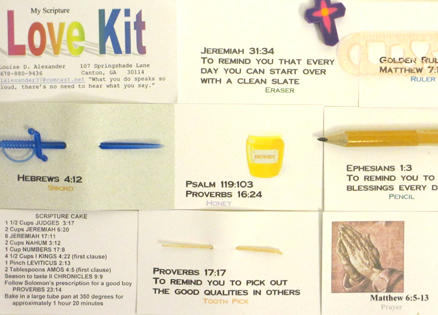
My friend Louise Alexander was inspired by a story she read in an old issue of Guideposts magazine. The story described something called a Love Kit, a collection of seven items with a Bible verse accompanying each one, a reminder of all the ways God provides for us.

Louise did her own Bible research and came up with more than 50 other items to add to what she calls her Scripture Kit. There’s an eraser “to remind you that every day you can start over with a clean slate. (Jeremiah 31:34)”; a tea bag so you’ll remember to “relax daily and be thankful for your blessings. (1 Thessalonians 5:18)”; a candle and the recommendation to “share your light with others. (Psalms 18:28).”

Other items she includes are:

  • A pencil “to remind you to list your blessings every day. (Ephesians 1:3)”
  • A band-aid “for healing hurt feelings–yours or someone else’s. (Psalm 147:3)”
  • A rainbow sticker “to reassure you that God keeps his promises. (Genesis 9:12-15)”
  • The image of a flower and the promise that “with God’s help you can bloom where you’re planted. (Isaiah 58:11)”
  • A stick of chewing gum “to remind you that if you stick with it you can accomplish anything. (Philippians 4:13)”

She’s been gathering ideas and sharing these kits for nearly 30 years. In that time, Louise has given away over 400 of her kits. She mails most and hand delivers others. Anyone can be a recipient—friends, family, people on the church prayer list, whoever needs an encouraging reminder of all the promises in Scripture.

And as Louise has found, there are many!

Read Louise’s account of how her Scripture Love Kits project has grown, and download a list of the verses she uses.

Comforted by a Christmas Sweater in July

It was the last thing I wanted to do. Walk around my Brooklyn neighborhood on a hot and sticky July afternoon in search of a floor fan. The air conditioning in my apartment had just conked out and who knew when the super would get around to having it fixed. I was in no mood for any of it.

In truth, it was far more than the scorching sun that had me upset. The one-year anniversary of my mother’s death was approaching, and I didn’t know how I was going to handle it. She’d died suddenly, after a late-stage cancer diagnosis. There’d been no time to prepare myself, if that was even possible, and over the past year I’d only begun to take in the reality that I’d never feel her close again.

Celeste and her mom, Judy; Photo Courtesy Celeste McCauley

She’d visited me often from Pennsylvania, always emerging from the bus in a colorful outfit, accessorized to the hilt, ready to see the latest Broadway play or try the newest Italian place in Brooklyn. We never missed the lit-up Christmas tree at New York City’s Rockefeller Center. She’d be in one of her many Christmas sweaters, raring to go, suggesting that I add an extra layer against the cold, or demanding “at least a warm hat, Celeste!” before we left the apartment, just like she did when I went out to play in the snow as a kid.

I passed the last café we’d sat in together. She’d surely ask me if I’d applied sunscreen before going out today. I could almost hear her questioning me.

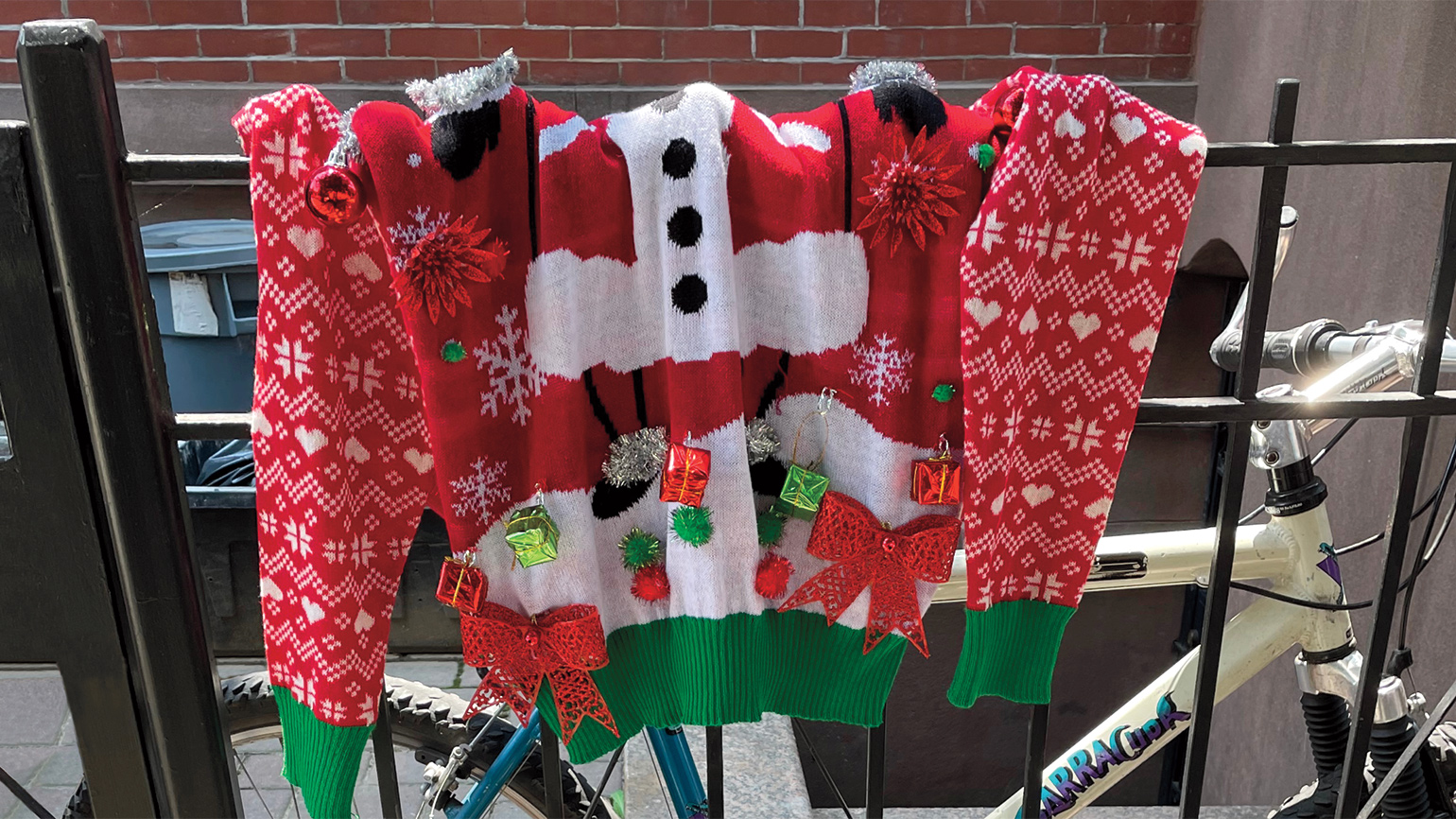
I walked by a row of brick walk-ups and noticed a sweater neatly draped over the gate out front, a signal that the gently used item was there for the taking. I wasn’t sure who else would look twice at a Christmas sweater on such a day. But I did, knowing Mom would have gotten a chuckle out of the bells and gift boxes that put it over the top even for her. Underneath the sweater, leaning against the gate, was a Touched by an Angel DVD. Roma Downey and Della Reese’s classic was one of Mom’s favorites. Was an angel trying to tell me something?

I reached the corner, and out of nowhere a woman called out to me. “Where’s your hat?” she asked. She was in her seventies, impeccably dressed, with a jaunty straw hat to match her outfit. As she approached, I admired her earring and necklace set. A perfect summer ensemble. Like one Mom would have worn.

“Where’s your hat, young lady?” the woman asked again. “That sun demands a hat!”

Martha introduced herself and we exchanged pleasantries. She said she lived nearby. I didn’t mention my broken air conditioning, my hunt for a fan. Or that she was yet another answer to my prayer to feel Mom close. My neighborhood was full of memories and angels that did just that.

For more angelic stories, subscribe to Angels on Earth magazine.

Columbine Angel

My husband, Don, and I pulled into the high school parking lot that cold December afternoon. It had been 20 months since the shootings. Twenty months, and still I could hardly bear to look at that building.

Sometimes it seemed like only 20 minutes since the April day in 1999 when we waited with the hundreds of other frantic parents for our children to make their way through the cordon of police and emergency vehicles surrounding Columbine High School. Some of the kids came out crying, frightened, stunned. Some were rushed from the school in ambulances.

One teacher and 12 students, including our 16-year-old Kelly, did not come out. For a day and a half they remained where they had died while investigators pieced together an account of two teenage boys who had fallen into the grip of a terrible evil—the evil that seemed to me to hover still about the place where it happened.

Like most of the others, Kelly was killed in the library, crouching beneath a table as bullets ricocheted through the room. Just inside those windows! I thought as Don got out of the car. Right behind that curved steel-and-glass facade. It was too much to bear. I turned my head away, unable to look.

It had been weeks before the examination of the crime scene was complete and police let the families visit the site. It was important to me to see the place where Kelly had tried to hide. I needed to pray at the spot, outlined in white on the floor, kneel where she died. But if I thought actually going to the library would ease its menace, I was wrong. The bullet-scarred walls, the splintered tabletops, a shattered computer screen—violence and hate were still palpable there.

We live just two blocks from the high school, and for a long time I could not even drive by it, taking long, bizarre detours for the simplest errands. But for Don’s sake, and for our older daughter, Erin, I had to pick up my life again. And what helped most was remembering how Kelly loved angels.

From the time she was tiny, Kelly and I had shared a special affection for these messengers of God. I can still hear her piping little voice, at age three, reciting the verse on the little guardian angel card my mother had given her:

“Angel of God, my guardian dear
to whom his love commits me here,
ever this day be at my side
to light and guard,
to rule and guide.”

Kelly loved that card. I’d often see it on her dresser top or catch sight of it with her schoolbooks. When she was older we would sit together on the sofa and watch Touched by an Angel. We never missed an episode. We bought the soundtrack CD too, and would sing along in the car, just the two of us.

For Kelly and me, angels were our shorthand for “God is near!” And his nearness is what made her such a happy child—a girl who woke in the morning with a smile and literally skipped through the day, blue eyes sparkling, long blonde hair swishing behind her.

That’s what gave the library its peculiar horror for me. Kelly was such a gentle, trusting little soul to die amid such evil! I’d given her a poem about angels that she kept in a frame on her bedroom wall. After she died I’d step into her room again and again and read it, lingering over one line especially: “Angels are with you every step of the way and help you soar with amazing grace.” I wanted to believe an angel had been beside her that day, with her beneath that table, helping her soar above the terror.

Almost as though they knew I needed them, people sent angel figurines along with their condolences. They came from friends, neighbors, total strangers—china angels, metal angels, wooden angels. An eight-year-old daughter of a friend tried to count the angel images in our house one day and gave up at 175—and every one of those angels whispered to me that Kelly was fine.

Only around the library was I unable to feel comfort. Not that we hadn’t tried to exorcise the evil from that place. The school district at first wanted to repair and refurbish the space, but Don and I and the other parents believed that no child should ever again be asked to study there. God brought us together in an organization we called HOPE—Healing of People Everywhere—to raise money for a brand-new library building.

What began as a fund-raising effort among the families was caught up by the whole community, then by the entire nation and even beyond. The new school building was under construction now—Don had driven in that afternoon, as he often did, to check on its progress. “I’ll stay in the car,” I told him. I’d visited the building site with the other families just a few days earlier.

The new library posed no terrors. It seemed to me a sign of life continuing, life affirmed. It was the presence of the old site that continued to oppress and upset me. I glanced reluctantly at it through the car window. Its exterior was unchanged, but inside, I knew, nothing was left of the old facility. Architects had come up with a design that preserved the cafeteria on the ground floor, while entirely removing the second floor where the library had been.

The cafeteria now had a spacious atrium feel, bright and light, with a beautiful mural of trees on the high ceiling, drawing the eye upward. Students and faculty of Columbine High School had a space that all could enter without fear. With the other families, we’d see to it that no physical trace of the tragedy remained.

Yet for me, the place still menaced. I turned my back on it and stared the other way out the car window. I need to know that Kelly’s all right, Lord, I prayed. I need to know she’s happy and at peace.

Turn around. Look at the building. The nudge didn’t come from me. That building was the last thing in the world I wanted to look at. I wrenched my head around…and blinked in astonishment.

Something bright was moving across those upper windows! Something shimmering and glowing, gliding slowly past the glass exactly where the old library had been.

Open-mouthed I stared while the unmistakable figure of an angel hovered over that second story. Wings, radiant hair, flowing garment—no artist could have rendered a heavenly messenger of comfort more gloriously.

I sat awestruck, seeing, yet scarcely believing. Even here, even here! Your angel was here with Kelly, just as you are with her always and forever.

How long did the vision last—15 seconds? However brief the time on a clock, I knew the angel had given me a lifetime of assurance. In the midst of all the evil that ever was and ever will be, God is present. God is with us. God is stronger.


Bonding Over Carrot Cake

My best friend, Kathy, and I met up for lunch at a restaurant in Atlanta, Georgia. We were digging into dessert, big slabs of cake, when she suddenly put down her fork. “This is so bland,” she said, pushing her plate away. “Why is it so hard to find a piece of good ol’ fashioned carrot cake?”

I never knew Kathy liked carrot cake! I thought. It’s been way too long. We really need to catch up.

It had been 13 years since Kathy and I first met when we were teenagers at church camp. We bonded instantly. Over the years we both moved around the country, never landing in the same town. We managed to stay close though—tying up the phones and sending cards and letters like crazy.

Now we were both living in Georgia, less than two hours’ drive from each other, and I recognized a perfect opportunity. “You know, Kathy, I make a pretty mean carrot cake,” I said. “You’ve got to try it sometime.”

I’ve been making carrot cake for so long that I can’t even remember how I got my recipe. There’s something about the vegetable-laden cake and smooth cream-cheese icing that I just simply can’t resist.

“I’d love to! To think, I didn’t even know you baked!” she laughed.

A few weekends later I grabbed some ingredients from my pantry and drove over to Kathy’s place. If I wanted her to try carrot cake my way, I thought it would be a nice treat to prepare it in her kitchen.

I peeled, grated and mixed at lightning speed. Once the cooled cake was frosted I cut a big slice and set it down in front of her.

“Now this is a good ol’ fashioned carrot cake,” I exclaimed, waiting for her reaction.

“Wow! This is incredible!” she said.

We talked and laughed all weekend like we were teenagers again. Before long, the cake was gone.

“We should try to get together like this every month,” I told Kathy.

“At least!” she agreed.

Two years later Kathy’s husband, Marty, got transferred to a job in New Jersey. Not another move, I thought. Lord, my best friend and I always seem to be apart. Help us stay close.

We went back to our regular phone calls and sending letters, but it just wasn’t the same.

One afternoon Marty called. “Kathy’s birthday is in a few days,” he said. “I know how much it will mean for her to see you. I’ve already booked your flight.”

That entire weekend Kathy and I were inseparable. The morning of my flight home, I sent Kathy off to work with a big hug. The second the door shut behind her I marched right into her kitchen. I’m sure you can guess what I made!

There was a message on my machine when I got back home. “What a treat!” Kathy said. “No cake will ever measure up to yours. Just like our friendship, it’s one of a kind.”

Over the years that carrot cake has had a funny way of keeping us close. Like the time Kathy and I were living on different coasts and met up for a girls’ trip to Florida. After a long flight and a few snags checking into our hotel, we couldn’t wait to unpack and relax in our room.

I unzipped my suitcase. “You didn’t!” Kathy shouted when I pulled out a container of my carrot-cake cupcakes.

Kathy isn’t the only person who likes my carrot cake. When I was planning my wedding five years ago, as you might imagine, my husband, Rob, and I chose a carrot wedding cake. And of course, there was no one better to serve the cake to our guests than my best friend, Kathy, and her husband.

When I asked God to keep Kathy and me close, did I ever imagine that a simple carrot cake was part of his plan? Never. But I thank him every day for it.

Today Kathy and I are going on 33 years of friendship. There’s nothing—not even a delicious carrot cake—that’s sweeter than that.

Try Kathy’s Favorite Carrot Cake!

A Nurse’s Angelic Encounter in the Department Store

Candle holders, picture frames and other knick knacks surrounded me in the housewares department. While my husband and I waited for construction to be finished on our new house, I enjoyed browsing for decorating ideas. A figurine on one of the shelves grabbed my attention, and I picked it up. It was beautiful, made of cast bronze. A woman danced with a young girl, their faces caught in a moment of pure joy, their skirts in motion, the girl looking up adoringly at what could only be her mother.

Memories flooded in. I remembered my daughter, Laura, my son, Glenn, and me, dancing around the living room, still in our pajamas. I was a nurse, which meant long shifts at the hospital, so I cherished these moments with my children. “Having so fun,” as Laura used to say.

I could see both of my kids now—Glenn bouncing to the record player as Laura spun round and round. Time had passed in the blink of an eye. Now my husband and I were moving out of the house they’d grown up in. Laura had children of her own and worked as an interior designer. Glenn worked in graphic design.

Right in the middle of housewares, I’d been sent on a trip down memory lane by a figurine. I had to buy it, and knew just where I’d put it in the new house. On the fireplace mantle in the living room. Only one thing could make my purchase more perfect: if this figurine were part of a set, the other piece of a mother dancing with her son. It was possible I’d find one.

Determined, I searched the entire housewares department. I carefully scanned every shelf. There was no companion figurine anywhere, nor a salesperson to help me.

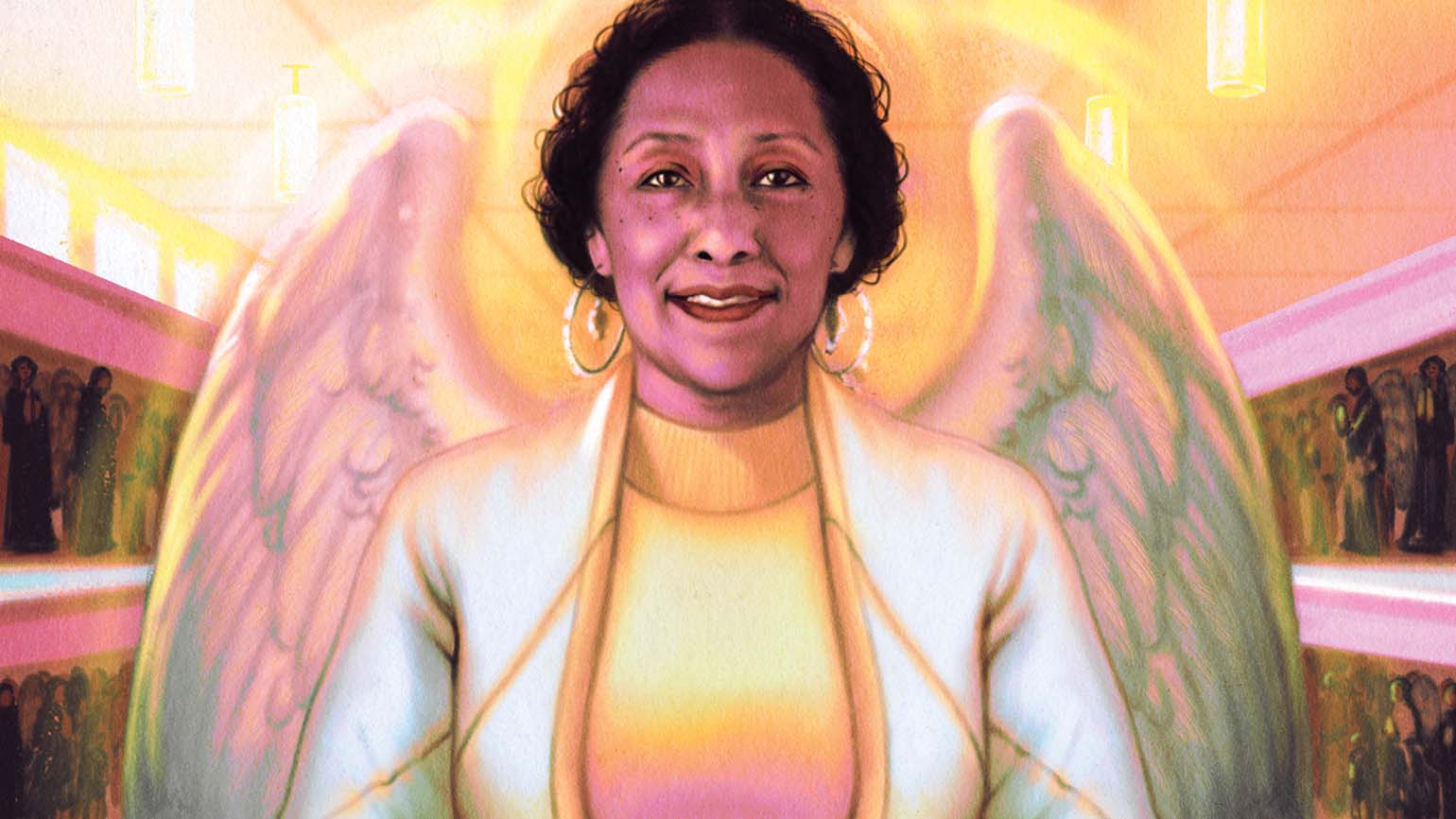
Maybe the cashier will know, I thought, cradling my find. I turned to head to the registers. As I stood in the checkout line, I spotted an older African-American woman, dressed in a tailored pantsuit, walking toward me. She walked quickly and with purpose, like a woman on a mission.

She immediately reminded me of one of the nurses who’d been a mentor to me in the early years of my nursing career. Her name was Mallie Glenn. She was a private duty special nurse who often worked on the same unit as me. I would never forget her. I could not have been the devoted nurse and mother I was without her support, so much so that I named Glenn in her honor.

I stepped aside, so the woman could get past. But when she abruptly stopped in front of me, I saw that she was holding a figure similar to mine. Without saying a word, she held it out to me. It was a woman dancing with a little boy.

I accepted her offering, too astonished to ask the questions roiling in my mind. Did the woman work here? How did she know just what I was looking for? Where did she find it? Before I could gather myself enough even to say thank you, the woman strode down an aisle and out of sight. Just like Nurse Glenn going on to her next task.

WhileI paid for the two figurines at the register, I described the mysterious woman to the cashier. “Does she work here?” I asked.

The cashier frowned. “I don’t know who you could be talking about,” she told me. “I’m the only salesperson working in this department today.”

Before I left the store, I took another look around for the woman who’d sent me back to happy memories of my children and my wonderful nursing mentor. The only proof I have of the encounter sits on my mantle. A gift from an angel.

For more angelic stories, subscribe to Angels on Earth magazine.

An Unlikely Source of Comfort from Beyond

My dad had a funny habit of barking at our elderly Shih Tzu, Daisy, whenever he came to our house. “Woof, woof,” he’d say, and Daisy would wag her tail and bark back. “Good dog!” he’d praise her. It always made me smile.

Dad had dementia and lived in a senior community not too far from us. I hadn’t been able to visit him for months because of Covid restrictions, so we would have regular FaceTime calls.

Each day when I talked with my father, we had the same ritual. He’d bark at Daisy. He’d shout, “Hi, buddy,” at my husband, Steve. Then he’d tell me what he’d eaten for lunch and dinner and who had called him. I didn’t know if Dad was making everything up or if he actually remembered the events of his day. He’d ask what I’d been up to, and I would give him a full report, though I was never confident how much Dad really retained. I could only pray that those calls meant as much to him as they did to me.

As the months rolled on, Dad’s memory worsened, as we knew it would. He would tell me that no one had called, even though I knew my brother had just spoken with him.

About the same time, Daisy, who was nearly 16 years old and diabetic, began to decline significantly; she wouldn’t eat regularly and bumped into walls.

That November, Dad’s health took a turn. He bounced back and forth from a nursing home to the hospital. The day before he passed away in December, I was allowed to visit him to say goodbye.

As I grieved, I prayed we wouldn’t lose Daisy too. Steve and I discussed whether we needed to have her put to sleep. Daisy’s vet said she wasn’t in pain and to give her extra love. That’s exactly what we did.

Then one February afternoon, Daisy collapsed. Steve and I took shifts holding her wrapped in a blanket. In silence, I rocked her. God, I don’t know if I can stand more heartache.

The next morning, while I was doing dishes, I felt an urge to ask my father, “Dad, help Daisy cross over.” I distinctly heard my father’s voice bark out, “Woof.” A few moments later, Steve came into the kitchen and told me that Daisy had passed.

“Thank you, Dad,” I whispered. Through my tears, I smiled.

Another Kind of Snow Angel

Farmers don’t get “snow days.” When I awoke to a howling blizzard that morning, I knew it was going to be tough getting to the sheep. Fifteen miles of open prairie stretched between me and their winter feed ground. But even in the middle of a blizzard like this one a shepherd doesn’t leave his flock for long.

“I’m going to wait for Wilmer and Nora to drive by,” I told my wife, Wanda. “It’s not smart to get on the road by myself.” I often traveled with my neighboring ranchers in poor weather. They had even farther to go to reach their cattle.

I waited at the kitchen window until I saw Wilmer go by in his John Deere tractor, with Nora following in their truck.

“Be careful,” Wanda said.

I ran out and climbed into our four-wheel drive pickup. Squinting through the windshield, I strained to see the trail Wilmer left. The storm dumped snow in his tracks almost as fast as he made them. Grinding in low gear, my pickup bucked along until it couldn’t go anymore. I was stuck.

Pellets of snow stung my face as I pushed the door open and reached in the back to grab the scoop shovel. Up ahead Nora shoveled out her own truck. We all dug until the trucks were free, and then drove until we got stuck again. Then we shoveled some more.

Mile after mile we fought our way through the storm. Hours had passed since we set out. My fingers were numb and my legs ached. Daylight was fading as we passed the old schoolhouse by the road.

Wilmer and Nora stopped. I had to accept the truth too: I would never get to those sheep in this storm. Lord, take care of them until I can, I thought.

I looked back at our tracks. Snow filled them completely. The road home was now impassable. We were stuck in this blizzard.

“We have to get to Johnny’s!” Wilmer hollered from his tractor.

Johnny was another rancher. He was away, but Johnny always left his basement door unlocked for emergencies like this one. We could get something to eat and warm up by his furnace. Maybe the storm would let up. The weather could change on a dime on the prairie.

It didn’t take us long to reach Johnny’s mailbox, but his house was still half a mile down a country road buried in snow. I leaned out the window of my pickup. “We’ll have to walk!” I called to Wilmer and Nora.

We parked the tractor and trucks, pulled our caps down around our ears and set off in the snow.

We tromped through the drifts. With the storm spitting snow at us, we couldn’t see Johnny’s house. We had to set our bearings by instinct as we moved together in the whiteout, picking up one heavy foot after another and dropping it in the snow, making a crooked path toward Johnny’s farm.

Snowdrifts surrounded the house. Finally we fell through Johnny’s basement door, cold, hungry and wet.

“I’m gonna call Wanda and let her know we’re safe,” I told the others as I pulled off my frozen coveralls.

Nora opened the pantry. It was past five o’clock and we’d left early that morning. We were hungry.

We warmed up over canned chili and talked. Wilmer worried about restarting the tractor. A heater next to the engine kept the oil from getting too cold to start. But the heater had to be plugged in to an outlet to work.

We could barely get ourselves through the snowdrifts surrounding Johnny’s house. No way we could get the tractor close enough to the outdoor outlet.

“The schoolhouse,” Nora said. “It’s right on the road. We can get close enough to that outlet.”

“But how will we find our way back to the road?” I said. “Our tracks are long gone and it’s dark.”

We could get lost in the empty prairie. I remembered asking God to take care of the sheep. But what about us?

We all knew Wilmer was right. We had to move while our engines were still warm. At least the snow had stopped. Nora would stay behind while Wilmer and I went back out.

I put my damp coveralls back on. Lord, please go with us. If ever we needed a shepherd to guide us, we needed one now.

I stepped out of Johnny’s basement. Empty prairie and snow in every direction. Too much snow to make out one tiny mailbox, or even the vehicles, in the distance. As I looked out ahead of us, the moonlight caught a funnel of whiteness rising above the snow.

Wilmer and I looked at one another, puzzled by the grainy shape. We moved toward it. Just ahead was another. And another. They were staggered in a crooked path—the path we’d made with our footsteps on the way to Johnny’s!

Each footstep had pushed down and compacted the snow as we’d plunged through the drifts. The lighter snow that had fallen on top was now being stirred up by the wind.

Mini geysers of white powder shot up toward the sky, while the wind whipped around them, blowing the loose snow away to reveal our buried footsteps. We’d follow our own path back!

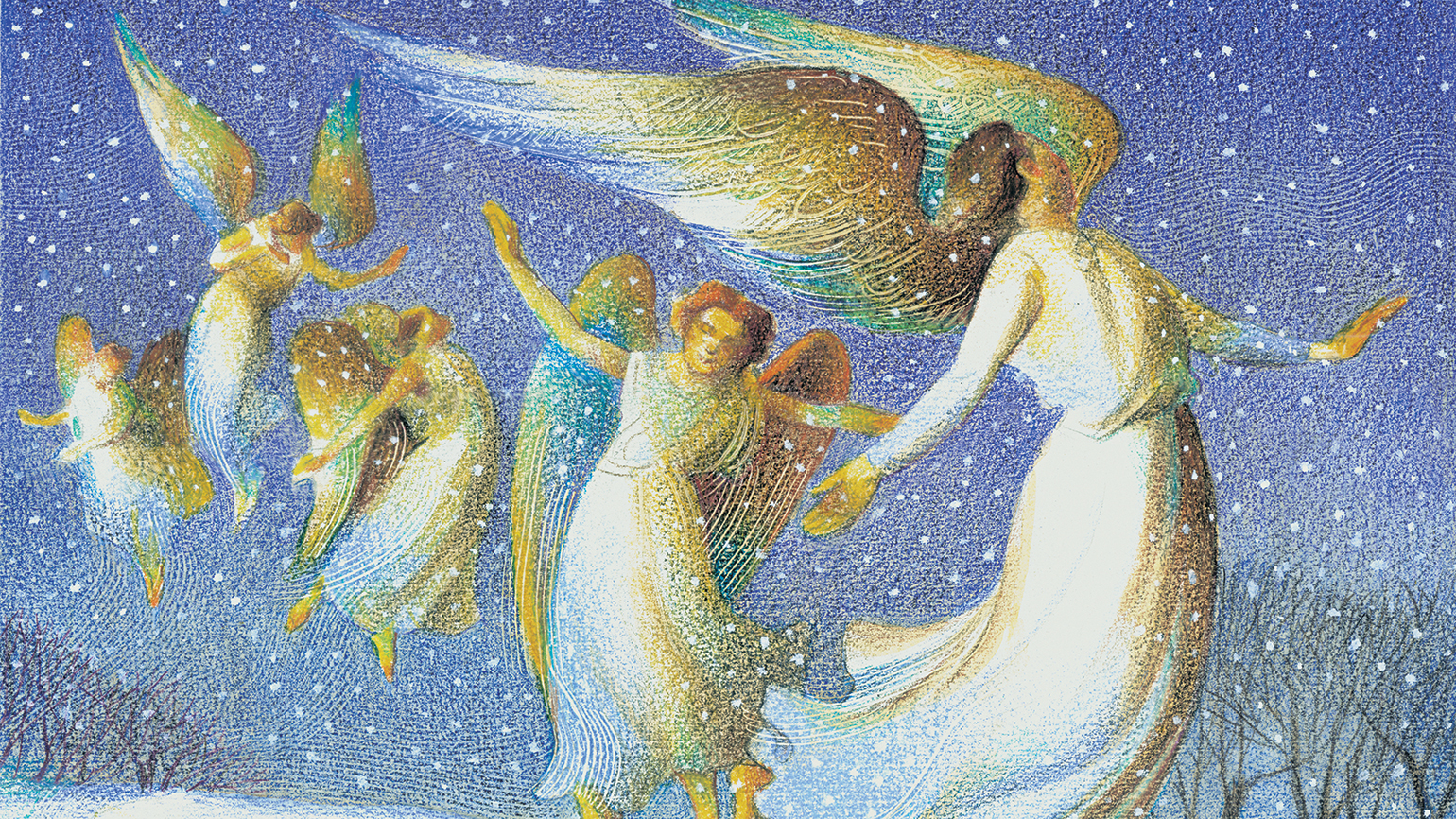
We picked up our pace. The swirls of snow looked just like angels, white and otherworldly, leading the way.

Leading the way—like a shepherd leads his flock. We made it back to the tractor at Johnny’s mailbox. We drove it to the schoolhouse, and plugged it in before heading back to Johnny’s in my truck.

Our beaten path through the snow was easy to follow all the way to the basement, our “camp” for the next four days. And the sheep and the cattle? A good shepherd took care of us all and kept us safe in the storm.

READ MORE: HEAVENLY MESSAGE, NO BATTERIES REQUIRED

Angels in Disguise

After a busy day, I look forward to cozying up with the warm comfort of my little spaniel Kelly and a good book. So when I discovered Phyllis Hobe’s Angels in Disguise, I knew I’d found the perfect combination.

The angels in this book are a most inspiring assortment of dogs, cats, birds, cows, chickens and other animals. The jacket copy states that there’s something special about animals that touches people lives. I couldn’t agree more. Ever since I’ve been writing the Guideposts column “Pawsitively Pets,” I’ve heard from readers about the bond they share with their pets. And I’ve also shared how my own dog Kelly nudges me out of my comfort zone, and even improves my health by going on a diet with me.

In this book, we see how animals are caretakers like Munchie the pony who helped a woman battling a crippling disease gain strength and courage. They are comforters, like Olivia the white cat who made a mysterious appearance from beyond. They are protectors like Barney, the stray dog who wouldn’t leave a badly injured woman’s side, except briefly to answer the phone. (You’ll have to read it to see how!)

God sends us animals to love and comfort us. And it’s a treat to find so many of their stories compiled together in one inspiring book. Tonight I’m curling up on my chair next to Kelly again, and maybe I’ll even read her a few Angels in Disguise stories out loud. I think she’ll like the ones about Jellybean the rabbit, and Buckwheat the Singing Dog. And while I’m at it, I’ll take the time to thank Him for all the angels in disguise in my own life.

Angels Comforted Him After a Fall

Angels can fly, of course, but did you know that they can’t walk? They never experience what it’s like to lose their balance, or to trip, or to have to get up from a stumble to the ground. They never fall, a scenario that is all too familiar to us.

This insight is not original with me. It came from a rabbi and Jewish scholar, drawing from the book of Ezekiel. Right in the first chapter, the rabbi pointed out, we read the description of the angels that appeared to the prophet. The angels emerged from a cloud: “Their legs were straight, and the soles of their feet were like the sole of a calf’s foot; and they sparkled like burnished bronze” (Ezekiel 1:7).

Their legs were straight. Stiff, no bending knees. For a winged creature, this is hardly a problem. Angels can indeed move around in the air, flying in all directions. Albeit never to face the embarrassment of a misstep, or the misery of a more serious accident involving bone breaks or sprains, casts or surgery, or just big ugly bruises.

I heard the rabbi’s talk in a Zoom session I’d joined, and alas, I was in a bit of discomfort myself while I considered what he said.

A couple of days earlier, I had been sitting on the sofa at a friend’s apartment, seeking isolation while he was away. My family were all quarantining at home with Covid. Our son, Will, his wife, Karen, and their six-month-old, Ricky, had flown out from California for a week-long visit that had to be extended when they all tested positive, as did my wife, Carol.

Fortunately, their cases were mild. Carol had a fever for 24 hours, and Karen felt kind of achy. Will had cold-like symptoms, and baby Ricky was uncharacteristically fussy. They got well enough so that we could gather outside, distanced and masked, but until they all tested negative it seemed best for me—who never tested positive—to stay elsewhere.

Hence, I wasn’t sitting in my usual prayer place, the lumpy sofa at home, that Saturday morning when I closed my eyes on my friend’s couch and sought the presence of God. As always, there were distractions in the silence, worries about family, friends, the world. Troubling thoughts I practiced putting in God’s hands.

At the end of my meditation, I stood up from the sofa. Too fast, apparently. I felt dizzy and disoriented in the unfamiliar setting, not knowing what to reach for to steady myself while I regained my balance. I tripped on the rug, over the coffee table, and landed on my face. My nose was bleeding, either from clipping a chair on the way down or smacking my nose flat against the floor when I landed. I managed to grab a roll of paper towels from the kitchen, and I sat in a chair for a long while till the nosebleed stopped. Oddly enough, neither my nose nor my face hurt. My back did—I must have twisted it going down—and so did the swollen middle finger of my left hand. I guess I’d tried to catch myself. My body was as bruised as my ego.

Later in the day, I met up with the family for a distanced walk and sheepishly explained myself. I looked a mess, with shiners now showing around my eyes, but I assured everyone I wasn’t in any terrible pain. “At least I didn’t break any teeth,” I said, trying to make light of the silly accident. I promised to put in a call to my doctor as soon as the weekend was over.

It was while waiting for the doctor’s call back that I happened to catch the rabbi’s Zoom lecture on angels, those beings who could neither walk nor fall. I struggled to find some comfort from it until my cell phone rang. The medical assistant relayed a message from my doctor: “You must go to the E.R. right away to make sure nothing is broken,” she said.

I was close enough to get there on my own two feet, and walked—something, I’d just learned from the good rabbi, that angels couldn’t do. The E.R. staff did a CT scan of my face and took X-rays of my back and finger. Nothing broken on the latter; as for the nose, two small fractures. I had to see an ENT.

I dragged myself to yet another medical setting, annoyed that I’d brought the whole ordeal upon myself. The ENT explained why the nose didn’t need to be reset. Unlike an arm or leg with movement, the nose stays in place. The bones would heal in time, and the shiners would fade like my other bruises. But what about my ego? I wanted to ask.

On the walk back to my friend’s place, I kept thinking of what the rabbi had said. Didn’t I have two legs that moved gracefully enough, that took me running up and around the hills most mornings, that raced up and down stairs, that carried me on walks with my family? Wasn’t there angelic reassurance in that? Maybe angels didn’t know what it was like to take a spill like a klutz—like a human—but they offered other gifts. They sang from the heavens when Christ was born. They comforted him when he was tempted in the wilderness. And they, who never stumble, came to my aid consistently, whether I was healing from a physical fall or a temporary fall from God’s grace. I didn’t ever have to heal on my own.

By the time you read this, my nose will be fine. No doubt there will have been plenty of other reasons for me to seek comfort after a misstep. That’s our fate as humans. We fall from time to time. And rise again, with help from the winged creatures whose feet never touch the ground.

For more angelic stories, subscribe to Angels on Earth magazine.

Zechariah: The Christmas Story’s Unsung Hero

I think of Zechariah as the guy who gets left out of most Christmas pageants. You always see the angels appearing to the shepherds, “a multitude of the heavenly host, praising God” with flapping of wings and shimmering halos. And there might be a scene of Gabriel appearing to a startled Mary to proclaim the good news. But if you look back at the Gospel of Luke, you’ll notice that Gabriel shows up at the temple in Jerusalem, appearing to Zechariah first.

When it comes to holiness, Zechariah would be at the top of any list, one of those good souls who has spent his life doing the right thing. As a priest at the temple, he and his wife Elizabeth have observed all the commandments. They are “righteous before God,” blameless. Their only unanswered prayer is that they’re getting on in age and still haven’t conceived a child.

You can imagine what the village gossips would have said. Sure, Zechariah was a holy man, reeking with the stench of temple incense, but the couple must have been hiding some deep dark secret or God would have shown them favor by now, wouldn’t he have? Zechariah and Elizabeth must have asked themselves the same thing.

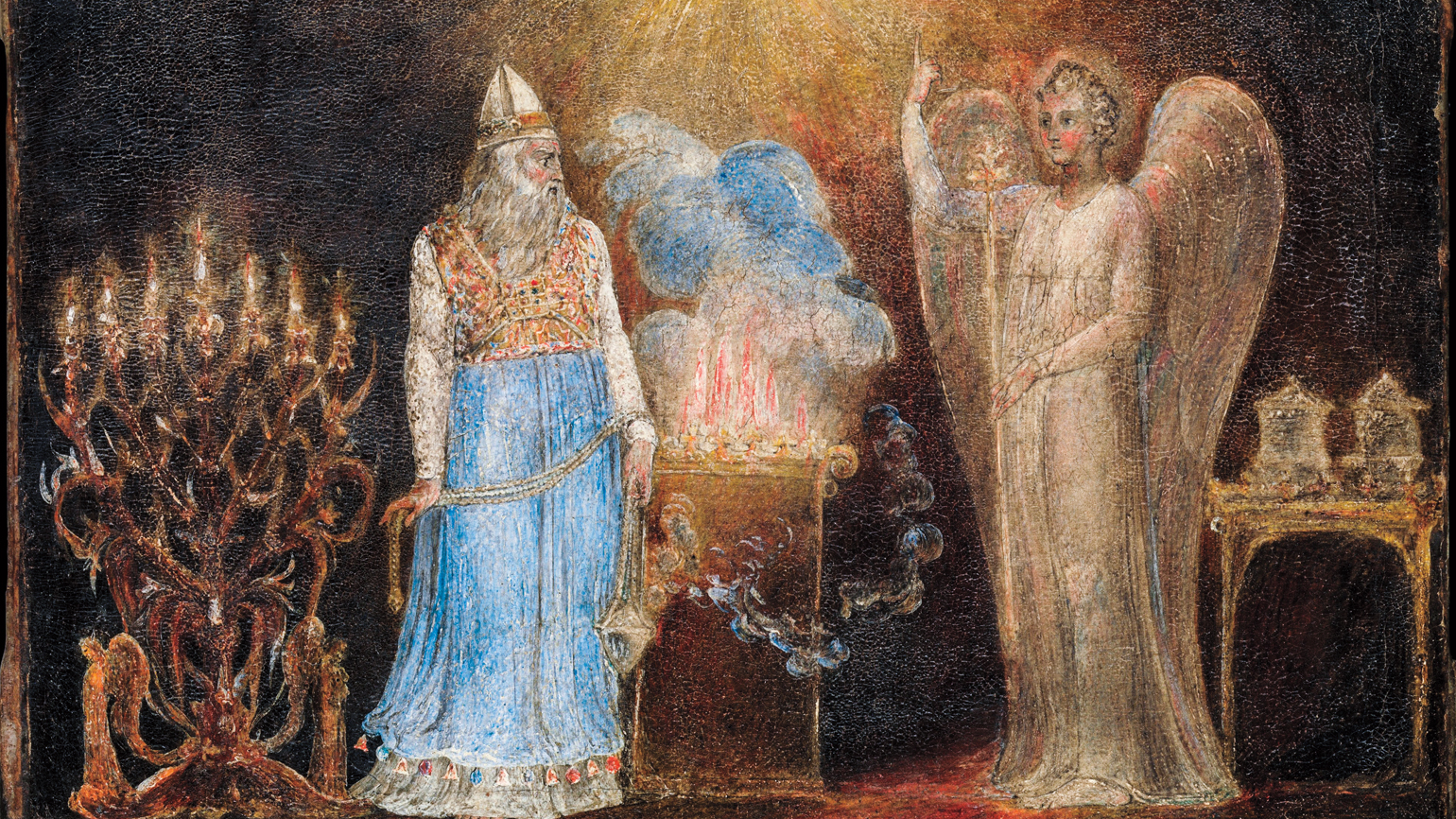
Then one day, as Zechariah is serving at the temple, standing in the holiest of holy sanctuaries, burning more incense and saying the prayers, an angel appears all at once to the right of the altar. Zechariah is overcome with fear, a common biblical reaction to such celestial events.

“Do not be afraid,” the angel says—taking the line from the usual heavenly script—“Your prayers have been heard. Your wife Elizabeth will give birth to your son, and you must name him John.” The angel goes on to say that this child is not going to be like any other child, but will be filled with the Holy Spirit, a prophet like Elijah, turning the people of Israel back to righteousness, preparing them for the appearance of the Lord.

It’s easy enough to forgive Zechariah’s incredulity. How often had he gone to the temple and never seen anything like this? How on earth was his elderly wife going to have a child? It seemed impossible. He must have been tempted to laugh, as the aged Sarah did when she was given similar news. “How can I be sure of this?” he summons the courage to ask. “My wife and I are very old.”

The angel is sorely offended. After all, he’s not a lowly cherubim or seraphim; he is the archangel Gabriel, at the top of the heap, called on to deliver God’s most important messages. In fact, the next person on his agenda is Mary the Mother of God. Think of the news he’ll bring her. How dare this old codger not believe him.

I’m Gabriel,” the angel says. “I was sent to speak to you and to bring this good news to you. What I have spoken will come true.” Then he delivers the zinger. “But because you didn’t believe, you will remain silent, unable to speak until the day when these things happen.” The unspoken message: Don’t mess with Gabriel.

All of this has taken a while. Outside the temple people are wondering why Zechariah is still inside. The prayers and incense have stopped, so why hasn’t he come out? Finally he emerges and gestures helplessly, trying to explain that he’s seen a vision, been given some extraordinary news. He has traveled to Jerusalem from his small village to do his priestly stint, and he waits it out, wordlessly now, no doubt confused as to how the angel’s words will be fulfilled.

When he returns home to his village, Elizabeth does indeed become pregnant. For five months she doesn’t tell a soul. Until her cousin Mary—after she has heard from Gabriel— comes for a visit. The baby Elizabeth is carrying leaps in her womb as though to greet the child Mary is carrying. The two of them will change the world. “Why do I have this honor,” Elizabeth asks, “that the mother of my Lord should come to me?” She gets it—a common trope in the Gospels that the women are often quicker on the uptake than the men.

Meanwhile Zechariah remains mute until his son is born. On the eighth day the baby is taken to be circumcised, following the Jewish ritual. Everybody wants to name him Zechariah, after his father. No, his mother says, he should be called John. Zechariah asks for a tablet so he can write it down: John. At that moment Gabriel’s curse is lifted and Zechariah is able to speak again.

“You, child, will be called a prophet of the Most High, for you will go before the Lord to prepare his way,” Zechariah proclaims. “To give light to those who are sitting in darkness and in the shadow of death, to guide us on the path of peace.”

There are various legends about what happened to Zechariah later in his life, that he managed to hide his son John the Baptist from Herod’s minions when the king slaughtered all the baby boys in Bethlehem. Perhaps. But the vision I hold in my head is of a man who waited into old age for his prayers to be answered. And then an angel appeared to him with news more astounding than anything he could have dreamed. That’s the unspoken promise every Christmas pageant brings to me.

Did you enjoy this story? Subscribe to Angels on Earth magazine.

Your Angel Story

We just had our weekly editorial meeting, where editors pitch stories they’ve heard about by word of mouth or found by reading hard-copy and online submissions. Most of the stories in our publications come from you, so we love a full mailbox (both kinds). A big part of our jobs is reading, reading, reading those manuscripts you so generously send in.

Every week I most look forward to one kind of pitch in particular—stories pitched to Angels on Earth, of course! After each meeting, I come away thinking we’ve found the angel story to beat all angel stories, and I can’t wait to see it published for everyone to enjoy. I wonder how it can ever be topped. And then it happens! I fall in love all over again. Week after week, we collect stories we can’t wait to put in an issue. I’d like your story to be one of them.

Community Newsletter

Get More Inspiration Delivered to Your Inbox


If you’ve been putting off writing down your angel story, or writing up the true story of someone you know, do it now. It doesn’t have to be fancy. We’re here to help you get the finished manuscript ready for publication. Email your story or send it to Angels on Earth, 16 East 34th Street, New York, NY 10016. Maybe you’ll get it to us in time to be pitched at next week’s editorial meeting. I’ll be waiting!

Welcome to the Honey House

Who they are: Detroit natives Timothy Paule and Nicole Lindsey founded Detroit Hives, a nonprofit that buys vacant properties in the city to transform into bee farms. (With more than 90,000 vacant lots, there’s a lot to work with!) The duo is focused on improving the Motor City’s “left behind” communities and educating people about apiology (the study of bees). Their motto: “Work hard, stay bumble!”

What they do: They transformed an abandoned lot into their first urban bee farm in 2017. “We hope that our work beautifies communities and cultivates and improves the environment as well,” Timothy says. They also educate the community about the importance of honeybees. One third of the food we eat depends on pollination.

Why they do it: Timothy got interested in honey and honeybees because of a cough he couldn’t shake. He was sick for months, until a store owner in nearby Ferndale recommended local raw honey for its medicinal properties. Soon Timothy’s cough was gone.

He researched beekeeping, and his partner, Nicole, suggested they bring it to Detroit. “We had wanted to do something with the vacant lots that would uplift the community,” says Timothy. Abandoned properties often become illegal dumping grounds, contributing to an overgrowth of allergens—not to mention urban blight.

How they do it: Timothy and Nicole took classes to become certified beekeepers. They bought their first vacant lot for $340, with the aid of the Detroit Land Bank Authority community partnership program. From there, they built three hives and vegetable garden plots. “Beekeeping has allowed me to understand that everything and everyone has a purpose in their environment,” Timothy says. “It’s taught me to be a good steward of our surroundings.”

In addition to making and selling honey, Detroit Hives spreads awareness about bees through public tours of the farm. For out-of-towners, they even offer a bee farm tour through Airbnb. “We have people from France, Canada—all over the world,” Timothy says. “They learn about honeybee hives and the medicinal value of local honey.”

He and Nicole also speak at schools. Some students are afraid of bees at first, but “we talk to them about how everyone has a place in the hive, from the queen to the worker bees and drone bees,” Timothy says. “The students find it intriguing that each honeybee has a unique job.”

How you can do it: Everyone can prevent urban blight and help save the bees. Post a no dumping sign in vacant lots in your neighborhood, and file a complaint with your municipality. Picking up the phone shows that you care. Some people even buy abandoned lots adjacent to their homes and repurpose them for gardens. Avoid using pesticides and herbicides, and plant bee-friendly flowers such as mint, sage and raspberries. These plants help bees thrive.

For more inspiring stories, subscribe to Guideposts magazine.