

Embrace God's truth with our new book, The Lies that Bind

How Mr. Rogers Changed Her Life

How many hours could I spend staring at the same bit of ceiling? In the two weeks I’d spent flat on my back in the Children’s Hospital in Pittsburgh, I’d memorized every inch. At least my bed in the corner of the room was near a window, even if I couldn’t easily sit up to look out.

I was 12 years old, encased in a plaster body cast to stretch me out as much as possible before doctors inserted a metal rod in my back, an operation to straighten my spine. The only thing I had to look forward to each day was a visit from my parents. Today I didn’t even have that. A recent rainstorm had flooded out the roads, and I was stuck, alone and hidden away from the world.

Not that I’d be any happier after I was discharged from the hospital. School wasn’t much fun since the boys in my class had started teasing me, imitating my “funny” walk. I was already sensitive about my looks. My hair, my smile, my complexion… It had never occurred to me that my walk was a sign of something far more serious, until I was talking with my mother one evening. She was absentmindedly scratching my back and suddenly pressed hard on my shoulder blade. “What’s this bump?” she asked.

A doctor diagnosed scoliosis, a curvature of the spine. The treatment was extensive. I was in the second week of the three I had to spend in the hospital, with sedative injections to keep my muscles relaxed, in preparation for surgery. A Herrington rod would be attached to my spine with a hook and bone grafts from my hip. I’d spend another six to eight months in a full body cast at home, followed by four more months in a half-cast. It would be a while before I had to face the kids at school again.

I watched the rain slide down the window. Maybe I was just destined to be funny-looking, metal rod or not, I thought. I’d be alone forever. Never go on a date. Never have a boyfriend. Or a husband. I rolled my eyes to the side as best I could to catch a glimpse of the dozen or so girls in the ward with me, imagining they were all prettier than I would ever be.

A commotion in the doorway caught my attention. Obviously, a special guest had arrived. Local celebrities sometimes visited, mostly athletes who played for the Pittsburgh Steelers or the Pirates. Judging by his silhouette, today’s guest wasn’t a professional athlete.

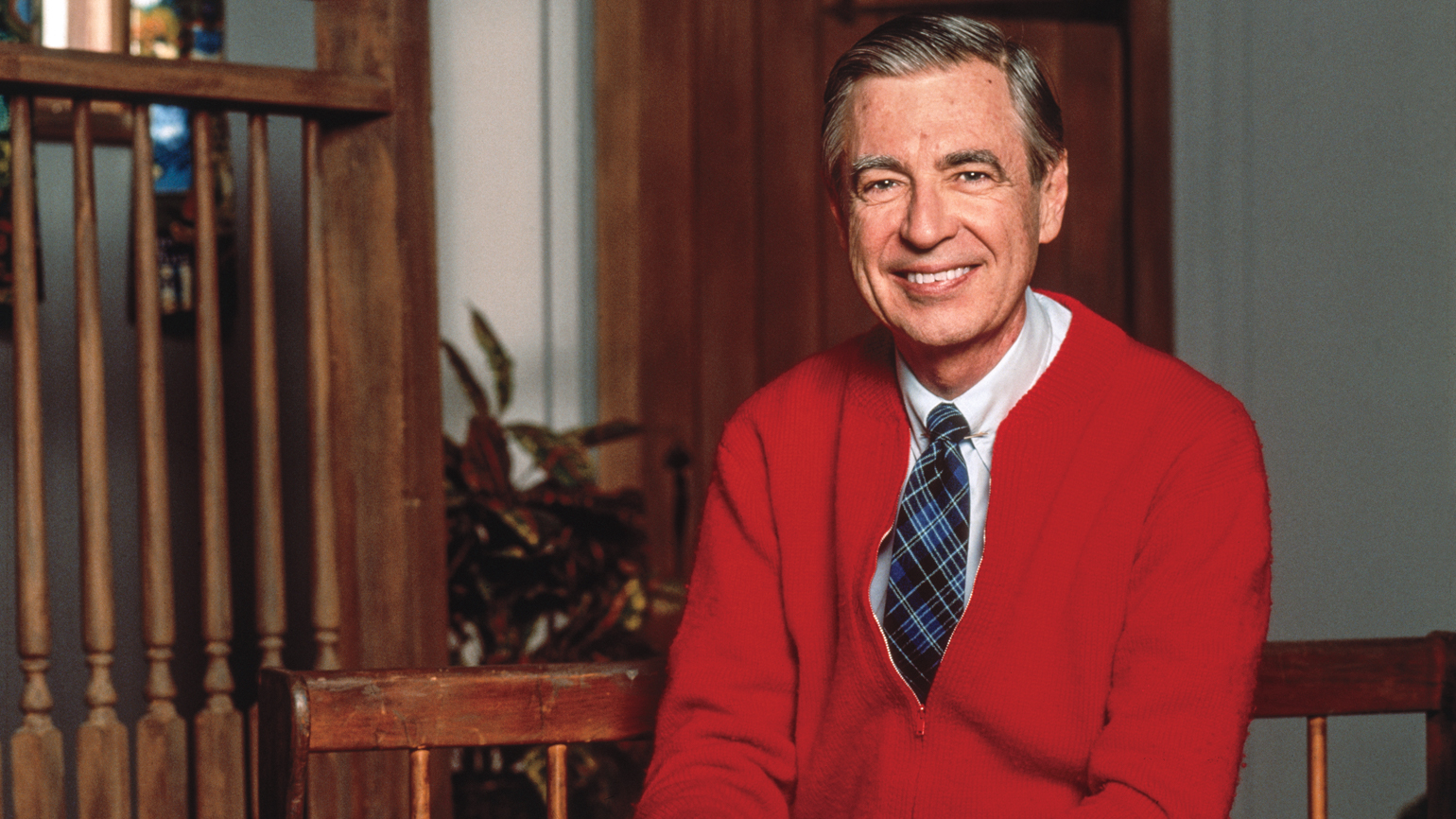
He stepped into the full light of the room and I gasped. It was Mr. Rogers from TV! Some would say I was too old for his trolley and the land of make-believe, but I’d never really outgrown him. My father knew I remained a fan, and every day when he came home from his work at the post office, he opened the door singing, “It’s a beautiful day in the neighborhood…” Dad would unzip his uniform sweater, hang it up and say, “Won’t you be my neighbor?”

I still got a kick out of Dad’s routine. Mr. Rogers had been such a comforting, loving presence to me while I sat glued to his show. When he smiled out at me through the TV screen, I believed he was looking right at me, seeing me for the sometimes frightened little girl I was. He seemed to understand, like no other grown-up I knew, how confusing the world could be. Or maybe he was the only grown-up who was honest about it. He would never say anything that wasn’t absolutely true. No wonder I trusted him completely.

I watched him say “hello” to the girl in the bed nearest the door. He wouldn’t care that I wasn’t pretty like her, or laugh at the cast that made me feel as helpless as a turtle flipped over on its back. Maybe no boy would ever think I was worth talking to, but Mr. Rogers was nice to everyone. He moved through the room, stopping at every bedside for a short exchange.

By the time he made his way to me, I was thinking only of his kindness. He rested a hand on the railing beside my bed, looked down at me and smiled. A genuine smile, like the one I’d learned to trust when I was little. The smile that meant he really saw me, just as I was. He reached out and lightly touched my arm. “What a pretty girl.”

I was so stunned, I didn’t know what to say. Pretty. How many times had that word vexed me, sitting in front of my bedroom mirror, wondering if any boy would ever like me? But Mr. Rogers wasn’t talking about my hairstyle or my complexion, my crooked back or my clunky cast. He had seen something truer, and I believed him with my whole heart. I was beautiful—and I always would be. That thought would have seemed impossible a moment ago. I couldn’t wait to leave the hospital after the operation and reenter the world with a different kind of healing.

Did Mr. Rogers change the life of every child in the hospital that day the way he changed mine? I couldn’t know for sure. I do know that by the time my cast came off, I no longer fretted over the boys at school. I didn’t need a boy to tell me I was pretty, even after I went on to high school and beyond. I was beautiful. Mr. Rogers had told me so.

For more angelic stories, subscribe to Angels on Earth magazine.
How These Heaven-Sent Lovers Found Each Other

“Are you still planning to meet me in person?”

Crystal Dawn stared at the words on her phone. They were from Remy Meyer, a guy she’d been messaging on a dating app for the past two weeks. Remy was from California but had recently moved to Indiana, where Crystal lived.

At least that’s what he said.

Crystal felt a strong connection to Remy. He was in recovery from years of drug addiction, as she was. He wanted to find a job and settle down.

At least that’s what he said.

Crystal trusted no one, especially herself. After all the self-destructive decisions she’d made in her life, all the men who’d lied, cheated and abused her, she wasn’t even sure why she was on a dating app. Or why she felt drawn to Remy.

Crystal had spent years as a drug user in Austin, Indiana. Since getting clean nine months earlier, she’d left Austin and now lived 20 miles away in Seymour, where she was committed to her recovery program. There were so many red flags in Remy’s story, but he didn’t sound like a liar when they finally talked on the phone. His voice was kind, good-hearted, sincere.

But that was probably just wishful thinking. Why risk everything for a voice on a phone? She closed the app and put her phone away. She had to think this through.

Drugs ran in Remy’s family. His mom and aunt overdosed from heroin when he was three years old. By age 13, he was in a gang selling drugs. A carjacking arrest put him in prison when he turned 18. It wasn’t his last time behind bars.

For years he bounced around from California, where he was born, to Florida, Oregon and back to California. He wound up in Indiana after a friend offered him some construction work in Austin.

Every time he moved, Remy vowed to start fresh and stay clean. He signed up for the dating app to meet people in Austin. He’d met a lot of women over the years, but there was something different about Crystal. Something gentle and good. He could tell she’d endured years of pain. She was searching for peace. For God. For sobriety.

Remy wanted those things too. At first, he wondered whether Crystal had relapsed when she stopped responding to his messages. But there was a likelier explanation. Why would a good person like Crystal want to date a junkie like Remy? She’d ghosted him. She was gone. He needed to try to forget her.

Months went by. Crystal ignored Remy’s messages until they stopped. She was 38. She’d been using drugs since she was 13, after a babysitter raped her and shattered what had been a happy, normal childhood.

Decades of addiction had left a trail of wreckage. Failed marriages, her kids taken into state custody, life-threatening overdoses. Before her fourth husband died, he had made Crystal promise that she’d get clean and reconnect with her kids, who’d been adopted by her father.

Crystal overdosed one last time. It proved to be a come-to-Jesus moment. Something deep inside her changed. I’m done, Crystal thought. I want out. I want to be with my kids. This time, she knew she meant it.

She began attending Celebrate Recovery, a Christian 12-step program at a local church. She achieved weeks, then months of sobriety. She found a job and rented an apartment in Seymour. She had no desire to go back to Austin.

Celebrate Recovery recommended at least a year of sobriety before resuming dating. Crystal had been sober nine months when she signed up for the dating app and met Remy. Everything Remy said in their talks came back to one idea: He wanted God, sobriety and love in his life. But she had to stay focused on her own healing. Maybe Remy was the right guy at the wrong time, she decided. Crystal felt bad about ghosting him. But she knew what her sponsor would say: “It hasn’t been a year. You’re not ready.” Was it possible she ever would be?

Remy struggled after he lost touch with Crystal. The friend who’d promised construction work vanished. A job at Circle K helped pay bills, but Remy felt directionless. He started using drugs again. Soon he was selling. Then he got arrested for stealing from the store cash register.

Scared, ashamed, alone in a jail cell, Remy cried out to God. How to break this cycle of hopelessness? Remy stumbled back into his old life after he was released, but God had his eye on him. Walking home one snowy night, Remy took shelter outside a church in Austin called Church of the New Covenant.

Jacob Howell, one of the pastors, wandered outside. He saw Remy and sat and talked with him in the snow for two hours. By the end of that conversation, Remy had an inkling that things could be different. It was a first step toward a new path.

He joined a Celebrate Recovery group in Austin and spent time every day at Church of the New Covenant. He didn’t know where all of this was going, but he liked how it felt.

Crystal heard her phone buzz with a text: “God told me you need to go to the Celebrate Recovery meeting in Scottsburg tonight.” The text was from her friend Lori.

That was odd, Crystal thought. She liked her Celebrate Recovery group in Seymour just fine. Scottsburg was half an hour away.

“Okay, I guess,” Crystal wrote back. “But only if you go with me.”

A church bus made a stop in Seymour to pick up people going to Scottsburg. Crystal and Lori boarded and attended the meeting, which, Crystal thought, wasn’t much different from her regular group. She’d been quiet during the meeting, new faces and all. Nothing gave her a hint as to why God had wanted her to go to a meeting a bus ride away.

On the ride back, Crystal and Lori introduced themselves to people around them. Crystal put out her hand to a man in the row behind her.

“I know who you are,” said the man, smiling. “You’re Crystal.”

Crystal didn’t know what to say. She’d never met this guy.

“I’m Remy,” he said, still smiling. “From the dating app. You ghosted me last year. Eight months ago, to be exact.”

She felt her face flush. “How did you know it was me?” she asked.

“I’ve never forgotten the sound of your voice,” said Remy. “But I never dreamed I’d run into you this way. The bus is from my church, Church of the New Covenant.”

Crystal’s eyes widened. “New Covenant? In Austin?” she said. “The church where Harold White was pastor before he retired?”

Remy nodded.

“Harold White was my friend’s cousin,” said Crystal. “Years ago, he told me I’d attend his church one day. I just laughed at him.”

Crystal and Remy talked the rest of the way. Crystal thought Remy had drifted away. Remy thought Crystal never wanted to see him again.

They were both wrong.

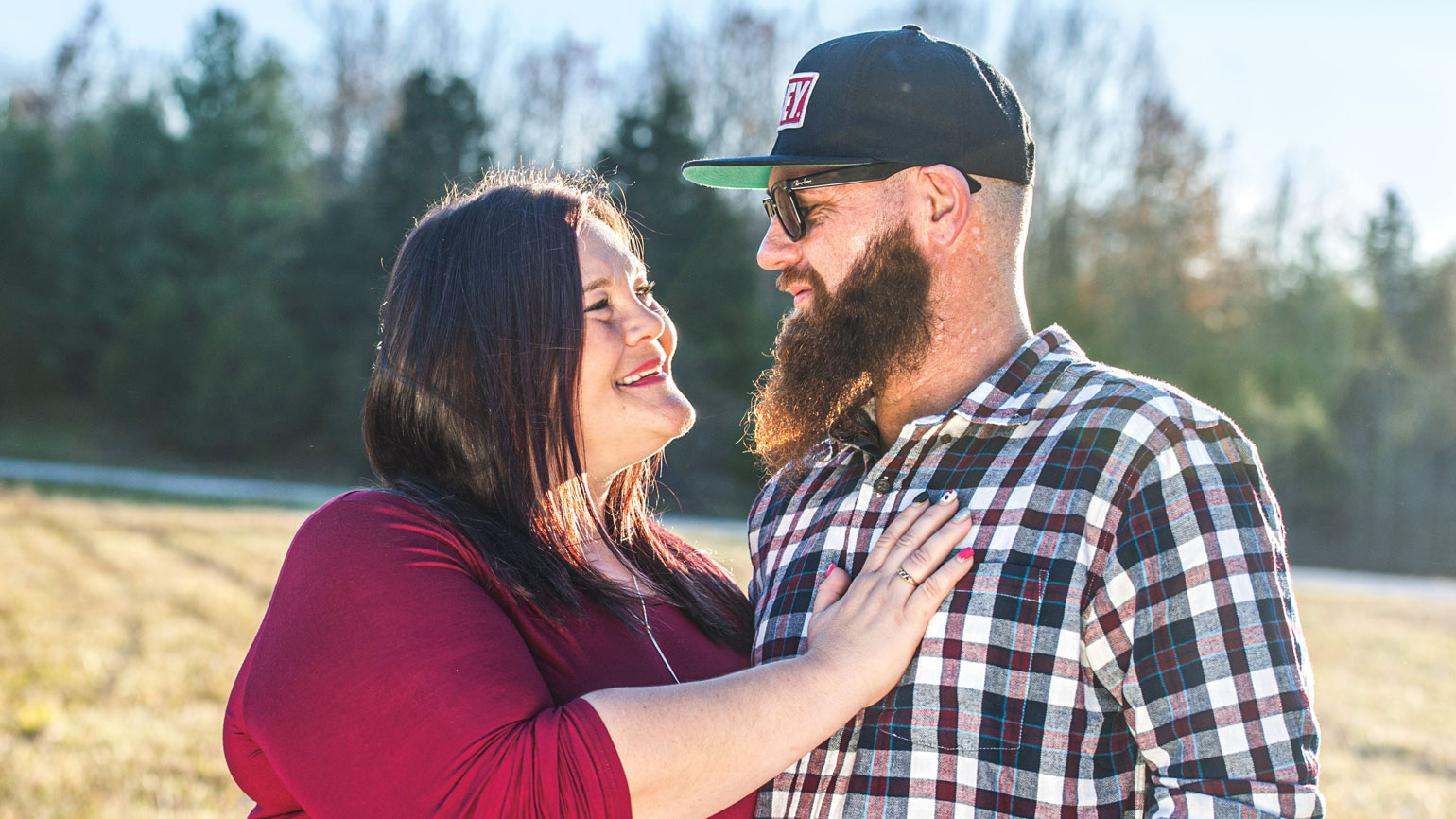
They began attending Celebrate Recovery meetings together. They dated for three months, then got married.

Today they co-lead a Celebrate Recovery group in Austin. They attend Church of the New Covenant, just as Pastor White had promised. Crystal’s kids live with them, and they’ve celebrated their three-year wedding anniversary. As their divine match maker knew they would be one day, they’d both been ready at last.

How Cardinal Angels Became Heaven-Sent Companions

Nothing made my husband, Tom, and me happier than spending time with our backyard birds.

We didn’t like to venture too far from home because of Tom’s health problems, but we could spend hours sitting outside in the warm sun, watching the birds fly back and forth from the feeders to the old redwood tree.

One summer afternoon, we topped off the seeds and sat down to see who would arrive. Usually, we’d spot a few bluebirds at the boxes we had set up especially for them. Bright yellow goldfinches and orioles might join in.

We were waiting patiently for our guests when a pair of cardinals swooped down from the redwood tree and made a big show of themselves.

Their scarlet feathers stood out against the blue sky and green grass. “What is it people say about cardinals?” I wondered aloud.

“When cardinals appear, angels are near,” Tom said.

Yes, that was the saying I’d heard, and I wanted to believe it. Angels had been on my mind lately. Tom had lived with pulmonary disease for some time, but he had recently been diagnosed with mesothelioma, a rare, aggressive cancer that had caused congestive heart failure. Tom would not survive for long. Doctors had prepared us for the inevitable outcome. At least, they tried; I didn’t see how I would ever be prepared for losing Tom. All too soon, I would need to feel the angels near in a way I never had before. I wanted every moment until then to be precious.

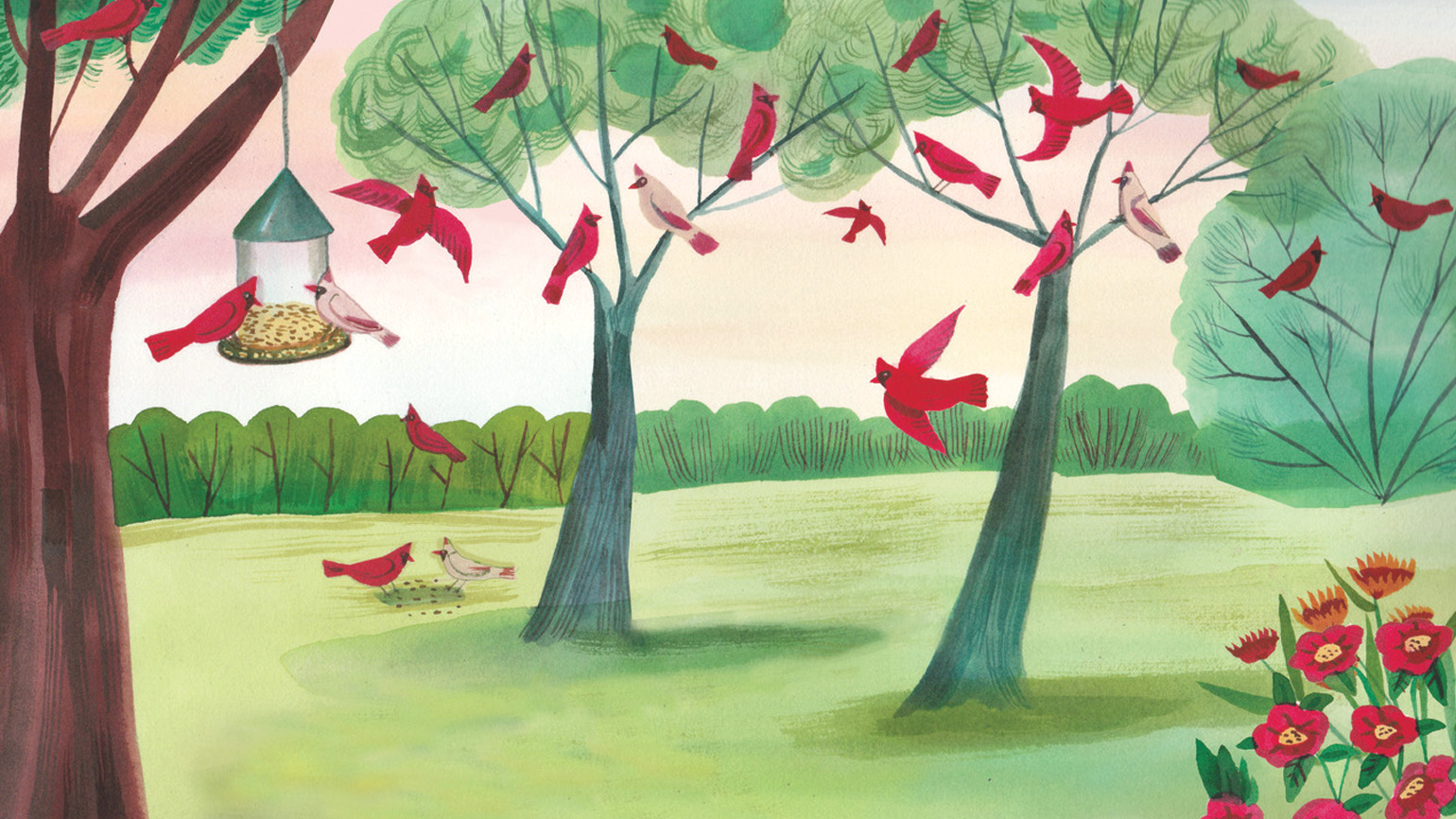
Another flash of red distracted me from my thoughts. A third cardinal had joined the first two at the feeder filled with their favorite sunflower seeds. Other cardinals followed. The brilliant-red males with their jet-black masks. The reddish highlights of the pale-brown females. The understated tones of their feathers only made their orange beaks stand out even more than their counterparts’. I pointed here and there.

“I’ve never seen so many cardinals,” said Tom. “Especially not all at once. Have you?”

“Never!” I said. But that wasn’t the only thing that was odd. I looked around the yard. No sign of goldfinches. No orioles. The bluebird box was empty. “The cardinals seem to be the only birds here for us today!”

Tom and I sat, enchanted. At one point, I counted more than 30 of these visitors. We didn’t go in for dinner until dusk.

The last thing we expected was to see the cardinals again—for the second day in a row. And the third—and even the fourth! The yard remained full of our scarlet-colored companions.

They filled the air with their sweet cheer-cheer-cheer calls, flying around for our entertainment. The yard looked like a sanctuary for cardinals, and it felt like a sanctuary for me. I lost myself in the complete comfort the cardinals brought. The angel saying had to be true.

“It’s been four days,” I said as we got into bed. I started to believe the cardinals might stay forever. That Tom would stay with me forever…

That night, Tom awoke in the wee hours, unable to breathe. He was rushed by ambulance to the hospital, and I spent four days by his side in the ICU before he passed away. I didn’t even wonder if the cardinals were at home waiting for me. Not that I could imagine filling the bird feeder or sitting in the yard. Not without Tom there with me. It had been our sanctuary in our last days together. How could I find any comfort there now?

I didn’t think twice about the cardinals until I walked in the door after Tom’s funeral. Tom will never come home again, I thought. His death felt even more real and final than when he took his last breath at the hospital.

I stepped in the backyard to prove a point to myself. The yard was lonely and empty without Tom. And all those cardinals? I didn’t see even one. “When cardinals appear, angels are near,” I could hear Tom say. But why had they made such a show in the days before his death? Why were angels near then, instead of now when I needed them most?

I thought back to those wonderfully long days when Tom and I had front-row seats to the cardinals’ bright and comforting presence, listening to their cheerful calls as they danced in the air. I’d never forget our precious time together in our backyard sanctuary with our winged companions. Angels were watching over both of us. I imagined Tom’s soul being carried up to heaven on scarlet wings. The memory of those days would always be a comfort, and I had no doubt angels were near.

I filled the bird feeders with extra sunflower seeds for the cardinals’ return. I looked for the bluebirds and goldfinches and orioles. I knew that Tom and I would see each other again too, in a place more bright and cheerful than our backyard could ever be. The songs of angels will fill the air and our faithful guardians will fly on feathered wings, when our heavenly sanctuary is the one that lasts forever.

How Baking Bread Made Her Hopeful for the Future

I stuck my frozen dinner into the microwave, feeling more than a little sorry for myself. When I opened the cabinet to grab a plate, the bread machine on the bottom shelf only made me feel worse. All that appliance did was remind me of my old life, when I was warm and happy in my spacious kitchen, baking away while my little dog sniffed the comforting aromas.

Baking had always brought me joy back when I was married. I especially loved the fragrant loaves that came from my bread maker. But there wasn’t much joy—or room for baking—in the post-divorce studio apartment I shared with my little dog, Paco.

After my marriage ended, Paco and I moved to Jacksonville, Florida, where my son lived. I started going to church with him and found a welcoming community there. I wasn’t shy about opening up among such caring people. I’d lost so much along with my marriage. Not only a partner, but the home we had together, the kitchen I loved to bake in, the couples we socialized with, a whole life that felt safe and familiar. In some ways, I’d lost myself. Physically I’d moved on, but emotionally I didn’t know how to move forward with my life. Did God see a future for me? So many in the congregation lent a listening ear.

One Sunday, someone actually surprised me with a gift—a brand-new electric bread maker. I accepted it graciously, but inside I felt a twinge of embarrassment. I couldn’t risk using it. What if baking no longer brought me joy? What if I had no joy left in me? I hid away the appliance in my kitchen cabinet without even opening the box.

The microwave dinged, and I averted my eyes from the bread maker. I reached for a plate, put my dinner on it and shut the cabinet door. “Do you think I’ll ever be happy again?” I asked Paco.

In the weeks that followed, I tried my best to jumpstart my life. I focused on my new job. I lived paycheck to paycheck, and I managed to make ends meet. I went to church, grateful for friends I made there. Maybe it was no longer the fulfilling life I once had. Maybe I would never reclaim the joy I once knew. But I was getting by.

One evening, after a full day’s work and a walk with Paco, I came back inside to start on dinner. A homemade meal tonight. Nothing special. I opened the cabinet to set myself a nice place at the table. The bread maker stared me in the face as it had done since the day I brought it home. I was about to close the cabinet after getting what I needed, when something stopped me. Did I need the bread maker too? Was I ready for what it might offer? I stood looking at the box for a long moment, then pulled it out and set it on the counter. Paco looked up, waiting for my next move. “Here goes,” I said, and lifted the machine from the box.

It was larger than I expected, shiny and new. I waited for the sadness I feared would come. But curiosity got the better of me. The bread maker sported colorful buttons that would make it much easier to program and operate than the machine I’d left behind. The instruction manual was thicker, with clearer instructions, and contained some mouthwatering bread recipes. There was even one for my favorite cinnamon bread. I could almost smell a loaf baking and imagined that’s what angels smelled like. Enthusiasm welled up within me. “Paco, it’s time to make some bread!” I announced.

I read the directions, gathered the ingredients, then read the directions again so I would not miss a single, important step. With every task I completed, I felt more energetic. Life seemed more hopeful than it had in months. I moved about the kitchen area of my studio apartment with the same spring in my step that I had working in my old, spacious kitchen. I was doing something I truly loved, and it hardly mattered where I was doing it.

While the machine worked through the dough cycles, I cooked myself a lovely dinner and enjoyed plating it for a leisurely meal. While I was finishing up the dishes, the bread started to bake.

“Something smells mighty good, Paco,” I said. His tiny nose was already pointed up, sniffing the scent of what was to come, just like he used to do. I too looked toward the future. The immediate future, when I’d taste my first loaf of homemade bread in far too long, and the bigger future God had waiting for me after that. He’d given me time to grieve the life I’d lost, then helped me let it go. A whole new life awaited. And it smelled delicious.

For more angelic stories, subscribe to Angels on Earth magazine.
How a Bracelet Reminded Her of God’s Love

Flipping through a magazine, I saw an advertisement for a unique bracelet. It featured a heart with a little gold cross on one side, some mother of-pearl accents and an inscription: “Be still and know that I am God,” my favorite psalm. Best of all, the magnetic closure would be so much easier to secure around my wrist than the traditional clasps that sometimes required assistance from my husband.

The bracelet seemed meant for me. I’d turned to the powerful psalm for comfort many times over the last dozen or so years, when I’d had my share of physical setbacks. There were new worries now. My husband and I had just started attending a new church, and we were trying to feel at home there. Would we be able to adjust? As my mind spiraled with questions, I stared at the picture of the bracelet. The psalm reminded me that God was in control and I could always trust him. I pushed away my concerns and ordered the bracelet.

The day after it arrived I clicked it on to wear to work. “It’s beautiful,” said a coworker, eyeing my wrist.

“This is the first time I’m wearing it.” I put out my arm for her to admire the bracelet. But it caught on a phone cord, its magnetic closure coming undone, and plopped on my desk. In fact, keeping the bracelet closed around my wrist proved to be a nuisance. It fell off when I put on a coat. It snapped open if I bumped it. I worried about it falling off while I played the organ at church. Was wearing it worth it if all I ever did was pick it up and put it back on?

“Is that your bracelet on the floor, Beth?” my boss asked one morning, pointing to the culprit. I rolled my eyes and knelt down to pick it up. I held the bracelet in my hand, blaming it for not cooperating. Be still and know that I am God, the bracelet reminded.

Annoyance faded into clear-headed joy when I realized my unexpected blessing. Every time the bracelet fell off was another opportunity to reclaim my favorite verse, as if an angel were giving me a friendly little tap on the wrist, reminding me that God is ever faithful and loving. My bracelet was definitely meant for me.

For more angelic stories, subscribe to Angels on Earth magazine.
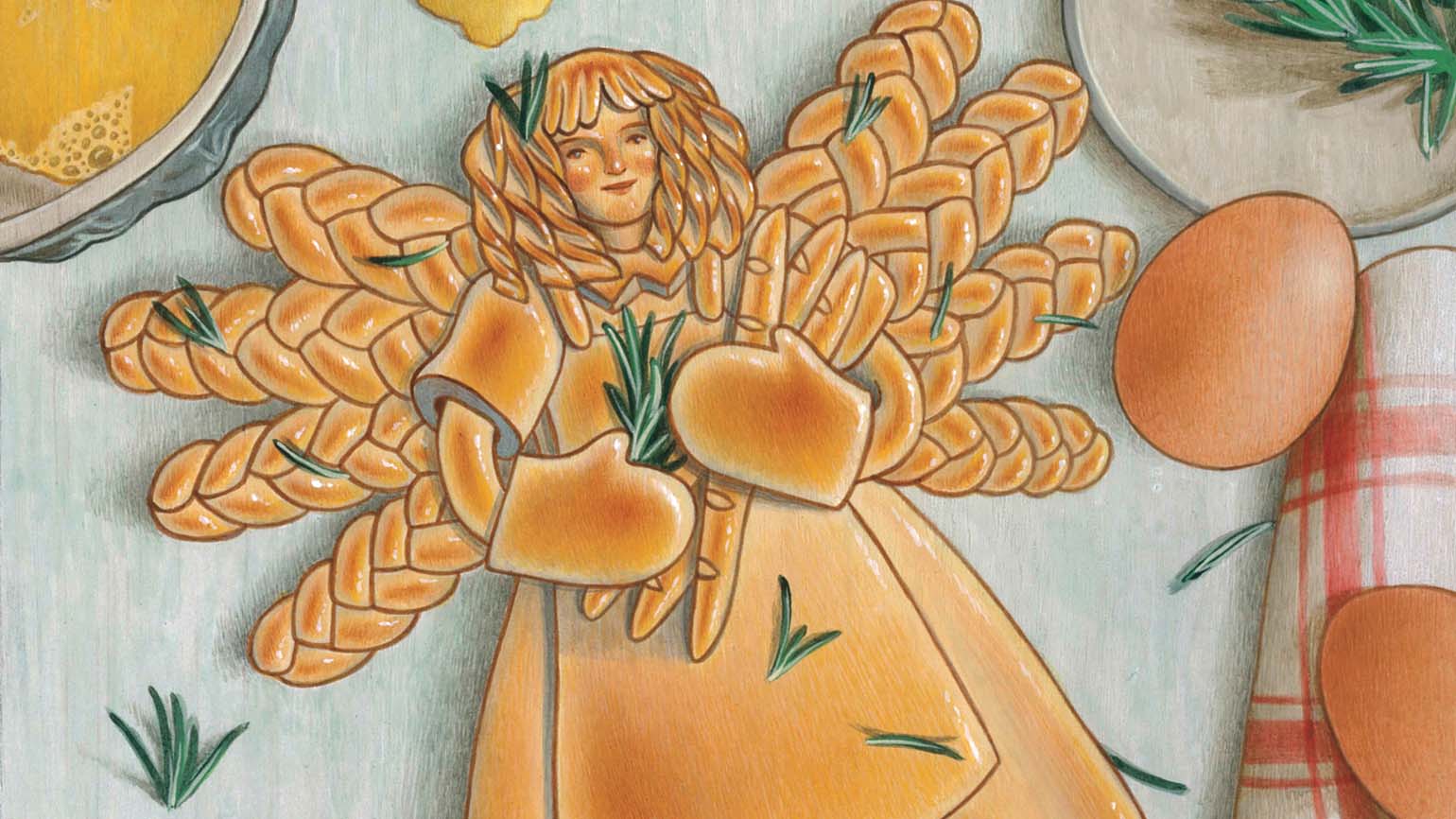
Her Father Experienced the Heavenly Wonder of Nature

”Beautiful,” Papa said, gazing out the patio door.

I went over to see what his eyes were fixed on. I looked out at the yard. The grass needed mowing. Two soccer balls and a football had been left outside. I need to fill our tank before picking up the kids, I reminded myself. But what exactly was Papa remarking on? The sun’s early morning rays darted across the lawn. The dew sparkled. I guessed that was it.

Papa had a special relationship with nature. He always found something there to appreciate. A white thunderhead off in the distance. Birds darting about the trees. A field of grain blowing in the wind. Little things I barely even noticed captured his fancy and filled him with joy. He’d been that way since I was a kid.

“Beautiful,” he would say about a view we’d seen a hundred times before. “Lovely.”

But the man looking out the patio door with me now wasn’t the same father I’d grown up with. Diagnosed with early-onset Alzheimer’s at 52, he’d moved in with my husband and me and our four children. This Papa forgot names and words. We didn’t leave him at home alone for fear he would become anxious or have an accident.

Sometimes it felt as if the real Papa was gone forever, taken from me far too soon. But in those moments when he stood admiring the sun on the grass, or watching the wind blow through the trees, I knew the old Papa I’d loved all my life was still in there. For now, at least, I hadn’t lost my father completely.

I didn’t have the time Papa had always found to keep track of nature’s intricacies. The kids’ busy schedules kept my eyes on our family calendar of events and doctor appointments. Before I knew it this day had flown by, and it was time to pick my daughter up from after-school swim practice. Papa and the boys took a ride with me to the pool. My daughter climbed in back with her towel, damp and smelling of chlorine, happily chatting with her brothers while Papa sat quiet in the passenger seat.

I followed the road home, thinking about starting dinner. If I got the chicken in the oven right away, I could mix up a batch of cookies for dessert. Jon could get started on his science project at the table….

I turned the wheel, rounded a corner and caught my breath. The road at this spot curved between two lakes. The setting sun cut an orange swath across the water, setting everything asparkle. I’d driven this road lots of times, at this very hour of the day. How often had I automatically pulled down the sun visor to shield my eyes from the brightness? Today I took it all in—the sun, the water, the sky. I was struck by the scene as if by lightning. The feeling was so unexpected. So stunning. So…

“Beautiful,” said Papa.

This is what Papa sees, I thought. This is what he sees all the time. Finally I got a glimpse of God’s world through Papa’s eyes, and it was glorious.

In the last year of his life, Papa moved into a facility where he could get round-the-clock care. When we visited, which we did often, we sat on the back porch, where there was a bird feeder in the trees. Papa didn’t always recognize us, and could no longer speak full sentences. But he could watch the birds and the wind in the trees. While he basked in the beauty of God’s natural world, I remembered how the sun set on those lakes. I had no doubt that Papa still experienced God’s nearness, a God who was clearly visible in the world around him. Just as the Papa I loved was clearly visible to me.

Papa is gone now, surrounded by the unfathomable beauty of heaven. But I often feel him near, especially at the spot where I saw through his eyes for the first time. Whenever my car rounds that curve between two lakes, no matter what else is on my mind, I take a fresh look and say, “Beautiful.” Papa’s joy is mine too.

For more angelic stories, subscribe to Angels on Earth magazine.
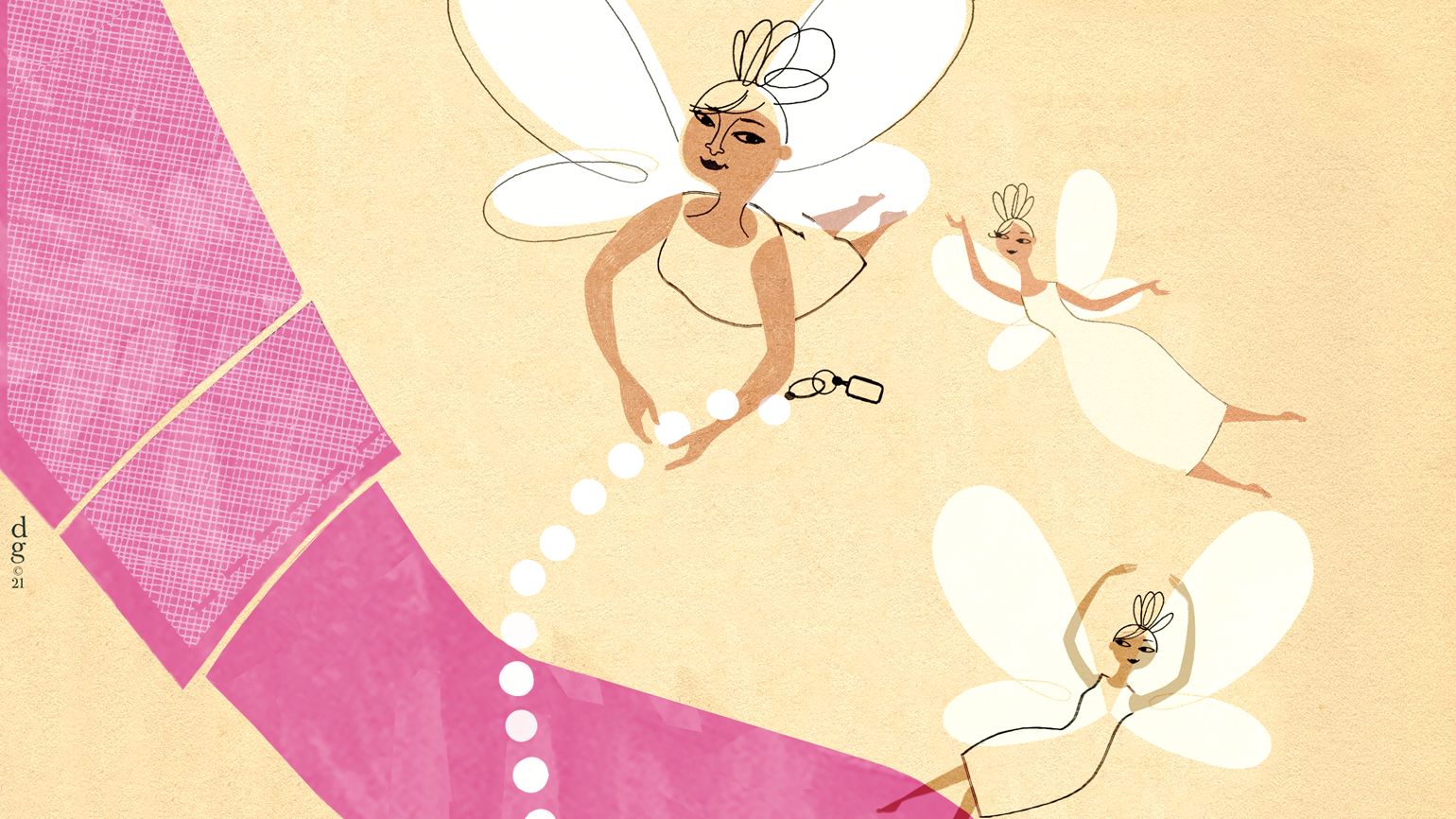
Heaven-Sent Angels Helped Them Make a Special Delivery

One summer evening when I was a little girl, I sat with my grandmother on her big front porch, listening to her stories about long-ago cotillions and balls. I could hear lively music coming from the apple orchard nearby. “Is someone having that kind of party now?” I asked.

“Not exactly,” Grandmother said. She explained that the man who owned the orchard employed migrant workers to gather the apples and care for the trees. “The days are long and hard,” she said, “but the workers are enjoying some free time before they get their rest.” She believed the workers deserved more money than the orchard owner paid them, and in her opinion he didn’t feed them enough either. “Tomorrow we do something about that, at least,” she said. She organized with other neighbor ladies to bring evening meals. When it was her turn, I went with her. I was surprised to see that it wasn’t only men working in the fields, but families too. The older kids stood beneath the trees and boxed up the apples on the ground, while younger kids carried water to workers further out in the orchard.

Grandmother struck up a conversation with one of the young women. Her name was Maria, and she and her husband, Tony, were expecting a baby. “We’re going to stay with my parents,” Maria said. “We’re here to earn money for the bus ticket.”

“They’re going to need a lot of things when the baby comes,” Grandmother told me when we got home. “Let’s ask God to send angels to help that young couple.”

“Angels?” I said. I’d heard Grandmother pray plenty of times, but this was the first time I’d heard her mention anything about angels. I couldn’t quite picture the angels I knew from Christmas cards carrying diapers and baby powder. Grandmother saw that I was skeptical.

“If we do our part,” she said, “angels will do the rest.” Grandmother went to the closet and brought out a box filled with S&H Green Stamps. She spilled the pile of them onto the kitchen table. I saw a few full sheets or partial pages. Most fluttered out of the box as single, loose stamps. “You can see I’ve been saving up for just the right purchase.”

We sat down at the table and flipped through the baby section of the S&H catalog. My eyes fell on a bassinet with ruffles and a canopy. It came with an elaborate layette. “Everything a young mother will need,” Grandmother said. “Let’s see if we have enough stamps to fill the 20 books it costs.” It would take us a while to find out—we had a lot of stamps to glue in before Maria and Tony left at the end of the summer.

In the coming weeks, Grandmother made her best meals for the orchard workers. One week it was a big pot of chili with corn bread. The next it was fried chicken, potato salad, green beans and buttermilk biscuits. Every meal included iced tea, lemonade and homemade cookies that I helped bake. While Grandmother chatted with Maria and Tony one evening, I peeked around the apple trees in search of white-winged angels with trumpets, but I saw only regular people. There were no angels helping us with the stamps either. In the end, we were three books short.

“Open the catalog,” Grandmother said. “Let’s pick a bassinet we can afford.” We chose one without a canopy and a limited layette. The next day we went to the Green Stamp store to get it. “Maria will love this one just as much,” Grandmother assured me as she pushed the door open. I couldn’t help but feel disappointed.

Grandmother gave the clerk the information and handed over our stack of 17 books of stamps. The clerk walked to the back room and returned empty-handed. “I’m sorry,” she said. “It looks like that item’s been discontinued.”

I couldn’t believe it. No bassinet at all? I eyed the stack of Green Stamps books I’d counted on. Maybe angels really do exist only on Christmas cards.

“If you’re interested,” the clerk said, “we do have another option.” She opened the catalog. “It costs 20 books, but since the one you wanted isn’t available…” I peeked over the counter to see that she was pointing at the very bassinet we had originally chosen!

“How kind of you to offer this lovely replacement,” Grandmother said, with a wink at me. We arranged for the bassinet to be sent straight to Maria’s mother so it would be waiting when she and Tony arrived. Real angels had delivered for us all.

For more angelic stories, subscribe to Angels on Earth magazine.

Heavenly Comfort from an Angelic Visitor

It was a beautiful day in June, while I was driving down a quiet highway, when a thought came to my mind. Everything in my life was pretty good. I had nothing really big to worry about. It almost frightened me when that particular idea came to mind. For it seems that just the time we feel like everything is going well the greatest storms come our way.

A few months later, as I expected, everything changed. I lived some 65 miles from my parents. Fortunately, I had kept my part-time job in the city from where we had moved and from where I grew up. So I had ample opportunities to visit with my parents.

My mother began telling me odd things that my father was doing and saying. Initially, I thought she was imagining things. Daddy couldn’t possibly believe the things he was saying. She told me how Daddy was becoming paranoid and simply not acting like himself.

He was still a young man, so I tried to ignore the warning signs. But soon I had to face the facts. The doctors began using scary words, such as “Parkinson’s disease,” “dementia” and “Alzheimer’s.” As frightening as those words were, however, they didn’t compare to the words “terminal” and “final stages.”

From that time on, my relatively calm life was transformed into a massive whirlwind. The doctors put Daddy on medication, but the drugs only caused him to become more paranoid. The medication also caused him to hallucinate, which in turn caused him to become violent.

I have to admit that those were some of the toughest days of my life.

Knowing I had only a short time left to let my father know how much I loved him, the trips I made to my hometown increased from twice a week to sometimes six times a week.

The only day during the week I allowed myself to rest was on Sunday. And that was only because my husband, Roy, and I were serving at a small country church. We had to be there. Roy was the pastor. I taught Sunday school. I went from having nothing to worry about to being totally stressed out. I didn’t slow down. I couldn’t slow down. I had been told my father only had a few months to live! The family advocate at the hospital talked candidly to me one day. It was his opinion that Daddy would live much longer than everyone thought.

“Your father has the heart of a 20-year-old, Mrs. Gibbs,” he explained. “But he has the mind of an 80-year-old. Your family has a long road to travel.”

He was right. Months turned into years. Those years were not quality years, however. Daddy became bedridden and quickly came to the point that he rarely responded to us. He didn’t even know us. He resided in a nursing home for several years.

Daddy experienced many painful days and nights in that place. And the whirlwind of emotions took a toll on our entire family. After a couple years, Roy decided that I needed a break. “Our anniversary is approaching, Nancy. Let’s go out of town for a couple of days.”

I hesitated, but accepted. I worried about being far from Daddy and was concerned that Mom would need me. But I knew Roy was right. I had to get away. We packed our bags and off we went to a wonderful park three hours from home.

For the first time ever, we stayed in a bridal suite. The room was gorgeous and the weather was perfect. The first morning there, we walked around the park, enjoyed the scenery, the gift shop, and the exhibits. I thought of Daddy and constantly wondered how he was doing. But I tried to stay focused on enjoying our anniversary, for Roy’s sake. We returned to our hotel room to get ready to go out for lunch. Roy left the room to get ice.

I fell down on my knees beside the bed and prayed. “God, please send an angel to take care of Daddy,” I whispered.

I heard the key in the door and knew that Roy had returned. I stood up and brushed away the winkles on my outfit.

“Let’s go eat!” Roy enthusiastically shouted. We had lunch and went shopping. I laughed for what seemed the first time in a long time. I felt a sense of peace.

We returned to the hotel later that day. I decided to call my mother to check on Daddy and to see what kind of day they had. My mom gave me an update. Nothing much had changed. But just before we hung up the telephone my mom stopped me. “Oh yeah, Nancy, I need to tell you something that happened at the nursing home today. I went out to get Daddy something for lunch. When I walked back in the front door, a nurse met me. She told me a stranger was in Daddy’s room and had been there for a while.”

I sat at the other end of the telephone speechless.

“They told me,” Mom further explained, “that they were watching her closely since they had never seen her there before. I walked into the room and a stranger was praying with Daddy. When she concluded her prayer, she turned and looked at me.”

Then Mom relayed the entire conversation to me. “Hi,” the young woman said, “I know you don’t know me, but God sent me here. I live across town. As I was pulling out of my driveway, He guided me here.” When she got out of the car in the nursing home parking lot, she said she asked God to show her which room to visit. “As I walked down the hall, He told me this was the room. So I stopped. I hope you don’t mind.”

My mom assured her that it was fine for her to visit and to pray with Daddy anytime. She hugged my mother. Before she left, she shared a message from God with my mom. “God said to tell you that everything is going to be fine.”

When my mom hesitated, I asked her an important question. “Did this happen about 12:30?” “It was about 1:00 when I got back to the nursing home,” she replied. “Why?” “That was the time I asked an angel to take care of Daddy,” I replied. “Do you think she was an angel, Nancy?” my mom asked. “Do you have a better explanation for her visit?” I followed.

There was silence at both ends of the telephone for a few seconds. I was certain God had heard and answered my prayer. My mom was convinced she had encountered an angel earlier that afternoon. We both experienced a myriad of emotions. But in addition, we both believed the message God sent that day.

“Everything was going to be fine.” Daddy never walked again. He didn’t experience an instant and complete recovery. A couple of years later, however, Daddy left a place of pain and entered a place where he would never hurt again. And everything was finally fine with him.

Mom and I both knew then and have oftentimes talked about how an angel visited Daddy’s room that day. As far as we know, this kind lady never returned to the nursing home to visit with Daddy. But somehow I believe a miracle occurred on the day Daddy left this world behind and entered the gates of heaven. Who knows? This angel just might have been sent by God once again, to escort my father home.

Heart-Shaped Rocks

I was just a kid when Mom first took me hiking through the hills of southern California near our home.

My favorite thing to do was search the trail for things I thought might impress her: a twisted tree branch, an unusual wildflower, a curiously shaped leaf. One afternoon, while we rested on a mossy stump, I spied a river rock the size of a shoe box. It was shaped like a perfect heart. “Look!” I shouted to Mom. “Isn’t that cool?”

“God must love this spot as much as we do,” she said.

We pulled the rock from the mud, lugged it back up the mountainside and washed it off. Back home we painted it bright red and placed it in our garden.

From then on, the whole family kept an eye out for heart-shaped rocks. “Look what I came across on my business trip,” Dad said, handing me a gray stone. My brother, Matt, found one on a camping trip. The best made it into our collection.

When I was 15, our family moved from California to the Italian Riviera. Uprooting my life was exciting and terrifying. Holding tight to our family tradition gave me comfort. Soon we discovered heart rocks in Portofino, Venice and Florence. Each one a reminder that no matter where we are, God’s love is never far away.

Download your FREE ebook, Angel Sightings: 7 Inspirational Stories About Heavenly Angels and Everyday Angels on Earth

Faith vs. Science?

It was in high school that I first started hearing about the battle between faith and science and how that battle had been won by science.

“Faith was fine in the Dark Ages when people didn’t know how the universe really worked,” my friend Bruce, an aspiring science major, would explain to me—with the tone of an adult explaining a completely obvious truth to a stubborn child. “But there’s no place for it in today’s world. It’s a crutch for people who don’t want to face the facts.”

A crutch? Really? Having grown up in an agnostic household, I saw myself as being free to approach the faith-versus-science question with an open mind. If I’d chosen to believe Bruce’s words, no one at home would have argued with me.

But to me there was no getting away from the fact that something—a certain irreducible element of mystery—was missing from the scientific explanation of the world. If the universe was just a big indifferent, self-perpetuating machine, how come life—my life—felt so strangely significant? What accounted for the overwhelming feeling I’d get sometimes that everything that happened to me—even down to the tiniest, seemingly most insignificant event—mattered?

“Of course you feel that way,” Bruce would say, pointing out that all the way up until the seventeenth century (thanks in large part to an astronomer and mathematician named Claudius Ptolemy) people had believed that the earth lay at the center of the universe.

“It’s like when a baby thinks the whole world revolves around him,” Bruce explained. “When you grow up, you realize it doesn’t. With science, humankind grew up.” That was the materialist’s view of things. It just didn’t sit well with me. So I continued to search.

Bruce was right about one thing. It’s natural to connect importance with centrality. From dartboards to the layout of seats at Madison Square Garden, the closer to the center you get, the more you count. Once Copernicus came along and showed how wrong Ptolemy had been about earth’s place in the universe, it was only natural that people started questioning the traditional view that human life—especially individual human life—really mattered.

For years I’d hear Bruce’s voice whenever I pondered questions about faith and science. But I couldn’t help feeling that our lives add up to more than the simple physical facts of existence.

That was why I felt so fortunate to have the chance to meet Professor Huston Smith. Professor Smith is one of my heroes. Like countless other young people with an interest in religion and philosophy, I first encountered him through his book The World’s Religions—the single most popular volume on comparative religion ever published.

The son of Christian missionaries, Smith—who’s now in his ninetieth year—grew up in rural China and came to America at the age of 17. He became a professor of philosophy, teaching for many years at Massachusetts Institute of Technology—a place where science is taken pretty seriously indeed.

He argued in his books that faith and science are complementary and equally true. The great mistake that science—or rather certain scientists—had made was to believe that just because science describes the material universe so brilliantly, it can describe every other aspect of reality just as well.

To understand how faith and science can both be true, Smith explained, you have to shift your focus—to learn how to look at life in two ways at once. The universe, according to this view, is a little like one of those optical puzzles in which a seemingly meaningless pattern on a flat page suddenly gives way to a 3-D image. Before you learn how to shift your vision, the idea that there’s a deeper image on the flat page seems unlikely. But once you learn how to make the shift, you can never go back to the flat-page-only view again.

According to the flat-page view of the universe (which, to give Bruce credit, is right as far as it goes), earth is just one tiny planet circling one star in a galaxy containing more than 100 billion other stars, which, in turn, floats in a 12-billion-year-old universe of 500 billion galaxies, give or take a few billion.

From that unimaginably vast perspective, it’s hard indeed to see an individual life as having special significance. But if you shift your gaze and see things using the eye of faith, you see a very different picture.

“The best single model of the universe from a religious standpoint,” Smith explained, “is the most time-honored image in the entire Christian faith: the cross.” Smith convinced me that it’s true. “The cross isn’t only the symbol of Christ’s death and resurrection,” Smith told me in his room on the seventh floor of his Central Park South hotel. “It’s also a map of where each of us actually is in the universe when seen from the spiritual perspective.”

Professor Smith drew a simple, two-line cross on the hotel pad on the coffee table in front of us. “What is a cross?” he asked. “It’s a horizontal line intersected by a vertical line at a single point. And that,” he said, pointing to the spot where the two lines intersected, “that meeting place between the spiritual and the material, the worldly and the divine, is actually what each of us actually is.

The horizontal line stands for the physical universe—the material world that science describes. Each of us lives in this material world, but at the same time, we’re also vertical creatures—spiritual beings. That vertical line runs directly through the center of each of us, and connects us directly to God—to the divine itself.”

I told Professor Smith about that sensation I got as a teenager—the sense that, against all odds, my little life was somehow infinitely significant. “That’s exactly it!” he said. “Your life is infinitely significant, as is everyone else’s life as well. God isn’t limited by the laws that govern our world.

While it is impossible for a physical object to be in two or more places at once, God isn’t limited in this way. Seen from a divine perspective, God is the center of the universe, and that center is everywhere. In those moments when you feel most deeply in touch with God, you naturally experience yourself as being at the very center of everything.”

Of course, to see oneself as being at the center of the cross of the universe can sound arrogant and sacrilegious. But listening to Professor Smith—who has a youthful sparkle in his eye that would do any 16-year-old proud—it felt anything but. My only wish was that Bruce could have been there with us. Listening to Smith, I felt that even Bruce might have been brought around to realizing that that room on the seventh floor of that New York hotel was indeed the very center of the universe.

Easy Lasagna Rolls

My family loves lasagna, but we don’t always have the time to make a full pan for dinner.

That’s why I came up with these lasagna rolls—they’re quick, easy and ready in less than 30 minutes.

I enlist my boys to help too. They love spreading fillings on anything and then rolling it up. Teaching kids to make healthy meals encourages them to eat better as adults.

I even get their friends in on the act, using these lasagna rolls as a “meal/activity” for those fall sleep­overs. Have all the kids make the rolls (letting them add however much cheese and pasta sauce they want). Then you just bake and serve!

To save time, the lasagna noodles can be cooked and then refrigerated for up to three days in an airtight plastic container or a zip-top bag. If they stick together when you take them out of the refrigerator, just rinse them under cold water to separate the noodles, then pat dry.

The prepared pasta sauce and herbed cheese also shave time off your prep work.

Really busy midweek? The rolls will last for about three to five days in the fridge. Take out the rolls that you baked over the weekend and serve them chilled or at room temperature (as long as you didn’t use a meat sauce)—like an antipasto.

Any unbaked rolls can be frozen for up to three months. When you’re finally ready to use them, just defrost them in the fridge overnight.

I make tons of lasagna rolls at a time then freeze them for those nights when I know that I’ll be too busy to prepare a full meal for my family. The rolls are easy on your wallet too. A double batch costs about twenty dollars, even less if you grow your own basil.

Pair these delicious rolls with some in-season greens, like asparagus, a mixed salad or fresh steamed broccoli, and you’ve got a well-rounded, healthy dinner to boot.

Ingredients

Cooking spray

12 lasagna noodles

1 cup soft herbed cheese
(such as Boursin or Alouette)

½ cup shredded mozzarella cheese

2 tablespoons fresh basil, chopped

1½ cups prepared pasta sauce

¼ cup grated Parmesan cheese

Preparation

1. Preheat oven to 375°F. Coat a shallow baking pan with cooking spray. Cook lasagna noodles according to the package directions. Drain and set aside.

2. Meanwhile, in a small bowl, combine the herbed cheese, mozzarella and basil. Mix well.

3. Arrange the lasagna noodles on a flat surface. Spoon a thin layer (about ¼-inch thick) of cheese mixture onto each noodle. Starting from one of
the shorter sides, roll up each noodle and secure with a wooden toothpick. Place the rolls side by side in a prepared pan. Pour prepared pasta sauce on top of each roll and sprinkle each with Parmesan cheese.

4. Bake for about 20 to 25 minutes, or until cheese filling melts and the top is golden brown.

Serves 4

Read more about making these tasty lasagna rolls!

Did He Encounter an Angel on the Highway?

“I have a story,” Uncle Junior said one Christmas Eve. My aunts, uncles, cousins and siblings were all seated around the dinner table. That wasn’t unusual. Whenever my family gathered—after the meal was finished and the dishes were done—we returned to the table to entertain one another with stories.

My mother’s older brother Harold Junior told some of the best. When he reminisced about growing up with his seven siblings, no one laughed harder than he did. But there was something in his tone of voice that Christmas Eve. Something unusual. Uncle Junior sounded serious. Everyone gave their full attention as he spoke.

“This was back in 1954,” he began. “I was tired.…” Uncle Junior was driving home to Akron, Ohio, after attending a gospel revival here in Tiffin. He hadn’t seen another car along the lonely stretch of highway. In the distance, the lights of Greenwich, Ohio, glowed. He was considering stopping for a cup of coffee if the opportunity arose, when a sudden clatter cut through the silence. He knew that sound. He’d lost a hubcap. With a groan, he pulled over to the side of the road. He searched for several minutes, kicking around in the ankle-high grass.

“Is this what you’re looking for?” A smiling young man emerged from the darkness. He was holding a hubcap. Uncle Junior felt a thrill of fear, as if an electric current had run up his spine. Where had the guy come from? And was that really the missing hubcap?

“Thank you,” said Uncle Junior, heading back to his car to check it out. He kicked the hubcap into place. Perfect fit. Uncle Junior thought he might be more tired than he realized, maybe imagining things. Like a man who’d appeared out of nowhere holding the missing hubcap.… But when Uncle Junior turned around, he saw that the man was still there.

“Now, I didn’t want to leave him stranded,” Uncle Junior told us. “It didn’t feel right. And I didn’t want to interrogate him about what he was up to. So even though it flew in the face of common sense, I offered this stranger a ride to the next town. To Greenwich.”

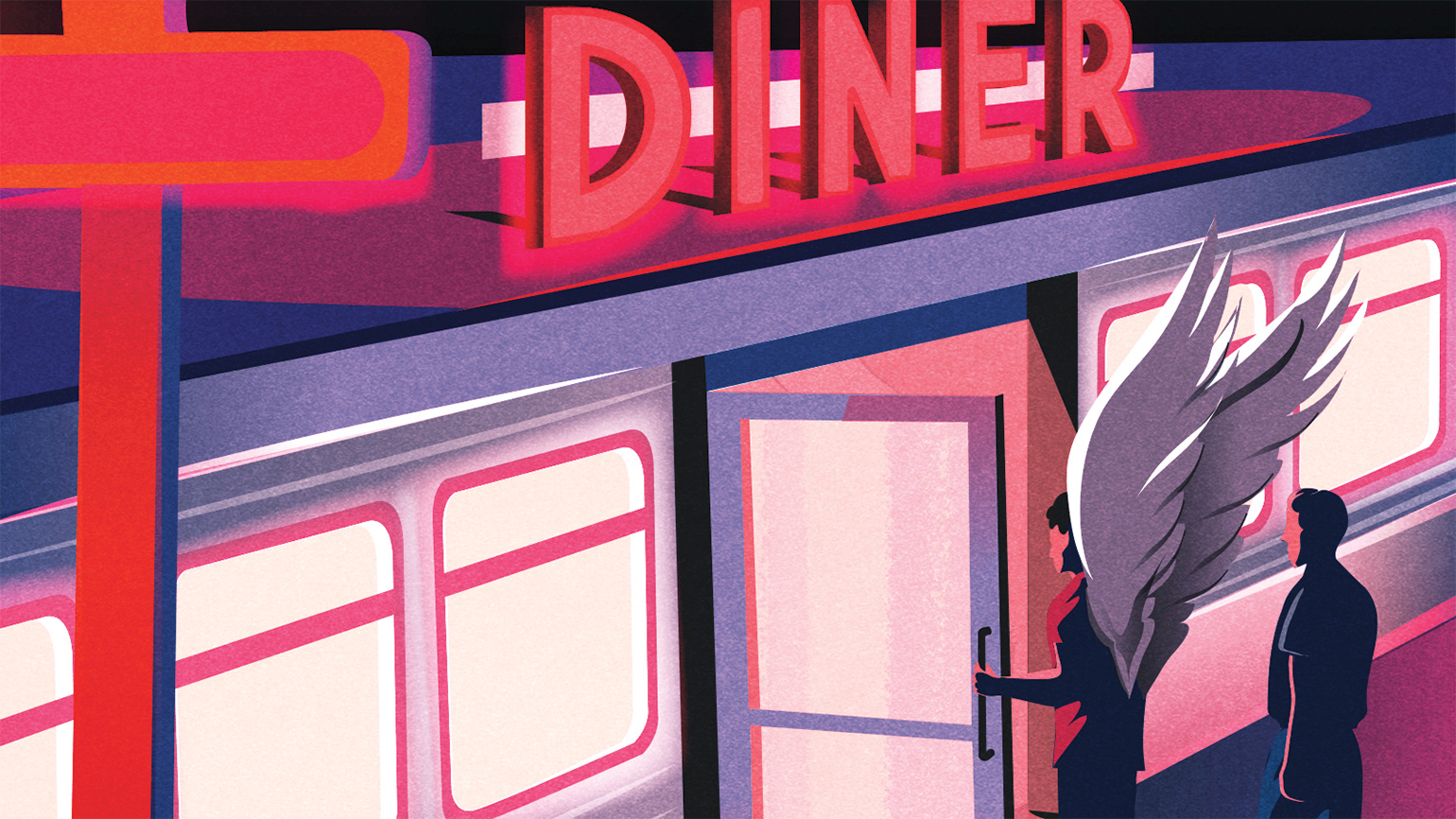
The man slipped into the passenger seat. The miles passed quickly as the two chatted about nothing in particular—though, knowing Uncle Junior, sports probably came up. When they reached Greenwich, Uncle Junior pulled in at a diner and offered to buy his passenger something to eat. With a broad smile, the young man accepted. As they pushed open the doors, the smell of frying meat and freshly brewed coffee greeted them. The two men entered and took a booth. “Order anything you want,” Uncle Junior urged.

“I’ll have what you’re having,” the stranger replied.

When the waitress came, Uncle Junior ordered burgers, fries and coffee. By the time they’d finished, Uncle Junior realized he’d misjudged this young man. He was a good fellow! Strange but good. The miles were long, especially at night, so Uncle Junior figured he could take his new friend farther, if he wanted. As they exited the diner, Uncle Junior turned to discuss a suitable destination—

Uncle Junior froze, mid-stride. Without a whisper of noise, without a crunch of gravel, the young man was no longer beside him. Uncle Junior went back into the diner and checked the booths, the restroom, asked the waitress if she’d seen what happened to his dining partner. Nothing. The stranger had simply vanished.

In disbelief, Uncle Junior got into his car. He’d only been driving for a few minutes when he heard a voice: “Do not neglect to show hospitality to strangers, for by this some have entertained angels unaware.” Hebrews 13:2; Uncle Junior knew it well. For the second time that night, he pulled over to the side of the road. The voice had sounded so real, Uncle Junior was sure there had to be someone else in the car with him. Was the young man hiding in the back? Careful inspection proved otherwise. He started the car again and drove the rest of the way home.

The room was silent for a long moment. Then we gave Uncle Junior the third degree. “I wasn’t having a crisis of faith, no tragedy in the family, no health concerns,” he said, shushing our questions. “I don’t know why it happened. I only know that it did.” He’d never gotten the stranger’s name. And, while every other detail seemed burned into his memory, he couldn’t recall what the young man looked like, even after sharing a meal with him. Clearly, that’s just how it is with angels.

For more angelic stories, subscribe to Angels on Earth magazine.