Embrace God's truth with our new book, The Lies that Bind

The Heaven-Sent Moon Flower

The moon has always been a comfort to me. As a girl, I used to sit out in my yard and talk to it—my way of talking to God. When I had a child of my own, I taught him about the moon. “It disappears from our sight every month,” I said, “but it never really leaves us.”

“Even when we can’t see it?” Jeffrey asked.

“Even when we can’t see it. God’s that way too.”

Jeffrey was killed by a drunk driver when he was 18. There was a full moon that night. I went into the yard and looked into the sky, but the moon brought me no comfort now. God, have you left me?

Time passed in a fog, and one day I noticed leaves growing on a vine by Jeffrey’s bedroom window. He and his friends used to climb in and out of that window all the time. They trampled that ground so much, nothing had a chance of growing there.

Nevertheless buds appeared on the vine. But it wasn’t until after sundown that the buds opened into beautiful white flowers. A sweet fragrance drifted in through Jeffrey’s window. Next morning I went outside. The buds had closed. Like the moon, I thought, they come out at night. I remembered how the moon used to soothe my heart.

God, I think this is your way of soothing me. That night, the moon was as pretty as I’d ever seen it. And I knew God was near night after night, when I smelled the blossoms’ sweet aroma.

One afternoon I was flipping through a magazine and came upon a picture of these mysterious blossoms I’d come to love. They were a tropical American morning glory. Their name?

Moonflowers.

Did you enjoy this story? Subscribe to Angels on Earth magazine.

The Hairdresser Who Answered Her Prayer

Once upon a time there were three little girls who went to the police academy….”

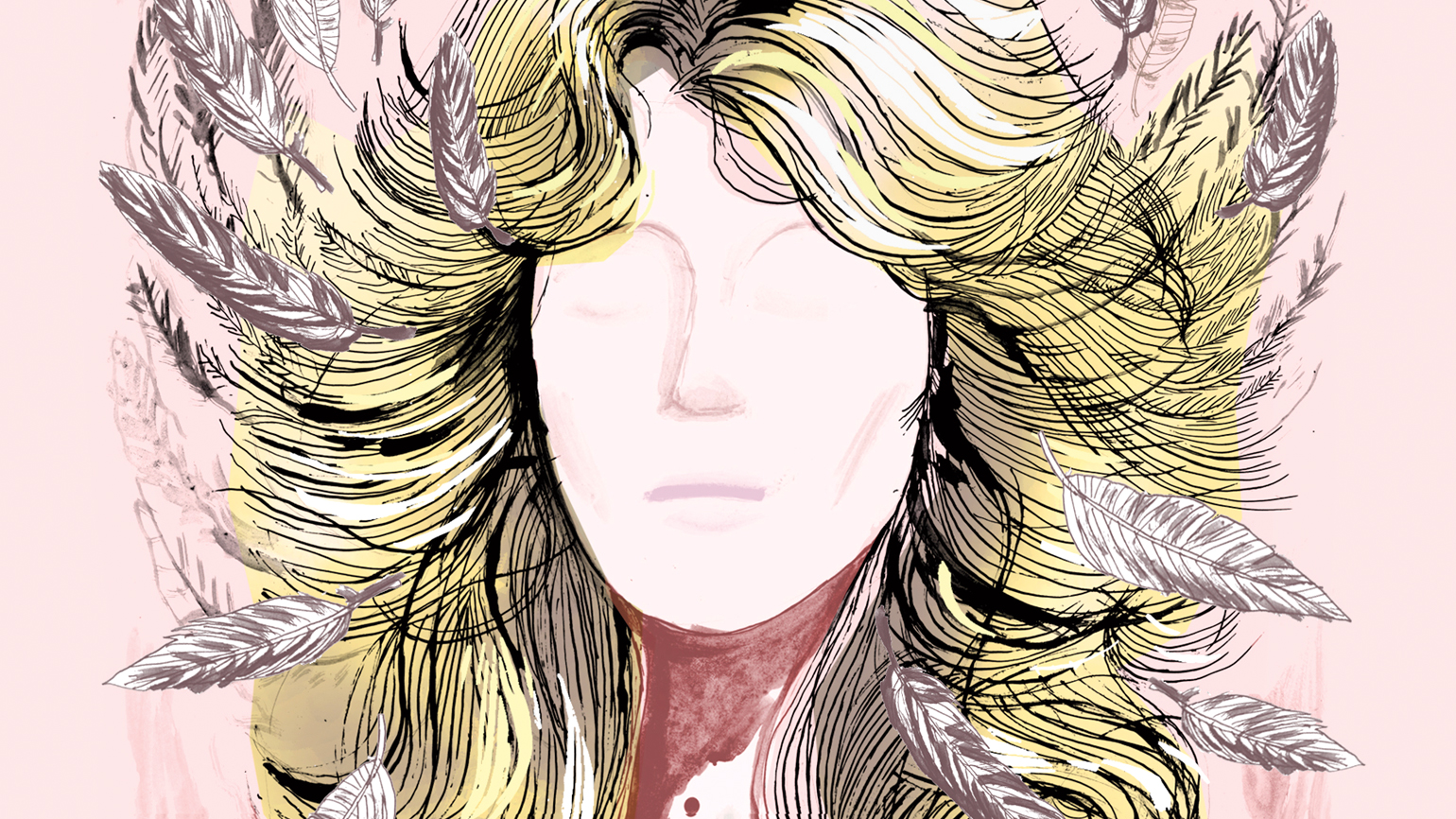
And one of them had a fabulous haircut! From the moment I saw Farrah Fawcett on TV in Charlie’s Angels I knew I wanted to look just like her. At least in the hair department. With a long, feathered cut that bounced when I walked and seemed to be forever ruffled by a light breeze.

It took me two days to secure an appointment with my stylist for a Farrah-do. It took several hours to frost my natural light brown locks with blonde highlights, cut multiple layers, blow-dry it and finish it up with a light misting of hair spray.

Now I was going to lose it all. The brain tumor I’d battled a few years back had returned, and I needed yet another surgery to remove it.

“I know what that means,” I told my friend Carole, a fellow nurse I was working with at Cabell Huntington Hospital. “My hair will end up in a paper sack on my bedside table in post-op. Just like before.”

But back then I didn’t have hair this gorgeous! It just seemed so unfair this would happen to me now. God, can’t you find some way for me to keep my hair? I thought, knowing it was impossible.

“Oh, honey,” Carole said. “Maybe it won’t be so bad. Listen, I know the most wonderful hairdresser. I want you to make an appointment with him.”

“Carole, the last thing I need now is a good haircut,” I said.

But Carole insisted. “Maybe Gary can’t do anything for your condition, but he can make you feel good about yourself now. That’s exactly what you need.”

Later that week Carole escorted me into Gary’s bustling salon. Three hairdressers were busy with trims and cuts. I stared at the floor, watching in dismay as gray, black, blonde and red hair accumulated on the floor. That’ll be my hair soon enough, I thought. Swept out with the trash.

“Gary, this is Roberta,” Carole said when her friend was ready for me. Carole had told him about my surgery, but if he pitied my situation, he didn’t show it.

“Pleased to meet you,” he said. “Can I call you Berta?”

In spite of myself, I grinned. I liked Gary already. “Sure!”

He led me to a chair and fastened on the plastic gown. He leaned in, circling my shoulders as if in a hug. “I have a suggestion,” he said. “I’ve been at this a long time, and there’s one thing that I know will make losing your hair a lot easier. To smooth the transition, we’re going to go short.”

I held my breath. I didn’t want to lose my long Farrah locks a second before I had to. But Gary knew more about this sort of thing than I did. And I could see the logic. My Farrah-do deserved to be cut off with respect, not shaved in preop. “You’re the expert,” I said, squeezing my eyes shut. “Let’s do it.”

With Carole cheering me on, Gary started snipping. My frosted tips fluttered to the beige linoleum floor at my feet. If someone had to cut off my hair, I was glad it was Gary. Whenever our eyes met in the mirror, his were full of compassion. Instead of just letting my hair lie on the floor like trash, he swept it gently into a tidy pile in the corner of the salon. It made it easier, somehow, knowing he understood and respected how I felt.

When Gary was finished I no longer resembled a Charlie’s Angel. But as haircuts went, it was actually quite chic. “I’m going to pray for your speedy recovery,” Gary told me as we said goodbye. He even refused to accept any payment for his work. “You’ve given up enough today,” he said.

Gary’s kindness continued to encourage me until it was time for my surgery. He had made my transition easier, just as he said. Easier, but not easy. Every time I caught sight of myself in the mirror, a dull green post-op headwrap from the hospital barely hiding my baldness, I winced.

While I was recovering at home, Carole stopped by for a visit. “I’ve been talking with Gary,” she said as she filled my freezer with comfort food. “He said to tell you he just got in a shipment of the prettiest turbans. He wants you to go to the shop and pick one out.”

A fashionable turban sure sounded good to me. Even better was the thought of seeing Gary again. Carole drove me over to the salon, where I chose a bright flowered one. “Sit right down here,” Gary said. “I’ll put it on for you. You’ll be amazed at the transformation.”

He didn’t have to tell me not to look. I instinctively squeezed my eyes shut when he removed my head wrap. Gary spun me around away from the mirror and fitted the turban onto my head.

“It’s heavier than I thought!” I said. But the weight was comforting. Almost like having hair.

“Okay, Berta,” Gary said. “Open your eyes.”

I found myself looking at a small crowd of faces. All the hairdressers had gathered around me.

“Ladies and gentlemen,” Gary said, gently lifting my chin up. “Charlie’s newest angel! Ta-da!”

Gary spun me back around to the mirror, and I gasped. My hair! My hair! It was back! “It looks almost like my Farrah!”

“It is your Farrah,” Carole said. “Gary saved all the hair he cut and made it into a wig.”

Gary hadn’t just saved my hair, he’d answered my prayer. The whole team on Charlie’s Angels couldn’t have orchestrated it any better.

Did you enjoy this story? Subscribe to Angels on Earth magazine.

The Guardian of Highway 277

Click! I buckled my son, Gregory, into his car seat and hopped into the driver’s side. Gregory had a pediatrician appointment, and I was running behind schedule. I glanced at the dashboard clock. Please don’t let us be late.

Cynthia with her son, GregoryI followed the speed limit, going not a mile over or under, and headed for the highway.

Since the Eagle Ford shale oil boom, the roads near my west Texas town were busy. Highway 277 used to be wide-open for miles. Now it was packed with 18-wheelers. It got a little crowded on that tiny, two-lane Texas highway. I said a prayer every time I got on it. Just in case.

As I came up on the ramp, I pressed on the brake to yield for a van. Lord, look after us. I pulled out behind it. Come on, buddy. He was doing 50. The speed limit was 70.

The oncoming lane was clear of traffic, and my foot itched to hit the accelerator so I could pass this pokey driver, but the sight of my son in the backseat reminded me why I said all those highway prayers. I had to do my part to keep us safe as well.

READ MORE: THE ANGELS OF MIRACLE ROAD

When the van slowed down to a crawl, I craned my head to look around it—only to see another slowpoke in front of him. Ugh! Soon, traffic halted completely. While I waited to get moving, I glanced at the oncoming lane.

A car was stopped there too—a sedan. Stopped for no reason I could see. A second car eased to a gentle stop behind the sedan. He had plenty of room to leave a safe distance between them. Maybe the sedan was stalled, and the other was coming to the rescue?

The road ahead curved into a small hill, and with all the traffic in my own lane, I couldn’t see a thing. I was stuck until the situation cleared up.

I glanced at the clock, wondering how late we were going to be. With my eyes off the road, I sensed something shining outside. I leaned into the steering wheel and looked up.

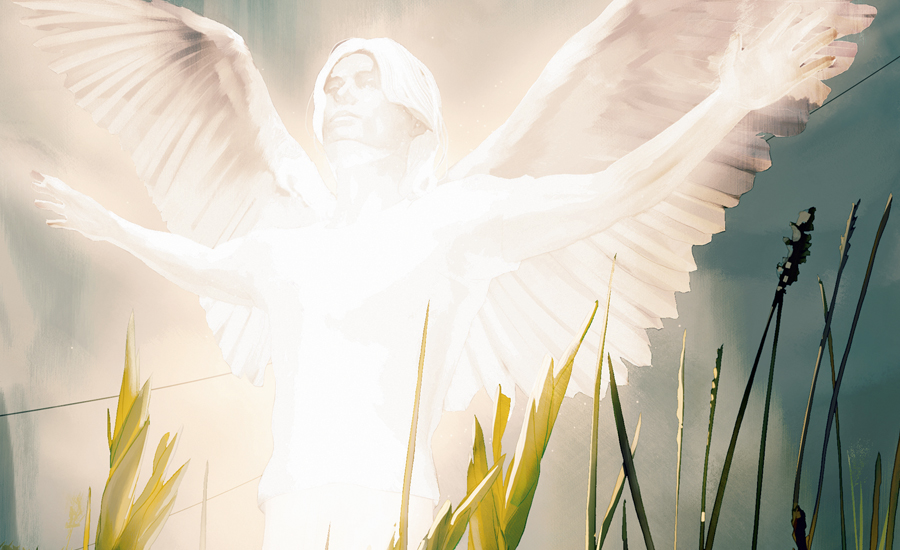
Overhead, behind the two stopped cars in the other lane, was a tiny pinprick of light. I squinted, and before my eyes it burst into a being composed of pure, white light. He towered above the highway, and glowed with such intensity that I could not make out his face, only his strong shoulders and windblown hair.

In one lightning-fast movement, he threw out his arms and unfurled his great wings over the entirety of the road, radiant as a blinding sun. The car behind the sedan in the other lane was gently nudged forward about a foot, suddenly repositioned nearer to the other car.

READ MORE: AN ANGEL IN DISGUISE

Before I could process what I was seeing, I heard screaming brakes. A truck was coming up fast behind that pair of unmoving cars. He’s going to hit them! There was no time for the massive truck to stop.

Just as the 18-wheeler passed beneath the glowing wings, the being vanished, snapping out of sight. The truck driver swerved off the road to avoid the cars. I held my breath as I watched it miss them by barely a foot.

No one was hurt, and traffic returned to normal. I looked back to the sky, and replayed the vision over in my mind, imaging the terrible collision that could have occurred, how my son and I could have easily been caught in the wreckage. If not for the guardian of Highway 277.

We arrived late, with apologies, to the pediatrician, but we arrived safely, with all my just-in-case highway prayers answered.

Download your FREE ebook, Angel Sightings: 7 Inspirational Stories About Heavenly Angels and Everyday Angels on Earth.

The Friend He’ll Never Forget

Steam filled the bathroom when I stepped out of the shower.

I was still a little sleepy as I ran a hand over the mirror to wipe away the fog. My reflection looked back at me: wet hair sticking up, damp cheeks. Then my gaze dropped to the marks on my chest. My scars had faded after all these years and were hardly noticeable — just two lines crossing in the middle of my chest. But the memory they brought back was as clear as ever.

I had only really known the little girl for a few weeks. I didn’t remember her name. But I carried her with me every day. We met in the Children’s Hospital of Columbus. I was 11, one of the few kids in the children’s ICU. I was born with a hole in my heart, a condition called tetralogy of Fallot. So was the five-year-old girl in the bed beside me. We were both recovering from the same surgery. Being older and wiser, I thought it was my job to look out for her.

“Do you want to hear a story?” I recall asking her one afternoon. I held up a few picture books from the shelf. Parents often brought books for us all to read, and the nurses were always on the lookout for more to add to the collection.

“That one!” she said, pointing to her favorite.

“Again?” I said. “Well, okay.”

I settled next to her on her bed. She was a tiny thing with sandy hair and big brown eyes. When she stood by my bed her head barely cleared the top of the mattress. She was much too small to have undergone major heart surgery. Compared with her, I was practically a grown-up. She needed someone to watch over her when her parents weren’t around or the nurses were busy.

“It was breakfast time, and everyone was at the table,” I read. “Father was eating his egg. Mother was eating her egg. Gloria was sitting in her high chair eating her egg too.”

“And Frances was eating bread and jam!” the little girl said. She gave me that big smile that lit up her whole face. She couldn’t read yet, but she knew this story by heart.

Getting dressed in my bedroom now, I laughed remembering it. How many times had I read that story to her? It was so easy to make her happy. She seemed always to be smiling or laughing or singing songs. I wanted to protect her from anything that might hurt her. It wasn’t fair a little girl like that had to be in a hospital at all. I frowned. Life wasn’t fair. I learned just how unfair it was only a few days after the last time I read her that story. We were in our beds, as usual. My friend was getting a visit from her parents, when something went wrong.

Her monitor beeped out an alarm. Doctors and nurses ran in. Her parents were moved aside. From my own bed a few feet away, I could see it all. The head doctor shouted orders I didn’t understand. The nurses read out vital signs. Her monitor went from an irregular beeping to a steady discordant note. An orderly wheeled in a big machine on a cart. One doctor rubbed something on the girl’s chest. Then he grabbed a set of paddles from the machine and yelled, “Clear!” Everyone stepped back. He pressed the paddles to her chest. There was a violent bang. Her small body jolted up and fell back down. Through it all I sat on my bed, frozen in horror.

Please let her be okay! I thought over and over. She’d never looked as vulnerable as she did now. And I had never felt so helpless. The doctor shocked her again. And again. Then everything stopped. She lay still on the bed. The doctors and nurses looked down, nobody meeting another’s eyes. One of them went over to the girl’s parents and spoke quietly. Her mom started crying. She shook so violently, she almost couldn’t stay on her feet. Her dad was crying too. I was still so numb with shock, it took me a moment to realize I was crying as well. An orderly drew the curtain and wheeled my friend’s bed out of the unit. The other kids and I looked at one another. We were a fraternity of survivors in the ICU. When one of us died, we all died a bit too.

My own recovery went well. Shortly after my friend died I was moved to a private room. Then I was cleared to go home. “You’re really lucky,” a nurse told me as I left the hospital.

“He sure is,” my dad said.

“I guess,” I mumbled. But why? I thought. Why did I get to go home when that little girl had died? I was far from perfect, and she hadn’t done anything wrong. How could she have? She was only five!

I didn’t know how to put my questions into words, so I kept them to myself. Back home I smiled and nodded when people told me how fortunate I was. No one knew I couldn’t stop thinking about that girl and how she deserved to live more than I did. The nightmares started a few days after I came home. Every night I relived my friend’s death. The beep of the machines. The doctor’s orders. Her mother’s tears. The way she lay still as they wheeled her away. I kept my nightmares a secret. I was too old to go running to my parents with bad dreams, too big to need watching over by someone older and wiser. Then one night I woke up from my nightmare with a scream. My dad came running in.

“What’s wrong?” he cried. “Don’t you feel well?”

I shook my head. “It’s not that. It’s…it’s…” Dad waited until I was ready to talk. “What did that little girl do to make God kill her, and yet he didn’t kill me?” I asked him finally. “How come I had no problems at all and she died? What could she have done to be punished like that? Why wasn’t God watching over her?”

“David, God didn’t kill that little girl, and he didn’t punish her. That surgery is complicated. Doctors are just learning how to do it. Ten years ago there wouldn’t even have been any surgery for kids like you. You would have died back then.”

“But how come my operation was so easy and hers wasn’t?” I asked.

“Easy?” my dad said. “David, your surgery wasn’t easy at all. We thought we were going to lose you because of the amount of internal bleeding you had. We even had a priest come to the hospital to give you last rites.”

“You did?” I said. “I don’t remember that.”

“You can’t remember it because you were in a coma,” Dad said. “For two weeks after your operation. Your mom and I prayed as hard as that little girl’s parents. We know it could have been you who died that day. God watches over all of us, no matter what happens.”

I thought about what Dad was saying, and it made sense. I hadn’t survived because I deserved to live more than my friend. My parents hadn’t prayed any harder than hers. Heart surgery was just complicated, and many things could go wrong.

“I guess I really am lucky,” I said. I wasn’t too old to need someone to look out for me. Someone older and wiser.

Just knowing I didn’t have to face the world alone made me feel better. My friends, my family, God, his angels—they were all with me, no matter what. As dad was leaving my room, he turned to me from the doorway. “You wouldn’t remember this either,” he said, “but your friend was already in the ICU when you were in the coma. She used to come over to your bed and sing to you. She was watching over you.”

In front of my bedroom mirror, I straightened my tie. My surgery scars were hidden under my shirt now. But I knew they were there, along with the memory of that little girl. The one who’d been at my side like a tiny angel when I didn’t even know she was there. I was older now, a lot older, and hopefully somewhat wiser. Wise enough to know that I have angels watching over me, when life is fair and when it’s not.

The Day We Saw The Angels

It was not Christmas, it was not even wintertime, when the event occurred that for me threw sudden new light on the ancient angel tale. It was a glorious spring morning and we were walking, my wife and I, through the newly budded birches and maples near Ballardvale, Massachusetts.

Now I realize that this, like any account of personal experience, is only as valid as the good sense and honesty of the person relating it. What can I say about myself?

That I am a scholar who shuns guesswork and admires scientific investigation? That I have an A.B. from Harvard, an M.A. from Columbia, a Ph.D. from Hartford Theological Seminary? That I have never been subject to hallucinations? That attorneys have solicited my testimony, and I have testified in the courts, regarded by judge and jury as a faithful, reliable witness?

All this is true and yet I doubt that any amount of such credentials can influence the belief or disbelief of another.

In the long run, each of us must sift what comes to us from others through his own life experience, his view of the universe, his understanding. And so I will simply tell my story.

The little path on which Marion and I walked that morning was spongy to our steps and we held hands with the sheer delight of life as we strolled near a lovely brook.

It was May, and because it was the examination reading period for students at Smith College where I was a professor, we were able to get away for a few days to visit Marion’s parents.

We frequently took walks in the country, and we especially loved the spring after a hard New England winter, for it is then that the fields and the woods are radiant and calm yet show new life bursting from the earth.

This day we were especially happy and peaceful; we chatted sporadically, with great gaps of satisfying silence between our sentences.

Then from behind us we heard the murmur of muted voices in the distance, and I said to Marion, “We have company in the woods this morning.”

Marion nodded and turned to look. We saw nothing, but the voices were coming nearer—at a faster pace than we were walking—and we knew that the strangers would soon overtake us. Then we perceived that the sounds were not only behind us but above us, and we looked up.

How can I describe what we felt? Is it possible to tell of the surge of exaltation that ran through us? Is it possible to record this phenomenon in objective accuracy and yet be credible?

For about 10 feet above us, and slightly to our left, was a floating group of glorious, beautiful creatures that glowed with spiritual beauty. We stopped and stared as they passed above us.

There were six of them, young beautiful women dressed in flowing white garments and engaged in earnest conversation If they were aware of our existence they gave no indication of it. Their faces were perfectly clear to us, and one woman, slightly older than the rest, was especially beautiful.

Her dark hair was pulled back in what today we would call a ponytail, and although cannot say it was bound at the back of her head, it appeared to be. She was talking intently to a younger spirit whose back was toward us and who looked up into the face of the woman who was talking.

Neither Marion nor I could understand their words although their voices were clearly heard. The sound was somewhat like hearing but being unable to understand a group of people talking outside a house with all the windows and doors shut.

They seemed to float past us, and their graceful motion seemed natural—as gentle and peaceful as the morning itself. As they passed, their conversation grew fainter and fainter until it faded out entirely, and we stood transfixed on the spot, still holding hands and still with the vision before our eyes.

It would be an understatement to say that we were astounded. Then we looked at each other, each wondering if the other also had seen.

There was a fallen birch tree just there beside the path. We sat down on it and I said, “Marion, what did you see? Tell me exactly, in precise detail. And tell me what you heard.”

She knew my intent—to test my own eyes and ears to see if I had been the victim of hallucination or imagination. And her reply was identical in every respect to what my own senses had reported to me.

I have related this story with the same faithfulness and respect for truth and accuracy as I would tell it on the witness stand. But even as I record it I know how incredible it sounds.

Perhaps I can claim no more for it than that it has had a deep effect on our own lives. For this experience of almost 30 years ago greatly altered our thinking. Once both Marion and I were somewhat skeptical about the absolute accuracy of the details at the birth of Christ.

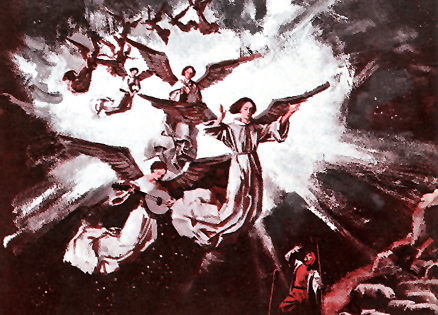
The story, as recorded by St. Luke, tells of an angel appearing to shepherds abiding in the field, and after the shepherds had been told of the Birth, suddenly there was with the angel a multitude of the heavenly host praising God, and saying, Glory to God in the highest (Luke 2:8-14).

As a child I accepted the multitude seen by the shepherds as literal heavenly personages. Then I went through a period when I felt that they were merely symbols injected into a fantasy or legend.

Today, after the experience at Ballardvale, Marion and I are no longer skeptical. We believe that in back of that story recorded by St. Luke lies a genuine objective experience told in wonder by those who had the experience.

Once, too, we puzzled greatly over the Christian insistence that we have “bodies” other than our normal flesh and blood ones. We were like the doubter of whom St. Paul wrote:

But some man will say, How are the dead raised up? and with what body do they come? (I Corinthians 15:35).

In the years since that bright May morning, his answer has rung for us with joyous conviction.

There are also celestial bodies, and bodies terrestrial: but the glory of the celestial is one, and the glory of the terrestrial is another…So also is the resurrection of the dead…It is sown a natural body; it is raised a spiritual body. There is a natural body, and there is a spiritual body…And as we have borne the image of the earthy, we shall also bear the image of the heavenly…For this corruptible must put on incorruption, and this mortal must put on immortality (I Corinthians 15:40-53).

All of us, I think, hear the angels for a little while at Christmastime. We let the heavenly host come close once in the year. But we reject the very possibility that what the shepherds saw that night 2,000 years ago was part of the reality that presses close every day of our lives.

And yet there is no reason for us to shrink from this knowledge. Since Marion and I began to be aware of the host of heaven all about us, our lives have been filled with a wonderful hope. Phillips Brooks, the great Episcopal bishop, expressed the cause of this hope more beautifully that I can do:

“This is what you are to hold fast to yourself—the sympathy and companionship of the unseen worlds. No doubt it is best for us now that they should be unseen. It cultivates in us that higher perception that we call ‘faith.’ But who can say that the time will not come when, even to those who live here upon earth, the unseen worlds shall no longer be unseen?”

The experience at Ballardvale, added to the convictions of my Christian faith, gives me not only a feeling of assurance about the future, but a sense of adventure toward it too.


The Comfort Cat Who Saved an Iraq Veteran’s Life

“Here, boy!” I called out again. I walked down the cement steps behind the Army barracks and listened, hoping to hear an answering meow or to see a flash of black and white streaking toward me. But there was still no sign of the cat. Now I was starting to panic. While I had yet to name him, I had been feeding him for months. Seeing him had become the highlight of my day.

I could clearly remember when we first met. Sitting on these same cold cement steps that night, I’d been staring out into the darkness. Rain soaked through my pants, but I didn’t care. The only light came from the glow of my cigarette—my last. Back in my room there was a knife on the bedside table and a suicide note on my computer screen. I hoped that whoever read it first would understand why I had done what I planned to do.

Six months before that night, my unit had been deployed to the southwest of Baghdad. During an attack, a mortar had exploded 10 feet away from me, leaving me with a traumatic brain injury, a case of PTSD and a one-way ticket home. Since then, I had been living on base in Fort Riley, Kansas, but I wasn’t readjusting well. I was paralyzed by anxiety and struggling to get through each day. Mostly I was tired. I sat there on those cold cement steps just wanting to end it all. Tonight I will, I thought as I took another drag of my cigarette.

“Meow?”

I looked up. A black and white kitten with round green eyes looked back at me. His head poked out from the bushes a few steps away. He meowed again. Then, leaping from his hiding spot, he trotted right up to me. He was tiny and soaked, but he rubbed up against my legs. When I reached down to pet him, he leaned into my touch, purring.

That was all it took. I broke down. I cried, the tears hot on my face in the chilly rain. The kitten just watched me. I hadn’t scared him away. In fact, he stood there as if he knew how desperately I needed a friend. Right at that very moment.

I looked into his big green eyes and he looked back. Clearly a stray. “When was the last time you ate?” I said, stroking his wet fur. My plan to end it all was put on hold. At least until I found this kitten some food. I stood up, my cigarette forgotten. I might not be able to tackle my own problems, I thought. But his problems? I can do something to fix those.

It became a routine: Every day, I’d go to the back steps of the barracks with a packet of tuna and a paper plate. Usually, the kitten was already waiting for me. He became more than something to live for. Over time he inspired me to get help for my depression, and even gave me the confidence to get into a serious relationship. Becky and I had known each other for years. We were high school classmates in our hometown of Pittsburgh and, after I enlisted, continued to keep in touch. Now that connection had deepened.

I hated to go back inside without seeing my usual dinnertime visitor, but roll call was at 5:45 a.m. and I knew I had no chance of spotting a mostly black cat in the dark. I called Becky, worried that I had seen the last of him.

“I’m so sorry, Josh,” Becky said. She knew how much that cat had done for me. There was a time I didn’t know if I would have been able to recover from such a loss. But I was in a better place now, and I’d get through it if I had to. “Hopefully, he’ll turn up,” Becky tried to reassure me.

But he didn’t. I’d still go out behind the barracks most evenings to see if my little buddy had returned, but he never did. I found myself imagining that he’d found a real family to go home to. And he deserved it. Becky and I were shopping together near the base one day when we stumbled upon an animal adoption event, mostly cats. Becky already had a cat, and she knew there was only one cat for me, but she couldn’t resist. “Come on! We’re just going to look at them,” she said, tugging at my arm. “Show them a little love.” Like one little black and white kitten had done for me one night, I thought.

Becky and I picked our way through the narrow space between the cages. Some of the cats pressed themselves against the bars, yowling for attention. Others watched silently with wide eyes. When a black and white paw shot out from between the bars, smacking me on the arm, I laughed. I leaned down to get a better look at the feisty cat inside. His green eyes met mine. I was stunned. Could it be?

“Becky, it’s him! The cat from the barracks!” I opened the cage and scooped him up, holding him tight. He purred steadily, like he knew there was no way I was letting him go again. And, boy, was he right.

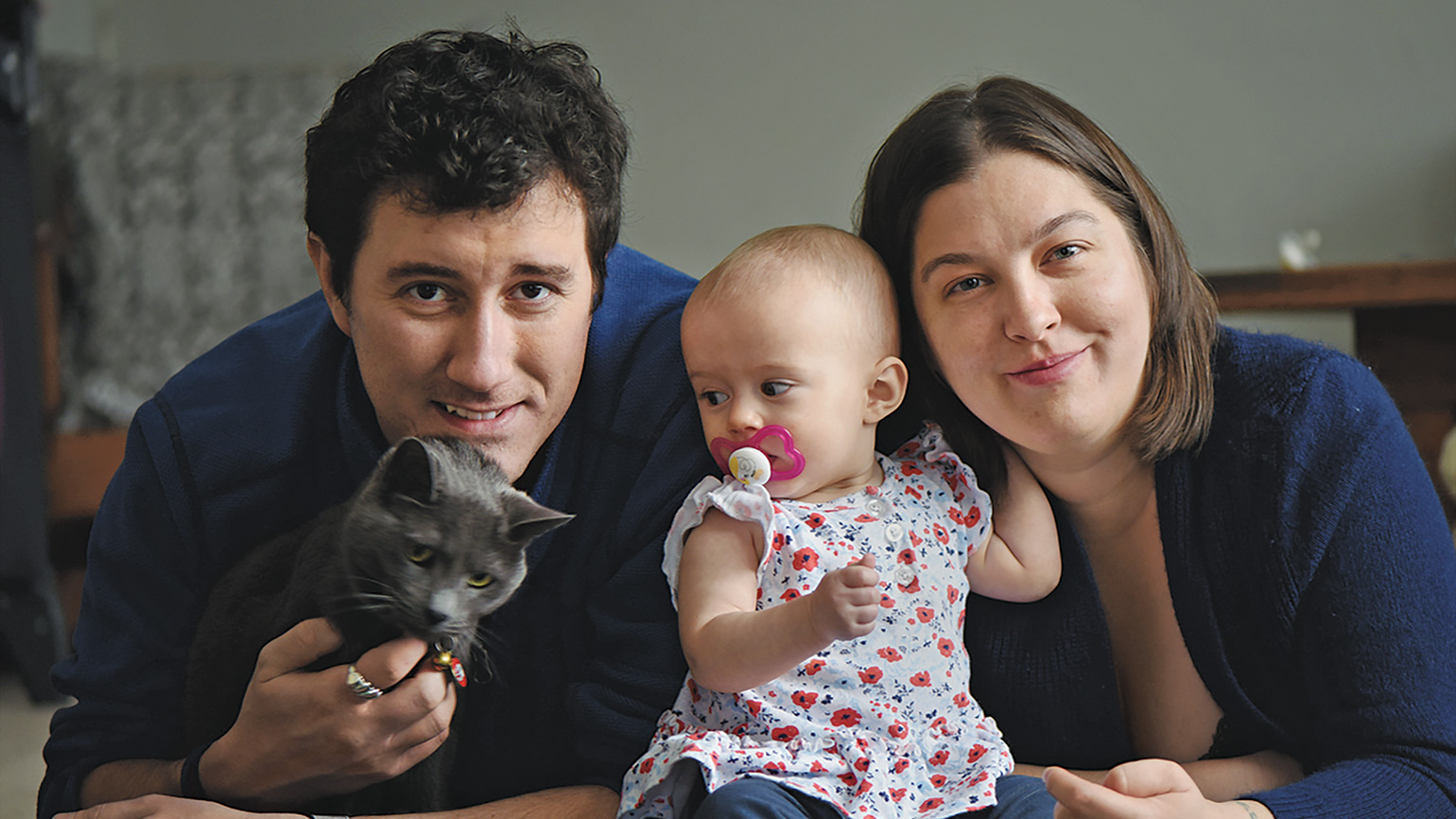
I named him Scout and he became my constant companion in the barracks. As I went through the process of my medical discharge, Scout was there. On bad days, he’d curl up in my lap and purr until I felt better. I officially left the Army in July 2009. Soon after, Becky and I got engaged, and Scout moved with me from Kansas to Pittsburgh to be closer to her.

I was far from the lonely and depressed man Scout had first approached in the rain, but I still had a ways to go. Between Scout and Becky, I had the support I needed and motivation to get there.

I made sure to get regular exercise and eat healthy. I even quit smoking. I went back to school to get my master’s degree in clinical rehabilitation and mental health counselling. I wanted to work with fellow veterans. My greatest hope was to be for someone else what Scout was for me.

For more angelic stories, subscribe to Angels on Earth magazine.

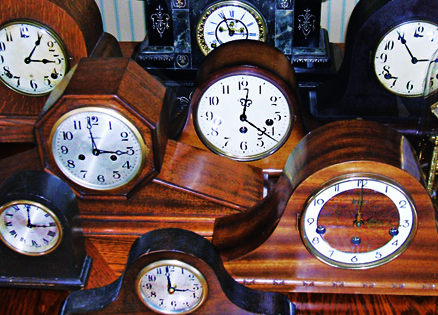
The Clock Collector

With one low gong the old Seth Thomas struck 12:30 a.m. I love clocks, especially that one—a humpback mantle from the late 1800s. But hearing it at this hour was just another reminder that I was still awake. My mind raced with worries: The economy, my wife’s health… Lord, help me sleep, I asked.

I thought about my first clock. During the Vietnam War, I was stationed at Finthen Army Airfield in Germany. On a weekend leave, I stopped in a quaint clock shop. One grandfather clock, amid hundreds, caught my eye. Unadorned. Plain brass face. Curved case of dark wood. I was inexplicably drawn to it. When I was discharged, I used every last penny I had to bring it home.

Over the years I added an antique-shop treasure, a rescue from an old apartment, a grandmother clock from an auction. I learned how to make repairs and restorations. Each clock had a different personality, a different need.

Ding! The cherry schoolhouse clock struck 2 a.m. Then all the clocks rang the hour. I’d timed them that way. But the early 1900s Gilbert missed a beat. I plodded down the hall. Within a minute I had it working again. The Lord is this way, I thought. He knows what troubles us and what we need. So why worry?

I went back to bed and drifted off to the steady ticks of my clocks. Each one a reminder of God’s personal care.

The Bus-Riding Angel

Two things are always in short supply when you are a college student: sleep and money with which to go home. Margarete was away at college, a hardworking, diligent college sophomore. The Christmas holidays were soon approaching, which meant a trip home was almost in sight. But as always, college professors haven’t much heart and usually schedule tests during the last three or four days preceding vacation, so sleep was hard to come by.

Grandma Hendley had sent the funds for Margarete’s long bus ride home. As soon as the last class was over, Margarete made her way to the bus depot loaded down with packages and a few presents. She quickly purchased her ticket and boarded the bus.

She was thankful that her first choice in seats was available–the very last seat next to the back door–where she could stretch out and sleep without interruption all the way to her destination of Mankato, Minnesota. Stretching out with no one to bother her with questions or break into her sleep felt like such a luxury.

The only sounds that filled the bus were the quiet murmurs of other passengers and the steady hum of the tires on the highway. Such were the comforting, soothing sounds that lulled a tired college sophomore to sleep. As she slept, the motion of the bus and her tossing pushed her shoulders against the back door.

Suddenly, without warning, the back emergency exit door swung open with Margarete wedged against it! Her head and shoulders hung out the open door–awakening her instantly–and she felt herself falling into the blackness of the night toward the hard concrete of the highway.

Her first thought was, I’m going to die! She frantically grabbed for the door frame to catch herself but missed! She prayed the most fervent prayer of her short life in just three words: “Jesus, help me!” And to this day, she says she can almost still feel it: a pair of huge hands caught her and pushed her back into the bus.

She quickly looked around, but no one was sitting near enough to her to have touched her. When the warning light of the open door flashed red, the driver brought the bus to a quick stop and came running down the aisle. Stopping short, he took in the sight of Margarete sitting next to the open door and leaned down to ask her, “Are you all right?

I can’t understand how it happened. Did you lose anything? Are you afraid? Did you get hurt?”

As you can imagine, he was more than a bit upset with the problem. Still in a sort of shock, Margarete answered, “No sir, no problems.” “Well, then, how did you manage to hold on and not fall out?” She replied, “I believe I had some heavenly help.”

The Breath of Hope

“Where on earth is that check?” my mother cried. She sat next to me at the kitchen table, flipping through a mountain of bills, receipts and envelopes. “It was right here!”

When she got to the bottom of the pile with no luck, she closed her eyes, tight, and bowed her head. I knew she was saying a prayer for help.

I’ll find it! I thought. But if my mother couldn’t find the all-important unemployment check, what chance did an 11-year-old have?

READ MORE: WORRIES CARRIED AWAY BY THE WIND

My mother called what our family was going through now a rough time. It happened every year when the local seafood factory where she worked closed for the season. My father, a truck driver, picked up a few overtime hours to make up the difference, but we still really depended on the unemployment check that came every two weeks.

I could recognize that white envelope anywhere, with its shiny State of Maine seal. What would we do if it was lost? Would we have enough money to buy food?

“I’ve looked everywhere,” my mother said. “I give up!”

“Can I help?” I asked.

She gave me a tired smile. “No, just take out the garbage. The bag is almost overflowing with trash.”

I knew that wouldn’t help, but I grabbed the brown paper trash bag to take out back. Like lots of people in rural Down East Maine, we got rid of our burnable trash by setting it on fire in an old, rusted oil drum turned back over on its end. We called it a “burn barrel.” Burning the trash was my favorite chore. Dad had shown me how to strike a match without letting it go out, and I was a natural.

Outside I laid the paper bag on top of the ashes in the barrel. The air was cool, still. I lit the match. Poof! A gust of wind came out of nowhere! It blew out my match before I could get it down inside the bag. I shook my head and pulled out another match. Light the trash, quick, I thought.

READ MORE: BLESSED BY THE BREEZE

I scraped the match against the coarse striking surface. Poof! Wind again! It blew out my match the second I lit it, as if on purpose! What did the wind have against me? One after another I tried every match in the book, but the same thing happened to all of them.

This can’t be, I thought. What’s going on? I tiptoed back into the kitchen. My mother washed dishes in the kitchen sink and sang a hymn to calm herself down. I sheepishly told her what had happened.

“Maybe they were old matches,” my mother said. She tossed me a fresh book. “Try these instead.”

I trotted back outside and struck a match against the new matchbook.

Poof! The match went out yet again, and so did every other one in the book. How could I face my mother this time? I trudged into the kitchen with my shoulders slouched.

“You’ve got to be kidding,” my mother said. “I have one more matchbook. Let me try this time.”

I followed her outside. My mother took out a match and prepared to strike it. Then something caught her eye down in the burn barrel. A white envelope lying on top of the brown trash bag. A white envelope with the State of Maine seal!

My mother threw her arms around me. “The check!” she exclaimed.

I hugged her back, looked up at heaven and smiled at God’s angels, who must have been mighty out of breath after all that work.

Did you enjoy this story? Subscribe to Angels on Earth magazine.

The Boy Who Came Back from Heaven

Just a generation ago, near-death experiences (if acknowledged at all) were usually dismissed as chemical or anesthesia side effects, or products of a vivid imagination.

Today, due to the research of professionals such as Raymond Moody, we now know that a person can go through a “death,” meet angels, saints and even Jesus during this time, and then miraculously awaken.

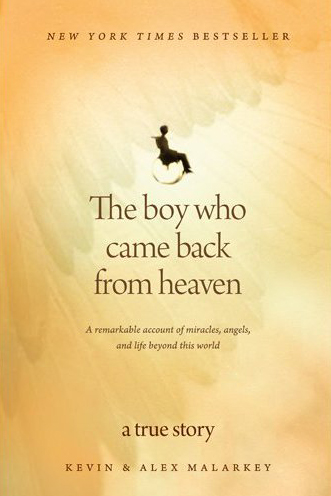
Lacking up until now have been the input of children experiencing this phenomenon, but with the publication of The Boy Who Came Back from Heaven, we have new angles to ponder.

In 2004, Kevin Malarkey and his six-year-old son, Alex, survived a terrible car crash. Alex was so injured that he was given up for dead several times by medical professionals. But when his broken spinal cord was healed without medical intervention, and he awakened from a coma two months later, he had amazing stories to share, of a wonderful place he had been, of angels who showed him around, and of Jesus who spoke with Alex many times. He had much to tell his astonished and grateful family too, and eventually his father wrote a book to share it with all of us.

In the book, the messages from heaven are just what we would expect, coming from an absolutely normal child, but they deepen as Alex matures (the book takes place over a period of six years). There’s no evidence that he continues to hear from heaven. But I wouldn’t be surprised….

The book’s format is helpful, with a variety of people adding their comments to the whole, and Kevin is painfully honest about the trauma’s effect on his marriage and family life. And as a Catholic who has always wondered why apparitions seem limited to Catholic children, I was thrilled to see that a little evangelical boy enjoyed heaven just as much as his Christian counterparts.

There were some bumpy parts, however. Not to spoil the ending, but it comes as a jolt. I would have appreciated a more gradual journey, and perhaps that’s why I came away with a vague sense of dissatisfaction. Of course Alex is still a work in progress, so perhaps it ended right where it should.

Anyone have any thoughts on this book?

The Blessings in a Sneezing Fit

On my third round of sneezes, my coworker Jim said (again), “Bless you.” He knew it was getting embarrassing after a full morning of sneezing. I was disturbing everyone around me, working as we do in cubicles without much privacy. “Cold or allergies?” he asked.

I didn’t know but couldn’t answer him right away because I felt another sneezing fit coming on. This was ridiculous. In our old offices, I could have just shut my door and hid from the rest of the staff until it was time to go home. Here, I was completely exposed, my a-choo! a-choo! a-choo! ringing out across the cubicles in annoying triplicate. How could anyone concentrate?

“Bless you, bless you, bless you,” Jim offered. “I think you’re being visited by a sneezing angel.” That was a nice thought. Maybe people weren’t as annoyed as I’d assumed. I reached for another tissue. “Ah, yes,” Jim said, “comfort from a Kleenex angel…”

And from coworkers who really do bless me with their kindness. To think I could be shut up in my old office, without any blessings at all.

Read Our ‘Best Angel Stories 2016’

The Blessing of Friendship

Happy framed faces filled the silver tray on my baby grand piano. Over four decades of friendships were immortalized there. There was Sonja eating fried chicken at a potluck. Barbie giggling at her computer. Carole and me on vacation in North Carolina.

All these women were gone now. I lost Sonja to a heart attack, Barbie to cancer, Carole to Alzheimer’s. Even my beloved dog, Spanky, had recently succumbed to pancreatitis.

Every friendship ends, I thought. Then my eye fell on another photo—my best friend, Sue. She was 19 years older than I was. Older than most of the friends I had already lost. I had to prepare myself for the inevitable. But the truth was, I honestly didn’t think I could survive it.

A car honked outside. A group of us girls were taking a trip to Clarksburg for the day. I’d hoped the trip would take my mind off my sadness, but the thought of getting in a van with Sue filled me with dread.

“All aboard,” my friend Debbie called when I climbed in the front seat. “Have a macadamia nut cookie,” said Jeanne from the seat behind us, passing a baker’s box and filling the van with a buttery aroma.

“Thanks,” I said, trying to sound cheerful. Sue was all the way in the back of the van. I’d barely looked at her when I got in.

“How did you and Roberta meet?” Tresa in the backseat asked Sue.

“I’ve known her since she was in pigtails,” she said. “Roberta is like the daughter I never had.”

“Friendship must be strong with roots that deep,” Tresa marveled.

I remembered the first time I saw Sue, blonde and pretty as a movie star behind the piano at our little Baptist church. “I pestered my mother to let me sit by myself right by the piano,” I said before I realized I was speaking. “I watched her hands move over the keys and tried to copy on my wool plaid skirt.”

“A very short skirt, if I recall!” Sue cut in, and set the others to laughing. “And I can’t count all the times I had to give her a pinch for passing notes during the services!”

“A pinch always followed by an affectionate pat,” I reminded her.

The memory set my mind wandering further. Sue comforting me when my mother was injured. Sue encouraging me with my nursing studies. Sue welcoming me into her house for dinner when I’d spent all the money I earned selling Avon on textbooks and had nothing to eat.

Don’t think about those times, I told myself. Don’t think about Sue.

Thankfully the conversation moved on to something safer: antiques. “The first antique I ever bought was a washstand—” I started. Too late I remembered that day. Of course Sue had been with me.

“I admit I pushed her to get it,” she said. “I told her, honey, a washstand is the most versatile piece of furniture you’ll ever own. It can be an end table, a nightstand, a kitchen island, even a vanity.”

“It’s still in my house. Right next to the grandfather clock,” I said. One day it would be another reminder of a friend I’d loved and lost.

After that day I stopped accepting invitations to go out if I knew Sue would be there. I kept our phone calls to superficial small talk. No old memories. Nothing to remind me of the fear that was with me all the time now. The fear of losing Sue.

“I miss you,” Sue told me before we hung up one day in late fall.

“I miss you too,” I said. I did miss Sue, more than she could ever know. But I would miss her even more when I lost her for good. Best to guard my heart now to avoid more pain in the future.

December rolled around. I drove my car down to the mailbox on my country road one morning. A heavy, square white envelope was waiting for me. I was so curious I tore it open right there in my car. It was a friendship journal from Sue.

I opened the red and green cover. “Roberta, I’m so thankful to have a friend like you,” the inscription said. “So I have recorded some of our good times together in this book.”

I turned page after page in Sue’s careful handwriting. “Who would have thought we would ever be friends with our age difference?” she wrote. “I never would have dreamed you’d become so dear and special to me. But I’m so glad you did!”

I was blessed to have Sue, I thought. Every one of these memories was a blessing. On the final page the publisher had printed a Bible verse from Proverbs: “A friend loveth at all times.” Sue was my best friend, but I hadn’t been loving her at all. I’d just been fearing her.

I grabbed my cell phone and punched in her number. By the time she answered I was in tears. “I got the book, Sue,” I said. “I didn’t mean for us to drift apart. I was just so afraid I had to distance myself from everyone—especially you.”

“Did you read what I wrote at the end of the book?” she asked.

I flipped to the page where Sue had inscribed, “I’m so grateful for all the days we have traveled together. May God continue to bless our friendship in the seasons ahead.”

God had blessed all our days together, from the very first day we met. I didn’t know how many seasons Sue and I had together on this earth. But I never had to worry about losing her love. Or she, mine.

Download your free ebook, Angel Sightings: 7 Inspirational Stories About Heavenly Angels and Everyday Angels on Earth.