Embrace God's truth with our new book, The Lies that Bind

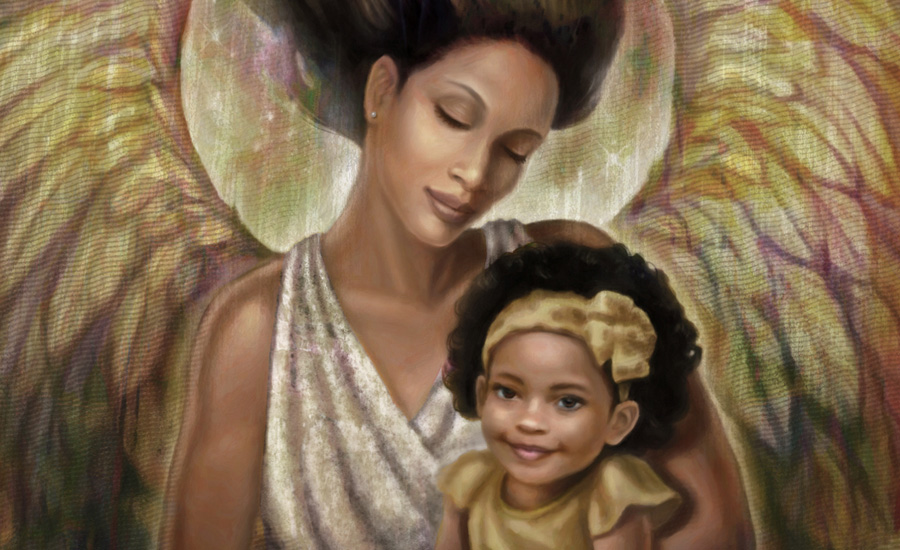
Our Angel Mothers

When I turned in my last blog about my angel mother, I got a nice surprise from my colleague, Brooke Obie, who works on the digital team. She came over to my desk, smiling big. “Speaking of mothers…” she said kind of shyly, and clicked around for a second on her phone. Then she showed me a picture she’d snapped. I took the phone to see better.

“I caught Mom unexpectedly,” Brooke said, “after she’d fallen asleep while reading.” Brooke’s mom’s hand was resting on an open book, and I was taken with the elegance of the woman’s long piano fingers, her manicured nails, her pretty wedding ring. Simply a hand on a book, but somehow such a peaceful scene. Then I turned the photo a bit, curious to make out what it was Brooke’s mom was reading. A devotional book of some sort. But Brooke and I had never shared family photos before. Why was she showing me this one now? I looked up at her, wondering.

“Look at the bookmark,” she said. “It’s from our magazine!” Sure enough, an Angels on Earth bookmark held her mom’s place.

I work mostly in print, Brooke works mostly on digital. We can get caught up in our busy schedules and go days without so much as a hello. But I love knowing that my colleague across the way and I have at least one essential thing in common, our angel mothers.

One Last Dance with an Angel

“Are you okay?”

My husband, Charles, put his hand on my shoulder as we got into bed for the night. “I’m fine,” I said. But I wasn’t. Not really. I hadn’t been okay for nine months, since my beloved father had died. Nine months, I thought. Nine months to the day.

Daddy hadn’t been well for a long time. Emphysema, multiple blocked arteries, quintuple heart bypass surgery, on and on. His end-of-life struggles haunted me.

I turned out the light and turned over in bed. I wanted to remember happier times. Like when we visited Newton, Alabama, where Daddy grew up. “You have to try an oyster,” he said to me, holding out a slimy-looking thing on a shell. “My brothers and I ate these all day long!”

READ MORE: ANGELS ASSIST HER IN SINGING HEAVEN’S MUSIC

I never did become a fan of oysters myself, but thinking about how much Daddy loved them made me smile.

In my mind I relived dancing with him on my wedding day, so handsome in his blue suit and signature dark-framed glasses. Although he was a draftsman by trade, music was his passion. Family lore said that as soon as Daddy was big enough to climb onto the piano bench, he was playing by ear. Any music at all—if he listened to it he could play it.

He saved up and bought his first piano when he was in high school—not bad for the hard-working son of a peanut farmer! I loved to hear him play at church and Sunday school. One week a new teacher tried to give him the sheet music for the hymn we were learning. “Don’t give me any music,” Daddy said cheerfully. “I don’t read a word of it. You all just start singing and I will join in.”

Sometimes on the weekends he played with a jazz quartet—Daddy on piano with a trumpet, clarinet and bass player. There he got to play his favorite songs, classics like “It Had to Be You,” “Sentimental Journey” and “Someone to Watch Over Me.” People compared him to Floyd Cramer, a hall of fame pianist known for his Nashville style. But to me Daddy’s style was unique.

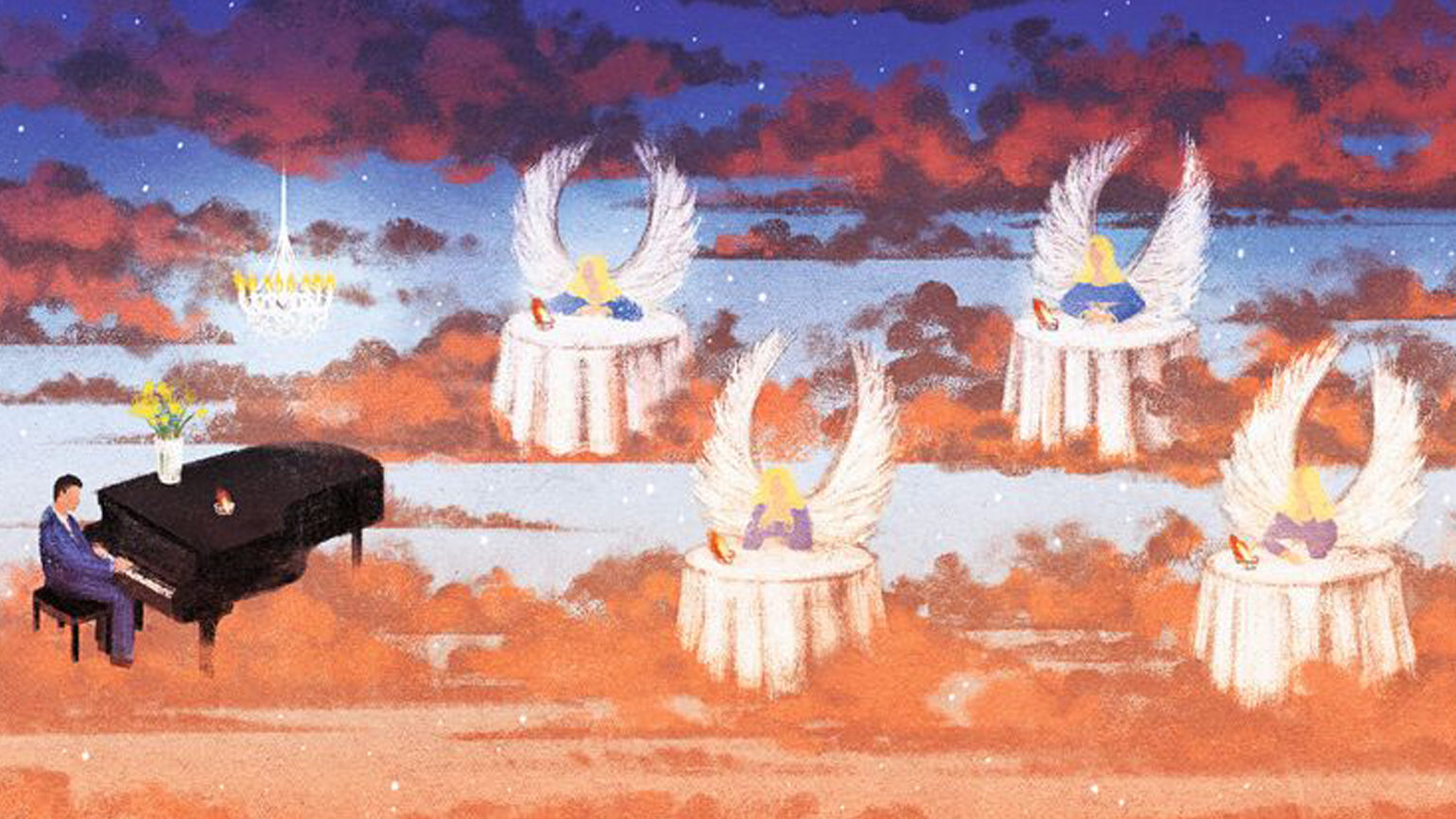
“You should have seen the place I was in last night,” he often said the next morning. Then he’d describe the club so I could almost see it myself: crystal chandeliers, white tablecloths on the candle-lit tables, the finest china and silverware.

How I wished I could see Daddy play in a place like that!

That’s the way I want to remember him, I thought as I turned over again in the dark. Doing what he loved in the loveliest of settings.

I wasn’t aware of falling asleep. I just found myself stepping into the most elegant room I’d ever seen—like no place I’d ever been. Crystal chandeliers hung from the ceilings. Tiny round tables dotted the floor, each with its own glow of candlelight.

Music played. “It Had to Be You.” Right away I thought of Daddy—and then he appeared, standing there, young and strong. In such tip-top shape that even the glasses he so depended on were no longer needed. He wore the same dark blue suit he’d worn to my wedding.

I glided over the shiny dance floor, right to his side, and took his arm. “Daddy, will you dance with me?”

He didn’t reply with words, but I felt his comforting arms around me, real as anything. We danced and danced until the dream faded.

I awoke in my bedroom. Charles put his hand on my shoulder. “Are you okay?” he asked. “You were crying in your sleep.”

I brushed the tears from my face. “I really am fine now,” I said. How could I even put into words how fine I felt? How God had given me a glimpse of heaven and let me see my father whole and healthy one last time, all his struggles behind him. “Daddy’s fine too.”

I’d waited nine months for this reassurance. Nine months—it was perfect. Daddy was reborn in heaven and his new life had begun.

Did you enjoy this story? Subscribe to Angels on Earth magazine.

One Bird at a Time

I gazed at the blank paper on my easel, listening to the birds outside my window.

Sometimes it was that moment just before I put brush to canvas that was hardest. Besides, this was an important painting, a gift for people who had helped me through one of the toughest times in my life. It had to be exactly right to show them how I felt.

I’d been diagnosed with breast cancer a few months before and it changed my whole life. There was so much to go through: consultations, surgery, radiation.

My husband, Ed, was totally supportive, but he couldn’t always stay beside me during my treatment. Even my friend Kim, a breast cancer survivor herself who called me every day, felt very far away in Florida.

I dipped my brush into a pot of water. A new bird flew over to join the others outside in song. As an avid bird-watcher I couldn’t help but admire him: a bright red cardinal.

For me, bird-watching wasn’t just a way to pass the time. Birds were God’s way of showing us the beauty in the world. Even now, when I wasn’t able to go outside, I could look out my window and see them.

It was as if He had created them so that even when life got ugly we would have something beautiful to remind us of his love.

I’ll be outside with my binoculars again soon, I promised the cardinal, watching him swoop from one branch to another. My radiation treatments were coming to an end and with them, hopefully, the end of my cancer.

I thought back to the August day I started my sessions at Mercy Medical Center. Ed had already missed so much work caring for me, he couldn’t come with me. I had no idea what to expect. A scary, cold building full of machines?

Instead I walked into a cozy waiting room with cheerful paintings on the walls and an even more cheerful receptionist behind the desk. “It’s good to see you, Jennifer,” she said. “Just have a seat right over there and I’ll call you when the team is ready.

She gave me a reassuring nod, like she knew how scared I was. That little bit of kindness, like the bright paintings on the walls, made me feel stronger.

I almost hated to leave the receptionist behind when I went to the treatment room, but it turned out the technicians who worked my machines were just as comforting. “Just watch—you’ll miss us when your six weeks are up!” one of them joked as she adjusted the dials.

That first day I couldn’t imagine missing anything about the place, but as my final treatment approached, I realized it was true.

Oh, I wouldn’t miss the treatments, but the people were a different story: the reception staff who knew my name and my schedule better than I did, the technicians who told jokes to put me at ease, even the cleaning staff who greeted me with a smile. Their kindness made all the difference.

A tradition at Mercy was for patients to bring something in on their last day, donuts or cookies they’d baked to celebrate. That’s why I was at my easel. I’d been painting as a hobby for a couple of years. But what should I paint for the staff at Mercy?

I closed my eyes and thought. The cardinal chirped, as if offering a suggestion. That’s it! I opened my eyes and thanked my bright red muse. I would paint a bird! Something beautiful for people to focus on.

Ed thought that sounded like a great idea. “If anyone knows the beauty of birds, it’s you,” Ed said.

My painting was finished a few days later: a cardinal sitting in a pine tree. But something was missing. I mixed some paint and added a pink ribbon—the international symbol of breast cancer awareness—curling out of the bird’s beak.

I called the painting Strength because that’s exactly what the people at Mercy gave me when I needed it.

The staff was thrilled with my gift. The patients liked it too. I was just happy to give something back to people who had helped me so much. “But they’re not the only ones I want to thank,” I said to Ed when I got home. “What about Dr. Sweitzer? I couldn’t have asked for a better surgeon.”

“Why don’t you paint him a bird too?” he said. “Maybe a different kind.”

The next day I was back at my easel, wondering what bird to choose. When two bluebirds landed on the tree outside my window, I had my answer. I named my bluebird painting Courage, something a surgeon needs as much as his patients.

Next on my list was my friend Kim. What would I have done without her daily phone calls? For Kim I chose a mockingbird sitting on a bougainvillea, just like the ones she would see at home in Florida. The mockingbird was for Friendship. I painted a goldfinch for my friends at the Cancer Care Center at Mercy Medical, and called it Hope.

Finally, I painted a cedar waxwing. Those graceful birds had always been a favorite of mine, so they seemed the perfect tribute to the one I leaned on most throughout my illness: God. I called that picture Faith and hung it at home for Ed and me.

One day I got a call from a stranger. “I saw your painting at the Mercy Medical Center. Is there any way I could get a copy? It’s beautiful!”

“I’m not sure…” I said. I didn’t know how to go about such things. But more calls came, all people asking for prints of the painting. I’d never expected this.

Ed got right on it. He arranged for all my paintings to be available for anyone who wanted them. We gave out plenty.

By Christmas I was officially cancer-free. I couldn’t have asked for a better gift than that, but Ed said he had something special for me. “Come and see,” he said, turning on the computer. He typed in an address on the internet.

I gasped as my birds popped up on the screen. Ed had designed a whole website for them. There was even a picture of me sketching! “People can buy the paintings as note cards or prints,” he explained, clicking me around the site.

Best of all, a portion of every sale was donated to cancer research and to a fund that helped women in treatment.

I’m back to bird-watching outside with my binoculars these days. Each bird I see still feels like a gift. A gift that reminds me of the beauty in God’s world. Beauty that surrounds us even when we’re dealing with ugly things like cancer.

No painting can compare, but if a picture of mine can give someone strength, courage or hope when she needs it most, that’s what I’d call art.

Download your FREE ebook, Angel Sightings: 7 Inspirational Stories About Heavenly Angels and Everyday Angels on Earth

On 9/11 She Saw an Angel Escort a Young Fireman to Heaven

It was one of those perfect New York autumn mornings—blue skies, a crisp breeze. A day when I felt lucky to live in the city. I was on my way out of my East Side apartment when the doorman waved his hand to stop me.

A plane just hit the World Trade Center,” he said.

An image of John F. Kennedy, Jr., shot through my mind. He had just crashed his private plane into the Atlantic Ocean in the summer of 1999. These private-plane owners really don’t know what they’re doing, I thought as the doorman pushed open the door. It was a terrible accident to be sure, but an accident nonetheless. I expected to see something about this one in the paper the next morning.

I walked over to Lexington Avenue and hopped on the 6 train. I was on my way to 51st Street for my advertising agency job. I grabbed a seat and pulled out my book. Two stops later, a crowd of people pushed their way in.

“A second plane just hit the twin towers,” one man announced.

Oh, no, I thought. Maybe the first plane wasn’t an accident after all.

Someone murmured the word terrorist, and I knew in my gut it was true. What would the next target be? I scanned through New York City in my mind. The Chrysler Building. The Empire State Building. What else held a lot of people and was easy to see from the sky? Grand Central. The Brooklyn Bridge. Thousands of commuters would most likely be trapped underground. I got off the subway and ran up the stairs to Lexington. I hopped onto a southbound bus. It was packed and crawling along the street, but I could see all the way downtown through the front window. Huge gray clouds mushroomed into the sky. What in the world is happening? Was anywhere safe? I closed my eyes and bent my head to pray.

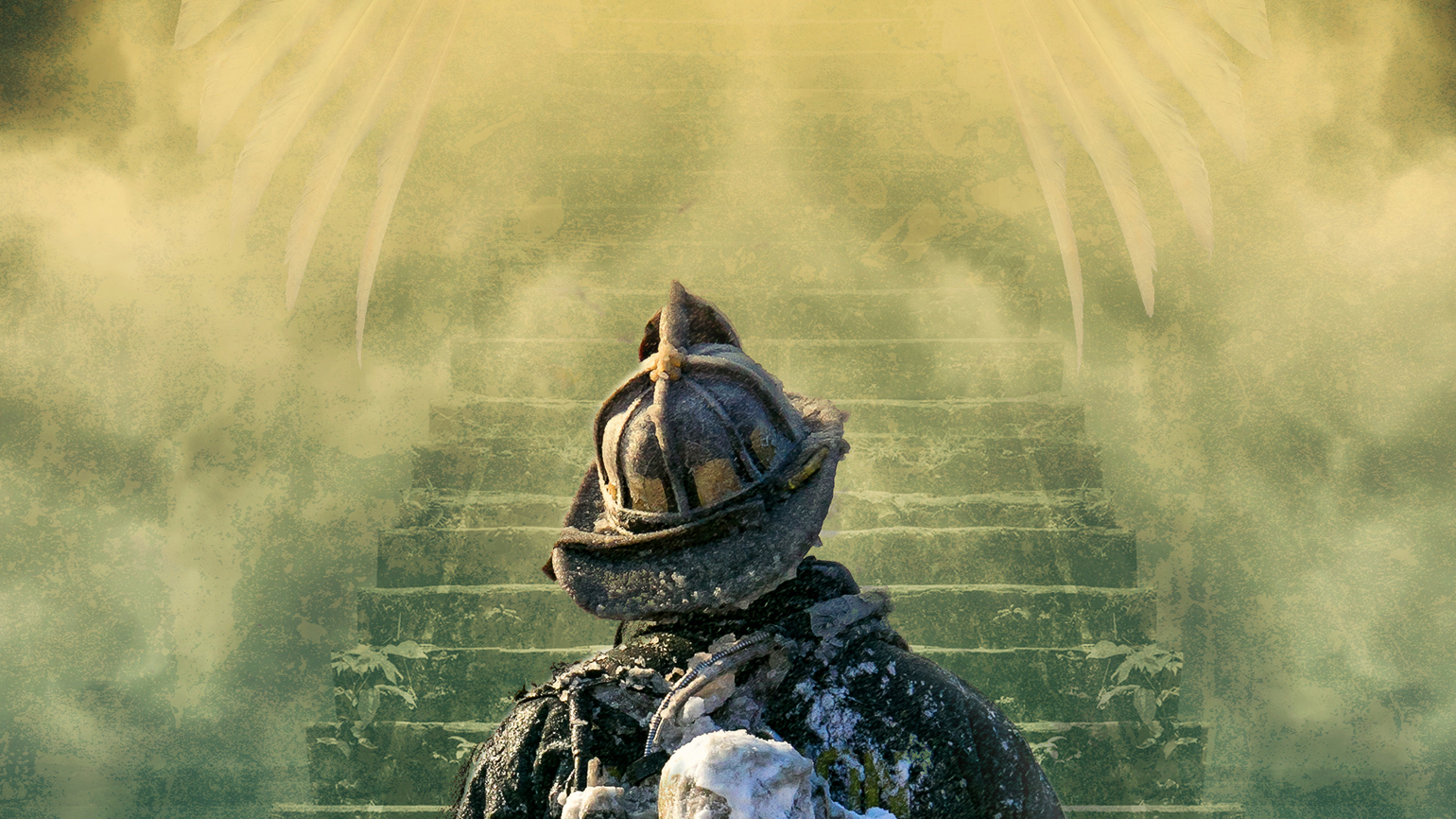
God, please look out for the people in danger, and please look out for us, I started, when a scene began to form in my mind. I saw a stairwell with a gray metal railing and concrete steps. People rushed down it—hurried but mindful of one another in their focus to escape. Up through the throng came a determined young firefighter in a yellow-striped canvas jacket. He climbed past the fleeing people until he was higher up, all alone. Intent on doing his duty.

As he continued his climb, he rounded a corner. Above him, the building was gone. Waiting there was an angel, large and bright against the dark debris surrounding them.

“Well done,” the angel said. “Now come with me.”

I opened my eyes. The scene I’d watched was so clear. So real. Not my imagination, but an actual vision. God, I asked, why did you choose me to see this?

Who was the young firefighter I’d seen being taken up to heaven? Did he have a family who needed to know he was escorted by an angel to be with God? I was deeply overwhelmed and comforted by the vision, but I believe it was meant to be shared so the firefighter’s family will learn of it and find peace.

Did you enjoy this story? Subscribe to Angels on Earth magazine.

“Never Skate Alone”

I come from a family of rescuers. My two sons are officers in the military—one in the Army, the other in the Coast Guard. They come to the aid of those in need every day. You could say it’s in their DNA. My Dad was a “lifer.” He served first in the Navy during World War II, and then the Coast Guard, where he spent the remainder of his military career conducting dangerous air search and rescue missions for lost mariners. But the most important rescue mission was one that my family, more than 60 years later, still calls a miracle.

It happened in December of 1954, a week before Christmas. I was five years old. My sister, Joanne, was eight, and my brother, Jim, was two. Our home was in full holiday mode. The tall fir tree was trimmed to perfection. The aroma of baking filled the house. Preparation for our annual Italian Christmas Eve tradition, the Feast of the Seven Fishes, was underway. It would be our first Christmas in our new home in Canada, and excitement was in the air.

A few months earlier, Dad had been transferred from Massachusetts to a U.S. Naval base in Argentina, a town off the southern coast of Newfoundland. He worked four days on base. We kids were always in anticipation of his arrival home.

We lived a ferry ride away from the base, in a two-story, boxy white house in the fishing village of Placentia. It was quite a departure from the world we were accustomed to— cold, gray and barren. The winters were brutal even by New England standards. Mom reassured us that all was well and that we were on a special adventure. She managed to make our little house feel warm and welcoming, even for the other military families too. That Christmas, though, Dad was on duty. We weren’t sure he’d make it home in time to celebrate with us.

My dad never talked about his missions in front of us—maybe he didn’t want to frighten us. He was a hydraulic specialist and aerial navigator, often flying in the worst of conditions. Even as kids, we knew his work was dangerous, especially in the winter months, though Mom was good at hiding her concerns.

Snow fell three days before Christmas, covering the barren ground with a lovely white carpet. The temperature was just cold enough to freeze all the nearby ponds. School had let out early that day, and Joanne was home by noon. She told Mom that all her friends from school were going ice-skating. She wished she had some skates, so she could join them. At those words, Mom pulled a present from under the tree and handed it to my sister. An early Christmas gift— skates! Joanne wasted no time. “Can I go skating now?” she asked excitedly. “Yes,” Mom said, “but be careful and be home for supper.”

Bundled in her heavy winter coat, hat and mittens, Joanne flew out the door. She headed toward a popular skating pond close by, where her friends had already gathered to spend the afternoon. It was a perfect day for skating, chilly and clear. The sun reflected off the ice like diamonds. Joanne worked hard to steady herself on the skates. Undaunted by her multiple tumbles, she finally made it from one side of the pond to the other. She was having so much fun mastering her new skill that she lost track of time, not realizing that all her friends had gone home. It was getting dark, and Joanne knew she had better head back fast or she’d be in trouble. She reached a remote part of the pond, not noticing the fissures in the ice until it was too late. Then— CRACK! The ice gave way. Joanne’s tiny feet slid out from under her and she plunged into the water.

Surrounded by melting ice, she had nothing to grab. “Help!” she screamed. Her mouth filled with water. Again she tried calling out. It was no use. The pond was deserted. Pure panic set in as the weight of her skates pulled her deeper and deeper. Her body trembled uncontrollably, the freezing water seeping into her heavy coat and the pores of her skin. And then she was gone.

Joanne doesn’t recall how long she was underwater. But suddenly she felt something pulling her out of the icy depths. As she would later describe it, “a great big hand gripped at the back of my coat.” The next thing Joanne knew, she was sitting on the ground by the road that led back home.

She was still wearing her skates. But her boots stood neatly beside her, as if they’d been carefully placed there. She hurriedly changed into them, scarcely able to comprehend what had just happened. Her coat was as dry as a bone. So were her ice skates. Had she imagined falling into the water? Her mittens told the truth, though, as the icy pond water dripped from them. The dark walk home would have been threatening any other time. But that night, it was as if a warmth were surrounding and guiding Joanne.

Mom questioned Joanne as she came in the door, more grateful than cross. “Where on earth have you been?” she said.

“Sorry, Mom, lost track of time,” Joanne said. She took off her coat and scrambled to the dinner table, as if everything were fine. She was torn between sharing her near-drowning and rescue or keeping quiet. What if no one believed her?

The next two days passed by in a blur of holiday activities. The long-awaited Christmas Eve celebration finally arrived. We were all bundles of nerves that afternoon, not knowing if Dad would walk through the door. As we kept vigil by the window, we had one eye on the lookout for him and the other on the gifts. Around five o’clock, we got the best gift of all. Dad walked through the door accompanied by two members of his crew, who would’ve been alone that night had Dad not insisted they join us.

We all gathered around the dinner table as Mom served each of the seven courses. Dad beamed, clearly happy to be home with his family. After dinner, we settled in the living room. Joanne and I sat on Dad’s lap, and he began to tell us an extraordinary story.

“A couple of days ago,” he said, “we were called out to rescue the crew of a Russian ship that was taking on water in the middle of the ocean.”

The room drew to a hush. We’d rarely ever heard him say more than a few sentences about his duties. We were all fascinated.

“Their ship was four hours north of us,” he said, “and it was storming something fierce. We knew the vessel was sinking and that time was of the essence. By the time our plane got to the general vicinity, though, a heavy fog had settled over the sea, making it impossible for us to see anything below.”

The plane’s fuel was getting low, and Dad knew that if they didn’t see the sailors soon, they’d have to go back or risk being in trouble too.

“We have to turn around,” the pilot told Dad with some urgency.

“We’re their only hope,” Dad said. “Let’s give it a few more minutes.”

“Five more minutes,” said the pilot. “But then we’ll have no choice but to turn back.”

Dad paused in his story. “Just as we were about to turn back,” he said, “I asked the Lord to please help us find the sailors. In that moment, it was as if a curtain were being suddenly drawn back. The fog lifted. We could see several men on the ship’s bow, waving flags. The pilot flew the plane overhead, and I lowered the harnesses. As each man ascended to the plane, I reached down and pulled him to safety. Just as the last man climbed aboard, the vessel sank.”

I stared at Dad’s strong hands, picturing him reaching out for those men, bringing them to safety. The strength and courage it must’ve taken took my breath away. Just then, Joanne said in a soft, almost inaudible voice, “I had a miracle too, Daddy.”

She told the room how another pair of powerful hands, just like Dad’s, had plucked her from those icy waters. Hugs and kisses followed.

Was there a connection between Dad’s rescue of those sailors that night and the rescue of his own little girl? Perhaps we’ll never know for sure. But all these years later, when I sit to pray for my sons, inspired into service by their grandfather, I’m not afraid. For I know that whatever they face, they are never really alone. Protected, always, by a father’s hands.

Judy Zwirblis is the author of Treasured Tales of Homeschool: An Inspiration for Parents.

My Umbrella Angel

It was a really rainy day and I wasn’t paying any attention to what was going on outside my window. I guess I was staring at the smaller window of the computer screen. Midday I had to go outside to meet someone for lunch. I took the elevator down and looked outside. Pouring rain. And no umbrella.

If I’d only paid a little attention. If maybe I’d even checked the weather forecast before I left home. But no. Always in a hurry. Dashing here and there. Totally oblivious. I didn’t have an umbrella in my office. Didn’t have a raincoat. I could see myself turning up at the lunch meeting as wet as a drowned rat.

In our building in New York, GUIDEPOSTS’ editorial offices are on the 21st floor. And here I was down in the lobby, staring at rain. Florence is the lady at the desk in the lobby and I figured maybe she would have some suggestions. “Florence,” I asked, “where is a place I can buy an umbrella?”

“Borrow mine,” she said.

“Don’t you need it?” I said.

“Not until 4:00 when I leave.”

“Really?” I asked.

“Of course.” She handed me the biggest, widest, sturdiest umbrella I’d ever seen. “Take it.”

I did. It was a Godsend. I arrived on time for my lunch meeting, perfectly dry. I didn’t even leave it at the restaurant (why are umbrellas so easy to leave behind?). I returned it to Florence with greatest appreciation.

Sometimes it is the kindness that you least expect that makes for a perfect day—even if the weather is awful.

Rick Hamlin is the executive editor at GUIDEPOSTS.

Mysterious Ways: Christmas in the Parking Lot

Christmas just isn’t Christmas without sharing a giant chocolate Hershey bar with Mom, I thought wistfully, looking at the display of bars on sale at the grocery store one cold December day.

It’s not your usual holiday tradition, but it was for me. I’m not sure how it started, but every year for as long as I could remember, as a way to welcome in the holiday, Mom and I would run to the store to buy a giant milk chocolate Hershey bar. We’d keep it in the refrigerator at home and would break off little pieces in the days before Christmas, sometimes even dipping them in peanut butter. It was a guilty pleasure we loved sharing together.

Mom had passed away just a couple of months earlier. No, no chocolate bar this year, I thought. Not without Mom to share it. I turned away from the display of chocolate and headed to the checkout line to pay for my groceries.

As I pushed my cart toward my car, I kept thinking about that Hershey bar. Should I go back in and get one? No, I shouldn’t eat all that chocolate myself.

I put the groceries in the car, then climbed in and closed the door. I turned the car on and let it idle for a minute, waiting for it to warm up. Lord, I sure wish I could feel Mom close by this Christmas season, I prayed. Let her know I love her and that I hope to see her again someday.

I put my car into gear and looked out the rearview mirror, ready to back out of the parking spot. Something shined brightly from the baby seat of a grocery cart in the spot across from me. Did someone leave their purse? I put the car in park and scanned the lot to see if anyone was around. No one. I walked over to see what was in the cart.

I couldn’t believe what I was seeing and laughed out loud. There sat a giant Hershey bar, just like the ones Mom and I always shared!

My Angelic Near-Death Experience

It was a big job, the kind I loved.

There aren’t many people who know how to tear down and rebuild the engine on a Peterbilt logging truck. I’d built my mechanic business from scratch and was proud of what I’d accomplished. Across central Wisconsin I was the guy to call for heavy machinery repairs.

On this particular November day I was finishing up work on an engine at the truck owner’s garage. I’d spent most of the last three days removing the head gasket and cylinder head, carefully disassembling clamps, cables and other engine parts. It took a lot of horses to power this big boy. The front wheels and axle alone carried over 11,000 pounds.

Now, in the home stretch of a 12-hour day, my mind kept returning to a discussion my wife, Lori, and I had two nights ago about our faith.

I wasn’t sure where she was coming from. God had already changed me so much, helped me overcome problems with drugs and alcohol. And he had given me this talent to fix engines and a successful business. Yet Lori believed I could deepen my faith still more, meeting God in my life in ways I had yet to understand.

I filled the engine with oil and coolant then started it to make sure everything was in running order. Almost done. I was putting away my tools when the truck driver and part-time mechanic asked if I’d look at an oil leak unrelated to my work. “Sure,” I said.

The passenger-side wheel was removed and the jack was still in place. I slid under the truck feet first on a creeper. Peering into the underside of the rumbling engine, I wiped away oil with a rag, trying to find the leak. As I looked up, I saw some movement in my peripheral vision, turning my head just in time to see the jack shoot out from under the front axle like a rocket.

Before I could react, the axle slammed across my midsection, crushing me to the floor. I screamed in agony till I was gasping for air, my lungs burning. Then a final involuntary cry from deep inside me: “God, help me!”

My arms strained against the axle. It didn’t budge. My arms collapsed, the pain too intense. Sweat soaked my face and hair. The engine rumbled, each vibration grinding the axle down on me. I heard the other mechanic calling 911. “Hurry! He’s smashed under the truck.”

It’s too late. I’m going to die. I tasted blood, felt it running down my chin. The mechanic turned off the engine. Then he began jacking up the truck again. The axle slowly raised off me, but the pain didn’t let up.

I reached back and grabbed the bottom of the front bumper with my hands to pull myself out. But I moved less than a foot before my muscles collapsed, only enough for my head to stick out from the bottom of the truck.

I thought about Lori and the kids. I loved them so much. I wished I could see them to tell them goodbye. But everything was fading. Turning black.

The next thing I knew it was as if I were watching a movie from 15 feet in the air, a scene unfolding below me, the logging truck in the foreground.

A man’s head stuck out from beneath the front of the truck, another man on his knees by him, stroking his hair. “Hang on,” said the kneeling man. “I don’t want to move you. The paramedics are coming. Please don’t die.”

The man under the truck was me…I was watching myself.

Intrigued, I looked closer. Was I alive? There was no sign of movement. I realized the pain was gone. Now I felt nothing. No, this can’t be the end. I shut my eyes tight, trying to will myself back into my body.

I opened my eyes again. No. I was still watching myself from above. But wait…there below me were two incredible figures kneeling on either side of the other mechanic. I knew what they were—angels.

They were like no angels I’d ever imagined—massive, powerful men, bigger than any NFL linebacker. I could see only their backs. They wore radiant, white robes made from some type of heavy material, almost as if it were woven from ropes. Curly blond hair fell halfway down their backs.

Their arms reached under the truck toward my crushed midsection. God had sent angels! Their presence filled the garage in a supernatural way. But watching from above it seemed natural, inviting. I wanted to feel their touch, to see their faces. Is this what happens when you die?

I saw a paramedic rush into the garage, seemingly oblivious to the angels. She knelt on the floor next to my head, the angels not moving. She was talking to me as I watched from above. Then she tapped me on the cheek—hard.

My face! I could feel again! In the distance I heard a voice getting louder. “Open your eyes!” When I did, I was looking up—into the eyes of the paramedic. “Hello, Bruce,” she said. “Keep those eyes open for me. It’s very important.”

I was alive! I looked to my right and left. The angels were gone. Excruciating pain ripped through my body. Where were the angels? Why had they left? I felt myself fading again, something telling me to let go. I didn’t have the strength to push back.

Then a clear, powerful voice: If you want to live, I’m here, it said. But it won’t be easy. You’re going to have to fight, harder than you’ve ever fought for anything. Are you willing? It wasn’t an angel speaking, or the paramedic. It was God’s voice speaking deep inside me, deeper than the pain. I’d have to fight. But not alone.

My mind flashed on an image of Lori and the kids. I thought of how much they needed me. No, that wasn’t right. I needed them, especially now. God, I prayed, I want to live. I want to fight for them and for you. I’ll do whatever it takes.

More paramedics, urgently discussing how they’d move me. Slowly they pulled the creeper out from under the truck. “We’re going to take you to the hospital now,” the first paramedic said. “From there you’ll be airlifted to the trauma center in Madison. We’ve contacted your wife. She’ll meet you there. I know you’re hurting, but stay with me. You’re doing great.”

For the next hour—till we reached the trauma center—I focused with all my strength on keeping my eyes open. Keep looking around. As long as you can see, you’re alive.

The doctors at the trauma center rushed me to the operating room. I have a vague memory of the anesthesia mask covering my nose and mouth. Then all went dark, as dark as death.

The next thing I remember is looking through a kind of haze. Lori was sitting beside me. Even in my stupor I could see the huge smile on her face.

“Bruce! You’re awake! The doctors have had you in a coma for two weeks. They said to cross my fingers. I told them I was going to pray. I’ve never said so many prayers!”

I wanted to talk, but a breathing tube filled my mouth. I wanted to write, but my arms were too weak to move. It was another week, the second week of December, before the doctor removed the tube and I could tell Lori everything. “Something happened to me,” I said.

“It’s okay,” she said. “The accident. You’ve had three surgeries. Don’t push yourself. You don’t need to talk.”

“No,” I said. “I need to tell you. It’s about our discussion. You were right. God has something he needs me to do. I know he’ll help me figure it out. Lori, I saw angels after the truck fell on me. He sent angels to save me!”

“Even the doctors said it was a miracle you survived,” she said. “Rest now.”

I nodded weakly. There’d be plenty of time. The future stretched before me like a blank page, inviting me to write a new chapter. God had sent angels to let me know he’d be there with me through the challenges ahead, that my relationship with him would deepen. That was the promise of the angels.

Doctors operated on me twice more—literally putting my insides back together. It was months more before the pain subsided enough for me to function.

Today, I travel around the world, sharing my story in churches, jails, schools and on the internet. I’ve even written a book. The accident has changed my life forever. I’ve learned how frail the human body is.

Yet I’ve discovered the strength the Lord offers us to draw from, present in ways I could never have believed.


Mother’s Day Miracle from a Heavenly Angel

For Mother’s Day, our tiny church had helped me prepare something special. “A gift to celebrate the mothers in the congregation,” I explained to the small but full house of worshippers. I said a silent prayer we had enough with the 10 baskets we’d filled up with a porcelain dove, Bible verse, lotions and perfume. “Would the moms come to the altar, please?”

One by one, women rose and made their way up to me. I nervously counted heads. One, two, three… Eleven? My heart dropped. Maybe I miscounted. I hadn’t. Eleven mothers, ten gifts! “Lord,” I whispered, “we need a Mother’s Day miracle.”

I prayed a blessing over the group, but I felt awful. There’s nothing to be done, I thought as I picked up the first basket to hand it out. Someone’s going to be disappointed. I hugged each woman as I made my way down the line. “Happy Mother’s Day, Pat. Happy Mother’s Day, Rita.” With four women left, I checked the remaining baskets. Three gift packages. I handed over the next one. Two women left. I reached down to pick up the last basket—but wait! There wasn’t one gift basket but two! I presented the last mother with the gift basket that must have been hastily put together by an angel. I suppose the Lord never forgets a mother.

Download your free ebook: Angel Sightings: 7 Inspirational Stories About Heavenly Angels and Everyday Angels on Earth.

More Angel Than Milkman

For the third time that morning, I opened the refrigerator. I don’t know what I was expecting to find inside. Cheez Whiz, Kool-Aid and Jell-O pudding, like other kids had? Not in my house.

We had orange blocks of cheese and milk made from powder, all with “U.S. Government” stamped on the label, reminding us who the food really belonged to.

Not us. Nothing was yours unless you paid for it, and there was very little my family could afford.

“Rosemary, close the door,” my mother said. “You’re wasting energy.”

I sighed and shut the door. Mom never worried about all the things we didn’t have. “The Lord will provide” was her answer to everything. Each time we lost another house, another chance in another town, she had faith God would make everything all right.

“Yeah, right,” I grumbled, plopping myself down at the table. I didn’t trust God to provide anything here in Ashtabula, Ohio, any more than he’d provided anywhere else. At 9 years old, I’d learned not to trust anyone. I didn’t know how Mom could, either.

Didn’t she remember how the man who offered to fix our pipes stole from her? Or how the pipes broke again a week later? Hadn’t my father left her with eight kids to take care of on her own? How could she trust God when everyone let us down?

My angry thoughts were interrupted by gravel spraying outside. There was a screech of brakes and a backfire that echoed like a rifle shot. I ran to the window to see who’d made such an entrance.

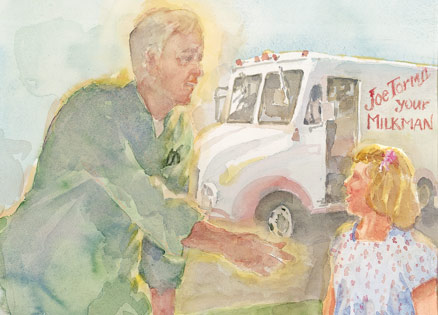
Out front was the sorriest milk truck I’d ever seen, shuddering and wheezing before rattling to a final stop. I wondered if it had just died in front of our house, unable to make the last few feet to the scrap yard up the street. The faded red letters on the side read Joe Torma—Your Milkman.

The truck door slid open and out stepped what looked like a giant in big black boots and a green stained mechanic’s jumpsuit too short for his legs. He wore thick glasses and a cap that looked like he lived, breathed and went fishing in it. He took it off and smoothed his silver hair flat against his forehead.

“Hey, Et? You there?” the man called.

“You know him?” I asked.

“He’s the church janitor,” Mom said. “Mrs. McCarthy introduced me. Come out and meet him. And don’t stare.”

Don’t stare? That wasn’t going to be easy. Joe Torma seemed to bend down right out of the sky to shake my hand. His hand was big as a baseball glove and felt just as leathery. Even more stunning, he was missing some fingers! “Well, who do we have here?” he said. “Don’t be shy, young lady. I’m Joe.”

He stuck his glasses in his pocket, revealing blue eyes that almost sparkled in the sun, and flapped my arm up and down hard.

“Glorious day, isn’t it, Et?” Joe said, grinning. He’d lost a few teeth as well. “Got a busy schedule today, but I wanted to drop off some milk for your family.”

Mom started to protest, but Joe stopped her cold. “Can’t sell it after it expires anyway, but it’s still good. My family has all we need.” He dropped a hand on my shoulder. I could feel the knuckles where his fingers stopped and wondered how he’d lost them. War wound? Shark attack? Chain saw accident? Anything was possible with a man like this! “You look like a strong girl,” he said. “Can you give me a hand?”

I followed him into the truck without a word. The inside was even more dilapidated than the outside. The backseat looked to be made entirely of electrical tape. Clothespins hung on a white string inside the front window, holding notes Joe had written to himself, receipts, reminders, prayers. “Yep,” Joe said. “The whole truck’s held together by clothespins.” He wasn’t kidding.

Joe pulled two crates of milk bottles from the back of the truck and stacked them at my feet. “Lookie here,” said Joe. “Got some sour cream, too. Your mom could use that, no?” He pushed another crate toward me. “And cottage cheese—good for your growing bones.”

I looked warily at the crates. I wasn’t going to fall for this. Joe might say these things were a gift, but nothing came for free. Trusting people to help just meant you’d be let down and humiliated when the time came to pay up. Like the time my whole class went to a Girl Scout Brownie party. My teacher assured me everyone was invited, but when I put on my coat she stopped me at the door. “Your family didn’t pay,” she said in front of everyone. “You can’t go.”

Or the time in Pennsylvania when Mom thought she found a good school for all us kids to go to on scholarship, until the principal called me into his office one morning to demand tuition. “I’m tired of you people thinking this is a free ride,” he snapped. I wanted to sink into the floor. Free ride, I thought. Yeah, right. If there was one thing I knew, it was that nothing came for free.

Joe pushed the crates closer. Cottage cheese, ricotta, yogurt and sour cream. “Go on,” he said. “I’ve got all I need already.”

I picked up a crate. Something about Joe Torma made me trust him.

Joe stopped by at least once a week after that. Sometimes he brought day-old doughnuts or bread from the local pastry shop, or fruits and vegetables from Kroger’s. Even though Joe had next to nothing himself, he saw everyone around him as generous and good—and he had a way of inspiring them to live up to his expectations.

When somebody got a new stove, Joe suggested they give the old one to us, like it was only natural. “They have all they need,” he explained to me as he carried it into our kitchen. “They’re glad to share what they don’t.” Joe didn’t make me feel ashamed to accept what he brought us, or worried he was going to demand something in return we couldn’t give. Joe never let me down.

Now when I went to our refrigerator, I felt rich. The bread was smudged with powder from the bakery’s leftover jelly doughnuts. We still didn’t have Kool-Aid or Jell-O pudding. But what we had was ours, no strings attached. I learned to trust Joe and to let other people help us. Maybe I could learn to trust God as well. Maybe God gave me Joe for that reason.

We lived in Ohio a year before we lost our lease. But as we drove away, I wasn’t thinking about what I’d lost. I was thinking how I could give to others, and teach them the lesson Joe Torma taught me. That God would provide, through people like Joe. And maybe, someday, through people like me.

Mom’s Christmas Wish

Mom and I looked out at the pine trees lining the snow-covered yard of her new house. I was grateful to be able to spend time with her every day, now that my husband, John, and I had found her a place only five minutes from our own.

“What’s your Christmas wish?” I asked her.

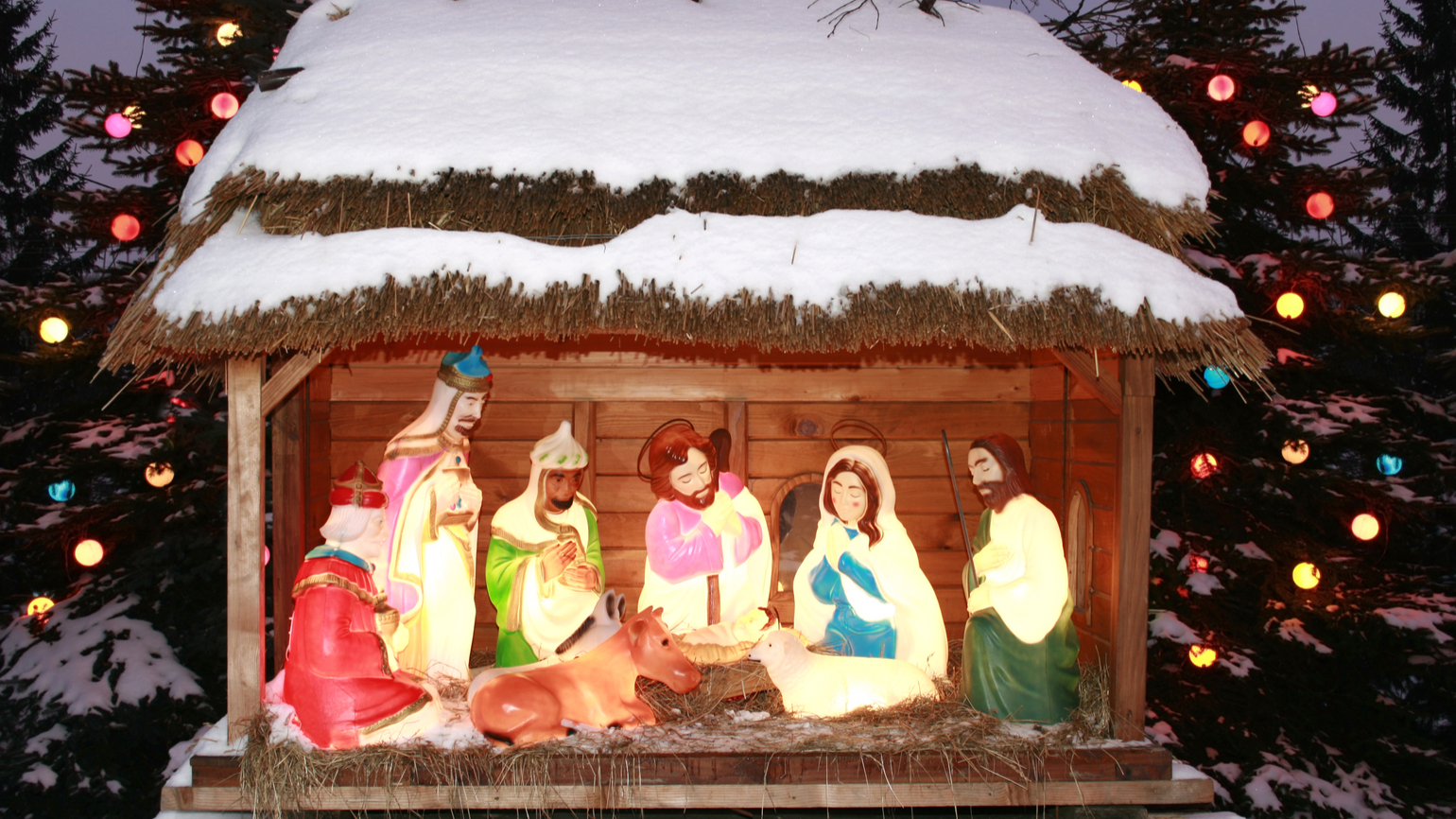
Mom thought for a long moment. “I want a Nativity scene just like the one we had on our Christmas tree farm years ago,” she said finally. “What’s yours?”

At first I wasn’t sure what to say. Mom had been diagnosed with breast cancer. There was a good chance this would be our last Christmas together. What did I want most of all? “To see you smile,” I told her.

Mom touched my hand. “Sounds like we could both use that peaceful manger scene.”

I grew up on a 62-acre tree farm. Families coming to get an evergreen for Christmas always stopped to admire the glowing plastic Nativity scene we set up in the snow. From sheep to wise men, to the angel who watched over it all, every role was colorfully painted.

“If that’s what Mom wants for Christmas I want to get it for her,” I told John. How hard could it be to find a lighted outdoor Nativity?

Harder than we thought, it turned out. We drove around to all the stores we could think of, but the best we could do was Mary, Joseph and Jesus figurines from Kmart. “This really won’t do,” I said. “It’s missing the shepherds and animals. There aren’t even any wise men.”

“Let’s get the set for backup. Just in case we don’t find anything else,” John said. “Then we keep looking.”

We tucked the Holy Family into the garage for safekeeping. I got in touch with relatives to see if, by some miracle, someone still had that old set of Mom’s. I searched eBay and Craigslist, but the few sets I found were either way too expensive or too far away to ship.

Christmas was fast approaching. In between shopping, decorating the tree and planning holiday gatherings, John and I continued our search for the Nativity. Then Mom had to spend several days in the hospital. John and I drove every day to visit her. Our search seemed to be over.

A few days before Christmas, with Mom back at home, John and I found a little time to relax. We built ourselves a crackling fire and sat down to watch a football game. When I glanced at John, he was looking off into the distance, stroking his chin.

“What is it?” I said.

“I just remembered something I haven’t thought of in decades,” John said. “My parents had a Nativity scene when I was a little boy. The figures lit up when you plugged them in. Just like your mom’s old set.”

John’s parents had died years before, but his family still owned the land they had lived on nearby. The only structure left on the property was a storage shed filled with who knew what. “Let’s check out that shed first thing tomorrow!”

We drove over the next day and rummaged through the clutter. Lawnmowers, gardening tools, bicycles. I was about to give up hope when John suddenly cried out, “I see a shepherd!”

I pushed my way over to him. Sure enough, there was a tall shepherd holding a lamb. Next to him were three wise men, a camel and a cow. Even Mary. They were all looking pretty worse for wear, but there was no mistaking this was exactly the kind of scene Mom had in mind. “They’re coming with us,” I said.

Back home John went out on the frozen driveway and power-washed each figure. He even built a wooden manger for them. I bought metallic paint and set to work with my brushes to spruce them up. When the paint was dry I called John out to the garage.

“They look even better now than they did when I was a boy,” he said. “I don’t suppose they’d still light up after all this time.”

I held my breath as we tested them. Each one worked perfectly. It was like those years in the shed hadn’t passed at all. For a moment I stood there admiring the figures—wise men, shepherds and animals, Mary. We’d add Joseph and baby Jesus from the Kmart set.

And then I realized something terrible: the little scene was missing an angel.

“Two Marys and no angel,” I said to John. But he had an idea. We set up the scene in Mom’s yard as a surprise, arranging the figures in mounds of straw. Mary and Joseph huddled around their baby. The wise men brought their gifts. The shepherd clutched his lamb. For our duplicate Mary we fashioned a pair of wings out of silver tinsel and turned her into a beautiful angel. Our search really was over.

When the sun went down I led Mom to the window. John turned on the lights. Mom gasped. She was so surprised that at first she couldn’t even speak. Then finally she said, “Thank you for making my Christmas wish come true.”

Not just her Christmas wish, but mine too.

READ MORE: A CURE FOR THE HOLIDAY BLUES

Mockingbirds from Heaven

I first met Vera in 1983, when I moved to my little farm with the somewhat dilapidated farmhouse. Her40 acres adjoined my 25 acres, so she was my neighbor. Already in her upper seventies and a widow of ten years, Vera was one of those memorable women who live out their lives on their beloved homesteads.

“My Dwight passed on ten years ago,” she told me on her first visit, when she came to greet me with a freshly baked peach pie and a welcoming smile. “And my two girls moved on to live their lives in cities, so I guess our farm will be sold to strangers after I’m gone.”

“Oh, that’s sad,” I said.

“Yes, it is that. Our farm has been in the family since the 1800s. It was Dwight’s home place. We lived here since we were married, and raised our family on it, and I’m a-staying here until they carry me away and lay me down to rest next to Dwight in the little cemetery just a half-a-mile from here. Besides, if I moved, I’d miss my mockingbirds, and they’d miss me.”

I smiled at her remark, and as she got up to leave, I thanked her for the pie and the visit.

“Now you be sure to come by and visit with me too,” she said. “I love company. When I’m not at church, I’m usually at home, piecing quilts or making dolls, and I’d love for you to see some of my work.” So the tall, thin, elderly lady with the soft brown eyes, white hair and warm smile became my friend. Soon I was over at her place regularly, watching her piece one of her beautiful quilts or work on her adorable soft, country dolls or just listening to her stories about life on the farm.

A REDHEADED SIGN FROM HEAVEN

One late spring day, as we sat on her little porch chatting, a mockingbird flew out of a holly bush by the house. It landed on a nearby fence post and began singing its little heart out. “I guess that’s one of your mockingbirds,” I said, as the bird finally stopped singing and flew close to the ground in pursuit of an insect.

“Yes, that’s one of them,” Vera nodded. “They have nest in the holly bush. They’ve been using it for several years now.”

“How nice. And you think it’s the same mockingbirds that nest there every year?”

“Yes, I do believe it’s the same pair,” she said. “See that platform feeder there, on one of the fence posts? Dwight put that up, years ago. That’s where I place my treats for my mockingbirds. They especially love bits of fruit.”

“You know, I always thought mockingbirds mainly imitate other birds. But they actually have their own song, don’t they?”

“Oh yes! And a beautiful song it is,” Vera said emphatically. “But they are very good mimics. One year, my Dwight actually taught a mockingbird to sing his favorite hymn, ‘How Great Thou Art.’”

“You’re making that up.” I smiled as I said that.

“No, it’s true. Dwight was a wonderful whistler. When he whistled, people stopped to listen. One day, after listening to a mockingbird’s repertoire, he began to whistle that beautiful hymn as he worked around the yard. And he whistled it, and whistled it some more. A little later, I was sitting on this very porch, sewing one of my dolls, when I heard an unmistakable and beautiful rendition of “How Great Thou Art” ringing from the boughs of my oak tree. A mockingbird had learned it from listening to Dwight whistling it.”

Tears welled in Vera’s eyes as she recalled that special moment. “Of course, one is not supposed to whistle hymns. But Dwight’s whistling was so beautiful that I don’t think the Lord could have taken offense at it,” she added.

A few years later, I sold that little farm and moved 20 miles away to my present location. However, I kept in touch with Vera and still went to visit her regularly. One day, about five years later, she told me that she had been feeling pretty “tough”lately, and a checkup showed a spot on her liver. “The doctor says they could operate on it, but more than likely it wouldn’t give me much more time if they did. So I decided against it,” she said. “As much as I hate the thought of leaving my mockingbirds, if the Lord is ready to take me, I’m ready to join Him and Dwight.”

A couple of months later, one of Vera’s daughters came and took her to Wichita with her, where she passed away shortly after, at age 87. Of course, they brought her back, and she was laid to rest next to Dwight in the little country cemetery, shaded by large oak trees.

Recently I drove back to my old neighborhood to visit a friend who had moved into the area. As I drove on Highway Z and passed Vera’s old place, a sense of sadness and nostalgia enveloped me. Her little cottage was boarded up, her field was overgrown, the place looked unkempt. Someone from out of town owned the farm now; someone who didn’t care how it looked.

Suddenly I felt the urge to visit Vera one more time. I turned unto the narrow dirt road leading to the little cemetery, just half-a-mile from Vera’s home. I parked and walked to the largest of the large oaks, where Vera’s and Dwight’s graves were. As I stood there in silent contemplation, suddenly a beautiful song filled the silence around me. And, sure enough, it was a mockingbird, singing his heart out from that oak tree above the grave. I was awestruck!

Coincidence? Perhaps. But I walked away from there with goose bumps on my arms.