


Embrace God's truth with our new book, The Lies that Bind

Miracle on the Base

The phone rang just as I was climbing into bed. My wife rolled her eyes. I knew what she was thinking. In my job, a ten o’clock call meant only one thing: an issue over at the Air Force Base. A problem that needed my attention, my expertise. A problem people were counting on me to get fixed. Pronto.

I grabbed the receiver. One of my coworkers wasn’t feeling well. He begged me to relieve him. “I’ll be right over,” I said. At least it wasn’t something worse. “Anything I should know?”

“Boiler’s acting up. I can’t get it to stay on. The building’s getting cold, so bring a sweater.”

Boiler trouble? It was winter, freezing cold, even here in Northern Mississippi. And tonight, of all nights, the temperature inside the Flight Simulator Building I maintained had to be kept at a constant 76 degrees with 60 percent humidity.

I got dressed and kissed my wife good-bye, making a mental note of all the things I’d have to do.

My staff and I constantly monitored the heating and air conditioning, the humidity, the electricity, everything to ensure that this building, with its 16 state-of-the-art simulators and highly sensitive computers and electronic equipment, could operate 24/7 without even a hiccup. A drop of even a few degrees could be catastrophic.

The Air Force brass was coming in the morning for a full-scale dog and pony show, a complete run-through for all the new flight simulators. A super-big deal. The kind of day that could make or break a career. S till, I wasn’t that worried as I drove over.

I was 34, a veteran aerospace engineer, a rocket scientist. Out of college I’d worked as part of the support team for the Apollo space program and helped put a man on the moon. A boiler was basically a giant hot-water heater. Nothing to it. The important thing was to see that it was back online ASAP.

I got to the Flight Simulator Building in 20 minutes and went straight to the boiler. It was huge–eight-feet tall, six-feet wide–with a series of switches and handles to control it. The tank connected to a maze of pipes that delivered hot water, exactly 180 degrees, throughout the building’s heating system.

“Okay,” I said. “Let’s get you up and running.” The building was quiet, not another soul around. I turned a knob a bit to the right, then the next one to the left. There was a set sequence that had to be followed precisely to reset the boiler. I listened for it to fire up. Good.

There was nothing to do but wait. It took about 30 minutes for the boiler to run through the whole cycle. Still I didn’t dare leave, even to go to my office across the hall. I had to be sure. Everything depended on me.

The boiler ran perfectly, almost to the end of the final cycle, and then suddenly it went dead. I took a deep breath. Okay, I must have turned a knob too far. Nothing to worry about. I checked the wiring. Everything looked good.

I turned the first knob, then the second. Ensuring I did it exactly right. Again the boiler started, then died. I retraced my steps over and over. No matter what I tried, the result was the same. Finally, I went to my office and got the manual. I followed each instruction to the T.

Failure.

It seemed like I was only making the problem worse. The boiler shut down quicker with each attempt I made to fix it. Like it was mocking me. The building was growing colder by the minute. There was nothing more I could do. It was way after midnight.

I’d never felt more frustrated and useless. There was no possible way to repair the boiler. Not tonight at least. Come morning, I’d have to call the manufacturer. My only prayer was that my boss wouldn’t fire me on the spot. But what were the odds of that? He’d be furious. It would be a miracle if he wasn’t.

Yes, I thought. A miracle! That’s what I needed. That was my only hope.

I knelt down, head cradled in my hands. “Dear God. I don’t know what to do. I need help. Give me the words to say to my boss. Help him understand.”

There was a knock on the door. Who could this be? I knew the building was empty. “Who is it?” I said, getting to my feet. T he door opened and in walked a young airman carrying a technician’s tool bag, spotless, as if it was being used for the first time.

He wore an olive-green uniform, perfectly pressed, open at the collar, cap in hand. His boots, I couldn’t help but notice, were shined to a mirror finish. I looked for his name tag, but he didn’t have one.

“Mr. Waller, I’m here to get this boiler going,” he said. “You can go back to your office and look after the rest of the building. I’ve got this covered.” His voice was strong, so confident that I didn’t think to question him. I felt immediately at ease.

“That’s great. I really appreciate you coming out.” He nodded and began adjusting the knobs on the boiler. I went back to my office and watched the monitor in amazement. The boiler came on and stayed on. Slowly the temperature and the humidity levels began to rise.

How had he fixed it so easily? I had to know the answer.

I went back to the boiler room. The airman was standing in the corner. “It just needed some adjusting but it’s running fine now,” he said. “The run-through with the flight simulators in the morning should be good to go.”

“I can’t thank you enough,” I said. He was halfway through the doorway when it hit me. “I didn’t catch your name.” H e looked at me over his shoulder and said, “John.” I watched him walk down the hallway and out the door.

Except for the hum of the boiler the building was silent again. Quiet enough for me to hear John start the engine to his service vehicle. But I heard nothing. Had he walked? It was a good half-mile to the Heat Shop, the department that oversaw all the heating systems for the entire base.

I remembered the spotless bag he had carried. Could this really have been his first day? Pretty impressive. I’d definitely make sure to tell his boss.

Later that morning, when the operator came in to take the next shift, I drove over to the Heat Shop. The supervisor was just sitting down with a cup of coffee.

“That new airman, John, the one who got sent over to fix the boiler at the Flight Sim Building last night? He really knows his stuff. I would have never got it going without…”

The supervisor looked puzzled. “We don’t have an airman in the Heat Shop named John. And I know there were no service calls last night.” He paused. “Tom, are you feeling all right? You are turning white as a sheet. You better go home and get some rest.”

I said good-bye and stumbled out to my car in a daze. For the longest time I just sat there in the driver’s seat, questions flooding my mind. Who was this John? I hadn’t imagined him. I knew that without a doubt.

But how had he known my name? Or that I had an office. About the critical performance tests for the flight simulators on Monday morning. The boiler. Yes, the boiler. He’d sure saved my bacon. As if he was responding directly to a call for help. But I hadn’t…

Then I remembered: my prayer for a miracle. God had sent me the ultimate repairman, always nearby, ready with the answer, an angel, on call 24/7.

Download your FREE ebook, Angel Sightings: 7 Inspirational Stories About Heavenly Angels and Everyday Angels on Earth
Miracle Baby

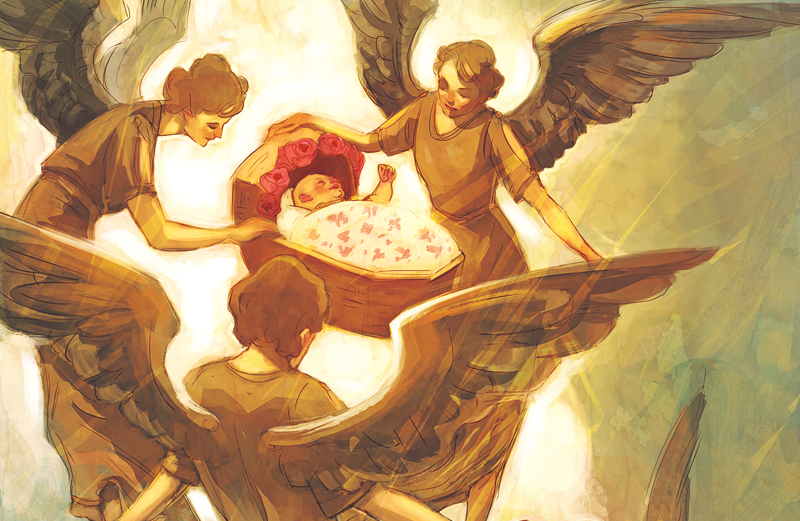
Rose was the youngest of the seven Johnson children, born late in her parents’ life, and named after the roses that bloomed in the front yard. This unexpected addition to the family seemed to everyone like a miracle. The entire household took delight in her every coo.

On a May afternoon in 1935, when Rose was 10 months old, she’d been down for her nap longer than usual. “I’ll go check on her,” Mrs. Johnson said to the other children.

Her eldest daughter, Bessie, followed her mother into the baby’s room, where Mrs. Johnson leaned over the crib and laid a hand on the child’s forehead. “This baby is burning up,” she said.

“I’ll call the doctor,” Bessie said. At 17, she felt old enough to be the baby’s mother herself, and had taken a special interest in her welfare and upbringing from the moment the child was born.

The Johnsons lived on the edge of a small town in the Texas Panhandle, and it took some time before the country doctor arrived. He pressed a stethoscope to Baby Rose’s chest, listened, and frowned. “She has pneumonia in both lungs,” he said. Bessie looked terrified. Pneumonia? That could be deadly!

“There’s not much I can do for her, except come back every day and check on her,” the doctor said. “Let’s hope she starts showing signs of improvement.”

But Baby Rose didn’t improve. Every day when the country doctor came and listened to her lungs he would sigh and shake his head.

Every night the whole family gathered around the crib and prayed for Baby Rose. The little ones didn’t understand the danger, but Bessie was bracing herself for the worst.

Then one morning Bessie went to Rose’s crib and found her body contorted. Bessie couldn’t wake her. “Mama!” she cried out. Mrs. Johnson had fallen asleep in a chair by the crib. She jumped up to see. “Oh, Lord,” she said. “Go get the doctor. Quick!”

The doctor came, but there was little he could do. “She has spinal meningitis,” he said. By then Rose’s breathing was labored. “She’s in a coma. She may not recover, and if she does she’ll spend her life in a wheelchair.”

“God, let Rose get well, even if she’ll need a wheelchair,” Bessie said.

“We’ll take care of her no matter what,” one little brother promised.

“Just don’t take her away from us!” another brother said.

Every passing day the doctor kept up his visits and neighbors brought food and poultices. The family prayed little Rose would survive. Bessie perhaps prayed hardest of all.

She didn’t stop praying, either, the day the doctor told the family that Baby Rose was dying. “She’ll probably pass sometime this evening,” he said.

That night the Johnson family ate dinner in silence. As she was helping with the dishes Bessie looked out the kitchen window. “Storm’s coming, Mama,” she said. In the Texas Panhandle that was no small announcement.

Within 30 minutes wind beat the shutters against the house, and long fingers of lightning ignited the sky. First it rained, and then it hailed, golf-ball sized pieces of ice falling from heaven.

Normally a storm of this magnitude would have the whole house in an uproar–the younger kids crying, the parents wondering if it was time to head to the tornado cellar in the backyard. But everyone’s heart was so heavy about Rose that nothing else seemed to matter.

The family sat in the living room and Rose’s mother kept watch by the crib. They barely noticed the chunks of ice battering the roof, or the wind howling at the door.

In typical Texas fashion, the storm passed as quickly as it had arrived. The rain and hail stopped abruptly, and in minutes the sky was clear and calm. That’s when Bessie heard her mother running through the house.

“Our baby is well!” Mrs. Johnson shouted out. “Our baby is well!” Everyone ran into Rose’s room and peered into the crib. She lay straight on her back, eyes wide open.

When the country doctor arrived the next morning he had no explanation for Rose’s rapid turnaround. “That’s not entirely true,” he said. “There is one explanation, and he sits on his throne in heaven.”

Bessie thought back to the storm. It had arrived out of nowhere just when Baby Rose was about to slip away.

It was as if every drop of rain, every piece of hail, every gust of wind had carried angels descending onto a small patch of the Texas Panhandle to witness the miracle healing of a baby whose very birth had been a miracle. God’s second miracle for a family who loved their Baby Rose above all else.

Rose went on to lead a long, healthy life, never suffering any symptoms from her pneumonia and spinal meningitis. Never needing a wheelchair as the doctor had predicted. Never tiring of hearing the story of her healing from her sister Bessie, especially, who never tired of telling it at every Johnson family gathering.

And though it was long, long ago that angels came for a baby during a ferocious storm, I know this story to be true. You see, I am Rose. I am that miracle baby.

Download your FREE ebook, Angel Sightings: 7 Inspirational Stories About Heavenly Angels and Everyday Angels on Earth.

Mercy Flight

Thunderstorms. The blips on the radar screen disturbed me as the copilot and I ran through our preflight checks. I leaned around the cockpit door. A young boy lay on a stretcher, unconscious, pale as death. His doctor and four nurses stood by.

Medical equipment crowded the aisle. I was chief pilot for a charter airline, and I’d handled hundreds of ambulance flights, but I seldom knew much about the patients I transported.

This boy was named Toby. He was 11 and had something wrong with his brain. We were all set to fly from Cincinnati to Branson, an hour and a half away. A new hospital there had surgical equipment that could help him. “He’s got a 50-50 chance,” a nurse said.

Fifty-fifty chance, I thought. Just like the weather. I would not have given the boy even those odds, considering how sick he looked.

I ducked back into the cockpit. “What do you think?” I asked the copilot. “Gonna be rough,” he said. This was the kind of storm that spawned tornadoes. Commercial flights were canceled in weather like this.

Our Learjet had two engines and two generators. The medical equipment drained our power. If we lost an engine or a generator, I’d have no choice but to cut off the power to the boy’s lifesaving equipment. And what kind of choice was that? Was I risking all our lives to try to save a boy who might not make it anyway?

My starched uniform felt like a straitjacket. Sweat rolled down my forehead and dripped onto my crisp white shirt. I reached for the checklist. My hands were shaking. Then I glanced back at the boy, unconscious on the stretcher. We were ready for takeoff. God be with us on this flight. “Let’s do it,” I said to the copilot. We hit the controls. The jet zoomed into the sky.

Once aloft, I turned around again. The boy was beginning to stir, ever so slightly. Low murmurs came from his lips. The medical staff worked furiously over him. They had no concerns about the flight or the storm, only the boy’s welfare. These courageous people are entrusted to my care. I would focus on my duties, not my fears, just like them.

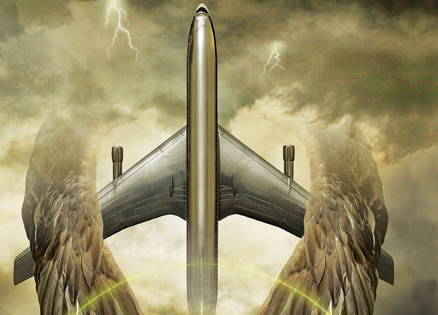
The radar blipped its warnings: electrical activity, severe turbulence, pounding rain. Solid lines of thunderstorm cells seemed to dare us to approach. “They look angry,” the copilot said. I had to find openings to make our way through. Dear Lord, I can’t do this alone. The plane bounced and dipped in the turbulence. I’d read that a mature thunderstorm had the power of an atomic bomb. Now I believed it.

“Captain!” shouted the copilot. “We need to take evasive action.” I gritted my teeth. I pictured God’s hand on the controls, his angels calming the storm with their wings. I guided the plane into what appeared to be a safe zone. The radar warnings faded.

As we approached each storm cell, the blips disappeared before our eyes. The flight became eerily calm. We continued rising, finding even smoother air.

I sat back in my seat, relaxed but still cautious. I felt a tap on my shoulder. I didn’t turn around. I kept my attention dead ahead.

“Excuse me, Captain,” the nurse said. “What is our altitude?”

“Fourteen thousand feet and climbing,” I said.

After a while I felt another tap on my shoulder: “Captain, what is our target altitude?”

“Target flight level, 41,000 feet.”

Another tap. “Captain, what is our speed?”

Now I was annoyed. Why was this nurse distracting me from piloting the plane? I turned around to scold her. “Who wants to know?”

“Toby wants to know, Captain!” I was astonished. The boy was no longer lying unconscious on his stretcher. Toby sat upright, watching the activity in the cockpit. His brown hair was tousled and soaked with sweat, but there was a sparkle in his blue eyes. “He loves planes,” the nurse said.

A curious, vibrant boy looked at me. The same boy I didn’t think would make it. But that wasn’t for me to judge; only God knew the outcome for each and every one of us aboard this flight. My job was simply to fly the plane to the best of my ability.

During the remainder of the flight I answered a few more questions for my star passenger. We arrived in Branson a little late but without incident.

“It was a pleasure to meet you, Toby,” I said when he was put into the ambulance. Excitement still sparkled in his eyes. “Thanks,” he said. “That was fun! Will you be back to fly me home?”

“I’d like that,” I told Toby. “I’d like that very much.”

That was many years and many flights ago. Someone else flew Toby home, but I have never forgotten that I’m a better pilot because of him. I focus all my energies on my own job without worrying about the things that are beyond my control. Angels guided me through the storm that day. One of them had sparkling blue eyes.

Download your free ebook, Angel Sightings: 7 Inspirational Stories About Heavenly Angels and Everyday Angels on Earth.

Me & Miss Bee

Back home in Brooklyn we did things different. You went to the butcher’s for meat, the pharmacy for aspirin and the grocery store for food. But when I spent the summer with my grandmother in Warwick, New York, she sent me down to the general store with a list. How could I hope to find anything on the packed shelves around me, everything all jumbled together?

I walked up to the counter. Behind it was a lady like no one I’d ever seen. Fake-jewel-encrusted glasses teetered on the tip of her nose as she read the paper spread out before her. Her gray hair was piled on her head with a crochet needle stuck in it.

“Excuse me,” I said.

She looked up. “You’re that Clements kid,” she said. “Your daddy sent you to stay the summer. I’m Miss Bee.”

Bee was a good name for this woman. She spoke so sharply I felt like I was stung. “I had pneumonia,” I explained. “Daddy thought the country air might be good for me.”

“Come closer and let me get a look at you,” she said. She pushed her glasses up her nose. “I want to be able to describe you to the sheriff if something goes missing from the store.”

“I’m not a thief!” I was shocked. I was seven—years too young to be a thief!

“From what I can see you’re not much of anything. But I can tell you’ve got potential.” Then she went back to reading her newspaper.

Never had anyone spoken to me like this! I couldn’t wait to get out of this strange store and back to my grandma.

“I need to get these,” I said, holding up my list.

“So?” Miss Bee did not look up from her paper. “Go get them.”

“But . . . but,” I said. Didn’t this woman understand my problem? “There’s so much stuff in here.”

Miss Bee pointed to a sign on the screen door. “That’s why they call it a general store, kid. It’s the only one in five miles as the crow flies, so you’d best get used to things. There’s no one here except you and me and I’m not your servant, so I suggest you get yourself a basket from that pile over there and start filling. If you’re lucky you’ll be home by sundown.”

Sundown was five hours away. I wasn’t sure I would make it.

I started at the nearest shelf and scanned it for the first item on my list: pork and beans. It took me three wall-to-wall searches before I found a can nestled between boxes of cereal and bread, on top of some soup cans. Next up was toilet paper. That was a real hunt. I found it under the daily newspaper. Band-Aids—where had I seen them? Oh, yes, next to the face cream. The store was a puzzle, but it held some surprises, too. I found a new Superman comic tucked behind the peanut butter.

An hour later I had found everything on the list—except for one thing. Bicarbonate of soda. I understood soda, but what was the B-word? I would have to ask Miss Bee. I screwed up my courage and approached the counter.

I put my basket down and reached up so she could see the list. I pointed to the strange word I had been struggling with. “I can’t read this,” I said.

Miss Bee wouldn’t even look at it. “Well, Miss Potential,” she said, “it seems you don’t listen real good. If you did you’d remember the items I’m sure your grandma told you as she wrote them down. Just like you’d remember me telling you I’m not your servant. Next time you should listen better to both of us.”

Miss Bee had stung me again! I stared in amazement and indignation as she tallied everything else up and put my purchases into a brown paper bag.

“That Miss Bee is without a doubt the meanest woman I’ve ever met. Probably the meanest I’ll meet in my whole life!” I announced when I got home.

Grandma just laughed and shook her head. “She’s a character,” she agreed. “But she’s not so bad.”

Not so bad? Grandma didn’t know the half of it! I never wanted to return to the general store again. Unfortunately, Grandma had other ideas.

I visited Miss Bee a couple of times a week that summer. Sometimes she shortchanged me. Other times she overcharged. Or sold me an old newspaper instead of one that was current.

Going to the store was more like going into battle. I left my grandma’s house armed with my list—memorized to the letter—and the prices in my head and marched into Miss Bee’s like General Patton marching into North Africa. “That can of beans is only 29 cents!” I corrected her one afternoon. I had watched the numbers change on the cash register closely, and Miss Bee had added 35 cents. She didn’t seem embarrassed that I had caught her overcharging. She just looked at me over her glasses and fixed the price.

Not that she ever let me declare victory. All summer long she found ways to trip me up. No sooner had I learned how to pronounce bicarbonate of soda and memorized its location on the shelf under the pink stomach medicine than Miss Bee rearranged the shelves and made me hunt for it all over again.

By summer’s end the shopping trip that had once taken me an hour was done in 15 minutes. The morning I was to return to Brooklyn I stopped in to get a packet of chewing gum. Miss Bee rang up the gum, then poked me with one of her chubby fingers.

“All right, Miss Potential,” she said. “What did you learn this summer?”

I pressed my lips together. That you’re a meany! The thought popped into my head, where it stayed. There was nothing I learned this summer that Miss Bee wanted to hear!

To my amazement, Miss Bee laughed. “I know what you think of me,” she said. “Well, here’s a news flash. I don’t care. Each of us is put on this earth for a reason. Some people will find cures for diseases; others will climb mountains. I believe my job is to teach every child I meet 10 life lessons to help him or her. Think what you will, Miss Potential, but when you get older you’ll be glad our paths crossed!”

Glad I met Miss Bee? Ha! The idea was absurd. And I continued to think so for many years. Until one day my daughter came to me with homework troubles.

“It’s too hard,” she said. “Could you finish my math problems for me?”

“If I do it for you how will you ever learn to do it yourself?” I said.

I saw myself back at that general store where I had learned the hard way to tally up my bill along with the cashier. Had I ever been overcharged since?

As my daughter went back to her homework, I wondered:

Had Miss Bee really taught me something all those years ago? Could anyone really learn from a mean old lady who made life so miserable?

“I teach each child I meet 10 life lessons,” Miss Bee had said. As my daughter went off grumbling, I took out a scrap of paper and wrote down 10 things I had indeed learned from my encounters with Miss Bee.

Yes, I had to admit it. It looked like Miss Bee really had done a job on me that summer. Sure enough, I had learned 10 life lessons.

Make that 11: I also learned that sometimes the angels God sends will be decidedly unangelic!

Mama’s Angel Soup

I was 45 before I began to forgive Mama. Any time I’d go back to Oklahoma for a visit, folks would ask, “Do you see your mother?” Really they were asking, “Have you forgiven your mother?”

My answer was always, “Of course. I see her. I forgave Mama years ago.” But the minute the words left my lips, a little voice in my head would whisper, “Sure.”

I knew in my heart that Mama was a big part of the reason I’d left Oklahoma and moved to Colorado. My mother’s alcoholism, her drastic mood swings and her unpredictable behavior had become too much of a challenge for me to deal with after 20 long years.

I never forgot the day she left our family. When I thought of her, that was all I remembered.

“I have to go away,” she announced that morning in 1955, just as the four of us kids started out the door for school. She was crying and very distraught, which was impossible for my seven-year-old brain to process.

All I knew was that our lives changed drastically the day Mama drove away from our farm with all of her things packed in the old station wagon. Sis, at 13, became the “chief cook and bottle washer,” Dad said. I lent a hand with cooking, cleaning and laundry, while my two brothers did extra chores at the barn in order for Dad to be able to buy groceries and attend to his new motherly duties along with his full-time job and our 160-acre farm.

Mama did return a few times. But before long, all of us knew the pattern by heart. Tears of remorse, talk of a happy future, and then another emotional departure, often in the middle of the night.

We were the first kids at our rural Oklahoma school to have a parent leave home. It was a dubious distinction that set us apart in a weird way. I worked hard at defending my feisty Scotch-Irish mother. “She has a restless spirit,” I’d say to my friends. Later, I’d hide beneath the willow trees with my dog and cry.

I was a teenager before I realized that Mama’s erratic behavior was directly related to the amount of alcohol she consumed. That’s when the anger really began to smolder.

Still, I’d leave my dad’s new home in southern Oklahoma and return in the summer to wherever my mother happened to be living and whichever new husband she happened to be living with. I’d proceed to have a “relationship,” which usually ended with her disappearing and me left in the wake. Summer after summer, I simply collected more bad memories of Mama.

Sometime in my late thirties, after years of effort and disappointment, after watching Mama go in and out of rehab, after seeing her behavior destroy my brothers, and after listening long distance to my older sister’s endless frustration in trying to handle Mama, I said, “Enough.”

And for a long while, I didn’t communicate with my mother at all. She would write letters and make an occasional call, but I’d quit. Of course, the anger didn’t quit, and I went into counseling.

My counselor’s advice to forgive Mama and just let go of the past sounded good, but doing it wasn’t easy. I prayed daily about forgiveness and gradually, God began to work on my heart. I realized that anger was not a legacy I wanted to leave my son and grandchildren.

So on a trip back to Oklahoma, I called Mama. It had been more than five years since I’d communicated with her. I knew from talking with Sis and my younger brother that nothing much had changed. She was older, of course, and had settled down a bit, but still drank and got crazy.

I clutched the ringing phone to my ear. “Lord, please help me do this.”

Mama seemed thrilled to hear my voice. “Loudee,” she said, but the way the old nickname rolled off of her tongue, I knew she’d already had a drink or two that afternoon.

“I’m in Oklahoma, Mama. Thought I might come see you in the morning.” Just the thought made my stomach ache, but I knew mornings were usually safer. At least they used to be.

There was a brief pause. “I’m going to a country church over in Marland,” Mama said. “Would you like to come?”

The invitation was exactly what I needed. Church might be a conversation we could have without dredging up the past.

“That would be good,” I said, and I exhaled and relaxed my tight grip on the phone.

But that Sunday morning, when I pulled up and parked in front of Mama’s rented house, I needed more help. “Please give me the strength to do this.”

The moment Mama opened the door, the wonderful smell of homemade soup met me. The combination of browned beef, garlic, stewed carrots and potatoes drifted into my nose and caused a flood of nostalgic emotions. My best memories of Mama were centered in the kitchen at the old farm. Mama singing in the kitchen. Mama over the sink, peeling peaches. Mama at the stove, frying chicken on Sunday.

“I thought we could have soup and corn bread after church,” Mama said. Her hair was white and she looked very frail.

A vision of her younger self flashed before me. “Mama, do you remember that time on the farm when you told me about the angels helping you make soup?” I asked.

Mama’s crisp giggle filled the room. “Yes,” she said, taking my coat and putting it on the couch. “We were in the kitchen. You must have been about four.”

“I asked you how you knew what to add to the soup pot. You told me, ‘Ingredients just pop into my head, like magic. Onion, celery, peppers…I think the angels whisper the ingredients in my ear.’”

“Yes,” Mama said, smiling. “Then you said, ‘We’re having Angel Soup.’”

“And you laughed and said, ‘You make it sound like we’re eating angels for supper!’” I loved Mama’s playful side. She continued. “And you frowned and said, ‘No, silly. We’re eating what angels told us to eat.’”

Both of us remembered the entire conversation that had taken place four decades before.

“After that day you called every soup I made Angel Soup,” Mama said, pouring me a cup of coffee.

Later that morning, when we walked into the quaint country church, a powerful feeling of peace filtered over me. I knew then that God—the best counsel or of all—had begun to work on my deep-seated anger. It was time for me to focus on the good and leave the rest with him.

Although Mama never completely won her battle with addiction to alcohol, I slowly gained ground on my battle with forgiveness. I called as often as I could. Sometimes she’d be drinking and I would keep the conversation short, but other times she was delightful.

“It’s raining here today,” Mama said one afternoon. “Nothing chills a person like a damp, Oklahoma wind. So I’m making myself a nice big pot of Angel Soup.”

“Are the angels whispering to you, Mama?” I asked.

“Yes. Turnip, broccoli, chicken and rice.” Her magical giggle echoed through the receiver.

“I love you, Mama,” I said, words I hadn’t said to her in decades. And words I never would have said, that week before she died, if I hadn’t been given the grace to choose forgiveness over anger.

Did you enjoy this story? Subscribe to Angels on Earth magazine.

Lalibela: The Ethiopian City of 11 Mysterious Stone Churches

Sunday night, I was thinking about making dinner when the phone rang.

“Turn on CBS,” a voice said.

“What?”

Click. The caller hung up.

No, it wasn’t code or a message from heaven. It was just my mom. She sometimes made calls like that when she was watching something on live TV that she didn’t want me to miss but had no time to explain because she didn’t want to miss a minute of it herself. I turned on CBS.

Once I did, I understood the urgency. How was it possible that I never heard of the miracle being discussed on this news program? A medieval wonder that is known as Lalibela.

Lalibela is a small town in the highlands of northern Ethiopia, a country that’s been Christian since 330 A.D., making it the oldest Christian country in the world. It is also home to a truly awe-inspiring mystery: a series of 11 churches like no other, all built without bricks, mortar, lumber or concrete. Each is carved from a single stone.

The churches are not so much built as dug into the landscape on either side of a small stream called the Jordan. They are carved into a rocky massif—that is, a compact group of small mountains—about 8,250 feet above sea level. The massif was created by ancient eruptions and is primarily composed of two kinds of volcanic basalt. The volcanic rock was turned red by iron deposits. Gases trapped inside made it light and good for carving. First the perimeter of the church was carved out, creating a giant solid block. The churches were then carved from the top down, working into the porous rock.

Historians date the building of the churches to the early thirteenth century. But who made them? There is no official record of how the churches came to be. No newsreels or photos, needless to say. There are a few theories. Some people believe that the churches were created by the Christian crusaders known as the Knights Templar, who were very powerful at that time, but there is no evidence of their involvement though much of their deeds have been documented.

The second theory is more plausible, at least in terms of who was responsible for the building. Perhaps the churches were created at the direction of King Lalibela, who was the emperor of Ethiopia from the end of the twelfth century to the beginning of the thirteenth. Ethiopia already had a long history of Christianity by then. According to tradition, the religion was introduced by two shipwrecked Christian boys who were enslaved by the royal court of King Ezana. The boys eventually converted the monarch, who spread the gospel throughout his kingdom.

The Coptic cross adorning the rock-hewn
church of Biete Ghiorgis is visible only
from above.

The Christian King Lalibela traveled 1,600 miles to see the holy city of Jerusalem in 1187, during the Crusades. Soon after he returned home, Jerusalem fell under Muslim control. Lalibela wanted to create a new Jerusalem for Christians. He ordered his people, called the Zagwe, to build churches along a stream, which he renamed the River Jordan, to welcome Christians who did not want to be in a Jerusalem controlled by Muslims.

This theory offers the beginning of an answer to the “who” question, but what about the “how”? A single medieval construction tool—an axe shaped tool called an adze—is displayed at the site. It’s hard to imagine that this small cutting tool creating the giant churches of Lalibela, an architectural feat comparable to the pyramids of ancient Egypt.

Most of the people at Lalibela spend little time thinking about these theories. They are dismissed by one group in particular—the 50,000 pilgrims who make their way on foot to Lalibela every Christmas. These religious travelers know who made King Lalibela’s dream of a New Jerusalem a reality: angels. An army of angels, they say, created Lalibela. Some hold that the angels made the 11 churches all in one night.

The churches line both shores of King Lalibela’s River Jordan, and each is four stories tall. On the north side are Biete Medhani Alem (House of the Savior of the World), Biete Mariam (House of Mary), Biete Maskal (House of the Cross), Biete Denagel (House of Virgins) and Biete Golgotha Mikael (House of Golgotha Mikael). On the south side are Biete Amanuel (House of Emmanuel), Biete Qeddus Mercoreus (House of Saint Mercoreos), Biete Abba Libanos (House of Abbot Libanos), Biete Gabriel Raphael (House of Gabriel Raphael) and Biete Lehem (House of Holy Bread).

The eleventh church, Biete Ghiorgis (House of Saint George), is set at a distance from the others, on the north side of the Jordan, but connected by a system of trenches. The largest church, Biete Medhani Alem, covers 8,000 square feet.

Engineers believe that the builders began each church by digging a trench around what would become the perimeter of the structure and then started digging downward. Working in the darkness below ground, they carved doors and tunnels as they went along.

They also sculpted archways, vaults and columns, just like in traditional churches. Though since the churches at Lalibela were carved from the top down, they didn’t need columns or archways to hold up the ceiling as in freestanding buildings.

Each church has its own unique treasures. Biete Golgotha Mikael holds the tomb of King Lalibela himself, with the figure of Saint Peter etched into the wall of the rock. Biete Mariam has a fresco of the Star of David on the underside of an arch inside the church. Biete Ghiorgis is shaped like a cruciform and topped with an etched Coptic cross that can only be seen from above.

Christmas in Ethiopia, a country that follows the Julian calendar, is celebrated on January 7 of the Gregorian calendar (the one we’re more familiar with), and the holiday is known as Genna. Some pilgrims walk days or even months to get to Lalibela, in order to show their devotion to God. At the stroke of midnight, Christmas Mass is dedicated to the Virgin Mary, as priests rattle sistrums, palm-size instruments that date from Old Testament times. Pilgrims not only fill the churches, but they also pack the tunnels that join them and stand scattered on the surrounding hills.

All night long they chant and sing. Tsigie Selassie Mezgebu, the head priest of Lalibela, explains that their chants declare, “God became human and a human became God. Because of Christ, we went from being punished by God to being his children again. Christmas is the day that forgiveness was born.”

The gathering of countless pilgrims at the site, as well as the natural elements, have taken their toll over the last 900 years. Today the World Monuments Fund is working to repair the parts of the churches that need it most, but just as the creation of Lalibela was exceptional, so the repairs must be. The stone can’t simply be cut and replaced, because all of it has been touched by angels. If masons need to drill into the stone to add a pin for stability, they must first ask permission from the priests. The dust from the drilling is preserved as sacred. The fund is now teaching the priests of Lalibela how to protect the churches from further damage, so that people can continue to worship where angels worked some 900 years ago.

My mom knew my interest in the work of angels, whether they were from the beginning of time or just yesterday. Her no-nonsense phone message was, as usual, one that I was glad I didn’t let pass me by.

Did you enjoy this story? Subscribe to Angels on Earth magazine.

Kelly’s Angel

My husband, Don, and I pulled into the high school parking lot that cold December afternoon. It had been 20 months since the shootings. Twenty months, and still I could hardly bear to look at that building.

Sometimes it seemed like only 20 minutes since the April day in 1999 when we waited with the hundreds of other frantic parents for our children to make their way through the cordon of police and emergency vehicles surrounding Columbine High School.

Some of the kids came out crying, frightened, stunned. Some were rushed from the school in ambulances.

One teacher and 12 students, including our 16-year-old Kelly, did not come out.

For a day and a half they remained where they had died while investigators pieced together an account of two teenage boys who had fallen into the grip of a terrible evil—the evil that seemed to me to hover still about the place where it happened.

Like most of the others, Kelly was killed in the library, crouching beneath a table as bullets ricocheted through the room. Just inside those windows! I thought as Don got out of the car. Right behind that curved steel-and-glass façade. It was too much to bear. I turned my head away, unable to look.

It had been weeks before the examination of the crime scene was complete and police let the families visit the site. It was important to me to see the place where Kelly had tried to hide. I needed to pray at the spot, outlined in white on the floor, kneel where she died.

But if I thought actually going to the library would ease its menace, I was wrong. The bullet-scarred walls, the splintered tabletops, a shattered computer screen—violence and hate were still palpable there.

We live just two blocks from the high school, and for a long time I could not even drive by it, taking long, bizarre detours for the simplest errands. But for Don’s sake, and for our older daughter, Erin, I had to pick up my life again. And what helped most was remembering how Kelly loved angels.

From the time she was tiny, Kelly and I had shared a special affection for these messengers of God. I can still hear her piping little voice, at age three, reciting the verse on the little guardian angel card my mother had given her:

“Angel of God, my guardian dear
to whom his love commits me here,
ever this day be at my side
to light and guard,
to rule and guide.”

Kelly loved that card. I’d often see it on her dresser top or catch sight of it with her schoolbooks. When she was older we would sit together on the sofa and watch Touched by an Angel. We never missed an episode. We bought the soundtrack CD too, and would sing along in the car, just the two of us.

For Kelly and me, angels were our shorthand for “God is near!” And his nearness is what made her such a happy child—a girl who woke in the morning with a smile and literally skipped through the day, blue eyes sparkling, long blonde hair swishing behind her.

That’s what gave the library its peculiar horror for me. Kelly was such a gentle, trusting little soul to die amid such evil! I’d given her a poem about angels that she kept in a frame on her bedroom wall.

After she died I’d step into her room again and again and read it, lingering over one line especially: “Angels are with you every step of the way and help you soar with amazing grace.” I wanted to believe an angel had been beside her that day, with her beneath that table, helping her soar above the terror.

Almost as though they knew I needed them, people sent angel figurines along with their condolences. They came from friends, neighbors, total strangers—china angels, metal angels, wooden angels.

An eight-year-old daughter of a friend tried to count the angel images in our house one day and gave up at 175—and every one of those angels whispered to me that Kelly was fine.

Only around the library was I unable to feel comfort. Not that we hadn’t tried to exorcise the evil from that place.

The school district at first wanted to repair and refurbish the space, but Don and I and the other parents believed that no child should ever again be asked to study there. God brought us together in an organization we called HOPE—Healing of People Everywhere—to raise money for a brand-new library building.

What began as a fund-raising effort among the families was caught up by the whole community, then by the entire nation and even beyond. The new school building was under construction now—Don had driven in that afternoon, as he often did, to check on its progress.

“I’ll stay in the car,” I told him. I’d visited the building site with the other families just a few days earlier.

The new library posed no terrors. It seemed to me a sign of life continuing, life affirmed. It was the presence of the old site that continued to oppress and upset me. I glanced reluctantly at it through the car window.

Its exterior was unchanged, but inside, I knew, nothing was left of the old facility. Architects had come up with a design that preserved the cafeteria on the ground floor, while entirely removing the second floor where the library had been.

The cafeteria now had a spacious atrium feel, bright and light, with a beautiful mural of trees on the high ceiling, drawing the eye upward. Students and faculty of Columbine High School had a space that all could enter without fear. With the other families, we’d see to it that no physical trace of the tragedy remained.

Yet for me, the place still menaced. I turned my back on it and stared the other way out the car window. I need to know that Kelly’s all right, Lord, I prayed. I need to know she’s happy and at peace.

Turn around. Look at the building. The nudge didn’t come from me. That building was the last thing in the world I wanted to look at. I wrenched my head around…and blinked in astonishment.

Something bright was moving across those upper windows! Something shimmering and glowing, gliding slowly past the glass exactly where the old library had been. Open-mouthed I stared while the unmistakable figure of an angel hovered over that second story.

Wings, radiant hair, flowing garment—no artist could have rendered a heavenly messenger of comfort more gloriously.

I sat awestruck, seeing, yet scarcely believing. Even here, even here! Your angel was here with Kelly, just as you are with her always and forever.

How long did the vision last—15 seconds? However brief the time on a clock, I knew the angel had given me a lifetime of assurance. In the midst of all the evil that ever was and ever will be, God is present. God is with us. God is stronger.

Inspired to Kick the Habit

I asked my wife, Georgia, to give me some ideas of things she would like for Christmas. She didn’t hesitate. “I would be pleased with only one gift,” she said. “That you quit smoking.”

Anyone addicted to cigarettes knows how difficult it is to quit. Whenever business got slow at the café we owned—or too busy—I eased my nerves with a smoke.

Georgia worried about my health, as did I, but I couldn’t stay motivated long enough to fight that urge to light up. I tried again, but by Christmas I was still sneaking drags of a cigarette when the cravings became too much to bear. Georgia forgave me, though I knew she was disappointed.

Not long after the holiday, I paced the café one afternoon, trying again to fight that craving. The lunch rush had come and gone; my waitress and I were the only ones there. Perfect time for a smoke. I approached the cigarette vending machine near the entrance, dropped my coins in and pulled the lever for my brand.

That’s when I felt a tap on my shoulder.

Startled, I looked up to see a man with a tan complexion and penetrating blue eyes. He gave me a pleasant smile. “I just want to tell you, as one human being to another, you are killing yourself,” he said. Then he gently tapped my shoulder again and left the café.

I asked the waitress if she had served the man. “What man?” she said. “It’s just been you and me in here since lunch.”

Soon after, I quit smoking for good. I credit the motivation of that mysterious stranger, who helped me give a belated Christmas gift to my wife and added years to my life.

How to See an Angel—or a Miracle

Not long ago I attended a meeting of the Institute of Noetic Science (IONS) group in the little town where I’m vacationing. The subject was miracles.

Each of the twelve people in the inner circle got to speak, and as the Native American rattle passed from one hand to the next, it became clear that by a mysterious process of energetic concordance, the group consciousness was intuitively naming the conditions of a miracle.

I was reminded of the beautiful book by Todd Michael, The Twelve Conditions Of A Miracle, which takes the sayings of Christ and expounds upon the secret teachings hidden in the text.

There are conditions required to see an angel or experience what we call a miracle. I won’t name them all, but here are some.

1. An Attitude of Gratitude
A constant and unflinching awareness of the blessings poured upon us, and a thankful heart.

2. Expectant Joy
A sense that something good will come, spilling its blessings onto everyone involved.

3. Awareness of Beauty
Of the astonishing elegance, let us say, of a single daylily that blooms for one day only (“You went through all of that for one day!”).

And combined with these, I add the qualities of humility (not to be confused with humiliation), awe, wonder, and innocence. I remember one man once accusing me of being a romantic, as he scornfully challenged me: “Okay, show me a miracle!”

I answered, a single tulip. “Look at it!” I said. “Look deeply. Look at it as if it were you, for you too are a miracle, a soul incarnating in this body at this time.”

He was disgusted, but I think of the Buddha who when asked about enlightenment held up a single flower—and smiled.

How Mary Virginia Merrick Founded The Christ Child Society

Few people know the name Mary Virginia Merrick today, but she’s been making the world a better place for more than 100 years—since the Christmas of 1884.

Mary was born in 1866 to a prominent Washington, D.C., family. The city’s population had swelled after the Civil War. Many of the newcomers, including injured veterans, freed slaves, immigrants and orphaned children, lived in poverty. Children slept barefoot in doorways. Homeless people lived in alleys and courts, without sanitation. The bureau of health took steps to control contagious outbreaks, and churches raised money for charities, but there were no real organized social relief services in existence.

From a young age, Mary accompanied her mother on visits to poor families, bringing food, blankets and clothing. The families reminded her of the characters she read about in the novels of her favorite author, Charles Dickens. She wanted to do more and learned to sew. For Mary, helping others seemed like a form of prayer.

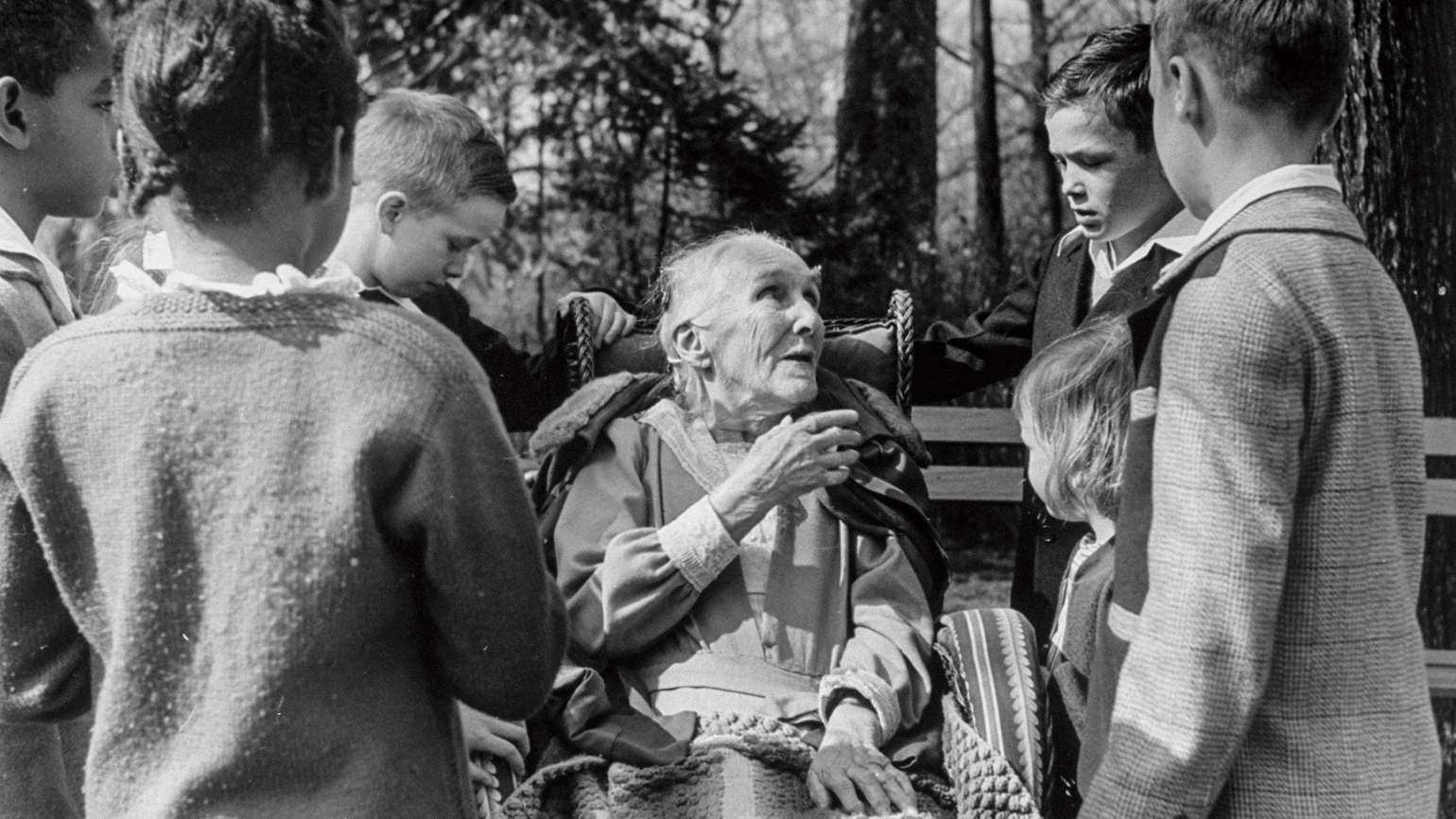
Mary was 16 when she fell from a second-story window. She spent the rest of her life in a wicker wheelchair, in nearly constant pain. How did she endure it? She redoubled her prayer life, including her efforts to help others.

When Mary was still a teenager, she heard about a baby set to be born on Christmas Day. A child whose mother had no money for blankets or baby clothes and who would probably be wrapped in newspapers instead. Mary organized a sewing circle with her friends, and they made a set of clothes for the newborn. When they presented their meticulously stitched layette to the impoverished mother, she was overwhelmed. Mary became more determined than ever to do everything she could to make a difference in the lives of those less fortunate than her.

She asked the young son of her family’s laundress what he wanted for Christmas. “I want a red wagon,” the boy said. “But we’re not having any Christmas at our house; my father’s got no work.” The happy Christmas days Mary had known herself flashed before her eyes. And this little fellow would have nothing! “Why don’t you write a letter to the Christ child,” Mary suggested, “and ask him for the red wagon.”

“The Christ child? Who’s he?”

“He’s the giver of all good gifts,” Mary replied.

A few days later the boy came back with a handful of letters from his sisters, brothers and playmates in the neighborhood. Seventeen letters in all.

Once again Mary summoned her friends. A plan had begun to form in her mind, and her friends eagerly accepted their part in it. On Christmas Day, all of the children received their gifts, an effort that had begun with one boy’s wish for a red wagon.

The gifts were signed “from the Christ child” to show the recipients they were loved by God. It was the beginning of the organization that Mary would spend the rest of her long life building.

The Christ Child Society—formally founded in 1887, when Mary was 21—was so named because Mary said that when she looked into the face of a child, especially a poor child, she could only see the face of Christ. By the Christmas of 1890, the society was in full swing.

“I never had a doll,” one letter said. “I want a big doll, as I have TB and no one will sleep with me.” “Please, I want a nightgown,” said another. “My father took his shoes back,” another child wrote. “He found work. I want shoes.” Mary and her friends not only fulfilled Christmas wishes but also made layettes and supplied hundreds of garments to children under the age of 12.

Mary had a genius for bringing people together. Her friends and their friends became an army of workers, procuring, making, storing and delivering. She invited other women’s groups in Washington, D.C., to join in their efforts. By the late 1890s, they had to hire trucks to distribute the gifts and clothing. Instead of waiting for requests, a “visiting committee” of volunteers began to go into the alleys to find out exactly what the needs were.

More programs were developed to address hygiene, tutoring, library resources and religious instruction. Lantern-slide presentations on cultural topics were given in jails, TB clinics, boys’ homes and settlement houses for immigrants. The Fresh Air program got sickly children out of the city and into the countryside. Mary’s guiding slogan became “To see a need is to fill it.” By 1915, her volunteers numbered in the thousands, and branches of the society had sprung up in six other cities. Most were created by young women who had attended college in D.C. and brought their Christ Child Society volunteer work back home with them.

Mary supervised all operations from her home. The wives of presidents, from William Henry Harrison to Harry S. Truman, made donations and wrote about her. An international convention of pediatricians invited Mary to speak about the health of children in her city and inspired her to create the first camp for children with diabetes in the late 1920s. She was considered a groundbreaker in a new area of academic study, called social work.

The Christ Child Society continues to be run entirely by volunteers, most of them women, in 44 chapters across the country. “Nothing is too great to do for a child,” Mary Virginia Merrick said. And from the time she was a child herself, she devoted herself to proving it.

Did you enjoy this story? Subscribe to Angels on Earth magazine.

How Making Homemade Jam Brought Their Family Together

Ever since my son Mark’s wedding, I wondered where I fit into his new life. His bride, Aarika, and I were fond of each other, but we were family now. I wanted to bring something special into her life, something only I could bring. I just couldn’t imagine what. Aarika was an only child, with loving parents she adored. What could I possibly have to offer this young woman who’d grown up with so many opportunities?

As a mother of six, my greatest talent was juggling: I juggled carpools, laundry, homework, school events. I always just managed to stay on top of the calendar and within our budget. I mended the kids’ clothes, baked our own bread and made jam out of any fruit in season. I was proud of my homemaking skills and our scrappy do-it-yourself family. But I couldn’t see how any of that might benefit two young newlyweds with only themselves to worry about.

“You know she appreciates you,” my husband, John, said as we drove to see them, our car packed with peaches, pectin, jars and a steam canner.

“Being appreciated isn’t the same as being needed.” I wasn’t sure John really understood what I wanted, but I knew God did. I prayed to him to show me what to do.

Now Aarika had asked me to teach her how to make jam. I knew she could have googled instructions herself, watched a video on YouTube or taken a local class. But she wanted me to teach her in person. Maybe it was a start.

Mark and Aarika’s kitchen was a little small, so we decided we’d all meet at her mother’s to make the jam.

“Lesson one,” I announced while we carried in five boxes of peaches.

“Never pass up fresh produce.” I laid out the jars and ingredients. “Everybody, apron up!” I called. To my delight, Aarika had brought along an apron that I had made for her myself.

Step-by-step, I demonstrated what to do. We divided up the peaches for peeling. “Do you make all kinds of jam?” her mother, Maggie, asked.

“Oh, yes,” I said. “Blackberry jam from the wild vines, strawberry jam from the U-Pick strawberry field and plum jam from the trees in my parents’ yard. And these peach seconds are from my friend’s farm.” Five boxes of fresh fruit too bruised, misshapen or ripe for her to sell, but perfect for jam.

The doorbell rang. It was Aarika’s nana. “I want to learn too!” she said, tying on an apron and grabbing a peach to peel.

Apparently Mark had told everybody that our homemade jam was a favorite childhood memory. “Mark didn’t just eat the jam, though,” Aarika said. “He helped Marci make it.”

“The kids always helped pick the fruit,” I said. “I remember one day in the blackberry patch when Mark was little, I went over to see how he was doing. He looked up at me, his mouth stained purple, juice dripping down his chin. ‘I only found two,’ he said seriously. To prove it, he held up a bucket with a single pair of berries rolling around at the bottom.”

Three generations of laughter filled the kitchen.

We boiled the peaches and poured the mixture into jars. Then we placed the jars into the steamer, where they stayed for 20 minutes. When that was done, we used pot holders to carefully remove the hot jars and place them on waiting tea towels to cool. “In a little while you’ll hear a ping,” I said.

“That means the jam has cooled enough to vacuum seal the jar.”

“Marci makes homemade bread too,” Aarika said. “You’ve never tasted anything better. And they always had homemade sauces and vegetables from their garden.”

I nearly blushed from all the compliments. “It really saves money,” I said.

“I can’t wait to learn how to do all that,” Aarika said.

Ping!

“Jam’s ready!” everyone shouted at once.

We assembled a peach cobbler with the leftover fruit and put it in the oven. It would be ready in time for dinner. The four of us cleaned up together. Then we lined up the cooled jam jars on the counter, one by one. Sharing stories, passing on knowledge—we were preserving more than jam here.

I looked over at my daughter-in-law, who was so eager to learn the traditions that Mark loved. Her mother and nana didn’t want to be left out of the fun. Maybe I wasn’t the only one searching for a comfortable place in our new extended family. God had found the sweetest way to show me that our place was being all together. It was a recipe anyone could follow.

Did you enjoy this story? Subscribe to Angels on Earth magazine.

How Her Last-Minute Prayer Saved Their Lives

”Before we go, I want to do one more thing,” I said. My husband, Steve, and I were on our way out the door when I’d stopped short. Steve worried we were going to be late.

“There’s always time for prayer,” I said. “I’ll be quick.” I bowed my head. Dear God, please keep us safe.

We were just heading out to a family vacation at my sister’s farm in Georgia. There wasn’t much chance of needing protection in such a peaceful setting, but I felt better for asking. “All set!” By the time we hustled ourselves into the car, I’d forgotten all about my last-minute prayer.

There was nothing to remind me of it at my sister’s house. We fell into a carefree routine of swimming, grilling and talking around a campfire. The biggest attraction for Steve was riding the all-terrain vehicles: chunky four-wheelers with fat tires for driving along the trails around the property, loops that stretched through the woods behind the house.

I was sitting outside in the sun late one morning when Steve returned from a ride. “Come on and hop on!” he cajoled. “I promise I won’t go too fast.” Why not? I slipped into the seat behind him and wrapped my arms around him.

The Georgia pines provided some shade while we traversed the trail at a cautious speed. I could smell the grill being fired up for lunch.

A few minutes into our ride, we approached a part of the trail that straightened out. Just as Steve hit the accelerator, I noticed a tree root sticking up out of the ground. We were on top of it before I could say a word. One of the front wheels twisted into the root. The rest of the ATV twisted the other way. Steve and I were pitched right off the back.

I landed on my back, Steve on top of me. The ATV shot forward, nearly climbing a tree. The headlights faced the sky, front wheels in the air. The ATV teetered in slow motion, then tipped in our direction. I froze. It’s going to crush us! As it came down, somehow, from his position atop me, Steve broke its fall and managed to hold it steady.

“You’re okay. Now move,” he commanded. I rolled out of danger, my husband behind me. The ATV hit the ground full force where we had been lying only moments before.

When everything stilled, I began to tremble. How are we still alive?

I could hear Steve asking if I was all right, but I was too shaken to respond. How was he able to hold up that huge machine? It had to weigh at least 700 pounds! He couldn’t have done it, I decided. Not without help. Then I remembered my prayer.

Steve pulled me to my feet. “We have to ride back,” Steve said.

We drove—more slowly than we had before—down a muddy ravine, where we got stuck in the mud and had to hop off to push.

“What happened to you two?” my sister asked when we got back.

“We were almost crushed by the four-wheeler,” I said.

“But I held it up with my own two hands and saved us,” Steve finished. He did his best strongman imitation and got a smile out of me.

“You’re exaggerating,” my sister said. No one could believe Steve had managed to break the fall of a 700-pound four-wheeler by himself. Especially not me. I imagined my guardian angel had a hand in what happened. In the end, the details didn’t matter (except when Steve told the story). All I knew was I had asked for protection and God had heard my prayer.

For more angelic stories, subscribe to Angels on Earth magazine.