Embrace God's truth with our new book, The Lies that Bind

A Visit from Heaven on Graduation Day

Jeff was one of the most popular kids in my high school class—a soccer and baseball star, a talented artist, an honors student, and “best-dressed senior.” But the list of honors under Jeff’s yearbook picture didn’t convey his real achievement.

At the beginning of senior year, Jeff was diagnosed with cancer. Even as the disease rapidly advanced, he continued to come to school and do all his work.

His goal was to graduate with the rest of us. Classmates brought him notes and assignments when he was out for chemotherapy, and when he lost his hair some of his friends shaved their own heads to show their support. Despite Jeff’s effort, he died just two months short of graduation.

On the night of the ceremony we paid special tribute to our friend Jeff. We filed onto the the football field, each student carrying a balloon. We released them all at once. It was a windy night, and as we took our seats, we watched the balloons rise and scatter quickly.

One white balloon separated from the rest and floated back down to earth. It landed on the grass, right by our chairs. “It’s Jeff,” we whispered. “He’s here with us after all.” Just as the ceremony was ending, a sudden gust lifted the balloon into the air and sent it soaring.

Did you enjoy this story? Subscribe to Angels on Earth magazine.

A Visit From a Bluebird Brought Her Reassurance

Cardinal, goldfinch, bluebird. The three stained glass birds were attached with suction cups to the window of Mom’s room at the nursing home. My brother had made them for our nature-loving mother years ago, and we’d hung them for her in the assisted living home where she stayed before her late-stage dementia required the care of a nursing home. The glass birds had come with her here, but I was never sure at this point if they brought her any comfort at all.

That first move out of Mom’s home was hard enough, but at least she had her bird visitors at the assisted living facility. Sparrows, finches and nuthatches filled the bird feeders there. Almost as many as the birds that were never far from her feeders in her own backyard. She’d raised finches for a while, with cages throughout the house, but her greatest joy was watching the birds that flew free out-doors like nature’s own jewels.

  A stained glass bluebird for Susanna’s mom.

Mom sat quietly in her wheelchair, her eyes closed to the world. I looked out the window of her room, beyond the glass ornaments, at the bird feeders I’d hung for Mom. They swayed in the morning breeze. I hadn’t seen a single bird land at the feeders since she’d moved in eight months before. It made me sad to think the birds hadn’t followed Mom here. Perhaps they knew she might not recognize them if they came.

“Let’s go for a walk, Mom,” I said, maneuvering her wheelchair toward the door. Crossing the threshold, I nearly ran into Mom’s neighbor from across the hall.

“How’s Janie today?” Betty asked, leaning forward in her scooter to touch Mom’s arm.

Mom mumbled without opening her eyes. “It’s one of her sleepy days,” I said.

“I’ve been admiring her birds,” Betty said, nodding toward the ornaments. “I can see them from my room when she has the door open. I like the bluebird the best.”

“Mom does too, don’t you, Mom?” I asked, rubbing her back. “Bluebirds are special. You don’t see those around very often.”

Mom didn’t respond. I pushed her down the hall to the nursing station and the aviary displayed there. “Look at the finches, Mom,” I said, pointing to the zebra finches darting in and out of their baskets, carrying bedding for nests. “They’re just like the ones you used to raise, remember?”

We lingered by the aviary for a while, and I made small talk with other residents as we continued down the hall. Mom dozed in her chair.

Up ahead, a bright red picture hung from one of the residents’ doors. “Look, Mom, a cardinal!” I said. It was perched on a branch full of cherry blossoms, its beak open, as if in song. “That bird sure looks happy, doesn’t it?”

Mom lifted her chin and murmured softly, but I couldn’t understand what she said. “Maybe there will be birds at the feeder when we get back to your room,” I said, massaging one of her hands in mine. I had no idea why I said that, but I supposed it didn’t matter. Mom closed her eyes again while we finished our walk.

When we got back to Mom’s room, I turned her chair toward the window, where at least there were trees to look at. I took a minute to pull on a sweater and glanced at Mom while I zipped it up. Something had awakened her spirit. Her eyes were open. She looked more alert than she had all morning. In the light coming in from the window, Mom was almost radiant.

“Bird,” she said clearly, before closing her eyes again.

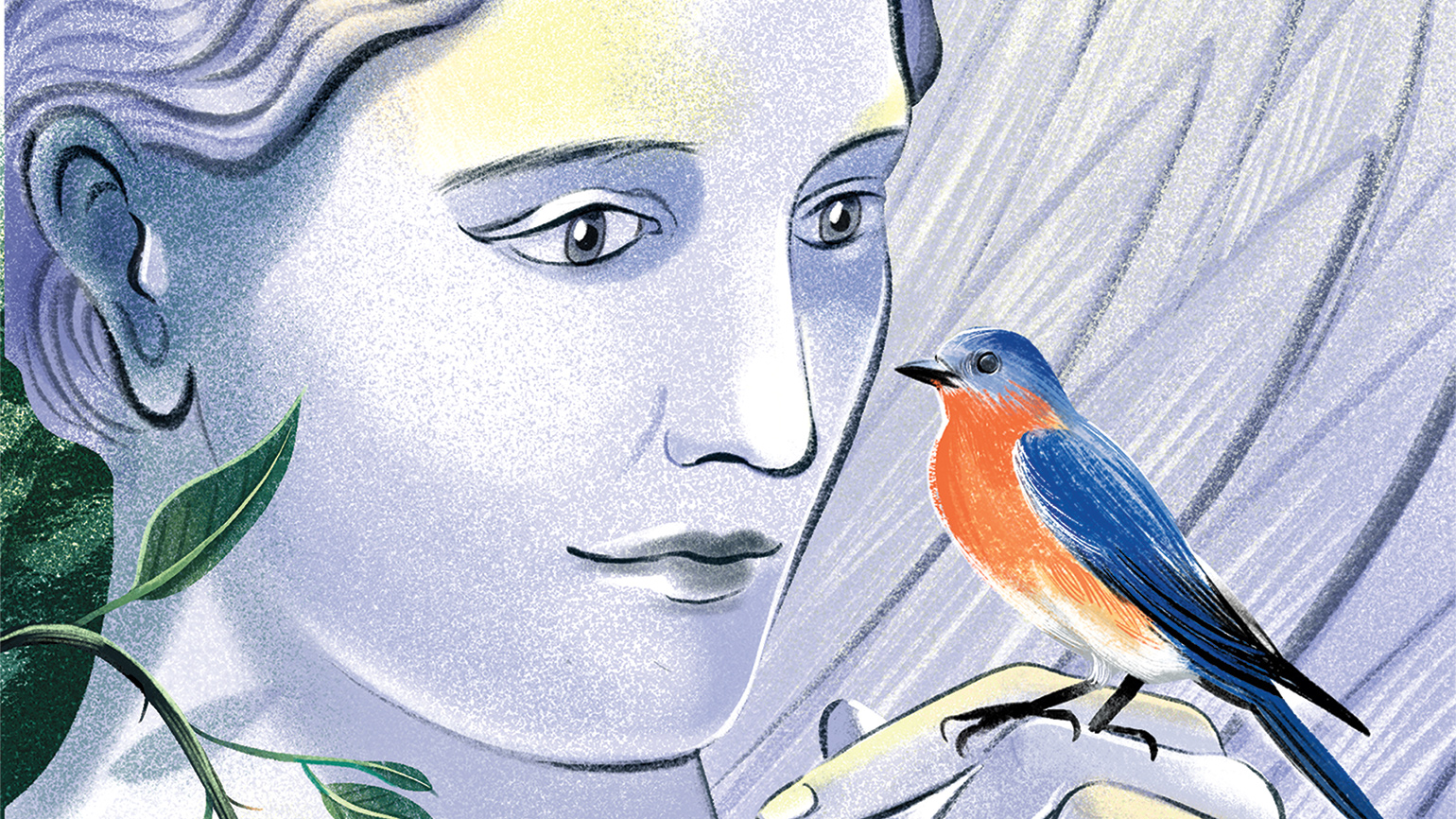
I saw a shadow of movement at the window. Mom’s glass birds sparkled in the sun: the cardinal, the goldfinch and her favorite bluebird. But behind them, at the feeder, a real bird had arrived. The most beautiful bluebird I had ever seen! It fluffed its feathers, puffing out the orange and white plumage on its chest, and pecked at the sunflower seeds in the feeder. I think it carried a seed with it as it flew away. “You saw the bluebird, Mom?”

Mom’s eyes were closed again, but her smile meant everything to me. In the brief visit from a bluebird, Mom’s comfort was my comfort. Even if she and I couldn’t always see them, her beloved birds found her, like the angels who were ever near.

For more angelic stories, subscribe to Angels on Earth magazine.

A Vision of Heaven

I couldn’t wait to get into the ocean. My sister, Peggy, and I ran ahead of our parents, dashing up the Clark Street ramp to the boardwalk. We threaded through the crowd, bumping into the adults, craning our necks to see the beach through their legs and knees.

“Slow down, Marie,” Daddy shouted. He set up the big beach umbrella while my mother, aunt and grandmother spread out on the baking sand. I stripped off my shorts and sandals and followed Peggy into the water. It rushed up over my bare feet. “Catch me!” Peggy shouted, splashing me. I ran after her, giggling, until a big wave picked us both off our feet and sent us tumbling—soaked—back to shore. “Be careful!” my father shouted from his blanket. “Those waves are mighty big today.” Daddy was the disciplinarian of the family, but even he couldn’t slow us down. Peggy and I were having much too much fun to listen.

My family always spent August at the beach in Wildwood, N.J., where my aunt Ethel owned a boarding house. After dinner, we’d go for a walk on the boardwalk. I’d hold my mother’s hand, staring up at the bright neon lights over the movie theaters and the arcades. It was like peeking into a different world. Then there was the ocean. I could smell the saltwater everywhere I went and hear the faint pounding of the surf, almost drowned out by the music from the merry-go-round and the roar of the wooden roller coaster. All year long I looked forward to August. The beach was my favorite place on earth.

Peggy and I played in the waves until our fingers were wrinkled from the saltwater. “I’m getting out,” Peggy declared. “I’m hungry.”

“Five more minutes,” I begged her. I knew Daddy wouldn’t let me stay in the water alone. But Peggy was already running up the beach. I hesitated, wondering whether I should follow her. I don’t know what happened next. I never saw the wave that hit me—never even heard it. One moment I was standing in water up to my waist, the next I was under the water. My feet couldn’t find the ground.

I opened my mouth to scream and choked instead. The current pulled me and spun me through darkness. I squeezed my eyes shut, certain that I was going to die. Daddy always said that was it, when you die, you die. Death was the end. I couldn’t breathe. My lungs burned. Everything went still. I was sitting cross-legged on the cold, hard sand of the ocean floor, breathing in and out. I wasn’t afraid. I felt good. I touched my bathing suit. It was dry. How could that be? I looked around. The water was murky and dark, but I could see flat stones, tangled seaweed, stiff ridges in the sand. In the distance was a pinpoint of white light as bright as a star. That must be the way out, I thought.

I crawled toward the light on my hands and knees. As I got closer, I saw a ladder in the sand—an old-fashioned wooden ladder painted shiny white. It stretched up for a long way, disappearing into the light. I put my foot on the bottom rung. It seemed solid.

Hand over hand I climbed. The farther I climbed, the greater the space between the rungs. I had to stretch my whole body to reach the next one, pulling myself up with all my strength. I was panting by the time I reached the top. But what was this? I’d come to a small room, like a waiting room, with benches on either side. Empty benches. If only someone would tell me where to go! A door stood open at the far end of the room. That’s where the light was coming from. Shielding my eyes, I stumbled toward it and collapsed at the entrance. I lay on my stomach, halfway across the threshold. The light was so brilliant, I couldn’t lift my eyes. I stared at the ground in front of me.

What I saw surprised me. Feet. Lots and lots of bare feet. Hundreds of people walking back and forth. I could make out the hems of their white robes. It was like peering through the crowd at the boardwalk. I knew there was something exciting on the other side, something I wanted to see. Something just beyond my reach. Like what Grandma said about heaven. When Dad wasn’t around, Grandma told me a different story about death. She said it was a beginning. Of a new life where we’d live with God in heaven. The way Grandma talked about heaven made me think that one day I’d like it even more than the beach in August. God, is this the heaven Grandma tried to tell me about?

I began to push myself into the room, but a voice called out, “You can’t come in.” Gripping the door frame, I raised myself up on my knees. I squeezed my eyes shut and felt a warm shiver rush through my whole body. Then a hand grabbed mine. I plunged forward. Searing pain gripped my lungs. I gagged.

“Take it easy.” Daddy! I felt his strong arms cradling me before I opened my eyes. I was back on the beach. Mom, Peggy, Grandma, Aunt Ethel—they all crowded around as Dad laid me out on a towel. He slapped my back, and I went into a fit of coughing.

“We looked everywhere,” Mom was saying. “Thank goodness Daddy saw your hand reaching out of the surf. What were you doing?”

It all came back: The bright light, the ladder, the doorway, all those people on the other side.

“I … I don’t know,” I managed to say. How would they believe me if I didn’t know what to believe myself?

For the rest of the afternoon, I drank cold spring water and dozed under the shade of the umbrella. After the scare, my family relaxed. Peggy was even swimming again. No one knew how close I had come to dying. No one but me. Those vivid images circled in my mind: the light, the ladder, the beckoning door. Had I seen Grandma’s heaven?

The sun began to set and my mother rolled up the blankets. It was time to go home. Before we left, Daddy took my hand and led me down to the water. A shiver ran through me as I looked at the breaking waves. “I want you to go in,” he said. I stared at my feet, not budging an inch. “What are you afraid of?”

I hesitated, then blurted out the whole story, tears streaming down my cheeks. “I was in heaven, Daddy,” I told him. “I really was!”

“Heaven isn’t real,” he said. “Only this is real. This beach, this earth, this life. Promise me that you will never ever tell anyone that silly story again.”

As the sun sank below the horizon, I stepped into the waves. And for so long, I kept my promise to Daddy. I never told a soul about my vision. Not my mother or grandmother, not my husband, not my closest friend. Still, hardly a day went by that I didn’t think of it. God had planted a seed in my heart that day at the beach, a seed of faith. And it grew until I could no longer deny the truth. There is a heaven waiting for us beyond the sun setting over the ocean. A heaven more beautiful than the beach in August.

A Time of Renewal

Once upon a time, life was a simple story. I was strong in mind, body, and spirit. Sure, I had a few aches and pains, but mostly I ignored them and kept active.

I stayed as healthy as possible to honor the body God had given me. I felt his presence, especially in the beauty of the natural world. I adored the outdoors—walking in the woods with my husband and son, working in my garden. But once upon another time, the story of my life was rewritten.

It started in the summer of 1999, when we lived in Illinois. I’d been hiking with my family. I pulled a tick from my leg, a creature no bigger than a period on a printed page. Later I stood in the bathroom, craning to look in the mirror.

“Dennis,” I called. “Come here. My back is just itching right off!” My husband saw an angry red rash spreading across my back. “Probably from the heat, honey,” he said. “Don’t worry.”

Who had time for worry? I was a busy mom with a 6-year-old. We were renovating our house, and I was doing much of the work myself. The rash went away, and I pushed myself as hard as ever.

But over the next few months I didn’t have my usual energy. I was short of breath. Often I felt my heart pounding. “It’s probably stress,” my doctor said. Some may have called my schedule stressful, but to me it was living life to the fullest. I wasn’t sure what to think.

Gardening with Dennis one day, I was suddenly so dizzy I collapsed on the ground. My doctor prescribed extra rest. But the dizziness sometimes got so bad I had to crawl on my hands and knees until it passed.

I went to specialists and was poked and prodded. Blood tests. Scans. Nerve tests. Steroids lessened the dizziness, but the spells continued.

Some days I couldn’t get off the couch because of the numbness in my legs and arms. We got help at home because I couldn’t always take care of my son. What was happening to me?

I spent every day cooped up in the house, in doctors’ offices or waiting rooms—completely cut off from nature. That was where I had felt assured of God’s presence. So where was he now?

“I’m so tired of complaining all the time,” I said to Dennis one day. “I’m so tired of being sick.”

So many things went wrong. I wrote down each possible diagnosis—vertigo, multiple sclerosis, rheumatoid arthritis, autoimmune inner ear disease. I had surgery to remove tumors and cysts. I felt like I was losing my mind.

Finally, in 2006, a neurologist came up with a new diagnosis, Lyme disease. Lyme is a tick-borne illness named after the Connecticut town where it was identified. I remembered the tiny creature I’d pulled off my leg and the rash I’d had six years earlier.

The neurologist explained that the bacterial infection had been wreaking havoc ever since.

Lyme is curable, but treatment is most effective when given immediately. Some people are never cured. I didn’t want to think about that. “I know what’s wrong now,” I told Dennis. “I can fight and move on with my life.”

A month of intravenous antibiotics convinced me I was right. I felt incredibly better. I still had numbness, and all my energy hadn’t come back, but I was determined to put this nightmare behind me.

I ignored the lingering symptoms. I could again be the mom I wanted to be. I worked in my garden. I walked in the woods. I signed up for our church’s annual retreat. The theme sounded perfect: “A Time of Renewal.”

“You’ll like the guest speaker,” a friend said when we registered at the hotel conference center. “You have a lot in common.” My friend left it at that.

Natalie Nichols gave an impressive presentation, which explained my friend’s mysterious remark. Natalie had been down a road like mine. Exhaustion. Arthritic pain. Depression. Endless doctors and medication.

“I still struggle with Lyme,” she said, “but God sustains me.” She talked with a zest for living, as if she didn’t have an illness at all.

Later that evening I noticed Natalie was sitting in the hotel lobby. I walked over to introduce myself. “I had Lyme disease,” I said, “but I’m well now.”

Up close, Natalie’s eyes were deep and dark. She seemed to look directly into my soul. “Do you have any numbness?” she asked. “Fatigue?”

“Yes,” I confessed, “but it’s better since the antibiotics.”

Natalie motioned for me to sit down. “Lisa,” she said, “I know it’s hard, but you have to face it.” Her voice was full of compassion. “You still have Lyme,” she said. “You may always have it. Accept the diagnosis and get further treatment.”

I started to shake. Natalie took my hands in hers. “I want to be healthy again!” I said. “I want to forget about Lyme disease!”

“God is always with you, Lisa. You can live your life as fully as possible, whether you’re healed or not. Knowing that will help you feel renewed.”

The power in Natalie’s eyes was irresistible. She prayed with me until I felt calm. Just when I started to wonder if she was some kind of angel sent from heaven especially for me, she brought me back down to earth. “Here’s the name of a Lyme specialist. He will help you,” she said. I believed her.

I came home from the retreat a new woman. Perhaps I was stronger in mind and spirit than I was in body, but that too would come in time. I couldn’t deny my illness. Not until every symptom was gone.

Meanwhile, whether I was hiking in the woods or sitting in a neurologist’s office, God was with me. He had hired a guest speaker to tell me so.

Download your FREE ebook, Angel Sightings: 7 Inspirational Stories About Heavenly Angels and Everyday Angels on Earth

A Stained Glass Window Deepened His Connection With God

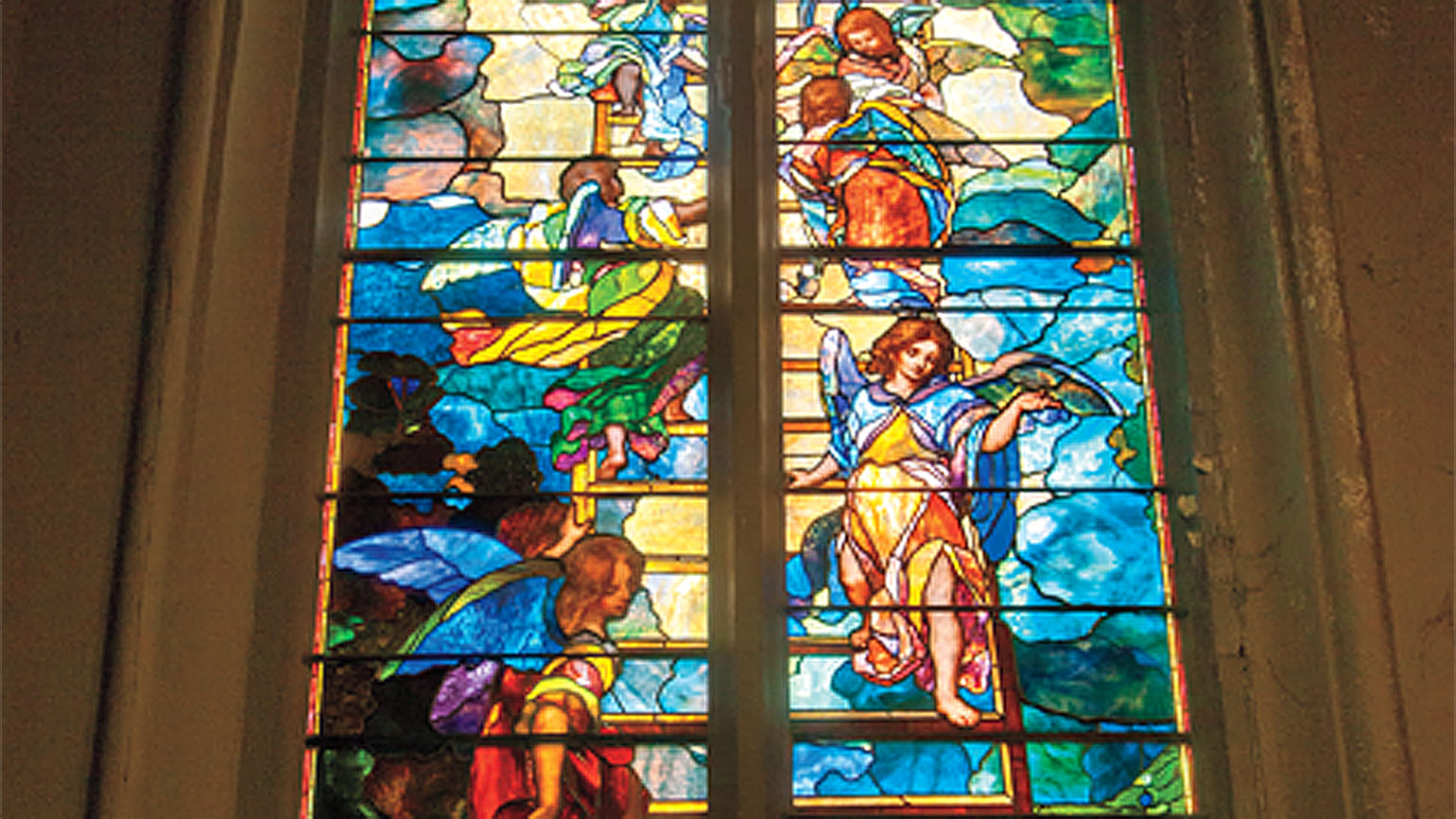
I didn’t go to Grace Church in Manhattan with angels on my mind. I was there to talk about prayer, leading a class before worship. It was only later that I caught sight of the stained-glass window in the back of the nave, the angels ascending and descending on Jacob’s ladder, seeming to fly right out of the frame.

Grace Episcopal is a historic spot; the current church was erected in 1846 on the edge of Greenwich Village. I had visited it years ago when my wife, Carol Wallace, was doing research for her book, To Marry an English Lord, about the American heiresses who married into the British aristocracy at the turn of the last century, a book that became the inspiration for the popular TV show “Downton Abbey.”

Many of those prominent New York families, their mansions lining Fifth Avenue, made Grace their parish. There, the robber barons gave their daughters away in grand weddings. They paid a pretty penny to make the church look worthy of their social ambitions, filling it with beautiful art, including that window of Jacob’s ladder, and memorials to some of society’s (mostly now forgotten) mavens.

I can’t remember exactly what I said during the class—the temptation in quoting myself is to sound more polished than I am—but the crux of our discussion was how to pray “without ceasing” in a world of rattling cell phones and endless distractions. “I know sometimes when I pray I don’t feel worthy of God’s attention,” I said, “but God always hears us. Of that we can be sure.”

After the class, I joined the congregation for a service of prayer, song, communion and praise. I was floating on that joy that comes when you feel as if you have—finally—given back to God just a little of what God has given to you. At the end of the service, I picked up a church brochure and walked around to see the highlights. And there I stood in front of Jacob and the angels.

One reason stained glass is such a popular feature in churches is that it offers a perfect metaphor for how God works through us. Most art is best appreciated when the light shines on it, bringing out the textures and colors of the medium. With stained glass, the light going through the window allows us to see the artwork in all its glory. Those pieces of colored glass are transformed, pierced by sunlight, the same way God lights us up.

Was there ever a figure who needed God’s light more than Jacob, especially when he saw those angels? He’d just done something reprehensible, at his mother’s urging no less. Disguised as his twin brother Esau, he finagled a blessing out of his father, stealing Esau’s birthright and inheritance. It was a flagrant lie, and when Esau learned of it he was ready to kill his brother. Jacob fled for his life.

At night on his journey, he took a rock for a pillow and fell into a deep sleep. He might have felt abandoned by God, but God did not abandon him. On the contrary, while Jacob slept, God showed him a ladder connecting heaven and earth, with angels—God’s very messengers— going up and down it in a holy circuit of communication. “I will not leave you,” God promised.

When Jacob woke up, he was terrified. I wonder sometimes whether it was because of what he had seen in the dream or the realization of what he had done to his brother, a cosmic understanding of his guilt. At any rate, he said, “Surely the Lord is in this place; and I did not know it,” a verse I wish I had emphasized in my class. God is present in all places, even in our desperate flights, when all we can find is a rock for a pillow to sleep on.

As I stepped back from Jacob’s angels, I noticed a plaque on the wall beneath the window, a memorial for a parishioner named Edith Corse Evans. According to my brochure, Edith was 36 years old when she died on April 15, 1912. A New York socialite, she had made a trip to England—like a character out of “Downton Abbey”—then visited Paris for a shopping spree. To get back home she booked herself a first-class cabin on an ocean liner making its maiden voyage across the Atlantic. The name of the ship? The “Titanic.”

The newly christened cruise ship, as we all know, hit an iceberg on its crossing, and its 2,200-some passengers scrambled to get to safety on a craft that had only enough lifeboats to accommodate about half of them. “Women and children first,” came the command. Edith stood with others on the deck of the sinking ship. “You go first,” she told a friend. “You have children.” Edith died along with 1,516 others, her body never recovered. Her life was short, but it defined itself in one heroic act. Surely God was present even then, and Edith Corse Evans seemed to know it and find strength in that fact.

I knew that Jacob did make it back to claim his birthright and was indeed forgiven and embraced by his brother Esau. God had stood by Jacob, as promised. Just as he stood by Edith, and just as he stands by me, with nothing but a ladder of angels between us.

Did you enjoy this story? Subscribe to Angels on Earth magazine.

A Special Mourning Dove Was Her Source of Comfort and Hope

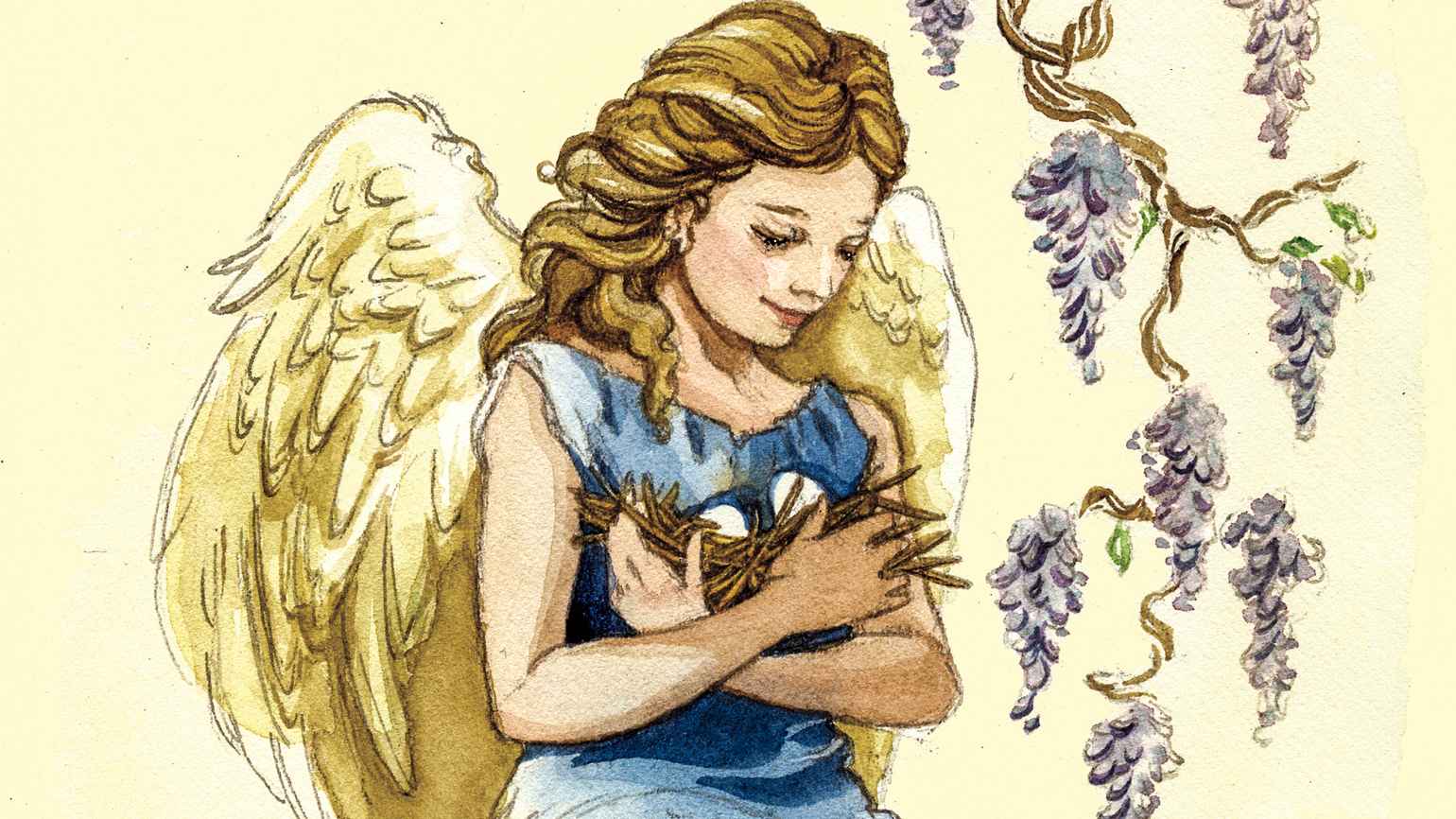
“Look!” I said to my husband, Roger, pointing to the budding purple wisteria branches. “The mourning doves have built a nest!” As I watched the gray doves take turns coming and going in shifts to sit on their eggs, the waves of grief I still felt over my son Steven’s death three years earlier came less frequently. Here in our backyard was yet another of God’s reminders that he would always be there to reassure and comfort me.

But then on a chilly April day, we watched aghast as a hawk swooped down and took one of the doves, and by the next morning the other parent was gone too. Roger clambered up a ladder to take a peek into the nest. Was it possible the hawk had spared the young? Yes, there sat a newly hatched baby dove! We brought him inside and set up the nesting box with the heat lamps we had used for raising chickens. Then we rushed to the pet shop to buy the formula needed to mimic the mother’s milk. But even with our care and prayers, we knew that the dove’s chances were slim. We were especially worried that our little bird, whom we’d christened Hawkeye, hardly cooed at all. That had to be a bad sign.

But to our surprise, Hawkeye not only survived but also thrived. Within a month, he was able to stand on the rim of a bowl and eat out of a baby spoon, and before we knew it, he was pecking at the seeds we gave him. Having the opportunity to nurture this new life brought me a greater measure of peace with each passing day.

As Hawkeye grew, we noticed that unlike all the other doves in our yard, he had a double breast with a line dividing it. When I did some research on mourning doves, I found out that females don’t often coo.

“We got it all wrong,” I told Roger. “Hawkeye is a girl!”

We realized that as Hawkeye’s surrogate parents, we’d have to teach her to fly. First, we urged her to fly from a finger to the bottom rung of a six-foot ladder, and in no time she was zipping to the top. She lit out for the kitchen whenever she heard the click of the spoon on her bowl.

By mid-June she’d gained full confidence in her wings, so we knew it was time to set our Hawkeye free. We took her outside, but she only fluttered about the yard, even when we left her and went back inside. My heart broke as she watched us through the window, the warm wind ruffling her feathers. Finally, after several minutes, she flew to the wisteria and then took off into the sky. I started to cry. Would I ever see my mourning dove again?

As the months rolled by into fall and winter, the grief that had been held at bay returned more strongly. God had given me a new purpose, a new life to nurture, but now that Hawkeye was gone, I felt bereft. I often stared out the back window, hoping to catch just a glimpse of her. “If I could only see her one more time,” I told Roger, “I’d know everything would be okay.”

I had nearly given up hope, but one May morning, two doves landed on the deck rail. The smaller one bore Hawkeye’s distinctive chest markings. She had not only returned, but she’d also brought her mate with her! They built a nest on the very same wisteria branch where Hawkeye had been born. Several weeks later we watched Hawkeye feed her own two babies. And every time she soared into the sky, I felt my own heart soar with her—light, unburdened and filled with God’s grace.

Did you enjoy this story? Subscribe to Angels on Earth magazine.

A Special Heaven-Sent Laundromat Gathering

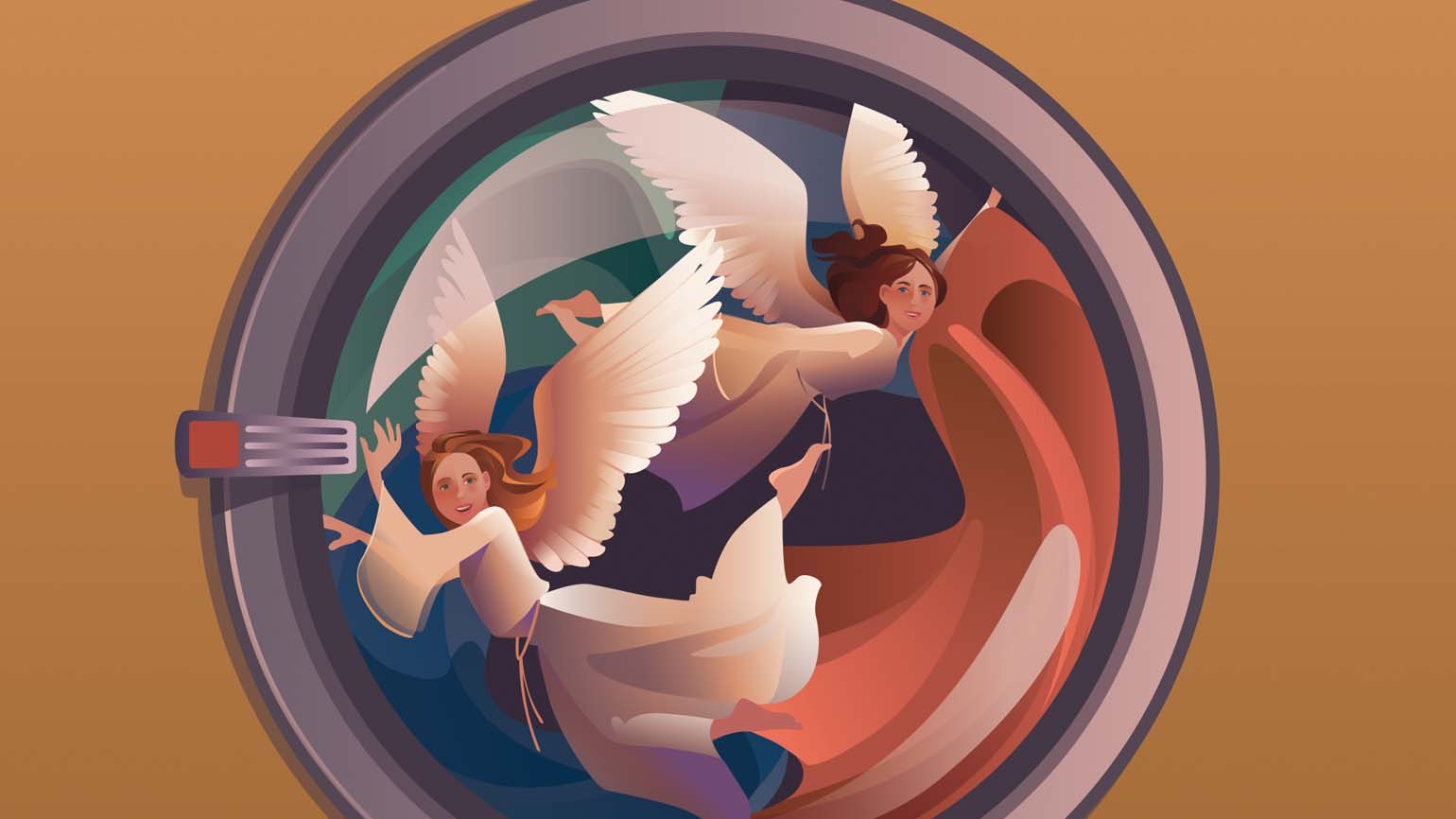
Wash. Rinse. Spin. That’s what was on my menu early in the morning one Thanksgiving a few years back. With no kids of my own, and my siblings out of town with their families, it was just any other Thursday for me. “Might as well have clean clothes,” I muttered, walking into the laundromat. High up on the wall, where the television was mounted, a newscaster reported on the already clogged traffic conditions.

I headed to a pair of unoccupied machines, passing a few other unlucky people. I didn’t see any of the usuals. Sometimes I chatted with a new mother whose baby napped in a plastic laundry basket while her onesies were washed. She was probably sitting around a big table right now, her baby smooshing peas in a high chair. I glanced at a man in a grubby T-shirt that read “How can I ignore you today?”

I separated my colors and whites. Lord, what would my grandmother think if she saw me here today? When I was growing up, Thanksgiving meant turkey baked to golden-brown perfection served on Mamaw’s best tablecloth. Mashed potatoes. Creamed corn. Green beans she’d put up in Mason jars. Pumpkin pie with whipped cream. The food was delicious, but the secret ingredient was togetherness. That’s what made Thanksgiving special.

Beside me, a mother loaded a dryer with sheets and blankets. Her kids ran around behind her. I counted six of them in all. They reminded me of the family in that old TV show, The Waltons. The series was a spinoff of a classic television special called The Homecoming, which still sometimes aired. I’d watched the premier with Mamaw one Thanksgiving when I was ill. I’d kept to myself most of the day, but when Mamaw sat with me to watch A Walton’s Family Reunion, I got that same warm, fuzzy feeling being amidst my own family gave me. We were long past the era of the Waltons, with families often spread far and wide at too far a distance to come together at Thanksgiving.

While I transferred my clothes from the washing machine to the dryer, the six kids peppered their mom with questions. “Can we go to a movie when we get there?” The mom sighed wearily and addressed them all together. “If I’ve told you once, I’ve told you a dozen times. There’s just enough money to get us to Grandma’s. No movies. No ice cream. And,” she added for the child whose nose was pressed against the glass of a claw machine, “no new toys.”

I turned back to my dryer. I’d thought spending the day with other lonely people in a near-empty laundromat would be sad. Spending it with people on their way to somewhere special was worse. The youngest child sidled up beside me to watch his blankie go round and round in the dryer window next to mine. A scraping noise made us both turn around. His brothers were pulling chairs across the floor, setting up rows facing the TV. One of the sisters tore a magazine page into squares. “This ticket is for you,” she said to me, and motioned to a chair. Before I knew what I was doing, I was seated in the front row looking up at a toothpaste commercial. The kids took their places around me.

“Shh!” the littlest boy said. “The movie is starting.”

I glanced over at my dryer, wondering how long this “movie” would take. A familiar strain of music caught my attention. It took me a moment to place it. The theme to The Waltons! The kids probably had no idea what they were watching, but the theme song slowly drew the other customers in.

“I just remembered, I’ve got candy in my pickup!” a man said, jumping up. “I’ll go grab it.” Not to be outdone, a lady hauled in a cooler of soft drinks from her car. “They’ll have plenty at the grandkids’ house,” she said. The man in the grubby T-shirt held the door for her. He wasn’t ignoring anyone anymore. When my laundry was done, he brought me over a favorite paisley sock that I’d dropped on the way from the dryer back to my movie seat. I watched as I folded my still-warm clothes, feeling thankful. There was no other word for it.

Without turkey or homemade pumpkin pie, our little group had found the secret ingredient that made Thanksgiving special. In the oddest of circumstances, we’d gathered together.

For more angelic stories, subscribe to Angels on Earth magazine.

A Special Angel Helped Him Open His Dream Restaurant

FOR SALE. The sign on the pizza joint that winter taunted me. From the time I was a kid I’d dreamed of owning my own restaurant. Now here was the perfect place. Not so big that my wife and I couldn’t handle it on our own. A great location, right on the main drag, Route 15. Ideal for hungry skiers passing through northern Vermont in winter. Or the leaf peepers in the fall. There was just one thing standing between me and my dream: money. I was flat broke. No way could I afford to buy, let alone run, my own business.

Every day, driving to my job managing the housekeeping department at the Smugglers’ Notch ski resort, I slowed the car to a crawl as I passed by the place, hoping against hope for some burst of inspiration. It was called Papa Joe’s and was literally the only restaurant in tiny Cambridge. I’d tried every way I knew to work something out, even asking the owner if she would be willing to lease it to me. But her husband had died and she needed the cash. I understood. But what could I do? Outside of divine intervention I didn’t see it happening.

Early one morning I actually parked my car out front and sat wishing there was something I could do to make it my own. It wasn’t owning a business that excited me. I wanted to cook delicious food for people to enjoy together. Good food, to me, was the greatest gift you could share. It was a gift my mother gave our family every night.

Growing up, I’d gotten my love for cooking from my mother. Anytime she was in the kitchen I was there watching, eager for a chance to lick a spoon or help add some spices. We were Italian, and for Mom, cooking was as natural as breathing. I loved watching her stir together tomatoes, onion, garlic and a handful of oregano, letting it all simmer until it became the consistency of gravy and tasted downright heavenly. When she made the meatballs the size of my fists, she always set aside a couple for me to eat on my own later. We couldn’t count on leftovers, but there was always enough to feed whoever dropped in. “Delicious, Angelina!” “My compliments to the chef, Angelina!” Everyone loved Angelina’s cooking.

Mom told me her name meant “little angel” in Italian. I didn’t know much about angels, but if they were anything like my mother, I knew they must be warm and loving beings I definitely wanted to have around my establishment. I felt a little silly, sitting in the parking lot, dreaming my dream. But dream I did. I wanted to be able to tell Mom I’d turned that Papa Joe’s FOR SALE sign into one that said SOLD.

She liked to tell the story of my first job at the restaurant where my dad worked. I started out as a dishwasher, but one day I asked the cook if I could roll out the dough for a pizza, then layer on the sauce and pepperoni. What a feeling of accomplishment, watching the pie come together before my eyes. “You’re ready to put it in the oven,” the cook said. “You have to zap it in.” He showed me how to slide the wooden peel under it, then with one motion slide the pizza off onto the baking rack. I did it my first try! “I’m going to open my own restaurant,” I told my parents that night. “You better get a business degree then,” Dad said. “It’s not enough just to know how to cook.”

I’d done that. Twelve years later I was married with a young son but no closer to my dream. Dad had died without seeing me succeed, but I hoped Mom might live to see it happen. Perhaps it was time to give up. I pulled away from the restaurant and headed to work. Maybe God has other plans for me, I thought.

A few weeks later my brother called. My mother had suffered a heart attack and was near death. I dropped everything and caught a plane to Georgia, where she’d been visiting my brother. She spent her last hours surrounded by me and my siblings. Letting her go was the hardest thing I have ever done. After the funeral, we learned that Mom had left each of us a small inheritance. It was just shy of what I needed for the down payment on Papa Joe’s. I knew it was meant to be when the mortgage company allowed me to make the purchase with a second loan.

My wife and I stood together in the parking lot, admiring the sold sign on Papa Joe’s. “What should we call it?” I asked.

“We should name it after your Mom,” my wife said. “Angelina’s. She was the one who made it possible.”

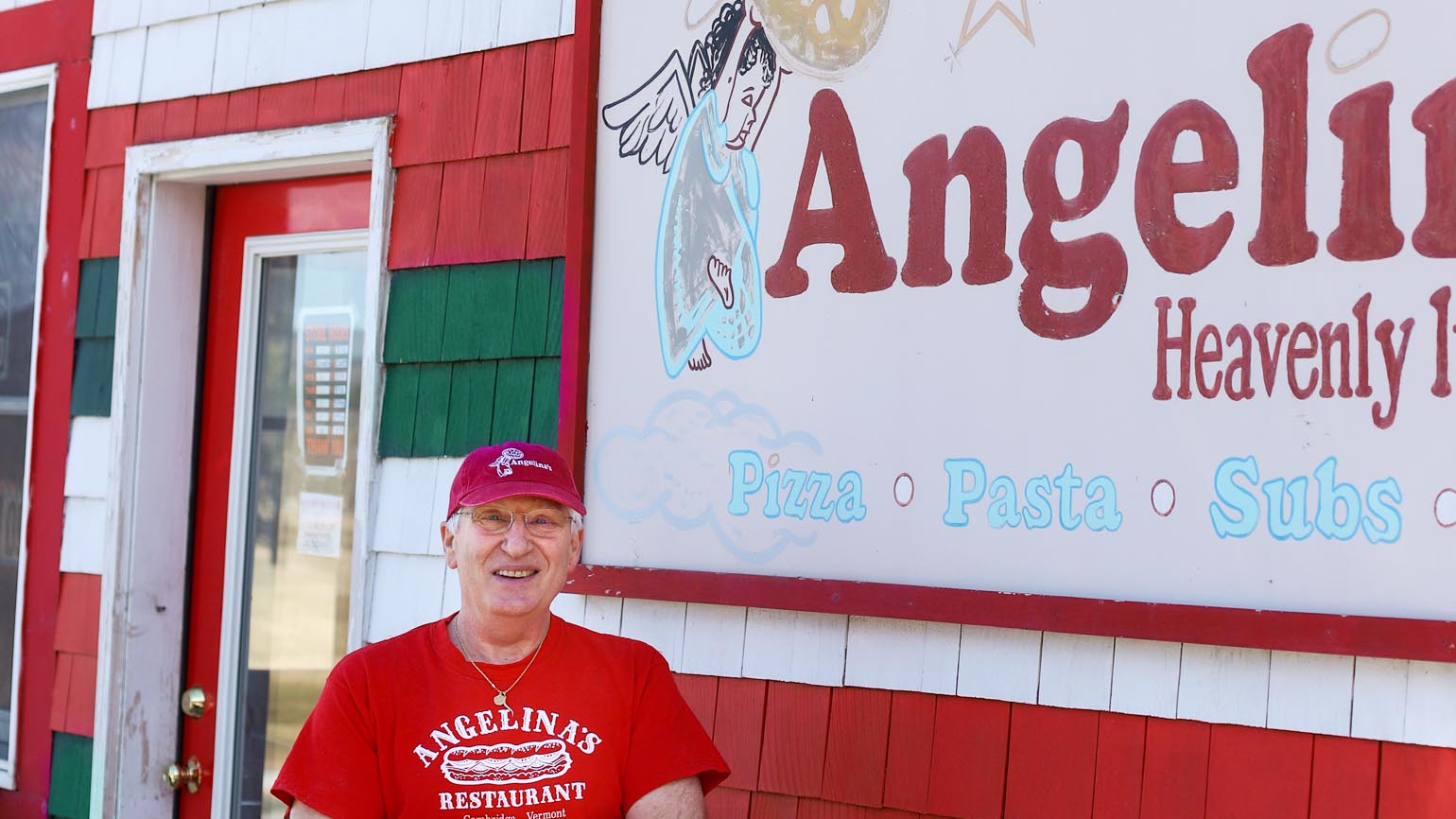
I hired an artist to paint a large red-and-white sign on the building: ANGELINA’S RESTAURANT. HEAVENLY ITALIAN FOOD. Looking down on the words was an angel with wings and a halo, tossing a pizza crust.

Behind the counter I hung a framed photo of Mom. When people ask who Angelina is, I point to the picture and tell them about my mother, how she had inspired me to want to cook for a living. Of course, we use her marinara-and-meatball recipe in the restaurant. We don’t see many leftovers.

The dining room is big enough for only five tables, seating 20 people at most, but our business is largely takeout. From Day One customers loved our homemade thin-crust pizzas and deep-fried calzones. The top selling pizza is the Big A, covered with onions, sweet peppers, mushrooms, pepperoni and sausage.

We get the skiers and leaf peepers, just as I’d imagined, but most of all Angelina’s is a community fixture. A gathering place to catch up on local news, to celebrate birthdays, graduations and anniversaries. A place of warmth and love, just like my mother’s kitchen. After 30-plus years in business, some of my employees are the children of my earliest employees.

I can tell you some stories, all right. Like the time a car missed a turn and plowed right into the dining room at dinnertime. Miraculously no one was hurt—not even the driver. It’s been an amazing journey, truly a dream come true.

People don’t ask so much about Mom any more, or about the angel gracing the sign out front. They’re used to it by now. Sometimes, I admit, even I don’t stop to take it all in.

One day I was sharing a pizza with Father Robert, the priest from St. Mary’s Church, which is directly across the street from us. I was telling him the story of how Angelina’s came to be, about the joy I’d been blessed to be a part of. “It’s like someone’s watching over us,” I said.

Father Robert bit into a slice of pizza and nodded. “It’s your mother,” he said. “She’s with the angels.”

“That’s right,” I said. Maybe Mom wasn’t an actual angel. But she’ll always be the little angel to me, looking down on this little bit of heaven along Route 15.

Did you enjoy this story? Subscribe to Angels on Earth magazine.

A Small Gift Becomes an Angelic Sign

One of my favorite episodes in Scripture has Jesus telling his followers that the more they give, the more they will receive. It cannot be otherwise, he explains, because God will never be outdone in generosity. The concept of tithing is explained in a different part of Scripture. It’s the idea that the first fruits—perhaps 10 percent of one’s earnings—should be given to God as an act of faith. (The actual money can be given to charity or church.)

It sounds simple, but putting it into practice is very difficult. We all have reasons for not giving money away, especially now when so many people jobless or earning reduced wages. But a principle is a principle, and it works all the time, not just when it seems easier to accept.

Colleen W. knows it first hand. Her story is typical of how most of us take the first step. Finances had been somewhat tight for Colleen. One day she received a letter from a woman for whom she had done a favor. Inside was a gift card for $25, along with a brief “thank you” note from the woman.

Colleen hadn’t expected to be paid, and she was thrilled. She couldn’t remember the last time she had received money that had no specific destination. The possibilities were exciting. A new, pretty spring outfit, perhaps? She headed out to one of her favorite stores.

While wandering up and down the aisles, she passed a display of Easter bunnies and angels. She immediately thought of her dear friend Grace who was mourning the death of her son. He had died around Easter of last year. With the anniversary approaching, she wondered how Grace would handle it.

Grace had started a collection of angels and another of bunnies shortly after the funeral. “They just make me feel better,” she once explained to Colleen. Now Colleen was looking at a display of the same items, and…she moved closer. There was a statue of an angel holding a bunny. Just perfect for Grace. The price? A little under $25.

No, Colleen thought. I can’t spend my gift card on something for someone else… But she could and she knew it. You will be repaid, said a voice in her head, but what did that mean? Quickly, before she could change her mind, she bought the statue, went home, wrapped it and left it on Grace’s porch.

When Grace phoned, Colleen could hardly hear her through the tears. “It’s the nicest thing that’s happened to me in a long time,” her friend told her. “How could you possibly know that I was asking God for a sign that my son is in His arms?”

Colleen cried too, then. She had definitely been repaid, as the words in her head had promised. What could be more enjoyable than making someone happy?

God probably feels that way too, which is why Colleen received an unexpected check in the mail a few days later, from a utility bill overcharge. The amount? $25.

A modest sum, indeed. But being a part of God’s answer to prayer is priceless.

A Rescue in the Flood

“River flooded again,” my husband said, staring out the window.

The quaint little brook that ran alongside our property was one of the reasons we’d bought this house. Problem was, when it stormed, tree branches got carried on the current, clogged up the river and flooded our yard.

Daryl and I put on old clothes and grabbed a couple of rakes from the garage. “Let’s split up,” he said. “I’ll start at one end and you start at the other.”

I wish Kyle were here, I thought, walking along the water, bending down every few feet to fish a branch out with my rake. All these years after his death I still caught myself thinking of my brother when there were chores to be done.

We were raised on a dairy farm and grew up doing jobs like this. There were enough of us kids that we always had a buddy to talk to while we worked. Kyle and I milked cows together at dawn, and herded cattle back into our pasture in the evening after they’d been out grazing. Chores didn’t seem so bad when you had someone to do them with.

But I couldn’t ask for Kyle’s help now. He’d been killed in a farming accident when I was still a girl. A tractor turned over on him. He’d been rushing to get through his work that day so he could go buy me a present for my school graduation. My head told me the accident wasn’t my fault, but sometimes in my heart I felt like I was partly to blame.

I spied a big branch caught on a rock. It looked like it would be particularly difficult to fish out of the roiling current. Now I really wish Kyle were here. I dug my work boots into the muddy banks of the brook to get my footing. Stretching my arm out with my rake, I grunted as I tried to reach the branch.

It was farther out than I’d figured. Kyle was long and lean. He could’ve gotten that branch out lickety-split, I thought. But I was on my own now. It was time I stopped living in the past. That was hard for me to do. Yard work brought memories of Kyle, memories of Kyle brought memories of that awful day.

I’d been so excited for my school graduation. Racing around the house in my outfit for the ceremony, chattering on about the presents everyone in the family—including my brother—was going to buy me. Maybe if I hadn’t been so selfish back then my brother wouldn’t have died. Maybe having to do my chores alone now without any help was one of God’s lessons for me. Maybe I didn’t deserve anyone’s help. Not after I’d lost my brother.

I reached out again with my rake. The mud gave way under my feet. I groped for something to hold on to. A tree. A rock. But there was nothing. My heart pounded. I’m going in!

A hand grabbed my elbow. I wondered how Daryl knew I was in trouble. For now I couldn’t even turn to see him. With his steadying force I was able to regain my footing. I even stretched a bit farther with the rake, caught hold of the branch and drug it in. Then Daryl let go of my arm. I turned around.

“Just in time,” I started. But there was nobody there. “Daryl!” I called. “Daryl!” I squinted, peering all around, but there was no sight of him. He must have still been far across the yard. If it wasn’t Daryl, then who had helped me?

That night over dinner I questioned Daryl about the incident for the hundredth time.

“Tammy, like I said before, I wasn’t there to help you,” Daryl said. “But, you know, if you really needed help, all you had to do was come and ask me.”

Of course he was right. I’d let my guilty feelings keep me from it. Meantime God must have sent an angel to steady me. I believe he wanted me to know that it was time to stop blaming myself for my brother’s accident. I was deserving of help in God’s eyes. He’d sent an angel to prove it.

I thought about Kyle, laughing and talking as he helped me milk the cows. But for the first time, the memory didn’t bring on feelings of guilt. My brother had helped me once again.

Download your free ebook, Angel Sightings: 7 Inspirational Stories About Heavenly Angels and Everyday Angels on Earth.

Arctic Angels to the Rescue

Darkness pressed in at my window. I peered into it, searching for a glimmer of headlights from my husband’s four-wheeler. Where are you, Josh? I’d been asking for the last hour and a half.

It wasn’t like him not to be home for dinner by 5:00 p.m. Certainly never this late. Winter nights came early here in Anderson, Alaska. It was early evening, but it might as well have been midnight.

I’d tried not to worry. But the temperature well below zero and falling fast. Josh had been out since morning at the river collecting driftwood to add to our woodpile. Worried? I was a nervous wreck!

I tossed on my parka and ran out to the truck. Josh was out there somewhere alone, unprotected, maybe hurt. It was early enough in the season that parts of the river could still not be frozen solid. Josh could fall through false ice and never get out. I had to find him. And quick.

I drove down to the trailhead. No Josh. Out in the dark, the wind whipped through the trees. Usually I loved our home in the wilds of Alaska, surrounded by nature. Only a few hundred people lived in our village. We were independent types.

But now the wilderness I loved seemed terrifying. I called Josh’s name. Even if he could hear me, he wouldn’t be able to trace my voice to the car. The icy wind scattered voices the way it scattered snowflakes.

I backed the truck down the trail. I’d only gone a few feet when the car stopped moving. I stepped on the gas, but the tires spun in place. That howling wind had polished the frozen road into glass. I was stuck.

Now what? In my worry about Josh, I’d left the house without water. Or a flashlight. No glove warmers. Nothing. Not even an energy bar. I felt completely alone. And however bad I felt, Josh must have been feeling worse.

Dear God, please be with Josh. Send your angels to protect him. Were there even such things as arctic angels? Somehow I couldn’t picture them bundled up in parkas.

I turned off the engine and stepped out of the truck. I couldn’t stand out here for long. I thought of a friend, Linda, from church. She lived a half mile away. I started running, my lungs burning from the cold.

The wind picked up. That meant a storm was coming in. I crashed against Linda’s front door, my legs barely able to carry me one more step.

She opened the door, her eyes wide. “Dolores?” she said. “What are you doing here?”

“It’s Josh,” I said, gasping. “He went out this morning and hasn’t come back.”

“Come in here where it’s warm,” she said. “I’ll call up the fire chief.”

I collapsed by her wood stove while she made the call. “He’s sending out a search party,” she whispered to me as they talked. “He says not to worry.”

How could I not worry? I’d struggled to make the walk to Linda’s house in this cold. Josh was out there all alone. How long would it take to organize a volunteer rescue team? How many people would even be available?

The windows rattled. The storm was getting closer. Soon it would be too dangerous for anyone to be out. Someone definitely needed to worry.

Linda drove me back to my house. I was so grateful not to be alone. I was also grateful for being able to borrow a police scanner from a neighbor. That would allow me to follow the search as it happened.

I set up the scanner while Linda called Connie, another friend from church. There was a knock on the door. The fire chief ’s wife, Wava.

“There’s at least 20 men searching and more on the way,” she said. “There’s men coming in from upriver, from way out in the bush. They’re out in twos on snowmobiles.”

I poured tea for the three of us. Soon Connie arrived. “I brought an UNO deck,” Connie announced, shaking snow out of her hair.

Cards? How could anyone think of playing a game at a time like this? But Connie insisted. While she shuffled the cards I turned up the police scanner to listen to the radio traffic. Voices came and went over the speakers, men checking in with each other out in the woods. It was soothing to listen to them.

But would the help get there in time? Outside the snow was coming down hard. The wind would erase any tracks.

The phone rang, distracting me from my worries. It was my neighbor from across town, just calling to check in. I’d just put down the phone when it instantly rang again and kept ringing.

Friends called. Neighbors. People from church. My minister. The Catholic priest. Wives of men Josh worked with at the power plant. People I barely knew. Everyone said the same thing: “We’re praying for you and Josh. Let us know if there’s anything you need.”

The ladies in my kitchen were praying too, when they weren’t trying to divert me with a new card game.

Just before midnight a voice crackled over the scanner: “I see the four-wheeler! It’s in the river.” The room went silent. The man reported the ATV had fallen through a layer of false ice. But there was no sign of Josh.

It seemed forever before anyone spoke. I thought of Josh, freezing, his clothes soaked from the river. Only a matter of time before hypothermia set in. If it hasn’t already.

“I know it sounds bad,” Linda finally said. “But God’s still in charge. And those guys aren’t going to stop looking until they find him—safe and sound.” She picked up the cards and dealt them. “I don’t think you’ve ever told me what brought you and Josh to Alaska,” she said.

“It was just after we married,” I said. “Josh’s parents lived up here and his dad said he could get him a job. That was twenty-seven years ago. Alaska seemed like the other side of the world…” My voice trailed off.

But my friends were suddenly determined to talk about everything but the search: what they were planning for Thanksgiving, their favorite TV shows, the time Wava fell head first into a store freezer trying to get a turkey.

I couldn’t help but get drawn into their stories. Once or twice I even caught myself laughing. It was 4:00 a.m. before I realized it. Nearly 18 hours since Josh had left the house. But I couldn’t be distracted forever. “What if—” I began.

The scanner crackled. Someone spoke. “I hear him.” Linda squeezed my hand. Everyone listened now.

Ten minutes passed with no further reports. I could hear the men calling Josh’s name. The sound was urgent, haunting—like a life and death game of blindman’s bluff in the wind.

“No sign of him here!”

“Don’t move, Josh! Let us come to you!”

I leaned forward, perched on the edge of my seat. If there are angels in Alaska, we need them now.

The sun was just peeking over the horizon when the cry came over the scanner: “I’ve got him!”

We rushed to the trailhead. Four men carried Josh out of the woods on a stretcher. His eyes were barely open. But to me he’d never looked better.

Hours later, at the hospital, Josh told me his four-wheeler had fallen through the ice. He’d made it to shore, but with his clothes wet his only hope was to keep moving to generate body heat. The snow and wind were blinding. He couldn’t find his way home.

“But then I heard the voices of the rescuers,” Josh said. “They were all around me. I couldn’t see them, but I knew they would find me. That sound kept me alive. They sounded like…just like angels.”

I thought again of that sound of the men faithfully calling into the night, never a thought of turning back. God had sent angels. By the dozens.

Angels calling on the phone, playing UNO, telling funny stories. They’d come wearing parkas and driving snowmobiles. Rugged, caring, beautiful, cold-loving angels especially made for Alaska.

Download your FREE ebook, The Power of Hope: 7 Inspirational Stories of People Rediscovering Faith, Hope and Love


A Rancher’s Humble Prayer

Bruce hung up the phone. “That was the cow buyer,” he said, turning to me and his kids. “The deal fell through.”

“What?” I said. “That can’t be!” The load of weaned calves was supposed to ship from our ranch the next week. We’d just spent the day sorting out the ones we would sell.

Not only did we desperately need the money, but with a brutal winter looming we simply didn’t have the feed to carry all those calves through until spring. It was terrible news to get—especially the day before Thanksgiving.

I’d been working alongside the Tophams on their family cattle ranch for nearly 20 years. So long, in fact, I was practically one of the family. Besides me, there was Bruce and Virginia, and their grown kids, Brandan and Susan.

Contrary to the Hollywood stereotype that cattle ranchers are fabulously wealthy, the day-to-day reality is anything but glamorous. Scrimping and saving is the norm. When tax time rolls around we just hope to break even. That didn’t happen enough, according to our banker.

“This is bad,” Bruce said, taking me aside. “I honestly don’t know how we’ll make it.”

I wanted to reassure him, but I was worried too. Most of us living at the end of dirt roads aren’t doing it for the money, but for the love of living in the country and the opportunity to spend our lives with animals.

Call us ranchers crazy, and you’d be right. But greedy we’re not. Every rancher’s humble prayer is to make just enough to keep an outfit going one more year. And sometimes that’s asking for the moon.

This year had been extra tough—even before we lost the deal to sell the calves. Our 30-year-old baler broke beyond repair in the middle of haying, and we had to buy another one or lose the crop.

A dry summer shortened our grazing season, and renting extra fall pasture for our cattle stretched our budget. To top it off, the price of hay climbed skyward just as the price of cattle nose-dived. We’d been tightening our belts so much we’d run out of notches.

Overhearing my conversation with Bruce, Virginia came in from the kitchen where she’d been preparing for tomorrow’s Thanksgiving meal. “What’s the plan?” she asked.

“I’ll do my best to find us some hay,” Bruce said and picked up the phone again.

“It’s too expensive,” Virginia argued. “The banker said—”

“We don’t have a choice.” Bruce was trying to stay calm. Trying to keep his frustration in check. But there were only so many setbacks a man could take in one year.

A dozen phone calls later, we learned there was no hay to be had anywhere—at any price. “What’ll we do, Dad?” Brandan asked.

“We can’t just let those calves starve,” Susan said.

Bruce just shook his head. “I don’t know what to do.”

That night in my room, I couldn’t sleep. I sat at the windowsill, staring out into the darkness beyond the frost-covered glass. We’re in an awful fix, Lord. But I know you can fix anything. Could you spare us an angel? Just one?

Thanksgiving Day dawned cold and clear, but even the promise of a special dinner did little to lift our spirits. We spent the morning feeding and chopping ice for the cows, calves, bulls and horses. No one said much. What was there to say except, “How long will our feed last?”

Virginia had the table set and ready when we trooped into the house. Everything smelled and looked divine. Virginia had obviously wanted this to seem just like any other Thanksgiving. As we found our chairs she lit two slender white candles, one on each end of the table.

“Let’s say a blessing for hope,” she suggested as we folded our hands. But, truly, hope for us seemed as tiny as the flames atop those skinny candles. We passed our plates and dug in.

We had nearly finished eating when Susan all but shouted, “Look! Look at the candle over by Erika! It’s an angel!”

I’d been twirling my fork through mashed potatoes, my chin resting on my fist. I sat upright so fast I rattled my plate and nearly knocked over my water glass.

Erika's candle with the wax wingSusan was right! Wax from that tiny, hopelessly small flame had melted down the sides of the candle and cooled into the shape of a perfectly formed wing. An angel wing.

“Last night I prayed for an angel,” I said. “Maybe this is a sign that we’re going to be okay.” Did I dare to hope we could keep the outfit going? Another drop of wax rounded off the candle wing, and a rush of thankfulness welled up inside me. “Who wants pumpkin pie?” There would be slices all around.

The very next day a hay grower called with an extra load of calf-quality hay that didn’t fit his other orders, and he needed room in his barn. When he quoted the price, Bruce nearly fell out of his chair. It was dirt cheap.

“Even the banker would say we could afford it,” he told Virginia with a grin. “Barely.”

It was enough to get us past the first of the year. By that time the cattle market had rebounded, and Bruce negotiated a much better deal on those calves than the one we would have been forced to accept back in November.

The sale more than paid for the extra hay, and it paid a few other outstanding bills as well.

We’ll never get rich in the cattle business, but this family is richly blessed. The angel that graced our Thanksgiving table told me that God always has one to spare.

Download your FREE ebook, Angel Sightings: 7 Inspirational Stories About Heavenly Angels and Everyday Angels on Earth.