

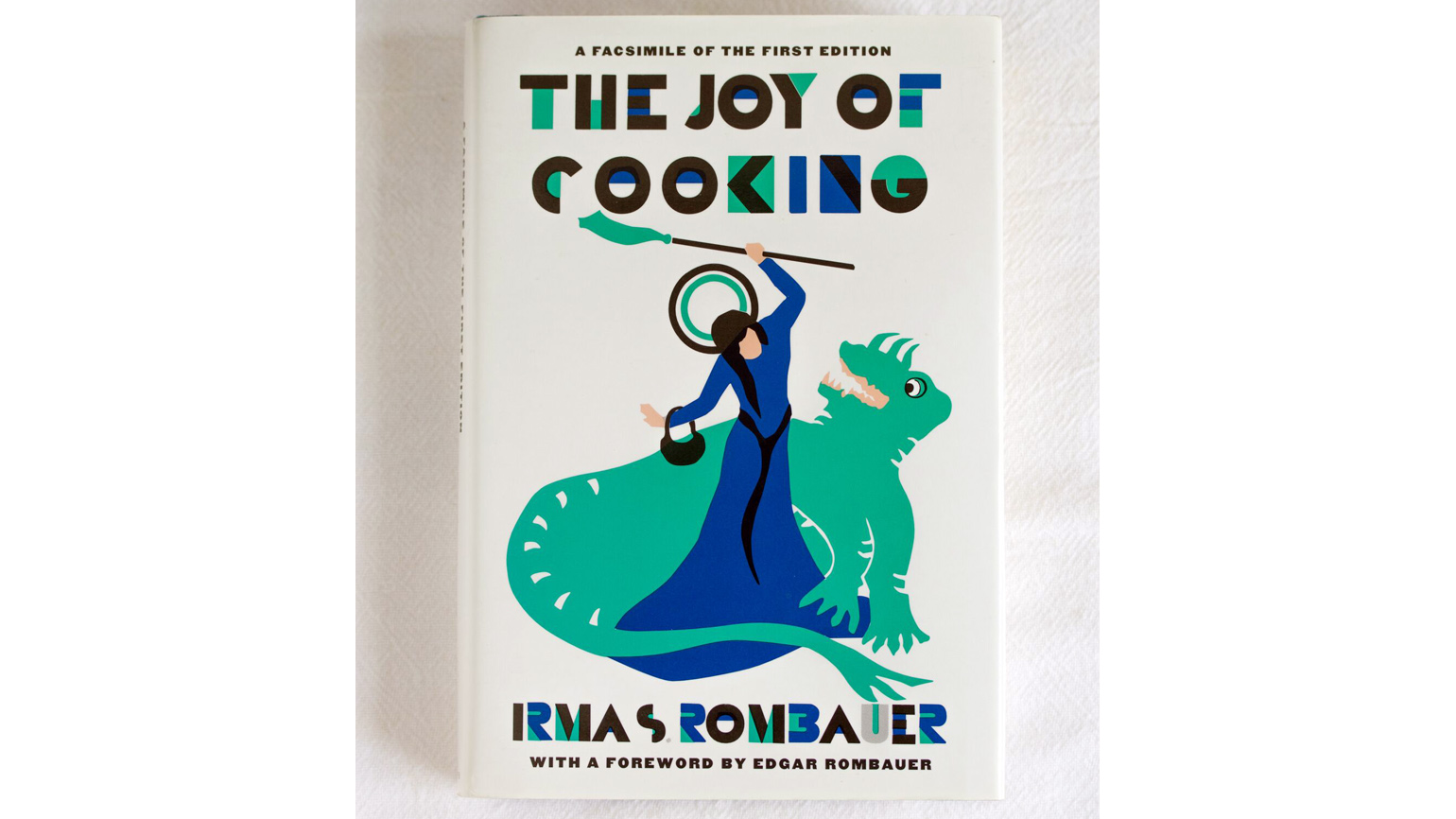
The History—and family—behind America’s most beloved cookbook, The Joy of Cooking, which was first published in 1931.
.
Embrace God's truth with our new book, The Lies that Bind
The History—and family—behind America’s most beloved cookbook, The Joy of Cooking, which was first published in 1931.
.
Hi. I’m Kim Carpenter, and this is my lovely wife Krickitt. And we’re the true story behind the movie “The Vow.”
[MUSIC PLAYING]
Our story began in 1992 when I called to order a set of coaching jackets for my baseball coaches. And my wife answered the phone on the other end, and most bubbly personality in the world and just a lot of fun. And I ordered more jackets than a man could wear in a lifetime. But needless to say, we were married a year later.
And 10 weeks after we were married, we were involved in a horrendous automobile crash that nearly killed us both. It critically injured us. Krickitt suffered much more severe damage in the form of a brain injury than I. And she went into a coma. 21 days later, she awoke. We started asking her some questions. Who’s your husband? Got to that question, and she said, I’m not married.
It wasn’t until later that we discovered, because of my traumatic brain injury, that I lost about a year and a half prior to the car accident till about four months after. So all of the memory of meeting, dating, and marrying my husband was completely wiped out.
But I was still married to him. And you know, I made a vow– in good times and bad, sickness and health. And I made a vow before God. And that to me was a promise to keep. So we figured we’re gonna have to figure this thing out. I mean, you know, divorce was never an option. I was going to be committed to the vow that I had made and the promise that I had made to God.
We’re not the perfect couple. We argue. We fuss. You know, we get upset at one another. We’re not this some miraculous couple that the world has tried to portray us to be. We have faults. And you know, we’re sinners saved by the grace of God.
But along the same lines, there was a time that I became very bitter at the Lord. I was very angry. I felt that I was in the deepest of the trenches of just woe is me, nothing else that could happen. And the Lord placed in my life two different families that were much worse off that humbled me to no end.
And I soon learned that, you know, we might be having it bad, but there’s a lot of other people that have it really, really bad and much worse. And so that in itself yet was another message.
The Lord put a social worker in our hands. And he was able to rivet down the fine issue of the fact that she didn’t have any memory of me. And when that day happened– and I’ll let you talk about that.
When the social worker discovered that I had lost all the memory of meeting, dating, and marrying my husband, it was finally like someone put two and two together for me and like an explosion went off in my head. And I’m like, that’s it. No wonder why this is so weird.
And so then I looked over at this man that I had been living with for months and months and months, and I was able to say, I don’t know who you are. I have no memory of you. And that was the day really when I think our recovery began, in a sense.
That’s really where our relationship began to grow again. And that counselor also suggested, why don’t we date and redo our wedding so that I would have a memory to hold onto that I actually did give him my hand in marriage. And from there, we still had challenges for years to come, and we still do. Because marriage is work. It’s not something that happens easily. You have to invest in it.
You know, to have a movie made about you for keeping your word is pretty awesome. To be able to write a book for the world to read about how God has worked in your life and your faith, to me, that is really a wonderful thing and a great opportunity.
The world has tried to make me to be some sort of hero for being this guy who stuck by the girl, and it’s remarkable and heroic and things like that. But the bottom line is that we look at people and tell people, we simply did what we said we were going to do. And for us, it’s kind of sad that we live in a world that we’re getting all of this attention for doing what we said we would do.
And you know, you can see the movie that’s inspired by our story, but the book truly has the true events of our story and our true story. And I think when you read it, think to yourself, what would I do if I was in this same situation? And challenge yourself to see what you would do. Because really, we just did what was expected of us from the Lord, which was to stay true to our word and to stay true to our vows.
[MUSIC PLAYING]
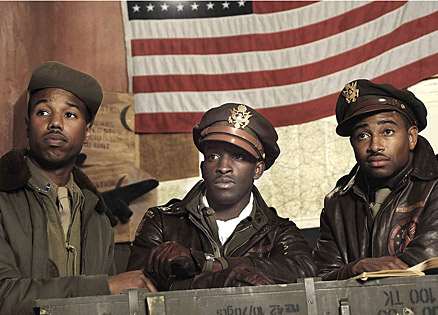
Finally, a remarkable chapter in American history is coming to the big screen.
Based on the inspiring real-life story of the Tuskegee Airmen, the new movie Red Tails chronicles the struggles and triumphs of the first African-American squadron of aviators in the U.S. military.
During World War II, a time when the country was still in the grips of Jim Crow laws, the Tuskegee Airmen fought for the right to fight for their country. In their struggle for respect and equal opportunities in the military, they banded together and supported one another through prayer and their belief in each other.
At the time, military policy kept African-American pilots grounded, claiming they “lacked qualifications” to carry out important missions. When the military brass finally relented and allowed them to fly, it paved the way not only for integration within the Army, but eventually within the country at large.
Which is not to say that Red Tails is just about friendship or politics; it’s also an action-packed adventure, with breathtaking aerial dogfights and cutting-edge visuals (Red Tails’ executive producer is George Lucas, whose Lucasfilm creates some of the best special effects in the world).
Ultimately, Red Tails is a story of perseverance and hope, camaraderie and an inspiring group of men’s belief that anything is possible.
Bonus Video: Watch as director Anthony Hemingway explains the importance of prayer in his life and in the movie. Plus actors David Oyelowo and Marcus T. Paulk describe the faith journey that Lightning (Oyelowo) takes. Actor Elijah Kelley even relays his personal story of how a little bit of divine intervention may have helped him earn the role of Joker. Watch it now!
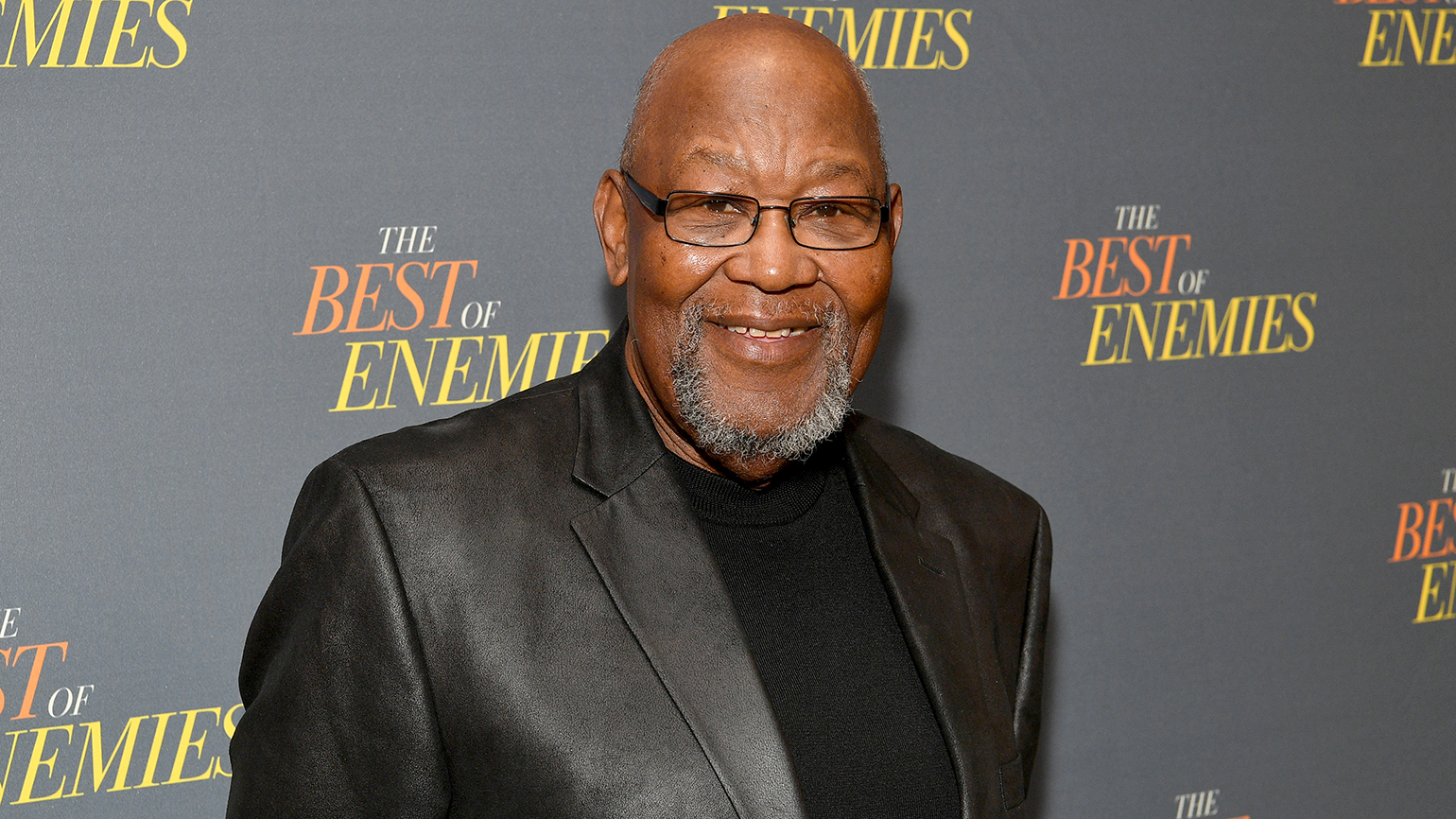
The Best of Enemies, a new movie starring Taraji P. Henson and Sam Rockwell, tells the story of how an unlikely friendship developed between Ann Atwater, an African American activist, and C.P. Ellis, a Ku Klux Klan leader.
A charette—a meeting in which all members of a community get to vote on the outcome of an issue—sparked Ellis and Atwater’s friendship. In 1971, the city of Durham held a charette to determine whether Durham schools would desegregate.
Bill Riddick, who ran a consulting firm and had successfully facilitated several charettes in other communities, was the organizer who brought Ellis and Atwater together. Riddick chose Atwater and Ellis to co-chair the charette because of their leadership roles in Durham. The charette lasted ten days and at the final meeting Ellis tore up his KKK membership card and voted to desegregate Durham. Ellis and Atwater remained friends for the rest of their lives. Atwater even delivered the eulogy at his funeral.
At the time, Riddick was surprised by the outcome, but in the years since, he has come to credit a higher power with what happened in Durham during those 10 days.
“Forty-eight years ago I really thought it was me,” Riddick told Guideposts.org. “As I have become more God-fearing and have worked harder in church the last 20 years, I realize that the Lord gave me a grace and helped me.”
Riddick believes Atwater, a devout Christian, had a much better sense of God’s presence in their midst.
“I didn’t realize when we got started that Ann was extremely religious,” Riddick said. “But now I look back at it, she had a lot more sense than I had about what she was doing.”
While the friendship between Ellis and Atwater became the subject of a book, play and now, a movie, Riddick moved on, continuing his work in other communities and working in student health at the University of North Carolina. He didn’t see the pair again until nearly two decades after the charette.
Now 81 years old, Riddick’s role in the story is finally coming to light, and he was able to offer guidance and input on the film, consulting with Babou Ceesay, the actor who plays him in the movie.
“It is strange to see somebody playing you,” Riddick said. “But I had the opportunity to talk to him during the film. He took my notes and changed his style. He came as close as I could come to being myself.”
The movie focuses on the relationship between Ellis and Atwater and the transformation both of them undertook. But Riddick also had to change in order to successfully facilitate the charette.
“I had as much bias as they had,” Riddick said. “Obviously my bias with [Ellis] is easy to sort out. But I didn’t particularly like the way Ann looked at things. So the first thing I had to do was get rid of my own biases.”
Riddick vividly remembers a realization he had after the first day of discussions in Durham.
“I went home that night and said, ‘I got the same problem that these two people got,’” he said. “And until I’m able to harness my own feelings and have greater respect for these individuals, then I’m not going to be successful.”
The experience changed the course of his life.
“From that day, I have tried to do that as a human being to accept every person for who they are,” Riddick said. “Even if we disagree, that doesn’t mean they’re a bad person.”
The Best of Enemies has given Riddick the chance to reflect on an experience that changed a city and many lives, including his own.
“I’ve lived a long time. I didn’t recognize how fortunate I have been until I became a believer,” Riddick said. “I just thought I was smart and that I could do things. And I realize now that none of that was mine. And I’m so grateful.”
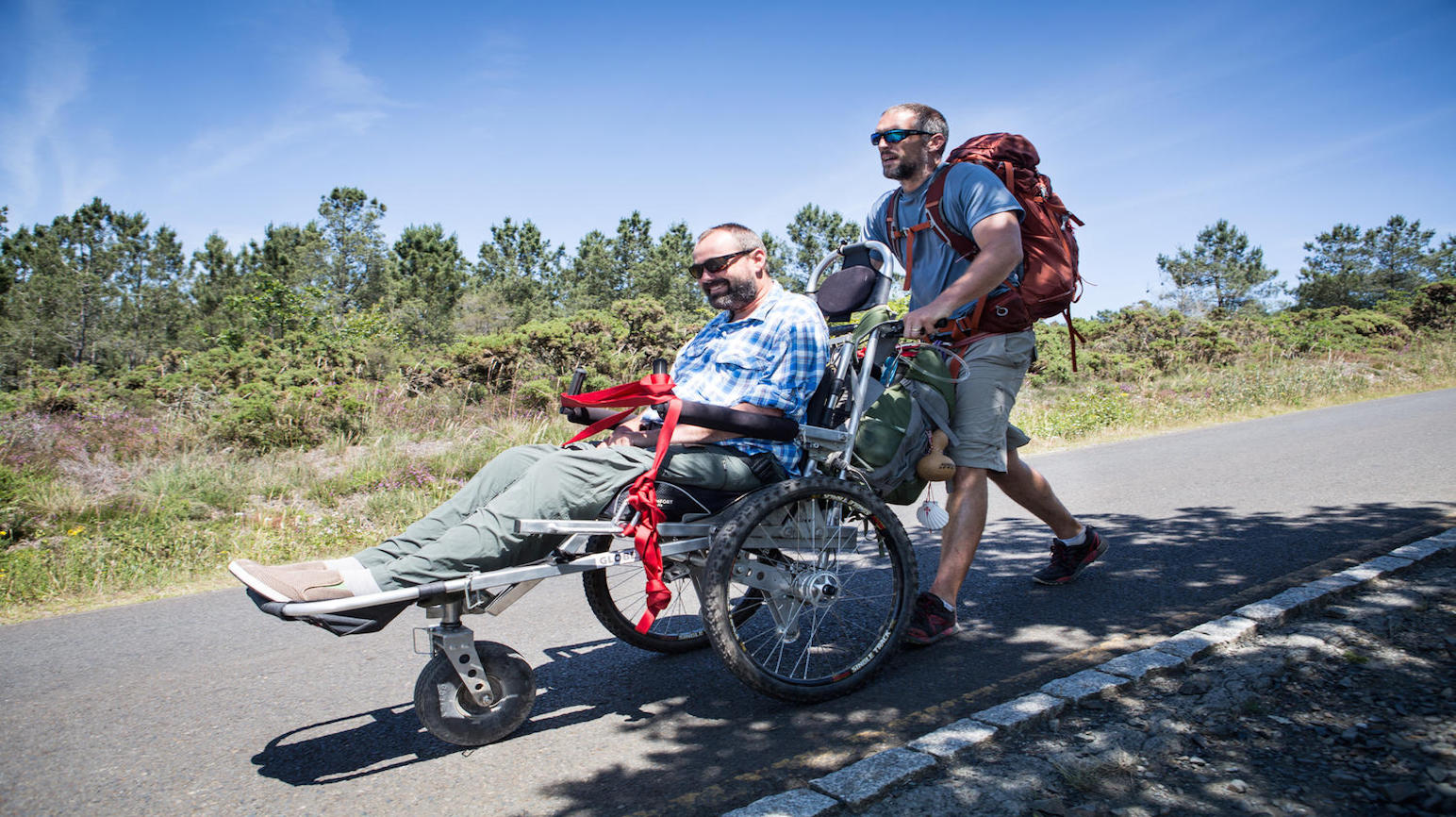
On Thursday, November 2, for one day only, lifelong best friends Justin Skeesuck and Patrick Gray will screen their documentary, I’ll Push You, in theaters across the country. It’s the story of their incredible—and seemingly impossible—journey through Spain’s famous El Camino de Santiago.
Many people have hiked the El Camino—a network of ancient pilgrim routes—but few have done it like Justin and Patrick. Justin has a rare and progressive autoimmune disease, Multifocal Acquired Motor Axonopathy, that means his muscles do not function typically, and he has been unable to move his upper and lower body since 2010. But once he shared his goal with his best friend, Patrick didn’t ask how Justin could achieve that goal, he simply said to Justin, “I’ll push you.” With their faith in God and determination to see this journey through, the duo successfully hiked the El Camino together for 34 days, with Patrick pushing Justin through the rough and rocky terrain.
In 2015, Guideposts.org spoke with Justin and Patrick about the miraculous ways God showed up to confirm that this journey was one they were not only meant to take but also to share with the world. At the last minute before their trip, they were able to get a film crew to join them on their way to Spain and document the excursion. They’d shared with Guideposts.org their desire to release the film about faith and friendship. This week, that desire becomes a reality. Proceeds from ticket sales will also benefit the Muscular Dystrophy Association.
Guideposts.org caught up with Justin and Patrick again to discuss how their lives have changed since their trip and why audiences need to see I’ll Push You.
GUIDEPOSTS.ORG: What does it feel like now that you’ve reached another goal on your El Camino journey by getting your documentary distributed nationwide?
JUSTIN SKEESUCK: I think we’re at the point where we’re real excited. So many people are excited to see the film. It’s very humbling but there’s also a lot of weight on us to get people out of their homes and out to see the film. But [to get to this point is] surreal. I never thought a theatrical release would allow me to be able to support [the Muscular Dystrophy Association,] an organization that has been there for me from the beginning. The funds we raise [selling tickets to the one-night screening] will help with research for cures. It’s very, very cool. It’s going to be such a wonderful night. We’re looking forward it.
GUIDEPOSTS.ORG: What’s the message you want people to take away from this film?
PATRICK GRAY: It’s been interesting to watch the reactions of audiences when we’ve done private screenings of the film. There’s not one take away. The common thread people are walking away with is the desire to have more meaningful relationships. The biggest takeaway is we all have the capacity to invite people into our lives and be willing to engage with each other in more meaningful ways.
GUIDEPOSTS.ORG: What’s your advice for people on how to deepen their relationships?
PG: There’s no set recipe, or magic sauce; for us, it’s been about being very intentional. You have these people in your life, but how much time and energy are we willing to put into truly stepping into vulnerability and allowing people to know us? It’s the moments of Justin saying, “Hey, I can’t do this on my own.” It’s allowing people to love all of who we are, to be vulnerable and open and honest. Christ knows all of who we are, so we have to willingly let people be all of who they are and love them anyway. It’s work that is worth it. Your joys are multiplied and your pain and struggles are divided.
GUIDEPOSTS.ORG: How have your lives changed since returning from this trip and getting this film together?
PG: When we came back, I knew that I was not going to stay in my job for very long. We got back July 2014 and I put in my notice in October and left in January 2015. When I came home from work in mid-October my wife said, “You need to quit; it’s time.” That was a very clear affirmation that we’re on the same page so we talked to the kids about it and even though I was letting go of a lot of certainty, the job was having a negative impact on my family because of how I was letting it affect me. Now, I have so much more time with my family and now the work stress comes from something we’re passionate about [traveling the country speaking about I’ll Push You with Justin]. Despite uncertainty there is peace calm and joy in my house that has not been there before. You ask my 3 kids what they think, and they’ll say, “Ok, we can’t do some of the things we did before,” but they got their dad back.
JS: I didn’t have a job like Patrick did. I’ve been at home since my middle son was born, so 12.5 years I’ve been home. The biggest difference is traveling. [Patrick and I are] not gone for weeks on end, but my wife gets a break she doesn’t have to care for me when I’m on the road. Sometimes, our wives get to travel with us. My wife is truly remarkable. She supports me and says, “I love you,” and we figure it out as we go.
GUIDEPOSTS.ORG: There is a caregiving element to your friendship and also between you and your wife, Justin. How has caregiving impacted your relationships?
JS: In my role in my marriage with my wife, I recognize wholeheartedly she’s going way above and beyond what a [typical] spouse does. She has to be healthy for us to have a healthy marriage. So, my role in our marriage is to make sure she gets the time that she needs to be healthy. It takes a lot of humility in order for me to get there.
For example, in two weeks, she wants to go to a women’s retreat. That requires someone to come in and care for me in the way that she normally does so that she can go get recharged. In order for me to do that, sometimes Patrick helps and in this case it’s going to be my parents. It’s nothing more humbling than being 42 and having my parents wipe my backside. But it’s something I need to have done so I can suck it up for a few days so that my wife can be recharged to do what she does for me.
It’s a two-way street. It’s not just me taking from her. I’m always looking to take care of her too. She needs that. She deserves that.
PG: My background is in nursing, so I spent a lot of time bedside, and it’s different when you’re caring for your friend because there’s an intimacy that doesn’t exist with a patient. There’s a tendency [as a caregiver] to give more than you’re capable of and people get worn out, they get burned out. My ability to be a caregiver [for Justin] gives Kristin a break. It’s not a gift that I give it’s one that I get. When you open up and willingly give to someone, there’s a remarkable amount of reciprocity that happens when you get to help somebody.
There are so many times that Justin is, in turn, helping me. Whatever struggle we deal with, there’s a space where his thoughts, his emotions, his words teach me or coach me to be a better person. That’s what we do for each other—willingly give and willingly receive.
Everyone is talking about it. Which is why I wasn’t going to. Yet the Detroit Tigers pitcher Armando Galarraga’s imperfect perfect game arouses passions that go beyond baseball and sports and speak to our notions of perfection, fairness and tradition. That’s why I want to know what you think about the controversy.
Last Wednesday night in Detroit pitching against the Cleveland Indians, Armando Galarraga did what has only been done 20 times in the history of major league baseball (and, amazingly, twice this season): He retired 27 consecutive batters without a hit or a walk. Or appeared to. With two outs in the ninth—just one out from perfection and baseball immortality for Galarraga—Jason Donald, the Cleveland shortstop, hit a routine ball to the right side of the infield. First baseman Miguel Cabrera fielded it cleanly and threw to Galarraga covering first base. It was a close play but Galarraga clearly beat Donald to the bag and had his perfect game.
That is when fate—in the guise of umpire Jim Joyce—stepped in. “Safe!” he barked, and the home crowd hushed for an instant before exploding into boos and howls of righteous outrage. Joyce blew the call. It didn’t matter that the Tigers went on to win the game, and in the final analysis that’s what counts. Joyce had made what people were calling the worst call ever. He’d obliterated perfection. He destroyed history.
Replays bore out the obvious. A chagrined Joyce admitted his mistake. Donald agreed he was out at first. But replays, except for home run calls, are not binding in baseball. The call stood. The commissioner, Bud Selig, refused to intervene. To reverse an umpire’s call would be to reverse 160 years of tradition. No, you couldn’t do that, not even for a perfect game.
So, who’s right?
Traditionalists say that an umpire’s call is final; it’s part of the game, just like an out or a hit. Baseball is a game of imperfection. The best hitters fail 70 percent of the time. Pitchers routinely miss the strike zone. And umpires blow calls. On Wednesday night you can be assured that Joyce’s umpiring blunder was one of several made throughout the big leagues. Baseball is a most human game, and humans make mistakes. Can you even mention the words perfect and human in the same sentence?
Besides, what about all the other missed calls that altered baseball history? Do you go back and change them? Is that fair?
The reversalists (I made that word up, folks) think Selig is propagating a flagrant injustice. Why not, in the name of fairness, make an exception? Wouldn’t that be in the best interests of baseball? Wouldn’t that be easier to explain to your kids? You don’t have to change everything, just this one massive error, in the name of justice. It would give Galarraga his well-deserved perfecto and get Joyce off the hook, who will otherwise forever be vilified as the ump who blew The Call.
Those are the choices. Are you a Traditionalist or a Reversalist? Let me know. And remember, this is about more than just baseball.
It was the week before the Whiteside County Fair. One-year-old Gabe was finally down for his afternoon nap and my three older boys, 14-year-old Logan, 10-year-old Grant and four-year-old Samuel, were spread out in the living room, working on their drawings, paintings and collages for the hobby contests. Entering was a family tradition and the three of them were dreaming of shiny blue ribbons.
I would’ve been too—after all, my chocolate chip cookies had won first place two years running. But this year the boys had signed up for five projects. Each. I was totally exhausted, my neck tight with tension. My only prayer was to get through this week.
The front door opened. My husband, Lonny, kicked off his boots. “Looks like Project Central in here!” he said, then turned to me. “How come I don’t smell your chocolate chip cookies? Don’t you usually have us taste test a batch?”
“I’m not making them this year,” I replied, collapsing into a chair.
“I know how tired you must be, especially with the baby. But no cookies? Shawnelle, you’re the Chocolate Chip Cookie Queen. You have to make them.”
“There’s too much to do. We’ll be lucky to get the boys’ projects finished in time,” I said.
Lonny gave me a long look. “Well, then, I’m going to bake them and claim your blue ribbon.”
“Like it’s that easy,” I said. Lonny couldn’t be serious. He’d never baked a thing!
He shrugged. “Can’t be too hard.”
“You don’t have the recipe,” I said.
“I have my own,” Lonny replied.
“I changed my mind,” I said. “I’m entering too.”
“Are you sure about that? You’ll have some competition.”
“Bring it on,” I said.
A few evenings later Lonny got home from work and announced, “Time to bake my cookies!” The boys ran to the kitchen. I did too. Canisters, measuring cups and mixing bowls cluttered the counter. A cookbook was open to a page with “Blue Ribbon Cookies” across the top.
“This recipe calls for three helpers,” Lonny said.
“Oh, no, Dad, we’re not helping you take Mom’s ribbon,” Grant said. “Besides, only she has the right recipe.”
“Yeah,” Logan added. “We just came to watch.”
I leaned in the doorway and hid a smile. “That’s okay,” Lonny said. “Let’s see. Step One: Massage two sticks of butter.” He hummed as he kneaded the wrapped bars. The boys giggled.
“Step two, add three eggs…but only after you spin each one like a top,” he said, handing one to each boy. They cleared part of the counter and spun their eggs. So much for them helping!
“Careful,” I said. “You’ll make a mess.”
“You just stay back there,” Lonny said. “I don’t want you stealing my secrets.”
I laughed as I left the kitchen. And I couldn’t help laughing again that night when I baked my batch of cookies. Thinking of Lonny’s antics melted away the tension. I even had enough energy to help the boys wrap up their projects.
Then it was fair day. The Ferris wheel turned lazily in the blue sky. The air was sweet with the scent of funnel cakes. Vendors bellowed. Lonny and I walked down the dusty midway, the boys ahead of us, comparing the ribbons they’d won earlier that morning. We finally reached the blue-and-white pole barn where the baked goods were judged. Rows of lattice-topped pies, frosted cakes and brown breads were on display.
The boys rushed to the cookies. I saw my batch. They were right out front. And decorated with a first-place ribbon! I scanned the rows for Lonny’s cookies. They were in the back. No ribbon.
“You won, Mom!” The boys wrapped me in hugs. Then Grant said, “Dad, I’m sorry you didn’t get the blue ribbon. I know how hard you worked.”
“It’s okay,” Lonny said. “I got just what I wanted. Look at the smile on your mom’s face.”
I reached for Lonny’s hand as we strolled back down the midway. The shiny blue ribbon was nice, but I knew I’d already been given the best prize. The real prize. A husband who truly understands what I need, sometimes even better than I do.
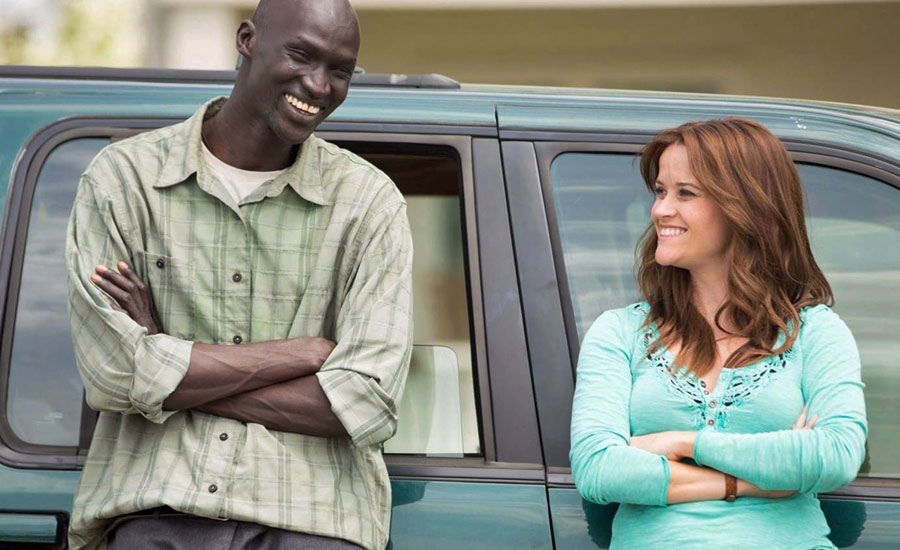
There’s an African proverb that says, “If you want to go fast, go alone. If you want to go far, go together.” That’s the line that closes the movie The Good Lie, which stars Reese Witherspoon, and though the words only appear once on the screen, their meaning can be felt throughout the 112 minutes of the movie.
They’re there when gunslingers ravage a Sudanese village, killing mothers and fathers and orphaning their children. They appear again as group of young boys and their sister walk hundreds of miles, battling nature, hunger and thirst in order to find somewhere far away from their violent homes. They’re even present when a group of refugees get a chance at a new life, an ocean away, in a strange land with even stranger people. They are the all-encompassing message of The Good Lie and they’ll stay with you long after the credits have rolled.
The film, directed by Philippe Falardeau and costarring House of Cards alum Corey Stoll, could’ve easily been another tale of white men and women serving as saviors to those of color. Witherspoon’s character, Carrie Davis, works for an employment agency and is tasked with finding three young men—known collectively as the “Lost Boys”—jobs after they’ve been transported from their war-torn country of Sudan to Kansas City, Missouri. Instead, the movie does something even better, and braver; it eschews its Hollywood A-lister in favor of good story-telling.
For Witherspoon fans, you get your healthy dose of the actress. She’s both neglectful and nurturing in her attitude towards the “Lost Boys” and her own character’s journey is well-sussed out during the film. But the real stars of the show are the men and children who must convey the struggle, heartbreak and loss 3,600 other real-life refugees experienced during the civil war that took place in Sudan in the 1980s and continues today.
After burying friends, watching their brothers be taken as child soldiers, swimming through rivers littered with dead bodies and surviving over a decade in the harsh conditions of a Kenyan refugee camp, Mamere (Arnold Oceng), Jeremiah (Ger Duany), Paul (Emmanuel Jal) and Abital (Kuoth Wiel) are given a golden ticket to America.
Despite the trials they’ve already endured, they must again face cruelty, this time at the hand of the US government, as the boys are parted from their sister before their new life can begin. This separation is even harder to take than some of the atrocities you watch the children go through in the beginning of the film and it only serves to show that nothing will come easy for these young men who have already had it so rough. From temptations to unfulfilling careers and the overwhelming feeling that what they went through doesn’t matter to many people, the Lost Boys struggle with the reality of their American Dream.
Culture-clashing moments inject the movie with a healthy dose of humor. From fearing escalators to hearing the “Why’d the chicken cross the road?” joke for the first time, to reveling in the fact that Carrie is unmarried, with no children and surviving on her own, watching the men adjust to life in America gives the audience some much needed laughs in spite of the film’s heavy content.
Oceng and Duany are brilliant as Mamere and Jeremiah. In his first American starring role, Oceng easily carries the film as his emotionally complex Mamere weighs his dreams of going to college and becoming a doctor against his sense of responsibility to his family, all while battling his own survivor’s guilt. The sacrifices he’s asked to make for his family are incredible and it’s his scene at the end of the movie that will have you reaching for your tissues. Duany’s Jeremiah is the spiritual center of the film, with a tight grip on his Bible and desire to help those in the community. His spiritual journey will touch your heart.
There’s another wonderful moment when Jal’s Paul is explaining the scars on his arm to his co-workers. He tells them a lion’s teeth made the marks, which the men immediately rebuff as a lie, but as Paul goes on to explain how he tried to save his brother from a pack of lions ready to eat them both, a sudden understanding dawns. Life experiences divide them so deeply that they could never even imagine the horrors Paul and his brothers faced. Jal beautifully captures that sense of grief and loneliness with just a look.
What’s amazing about all three characters is their unwavering faith and how heavily they rely on it. Though they’ve been tested with things no person should ever have to experience, they never once question God’s plan for their life. It’s their optimism and love for each other that’s so inspiring.
But what you absolutely cannot ignore while watching the film is the back-story of the actors themselves. Both Duany and Jal are actual children of war, refugees who experienced many of the same things their characters go through in the film, and Oceng is the son of refugees. All three are so connected to the history of this story that they can’t help but be authentic in the emotions they convey. They’re the heart of the film and it’s their own stories as well as the stories they tell that will leave such a lasting impression.
The Good Lie opens in select theaters Friday, October 3, and releases everywhere October 24th.
According to Volunteers of America, over 600,000 people are currently homeless and even more live in poverty. They’re often an underserved, unnoticed part of America. Many of these families live in pay-by-the-week motels and struggle to make ends meet. Community First! Village is hoping to help change that.
Community First! is a 27-acre master-planned community that provides affordable, permanent housing and a supportive community for the disabled and chronically homeless in Austin, Texas. It’s an offshoot of Mobile Loaves & Fishes, a Christian Ministry that takes to the streets to feed and congregate with people in need.
“It all started with our founder, Alan Graham,” Community First! Director Ed Travis tells Guideposts.org. “[He dreamed] about just getting one person up off the street, moving him into an RV. Now we call Community First! Village a trailer park on steroids,” he says. “We have people coming, living, moving off the streets and moving into permanent housing with us.”
Part of what Travis does at Community First! is to help coordinate events for the homeless community and the community at large, bringing people together and creating paid work opportunities for residents of the Village. One event is movie night. They arrange movie screenings at the amphitheater on the Village’s property, and they offer movie screenings open to the public.
When The Florida Project came across Travis’s desk, he thought it would be perfect to screen at the Village.
From writer-director Sean Baker, the drama, which had a limited debut in theaters last month, follows a young girl named Moonee as she spends her summer in a community of extended-stay motel guests in Florida. The film tackles poverty through the innocent, imaginative eyes of a six-year old. It also portrays a population of people who are normally ostracized by society in a humane, honest way.
“I just feel like a lot of what [Sean Baker] was able to do was really depict people that seemed fleshed out and real, not necessarily portray them with a judgment attached,” Travis says. “It’s just like, here’s life on the edge of homelessness, on the verge of homelessness. Those characters feel relevant and real, and they certainly felt genuine to me and my experience working with folks on the street.”
He thinks the film had a huge impact on the people of the Village and hopefully taught those who don’t live there a bit about the homeless, their triumphs and their struggles.
“People are trying to survive. That’s what it comes down to,” Travis explains. “People are doing what they need to survive and it’s just hard. People find different ways to cope.”
He hopes the film and the work his team is doing at Community First! might encourage others to reach out to the homeless in their own community and start a conversation.
“What [we] live and breathe is just being in relationship with people and not having a transactional approach to interactions,” Travis says. “So just talking to people like they’re human beings, offering dignity where you can, I think that’s sort of what the individual can do.”
Beth Pattillo is the author of the novels Jane Austen Ruined My Life, Mr. Darcy Broke My Heart and The Dashwood Sisters Tell All, fictional accounts of how Austen’s work helped shape the lives of four contemporary young women.
What kind of Christian was Jane Austen?
We know that she was the daughter and sister of clergymen. She grew up in a family that practiced their faith through regular worship and by helping people in need. From her surviving letters, we know that she and her sister often sewed or provided clothing for her father’s parishioners.
She left behind one prayer that she penned; we don’t know if there might have been others. Upon her early death, at 41, she was afforded the honor of a cathedral burial not because of her fame as a novelist—her authorship was still anonymous at the time—but because of her exemplary life among the clergy in her little corner of the world.
As I have studied Jane Austen and her novels, I have wondered why she didn’t write more about her faith. Clearly, her Christian beliefs motivated her. But to try and identify what her faith might have meant to her, we have to look at her novels. In her stories, we find the key to the faith of Jane Austen.
Austen’s characters are capable of great change. Their journey from a narrow understanding to self-awareness is what makes her stories so fascinating and so enduring. Whether it’s Elizabeth Bennet overcoming her prejudice of Mr. Darcy (Pride and Prejudice), Emma Woodhouse coming to terms with her self-delusion (Emma) or Marianne Dashwood finally recognizing what makes a man a hero (Sense and Sensibility), Austen’s characters are good people who become better ones.
Austen values integrity, humility and understanding, and such qualities are rarely cultivated without some hard lessons. Her main characters begin with good hearts and end their stories with more capacity to love and to accept others because of what they’ve learned. Her heroes and heroines are transformed by love, an idea central to Christianity.
In her surviving prayer, Austen writes, “Thou art everywhere present, from thee no secret can be hid. May the knowledge of this, teach us to fix our thoughts on thee, with reverence and devotion that we pray not in vain.”
Austen’s faith may not call attention to itself in her novels, but it is “everywhere present” in her work, just like the love of God.
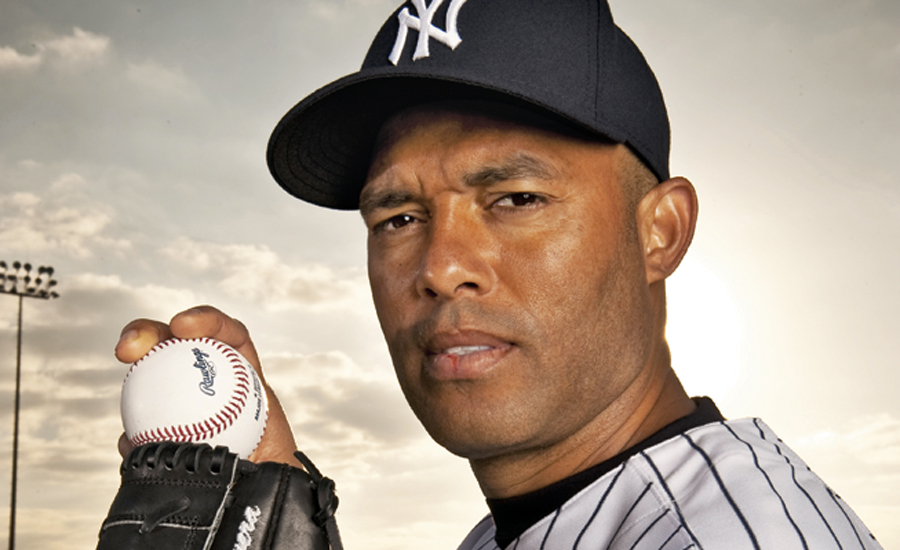
Mariano Rivera’s first baseball was a rock wrapped in fishing net and tape. His glove was a flattened milk carton. Growing up in a tin-roofed house in a tiny Panamanian fishing village, he gave little hint that one day, he’d be the greatest closer in baseball history.
At 18 he was earning 50 dollars a week on a fishing boat, playing various positions for a local team. One game, the manager thrust Mariano into emergency relief. “I got results that were way beyond my physical abilities,” Mariano writes in his autobiography, The Closer. That same year, he’d begun studying Scripture at the urging of a cousin.
Two years later, the New York Yankees signed Mariano to a minor league contract. He was a fringe prospect, with an underwhelming 87-mph fastball. In 1995, he was called up to the majors. In four starts, he gave up 23 runs. He was demoted to AAA Columbus.
There, warming up before a game, he noticed that his pitches had more zip than usual. A radar gun clocked his fastball at 98 mph, an impossible gain in velocity. Scouts thought the gun was defective.
Not long after, he played catch with another pitcher, who grew frustrated that Mariano’s throws kept jumping away. Mariano swore he hadn’t changed his grip. But he could not get his fastball to fly straight.
Mariano had found his cutter—a twist on the fastball that breaks sharply at the last second. “I did not spend years searching for the pitch,” he recalls in his memoir. “It was as if it dropped straight from the heavens.”
In 2009, Mariano and his wife, Clara, founded a church in New Rochelle, New York. Their way of giving back for the miracles that brought him from poverty to a sure spot in the Hall of Fame. Mariano’s 2.21 lifetime earned-run average is even more impressive considering he accomplished it with little more than one pitch in his arsenal. A pitch he believes came from God.
You don’t have to be a sci-fi fan to recognize the Vulcan salute from Star Trek: a famously difficult gesture made by raising your hand to form a “V” between your ring and middle finger, with the thumb extended out, accompanied by the phrase, “Live Long and Prosper.”
Actor Leonard Nimoy is credited with developing the greeting for his character, Spock. But its true origin came from a Jewish ritual that the actor witnessed as a boy:
The blessing Nimoy talks about is performed by a rabbi for people observing special occasions. The rabbi makes the “Vulcan” gesture with two hands, to form a Shin, the Hebrew letter that begins the word Shaddai, or “Almighty God.”
The prayer the rabbi says is this:
May the Lord bless you and guard you
יְבָרֶכְךָ יהוה, וְיִשְׁמְרֶךָ
(“Yebhārēkh-khā Adhōnāy weyishmerēkhā…)
May the Lord make his face shed light upon you and be gracious unto you
יָאֵר יהוה פָּנָיו אֵלֶיךָ, וִיחֻנֶּךָּ
(“Yāʾēr Adhōnāy pānāw ēlekhā wiḥunnékkā…)
May the Lord lift up his face unto you and give you peace.
Live long and prosper indeed. It’s easy to see how well that famous Trekkie phrase mirrors the ancient benediction.
What if Nimoy hadn’t stolen a peek at the rabbi? The rabbi hadn’t intended to inspire a fictional TV show and movie franchise. But the blessing did, in fact, do its job. It blessed young Leonard Nimoy with his character’s most memorable salutation.
Has a religious ritual inspired your creativity? What did you invent or develop based on something you witnessed at a service? Share your stories with us!