

Embrace God's truth with our new book, The Lies that Bind

The Church She Calls Home

Earlier this year I was in a church to film a movie, a historic church in Harlem with magnificent stained-glass windows and rows and rows of pews, with choir stalls and stacks of Bibles. Even though my own church was halfway across the country, I felt right at home.

Church was at the center of my life growing up. My family went to a Baptist church on the South Side of Chicago, and I think we spent more time there than at our house.

Monday nights we had Bible study, Tuesday nights were rehearsals for the adult choir, Wednesday nights the youth choir rehearsed (I sang in both choirs), Saturdays my mother folded and stapled bulletins, Sundays we were at both morning and evening services.

We were always there. And more important, our church family was always there with us, helping us stay close to God in good times and bad.

The movie was Black Nativity, based on the Langston Hughes play. I had the part of a single mother about to be evicted from her Baltimore home.

She’s beaten down by worries, especially about her teenage son. She’s had a falling out with her parents and hasn’t been back to New York City, where her dad’s a preacher, in years.

Still, she sends her son up there to live with them, to be in a safe place away from her problems. That’s why we were here filming.

I know what it’s like to pray for my child. My son, David, Jr., named for his father, has been incredibly blessed in his four years, but I think any mother, no matter how old her kids are, understands what it’s like to have hopes and dreams and prayers for them.

So many of the prayers I said as a girl were sung—and they still are. Our family was full of musicians. My uncle John was one of the lead musicians at church and directed the choir. My cousin Quentin could sit down at the piano and play any song ever written.

We’d sing one of my grandmother’s favorite hymns, like “How Great Thou Art,” or a gospel tune like “Be Grateful.” The words filled my spirit as much as the music did.

“Be grateful,” that gospel song goes, “because there’s someone else who’d love to be in your shoes. Be grateful, oh yeah, my God said he’d never, never forsake you.” Be grateful in everything, at all times, like it says in the Bible. Like I heard in church.

We marked up our Bibles, underlining key verses. We’d take them out and study them when the preacher preached. You’d find one of my mother’s carefully folded programs stuck between the leaves or an inscription inside for an anniversary, a birthday or a graduation.

That was a Hudson family tradition. If you were celebrating a big milestone or heading off somewhere, you were given a Bible.

My grandmother gave my uncle a Bible before he left to serve in Vietnam. When I went away to college my mother gave me my own Bible. It’s small, black, and the cover is worn to pieces, but you know the saying, the Bible that’s falling apart belongs to someone who isn’t.

I had it with me when I was on American Idol and I’d pull it out of my purse whenever I needed inspiration or guidance. Sometimes the other contestants would tease me about it. “Jennifer, you wouldn’t cross the street without your Bible,” they’d say. They were right.

These days there are Bible apps that make it easy to look up a verse. I use them to read something to David, Jr., or we play a Bible game on his iPad. But I still carry that little Bible my mother gave me everywhere. It’s a reminder of how my faith has carried me. Always.

That was how all of us felt in my family—my mother; my older brother, Jason; my older sister, Julia; and me. We had love, we had each other and we had God at the center of our lives.

Even after I grew up and my career took me far from Chicago, I’d still go back there. When I had my big audition for the movie Dreamgirls, a huge opportunity, you know where I went to pray? The steps of the church where I’d been going since I was born, the church where I found my voice.

Or when I won the Academy Award for my role in Dreamgirls, or had my first solo album released or got engaged to David, who did I want to thank? God, first and foremost. Then the people he put in my life to support and inspire me–my family and my church most of all.

They’d given me all I needed to make my way. I try to remember them and honor them in everything I do.

Especially my grandmother, who believed the best way to show her gratitude to God for her beautiful singing voice was to use it to serve him. My mother, who was utterly devoted to our family. My brother, who had such a generous spirit. He loved to barbecue, feeding the whole neighborhood.

And my nephew, Julia’s son Julian King, who was all about education. He was so smart and did his homework without being told. He changed his own bedtime from 9:00 to 8:00 so he wouldn’t be late for school. He had people call him “Dr. King” because he dreamed of being a doctor.

Julia and I started the Julian D. King Gift Foundation to provide children positive experiences in his honor. Every August 14, Julian’s birthday, we hold a “Hatch Day,” a name he came up with (we don’t know how). He loved parties and would send out Hatch Day invites to family and friends.

We celebrate his birthday by donating school supplies to thousands of kids in need. I think Julian would have been totally into getting kids as excited about school as he was. We hold an annual Christmas toy drive in his name too.

Now when Christmas comes I want to do all the things I did growing up, get the fireplace going, get our family together for a fish fry, gather around the piano and sing. And, of course, go to church for the Christmas play, with all the children carrying candles down the aisle and everyone singing carols.

There’s something special about Christmas, about celebrating the birth of Christ, a kind of beauty that brings people together, that heals the wounds only he can heal.

I got that exact same feeling there in that historic church in Harlem while we were filming. “Fix me, Jesus,” sings the character I play. It’s an outpouring of emotion, the kind of crying out to God we make when we’re brokenhearted, when our spirits are as low as they can go.

She goes back to New York for the first time in years, reuniting with her parents and her son. What a celebration follows, the choir leaping to their feet, clapping and singing. At last she’s back in the place that nourished her, that sustains her still. Church–the place I’ve always called home.

Download your FREE ebook, A Prayer for Every Need, by Dr. Norman Vincent Peale
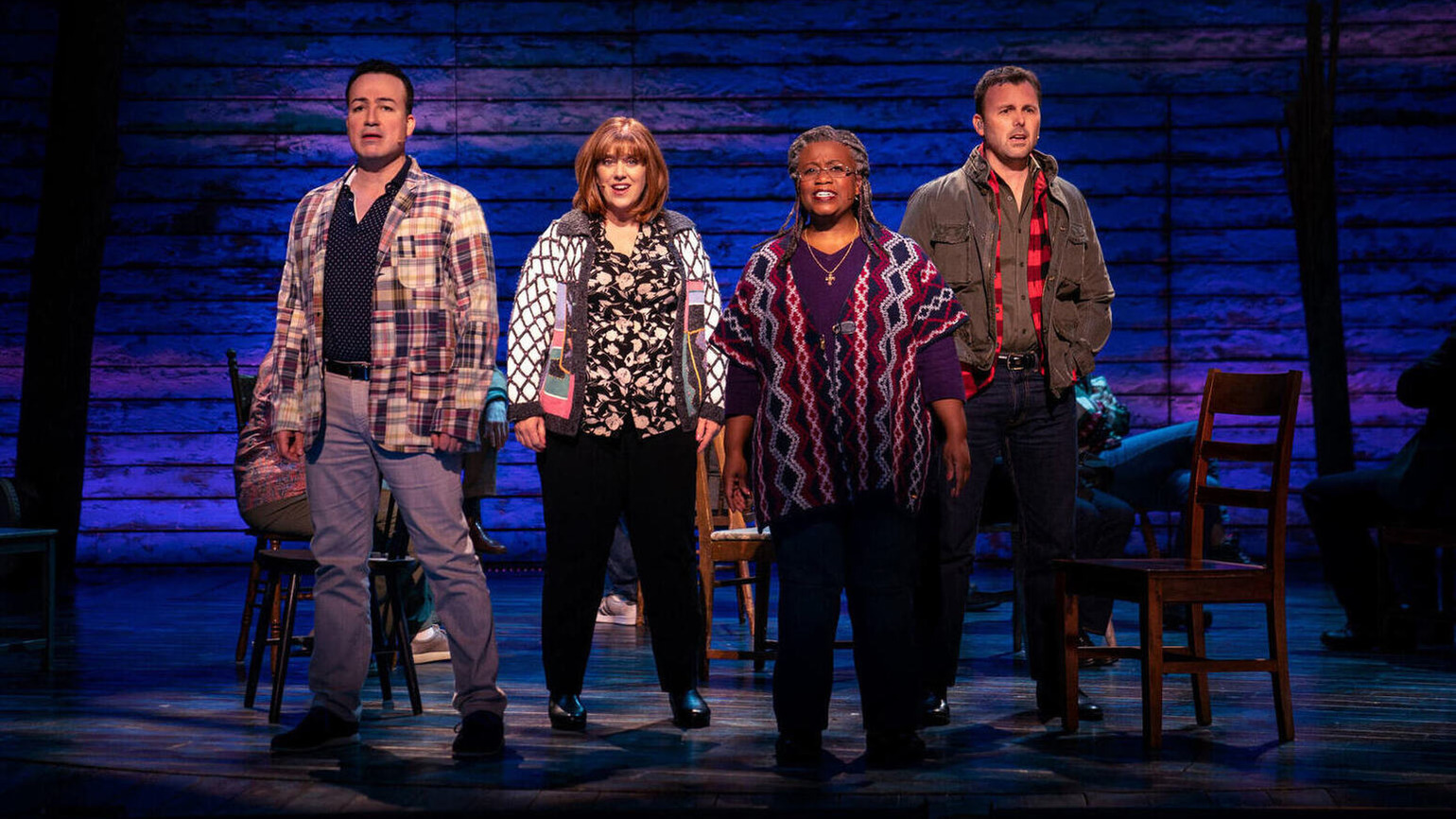
The Broadway Hit ‘Come From Away’ Comes to the Screen

“On the northeast tip of North America, on an island called Newfoundland, there’s an airport. It used to be one of the biggest airports in the world. And next to it is a town called Gander…”

So begins the Broadway musical Come From Away, the true story of how residents of the small Canadian town of Gander came together to help when 38 planes—carrying 7,000 passengers (and 21 animals) from around the world—were diverted to their airport on 9/11. The planes were sent there as a part of Operation Yellow Ribbon, a Canadian initiative to safely land planes at Canadian airports and clear the U.S. airspace on the morning of September 11, 2001. The large Gander International Airport was a natural fit. While it is quieter these days, in the 1950s the airport was one of the busiest in the world as it was an ideal refueling stop for pre-jet aircraft travelling between Europe and North America. During WWII, the airport was the main staging point for Allied aircraft heading to Europe. There were plans to tear the airport down, but the town – miraculously – hadn’t gotten around to it yet.

In 2017, Come From Away was nominated for seven Tony Awards; director Christopher Ashley won for Best Direction of a Musical. Now, to mark the 20th anniversary of the 9/11 terrorist attacks, the beloved musical is being filmed and will stream live on Apple TV+ starting on September 10.

The musical was written by Canadian composer-lyricists Irene Sankoff and David Hein. They were both in New York City on 9/11 and like many, were deeply affected by the experience. They traveled to Gander where they learned how town residents did not hesitate to open their doors to 7,000 strangers. They provided the stranded passengers with everything they needed —clothes, medication, baby formula, beds, and phones to call their loved ones. “There is a sense of collective responsibility to be good to one another that the people there were raised on,” Hein said in a recent interview. “And when the world needed it, they were there for them.”

The story also closely follows the stranded passengers, called “come from aways” by the Gander residents. It shows their confusion and horror after learning about the attacks, as well as how they eventually forged deep connections with each other. “This show is not just about the tragedy and the darkness,” says Astrid Van Wieren, who plays the character Beulah Davis, a Gander school teacher. “It’s about the cracks of light getting through, interconnectedness and our humanity.”

One way the passengers and Gander locals connected was through their faith. “We learned how the local library in Gander became this sacred place of worship for many different faiths,” said Sankoff. “We knew that was important to include.” They show this through the song “Prayer,” which follows various characters—Christian, Jewish, Muslim, and others—as they come to grips with the tragedy of 9/11 and pray to God for a sense of hope. “It took work to make the prayers of the world to harmonize together,” said Hein. “But it’s become a wonderful metaphor for the work becoming bigger than itself.”

Faith was particularly important for Q. Smith, who plays Hannah O’Rourke, a mother with a son in the New York City Fire Department. “In the Bible, it says faith is the thing that we cannot see, but the thing to hope for,” says Smith. “In real life faith gives Hannah strength, just like it gives me strength too.”

The musical’s screen premiere comes during the ongoing Covid-19 pandemic. “There’s never a bad time to tell a story about people being good to one another,” says Hein, “but right now it feels important to remind people of that.” That is exactly what the cast and crew hope the audience will take away from it – a sense of duty to one another.

“Newfoundlanders keep their doors open,” says Smith, “They ask, ‘how can I be of service?’ I hope that everyone will walk away as a Newfoundlander. That’s what this show is about – helping one another.”

For more powerful 9/11 stories, check out Guideposts’ collection here.

Come From Away is streaming on Apple TV+ starting September 10th. Check out the trailer below.

The 300th Win

When I was pitching in the major leagues I was known as "Knucksie," because I threw a knuckleball. You don't actually throw a knuckleball with your knuckles.

But that's just one of the many strange things about the pitch. Few pitchers can consistently control it, and fewer still can make a living throwing it.

Yet that's exactly what my brother Joe and I both did. We credit our dad. He's the one who taught me the knuckler—and just about every important thing I know.

Dad was a coal miner in Lansing, Ohio. He was a star pitcher in the local semipro league, throwing serious heat for his Polish lodge and earning the nickname "The Big Bear" because of his massive frame and oaken shoulders.

In his youth Dad could have thrown a grape through a brick wall. He was a local legend, and he quietly dreamed of escaping the backbreaking grind of mining for the glories of major league ball.

That dream came to a disappointing end one cold spring day when Dad, rushing from his shift at the mine and failing to warm up properly before a game, damaged his pitching arm permanently. Just like that, he lost a foot off his fastball.

He was about to hang it up when another miner showed him a pitch that didn't put a lot of strain on his sore arm. Dad became a knuckleballer. And though he never made it to the pros on his knuckler, he did show me how to throw it as soon as I was old enough.

"Son," he said late one afternoon when he got home from the mine, picking up the frayed baseball I was playing with in the yard, "you hold it like this." Coal dust speckled his massive right hand. At age 10, I could hardly imagine my hands ever being that big.

Cupping the ball in his creased palm, and arching his index and middle fingers, he dug his fingernails into the horsehide, making it seem almost as if the ball were being thrown with his knuckles. "The knuckleball's secret," he said, "is that it don't spin. Watch."

I backed way up near our tomato patch and held out my old Dizzy Dean glove. Dad wound up, reared back and delivered.

Wow! The ball seemed to have a mind of its own, floating, dipping, appearing almost to shift gears and change speed along its jerky trajectory before plopping into the webbing of my mitt then bouncing back out onto the ground.

"That's the knuckler," Dad said.

It was a thing of beauty. As I learned later, the lack of spin on the ball makes it more susceptible to air resistance as it travels along. A spinning ball will cut through the resistance. A knuckler reacts to it, floating and bobbing.

It's no 90-mile-an-hour fastball, but it still moves at a pretty good clip. I could understand why batters went crazy trying to hit it, why catchers could hardly hold on to it. The catcher and announcer Bob Uecker once said, when asked the best way to catch a knuckleball, "Wait until it stops rolling and pick it up."

I became a knuckleballer. Nearly every night after dinner, while my mom and sister, Phyllis, did the dishes and little brother, Jo-Jo, watched us from the front porch, Dad schooled me in the art of pitching. Not just the knuckleball, but how to react in given situations—man on first, runners in scoring position, behind or ahead in the count. He taught me everything he had dreamed of putting to use in the majors himself.

It paid off. I graduated high school in 1957 and in 1958 the Milwaukee Braves sent a scout over to the house to talk to Dad about a contract. Dad drove a hard bargain. He wouldn't let me sign without a bonus, and the Braves finally agreed to give me $500. "Takes me a month in the mine to earn that kind of money," Dad said to me later with a satisfied smile.

Then he grew serious. "Baseball is more than just fun, Son. Remember, you want to earn your dollar. You got to work for it."

A few years later Jo-Jo, whom we called plain Joe now that he was grown, made it to pro ball as a pitcher. Dad couldn't have been prouder. Two sons in the big leagues.

Joe and I were fortunate enough to go on to have solid careers. In 1985 we found ourselves together playing for the New York Yankees. What's more, by mid-September I was approaching 300 career wins, a hall-of-fame milestone for a pitcher, and, more importantly, the team was in the thick of a pennant race.

There was one problem: Dad was in the hospital, terribly sick. All those hard years in the mine had exacted a price. He had already lost a leg. Now he had internal bleeding, blood clots in his lungs, pneumonia, everything.

When Mom called to tell us Dad had slipped into a coma, she was crying so hard she could hardly explain herself.

Joe and I hopped the first plane home. We got to the hospital just after Dad received the last rites. The Big Bear was skin and bones, his dulled eyes half open, and a tangle of tubes attached to him. Joe and I stayed with him three days and nights, talking to him. But if he heard us, he gave no sign.

The fourth morning I faced a decision. I was slated to pitch that night—my three hundredth career victory if I won. There was a lot of media interest and fan excitement. Only an elite handful of pitchers had ever reached that many victories.

The season was winding down, and who knew if I would be on the roster next year? At 46, I was a relic by baseball standards. I wanted to help the Yanks win the division and bag number 300. I wanted it for Dad.

Yet how could I leave The Big Bear's side when he was so near death? He would want me to play ball no matter what, I knew, but I needed to hear that from him. I leaned over the bed and explained the situation. "Dad," I finished, "I'm afraid I'll never see you again. What should I do? Can you hear me?"

No response. Nothing. Just the rhythmic beeping of a monitor. I closed my eyes tight and prayed, Please, Lord, let him answer me!

"Dad…"

"Look!" Joe cried. "He's moving his fingers!"

Dad's fingers twitched on the sheets.

"Do you want a pencil and paper?" I asked. "Blink your eyes once for yes, twice for no." Dad blinked slowly, once.

Joe dug around in his bag and came up with a pad and pencil. Carefully we put them in Dad's hands. Very slowly he formed letters. After a few painstaking minutes, the pencil fell from his fingers. He had written: "WIN…HAPPY."

The effort had exhausted him, but Joe and I knew what we had to do. We caught the next flight back to New York, just in time for me to take the mound at Yankee Stadium. In my back pocket I had Dad's scrawled message. Nothing was going to stop me from winning number 300.

Nothing except the knuckleball.

I just didn't have a good pitch that night. As they say, my knuckler wasn't knuckling. Four games later, on my next start, I failed again to win number 300. On October 2 I got another no decision. Something had gone out of my knuckler. I wasn't getting batters out with it.

Between starts I rushed back to Dad's bedside. He was still in a coma. He hadn't responded to anyone since that day he wrote the note. I promised him I would give it one more try.

On October 6 I made my last start of the season, in Toronto against the Blue Jays. They had already beaten us out for the division title. It would be my last shot at 300 that year, perhaps forever. I made a hard decision. I laid off the knuckleball.

All through the game I fired fastballs, sliders, curves, change-ups. But I stayed away from the knuckler. I couldn't chance it anymore. They had the game on the radio for Dad in his hospital room. I wondered if he could hear the announcers talking about my not throwing the knuckler. It would mystify him.

By the bottom of the ninth inning I was pitching a shutout. Even the Blue Jays faithful were cheering me on. But it felt strange without the knuckler. Despite the cool, brisk breeze, perspiration dampened the sweatband on my cap. One out stood between me and number 300. I reared back and threw a fastball. The batter hit a rope to right center for a double.

Manager Billy Martin perched nervously on the top dugout step. I got two quick strikes on the next batter. One strike away. I called time, and my catcher, Butch Wynegar, trotted out to the mound.

"Whatya gonna throw, Knucksie?"

I paused. The answer was clear.

"Knuckler." Butch nodded and trotted back behind the plate.

If I was going to get that out I wanted to do it with a knuckler, Dad's pitch. I checked the runner on second then delivered to the plate. Strike three! My teammates mobbed me.

There was little time for celebration. Joe and I caught a plane back home soon after the game. We were dumbfounded to find Dad sitting up in bed, his eyes bright and clear. He had had a remarkable turnaround and the doctors were optimistic that he would recover.

Mom was beaming. "In the seventh inning," she related, still obviously stunned, "he suddenly looked over at me and said, 'Phil's pitchin' a heckuva game, ain't he?'"

I threw my arms around his shoulders. Then I handed him the game ball and thought about the day he taught me the knuckler. "This is yours, Dad." It was the least I could do, and the most.

Thank You Power

Not long ago I wrote a book called Thank You Power. It came out of a hunch that gratitude makes a huge difference in people’s lives. As a TV reporter for three decades, I’ve been sharing the stories of ordinary Americans, trying to make sense of the situations in which they’ve found themselves. It’s not always easy: the mother of a brain-damaged accident victim; the family of a teen killed by a drunk driver; the man battling a life-threatening disease.

But I’ve always marveled that certain people, even in the face of heart-stopping obstacles and the most difficult circumstances, are able to go forward with smiles on their faces and optimism in their outlooks. How is this possible? In each instance, it ultimately comes down to the same answer: They were grateful. They found something for which they could be thankful, because being thankful was a long-held habit.

I remembered those “Debbie, say thank you” admonitions from my mom and dad. Momma was always nice to me when I handed her my birthday thank-you notes to mail. “Good girl,” she’d say as she ruffled my hair. I would be in her good graces for the rest of the day. But there was something more I learned about gratitude back then, something deeper, something summed up by a 12-year-old girl looking for her mother after school.

To the untrained observer, it was utter chaos as the school bell rang and an entire building of fifth and sixth graders, armed with bookbags and basketballs, collided in the fight to be first out the door. Inevitably a kid or two ended up pressed to the wall before the sheer weight of a pack of preteens forced open the heavy door.

What appeared to be mayhem was, in truth, a specific pattern of movement. A blonde with straggly pigtails and saggy socks headed to the far east side of the playground. There, a row of station wagons and sedans were lined up, engines starting as drivers saw the first children appear. Expectantly, the little girl scanned the road. There it is! She spotted the green metallic Buick. Momma’s here! she thought, her pace quickening to a joyful skip. Momma came to pick me up! That was me.

For almost all of the students at City Park Elementary in Dalton, Georgia, it was no big deal for their moms to be at school for dismissal. Laura’s mom was there every day in her snazzy Ford Mustang, usually with a set of golf clubs in the backseat. But when my mom made it to pickup, it was a red-letter day! My mother was battling rheumatoid arthritis (RA), a crippling disease that often left her sapped of energy and far too achy to attempt anything as strenuous as driving. With feet swollen like bricks and knees the size of softballs, even a few steps could be agony. If Momma was in the pickup line, then she was feeling pretty good that day, which meant it was a good day for me.

As a girl I grew up silently celebrating the days that my mother was, if not pain-free, at least pain-reduced. I’d secretly cheer when she put on lipstick or the dress with hard-to-fasten buttons. I gave internal applause when she’d have the energy to get a head start on a roast for dinner. RA is a chronic and progressive disease. Back then, treatment options were limited and not very effective.

As time went on, school pickups and fancy dinners really did become something to appreciate. The gratitude I felt for my mother’s “good days” was more than just a passing moment of happiness. It became the cornerstone of a resilience and strength that has seen me through tough times both then and now. It has also been the key to tapping into perhaps the most underutilized force out there, what I’ve come to call Thank You Power.

The other thing I can see looking back is the makings of a reporter. I loved a good quest. What fourth-grade kid willingly goes to the library to do a report? I spent a lot of time there, having exasperated my teacher with an endless stream of questions. Finally Mrs. Eddings shooed me out of class, saying, “That’s a very good question, Debbie. Go look it up and make a report on it so the entire class will know.” It took four or five reports before I realized I ought to keep my mouth shut. Only many years later did I realize my library exile left me with the gift of being able to “find out” my own answers, the lynchpin of an adventure in journalism that marks its 30th anniversary this month.

Growing up in the South I was surrounded by storytellers, and Daddy was one of the best. He loved to tell stories and instilled that same love in me. As a journalist, I got paid to tell stories, and words became tools. But as a reporter, I also looked for the fact that seemed a bit off, the story that didn’t fit. It didn’t make sense to me that, over and over, people in absolutely the worst situations seemed relentlessly optimistic. They looked for the better day to come and expected it with certainty.

The Bible-reading, churchgoing girl in me has long sensed that looking on the bright side helped me get through the tough times. Finding a purpose and looking for the blessings in adversity worked when Mom was ill, when my dream job on the Today show turned into a nightmare, and countless other times. But the hard-bitten journalist in me countered, Where’s the proof? Just because I felt like my life was better didn’t mean it was. Like Clara “Where’s the beef?” Peller in the old Wendy’s commercials, I wanted the goods. Had anyone reputable studied this gratitude thing to see if there were measurable benefits from counting your blessings? I reverted to fourth grade “find out” mode, this time armed with the skills of a journalist, to investigate. What I found were well-crafted studies.

Respected psychologists had found that better health, greater resilience, improved cognitive skills and the ability to undo stress were real results of gratitude. Two professors in particular, Robert Emmons and Michael McCullough, did an experiment that was brilliant in its simplicity. They took three groups of volunteers and randomly assigned them to focus on one of three things for a week: hassles, things for which they were grateful or ordinary life events. The people who focused on gratitude were happier. They reported fewer negative physical symptoms and were active in healthy ways. They spent almost an hour and a half more per week exercising than the people who focused on their hassles. Life was better. For skeptics like me, I published my sources down to the page numbers.

I can also tell you how Thank You Power worked in my life. For years I’ve suffered from migraines. I’ve done everything every doctor recommended, but after my investigation into gratitude, I tried something new. I made a daily habit of writing down the things that made me grateful. And I started seeing the benefits. My migraines have all but disappeared, my energy has increased and I’ve experienced joy by “being there” for others. Thank You Power, with its science behind what begins with the simple act of writing one’s blessings, has resulted in a flood of response.

My e-mail is swamped with testimonies of challenge and change, hope and happiness. I heard from a man who survived a massive pulmonary embolism and now surreptitiously picks up the checks for unsuspecting restaurant patrons. Or the man who tells me he just went to church for the first time in 40 years! Or the lady who writes, “I’m thankful I read your book and am now reading my Bible.” I’m reading my Bible too. I always did, but do so now with greater appreciation for the scriptural command, “In all things give thanks.” Not some things. All things. That is the secret of the people I’ve seen who’ve met adversity with optimism. Even in the worst of times, they give thanks.

Thai Butternut Squash Soup With Peanut Gremolata

My husband, Roger, and I have been fortunate enough to travel in Asia quite a bit. We love the food there, so I was inspired to tweak the flavor of a traditional squash soup with Thai seasonings. This spectacular orange soup with green gremolata and red sriracha makes a great dinner with an Asian-style salad of shredded cucumber and carrot with sesame oil and vinegar dressing. For a feast, you can even add pork dumplings or spring rolls.

Ingredients

½ c. chopped cilantro

½ c. chopped peanuts
1 Tbsp. finely shredded lime peel
1 butternut squash (about 2 lbs.), sliced in half lengthwise and seeded
1 Tbsp. olive oil
salt and pepper
1 Tbsp. vegetable oil
¼ c. finely chopped onion
¼ tsp. crushed red pepper
2 c. chicken broth
1 14-oz. can unsweetened coconut milk
1 Tbsp. packed brown sugar
1 Tbsp. fish sauce
2 Tbsp. lime juice
Sriracha, to taste

Preparation

Make the gremolata:
In a small bowl, stir together cilantro, peanuts and lime peel. Set aside.

Make the soup:
1. Preheat the oven to 400°. Rub the squash with olive oil and season with salt and pepper. Place halves facedown in a 13 x 9-inch baking pan to which you’ve added ½ cup of water. Roast until fork tender, about 40 minutes. Set aside to cool, about 10 minutes.

2. In a large soup pot, warm vegetable oil over medium heat. Add onion and crushed red pepper; sauté until onion is translucent, about 4 minutes.

3. Using a large spoon, scoop the roasted squash into the pot, add the chicken broth, coconut milk, brown sugar and fish sauce; stir to blend well. Bring to a gentle boil, reduce heat and simmer ½ hour, stirring often.

4. Using an immersion blender, blend soup until smooth and creamy. Taste for seasoning, adjusting as needed. Stir in the lime juice.

5. Ladle the soup into bowls, topping each with the gremolata and a squirt of sriracha.

Serves four.

Nutritional Information: Calories: 320; Fat: 19g; Cholesterol: 5mg; Sodium: 1510mg; Total Carbohydrates: 39g; Dietary Fiber: 7g; Sugars: 11g; Protein: 9g.

Tennis Lessons: 5 Things I Learned Watching the U.S. Open

I love sports and the sport I love best is tennis. I don’t know why. I was never a very good player but there’s something about the grace and power, the dogged persistence and mastery that captivate me.

With the U.S. Open here in Flushing, New York in full swing, I’ve settled in for two wonderful weeks of entertainment—and, yes, education. You could even say personal growth. The way players react to wins and losses, how they handle pressure and “big points,” and the unbelievable shots they make not only inspire me but also offer pointers that I can use in my everyday life. Here are 5 life lessons that tennis has taught me.

1. Dig deep. Never give up.
The game of life is much like a tennis match. There are times when you’re winning, and times when things just don’t seem to go your way. But champions take both in stride. They don’t crumble if they’re in a slump or behind by a set or two. They just keep slugging away. So when life doesn’t seem to be cooperating with your dreams and desires, keep plugging away. If you give it your best, you’re bound to find success.

2. Know when to step up and make the most of an opportunity.
Top contenders may bat the ball back and forth game after game but in crucial situations (say it’s 5-4 with their opponent serving to tie it up. If they break serve, they win the set ), they may sense an opening and capitalize on it. So remember, opportunities will come your way and when they do, seize them!

3. Confidence shows.
In a match, it can become very apparent if a player is losing steam or losing heart. That nonverbal communication gives their opponent a distinct advantage. Whether you believe in yourself or not is also very apparent in work situations and relationships. It’s a critical factor in success because if you don’t believe in yourself, why should anyone else? If you are filled with negative self-talk or self-doubt, consider ways of changing these bad habits: positive affirmations, therapy, visualization, prayer and guided imagery, alone or in any combination, can help you turn around not only your self-esteem but your life.

4. Conditioning can make a difference.
On Tuesday, August 31, Novak Djokovic, a 23-year-old Serbian who’s currently ranked third in the world played a fellow Serb, Viktor Troicki. Troicki had Djokovic on the ropes, ahead in the match two sets to one. They played a very tight fourth match and Troicki could have won the match but he simply lost steam. Health and fitness play a big part in performance in other areas. If you’re out of shape or overweight, your energy level is probably lower than it could be. Many of us have stressful jobs and staying in shape helps keep us healthy, more energetic, in a better frame of mind and better able to take on challenges that we find in work and elsewhere in our life.

5. You can always improve something.
No matter if you are on top of your game, there’s always something you can do to be even better. Rafael Nadal, a young Spaniard, is currently number one in the world but even he has room to improve. Trained for the most part on clay, the hard courts of the U.S. Open give him trouble. He’s also not had the fastest or most powerful serve, although he’s been working on that aspect of his game. The lesson: Even the best can get better, so never rest on your laurels—or your tush. Take on the next challenge, climb the next hill. You’ll probably surprise yourself at how far you can go!

Tell a Great Story!

Next to our houses of worship, libraries are the most important buildings in our communities. If you agree with me—and I think many of you do—you’ll love the story about the Baton Rouge, Louisiana, library system and how it partnered with Volunteers of America to serve the neediest members of the community.

I spent a lot of time in libraries growing up. In fact, my mom was our church’s librarian. Of course, this was back in the PG (pre-Google) era. Practically any 
bit of information could be found in the library. Searching was more laborious, but it seemed like more of an adventure too. I could get lost in the stacks of our public library. Years later, in graduate school, I made regular visits to the Beinecke Rare Book & Manuscript Library on the Yale campus, with its stunning translucent marble walls and an original copy of the Gutenberg Bible. The ambience lent the collection the hushed reverence it deserved.

The greatest treasure I discovered within the hallowed walls of libraries was stories. Great stories. Wonderful stories that contained timeless truths. They were, above all, fun to read and always made me want to read more. What if I could one day write one?

I discovered that stories, at their working core, are information carefully structured to compel our attention. And there are teachable techniques to telling a great story, techniques we use every day at Guideposts. You say you love reading Guideposts stories? What if we could help you tell a great story, whether it’s an inspirational account of faith in action, a memoir to share with your family, a speech, a book, even a work of fiction?

Imagination and creativity inspire people to tell great stories. But these passions must be harnessed by craft. That is what we’ll teach you in our exciting new online video series, How to Tell a Great Story: The Essential Writing Course From the Editors of Guideposts. We share everything we know about powerful storytelling, step by step, in 12 modules you can enjoy at your own pace. You’ll get a digital workbook, quizzes, a certificate of completion—all with a 30-day money-back guarantee.

For a free sampling of the course and easy sign-up, click here. Start becoming a great storyteller today.

Tearoom Mysteries: Enjoy a Cup of Tea

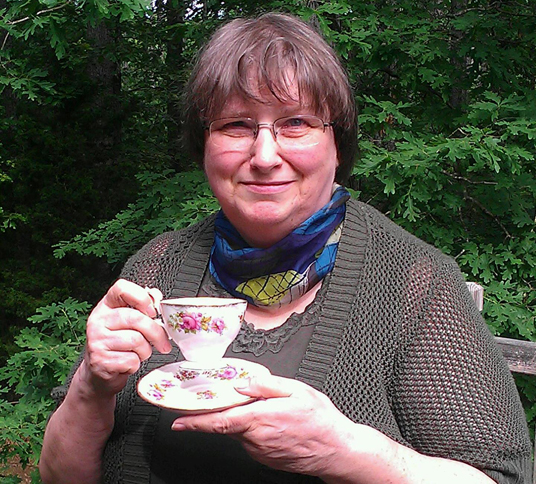
To celebrate the debut of the new fiction series “Tearoom Mysteries” from Guideposts Books, we asked our readers and some of the series’ authors to share photographs of all things tea-related, from favorite spots for tea to treasured teapots. Whether you enjoy a tea party or like to curl up with a good cup of tea in the morning, you’ll find something here to make you smile.

‘Tearoom Mysteries’: A Chat with Author Susan Page Davis

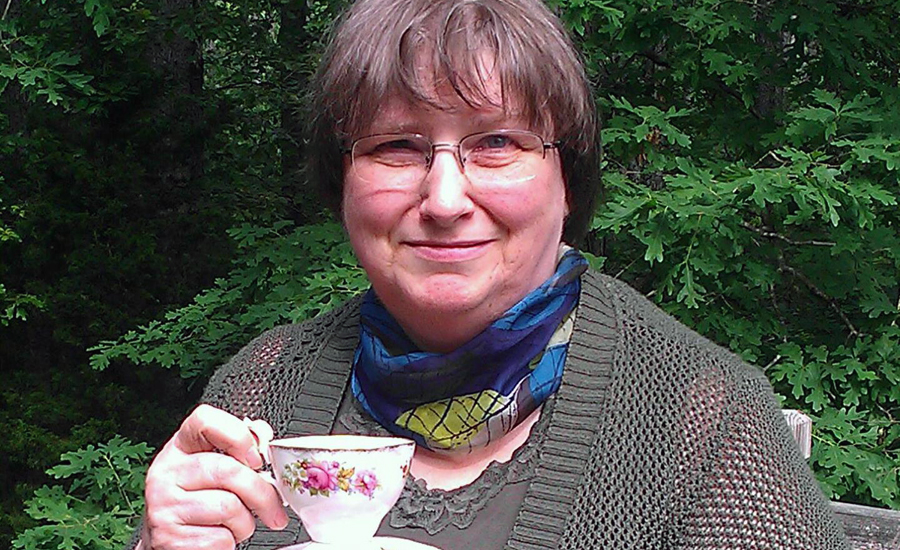
Guideposts is celebrating the publication of our latest book series, Tearoom Mysteries. The series follows the adventures of cousins Jan and Elaine, who purchase a lakeside house in a quaint town in Maine and convert it into a tearoom. Solving mysteries with faith and family, Jan and Elaine find themselves to be just as good as serving truth as they are at serving tea. Guideposts caught up with the creator of the series, Susan Page Davis to discover more about the novels and her writing life.

GUIDEPOSTS: What made you decide to become a writer?

SUSAN PAGE DAVIS: I grew up in Maine and I made up a lot of stories when I was a kid. As I became an adult, I never really thought I would be a writer as a profession. First, I started writing some magazine articles, and then became a correspondent for a daily newspaper for about 20 years. In 1999, I started writing fiction. That’s when I really realized I had a story to tell.

GUIDEPOSTS: How do you as a writer know what’s for public consumption and what’s just for you?

SD: Well, I didn’t, at first. . . It takes awhile, not just to know what’s marketable, but to know your own voice. They say you don’t really find that until you’ve written a million words. I just kept at it and finally I did start to sell novels but I think that’s what the Lord gave me to help contribute to my family.

GUIDEPOSTS: How were you able to keep writing, especially after your first rejection?

SD: [My husband] actually encouraged me. He’s a retired full-time editor at the newspaper. He reads all my books and edits them before they go to my editor. When I first started, I had written a book and it was a police mystery, but it didn’t sell. After awhile I had written a sequel and another one. My husband finally said, “Hey, if nobody buys book one, they’re not going to buy all these others. So you’ve got to write something else.” [She wrote a new novel and sold her first book.] What I’m writing for Guideposts is contemporary. Most of them are Cozy Mysteries. I just enjoy writing what comes to me at the time and what seems good at the time and what seems like fun.

GUIDEPOSTS:Where did you get the idea for the Tearoom Mysteries series?

SD: I grew up in Maine. I spent most of my life in Maine…and I had seen people buy an old house and turn into a restaurant. There was even one that turned a building into a tearoom and I liked that idea. I think it was around 1988, my grandmother died and one of the things all of us granddaughters received from out of her garage attic was a Nanking teapot. We learned then that she had run a little tearoom during the depression in a small building that was across the road from their house. I never saw it. The building was gone. All that was left were these teapots. But that kind of planted the seed and as I thought about scenarios for a mystery-solving character, I thought a tea room would be good. It would be sort of quaint, but it would also lead to some interesting situations.

GUIDEPOSTS: Is the town in the books anything like your hometown?

I placed the books in an imaginary town that’s a lot like part of the town where I grew up. Our imaginary town is much smaller but it’s in central Maine, on the lake. I decided to make the two main characters widows in their 50s and I just kind of took it from there. I gave them families and neighbors and put other little shops in the town. We have things like a snowmobile and motorcycle repair shop, things that are very New England. We have a little restaurant like a grill where they have trivia tournaments on Friday night. We have the old Grange Hall that has been turned into a community theater. Things like that, that I grew up with.

GUIDEPOSTS: The two main characters, Jan and Elaine, are starting over in the middle of their lives. Were there any of your own life-changes that inspired Jan and Elaine’s transition?

SD: When my husband retired, we wanted to move to a milder climate and also be closer to our children and grandchildren. After much prayer and searching, we found the spot we felt was right, in western Kentucky. This meant moving from Maine, where I grew up, and where we had lived in a large house for more than thirty years.

The family has gone through some hard things and some happy times since we moved six years ago, but the Lord has brought us through it, into this new season of life. Like Elaine and Jan, I’ve had to adjust to my new home, new neighbors, new landscape, new just about everything, but my faith is the same. My memories of Maine not only make me happy but have found their way into this new series.

GUIDEPOSTS: What is your hope for the readers of Tearoom Mysteries?

SD: Usually I hope for two things: one is just a good read. I want to entertain them. A lot of people need to just have some time away from the reality of their life and sit down with a good book. In these books, I think, we also want to show them some hope and faith and family togetherness. These women are widows, Jan and Elaine, but they are close to their family. Elaine’s family is farther away but she kind of shares Jan’s grandchildren and they’re all very close, so that the readers will see the problems in the family and the way that they solve them. Situations come up and they help each other as a family. That’s a big part of this series.

Taralles

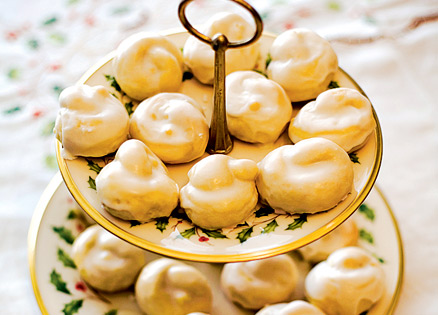
Taralles are great fun to make with your family and especially your kids. The kids love to help twist the dough into knots and ice the cookies.

Ingredients

Cookie Dough

1 pound butter, softened

2 cups sugar

12 eggs

1 tablespoon vanilla extract

1 fresh orange (juice and rind)

10–12 cups all-purpose flour

10 heaping teaspoons baking powder

Icing

4 cups confectioners’ sugar

3 tablespoons butter, softened

1 teaspoon vanilla extract

2 drops almond extract (optional)

5 tablespoons milk (add more as necessary)

Preparation

Cookies

1. Preheat oven to 350°F.

2. In a large bowl cream together softened butter, sugar and eggs until smooth. Add vanilla. Grate orange zest from orange; add to mixture. Extract juice from orange; add to mixture. Blend well.

3. In separate bowl, combine flour and baking powder.

4. Gradually add flour/baking powder to the creamed egg mixture, beating continuously to form smooth dough. Knead dough by hand or with an electric mixer until smooth. Place dough under a glass bowl to keep moist in preparation for forming the cookies.

5. Form each cookie from a small piece of dough about the size of a golf ball. Roll each ball by hand into a 5–6-inch rope. Twist the rope into a knot. Place formed taralles on a greased cookie sheet.

6. Bake 8 minutes on second rack from the bottom, until bottom is slightly brown. Move tray to upper oven rack and bake for additional 2–3 minutes until top of cookie is lightly browned. Allow taralles to cool before icing.

Icing

1. In a mixing bowl, combine sugar, butter, vanilla and almond extract. Gradually add milk to make a smooth icing. Mix with a whisk. If necessary add more milk to obtain spreading consistency.

2. Ice each taralle by dipping the cookie into the icing and then smoothing the icing around the cookie with your finger.

Makes 190 small cookies or 160 large cookies

Read the story of these taralles in One Special Cookie.