Embrace God's truth with our new book, The Lies that Bind

Shari’s Melted Dipping Chocolate

Use strawberries, pineapple chunks, mandarin orange segments (spear with toothpicks), even Oreos and dip in!

Ingredients

1 12-ounce bag semisweet chocolate chips
1 tsp. orange, hazelnut or mint extract (optional)

Preparation

1. Put chocolate chips in microwave safe bowl. Microwave on defrost setting (very important) for 3-4 minutes.

2. Stir. Return to microwave for another 2-3 minutes.

3. Stir. Repeat until chocolate chips are completely melted.

4. Add flavored extract. Pour melted chocolate into fondue pot or Crockpot.

5. Keep warm on lowest setting and dip berries or other goodies in chocolate. Stir occasionally if needed.

Don’t miss Shari’s inspiring story about how pursuing her passion helped her build a successful business.

Watch as Shari offers tips and techniques for making chocolate-dipped treats at home!

Download your FREE ebook, The Power of Hope: 7 Inspirational Stories of People Rediscovering Faith, Hope and Love.

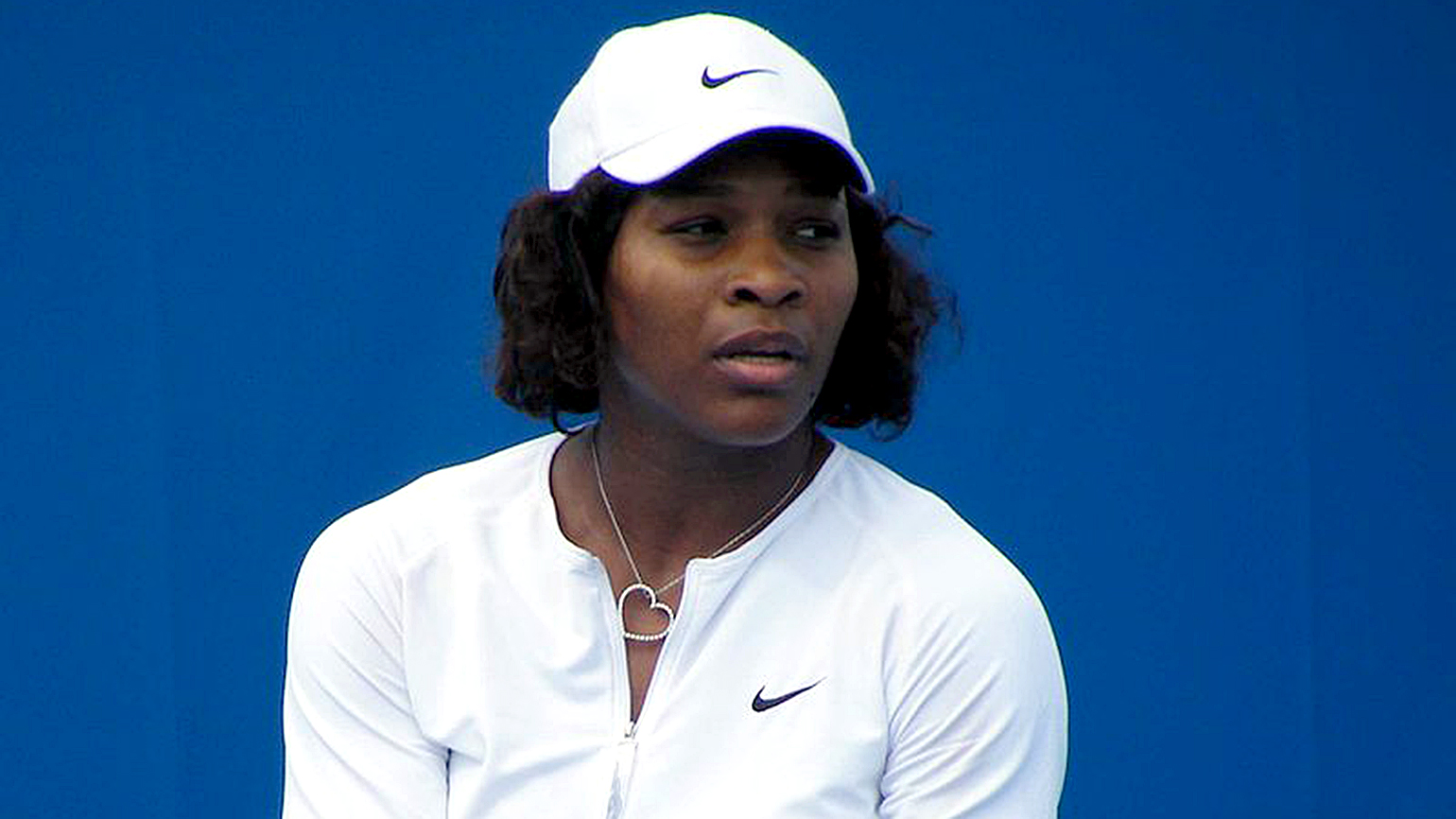
Serena Willams: Serving with a Prayerful Spirit

I have to laugh when people say, “Wow, Serena, the way you play, you must have been born with a tennis racket in your hand!” Well, not quite. But close.

Back in the late seventies my dad taught himself to play tennis by reading books and watching videos. He needed a practice partner, so he talked my mom into taking it up too. They’d hit the public courts at 5:30 A.M., then practice again after work. Mom stuck with the routine while she was pregnant with me.

Some parents have their babies listen to classical music in the womb. For me, it was the thwock of the tennis ball ricochet­ing off racket strings, the squeak of sneakers on asphalt. You could say I came into the world with a sense of the rhythm of the game.

Like this article? Sign up for “Your Weekly Inspiration”, a weekly newsletter of Inspirational stories of hope and faith – Click Here.

Still, I had to wait till I was four years old before my dad let me follow my older sister Venus (who’d already started lessons with him) onto a neighborhood ten­nis court in Compton, California. I wasn’t much taller than the net, but did I love to play!

I picked up the game at an early age. I picked up on something else too, something that goes far beyond tennis. The idea—the belief, really—that life is about learn­ing.

Not just from school and church, though my parents certainly stressed both. But also from people, from experiences, and, yes, even from losing.

You learn from the get-go when you’re the youngest in a big family, like I am. I had my older sisters—Yetunde, Isha, Lyndrea and Venus—as examples.

Especially Venus, who’s just 15 months older than me. I copied how she dressed, how she wore her hair, how she talked. I wanted to do everything Venus did.

Our mom told me that even though God makes us unique and different, he loves us all exactly the same. It’s how true you are to yourself that matters. It wasn’t until 1999, when I was 18, that the truth of that statement dawned on me.

Venus and I had the same coach (our dad), went to the same tennis school in Florida and practiced together. But our games didn’t turn out the same. Venus is a strategist, ral­lying from the baseline, waiting for the right moment to rip a passing shot out of her opponent’s reach.

Me, I’m more aggressive. I like to come to the net and volley, take charge and dominate the match, especially with my two-handed backhand. Different styles of play, yet as I found out, both do the job.

In tennis the most prestigious tour­naments are the four Grand Slams. I won my first Grand Slam title at the U.S. Open in September, and the next summer Venus won her first, at Wimbledon.

Winning was amazing! But long after the glow of victory faded, the deeper spiritual lesson stayed with me—that like every one of us on this earth, I’m meant to become my own person, make the most of the unique gifts God has blessed me with.

I’m still having fun discovering what they are.

READ MORE: CATHY RIGBY ON OVERCOMING SETBACKS

Losing, that’s another story. I don’t like to lose—at anything. (Just ask my sisters about the singing contests we used to have.) Yet I’ve grown most not from victories, but setbacks. If winning is God’s reward, then losing is how he teaches us.

Take the time I hurt my wrist in 1997, my debut year on the pro tennis tour. (I was 16.) In my second event, I beat two top-10 ranked players and made it to the semifi­nals before I got beat. Nowhere to go but up, I thought.

Later that month I was skateboarding and bam, total wipeout! I stuck my left arm out to break my fall. Jammed my wrist. Badly.

I’m right-handed, so it wasn’t the worst injury, but I was serious­ly dejected because I couldn’t hit my two-handed backhand (to say noth­ing of the trouble I got into with Mom and Dad because I’d skipped school to go boarding).

“Why don’t you make the pain your gain?” Venus said. “Work on your forehand.” My sister’s advice was totally on target. I focused on my forehand like never before, working on every element from my stance to my follow-through.

By the time my left wrist healed, my forehand drive was ferocious. That improved my entire game.

The biggest lift? It came from a devastating loss in the quarterfinals of the 2000 U.S. Open. My opponent: Lindsay Davenport, No. 2 seed. I was the defending champ and I wasn’t about to give up my title without a fight.

We were tied in the first set at 4–4, neither of us able to break the other’s serve. The ninth game, I served. Lindsay pushed me to a break point. I hit a forehand long, past the baseline. Lindsay was up, 5–4.

Dumb. How could you lose that game? I smacked my racket against the court. I knew it was unsportsmanlike, but I was just so frustrated.

READ MORE: ANDREW MCCUTCHEN—THE FAITH TO FOLLOW THROUGH

The negative thoughts kept coming at me. The next thing I knew Lindsay was serving for the set. I lunged, hit a backhand. Right into the net. Lindsay won the set, 6–4.

That time I smacked my racket on the court so hard the frame cracked. I had to grab a new racket out of my bag. Not that it helped. I fell apart, overhitting, complain­ing about calls, throwing my racket. I lost the second set, 2–6, and the match.

In the locker room, I went over the match point by point. I’d made 27 unforced errors. That’s like giving your oppo­nent 27 points. I lost the match because I lost my composure. I expended so much energy being negative I didn’t have anything left to put into winning.

Worst of all, with my bad behavior I hadn’t shown respect for my opponent, for the game or for the ability God gave me. I’d blown it. Totally.

The only victory would come in learning. No more whining about bad calls. No more dwell­ing on my mistakes and getting down on myself. It’s hard enough to beat these women on the pro tour. I didn’t need to fight against myself too.

Stay positive. My most powerful weapon on the court is my attitude.

I added another weapon to my game—prayer, which is as sure as my two-handed backhand.

One rule in tennis is that every other game you switch ends of the court with your op­ponent. Every changeover, I bow my head, close my eyes. And I pray, Help me stay strong out here. Help me stay calm and do my best. Thank you, Lord.

I don’t pray to win. Not that I don’t want to or try to. But I know now a loss can be a gift. A chance to grow. Losing has taught me to be a better winner and a better person, one who is always looking for opportunities to learn.

And in life, just like in tennis, that’s how you go forward.

Did you enjoy this story? Subscribe to Guideposts magazine.

Secrets of Wayfarers Inn: A Celebration of the Underground Railroad

Has God ever used something unexpected to change the course of your life?

My surprising turning point was winning a beauty pageant. I was crowned Miss Black Heritage as a sophomore at the University of Arizona. Although the title was nice, it was the prize that really mattered. I received a library of 100 books about African-American history. I was thrilled, but I had no idea that a set of hardback books would lead me to a career as a novelist.

Growing up in Tucson, Arizona, I had excellent role models: my parents, Lee and Minnie, along with my sister, Alisa, and members of my close-knit church. Yet I encountered few examples of greatness in the history textbooks at school. Most of the African-Americans I read about were enslaved or victims of segregation, which seemed to be our primary contribution to the American story.

Within the pages of my prize, I found inspiring stories that unlocked a whole new dimension of African-American history. I read about poets, artists, intellectuals, scholars, inventors, politicians, civil rights activists—an honor roll of accomplishment and enrichment of American culture. These role models helped me realize opportunities beyond my wildest dreams.

Today I’m a historical fiction writer in McKinney, Texas, a wife to my wise and creative husband of 17 years, Stacey, and a mother to my son and daughter, Spencer and Staci, who attend a school with a hybrid model of instruction that enables me to teach them at home a couple of times a week.

The cover for a volume in Guideposts Books' new series, Secrets of Wayfarers Inn
Guideposts Books’ new series, Secrets
of Wayfarers Inn

I’m also a consultant for Guideposts Books on a new fiction series featuring both contemporary and historical mysteries. Secrets of Wayfarers Inn is about three women who buy an old Ohio warehouse to turn into a hotel, only to discover that it was an important way station on the Underground Railroad, the network of secret routes and safe houses that enabled thousands of people to escape slavery. This novel series sheds light on this inspiring and often perilous journey.

Of all the remarkable findings I’ve discovered in African-American history, the Underground Railroad is the most compelling. Many of its “conductors”—people who guided and sheltered fleeing slaves—were formerly enslaved themselves, risking their lives and freedom to help others. Oftentimes lamps were lit at safe houses to lead the way through the dark and dangerous night to their next stop.

The model for the Underground Railroad, its message of escape from oppression, can be found in the Bible.

In chapter one of the book of Exodus, we discover a group of people, the Israelites, who are oppressed under the harsh rule of an Egyptian king. This Pharaoh orders the execution of boys born to Israelite women, but what happens next is remarkable. In the same chapter, we witness the bold action of the Hebrew midwives, who conceal the babies to protect them.

This passage through darkness to freedom is the same journey that every one of us is on at various stages in our lives. At some point, we all search for the path that leads to freedom. It’s a universal quest.

On our journey through life there are safe houses along the way, places we can go to find rest and comfort: our homes, our churches, our communities. But what’s most beautiful are the people God sends who have found what we’re looking for, who walk before us leading us to places we’ve never known. Others are behind us, searching for direction, desperate for light.

Where are you on the journey? Have you discovered your safe house, your conductors? Who is helping you find your way to where God is leading you? Who is stumbling in the dark behind you, searching for direction? Perhaps you’re the light that will lead the way.

During my life, I have had many conductors, strong men and women of faith who have walked before me, modeling for me a life committed to Christ. Through discipleship and Bible study, my husband and I continue to reach back to those freeing themselves from their past. Together we help them navigate seasons of darkness to a life lit with love, joy and peace.

Order your copy of Secrets of Wayfarers Inn!

Through this lens, I could see even our marriage ministry as an Underground Railroad for couples. In the weekend couples retreats we lead, Stacey and I provide a safe place for husbands and wives to imagine dynamic marriages using biblical principles. What’s most rewarding about leading people from good to great is watching the light ignited in their relationships as they discover the purpose God has for them as a couple. The freedom that comes from knowing why they’re here on earth is incredible to behold.

One of my conductors as a writer has been award-winning novelist Sharon Ewell Foster, who helped me find a literary agent for my debut novel, The Loom. In my upcoming novel, The Red Pen, a young lady discovers the dark secret of her town. She searches to find her way in the world, just as I had to discover mine through the world of literary fiction.

The Underground Railroad may seem like a piece of American history far removed from your experience. I hope through this new Guideposts series you can experience it from a new perspective. I pray you will find its universal message of hope in the world.

Perhaps the Secrets of Wayfarers Inn series will be just the thing God uses to launch you into the next season of your life. May you discover new conductors, others you can follow who have found the path to freedom. I trust you will reach back to those in their own form of bondage, individuals you are to lead through darkness to light. And I pray today is the day you choose to journey out in faith, trusting the same God who freed countless others to do the same for you.

For more inspiring stories, subscribe to Guideposts magazine.

Secrets of Savannah: The New Cozy Mystery from Guideposts Books

Marlene Chase has been writing for most of her life. She’s written 20 books, and her latest is part of the new fiction series from Guideposts Books, Savannah Secrets.

“There’s a lot of this marvelous history of the early days of Savannah,” Chase says.

Chase, who lived in the Midwest for most of her life, said one of her favorite parts of the series is the setting. “Readers will feel like they’re really there, smelling the magnolias and seeing some of these great historical places.”

The series follows Meredith Bellefontaine, the head of the Savannah Historical Society as she re-opens her deceased husband’s detective agency with her college roommate, Julia.

Chase’s careers as a Salvation Army officer and ordained minister have given her plenty of material to draw on for her contribution to the series.

“[The series] is about two women who have had careers in other areas of society,” Chase explains.

In the first book in the series, The Hidden Gate, Meredith Bellefontaine, who has run the Savannah Historical Society for years, changes her life after a health scare. She is looking for a way to serve when she runs into her college roommate Julia Foley in a diner. Together, the pair decides to re-open the agency.

​Soon after they discover a forgotten garden and a mysterious key​. The case revolves around a close childhood friendship that ended with one of the girls disappearing 70 years before

“It’s a story about a 70-year-old mystery,” Chase says.”It’s a very cold case. It’s icy.

​In addition to the setting and the unfolding mystery, Chase also loves the friendships at the heart of the story.

“My favorite part was dissecting history in a personal way between the friendship of these two little girls,” Chase says. “Later one of them becomes very important in the contemporary story. She’s now a grandmother and everything that she is has been sort of framed by this friendship she had as a child.”

The second book in the series is well underway, and Chase can’t wait to see where the story goes.

“It’s full of color and light and mystery,” Chase says. “The series is very exciting. There’s just so much to offer, not only in history, but in contemporary life now and how history has informed it.”

Learn more about the Savannah Secrets series.

Secretariat’s Inspiring Message

Remember when housewives were seen as “little women” and not quite up to making it in a man’s world of finance, law—or horse racing? Well, the film Secretariat is more than a story about a horse, it’s a parable about the power of love to push us to achieve the impossible.

Penny Chenery is a Colorado housewife whose parents own and run a racing stable in Kentucky. When her mother dies and her elderly father can no longer operate the farm, Penny has to make some difficult decisions, including backing a young colt, later to become Secretariat, despite the objections of her brother and husband and the derisive jeers and the skepticism of the old boys’ network of horse owners.

When Chenery’s father, with whom she has a deep connection, tells her to let Red, Secretariat’s nickname, “run his own race,” she takes his advice to heart, not only letting the racehorse do his thing but running her race as well.

There are lots of lessons in the film that revolve around faith and love. (Watch our Reel Inspiration video to hear Randall Wallace, the film’s director, talk about what the story meant to him.) But the one that has stayed with me was the father’s prophetic advice to let Secretariat “run his own race.” That message to trust yourself, do your best and success will be yours is a powerful one.

So this weekend, run to your local theatre to take in this inspiring film. Then, in your own life, run with its message of love, of faith, of trust.

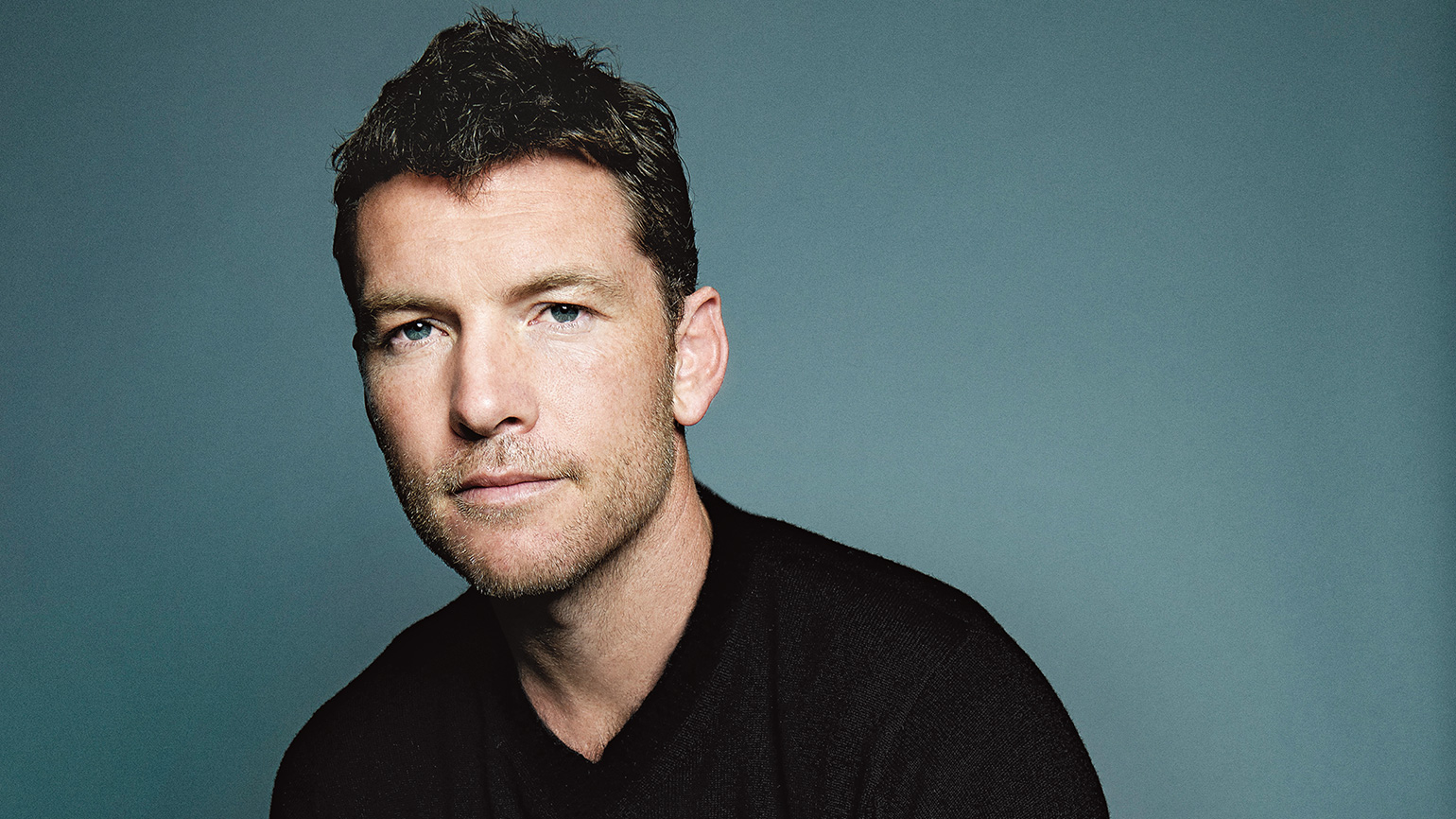
Sam Worthington on the Making of ‘The Shack’

Sometimes as an actor you feel an instinctual connection to a role, but it’s only in hindsight, after the filming is over, that you can see why you wanted to do that movie. Why you needed to play that particular role as part of your own spiritual journey.

That’s what happened to me with Mack, the lead character in The Shack. When I first read the script, based on the novel by William Paul Young, I knew I wanted to be in it. Only looking back now do I fully understand why.

The book, as you probably know, was a huge best seller. Young originally wrote it as a Christmas present for his kids. He never expected that its message of hope in the midst of despair would reach millions.

BROWSE OUR SELECTION OF BOOKS ON CHRISTIAN LIVING

The plot centers around Mack, a dad with a complicated past. As the film begins, he is in deep mourning for his six-year-old daughter, Missy, who’d been abducted on a camping trip four years earlier and brutally murdered. Mack is tortured by guilt over the crime, blaming himself for not protecting his little girl, and he is unspeakably angry at God. How could a loving Father let such a thing happen?

Then Mack gets a mysterious letter with no stamp, postmark or return address. There aren’t even any footprints in the snow around the mailbox to indicate who delivered it. “It’s been a while,” the letter says. “I’ve missed you. I’ll be at the shack next weekend if you want to get together.—Papa.”

There it is, the first mention of the abandoned shack in the mountains where Missy had been taken, where her blood had seeped into the floorboards, her body never found. It’s a metaphor for all the pain, hurt, anger and resentment we carry around with us.

Mack accepts the invitation and goes to the shack, half-hoping to take revenge on his daughter’s unknown killer. Instead he finds a place outside time, where he meets God in the form of three persons: Jesus, the Holy Spirit and the Father, or Papa.

You might wonder what I knew about God. I grew up in Australia and didn’t come from a religious background. At 19, I was a bit lost, a rebellious young man, railing against the world as you often do at that age. One day I was hanging out with my friend John, and very casually he gave me a Bible. “Hey, man,” he said, “read this. Take some time with it. It might have some answers for you.” He suggested that I look at the story of King David.

Yeah, whatever, I thought.

But something made me open up that Bible and read about David—a guy who made huge mistakes and yet was someone God still forgave and loved.

That message was powerful and made me want to explore the book further. I have kept reading that Bible over these last 20 years. The stories in it are such a gift. I can drop into it anytime and get something from it. I’m still on my faith journey, discovering what my relationship is with God. But I can say for sure that my faith has helped me navigate the potholes of life.

There I was, almost 40 years old, being given the opportunity to play a character whose relationship with God was at the center of a movie. Now I see that the timing had to be more than coincidence. My wife, Lara, and I had just had our first child, and I was thinking about what kind of father I would be.

I wanted to be a positive life force for my son. I didn’t want to carry resentments or guilt or anger from the past into my new family. I wanted to be free of all that baggage. In short, I wanted to lose my own shack, not that I understood that at the time.

In making a movie, if you’re fortunate, there are moments when everything comes together and then some—moments that go beyond the limits of ordinary experience. When crew members were scouting locations in British Columbia for The Shack, they were looking for the right spot for the garden that Sarayu, the character who plays the Holy Spirit, nurtures.

The crew was standing in a circle on a dirt pad, thinking about how they might turn it into a garden of wild beauty. Out of the blue an abundance of butterflies descended and pollen swirled around them, as if to say, Yes, this is the place. You’ve got it.

That same magic appeared in other scenes we filmed. For instance, we shot a sequence on the lake near the shack, where I walk with Jesus on the water, practically skipping over it. Aviv Alush, the Israeli actor playing Jesus, started crying at the top of the scene and couldn’t stop. He was laughing through his tears, transported by joy. He’d been taken to another place. It wasn’t something you could force. It just happened.

Toward the end of the movie, we were doing the poignant scene of Missy’s burial (her body had finally been found). All these butterflies were being released, the butterflies mirroring Mack’s spiritual transformation. I love butterflies anyway, the way they’re reborn from within.

Just then, as though someone had choreographed it, a butterfly actually landed on my face and stayed there, fluttering its wings. You can see it in the film. It’s not some trick of CGI, computer-generated imagery. It was a moment of pure joy and wonder.

These happy accidents come from somewhere beyond us, I believe, and I hope they highlight the spirituality and connection our movie is aiming for. I’m also grateful for what was happening within me.

The theme of forgiveness in The Shack was something I was searching for without even knowing it. Mack was not responsible for his daughter’s brutal death, but he still blames himself for it. He has to forgive himself in order to move on. Otherwise he’d be trapped forever in his guilt and anger, unable to fully live again, to love his wife and his two other children.

In playing Mack, I became aware of a lot of pain and remorse that I needed to release too. How could I do it? What were the tools I needed, not so much as an actor but as a husband and a father?

In one scene Mack is holding a ladybug, reminding him of the ladybug pin the killer had left behind. Mack knows he can crush the ladybug, like he wants to crush the killer. He decides in that moment to do what he thought was impossible: He will forgive his daughter’s murderer. He lets the ladybug go, saying, “I forgive you.” Then he tells Papa, “But I don’t feel any different.” Papa replies, “Yeah, but if you say it every day, it’s going to get easier and easier.”

What a beautiful message. We tend to want God to give us all the answers now. We want to solve all the world’s problems or our own personal problems now. But working through problems is a gradual process, something you do piece by piece, day by day. That’s helped me with forgiveness, doing it one step, one word, at a time.

My wife and I now have two sons, a two-year-old and a newborn. Most of my prayers aren’t for myself at all but for my children. When they’re sick or upset and I can’t calm them, I find myself turning to God. He doesn’t necessarily tell me what to do, but I feel him listening and that helps me listen to and comfort my sons.

Soon I’ll read them stories out of the Bible, stories that have helped me become a better person. I don’t want my kids to just reach for me; I want them to reach out to God too.

My favorite scene in the movie is at the end. Mack is in the hospital and his older daughter, who has been struggling with guilt and anger herself, sits by his bed and talks to him. “I’m only just beginning this journey,” he says to her, this journey of faith and forgiveness. “I can’t do it alone. I hope you can do it with me.”

None of us makes our journey alone. Not when we’re open to other people. Not when we’ve met Papa and Jesus and the Holy Spirit.

Did you enjoy this story? Subscribe to Guideposts magazine.

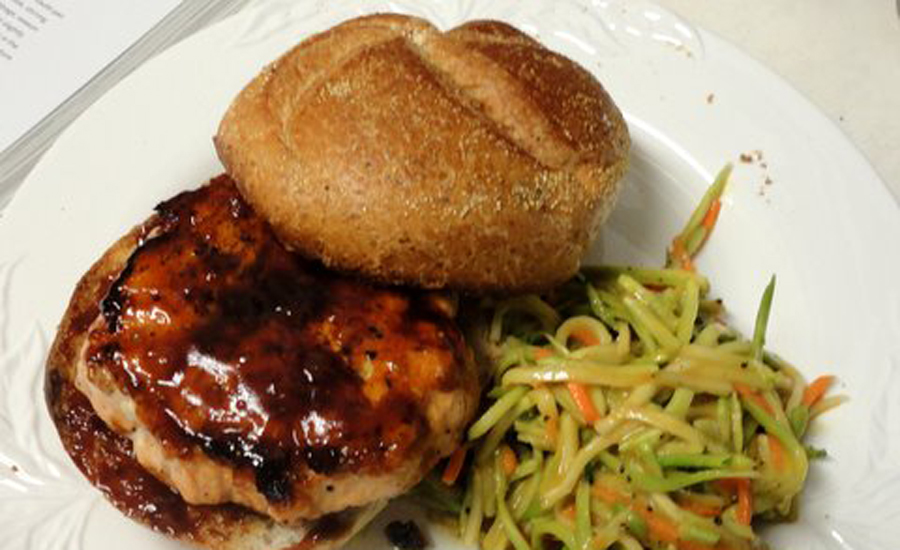
Salmon Burger

Hoisin is a sweet yet complex Chinese condiment that you can find in the Asian section of just about every supermarket these days.

The hoisin-based barbecue sauce is especially delicious with rich salmon, but it would also be great with beef or turkey burgers.

The pickled ginger and cabbage slaw, which contains quintessentially Asian ingredients such as garlic, rice wine vinegar, and toasted sesame oil, is an ideal way to add some fresh crunch to the burger.

Ingredients

Hoisin Barbecue Sauce
2 Tbsp. canola oil 2 Tbsp. honey
2 large shallots, coarsely chopped 2 tsp. soy sauce
2 cloves garlic, coarsely chopped 2 tsp. fish sauce
½ c. hoisin sauce 1 Tbsp. rice wine vinegar
2 Tbsp. ketchup
Salmon Burgers
1 ½ lbs. fresh salmon Kosher salt and freshly ground black pepper
2 Tbsp. canola oil 4 hamburger buns, split; toasted, if desired
Slaw
2 Tbsp. canola oil Kosher salt and freshly ground black pepper
¼ c. thinly sliced pickled ginger, plus more for garnish ¼ c. rice wine vinegar
2 cloves garlic, finely chopped 2 tsp. toasted seame oil;
¼ small head of red cabbage, finely shredded 3 Tbsp. finely chopped fresh cilantro leaves
½ medium head of napa cabbage, finely shredded

Preparation

Hoisin Barbecue Sauce
1. To make the hoisin barbecue sauce, heat the oil in a medium saucepan over medium heat.

2. Add the shallots and garlic and cook until soft, about 2 minutes.

3. Add the hoisin, ketchup, honey, soy sauce, fish sauce, and vinegar and cook until heated through and slightly thickened, about 10 minutes.

4. Set aside to cool.

5. The sauce can be made 1 day in advance, covered, and refrigerated. Bring to room temperature before using.

Slaw
1. Combine the ingredients and refrigerate.

Salmon Burger
1. To form the burgers, cut the salmon into large pieces and then coarsely chop in a food processor. Do not overprocess. (Alternatively you can chop it by hand with a sharp knife.)

2. Divide the salmon into 4 equal portions (about 6 ounces each). Form each potion loosely into a ¾-inch-think burger and make a deep depression in the center with your thumb.

3. Place on a plate, cover with plastic wrap, and let chill in the refrigerator for at least 30 minutes before cooking.

4. Meanwhile, make the slaw. Heat the oil in a large sauté pan over high heat.

5. Add the ginger and garlic and cook, stirring once, until soft, about 1 minute.

6. Stir in the cabbage, season, with salt and pepper, and cook, stirring once, until slightly wilted, 3 to 4 minutes.

7. Remove from the heat and stir in the vinegar, sesame oil, and cilantro. Let sit at room temperature.

8. To cook the burgers, heat the oil in a sauté pan or griddle (nonstick or cast iron) until it begins to shimmer.

9. Season both sides of each burger with salt and pepper. Cook the burgers until golden brown on the bottom sides, about 3 minutes.

10. Turn over, brush with some of the hoisin barbecue sauce, and continue cooking until medium-well, about 3 minutes longer.

11. Place the burgers on the bun bottoms, drizzle some hoisin barbecue sauce over them, and top with the slaw.

12. Garnish with pickled ginger. Cover with the burger tops and serve immediately.

Serves 4.

This recipe was taken from Bobby Flay’s Burgers, Fries, and Shakes, ©2009 by Bobby Flay, and reprinted here with permission from Clarkson Potter.

Ruth Graham: God Is Always There

My mother sent me a gift. And it was important to me at that time because I was going through a very difficult time with one of my children. I didn’t know what tomorrow would bring. I was uncertain. I was scared. I was perplexed. I was anxious.

And the postman rang my doorbell, and a package came from mother. I knew it was from mother because of her back slanted handwriting. It was very distinct. And it wasn’t near my birthday, and it wasn’t the size of a book, and it wasn’t Christmas time. But as I opened it, I realized it was a plaque that mother had hung over her desk for years. I can’t remember a time when it wasn’t there. And she sent it to me.

And the plaque read, “Fear not tomorrow. God is already there.” And that was a truth that I needed to be reminded of, that God was there. And then as I began to think, you know, OK. God is there. Is he really there? Is he? What is he like? Is he going to help me? What does it mean? What are the repercussions for the fact that God is there? And so that’s when I began to dig into the scripture, to find out how he encountered people in the scriptures.

Russell Martin, Jr. Celebrates His Dad, the Saxophone Man

I’m a professional baseball player. That means I’ve heard the national anthem performed before games thousands of times, by solo singers, military choirs, marching bands, the occasional recording star.

I place my cap over my heart, stand at attention at the top of the dugout steps and listen. We all do. But honestly, you don’t always pay strict attention. It’s hard to when your mind is on the game.

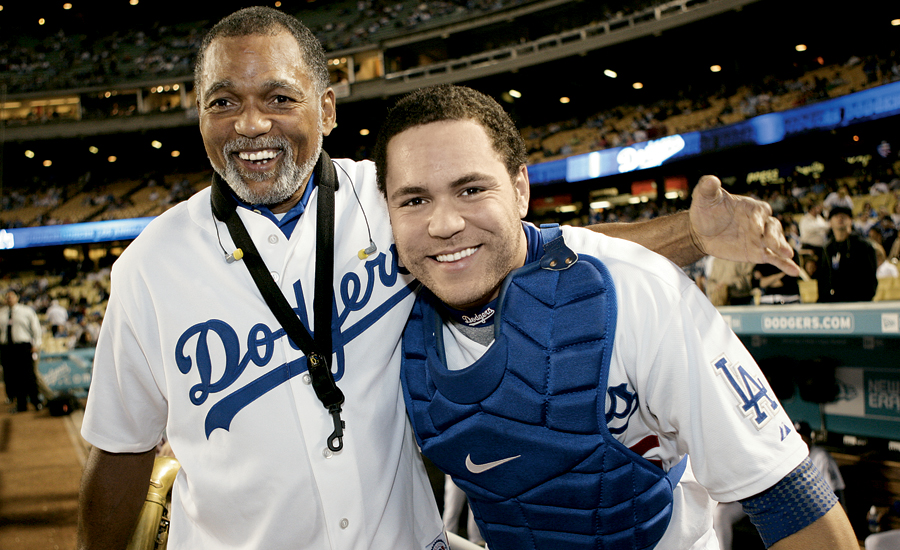
But this night was different. That was my dad out there, playing. He stood near home plate in Dodger Stadium last September, blowing into his old, tarnished saxophone (“Don’t want a new one,” he’d always say. “They don’t make them like they used to.”), playing to nearly 55,000 fans before our game that night against the Pittsburgh Pirates.

I watched anxiously from the top step of the dugout and followed every note, praying for him to do his best. A few bars into his performance, a funny thing happened. I realized our roles had reversed.

All my life he’d rooted for me, prayed for me to do my best. Now I was rooting for him. For most of his days he’d been a street musician, but thanks to him, I was the Dodgers catcher.

Sports and music have been the mainstays in my life for as long as I can remember. Sports, because from early childhood that’s what I loved—and did—best. Music, because that was as vital to my dad’s life as, well, breathing.

Our time together was important to me. He and Mom split when I was almost two, and during the school term I’d stay with Mom. She lived in Ottawa, Canada, two and a half hours from Dad’s home in Montreal. Every other weekend I spent with Dad, plus the entire summer.

Dad’s place wasn’t like Mom’s. Mom worked as a government analyst and lived in a comfortable home in the suburbs. Dad moved around Montreal a lot, from apartment to apartment, according to what rent he could afford. He couldn’t afford much. The biggest place he ever had was four and a half rooms. “Don’t you want a place like Mom’s?” I asked one day.

Dad sat me down. “Material things have never been important to me,” he said. “What’s important is happiness, fulfillment, chasing your dreams. My dream is music. Yours is baseball.”

It’s true. When I was just two, Dad tossed a ball in the living room. I caught it in two hops. “Did you see that?” he yelled, turning to his brother. “I think we’ve got a ballplayer here.”

Dad knew what he was talking about. He was more than a musician. He was also an athlete, an excellent baseball player who was quick and strong, and who loved the game. When he was a kid he’d talk his way into pickup games with older boys. “I’m Jackie Robinson’s son,” he’d say, and he was so good, they believed him.

From the time I was two, we spent every day we could at the local park, me with my little red bat and Montreal Expos cap, him with a bag of baseballs and two fielders gloves.

“Man!” he’d say when I got into one. “You really hit that ball!”

At home we turned on the Expos game. Dad is a great storyteller, and all through the game he’d talk about Robinson—how he’d dance off third base, drive the pitcher crazy and then swipe home.

Most of all, I loved it when he went into his announcer’s voice: “Now hitting for the Expos, Russell Martin,” he’d say. “Bottom of the ninth. Here comes the pitch. There’s a shot to deep right field. That ball is…out of here!” That’s when I knew what I wanted most in life: to be a major-league ballplayer, to hear my name for real over a major-league stadium’s booming PA.

Dad worked me hard, putting me through countless drills. Weird stuff, stuff he’d just make up. “I’m going to throw the ball over your head,” he’d say. “I want you to dive for it, whether you reach it or not.”

Sometimes he’d hand me a broomstick and toss a badminton bird at me. “Let’s see you hit it,” he’d say. Or he’d put a towel over my bat and tell me to swing, to strengthen my hands.

Dad rose each morning before dawn and headed to the subway. There, he’d pick a spot on the platform and play his saxophone, the case open at his feet for donations.

When rush hour was over he returned home and we headed to the park to practice. We broke at lunch, then returned to the field and practiced all afternoon. I’d be all tuckered out, but Dad went back to the subway station to play for the evening rush-hour crowd.

I never really thought much about how Dad earned his living. There was always food on the table—Dad would cook up a batch of stew or his fantastic chili, and we’d be set for the week. Each night we’d fill our bowls, turn on the tube and watch the Expos play. And we’d talk about life.

Dad grew up in tough times. He had to make his own way. “You want to be a ballplayer, you’re going to have to earn it,” he’d say. “You’re not a big guy. Nobody’s going to hand you anything. You’re going to have to work, work, work. And believe.”

That I did.

By the time I reached high school age, I was getting pretty good. That summer I asked Mom to let me live with Dad full-time. I didn’t want to leave her, but there was a high school that had a great baseball program in Montreal where I could go to refine my game. Mom—who was always there for me, and who helped Dad out with my expenses—said okay. She even paid a bunch of the tuition for me.

The school was across the city, an hour-and-a-quarter subway and bus commute away. “You’re going to have to make breakfast and get yourself to school,” Dad said. “Before you get up, I’ll be at work.”

One day, passing through the station, I heard the mournful wail of a saxophone. I’d known for years Dad played in the subway, but I’d never seen him perform. The haunting notes poured out, like the instrument itself were crying. Songs by Miles Davis, Thelonious Monk, Coltrane—my middle name. That must be Dad! I rushed to where he stood on the platform, and watched and listened.

The rush-hour crowd elbowed by. Some paused a minute to listen and drop coins into Dad’s saxophone case. Most had their minds elsewhere, and brushed past. Dad never batted an eye. He had an intent look on his face, like his whole soul was wrapped up in his music. Wow, I thought. Dad is really good.

“I saw you in the subway today on my way to school,” I told him that night. “How come you just play during rush hours?” It occurred to me that he could have made a lot more money by playing there all day.

“I do it so that I can spend the day with you and help you practice,” he said. “Like I told you, money isn’t what’s important in life.” That’s when it hit me how much my dad had done for me, how much he’d sacrificed for me, believed in me.

I guess that when you have two people who believe in the same dream, it’s twice as likely to come through. I could never pay my dad back. All I could do was be as passionate and devoted to my work as he was to his.

The day I made it to the Dodgers, I figured he’d be even happier than I was. But I couldn’t get ahold of him. When Mom finally did, he was standing by the Saint Lawrence River, practicing his second instrument, the flute. He had a hard time talking. He was just too emotional.

I flew him to Los Angeles as soon as I could. We were playing the Mets that night. Pitching for them was one of Dad’s heroes, Pedro Martinez. I hit a double off of him. As I rounded first, I heard Dad screaming, “Yeah, that’s my boy!”

The Los Angeles Times did a story about me and Dad. After that, it seemed everyone in the city knew Dad played the saxophone in the Montreal subway.

One day he got a phone call from Frank McCourt, the Dodgers owner. “I want you to come back in September,” he said, “to play the national anthem.” The night he performed, I was walking in from the bullpen, through the clubhouse, when he started playing. I raced to the dugout.

There he was on the field, playing that sacred song. He played it slow and soulful, giving it a kind of deeper meaning. I watched him with awe and an indescribable pride.

My dad.

He got a standing ovation when he finished. Both dugouts too. The Pirates players came up to me, saying, “That was your dad? Man, he’s amazing.”

Yeah, but not nearly as amazing as the two of us standing on the brilliant green grass of Dodger Stadium, sharing one dream together.

Rudy’s Dream

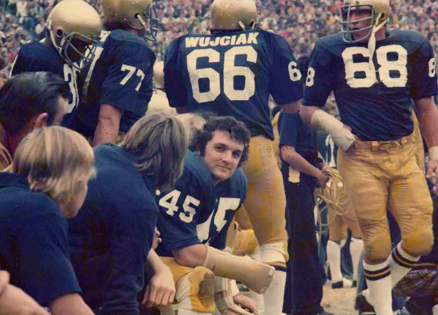
Almost every day I hear from one of the millions of people who have been inspired by Rudy, the hit movie about how my unlikely dream of playing football for Notre Dame came true.

So many times I’d been told no. They said I wasn’t bright enough to go to an elite school and that I was way too small—at 5 feet 6 inches—to make the team, let alone play a single down. But I persisted. I made the team (the practice squad, anyway) and in my senior year, in the final seconds of the last game, the coach put me in. With everything I had in me, I blew past the lineman and sacked the quarterback. My teammates hoisted me onto their shoulders and carried me off the field. Like a scene out of a movie.

But it took 16 years, countless letters and prayers, and even a few trips to L.A. before I was able to get anyone in Hollywood to see it that way and even then, if it hadn’t been for another movie, Rudy might never have been made. That movie was Hoosiers. Maybe you’ve seen it.

I saw Hoosiers when it came out, in 1986. I still remember being enthralled by the true story of a tiny Indiana high school, barely able to field a basketball team, and the troubled first-year coach who was nearly fired during the season. Against all odds they came together to win the state championship. The audience cheered when the winning basket went in, and I couldn’t help thinking that my story had all the same ingredients. But I’d mailed dozens of pitches to Hollywood studios over the years and all I had to show for it was a thick folder of rejection letters. As the closing credits crawled by I noted that the screenplay had been written by Angelo Pizzo. If only I could tell my story to someone like that, I thought. He would understand.

By the late eighties Notre Dame football was on the rise again, with a new coach. I moved back to South Bend, where I was district manager for an insurance company. I told my story to everyone I met. I felt certain God had been with me on the field that day, that he wanted me to share my experience of how far a little guy can go with faith and determination.

Still, sometimes I felt I was destined to be only a bit of Notre Dame trivia. I couldn’t even get anyone at the university to listen to my idea for the film. “Well, we already have a movie,” Father Beauchamp, the executive vice president, said when I first met him. “I appreciate your enthusiasm, but it’s pretty hard to top the Knute Rockne story.”

From time to time I would see him around campus, but there was never any swaying him. The Irish were again vying for national championships. No one, except for me, was thinking about a long-forgotten quarterback sack. Still, I couldn’t give up.

Then, in 1990, I finally got a break. Someone I met got me a lunch meeting with Angelo Pizzo in California. The answer to my most fervent prayers, right?

Not exactly. All he could tell me was how hard it was to get any movie made, how no one would be interested in my picture. Two years later I hadn’t heard another word from him.

Then, one Friday afternoon in 1992, the phone rang. I recognized the voice instantly. Angelo Pizzo.

“Hey, Rudy,” he said, like we were old friends. “Do you have a lawyer?”

“A lawyer?” I said. “Why would I need a lawyer?”

“I’ve talked to a producer and he really wants to make your movie,” he said. “We’d like to get the contract squared away ASAP. Can you arrange for David Anspaugh and me to meet with the folks at Notre Dame on Monday?”

My mind was racing. David Anspaugh! He’d directed Hoosiers. “That’s great,” I said. “But…uh…it’s been a while since I’ve talked to anyone at the university about this. I gotta make sure they’re on board.”

Dead silence. Then he said, “David and I are going to be there Monday morning. Things are moving fast. We can’t afford any complications, Rudy.”

I hung up the phone. This was the moment I’d dreamed of, but my stomach was churning. How on earth was I going to get Father’s blessing?

I raced over to the administration building, past his startled secretary and into Father Beauchamp’s office.

“Rudy!” Father said. “What can I do for you?”

“A writer from Hollywood, Angelo Pizzo, called,” I said, trying to catch my breath. “He wants to make my movie. He and his partner, David Anspaugh, want to meet with you Monday.”

His face grew serious. “Rudy, this is very short notice. And you know we’ve talked about this before.”

“All I’m asking, Father, is that you meet with them,” I pleaded.

He sighed. “All right,” he said, shaking his head. “As a favor to you, Rudy. But I’m not promising anything.” He carefully wrote down their names in his appointment calendar for 9:00 a.m.

I left his office and walked across campus toward the stadium, the place where I had found so much inspiration over the years. When I got back to the office I called Angelo and told him Father would meet with us. I didn’t tell him what else he had said.

That weekend was the longest of my life. I went to the gym, but I was so distracted I barely got through my workout. I had always believed that if I pushed hard enough and prayed hard enough I could achieve anything I set my heart on. That’s what I thought those few memorable seconds on the field had shown me. But I’d done everything I knew to get this movie made—for 16 long years. I’d prayed about it I don’t know how many times. Now it was up to God. “Lord,” I whispered, “if this is your will I need your help.” But as I prayed—even Sunday at Mass at the Basilica—I still couldn’t stop worrying about my meeting in a few hours.

Monday morning I met Angelo and David at the administration building, my stomach twisting tighter. Once we got into Father’s office I hoped they might somehow be able to convince him.

His secretary told us we would go in shortly. I gazed around the room filled with books and paintings, history and grandeur. I wanted to melt into the thick carpet.
When Father opened his door to welcome us in, I stayed back. I’d said everything I could. It was Angelo and David’s meeting. All I could do now was keep praying. Every once in a while I lifted my eyes to see if I could discern from the secretary what Father’s answer would be. Ten minutes passed…15…20. Then the door opened.

Father strode out carrying a book of Notre Dame history. He opened up to a spread showing the gleaming Golden Dome. “Angelo, do you think you could make the Dome shine like this on the silver screen?” he said. At that moment I knew. He’d said yes! We were going to make the movie! My movie! I hugged Angelo and David. Father told us to go meet with the head of public relations.

As we walked out I asked Angelo, “How did you do it? How did you make that happen?”

“Rudy, you’re not going to believe it. Father told us that last night a family invited him over for dinner and afterward they suggested watching a movie. He said it was one of the most inspiring movies he’d ever seen. Guess what it was? Hoosiers! And when he looked to see who made it, he thought, ‘That’s who I’m meeting tomorrow!’ He told us it was an honor to have us here. And probably no coincidence. He offered his assistance with anything we needed.”

Things moved fast after that. Father was true to his word. I even got a part in one of the crowd scenes. That’s me cheering at that last game, in back of the actor playing my father.

I learned a lot about what goes into making a movie. But the most important lesson I learned: When you trust God’s direction, dreams do come true. Even in Hollywood.

Read more true inspirational stories.

Rory Feek Opens Up About New Documentary and Life Without Joey

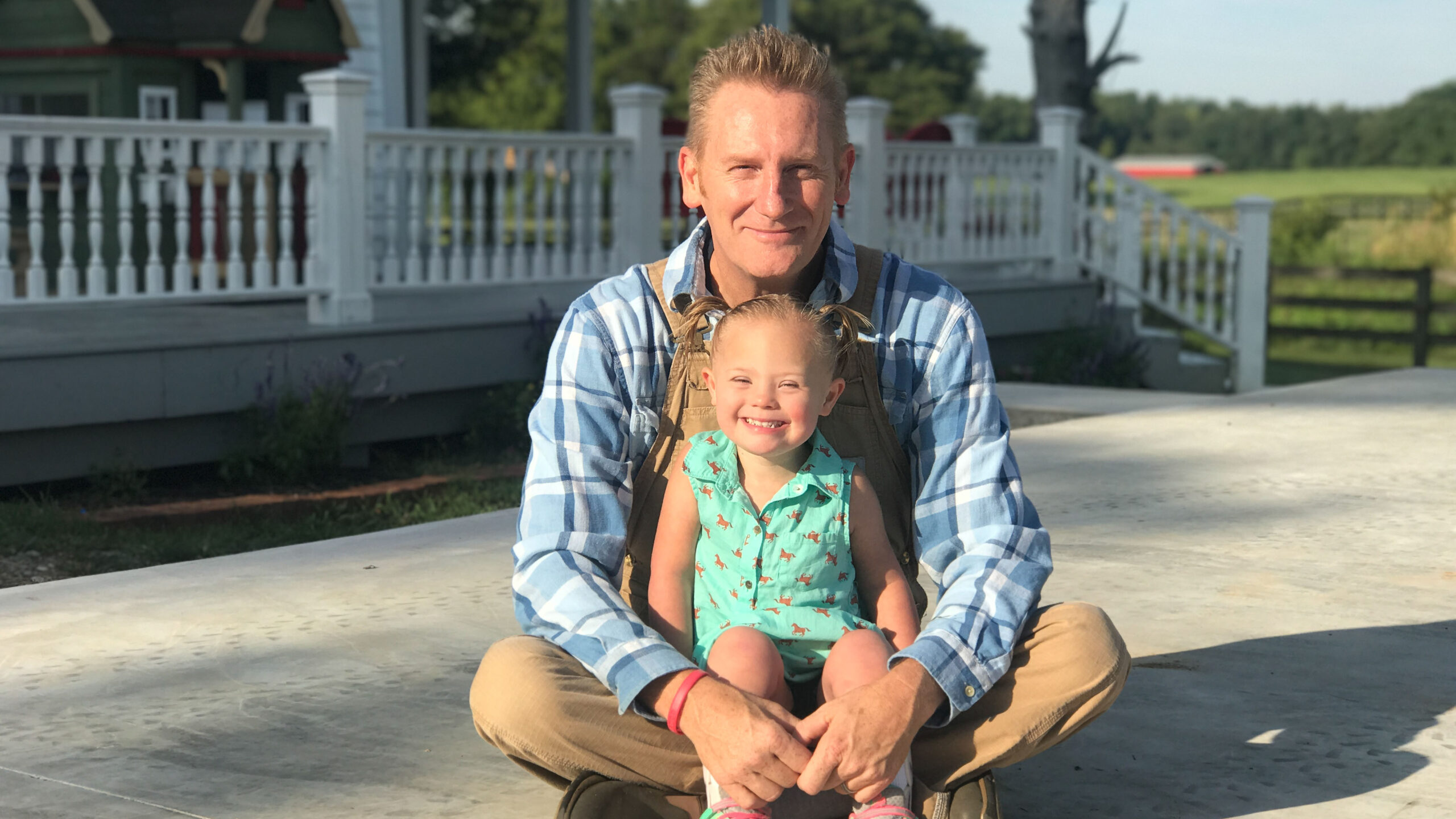
Rory Feek is a singer, songwriter, author and doting father. He is perhaps most well known for being half of the singing duo Joey+Rory with his wife Joey Feek.

In 2016, Joey passed away following a long battle with cervical cancer. Rory’s heartfelt blogs chronicling their experience in her final days touched millions.

Since her death, Rory has focused on raising their daughter, Indiana, and has written several books.

Rory recently released a documentary called The Singer And The Song: The Best of Joey+Rory. It offers a behind-the-scenes look at iconic Joey + Rory performances and an intimate interview between Rory and Bill Gaither.

We caught up with Rory to talk about the documentary, how he still feels Joey’s presence and what he’s most excited about now.

Guideposts.org: In the documentary, you said “A man’s character is revealed by the decisions and the actions they take when hard times come their way.” How have the hard times you’ve gone through defined and changed your character?

Rory Feek: I first heard that statement in the fall of 2015 from the great storytelling master Robert McKee, and he may have heard it from others. But it rang true to me then, and even more so today. I am who I am because of what we’ve been through. Just like Joey’s truest character was probably most revealed in her bravery in those final months and weeks… my character I think is revealed each and every day…Like everyone, I have my good days and some tougher ones, but I know now that it is how we handle the conflicts that mean the most, that truly expose who we are, who we really are.

Guideposts.org: How did you choose the songs included on “The Singer and the Song”? How were these tunes especially significant in your relationship with Joey and your career?

RF: There were so many songs to choose from, it was difficult to cull one story told-in-song down to just twenty tunes. In the end, I had to try to pick the ones that could not only best weave the story of our life and love into one CD, but also brought out the best in us when we wrote, recorded or sang them. Each one tells a part of our lives.

Guideposts.org: You mention in the documentary that Joey is still here, but it’s a little different. Can you expand on that? How do you experience Joey’s presence?

RF: I mostly just feel her. Feel her in the house and in our lives. At bath time with the baby, and when we make dinner or sit down and read a book together. It’s not a physical presence, it’s more of a comfort. Something familiar and close that lets me know that I’m not alone. That she’s still with us, even when she’s gone.

Guideposts.org: How do you see Joey’s legacy living on in your music, your family and your community?

RF: I think it’s just so deeply engrained in all of those things, that it will always be here with us. Every show we play in the concert hall, and every piece of the land we live and walk on, she’s part of. We all talk about her like she’s still here. [We reminisce] and constantly [say], “oh, wouldn’t Joey love this…?” And it’s not just me. It’s all of our family and community. It’s incredibly hard to believe that it’s been two and a half years already since she passed away. In some ways it feels like just yesterday we were laying beside Indiana on the bed, glowing with love and joy over the gift that God had given us. And I guess in other ways, it feels like forever. Because time has passed and things do change. Indiana is nearly five years old now. That’s probably the hardest part for me. Joey not being able to be here to watch Indy grow. To pour into her and sing her songs and watch her play and laugh and dance and talk. It’s so special to see and she would’ve loved it so much.

Guideposts.org: You said that you mostly walk around pinching yourself because, despite the hardships, your life is amazing. What are you pinching yourself about now? What are you most looking forward to or excited about?

RF: Most of the pinching I’ve been doing these days [is] because the of the one-room schoolhouse that just opened here at the farm. It started as idea, then a dream, and somehow has turned into a reality. But what’s it’s become already is more that I could’ve ever imagined. It’s so beautiful to see what’s going on there every morning when I walk Indy across the driveway to school, and pick her up in the afternoons. The teachers, the other kids, the parents… everything is so special and there’s so much life and love that is going on there. I’m in awe just to be a small part of it.

This interview has been edited for clarity and length.

Ron Santo’s Secret on the Field

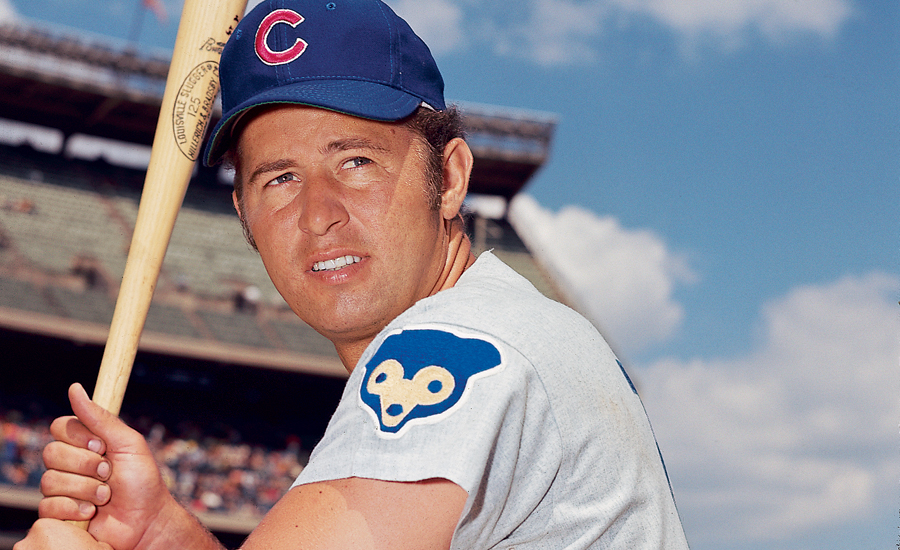
I was kneeling in the on-deck circle at Chicago’s Wrigley Field that sweltering August afternoon. It was the bottom of the ninth. The Cubs trailed the Los Angeles Dodgers, 2-0, but we had a pair of runners on base and slugger Billy Williams at the plate.

It was the kind of situation Billy loved, and he was determined to come through. In the stands, 20,000 fans screamed for a hit. Me, I was silently praying that he would make an out so I wouldn’t have to bat.

Anyone who ever watched me play for the Cubs back in the 1960s and early ’70s will find that last statement hard to believe. No one loved pressure situations more than I.

But that day things were different. I have type 1 diabetes—juvenile diabetes—and as I watched Williams battle the pitcher, I suddenly felt myself grow woozy. I looked up and saw three scoreboards. My blood-sugar level had dropped fast. I glanced into the dugout.

Should I tell manager Leo Durocher that I needed to come out, that I needed something with sugar to eat, that I didn’t think I could hit? Williams drew a walk and those 20,000 screams grew even louder. I had to go up to the plate.

Back then, in 1967, I was probably the only diabetic athlete in professional sports. I signed a pro contract in 1959, at age 18. My doctor wasn’t even sure I’d make it through the first minor league season. But I was determined to play in the big leagues. I wasn’t going to let this thing beat me.

Growing up in Seattle, I had been the picture of health. By the time I graduated from high school I was considered the best baseball prospect in the state.

There were 16 big league clubs then, and every one of them offered me at least $50,000 to play ball for their minor league team as a third baseman—big money in those days. Every team, that is, except the Cubs. They offered me $20,000 and the promise of a quick promotion to the majors. They knew just how to hook me.

I faced one last hurdle before beginning my pro career: a routine physical. The exam was cursory; the doctor didn’t even draw blood. I got a clean bill of health and an assignment to the Cubs’ minor league club in San Antonio, two levels from the big leagues.

Shortly before I left home, though, my mother sent me to our family doctor for a checkup. Dr. Tupper always had a big smile for me. But when he came back with the results from my urine sample, his smile was gone. “Ron, we found some sugar in your urine,” he said. “You may have diabetes.”

Diabetes? I didn’t even know what that was. I had just one concern: “Can I still play baseball?”

“I don’t know,” he answered.

I headed straight to the library. What I read was frightening. Diabetes could lead to blindness, hardening of the arteries and kidney failure, among other things. One book even said, “The average life expectancy, from the time of diagnosis, is twenty-five years.” Does that mean I’m supposed to die when I’m forty-three?

I couldn’t accept that a disease would stop me from using my God-given gifts. Reporting to San Antonio in 1959, I felt great. To look at me you’d never guess I was sick. I didn’t even have to take insulin yet. With exercise and proper diet, I figured I’d be able to keep my diabetes under control.

I did. I hit .327 with 11 home runs and was considered one of the stars of the league. Between innings, I’d eat a Snickers bar or drink some orange juice if I felt my blood-sugar level dipping.

Snacking in the dugout was common, so no one on the team suspected a thing. And I wasn’t going to let any of them know. I wanted my teammates and fans to think of me as a ballplayer—not as someone who needed their sympathy.

That winter, though, my pancreas pretty much stopped functioning, and I had to start taking daily insulin injections. This too I kept from the Cubs—even after they called me up to the majors in June 1960.

Every player had a roommate for out-of-town games, so I had to slip into the bathroom early each morning and secretly take my insulin injection. I feared that if the Cubs found out and I slumped badly, they would attribute it to the diabetes and send me back to the minors—or worse, release me.

I already felt isolated enough. Some of the veteran players wouldn’t talk to me because I was a rookie, and they figured I had stolen the third base job from one of their buddies.

To add to that, I worried about what could happen to me. In 1960 there were no high-tech gadgets like a glucometer for measuring blood sugar. You had to go largely by feel. If I slipped into a diabetic coma, who would know what to do?

The following season my anxiety increased. My new roommate was a catcher named Cuno Barragan. Cuno was a great guy, impossible not to like, and we quickly became friends—we’d go to dinner, see a movie or just hang out and talk. He began to confide in me. And, oh, how I wanted to confide in him.

A few days before the start of the regular season the pressure became too much. I sat Cuno down and told him about my condition, swearing him to secrecy. “Don’t worry,” he said. “You can count on me.”

He became another set of eyes for me. Sometimes coming off the field between innings, he’d say, “Roomie, you look a little pale. Better grab a Snickers.” At least I no longer had to hide my insulin and syringes from him.

For three seasons he was the only Cub who knew. Then in 1963 I made the National League All-Star team and was named Cubs team captain. The time had come to let my teammates in on my secret.

First I explained things to Cubs General Manager John Holland, and then I called a hasty pregame meeting. The players lounged in front of their cubicles on folding chairs, not knowing what to expect, while I stood in the center of the room. “This has nothing to do with the game,” I said, unable to mask my feelings.

Over the next 20 minutes I explained my illness. I gave them details—how I got dizzy on the field sometimes and had to rush to the dugout between innings for candy or juice. I talked about blood samples, urine tests, insulin injections and diet adjustments.

What I didn’t tell them was what I read about diabetes on that long-ago day when I was 18: that one day I could go blind; or suffer kidney failure, hardening of the arteries, or gangrene. Or become one of the many thousands who lose limbs each year to diabetes.

“But I don’t want this to go outside this room,” I said. “I expect you to judge me by what I do on the field. I just don’t want to hide anymore.”

There was a long moment of silence. Then someone shouted, “That’s okay, Captain. Let’s play ball.” And the guys and I took the field.

Not until 1971 did the public learn about my disease. The team had decided to honor me with a special Ron Santo Day, and I suggested to Mr. Holland that any donations in my name be made to the Juvenile Diabetes Foundation. I felt proud, he felt pleased. “Think of how many diabetics you can help,” he said. “When they realize what you’ve been able to accomplish, it will inspire them to live life as fully as you have.”

My life changed that day. I started spending more time in hospital pediatric units, visiting diabetic children. I urged them to remain positive and told them that they could accomplish anything they wanted despite their disease. Kids sent me letters; so did their parents.

It’s funny. I always thought I’d make my biggest mark as a ballplayer, but it was after I started speaking up about diabetes that I really made a difference.

Since 1976 I have been on the board of the Juvenile Diabetes Research Foundation, and I’ve been told that the annual walks for diabetes we sponsor in Chicago have raised more than $24 million dollars for research.

My own health stayed good until I turned 60, in 2000. Then, inevitably, the disease caught up with me. In the last three years I’ve had 15 operations. In 2001, circulatory problems necessitated the amputation of my right leg below the knee.

Shortly before last Christmas, I lost my left leg as well. I was fitted with state-of-the-art vacuum-seal prostheses that fit so well and so painlessly that my legs feel as if they’re my own.

I’m doing the things I love: working for the Cubs as a radio analyst, being with my family, riding my horse and speaking to groups about diabetes.

I tell them about my career and what incredible support I got when I shared my secret. I remind people that there’s no reason the disease should prevent them from utilizing their own God-given gifts. That’s why he gave them to us.

And then I tell them about that sweltering summer day in 1967, when I stepped to the plate in the bottom of the ninth with the bases loaded and Cubs trailing, 2-0, and my head spinning because my blood sugar level had suddenly tumbled.

On the mound was Bill Singer, a two-time All-Star with a wicked curveball. My problem was this: I saw three Bill Singers, one on top of the other. His first pitch came at me looking like it was attached to a Slinky. What did I do? I had no choice: I swung.

The ball soared higher, higher, out of the park—one of six grand slams I hit in my career. Now that’s what I’d call a God-given gift.