


Roast Figs and Brussels Sprouts
Ingredients
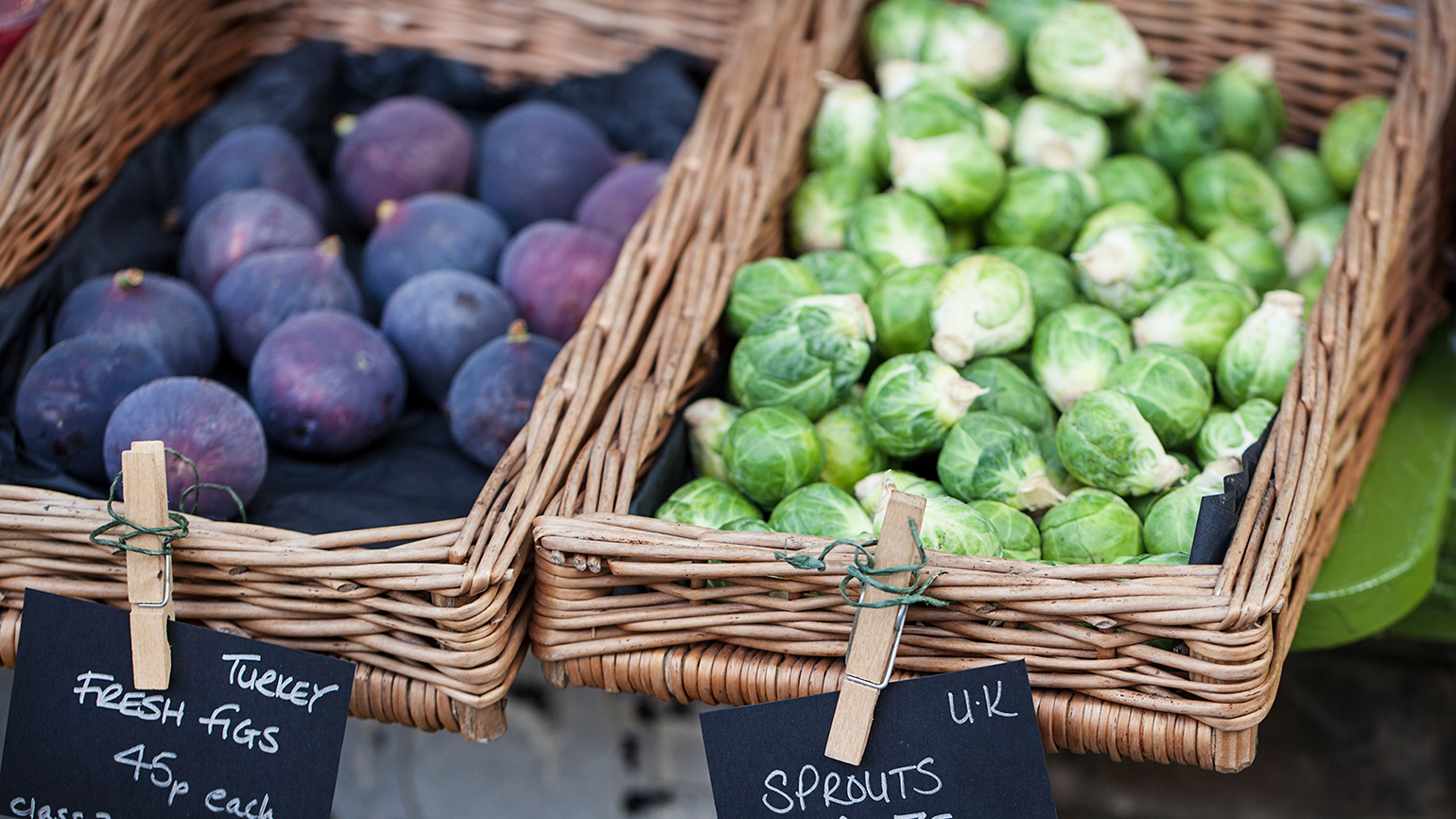
| 2 c. Brussels sprouts, trimmed and halved |
| 1 small sweet onion, sliced |
| 8 figs, halved |
| 1 ½ Tbsp. olive oil |
| Leaves from 6 sprigs of thyme |
| Salt and pepper to taste |
| 1 Tbsp. aged balsamic vinegar |
Preparation
1. Preheat oven to 400 degrees F.
2. Toss the Brussels sprouts, onion, and figs with the olive oil and place on a baking sheet lined with parchment paper. Sprinkle with thyme leaves, salt, and pepper.
3. Roast for about 30–35 minutes, turning the Brussels sprouts at least once to evenly roast.
4. Once the Brussels sprouts and onions caramelize and the figs appear slightly shriveled, remove from the oven and coat with the aged balsamic vinegar.
Serves 2-3.
Nutritional Information: Calories: 350; Fat: 11g; Cholesterol: 0mg; Sodium: 1200mg; Total Carbohydrates: 60g; Dietary Fiber: 11g; Sugars: 26g; Protein: 6g.
Read Margaret’s story How Fig Trees Can Help You Achieve Workplace Satisfaction
Excerpted with permission from Taste and See: Discovering God Among Butchers, Bakers, and Fresh Food Makers by Margaret Feinberg from HarperCollins Publishing.
Roasted Turkey Breast with Cornbread-Sage Stuffing and Brandy Gravy
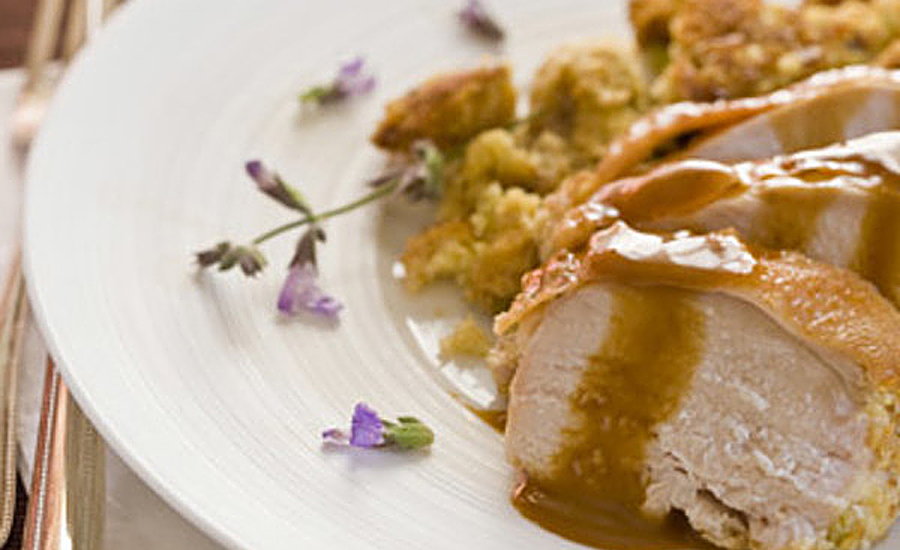
The turkey conundrum: How to keep the breast meat from drying out while the dark meat finishes cooking? By roasting a bone-in turkey breast by itself, we’ve eliminated the stress and cut the cooking time by several hours.
What you get is perfectly moist, tender white meat with crisp, salty skin—all in under an hour. If you don’t have time to make the gravy or want to cut calories, skip it. This succulent bird doesn’t need it.
Ingredients
| Stuffing | |
| 2 Tbsp. unsalted butter | 1 bay leaf |
| 1 small red onion, finely chopped | 2 Tbsp. finally chopped fresh sage |
| 2 stalks celery, finely chopped | ½ c. chicken stock |
| 1 garlic clove, minced | 4 c. stale cornbread, crumbled into large pieces |
| ¼ tsp. freshly grated nutmeg | 2 large eggs, beaten |
| ¼ tsp. freshly ground black pepper | |
| Turkey | |
| One 3 ½-to-4-lb. bone-in turkey breast, halved at the breast bone |
1 ½ Tbsp. olive oil |
| Gravy | |
| One 1 ½-oz. container veal or chicken demi-glace | 1 Tbsp. unsalted butter |
| 1 Tbsp. brandy | ½ c. heavy cream |
Preparation
Stuffing
1. Preheat oven to 425°F and grease 9-by 13-inch roasting pan.
2. In large skillet over moderately high heat, melt butter. Add onion, celery, garlic, nutmeg, pepper, and bay leaf, and sauté until vegetables soften, 5 to 6 minutes.
3. Stir in sage and cook 30 seconds more. Stir in stock and simmer, uncovered, until liquid is reduced by half, about 3 minutes.
3. Put cornbread in large bowl and pour vegetables over. Toss to mix well. Add eggs and stir to combine.
Turkey
1. Rinse breast halves and pat dry. Season generously with kosher or coarse sea salt and freshly ground pepper, and rub all over with olive oil.
2. Mound stuffing in center of roasting pan and arrange turkey on top, making sure breast halves aren’t touching. Roast until thermometer inserted into thickest part of turkey (do not touch bone) registers 170°F and juices run clear when pierced with fork, 45 to 55 minutes.
Make the gravy while turkey is roasting.
1. In small saucepan over moderately high heat, combine demi-glace, ½ cup water, and brandy. Bring to boil, stirring until smooth.
2. Stir in butter, reduce heat, and simmer uncovered, stirring often, until gravy thickens, about 1 minute.
3. Stir in cream and season with freshly ground pepper. Serve hot, over turkey and stuffing.
Makes 4 servings
Tips
• It’s easiest and fastest to ask your butcher to split the turkey breast in half for you.
But this can also be done at home: Use a heavy, sharp knife and don’t be afraid to whack the breast at the wishbone several times until it comes apart. Slicing the skin down along the breastbone before you start cutting is also helpful.
• If your cornbread isn’t stale, spread out slices on a baking pan in a 200°F oven until they feel dry and crumbly. (Depending upon how moist the loaf is, this can take anywhere from 20 minutes to an hour.)
Then crumble up the slices. Any leftover stale bread—rolls, focaccia, even bagels—can be substituted for the cornbread.
• In the gravy, bourbon, whisky, wine, port, or vermouth can be used instead of brandy.
This recipe was first printed on Epicurious.com and is reprinted here with permission.
Rio 2016: Joe Kovacs’ Olympic Journey
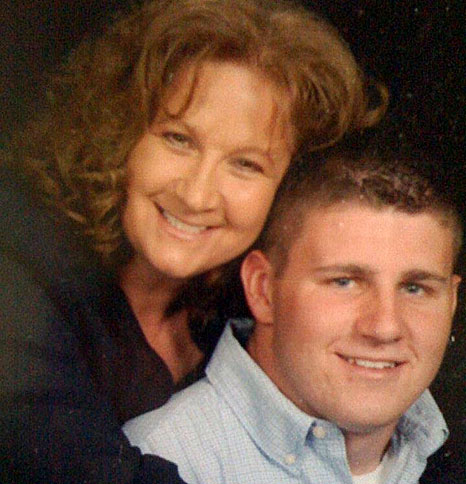
Joanna Kovacs‘ son, Joe, will be throwing the shot put for the U.S. in the 2016 Olympic Games. As an athlete and a single mom, Joanna was mother, father and even coach to Joe throughout his accomplished career. For more inspiring stories like this one, subscribe to Guideposts magazine.
Rio 2016: A Mother’s Pride in Her Olympian Son
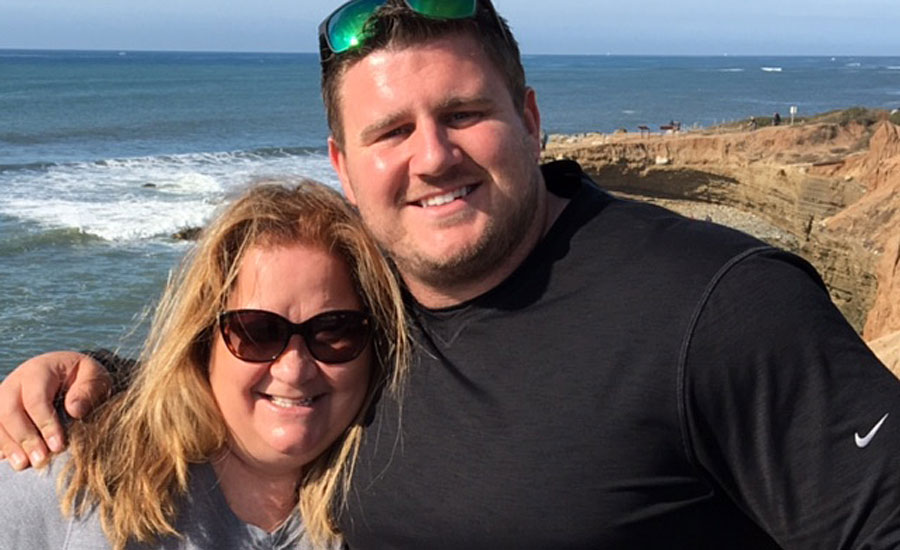
Joey sounded so discouraged that April night in 2013. He was calling from the Olympic Training Center in Chula Vista, California, where he spent his days throwing the shot put.
“Mom, I don’t know if this is going to work out,” he said. “I just can’t seem to make all of these changes that Coach wants.”
Joey was 23 years old, six feet tall, 275 pounds, and yet he would always be my baby.
READ MORE: CHRISTEN PRESS REDISCOVERS HER LOVE FOR THE GAME
“Look, you don’t have to do this, Joey,” I said. “You can come home and no one will think less of you. You have options. You can get a job. Move on.”
I paused, taken aback by my own words. I was a coach and a high school physical education teacher. I would never have told one of my students to quit when the going got tough. But part of me wished Joey would come home. We’d never lived this far apart. Even when he was at Penn State University he’d only been two hours away.
Despite my career, for me it was never about my son being an elite athlete. All I ever wanted for Joey was for him to be happy. His dad had died when Joey was only seven. Ever since, it had been just the two of us.
“I’m going to pray about it,” Joey said. He always prayed to discern what was best in any major decision. “I don’t want to do something I’m going to regret.”
I told him I loved him, that I’d be praying too, and we hung up. It was times like this that I missed my husband, Joe. The two of them had been a real team. He’d coached Joey’s church basketball team and his Little League baseball team.
When I was in high school I had played four sports and won 12 district titles throwing discus, shot put and javelin. I loved competing, pushing myself to reach higher and higher goals. But for Joe and Joey I was happy to root from the sidelines.
The spring of 1996, Joe was diagnosed with colon cancer. He died a year later. Just a day after that my mother died of a heart attack. I’d lost my father the summer I graduated from high school. Now it was just Joey and me. Work, church and Joey. That was my life.
READ MORE: SHAKUR STEVENSON READY PUNCH HIS GOLDEN TICKET
Joey needed me to be more than just his mother. I drove him to school. I met him at the bus every afternoon. I helped him with his homework. Of course we went to church together. The first fall after Joe’s death, I joined Joey’s basketball team as an assistant coach. I did it all with a single-minded focus. I didn’t go out with friends. Didn’t take up a hobby. Definitely wasn’t interested in dating. My focus was on raising Joey.
It wasn’t just me doing things for Joey. He tried to fill his father’s void. He mowed the lawn, fixed things around the house. He was always trying to help.
Joey grew like a weed. He had the same strong build Joe and I did. When he enrolled at Bethlehem Catholic High School he was a shoo-in for the football team.
I never missed a game. One day, near the end of the season, Joey said, “Coach thinks I ought to go out for track. You know, like throwing the shot put. He says it will help my footwork on the field.”
“I threw shot in high school,” I said. “If I can help, let me know.”
The first week of track practice I got to the school early to pick him up. Joey and the other track athletes were throwing in the parking lot. The school was too small to have its own track.
I looked on. Joey took the 12-pound shot, reached back and tried to throw it like a baseball. It landed on the asphalt with a thud, not 10 feet away.
I jumped out of the car. “Here,” I said. “Let me show you. You have to know how to hold it.”
I demonstrated, pressing the shot against my neck. “You lean down, with your non-throwing arm pointing down at an angle.” I jumped backward, rotating my hips, my throwing arm rocketing upward like a piston. The shot cleared the parking lot. I’d thrown it at least 25 feet.
“That was amazing,” Joey said, a look of awe on his face.
READ MORE: DAGMARA WOZNIAK’S AMERICAN DREAM
“Getting the release down is critical,” I said. “You have to know when to let go. The power comes from your legs, your hips. Your whole body. Then the release. That’s the key.”
Joey nodded. I handed him the shot and guided him on how to set himself up in the circle and glide to the center, then how to do it all in one smooth motion. He was awkward at first, but by the end of practice he was throwing nearly as far as I had.
“What’s going on here?” I heard a voice say. It was the head coach.
I explained that I’d shown the kids the basics. “Do you think you could coach them?” he asked.
I was happy to. Every afternoon I worked with the throwers. I painted circles in the parking lot, like the ones the kids would have at their meets.
That season Joey’s longest throw was 35 feet. Not great, but a lot better than his first try. With every throw he looked to me for advice. It was something we could talk about, another way to stay close, for me to be there for him.
The next year he threw 46 feet. That summer he went to a throws camp. One of the young instructors there, a guy named Reese Hoffa, offered some advice. “You’re a little on the short side,” he said. “You should try spinning. That will increase your throw.”
Spinning—the rotational technique—wasn’t something I was familiar with. But with the help of another coach, Glenn Thompson, I learned it and we worked on perfecting Joey’s mechanics.
By the end of Joey’s junior year he threw 57 feet! He won the district championship and went on to the state finals. The next year he threw over 60 feet. He was following in my footsteps! How proud was I?
READ MORE: DANELL LEVYA CONTINUING A LEGACY
But at districts he had struggled, more with his confidence than with his physical abilities. He was second-guessing his every move. Although I felt for him as a mom, I knew that that wasn’t what he needed. He needed me to be his coach.
“Joey, stop thinking about it,” I told him. “Relax and just go throw it.” He walked with deliberation toward the circle. I watched carefully. He set up, then purposefully rotated his body with a tremendous, explosive force. The shot took flight, sailing through the air. He threw it 64 feet, 11 inches. A state record!
I watched him at the podium ready to accept his medal. I was bursting with pride. All that work, all that encouragement, had been worth it. I’d devoted myself to Joey, kept him close, tried to always be there for him. Nothing else mattered.
Now, alone in my house in Pennsylvania after his wrenching phone call from California, I relived that moment at the district finals. So much had happened since that day.
Joey had gotten a scholarship to Penn State, where he majored in energy business and finance. He’d gone on to set higher and higher marks. I’d been at every home meet, and a lot of the away matches. Afterward we would always go out for dinner and spend some time together.
“Mom, I love you for all you’ve done for me,” Joey would say, “but shouldn’t you meet new people? Go out with friends? Maybe even date?”
“You are probably right,” I’d tell him. Deep inside, something stirred, and it scared me. Someday I would have to let Joey go. He was a man now and he had his own life to live.
Joey graduated in 2012, having broken Penn State’s shot-put record. That summer he competed in the Olympic trials for a chance to go to London. His farthest throw was 69 feet, 2 inches—just a little too short for him to make the team. In first place was his instructor from that high school throws camp, Reese Hoffa.
Joey was thrilled with his own performance, a personal best. Of course I was there. As he walked off the field a representative from Nike rushed up and offered to sponsor him.
A few months later Joey and I made the trip to California to the Olympic training center together. Art Venegas, a legendary Olympic throws coach, had agreed to train and mentor him. I was excited for Joey. But this phone call? This downheartedness? It had me worried. I couldn’t help him. In fact, I probably shouldn’t help him, I realized. I know he could do this himself. So I did the right thing. I prayed.
READ MORE: HOW BROOKE SWEAT FOUND LOVE ON THE SAND
Lord, you know Joey, better than even I do. Please be with him. Give him the wisdom to make the right choice.
It was days before we talked again. When Joey called, he sounded happier, more like his old self. “After much discernment,” he said, “I feel like this is the right move. Like I was meant to be here. And Mom, I remembered what you told me. To just go do it.”
I smiled. But in his words I heard more than the echo of a former coach. I thought of the first day I’d taught him to throw the shot, how he hadn’t even known how to hold it, when to release. It felt good knowing I’d gotten him to this point, all the work that had gone into it. And now? Clearly we’d made the turn. There was nothing more for me to do. It was time. Time to let go. I was at the release point.
Three years later, Joey and Coach Venegas are definitely clicking. In 2015 Joey won gold in the World Championships with a throw of nearly 72 feet. Now he’s focused on Rio de Janeiro and the 2016 Summer Olympics.
I’ll be in the stands cheering like crazy—the way only a mom can. But I won’t be alone. My new husband, Larry, a sweet, caring man I met in a support group for widows and widowers, will be beside me. As I told Joey a long time ago, it’s all about the release.
Did you enjoy this story? Subscribe to Guideposts magazine.
Ricotta Gnocchi
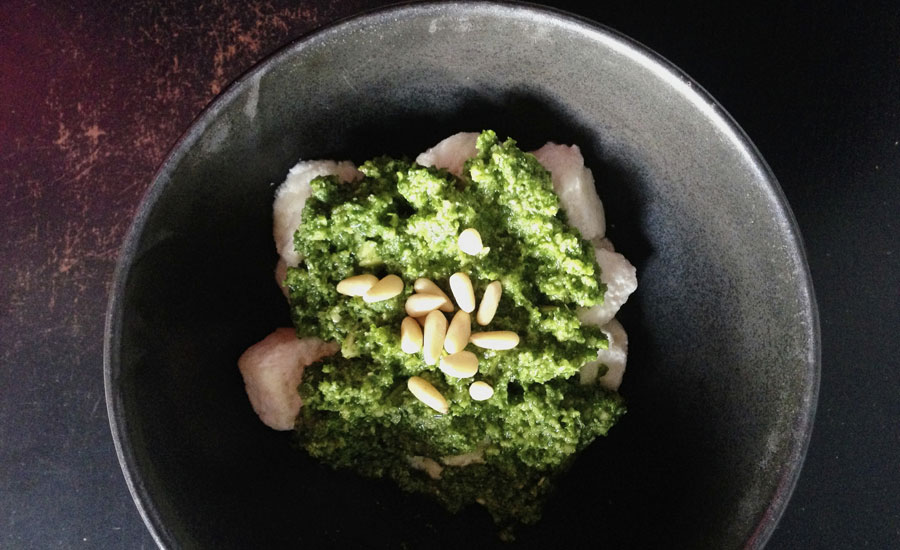
My mother’s version was made from white flour and potatoes, which gave it a really high glycemic index and made insulin spike. I found this recipe in the Robert Lustig’s Fat Chance Cookbook and adapted it to suit the goal of reduced carbs. We have made it in class several times. The medical students love it!
Ingredients
| 1 c. ricotta cheese—whole fat | ½ c. whole wheat flour |
| 1 large egg | ½ c. semolina flour. You can use quinoa or coconut instead of the semolina flour to lower carb count even more. |
| ¼ c. Parmesan cheese | 1 tsp. salt |
Preparation
1. Combine ricotta and egg in large bowl and mix thoroughly. Add Parmesan cheese. Mix again.
2. Add flours to cheese mixture. Mix with a fork until dough comes together. Should be soft and moist, but don’t overmix.
3. Place dough on a floured surface (or a piece of parchment paper so it won’t stick). Form a ball. Divide ball into 4 pieces and work into the shape of a rope by spreading from the center out to the edges and elongating the rope. Should be the width of your little finger (about 1/2 inch).
4. Take each piece of rope and cut into bite size pieces, about the size of your thumbnail. You can use a fork to make little impressions on them – but we always used our thumb (this is to hold onto the tomato sauce).
5. To cook the pasta, put about 20 pieces into a pot of boiling water, stirring with a wooden spoon so they won’t stick. When the pasta pops up and floats on the top of the water, they are ready (usually takes 4-5 minutes). Scoop up with a small strainer and place on baking sheet so they won’t clump and stick together until all the pasta is cooked and ready.
6. Dress with your sauce of choice. These are good with a traditional red Italian sauce or a pesto.
Hints: When cutting the pasta, keep pieces fairly small (about size of adult thumb nail). If they are cut too big, they seem too doughy. The pasta also freezes well and will keep up to three months. First freeze each piece separately on a cooking sheet or parchment paper in a baking dish. Once frozen, all the pasta can be put into a zip-lock baggie or container.
Nutritional Information—per 1/2 cup serving: Calories: 236; Fat: 6.5g; Sodium: 667mg; Total Carbohydrates: 41g; Dietary Fiber: 7g; Sugars: 21g; Protein: 4g.
Rend Collective Is on a Worship Mission

According to Rend Collective, there are a lot things the Irish are known for – sausage and sarcasm make the top of the list – but being “professional” isn’t one of them.
That may be why the Christian worship band from Bangor, Northern Ireland seems so unrestrained when they perform live. It’s also the reason why they started making music in the first place – they wanted to lead people in authentic worship.
READ MORE: OWL CITY EXPLORES FAITH ON NEW ALBUM ‘MOBILE ORCHESTRA’
Group members Gareth Gilkeson, Chris Llewellyn, Ali Gilkeson, Patrick Thompson and Steve Mitchell began playing together 13 years ago as a part of a larger worship band at Rend, a ministry of young college students hoping to draw their peers back into the church and make the Gospel a lifestyle as opposed to a Sunday morning ritual.
“We noticed a lot of people were leaving church when they reached 18 or 19 years old,” drummer Gareth Gilkenson tells Guideposts.org. “There wasn’t something for people in their 20s and early 30s. Our church had become very professional and we had found that there was a disconnect. [Young people]were looking for the reality of connecting with God.”
While lead singer Llewellyn lead worship, Gareth ministered to his peers. Music was played at every gathering, but it didn’t occur to anyone that the songs being sung every Sunday could ever become a career for anyone in the group.
“We were all musicians, and we had all played in other bands, but it wasn’t the idea at the start,” Thompson, who plays bass for the group, says. “I don’t ever remember thinking that I was going to have a career this way.”
Just six years ago, the band formed what is now Rend Collective and began writing their own songs and producing a couple of records before their first and critically acclaimed 2010 album, Organic Family Hymnal was released. Their live acoustic album, Campfire showcased their originality and passion to build community and intimacy with their music.
Comprised entirely of acoustic songs recorded around an actual campfire, the album – which landed on top of the Christian music charts when it was released — sported a unique mesh of Irish Christian folk rock songs with catchy hooks and meaningful lyrics steeped in Biblical rhetoric.

Steve Mitchell, Chris Llewellyn, Gareth Gilkenson, Patrick Thompson and Ali Gilkenson of Rend Collective
But having so much success early on meant the Christian music group wanted to challenge themselves even more with their follow-up release. The Art of Celebration, the band’s fourth album, debuted number one on the Billboard Christian Music charts and spoke to the group’s desire to be classified as a Christian celebration band rather than just Irish folk singers.
“What people always connect with us is the idea of joy and celebration,” Gilkenson explains. “We realized this is part of our story. This is what people find unique and helpful about what we do, so we should magnify that and focus on that.”
Now they’re gearing up for the debut of their fifth record, As Family We Go, which drops August 21st. The album — already number one on iTunes’ Christian Albums chart — touts quick-tempo tracks grounded heavily in Irish folk roots with verses that speak to their faith and hooks that sing like anthems.
READ MORE: MATE REDMAN ON FAITH, FATHERHOOD, AND ‘UNBROKEN PRAISE’
“We’ve tried to push those boundaries a bit more, but still keep it in the context of church,” Gilkenson says of the new music. “There’s nothing more powerful than the church. We write church songs that worship leaders can get up in their congregation and sing. That’s our focus. We want people to be able to walk in off the street, hear our music and go ‘I feel at home here. I don’t feel out of place.’”
The band continues to provide the soundtrack to worship experiences, recently playing to sold out shows on Chris Tomlin’s Worship Night in America tour before heading back across the pond to tour in the UK. Not bad for a bunch of Irish musicians who used to minister to pub goers and had to pay for their own petrol when making their church rounds.
“That’s the most exciting thing about us is that we’re an international band,” Gilkenson says. “We get to travel, which just adds a wealth of experience.”
Ultimately, the group just hopes their music can help others searching for their way to a deeper relationship with God.
“Someone once said to me ‘You can’t tell the theology of the church from what the pastor says but from what the church sings.’ We try to write songs that talk about pursuing joys through difficulties and that talk about pursuing the outsider. We’re not a cozy club as a church. We’re on a mission.”
Remembering Rose Marie—90 Years an Entertainer
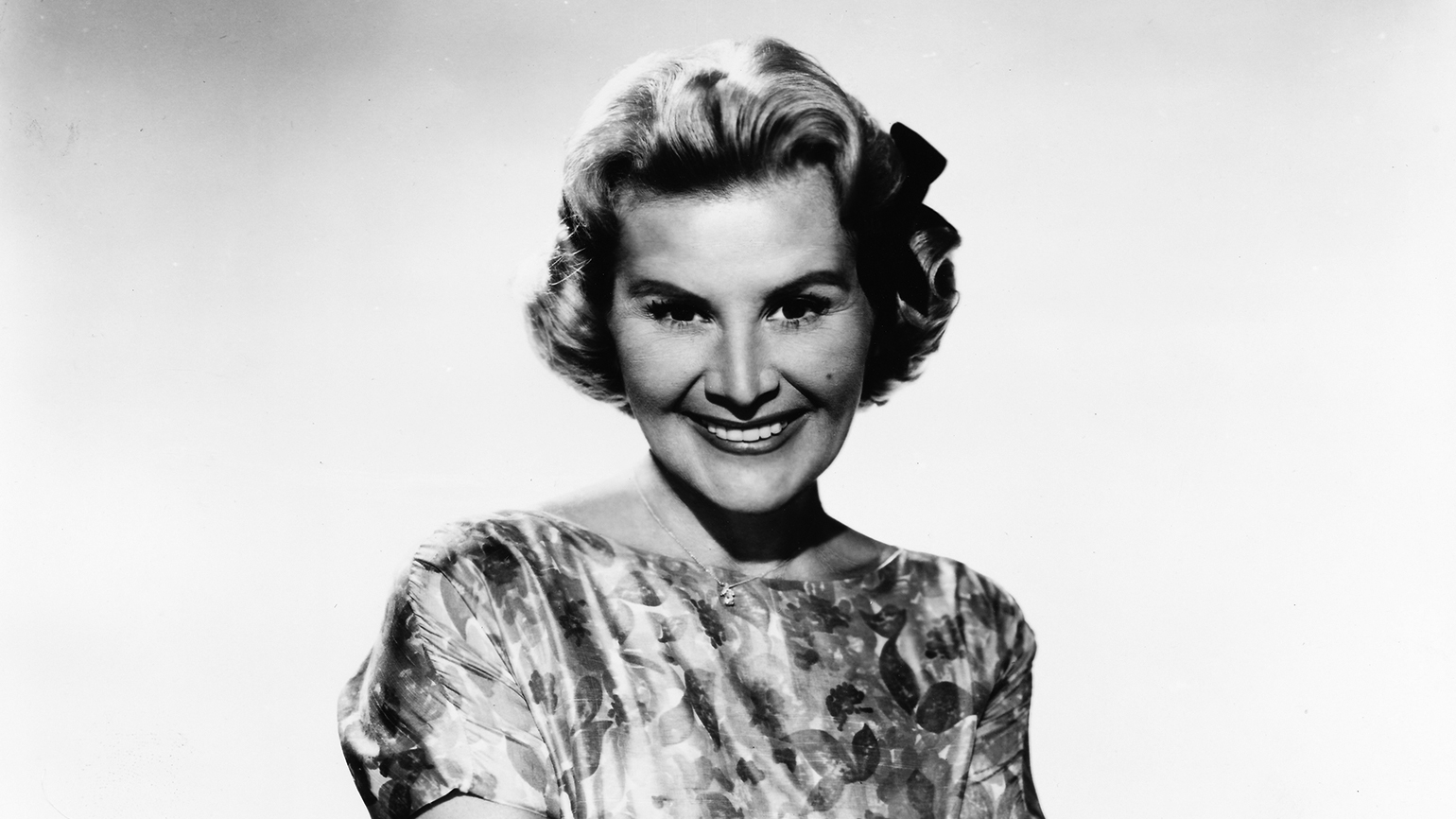
Rose Marie played Sally Rogers on The Dick Van Dyke Show, made audiences laugh on Hollywood Squares, and was a child star with a national radio show before Shirley Temple was even born. She’s been working for more than 90 years. And she’s still working.
I had the distinct pleasure recently of enjoying an hour-long phone conversation with Rose Marie. A delightful new documentary, Wait for Your Laugh, celebrates her nine decades in show business and reminds us that, though she’s best remembered by many for her TV roles, those successes are just the tip of the iceberg of a career that has spanned vaudeville, radio, records, television, Broadway and motion pictures.
“I’m very proud of [the documentary],” said Rose Marie. “I love it. I’m so proud of Jason [Wise, the director], I can’t stand it. I think he’s a genius.”
At 94, Rose Marie maintains a positive outlook on life, but she acknowledges that living so long is not without its challenges. “It’s hard being older and losing all your friends little by little… I keep very busy and I keep in touch with my friends. I still send birthday cards, anniversary cards and things like that. I keep up my life as best I can.”
She’s doing more than keeping up.
Rose Marie, who lives in Southern California with her dog, Bailey, is active on social media, with large followings on Facebook and Twitter. “I love [social media]. I love what people say. I get so taken away by what people say about me. It’s wonderful.”
She started working when she was just four years old, had a widely popular national radio show soon after, and toured nationally when she was 7. She’s worked with Hollywood royalty like Lucille Ball, Danny Thomas, George Burns, and Jimmy Durante.
“Life is one day after the other. You take one after the other as it comes, and you make the best of what it is.”
Rose Marie’s been making the best of it since 1927, when she began her historic career.
“My family has always been very close… My mother used to take me to see all the shows, the vaudeville, the movies, this and that. I used to come back to the apartment and I would entertain my grandmother and grandfather, and [the neighbors] who lived up on the third floor.
“One day, they came to my mother and they said, ‘We’ve entered her in an amateur contest.’ … They bought the dress that I wore. They bought the Mary Jane shoes… They’re in the Smithsonian, those shoes.
“Now you’ve got to imagine a four-year-old kid with this voice that I have, singing What Can I Say, Dear, After I Say I’m Sorry? like Sophie Tucker. Naturally, I won.”
Soon, Baby Rose Marie, as she was now known, was performing at various spots around New York City. NBC Radio Network soon heard about Rose, and she was given a national radio program.
Radio was a new medium just hitting its stride—60% of American homes now had a radio—but NBC was then the only network broadcasting to the entire nation. Rose Marie became hugely popular; she was known as the Darling of the Airwaves.
Many listeners were skeptical, given her brassy singing style, that Rose Marie was actually a child, so NBC booked her for a vaudeville tour at RKO theatres, so that her fans could see her for themselves.
“I learned so much in vaudeville,” Rose Marie said. “All the people in the shows that I was in…they taught me everything that they did in their act… To the day he died, George Burns used to call me ‘Baby,’ and Lucille Ball did the same thing. She said, ‘I can’t call you Rose Marie, you’re a baby.’”
Her father, who was something of a questionable character (“He was not a nice man,” she said), saw the chance to make a buck off Rose Marie, and, as she tells it, “He took charge. He was my manager, my agent, everything.” Unfortunately, at a time when Rose Marie was making very good money, as much as $1,000 a performance, it all went into (and quickly out of) her father’s pocket. Rose Marie never saw a penny.
Still, she doesn’t feel she missed out on the more typical joys of childhood. “No, not a bit,” she insists. “I traveled all over the country. I went to places that I learned about in school… I did everything that anybody would give their right arm for, and I met some wonderful people along the way.
“I was never pushed. I always loved what I did. I was very happy to do it. Nobody pushed me, not even my father.”
So much a show-biz kid was Rose Marie that when asked what she might have done with her life if she’d never entered show business, she was stumped. “I don’t know,” she said thoughtfully in response to my question. “I really don’t know. I can’t answer that, I’m sorry… [Show business] was all I knew. I didn’t even think about anything else… To this day, I love it.”
In 1946, Rose Marie married trumpeter Bobby Guy. He died in 1964 of a blood disorder at age 48.
“He was my soulmate,” Rose Marie said. “He really was. Three days after I met him, I said, ‘That’s the man I’m going to marry.’ They said, ‘But you don’t know anything about him.’ I said, ‘I don’t care. That’s the man I’m going to marry.’
“My girlfriend Geri, who’s in the documentary, said to me, ‘You’re going to marry that fat sergeant?’ I said, ‘He’s not a fat sergeant. He’s stuffy, but he’s good.’ She says, ‘I can’t believe that you, who doesn’t want to go on blind dates, you meet somebody and three days later, you’re going to marry him?’ I said, ‘That’s right.’ She helped me elope.
Did she ever consider remarrying? “No. I always felt that was my marriage. To this day, I still think I’m married to him.”
Family is very important to Rose Marie, and she remains very close to her daughter, who watches over her mother’s life and career.
Her first TV appearance in California was a 1957 guest spot on Gunsmoke (she played a rough-hewn 60-year-old pioneer woman), which was followed by recurring roles on The Bob Cummings Show and My Sister Eileen and assorted guest spots on other programs. She was even the first female game-show host, on a program called Scoop the Writers that saw a short run in the late 1950s.
Then came The Dick Van Dyke Show.
“When I went up for the [Van Dyke show], that happened where I’d been working in Vegas. Sheldon Leonard and Danny Thomas…used to come and visit me when I played Vegas. Sheldon used to say to me, ‘Don’t you ever bomb?’ I said, ‘Not if I can help it!’
“One day I get a call from a casting office [for a new show called the Dick Van Dyke show]. I said, ‘What’s a Dick Van Dyke?’”
Next, Rose Marie spent 14 years as a regular on the game show Hollywood Squares, and she remains close friends with host Peter Marshall today; he even appears, along with Van Dyke and Reiner, in her new documentary.
“Peter’s the most wonderful man in the world… We did Squares for 14 years. Everybody thinks we were told the questions and the answers—no, we weren’t. The $64,000 Question show was just found out to be a fraud, and so everybody was worried. We couldn’t even talk to the contestants when we were in the hall. We weren’t allowed to talk to anybody.”
While Rose Marie was appearing on Hollywood Squares, she also had a recurring role on The Doris Day Show. “[Doris Day is] the sweetest woman in the world,” she said. “The way you see her and know her is the way she is, really. She’s the sweetest thing in the world… She calls me and I call her about once a month.”
Jimmy Durante is another legendary figure with whom Rose Marie enjoyed an association. “To work with him [in Las Vegas] was the biggest thrill of my life… Towards the end of his act, I used to run out on stage and do my Durante [impression]. He’d say, ‘Wait a minute, wait a minute. There’s an imposter here and I don’t know who it is.’ Then the two of use did Durante and we did the walk-off together. It was unbelievable. It would be sensational today.”
While her mobility is not what it once was, Rose Marie still does occasional voice work. “I do voiceovers. I just did a couple of Garfields… It was so much fun—and so easy! You don’t have to worry about makeup. You don’t have to worry about getting dressed. You can go in and sit down, and there you go.”
It’s hard to think of anyone who has been so successful in so many different areas, and who was still working after 90 years.
“I’m very happy that I wound up like this in my old age,” Rose Marie said. “I don’t think it could be any better.”
For more inspiring stories, subscribe to Guideposts magazine.
Remembering Glen Campbell
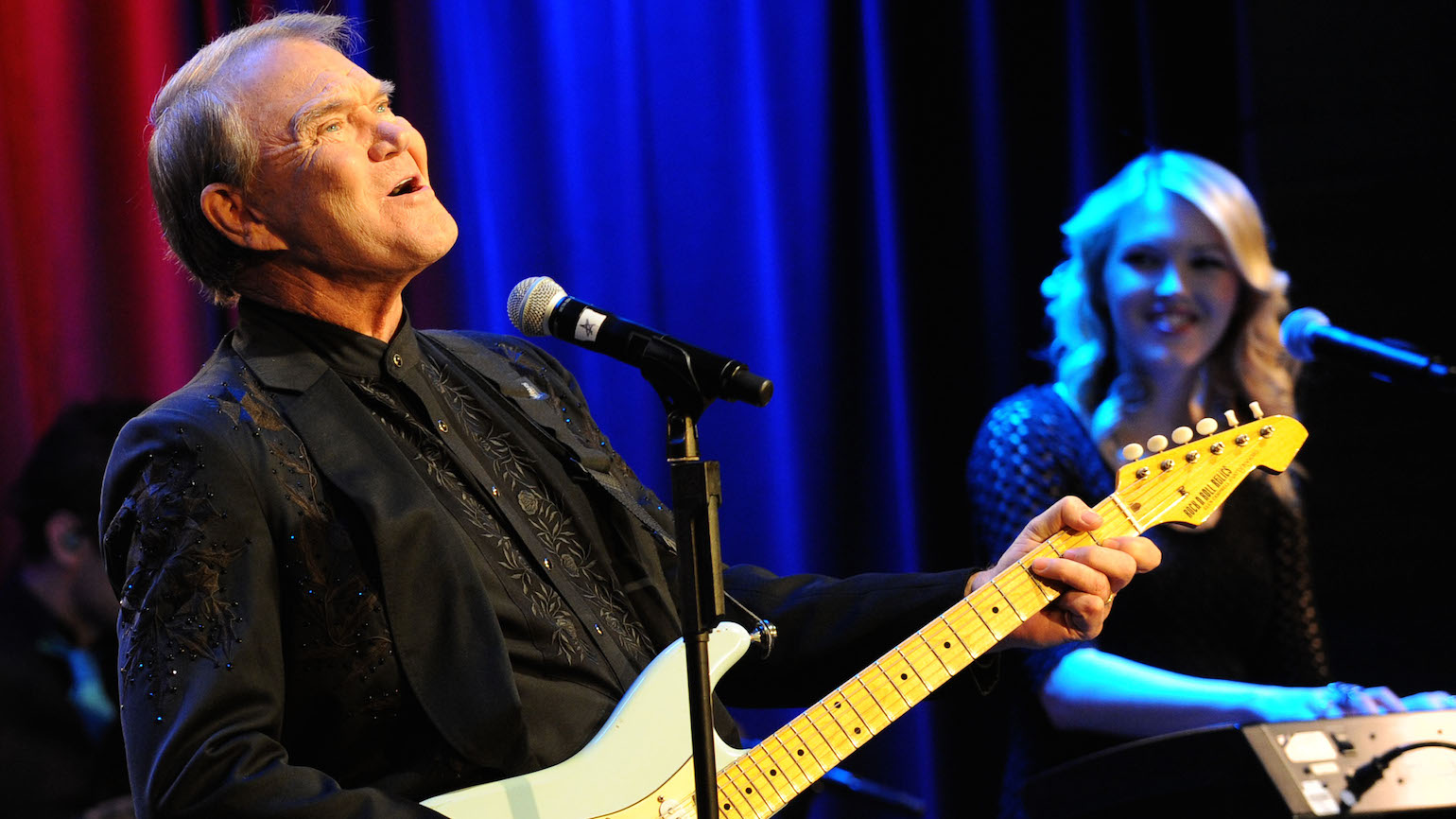
Glen Campbell died Tuesday, August 8, at the age of 81 in Nashville.
When I met Glen Campbell he was sprawled on a couch in his condo in Branson, Missouri, a Martin guitar at his side and a Titleist putter waggling in his hands. The night before, I’d attended a concert at his Branson theater. It had been an interesting show. The first half was a spirited romp through his greatest hits—Wichita Lineman, Galveston, Gentle On My Mind, By the Time I Get to Phoenix—played with such gusto that it was clear he still loved every note of Jimmy Webb’s classic compositions. It’s a wonderful thing to see a great artist who never tires of his material. It was decades after these hits had charted, decades filled with Glen’s alcohol and cocaine abuse, a broken marriage, a declining career, but Glen was still the Rhinestone Cowboy glittering under the stage lights, with that Martin slung over his shoulder. He was more than a great artist. He was a great entertainer.
The second half of the show took an unexpected turn. I didn’t quite know what to think of it. It was Webb’s impressionistic Christian allegory based loosely on the Book of Revelation featuring modern dance, sound and lighting effects, and not too much Glen Campbell. It lasted about a half hour and seemed weirdly incongruous for a place like Branson.
Read More: Glen Campbell on God’s Grace
So when Glen’s wife, Kim, welcomed me into their condo which overlooked a slightly burned-out golf course, I meant to ask Glen about the second act quasi-religious extravaganza. I never really got the chance. We discussed his wild days and his subsequent sobriety, his re-baptism in a creek near his boyhood home of Delight, Arkansas. Just as I got around to asking him about the strange second act of his show I noticed Glen staring longingly out his picture window at the golf course. He had grown increasingly distracted, pacing and practicing his putting while he talked.
“I think I’ve taken up enough of your day off, Glen,” I said, putting away my notes.
He smiled and said, “Pleasure to talk with you. Kim and I are real fans of Guideposts and Dr. Peale.” And with that he pulled his clubs from a closet and was out the door.
“He’s a little ADD after six days of performing and eight shows,” Kim said with a laugh. “And golf is the one addiction he’ll never kick.”
Kim and I talked over coffee for another hour or so. She told me how incredibly hard it was for Glen to kick cocaine and booze. “Addiction had a stranglehold on his life,” she said, “until he gave himself completely to God. It was a miracle.”
Branson was part of the road back. It wasn’t always a straight road. Glen stumbled along the way but Kim was always with him just like the songs of Jimmy Webb.
Read More: Glen Campbell’s Touching Final Album
Now Kim’s Rhinestone Cowboy has left us after a long struggle with Alzheimer’s. I never got to ask about that strange interpretation of Revelation that I saw in Branson or why Glen performed it. I remember it ended with a violent storm that shook the theater to its rafters followed by a sunrise and a last number by Glen. I don’t remember the song. It wasn’t one of his hits. But I remember him standing alone in the center of the stage as the spotlight ever-so-slowly faded. There was a long silence before the audience rose to its feet and applauded. The applause lasted far longer than the silence.
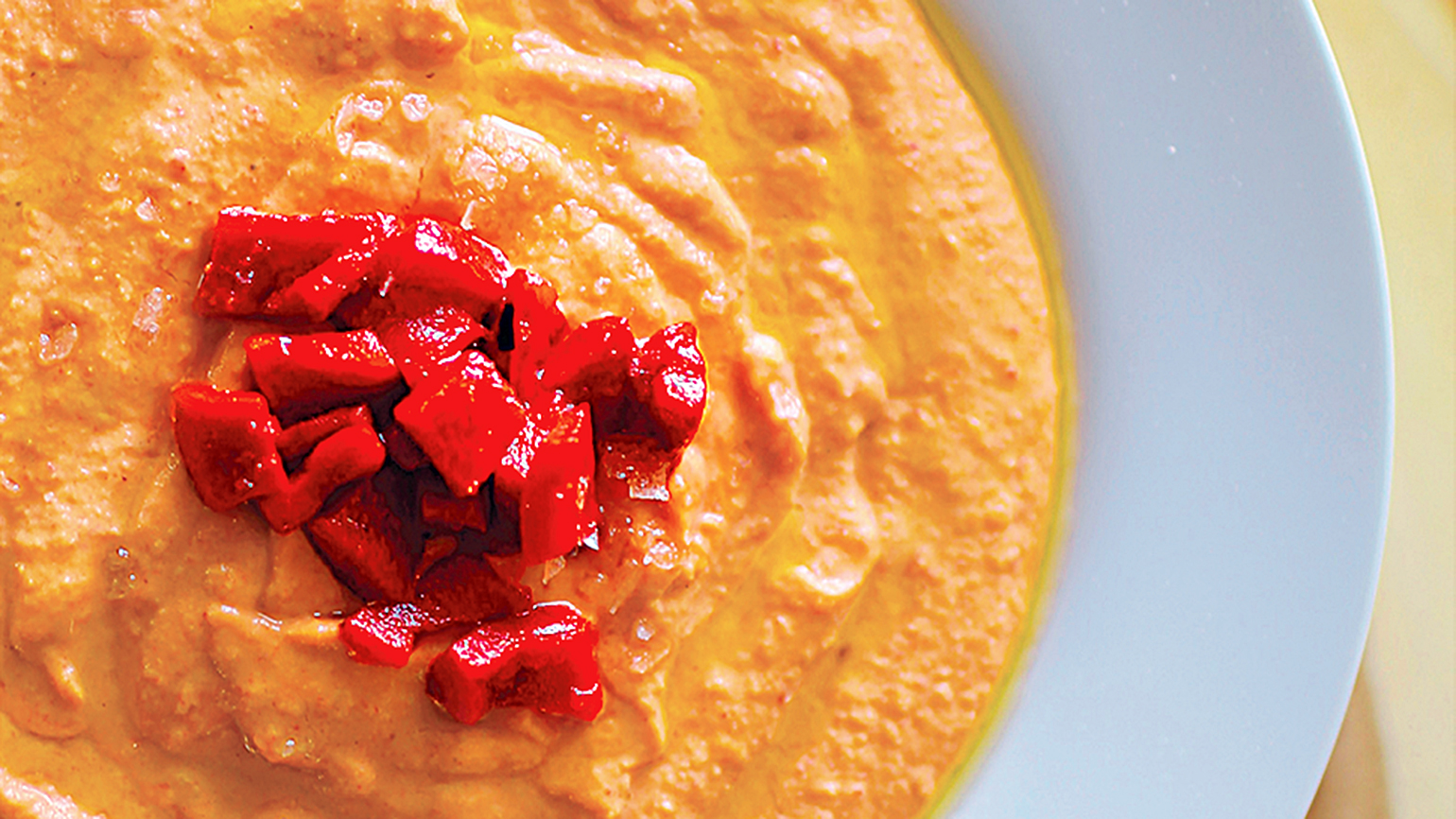
Red Pepper Hummus
Ingredients
| 1 can (13.5 ounces) chickpeas, drained, with 2 tablespoons of liquid reserved |
| ¼ c. tahini paste, stirred well before measuring |
| ¾ c. roasted red peppers, drained |
| 1 Tbsp. freshly squeezed lemon juice, or more to taste |
| 2 garlic cloves, coarsely chopped |
| 2 tsp. chili oil or 1 or 2 pinches chile flakes |
| 1 tsp. kosher salt, or more to taste |
| Freshly ground black pepper |
| ¼ c. extra-virgin olive oil |
| Flaky sea salt, such as Maldon (optional) |
| Pita chips or fresh veggies for serving |
Preparation
1. In a food processor, combine the chickpeas and liquid, tahini, red peppers, lemon juice, garlic, chili oil, salt and a pinch of pepper. Blend until smooth, scraping down the sides as needed.
2. Taste, seasoning with more salt and lemon juice if desired.
3. With the processor running, drizzle in olive oil.
4. Transfer to a serving bowl, and garnish with a drizzle of olive oil, a squeeze of lemon juice and a pinch of Maldon sea salt (if using).
5. Transfer to a serving bowl, and garnish with a drizzle of olive oil, a squeeze of lemon juice and a pinch of Maldon sea salt (if using).
6. Serve with pita chips and/or fresh veggies of your choice. Hummus can be covered and refrigerated for up to two days.
Makes about 1 ½ cups.
Nutritional Information (serving size ⅛ cup): Calories: 110; Fat: 8g; Cholesterol: 0mg; Sodium: 280mg; Total Carbohydrates: 7g; Dietary Fiber: 2g; Sugars: 0g; Protein: 3g.
Excerpted from The Seasoned Life © 2016 by Ayesha Curry. Reprinted with permission of Little, Brown and Company, New York. All rights reserved. Photograph by Caroline Egan.
Rediscovering Faith
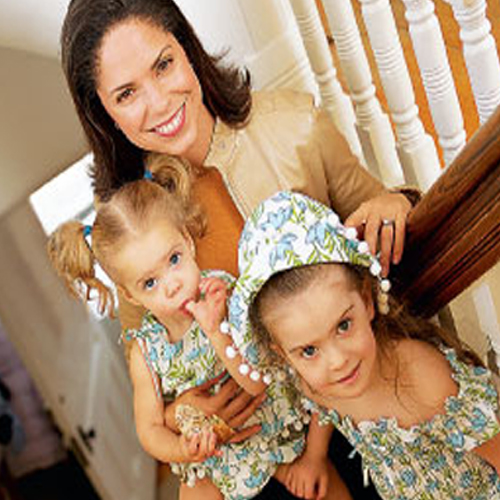
My parents named me Maria de la Soledad: Spanish for the Blessed Virgin Mary of Solitude. It’s really no surprise, considering that faith has always been an essential part of my family’s life. You might even say that’s what brought my parents together. My parents were both immigrants—my mother from Cuba, my father from Australia—studying at Johns Hopkins University. And they both attended daily Mass at the church near campus. Every day my father would offer my mother a ride. Every day, she declined. Finally she said yes. One year later, the day after Christmas, the two of them were married.
My parents took care to instill their beliefs in my five siblings and me. Every Sunday morning at 7:30 a.m. all eight of us would pack into a pew at church. Our reward was Dad’s breakfast special: eggs, bacon, sausage, fresh orange juice and—my favorite—chocolate-covered, cream-filled doughnuts from the local bakery. We would eat and talk, then spend the rest of the morning together reading the Sunday newspaper. When I think about those Sundays with my family, I remember how safe, happy and loved I felt. How good the world seemed.
My Sunday ritual changed dramatically when I began a career in television news. I worked most weekends. Occasionally I would get to church on Saturday evenings, but it was never quite the same. I missed the music and ceremony of Sunday morning Mass.
By the time I was coanchoring the Weekend Today show at NBC, my husband, Brad, and I had two young daughters, Sofia and Cecilia. Because of my work schedule, we were able to attend Mass as a family only at the girls’ baptisms. I wanted faith to be central in their lives, yet logistically it seemed impossible.
Still, I felt a pull back to my spiritual roots, a yearning that only intensified after September 11 and the war in Iraq began. Like many people, I was searching for a deeper purpose in my life. Hundreds of my journalism colleagues, including my cohost, David Bloom, were embedded with coalition troops in the Middle East. Every day I read about air strikes, ambushes, civilians and soldiers dying. What kind of world are our girls growing up in? I wondered. How could I give them the same sense of security I had as a child?
On Sunday, April 6, 2003, the telephone rang at 1:00 a.m., waking me up even before my usual 3:30 a.m. alarm. I picked it up. An NBC operator asked me to hold for my boss.
At that moment I knew. Something happened to David. All week long we’d been reporting that the troops were approaching Baghdad. Rumors that Saddam Hussein might launch a chemical attack had run rampant. Everyone at the studio was worried about David and our other colleagues on the front. My boss got on the line. “Soledad,” he said, “David is dead.”
“What happened?” I asked. Did the tank David was in get hit? Had his unit been ambushed?
“He had an embolism,” my boss said. David had been sitting in a tank for hours. Doctors thought that may have led to the fatal blood clot.
Five hours later, Katie Couric, Matt Lauer and I were on the air, telling the nation that David was dead. I could hardly believe what we were reporting. David was my colleague and a friend. Memories of him flooded my mind. The tireless journalist. His reports were clearly some of the best filed from the front in Iraq. David often brought his three young daughters to see him on the set. We had at least half a dozen two-dollar bets we made over the most arcane facts. It was hard to imagine someone so completely full of life suddenly being gone.
The only consolation was that David died doing something he loved. At his funeral in New York at St. Patrick’s Cathedral, one of his friends read a letter David wrote to his wife just hours before his death. “Yes, I’m proud of the good job we’ve all been doing here, but in the scheme of things it matters little compared to my relationship with you, the girls and God.” David’s words struck a chord in all of us. It made a big impression to know that in the end he was thinking about his family, his faith.
A few months later, when my contract renewal at NBC was coming up, that thought came back to me. I faced a big decision. An opportunity at CNN had presented itself. I was offered the weekday position cohosting American Morning—a more challenging job, a longer day. I spent several weeks weighing the pros and cons. Brad and I discussed what impact the new job would have on our family, and what it would mean for my career. I loved my job at Today, and the people I was working with. Yet the job at CNN was a great opportunity.
After 15 years with NBC, I joined CNN. The first few weekends after I started my new job were eye-opening. Brad and I spent those days enjoying the summer in the city with the girls. Walking around Central Park with my family I realized I wanted to find someplace where Sofia and Cecilia could play outdoors, swim in lakes. A place where we could take them on walks in the woods.
Upstate we found a beautiful little cottage with a wraparound porch. Across the street was a lovely old church. Our first Sunday there, we walked over and settled into a pew—Sofia leaning on Brad’s shoulder, Cecilia nestled in my lap. It reminded me of my own childhood.
At coffee hour afterward, the pastor gave us a warm welcome and invited our girls to join the Sunday school class. I was thrilled to hear about all the activities we could get involved in—feeding the homeless, giving Christmas presents to underprivileged children, building homes for the poor in Nicaragua. We met our neighbors. It didn’t take long for the girls to start running around with their new playmates.
With two toddlers in tow, Brad and I joke that if the church weren’t right across the street, we’d always be late. Seriously though, Sunday morning Mass is again important in our lives, and it highlights exactly what’s essential in life—my family and my faith. I still worry about the world our girls are growing up in. But I know they’ll have a strong spiritual foundation to rely on—just as I had all those Sunday mornings ago.
Reba McEntire: The Hymns That Live in Me
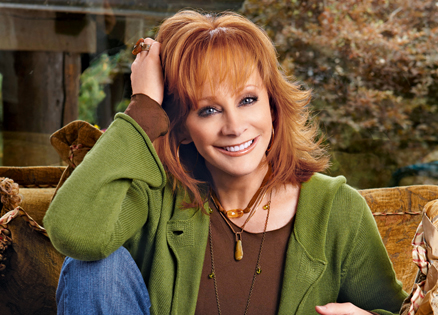
The first song I ever sang in front of an audience was a hymn. I was four or five years old, and our family was staying at the Frontier Hotel in Cheyenne, Wyoming, for the Frontier Days Rodeo.
Daddy had won the steer-roping event there twice in previous years—just like his daddy had done a couple of decades earlier at the same venue—and he was competing again. In between performances, when we weren’t at the rodeo arena, the cowboys and their families would hang out in the lobby of the hotel to visit and pass the time.
One afternoon my older brother, Pake, stood in front of a group of the cowboys, who had talked him into singing them a song. He launched into Elvis’s “Hound Dog” (minus the hip swiveling). To my amazement, Everett Shaw, one of the rodeo champions, fished a quarter out of his jeans and gave it to Pake.
BROWSE OUR BOOKS ON CHRISTIAN LIVING
“I want a quarter too,” I told my brother. But what would I sing for the folks?
“Well, you know ‘Jesus Loves Me,’ don’t you?” Pake said. “Sing that.”
So I sauntered to the center of the lobby while Pake got everybody quiet, and I sang in my best Sunday-school voice, “Jesus loves me, this I know….” At the end, everybody clapped.
Somebody did press a coin in my hand, but it was only a nickel. No matter. I was officially a singer, and as my family will tell you, it’s been hard to get me to stop singing.
I love singing, love making music with others, love working on a song in my head and then sharing it. But I especially love how songs of faith, new ones and old, keep me connected to God.
So I suppose it was only a matter of time before I recorded an album of inspirational songs and classic hymns.
It’s taken me all these years to collect the ones that have made the biggest difference in my life. People have been lifting up their voices to God since before David penned a psalm and riffed on his harp. It’s the way we let each other know who we are and Whose we are.
Here’s a selection of some of my alltime favorite hymns. You’ll find them all on the album. Don’t be afraid to sing along.
“When the Roll Is Called Up Yonder”
Yes, we had a piano in the tiny one-room church near our ranch in Chockie, Oklahoma, but most of the time there wasn’t anybody good enough to play it. So Mrs. Stella McGee would turn to the hymnal, finger the opening chord and get us all launched in the same key.
Singing a cappella—without accompaniment—is one of the best ways to sing, as it turns out. You learn how to listen to yourself and tune up to each other, getting all the intervals right, blending the harmonies so that many voices become one, each voice lifting the others.
I can still see my maternal grandparents, Elvin and Reba Smith, standing in front of the congregation and leading us in “When the Roll Is Called Up Yonder,” singing, “When the trumpet of the Lord shall sound…”
There were no trumpets in our church either, but you can be sure we all made a fine sound, letting the Lord know where we would be when that roll was called. I can still close my eyes and see those Sundays in the little church that we filled with praise. I can still hear those lovely voices lifted up to God.
READ MORE: REBA McENTIRE’S GIFT FROM GOD
“I’ll Fly Away”
My hymnal from childhood, a much-thumbed-through green volume with gold lettering, sits on my piano. I was looking through it the other day and found this classic, one of my favorites.
Albert E. Brumley, the composer, got the idea for the song when he was picking cotton on his father’s farm in Rock Island, Oklahoma, sweltering under the hot sun, wishing he could fly away—if not to heaven, at least to a cooler place. I can relate to that, from all the hard work we kids had to do on the ranch.
So when I decided to record this song, I realized I wanted my family with me. Nobody harmonizes more naturally than your relatives. Blood harmony, I call it. We always sing a gospel tune or two when we’re together for holidays. I knew we could make it happen in a Nashville studio.
My mama, who is 90 years old, and my sisters, Alice and Susie, joined me. Boy, did we have a good time. And we sounded pretty good too. We could have been satisfied with one take, but we were having so much fun we did several more. As I always say, music is a great connector.
“Angel on My Shoulder”
Growing up, I used to think that someone was watching me when I was outside. I would be riding my horse on the right-of-way next to the railroad tracks and the feeling was so strong I sometimes thought that maybe someone was filming me, like a cameraman somewhere. I couldn’t figure it out.
I actually asked God, Lord, is this because I’m supposed to be on television or in the movies? (I was a pretty ambitious kid with a very vivid imagination!)
Later it came to me. That feeling—those were my angels! I’ve leaned on them ever since. My son, Shelby, is a race-car driver, and whenever I know there’s a race coming up I pray for the angels to keep Shelby and all the other drivers safe on the track.
Any album I did of songs of faith would have to include praises of the angels, heavenly and otherwise. This song, by Leigh Reynolds, Amber White and Philip White, says it all: “There must be an angel on my shoulder/Whispering in my ear….”
“I Got the Lord on My Side”
I pray a lot. First thing in the morning, I throw my arms in the air and say, “Thank you, Lord Jesus, Father God and Holy Spirit. Thank you for a wonderful night’s sleep. This is going to be a great day because you made it.” That positivity stays with me all day long. It’s very comforting to know that you’ve got the Lord on your side.
One day, those words formed in my mind: “I’m so happy I’ve got the Lord on my side.” I wanted to thank God for all the good in my life. I linked a tune in my head to the words and it became a prayer.
You know that old saying: When you sing, you pray twice! But the song wasn’t really complete until I was in the recording studio. Mama was listening in the control booth and she said after she heard the first take, “Instead of saying ‘I’m so happy’ on the last verse, why don’t you say, ‘If you’re happy’?”
READ MORE: REBA McENTIRE’S GUIDE TO LIFE
In other words, why didn’t I sing about sharing that happiness—that blessedness? Happiness comes when we do indeed have the Lord on our side.
“Does this mean I’m going to have to give you a writer’s credit?” I asked Mama. We both burst out laughing. In the end, I did give her a writer’s credit—and I give her credit for a lot more than that. I sure did appreciate Mama’s help.
“How Great Thou Art”
These last few years haven’t been easy, with the end of my marriage after 26 years. I felt a real sense of loss. Music has always been incredibly healing for me. I can remember how healing it was when Grandma Smith died and we all sang “How Great Thou Art” at her funeral. I’ve sung this during my hard times too.
I’ve heard folks say, “Why does God need to be praised all the time?” I believe it is because it helps us. I find if I’m worrying too much about something, I’m not trusting God. I need to give my worries back to him.
I can’t tell you what a joy it was to sing my old favorites like “Swing Low, Sweet Chariot” or “Softly and Tenderly” or “In the Garden.” I love the newer songs too, like “God and My Girlfriends,” by Patricia Conroy, Lisa Hentrich and Marcia Ramirez.
It’s so real, because those are the two places I go when I’ve got problems. God is always there to listen to me, and my girlfriends form this cocoon around me when I’m down and hurting. Some of them I’ve known since grade school. Without them, the world would be a lonely place.
And there’s the song “From the Inside Out,” by Amy Fletcher, which describes just how God works, digging down deep to truly heal from the inside out.
As I’ve gotten older I’ve realized that the more time I spend with God, the more I can face my challenges and thank him for my blessings. I hope these songs will help anyone who listens to them, that they will be a prayer for them.
I love the song “Say a Prayer,” by Michael Dulaney, Jason Sellers and Neil Thrasher. The refrain goes, “Oh, say a prayer for me/When you’re down on your knees/And I will say one for you/And hope it helps sees you through.”
How can you go wrong with that?
Reba’s album , ‘Sing It Now: Songs of Faith & Hope,’ (Nash Icon Records and Capitol Christian Music Group) is #1 on Billboard’s Christian/Gospel and Country Music. Buy it here. Did you enjoy this story? Subscribe to Guideposts magazine.