Embrace God's truth with our new book, The Lies that Bind

Remembering Glen Campbell

Glen Campbell died Tuesday, August 8, at the age of 81 in Nashville.

When I met Glen Campbell he was sprawled on a couch in his condo in Branson, Missouri, a Martin guitar at his side and a Titleist putter waggling in his hands. The night before, I’d attended a concert at his Branson theater. It had been an interesting show. The first half was a spirited romp through his greatest hits—Wichita Lineman, Galveston, Gentle On My Mind, By the Time I Get to Phoenix—played with such gusto that it was clear he still loved every note of Jimmy Webb’s classic compositions. It’s a wonderful thing to see a great artist who never tires of his material. It was decades after these hits had charted, decades filled with Glen’s alcohol and cocaine abuse, a broken marriage, a declining career, but Glen was still the Rhinestone Cowboy glittering under the stage lights, with that Martin slung over his shoulder. He was more than a great artist. He was a great entertainer.

The second half of the show took an unexpected turn. I didn’t quite know what to think of it. It was Webb’s impressionistic Christian allegory based loosely on the Book of Revelation featuring modern dance, sound and lighting effects, and not too much Glen Campbell. It lasted about a half hour and seemed weirdly incongruous for a place like Branson.

Read More: Glen Campbell on God’s Grace

So when Glen’s wife, Kim, welcomed me into their condo which overlooked a slightly burned-out golf course, I meant to ask Glen about the second act quasi-religious extravaganza. I never really got the chance. We discussed his wild days and his subsequent sobriety, his re-baptism in a creek near his boyhood home of Delight, Arkansas. Just as I got around to asking him about the strange second act of his show I noticed Glen staring longingly out his picture window at the golf course. He had grown increasingly distracted, pacing and practicing his putting while he talked.

“I think I’ve taken up enough of your day off, Glen,” I said, putting away my notes.

He smiled and said, “Pleasure to talk with you. Kim and I are real fans of Guideposts and Dr. Peale.” And with that he pulled his clubs from a closet and was out the door.

“He’s a little ADD after six days of performing and eight shows,” Kim said with a laugh. “And golf is the one addiction he’ll never kick.”

Kim and I talked over coffee for another hour or so. She told me how incredibly hard it was for Glen to kick cocaine and booze. “Addiction had a stranglehold on his life,” she said, “until he gave himself completely to God. It was a miracle.”

Branson was part of the road back. It wasn’t always a straight road. Glen stumbled along the way but Kim was always with him just like the songs of Jimmy Webb.

Read More: Glen Campbell’s Touching Final Album

Now Kim’s Rhinestone Cowboy has left us after a long struggle with Alzheimer’s. I never got to ask about that strange interpretation of Revelation that I saw in Branson or why Glen performed it. I remember it ended with a violent storm that shook the theater to its rafters followed by a sunrise and a last number by Glen. I don’t remember the song. It wasn’t one of his hits. But I remember him standing alone in the center of the stage as the spotlight ever-so-slowly faded. There was a long silence before the audience rose to its feet and applauded. The applause lasted far longer than the silence.

Red Pepper Hummus

Ingredients

1 can (13.5 ounces) chickpeas, drained, with 2 tablespoons of liquid reserved
¼ c. tahini paste, stirred well before measuring
¾ c. roasted red peppers, drained
1 Tbsp. freshly squeezed lemon juice, or more to taste
2 garlic cloves, coarsely chopped
2 tsp. chili oil or 1 or 2 pinches chile flakes
1 tsp. kosher salt, or more to taste
Freshly ground black pepper
¼ c. extra-virgin olive oil
Flaky sea salt, such as Maldon (optional)
Pita chips or fresh veggies for serving

Preparation

1. In a food processor, combine the chickpeas and liquid, tahini, red peppers, lemon juice, garlic, chili oil, salt and a pinch of pepper. Blend until smooth, scraping down the sides as needed.

2. Taste, seasoning with more salt and lemon juice if desired.

3. With the processor running, drizzle in olive oil.

4. Transfer to a serving bowl, and garnish with a drizzle of olive oil, a squeeze of lemon juice and a pinch of Maldon sea salt (if using).

5. Transfer to a serving bowl, and garnish with a drizzle of olive oil, a squeeze of lemon juice and a pinch of Maldon sea salt (if using).

6. Serve with pita chips and/or fresh veggies of your choice. Hummus can be covered and refrigerated for up to two days.

Makes about 1 ½ cups.

Nutritional Information (serving size ⅛ cup): Calories: 110; Fat: 8g; Cholesterol: 0mg; Sodium: 280mg; Total Carbohydrates: 7g; Dietary Fiber: 2g; Sugars: 0g; Protein: 3g.

Excerpted from The Seasoned Life © 2016 by Ayesha Curry. Reprinted with permission of Little, Brown and Company, New York. All rights reserved. Photograph by Caroline Egan.

Rediscovering Faith

My parents named me Maria de la Soledad: Spanish for the Blessed­ Virgin Mary of Solitude. It’s really no surprise, considering that faith has always been an essential part of my family’s life. You might even say that’s what brought my parents together. My parents were both immigrants—my mother from Cuba, my father from Australia—studying at Johns Hopkins University. And they both attended daily Mass at the church near campus. Every day my father would offer my mother a ride. Every day, she declined. Finally she said yes. One year later, the day after Christmas, the two of them were married.

My parents took care to instill their beliefs in my five siblings and me. Every Sunday morning at 7:30 a.m. all eight of us would pack into a pew at church. Our reward was Dad’s breakfast special: eggs, bacon, sausage, fresh orange juice and—my favorite—chocolate-covered, cream-filled doughnuts from the local bakery. We would eat and talk, then spend the rest of the morning together reading the Sunday newspaper. When I think about those Sundays with my family, I remember how safe, happy and loved I felt. How good the world seemed.

My Sunday ritual changed dramatically when I began a career in television news. I worked most weekends. Occasionally I would get to church on Saturday evenings, but it was never quite the same. I missed the music and ceremony of Sunday morning Mass.

By the time I was coanchoring the Weekend Today show at NBC, my husband, Brad, and I had two young daughters, Sofia and Cecilia. Because of my work schedule, we were able to attend Mass as a family only at the girls’ baptisms. I wanted faith to be central in their lives, yet logistically it seemed impossible.

Still, I felt a pull back to my spiritual roots, a yearning that only intensified after September 11 and the war in Iraq began. Like many people, I was searching for a deeper purpose in my life. Hundreds of my journalism colleagues, including my cohost, David Bloom, were embedded with coalition troops in the Middle East. Every day I read about air strikes, ambushes, civilians and soldiers dying. What kind of world are our girls growing up in? I wondered. How could I give them the same sense of security I had as a child?

On Sunday, April 6, 2003, the telephone rang at 1:00 a.m., waking me up even before my usual 3:30 a.m. alarm. I picked it up. An NBC operator asked me to hold for my boss.

At that moment I knew. Something happened to David. All week long we’d been reporting that the troops were approaching Baghdad. Rumors that Saddam Hussein might launch a chemical attack had run rampant. Everyone at the studio was worried about David and our other colleagues on the front. My boss got on the line. “Soledad,” he said, “David is dead.”

“What happened?” I asked. Did the tank David was in get hit? Had his unit been ambushed?

“He had an embolism,” my boss said. David had been sitting in a tank for hours. Doctors thought that may have led to the fatal blood clot.

Five hours later, Katie Couric, Matt Lauer and I were on the air, telling the nation that David was dead. I could hardly believe what we were reporting. David was my colleague and a friend. Memories of him flooded my mind. The tireless journal­ist. His reports were clearly some of the best filed from the front in Iraq. David often brought his three young daugh­ters to see him on the set. We had at least half a dozen two-dollar bets we made over the most arcane facts. It was hard to imagine someone so completely full of life suddenly being gone.

The only consolation was that David died doing something he loved. At his funeral in New York at St. Patrick’s Cathedral, one of his friends read a letter David wrote to his wife just hours before his death. “Yes, I’m proud of the good job we’ve all been doing here, but in the scheme of things it matters little compared to my relationship with you, the girls and God.” David’s words struck a chord in all of us. It made a big impression to know that in the end he was thinking about his family, his faith.

A few months later, when my contract renewal at NBC was coming up, that thought came back to me. I faced a big decision. An opportunity at CNN had presented itself. I was offered the weekday position cohosting American Morning—a more challenging job, a longer day. I spent several weeks weighing the pros and cons. Brad and I discussed what impact the new job would have on our family, and what it would mean for my career. I loved my job at Today, and the people I was working with. Yet the job at CNN was a great opportunity.

After 15 years with NBC, I joined CNN. The first few weekends after I started my new job were eye-opening. Brad and I spent those days enjoying the summer in the city with the girls. Walking around Central Park with my family I realized I wanted to find someplace where Sofia and Cecilia could play outdoors, swim in lakes. A place where we could take them on walks in the woods.

Upstate we found a beautiful little cottage with a wraparound porch. Across the street was a lovely old church. Our first Sunday there, we walked over and settled into a pew—Sofia leaning on Brad’s shoulder, Cecilia nestled in my lap. It reminded me of my own childhood.

At coffee hour afterward, the pastor gave us a warm welcome and invited our girls to join the Sunday school class. I was thrilled to hear about all the activities we could get involved in—feeding the homeless, giving Christmas presents to underprivileged children, building homes for the poor in Nicaragua. We met our neighbors. It didn’t take long for the girls to start running around with their new playmates.

With two toddlers in tow, Brad and I joke that if the church weren’t right across the street, we’d always be late. Seriously though, Sunday morning Mass is again important in our lives, and it highlights exactly what’s essential in life—my family and my faith. I still worry about the world our girls are growing up in. But I know they’ll have a strong spiritual foundation to rely on—just as I had all those Sunday mornings ago.

Reba McEntire: The Hymns That Live in Me

The first song I ever sang in front of an audience was a hymn. I was four or five years old, and our family was staying at the Frontier Hotel in Cheyenne, Wyoming, for the Frontier Days Rodeo.

Daddy had won the steer-roping event there twice in previous years—just like his daddy had done a couple of decades earlier at the same venue—and he was competing again. In between performances, when we weren’t at the rodeo arena, the cowboys and their families would hang out in the lobby of the hotel to visit and pass the time.

One afternoon my older brother, Pake, stood in front of a group of the cowboys, who had talked him into singing them a song. He launched into Elvis’s “Hound Dog” (minus the hip swiveling). To my amazement, Everett Shaw, one of the rodeo champions, fished a quarter out of his jeans and gave it to Pake.

BROWSE OUR BOOKS ON CHRISTIAN LIVING

“I want a quarter too,” I told my brother. But what would I sing for the folks?

“Well, you know ‘Jesus Loves Me,’ don’t you?” Pake said. “Sing that.”

So I sauntered to the center of the lobby while Pake got everybody quiet, and I sang in my best Sunday-school voice, “Jesus loves me, this I know….” At the end, everybody clapped.

Somebody did press a coin in my hand, but it was only a nickel. No matter. I was officially a singer, and as my family will tell you, it’s been hard to get me to stop singing.

I love singing, love making music with others, love working on a song in my head and then sharing it. But I especially love how songs of faith, new ones and old, keep me connected to God.

So I suppose it was only a matter of time before I recorded an album of inspirational songs and classic hymns.

It’s taken me all these years to collect the ones that have made the biggest difference in my life. People have been lifting up their voices to God since before David penned a psalm and riffed on his harp. It’s the way we let each other know who we are and Whose we are.

Here’s a selection of some of my alltime favorite hymns. You’ll find them all on the album. Don’t be afraid to sing along.

“When the Roll Is Called Up Yonder”
Yes, we had a piano in the tiny one-room church near our ranch in Chockie, Oklahoma, but most of the time there wasn’t anybody good enough to play it. So Mrs. Stella McGee would turn to the hymnal, finger the opening chord and get us all launched in the same key.

Singing a cappella—without accompaniment—is one of the best ways to sing, as it turns out. You learn how to listen to yourself and tune up to each other, getting all the intervals right, blending the harmonies so that many voices become one, each voice lifting the others.

I can still see my maternal grandparents, Elvin and Reba Smith, standing in front of the congregation and leading us in “When the Roll Is Called Up Yonder,” singing, “When the trumpet of the Lord shall sound…”

There were no trumpets in our church either, but you can be sure we all made a fine sound, letting the Lord know where we would be when that roll was called. I can still close my eyes and see those Sundays in the little church that we filled with praise. I can still hear those lovely voices lifted up to God.

READ MORE: REBA McENTIRE’S GIFT FROM GOD

“I’ll Fly Away”
My hymnal from childhood, a much-thumbed-through green volume with gold lettering, sits on my piano. I was looking through it the other day and found this classic, one of my favorites.

Albert E. Brumley, the composer, got the idea for the song when he was picking cotton on his father’s farm in Rock Island, Oklahoma, sweltering under the hot sun, wishing he could fly away—if not to heaven, at least to a cooler place. I can relate to that, from all the hard work we kids had to do on the ranch.

So when I decided to record this song, I realized I wanted my family with me. Nobody harmonizes more naturally than your relatives. Blood harmony, I call it. We always sing a gospel tune or two when we’re together for holidays. I knew we could make it happen in a Nashville studio.

My mama, who is 90 years old, and my sisters, Alice and Susie, joined me. Boy, did we have a good time. And we sounded pretty good too. We could have been satisfied with one take, but we were having so much fun we did several more. As I always say, music is a great connector.

“Angel on My Shoulder”
Growing up, I used to think that someone was watching me when I was outside. I would be riding my horse on the right-of-way next to the railroad tracks and the feeling was so strong I sometimes thought that maybe someone was filming me, like a cameraman somewhere. I couldn’t figure it out.

I actually asked God, Lord, is this because I’m supposed to be on television or in the movies? (I was a pretty ambitious kid with a very vivid imagination!)

Later it came to me. That feeling—those were my angels! I’ve leaned on them ever since. My son, Shelby, is a race-car driver, and whenever I know there’s a race coming up I pray for the angels to keep Shelby and all the other drivers safe on the track.

Any album I did of songs of faith would have to include praises of the angels, heavenly and otherwise. This song, by Leigh Reynolds, Amber White and Philip White, says it all: “There must be an angel on my shoulder/Whispering in my ear….”

“I Got the Lord on My Side”
I pray a lot. First thing in the morning, I throw my arms in the air and say, “Thank you, Lord Jesus, Father God and Holy Spirit. Thank you for a wonderful night’s sleep. This is going to be a great day because you made it.” That positivity stays with me all day long. It’s very comforting to know that you’ve got the Lord on your side.

One day, those words formed in my mind: “I’m so happy I’ve got the Lord on my side.” I wanted to thank God for all the good in my life. I linked a tune in my head to the words and it became a prayer.

You know that old saying: When you sing, you pray twice! But the song wasn’t really complete until I was in the recording studio. Mama was listening in the control booth and she said after she heard the first take, “Instead of saying ‘I’m so happy’ on the last verse, why don’t you say, ‘If you’re happy’?”

READ MORE: REBA McENTIRE’S GUIDE TO LIFE

In other words, why didn’t I sing about sharing that happiness—that blessedness? Happiness comes when we do indeed have the Lord on our side.

“Does this mean I’m going to have to give you a writer’s credit?” I asked Mama. We both burst out laughing. In the end, I did give her a writer’s credit—and I give her credit for a lot more than that. I sure did appreciate Mama’s help.

“How Great Thou Art”
These last few years haven’t been easy, with the end of my marriage after 26 years. I felt a real sense of loss. Music has always been incredibly healing for me. I can remember how healing it was when Grandma Smith died and we all sang “How Great Thou Art” at her funeral. I’ve sung this during my hard times too.

I’ve heard folks say, “Why does God need to be praised all the time?” I believe it is because it helps us. I find if I’m worrying too much about something, I’m not trusting God. I need to give my worries back to him.

I can’t tell you what a joy it was to sing my old favorites like “Swing Low, Sweet Chariot” or “Softly and Tenderly” or “In the Garden.” I love the newer songs too, like “God and My Girlfriends,” by Patricia Conroy, Lisa Hentrich and Marcia Ramirez.

It’s so real, because those are the two places I go when I’ve got problems. God is always there to listen to me, and my girlfriends form this cocoon around me when I’m down and hurting. Some of them I’ve known since grade school. Without them, the world would be a lonely place.

And there’s the song “From the Inside Out,” by Amy Fletcher, which describes just how God works, digging down deep to truly heal from the inside out.

As I’ve gotten older I’ve realized that the more time I spend with God, the more I can face my challenges and thank him for my blessings. I hope these songs will help anyone who listens to them, that they will be a prayer for them.

I love the song “Say a Prayer,” by Michael Dulaney, Jason Sellers and Neil Thrasher. The refrain goes, “Oh, say a prayer for me/When you’re down on your knees/And I will say one for you/And hope it helps sees you through.”

How can you go wrong with that?

Reba’s album , ‘Sing It Now: Songs of Faith & Hope,’ (Nash Icon Records and Capitol Christian Music Group) is #1 on Billboard’s Christian/Gospel and Country Music. Buy it here. Did you enjoy this story? Subscribe to Guideposts magazine.

Read More This Year with One of Guideposts’ Inspiring Book Series  

As I wrapped up the year 2020 and took stock of everything I did (and didn’t) do, I was shocked to realize I hardly did any reading. Me! A self-described “bookworm.” Despite all the social distancing and sheltering in place, I had a lot of difficulty finding a book that could hold my attention. I longed for the days when I could sit down and become completely immersed in a story.

There are a lot of benefits to reading a good book. It can relax us, transport us to new worlds, make us happier, and even help us better understand ourselves. No wonder so many people, including myself, are committing to better reading habits in 2021. And the best way to begin? Start reading a page-turning book series.

Here are six Guideposts book series that are sure to rekindle your love of reading. Whether you’re uncovering the secrets of a historic inn or being transported to biblical times, you won’t be able to put these books down.

  1. Secrets of Wayfarers Inn

“If these walls could talk . . .” Welcome to Marietta, Ohio, where the past is never far away and the present invites adventure and intrigue. Follow along as three life-long friends, LuAnn, Tessa, and Janice, purchase an inn built in 1851 and turn it into a café and bed and breakfast. As they work to remodel the neglected but elegant structure, the trio comes across hidden passages filled with secrets and surprises, setting them on a course to solving mysteries from both the past and the present.

Dive into this series with first book, Family Secrets.

  1. Ordinary Women of the Bible

From generation to generation and every walk of life, God seeks out women to do His will. Scripture offers us but fleeting, tantalizing glimpses into the lives of a number of everyday women in Bible times—many of whom are not even named in its pages. In each volume of Guideposts’ Ordinary Women of the Bible series, you’ll meet one of these unsung, ordinary women face to face, and see how God used her to change the course of history. These groundbreaking stories are a thrilling way to experience God’s love and power.

Begin your journey with A Mother’s Sacrifice, the story of Moses’ mother, Jochebed.

  1. Mysteries of Lancaster County

Welcome to Bird-in-Hand, Pennsylvania, a quaint village in the heart of Lancaster County’s Amish Country. It’s here, amid rolling green hills and well-tended farms, where the Classen sisters, Elizabeth, Martha, and Mary, reunite after inheriting their family home. Together, they operate Secondhand Blessings, a charming gift-and-thrift store, housed in the old homestead’s barn. Little do the sisters suspect as they stock their shelves with Amish handcrafted gift items, antiques, and yummy baked goods that they’re also filling their rustic store with a host of mysteries and surprises.

Step into the beautiful world of Lancaster County with the first book, Another’s Treasure.

  1. Miracles of Marble Cove

Diane Spencer has just moved to beautiful Marble Cove, Maine, to start a new life and to finally write that novel she’s always dreamed about. She settles into her new home and soon meets her neighbors. There’s Shelley, a young mom trying to make ends meet, Margaret, a friendly artist, and Beverly, a reserved businesswoman who only comes to Marble Cove on weekends. But the four women discover that they have all survived a miraculous brush with death and have been given a second chance at life. Is this just a coincidence? Or has God brought them together for a reason?

Meet Diane, Shelley, Margaret, and Beverly and the amazing moment that connects them in View From The Lighthouse.

  1. Savannah Secrets

Savannah Secrets contains everything you love in a cozy-mystery — a beautiful locale, suspenseful intrigue, and inspirational faith. It all takes place in the picture-perfect city of Savannah, known for its manicured parks, moss-covered oaks, and antebellum architecture. Follow two old friends, and partners in Magnolia Investigations, as they tackle some of the city’s most mysterious cases. As you read, you’ll almost feel the warm southern breezes wafting off the pages and hear the clip clap of horse-drawn carriages.

Begin your adventure with the women of Magnolia Investigations with the first mystery in this series, The Hidden Gate.

  1. Mysteries of Martha’s Vineyard

What does a Kansas farm girl know about hidden treasure and rising tides, maritime history and local mystery? Not much, but to save her lighthouse and family reputation, she better learn quickly! Come along and experience the unique challenges and fresh discoveries facing landlubber Priscilla Latham Grant, when she inherits a lighthouse and keeper’s cottage on beautiful Martha’s Vineyard. As she settles into her new home, she discovers a trio of long-lost cousins, and, together, they shed light on a storm of mysteries and secrets that seem to surface in Priscilla’s wake.

Travel to Martha’s Vineyard from your couch with the series’ first book, A Light in the Darkness.

Ralph Branca on the Quiet Strength of Jackie Robinson

The movie theater where I saw 42, the film about Jackie Robinson breaking the color barrier in Major League Baseball, was packed with kids. When the lights came up, their eyes were wide.

Black men not allowed to play on the same sports teams as whites? Laws prohibiting blacks and whites from staying in the same hotels? Jackie’s story must have seemed like science fiction to their generation.

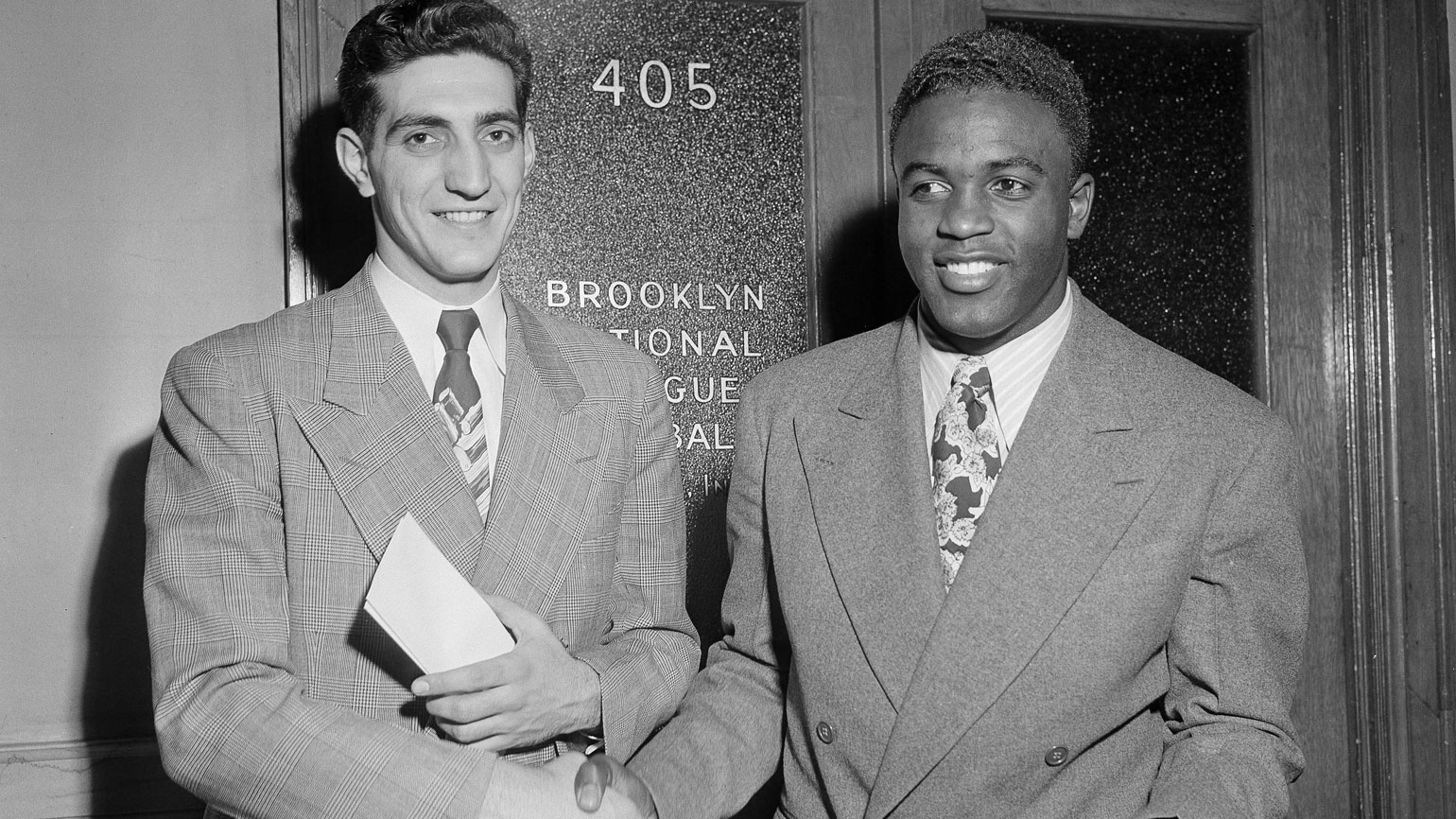
It wasn’t science fiction to me. I was there with him on the 1947 Brooklyn Dodgers. I was a scared 21-year-old pitcher, trying to make it in the majors. Jackie was just doing the same, I thought. Until he walked into the Dodgers clubhouse for the first time that Opening Day.

READ MORE: HANK AARON ON FAITH AS A MOTIVATOR

I hadn’t thought much about segregation in baseball. Few of us ballplayers did. We were too worried about our own jobs. That’s what my prayers were about. I didn’t want to get sent back down to the minors.

I had heard about Jackie, of course. Everybody on the team had. How big and fast and strong he was. Duke Snider, our future Hall of Fame centerfielder, who grew up near Los Angeles, used to watch Jackie play at UCLA.

“Ralph,” he said, “I saw Jackie run from the baseball field to the track meet, still in his uniform, and broad jump twenty-five feet.” Twenty-five feet was close to the world record. It was as if Jackie could do anything.

I found that out firsthand a few days before Opening Day, when I pitched against him in a preseason exhibition game. I was still working on my stuff, fine-tuning my pitches.

I’ll throw him a fastball, I thought. It was a good one.

Thwack! Home run.

I was from Mount Vernon, New York. I’d grown up playing with black kids. They’d been to my house and I’d been to theirs. Race wasn’t an issue with me. This is a guy who can help us win the pennant, I thought.

When Jackie stepped through the clubhouse door, around 9:30 A.M. on Opening Day, lugging his equipment bag, I was glad to see him. There was only one other player there that early—Gene Hermanski, a reserve outfielder from New Jersey who also had no problem with blacks.

But Jackie didn’t know that. He had heard about a petition that had circulated around the clubhouse. A handful of players said they wouldn’t play with Jackie on the team.

READ MORE: HE CHANGED BASEBALL FOREVER

I didn’t know it then, but the Dodgers’ owner, Branch Rickey, had extracted a solemn promise from Jackie: that no matter what anyone said or did—even his own teammates—he would turn the other cheek. I eyed Hermanski. We could sense what Jackie was thinking: Are these guys friends or foes?

I stood, walked over to him and stuck out my hand. “Welcome aboard,” I said. Hermanski was right behind me. “Hope you have a great year,” he said.

Over the next hour, the rest of the players arrived. Some welcomed him. Others pointedly ignored him. There was no mention of the petition. Rickey had told the players involved that Jackie was staying, and if they didn’t like it, they’d be the ones to go.

But that didn’t change their attitude.

Look at him, I thought, watching Jackie as he quietly dressed in his uniform, number 42. Twenty-four other guys on the team, and not one went to sit with him or offer him intel on Johnny Sain, the great Boston Braves pitcher we’d be facing that day.

Jackie sat on a stool, facing his locker. Around him, the hustle and bustle and chatter of ballplayers readying for a game went on. It was like he was invisible. This was a historic day for baseball, for America, and none of us wanted to talk about what was going on.

I wanted to do something for him. Crack a joke. Show Jackie—and my teammates—that he was a Dodger now, one of us. But I didn’t. I was too scared. Young players like me were supposed to keep their mouths shut.

In four days I’d be getting my first start of the season, against our archrivals, the New York Giants, at their ballpark. The Giants and their fans would get on Jackie, but they’d get on me too. I glanced at Jackie across the locker room.

Maybe life looks pretty good to him right now, I thought. He’s in the big leagues. He’s living his dream. Instead of saying a prayer for him, I said one for me.

READ MORE: DON LARSEN—MY MIRACLE GAME

Twenty-six thousand Brooklyn fans came out that Opening Day. Somehow, in the minutes before we took the field, I ended up sitting beside Jackie in the dugout. He turned to me.

“You know, Ralph,” he said, uncertainly, “this is a big day for me.”

I knew what he meant: It wasn’t a big day just for him, but for all African-Americans. I was a little surprised he was confiding in me.

“Just go out and play your game,” I said. “Don’t change anything. Be your natural self.”

The instant he took the field, though, I saw that wasn’t possible. I saw what he was up against. Everyone in the ballpark zeroed in on him. And not just the fans. The players too. Afterward, one of my teammates came up to me in the clubhouse. “What do you think of Jackie? You think he belongs?”

If guys in our own club don’t believe in him, what will it be like for him when we hit the road? I wondered.

That night I talked to my brother, John, about Jackie. “Jackie’s under a ton of pressure,” I said. John knew what I was really asking—it was the question I kept asking myself. Should I be doing more to help him? It was a question I prayed about.

“You’re under a lot of pressure yourself,” John reminded me.

John was right. If I didn’t pitch well, I’d lose my job. I’d get sent down, maybe never make it back to the majors, my dreams dashed.

Then we hit the road. That’s when it became clear to me that the pressure I felt was nothing compared to what Jackie must have been feeling. Pitchers threw at him—at his head. There were no batting helmets in those days. Runners went out of their way to try to spike him.

In Philadelphia, the Phillies manager, Ben Chapman, shouted from his dugout, “Hey, boy! I need a shine.” On the Dodgers bench, we could see Jackie just burning up inside. But Rickey had made him promise: Turn the other cheek.

No one was holding me back, though, keeping me quiet. Please, God, I prayed, give me the strength to act. But I didn’t. I said nothing. Not even, “Hey, shut up!” None of us did.

READ MORE: THE MANY SIDES TO BRANCH RICKEY

After the Phillies game, in the clubhouse, I went up to Jackie. “Just ignore him,” I said of Chapman. “He’s ignorant.” But the moment had passed.

Every city we traveled to, Jackie was treated the same. The beanballs. The ugly racial slurs. And he just grimaced and took it.

One afternoon, a month into the season, I decided, Enough.

“Jackie, how about having dinner with me?” I asked after a ballgame in Philadelphia. He studied me, to make certain I was serious. A lot of the team socialized off the field. No one had ever invited Jackie.

“Yeah, Ralph, that would be good,” he said.

That night we got a table in our hotel’s restaurant. At first we kept the conversation to the game we’d played that day and our families. It took a while, but I finally got the nerve to ask, “How do you just sit silently and take it?”

READ MORE: HANK AARON ON SACRIFICING FOR OTHERS

He told me the story of his first meeting with Rickey. How Rickey, a devout Methodist, reached for a book titled Life of Christ, by Giovanni Papini, opened it to the passage on the Sermon on the Mount and read it aloud.

“Ralph,” Jackie said, “many nights I get down on my knees and pray to God for the strength not to fight back.”

Playing well, I suddenly understood, was the best strategy. If we started a brawl with every team over Jackie, it would only have made it harder. Turning the other cheek was fighting back.

Jackie hit .297 that year, led us to the World Series and was named Rookie of the Year. But after that night, to me it wasn’t his baseball ability that stood out. It was his strength of character. His faith. What he accomplished that year was the most incredible thing I’ve ever seen in sports.

I don’t know if courage is a quality you can pass along. But I know I drew strength from him that night in Philadelphia. I thought, I’m blessed to be here, to be Jackie’s teammate. To be his friend.

Did you enjoy this story? Subscribe to Guideposts magazine.

Rafer Johnson: An Athlete Whose Faith Came First

In his 22 years, Rarer Johnson has done many things and all of them extraordinarily well. His mother says of him: “We tried to teach him to walk straight, talk straight and think straight … He just naturally became good at everything…”

When his parents guided him toward church work, Rafer sang in the choir and wag active in youth groups. In high school at Kingsburg, California, he captained the track, basketball and football teams, and gained stature as a power hitter on the baseball nine.

After entering University of California at Los Angeles (UCLA), Rafer continued his athletic feats; he is now a senior and Student Body President.

But the biggest triumph of all came last summer at the track and field games between the Soviet Union and the United States held in Moscow’s Lenin Stadium.

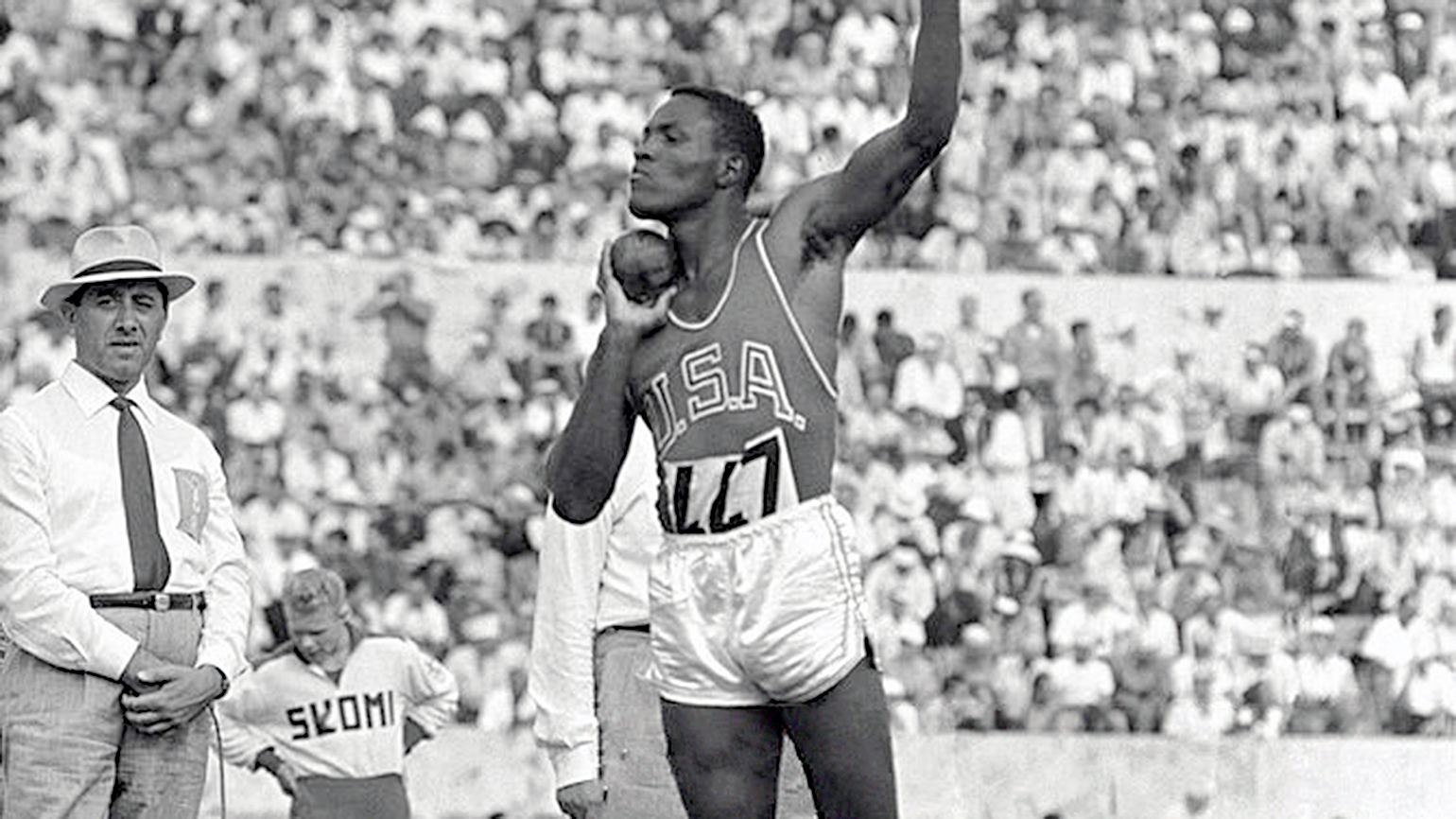
Entering the decathlon, which consists of 10 events—100-meter dash, broad jump, shot-put, 400-meter run, high jump, 110-meter high hurdles, discus, pole vault, javelin, 1500-meter run—and is considered to be the toughest test of human endurance ever devised in sport, Rafer pitted his skill and stamina against Soviet hero Vasily Kuznetsov.

It was an amazing sight: a small town American praying in the Soviet Union, as Rafer always prays before all contests. He prayed that he and his opponent both give maximum performances. Both did. Rafer’s, however, was better. Before 30,000 roaring Russian sports fans, he set a new world decathlon record of 8,302 points.

Overnight he became a hero of the Russians. Calling Rafer the “world’s greatest athlete,” one Russian paper wrote: “His performance will dignify the history of world athletic records for a long time to come.”

Soft spoken and modest, Rarer has only one answer when asked for the principles that guide him. “Jesus Christ is the Leader of my life. No matter how big or small the problem, I depend on Him at all times. Without Him I would be lost, for He is all.”

For more inspiring stories, subscribe to Guideposts

Publishing Books That Matter

Most of us here in the book department at GUIDEPOSTS spent the past week in Denver at the International Christian Retail Show, which is a big convention for Christian books and merchandise.

It’s always fun to wander the floor and see what new gadgets will be in Christian bookstores, and to see what great books will be on the shelves this fall.

We were there meeting with agents and authors and talking to people in the industry. We were also giving away early editions of some of our books, like the beautiful memoir Halfway to Each Other, which we’ll be releasing in September.

This is the story of a couple on the brink of divorce who, as a last-ditch effort to save their marriage, move their family to Italy for a year. The book is the story of how getting rid of the distractions we fill our lives with—television, video games, malls—allowed them to find joy in each other once again, and ended up bringing their family closer than ever.

We also gave away early copies of Julie Hadden’s Fat Chance. You may remember Julie from the television show The Biggest Loser. She lost half her body weight (and—astonishingly—has kept it off) and gained a whole new perspective on caring for the body that God gave her. It’s a practical and inspiring story, and we got a great response to the book.

Conventions are fun, but they’re also a very good reminder of why we do what we do. In a tough economic market, Christian books are one of the few areas that’s growing, and it’s exciting to be a part of something that has eternal rewards.

Beth Adams is the creator and editor of GUIDEPOSTS’ Home to Heather Creek fiction series.

Prize-Winning Cowboy Chili

Ingredients

2 lbs. ground beef or chuck, cut into bite-size chunks
Salt and black pepper
1 large yellow onion, chopped
2 cans (10 oz.) Ro-Tel diced tomatoes and green chiles, drained
1 can (15 oz.) tomato sauce
1 can (16 oz.) kidney beans, drained
3 or 4 chipotle chiles in adobo sauce, chopped
⅓ c. chili powder
1 Tbsp. minced garlic
2 tsp. dried oregano
2 tsp. paprika or smoked paprika
½ tsp. ground cumin
Shredded cheddar cheese, sour cream and chopped green onions for serving (optional)

Preparation

1. In large pot or 12-inch Dutch oven, brown meat over medium-high heat, breaking up chopped beef or turning cubes of chuck, 8 to 10 minutes. As meat begins to brown, season with salt and pepper to taste. Stir in onion and continue cooking until meat has fully browned and onion is tender, 3 to 5 minutes. Drain excess grease.

2. Stir in tomatoes and chiles, 1 Ro-Tel can of water, tomato sauce, kidney beans and chipotle chiles to taste. Stir in 2 teaspoons salt and remaining seasonings.

3. Cover chili and bring to a boil for 5 minutes. Reduce heat and simmer, stirring occasionally, for about 40 minutes, to let flavors blend. Serve warm, topped with cheese, sour cream and green onions, if desired.

Serves 6-8.

Nutritional Information: Calories: 280; Fat: 7g; Cholesterol: 70mg; Sodium: 1330mg; Total Carbohydrates: 24g; Dietary Fiber: 5g; Sugars: 9g; Protein: 31g.

Read Kent’s inspiring story from the August 2020 issue of Guideposts!

Recipe from Faith, Family & the Feast: Recipes to Feed Your Crew from the Grill, Garden and Iron Skillet © 2020 by Kent and Shannon Rollins. Photography © 2020 by Shannon Rollins. Reproduced by permission of Houston Mifflin Harcourt. All rights reserved.

Preview: ‘Christmas at Harrington’s’

Chapter 1
The slate-colored sky matched Lena’s spirits as she sprinted toward the bus stop. “Don’t be late,” Mrs. Stanfield had warned earlier. “The bus leaves promptly at 5:15 and there won’t be another until tomorrow morning.”

Lena hadn’t planned to be late. But with two hours to spare, she had ducked into the public library to use the restroom and escape the elements, then found a comfy easy chair. While reading a recipe for cranberry cake in the December issue of Better Homes and Gardens, Lena had dozed off, lulled by the warmth, the flickering fluorescent lights, and the sweet, musty smell of books. If not for the librarian’s nudge, since the library closed at six, Lena would probably still be sleeping.

Instead, she was running down the sidewalk with the icy wind in her face and her purple parka flapping wildly behind her like a parachute. She waved her arms, calling frantically to the bus driver. “Wait! Please, wait!”

“You were cutting that mighty close,” he told her as he opened the door for her. “Hurry up, lady, I’ve got a schedule to keep.”

“Thanks,” she gasped breathlessly as she handed him her wrinkled ticket. “I really appreciate—”

“Grab a seat—now.” He jerked his thumb backward.

As the bus lurched forward, Lena found an empty pair of seats near the back and quickly ducked in. Scooting next to the window, she clutched her handbag in her lap with trembling hands. That had been close. But she’d made it.

Her stomach rumbled as the bus left the lights of Indianapolis behind. She’d been lucky to snag two seats together. Maybe she could use the space to lie down and really sleep. Except that she was wide awake now. As if on high alert, she watched the bus zip out into the freeway traffic. They were moving so fast that Lena felt dizzy. Was the driver speeding, or was this just one more thing she’d forgotten during her eight years in prison?

Lena tried to peer out the window, but due to the darkness outside and the reading light from the passenger in front of her, all she could see was her own dismal reflection. Pasty round face, weary blue eyes, and dishwater blonde hair in need of attention. She looked away and swallowed hard. Self- pity was something she’d learned to suppress while incarcerated. It served no purpose and could even make an inmate appear weak. And weakness, she’d learned early, was preyed upon. No, she’d quickly decided, bitter was better. And perhaps it would be better here on the outside as well.

“You don’t want to return to your hometown?” Mrs. Stanfield, a volunteer social worker, had asked Lena last week. The older woman had been helping make arrangements for Lena’s release. Getting out eighteen months early for good behavior had been a bit of a surprise to Lena, although she knew the women’s correctional facility was getting crowded, and a number of inmates—some with crimes much more serious than hers—had been paroled. Plus, with Christmas less than four weeks away, perhaps a spirit of goodwill had warmed the hearts of the parole board. Whatever the case, suddenly it was time for Lena to reenter the world at large.

“I want a fresh start in a new town,” Lena had firmly told the volunteer. “Somewhere far away from Willow Creek . . . somewhere outside of Indiana.”

Mrs. Stanfield frowned. “But we have a much better success rate for parolees who return to their hometowns and families—it’s like a built-in support group.”

“Not for me,” Lena said. “My parents both passed away while I was in here. There’s nothing for me back in Willow Creek.” She didn’t add that she suspected her parents’ illnesses and subsequent deaths, within a year of each other, were partially due to the stress and shame she’d thrust into their otherwise calm and slightly boring lives. They hadn’t lasted long enough to hear the truth. Not that they’d been listening—not to Lena anyway.

“So where do you want to go?” Mrs. Stanfield asked with concerned eyes.

“To be honest, I don’t really care,” Lena admitted.

The social worker shook her head as she studied the paperwork in front of her. “I see here that you’re only forty-three.” She said this as if forty-three were young. “And you seem intelligent and well-spoken . . . and is it true that you were a pastor’s wife?” She looked up with raised brows.

Lena sighed, averting her eyes until her gaze landed on a faded poster about STDs that was hanging lopsided on the bulletin board behind Mrs. Stanfield. The headline read, “What You Don’t Know Could Hurt You.” Well, that seemed true enough.

Mrs. Stanfield cleared her throat. “Lena?”

“Yes?”

“I was just saying, how about if I put a release package together for you?”

“A release package?”

“Yes. I can choose what I think would be a suitable town for you, make your living arrangements, set up some temporary employment, get your transportation worked out. Would that be acceptable?”

Lena slowly nodded. “I would really appreciate that.”

Mrs. Stanfield smiled as she closed the folder. “Then we’ll do our best and trust God with the rest. Right?” “

Right.” Lena forced a smile, but as she thanked the woman, her voice sounded flat and lifeless to her own ears. When she returned to her cell, she decided not to think about her upcoming release anymore. It wasn’t that she wanted to remain in prison. But at the same time, she couldn’t imagine life beyond prison. In fact, she couldn’t imagine life at all.

Today, when the head matron had handed Lena a rumpled grocery sack of used clothing—which included this ugly purple parka with a broken zipper, a pair of black polyester pants, and a red acrylic turtleneck sweater—Lena had wondered if she’d been naive to allow someone else, even a kindly older lady, to make arrangements for her fate and future.

Now, as the bus sped north into what seemed the heart of this winter storm, Lena clutched the worn handles of the secondhand bag and wondered about the “release package” tucked inside. Was she a fool to have trusted Mrs. Stanfield? But then, naïveté had once been Lena’s trademark. Even when her own trustfulness betrayed her and naive innocence deceived her, she still hadn’t grasped the magnitude of her own gullibility.

Her stomach growled again, almost as if scolding her for oversleeping in the library. Of course, her laziness had cost her dinner—her just deserts reminded her of her father’s “discipline” when she broke his unbendable rules. He would scowl and remind her that “a rod is reserved for the backs of fools.”

Lena didn’t want to think about that now. Instead she turned on her reading light and opened her oversize handbag. Despite the Ziploc of travel- size personal items and a large envelope that contained her “release package,” the bag was mostly empty. And it smelled funny. She extracted the envelope and looked at it. Her future was contained inside this envelope—it would likely be as bland as manila too.

“Your destination is New Haven,” the social worker had informed Lena as she met her outside the women’s correctional facility earlier that day.

“Connecticut?”

Mrs. Stanfield shook her head. “There are actually a number of New Havens in the country. In this particular New Haven, a small town in northern Minnesota, I happen to have a friend who is willing to give you a job.” As she drove Lena into town, she explained that a bus ticket, directions, names, and addresses were enclosed in the envelope. “You will also find a small amount of cash in there,” she said before she dropped Lena off. “But you’ll have to be extremely frugal until payday.”

As it turned out, Lena had already been frugal by forgetting to purchase tonight’s dinner. She flipped through the small stack of bills. Two twenties, one ten, two fives, and five ones—a total of sixty-five dollars to last . . . how long? She tucked the cash into a zippered pocket and decided not to think about this either. So much not to think about. She vaguely wondered if the brain used more storage to repress memories than to remember them. She knew it took more energy.

“Excuse me, do you mind if I sit here?”

Lena looked up to see an elderly woman peering down at her. She had on a scarlet coat with white fur on the collar and cuffs—very Christmassy in an odd Santa sort of way. Although it looked warm.

“I, uh, no . . . I guess not.” Lena reluctantly moved closer to the window. If she’d been honest, she would’ve told this woman that she did indeed mind— that this seat was hers and to just move on, thank you very much. Before doing time, Lena had considered herself to be scrupulously truthful. The kind of person who followed the rules. She corrected a cashier if she received too much change, never sneaked into a movie, and always waited when the sign said “Don’t Walk.” Almost painfully honest. But prison had taught her how and when to lie. Nearly always for the sake of self-preservation. Now she wondered if it would be a hard habit to break—or perhaps a habit to hold on to.

The old woman sighed as she eased herself into the other seat. “I always feel that two women traveling alone are safer when they pair up. My name is Moira Phillips.” She stuck out a gloved hand.

“I’m Lena Markham.” She gently shook the old woman’s gloved hand. The smooth black gloves felt like good leather, soft and gently worn.

“Lena.” Moira smiled. “What a pretty name. I’m reminded of the exquisite Lena Horne. Did your parents name you after her?”

“Actually, it’s short for Helena.” Lena set her purse between herself and the window as a safety precaution. Not that she actually thought this old woman was a thief, but she just didn’t know. Cautious paranoia was another thing prison had taught her.

“Helena is a lovely name too. But that Lena Horne . . . oh my, what a voice she had, and such a beautiful woman too. I saw all her movies when I was a girl. I just adored her. Goodness, I haven’t thought of her in years. Have you seen any of her films?”

“I’m not sure.”

“Of course, she was long before your time. But she was exquisite.” Moira prattled on about some of the Lena Horne movies she recalled and which ones she had liked best or had seen twice. Lena pretended to listen, but mostly she wished she’d had the guts to tell Moira that she was perfectly comfortable traveling alone and wanted these seats for herself. She wondered if it was too late.

“Do you think she’s still alive?”

“What?” Lena realized Moira was expecting a response from her.

“Lena Horne. Do you suppose she’s still alive?”

“I have no idea.”

“She would be rather old though. At least ninety, I’d venture.”

Lena shrugged.

Moira attempted to peel off her big red coat and Lena offered a hand. “That’s a nice coat,” Lena said as she touched the furry cuff. “Is that real fur?”

Moira laughed. “Just rabbit fur. My sister Lucille forced it on me when the weather snapped cold last week and I hadn’t packed a warm overcoat. Then she insisted I wear it home today. I’m sure she was only trying to get rid of it since her daughter-in-law gave it to her a few years ago and she never wore it. I only took it to make her happy. Do you really like it?”

“Well, it looks warm anyway. And it’s rather festive.” Lena glanced at Moira’s outfit—a smoky blue tweed pantsuit with a gray turtleneck underneath and a pretty silk scarf tied loosely around her neck. A stylish contrast to the unusual coat.

“So, where are you headed, Lena?”

“New Haven.”

“Oh, wonderful! That’s my final destination too.” She patted Lena’s hand as if this somehow connected them. “Are you going there to visit someone for the holidays?”

“No . . . I, uh, I’m actually relocating there.”

“You’re moving to New Haven?”

Lena nodded. “How about you? Are you visiting someone for the holidays?”

“Oh, no. I was just visiting my sister Lucille over Thanksgiving. I’m on my way home now. I live in New Haven.”

Lena nodded again. She suddenly felt very tired, and more than ever she wished she had the courage to tell this woman that she really needed these two seats for herself.

“So what made you choose New Haven?” Moira asked with curious eyes. “Do you have relatives or friends there?”

“No. I don’t know anyone there.”

Moira looked surprised. “No one? Then what made you want to move there? And so close to Christmastime too?”

Lena pressed her lips together. She had a choice to make right now— either tell the truth and risk offending this seemingly nice woman, or concoct a story to make both of them feel better.

“I don’t mean to be nosy,” Moira said quietly. “It just seems an odd time to be moving, especially when you don’t know anyone in town.” Lena took a quick breath. “The truth is I was just released from the women’s correctional facility and I figured New Haven was as good a place as any.” There, she’d said it.

Moira blinked then slowly nodded as if absorbing this information. “I see.”

“My parole came earlier than I expected, and I didn’t want to go home. So I’m off to a fresh start in New Haven.” Lena forced a weak smile to soften the news.

Moira slowly pushed herself to her feet, and Lena felt certain that her truth tactic had succeeded—who wanted to sit by an ex-con?—but she wasn’t sure whether to be happy or sad.

“Can you help me get my bag up there?” Moira pointed to the overhead storage on the opposite side.

“Your bag?” Lena frowned as she stood.

“It’s a bit heavy, I’m afraid. And the cold is bothering the arthritis in my elbow.”

Lena opened the storage area and waited as Moira pointed out a gray-and- white tapestry bag. “That one right there.”

Lena reached up and pulled down the carry-on, holding it out toward Moira. She was curious as to the contents and why Moira suddenly had need of it. Hopefully she wasn’t carrying some sort of self-defense weapon in there—something to fend off a dangerous jailbird—although the bus terminal security probably would’ve noticed that sort of contraband in their scanner.

“Thank you.” Moira balanced her bag on the armrest as Lena returned to her seat. To Lena’s surprise, instead of scurrying off to a safer spot, Moira sat right back down next to Lena and proceeded to unzip her bag.

Lena pretended to stare out the window, but she was actually watching the reflection of this mysterious old woman as Moira pawed through the contents of her bag. “Ah, here it is.” She held up a rumpled brown paper sack.

Lena continued gazing toward the window. Perhaps she should simply excuse herself to the restroom and then find another seat. “Are you hungry, dear?” Lena turned and stared at Moira, who held out what looked like a thick, tasty sandwich encased in plastic wrap. “What?”

“My sister wouldn’t think of putting me on the bus without enough food for several days.” She chuckled. “Lucille is certain the bus could get stuck somewhere and I’d die of starvation. Would you care for a sandwich?”

Lena looked longingly at the neatly wrapped sandwich. The bread appeared to be sourdough and she spied lettuce and tomato peeking out the edges.

“It’s turkey from Thanksgiving. And Swiss cheese, I believe she said.”

Lena’s mouth was literally watering now. Too nervous to eat lunch at the penitentiary, she hadn’t had anything since breakfast, and even then she’d mostly just picked at the lukewarm, lumpy oatmeal. “Thank you,” she said as she took the sandwich. “I’m actually pretty hungry.”

“I thought you might be.” Moira reached into the bag to produce an identical sandwich. “We also have an orange and an apple and some pretzels and a couple of candy bars.” She chuckled. “I told Lucille that I couldn’t possibly eat all this, but she insisted.”

Lena was ashamed of herself as she slowly unwrapped the sandwich. To think that she’d almost shooed Moira away. Here this kind woman was generous enough to share food—really good food too. In fact, if Lena hadn’t already given up on old ideals of faith and God’s goodness, she might’ve even wondered if Moira could possibly be an angel in disguise. As it was, she didn’t think it likely.

To find out what happens order Christmas at Harrington’s.

Potato Salad with Yogurt

My mom made this potato salad for a picnic one summer when I was home from college. I don’t like mayonnaise, so she’d substituted yogurt. The salad was delicious. Light and creamy. I liked it so much that I made it for my friends when I got back to school.

Ingredients

2 lbs. new potatoes 2 shallots or 1 med. red onion, sliced thin
12 oz. bacon, cut into ½-inch strips 10 oz. plain yogurt (not Greek), plus more to taste
2-3 Tbsp. olive oil Coarse sea salt and freshly ground black pepper
2-3 cloves garlic, chopped fine 1 small bunch garden cress

Preparation

1. Wash the potatoes, but don’t peel them. Bring to a boil in a pan with enough salted water to cover them, then cover and simmer 25 to 30 minutes, until tender.

2. While potatoes are boiling, cook bacon in a pan until crispy. Remove from pan and add olive oil. Sauté garlic and shallots or onions in bacon fat and oil until tender.

3. Drain potatoes well, transfer to a large serving bowl and, while they are still hot, cut them into cubes.

4. Mix in yogurt, bacon and oniongarlic mixture. Be sure to get all the oil left in the pan. Add salt and pepper to taste.

5. When mixture is right, snip cress with kitchen scissors and mix into potatoes.

Serves 4.

Nutritional Information: Calories: 690; Fat: 47g; Cholesterol: 60mg; Sodium: 910mg; Total Carbohydrates: 50g; Dietary Fiber: 5g; Sugars: 9g; Protein: 20g.

Positive Thinker: Savannah Guthrie, Today Show Co-Anchor

Today show co-anchor Savannah Guthrie was more than forthcoming in responding to our questions. Her answers were inspiring.

The hardest thing you’ve ever done Law school. I left a career in television news that was going pretty well. I moved across the country. I had no money. I moved in with a group of three girls. I was in my late twenties. I didn’t know a soul. I started over in every way it is possible to start over, and then I faced the greatest intellectual challenge I could have faced in terms of learning this incredibly difficult subject matter.

Best advice you’ve ever gotten A professor friend told me, “Savannah, think big!” That resonated with me when I was thinking about going to law school and torn about whether I should leave my career in television early on. He said, “Don’t think of all the reasons why you can’t do something; don’t make your goals small. Think big. Go ahead and imagine you could achieve your big dream.”

At that point, I wouldn’t even have admitted to myself what my goal or my dream was, and when he said that it gave me permission to utter it to myself. Doing that helped me know which step to take. If you don’t know where you’re headed, if you can’t admit to yourself what your destination is, how do you even know what the first step is?

Favorite Bible verse Psalm 23 lives in me. My cousin gave me this verse when I was a little girl and told me to memorize it. I have recited it to myself thousands of times and reflected on it morning, noon and night. And lately it’s a verse from Zephaniah: “The Lord your God is with you, the mighty warrior who saves. He will take great delight in you; in his love he will no longer rebuke you, but will rejoice over you with singing.”

My daughter is six and a half with a phenomenal memory. I told her, “I think this is your verse, and I think you can memorize it.” I love the verse because it’s a moment in which you allow yourself to just soak in and remain in God’s love. That’s so powerful. When you feel beloved and delighted in and rejoiced over, how can you do anything but go out into the world and spread that around? It’s the kind of verse that’s deeply fulfilling and nurturing and nourishing, but it also has an amazing and immediate effect in the world around you.

Go-to place to pray I’m always praying in some sense, always in a conversation with God. Lately it’s in the back of the car on the way to work. I pray at night before I fall asleep. At a different time in my life [while going to law school and freelance reporting], I would wake up early, sit in my dad’s old green leather chair, have my coffee with my Bible and my journal and spend a few moments in reflection and prayer. I don’t have that anymore because I get up so early. I’m not getting up one minute earlier! But I need to find moments that are very intentional to do that. God is good and finds me where I am.

Real-life hero My mom. Because of her strength. She has this inner nobility and integrity. She’s just so rock-solid. When your mom is so strong and seemingly certain, it is a great comfort as a child. I’m not going to say I never rebelled or that maybe there weren’t times I wished she were a little more warm and fuzzy. But she is selfless and full of integrity and has been my inspiration and my north star. And she still is.

What you do for your spiritual well-being I listen to hymns. I’ve made a playlist of old hymns that I grew up with, including “How Great Thou Art” and “Great Is Thy Faithfulness.” And my church, Good Shepherd in New York, has a group of musicians from across the country doing music on Spotify.

I’m a big believer that God speaks our language. He comes to us in a way that is unique to us that we understand; for me, music is a language. In a distracting world, it’s sometimes as simple as putting on your headphones and listening to a hymn you love. I think God is very generous and uses whatever we are able to offer in terms of our time and attention. He meets us right where we are.

Favorite comfort food Above all, pizza. Every Friday night, we order pizza. It’s so much a part of our family that I did one of those invitations on my husband’s Outlook calendar and mine too. There’s an alert that pops up and says, “Order Pizza” every Friday afternoon. Pizza is extremely important.

Early riser or night owl? Early riser—even without this job. I hate staying up late. New Year’s Eve is the hardest night of the year for me. Staying up till midnight is almost painful. I just love morning. Everything seems possible. It’s quiet. I love a good cup of coffee. I love the light streaming in the window. I love a new day stretching out in front of me. There’s the verse “His mercies are new every morning.” I feel that.

One thing about you that people would find surprising I don’t know because I feel like I’m kind of an open book. I think sometimes people are surprised that my faith means so much to me. But I think that’s less and less true because I’ve talked about it publicly a bunch. If I’m asked, I talk about it. So I think that’s less surprising than it used to be.

One question you wish an interviewer would ask I love talking about my faith. I love talking about God’s love. I love talking about how we all struggle and are on this journey together. So you could write that the one thing I wish I got to talk about more is the thing that we’ve talked about for this entire interview. And that’s the truth. So thank you!

For more inspiring stories, subscribe to Guideposts magazine.