


Embrace God's truth with our new book, The Lies that Bind

God’s Love Pulled Terry Pendleton Out of a Slump

I was in the longest batting slump of my major-league career. It was 1990, and instead of playing third base for the St. Louis Cardinals, I was sitting on the bench.

Worse, it was the last year of my contract. Just the season before, I’d had one of my best years, slugging a career-high 13 homers and winning my second Gold Glove. But I knew the Cardinals wouldn’t pick up my option. And who else would want me, playing the way I was?

When you’re in a slump, it’s almost impossible to see the light at the end of the tunnel. Nothing goes right. Maybe the best way to describe it is to explain what it’s like when you’re not in one.

The opposite of a slump is a groove. When you’re in a groove, everything clicks. Life is a joy. Even with the ball coming toward the plate at 90 mph, it looks twice its normal size, as big as a grapefruit, and you “lock in.” Time seems to slow. Your swing is practically automatic and nearly perfect. The feel of the bat making solid contact is just about the sweetest thing I know.

Even when you don’t get good wood on the ball, it goes “where they ain’t,” as Willie Keeler used to say. Everything works. Your reflexes are electric. Even your fielding is sharpened.

When you’re mired in a slump, though, the ball looks like a BB coming in. You’re always off-balance and fooled by the pitch. You start guessing wrong: This guy’s thrown me three straight sliders. I’m going to sit on his fastball. He’s got to come in with it sometime. You stand with the bat on your shoulder as the pitcher drops another breaking ball through the strike zone, something he wouldn’t dare risk if you were in a groove.

One afternoon when the first hint of autumn teased the crisp air at Busch Stadium, I slouched in front of my locker after having checked the day’s lineup card. Again my name wasn’t penciled in. I didn’t feel like taking batting practice.

Dejected, I was bouncing my bat on the carpet when my teammate Rod Booker sat down next to me. Rod’s a friend. We came up through the minor leagues together, and we were both members of the Cards’ Bible study and Baseball Chapel groups.

“Terry,” he said, “you can’t let this beat you down.”

I respected Rod. He too had been having problems. A torn-up knee had hampered him all year, and manager Joe Torre was talking about sending Rod back to Triple A ball for rehab. Even riding the bench in the majors is better than going back to the minors. Yet Rob was serene, confident. He didn’t let it get to him.

“Remember Arkansas back in ’83,” he said, “when you fractured your wrist and they moved me over to third?”

“I’ll never forget it,” I said with a rueful laugh. It had been the low point of my career, till now. Yet I came back and played in the Texas League All-Star Game that year, and Rod went back to shortstop where he belonged.

“Terry, God is in charge. I know it’s not always easy to see. All he asks of us is to trust him.”

I’d been trying to convince myself of that, to put my faith to work. But my wife, Catherine, was expecting our first baby, and I was worried about our future. “Maybe this isn’t a slump, Catherine,” I said one night. “Maybe I’m finished.” She ran her fingers through my hair and told me that things would get better.

It was hard to believe. I’d prayed for God’s help in enduring the slump. Still, I felt abandoned. I rested my hand lightly on her belly. The baby was due, and the way it was kicking it seemed as if it could be any minute. Catherine placed her hand over mine and squeezed gently.

“All I want,” I said, “is to get a chance to play every day. If I play every day, I’ll get straightened out.”

She smiled. “Remember the story you told me about when you were a kid in Little League? You were the worst player on the team!”

I had to laugh. It was true. When I was nine or 10 I couldn’t play ball to save my life. I got one hit all year long. “I used to go home crying after every game,” I recalled. “I was awful!”

“And you told your mother and father that you wanted to quit,” she prompted me.

That was true too. I was ready to throw in the towel. My parents would have let me. They were very understanding. But my father told me something that really got me thinking. He said that life is full of setbacks, but they are temporary. “They don’t last, son. You’ll see. Give it time. You’ll improve.” He was right, of course.

Later that night, when we were ready to go to sleep, Catherine and I prayed together. We prayed for a healthy baby. I closed my eyes and thought back to what Rod had said about God being in control, and about Dad saying that setbacks are only temporary.

Suddenly I realized that God doesn’t throw obstacles in our paths for us to stumble. God wants us to overcome life’s inevitable hurdles so that we can go on. He wants us to succeed. “Lord,” I prayed, “help me to see my problems as temporary, and to know that your grace is forever.”

“Amen,” Catherine said.

A week later, our daughter, Stephanie, was born. Her birth was the only thing in that whole bad stretch that made me forget about my slump. The season ended with me still sitting on the bench. Rod gave me one last piece of advice before he went home to California for the off-season.

“Let God make the next move,” he said as he emptied out his locker.

Okay, I decided, driving home from the park. You take over, Lord. I’d forget about what I wanted. I pulled into our driveway, overjoyed at the thought of holding my new daughter again.

The call came in December. It was from Bobby Cox, then manager of the Atlanta Braves. “We want you for this ball club, Terry. We want you as our everyday third baseman.” He went on to say that every player is entitled to an off year, and that he’d had more than his share when he was a player.

“We think you’ll like the park down here. It’s smaller than Busch. That’ll help your stats. You’re our first choice, Terry. We hope we’re yours.”

Well, it didn’t take much discussion or prayer for Catherine and me to make our decision. I’ve been a Brave ever since. I had the best years of my career in Atlanta, but I also had my ups and downs. We won two pennants, but we lost two World Series.

Winning and losing, that’s part of being a ballplayer. But it’s more—it’s part of life. I remember Catherine telling me one day that she has her slumps too, periods when things aren’t clicking. “Everyone goes through it, honey,” she said.

That’s what my dad was trying to tell me. Life’s setbacks are temporary. But God’s love is permanent. He’s always there to take us over the rough spots, to lead us out of our slumps and into our grooves.

For more inspiring stories, subscribe to Guideposts magazine.

Orange-Almond Salad with Sweet Serrano-Lime Dressing

Ingredients

Salad
4 seedless oranges
1 head romaine lettuce, washed, dried and torn into bite-size pieces
Sweet Serrano-Lime Dress (recipe follows)
½ c. toasted, sliced almonds
Dressing
1 c. sugar
½ c. lime juice
¾ c. olive oil
¼ c. vegetable oil
1-2 serrano chilies, stemmed (some or all seeds and membranes removed for less heat)
Pinch of salt

Preparation

Salad
1. Cut tops and bottoms from oranges; discard. Remove white pith with a sharp knife, and cut orange segments free from membranes.

2. Divide chilled lettuce among eight plates. Arrange orange segments on top of lettuce.

3. Drizzle with dressing (see below), and garnish with almonds. Serve immediately.

Dressing
1. Put all dressing ingredients in a blender; puree.

2. Taste and adjust seasonings as desired. Chill until ready to use.

3. Dressing will keep, covered and refrigerated, for 1 week. Makes 2 cups.

Serves 8.

Nutritional Information: Calories: 400; Fat: 31g; Cholesterol: 0mg; Sodium: 20mg; Total Carbohydrates: 24g; Dietary Fiber: 6g; Sugars: 26g; Protein: 3g.

Excerpted from Turnip Greens & Tortillas by Eddie Hernandez and Susan Pickett. Copyright © 2018 by Eddie Hernandez and Susan Pickett. Reproduced by permssion of Rux Martin Books/Houghton Mifflin Harcourt. All rights reserved. Photograph by Angie Mosier.

One Last Summer Road Trip: 16 Classic Roadside Attractions

Nothing says summer like a road trip, and with the days of warm weather slowly winding down, you just might have it in mind to take to the highway one more time.

In the summer of 1992, I took the road trip of a lifetime: Four months, 23,000 miles, 48 states, and a seemingly infinite number of quirky, vintage roadside attractions. I don’t think a day goes by, even all these years later, that I don’t think of that trip, so I decided to share some of my favorite attractions with our readers. So roll down those windows, find your favorite oldies station on the car radio, buckle your seat belt and let’s hit the road.

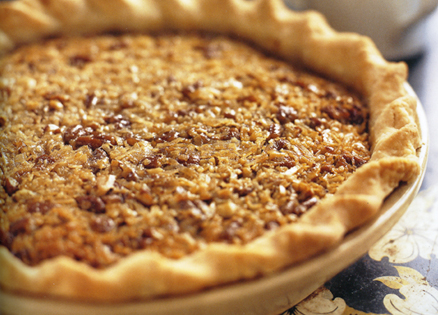
Oatmeal Nut Pie

This recipe came to me from my sweet cousin Stephanie, whom everybody calls “the peacemaker” between us girl cousins, because whenever one of us is puffed up about something, Stephanie is the first one to go out of her way to bring the obstinate one back into the fold.

But when it comes to recipes, don’t let Stephanie’s tenderhearted nature fool you. She guards her wonderful recipes like a movie star guards her jewels—you have to catch her in the right mood to get one out of her.

However, please don’t hold that against Steph, it’s just that way we were raised. My grandmother once said, “There’s something immoral about a woman who’ll give out her recipes to anyone who asks.”

I have to tell you, this is one of my favorite pies. And I believe it will become one of your favorites too. It tastes like a slice of paradise to the taste buds.

Ingredients

One 9-inch single pie crust rolled out, fitted into a pie plate, and edge trimmed and crimped

4 large eggs, well beaten

½ cup granulated sugar

½ cup firmly packed light brown sugar

¼ cup (½ stick) unsalted butter, melted and cooled

1 cup milk

2 tablespoons all-purpose flour

1 teaspoon vanilla extract

½ teaspoon maple-flavored extract

¼ cup dark corn syrup

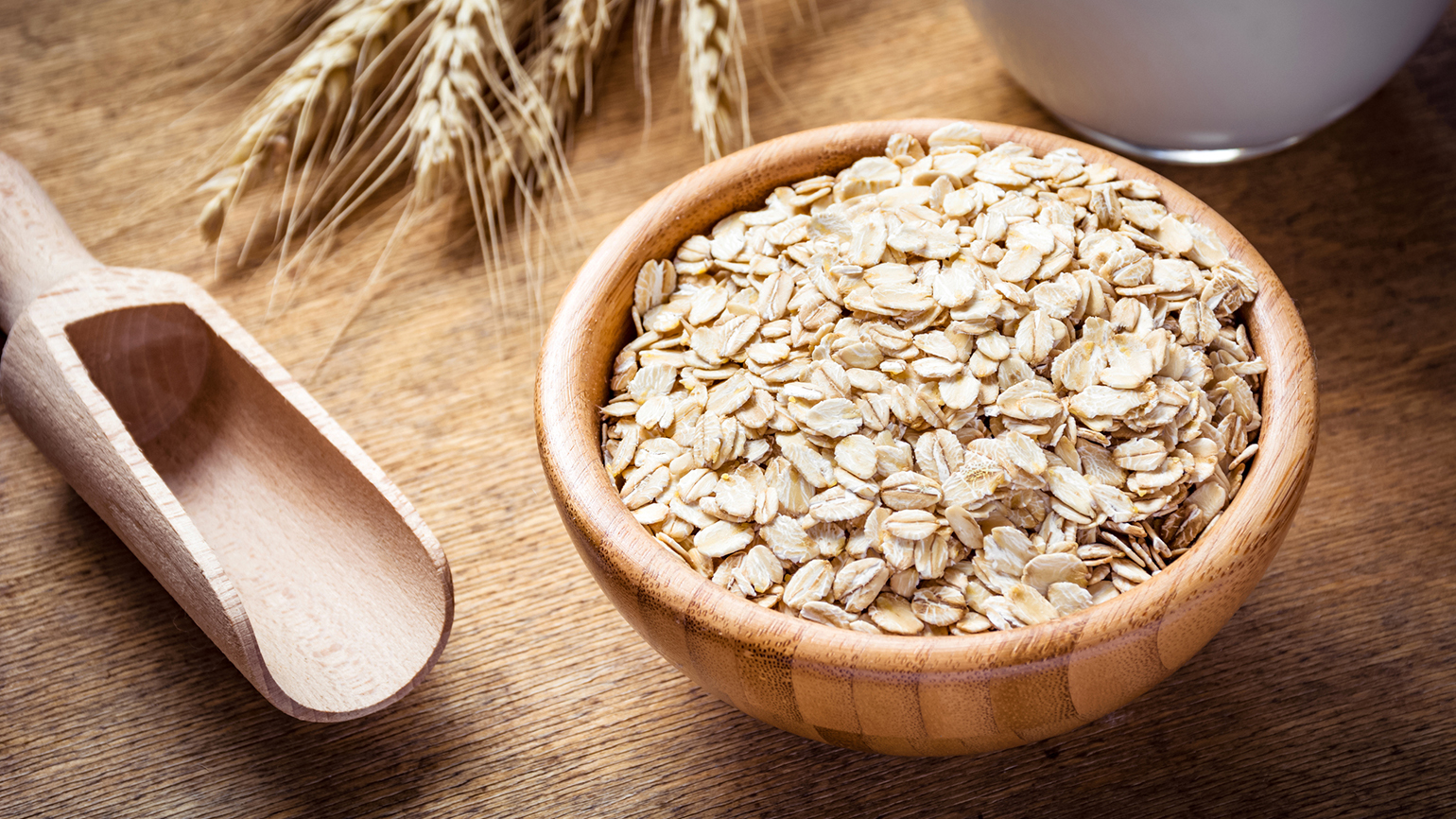
¼ cup quick-cooking oats

½ cup chopped pecans

½ cup sweetened shredded coconut

Preparation

1. Preheat oven to 350°F. Prepare the crust and set aside.

2. In a large bowl, combine the eggs, both sugars, butter and milk until well mixed.

3. Stir in the flour, extracts and corn syrup until well mixed.

4. Blend in the oats, pecans and coconut.

5. Pour the filling into the pie crust.

6. To give it a nice little edge, place your left index finger and your right thumb (turned sideways) on the border of the pie crust at a 45° angle.

7. Gently push your thumb against your index finger to form a pretty slanting ridge all around the pie.

8. Place in the oven and bake until the filling is nice and golden, 45 to 50 minutes. Let cool on a wire rack.

9. You may serve this delectable pie warm or at room temperature—I prefer the latter.

Makes one 9-inch pie

Oatmeal Dinner Rolls

This recipe from Phyllis Pellman Good, author of the Fix-It And Forget-It cookbooks, comes from Martha Bender of New Paris, Indiana.

They’re a great addition to your holiday table.

Ingredients

2 cups water

1 cup dry quick oats

3 tablespoons butter or margarine

1 package dry yeast

⅓ cup warm water

⅓ cup packed brown sugar

1 tablespoon sugar

1 teaspoon salt

4¾–5¼ cups flour

Preparation

1. In saucepan, bring 2 cups water to boil. Add oats and butter. Cook and stir 1 minute. Remove from heat. Cool to lukewarm.

2. In large bowl, dissolve yeast in ⅓ cup water. Add cooled oats mixture, sugars, salt and 4 cups flour. Beat until smooth. Add enough flour to form a soft dough.

3. Turn onto floured surface; knead 6–8 minutes, kneading in more flour, until smooth and elastic. Place in greased bowl, turning once to grease top. Cover and let rise in warm place until doubled, about 1 hour.

4. Punch down. Let rest 10 minutes. Shape into 18 balls. Place in greased 9-inch round baking pan. Cover. Let rise until double, about 45 minutes.

5. Bake at 350°F for 20–25 minutes, until golden brown. Remove from pan to wire rack to cool.

Find out how Phyllis began cooking!

Nutmeg Meltaways

Family and friends have enjoyed these melt-in-your-mouth cookies since I first began making them years ago. I love to bake and try to keep the cookie jar filled. For the holidays, the dusting of nutmeg is a tasty touch that everyone seems to like.

Ingredients

1 cup butter (no substitutes), softened

½ cup sugar

1 teaspoon vanilla extract

2 cups all-purpose flour

¾ cup ground almonds (about 3 ounces), toasted

1 cup confectioners’ sugar

1 tablespoon ground nutmeg

Preparation

1. In a mixing bowl, cream butter, sugar and vanilla. Gradually add flour; mix well. Stir in the almonds.

2. Shape into 1-inch balls; place 2 inches apart on ungreased baking sheets. Bake at 300°F for 18–20 minutes or until bottoms are lightly browned. Cool on wire racks.

3. Combine confectioners’ sugar and nutmeg. Gently roll cooled cookies in sugar mixture.

Makes about 5 dozen

Norm Lewis Stars in NBC Live’s ‘Jesus Christ Superstar’

In a career spanning more than 30 years, Broadway legend Norm Lewis made history in 2014 as the first Black actor to play the Phantom on Broadway in the classic musical Phantom of the Opera. He’s conquered the stage in leading roles as Porgy in Porgy and Bess, Javert in Les Miserables and Sweeny Todd. Lewis is also well known in film and TV, recently playing Senator Edison Davis on ABC’s most talked-about show on Twitter, Scandal.

On Easter Sunday, he’ll take on a new challenge, starring on live TV in the NBC production of the hit rock opera, Broadway musical and film Jesus Christ Superstar.

The hybrid Broadway/TV live extravaganza, which stars John Legend as Jesus and Sarah Bareilleis as Mary Magdalene, also stars Lewis as Caiaphas, the Jewish high priest who masterminded the crucifixion of Jesus. It’s a role the Tony-nominated singer never thought he’d play.

“I remember back in second grade, it was a major controversy for me,” Lewis told press at a round-table interview about the year the original 1970 album Jesus Christ Superstar came out. Lewis grew up in a Southern Baptist church as the grandson of a preacher in famed novelist Zora Neale Hurston’s hometown of Eatonville, Florida. His father would take him to the barbershop at 6 a.m. some Sunday mornings, then back home to eat, then to church, then to Sunday school, then back home to eat before evening service. Mixing rock and roll and the story of Jesus seemed blasphemous to some Christians at that time. “For a long time [as a kid], I was scared to even listen to it, because of that aspect.”

Once he got over the fear of listening to it, he loved it. “I listened to how [composer] Andrew Lloyd Webber wrote this music and the emotion in the music,” and he was sold. His favorite song used to be “Heaven on Their Minds,” Judas’ song from the opening scene, but after being immersed in the music for this role, he says, “I can’t even pick now.”

For his one-night-only role as Caiaphas, he’s preparing by watching the 1973 film version and studying up on the life of the high priest.

“It’s interesting because I’m seeing [him] from a spiritual aspect, but also this is very political, you know, [high priests] had a lot of power in politics,” he says. “Caiaphas, I found out, is the longest-running head priest…he was in this position for the longest time. So I’m trying to connect [the spiritual and the political] right now for myself,” he says of finding understanding and empathy for his character.

“But, definitely from the spiritual aspect of being almost like, if you know the story of Les Mis and Javert [the police investigator obsessed with punishing Les Miserables‘ protaganist Jean Valjean], there is no gray area, it’s all black and white,” he says. “So I’m just trying to put that into this character.”

As for the singing, the baritone will be staying in the lower part of his register for the role. “This is lower than a lot of roles I’ve ever done,” he says, so on Easter, to prepare for the live performance, “I’m not warming up [my vocals] so I can stay in my lower register for awhile.” He’s also got a strong day-of plan for any jitters he may feel performing on live TV:

“Lots of prayer and meditation first. Just making sure I get enough rest the day before to focus. Because it is a one shot deal,” performing in front of tens of millions of people around the world, as opposed to the 1,200 that pack into a Broadway theater.

If he weren’t going to be performing on the NBC Live international stage this Easter, he’d be celebrating the Holy days with family, “or ‘framily,’ if I can’t get to my actual blood relatives,” he says. “But also, I kind of celebrate a seder [too] with the Jewish community. So, I celebrate both.”

Jesus Christ Superstar airs live on NBC on Easter Sunday, April 1, at 8pm/7pm central.

Nolan Ryan Still an Inspiring Baseball Success Story

Read in the paper recently that Nolan Ryan and his investor group won their bid to buy the Texas Rangers from its beleaguered and bankrupt owner. While Ryan’s ownership is both a fascinating baseball and business story, what struck me in reading about it was what he told reporters after the deal was sealed.

“Did I ever think I’d be in a position to be in an ownership group of a Major League Baseball franchise? No,” said the Hall of Famer pitcher. “But I never thought I’d throw seven no-hitters, either.”
The personal growth lesson? Just keep pitching those fast balls. In other words, show up, take risks, do your best, and things may turn out beyond your wildest dreams.

Read more inspiring baseball stories.

Nolan Ryan’s Secret to Success

Nolan Ryan struck out a record 5,714 batters and pitched seven no-hitters and 12 one-hitters during his major league career.

In 1999, in his first year of eligibility, he was elected to the Hall of Fame in Cooperstown with 98.8 percent of the vote, just six votes short of a unanimous selection.

Community Newsletter

Get More Inspiration Delivered to Your Inbox


But early in his career, success was far from guaranteed for Ryan. In fact, he nearly quit the game he loved because he was so frustrated. He felt he wasn’t doing justice to the gift he had been given.

Ryan details that struggle and how he eventually turned his game around with Tim Wendel, author of High Heat: The Secret History of the Fastball and the Improbable Search for the Fastest Pitcher of All Time (Da Capo Press 2010).

“When I was in ninth grade, back in Alvin (Texas), they had the President’s Physical Fitness tests. You ran 40 yards, did X number of pushups, sit-ups, and one of the deals was the softball toss. They told us to throw it as far as we could.

“So we go out to the football field, with no warm-up, no nothing. It was here it is, just throw it. I threw (the softball) 309 feet. I’ll never forget that number. From then on I knew I had something.

“As a kid, I could always throw the ball farther than anybody else. But my velocity was no different then the top four or five kids in Little League. I was not a standout in Little League.

“Then I hit my last growth spurt as a sophomore in high school. I went to baseball practice right after the basketball season ended. All of a sudden, it was like I had a different arm. Why? Nobody really knows for sure. That’s the way it is with a quality fastball. You can talk about height and weight and arm mechanics, but nobody’s really sure why one guy can throw hard and another guy can’t.

“Early on in my career, I knew I had something, but I couldn’t do right by it. That very fact really frustrated me. I almost quit several times.

“When I got to the big leagues (with the New York Mets) in ’68, I continued to be frustrated. Mentally and emotionally, I wasn’t into what I had to do to be a (successful) pitcher. That was probably the worst time for me. If I had quit, I probably would just gone back to school and worked somewhere close to home, back in Texas.

“Why didn’t I quit, just walk away? I knew I had this talent and I couldn’t help believing that if I could find the right situation, the right people, then I could turn this around. Really do what I wanted to do out there on the mound.

“You have to remember, there wasn’t sports medicine back in those days, so nobody really understood the mechanics of throwing a baseball and what you needed to do properly. The only thing pitchers really had was the trained eye. That’s what I was desperate for. Somebody who could really help me.”

After the 1971 season, Ryan was traded from New York to the California Angels in a package deal for infielder Jim Fregosi. There he met catcher Jeff Torborg, who had once caught Sandy Koufax, and pitching coach Tom Morgan.

“The Angels were in a rebuilding mode and they allowed me to pitch every fourth day. Tom Morgan got me to understand what I needed to do to be more consistent. He slowed down my delivery. He always had an eye on me to make sure my delivery held the right form. Once that happened, something clicked with me about pitching, what I needed to do.

“I learned that if you cannot handle the mental side of it, you’re never going to be able to handle the physical side. You have performance anxiety, which happens to everybody at some level. But if you stay consistent in your approach, work to control your emotions and be exact about what you need to do, you can overcome this, too. If not, you won’t be able to put the pitch where you need it, no matter how hard you throw.

“Over the years, I’ve seen a lot of kids who had unbelievably great arms but never made much of it all. They either got injured or were never able to master the principles of throwing. When you get to the top level, there’s not a lot of separation in the physical abilities of players. It’s the mental approach to the game that separates people.

“If you’re blessed with the ability to throw hard, you have to consider all the factors. It’s a gift that you did nothing to earn. I mean that. It was given to you and what you do with it is up to you.

“Once I realized that I said to myself, ‘Hey, this is a gift and I’m going to take advantage of it and be the best I can be for as long as I can.’ A lot times professional athletes, even people in general, don’t realize what a blessing they have and they don’t utilize it to the fullest.”

Read more inspiring baseball stories.

Niki Taylor: Faith and Recovery from a Car Accident

I don’t remember the impact. That part of the car accident is a blank. I was in Atlanta that weekend in late April, up from Fort Lauderdale visiting friends. Next thing I knew I was crawling from the car. A single thought was in my head: Am I okay? Then, right on top of that came the thought any mother would have: I need to be okay for my kids.

My six-year-old twins, Hunter and Jake, were down in Florida with their dad, my ex-husband. I’d promised my boys I’d only be gone for three days. I had to be all right. Even a short hospital stay would break that promise. I took a look down at myself. Not a scratch. By now my two friends were out of the vehicle too. They looked a little banged up but seemed okay as well. Thank you, God…

Suddenly, my abdomen started hurting—a pain more intense than anything I’d ever felt, like my insides were on fire. I lay down on the grass, tears streaming from my eyes.

That’s the last thing I remember. I came to in Atlanta’s Grady Memorial Hospital. How long had it been? A day? More? What about Jake and Hunter? What about my promise? I tried to speak but there was something in my throat. A tube. I was breathing through a tube.

In bits and pieces through the haze of my returning consciousness, the doctors explained what had happened. “Your liver was virtually torn in half,” one of the surgeons explained.

“How long have I been here?” I scribbled on a pad by my bedside.

“About a month,” the doctor said.

A month? No! May was almost gone. What about my boys? I’d missed Mother’s Day. Somehow, that stung more than everything else I was hearing. I scribbled another note on the paper. “When can I see Hunter and Jake?”

“I’m sorry, Niki. The slightest infection would be disastrous. We just can’t allow anyone under 10 years old into the ICU. No exceptions.”

“How long?” I wrote quickly.

“A while. Two, or maybe three, months.”

Some professional women see work and family as separate. I never have. My life is my family and always has been. I grew up in Cooper City, a suburb of Fort Lauderdale. In my teens, I knew two things: I wanted to be a marine biologist (my dad, a highway patrolman, and I got our scuba certifications together the summer I was 14) and I wanted to be a mother.

One day Mom—an amateur photographer—sent some vacation shots of me to a local modeling agency. The agency asked me to come in. The same year I got my scuba certification, I came to New York to shoot my first cover, for Seventeen magazine.

More work followed. At 17 I was Vogue‘s youngest cover girl ever. I still loved the ocean, but marine biology wasn’t to be. Being a mom was. I married at 18. A year later I gave birth to Hunter and Jake. A lot of folks thought I was crazy to have kids during my most lucrative modeling years. Couldn’t I wait?

No. From the start, modeling had been a family affair for me. Either Mom or Dad or both of them always came with me on shoots. If a cameraman needed a hand moving some cable or a stylist needed someone to run out for two dozen gerbera daisies, my parents were ready to pitch in. My sisters, Joelle and Krissy, came along too, whenever they could. Now I had my boys to add to the mix.

I felt very, very blessed and very grateful. But there were clouds on the horizon, times ahead when I would need my faith more than ever. In 1995 my little sister, Krissy, died suddenly of right ventricular dysplasia, a rare heart condition. She was only 17. It devastated my parents and left a huge hole in our lives. In 1996 I went through a painful divorce. I’d always felt that everything in life happens for a reason, a reason that sometimes only God understands. Holding on to that belief became harder than I’d ever dreamed it could be.

And now here I was, flat on my back because of multiple surgeries, completely immobile, staring at the blank ceiling. Not see my kids for months? Hunter and Jake needed their mom. And I needed them. I needed all our little daily rituals: putting them into their PJs, picking up their toys, smelling their hair after a bath. At age six, life moves at a hundred miles an hour. They were making new discoveries, growing in new ways every day. How much of their lives had I missed already, just in the last month;

I got angry at the only one I knew could hear me. Staring up at that empty ceiling, I thought, God, I know how fortunate I’ve been in my life, but I’ve had my heartbreaks too and I don’t want anymore. All I want is to see my kids!

Suddenly my mind flashed back to the accident. I need to be okay for my kids. That was it. That was the point. I would do whatever it took to get better, to survive this.

The next morning Mom walked in with a bunch of new photos of Hunter and Jake and thumbtacked the pictures to the ceiling. My heart swelled with an aching joy. Yes, Lord, I need to be okay for my kids. Thank you for the reminder.

After a little more than a month, I was well enough to sit up. My world grew to include not just the ceiling plastered with pictures of Hunter and Jake, but the walls of my room. I could look straight at the doctors and my family, even if I still couldn’t talk. And, for the first time, I could see the TV that hung over my bed.

Mom took advantage of that. She brought in a package. There was a video in it. She popped it in and suddenly my boys were there in front of me, moving and talking, horsing around for the camera, showing off their new toys. Telling me how much they missed me. How much they loved me.

It was the middle of July—two and a half months since the crash—when I finally got the word I’d been waiting for. “The risk of infection is down enough for us to move you across the street to the rehab hospital,” one of my doctors said to me. “Better yet, your boys can see you.”

I made the trip over later that day. First thing the next morning, the door opened and Hunter and Jake ran in. They were dressed in mini-surgical scrubs. Each one even had a little stethoscope. They hopped up onto the bed and put their arms around me. I had a tube in my trachea, so I still couldn’t talk—could barely move, in fact. For the rest of the day, they hung out with me in the bed and we watched TV together, just like we would have on a normal, lazy Saturday at home. I had my boys back at last. And I knew, somewhere inside, that things were going to be okay.

The road back was long and tough and painful. After dozens of operations to repair the damage of the accident, I had too many scars to be a full-body model anymore. But my face hadn’t been touched. I would still be able to earn a good living in that profession, if I wanted. But did I? So far I’d managed to navigate both the triumphs and the tragedies that came along because of the anchor provided by my family and my faith. If things really did happen for a reason, it was up to me to find the reason for my accident—to discover how I could turn what had happened to me into something genuinely positive.

I left the modeling world and started a brand-new chapter of my life in a brand-new place. I picked Nashville. I fell in love with it on a visit. I figured it was the perfect environment for my boys to grow up. Underneath it all I’m still a tomboy. Here I have plenty of opportunity to let that out. I have a motorcycle, the boys have dirt bikes, and on any weekend you’re likely to find us on them. And, of course, there’s our church, Calvary Chapel Brentwood, where we feel at home every Sunday, a place where we can center our lives.

Last year my manager, Lou Taylor, and I opened a clothing store here called Abbie & Jesse’s (Abbie is Lou’s dog and Jesse is mine), and I founded an organization that gives women with exciting business ideas but limited resources a chance to develop them. I called it the begin Foundation. (That’s right, with a small “b” because the best things start out small.) Hunter and Jake are growing like crazy and I’m loving every minute of it. All I ever wanted was to see them again, to never miss another Mother’s Day. This year, like all the years since I left the hospital, it will be the happiest day of my life.

New Mystery Series Set in Charleston Hospital Overflows with Southern Charm

Guideposts’ newest fiction series, Miracles and Mysteries of Mercy Hospital, will take you on an adventure. All you have to do is turn the page…

Welcome to Charleston, South Carolina! A city rich in history and sparkling with Southern charm. Here you can turn any corner and feel like you’re in a fairy tale. Houses the colors of a rainbow, cobblestone streets, secret courtyard gardens, majestic church steeples and spires, horse-drawn carriages… And one of Charleston’s cornerstones, Mercy Hospital. A building with its own intriguing history.

The employees of Mercy Hospital are just as charming as their hometown. There’s Evelyn, a history buff who supervises the hospital’s records department; Joy, a quiet but observant gardener who manages the hospital giftshop; Anne, a pastor’s wife who volunteers at the hospital; and Shirley, a no-nonsense, good-hearted nurse who is devoted to her healing work.

Though they are from different walks of life, these four women become fast friends as they work to solve the puzzling mysteries and witness the miracles happening at Mercy Hospital. Each book in the series is written by a popular Guideposts author from the point of view of a primary character who has her own stake in each mystery.

The first book in the series, Where Mercy Begins, opens with a shocking whodunit. Since its founding in 1829, Mercy Hospital is rumored to be under the protection of a guardian angel. But when the beautiful stone angel statue disappears in the middle of the night, everyone is scrambling to find out who stole it. Enter our faithful foursome – Evelyn, Joy, Anne, and Shirley – who gather cryptic clues and stumble upon hidden passageways in hopes of restoring the beloved statue to its rightful home. The story follows Joy’s perspective as she struggles to find her sense of purpose in Charleston. It’s written by best-selling author Kathleen Y’Barbo, who also wrote for Guideposts’ Secrets of Wayfarers Inn and Mysteries of Lancaster County series.

The second book, Prescription for Mystery, follows Anne who finds a wooden box of old photographs while digging through the archives in the records department. While going through them, she discovers a familiar face. Could it be an ancestor of someone who used to work in the hospital but left without a trace? As the mystery unfolds, Anne must also focus on raising her granddaughter while her daughter, Lili, is deployed as an army officer. This inspiring story was written by best-selling author Ruth Logan Herne, who also wrote for Guideposts’ Savannah Secrets and Mysteries of Martha’s Vineyard series.

More books are available—or in the works. Each story is a fast-paced adventure—filled with suspenseful clues, delightful humor, and loads of Southern charm!

New from Guideposts Books: Ordinary Women of the Bible

Guideposts has launched a new fiction series, Ordinary Women of the Bible, imagining the lives of people who make the briefest of appearances in Scripture and yet have much to tell us about how to live in faith and expectation.

I was listening to my favorite Bible podcast when one of the guests—a guy, mind you—pointed out, “You know, it’s the women in the Gospels who get it about Jesus. They’re often the first to really understand who he is.” Wow, I thought, that’s something I’d never noticed before.

I took down my Bible and turned to Luke’s Gospel. Mary is there in the first chapter, of course, startled to learn from the angel Gabriel how she’s been called by God. She then goes to visit her relative Elizabeth, pregnant with John the Baptist, to share the good news. These two women are major figures in the age-old story, but as I kept turning the pages, it was the lesser-known women whose stories jumped out at me.

Like Anna the prophet, who had been waiting her whole life for the appearance of this savior. An 84-year-old widow, she never left the temple in Jerusalem, worshiping and praying day and night. When the infant Jesus is brought there to be blessed, Anna praises God, knowing that this is the one who will bring redemption to the world. It’s a cameo appearance. She appears, sees Jesus, understands who he is and then is gone.

Other women come onto the scene and, unlike the 12 disciples, don’t even get named, yet their holiness is called out. For instance, as Jesus watches the rich people making a big show of putting gifts into the collection box at the temple, calling attention to their wealth, he points to a poor widow who throws in two small copper coins, a mere mite. The rich are just giving their spare change. She has given everything she has.

Or consider the woman who had bled for 12 long years. She’d spent all her money on doctors, to no avail. Desperate for healing, she merely touches the hem of Jesus’ robe in the midst of a crowd. Her bleeding stops. He feels the power leave him and calls her out. “Daughter, your faith has healed you,” he says. “Go in peace.”

There is the woman with the alabaster vase full of perfumed oil. Uninvited, she enters the Pharisee’s house where Jesus is eating and kneels at his feet. Characterized as someone of dubious reputation, she weeps, wetting Jesus’s feet with her tears, wiping them with her hair, pouring the oil on them. The Pharisee is appalled. Not Jesus. “You didn’t anoint my head with oil,” he says to the man, “but she has poured perfumed oil on my feet.” He lets her know her sins are forgiven. “Your faith has saved you.”

In some traditions, the woman is thought to be Mary Magdalene, who makes an appearance—named—in the next chapter. The point in all these instances is that the people who come to Jesus in humility, in need and in the most abject circumstances know who he is. And their lives are changed.

I thought back to an Easter sermon our pastor once gave. She noted that at the Crucifixion it was the women who’d followed Jesus from Galilee who stuck around till the bitter end, mourning their loss. And they were the ones, going to the tomb with spices, who were the first to bear witness to the Resurrection. It was as though being present during such grave sorrow allowed them the vision that was beyond their greatest hopes, a reminder that sadness can open us up to unexpected revelations.

Every character in the Bible feels extraordinary—in extraordinary times and extraordinary situations. But those who got called out are often not the ones who called themselves out. They are everyday people. People like us. Ready to love, ready to be changed.