Embrace God's truth with our new book, The Lies that Bind

New from Guideposts Books: Ordinary Women of the Bible

Guideposts has launched a new fiction series, Ordinary Women of the Bible, imagining the lives of people who make the briefest of appearances in Scripture and yet have much to tell us about how to live in faith and expectation.

I was listening to my favorite Bible podcast when one of the guests—a guy, mind you—pointed out, “You know, it’s the women in the Gospels who get it about Jesus. They’re often the first to really understand who he is.” Wow, I thought, that’s something I’d never noticed before.

I took down my Bible and turned to Luke’s Gospel. Mary is there in the first chapter, of course, startled to learn from the angel Gabriel how she’s been called by God. She then goes to visit her relative Elizabeth, pregnant with John the Baptist, to share the good news. These two women are major figures in the age-old story, but as I kept turning the pages, it was the lesser-known women whose stories jumped out at me.

Like Anna the prophet, who had been waiting her whole life for the appearance of this savior. An 84-year-old widow, she never left the temple in Jerusalem, worshiping and praying day and night. When the infant Jesus is brought there to be blessed, Anna praises God, knowing that this is the one who will bring redemption to the world. It’s a cameo appearance. She appears, sees Jesus, understands who he is and then is gone.

Other women come onto the scene and, unlike the 12 disciples, don’t even get named, yet their holiness is called out. For instance, as Jesus watches the rich people making a big show of putting gifts into the collection box at the temple, calling attention to their wealth, he points to a poor widow who throws in two small copper coins, a mere mite. The rich are just giving their spare change. She has given everything she has.

Or consider the woman who had bled for 12 long years. She’d spent all her money on doctors, to no avail. Desperate for healing, she merely touches the hem of Jesus’ robe in the midst of a crowd. Her bleeding stops. He feels the power leave him and calls her out. “Daughter, your faith has healed you,” he says. “Go in peace.”

There is the woman with the alabaster vase full of perfumed oil. Uninvited, she enters the Pharisee’s house where Jesus is eating and kneels at his feet. Characterized as someone of dubious reputation, she weeps, wetting Jesus’s feet with her tears, wiping them with her hair, pouring the oil on them. The Pharisee is appalled. Not Jesus. “You didn’t anoint my head with oil,” he says to the man, “but she has poured perfumed oil on my feet.” He lets her know her sins are forgiven. “Your faith has saved you.”

In some traditions, the woman is thought to be Mary Magdalene, who makes an appearance—named—in the next chapter. The point in all these instances is that the people who come to Jesus in humility, in need and in the most abject circumstances know who he is. And their lives are changed.

I thought back to an Easter sermon our pastor once gave. She noted that at the Crucifixion it was the women who’d followed Jesus from Galilee who stuck around till the bitter end, mourning their loss. And they were the ones, going to the tomb with spices, who were the first to bear witness to the Resurrection. It was as though being present during such grave sorrow allowed them the vision that was beyond their greatest hopes, a reminder that sadness can open us up to unexpected revelations.

Every character in the Bible feels extraordinary—in extraordinary times and extraordinary situations. But those who got called out are often not the ones who called themselves out. They are everyday people. People like us. Ready to love, ready to be changed.

New Film ‘Silence’ Taught Star Liam Neeson About Faith

Before taking on a starring role in Martin Scorsese’s faith-driven film Silence, actor Liam Neeson asked himself a humbling question: “Am I enough?”

It’s the first question he asks himself before agreeing to any role. But playing real-life historical figure Father Cristóvão Ferreira, a 17th century Jesuit priest weighed particularly heavy on Neeson. Ferreira was captured in Japan while on a dangerous and illegal mission to spread Christianity and wrestled with converting to Buddhism in order to survive.

“I was interested in this film because of where I was at in my own life with questions and thoughts about God, faith, science all the rest,” Neeson tells Guideposts.org. But, “I have to convince myself first,” he says.

Neeson kept mentioning other actors that Scorsese might want to cast instead of him. Javier Bardem made that list.

“I meant it,” Neeson says of his suggestions for the role. “It wasn’t a false modesty thing, you know? I had to get over that first, ‘Am I enough?’”

To find the answer, Neeson dug deep into his past. In 1986, he’d also played a Spanish Jesuit missionary in the British drama, The Mission, alongside Jeremy Irons and Robert De Niro—a film that not only helped him on his faith journey, but also solidified that acting was a career worth pursuing.

During filming, a then-33-year-old Neeson met Father Daniel Berrigan, a Jesuit poet, priest and activist who served as an adviser for the film.

“I’ll never forget the Mass that we shared in a hotel room sitting around a table,” Neeson recalls. “[Father Dan], Bob De Niro, Jeremy Irons and myself just reading the Gospel, reading the lessons of the day. The consecration of the bread, it made religion of the Catholic faith for me really, really alive.”

Because the Jesuit priests felt such a sense of duty and destiny, Neeson started thinking about his own. While he was being well-paid for his role in the film, the “gofer” workers on set were being paid next to nothing.

“I was conflicted,” Neeson admits. “Here I was hitting marks, saying lines, getting paid money for it. Whenever we had a day off, we’d get paid. The gofers that were working, carrying coffee urns up the sides of hills were getting [much less]. [That] really messed with my head.”

The experience was almost enough to turn him off of acting, but it was faith and Father Dan that brought him back.

“Father Dan in passing one day was talking about St. Ignatius’ Spiritual Exercises and he did some with me and Irons and Bob too,” Neeson explains. “He said, ‘Did you know that [Konstantin] Stanislavski, who was the first modern theorist of acting, who put this Bible of acting together, he based that book [off] Ignatius’s spiritual exercises?’ And a light bulb went off in my head. It was like, ‘I’m supposed to be here in the middle of the jungle to hear this.’ And it really changed something in me. I became very proud of the profession I’d chosen.”

That memory and the opportunity to bring a story to life that could help others think deeply about faith solidified Neeson’s decision to join the cast of Silence, playing Father Ferreira.

Though Neeson’s stakes as an actor weren’t nearly as high as Ferreira’s life-or-death decision to either convert to Buddhism or die, Neeson’s questioning “am I enough?” allowed him to bring the necessary vulnerability to the role of a man struggling with God’s will for his life.

The role had such an impact on Neeson’s faith, that even after the film wrapped, he found himself reading more and digging deeper into books that would help understand how the brain processes faith and religion. The film also gave him a greater appreciation of the faith he was taught as a child. His mother, a devout Catholic, never misses Mass.

“It’s quite profound,” Neeson says of that level of devotion. “I’m quite envious of it.”

Ultimately, his experience filming Silence has raised even more questions for the actor, something he thinks is a good thing when it comes to faith. Though he accepts that he doesn’t “have any answers,” he continues to search.

“I don’t believe you can really have deep faith without deep doubt. It goes hand in glove. I’m convinced of that now.”

“But …” he says smiling, “I still believe in a God.”

New Book Explores How the Bible Has Influenced Popular Music

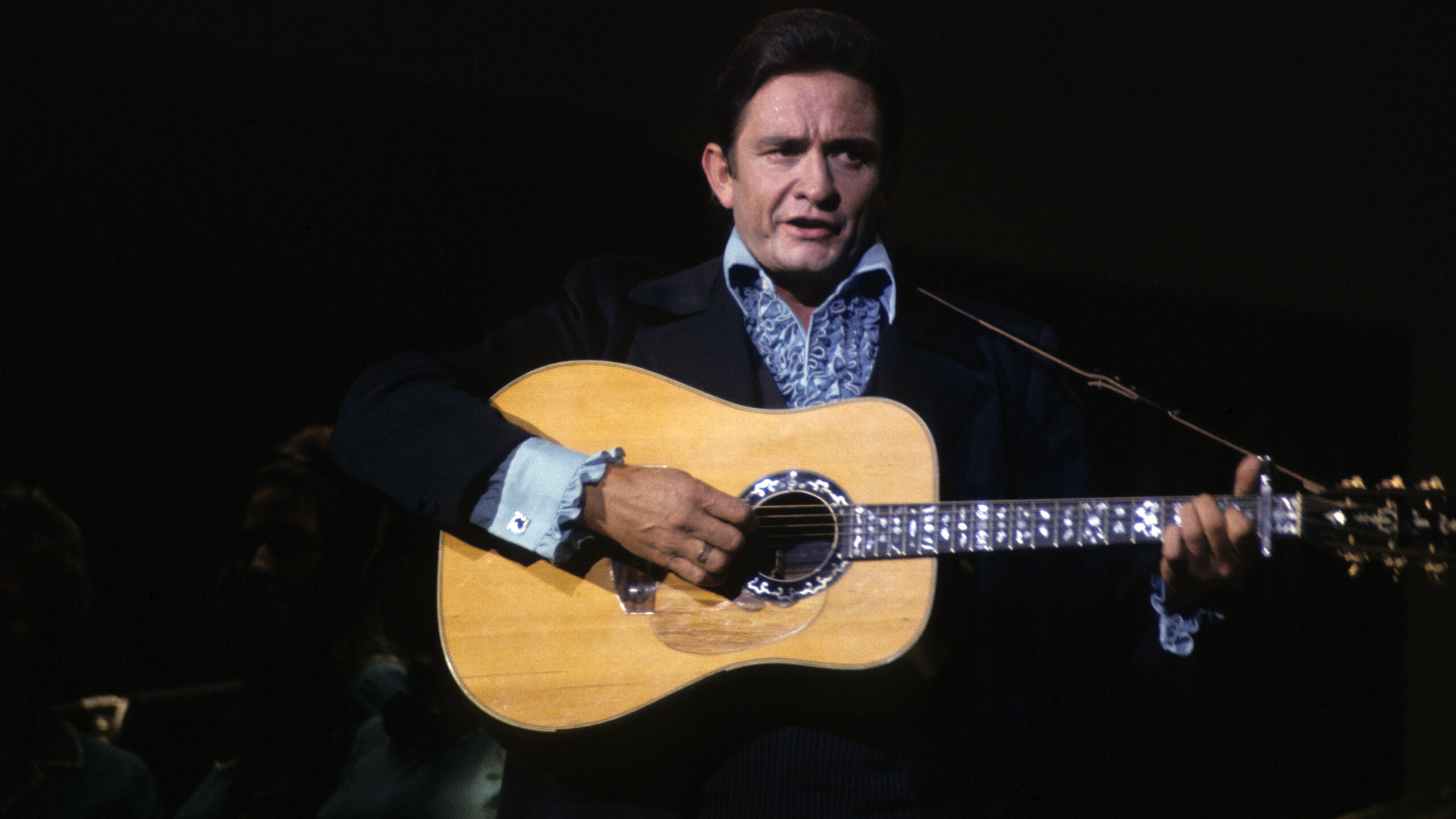
Steve Turner has been writing about music for almost 50 years. Along the way he’s interviewed everyone from John Lennon to Mick Jagger, and written biographies on Johnny Cash and John Newton, the writer of the hymn ‘Amazing Grace.’ His latest venture is Turn Turn Turn: Popular Songs Inspired by the Bible, a new book chronicling references to God and Scripture in popular music.

Turner has long written about the intersection of music and faith. It often came up in interviews with singers like John Lennon and Sting, and although many listeners miss them, Turner noticed that popular music was littered with spiritual references.

“If you’re steeped in [the Bible] then your ears prick up,” Turner told Guideposts.org. “I notice [Bible quotes], they jump out at me.”

Many of the songs in the book have spiritual references hidden in plain sight. One example is “I Walk the Line” by Johnny Cash. Turner points out that the song could be sung to Cash’s wife, but could also be sung as a prayer directly to God.

“Many [people don’t know] Johnny Cash sang gospel songs,” Turner said. “This is a song about his commitment to his wife and…how he’s going to keep his vows.”

Over the course of his writing career, Turner has seen artists and the public open up to spiritual references in music.

“For example, you take Johnnie Ray singing a gospel song in the film There’s No Business Like Show Business,” Turner said, referencing the 1954 film. “They had to have a Catholic priest on hand to make sure it was all done reverently.”

Standards began to change in the 1960s as musicians began exploring spiritual themes in their songs. The Beach Boys including an explicit spiritual reference in the title of their song “God Only Knows.” Simon & Garfunkel included the lyric “Jesus loves you more than you will know” in their hit song “Mrs. Robinson.”

“That was considered quite risqué at the time, that you could casually mention Jesus like that in a song,” Turner said. “Religious subject matter became part of the landscape of rock music. There was…freedom to talk about religious matters.”

Turn Turn Turn traces this evolution in music from the mid-1930s to present day, covering songs from retro icons like Elvis Presley and Jerry Lee Lewis to modern pop stars like Lady Gaga and Katy Perry.

When laid out plainly, spiritual themes are quick to emerge. One common reference is to the song “Amazing Grace” specifically the line ‘I once was blind but now I see.’

“A lot of songs pick up on that because it’s a universal image of enlightenment,” Turner said.

Another common reference is to an image from Revelation.

“There are several songs that eluded to tears being wiped away like [the verse in Revelation],” Turner said. “Some of those phrases are kind of in the air, people absorb them and they don’t even know the origin of it.”

Even Turner was surprised to discover biblical references in some of his favorite songs.

“I listened to “Bad Moon Rising” by Credence Clearwater Revival for years and hadn’t really noticed where the music came from,” Turner said. “It’s very much imagery from the gospel. I was quite surprised by how much of the Bible had snuck into it.”

Turner hopes Turn Turn Turn gives readers an overview of the relationship between music and Scripture over time.

“You can see fresh things being added and fresh steps being made and the caliber of music being expanded,” Turner said. “I would like to think the book would start the discussion and be useful.”

‘Never Ever Give Up’: The Inspiring Story of Jessie and Her JoyJars

Cancer can do many things. It can shake the foundation of a family, cause people to question their faith, ravage the body, destroy the spirit and ultimately take life. But for Jessica Rees, the one thing her terminal cancer never quite managed to succeed at was ridding her of her joy for life and her love for God.
In his new book Never Ever Give Up: The Inspiring Story of Jessie and Her JoyJars, Jessie’s father Erik Rees gives a painfully honest firsthand account of what his family went through when their youngest daughter was diagnosed with a rare and ultimately terminal form of cancer.
For most people, the term Diffuse Intrinsic Pontine Glioma is a foreign one, a grouping of words hard to pronounce and even more difficult to comprehend. For Rees, the clinical name for the disease that would soon change both his family’s lives and the lives of thousands, if not millions, of others around the world, was one he too had never heard of but would become all too familiar with.
“March 3, [2011] will forever be seared into our hearts,” Reese told Guideposts.org. “It was the day that we heard Jessie has cancer. Words you can’t prepare for, words that you never want to hear, but for whatever reason, we heard them.”
Even for a man of faith, the pastor of Life Mission at Saddleback Church in California, Reese admitted that the news was a big blow. At just 12 years old, his daughter had already begun the fight of her life with the debilitating disease that only 200 children are diagnosed with annually and about a handful have actually survived.
“It was devastating,” Rees said. “It ripped and gripped our hearts in incredibly painful ways, especially based off the diagnosis that there was basically nothing they could do and that the cancer was going to beat her. It was like all of your hopes and dreams as a parent, as a dad, as a family just got taken away from you.”
But for Jessie, a spunky, vivacious little girl who loved cheering her sister on at swim meets, playing make believe with her younger brother and living for the Lord, the monster invading her body would give her new sense of purpose. Soon after beginning what would be several rounds of chemotherapy, radiation, blood draws and hospital stays, Jessie happened to pass by a children’s ward in the treatment center she had chosen as the place to fight her diagnosis.
After witnessing kids her age and younger forced to spend weeks and months in the hospital because of their own health troubles, Jessie uttered five words that would forever change not only her life, but the life of her family as well: “How can we help them?”
That question soon became the heart of Jessie’s battle. Instead of focusing on the grim outlook of her particular form of cancer, Jessie began her mission of helping her peers who were also fighting some form of the disease. What started out as small jars – nicknamed JoyJars for Jessie’s middle name – quickly grew into a social media movement. A Facebook page with thousands of followers hoping to hear how Jessie was faring and to see the results of the jars they’d donated or helped create was updated regularly by Jessie, or her father when she was too weak to type. And the motto “Never Ever Give Up” was soon adopted, one that would be plastered on T-shirts, endorsed by Olympic atheletes and A-list celebrities, and that would become the battle cry for the Jessie Rees Foundation.
For a child, fighting a brain tumor is a difficult thing, but to do it while jumpstarting your own nonprofit, hosting fundraisers for other kids with cancer and crafting special jars and mementos to give to those in need is, well, pretty hard to imagine. But according to Rees, that was just who his daughter was.
“She really loved to bring smiles to other children’s faces,” Rees said. “She was a simple example of the great commandment. She loved God and she loved others. That’s what life is all about but we kind of make it very complex in some ways. She had down days too, but every night she had her devotion with her mom and she prayed for God to heal her. Her faith still inspires me.”
Channeling that faith, Rees wrote this book not only to share his daughter’s light with the world, but also to raise awareness of her disease and the many illnesses children face. “Childhood cancer is out there and it’s painful and it’s ugly but it’s something we have to deal with and try to figure out ways to raise awareness and create advocacy so we can get more funding.”
Rees and his family continue Jessie’s legacy with her eponymous foundation, focusing on raising funds for something that evades too many sick children and their families: good care. “The ability to walk with other families in the trenches and help them and encourage them, provide them hope and support is priceless,” Rees said. “We’ve been very blessed to be able to reach over 100,000 children; kids in all 50 states and 28 countries around the world, but the JoyJars are just the start of relationships with children. They’re never the end game.”
In 2012, Jessie moved to Heaven, just 10 months after first being diagnosed with DIPG. Her journey was hard, messy, beautiful, courageous and inspiring, much like Never Ever Give Up. In the book, Rees shares everything his family went through from the time Jessie first showed symptoms to when she took her last breath, in their home, surrounded by those who loved her. It’s his candidness that makes this biography of Jessie’s life so compelling to read.
“I would love for somebody to be inspired to make a difference with their life,” Rees said. “Not only inspired that a little girl did it, but at the same time, that they would somehow be compelled by Jessie’s example to think beyond themselves.”
If you’d like to learn more about Jessie’s foundation, visit their website at www.negu.org.

NBC Nightly News Anchor Lester Holt on His ‘Inspiring America’ Segments

Hi Guideposts—I’m Lester Holt, anchor of NBC Nightly News, and I’m on the September cover of Guideposts.

One of the features we do on our broadcast every night we call Inspiring America, and it’s just that: It’s stories that inspire us. We have traveled all over the country to find stories that make us feel good about who we are as a people, to make us feel good about each other and to highlight people who are doing great things for their communities.

A lot of the stuff we cover on a daily basis can be dark, it can be frightening, it can be divisive. These are the stories of our time, and as a journalist, of course, they are important to me, but it’s also important to give people a lift, to make them know and reassure them that everything is ok, that there are more good people than bad people, there are more positive people than negative people, and there are people doing remarkable things.

So we send our correspondents all over the country to find these stories. People come to us with story ideas, and we field many of them and like to feature them.

These are not throw-away, fluff feature stories; these are an integral part of our broadcast that people tell us are very important to them. I get stopped all the time by people who are saying, “Thank you for giving me something to smile about or to think about” or “It gave me an idea to do something special for my community.” So we’re appreciative of that kind of support and we’re appreciative of all our viewers of Nightly News.

My Wife Re-Wrote ‘Ben-Hur’

Yes, that’s right. You don’t have to take my word for it. Go to your nearest bookstore, log on to Amazon: you’ll see it, Ben-Hur by Carol Wallace. That’s my wife.

Now that I’m finished with a not-so-veiled plug (hey, a husband’s allowed to brag a little bit, right?) I’ll give you the story behind the story.

Author Carol WallaceCarol’s the writer in the family. All right, I’ve published a few books and have worked for Guideposts for almost as long as I’ve been married, but Carol is the author of a shelf full of novels, humor, history, even a couple baby name books.

Watch a video on Carol Wallace discussing the challenges of re-writing ‘Ben-Hur

She already had her name on one bestseller at the time we got married–The Official Preppy Handbook, remember that? And more recently, her social history To Marry an English Lord became the inspiration for the popular TV show Downton Abbey.

But Ben-Hur? Didn’t someone else write that first?

Well, yes. Her great-great-grandfather Lew Wallace. He published it back in 1880. It became the best-selling novel in America until Gone With the Wind eclipsed it. And it has been made into a host of movies. On August 19, a new version starring Jack Huston and Morgan Freeman will be released.

Carol grew up in a house full of photos of General Lew Wallace–the youngest Union general in the Civil War–and plenty of copies of his famous book. But she never read it.

Watch a trailer for the upcoming movie, ‘Ben-Hur’

Not until her dad died a couple of years ago did she consider reading it. He was the last male descendant of Lew Wallace and as she looked at some of the old black-and-white photos, Carol thought, “Maybe I should see what the fuss is about.”

Many forget that the full title is Ben-Hur: A Tale of the Christ and indeed in writing his novel of a fictional Jewish prince at the time of Jesus, Lew explored his own faith and how a life could be transformed by Christ.

It’s about a lot more than a chariot race. In fact the real climax–if you ask me–comes when Judah Ben-Hur, the hero, witnesses the Crucifixion.

It’s a terrific story, a true page turner. Carol was captivated, but she had to admit that the language is pretty stilted, a tough slog for today’s reader. So she decided–with the boldness of a good writer–that she’d like to rewrite.

And she did, preserving the ever magnificent turn of Lew’s plot, honoring all the Christian themes. Just as the original was a faith journey for her great-great-grandfather, rewriting it was a journey into faith for her.

The result is hitting the stores. The book has Carol’s name on it as well as Lew’s. There’s one more thing I think it should say: Ben-Hur: A Tale of the Christ…A Tale Worth Reading Again and Again. Let me know what you think.

Mysterious Dreams of Denmark

I’m in the middle of planning a vacation to Portugal with my sister. I can hardly wait to explore the cities of Lisbon and Porto…and, of course, eat pastéis de nata, aka traditional Portuguese egg tarts!

But while my mind is consumed with all things Portugal, part of me is thinking about a different country entirely. Denmark.

You see, I’ve had two dreams over the past month involving Denmark. I have no idea why. I’ve never been there. I don’t know anyone from there. I’ve never even really thought about traveling there (sorry, Denmark, I’m sure you’re beautiful!). Even more strange, I rarely remember dreams that I’ve had once, let alone twice!

I consulted with Mysterious Ways editor Desiree Cole. She’s a bit of a spiritual dream expert. She knows the dreams of the Bible like the back of her hand. Seriously, some days, I feel like I’m sitting next to Joseph from the Old Testament. (That reminds me, you can look forward to Desiree’s story about the warnings God sends us in dreams in the upcoming issue of Mysterious Ways magazine!)

“I’ve dreamt about Denmark twice,” I told Desiree. “In both dreams, I was invited to fly to Denmark at the last-minute, but couldn’t go because I had other plans.” Desiree paused and looked thoughtful.

“Let me think on it,” she said.

Sure enough, a few hours later, I got Desiree’s official “dream analysis.” She offered a few different suggestions about what it could mean. Denmark could represent a place of rest and peace, she said, like a “den.” It could actually just represent Denmark–maybe I was going to take a trip there one day. Or, perhaps, I’m simply being called on by God to pray for Denmark.

Desiree suggested I ask God to give me another clue to the puzzle before I go to sleep at night. I think I’ll do just that and pray for Denmark too.

In the meantime, I’d love to know what you think my dream about Denmark means. And have you ever dreamt of a different country? Share your thoughts and theories in the comments below!

My Own Man

It wasn’t easy growing up in the shadow of my dad, the legendary hockey star Bobby Hull. Sportswriters called him the greatest left wing of all time. Three times he won the Ross Trophy for the National Hockey League’s top scorer. He played on 12 All-Star teams, was awarded the Hart Trophy twice as most valuable player and in 1983 joined the NHL Hall of Fame.

But the one thing fans came to see and cheer for was his famous slap shot. I’ll never forget watching him deftly capture the puck and race up the ice, his blond hair streaming. He’d raise his hockey stick high over his shoulder, and with a mighty whack he’d whiz the puck past the overmatched goaltender.

That slap shot with its cannonball impact grabbed me and I began trying to copy it as a kid growing up in Vancouver, British Columbia. And though I had a lot going for me as the Golden Jet’s son, it brought taunts too. “Yeah, yeah,” jeered the other kids on the rink, “you’ll never be as good as your old man!”

Clenching my teeth I vowed to show them. If Dad could win games with his slap shot, so would I.

By high school my own slap shot was making goalies nervous. And while I attended the University of Minnesota at Duluth, that slap shot helped me become an NHL sixth-round draft choice in 1984. But I didn’t do as well as I’d hoped. By the end of my second season with the Calgary Flames, I had scored only 27 goals in 57 games. So I strove even harder to measure up to Dad, concentrating on that goal-scoring slap shot.

Dad and I kept up with each other, mostly on the telephone. He was always giving me advice about one thing or another, but I’d turn a deaf ear. After all, I was grown up now.

In 1988 I was traded to St. Louis, and in my first season I slammed in 41 goals. I was proud of that figure—although I wasn’t too happy about my own figure. I had always enjoyed rich foods and hearty living, and I had gained a lot of weight. But hey, with my slap shot and 41 goals, what more could anyone want?

I found out one May afternoon in 1989. It was at the end of the season when we St. Louis Blues players had our usual chats with Coach Brian Sutter before going our separate ways for the summer. I was feeling pretty good about myself, having made the All-Star team and leading the Blues to the play-offs.

On my way to Coach Sutter’s office under the St. Louis Arena I walked through the empty shadowy locker room and past our some 100 hockey sticks now silent in their racks. I glanced at mine and felt a thrill remembering those 41 goals.

I knocked on the door.

“Come in.”

Coach Sutter sat behind his desk flanked by assistant coaches Bob Berry and Joe Micheletti. He motioned to a chair: “Sit down, Hully.”

I plopped down, smiled at the men and settled back, awaiting compliments. Instead I got a shock.

Coach Sutter leaned forward. “We think you can do better.” The lanky man frowned at his desk, then looked up, his brown eyes boring into mine. “Sure, you scored 41 goals,” he said, “but we want you to do more than that.”

I edged back in my chair.

He rattled off ways in which I could improve my skills—in assists, defense and setting up plays. But the message that hung heavy on me was, You’re still not good enough.

I glanced quizzically at the assistant coaches. They looked as serious as Sutter. Emotions roiled within me. I knew the coaches were really trying to encourage me, but the “warm chat” was more like a cold shower. I walked out of the office with mixed emotions.

As I traveled up to Duluth, where I had been living, I tried to sort out my feelings. My ego was still smarting when I got home that night. I called Dad and told him what Coach Sutter had said. Instead of sympathy, though, I got, “I’ve been trying to tell you that for years.” He laughed.

I gripped the phone, staring at the wall.

“You know, Son,” he continued, “we all have our own ways of doing things. I’ve watched you on the ice. You’ve got to be more versatile, make the most of your own abilities, develop your own style.”

For the first time I realized what Dad had been trying to advise me to do: Quit trying to be another Bobby Hull.

I knew he was right; we were two different people on the ice. Dad was a fiery fighter and I was a laid-back kind of guy. I remembered something from Sunday school days about a man taking pride in his own work and not comparing himself to someone else.

“All right, Dad,” I sighed.

That summer I took a good look at myself. For one thing I realized I had to change my lifestyle. I needed to watch what I ate and drank. Instead of well-marbled red meat, I chose lean chicken, and instead of potatoes and gravy, I ordered plain rice. I exercised too, spending the off-season running, doing aerobics and skating. Most important, I worked hard practicing new moves on the ice, developing my wrist shot, for example, so that I’d be able to shoot the puck quickly in a tight situation.

When I reported back to the Blues training camp, I had lost some fat and gained some muscle; my weight was now distributed more effectively. Moreover, I had a new quickness that helped me to be right where I wanted to be on the ice.

It all came together on the night of February 6, 1990. We were in the St. Louis Arena fighting Toronto. I was one point shy of hitting that magical target of 50 goals in one season, and Dad, the old Hall of Famer, was up in one of the private boxes watching me. It was really nerve-racking, and it looked as if I wouldn’t be able to score. I wanted to do it so much for him. I tried and tried through the game, but nothing. Then in the final period I spotted my chance. In close quarters facing the Toronto goalie, Jeff Reese, I whipped a wrist shot by him—right into the net.

The arena exploded. I had made NHL history: I was the first son who had ever become a 50-goal scorer like his father. I looked up at Dad and I could see pride all over his face.

I was so pumped up I thought I’d explode too. Because I could tell what Dad was thinking: You did it, Son. And the best part is, you did it not like I’d have done it—you did it with your own style.

My Mom’s Oven “Fried” Chicken

To be truly tasty, chicken doesn’t have to be fried, as this recipe deliciously proves.

Ingredients

1 3-lb. chicken, cut up, or your favorite chicken parts
Coating
1 tsp. garlic powder
½ tsp. black pepper
1 tsp. Mrs. Dash Lemon Pepper Season Blend (salt-free)
1½ tsp. low-sodium seasoned salt
1 c. unseasoned bread crumbs or crushed corn flakes

Preparation

1. Preheat oven to 350° F.

2. Wash chicken. Pat dry. Spray with nonstick cooking spray to help crumbs adhere to chicken.

3. Mix coating ingredients together in bowl.

4. Dredge chicken in coating. Place in cooking pan that has been sprayed with non-stick cooking spray.

5. Bake until juice runs clear (about 45-60 minutes).

6. Serve with favorite vegetable.

Serves 4 to 6. Adust seasoning to taste.

Nutritional Information (based on four servings): Calories: 250; Fat: 7g; Cholesterol: 80mg; Sodium: 280mg; Total Carbohydrates: 20g; Dietary Fiber: 1g; Sugars: 2g; Protein: 23g.

Don’t miss Rev. Minor’s inspiring story about working to improve the diet and lifestyle of the members of his congregation.

Shop Guideposts Mother’s Day Gifts!

Download your FREE ebook, The Power of Hope: 7 Inspirational Stories of People Rediscovering Faith, Hope and Love.

My Amazing Race

“Congratulations, you’re the first team to arrive.”

I’ve said that a few hundred times over the last 14 seasons of The Amazing Race, but it never gets old, especially when a team has that wonderful look of anticipation—not knowing if they beat the others yet or not.

The Amazing Race is all about people being pushed outside their comfort zone and completing every imaginable challenge.

It’s about ordinary people taking part in an extraordinary situation, being a fish out of water and taking part in a life-changing experience.

I call my personal philosophy NOW (No Opportunity Wasted). NOW means taking risks and living each day as if it were your best. Sometimes that requires doing things that are uncomfortable, but in the end, it’s what really makes you feel inspired about life.

Look for solutions, not excuses.
I learned about living life to the fullest from my parents. Life always felt like an adventure growing up.

When I was six we moved to Antigua, a small island in the Caribbean, only 108 square miles. My father, a plant scientist, was employed to set up a legume project, testing plants they could adapt to the harsh growing conditions and helping local farmers establish sustainable plants.

My mother was a schoolteacher and also gave piano lessons at home. At one point she had more than 100 students! Resources on the island were limited so my parents had to be resourceful and imaginative.

I remember my mother was asked to teach a typing class on the far side of the island. There were no typewriters at that particular school so my mom simply borrowed the machines from her school, transported them over to the other school, taught her class and then lugged them back again. She did this for an entire year so that typing could be taught to as many students as possible. Mom was a doer.

Ditto Dad. When we arrived on the island he was given the use of an old building inside the gates of an abandoned sugarcane factory.

After establishing some electricity and running water, he set about finding a propagation area for his plants. The place was pretty rundown. There were piles of old steel, tin roofing and a number of flatbed railway carriages that sat on a network of train tracks.

Dad quickly realized that these carriages were at a perfect working height to set up seedlings. They could be pushed to a watering area or shaded areas and, best of all, would cost him nothing.

As the famous New Zealand nuclear physicist, Sir Ernest Rutherford, once said, “We didn’t have money, so we had to think.” The most resourceful people I’ve met around the world are usually the ones who have the least.

I just finished one of the biggest challenges of my life—riding my bicycle across the U.S. to help raise money for MS research.

Because we are in tough economic times I had to be resourceful at every turn, and believe me there were many, many turns on this 3,500-mile ride!

There’s no doubt that the lessons my parents taught me have helped me out in life.

Live life to the fullest.
At 19, I had an experience that changed my life forever—I almost died while working as a scuba diver on a New Zealand adventure show.

I found myself deep in the bowels of a sunken ship. I had entered the ship with a dive buddy and followed him through the twisted, murky corridors.

The ship was on its starboard side in about 120 feet of water. By the time we arrived in the ship’s ballroom, where we were meant to film, we discovered the rest of the crew had somehow taken a different turn. My buddy signaled for me to stay put and then took off. So there I was in the dark, sucking air like crazy, completely disoriented, not knowing exactly why I’d been left alone and panicking because I had no idea how to escape.

I thought about all the things I wished I had done in my life. It made me sad and angry to think I might not ever get to do them. My life was slipping away…

The next thing I remember was sitting in the sunlight on the deck of the boat. My dive buddy had returned to get me. I was alive and I decided right there and then that I would live life to the fullest. It was the first time I really stopped to think what dying could mean.

I grabbed a pen and paper and wrote down all the things I had to do in life: hand-feed sharks, travel the world, climb Mount Everest, go into space.

But there was one thing to do first. I suited up and dove back down to finish the dive I started and stare down my fears. I had the time of my life, and ticked it off my list—a list that would ultimately change my life forever.

That near-drowning was my wake-up call. Since then I have gone on to do things I had never dreamed of. I have been living in the NOW ever since.

Practice being scared.
I decided that the more I faced my fears the easier it would be to handle life’s challenges.

A good friend of mine is one of the co-creators of commercial bungee jumping and invited me to try it. My dad was not amused. Why on earth would I want to jump off a bridge just to scare myself?

I explained that it’s all about taking a mental leap. With the right operators, bungee jumping is a perfectly safe thing to do.

I believed that by forcing myself to do something that scared me, I would be more prepared to face my fear when it was something that really counted, like interviewing for a job, moving to a different city or starting a new relationship.

Eventually Dad came around. I haven’t convinced him to jump off a bridge with me, but we have taken some leaps of faith together.

On my cross-country bike adventure, Dad drove behind me the whole way in a large van, towing an Airstream trailer. He had my back covered for 41 days.

Share the dream.
Stepping out of your comfort zone doesn’t have to mean doing something physically challenging like leaping off a bridge or riding your bike across the country.

Moving to a new city or country can be just as challenging and sometimes more scary.

My wife, Louise, and I left great jobs in New Zealand 17 years ago and arrived in New York City with very little money and no job prospects on the horizon.

We moved here with nothing but a simple dream—to make a show for U.S. television.

One thing my parents always taught me is that the human spirit is the same wherever you go.

Louise and I were introduced to a man who was working hard to protect the endangered Florida panther. He was struggling to get attention for his cause.

We assembled a small crew, who agreed to volunteer their time to help raise awareness, and we were able to make a pilot, which got the attention of a well-respected distributor.

Our wonderful little show never got made, but we connected with some great people with whom I work to this day—including on The Amazing Race.

None of this would have happened if Louise and I had kept our dream to ourselves.

Change your list.
In my early thirties I created a more “mature” list of things I wanted to do…but climbing the highest peak in the world, Mount Everest, was still definitely at the top.

Then my daughter, Elle, was born. Not long after Louise and I brought her home from the hospital, I found myself looking at my list.

Suddenly, climbing Mount Everest didn’t matter as much for me. Was I making excuses? Turning soft? Was I not following my own advice about going hard after a dream and not letting anything stand in the way?

One night, watching Elle sleep, I stared at her tiny clenched fists and innocent face. And at that moment I realized it wasn’t fear that made me not want to climb Everest.

My life was not just about me anymore. I had other “mountains” to climb, like fatherhood. Everest could wait.

In the meantime, I try to live my life NOW, no opportunity wasted. Making the most of what we’ve been given, that’s what makes life an amazing journey. As I say on the show, “The world is waiting for you.”


My 8 Favorite Podcasts for Innovative Faith

I have a long commute to work, and one of the ways I adapt is by keeping quite a number of free, downloadable, subscription podcasts on my iPod Nano. I don’t actually have time to listen to them all, so I skip around a lot to see what’s interesting.

I listen to podcasts about music, books, pop culture, technology and more, but the ones I enjoy the most are about faith and religion in America. Often the interview is of an author of a new book, but in general what’s most interesting is how well the interview taps into trends and offers new insights. It opens up new worlds for me, just while sitting on the train or driving a car.

So here’s a little roundup of my favorite podcasts on the life and world of faith that are fun, interesting, and innovative in no particular order of preference. You’ll see a bias and preference here, but generally I like different kinds, and don’t always let right politics, right theology, right coolness, or right church stop me from getting to the fresh content with a big heart.

The links go to the podcast’s web site, or to the personality’s web site. If you don’t see an iTunes subscription link, go into the iTunes podcasts store and do a search.

1. Doug Pagitt Radio
Based out of Minneapolis, Doug’s a pastor and author who also has a real radio show. Not to be missed is the segment he does with his wife, Shelley, who brings in health and nutrition advice.

2. Religion and Ethics Newsweekly
A solid journalistic roundup of the most newsworthy stories going on in America and abroad. Might sound a little drab, but you’d be surprised by what turns up.

3. Steve Brown, Etc.
The coolest old white guy with nicotine-stained hands (his own words) you’ll ever listen to. He’s a conservative with a tender heart, passion, humor. Especially cool are the frequent appearances from his favorite “lib,” Tony Campolo.

4. On Being
Krista Tippett’s show on American Public Radio about religion, spirituality, and meaning. The show casts a big net, bringing in different religious folks and people from the fields of education, science, and more.

5. Nick and Josh Podcast
Nick Fielder and Joshua Case mix it up with authors, speakers, bloggers, artists and come from within the emergent church universe, like Doug Pagitt. But I wouldn’t make the mistake of boxing them in.

6. Andy Stanley Leadership Podcast
This megachurch pastor at North Point Community Church near Atlanta offers a practical, faith-oriented guruship on all things about leadership and personal accountability. Just a great teacher.

7. St. Augustine’s Chapel at Vanderbilt University
An Episcopal Church led by Becca Stevens, who has such a clarity of mission, compassion, and acceptance that you just want it to rub off on you. And the music by the Nashville Ramblers spans a spectrum that you might not normally hear in church. This is the only church service podcast here, but it’s so unique and genuine, I had to include it.

8. Catalyst
This huge church leadership conference has their own podcast that has a lot energy, and really impressed me when they interviewed Tony Hsieh from Zappos.

This post was adapted from David’s Soul Souvenirs blog.