Embrace God's truth with our new book, The Lies that Bind

Jambalaya

My great-grandmother passed on two things to our family: her love of Cajun food and her recipe for crab jambalaya. After my wife and I got married, we moved away from the Gulf Coast. Crabmeat was too expensive, so we found a recipe for a smoked sausage and beef jambalaya. After some years of tweaking, I’m finally satisfied I’ve come up with a jambalaya that would make my great-grandmother proud.

Ingredients

1 lb. ground beef

1 lb. andouille sausage, sliced into bite-sized pieces
1 c. c. chopped yellow onion
½ c. chopped green onion
1 c. chopped bell pepper
4 garlic cloves, minced
2 15-oz. cans of fire-roasted diced tomatoes with garlic
2 tsp. Cajun seasoning
Salt and pepper, to taste
1 ¼ c. long-grain rice
2 ½ beef broth
1 bay leaf

Preparation

1. In a large skillet over medium-high heat, brown ground beef, 7 to 10 minutes; drain and set aside.

2. In a large Dutch oven over medium heat, brown sausage, about 7 minutes; drain and set aside.

3. Add ground beef, yellow onion, green onion, bell pepper and garlic to the Dutch oven; cook over medium heat until vegetables are soft.

4. Add tomatoes, sausage, Cajun seasoning and salt and pepper. Cover and simmer for 20 minutes.

4. Add rice, beef broth and bay leaf to the meat-and-vegetable mixture; cover and cook over low heat for 25 minutes or until rice is tender.

4. For a less spicy option, substitute regular smoked sausage and diced stewed tomatoes and cut back on or eliminate Cajun seasoning.

Serves 8.

Nutritional Information: Calories: 330; Fat: 10g; Cholesterol: 65mg; Sodium: 950mg; Total Carbohydrates: 34g; Dietary Fiber: 3g; Sugars: 6g; Protein: 26g.

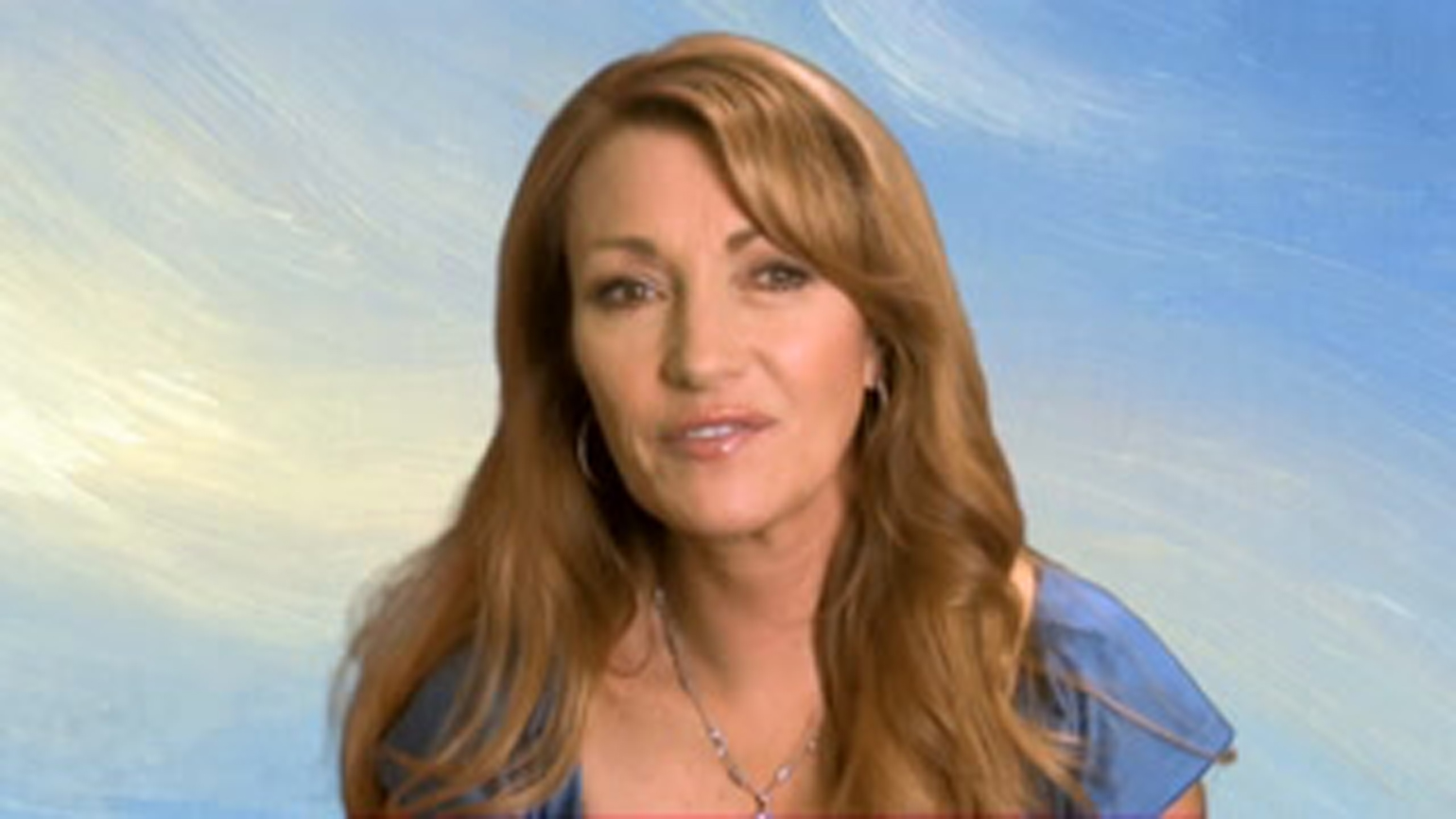
Jaci Velasquez on ‘Flipping the Script’ of Her Life

When she was just 16, Jaci Velasquez released her first album, Heavenly Place. Five of the songs became number one singles and the album went platinum. She became one of the most sought after artists in Christian and Latin music. She starred in a Target commercial and won New Artist of the Year at the 1997 Dove Awards.

Just a few years later, however, Velasquez found herself married and then shortly after divorced, heavily criticized by her Christian fans and ultimately dropped by her record label. She also starred in a movie poorly received by critics.

In her new book, When God Rescripts Your Life, Velasquez shares more of her life story, interweaving personal testimony with Bible stories to explain how she picked herself up after the dreams she had for her life fell apart.

“I thought all that effort and achievement was me,” Velasquez wrote about that time. “But I had confused my reputation with my character. And when it all blew up, I attempted repair job after repair job until the spackle and the paint couldn’t hold up the wall anymore.”

It was her love of movies, she said, that inspired her to work film metaphors into the book.

“I say that the book is [perfect] for anyone who has ever watched a movie more than once and hoped for a different ending,” Velasquez told Guideposts.org.

If Velasquez were in control of the “script” of her life, things would look different, she said. She would have gone to a normal high school instead of being homeschooled. There wouldn’t be a failed marriage in her past. Her oldest son wouldn’t be autistic.

God had a different plan,” Velasquez said. “When you stop asking the question, ‘Why me, Lord? Why?’ And you start asking the question, ‘Well, why not me?’ That’s when you can begin to heal.”

For Velasquez that required something she calls flipping the script.

“[Flipping the script] is about rethinking the stories we tell ourselves about who we are,” Velasquez said. “Why are those stories so important and how does changing the way we talk about ourselves and the stories we tell about who we are, how does that change the outcome of our lives and how we see ourselves?”

Finding those answers, Velasquez said, is exactly what she aims to do in her book, which includes a section at the end of each chapter with questions for readers to flip the script in their own lives.

“The [questions] are designed to help you reflect on what you’ve just read,” Velasquez wrote in the book.

For Velasquez, who remarried in 2006 and now has two sons, one of the biggest ways she’s had to flip the script in her own life in recent years has been with her son Zealand, who was diagnosed with autism in 2013. Still, she has found positives from her experience.

“[God] saw something in me that I didn’t see in myself,” Velasquez said. “He saw something that I could be for my son, and that was to be a fighter, to advocate for my son, and to never give up.”

Velasquez’s life has taken twists and turns she never expected, but her faith in God has never wavered. She continues to find ways to change her perspective and seek God’s plan for her life.

“We have the ultimate director if we are willing to tap into His direction,” Velasquez said.

It’s a Wonderful Movie

“Joy to the world!” rang from the radio on the kitchen counter, but I wasn’t feeling it. Not this year. I opened the freezer and took out some hamburger to defrost for dinner. My husband, Dale, wandered in from the office he’d set up in our bedroom and peeked over my shoulder. “Not hamburger again!” he groaned.

“Yes, hamburger. Again.” He looked so tired. “Take a break, honey,” I said, kissing him on the cheek. “Dinner will be ready soon.”

For the past year, my husband had been struggling to keep his new business going—a magazine called California Diving News. But despite all his hard work, we were barely keeping our heads above water. That phrase “keeping our heads above water” used to be our little joke, since the magazine was about scuba, but it wasn’t so funny anymore.

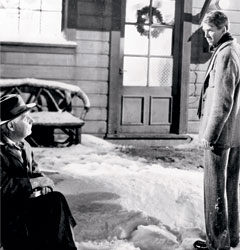
“Let me place those last ads,” Dale said, heading back to his computer. “If we don’t sell a few more before we go to press… ” He didn’t have to finish the thought. Just that morning we’d looked into his wallet and commiserated about the lonely “mama dollar and papa dollar.” That was a line from our favorite movie, It’s a Wonderful Life.

I’d introduced Dale to the holiday classic back when we were dating. It tells the story of George Bailey, a big-hearted man in the small town of Bedford Falls. He runs the Bailey Building and Loan and would do anything for his customers, but some serious financial setbacks hit. It looks like his business will fail. He sinks into despair and wishes he’d never been born. Enter the angel Clarence.

Clarence shows George how many people he has touched and helped. In the end everyone in town returns the favor and comes to George’s aid. Even his guardian angel leaves him a gift in the final scene, an inscribed copy of George’s favorite book, The Adventures of Tom Sawyer.

“Hey, let’s watch It’s a Wonderful Life with the boys after dinner,” I suggested. Maybe it could cure our blues, at least for a while, and kick-start my holiday spirit.

The movie coaxed a smile out of Dale, but it couldn’t change the facts. Christmas was coming and we were broke. I tucked the boys in, hoping they wouldn’t mind getting homemade gifts. Dale and I had agreed not to get presents for each other.

Dale was sitting up in bed. “Honey, I ran the numbers again,” he said. “I just don’t know how much longer we can keep the business going.” Long after Dale fell asleep I lay awake, praying. God, please give Dale courage and direction, and show me how to help him.

The whole week before Christmas, Dale worked even longer hours at the tiny desk in the corner of our bedroom, and I kept praying for courage. For hope. One day I was in the boys’ bedroom helping them make presents for their dad. I wished I could give Dale a gift too, something that would lift him from despair. Then I noticed a book lying on the floor: The Adventures of Tom Sawyer. Dale had bought it for the boys a couple years back. At once I thought of that final scene in our favorite movie and an idea formed in my mind.

On Christmas Day, Mom and Dad, my brother and sister and their families appeared at our door. “Merry Christmas!” they shouted, their arms filled with gifts. Before we knew it, several of our friends had filed in too. Dale and I watched in gratitude and awe as presents piled up under our tree. When the last gift was opened, our oldest son, Christopher, said, “What’s that in the tree?” He reached into the branches and brought out the copy of Tom Sawyer.

“Give it to Daddy,” I said. Dale took it. He looked at me, puzzled. “Take a look at the first page,” I said.

Dale opened it and read, “Remember—no man is a failure who has friends.” The same message the angel Clarence had left for George Bailey. Dale sat for a moment, then walked across the room and took me in his arms. We held each other tight. We knew we would get through this difficult time. We had hope now.

It took a while, but our business did become a success. We have been publishing California Diving News for 25 years now.

When I was younger, my mom read that Jimmy Stewart’s wife had died. My family sent him letters of condolence. We were delighted to receive a handwritten note back: “To the Reed family, with my thanks and my very best wishes. God bless you. Jimmy Stewart.”

We’ve been blessed indeed. With loving friends and family, a thriving business and a wonderful movie that reminds us there’s always hope, especially at Christmas.

Find more stories on hope.

I Saw Him Standing There

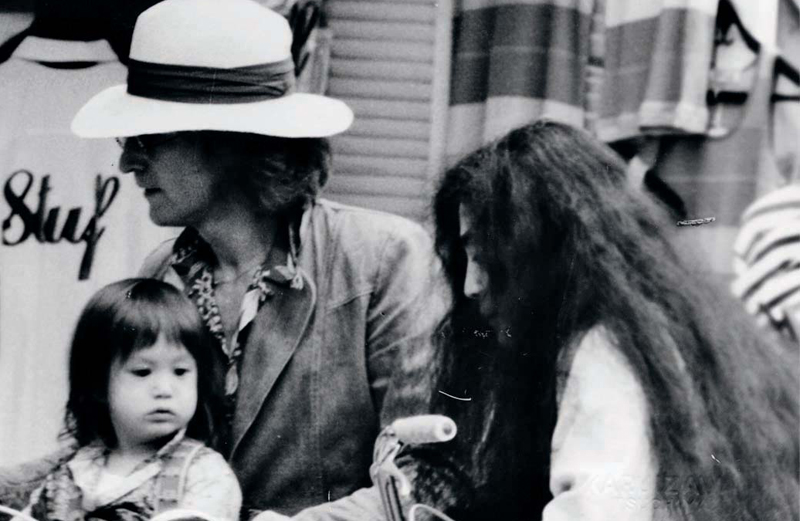
The bicyclist pedaled closer, his face unshaven, his eyes hidden beneath round wire-rimmed glasses. Hair spilled from his wide-brimmed hat. His clothes fluttered in the breeze. “How you doing?” he shouted, waving hello. A hippie, I thought, dismissing him as I walked up the busy street with my family.

He coasted past, vanishing down the road. Something about him seemed familiar. A minute later another bicycle raced by: a Japanese woman, with long, curly hair–and an unmistakable face.

“That’s Yoko Ono,” I said to myself. Oh, my…That “hippie” had to be John Lennon. What are they doing here in Karuizawa?

My husband, Stephen, was a minister and we moved to this Japanese mountain town five years earlier, in 1971, to work at the missionary camp his parents managed, a place where people came eager to experience a new world and deepen their faith.

But it was hard work raising our three young children, Becky, seven, Peter, five, and Debby, two, on top of the chores that had to be done. I cooked three meals a day for up to 50 people. Nights I set up the coffeehouse we ran.

“Come to the Power and Light Company,” read the signs we put up along the machi, the main street in town, inviting the community for free coffee, cake and conversation in English.

Missionaries had been coming to Karuizawa for years to enjoy the cool breezes coming off the evergreen slopes of Mt. Asama, the charming little shops that lined the machi, which sold cherry-wood carvings and kokeshi dolls.

The Japanese elite fell in love with Karuizawa too. Emperors, diplomats and entertainers built grand, Victorian-style homes with gorgeous moss gardens. That must be why John is here, I thought. He must own one of those mansions.

I wasn’t a Beatles fan. Back in Oregon where I grew up, I adored Pat Boone. Beatlemania shocked me–the moppy hairstyles and the loud, raw rock ‘n’ roll. “We’re more popular than Jesus now,” the papers quoted John as saying.

I was appalled. How could he be so arrogant? I wasn’t surprised disillusioned Beatles fans burned their records in response. Anyway, I decided to put the John and Yoko sighting out of my mind. I’ll never see them again, I bet.

That Sunday, as always, missionaries from the different denominations in town packed into Union Church. Midway through the service, I heard murmuring in the back. I strained my neck to see.

A man and woman were walking down the aisle, looking for an open seat. You guessed it. John and Yoko. They settled in, but the whispering didn’t stop.

“Who is that?” “He’s one of the Beatles.” “I didn’t know they went to church…” The minister cleared his throat, loudly, and everyone went back to listening to his sermon. But I couldn’t focus. What was John doing in our church?

Later that week Peter and Debby played in the sandbox in our yard. I sat in a lawn chair, keeping an eye on them while some people from the church were visiting. I just wanted to relax before I had to bake the cakes for the coffee shop.

Suddenly two bicycles slowed down at our house and pedaled into our yard. It was them! Their son, Sean, was sitting in a child’s seat attached to John’s handlebars. Stunned, I got up and walked toward them. What do I say to the most famous Beatle of all?

“I saw your signs on the machi and thought they were clever,” John said, breaking the silence. “I was telling Yoko here that we needed to see what it was all about.” The camp volunteers saw who’d showed up and quickly began gathering. “What are you doing in town?” I managed to ask.

“We’re staying at a cabin owned by Yoko’s family,” he told me. It was crazy. John Lennon, coming here because he saw our sign?

One woman pushed in front. She had a reputation for being blunt. “I read about your divorce–how could you leave your first marriage?” she asked. “What are you doing now that the Beatles have broken up?”

Everyone crowded closer. I expected John and his family to turn around and pedal away as fast as they could.

But John just smiled. “Right now I am putting my music on hold to spend time with my wife and son,” he said. The woman didn’t seem quite satisfied.

“Do you belong to a church?” she asked.

“Of course,” he said. “I’m C. of E.”

A worried look came across the woman’s face. “The See…what?”

John laughed playfully. “The Church of England. Haven’t you heard of them?”

More questions came, and he listened to each, answering kindly and politely. He didn’t contradict anyone in any way. One of the most famous people in the world–notorious even, to some–in our humble yard, being scrutinized by people he didn’t know, and taking it all in stride.

Even I had to admit, I was surprised by his patience.

“How could you say those things about being bigger than Jesus?” someone asked. I had wondered that same thing myself.

John shook his head. “When we talk to reporters, we play around with them,” he said. “We’re just a music group. Don’t people know that Jesus is far greater than we are?” Finally, the crowd seemed satisfied. Maybe he wasn’t just some arrogant rock star.

Just then there was a commotion in the sandbox. Debby had hit Peter with a plastic shovel. I knelt down to placate the two of them.

“How old are your kids?” John asked.

“Debby’s two and Peter is five.”

“Sean’s about the same age as your little girl, but he’s so quiet and shy. Maybe he could benefit from playing with a girl like that.” I looked at Sean as John reached down and gently ruffled his hair. In that moment, John didn’t seem like a hippie anymore–he seemed like any other concerned dad.

We talked a little more about our kids. Before I knew it, an hour had passed, and he, Yoko and Sean prepared to pedal off on their bikes.

“It’s good to talk to all of you,” John said. “I’ve been looking for something this summer, something spiritual. I’ve been speaking with a lot of the missionaries I’ve met here, about life and what it all means. Thank you for your words.”

He waved goodbye–and I waved back as they rode off, little Sean perched on his daddy’s handlebars.

I had made all sorts of assumptions about John Lennon–that he was arrogant, disrespectful, antireligious, a rebellious hippie. But the man I met was none of those things. In fact, he was modest and self-effacing. Not like my idea of a rock star at all!

I never did speak to John again. But I hope we helped him that summer. He certainly helped me. He reminded me of why I had come to Japan in the first place. To welcome people–not to judge them. And to grow in my understanding of the world.

This story first appeared in the September 2008 issue of Guideposts.

For more inspiring stories, subscribe to Guideposts magazine.

Inspired to Take Spiritual Flight

Growing up in a small town in West Virginia, I’d always dreamed of the adventures I would have when I went out into the world. It was 1963, the spring of my senior year at the University of Pittsburgh, when I saw a movie called Come Fly With Me, about three young stewardesses and their adventures.

One stewardess was always in a predicament of some sort; another was shy, demure and reserved. But it was the third who captured my imagination. She was so elegant, with a serene face and a voice like warm honey.

Who was this woman? I wanted to be like her—young and vibrant, in what felt like the most exciting time in history to be young and vibrant.

I read a review of the movie and learned that the actress who had made such an impression on me was Dolores Hart. One critic deemed her the next Grace Kelly.

Close to my age, she had already gotten a Tony nomination for a performance on Broadway, and had appeared in a range of movies from Where the Boys Are to a co-starring role with Elvis Presley in King Creole.

Dolores Hart—forever linked in my mind to her stewardess character—was everything I wanted to be: attractive, confident, adventurous.

The next week, on my way to class, I noticed a poster in a travel-agency window: Be a Stewardess, Wing Your Way to Adventure. Ever since I’d been a little girl, I’d prayed to discover the right path for my life.

As I saw it, that included travel and adventure, with a marriage and family somewhere along the way. Come Fly With Me made me think a stint as a stewardess was the ideal launching point. I went through a series of interviews with TWA, and was hired.

After college I went off to “hostess training,” a whirlwind combination of flight academy and charm school. Then from my base in San Francisco, I flew all around the country. I tied my scarf the same way Dolores Hart did in the movie, and tried to be as gracious and self-possessed as she was.

It was hard to imagine that just a few years before, I’d been living with my parents in a West Virginia steel town.

One day while waiting for passengers to board, a startling headline on a newspaper caught my eye: Actress Leaves Career to Join Convent. Dolores Hart was abandoning her Hollywood life to become a cloistered nun. Is this a publicity stunt?

I scanned the article but there weren’t any specifics about where she was going, just a quote to the effect that she felt this was where God was leading her. I couldn’t help thinking, Why would an attractive young woman give up a glamorous life to join a convent?

In the meantime, I was ready for a change of my own. While I loved flying—the roaring shudder as the jet lifted off the runway, the sweep of clouds struck golden by slanting rays of sun, the glitter of stars as I stared out the galley window at night—I hadn’t counted on being so jet-lagged and footsore.

After a year I turned in my airline wings.

When I was about 10, I’d put out a neighborhood newspaper from our backyard in West Virginia. In college, I’d majored in writing. I was ready to widen my horizons in journalism. I moved to Manhattan and got a job at the Saturday Evening Post.

Eventually I moved on to Seventeen and McCall’s, my love for my work and for the rhythm and color of city life cradling me as surely as the embrace of a small town. Yes, I was living out my dreams, having a grand adventure. Even in my 40s, when I came to work at Guideposts, I still felt brave and frisky and…young.

Then gradually I noticed it happening. When I walked too far in high heels, my knees hurt. I’d glimpse my reflection in a store window and wonder why that older woman was wearing my clothes.

So much of my identity involved being a young woman. I never anticipated that I’d wake up in the middle of my life and be blindsided by the fact that even members of the sixties’ “Youth Generation” don’t remain young forever.

As I approached 50, I felt disoriented and afraid, even angry. It seemed I’d hit some bumps on “the right path,” and the husband and children that I’d expected to share my life with never materialized.

Nothing had prepared me for aging—not college, not hostess training, not even my years in the working world. Was there really such a thing as growing older gracefully?

Then in 1994 I walked into a crowded ballroom at a writers’ convention and, out of perhaps a thousand people, sat down next to a dark-haired woman who introduced herself as Antoinette Bosco. As we chatted, I felt an unexpected urge to open up to her.

“I’ve been having trouble coping with getting older,” I blurted out. “Sometimes I feel so alone and unsure about the future.”

“There’s a special place I go when I’m feeling like that,” Toni said, “not far from where I live in Connecticut. It’s called the Abbey of Regina Laudis. I always have a better perspective on things after I’ve been there. Come visit and I’ll take you.”

In my mind, I pictured a medieval stone edifice on a fog-shrouded mountaintop.

One August afternoon a few weeks later, Toni met me at the bus in Danbury. We drove through rolling hills and woodlands until we reached an opening in the trees and swung into the abbey’s small parking area.

Instead of the intimidating setting I’d imagined, I saw what seemed to be an old farmhouse with a rustic wooden cross on its roof and a greenhouse as its entryway. A tractor rumbled past, driven by a ruddy-cheeked nun in long skirt and flowing wimple who waved at us merrily.

“The nuns run these three hundred and fifty acres as a farm,” Toni explained as we strolled along.

“Close to forty sisters live here,” Toni went on. “Some came to the abbey after successful careers as lawyers and teachers, one was in the state legislature. They wear full habits and never leave the grounds except for emergencies or special studies.”

She pointed toward outlying buildings. “Over there are a blacksmith shop and kilns to fire the nuns’ pottery. Sister Debbora is a beekeeper; others bake bread, milk the cows, tend the oxen.” She told me the sisters had just built a chapel where they gathered to pray and sing eight times a day.

From the far side of a field, a nun appeared and swept down a grassy slope toward us. A wide straw hat with a floppy brim sat on her head over her wimple, sneakers peeked out beneath her long black skirt. Something about her seemed familiar. When she came closer, I caught my breath.

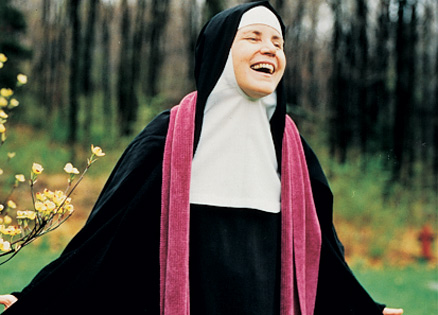
I knew that face framed in an oval of white, but now there was a gentle webbing of lines around her blue eyes and smiling mouth. “Mother Dolores!” Toni said. “This is my friend Mary Ann.”

“Welcome,” Mother Dolores said in that rich, honeyed voice I remembered so well. “How wonderful to have you here.” I sputtered something about being glad to meet her. A gust of wind caught the brim of her hat and she laughed and held it in place.

Like me, she wasn’t a girl anymore. But her expression was luminous, her manner exuded contentment and peace. As the bells rang, calling her to afternoon prayer, she invited me to come back to the abbey again.

Some months passed before I was able to return. When I did, I had a long talk with Mother Dolores through a wooden grill that surprisingly only added to the intimacy of our conversation. I poured out how I’d seen her in the stewardess movie, and at the time felt it was a kind of nudge from the Holy Spirit to set me on my path to adventure.

Mother Dolores laughed. She said that it had been in New York, while publicizing Come Fly With Me, that she had made her final decision to become a postulant and join the nuns at the abbey. She’d started visiting the abbey several years before, while performing on Broadway, and “subconsciously something kept drawing me back.”

I told her how I’d wished to be as glamorous as she was—and how disoriented I’d felt when I was forced to face the reality of getting older.

“Back when I was making movies,” Mother Dolores said, “I looked in the mirror one day and realized that if my sense of worth and fulfillment was based on my looks and youth, it was all short-lived.” She leaned closer. “I sensed inside there was something more—much more. And I was right. Time and age don’t matter.”

As I gazed through the grill into her gentle face, it became clear: True beauty comes not from youth or genes or circumstance, but from a wellspring of inner grace that transcends age and environment.

“Don’t worry,” Mother Dolores said. “Wherever you are on your path of life, however unexpected the twists and turns, God continues to draw you to where you belong.”

We prayed together, then the bells rang and it was time for her to go to vespers. As the shadows lengthened, I climbed the hill to the abbey chapel, where the sun’s slanting rays bathed the sanctuary with amber light.

While the nuns filed in and began to sing, I closed my eyes, filled with a deep feeling of peace. Lifted on the strains of their chanting, I felt older…younger…ageless…safe, an ongoing traveler following God’s path as it continues to unfold. Venite…jubilate…alleluia!

I’d finally discovered what had drawn me to Dolores Hart all those years before. It wasn’t glamour or sophistication, as I’d once thought. The Holy Spirit had been leading me to an inner beauty, the eternal beauty of the soul. A beacon that would light my way through the spiritual adventures ahead.

Download your FREE ebook, Paths to Happiness: 7 Real Life Stories of Personal Growth, Self-Improvement and Positive Change


Inspired to Share Her Gift from God

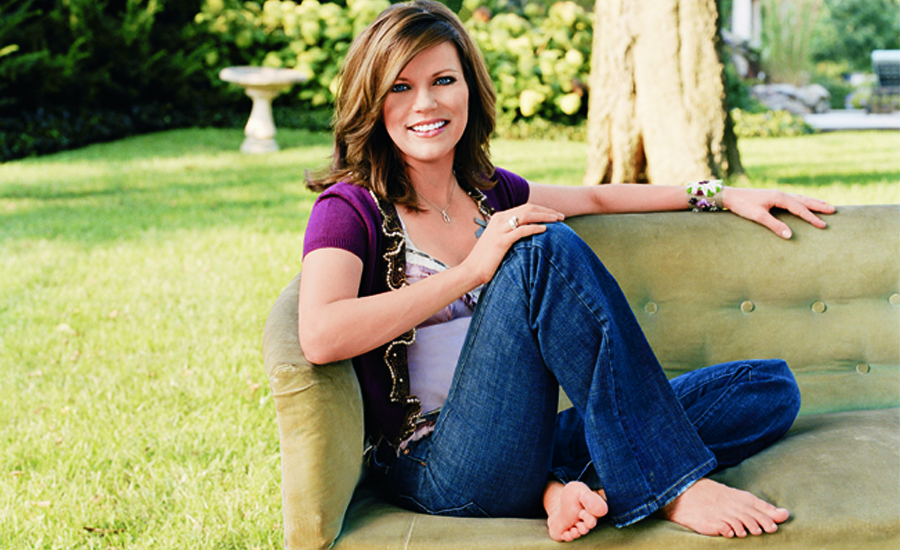
I reached out and turned off the car radio right in the middle of Juice Newton’s “Angel of the Morning.” I was in no mood. My voice was shot, my hair reeked of cigarettes and my ears were still ringing from a long night of belting out top-40 hits in a little club in Wichita.

Not even a good country song was going to cheer me up. Above the empty road, the sky was moonless and clear. A cold light played across the snow-covered fields.

Midwestern towns can get a real lonely feeling in the small hours of the morning. The kind of feeling that makes you wonder about the bigger things in life and ask yourself some tough questions. Especially when you’re feeling 22 going on 40.

Things weren’t that bad, really. I was newly married and getting paid to do what I loved more than anything in the world—singing. I wasn’t getting paid much, that’s for sure.

Most months my husband, John, and I barely scraped by between his sound-engineering jobs and the cash I took home from my nightclub gigs. Still, I thought I’d feel happier than this. Something was missing.

My gigs felt an awful lot like drudge work. I’d even had to scale back my club dates because my voice was getting hoarse. “Your voice is strained from singing,” my doctor had told me recently. “And all that second-hand smoke isn’t helping any either.”

But it wasn’t just my voice that was feeling tired—it was all of me. Lord, I thought, pulling into the driveway of our tiny rented house on the outskirts of town, if I’m this tired at twenty-two, what will I feel like when I’m forty?

I stepped out of the car, pulled my jacket close against the Kan­sas night and walked up the drive and into the house. Taking off my makeup in the bathroom, I thought back to my first sing­ing gig ever: the Shar­on, Kansas, School Christmas pageant of 1972. I was all of six.

I’d rehearsed in the living room of our family farmhouse for the big event, and I can still remember the pride on Dad’s face as he watched me.

Dad was a farmer—a good one—but music had always been his real joy. Like most farmhouses, ours had a big old toolshed out back, but our shed had as many instruments—banjos, mandolins, even a creaky old ac­cordion—as tools.

My brother, Marty, and I would spend hours out there, getting a feel for all of them, trying to force something resembling a tune out of each, imagining we were up on stage somewhere instead of a dusty old shed in the middle of nowhere.

Three years after that Christmas pageant we formed The Schiffters (from Schiff, our last name). My dad played guitar and did most of the singing. Marty played guitar. I sang and—later—played piano and keyboards. Mom ran the sound.

Satur­day nights we’d work the local country circuit and Sunday mornings we’d play at church.

Nothing beat the thrill I got stand­ing at the microphone, belting out those coun­try tunes with Dad. Even at nine I was learning to bring emotion to the lyrics I sang. At a typical Saturday night barn dance we might play for four hours, but the time always flew by.

There was a special feeling I’d get, standing on those little Kan­sas stages—one I could never put my finger on complete­ly. A feeling that I was doing what I was supposed to be doing—what God gave me the talent to do.

Joy. I guess that’s as close a name for it as I can give. It’s that feeling you get when you really connect with the purpose of your life.

I finished high school and moved to Wichita—the big city—and branched out musically. “If you want to make a living singing,” my music friends said, “you can’t be singing Earl Scruggs all your life.” It was a big world, and I had to change to meet it.

So I did. By that cold January night in 1989, I was a level-headed grown-up, with a grown-up understanding of what being a working singer meant. The club audiences didn’t want to hear Buck Owens and Merle Haggard. They wanted to hear Madonna and Cyndi Lauper.

Singing was a job. And if that meant that it didn’t have the old magic, that was just how life went, sore vocal cords and all.

Climbing into bed dog-tired and feeling a lot older than I should have, it just didn’t seem right. I had to make a change. But was it too late?

A couple of days later Dad called. Nothing unusual there. He liked to check up on me. Dad had kept the Schiffters going after I left, but we hadn’t done any singing together lately.

“They’re having a battle of the bands right there in Wichita next month,” he said. “I’m going to enter. I thought you might like to sing a few songs with us. What do you say?” Suddenly that tired feeling faded. Even my voice sounded clearer.

“I’ll be there,” I said. “We’ll blow the competition away!”

The gig took place at a little club that seated about 100—smaller even than the joints I was used to working. John was at the soundboard and Mom was in the audience. As usual, Dad sang most of the numbers with me on backup vocals, but I stepped up and sang a few myself.

I was barely a few bars into a Patty Loveless number when I felt something. A feeling of connection with the audi­ence. And with something larger, something bigger than the music. Like when I was just a kid. That old thrill. That feeling of doing what I wanted to do. What I was meant to do.

You know what? We lost the competition, but I couldn’t have cared less. John was practically jumping up and down when I got off the stage, waving a cassette of the show. “You gotta hear this!” he said. “Let’s go out to the truck and give a listen.”

We walked out to the parking lot and got into John’s truck. He switched on the ignition and slipped the tape in. We sat back in our seats like a couple of teenagers at the drive-in and listened. Pretty soon we were tapping our toes and singing along.

John was right. There was something special in that sound.

I turned to my husband. “Listen,” I said. “We’re all put on this earth for something. I want to be a country singer. This is the music that’s in my soul. I want us to move to Nashville. I want this to be my life.”

That’s just what we did. I was going to make it big in country music. I had the chops and I had the heart. And right off the bat I got a job in the mu­sic business—selling T-shirts at Garth Brooks concerts!

No, it wasn’t exactly stardom. But I didn’t care. I’d taken my leap of faith. I was close to the music, and pretty soon, with God’s help, I’d be making that music too.

John and I worked our tails off (John did Garth’s sound and I moved a lot of Garth T-shirts!). We also pestered the record companies, and in 1992 I went out on tour again with Garth—not as his T-shirt vendor but as his opening act.

You know what else? Those pesky voice problems went away too, just like I figured they would.

Last year, I released an album called Timeless, full of nothing but good old country standards. From “I Can’t Stop Loving You” to “Help Me Make it Through the Night,” they’re the kinds of songs I used to sing with Dad back in Sharon.

In 2006, I celebrated my for­tieth birthday. I’m blessed to be mak­ing the music I love to make. The music I was put here to make. And I have three beau­tiful daughters whom I’m very much there for as a full-time mom.

Sound tiring? Well it is. But I’ve come to discover that there are two kinds of tired: a bad kind—like the kind I felt that night back in 1989—and a good kind. And this is definitely the good kind.