Embrace God's truth with our new book, The Lies that Bind

How Beloved Children’s Book Author Beverly Cleary Inspired This Writer

To the untrained eye, a pingpong ball is just a pingpong ball. To a Beverly Cleary fan, it’s two motorcycle helmets for mice. Just cut apart and add rubber band chin straps.

Ever since I read Cleary’s series about Ralph, the motorcycle-riding mouse, I’ve never looked at a pingpong ball—or the world—the same way. Amazing to think that it’s been more than forty years since I checked out The Mouse and the Motorcycle from my school library in Northport, Alabama, and yet that one particular image is as clear to me as ever.

And why shouldn’t it be? It’s perfect.

Oh, how I wanted a mouse of my own to ride a toy motorcycle around my house! Thanks to Cleary’s genius, a talking rodent friend seemed not only possible but probable.

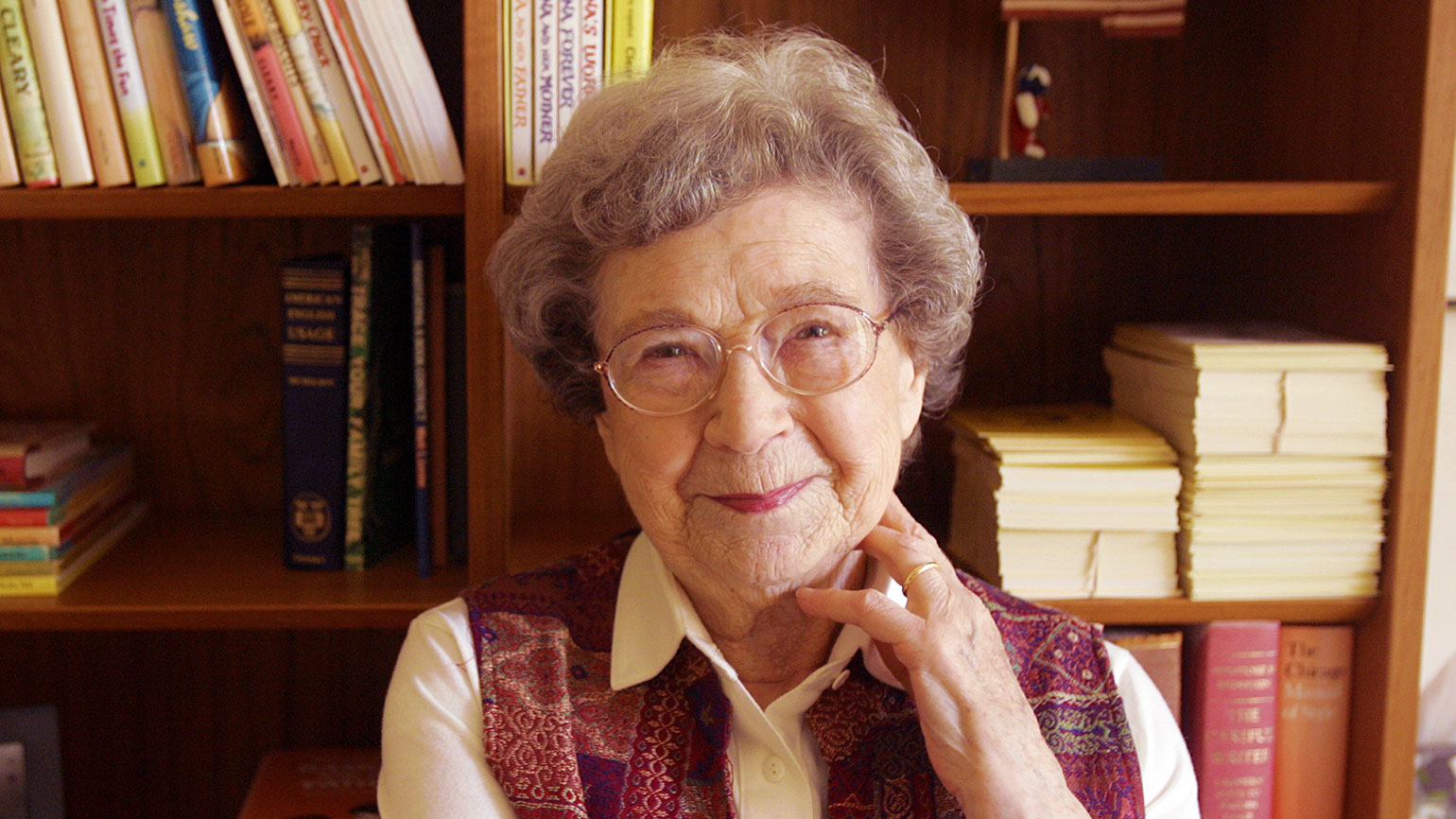
Cleary, who passed away last week at 104, was one of the main reasons I became a children’s author.

While much of children’s literature attempted to explain the world from the point of view of a wise and gentle adult, Cleary created protagonists who saw the world as only children can. I devoured every title that bore Beverly Cleary’s name. She seemed like a friend who understood me in ways I didn’t yet understand myself.

Ginger's grade school -project
From Ginger’s grade school project on her favorite
authors, circa 1978.

I’ve written eight children’s books and have always kept Beverly’s sense of wonder in mind. I didn’t realize it at the time, but my own character, 10-year-old Aleca Zamm, would decades later be cut from Cleary’s most popular character—Ramona Quimby’s—cloth: curious, spunky, and the center of all manner of misadventures.

I don’t remember at exactly what age I decided I wanted to write books, but I know that by second or third grade, my teacher assigned a project that allowed us to focus on whatever we wanted. My best friend picked dolphins; I chose children’s authors, with a large chunk of my project being about who else? Beverly Cleary!

I told that story recently to a school group. One of the students said, “That’s amazing! You did your project on children’s authors and then you became one!”

“Yes,” I said. “And even more amazing, my best friend who did her project on dolphins—became a dolphin!”

Really?” the students gasped.

And that perfectly sums up why I love writing for children: the lack of cynicism, the belief that fantastic, magical things can happen. Best friends can become dolphins; mice can ride toy motorcycles and become our friends.

That’s what Beverly Cleary taught me. In the hands of a gifted storyteller, anything is possible… and so very funny.

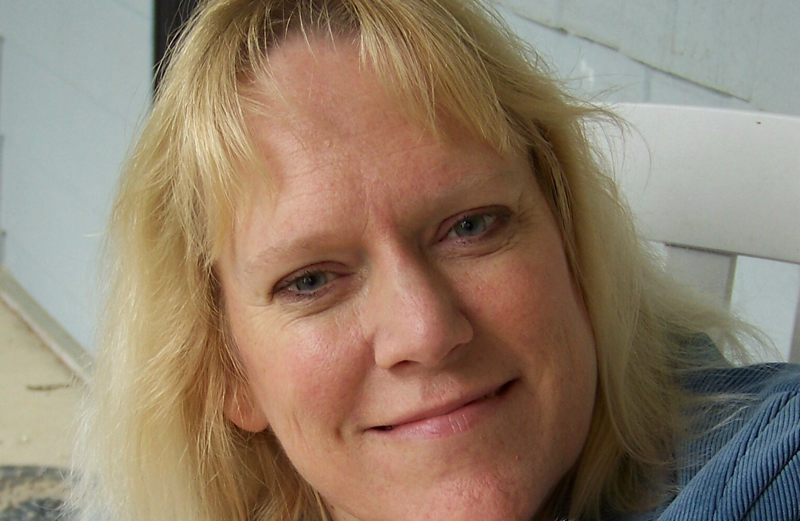
Ginger Rue’s latest book is nonfiction, Wonder Women of Science, co-authored with rocket scientist Tiera Fletcher, and profiles today’s most outstanding women in STEM fields. You can visit Ginger at www.gingerruebooks.com.

How Baseball and Prayer Brought Her Comfort

Riley is the author of Disappearing Actspart of the Secrets of Mary’s Bookshop series from Guideposts Books.

When I was a child, I looked forward to summer all year. Even now, when warm weather rolls around, anticipation blooms right along with the garden. Maybe it’s because my childhood consisted of two distinct worlds.

My parents divorced when I was very young and my brother, sister and I spent the school years with my mom near Boston and the summers with my dad in California. My faith helped me through the difficulties of being in a split family. An energetic church youth group and a great Christian school kept me busy and happy during most of the year, but my dad was never far from my thoughts.  Praying for him in my nightly prayers brought me comfort until I could see him again.

My father was a very busy physician, but while we were living with him, he put in as much time as he could with us.  One of my fondest memories is going to baseball games at Dodger Stadium.  Now, I wouldn’t classify myself as an avid sports fan. But attending a live game at the stadium is a different matter, and going with my dad was an adventure.

Where else could you yell at the top of your lungs for the home team and drop peanut shells at your feet? Most of all I loved being with my family. My dad would teach us about baseball stats and strategies of the game.  I realize now that like a baseball team, the more time we spent together, the stronger and closer we became.

I was blessed to be able to relive some of those special moments while writing Disappearing Acts. Mary Fisher and her sister Betty also have happy childhood memories of their summers, spending time on Cape Cod with their grandparents and attending local baseball games. Later they created similar happy times with their own families.

It’s no wonder, then, that when a treasured autographed baseball belonging to Mary’s late husband disappears under mysterious circumstances, she won’t rest until it’s found. I can understand how Mary feels: I still have one of the warm, fuzzy blankets that we’d take along to the stadium just in case the air turned chilly. It’s one of my favorite mementos and I’d hate to lose it. Every time I wrap up in it, I think of my dad and those wonderful summer evenings.

I will never forget those special times. Like with Mary, the shout of “Play ball!,” the crack of the bat and the cheering crowd will forever symbolize those times where ties of family love were strengthened.  Now that I have children of my own, I thank God for the lessons he taught me to never take my family for granted and to cherish every moment with them.

How a House-Building Mission Trip in India Changed His Life

This writer takes a mission trip to Trivandrum — a gorgeous, rural section of Kerala in the southern west tip of India—to build concrete houses for families in need. In this life-changing experience, he learned how to build a house on the job and more about the Kerala culture. He even met sacred cows that live off the lush vegetation. Enjoy his experience through pictures.

How a Divinely Timed Song Became an Anthem During the Pandemic

Since releasing her debut album in 2009, Christian singer and songwriter Kari Jobe has sold more than 1.4 million albums, been nominated for a Grammy Award and brought home multiple Dove awards. She has more than one billion career streams. Originally from Texas, Jobe now lives in Nashville, and tours the country with her husband, fellow Christian Music singer Cody Carnes, and their two young sons.

Jobe was getting ready to release a new album when the coronavirus pandemic hit the country and delayed those plans. But in early March, the couple, together with the band Elevation Worship, did manage to release a song, “The Blessing,” which quickly skyrocketed to the top of the charts. Says Jobe: “For this song to be an anthem in this season, keeping people connected and unified… I’ve been very moved.”

When did you decide to become a worship singer?

I grew up in a Christian home. My parents were in ministry and I spent so much of my time at church. It was all I knew and I loved it—I loved worship and music. When I was 10 years old, I was sitting in the back of my parent’s van and a song I loved came on; I had this revelation that people can use music to say things to God. That a song can be a prayer. I remember whispering to God that one day I wanted to write music that helped people pray.

Years later, when I was preparing to go off to college, I remembered that powerful moment and that prayer. I decided to pursue songwriting and worship. Now, I’ve been doing it for over 20 years.

You wrote “The Blessing” with your husband and members of the Elevation Worship Band. What inspired you?

We [Cody Carnes, Steven Furtick, Chris Brown, and myself] wrote the song in late February 2020. For us, this song came from the things we’d heard all our lives in the church, specifically a section of [The Book of] Numbers 6, which says “The Lord bless you and keep you…” This is an age-old blessing from God over the people. This song came out of our desire to write about this passage.

As we wrote the first verse, the bridge just started to happen, and we wrote about some of God’s blessings. And the truths we said just became lyrics. Sometimes, I almost felt like we didn’t write it. I felt like we were just a part of it [being written].

This divinely inspired song also had some divine timing as well, didn’t it?

We felt this song was special and that we needed to get it out quickly, but we didn’t understand why. It’s hard to get something like this out fast, but we worked hard and released the song on March 6th on YouTube. The following Friday, the pandemic [shutdown] hit America. Then we understood why we felt so compelled to get it out.

And now at the end of October that YouTube video has more than 32 million views! What a reception!

Oh man, it’s been so wild! Just the beauty of people sharing it and talking about it. People have even been redoing it in other countries, like the U.K., India, and South Africa. It’s been very sweet and honoring.

What kind of impact have you seen the song make?

One memory really stands out. During the early days of Covid, I went on a Dallas radio station that had a connection with a local hospital. They played the song for the people over the hospital intercom while we stood outside praying. We lifted our hands and asked God to bless the people inside. And the people inside—patients and workers— stood in the windows and shined flashlights out to let us know they were there and listening. It was a very tangible moment of people connecting during that time.

Has this song personally comforted you during the pandemic? Has it impacted your faith?

Absolutely. In my toughest moments during this, when I’m tired or sad or anxious, I’ve whispered the words to myself. I’ve used it as a prayer. I’ve sung it while rocking my baby son to sleep. Even when I don’t feel it, this song has reminded me that God is there for me.

As a mom to two young children, I sometimes don’t feel very aware of what’s happening in the world, but I’m seeing it so much more now. When I turn on my social media or look at my phone, I’m seeing other people’s stories. It has been a gift to help me get outside of my own head and learn what other people are going through. We are all in this together and it’s going to be alright.

What has this song taught you about the concept of blessings, particularly in a Covid world?

I’m learning that declaring blessings over ourselves doesn’t always have a quick return. It’s sowing seeds in our spirit and we must trust and believe in faith. And only then will we begin to see what happens. Blessings are a spiritual interaction with God.

It’s been a hard year for everyone. I think the hardest part has been having to trust God in the midst of so many unknowns. But He is still so present. Even when He’s giving grace for people to walk through seasons of loss or isolation. The blessings of God apply to us all.

What are the most compelling lines of this song to your personally?

There’s a line in the song that goes, “In your weeping, and rejoicing, He is for you.” This line applies to so many areas of my heart. It means that we have seasons of weeping or seasons of joy, but God is still with us. We wanted to write a song around all the blessings we believed and prayed over ourselves. We just didn’t know that we’d need all those [blessings] all at once and all of a sudden [with Covid].

Are there any other songs on your recently released album, The Blessing, that have been especially impactful for you?

What’s interesting is none of the songs [on this album] were written during Covid. “The Blessing” was the final song for the album. We wrote some of these other songs about two years before. God went before me even in that aspect.

The song “Your Nature” talks about bringing life to a barren place, bringing life to the darkest spaces. I had no idea how applicable that would be now. Even just 7-8 months into… [Covid], you feel like this is going to be our lives now. How will we come back from this? That’s what this song is about.

Another song, “Rest”, focuses on sitting back and not striving to figure everything out. The chorus of that song says, “So I rest here with you.” I even give space in the song for the listener to rest. It makes you take a moment to rest and reflect on God’s goodness and realize that He’s got it.

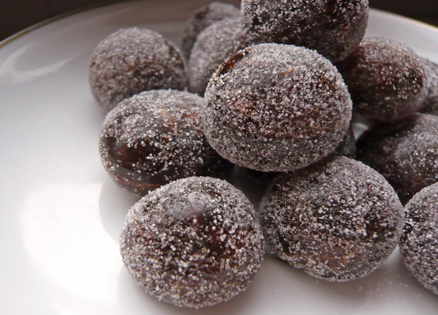
Horehound Candy

A piece of horehound candy is like a trip back in time.

Ingredients

3 qt. of water 1 t. lemon juice
¼ c. dried horehound steams, leaves and flowers. 1 t. of butter
3 c. brown sugar Superfine sugar to roll candy in
1 t. cream of tartar

Preparation

1. Bring water to a boil and remove from the heat.

2. Add the horehound and let it steep for 30 minutes.

3. Strain and let settle.

4. Pour 2 ½ c. of liquid into a heavy saucepan

5. Add brown sugar, cream of tarter and lemon juice and bring to a boil.

6. When liquid reaches 240 degrees, add butter.

7. Continue to boil without stirring until mixture reaches 312 degrees. Remove from heat and pour mixture into a shallow buttered pan.

8. Let cool enough to roll into small pieces; roll pieces in superfine sugar.

8. When cool, wrap individual pieces in wax paper, so they don’t stick together.

Makes 50 pieces.

Nutritional Information (per piece): Calories: 50; Fat: 0g; Cholesterol: 0mg; Sodium: 0mg; Total Carbohydrates: 14g; Dietary Fiber: 0g; Sugars: 14g; Protein: 0g.

Don’t miss Douglas’s inspiring story about having his young eyes opened by an elderly neighbor.

Download your FREE ebook, The Power of Hope: 7 Inspirational Stories of People Rediscovering Faith, Hope and Love.

Hope Haven

Upon starting at GuidepostsBooks last year, my first task was spearheading the development of our newest original fiction series, Stories from Hope Haven, which follows the lives and families of four very special nurses in the fictional small town of Deerford, Illinois.

At that time, the prospect of holding the finished product in my hands seemed so far away. Yet here I am today, less than a year later, able to flip through the pages of book one, The Best Medicine by Anne Marie Rodgers.

Holding the first copy of a book has to be one of the greatest joys for an editor. The long hours the author spent writing and revising, the long hours I spent reading and rereading, the long hours our production team spent copyediting and proofing resulted in something we can all be very proud of.

I’m not a mother yet, but I imagine there are parallels between raising a child and fostering a project from infancy, sending it off into the world, and praying people will come to love this “baby” as much as we do. Just picture the author, editor, and production team standing on a porch, clutching tissues, waving to the book as it takes one last look back before heading to its new life in the real world. That’s where we stand now, on the porch waving to Stories from Hope Haven, praying we’ve done everything we could to prepare it for success.

As with GUIDEPOSTS’ other fiction series, we have several authors writing for the same series here. It has been fascinating watching the talented authors of Hope Haven collaborate. Each author has brought boundless creativity and enthusiasm to the table. They’ve taken what was a blurb of an idea and crafted a fully textured world filled with genuine and warm characters. The four nurses are particularly endearing: there’s Candace Crenshaw, a young widow trying to heal her broken heart, Anabelle Scott, the wise older nurse coping with her newfound empty nest, Elena Rodriguez, who recently returned to the church which causes tension with her husband, and James Bell, whose wife struggles with multiple sclerosis.

I don’t want to gush too much in front of my other books (of course I love all of my projects equally…), but Stories from Hope Haven is truly wonderful, filled with so much heart, tenderness and emotion. We hope you enjoy.

Lindsay Guzzardo
Editor
GuidepostsBooks

—–

Buy Stories from Hope Haven!

Check out the latest titles from GuidepostsBooks in our shop!

Hope for a Homer

I’m an outfielder for the New York Yankees, and I can do a lot of things to help my team win a ball game.

I’m blessed with great speed—I leg out bunts, steal bases and stretch singles into doubles. I’ve learned to be a disciplined hitter—I draw walks and I get on base. I’m pretty good with the glove too—I get to a lot of balls because of my speed.

What I definitely am not blessed with is power. I’m no slugger. One look at me and you’ll know why.

The official Yankees’ guide lists me as 5’ 10,” 185 pounds, but that’s generous. When I walked to the plate the night of May 15, 2009, I had one career home run to my credit. And I didn’t have much of a prayer of hitting another.

Then again, prayer had already been a big part of my day. That morning I’d visited kids at New York-Presbyterian Morgan Stanley Children’s Hospital, not that far from Yankee Stadium. I have to admit, when I walked into the hospital reading room, I didn’t know much about the boys and girls I’d be seeing—how sick they were, what they were going through.

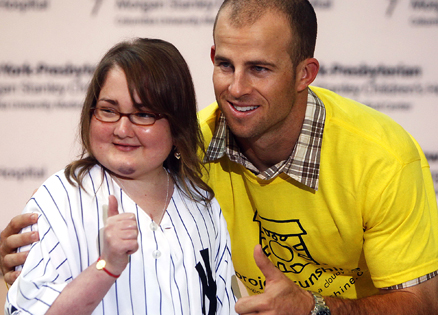
Project Sunshine, an organization that provides free educational, arts and social programs to kids with medical challenges, had put the visit together. I was there with Linda Ruth Tosetti, one of Babe Ruth’s granddaughters. She told the story of how the Babe had once promised a sick child that he’d hit a home run for him, and how, later that day, he had done exactly that.

Then Linda introduced me. I explained that I almost never hit home runs. I told some baseball stories—about how I made the Yankees, about my better-known teammates, like Derek Jeter.

Afterward, one girl came up to me in her wheelchair. She was on the small side, but flashed a huge smile. She introduced herself: Alyssa Esposito, 18, of Long Island, New York. She told me she was waiting for a heart transplant. “I’ve been here since January,” she said.

Oh, man, I thought. To me, a bad day was going 0 for 4 at the plate. And here was this girl, just a teenager, fighting for her life.

Alyssa tapped me on the arm. I figured she wanted an autograph. Instead, she said, “I have something I want to give you.” She unhooked a bracelet from around her wrist. It was simple, a yellow cord with a small silver charm. She had gotten it that morning from Project Sunshine. “This will make you hit a home run tonight,” Alyssa said. “I prayed about it.”

“Thank you,” I said, slipping the bracelet on, praying that by some miracle I’d slug a ball out of the park. More important, I prayed she’d get the transplant she’d been waiting for.

“I’ll be watching the game,” she said.

When I got to Yankee Stadium in the afternoon, I checked the lineup card for our game that night against the Minnesota Twins. I wasn’t scheduled to play. So much for answered prayers, I thought. I hoped Alyssa wouldn’t be disappointed. I took off her bracelet and tucked it safely in my locker. Then I pulled on my uniform and turned my focus to baseball.

The game began. I sat on the bench, watching our left fielder Johnny Damon roam the outfield, tracking down fly balls. Then the craziest thing happened. In the third inning, Johnny—generally a mellow guy—got into it with the home plate umpire over a called third strike. The ump tossed him out of the game.

Joe Girardi, our manager, pointed to me. “Gardy,” he said, “you’re playing left.”

My first time up, I singled. My next at-bat came in the seventh inning. We were trailing the Twins, 4-1. With two out, I stepped to the plate. I have to be honest, I wasn’t thinking about Alyssa. I was thinking about doing my job: getting on base, then maybe stealing second to get into scoring position so we could get back in the game.

Strike one. Focus, I told myself.

Strike two. I stepped out of the batter’s box and gathered myself. Took a deep breath.

I was ready for the third pitch. I lined a shot that sliced toward the left field foul line. Single, I figured, running to first base. Our first base coach waved his arm—the signal to head for second. Turning, I saw the ball get past the Twins left fielder and roll to the wall. Double, I thought. But as I neared second, I saw the ball take a crazy carom away from the left fielder. Triple, I decided and raced for third.

That’s when our third-base coach began windmilling his arm. I went into an all-out sprint for home. I knew it would be a close play. Ten feet from the plate, I dove headfirst. Safe! An inside-the-park home run!

In the dugout, the guys were all over me. Inside-the-park homers are pretty exciting, and very rare. We’d cut the lead to 4-2 and were back in the game.

I took a seat on the bench and tried to catch my breath. That’s when it occurred to me: It happened just like Alyssa said it would!

I told my teammates about Alyssa and the bracelet. I think she inspired us, because we rallied in the ninth inning to win the game, 5-4.

Alyssa’s prayer for me had been answered. But what about my prayer for her? Take care of her, Lord, I pleaded.

The next day, one of the Yankees publicists pulled me aside. “Did you hear about Alyssa?” he asked. “They found a donor. She had a successful heart transplant last night.”

I saw Alyssa that summer, when she was well enough to visit Yankee Stadium. She flashed a huge grin and tapped her chest, where her new heart was. “You had a big heart to begin with,” I said.

“Do you still have the bracelet?” she asked.

“I keep it in my locker,” I said. It’s a reminder of the power of prayers—and of the One who answers them.


Honey-Mustard Chicken

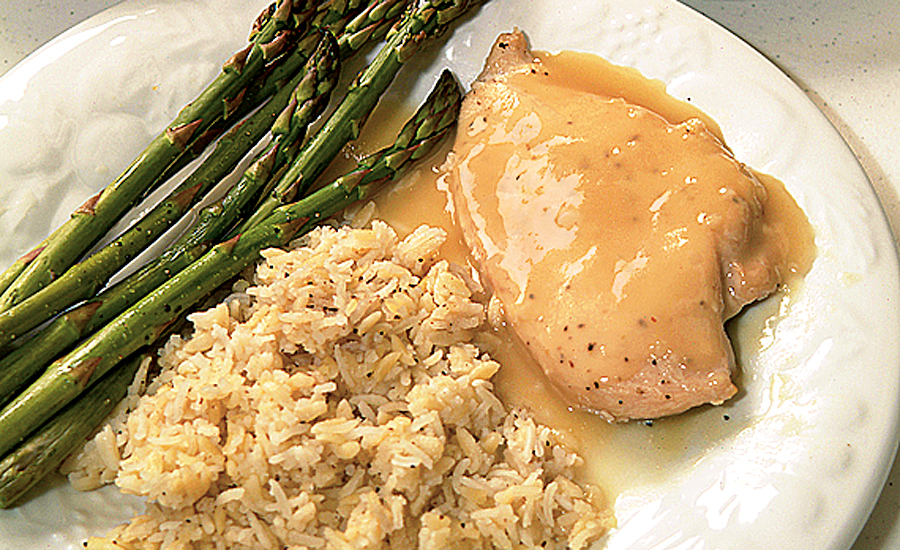
Diane and I developed this recipe in our “test kitchen.” It’s easy to cook, tastes great and only contains 240 calories per serving!

Ingredients

6 4-oz. boneless, skinless chicken breasts ⅓ c. honey
Kosher salt 2 Tbsp. Dijon mustard
Black pepper 1 Tbsp. all-purpose flour
1 Tbsp. canola oil ½ c. fat-free, low-sodium chicken broth
Unsalted butter

Preparation

1. Pat the chicken breasts dry, then season with salt and pepper.

2. Heat the oil and butter in a large skillet over medium-high heat. Brown the chicken in the oil and butter mixture, 4–5 minutes per side. Once browned, set the chicken aside.

3. In a medium bowl, whisk together the honey, Dijon mustard, flour and broth. Add to the skillet and bring to a boil. Once the sauce thickens, return the chicken to the pan and cover it. Allow the chicken to simmer in the sauce over low heat until cooked through, 10–15 minutes.

4. Serve each chicken breast with 2 tablespoons sauce and a side of vegetables and orzo or rice.

Serves 6.

Nutritional Information: Calories: 240; Fat: 7g; Cholesterol: 70mg; Sodium: 5700mg; Total Carbohydrates: 17g; Dietary Fiber: 0g; Sugars: 15g; Protein: 26g.

Read about how this dish came about in Wednesday Night Special!

Hominy and Kidney Bean Chili

Ingredients

1 Tbsp. olive oil 1 med. onion, chopped
2 tsp. chili powder ½ tsp. ground cumin
½ tsp. granulated garlic ⅛ tsp. ground cinnamon
1 tsp. dried oregano 2 cans diced tomatoes with green chiles in liquid
1 can hominy, drained and rinsed 1 can red kidney beans, drained and rinsed
2 med. zucchini, cut into chunks Salt and freshly ground black pepper
1 c. roasted red bell pepper, diced ¼ c. fresh cilantro

Preparation

1. In a heavy 4-quart Dutch oven, heat oil. Stir in onion and cook over medium-high heat, stirring frequently, till it softens, 2 to 3 minutes.

2. Lower heat to medium. Stir in chili powder, cumin, garlic and cinnamon; cook for 1 minute. Stir in oregano. Add tomatoes, hominy, beans and zucchini. Season to taste with salt and pepper. Bring to a boil.

3. Cover, reduce heat and simmer till zucchini is tender but still firm, 8 to 12 minutes. Stir in red pepper and cilantro just before serving. Ladle into bowls and top with lime wedges and cheese.

Homemade Rolls

Ingredients

2 cups warm water (not hot)

2 packages dry yeast

½ cup sugar

2 teaspoons salt

¼ cup soft or liquid shortening

1 egg, beaten

6½–7 cups flour

Preparation

1. Put warm water in a large mixing bowl. Add yeast, sugar, salt, shortening and beaten egg and mix well. Add about 4 cups of flour and mix in with a large spoon.

2. Gradually add the rest of the flour and mix by hand till mixture is neither sticky nor dry. Cover and allow to rise till doubled in size.

3. Punch down and make into rolls approximately 1½ inches in diameter; allow to rise again.

4. Bake at 375°F for 15–20 minutes. Best served warm.

Makes 18 rolls

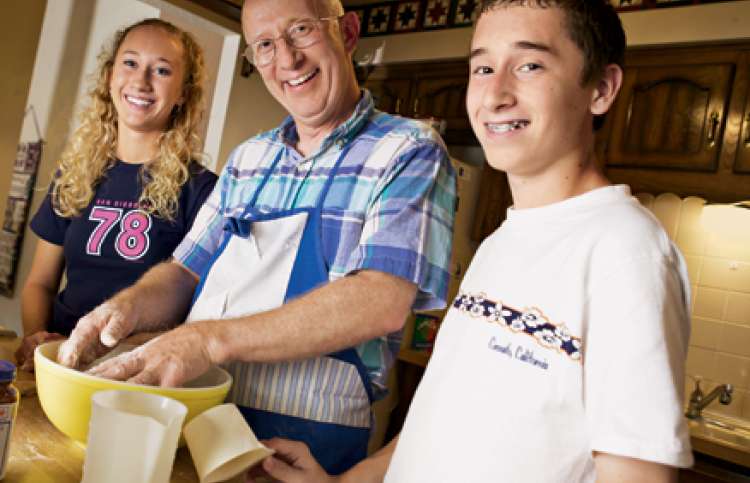
Read the story behind Bev’s rolls.

Holding Out Her Hand in Faith

Sleet whipping off Detroit’s Lake St. Clair hissed against our family car. Staring gloomily ahead, I sat close to my parents. Daddy took one hand from the wheel and patted my shoulder. “You were fine. Just fine.” Mother agreed with him.

I didn’t believe them, not one bit.

I was 14 and had just played the role of the juggler in my school’s Christmas play, Le Jongleur de Notre Dame. I loved the legend about the little fellow who had no gift but his talent to give the Christ child and I had practiced hard for the performance. But now I was sure I hadn’t done well.

Self-doubt and self-condemnation were not new to me. I wanted so desperately to do things right that nothing I did ever seemed good enough.

Later this misguided perfectionism haunted me. To achieve distinction in the theater I needed two things: sensitivity and assurance. I believed I had my share of the former, but the latter was woefully lacking.

In 1950 I found myself in a Broadway hit, The Member of the Wedding. As the cast staged this tense drama daily, Ethel Waters, also in the show, and I grew very close. I was 24, just beginning my career; Ethel, in her 40s, was an established star.

I came to love her very much and would watch with awe as she projected the warm emotions that melted the hearts of her audiences. For my part, I was tormented as usual by doubts.

One night I gave a performance that seemed so inept to me that I even felt guilty about taking curtain calls. As I trudged down the corridor to my dressing room, Ethel Waters was just about to step into hers. She stopped and looked at me, her face full of compassion.

“Why, Julie,” she said, “what’s troubling you?”

I was about to murmur a polite “Oh, nothing,” when suddenly all of my misery overflowed in a flood of tears. Ethel came over and gathered me up in her loving arms. “There, there,” she said softly. “No need to feel that way. You’re doing fine.”

“But I’m not,” I sobbed. “I know I’m not!”

Ethel stepped back and looked at me. “You’re trying to do it all alone. You know the Lord Jesus, don’t you? All you have to do is give those troubles and worries to Him. He’ll take care of them for you.”

I was grateful to Ethel and dried my tears. I wished so much I could believe her. But though I prayed and went to church, somehow I could not seem to let go of my fears.

Then one day, near the end of the play’s run, Ethel asked me how I was doing. I told her the truth: not very well. “It’s so hard,” I said. “So hard.”

“No,” she said quietly. “It really isn’t.” She took my hand. “Jesus is right here. If you want the strength and the confidence you need, all you have to do is ask—and hold out your hand.”

Hold out your hand. Somehow those words got through to me. After that, every time the fears came back to haunt me I would visualize myself holding out my hand for help.

Slowly a deep realization came that Ethel was right. I became convinced that Someone was there, and whenever I reached out my hand, He would take it.

I had many occasions to explore that principle over the years that followed, but one stands out with particular vividness.

In 1955 I was offered the part of Saint Joan of Arc in Lillian Hellman’s adaptation of Jean Anouilh’s play, The Lark. At first I was overjoyed at the opportunity to portray the mystical young girl whose faith in her own spiritual guidance changed the course of history.

But then, as images of Sarah Bernhardt, Siobhan McKenna, Uta Hagen, Katharine Cornell and other immortals who portrayed her so beautifully became frighteningly real, I suddenly was appalled. Who was I to be following in such footsteps?

The more I thought about it, the more the whole idea of playing Saint Joan terrified me. I was sure that I couldn’t measure up to the role. But then suddenly Ethel Waters’s words came back.

I didn’t have to do it all by myself. All I had to do was turn to the Lord and hold out my hand. So I did—and found a quiet confidence, a strong sense of assurance, that stayed with me through every scene and stays with me to this day.

Download your FREE ebook, The Power of Hope: 7 Inspirational Stories of People Rediscovering Faith, Hope and Love