

Embrace God's truth with our new book, The Lies that Bind

His Return to the Majors

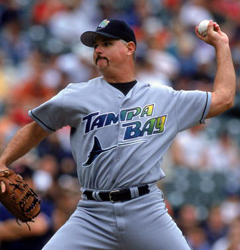
Has there ever been something that you were sure you were meant to do? I wanted to be a pitcher. From the time I was four years old I used to lie in bed at night and dream about playing baseball in the big leagues.

After years of sandlot games, Little League, high school and college ball, I got my shot in 1983 when the Milwaukee Brewers organization picked me in the first round of the draft.

But after a year of pitching in their minor-league system I developed a pain in my throwing arm. I had elbow-reconstruction surgery. I spent all of the 1986 season warming the bench. The next year I threw in just four games, and had to have surgery on my shoulder, which also sidelined me in 1988.

Then, during spring training in 1989, I was tossing a few balls to loosen up when I felt something give in my shoulder. I’d popped a ligament. I was only 25 years old and my career was over. I never even made it to the Show—what ballplayers call the majors.

I went back home to Texas, where my wife, Lorri, and I talked a lot about what I’d do next. We decided that if I couldn’t pitch, I’d finish college and get certified to become a schoolteacher. I had another surgery, to remove a three-inch bone spur from my shoulder. For the first time in years my left arm was pain-free, and I realized, Maybe I can’t play at the level I used to, but I can still be part of the game. So I started coaching here and there, and even got back on the mound to toss batting practice.

That’s how I ended up at Reagan County High School, teaching science—and coaching the baseball team. I had my work cut out for me. The Reagan County Owls had only three wins in each of the previous three years. Still, where some coaches might’ve seen the Bad News Bears, I saw a potential all-star team. The guys just needed to work harder, and hear some encouragement.

Whenever the team lost, it was tough for them to bounce back. But one of the reasons I became a coach was to help kids overcome tests like that. My own baseball days had taught me plenty about facing challenges.

One day in April of 1998 I’d put the team through a tough workout, then sat them down on the outfield grass to have a talk. “Believe me, guys, I know how hard it is,” I said as I looked at their sweaty, tired faces. “But you can’t let up just because of that. You need to set goals and stick to them.” A few boys nodded, and I continued. “It’s fine to dream, even better to dream big. You’ve got to work and pray hard to achieve as much as you can, while you can.”

One of my pitchers piped up. “What about you, Coach? What about your dreams?” he asked. “Don’t you still want to play in the big leagues?”
I chuckled. “I gave that dream up a long time ago,” I told them. “I got married, became a teacher, had kids. Now I’m here coaching you. And I don’t regret any of it. I’m right where the Lord wants me.”

My team wasn’t convinced. “We know how much you love playing ball, Coach,” one of the kids said.

“As hard as you throw, you should be in the majors,” another joked.

There was some laughter, so I teased back, “You just don’t like taking batting practice out in the hot sun.”

My talk had gone over better than I’d expected. The guys wouldn’t let up. They wanted to see me chase a dream, even if it was one I’d put behind me. I loved being a teacher and a coach. Finally we made a deal. “Okay, okay,” I relented, “if you guys get to the playoffs this year, I’ll try out for a major-league team. But you’ve got to understand—my playing days are over.”

I was sure I wouldn’t have to make good on my promise, since not one baseball team in the history of Reagan High had ever made it to the playoffs. I don’t know if it was my pep talks, but the team pulled together. By the time I heard the Tampa Bay Devil Rays were holding open tryouts nearby, my high schoolers were headed to the playoffs. “Coach,” they all said, “what about you?” I had to follow through on my end of our deal.

That June Saturday the sun was blazing down on the diamond at Howard Payne University in Brownwood, Tex. At the sign-up table, I saw Doug Gassaway, the same scout who’d discovered me 17 years earlier. “Are you bringing some of your kids for a tryout?” he asked. I told him I was there for myself, and explained about the promise I’d made my team. Doug laughed, but he was nice enough to put me on the schedule. Last, as a courtesy, in case I embarrassed myself.

There must’ve been about 50 or 60 teenagers milling around with their mitts and cleats. Look at these guys, I thought. What am I doing here? I’m 35 years old, for Pete’s sake! Even if I’d made it to the majors way back when, I’d be retired by now.

Finally, my turn came. “Come on, Jim, hurry,” Doug said, eager to get home. He’d seen some good players, but no one especially promising. Lord, don’t let me make a fool of myself, I prayed. Just let me get out of here with my dignity intact, so the kids know I tried.

I wound up and hurled one to the catcher. At least I got it across the plate. I pitched a second, then a third, and it didn’t feel much different than throwing batting practice for the Owls. My arm felt great. After a while, dozens of guys were crowded behind the backstop looking at the radar gun. What’s up with that? I wondered. Either I’m doing really well or just plain terrible.

When I was done, one of the kids who’d tried out came up to me. “Do you know you were throwing ninety-eight miles an hour?” he asked, wide-eyed.

“No way!” I said. In the minors my fastest pitch was barely 88 mph.

“Way!” the kid said. “They even checked with a second radar gun.”

Then Doug came over, smiling. “If only you were ten years younger.”

“Don’t I wish!” I said.

“I’m bumfuzzled, Jim,” he said. “Realistically, I don’t know what I can do. But I’ll try. I’ll call you.”

There was a message waiting for me when I got home. Doug wanted me to pitch again in two days, to see if I could throw hard again so soon after tryouts. Monday I met him and I consistently threw the ball at 95 mph. “We’re ready to sign you, Jim,” he told me. “You’ll have to be in Saint Petersburg in two days for workouts.”

Suddenly, I had a lot of thinking to do and not much time to do it. Lorri and I talked to God, then to each other. “Could this really be where God is leading?” I asked her as we sat at our kitchen table. “I thought I was right where he wanted me.”

“I don’t know, Jimmy,” she said. “Maybe he brought this dream back again for a reason.”

My long-buried visions of playing in the big leagues came back to life. I felt like a boy again. But I hadn’t made it in baseball the first time. Now I had a great family, a rewarding career, and strong ties in San Angelo. Did I want to risk it all on a dream?

“I have that job lined up to teach at a new school in the fall,” I reminded Lorri. “Maybe that’s where I belong.”

“I know this isn’t what we planned,” she said, “but you do have the summer off. If there were ever a good time to turn our lives upside down, this would probably be it.” We both laughed.

“There’s a lot of unanswered questions, Lorri,” I said. “I don’t know where I’ll end up playing, how long we might be apart, or if I’ll be able to support our family on what they pay in the minors. Plus, you’d be on your own with the kids while I’m gone.”

“I can cover home plate,” she said. “For the rest, we’ll have to ask God.”

Two days later, with my wife’s blessing, I was in St. Petersburg, getting into shape. I didn’t know what to expect, but it turned out I threw harder and faster than I had when I was 19. After two weeks I was sent to a Double A club in Orlando, then moved up to Triple A in Durham, pitching for the Devil Rays’ top farm team. I was as surprised as anybody, but tried not to get my hopes up.

In September, the minor-league season ended, and between the two teams, I finished with a record of 3 and 2, with one save and 22 strikeouts in 28 innings.

I gave it my best, and it was quite a ride, I thought as I packed up to drive home to Texas. But that same day I got called up to the Show. I was astounded.

On Saturday, September 18, I was put on the Tampa Bay roster. I became the oldest major-league rookie in nearly three decades. We played the Texas Rangers that day. Their stadium in Arlington is just a few hours’ drive from my home, so I got to see Lorri and the kids for the first time in three months.

In the bottom of the eighth with two outs, I was sent in to relieve. I don’t think I took a breath from the time I left the bullpen, but I managed to strike out Royce Clayton on four pitches.

A million thoughts raced through my head that night. But I kept coming back to one thing: that talk I’d given the Owls after a hard day’s practice. “It’s fine to dream,” I’d told them, “even better to dream big.”

I’d figured my words might be inspiration enough. Who could’ve guessed I would also show them by example? That’s what can happen when you dream big and trust God with those dreams—even if they take a little longer than you expect to come true.

Hillsong United’s New Album of Hope and ‘Wonder’

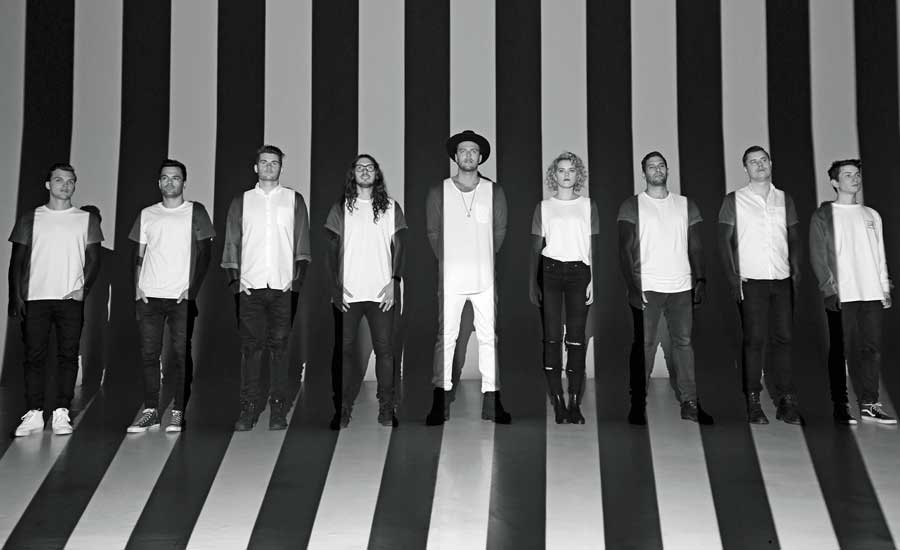
What do you do when you’re Hillsong United, one of the most influential contemporary Christian bands in the country, and you’re planning the release of your next album? You follow Beyoncé.

“She’s a model [for us],” frontman Joel Huston joked with Guideposts.org about why, like the R&B diva is wont to do, the band kept their sixth studio album, Wonder, a surprise until less than a month before its release date. Forgoing the normal promotion schedule for an album is a bit risk for a Christian band—even a multi-platinum-selling one whose last album, Empires, peaked at #5 on the Billboard 200 charts—but they’re not worried.

“I honestly believe that good art will make a way for itself,” Huston says. “Sometimes we can oversell something and it takes away the beauty of what you’re trying to say and what you want it to be.”

For Hillsong United, the simple beauty of the world—despite the political and social uneasiness people are feeling—is what they’re hoping to help people find.

“You look around at what the atmosphere of the world is currently and it’s like, ‘Well, what can we bring?’” band member Matt Crocker says. Their answer is 12 tracks of healing music that can inspire listeners to marvel in the majesty of God and to find joy and hope through faith.

The chorus of the title track—I see the world in light/ I see the world in wonder/ I see the world in life/ Bursting in living color—is a celebration of everything good that God has given us.

“As Christians we’re called to bring that joy and that happiness that we know as Christ living in us and so [we said], ‘Let’s be a mirror reflection of that with this album.’ We put everything we had into bringing that sound.”

In “Future Marches In,” the band takes that message of hope a bit further, urging listeners to fight against fear and defeat by turning to faith with lyrics like: Don’t hide in silence while the truth screams out/ Don’t fear the future shaking up this ground/ There’s a freedom that marches in a different sound.

Still, Huston says the main goal of the record and the group isn’t to force people to faith but to model the beauty of living as a believer through their music.

“If the music is good, we shouldn’t have to be slamming it down people’s throats, Huston says.

“I think it’s the same with the gospel. I don’t think we have to be Bible-bashing people in order for them to get it. I think the best way to get people to understand the gospel is to love them and to just live in a way that is reflective of the beauty of God.”

For more from the band, check out our interview with them below:

Hillsong United: Building An Empire

It’s a Saturday night and I’m sitting at a picnic table in Central Park, waiting to interview Taya Smith and Jonathon “JD” Douglass, two members of the band Hillsong United. I’m here to talk about their new album Empires — which drops May 26th— and to dig into the psyche of the group whose music reaches over 50 million churchgoers on any given Sunday and who’s sold more albums than mainstream platinum artists like Lady Antebellum, Mumford and Sons and yes, even Miley Cyrus.

I want to know what it’s like to have millions of people across the globe singing your songs, repeating your lyrics, screaming your name when your worldwide tour makes a stop in their hometown. It has to be an ego-boost, an affirmation of God’s favor in your life, but it’s clear as Smith settles into her seat across from me, rocking a pair of black, cut-up skinny jeans and nestling a cup of hot lemon water; JD flashing a big grin while trying to manage his long, wiry (and I’ll admit) attention-grabbing mane of hair, that ego is the last thing anyone from this band has to worry about.

READ MORE: CROWDER’S NEW SEASON OF MUSIC

“It’s the grace of God. It’s the biggest privilege because we know it’s not us and we’re not awesome, but through the grace of God, we get to do this and our heart is that we would serve with everything that we have, love people and just pray that God would use us,” Smith says when asked about the success of the group’s last album Zion, which cracked the Billboard Top 5 two years ago and whose single “Oceans” held the number one spot on Billboard’s Christian music charts for 45 straight weeks.

Success like that doesn’t come often, especially for a Christian worship band, but according to JD, what United was able to do with Zion had nothing to do with their talent and everything to do with their willingness to trust and follow God.

“None of us ever sat down and said let’s start a band, make albums, tour the world,” the singer explained. “For us, the opportunities that we get, we just know who we are. I hope you don’t think this is a cliché, but we’re actually the most normal, ordinary people that go through every single insecurity as everyone else. We’ve just encountered a good God.”

We just want to hear the heart of God and let that be the message.

Good doesn’t even begin to describe the career the band has had in the past few years. With 15 albums, millions of records sold, hundreds of thousands of Twitter followers and undoubtedly even more fans, the group, which was birthed in the youth ministry of Australia’s Hillsong Church, is the name in Christian music right now. You can’t turn on K-Love in the car or visit a Christian youth conference without hearing their lyrics. It’s both a blessing and a weight.

“There’s definitely pressure, but what we decided to do more than ever was to not feel it and to not carry it,” JD said of the group’s journey making their newest album. “We didn’t shy away from hard work but we didn’t strive to try and compare ourselves to what we’ve done before.”

The result is Empires, the band’s fourth studio album and, both lyrically and stylistically, it’s bravest to date. On it are the classic worship anthems Hillsong is famed for – the title track and songs like “Touch the Sky” and “Heart Like Heaven” were made to be sung by the masses – and a few tracks which speak not only to lead singer and songwriter Joel Houston’s ability to pen a good tune – “Prince of Peace” is his crowning achievement in this category – but also the band’s willingness to experiment with new sound. Synth beats, guitar riffs, percussion solos and quirky electro influences all have a place on the new record and surprisingly pair well with some of the album’s heavier lyrics.

It’s challenging to keep creating music that appeals to the kind of vast, completely varied audience that is Hillsong’s fan base, but even after all these years, JD says the group’s goal still hasn’t changed.

“We are trying to write songs that reflect a relationship that we all have with Jesus. Ultimately, the number one goal would be that people would hear this good news that is the gospel, that Jesus came and gave his life so that we could have grace. Then as well, if they’ve already heard that message, we want to encourage them on this journey.”

For Smith, who started out as a youth leader in the church before being asked to lend her vocals to “Oceans” two years ago, her journey — to being a part of the band — is the perfect example of God’s timing and grace.

“I love the story of Taya and her coming in and singing ‘Oceans,’” JD said. “We’d known each other for a little while, and I just knew that she had a great voice and she was a cool girl. She was really known not for her singing but just being a great youth leader and it was the last day of recording and we really needed somebody to sing ‘Oceans’ and we thought ‘Well, let’s just give this Taya girl a try.’ It was our last option, our only option and the song is doing what it’s doing majorly because of who Taya is and what her voice is doing on that.”

READ MORE: A NEW SOUND IN CHRISTIAN ROCK

Smith, for her part, never expected the song to touch as many lives as it has, or the fame that came with it.

“[I] thought it was a great song, great lyrics, that was it. But what it’s actually done and how it’s reached people, that’s completely a surprise for me and definitely a story of God taking it where maybe music has never gone before. These guys are just really good stewards and they just did the best with whatever’s been put in their hands and they gave it everything and I fell like that’s what we did with Empires as well. Everything that we have we just laid it on the table. Like Joel says, our job is to build a ship. Build a ship the best that we can, make it really sturdy, and wait for God to just breathe on it. “

Part of building that ship includes promoting the new album, something the band finds themselves in the middle of doing. Tonight, they’re playing to a packed crowd at Summer Stage at Rumsey Playfield in New York City; tomorrow, they’ll catch a flight to L.A. where they’ll play the Nokia Theatre. And then of course, there’s a new movie coming out later this year, Let Hope Rise, which documents the rise to the top. It’s an exhausting schedule, one that most people would balk at, but watching them jump around the stage with boundless energy, and hearing a crowd of thousands crooning along to their lyrics, it’s easy to see why they do what they do.

“God’s love and grace is ridiculous,” JD said. “We have to glorify Him and tell people about Him. We just want to hear the heart of God and let that be the message.”

I think people are starting to listen.

Her Poems Are Her Prayers

Three years ago, I wrote a story for Guideposts about how a poem saved a forest.

I’m a professional poet. One of the best-known aspects of my work is what I call Poem Store. I set up a typewriter in a public place and write poems on request for whatever people choose to pay.

My Guideposts story, published in April 2016, was about an unlikely friendship with one of my Poem Store customers, a timber company executive named Neal Ewald. I’m a passionate environmentalist. Neal’s company, Green Diamond Resource Company, planned to log a pristine tract of old-growth redwood trees near the northern California town where I lived.

At the time we met, I had no idea who Neal was. All I knew was that he asked me to write a poem commemorating his wife, who had recently died of cancer. We got to talking and became friends despite our differences, and through our conversations and the work of local environmental groups, Neal decided to sell 1,000 acres of redwood forest to the county to be set aside as a preserve. Neal and I helped each other learn something about collaboration and openness to new perspectives.

Many Guideposts readers wrote me about my story. Some were moved by Neal’s devotion to his wife. Others wrote about their own love of nature. Above all, readers told me how much they love poetry, especially the way it connects them to God and helps unite people across divides of politics and belief.

I’ve always believed poetry is a conversation with God. It felt deeply affirming to learn readers feel the same way.

All my life I’ve read, written and been nurtured by poetry. I’ve also developed a simple but nourishing prayer practice. I use poetry in my prayers. Lately I’ve begun to think that, in many important ways, poems are prayers. Hearing from readers, talking to my Poem Store customers, watching the faces of children when I speak in schools, I see evidence every day of the spiritual power of words. My own story shows how a love of words—especially that way of arranging words we call poetry—can become a life-sustaining source of spiritual connection.

I was born in Royal Oak, Michigan, and spent much of my childhood in the Florida Keys. Wherever my family was, there were books and someone to read them to me. Camping in Canada, we shared stories in the tent. In the Keys, I spent lazy afternoons listening to fishermen’s tales on the docks.

I was always happier outside, and even before I knew how to form letters I carried notebooks with me and filled them with my own cryptic language. When I finally did learn to write, my first poem was about a fox I’d seen on a trail in the woods—a few lines about the fox’s stillness and its orange color.

I studied poetry at Florida State University. I didn’t grow up with a lot of organized religion, so I reached out toward God in a way that made sense to me. Every morning and evening, I spent time in silence. I began assembling what I thought of as an altar—bits of nature gathered on hikes or trips to the beach: shells, leaves, feathers, stones. I didn’t have a name for what I was doing. Eventually I realized I was praying.

I wanted the words of my prayers to match their subject. I began writing poems to recite as I sat. No matter where I was or where I lived, even if I had to do it in front of roommates or guests, I stuck to my prayer practice. Talking to God, I felt renewed.

After graduating with a degree in poetry, I decided not to follow the typical path of an academic poet. I wanted to travel, to see if I could combine my love of words and the outdoors into work that sustained me. I bicycled through Central and South America, studied farming on a road trip across the United States and worked as a gardener, learning to use compost and recycled rainwater to make the earth bloom. The work supported my writing and confirmed my commitment to environmentalism, to stewardship of the earth.

For a long time, I wasn’t sure how these various parts of my life—reading, writing, prayer, love of the earth—were connected. I knew they were connected; I felt it. But I didn’t have the precise words to express it.

Then I discovered Wendell Berry and Mary Oliver. Both are poets, what scholars call nature writers. Wendell Berry is a Christian and an environmental activist. Reading his work was a revelation. Here was a writer arguing boldly that caring for the earth and farming sustainably are ways to honor God. Berry’s poetry calls quiet attention to the landscape of his rural Kentucky home, finding God’s presence in the everyday fact of nature.

Mary Oliver was less outspoken about her spiritual beliefs but nevertheless showed me how writing poetry could be a sacred act. Oliver wrote poetry all her life. She grew up in a dysfunctional family near Cleveland, Ohio, and escaped turmoil at home by retreating to the woods, where she built huts of sticks and wrote.

Oliver’s poems usher readers into the forest, her green cathedral. In one called “Praying,” she encourages readers to keep prayer simple: “a few words together and don’t try to make them elaborate.” Prayer, she writes, is not “a contest but the doorway into thanks, and a silence in which another voice may speak.” Those words fit my thoughts about writing and prayer perfectly. Inviting that “other voice” to speak, the poem isn’t just about prayer. It is a prayer.

Wendell Berry and Mary Oliver showed me how poetry could become prayer in action. Their poems are not merely celebrations of beauty, but bold reminders of humanity’s responsibilities. The Earth is God’s gift to us, and it is our duty to take care of this planet as it cares for us.

Making a living as a writer is not easy. You might think being so frank about spirituality would make my path even harder. I find it’s the opposite. Because my goal is to share a spiritual connection and inspire readers to see the world and themselves in a new way, I write in plain language and devote a lot of time to sharing poems in public, whether in workshops or schools or at the Poem Store. I believe poems, like prayer, should be living and active. They are meant to be shared. They make things happen.

Mary Oliver and Wendell Berry certainly changed my life—and the lives of countless other readers. My Guideposts story about Neal Ewald was another example of poetry’s power. I see the same power at work when I set up my Poem Store. Customers share deep desires, personal pain and hopes for change and growth. The poems I write in response help them turn their private thoughts into a call to God, to whatever wisdom will help them find what they seek.

People often ask how they can weave more poetry into their life. My answer might sound counterintuitive: “Practice some sort of prayer every day. Read and write as often as possible. Go outside whenever you can.”

I mean what I say. Poetry is most effective when it comes from a place of strong vision and purpose. Vision and purpose come from connection to what is sacred. If you’re like me, you probably connect to God most easily in prayer, in reading books that inspire you and in the natural world.

I still sit at my altar every morning and evening. My prayer, my faith and my purpose remain fueled by language. I hope you too can find that connection to what matters most in the words you love.

For more inspiring stories, subscribe to Guideposts magazine.

‘He Named Me Malala’ Reveals the Teen Behind the Icon

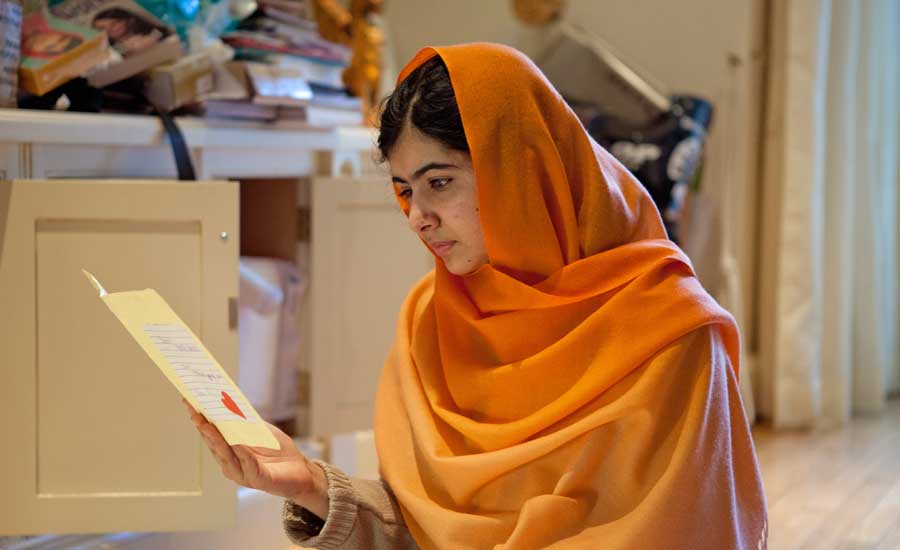
By now, most of the world knows the story of Malala Yousafzai, the young woman shot by the Taliban on her way home from school after lending her voice in support of education for women and girls. She’s become an icon, a role-model and the face of a movement; an education activist who sits with heads of state, visits refugee camps, meets with young children in developing countries and won the Nobel Peace Prize.

She is also just an 18-year-old girl.

That’s the main message of He Named Me Malala, Davis Guggenheim’s hour and a half long documentary on the Pakistani activist. For all of her accolades, magazine covers, TV appearances and memorable UN speeches, Malala Yousafzai is just a teenage girl from the Swat Valley, which makes her courage, her compassion and her defiance so much more compelling.

Guggenheim’s film begins with a beautifully animated story that provides a small glimpse of why Malala was destined to stand out.

She was named after Malalai of Maiwand, a local legend known in the western world as the “Afghan Joan of Arc” who fought alongside local Pashtun fighters against British troops in the 1880 Battle of Maiwand when she was just a teenager, like Malala. Malalai rallied soldiers to their most important victory by giving an inspiring speech atop a mountain before being tragically killed in battle. This is where the two brave young women’s stories part ways. Malala miraculously recovered from her injuries and continues to champion education for women and girls worldwide — all while preparing for college.

In the film, Malala shares the stage with her two younger brothers, who don’t mind exposing their sister for her bossiness and tendency to give them a slap on the face every now and then, all in good fun. She attends school, scrolls through pictures of Roger Federer and Brad Pitt (two of her favorite celebrities) while sitting at her computer, she blushes and hides behind a giggle as she’s asked about boyfriends and her dating life.

Guggenheim’s lens also shows the darker side to Malala’s life and recovery from her traumatic brain injury. The bullet that fractured her skull and left part of her brain tissue exposed also stole hearing in one ear and left nerve damage in the left side of her face and neck. In physical therapy, we see her struggle to catch a ball and form words after her initial life saving surgery. We see her family yearn for home — a place the Taliban has exiled them from with death threats — while trying to adapt to life in a new country with a new set of rules and an entirely different culture.

We see Malala struggle to keep up in school because she’s missing classes to fight for the return of 273 Nigerian school girls kidnapped by Boko Haram in 2014, hand out books and backpacks at refugee camps in Syria, confront the Taliban about its violence against women and girls in a chill-inducing speech at the UN, and meet with President Obama to discuss America’s use of drones.

Still, the heart of the film is the relationship Malala has with the one who named her: her father, Ziauddin–an extraordinary activist in his own right.

Ziauddin shares the story of Malala’s early-morning birth on July 12, 1997, and his insistence that his daughter’s name be written in the book that spanned 300 years of his family’s history–but had previously only recorded the names of the men. The educator and scholar had opened a school in their hometown, and though he stammers when he talks, is a passionate speaker.

While many of Malala’s detractors have claimed her father writes her speeches and influences her words and actions, Ziauddin dismisses such accusations.

“I did not clip her wings,” Ziauddin says in the film, “I let her be, and that makes a big difference.”

Malala echoes that sentiment.

“He named me Malala,” she says, putting the title of the film into context. “He didn’t make me Malala.”

The Taliban tried to silence her with violence on a dusty street in Pakistan, but that shot didn’t give her courage, or bravery or the ability to inspire change and love in people’s hearts. Those abilities were already there and that’s what the world will see in this film.

He Named Me Malala opens in select theaters today.

Heaven-Scent Baked Apples

My friend Mat says this baked apple dish reminds him of an old folk recipe.

When he was little and had an upset tummy, his Russian grandmother would cut up an apple and leave it out on the counter for a few minutes, until it began to brown. Then his grandmother would say, “Come eat, tatellah” (“little man” in Yiddish). Lo and behold, a few minutes later his stomach felt better.

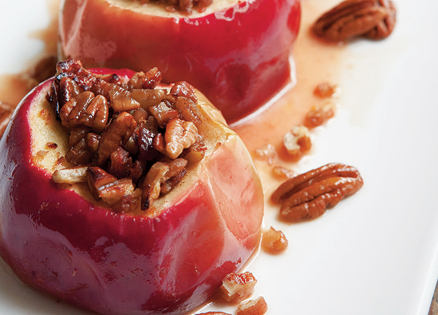
He always figured it was love at work (and, of course, it was), but now we know there’s also some science involved: As they brown—or cook, in this case—apples release pectin, which naturally soothes the belly. Here, the apples are complemented by a whole host of tasty morsels and spices—toasted pecans, dates, orange zest and cinnamon.

Ingredients

¼ cup toasted pecans, finely chopped

¼ cup Medjool dates, pitted and finely diced

Zest and juice of 1 orange

¼ teaspoon ground cinnamon

¼ teaspoon sea salt

4 baking apples, such as Pink Lady, Pippin or McIntosh

1 tablespoon butter (optional)

Unfiltered apple juice, for baking

Preparation

1. Preheat oven to 350°F. Combine pecans, dates, orange zest, orange juice, cinnamon and salt. Stir.

2. Core the apples, leaving half an inch at the bottom and peel top edges. Stuff the apples with pecan filling and dot with butter. Put the apples in a baking pan, pour about 1 inch of apple juice over apples and cover tightly with foil. Bake 40-60 minutes, till apples are tender but not mushy. Poke with a fork to test if done.

3. Serve apples warm, drizzled with the apple juice from the baking pan.

Serves 4

Rebecca’s Notes: Use a melon baller to scoop out the apple core; it’s very important that you keep the base intact. If you don’t have dates or pecans, substitute currants or raisins and walnuts or almonds. If nuts are a problem, simply omit them.

Watch Rebecca make these apples!

Hearty French Onion Soup

I made this for my young family at Christmas when money and time were tight. Now this soup is one of our best Christmas traditions. Though my children are grown and circumstances are better they still love to come home to share in this delicious meal.

Ingredients

3 lbs. onions, diced 1 Tbsp. instant coffee
1 ½ Tbsp. butter salt and pepper
3 c. beef broth croutons
3 c. chicken broth mozzarella cheese, sliced

Preparation

1. Sauté onions in butter.

2. Transfer onions to large saucepan. Add beef and chicken broths, coffee, and salt and pepper to taste. Simmer for several hours.

3. Then pour soup into individual oven-proof bowls. Top each bowl with croutons, then mozzarella cheese.

4. Bake at 350°F for about 25 minutes.

*Note: To make croutons, slice day-old French bread and broil for 3–4 minutes or until golden brown, turning each minute.

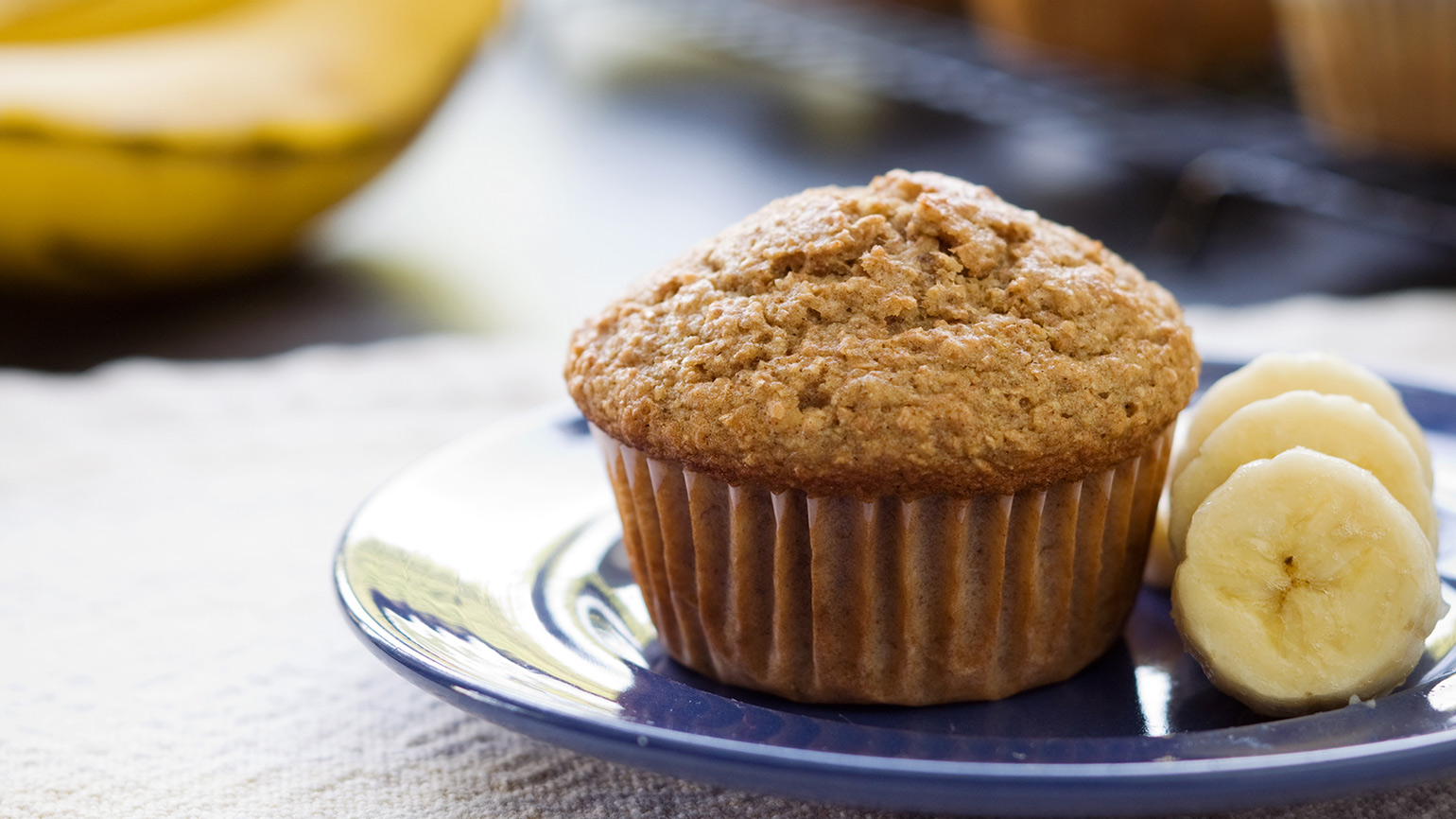
Hearty Banana Muffins

Ingredients

2 c. whole wheat flour
¾ tsp. baking soda
¼ tsp. salt
1 tsp. cinnamon
½ c. firmly-packed light brown sugar
¼ c. canola oil
1 large egg, lightly beaten
½ c. low-fat buttermilk
1 tsp. vanilla extract
3 medium-sized ripe bananas, mashed
1 c. ground flax seed
1 c. chopped walnuts

Preparation

1. Preheat oven to 350 degrees. Line muffin pans with paper liners.

2. Whisk flour, baking soda, salt and cinnamon together in a large bowl. Stir in brown sugar.

3. In a medium bowl, combine oil, egg, buttermilk and vanilla extract. Add these ingredients to the dry ingredients. Stir in mashed bananas.

4. Add flax seed and walnuts.

5. Spoon into muffin pans, filling cups to near top. Bake 12-18 minutes, until a toothpick placed in the center comes out clean.

Makes 6-8 large muffins or 12 small ones.

Nutritional Information: Calories: 430; Fat: 22g; Cholesterol: 25mg; Sodium: 240mg; Total Carbohydrates: 53g; Dietary Fiber: 10g; Sugars: 20g; Protein: 11g.

Hawai’ian Praise Music and Christian Hula

[SINGING IN HAWAIIAN] I’m Naomi Yokotake. I’m the vice moderator as well as the choir director. My grandfather was the music director, and my grandmother sang in the choir, and it is said that she was the musical genius, as opposed to my grandfather. When he passed on, my mother took over for him. Then it was my turn, so here I am.

When Kahu came, he wanted us to have an ukulele band, so to speak, for worship, and so then we started bringing a ukulele. You have to understand that the ukulele and all those things were not instruments that we normally use.

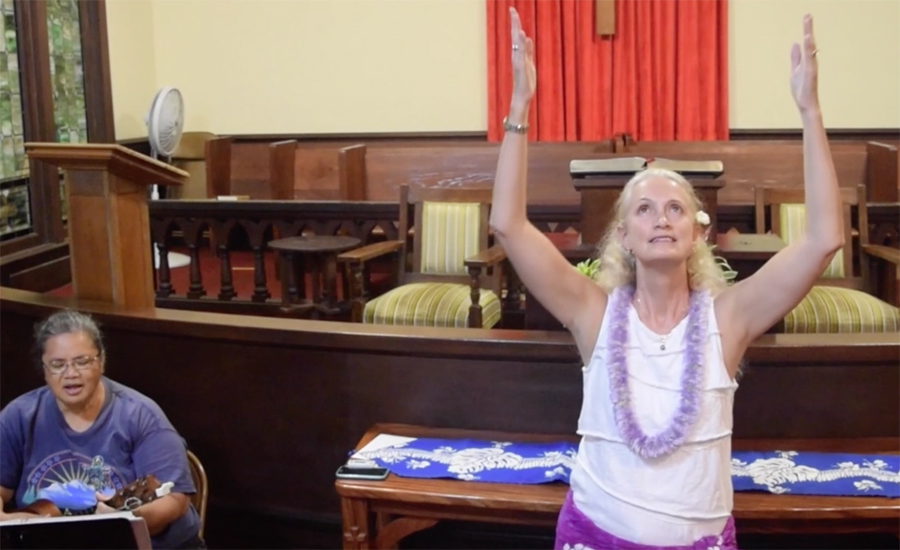
The hula has been a recent addition to the worship service. If our grandparents were here, it would not be a thing that would happen in church.

[SINGING IN HAWAIIAN]

Hula was a religious practice in the old days, and it was done in the heiau, where they worship the temples of the ancient Hawaiians. But it was always in praise of the gods, in praise of notable kings and queens and chiefs and chiefesses. And so in our kupuna, these are our elders. But when they became Christians, they put all those things aside because they were taught that there was one true God, and that those things were not within the realm of the missionaries in Christian faith.

However, we’re a little bit more progressive in saying, well, this is a way to worship God, and this is the way that we can do it from a Hawaiian perspective. And so we do Christian hula, and we do songs that refer to Christianity and to Jesus.

[SINGING IN HAWAIIAN]

Harry Connick Jr.’s Powerful Lesson on Faith

Greetings from the Big Easy, the city where I was born and raised (and hope to be visit­ing as you read this), a city coming back to life after being hit so hard by Covid. I’m thankful that the worst may final­ly be behind us, but I won’t forget the pain and disruption we all endured.

This virus made us question every­thing. I worried about my family, my city, my country, the whole world. For most of the past 30 years or so, I’ve spent my life working—on the stage, in a recording or TV studio, on a movie set—or with my family.

Harry Connick Jr. on the cover of the Aug-Sept 2021 Guideposts
As seen in the Aug-Sept 2021
issue of
Guideposts

As much as I love to work, during the pandemic it was the last thing on my mind. I spent a lot of time thinking about the self­less everyday folks who were making our lives livable—or, more accurately, possible. I even got a chance to thank them personally in a CBS TV special I produced in June 2020.

I watched from a distance while New Orleans got hit early, the streets empty, hospitals overflow­ing. My wife, Jill, and I and our three girls were at our home in Connecticut—we were among the lucky ones—and stayed there when everything locked down. Everywhere you looked, people were getting sick. Our family lost 14 people—10 due to complica­tions from Covid.

A beloved uncle. The priest who married Jill and me. My mentor, jazz musician Ellis Mar­salis, patriarch of the brilliant Marsa­lis family. What made this especially hard was that we couldn’t go through the natural grieving process. Normally there’s a communal event where ev­eryone gets some closure. Then, over time, you merge back into life’s fast lane. The problem with lockdown was that you never got back on the highway. You were just stuck with the loss.

The most painful loss for my family, by far, was that of my mother-in-law, Glenna Goodacre. As many of us know from this pandemic, there’s not much worse than losing someone so close and not being able to do any­thing about it. No funerals, no memo­rial services, nothing.

At first, I watched the news. New Orleans itself seemed to be dying, along with all the things that make it great. The city had been through this before with Hurricane Katrina. Now here we were again, struggling to un­derstand how we were to survive an­other catastrophe. I knew we would, but the devastation was brutal to watch in real time.

New Orleans is a city like no other. The way I was brought up, you were aware of people’s different races, cultures and backgrounds—Black, white, Irish, Italian, Jewish—and we celebrated all of them. The differenc­es were good. Like the different ways people made gumbo. My uncle Ray’s gumbo vs. Miss Leah Chase’s gumbo at her restaurant Dooky Chase’s vs. the gumbo from the kitchen of my friend’s mother, who lived in the proj­ects. All of them different, all good.

But now people couldn’t even go out. It didn’t matter how good your gumbo was—you and your family were the only ones who were going to eat it. You couldn’t go anywhere. Not even church. That was especially hard for my family. Telling my dad he couldn’t go to church was a really seri­ous matter.

I had been on tour when the world shut down. A few weeks into lockdown, I felt the need to play some music. So I started going into my home studio, thinking of new ideas for songs, playing old and familiar ones, just passing time with music, something that’s com­forted me my entire life.

Normally when you’re in a studio to record, there’s a schedule. You’re working with other musicians, re­cording engineers. On big orchestral albums, you record in three-hour chunks—anything over that is extra money. You’ve got to finish the whole project in a set period of time.

Not during lockdown. It was as if there was no end in sight. In my stu­dio, by myself, I’d sit down at the key­board and start recording something, or pick up my trumpet or guitar or whatever and add a part. Lyrics would come to me, original songs.

The sur­prising thing was how my faith was running through it all. Sometimes my faith was strong; sometimes I ques­tioned it. I was writing and recording about the entire spectrum of faith I was experiencing and healing myself in the process. Traditional songs popped into my head too, classics like “Amazing Grace,” “How Great Thou Art,” “The Old Rugged Cross.”

I started to put down tracks, one at a time: piano, drums, vocals. Making a record all by myself. My dad loves “Panis An­gelicus,” and my stepmom’s favorite is “Old Time Religion,” so I recorded those too. In those hours and days, the dread of the pandemic receded a bit, and I felt a little better. That’s what music is supposed to do, but this time it became so powerful.

It was my dad who took charge of my faith growing up. Mom was born Jewish, but she had no problem with my dad taking me to church. He’s a devout Catholic to this day—he’s 95 now. We’d go to different churches in our neighborhood: St. Louis King of France, St. Pius X or St. Dominic. We’d sing all those wonderful songs during Mass, like “Be Not Afraid” or “Panis Angelicus.”

My dad’s a Navy veteran. He can still tell you the names of everyone who was on his ship in World War II, even their hometowns. His mental acuity is mind-boggling. My mother was a great lover of music and came from a musical family. She played the flute.

My parents were both lawyers, and they helped put themselves through law school by running their own record store. They knew a lot about mu­sic. By the time I was born, the record store was long gone. When I was really young, like three maybe, I would plunk out a tune after my sister’s piano les­son. I loved it. Nothing could keep me away from the keyboard.

I was five when my dad was hosting an event and my mom wanted me to play “The Star-Spangled Banner” on the piano. It was the first time I’d ever performed for a crowd. What a powerful feeling, connecting with people, just through some chords and a melody. That stuck with me.

I’m so grateful to my parents for what they gave me—their love and support. To make a kid feel as if he really matters, that he has something to offer the world, that he has some­thing that needs to be developed and explored. That’s the greatest thing a parent can give to a child. I owe every­thing to them.

At age 14, I decided to get baptized in the Catholic church. My mom wanted my sister and me to wait until we were old enough to choose which faith we wanted to follow. If ever I needed faith, it was then—the year my mom died of ovarian cancer. It was the hardest thing I’ve ever had to go through. It took me many years to get to the point where I was even able to talk about it.

I’m at a place now where, even though I miss her terribly and think of her every day, I’m able to share stories about her. The thought of her brings me great joy.

Grief giving way to healing—that kind of describes my time in my home studio during the Covid lockdown. Sometimes I would start with piano, sometimes with the drums or anoth­er instrument. I’d write lyrics. Write down a melody. Just sort of chip away at it. If I had an idea about another song in the middle of things, I would switch gears and do that. It was com­pletely open-ended. I kept recording until I found what I was looking for. No one else was listening. It was like I was journaling—a musical journal.

I’ve recorded a million albums but nothing like this—no recording engi­neer, no producer, no other musicians. I’d talk to myself, laugh at myself. Speak out loud. Pray—but the song itself could be the prayer. “What kind of believer am I?” I wondered. That turned into a song: Am I a benevolent man? Am I an irrelevant man? I do the best I can.

This was all about living out my faith, living out the questions. You can’t really cry and sing at the same time, but I found myself bursting into tears—something I’ve never done in a formal recording session. I guess I should be uninhibited enough to cry in public, but somehow the dis­tractions of a recording session and ingrained social cues have always prevented me from going there. I’m glad I was able to get to an emotional place I’d never been.

At other times, I would stretch out my arms and raise my hands, as if I were there at Calvary 2,000 years ago and had come upon “The Old Rugged Cross.” Jill and our three girls were up­stairs—Georgia, Kate and Charlotte. We’re a pretty loud family and like to tell each other jokes and make each other laugh. Sometimes one of the girls or I would burst into song. Those moments of joy and love, spontaneous moments, kept us going.

Then I’d go back downstairs to my studio. No churches were open. I’d watch Mass on my computer and eventually got on a list to reserve a socially distanced spot at my local church. This was such a strange time. The world was so angry, so un­certain. There was so much political unrest and division.

I remember sit­ting at the kitchen table, watching the news and coming up with the opening lines to a song. “My life has changed,” I wrote, “My world is uncertain / Every­thing’s strange / Everything’s new / But I’m not concerned / With what tomorrow will bring / ’Cause I’ve got today / And I’m gonna pull through.”

I didn’t have to search for anything poetic. They were just words that captured what I was feeling. And I knew that everyone else was feeling the same thing. The day I wrote those words, I went for a drive. I got stuck in traffic. I was thinking of those lyrics to my new song “Alone With My Faith” when I noticed the license plate of the car in front of me: FAITH 1. It took my breath away ’cause it was true. Faith won. It always does.

In the end, the music that I recorded during the lockdown became an al­bum, one conceived in isolation but something I had to share, an album I entitled Alone With My Faith. The music came from that place of deep thought and solitude, a place that I’m grateful I had the chance to spend so much time in.

One of the last things we did was a photo shoot for the album cover. Our daughter Georgia is a great photog­rapher, and she had it all worked out. She took an old upright piano, one in such a state of disrepair that it didn’t even play, no strings left in it, all the hammers busted. We hauled it out into the woods. On the front panel, our daughter Charlotte spray-painted the word faith. Just that. Georgia took the photograph.

What did it mean? If I had to reduce this past year to one thing, one lesson, it would be that. Faith. Because in the solitude of the lockdown, in the isola­tion from the people and even the city and the rituals I love, it was all I had to hang on to, note by note, chord by chord. Or in the words of one of those songs I put on the album, “Amazing Grace”: Through many dangers, toils and snares / I have already come; / ’Tis grace that brought me safe thus far, / And grace will lead me home.

The cover of Harry Connick Jr.'s Alone with My Faith

Alone With My Faith is available wherever music is sold. You can catch Harry Connick Jr. live this summer on his Time to Play! outdoor tour. Check out harryconnickjr.com for details.

For more inspiring stories, subscribe to Guideposts magazine.

Harry Connick Jr. Explores His Faith in New Solo Album

Award-winning singer and songwriter Harry Connick Jr. has collaborated with some of the best musicians in the business. But recording Alone With My Faith, an album of traditional hymns and original pieces, was different. Working at home during the pandemic lockdown, Connick became a one-man music machine: he wrote the lyrics, sang every note and even played every instrument—25 in all!—on the album.

The master musician brought us behind the scenes of the making of this personal album—and even threw in a lagniappe or two.

Community Newsletter

Get More Inspiration Delivered to Your Inbox


Q: There are so many spiritual favorites on this album. How did you choose what to include?

A: For a few of them I picked the ones that popped into my head like “Amazing Grace,” “How Great Thou Art” and “The Old Rugged Cross.” Those were songs that I’ve sung a lot and haven’t recorded so I thought it would be cool to do those. And then a couple of the others were actually suggested to me by people in my life. My dad loves the song “Panis Angelicus” (Bread of Angels) and my stepmom loves “Old Time Religion.”

Q: You’ve lost many people close to you during the pandemic. That’s incredibly difficult.

A: I lost 11 people I knew due to Covid, including my mentor, jazz patriarch Ellis Marsalis. I lost the priest who married my wife, Jill, and me. And we lost Jill’s mom due to a different reason. It was difficult not be able to hold funerals and to mourn the way we had been used to; it’s forced my family and me to live a different way. But we’ve accepted it and try to do our best to be socially responsible and safe and realize it’s not about us as much as other people.

Q: What was it like making this album on your own during the pandemic?

A. I would go in the basement, write lyrics, write the melody and then start recording. Sometimes I’d start with piano, sometimes I’d start with drums or whatever instrument I thought it needed. Then I would add instruments I thought the song called for. I would chip away at it. If I had another idea, I would switch gears and do that. I just kept recording until I got the sounds that I wanted.

Sometimes I would sing, [because] I was alone. There was no recording engineer. Sometimes a lyric or a particular musical phrase would bring me to tears. As an artist that’s all you can hope for: that the music will move you to an emotional place. That happened quite a bit.

Q: With songs on the album like “Be Not Afraid” and “How Great Thou Art,” was prayer a part of your process?

A. I may pray during the song or the song itself may be a prayer. These songs are very powerful and are themselves prayers, like “Panis Angelicus” or “The Old Rugged Cross.” If you’re present and you’re really paying attention to what’s being played and sung they can serve very similar purposes to prayers.

Q: Was your faith strengthened during the recording of the album?

A: In some ways it was tested, let’s put it that way. There were some days that I woke up and I was like, what is happening right now? I just lost a family member and I can’t go to the funeral. We can’t leave the house and we have to wash our groceries outside. What is going on? Some days were harder than others. All I know is we see a light at the end of the tunnel. And I made it. The only thing I can credit for that is my faith and family.

Q: What’s the song “Benevolent Man” about?

A: I ask, in musical form, about my worth and relevance in God’s eyes. I don’t mean the God that loves us and forgives us. I’m talking about when you’re deep inside your own heart and you know that you could have done a little bit more or tried a little bit harder. I’m talking about the God that compels you to think about that.

We know that God loves us, we know that God forgives us. But I’m talking about in those quiet moments when you’re all by yourself, and you wonder: Could I have done more? Could I have helped that person? I could have given of myself a little bit more. Am I trying hard enough? Am I working hard enough?

Q: Who is the audience for this album?

A: I think there are people out there who will like the Christian songs because it will resonate with them. And there are other people who may not believe and may find some comfort in the music just because they realize it’s coming from a truthful and sincere place. I think about some people in my life who don’t really believe in anything and I would think that there are some things that they can take away from this album too. It’s a pretty wide gambit. It’s for whoever it can strike a chord with.

Q: Your album cover was photographed by your daughter Georgia and it shows you on top of an old piano holding a sign that says “Faith.” What’s the idea behind that?

A: I’m standing on top of an old upright piano that was in a bad state of repair. None of the strings were in it, no hammers or anything. We hauled it out to the woods. On the front panel I had my daughter Charlotte spray paint the word “Faith.” And then right at the end of the shoot I pushed the piano over and it just kind of collapsed.

I stood on top and held up that front panel of the piano basically to say even when the whole centerpiece of what I’m doing is gone, I can still hang onto my faith. Being a piano player standing on top of a destroyed piano is a pretty sad thought, but as long as you can hang onto your faith you’ll be okay.

Q: You’ve talked before about a “lagniappe”—a French Louisiana term for a bonus—and what it means to you in terms of your music. Would you please explain?

A: I think the first time I saw that word was in the Times-Picayune. They had a bonus section called “Lagniappe.” The lagniappe to me is to continue to make music that people might enjoy. To do films or Broadway or just to wake up in the morning knowing that I’ve been given this incredible gift of doing what I love to do. That is lagniappe. It is something unexpected. It’s a bonus. And it’s something for which I am infinitely grateful.

I’m aware of how lucky and blessed I’ve been. And that’s what makes me want to keep getting better. If somebody has seen me in concert I want them to come back the next time and say, man, that last concert was nothing compared to this. It’s the humility of realizing that I’ve been gifted with an incredible group of people who are interested in what I do and I take that very seriously.

The cover of Harry Connick Jr.'s FaithAlone With My Faith is available wherever music is sold. You can catch Harry Connick Jr. live this summer at his Time to Play! outdoor tour. Check out www.harryconnickjr.com for details. And look for more from Harry in the August-September 2021 issue of Guideposts.
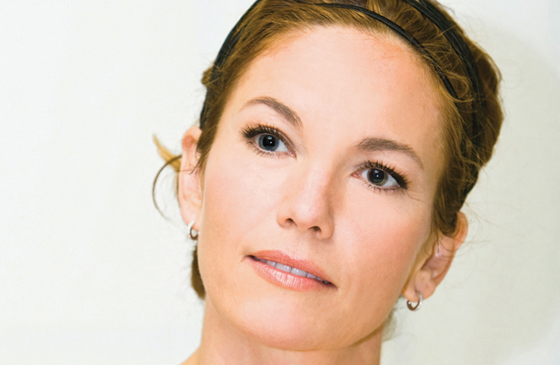
Hailed from Heaven

The interview would be difficult for actress Diane Lane. She was booked as a guest on the Charlie Rose show to promote her latest movie. The show had been one of her father’s favorite programs, and he had passed away only a few months earlier. She couldn’t help but get emotional.

Diane’s father, Burt, had raised her alone since Diane was six, and they were close. “Like Siamese twins,” Burt once said. Living in residential hotels in Manhattan, Burt drove a taxicab to keep them afloat, and Diane liked to ride with him in the front seat as he picked up fares.

READ MORE: MARK RUFFALO’S NEW OUTLOOK

He got her into acting in Off-Off- Broadway plays because, as he put it, “it was just better than day care.” Diane would wait for him after school or rehearsals, looking out for the yellow cab with his medallion number on top, 6F99.

“Or I would play hooky and be afraid I’d see it,” Diane told O magazine. Her dad sold the cab around the time Diane was 16, but the number stayed with her, indelibly linked to her dad.

Diane and her father grew apart during her late teens, when her acting career took off and she asserted her independence. But they had long since reconciled when Burt called to brace her for some tough news.

READ MORE: RICHARD DREYFUSS’ MYSTERIOUS VISITOR

“How strong are you?” he asked. He’d been diagnosed with cancer, and it was aggressive. Within five months, he was gone.

Diane tried to keep her emotions in check as a car took her to the studio for Charlie Rose. Stepping out at 59th and Lexington, Diane noticed a yellow cab at the curb, just about to pull away. The medallion number on top lit up: 6F99. She was ready for Charlie Rose.