

Embrace God's truth with our new book, The Lies that Bind

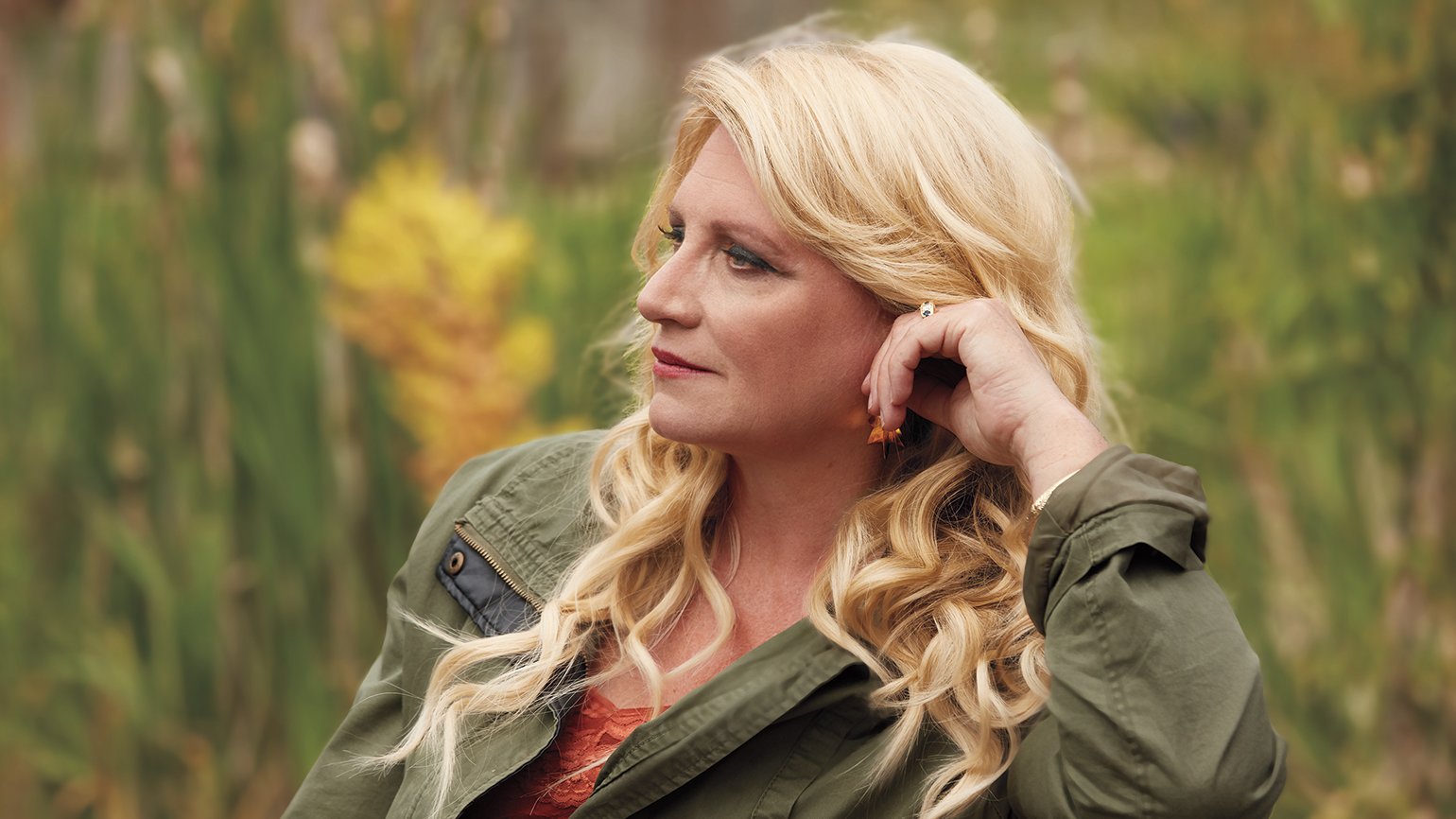
Delilah: Her Faith and Her Fans Support Her in Tough Times

One of my favorite things about doing my radio show is hearing people’s stories. Every night, without fail, someone will call to wish a spouse happy birthday or congratulate a child who’s graduating. Then as their story unfolds, I realize that it was the whole reason God had me in the studio that night—to make that connection, to have that conversation, to share a prayer or piece of Scripture, to share a memory or song.

Years ago, when I was in my twenties, I went to a tiny church—there were maybe 50 or 60 members—where the minister, Pastor Mike McCorkle, preached a life-changing sermon. I asked him about it recently, and he doesn’t even remember what he said. I do. I’ll never forget.

He imagined that when he stands before the Lord, when he dies, he’s going to be asked two questions. The first is “What did you do with me?” Did you give God your best or just the scraps? Was faith just an afterthought? Did you put Jesus at the center of your being? And the second: “What did you do with the people I put in your path?” Every person you encounter, your family members, your teachers, your friends, your coworkers, even strangers, are put there for a reason. Did you honor them? Did you respect them? Did you take the time to get to know their story?

The conversations I have with my listeners are real. They know I’m going to be honest with them and they can be honest with me. Most of them know about the joys in my life and the deep sorrows I’ve had to face. None of which I could have gotten through without my faith.

I met a homeless woman on a blistering hot day in Philadelphia, and in my efforts to help her and people like her I started a charity called Point Hope (named for one of the coldest places on the planet: Point Hope, Alaska). A woman at a refugee camp in Ghana sent me an e-mail asking for help. I figured it was some sort of scam at first, but when I followed it up through friends at World Vision, I discovered she was indeed real. Since then, I’ve made dozens of trips to that refugee camp, adopted children from it and supplied it with fresh water, schools, medical stations and adult career and farming programs.

Someone was put in my path, and I felt compelled to respond.

I have 13 children—10 adopted, three biological. I’m heartbroken to say that two of them are already gone from this world. Sammy came from an orphanage in Ghana. We knew he had sickle cell anemia when he became part of our family, but he blossomed in our home. He loved to eat, to laugh, to tease, to draw, to paint, to dance. On the night the adoption was complete, he said to me, “Mama, I always thought I would die alone in the orphanage.”

As it was, he died in our arms at age 16 from complications of sickle cell. The doctors did all they could, but they couldn’t stop his heart from failing. Before he passed, Sammy pointed to me and my husband, Paul, and put his hands in the shape of a heart. Now when I am struggling and missing him, I whisper a prayer. Sometimes even within the hour, I’ll be led to something heart-shaped in nature, a seashell on the beach, a sandstone on the path. Signs from God that my son’s spirit lives on.

My world shattered a year ago, on October 2, 2017. That night, my beautiful son Zachariah Miguel Rene-Ortega, the last child I carried in my womb and gave birth to, chose to leave us. He was just 18 years old and had been battling depression. These have been the hardest months of my life and that of my family. I miss Zack every minute and hour of every day. Despite the heartache and grief, I praise God for the life I live. I know that God is looking after us, and that knowledge—along with the love and understanding of family, friends, and so many others—has kept me going.

One of my most endearing memories of my Zacky illustrates what his heart was truly like and truly capable of. When Zack was just 10 years old, a girlfriend from church let me know that the African Children’s Choir was going to perform at our church. I had been working in Ghana, West Africa, for five years and had adopted two young girls from there.

My girlfriend knew I’d love the music, and even though the choir children were from a different country, my adopted girls might like seeing other children from West Africa. We’d arrived home late the night before, after a long drive from snow-covered mountains, and woke up in time to get to the 10:30 a.m. service and the choir performance. The sink at home was full of breakfast dishes; the living room was a makeshift laundry center for ski gear. Snowboards and sleds leaned against the side of the porch.

After the service, I took my daughters to meet some of the young performers. The director of the choir, a middle-aged man from the Midwest, approached me with a broad grin, grabbed my hand and pumped my arm as he exclaimed, “Thank you! Thank you! We will be happy to come to the farm for lunch.” I tilted my head to one side and said, “Excuse me?”

“Your son, the little boy in the green shirt, just told me you have a huge farm with lots of goats and cows, and then he invited me to bring the choir to lunch. Normally the church sponsors a lunch for us at the cafeteria or a local restaurant, but your pastor is not here today,” he said. “I guess no one thought about how we would feed the children.”

The man’s enthusiastic smile was met with my bewildered expression, and just as I was about to explain that my house was filled with ski gear and my fridge was all but empty, Zack appeared at my side. He put his arms around me and said, “Mom, I told him what a good cook you are and how you feed all the orphans in Africa. Can they come home and have lunch with us?” His impish face was absolutely adorable, and his smile did to me what it always did: made me absolutely incapable of saying anything but yes….

Thirty children, eight adult chaperones, plus the director and his wife. That meant 40 guests along with my own household of 10…. My mind raced into action. I hurriedly called my husband, Paul, and asked for help. He had just dropped our teenage girls off at the farm. He agreed to rush back to the farm and start picking up skis and snowboards. I called two of my adult children, Tangi and Trey Jerome, to help as well.

When I got home, the skis, snowboards and damp gloves had all been snatched up and tossed in bins, the dirty dishes in the sink were shoved in the dishwasher and a huge pot of water was already on the stove and beginning to boil. Within a half hour, the bus arrived and 30 children between the ages of five and 18 started spilling out.

It was freezing outside, and I knew their bodies had not yet had time to acclimate to the cold, so the children were not the least bit interested in staying outside to look at our goats, horses or even the zebra. They all ran into the house trying to get warm, and although my house is a good size, together we filled up every room.

The food was ready soon, and we provided lunch. Once everyone had eaten their fill, the kids sang. Even more beautiful than the songs they’d sung at church.

After two hours of breaking bread and sharing stories and songs, the director said the choir had to leave; they had a long road trip ahead of them. The kids gave us hugs and prayed for us, then filed outside. As the bus rumbled up the long drive, light snow began to fall. I was ready to collapse into a heap when I heard Zack declare, “I hope it snows really hard and the bus gets stuck and they have to spend the night here with us!” That was one time I was so grateful that his prayers were not answered!

Zack was like me in many ways, one being that he had a big heart for others, especially those who were hurting or in need.

I won’t hold my last-born biological baby again until eternity. I won’t stroke his long, beautiful hair or feel his breath against my skin. I won’t hear his voice—except for the few recordings I have—until I see Jesus face-to-face. I hope the Lord won’t mind if I rush to hold both Zack and his older brother Sammy in my arms before getting the tour of paradise.

In the days and weeks after I lost my boys, I did not know if I had the heart to go on. When Zack took his own life, I had to step away from my radio program for three weeks before I could find the strength and courage to put my voice back on the air. The outpouring of love, support and prayer from my listeners—the hundreds of thousands of you who in that moment stopped in your path to consider where my heart was—restored me.

For more inspiring stories, subscribe to Guideposts magazine.

Delicata Squash with Toasted Squash Seeds and Aleppo Pepper

Brian Leth, the chef de cuisine at Vinegar Hill House, came up with this easy-to-make dish one day at the height of summer, as he was fantasizing about what he’d like to eat when it got cold again.

The squash gets even sweeter with the maple syrup, but both are balanced and reined in by the two types of pepper, toasted squash seeds, and sea salt. The result? A rich, buttery, deeply satisfying vegetarian entrée that’s inspired by a cold-weather classic from your grandmother’s recipe collection: the twice-baked potato.

Ingredients

Six delicata squash, 3 to 4 inches long, halved lengthwise

8 tablespoons (1 stick) unsalted butter, divided

Coarse salt

2 tablespoons pure maple syrup

Freshly ground black pepper

1 to 2 tablespoons extra-virgin olive oil, plus more for garnish

2 egg whites

Ground Aleppo pepper or paprika, for garnish

Sea salt, for garnish

Preparation

1. Preheat the oven to 425˚F.

2. Scrape the seeds from the squash and place them in a colander. Rinse under cold water to remove as much pulp as you can. Drain, then transfer the seeds to a plate lined with a paper towel and reserve.

3. Peel 6 of the squash halves (the least attractive ones) and cut them into 1-inch cubes. Place the cubed squash in a large saucepan with a tight-fitting lid. Add 6 tablespoons of the butter and season with salt. Cover and cook over low heat, stirring occasionally, until the squash is soft, 25 to 30 minutes. Transfer to a blender and, working in batches, puree the squash with the maple syrup. (You can also use an immersion blender to puree the squash.) Add the remaining 2 tablespoons butter, pureeing until the mixture is silky smooth and thick. Refrigerate until ready to use.

4. While the squash is cooking, line a rimmed baking sheet with parchment paper and lightly oil the paper. Season the remaining squash halves with salt and pepper and place them cut side down on the baking sheet. Bake for 20 minutes, or until tender.

5. Reduce the oven temperature to 375˚F. Toss the reserved squash seeds with the olive oil, salt, and pepper and spread on a parchment-lined rimmed baking sheet. Toast the seeds in the oven until they are crispy and aromatic, 15 to 20 minutes. Stir the seeds halfway through the cooking time to break them apart.

6. Whip the egg whites to soft peaks and fold them into the cooled squash puree. Spoon the puree into the baked squash halves. Return them to the oven and bake for 15 minutes, or until the puree and the edges of the squash are golden brown.

7. To serve, drizzle each squash half with olive oil and garnish with the toasted seeds, Aleppo pepper or paprika, and sea salt.

Serves 6

Debbie Macomber’s Spiritual Bond with Her Readers

The following interview first appeared on Bookish.com, and is used here with permission.

If you don't think that God has much of a place in romance novels, then you haven't spoken with beloved storyteller Debbie Macomber. In her new book Once Upon a Time: Discovering Our Forever After Story, she tries to help her readers understand their lives—and even their connection to her work—as a continuous story written by God. Macomber tells Bookish how she credits the Big Guy with everything from meeting her husband to finding the perfect word.

Bookish: Why do you think it is so important for people to find their own story?

Debbie Macomber: Because I'm a storyteller, let me start with how I met my husband. I was living and working in Seattle and sharing a large house with seven other girls. Saturday night we all had dates, but mine phoned and cancelled at the last minute. Here I was—dressed, ready to go and without a date. Then the phone rang and it was Wayne. He asked for one of my roommates, and when I explained that she was out for the night, he hesitated and asked if I was doing anything. We were married a year later.

Looking back, I can see how God arranged for me to meet Wayne. Without my husband's love and support, I don't know if I would have ever been able to write. When we look for our own story, it becomes apparent how God has worked in our lives, how He has been in control.

Bookish: Where can people find inspiration for their story?

DM: It's all around us. When a child or grandchild asks what it was like "in the old days," that's inspiration. It's like a conversation: Someone tells of an incident in his or her life and it reminds us of something similar. Many people are like me—inspiration comes when we are holding our pen and writing in a journal.

Every time you think, "That reminds me…" be prepared for the story that will follow.

Bookish: Do you have a muse?

DM: If by muse you mean one person who has inspired my writing, then no. The Holy Spirit, of course, is far more than a muse—He's the one who births ideas and understanding. But, as far as muses, I'm inspired by the writing of so many who've gone before me—those authors I've talked about in my books. The ones whose autographs and photos line the walls of my office.

But my real muses are my readers. I can't tell you how many times a reader has told me a story that ends up sparking something for one of my books.

Bookish: What's the thing you've written that you were most concerned fans and readers wouldn't appreciate? What do you think it is about your writing that makes your books so popular?

DM: Actually, I think there are several factors, the most important being prayer. Before I write, I ask God to guide my words and my story; I pray that my readers will resonate with the characters and come away feeling uplifted and hopeful about life.

God gave me the gift of storytelling. Sometimes words get in the way. When I write, it isn't important to pause in the action to relay a lot of description. I want to tell the story. One time I wrote an entire book without once describing the heroine. My editor asked me to go back and fill in a few details, which I did. After the book was published, I received a letter from a reader who said she absolutely loved the way I described my characters. I was stunned because I use such little description. What I learned from her letter is that once readers get involved in the story, their minds automatically fill in the details.

Bookish: Do you want to make your readers cry when reading your novels? Do you cry when writing your own novels?

DM: In my 30-plus years as an author, I've discovered that there is an emotional—almost spiritual—link between the author and the reader. If I cry creating a scene, my readers will experience that same emotion. If I laugh, they will laugh. If I put my heart on the page, it will link with theirs.

Do I laugh? Yes. Do I cry? Yes. And my heart is on every single page.

Bookish: What's something about you that your fans would find surprising?

DM: There are times I feel as if I've already laid it all there—telling my stories in both fiction and nonfiction—but what seems to catch most readers by surprise is the fact that I'm dyslexic and grew up hearing nothing but negative feedback when I shared my dream of becoming a writer.

Bookish: Which authors do you find inspiring? If you could give an aspiring author one piece of advice what would it be?

DM: First of all, I explain that a writer writes. We don't spend our time telling everyone we're going to be writers. Nor do we brag about what great plots we have or broadcast that one day our names are going to be on a bestselling novel. We write every single day. This isn't an easy occupation. Selling my first book was one of the hardest achievements of my life. My books got rejected so fast they hit me in the back of my head on my way home from the post office. If you think selling your book will be easy then, by comparison, being a brain surgeon is a snap.

Write. Believe in yourself. Face rejection with a positive heart. Trust God to lead you.

Bookish: What is the single greatest love story of all time?

DM: I love easy questions. Thank you. The greatest love story of all time is the love God has for each one of us. For God so loved the world that He gave us Jesus so that we can walk straight through the gates of heaven. (Talk about golden arches!)

Danielle Chuchran On UP Film, ‘Love Finds You In Charm’

Last year, the UP channel premiered Love Finds You In Charm, a coming of age story based off Guideposts author Annalisa Daughtey’s book of the same name. With the film recently releasing on DVD, Guideposts caught up with one of it’s stars, Danielle Chuchran. Chuchran plays Emma Miller — a small-town Amish girl with dreams of a life removed from her stifiling community. The movie follows Emma’s journey of self-discovery as she finds love with a farm boy named Noah Weaver (played by Texas Rising star Trevor Donovan) and friendship in the small town of Charm, Ohio.

Click Here To Get Your Copy Of Love Finds You In Charm

Chuchran shared with Guideposts.org why she was excited to be a part of Emma’s story, the suprising thing she learned about the Amish community and the influence she hopes the film has on audiences.

What drew you to the story?

I thought it was a beautiful story of self discovery. Emma was looking so hard for a life so different from the one that she led, but ultimately she realized that everything that she could ever want was right in front of her. I felt the story was easily relatable to so many people in the world.

What’s one way you wish you were more like your character?

Emma has so many wonderful qualities about her. I feel my favorite is her longing for her individuality, she knows she is different and she embraces it. I wish that sometimes I had more confidence in my uniqueness and didn’t feel the pressures to conform to how people believe I should be.

The story was filmed in Amish country. What’s one thing you learned about the Amish way of life that you didn’t know before?

It was fascinating to learn about the different groups of Amish people. There are certain groups that are much stricter than others. We had a wonderful young woman on set with us who brought the horse and buggy we used who was Amish and she would come to set in an Abercrombie sweatshirt over her Amish attire and with her cell phone. She had a lot of fun teaching me about the expectations and regulations of the culture and how they varied [from group to group].

Can you tell us one thing about your fellow cast members that fans might not know?

Trevor Donovan is such a goofball. I loved working with him. He always kept me laughing and has such a great sense of humor. He is great with animals. I thought at one point he might have brought home one of the pygmy goats! He is a great horseman but he hated his crazy tight pants he had to wear during filming. (I really don’t know how those didn’t rip once.)

What do you think the message of this film is and what do you hope viewers walk away with after seeing the movie?

Be open to the things. Emma was convinced that she had to travel the world, leave everything behind to find what she wanted when all she had to do was open her heart to see that her life and prince were right in front of her. I also feel that there was a profound message to be true to yourself. Emma knew that there was something missing in the life she was leading so she took the chance to search for that missing piece even though so many around her discouraged it. Listen to your heart and hear what it has to say, it’s usually right.

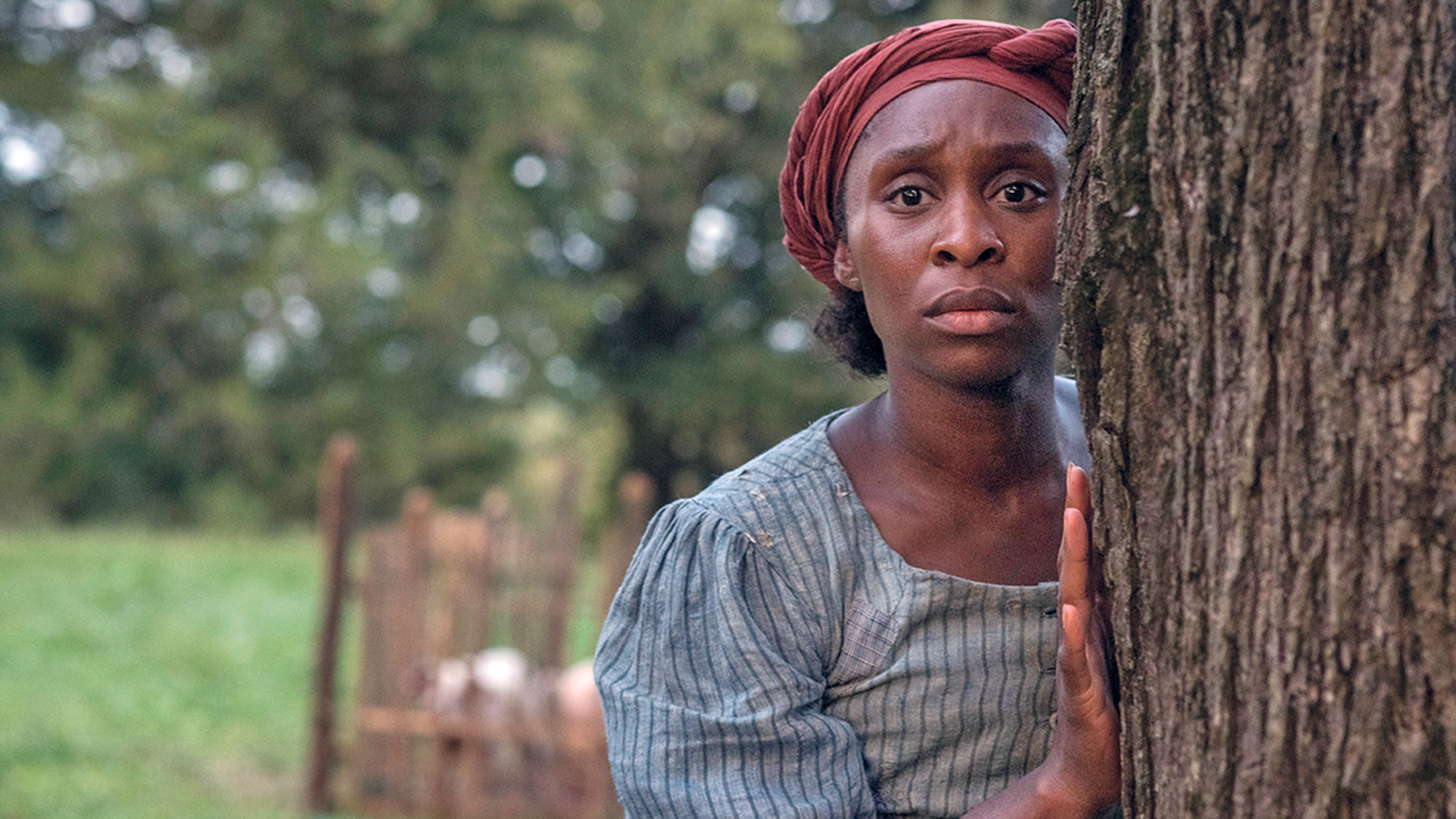
Cynthia Erivo: Playing Harriet Tubman Changed My Life

I stand on the bridge above the freezing, roaring river. I am out of options, the enemy closing in on me from each direction. The only way out is down. To jump into the swirling rapids below. The way to safety, to freedom. Or to death. I look to the left, look to the right and then do what I always do, ask God for help. Then I jump.

“Cut!”

Actress Cynthia Erivoc on the cover of the October 2019 issue of Guideposts
As seen on the cover of the October
2019 issue of Guideposts

I play abolitionist Harriet Tubman—a woman of great courage, strength and faith—in the movie Harriet. Taking on the role was a leap in and of itself. A leap of faith.

Most of us know the story. Harriet Tubman made multiple trips into slave-owning territory and brought out some 70 enslaved people on what was called the Underground Railroad, even though by doing so she could have been killed or returned to slavery herself. In the Civil War, she fought with the Union, the first American woman to lead a military expedition. She was celebrated for her valor. All of that can be found in the history books I read as a child growing up in England. (My mother had immigrated there from Nigeria.) What was really at the heart of Harriet Tubman’s bravery?

As an actor, you naturally study the character you’re playing, read all you can about them. One reason I was cast was that I’m short like Harriet Tubman, a little over five feet. I’m also a fairly physical actor. She was strong, powerful. To play this part, I knew I would have to work out even harder than usual to be able to do what she did. Lots of trips to the gym.

To really master a role, every actor tries to find a way into the character she’s playing. To play Harriet, I had to understand faith at its most elemental level. To understand her faith and courage, I needed to probe my own faith and call on it. Harriet never did anything without listening to God for guidance, being present to the dangers she faced and present to what could take her through them. “I prayed to God to make me strong and able to fight,” she once said. “And that’s what I’ve always prayed for ever since.”

My faith is always with me. It was my mother who taught me how to pray. We prayed over dinner, and she heard my bedtime prayers. I also heard her pray in the shower and in the bathroom when she was getting dressed before work. She prayed out loud, talking to God as though he was right there in the room with her. There were no restrictions when it came to prayer. You could pray at any time and all times. God was with you.

I realized that’s exactly how Harriet survived, being in touch with God constantly. She could jump into that cold water because she prayed, “River of peace, flow through me. Lord, help me, help me through.” She could rescue others without heeding her own safety and freedom because she believed God was always with her and for her. I would have to feel the same. To shoot scene after scene in frigid temperatures, I needed to be Harriet Tubman. Before I even left my house and got to the set, I prayed, “Keep us safe, keep our bodies safe, keep our minds alive and make the place safe for her to be in. Bring Harriet into this place.” I asked God to give me the strength to get through the day and tell the story as truthfully as I could and to know that Harriet herself was watching over us.

The obstacles to the film were huge, but then the obstacles Harriet faced in her life were far greater. She suffered terribly. As an adolescent, she came between a violent slave owner and another slave. The owner hurled a heavy metal weight at the slave, but it hit Harriet in the head instead, injuring her permanently. For the rest of her life, she suffered dizziness, pain and seizures. During seizures that rattled her body, she would have visions, visions of God communicating to her.

I had to be strong like her, but I also had to feel—from the inside—what it would be like to be a slave. To be subjugated and abused. To have seizures and visions. Reenacting one, I felt wretched, raw, emotionally undone. Super-exposed. Which I imagine is how Harriet felt. It must have been unbelievably hard. But sometimes going through an illness can open you up to things you wouldn’t be able to do otherwise. In suffering, we also find a new closeness to God.

There were two songs Harriet often used, according to historians, when she was sneaking into dangerous territory via the Underground Railroad. A fellow abolitionist had nicknamed her Moses, and naturally enough she would sing “Go Down, Moses” and “Bound for the Promised Land,” bringing liberated slaves to a new promised land. Those spirituals became passwords, and she would change the cadence to let others know if it was safe to come out in the middle of the night.

Though she couldn’t read or write, Harriet was savvy and wise. If she noticed someone trying to identify her on a train, she picked up a newspaper and pretended to read it. In a scene from the movie, a slave owner waves a wanted poster in her face. Isn’t she this Moses? Shouldn’t she be arrested and put in jail? No, no, she coyly suggests. It couldn’t be her. She’s not at all the right height.

She had been born Araminta Ross and called Minty, but when she found her way to freedom she chose a new name. In the movie, we show that historic moment when, at the Pennsylvania Society for the Abolition of Slavery, she tells William Still—portrayed by actor Leslie Odom, Jr.—that she is Harriet Tubman, Tubman for her husband, who was still in Maryland, Harriet in honor of her mom.

Prayer was always with us on the shoot. We filmed in cold weather because Harriet often traveled in the wintertime. It was safer. People were more likely to be indoors, and she was less likely to be noticed. Facing the elements, I would prepare by singing to myself, listening to gospel music—Kim Burrell and Mali Music—the way Harriet would sing to herself to stay connected to her faith.

I also prayed with the other actors right on the set. In one scene, Harriet meets with Reverend Green—the actor Vondie Curtis-Hall—and he prays for her, for her upcoming journey. We were in the church, I was sitting opposite Vondie, and we were two actors doing a scene. Yet the prayer was real and unrehearsed. It had to be.

There was a day on the set when everything seemed to be going wrong. We were rushing around, and I didn’t feel I truly had time to prepare for a scene we were about to do, that pivotal moment when Harriet walks across the Delaware border to freedom. Kasi Lemmons, our wonderful director, wanted to catch the sunrise, but the weather wasn’t cooperating. It was cloudy and overcast. Rain started to fall. We’d never get the shot she wanted. Time was running out.

Still, the cameras were rolling. We’d have to settle for less. We’d do what we could. What would Harriet Tubman have done? She would have called on God. She always called on God. She couldn’t have done the heroic things she had done without that. As Harriet—as myself—as both of us, I said a prayer of my own. I stepped across the border. All at once the clouds parted, and this big bright yellow-orange sun came forth, shining in my eyes. There was even a rainbow. Then another one, a double rainbow. It was overwhelming. God speaking, Harriet speaking, in unison. I looked around me, and everyone was in tears, the camera crew, Kasi, everyone. What you see in the movie is what really happened, no CGI.

It was such an honor to portray her, but I couldn’t have done it without my faith. Being Harriet meant being in God’s continual presence. There were times I couldn’t even separate myself from her. To know this woman who refused to let circumstances dictate her future, refused to cave to fear, who stood up to the evil of slavery. Guided by her faith, she changed the course of history. Playing this role changed my life too.

For more inspiring stories, subscribe to Guideposts magazine.
Curried Carrot Soup

Ingredients

1 large onion, diced

2 tablespoons olive oil

1 teaspoon orange zest

1 tablespoon mild yellow curry powder

2 pounds carrots, peeled and diced

1 quart vegetable stock

salt

freshly ground black pepper

Preparation

1. In a large saucepan, sauté onion in olive oil till translucent.

2. Add orange zest, curry powder and carrots. Sauté till carrots are tender.

3. Add veggie stock and puree with an immersion blender. Season with salt and pepper to taste.

Serves 8–10

Read about the unique restaurant that makes this soup in Hope in the Soup Kitchen!

C.S. Lewis: A Devoted Father

The story begins so simply. During World War II, four English schoolchildren—two brothers and two sisters—are sent to live in an old country house to escape the bombing of London. One day they stumble upon an ordinary-looking wardrobe in a strangely empty room.

If you’ve read C. S. Lewis’s beloved books for children, The Chronicles of Narnia, you know what happens next.

The children are swept into a magical land where they meet mythological creatures, talking animals, an evil witch and the Great Lion Aslan himself, perhaps the most compelling and enduring image of God ever to appear in a story for children.

For many years now I’ve been blessed with the job of being what you might call the caretaker of Narnia. I help run a company that oversees all of C. S. Lewis’s writings. No movie, stage play or anything else based on the Narnian chronicles gets made without my permission.

You’d be surprised at some of the strange things people want to do with the books. Once, someone came to us wanting approval to make a musical of the first book in the series, The Lion, the Witch and the Wardrobe, in which the reindeer pulling the White Witch’s sleigh suddenly turn into dancing go-go girls.

A screenwriter thought American audiences would like the story better if a scene involving enchanted Turkish delight candy featured a bewitched cheeseburger instead! However, the Narnia movies currently in production, including The Voyage of the Dawn Treader, have avoided such errors.

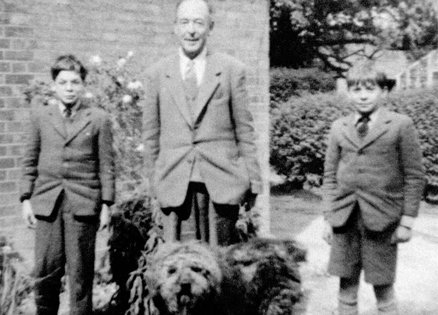
Actually, it’s not quite accurate to call what I do a mere job. It’s more like a moral responsibility—a way of paying back one of the most profound debts of my life. You see, I’m not just a fan of C. S. Lewis. I’m also his stepson.

Lewis (I’ve always called him Jack, the nickname used by everyone who knew him) married my mother, Joy Davidman, when I was 10 years old. Four years after that my mother died. I was estranged from my father, who lived in America.

Suddenly a 62-year-old professor of medieval English literature who’d been a bachelor for almost all his life was the closest thing I had to a father. Jack was as grief-stricken as I was. And yet he did everything he could to raise me. I saw a C. S. Lewis few people knew, and I grew to love him deeply.

I didn’t feel that way on first meeting him. My own father was a successful writer, but he was an alcoholic and by the time he and my mother divorced he frightened me. My mother got to know Jack Lewis after writing to tell him how much his books on Christianity had meant to her.

The two began corresponding and then my mother moved to England and enrolled me in school there. I was excited to meet the author of the Narnia books and I pictured someone from Narnia itself, maybe a knight with a sword.

What I encountered instead was a bald, stout old man dressed in a shabby tweed coat and with tobacco stains on his teeth and hands.

I was crushed—until I began to get to know him. Almost immediately I noticed how funny he was. You always knew which room of the house he was in because someone was laughing there.

One of the first things he did was invite me out for a walk in the woods behind his house near Oxford. Jack loved trees and animals and gardens. More than that, he knew exactly how to talk to a child.

He was straightforward and took me seriously, not like some grown-ups, who get cutesy and condescending around children. He asked me what I liked to read and told me his favorite childhood books, including the Bea­trix Potter stories, which he said he still loved as an adult.

Most of all we talked about Narnia. We often spoke of it as if it were a real place, as if a faun or a centaur might appear in the woods at any moment. It was a delightful game.

I was enrolled at a boarding school, so I mostly saw Jack during the holidays. Perhaps what I loved most about him was how much he loved my mother.

She was diagnosed with cancer only a few months after she and Jack married. Doctors told her she had just months to live, but after much prayer she made what at first appeared a miraculous recovery.

She and Jack had four happy years, including trips to Ireland and Greece and—what I most remember—evening after evening of sitting by the fire at home or around the dinner table talking.

They talked about everything, especially books. They suited each other exactly. I had never seen my mother so content.

Then suddenly it was over. My mother’s cancer returned in force and in 1960 she died. Her last words were, “I am at peace with God.” To the world Jack presented a brave face, continuing his scholarly duties and keeping up a vast correspondence.

At home, though, he often wept openly. I tried not to do anything that would provoke his grief and he did the same for me.

I was a teenager by this point and he wasn’t in the best health. But he welcomed me home every holiday, kept close tabs on my progress at school and even bought me a motorcycle when I was older.

Two years after my mother died I learned that my father had been diagnosed with cancer and, rather than face the disease, had committed suicide. I was now an orphan. Jack knew just what to say to me.

He didn’t offer trite condolences—he knew too much about pain and grief for that. There had been tragedy in my family and he didn’t try to sugarcoat that. He could have washed his hands of me but he didn’t. Instead, he made me a part of the last years of his life.

Jack died in 1963, when I was 18. At his funeral I saw a candle burning in a simple candlestick on his coffin. Others say they remember no such thing. But I am certain I saw that candle. Its flame burned unwaveringly through the whole service.

It was a perfect image of Jack’s love—for me, for my mother, for anyone blessed enough to have come into his circle of friends.

Jack Lewis embodied values that sound old-fashioned these days—courtesy, duty, loyalty. He was steadfast in his devotion to me and so I now do my best to remain faithful to him. What would I have done without him, alone there in England with no one to turn to?

I had gone as a child hoping to meet a knight in armor from a fairy tale. I got something far better, a father who understood that what children need most of all is unwavering love.

Find out which C.S. Lewis books Guideposts readers love most!

Hear Douglas Gresham talk about the making of The Voyage of the Dawn Treader.

Crustless Spinach Quiche for Christmas

The La Canada Presbyterian Women’s Bible Study Group holds an annual Christmas brunch that can’t be beat. For 15 years in a row, I’ve taken my Crustless Spinach Quiche, and I don’t think they’d let me in the door without it! Bake one for your next holiday gathering, or for a memorable Christmas morning breakfast.

Ingredients

2 Tbsp. butter ½ c. flour
3 eggs 1 tsp. baking powder
1 c. milk 4 c. baby spinach leaves, washed and dried
2 c. Cheddar or Monterey Jack cheese—or any combination of both, shredded

Preparation

1. Preheat oven to 350 degrees. Put butter in 9-inch pie plate and place in preheated oven until melted. Swirl butter in pie plate to carefully coat the bottom and sides.

2. In a medium-size bowl, beat eggs.

3. Add milk and blend well. Then add cheese, flour, baking powder and spinach. Mix ingredients together.

4. Pour mixture into buttered pie plate and smooth out the top.

5. Bake for 30-35 minutes, until quiche is golden brown on top.

Serves 8.

Nutritional Information: Calories: 220; Fat: 15g; Cholesterol: 105mg; Sodium: 310mg; Total Carbohydrates: 9g; Dietary Fiber: 1g; Sugars: 2g; Protein: 11g.

Crustless Spinach Quiche

Your whole family will enjoy this tasty and nutritious meal, and you’ll be happy because it’s so easy to prepare.

Ingredients

8 large eggs, beaten 1 ½ c. whole milk
1 c. Gruyère or Swiss cheese, grated 1 1 lb. package frozen chopped spinach, thawed
Pinch of freshly ground nutmeg ½ tsp. kosher salt
¼ freshly ground black pepper

Preparation

1. Preheat oven to 375°F.

2. Butter a 9-inch pie plate.

3. Combine eggs, milk and cheese.

4. Squeeze spinach of excess water and stir into eggs along with nutmeg, salt and pepper.

5. Pour mixture into pie plate and bake till puffed and center is just set, about 45 minutes.

Serves 6-8.

Nutritional Information: Calories: 220, Fat: 14g, Cholesterol: 270mg, Sodium: 370mg, Total Carbohydrates: 8g, Dietary Fiber: 2g, Sugars: 4g, Protein: 18g.

Note: To quickly thaw frozen spinach, put it in a colander and run it under hot water. Be sure to squeeze out all the excess water.

Read how Suzanne became inspired to learn to cook and read her six tips on How Be a Good Covered-Dish Neighbor.

Crowder’s New Season of Music

In early 2012, the future of David Crowder’s music career was up in the air. His self-titled band had broken up, he’d left the church staff he’d been a part of for 16 years and he’d dug himself up from his Texan roots and planted in the soils of Atlanta, Georgia’s Passion City Church. To hear the singer describe it, it was a time of indecision and uncertainty. He didn’t know if he’d make music (professionally) ever again after the band disbanded. So he was left searching for a new purpose.

With his first ever solo album, he found it. Neon Steeple — which debuted last May — is the most personal and vulnerable we’ve ever heard the man whose wiry beard rivals that of a Duck Dynasty cast member (note: he was working on his long before those guys scored their own TV show) and whose good ol’ boy persona has made him popular amongst his legion of fans and big names in Christian circles like Pastor Louie Giglio and singer Chris Tomlin.

READ MORE: A NEW SOUND IN CHRISTIAN ROCK

Guideposts.org sat down with the singer before he took the stage at the New York City stop of his nationwide tour to talk the bittersweet ending of the band and how he’s single-handedly transforming the landscape of the Christian music scene.

A New Season

In the world of Christian music, David Crowder Band is a name that holds weight. Through 12 years, six studio albums, countless Dove awards and a Grammy nominations, the guys from Waco, Texas had amassed a loyal fan following. But in 2012, the group that began thanks to its founder’s desire to get a younger audience excited about church just wasn’t excited about signing on to yet another three-record deal.

“It was just very apparent,” Crowder told Guideposts.org. “This is over.”

The news was a shock to fans, in part thanks to the massive success of the band’s final album Give Us Rest. The fact that the breakup came without headlines of feuding members or nasty confrontations made it even harder to understand.

It was just a new season of life.

“There wasn’t any internal conflict.” Crowder explained. “It wasn’t like the stereotypical, ‘band breaks up because they’re angry at one another’. I didn’t even know what I wanted to do next; it just felt like this was the end. It was just a new season of life.”

That new season led to a move east, a new community in Giglio’s Passion City Church and a new opportunity to create music.

“I couldn’t turn off the faucet.” Crowder said. “Songs just kept coming and I thought ‘I need to be doing music somehow.’ It’s just in me and how I’m wired. I feel like I’m utilized and useful when I’m in that position; when I’m able to articulate for people that have had a similar church experience as I’ve had.”

That experience is one his younger fans — the college kids who attend Passion conferences and follow his zany Twitter and Instagram feeds — readily identify with.

“I grew up in the church, in a very traditional scene, and when I got to school, my mind was blown by all the ideas and things I’d been sheltered from. It’s like, ‘I need to weed through this and decide what of this faith is mine and what have I just inherited from my parents,’ and then throw my arms around it. For me, Christ is a very compelling figure and something I wasn’t willing to set aside, but what of it is just institutional baggage and how can I help other people find freedom?”

A New Sound

To do that, Crowder first had to decide what direction he wanted to take his solo career. While David Crowder* Band had been known for its bluegrass feel, makeshift instruments and worship-style lyrics, Crowder’s new sound compiles some of the best memories of his own childhood.

“I grew up in East Texas, so there was no avoidance of country music,” the singer said. “Country music is just a part of the lifestyle and in my family, gospel and bluegrass were right alongside. The Gaithers was sitting next to Willie Nelson. But then too, I feel like I spent too much time sitting in front of the TV, in an ‘80s age with Nintendo and Atari, so those little 8-bit beeps and blips, I just think fun, innocent childhood when I hear either of those things. I started thinking, If I’m going to do something new, I still want it to be within the church, I still want it to be community based, where you have a bunch of people and music is in the middle of this and we’re just authentically responding to our experience of God.

The end result, dubbed “folktronica” is a term Crowder doesn’t necessarily claim credit for (though he rightly could) but one which describes the sound of his new album almost perfectly.

“It’s a little bit of folk, a little bit of tronica,” the singer joked. “We need the banjo and we need the 808 kicking; the Appalachians and Ibiza all together.”

This is definitely the most personal I’ve gotten on a record.

While stylistically, Crowder’s sound has certainly changed, the biggest difference in Neon Steeple is what he accomplishes lyrically. Tracks like “Come As You Are,” “I Am” and “Lift Your Head Weary Sinner” all speak of redemption, healing and the possibility of new beginnings.

“I feel like this is definitely the most personal I’ve gotten lyrically on a record,” Crowder explained.

Free from the constraints of writing in a group setting, the songwriter was able to learn a new way of putting pen to paper.

“I’ve learned lyrically, I’m more inspiration driven. It felt impossible for me to sit down and conjure up something that’s art. I don’t even know how you can control the moment, it feels like the wind starts blowing and you’ve just got to be ready. I felt like the only way I could develop my craft was to spend a lot of time as a collector. I would just listen a lot, read a lot, pay attention to words that move me and move other people, how they are put together because especially in church music, there’s a very limited vocabulary set. The way I could develop is to pay attention to songs that have stuck around forever. Just paying attention to that stuff, I felt like I’d be ready whenever the wind started blowing again.”

READ MORE: AN INSPIRING ROLE MODEL

Judging by the reviews his latest album has received, success is in the cards for Crowder’s solo turn. But then again, pleasing the critics isn’t what the singer cares about. It’s the fans that matter. The ones that crowd into nightclubs or pack concert arenas like the one we ventured to in Times Square for the chance to see in person what Crowder’s followers love most about the artist: his live act. Perched on stage that resembles a cross between the front of a Cracker Barrel and a Star Wars movie set, Crowder croons everything from his new music, to old fan favorites, snippets of a rap song by Drake and a Bill Gaither record. He lets the music speak for itself and the crowd — who knows just about every tune — takes over the lyrics, seeming to discover their own faith through his words.

To Crowder, that’s the best part.“My journey’s been very similar to everybody else’s on the planet. We’re all kind of in the same boat, so to have the words be exactly my experience and see people relate to that experience, it’s just really cool.”

Creamy, Cheesy, Smokey Croissants

April is National Grilled Cheese Month!

To celebrate, try this twist on the classic.

Ingredients

6 Tbsp. Mayonnaise 2 Tbsp. Dijon mustard
2 med. cloves garlic, minced 1 tsp. fresh rosemary, finely chopped
Salt 4 large croissants, halved lengthwise
¼ c. sun-dried tomatoes, coarsely chopped 6 oz. Brie cheese, coarsely grated
6 oz. Swiss cheese, coarsely grated 4 1 oz. slices smoked turkey

Preparation

1. Mix mayonnaise, mustard, garlic and rosemary. Add salt to taste. Set aside for up to 30 minutes at room temperature or up to a day refrigerated.

2. Spread 2 tablespoons mixture on bottom half of croissants. Layer on tomatoes, Brie, Swiss cheese and turkey. Add croissant tops.

3. Heat a nonstick skillet over medium-low heat. Cook sandwiches 2 to 3 minutes, covered, until golden brown. (Because of their high butter content, croissants can burn easily. Watch carefully.) Turn over, pressing each with a spatula to compress. Cover and cook 2 to 3 minutes, until undersides are golden brown. Turn once more, pressing again; cook for 1 minute.

4. Let cool 5 minutes.

Serves 4

Cousin Betty’s Banana Bread

My father’s cousin Betty was a big part of my life growing up.

Christmas, New Year’s, the Fourth of July or Easter, the whole family would head to Betty’s house to celebrate. You could always count on two things: Betty looking perfectly pulled together and a table full of her homemade dishes. Cousin Betty’s banana bread was always my favorite. It’s perfect with coffee or tea at any Easter gathering.

Ingredients

½ c. shortening 1 tsp. baking soda
1 c. sugar 1 tsp. salt
3 eggs, beaten 1 tsp. vanilla
3 ripe bananas, mashed 1 egg
¼ tsp. salt ¼ c. chopped walnuts
2 c. flour 3 Tbsp. cold water

Preparation

1. Mix shortening and sugar together in large bowl. Add eggs and mashed bananas to sugar mixture.

2. In a small bowl, mix flour, baking soda and salt. Once thoroughly mixed, add dry ingredients to large bowl. Mix together. Add vanilla, nuts and water. Mix well.

3. Pour into an 8-inch greased loaf pan. Sprinkle nuts on top. Bake at 350 degrees for 1 hour or until done in the middle(test with a toothpick).

Serves 12