Embrace God's truth with our new book, The Lies that Bind

An Interview with Melody Carlson

Q. What was your favorite part of writing The View from the Lighthouse?

A. I enjoy getting to know a new cast of characters. It’s hard to learn everything about them in the opening book and some characters, like Beverly, are a bit elusive. I also enjoy creating the setting, deciding what colors to paint a house or what kinds of shrubbery will grow there. Most of all I love seeing the characters interacting with each other, building friendships and helping each other.

Q. How did the story take shape? How long did it take you to write the book?

A. I’m not usually one to outline books, but in a series like this, outlines are a must. So that’s really where the story begins. After that, I feel a bit like Diane (one of the characters in the book) because I’m exploring a new neighborhood, setting up housekeeping, getting acquainted with my new “friends.”

Writing, for me, is like a journey—I know I’m going from point A to point B, but I don’t know everything that’s along the way. Also, I’m a very fast writer and usually complete a novel within a month. For some reason that’s just the way my brain likes to work.

Q. What kind of research did you do for this story?

A. First I read up a bit on Maine, things like wildlife, weather, geography, and even about the way people talk and think. I had no idea that Mainers were so independent or that they sometimes consider themselves a separate country.

As far as understanding the beach and lighthouse elements, I live on the other coast and have a beach cabin (strangely similar to Diane’s) as well as a beautiful lighthouse on our beach—so that part of the “research” was easy.

Q. How did you first become a writer?

A. I think I’ve always been a writer, but I didn’t figure out it was possible to get published, beyond school newspapers, until I was in my early thirties. For some reason I suddenly felt like I needed to write or explode. I was pumping out stories, then books, and a few years later my books began to sell. That was more than two hundred books ago.

Q. Tell us about your writing process. Where and when do you write? Do you listen to a certain type of music? Do you work from outlines?

A. I have a writing studio at my home in Central Oregon that’s separate from our house. I sometimes listen to music though not usually. I also write at the beach and sometimes in our motor-home when we’re on the road.

I try to write during “normal” workday hours and consider writing my job—thankfully it’s a fun job. And, as I said before, I don’t usually work from outlines—mostly because I like the adventure of discovery and being surprised.

Q. What’s your favorite part of writing fiction?

A. I love that fiction can be fairly true-to-life—and yet the writer has control of the outcome. I can put characters through some tough times, and I often do, and yet they emerge stronger and wiser in the end.

Q. What was your favorite book growing up?

A. I loved a lot of stories, including The Diary of Anne Frank, To Kill a Mockingbird, and The Pearl.

Q. What are you currently reading?

A. Right now I’m reading a Christmas novella that I’m considering for an endorsement—I can’t say the title because I haven’t decided if I’m endorsing it or not—but so but so far I’m liking it.

An Interview with Andy Garcia

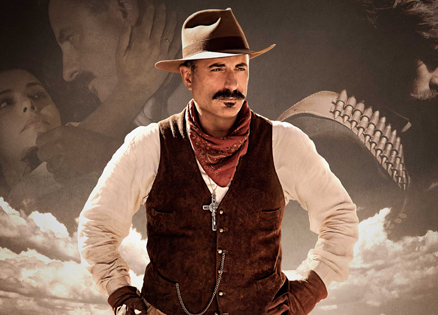
[MUSIC PLAYING] My name is Andy Garcia and I play a character by the name of Enrique Gorostieta. General Enrique Gorostieta. in the film “For Greater Glory.” The film focuses on a war, on a civil religious, you might say, war in Mexico in the 1920s, where the Mexican government basically kicked out the Vatican from Mexico and took the power away from the church and deprived the Mexican population to practice their faith and religion.

And first there was passive resistance towards that law, the Calles law. And then an economic boycott, which didn’t work. And then at the same time, there was these guerrilla movements that started to rise up and confront the government, saying no, we have the right to our religion, to our religion and practice our faith.

And a war broke out. And my character is a character who was a non-believer. Sort of to the degree that he might have even been atheist. But he was a decorated general from the Mexican army from the Mexican Revolution. He’s recruited by the Cristeros, which are the people who are fighting for their religious rights, to organize their army.

And he decides to do so, not because he was religious per se, but because he believed in their right to be religious, in the concept of absolute freedom. And this is an historical drama that actually happened in Mexico, in 1926 it started. And it’s something that’s been kind of taboo and kind of swept under the rug for many years. But this is what the movie focuses on.

He goes into the story not as a believable, but a believer in their cause, which is a totally different thing. But in the course of the story, he gets inspired by a young boy and by the other Cristeros to, and he begins to get a deeper understanding why people have faith. And he has sort of a catharsis and maybe a reaffirmation of something maybe he had dormant inside of him.

And he does have a sort of somewhat religious transformation as he goes along through the examples that are shown by his fellow Cristeros, and especially this young boy, which he has a very close relationship with in the film, who is also a young Cristero. And the Cristero is obviously the people who were fighting in defense of their, to defend their right to practice their religion.

On a personal level, I come from a country that those freedoms have been taken away for many, many years in Cuba, not only religious freedom, but just the entire gamut of human rights have been deprived to the Cuban people by the Castro regime. So I have that in my DNA. The real thing in the film is really the right of the human being to have absolute freedom in life.

I mean, the government should not be dictating or taking away the rights of the individual. And this is what the people were fighting for. I think when you make a film and I get involved, I want the movie to have an impact on the individual, I want it to have resonance and I want them to be moved by the film, whether it be a drama or a comedy.

I want them to think about it a month later, a year later, and say wow, that was a great movie, a great experience. And whatever experience they have with it in their own way privately is up to them. It’s not propaganda. I’m a filmmaker. I’m not trying to, the message I’m trying to get across is a message of great filmmaking like I said, that has a resonance to the moviegoer.

I think in this case, obviously it’s a cause that’s easy to get behind, because we are talking about the rights, the individual rights of the human being to be free and to practice either religion or to organize themselves politically, to speak out against the government without any repercussions. All these things are part of your basic human rights. And this is what this movie is fighting for, what these people were fighting for.

[MUSIC PLAYING]

Angelic Editor

Edward Grinnan became editor-in-chief of Guideposts the same year I was promoted to editor-in-chief of Angels. It was an exciting move for both of us, and in many ways I had Edward to thank for my promotion. I started working for Guideposts as a young editorial assistant. It was a job title I’d never even heard of before moving to New York City. I did well answering reader mail and proofreading, and was soon entrusted with fact-checking to be sure every story we published was not only true but factually accurate.

My next move was to copy chief, where I clarified details of stories the editors helped people write. Edward was one of the up-and-coming editors I worked closely with. He encouraged me to learn how to help people write their stories myself. Me? Write? “You really think I can?” I asked him.

Community Newsletter

Get More Inspiration Delivered to Your Inbox


With Edward’s guidance I became good at something I never imagined myself doing, and we got to know something of each other beyond our work life. You can’t work on Guideposts stories all day without touching on your own personal life experiences. I got to know little pieces of Edward’s story and he mine. Get me on a trip down memory lane and I won’t shut up.

But for Edward it was different. Even as we became trusted friends, there seemed to be some secret part of his past he didn’t want to reveal. Then one day not so long ago he suddenly reversed our old roles. He handed me a manuscript and said, “Tell me what you think of this. Be honest.”

It was the first three chapters of a book: Edward was finally telling his own Guideposts story. Like me, he was doing something he never imagined himself doing. I knew how hard that could be. And how worthwhile.

Angeletti Cookies

My husband John’s memories of growing up in an Italian family in Brooklyn all centered around food. One of his favorite sweets was angeletti, a Christmas cookie his aunt Lee made with anise and luscious lemon icing sprinkled with colored sugar. Its name translates to “little angels.” I’m not Italian, but I decided to surprise John with my own recipe for angeletti—and he said they tasted just like home.

Ingredients

Cookie Dough
4 c. flour 1 c. unsalted butter
2 Tbsp. baking powder 1 c. sugar
½ tsp. salt 6 large eggs
3 tsp. finely ground anise seed 1 tsp. vanilla
Icing
5 c. confectioner’s sugar 3 Tbsp. water
1 large lemon (¼ c. juice) green and red sanding sugar
1 ½ tsp. lemon extract

Preparation

1. Preheat oven to 350 degrees. Line 2 baking sheets with parchment paper. Whisk together flour, baking powder, salt and anise.

2. In another bowl, cream butter and sugar with an electric mixer until light and fluffy. Add eggs, one at a time, Angeletti Cookies mixing well. Add vanilla and mix in. On low speed, gradually add flour mixture just until combined.

3. Using a teaspoonsized cookie scoop (#60), scoop 20 dough balls onto cookie sheets. Bake 15 minutes. Cookies will be golden. Cool on a wire rack. Refill cookie sheets 4 times more.

4. Combine confectioner’s sugar, juice from the lemon, lemon extract and water. (Add more water if needed.)

5. When cookies are cool, spread icing over the top of each with an offset spatula. Immediately sprinkle with colored sugars.

Makes 80 cookies.

Nutritional Information (per cookie): Calories: 90; Fat: 2.5g; Cholesterol: 20mg; Sodium: 55mg; Total Carbohydrates: 16g; Dietary Fiber: 0g; Sugars: 11g; Protein: 1g.

A New Sound in Christian Rock

If you grew up listening to Christian rock music, chances are a few songs from the band MercyMe have a spot on your most-played list. The Texas-born group features lead singer/songwriter Bart Millard and band members James Bryson, Robby Shaffer, Nathan Cochran, Michael Scheuchzer and Barry Graul, who have been cranking out hits and collecting fans since they combined their talents back in 1994. Twenty years, eight studio albums, eight Dove Awards and numerous Grammy nominations later, the band is still making music and continues to dominate the charts.

Their latest album is all the more significant thanks to its tumultous beginnings. Before production began, Millard made the difficult decision to step away from the band, which could have been the end of the road for fans of their music. Instead, walking away led to the creation of a new album, Welcome to the New, which has garnered two Grammy nominations, debuted No. 1 on the Billboard Christian Album charts and helped reinvent the veteran group’s sound.

Millard spoke with Guideposts.org about how close he came to leaving the band, the message behind this new album and why he’s having more fun than ever praising God through song.

Why did you want to make this album?

After [the album] The Hurt & The Healer, we kind of hit a wall. I grew up in a somewhat legalistic church and it taught me that faith is enough, but here’s three more things left just in case. There’s always things left to do to be closer to God. You start a band and do all this stuff to try to please Him and I just hit a point where I thought “Man, I don’t think I can keep up.” It felt like my family life was hanging by a thread. There had to be more to it.

While writing The Hurt & The Healer, a friend of mine came back into my life. We hadn’t seen him in a long time and one of the things he said to me that really stopped me in my tracks, he said “Hey, you guys work really hard but in case you’ve forgotten, there’s nothing you can do to make Christ love you any more than He already does, so maybe you just need to stop and just rest in the finished work of the cross.” No one’s ever told me to stop before, they’ve always said to try harder. It took a couple of years to understand what that meant and I really thought, at that time, that MercyMe was coming to an end. I thought that’s what I was supposed to do. Literally stop and just take it all in.

At that point, my wife and I had kind of jokingly said we stopped caring what people thought, what radios thought, what labels thought, and we just decided not to keep up with this image and focus on our fellowship with Christ. The second that MercyMe stopped being my identity, instead of quitting, I started falling back in love with it. About that time we had gone back in the studio and started making this new record and that’s the message, from beginning to end. Hence the name Welcome to the New. We wanted the message and everything to be different. We said, what’s the [album] we’d love to make, whether it ever gets played on the radio or not? So we just started making that and luckily people are okay with it.

One track on that album that’s very personal for you is “Dear Younger Me.” Can you talk about why you wanted to write that song?

Over the years, my wife and I have gone through grief counseling. Her brother was killed back in 2004 and we probably never dealt with it the proper way, so we went to grief counseling a few years ago and one of the first things the counselor said to me was “We need to go back into your childhood and unpack that.” I grew up in a pretty abusive situation. My father was a very abusive person until he was diagnosed with cancer my freshman year of high school. When he came to know Christ [after his diagnosis] he became one of the godliest men I’ve ever know. But there’s a lot of damage done, a lot of feeling like it’s your fault. In counseling, one of the things she said was that, “If you ever want to know what you would’ve been like in a healthy family and a God-like environment, just look at your son Charlie.” I started thinking, If I could sit with the 8 year-old version of myself, what would I say to him? It was one of the hardest songs I’ve ever had to write. A lot of people carry those issues with them, they carry that guilt and shame around their neck like it’s part of them. That one is particularly special because of the response that we’ve had. I’ve gotten emails from people saying, “This has broken me free of something that I’ve carried a long time,” so, that’s really cool.

Another song that’s getting a lot of attention is “Shake.” It has an old-school sound that’s completely different from anything you guys have done in the past. Why make that the first single?

When I almost quit the band, the guys were like “Let’s try to fix what’s broke.” We cut our shows in half and just [changed] everything to where it wasn’t overpowering our lives. I figured I’d take a break and maybe do a solo record a few years down the road. I wanted to make music that was different, that has an old-school vibe and felt current at the same time, so they were really good sports to chase that rabbit with me. When we finished The Hurt and The Healer, we thought we’d take two or three years off. We were on the road doing some shows and we started goofing off, messing with some songs and [there was] this track that ended up being “Shake.” We started writing to it and it was so different. I loved it, the guys were into it and I made the mistake of sending the demo to a label. They really wanted us to make a record but didn’t want to push the issue so I feel like they kind of leaked the song on YouTube, just putting it out there and it got a huge response, so they were like “Hey, we won’t talk about the record but at least make a video for this song and put it out there. If you’re going to take a two-year break, let’s give them something.” So we did the video in October last year and after it got all that attention we were like “Well, we’ve gotta make a record now.”

I know you grew up Baptist. There’s no shaking it in a Baptist Church.

[Laughs] Part of the idea of the song was, if you’re ever able to know who God is and understand who you are in Christ, it’d be really hard to sit still. We’re not dancers, but it was just polar opposite of the stuff we were known for or the stuff we even write. That’s just how I felt spiritually and still do. It’s fun to be able to do it for this long and in a way feel like you’re just getting started as far as creativity. It renewed what we’re doing. I think it was U2 that said “being in a band is like being in the mafia, the only way you get out is if you die.” I tend to believe that’s what it’s like.

Was being the leader of a Christian rock band what you always wanted to do?

I dreamed of being a singer, but I never really had a plan. My goal was to be a pastor at church and when I went to college, I moved to Florida, went to school and worked at a church there. I was already singing some but just tracks for the church. I thought “Man, if I could just get a job and have that outlet to make music on Sunday mornings, I’d be good to go.” At some point, Mike [Scheuchzer] and I were like “Can we really do this and avoid getting real jobs?” So we just took that semester off in college and tried to do it and never looked back. People always ask, “How can I do what you do?” Don’t take for granted where God has you. People always say it’s just a stepping stone for something bigger, but whether you’re singing for 10,000 or 10, you have to look at it as God has raised you up for this moment, that’s why you’re here. If you don’t, don’t be surprised if it doesn’t continue or if the opportunities don’t come your way.

What have you discovered about your faith thanks to your years with Mercy Me?

After I turned 40, that’s when it started to sink in who I am in Christ. I worked really hard for a long time to make sure God was okay with me. I’ve always felt I’ve spent most of my life doing these “good” things to make sure I was right with God and now everything that I do is with the understanding that I am right with God and it’s way more fun.

A New Look at the Powerful Women of the Bible

When Ann Spangler and Jean Syswerda first released their devotional Women of the Bible, a colleague spotted it at his local bookstore. “That’s never going to sell,” he said, shaking his head. Little did he know how wrong he was about the collection of devotions for women.

To know the full story of this bestselling devotional, you need to go back to when Ann and Jean decided to write it. Ann was a senior acquisitions editor at Zondervan, the renowned Christian publishing company; Jean also worked there, as an associate publisher in their Bibles division. Ann, ever a studious editor, loved to go through the sheets and sheets of sales reports to see what their readers wanted. She noticed that “women of the Bible” was a topic many people were interested in, yet there just weren’t many new options that put the women of the Bible in a more modern lens.

“That got me interested in the topic,” said Ann, “and because of Jane’s experience with the Bible, I thought we should do this together.”

Thus, a beautiful friendship was born. But it wasn’t always easy. When the women first sent the manuscript around, it was turned down by a male associate editor. They were shocked. But when their agent sent it out again, this time to a woman, it was quickly accepted.

“Sometimes things get missed,” Ann said. “I might have been missing out on books that men would have liked to read because I was not perceiving the felt need. My colleagues didn’t get why this book would be interesting to women.”

And women were definitely interested. Women of the Bible went on to sell over one million copies. (The colleague who said it would never sell, said he was very happy that he had been so wrong.) The book takes readers on a weekly study of 52 women of the Bible. And not just the most prominent ones.

“We also wanted to include women characters that most women had never heard of,” said Jean. “Not just the shining stars, but also the women who were not so admirable and [focus on] what we could learn from them.”

For example, take Rizpah, one of Saul’s concubines. The book of Samuel recounts how, after her sons were killed by the Gibeonites, she sat by them for months in a form of public protest until she received justice for their murder. “When you think about people protesting and lamenting today because of injustices in our world,” said Ann, “it makes her an interesting person to study.”

Perhaps that is what makes these devotions for women so unique: they put the biblical story of women into a modern-day context. “That’s a beautiful thing for women of today to know,” said Jean. “That standing up for what’s right is an important trait.”

READ MORE: Daily Devotions for Women

Ann and Jean wanted to show every part of these women— both the good and the bad. How these women interact with God and approach their own faith makes them relatable and real. “These are ordinary people,” says Ann. “They are not that different, emotionally, from us. They respond to God. Sometimes with faith, sometimes with very little faith. For me, that makes scripture even more authentic.”

Whether it’s Rizpah having the courage to stand up for what is right,  Sarah becoming a mother later in life, or Abigail stepping out of her cultural role as wife, each of these women have something to teach us now. “I hope women see themselves in these characters,” Jean said. “God cared enough to put that story there so that they can receive what He has for them.”

Women of the Bible isn’t just for personal use. Ann, Jean and others have used the book in group devotional studies all over the world, from Florida to Mongolia. There was even a group of men who got together to study the stories and learn more about the women of the Bible they knew so little about. “This devotional has given me an opportunity to share and connect with people in a way I ordinarily wouldn’t,” said Jean. “There’s so much beauty in that.”

Read a free excerpt of Women of the Bible here!

Buy More and Save More. Perfect for group bible study!

A New Kind of Christian Romance Book Series

Step into love stories of faith, joy, and hope with Guideposts’ newest book series. Love Finds You is a collection of heartwarming, full-length Christian novels like no other. From romances kindled in small towns, to old loves lost and found on the high plains, to new loves discovered at exciting vacation getaways, each book offers you a fresh and original story that will keep you turning the page for more.

So, what makes the Love Finds You series so unique?

Each of the books is set in actual American towns with quirky, interesting names that inspire romance and faith, like Romeo, Colorado and Miracle, Kentucky. The novels draw on the compelling history or unique character of the real place, so readers will feel transported to the quaint and comforting feel of small-town America.

Love Finds You is also a romance series that focuses on faith above all else. Elements of hope and steadfast faith are woven throughout the books to help readers feel inspired and closer to God. These books don’t just take you on a faith journey – they help you nurture your own.

Each book features a strong and relatable main character that readers can often see in themselves; these characters are so real, they come to feel more like friends. Take Claire Caspian, the protagonist in the first Love Finds You book, Love Finds You in Romeo, Colorado. Claire is a first-rate professor, teaching even the most cynical students to find beauty in literature. But with her personal story, she isn’t as successful. Having recently lost her husband, Claire returns with her young son to the tiny desert town of Romeo, Colorado, where she grew up. There she settles in with her feisty old abuelita (grandmother), the richest woman in the county, and attempts to rebuild her life. The last thing she is looking for is a relationship.

But love comes searching for Claire in the form of an attractive local doctor named Stephen Reyes. Will another tragedy prevent her from accepting love the second time around? Or will Claire embrace her new Romeo and finally find a happy ending?

This is perhaps what makes the Love Finds Your series so important right now: its focus on happy endings. After long days with work and chores – especially during difficult times – curling up with a book that will make us believe in happily ever after may be exactly what we all need.

Give yourself or a loved one the gift of faith, hope, and happy endings with the Love Finds You book series.

Order Here

Andrew McCutchen: The Faith to Follow Through

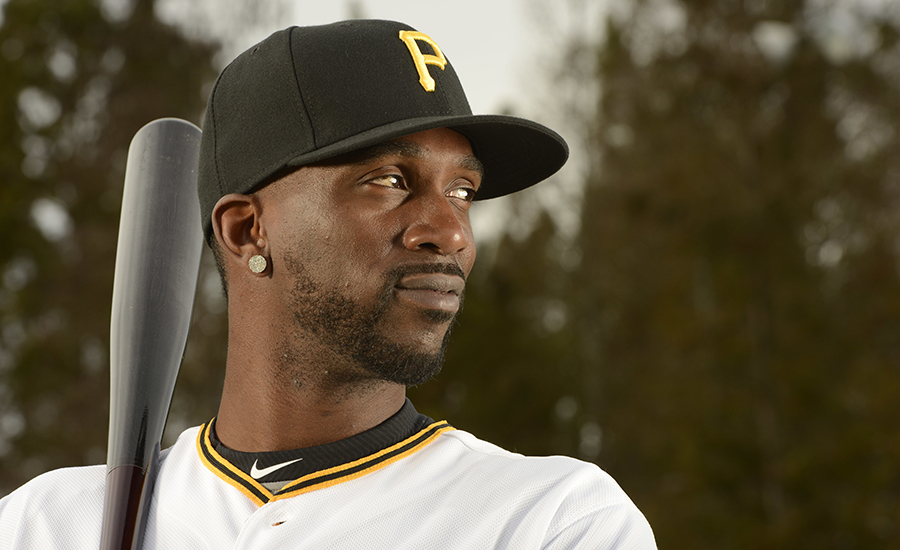
If you follow Major League Baseball you know me as the all-star center fielder for the Pittsburgh Pirates (or as “Cutch”). People sometimes say my style of play looks effortless, as in smooth and easy. I’m on the small side for a major leaguer—and that probably adds to the perception.

One thing I can promise you, though— no one gets to the big leagues without a ton of effort and more than a few setbacks. Especially me.

March 30, 2007, was probably my worst day in baseball. The last game of spring training. McKechnie Field, Bradenton, Florida. A 90-minute drive from my hometown, Fort Meade. Growing up, family, friends, practically everyone in town, told me I was a natural. Of course I believed it. I trusted these folks.

READ MORE: TORII HUNTER’S BASEBALL DREAM

I wasn’t cocky, just confident. Eventually, I was picked by the Pirates in the first round of the 2005 draft. Since then, I’d wound my way through the Pirates’ farm system.

On this final day of spring training for the big club, a few of us were invited to play with the starters who would go north—big hitters like Jose Bautista and Jason Bay. In the top of the seventh I hit a wicked line drive into the right-field seats. I rounded the bases. My feet barely touched ground.

At the end of the game, I was called into the manager’s office. This was it. I was going to go north with the big club. I was going to be a major leaguer. I sat across from the manager, Jim Tracy.

“Andrew, you’re a very talented player,” he said.

This is awesome, I thought. I’d dreamed of this moment my whole life.

“But…we just don’t feel you’re ready for the big leagues. You still need some seasoning.”

Not ready? I walked out of his office, stunned. To me “not ready” meant one thing: not good enough. I wasn’t just letting myself down, I was letting down everyone who’d believed in me. Especially my parents.

Mom and Dad had me when they were 17-year-olds, in high school. She was a volleyball player and he was the school’s star running back. Mom was a year ahead of Dad, and when she graduated, she accepted a scholarship to play volleyball at Polk Community College in Winter Haven.

READ MORE: A SON’S LETTER TO HIS BASEBALL HALL-OF-FAME FATHER

Dad graduated and took a football scholarship to Carson-Newman University in Tennessee, hoping to make it to the NFL. Mom supported him, believing he should better himself for my sake.

They tried to make it work long distance. But after a year, Dad left his dreams behind. He and Mom moved into a trailer just outside Fort Meade. Mom got a job as a data-entry clerk at the sheriff’s department. Dad juggled three jobs.

He juggled more than that, though. He was partying in what little spare time he had. Mom wasn’t having it. She was afraid that one night he might decide not to come back.

“I’m not going anywhere,” Dad promised. His father had abandoned him and he swore he’d never do that to her, or to me. But Mom wanted more than that. “We have a child. Unless you become a man of God, you’ll never be my husband,” she told him.

Her words sank in…hard. Dad straightened out his act and became a youth counselor for the Peaceful Believers’ Church, where Mom sang in the choir. They married when I was five, after he’d proven himself a man of God.

That was around the age I started skipping rocks with Dad at a lake near our house. Dad noticed that I had a good arm and signed me up to play tee ball. I tried to waggle my bat the way Ken Griffey, Jr., my favorite player, did.

At 11, I joined a youth baseball league. To help me practice, Dad led me out to an open field by the trailer. He gave me a broomstick handle and tossed Wiffle balls or corks wrapped in electrical tape.

“If you can hit these, you can hit anything,” he told me.

Maybe it was because of working so closely with me—on my faith as well as my playing—that Dad eventually became a minister. He and Mom disciplined me and made sure I hit the books. No hanging out late.

READ MORE: ADAM GREENBERG’S INSPIRING COMEBACK

“We don’t want you to end up in a situation where you start a family before you’re ready,” Mom said. And Dad had his own advice. “Keep the main thing the main thing, son,” he told me one day.

“Baseball?” I said.

“No. God is the main thing. It’s good to have other interests, but know that no matter what happens, God is all you need. All your gifts are gifts from him.”

I believed God had a plan for us all. But how would I ever get noticed as a ballplayer? My parents couldn’t afford to send me to travel games. There was the motel room, gas money, tournament fees. “It will work out just as the Lord said in Romans 8:28,” Dad reminded me. “‘All things work together for good to those who love God.’”

That year, an Amateur Athletic Union coach, Jimmy Rutland, noticed me during an all-star game. He asked Dad if I’d ever been on a travel team. Dad just shook his head. Coach Rutland took me in as if I were another son. He helped pay for my jerseys and travel expenses. A teammate’s parents helped too.

By the time I started playing at Fort Meade High, I had a lot of people in my corner. Some of them said I was the best they’d ever seen come through the school. That made me work even harder. Senior year I got the news that changed everything.

“The Pittsburgh Pirates are looking at you,” Dad said. “They want you to go to their stadium for a workout.”

Dad and I flew to Pennsylvania. The park looked so much bigger than I expected. So did the players! I was 5 foot 10, weighed 160 pounds soaking wet. Some of these dudes were huge.

That was the year the Pirates drafted me as the eleventh pick in the first round. I was named the Pirates’ Minor League Player of the Year my first year as a pro. I was on my way to the bigs.

READ MORE: DAVID ROBERTSON PROVIDES ANOTHER KIND OF RELIEF

And then came that brief conversation with Jim Tracy. He said I needed more seasoning. I felt like I was cooked.

I was assigned to the Triple-A ballclub, the highest minor-league level. But my play wasn’t at that level. I let my setback eat away at me, consuming my self-confidence. The fact was, I’d never really had a knock like that before. I didn’t know how to handle it.

One hot summer night I stood in center field, replaying the whole scene in my mind. Maybe Jim Tracy is right, I suddenly thought. Maybe it wasn’t over for me. No matter how talented I was told I was, there was room to grow, to learn, to improve. Maybe I could turn struggle into progress.

After all, we were talking about the majors. At that level the sport is teeming with talent! I had to man up and fight on. Another voice rose louder than my doubts. “Keep the main thing the main thing,” I could hear Dad say. God had this. I just had to show up…and do the work.

Over the next two years I hustled. Big time. I listened and I worked. In 2009, I got the news: I was called up to the majors!

In my rookie season, at just 22 years old, I hit .286 and got on base over a third of the time. I was named Baseball America magazine’s Major League Rookie of the Year.

I had found my place on the team, but that team had had 20 straight losing seasons by 2013. Ouch! It was tough showing up at the park with a losing record, knowing that you’re trying your best, and letting down your fans.

I got on my knees. Lord, I love this game, but even if I didn’t have it, I know what can never be taken away, and that’s my love for you and your love for me. I want to do my best to help this team win. For the fans. For my family. For Coach Rutland. For Fort Meade and all the people who helped me and prayed for me.

That year I won the National League’s Most Valuable Player award and we made the playoffs. We’ve made the cut every year since.

But like life itself, baseball is a game of ups and downs. Last year I faced the worst slump of my career. Hitless in 12 of my first 25 games. I was rebounding from a knee injury. Still, it was pretty bad. A slump is the worst feeling a hitter can have. It’s as though you’re helpless, and every time you’re at bat, the world is watching.

READ MORE: HOPE FOR A HOMER

Earlier in my career it would have been totally demoralizing. The fans were nervous. I was nervous. Again I prayed…but not for God to help me get a hit. I prayed for understanding. What was I supposed to learn from this experience?

I thought about the adversity my parents had faced, the challenges they’d overcome and helped me overcome. God had equipped me for this moment. If I never broke out of the slump, he still loved me.

May 7, 2015. We were up against the Reds. I got three hits with a run batted in, two runs scored, a walk, a double and a steal. The slump was over. And after losing five games in a row, we won, 7–2. This time it wasn’t a setback. It was a lesson. Trust in time. Trust in yourself. Trust in God.

No matter what the stats and scores say, or what hits I take in life, I walk out on that field with one certainty: Struggles can be our greatest blessings.

Did you enjoy this story? Subscribe to Guideposts magazine.

Andrew McCutchen Inspires More Than Baseball Stats

Here is Edward Grinnan’s Editor’s Note for the June 2016 issue of Guideposts. If you’d like to subscribe, click here.

Seems to be a spring tradition to have a ballplayer on our cover, going back to the days of Dr. Peale, who liked nothing better than to spend a sunny afternoon at the ballpark hobnobbing with the players and the coaches.

We get a lot of suggestions about what ballplayer we should have, usually on the basis of this person or that person’s faith.

All-Star center-fielder Andrew McCutchen of the Pittsburgh Pirates on the cover of the June 2016 edition of Guideposts magazineBut just hearing someone thank God for having a high batting average isn’t very convincing. I don’t think God really cares about stats, do you?

So why Pittsburgh Pirates all-star center fielder Andrew McCutchen? I was watching last year’s All-Star Game when one of the announcers mentioned a conversation with Andrew. That previous Saturday night, well into the wee hours, Andrew had hit a dramatic 14th-inning walk-off home run against his team’s archrivals, the St. Louis Cardinals. Fans went crazy.

There was an early game the next day, the last game before the break. The announcer wanted to know how Andrew calmed down and got some rest before coming right back to the park. “Man,” Andrew replied, “I was just lying there in bed thinking, I have to be in church in a couple of hours!”

That sounded genuine to me. Andrew has a great story, especially about the role his father played as both pastor and coach.

Read More Inspiring Baseball Stories

Like Andrew, I learned to play ball from my dad, an old catcher. On chilly spring Michigan evenings with Little League right around the corner, we’d
 go out in the backyard with our gloves, his an ancient mitt that looked more like a pillow. He’d wince a little getting down in a crouch, his creaky knees
 and stiff back making a fuss. I’d try to burn them in, and he’d call the pitches. He was a man of few words and strike wasn’t generally one of them. But when he said it, low and soft, it made me happy.

Thanks, Dad. And thanks, Pastor McCutchen, for coaching a great Guideposts cover story.

Andie MacDowell on God’s Love

It was a gorgeous summer day in the North Carolina mountain town I call home, perfect for wandering around the All Souls Church craft fair with my dog Leila.

My 100-pound Anatolian shepherd was my companion on my walks, and she didn’t seem to mind that I was meandering from booth to booth, looking at handmade jewelry here, braided rugs there.

Not that what I was truly seeking could be found at a craft fair.

What I yearned for was a happy family, the kind of family I never had growing up, with a deeply-in-love couple and their children. For a while I thought I’d found my dream-come-true with my husband Paul and the three beautiful children we had together.

FOR MORE INSPIRING STORIES, SUBSCRIBE TO GUIDEPOSTS!

Then our marriage fell apart, and I fell apart too.

I was devastated by our divorce. I couldn’t eat. I couldn’t sleep. I couldn’t even pray.

I was so des­perate to recapture my romantic ideal of a family that I rushed into a second marriage to a childhood friend without taking the time to really get to know the man he had become. That marriage didn’t work out either.

Here I was at 48, alone again, not any closer to my dream of a family than I had been when my parents divorced. I was six years old then, and back in the day people didn’t think to get kids coun­seling to help them deal with those kinds of family issues. You were just supposed to deal with it.

I remember my mom and dad signed some papers and then my dad packed up and left. I never cried over my parents’ divorce. I was trying to be brave and strong.

That was in part because even at such a young age, I knew my mom was fragile. She adored me and I adored her, but she was an alcoholic and wasn’t really able to take care of me or my sister, Beverly, who was 18 months older.

My dad remarried when I was in fourth grade, and Beverly and I went to live with him and his new wife. I thought everything was going fine until one day a year and a half later when my dad picked us up from school. Our suitcases were in the back.

“I’m taking you back to your mother,” he said. “This isn’t working out.”

He didn’t give us any further explanations and I didn’t dare ask for one.

Now as a parent myself, I see that he must have had his reasons, reasons that had a lot more to do with him than with us—he’d just had a baby with my stepmom and maybe he couldn’t handle raising us girls along with an infant. I understand that no family is perfect and I love my father.

READ MORE: ANDIE MACDOWELL ON SMALL-TOWN ROOTS

But as a child, I felt utterly rejected. I was emotionally shattered. All I could think was, What had I done wrong? Why wasn’t I good enough to stay with my dad and his new family? Why wasn’t I good enough to be loved?

Someday I’m going to have a real family, I promised myself. And I’ll love them and they’ll love me…no matter what. The way my mom loved me, except without the drinking to get in the way.

We grew even closer after I went to live with her again, but her alcoholism meant that the mother-daughter roles were often reversed. I took care of her. I watched her struggle to hold on to jobs.

If she was having a bad day, I’d stand there and rub her shoulders and try to make her feel better, thinking that the better I made her feel the less she would drink.

As soon as I was old enough to work, I got a part-time job at McDonald’s. I was able to help out with the expenses, but more than anything, it gave me a sense of structure that was lacking in my home.

Was it any wonder that when Paul and I married and started our family, I tried my best to give our children the stable, loving home life I never had?

My career as a model and actress took me to New York and Los Angeles, but Paul and I raised our son and two daughters in small towns, first in Montana, then here in North Carolina, where my sister lives with her kids, who are the same age as mine, and not everybody is involved in (or even talks about) the entertainment business.

I wanted our children to have a mom and dad who showed up at parent/teacher conferences, who went to their church pageants and school plays and ballgames. Most of all, I wanted them to have a mom and dad who really loved each other.

We had that idyllic family life for over 10 years. It was everything I had ever yearned for, all those things I missed in my own childhood.

Then fault lines appeared in our marriage, cracks that deepened into a complete breakup. Divorce is such a hard thing to describe, to fully understand how two people who were once so much in love could fall so far apart.

The divorce tore me up. I’d failed at love. I’d failed to keep my family together. Had I failed my children too, the way my parents had failed me?

Even though Paul stayed an active part of the kids’ lives, my oldest, my son, was really hurt. He was going into sixth grade, and I knew it wasn’t good for him to have his family in such upheaval at a time when so much else was changing.

There was one saving grace: Julie Selby. She was the youth minister at our church, and someone suggested to me that perhaps Julie could help out when I had to go out of town to work on a movie.

I didn’t want to take the kids out of school and bring them with me; that would disrupt their lives even more. They already knew Julie and liked her a lot. I talked to her, and she agreed to move in with us for what was going to be a month.

When I came back from the movie, I noticed how much more settled my kids seemed, especially my son, so I asked Julie if she would stay on.

She ended up living with us for 11 years. Julie had such a positive influence on the kids. She helped them to see how big God’s world is. She took them on youth mission trips, and my son even went to Nicaragua with her to dig sewage lines for an orphanage.

Julie had a wonderful influence on me too. We had these long conversations. She was unmarried and, for the first time in my life, I saw up close how fulfilling a single woman’s life could be. Julie’s faith that she was living the life God planned for her gave her an extraordinary peace.

I’d found that contentment in my work, that sense that I was fulfilling my potential, doing what God meant for me. But my personal life? That was a whole other story.

As richly as I’d been blessed—with my children, my sister, my friends, my dogs, my horses—I still didn’t feel complete without a man. Without true love.

And like that country song goes, I went looking for it in all the wrong places. It took that whirlwind second marriage and divorce to shock me to my senses. Or, at least, to make me see that I couldn’t be happy with someone else until I learned to be happy with myself.

I found a good therapist to help me work through the scars from my childhood that I still carried with me, wounds that had been reopened when my first marriage failed. I did Bible studies on love and relationships and boundaries.

I went to different churches, looking for a place to feel at peace, but even at church I didn’t fit in. I couldn’t go to the couples’ classes and groups with my friends, and I wasn’t into the singles scene. Where was my place in God’s world? I wondered.

Maybe that’s why even though I’d done so much soul-searching, there I was that summer day wandering around the church craft fair with my dog Leila, still seeking.

I guess part of me was still that little girl who had to be strong and not cry over her parents’ divorce, who could never understand her father’s rejection, the little girl who only wanted for love to never go away.

I looked at some wood carvings and walked up to someone selling fresh-baked pies (there are always heavenly sweets at these church fairs). I was strolling past a booth of paintings when I stopped, my eyes caught by, of all things, a hummingbird.

A hummingbird against a dark canvas, its wings a blur, its glorious plumage catching the light. I had never seen a hummingbird at night. I’m not even sure if they fly after dark.

Maybe that’s what captivated me about that painting, the idea that things weren’t the way they were supposed to be, yet the unexpectedness of it all was what made it beautiful.

“This is wonderful!” I said to the woman minding the booth. “Are you the artist?”

“My husband is,” she said, gesturing to a man in a wheelchair who was talking to some other people.

“How does he paint?” I asked. He didn’t seem to be able to move his arms and legs.

“He holds the brush in his teeth,” she explained. “He was in a skiing accident more than thirty years ago. He’s paralyzed from the shoulders down, but that hasn’t stopped him.”

Suddenly I was even more interested in their story than in the painting. “How long have you been married?” I asked the woman.

“We were together before the ac­cident,” she told me. She glanced over at her husband then. He gazed back at her, and the way they looked at each other made tears come to my eyes.

“So you know true love,” I said. “I don’t know that I’ll ever experience it.”

She tilted her head slightly and studied me. I got this sense that she recognized me—not from my movies or L’Oréal commercials—but that she could see into my soul.

“Oh, but you have,” she said before she went to help another customer.

I walked away from the booth slowly. My legs bumped lightly against my dog’s sturdy shoulders, and I thought, She means what I have with my kids and my animals. They love me no matter what. It’s unconditional. It will never go away.

I stood still there in the middle of the church craft fair, dumbfounded.

“God, forgive me for not recognizing the true love you have already given me,” I whispered.

Then it struck me what I had just said, what the painter’s wife must have really meant. And at that moment, I felt whole for the first time in my life. Totally complete.

I was good enough, imperfect as I am. I had the love that completed me, the love that never fails, the truest love of all. God’s love, a love that never goes away.

Andie shared her favorite roles with our senior editor Celeste McCauley!

Did you enjoy this story? Subscribe to Guideposts magazine.

Andie MacDowell on “Debbie Macomber’s Cedar Cove”

[MUSIC PLAYING] Hi. I’m Andie MacDowell. And I have been blessed by being on the “Guidepost” two times. And today, we are out here in the streets of New York City with all these amazing beautiful girls that are supposed to be lookalikes for Olivia Lockhart, the character I play on “Cedar Cove,” which is on Saturday nights at 8 o’clock. And we start back our second season this Saturday, so I’m hoping that all of you will tune in and watch the show.

I would like to tell the viewers of “Guidepost” a little bit of what you can expect this season. We have a new show runner. Her name is Sue Tenney, and she’s a fantastic woman. She’s very strong. You’re going to see Grace have some struggles. There’s still this really close bond with Olivia and Grace. You’re going to continue to see that. And you’re going to see Olivia have to help Grace through some difficult times.

But as the season goes on, Grace is going to get spunky, and she’s going to grow. And you’re going to see some brand new characters that are going to come in. There’s some some young strong characters I have to deal with, an ADA that comes in and stirs up some trouble. And then Eric, Jack’s son, has a whole wonderful thing that’s going on with him, in that it is a little bit dangerous and intriguing, because Warren Saget is going to be an influence in his life.

And then there’s Jack. There’s Jack. Of course, it’s going to be a wonderful storyline between Olivia and Jack. Last year, we fell in love, and that’s easy. Falling in love is easy. But you’re going to see some challenges with us this year.

Oh, and Justine. Oh, for heaven’s sakes, my beautiful daughter, Justine, who’s played by Sarah Smyth, who I just adore. She has some interesting things happening with her in the male department too, romance. One of the reasons I love Olivia is I am also a really strong woman, and I think it’s important for other young girls to be able to see that a woman is the strongest person in the community. I think that validates women, and that we we can play that role. And I love being able to do that on “Cedar Cove.”

[MUSIC PLAYING]

An Athlete’s New Purpose

There they were. Same place, same kids. Every day. Young toughs hanging out on a basketball court in Houston’s gang-ridden southwest side. Purposeless. Just waiting for an excuse to start trouble. I have to tell you, it took me back.

I nudged my friend Mike, a middle-school teacher, braked and rolled down the window of my Toyota Land Cruiser. “Hey,” I called, “I want to talk to you.” The boys scattered. One of the kids shouted, “5-0,” street slang for cop.

I had to laugh. Me, Roynell Young, a onetime wannabe delinquent from the mean streets of New Orleans, mistaken for the law. That’s certainly not how most folks know me.

For nine seasons I was an All-Pro cornerback for the Philadelphia Eagles and a model citizen. But I’ve never been one to run from my past.

Looking back on it, my making it to the NFL—making it at all—was something very close to a miracle. An act of faith from a line of people who went out of their way to rescue me from myself. And maybe that’s why Mike and I were cruising Houston’s tough streets today.

I grew up in New Orleans’s Uptown section, the third of six kids in a solid home. It wasn’t my parents’ fault I started hanging out on the street. In my neighborhood this was a boy’s rite of passage.

I was about 12 the first time a guy from the neighborhood tried to turn me around. My friend T. C. and I had sold some illegal fireworks, and we got caught. All the neighbors gathered as the cops tossed us in a squad car. I was pretty scared.

But looking at the stunned faces of the people on the street, I puffed up, wanting to give the appearance of being arrogant, in control. I’m one bad dude, I thought, and they all know it.

Till one really tough cat named Smooth stuck his head in the window. Smooth was a community leader, a guy we all knew and respected. He was tall and imposing, definitely not a man to be trifled with.

Smooth gave me a hard look. “I’ll be responsible for these boys,” he told the cops. “I guarantee they won’t get into anymore trouble.” I climbed out of the patrol car, still feeling the episode had been good for my rep—till I felt someone grab my ear. “Ow,” I howled. Smooth had turned me over to my grandma.

You’d think that would have cured me of being a tough guy. It didn’t. By high school I was a star on the football team. Livin’ large. Senior year, I was named a team captain. Worst thing that could have happened to me. My head swelled up bigger than my helmet.

One day our all-black team boarded a bus to play an all-white team in Bogalusa, Louisiana. Coach Audrict had ordered us to wear suits and ties. “I want you guys to show up in that city with a sense of pride and purpose,” he said. “I want them looking at you with respect.”

Suits? He was the coach, but I was the captain. Later I gathered the team together. “We’ll send a message, all right,” I announced. “We’ll send it our own way.” The guys knew better than to challenge me.

We boarded the bus wearing our leather and gold chains. Coach Audrict pulled me aside. He looked down for a moment. When he raised his head, he had tears in his eyes. “I’m disappointed in you, Roy. You’re a leader and I expected more of you.” No man had ever cried over me before.

Leader, it was true. But what kind of leader? For the first time an unformed question swirled inside me. What was the purpose of this tough-guy act? What was I trying to prove?

I tried to clean up my act after that, enough to land a scholarship to football powerhouse Alcorn State, in Mississippi. There were several kids from the neighborhood already at Alcorn State. Soon we were hanging out, doing things we shouldn’t have been doing. One night freshman year, my friend Kemp got some bad news. He was off the team.

“If you’re out then I’m quitting too,” I told him.

Kemp eyed me like Smooth had so many years before. “Don’t do it, man,” he warned, putting his arm over my shoulder. “You have something special, something no one else on this team has. Don’t waste it.” Kemp left school. I stayed. But I kept partying. Hard.

Sophomore year, Christmas break found me back home in New Orleans, hanging out on the same street corners I did as a high school kid. I stumbled home one night. There, waiting on my front porch, were Kemp and another old friend named Elroy. “We were in the neighborhood and thought we’d stop by,” Kemp said.

“What do you want?” I asked. Word was Kemp had turned all religious.

“We just want to talk to you, Roy,” he said.

I gave in out of respect for our friendship. For two hours Kemp and Elroy worked on me. It got so cold we finally moved into the back seat of my mom’s old station wagon. Elroy stared me in the eyes. “Bottom line, man, the Lord created you for a purpose. Have you ever thought about what that purpose might be?”

Maybe I was sobering up, but the question caught me off guard. There was that word again: purpose. And I was purposeless personified. All image and talk. Where was that going to get me? Nowhere but a dead end.

Kemp and Elroy kept tag-teaming me, but I started to hear other voices too: those of Smooth, Granny and Coach Audrict. Be somebody, they seemed to say. Find a purpose.

I returned to campus a different person, buckled down on the football field and in the classroom. Started going to Bible study. Senior year I made the Dean’s List and met the woman who became my wife, Kathleen. The Eagles drafted me in the first round, and I developed into a good NFL player.

Much as I loved my wife, our son Roynell, Jr., and pro football, something kept nagging at me. I retired from the game and we moved down to Houston, where I took a job selling insurance. Many times I drove my Land Cruiser through neighborhoods with aimless, hard-looking teenage boys clustered on corners. They reminded me of me.

Or what I would have been if there hadn’t been a bunch of people looking out for me. Who was looking out for them? I wondered.

Then that one day I was with my buddy Mike, and the kids all scattered, shouting, “5-0.” We’d brought a basketball with us so we pulled over and started shooting. Three kids sauntered onto the court. They didn’t say a word. I made one last jump shot and tossed the ball to Mike.

“Hey, man,” one of the kids said, “you leaving ’cause the real players showed up?” The other two snickered.

I shook my head. “We’re just a couple of broken down old guys, but we’ll take you on. You beat us, I buy you all the pizzas and soda you can handle. We beat you, you sit down and talk with us.”

“Best two out of three,” the kid said.

Mike and I were a lot older than these kids, but we knew a few tricks. We won—and took the kids out for pizza anyway. We asked them all kinds of questions: about the neighborhood, school, their families, their dreams. They answered, nonchalant. Till I asked them that question:

“Bottom line, man, you were created for a purpose. Have you ever thought about what that purpose might be?”

When we left the pizza parlor, the smart-aleck kid asked me, “Hey, y’all gonna be here next Saturday?”

Saturday the boys came back with nine of their friends for basketball, pizza and more talk.

Soon we had 100 kids, then 300. So a few others and I pooled our money and rented an old storefront across from the basketball court.

But we weren’t out to start a recreation league. One morning I blew my whistle on the court. The kids fell quiet. “Those of you who are here because you think you’re on your way to the NBA, we need to tell you goodbye,” I said. “But those of you who are interested in living a life that makes sense, with purpose, come with us.”

You could hear a pin drop. I turned my back and faced the storefront. I waited a minute, then started walking, afraid that no one would follow. I didn’t turn around till I’d entered the door. Sixty-five boys had come with me.

Those 65 grew to 300, 400, 500. We ran out of space at the storefront and moved to a larger place. Mike eventually left us, but others took his place.

A few years ago we raised enough money to open our own charter middle school for boys. And just a few months ago we moved from our one-story brick building to a 16-acre campus.

Not a day passes that I don’t think about Kemp and all the people the Lord used to put me straight. I’ve found my purpose. We’re changing lives.