As we were driving away from the hotel in Tiberias this morning, we drove by the cemetery where Maimonides was buried. There is a large monument at his grave. It reminded me of Brooklyn, where I live.
In Brooklyn, there’s a hospital named after him. Although I’d been aware of it ever since I’ve been in Brooklyn, I never gave much thought to why it had that unusual name. It turns out he was a great man. Not only was he the preeminent scholar of Jewish history, law and ethics, he was a philosopher, a rabbi and a physician.
Yesterday was such a great day here. I thought it would be hard to top but we came pretty close today. First we went to visit the ruins of the Roman-built Sepphoris—a city that dates to at least the 1st century. It is the birthplace of the Virgin Mary.
(Citadel, built at the site of Sepphoris)
Sepphoris was a pretty cosmopolitan city for its time, the capital of Galilee. The stunning detail in the remains of mosaics depict everything from Dionysian extravaganzas, Eqyptian motifs and an exquisite face of a woman. Archeologists believe there to be at least 20 layers of civilizations there.
(Mosaic floor at Sepphoris)
Our guide told us we were going to have a special lunch at the home of an Israeli. Other than that I didn’t know what to expect. We pulled into what seemed like an Israeli version of a gated community, complete with one of those arms that lifts up to let you drive through. It was interesting to see modern homes where children were riding bicycles on the sidewalks and chasing after balls after visiting all of the ancient sites.
About a mile or so in we parked and as I got out I immediately realized this was not going to be an ordinary meal. We virtually walked into an ancient Galilean village. The owner, Menachem, and his family live a life that is very much as it would have been 2,000 years ago.
(Menachem grinding flour at Kfar Kedem)
We had to put on robes like the ancient Jews would have worn and wrapped our heads in the traditional way. At one point Menachem made us take off our sunglasses, but after pressure from the group he let us put them back on. We milked goats, spun goat hair into wool, made cheese from the goats’ milk, made our own pita bread, watched olives being pressed into oil, picked herbs and road around on donkeys—none of which was very easy for most of the group. Then we ate a lunch that would have been a typical meal 2,000 years ago—olives, pitas, chicken and lamb. What a hoot.
(Ann Work and me at Kfar Kedem)
It was really interesting to see the way these people live off their land. They really live life very “traditionally.” They don’t own a single TV. But they do have cell phones.
My grandmother Zell Grant made her trademark cheese grits as a side dish for family dinners, including Thanksgiving and Christmas.
“One thing that we always have for Christmas is cheese grits,” Grant told Guideposts.org “In fact, we normally have several casserole dishes filled with cheese grits. We always have a big Christmas morning breakfast—eggs, bacon, sausage, toast ,etc. and then just graze all day. We don’t sit down to a big Christmas eve or Christmas night meal.”
1. Heat oven to 300°F. Boil water in a saucepan. Add grits and salt. Cook for 3 to 5 minutes, stirring occasionally.
2. Meanwhile, beat eggs with milk in a separate bowl. Add cheese, butter, milk-and-egg mixture to grits. Stir until melted. Pour into a 2-quart casserole dish.
3. Bake 45 minutes or until top is golden brown. Sprinkle with paprika.
Serves 6
*If you can’t find garlic cheese spread, substitute 1½ cups cubed Velveeta and 1 teaspoon minced garlic.
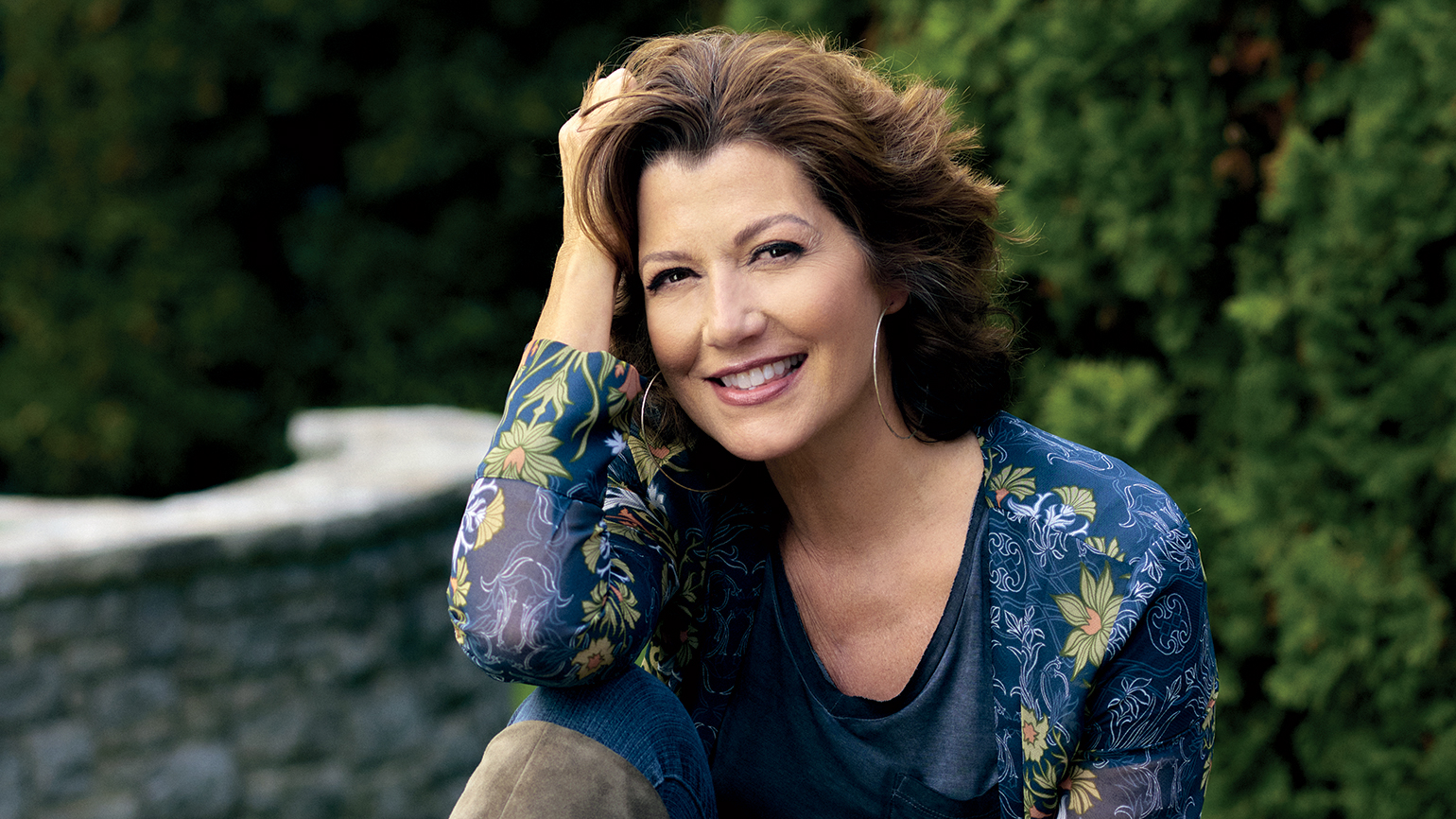
Do you believe in prayer? I do. This is my fourth story in Guideposts. The first time was back in 1986, when I was at the outset of my music career, a story about loneliness, part of a series Guideposts was doing on the subject.
Loneliness was something many folks mentioned in their letters to Guideposts Prayer Fellowship. I wrote about how I use prayer to overcome loneliness when it strikes, and it strikes just about everyone at one time or another. Even Jesus was lonely in the Garden of Gethsemane.
As seen in the April-May 2022
issue of Guideposts
The next story, in 2005, was about giving and giving thanks, and how any act of generosity, no matter how small, truly makes a difference. My guiding prayer? “Lord, lead me today to those I need and to those who need me, and let something I do have eternal significance.”
The third story, in 2013, was about my dad’s battle with Alzheimer’s. He was a brilliant man, a radiation oncologist who was dedicated to his patients and to learning. It was simply inconceivable to me that a disease could rob this man I loved and admired so much of his intellectual faculties. I had to lean into prayer like never before to deal with it.
Those stories mostly centered on the problems of others and how experiencing God’s presence through prayer is always the answer. This story is about my own journey with a medical condition that was discovered out of the blue two years ago…a heart defect that was about to change my life in ways I’d never imagined.
In December 2019, my husband, Vince Gill, had an appointment with his cardiologist, John Bright Cage, to go over some test results. I went with him. Vince got a great report; his heart was in good shape. Then Dr. Cage turned to me and said the strangest, most unexpected thing. “Amy, I think I need to check you out too.”
Me? I didn’t have any heart issues. In fact, most of my life I’d enjoyed a freakish amount of energy. But recently I had noticed some shortness of breath while singing (something I’ve been doing professionally since I was a teenager) and an irregular heartbeat that would occasionally leave me feeling dizzy. Wasn’t that just part of aging?
I trusted Dr. Cage and booked an appointment for the first week of January. He ordered one test after another. After each procedure, he’d send me a text saying, “Looks good.” But then came a different kind of text: “Call me as soon as you read this.” I did.
The radiologist who had done one particular test contacted Dr. Cage to say that my heart was enlarged, due to a heretofore undetected birth defect—something called partial anomalous pulmonary venous return. (It was a while before I’d be able to say that mouthful.) Evidently, one of the veins that carries blood from the lungs to the heart was going to the wrong side of my heart, enlarging the left ventricle.
“You’re going to need surgery,” Dr. Cage said to me. “Open-heart….And sooner rather than later.”
I had a busy few months coming up, with an extensive concert tour, and band and crew who were counting on that work, so I asked, “Can it wait until…the summer?”
“This condition presents as fine, fine, fine. And then becomes catastrophic,” Dr. Cage said. “You’ll need surgery before the end of the year.”
I hung up, dumbfounded.
I told my sister Carol. She remembered that when we were kids, the pediatrician would always take extra time listening to my heart. He talked about hearing a heart murmur. I had a vague memory of that.
Up to this point in my life—I was 59—I’d never had any real health issues. Open-heart surgery was a lot to wrap my head around.
I was glad for the distraction of the 2020 tour dates that started at the end of January.
And then the pandemic happened.
Everything shut down. For everyone. Concert tours and sporting events were the first things to be canceled. Vince and I found ourselves quietly holed up at our home in Nashville. The situation around the world was upsetting, and my prayers included all the people who were suffering.
This sudden break in our schedule proved a hidden blessing for Vince and me, a hard thing to say in the midst of such a global tragedy. I spent long hours in our backyard, walking barefoot in the grass—grounding myself, feeling the coolness of the earth beneath my feet, savoring every spring flower that bloomed.
I’d take deep breaths, meditating, feeling the breath of life that God breathed into us at the Creation. Everything felt more precious since my diagnosis. I was sensing God in each moment, realizing that if I could learn to live this way, I could live without fear, no matter what the future held. Isn’t that the essence of faith?
By the time I was scheduled for surgery, in June, I was probably the most rested I’d been in years, physically and spiritually. Through social media, word got out of what was in store for me. “It’s amazing how many people are praying for you,” Vince said. “Thousands of them.” I tried to read the responses, but there were just too many. I wanted to reach out and thank each person.
I could feel the peace of everyone’s prayers. I wasn’t scared. Not at all. It was like I had a West Texas wind at my back, carrying me through the entire process. When I was prepped for surgery, I felt so completely enveloped in the presence of God’s love, in the love that came through all those prayers.
That doesn’t mean it was easy. The surgery was a success. Still, afterward, I felt as if I’d been hit by a train. Tubes and wires were coming out of me in all kinds of places. I was bruised, my sternum was wired shut and my chest was stitched up.
The doctors said I’d be in the hospital for a least a week—typical for an open-heart surgery patient—but after three days I was feeling good enough to go home.
I felt like a walking miracle.
And I was.
The 14-week recovery period was a discovery in how different a good heart feels. Gone was the irregular heartbeat. Gone was the shortness of breath. It was as though I had been riding a bike on two flat tires for the past few years, and now they were aired up and ready to go.
After the mostly sedentary six months awaiting surgery, and the three months post-surgery, my mission was to regain and build stamina.
I needed to do something to build strength and endurance. But what? I tried running, but starting that practice at 59 was not a good idea. My body felt old and defeated. My core strength had evaporated. Anyone who sings knows that core strength is essential.
About that time, we began gearing up rehearsals to relaunch the tour that had been canceled in March 2020. I planned an ambitious 25-plus-song set list. Dates were booked. The band and crew were ready.
I was not.
After the first rehearsal, I realized I could not make it through even half of the material. The fear was paralyzing. I imagined that this would be my final tour, limping my way through the songs each night, disappointing myself and anyone who had bought a ticket.
An old friend had come to visit for a few days, just the two of us in the house. We had so much catching up to do.
Since it was summertime, after dinner I suggested, “Let’s go for a nighttime swim and talk under the stars.” When Vince and I bought this house, the pool came with it. I’m not a swimmer. I’d never made much use of the pool. It was mostly for the kids.
That night, Cindy and I kept our heads above water so we could talk, doing the breaststroke, going slowly back and forth the length of the pool, visiting…for two hours! I wasn’t even aware of the passing of time.
The next morning, I woke up feeling more rested than I had felt in some time. That’s it, I thought. Swim! Swimming will help me recover my stamina and my voice.
What a wonderful discovery.
The magic of being in the water, the weightlessness of it was freeing! In the water, I felt like a kid again, doing flips and somersaults, things I could never do at this point on dry land. The words “In him [Christ] we live and move and have our being” took on new meaning for me. With each lap, I felt myself getting stronger.
Thus began the workout that I continue to this day. Going to the Y—it has a bigger pool—swimming for an hour, using it as prayer time. I do the breaststroke, freestyle, sidestroke, backstroke and something I call the frog. Each stroke I dedicate to one of our five kids, praying for them. I pray for every person who crosses my mind.
There’s an old saying: Pray for yourself and you’ve prayed once, pray for someone else and you’ve prayed twice. I pray collectively…for all of us to experience the freedom and the potential of what is possible when we see ourselves as “living, moving and being” in the reality of God’s love.
Who knew that a spiritual practice like this, in the pool, would come about at this stage of my life and, of all things, after open-heart surgery? Life sure does have its surprises. That’s what makes the journey of faith such an adventure.
In November 2020, I turned 60. I guess because I’m a hometown girl, the Nashville paper did a story on me. I gave the reporter permission to talk to my cardiologist, Dr. Cage. He said my condition would have likely killed me in the next two to three years if I hadn’t had surgery.
Reading those words, I immediately called Dr. Cage. “Thank you for not telling me that!” Though he’d said as much to Vince, he’d spared me the added anxiety. That’s great bedside manner in my book!
Since my surgery, I’ve had an 8 p.m. alert on my phone, except when I’m performing (and, yes, my voice is back stronger than ever). “Pray for the caregivers,” it says. For all the people in hospitals and elsewhere who care for the ailing and who’ve had to deal with the ongoing stress of this pandemic. And for the good people God put in my life who helped and cared for me. After all, what greater form of care is there than prayer? Especially when it comes from the heart.
For more inspiring stories, subscribe to Guidepostsmagazine.
Last week I had the great privilege of attending the Mt. Hermon Christian Writer’s Conference, and I’m still recovering. It was a great week—the quality of the writing was great, and I met some wonderful people, and heard about several books I’d be honored to publish. Christian book publishing is a small world, and it was great to connect with old friends and meet some new ones.
It was also wonderful to get out of the city and visit one of the most beautiful places I can imagine. Mt.Hermon is located in the Santa CruzMountains, about half an hour south of San Jose, California, where I grew up.It’s dazzling there—stunning mountain vistas, ancient and peaceful groves of trees, rocky coastline, achingly blue sky. One of my favorite parts of the whole conference was getting away from the conference center and out onto the trails that wind through the woods. I passed enormous trees, crossed rickety bridges, and drank in the sweet silence of undisturbed nature. Sometimes I forget how much my soul craves the quiet.
I also had the chance to visit a nearby park full of ancient redwood trees. These trees are some of the tallest in the world, and many have been growing for thousands of years. Some of them have been around since before Jesus walked the earth. These things are huge.
Here’s a photo of me at the base of one, though the picture doesn’t really do justice to how enormous these things really are. I felt tiny standing there. But it’s nice to feel small sometimes. It helps me remember how much bigger the world is than my problems and my experiences. Standing there next to a tangible reminder of the power and the beauty of nature, I couldn’t help but feel grateful for the opportunity.
Beth Adams is the creator and editor of GUIDEPOSTS’Home to Heather Creekfiction series.
I stood beneath the theater marquee, the name of my show in bright lights. Broadway, the Great White Way, a place where dreams are born. And die. My wife, Alana, squeezed my arm. The last of the audience trickled into the theater. “I guess that’s it,” I said.
“It was still worth it,” she said.
Nothing she could say would hide the truth. Eighteen years of writing and rewriting, readings, tryout runs, backers’ auditions and countless rehearsals. This was it. My musical had opened on Broadway and now, four months later, was closing.
That I’d come this far was amazing enough. I was the least likely person to write a Broadway musical. A police officer and an education director at a church. I loved working with kids, loved our church and community—but part of me wondered if I was meant to do more.
One hot summer day, the roller hockey team I coached was playing in an outdoor tournament. Between games, I had to get out of the heat. I was desperate for an air-conditioned place to eat my lunch. What I found was the school library. I ducked inside and wolfed down a sandwich. With a few minutes to kill, I wandered over to the shelves. I pulled out a book at random, John Newton: Letters of a Slave Trader Freed by God’s Grace. Sat down and began reading.
Born in England in 1725, Newton captained several slave trading ships. His life took a dramatic turn after a storm at sea—and the conversion experience it inspired. He became a pastor and repented his former life. In his pamphlet Thoughts Upon the Slave Trade, he detailed the atrocities of slavery and decried his part in it. He allied himself with William Wilberforce and advocated for the abolition of the slave trade.
I sat back in my chair. How had I missed this? In college, I was a history major but I’d never heard of Newton, never known his story. Now I was suddenly convinced it needed to be told—in a big way. As I flipped the book shut, two words came to mind: epic musical.
Really? Maybe it was because I’d been listening to the soundtrack of the musical Les Misérables on repeat, singing along to myself, fascinated with the way a huge sprawling story could come alive through song, the characters’ conflicts dramatized in music. What if someone did the same thing with Newton? What if I did it?
I went back to the hockey rink and coached the second game, but mostly I was in eighteenth-century England, thinking of a life touched by grace.
That evening I got home, dropped my equipment bag in the walkway and went straight to the kitchen, where Alana was making dinner. “I read a book today about the man who wrote ‘Amazing Grace.’ Did you know he was a slave trader?”
“No,” she said.
“And then an abolitionist?” She shook her head, and I continued. “I had this idea—I know it’s going to sound crazy—but I think his story should be a musical and I think I should write it.”
“Do it,” Alana said. “You’re always telling young people not to put God in a box, not to limit themselves. Prove it.”
It says a lot about my wife that she didn’t immediately burst out laughing. I was not a classically trained composer. Couldn’t read music, couldn’t tell you what any note was on the bass or treble clef. I liked to play my guitar and sing. I could pick out tunes on the piano, but that was all by ear. As for writing…well, I hadn’t written anything but an accident report in years.
Still, I was sure that Newton’s story of “Amazing Grace”—that would have to be the title—was meant to be a Broadway musical. Written by me. No harm taking out my guitar and strumming a few chords. If the whole thing fizzled out, okay. At least I tried.
In between work for the police department and the church youth group, not to mention time spent with our two kids, I would hunker down and write a song or two. Words would pop into my head, melodies came unbidden. But if this was slated for Broadway, it needed to have an orchestral accompaniment. Needed to be scored for strings and keyboard, drums, a double bass, brass. How else to recreate that violent storm that first brought Newton to God?
I bought some rudimentary music software and transcribed the sounds I heard in my head. Note by note, chord by chord, transposed from my guitar.
How many times was I ready to give up? Pretty much every day. I felt like Moses when he was asked by God to free the Israelites from Pharaoh. Why would God choose Moses, a terrible public speaker, to take on such an enormous task? Why would God pick a police officer and youth pastor to write a musical? And yet that notion I’d had in the school library kept speaking to me.
Slowly the songs started adding up, the story taking shape. I’d get fed up and walk away. Then another idea, maybe a lyric, would come. “You helped me see a vision of the man I could become,” John Newton could sing. Christopher Smith too. Grace could transform any of us.
One day, I was with my friend Rich, messing around on the guitar. “What are you working on?” he asked.
“Nothing,” I said. “Just a crazy idea for a musical. It’s about John Newton, the man who wrote ‘Amazing Grace.’”
“I love ‘Amazing Grace,’” Rich said. “Let me hear what you’ve done.”
I played a few bars of a song. Rich wanted more. And more. “I know some people who need to hear this,” he said. He owned an ad agency and convinced me to pitch the idea to some bankers and businesspeople he knew.
Rich scheduled that appointment and more—many more—to see if we could raise the funds to put on a performance. I hate asking for money. If God meant to test me, I was being tested. “The show’s not even finished yet,” I’d say. “I’m a cop, not a composer.” I figured we’d get laughed out of one office after another. Instead, we raised $350,000 in three months, enough for me to leave my job and work on the musical full time.
A theater in Texas agreed to mount a production, only to pull out at the last minute. Goodspeed Opera House in Connecticut wanted to put it on, and I did more polishing. In the midst of all this, Alana found out we were expecting another baby and, at seven months, was diagnosed with breast cancer. Our daughter had to be delivered prematurely, and Alana underwent chemotherapy and radiation treatment. If ever anybody needed to be touched by God’s grace, we sure did.
Our daughter proved to be healthy. Alana’s treatments were successful. We praised God. All the while, I worked on the show and we raised more money. A theater in Chicago agreed to put on a production. A few months after that, we got amazing news: The producers had booked the Nederlander Theater in New York City for a July 2015 opening. We were headed to Broadway!
I thrive under pressure, but as the writer, there wasn’t a lot for me to do during final rehearsals. I kept moving around the theater, checking the sight lines. I plopped myself in C4 in the orchestra, and it occurred to me that some theatergoer would soon be there. At our first run, in Connecticut, I’d prayed over every single seat in the auditorium. I’d done the same thing in Chicago. Now it was time to pray for those who would see the show on Broadway. I closed my eyes and prayed, “Bless the person who sits here.” I moved over to C5, C7, C9 and kept at it. I ended up sitting in every seat in the theater, praying the same prayer.
Advertisements for Amazing Grace appeared on buildings, on buses, in subway stations. Finally, opening night. Reviews poured in, some good, some bad, but the producers were hopeful for a long run. The show was a crowdpleaser. The impossible had happened.
Still, New York was always going to be the hardest market for Amazing Grace. After three months, the creative team came to a difficult decision. We had to close. We’d gambled and lost. My dream was on life support.
Alana and I stood outside the theater on that last night for the longest time. All those years we’d invested, all that money raised. Lord, I thought, was all of this a waste?
I took a deep breath and steeled myself to go in and watch my show one last time. A woman in a head scarf came up to me and asked, “Are you Christopher Smith?”
“Yes,” I said.
“I’m going through chemotherapy,” she said. “It’s been very difficult. But I have to tell you the one thing that brings me hope is your show. I don’t usually come to the city very much, but this is the eighth time I’ve seen Amazing Grace.”
Her words drove away all my self-pity and disappointment. My dream hadn’t died at all. It was still alive, living on in all those who had seen the show. It was the message—not my message but God’s message of “Amazing Grace”—rekindled in thousands of people.
In fact, the show did not end that night. It played for eight weeks at the Museum of the Bible in Washington, D.C., then went on a nationwide tour this year, hitting 27 states. Soon schools, churches and community groups will do their own productions, inspiring more. How sweet a sound that will be.
For more inspiring stories, subscribe to Guidepostsmagazine.
One brochure was all it took for my wife, Judy, and me to fall in love with Hawaii. Maui at Christmastime! We were there with our two kids on our dream vacation.
Waves crashed right outside our hotel room. The ocean called to me on the balcony. The sky was cloudless, a brilliant blue. This really was paradise. “Don’t even unpack,” I said to the family. “Let’s hit the beach before the sun goes down.” Judy grabbed some towels, and we were off.
I led the way to an ancient lava rock wall that had formed on the beach. “Follow me,” I said, and found a way to get up top. The clear blue water stretched on endlessly. We walked the length of the wall, which jutted out into the ocean for about 50 feet before coming to a point. There it hooked back into a tiny cove.
“Look at those beautiful fish,” Judy said. Red, yellow, blue—every color of the rainbow flashed in the sun just below the surface.
“Why don’t we get some snorkel gear tomorrow?” I said to Judy. “We can explore underwater and maybe get a good look at those fish up close.”
The next day Judy and I rented snorkels and diving masks from the hotel. We made our way down the crowded beach. The kids got right to work playing in the sand at the water’s edge. “Your mother and I are going for a swim,” I told them. “We’ll all go in the water when we get back.”
Judy and I plunged into the ocean. The water was crystal clear; I could see all the way to the bottom, about 30 or 40 feet down. I swam alongside the rocks till I got to where the wall hooked. I continued on around the point and turned to look for Judy. She wasn’t behind me. What happened? I wondered. Waves started to kick up a bit. I eased back to the point, my head above water.
I heard a shout: “Help! Ronnie!”
I only had to take a few strokes before I saw my wife. She’d swum past the point. She sputtered and coughed, barely treading water. She was in trouble.
Water must have gotten down her snorkel. “Judy!” I called. “Hang on!”
I had my Red Cross lifesaving certificate. I knew what could happen. Judy was a strong swimmer, but she was panicking. If I swam out to her—if I could reach her—I had to grab her just the right way. Otherwise she might latch onto me and take me under with her. I thought about our children. What would they do with both of us gone? But my wife needed me now.
Frantic, I looked around for other people. A sailboat was anchored about 20 yards from the beach. Two guys stood on the deck talking. “Help!” I shouted. “Help!” I clung to the rocks with one hand and waved my free arm wildly over my head, shouting as loud as I possibly could. They were so close I could recognize the brand of soda one of them held.
But the two paid me no mind. Can they hear me? I looked back at Judy. The waves had pulled her even farther away. “Judy! Judy, can you hear me?” I shouted. “Try not to panic.”
Something moved beneath me. I stuck my face mask into the water. A group of scuba divers scuttled along the bottom in single file.
I slapped the water to try to get their attention. It wasn’t any use. They kept on going. Again I saw movement in the water below. Once more I stuck my head under. A very large bald man clung to the lava wall maybe eight feet down. He was alone. Was he studying the sea life growing on the rocks? I slapped the water again.
The man turned his head to look up at me. I waved, motioning for him to come up. Please, help us. Please.
He floated up until he broke the surface of the water right next to me. He was about six foot five. He wore goggles like the ones I’d seen on Japanese pearl divers, but his size made the goggles seem oddly small.
“Help me!” I begged. “My wife!”
He looked Judy’s way. She was still coughing, trying desperately to stay afloat. “You’re going to be okay,” he said calmly to Judy. “Come to me.”
He spoke in a regular tone of voice. I couldn’t imagine how Judy could have heard him. Yet I knew she had because the panic in her face disappeared. I saw that she was back in control.
Judy broke into an overhand stroke and swam toward me, crashing her way right through the swells.
The man turned back to the wall and sank, as if to go back about his business. Didn’t he want to wait to be sure we were all right?
Judy reached me, and I hugged her tight. “The waves were pulling me out,” she said, shaking. “I was so scared I couldn’t think to swim.”
I was shaking too. I didn’t know what to say for myself. The thought that I’d failed my wife miserably kept going through my head. If I’d just had the wherewithal of the bald man in the goggles, if only I’d spoken to Judy the way he had, I could have saved her.
Once we’d calmed down I helped Judy to shore. The kids were still filling buckets with sand and making castles. They had no idea of the danger we’d been in. And we didn’t dare tell them.
We never told anyone what happened. We tried talking about that day to each other, but every time we started we both got choked up. Our emotions wouldn’t let us relive those terrible moments of Christmas vacation.
Until one Saturday morning years later. Our pastor dropped by the house unannounced. Judy and I sat with him in the living room. I never knew just what he was going to say, and that day was no different. “Have you ever had an encounter with an angel?” he asked, right out of the blue.
“Maybe,” I told him. That’s when it came to me, a picture in my mind of the bald man with the pearl-diver goggles. There had been something more than a little unusual about him….
I started telling the story of that fateful Christmas Day. And for the first time ever, I didn’t get choked up. My voice remained calm. My tone was as regular as the bald man’s voice had sounded when he called out to Judy. “Come to me” was all it had taken. “And then he disappeared underwater,” I finished. “Just like that.”
“No,” Judy said. “That’s not the way it happened at all.”
I looked at her. What had I left out?
“There was a man by me,” she said. “He came up from the deep water below. He had dark hair and a beard, and he didn’t say a word. He grabbed my arm so tight it hurt. And then he carried me over to you, Ronnie.”
But that is not what I saw, I thought. There was only one man. The bald one, by me.
“There was no one with you,” Judy insisted. “I didn’t take my eyes off you the whole time.”
But, then, how could that be? I don’t know. The only way I can explain it is that we both got an angel of our own. One came to me, calming my fears. And one held on to Judy, bringing her back to me.
It was a dream vacation, all right, but what happened to us was no dream. It was real. And it was a Christmas we will never forget. Never.
This recipe is based on one found in an 1839 cookbook called The Kentucky Housewife,
Ingredients
½ c. (1 stick) salted butter, room temperature
1 tsp. grated lemon zest
½ c. sugar
1 Tbsp. freshly squeezed lemon juice
3 large eggs
4 oz. blanched slivered almonds, finely crushed or chopped into 1/16-inch pieces
¼ tsp. ground mace
1 c. unbleached all-purpose flour
¼ tsp. almond extract
½ c. white wine
Preparation
1. Preheat oven to 350°F. Grease and flour an 8½ x 4½-inch loaf pan.
2. Beat butter and sugar until light and fluffy. Add eggs one at a time, beating well after each.
3. Stir in mace, almond extract, lemon zest and juice, and almonds. Stir in half of flour, followed by wine and then remaining half of flour, mixing well after each addition.
4. Spoon batter into pan. Bake until lightly browned and a knife inserted in center comes out clean, 40 to 50 minutes..
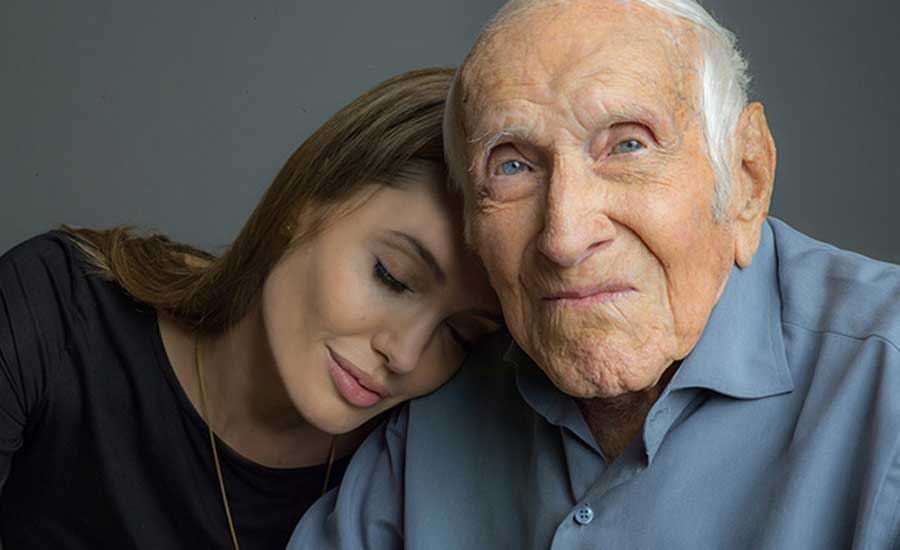
The story of Louis Zamperini is either well known or not known at all. If you’ve read Laura Hillenbrand’s beautifully crafted biography of the Olympic athlete and World War II hero, you’ll understand why someone like Angelina Jolie was anxious to get his story on the big screen. If you haven’t read the book, the Jolie-directed film, Unbroken, which was released almost two years ago, might have been your first introduction to the man whose life is a testament to the strength of the human spirit.
Perhaps the best way to describe Louis Zamperini is to say he was a rebel. As a young boy, he got into his fair share of trouble, but his brother Pete pushed him to better himself. If he could run from the law, Pete reckoned, Louis could run on a track, and through hard work and a determination to prove his naysayers wrong, Louis became an Olympic athlete, competing for his home country in the 1936 games.
If Louis’s story ended there, it would still be enough to be admired, but it doesn’t.
In 1943, Louis, who was a bombardier during WWII, was stranded at sea for seven weeks, fighting dehydration, starvation and shark attacks in a tiny raft with two fellow officers who survived when their plane crashed into the Pacific. Two of the officers, Louis and Russell Allen Phillips, were rescued by a Japanese ship and promptly taken to a POW camp where Louis spent the next two years enduring beatings, torture and humiliation at the hands of a man called “The Bird” – a commanding officer for the Japanese military famous for his brutality.
Louis’s story is one of self-sacrifice, survival and indomitable will, and it took 57 years for it to finally have its Hollywood moment. Before the film was released, Luke Zamperini and Cynthia Garris, spoke with Guideposts.org about their dad and about the movie they say they’ve been waiting for, well, all their lives.
The fact that a superstar like Angelina Jolie spent months vying for the opportunity to helm the movie assured Luke that this was the right time for his father’s story to be told. “I’ve been praying for years that it wouldn’t just be some director that was handed the job from the studio, but it would be a director that had a passion to tell the story,” he said.
Passion is something everyone involved with the project had ample amounts of. The siblings don’t mind rattling off stories of Jolie, who spent two hours on the phone with producer Matt Baer at 2 in the morning, sharing her vision for the film, or of star Jack O’Connell — who was given the heavy task of bringing their father to life onscreen – and his first meeting with their dad, who warmed to the young Brit from Derby immediately:
“It was a very, very sweet meeting and Louis of course took to him right away,” Cynthia said. “Jack was so nervous because he was meeting this man and it was being filmed. He brought him a lovely bottle of wine, our dad loved his wine.”
To this day, both Luke and Cynthia refer to O’Connell as “dad” and joke that he’s now an honorary Zamperini for life, and while O’Connell’s performance in the film is awe-inspiring and award-worthy, watching some of the worst moments of their father’s life play out on screen wasn’t easy for his children.
“Reading about our father being tortured is horrible and heartbreaking, but for us, seeing the actual acts of hitting him in the face with a kendo stick and the beatings and the kickings, it was just very difficult,” Cynthia said.
Violence is featured heavily in the film, but so is faith. The story of Louis Zamperini couldn’t be told without faith. After surviving as a POW, Zamperini came home only to battle more demons. Struggling with PTSD, Louis, who’d made a promise while still a prisoner to dedicate his life to God, reverted back to drinking and fighting as a way to deal with the lingering effects of war.
It wasn’t until one night, when the young hero attended a sermon delivered by a man named Billy Graham, that Louis finally found his way:
“My mother was taken to see a young evangelist in Los Angeles called Billy Graham and she became a Christian and came home and convinced my dad to go down and see him speak,” Luke recalled.
“After much resistance he finally decided to go. He walked out [on the sermon, but], came back the next night and it got to the point in the sermon where he was going to storm out of the place again and it just suddenly all hit him that he had made all of these promises to God that he would seek to serve Him if He got him home alive. He said ‘God kept his part of the bargain, I didn’t keep mine. I felt like a heel. So instead of getting up and leaving I went down behind the stage, met with the young man there, got on my knees and prayed and said at that very moment I knew I was done getting drunk, I knew that I was done fighting, and I knew I’d forgiven all of my prison guards,’ including the Bird who he’d had this recurring nightmare of for five years up to this point. So he went home that night and it was the first night that he hadn’t had that nightmare and he never had it again for the rest of his life.”
It was Louis’s faith that shaped the rest of his extraordinary life.
In 1952, Louis started a camp for young boys hoping to lead them on a straighter path, much like his brother Pete had done for him. He gave motivational speeches at conferences and schools. Luke explains that he can’t go to a church without someone sharing a story of how his dad had once visited and gave a talk that changed their life and Cynthia shares that working with children was her father’s greatest passion. When Hillenbrand’s book came out, the author, who suffers from a severe case of chronic fatigue was unable to tour and promote her story, so Louis, then 94, did it for her, proving that age was just another thing that couldn’t conquer the Southern California native.
Sadly, in April of 2014, Louis was stricken with a case of pneumonia. Family, friends and crew from the film were at his bedside while he spent three months in the hospital. It was there that Jolie shared a rough cut of the film, watching in twenty minute increments as Louis saw his story come to life for the very first time. In July, at the age of 97, Louis passed away, surrounded by those who loved him, including Jolie and her husband Brad Pitt.
“She was absolutely devastated and heartbroken when she found out that Louis wasn’t going to make it,” Cynthia explained. “I don’t know the content of her email to Laura Hillenbrand but part of it was ‘I can’t lose him now. I just can’t lose him.’ She had just found him and in him she found a father figure, and a great hero and someone that she fell in love with.”
It’s hard for anyone not to fall in love with Louis, his spirit and his heartbreakingly beautiful story of survival and redemption which is why this film is one his children hope will leave a mark on everyone who sees it.
“We hope it affects people profoundly,” Cynthia said. “We hope they’re entertained and they think about it for days afterward because this is our father’s legacy, it’s his life and we want it for him.”
For Luke, the end of his father’s incredible story is the thing he’s most proud of. “He was the most joyful, happy person I’ve ever known and boy did he go out in style. 97 years old, the world beating down his door and arguably the world’s most fabulous woman throwing her arms around his neck and confessing her love to him.”
When War Room landed in theaters Labor Day weekend, no one could’ve predicted the low-budget faith-based film focused on prayer would ever end up No.1 at the box office. Fast-forward a couple of months, the film has now made millions of dollars, been seen by hundreds of thousands of movie-goers and started a prayer revival across the country.
We had the opportunity to talk to director Alex Kendrick before the film was released earlier this year – when he and his brother, fellow filmmaker Stephen Kendrick, were unsure yet hopeful about the reach and impact their small movie might have – and we thought it be a good idea to check back in with him now that the film is set to hit shelves in DVD form later this month.
Community Newsletter
Get More Inspiration Delivered to Your Inbox
From the incredible reception by audiences to how the brothers prayed War Room into being, and yes, those poor movie reviews, Kendrick shared what went into making the film and how the journey isn’t over yet.
War Room debuted huge in terms of audience numbers. What was it like seeing that reaction and reception from movie-goers?
It’s thrilling but it’s obviously an indication that it really touched the audience. We’ve heard of people seeing it four, five, even six times. There’s a sweet, older lady that had never been to see a movie in a theater and her children talked her into going to see it. She was so moved by the film that she went back five times, taking her friends and neighbors to go see it. It just proves the movie really did touch a nerve.
You’ve been vocal about how important is to you to have your films inspire people’s faith life. Have you had any feedback from fans of the film?
To hear people’s testimonies about how they’ve renewed their passion for prayer, making it a priority, it’s amazing. We spoke with a pastor up in Minnesota, he was talking with a local construction contractor and the contractor told this pastor, ‘The weirdest thing is going on. I’ve been hired eight times this month to remodel closets to make space for prayer in these people’s homes.’ He hadn’t seen the movie at the time but once he did, he understood. We would never say the magic is in the closet itself, but people are making prayer a priority, finding a place where they’re not distracted in order to pray.
Do you think the success of the film is a product of timing, good content or both?
All we knew to do was to spend that season of prayer saying, ‘God, what do you want this next movie to be about?’ He prompted us to make it about strategic praying. So when we did it, we prayed that the Lord guide the entire team to the right release date, the right marketing strategy. We devoted the whole project to prayer and I see how God responded to that. I would never say that we’re smart enough to figure out how to make a hit movie. All I know to do is to pray and do our best, but we really did seek the Lord and I really did see his fingerprints on each part of this movie. It did seem like the timing was appropriate, with everything going on in our culture, with racial issues with the need for prayer and everything going on in politics – I think it just encouraged a lot of people.
Each of the films you’ve made focuses on a specific theme. Why make a movie about prayer?
Most people, especially believers, would say that they pray to some degree but almost all of them say that they do not pray enough. That was telling for us. When we asked people, ‘Do you have a strategy for finances, or retirement or your health?’ many people did. When we’d ask, ‘Well, how do you pray strategically?’ we’d often get blank looks. Prayer is what we’re called to do on a regular basis to seek the Lord. You never regret spending time in prayer. You never say ‘Wow that was totally pointless.’ No one says that that has a walk with God.
Was prayer a big part of your life growing up and did it influence your decision to venture into faith-based filmmaking?
My father was a minister, my mom was a Christian school teacher, so we did grow up in that atmosphere but I would say it wasn’t until I was in my 20s that I made my own walk with God a priority. The fact that I grew up in a faith-friendly home, I took it for granted. I didn’t know what else to compare it to because it was all that I knew, but in making my faith my own — where I’m not a believer in Jesus Christ just because my parents are, where I now have my own relationship with the Lord — that was very important to me. In my 20s, that developed and is continuing to develop. The Lord continues to give me milestone events in my life that increase my faith, increase my understanding, and increase my thirst.
It’s not just the film that you’ve dedicated to this idea of strategic prayer, you also have devotionals, bible resources and a book accompanying the film. Is it important to you to reach out to audiences after they leave the theater and offer them something more than just entertainment?
It’s very important to us that the movie not just be this event that you go to where you’re entertained or inspired for a couple of hours. When people walk out of the theater, we don’t want to stop there, we want to present them with whatever tools we can to help them continue walking that path. TheBattle Plan for Prayer was written specifically for someone who saw War Room and said ‘I need to pray more specifically but how do I do that?’ It gives you a better understanding of what prayer is and what it is not. It’s not just treating God like a genie in a lamp. It’s part of a two-way communication where we acknowledge the Lord and open our hearts for Him to communicate back to us. Our goal is, what can we provide to help people take that next step and learn what prayer can be?
Historically, critics haven’t been kind to most faith-based films. How do you handle having a huge success with movie-goers but poor reviews by movie critics?
There is an element of low-budget quality to a lot of faith-based films and I’m happy that it’s slowly growing, but it takes time for that to happen. There are some valid criticisms of Christian films, but that’s slowly getting better. From a spiritual standpoint, critics that review Hollywood movies have a steady diet of films that aren’t interested in faith themes and honoring the Lord, they’re just interested in pure entertainment. When you have a steady diet of those things and then you’re jerked into the nurture and nutrition of a faith film, it can catch you off guard and they don’t know what to do with it. If you look at all of our films on Rotten Tomatoes, instead of critics and audiences agreeing, we usually have very high audience approval ratings and very low critic ratings. There’s an ocean between those two. What that tells us is that the critics that review Hollywood movies don’t necessarily resonate with our films. You know, that’s okay. We don’t make these movies trying to win Academy Awards, we make them to minister to people. We definitely want to improve the quality and craftsmanship, but our goal is to honor the Lord by drawing people to Him.
Many actors can only dream of having a career like Alexa Vega’s. At 26 years old, she’s been acting for most of her life—over 20 years—and has inhabited roles so varying, courageous and challenging that chameleon should be added to her exhaustible list of talents.
You probably recognize her most for her work in Spy Kids, the family-friendly film she shot when she was just thirteen, but since then, she’s been working hard to shed her child star image for something lasting.
Guideposts spoke to Vega about her new movie 23 Blast, a faith-based film that follows the true story of high school football star Travis Freeman who lost his sight as a teenager but continued to play the game he loved.
A Character Most Like Herself
In the movie, Vega plays Ashley, Freeman’s childhood friend who eventually has a big role in helping the young athlete overcome his disability and get back out on the gridiron.
One thing that drew the experienced actress to the film was being able to do what she hasn’t had the chance to do in the two decades she’s been working in the business: be herself. Much like Vega, Ashley is a tough, no nonsense type of character and one that was refreshing for the actress to take on.
“She doesn’t condone laziness,” Vega explained. “She’s definitely more ‘let’s push through this, we can overcome it,’ and I really liked that about her. She’s such an encouraging character, she doesn’t baby people but she’s still sympathetic.”
“This is a character that’s the most like me that I’ve played in a really long time,” Vega told Guideposts.org.
Vega credits her own strong sense of self and faith in God to the foundation her mother instilled in her and her siblings. While Los Angeles, California is her current address, she was raised on a ranch down South in Florida in a religious household.
But the actress admits to undergoing plenty of spiritual growth in her years in the entertainment industry. Vega, who began acting when she was just 5 years old, is no stranger to the pitfalls of Hollywood. Plenty of her peers have struggled with some of the nastier aspects of the business, but Vega has leaned on her faith to stay grounded in who her mother raised her to be.
“We all go through seasons, we all go through times in our life where we aren’t as grounded as we would like to be and that’s all part of learning,” Vega said. “But the reason why I’ve never fallen into [the dangers of fame] is my mom. She created a very solid foundation for me and my sisters. She taught us the importance of our faith at a very young age and as we got older, we were able to explore that truly on our own and find out why we loved the Lord.”
Finding her Faith
For Vega, that true understanding of what her love for God meant in her life as an actress didn’t come right away.
“For a long time, it’s not that I didn’t believe — I absolutely believed — but I didn’t realize what the commitment took,” Vega said. “It wasn’t until I really started diving into the Word that I started realizing, ‘Ok, you know what? Some of the roles that I take have to change. Some of the movies that I used to be okay with doing, I’m no longer okay with filming anymore.’ And that just comes with growth and time as you find out where you are in your faith.”
And once you have your footing, she says, it’s important to be surrounded with people who share your mindset.
“In this business, it’s such a ‘yes’ business. You have people catering to you all the time, so if you’re not surrounded by like-minded people, if you aren’t surrounded by people who are willing to say ‘no’ to you and keep your attitude in check, then it is very easy to get lost.”
“It’s heartbreaking to watch because you’re seeing great people who are given an incredible platform and it’s going to waste and it’s a shame because you know they don’t see it now but it’s something they’re going to see later on. All you can do is pray and love on them and hope for the best.”
In addition to her mother, Vega has her husband, Big Time Rush star Carlos PenaVega, to help remind her to stay on the path she has chosen.
The two, who were married earlier this year, met during a Bible study group and the actress says they’re each other’s biggest supporters in faith, work and life. They are even working together on his upcoming movie Spare Parts, alongside George Lopez and Jamie Lee Curtis.
“We make sure that we stay on track,” Vega said. “We both lift each other up.”
A Will to Persevere
Being more selective in the roles she chooses hasn’t slowed the actress down a bit. In fact, her spiritual journey has landed her on one of the most popular dramas on TV, ABC’s Nashville, back down South in Tennessee, where she can really be herself, even off-screen.
“I love the South,” the actress gushed. “The people there, the crew, honestly it’s the first time where I’ve ever been on a set when you go to lunch and everyone’s actually praying over their meals. You don’t see that at all in California or Vancouver or anywhere else that you shoot. It was really cool to see people do it there. It’s such a community and it’s so positive and just a great energy out there.”
That positive energy is something Vega hopes the audience will take away from her latest film.
“I want people to be encouraged. I love that [23 Blast] is a feel-good movie. It’s a story about an over-comer and somebody who could’ve let [tragedy] in their life take them down but they didn’t. In some sort of way we all go through that struggle,” but how we handle that struggle is completely up to us.
If there’s one thing the actress would like to change about the way people view her commitment to her faith, it’s the “perfection misconception.” “I feel like there’s such a misunderstanding of Christians. Everyone is like ‘Well, you guys are perfect,’ and it’s like, ‘Oh my gosh, no! We are not perfect,’ but we have our faith,” Vega said.
Her relationship with God is something the actress admits to constantly working on. “We have our Bible study every Monday night here at the house and we have all our friends come over and it’s just a great feeling of community, of having like-minded people,” Vega said.
“You’re surrounded by people you love who understand you, who understand the struggles and what it’s like to live by faith. It’s really nice to have people who understand.”
Philadelphia’s Cathedral Basilica of Saints Peter and Paul is one of four famous churches Pope Francis visited during his apostolic journey to the United States. Get a glimpse inside this church and discover what its design reveals about American religious history. By Ansley Roan