Embrace God's truth with our new book,Ā The Lies that Bind

Among the Redwoods

Last week I had the great privilege of attending the Mt. Hermon Christian Writer’s Conference, and I’m still recovering. It was a great week—the quality of the writing was great, and I met some wonderful people, and heard about several books I’d be honored to publish. Christian book publishing is a small world, and it was great to connect with old friends and meet some new ones.

It was also wonderful to get out of the city and visit one of the most beautiful places I can imagine. Mt. Hermon is located in the Santa Cruz Mountains, about half an hour south of San Jose, California, where I grew up. It’s dazzling there—stunning mountain vistas, ancient and peaceful groves of trees, rocky coastline, achingly blue sky. One of my favorite parts of the whole conference was getting away from the conference center and out onto the trails that wind through the woods. I passed enormous trees, crossed rickety bridges, and drank in the sweet silence of undisturbed nature. Sometimes I forget how much my soul craves the quiet.

I also had the chance to visit a nearby park full of ancient redwood trees. These trees are some of the tallest in the world, and many have been growing for thousands of years. Some of them have been around since before Jesus walked the earth. These things are huge.

Here’s a photo of me at the base of one, though the picture doesn’t really do justice to how enormous these things really are. I felt tiny standing there. But it’s nice to feel small sometimes. It helps me remember how much bigger the world is than my problems and my experiences. Standing there next to a tangible reminder of the power and the beauty of nature, I couldn’t help but feel grateful for the opportunity.

Beth Adams is the creator and editor of GUIDEPOSTS’ Home to Heather Creek fiction series.

Amazing Grace: The Police Officer Who Wrote the Inspiring Broadway Musical

I stood beneath the theater marquee, the name of my show in bright lights. Broadway, the Great White Way, a place where dreams are born. And die. My wife, Alana, squeezed my arm. The last of the audience trickled into the theater. ā€œI guess that’s it,ā€ I said.

ā€œIt was still worth it,ā€ she said.

Nothing she could say would hide the truth. Eighteen years of writing and rewriting, readings, tryout runs, backers’ auditions and countless rehearsals. This was it. My musical had opened on Broadway and now, four months later, was closing.

That I’d come this far was amazing enough. I was the least likely person to write a Broadway musical. A police officer and an education director at a church. I loved working with kids, loved our church and community—but part of me wondered if I was meant to do more.

One hot summer day, the roller hockey team I coached was playing in an outdoor tournament. Between games, I had to get out of the heat. I was desperate for an air-conditioned place to eat my lunch. What I found was the school library. I ducked inside and wolfed down a sandwich. With a few minutes to kill, I wandered over to the shelves. I pulled out a book at random, John Newton: Letters of a Slave Trader Freed by God’s Grace. Sat down and began reading.

Born in England in 1725, Newton captained several slave trading ships. His life took a dramatic turn after a storm at sea—and the conversion experience it inspired. He became a pastor and repented his former life. In his pamphlet Thoughts Upon the Slave Trade, he detailed the atrocities of slavery and decried his part in it. He allied himself with William Wilberforce and advocated for the abolition of the slave trade.

He also wrote several hymns. One was ā€œAmazing Grace.ā€

I sat back in my chair. How had I missed this? In college, I was a history major but I’d never heard of Newton, never known his story. Now I was suddenly convinced it needed to be told—in a big way. As I flipped the book shut, two words came to mind: epic musical.

Really? Maybe it was because I’d been listening to the soundtrack of the musical Les MisĆ©rables on repeat, singing along to myself, fascinated with the way a huge sprawling story could come alive through song, the characters’ conflicts dramatized in music. What if someone did the same thing with Newton? What if I did it?

I went back to the hockey rink and coached the second game, but mostly I was in eighteenth-century England, thinking of a life touched by grace.

That evening I got home, dropped my equipment bag in the walkway and went straight to the kitchen, where Alana was making dinner. ā€œI read a book today about the man who wrote ā€˜Amazing Grace.’ Did you know he was a slave trader?ā€

ā€œNo,ā€ she said.

ā€œAnd then an abolitionist?ā€ She shook her head, and I continued. ā€œI had this idea—I know it’s going to sound crazy—but I think his story should be a musical and I think I should write it.ā€

ā€œDo it,ā€ Alana said. ā€œYou’re always telling young people not to put God in a box, not to limit themselves. Prove it.ā€

It says a lot about my wife that she didn’t immediately burst out laughing. I was not a classically trained composer. Couldn’t read music, couldn’t tell you what any note was on the bass or treble clef. I liked to play my guitar and sing. I could pick out tunes on the piano, but that was all by ear. As for writing…well, I hadn’t written anything but an accident report in years.

Still, I was sure that Newton’s story of ā€œAmazing Graceā€ā€”that would have to be the title—was meant to be a Broadway musical. Written by me. No harm taking out my guitar and strumming a few chords. If the whole thing fizzled out, okay. At least I tried.

In between work for the police department and the church youth group, not to mention time spent with our two kids, I would hunker down and write a song or two. Words would pop into my head, melodies came unbidden. But if this was slated for Broadway, it needed to have an orchestral accompaniment. Needed to be scored for strings and keyboard, drums, a double bass, brass. How else to recreate that violent storm that first brought Newton to God?

I bought some rudimentary music software and transcribed the sounds I heard in my head. Note by note, chord by chord, transposed from my guitar.

How many times was I ready to give up? Pretty much every day. I felt like Moses when he was asked by God to free the Israelites from Pharaoh. Why would God choose Moses, a terrible public speaker, to take on such an enormous task? Why would God pick a police officer and youth pastor to write a musical? And yet that notion I’d had in the school library kept speaking to me.

Slowly the songs started adding up, the story taking shape. I’d get fed up and walk away. Then another idea, maybe a lyric, would come. ā€œYou helped me see a vision of the man I could become,ā€ John Newton could sing. Christopher Smith too. Grace could transform any of us.

One day, I was with my friend Rich, messing around on the guitar. ā€œWhat are you working on?ā€ he asked.

ā€œNothing,ā€ I said. ā€œJust a crazy idea for a musical. It’s about John Newton, the man who wrote ā€˜Amazing Grace.ā€™ā€

ā€œI love ā€˜Amazing Grace,ā€™ā€ Rich said. ā€œLet me hear what you’ve done.ā€

I played a few bars of a song. Rich wanted more. And more. ā€œI know some people who need to hear this,ā€ he said. He owned an ad agency and convinced me to pitch the idea to some bankers and businesspeople he knew.

Rich scheduled that appointment and more—many more—to see if we could raise the funds to put on a performance. I hate asking for money. If God meant to test me, I was being tested. ā€œThe show’s not even finished yet,ā€ I’d say. ā€œI’m a cop, not a composer.ā€ I figured we’d get laughed out of one office after another. Instead, we raised $350,000 in three months, enough for me to leave my job and work on the musical full time.

A theater in Texas agreed to mount a production, only to pull out at the last minute. Goodspeed Opera House in Connecticut wanted to put it on, and I did more polishing. In the midst of all this, Alana found out we were expecting another baby and, at seven months, was diagnosed with breast cancer. Our daughter had to be delivered prematurely, and Alana underwent chemotherapy and radiation treatment. If ever anybody needed to be touched by God’s grace, we sure did.

Our daughter proved to be healthy. Alana’s treatments were successful. We praised God. All the while, I worked on the show and we raised more money. A theater in Chicago agreed to put on a production. A few months after that, we got amazing news: The producers had booked the Nederlander Theater in New York City for a July 2015 opening. We were headed to Broadway!

I thrive under pressure, but as the writer, there wasn’t a lot for me to do during final rehearsals. I kept moving around the theater, checking the sight lines. I plopped myself in C4 in the orchestra, and it occurred to me that some theatergoer would soon be there. At our first run, in Connecticut, I’d prayed over every single seat in the auditorium. I’d done the same thing in Chicago. Now it was time to pray for those who would see the show on Broadway. I closed my eyes and prayed, ā€œBless the person who sits here.ā€ I moved over to C5, C7, C9 and kept at it. I ended up sitting in every seat in the theater, praying the same prayer.

Advertisements for Amazing Grace appeared on buildings, on buses, in subway stations. Finally, opening night. Reviews poured in, some good, some bad, but the producers were hopeful for a long run. The show was a crowdpleaser. The impossible had happened.

Still, New York was always going to be the hardest market for Amazing Grace. After three months, the creative team came to a difficult decision. We had to close. We’d gambled and lost. My dream was on life support.

Alana and I stood outside the theater on that last night for the longest time. All those years we’d invested, all that money raised. Lord, I thought, was all of this a waste?

I took a deep breath and steeled myself to go in and watch my show one last time. A woman in a head scarf came up to me and asked, ā€œAre you Christopher Smith?ā€

ā€œYes,ā€ I said.

ā€œI’m going through chemotherapy,ā€ she said. ā€œIt’s been very difficult. But I have to tell you the one thing that brings me hope is your show. I don’t usually come to the city very much, but this is the eighth time I’ve seen Amazing Grace.ā€

Her words drove away all my self-pity and disappointment. My dream hadn’t died at all. It was still alive, living on in all those who had seen the show. It was the message—not my message but God’s message of ā€œAmazing Graceā€ā€”rekindled in thousands of people.

In fact, the show did not end that night. It played for eight weeks at the Museum of the Bible in Washington, D.C., then went on a nationwide tour this year, hitting 27 states. Soon schools, churches and community groups will do their own productions, inspiring more. How sweet a sound that will be.

For more inspiring stories, subscribe to Guideposts magazine.

A Maui Rescue

One brochure was all it took for my wife, Judy, and me to fall in love with Hawaii. Maui at Christmastime! We were there with our two kids on our dream vacation.

Waves crashed right outside our hotel room. The ocean called to me on the balcony. The sky was cloudless, a brilliant blue. This really was paradise. “Don’t even unpack,” I said to the family. “Let’s hit the beach before the sun goes down.” Judy grabbed some towels, and we were off.

I led the way to an ancient lava rock wall that had formed on the beach. “Follow me,” I said, and found a way to get up top. The clear blue water stretched on endlessly. We walked the length of the wall, which jutted out into the ocean for about 50 feet before coming to a point. There it hooked back into a tiny cove.

“Look at those beautiful fish,” Judy said. Red, yellow, blue—every color of the rainbow flashed in the sun just below the surface.

“Why don’t we get some snorkel gear tomorrow?” I said to Judy. “We can explore underwater and maybe get a good look at those fish up close.”

The next day Judy and I rented snorkels and diving masks from the hotel. We made our way down the crowded beach. The kids got right to work playing in the sand at the water’s edge. “Your mother and I are going for a swim,” I told them. “We’ll all go in the water when we get back.”

Judy and I plunged into the ocean. The water was crystal clear; I could see all the way to the bottom, about 30 or 40 feet down. I swam alongside the rocks till I got to where the wall hooked. I continued on around the point and turned to look for Judy. She wasn’t behind me. What happened? I wondered. Waves started to kick up a bit. I eased back to the point, my head above water.

I heard a shout: “Help! Ronnie!”

I only had to take a few strokes before I saw my wife. She’d swum past the point. She sputtered and coughed, barely treading water. She was in trouble.

Water must have gotten down her snorkel. “Judy!” I called. “Hang on!”

I had my Red Cross lifesaving certificate. I knew what could happen. Judy was a strong swimmer, but she was panicking. If I swam out to her—if I could reach her—I had to grab her just the right way. Otherwise she might latch onto me and take me under with her. I thought about our children. What would they do with both of us gone? But my wife needed me now.

Frantic, I looked around for other people. A sailboat was anchored about 20 yards from the beach. Two guys stood on the deck talking. “Help!” I shouted. “Help!” I clung to the rocks with one hand and waved my free arm wildly over my head, shouting as loud as I possibly could. They were so close I could recognize the brand of soda one of them held.

But the two paid me no mind. Can they hear me? I looked back at Judy. The waves had pulled her even farther away. “Judy! Judy, can you hear me?” I shouted. “Try not to panic.”

Something moved beneath me. I stuck my face mask into the water. A group of scuba divers scuttled along the bottom in single file.

I slapped the water to try to get their attention. It wasn’t any use. They kept on going. Again I saw movement in the water below. Once more I stuck my head under. A very large bald man clung to the lava wall maybe eight feet down. He was alone. Was he studying the sea life growing on the rocks? I slapped the water again.

The man turned his head to look up at me. I waved, motioning for him to come up. Please, help us. Please.

He floated up until he broke the surface of the water right next to me. He was about six foot five. He wore goggles like the ones I’d seen on Japanese pearl divers, but his size made the goggles seem oddly small.

“Help me!” I begged. “My wife!”

He looked Judy’s way. She was still coughing, trying desperately to stay afloat. “You’re going to be okay,” he said calmly to Judy. “Come to me.”
He spoke in a regular tone of voice. I couldn’t imagine how Judy could have heard him. Yet I knew she had because the panic in her face disappeared. I saw that she was back in control.

Judy broke into an overhand stroke and swam toward me, crashing her way right through the swells.

The man turned back to the wall and sank, as if to go back about his business. Didn’t he want to wait to be sure we were all right?

Judy reached me, and I hugged her tight. “The waves were pulling me out,” she said, shaking. “I was so scared I couldn’t think to swim.”

I was shaking too. I didn’t know what to say for myself. The thought that I’d failed my wife miserably kept going through my head. If I’d just had the wherewithal of the bald man in the goggles, if only I’d spoken to Judy the way he had, I could have saved her.

Once we’d calmed down I helped Judy to shore. The kids were still filling buckets with sand and making castles. They had no idea of the danger we’d been in. And we didn’t dare tell them.

We never told anyone what happened. We tried talking about that day to each other, but every time we started we both got choked up. Our emotions wouldn’t let us relive those terrible moments of Christmas vacation.

Until one Saturday morning years later. Our pastor dropped by the house unannounced. Judy and I sat with him in the living room. I never knew just what he was going to say, and that day was no different. “Have you ever had an encounter with an angel?” he asked, right out of the blue.

“Maybe,” I told him. That’s when it came to me, a picture in my mind of the bald man with the pearl-diver goggles. There had been something more than a little unusual about him….

I started telling the story of that fateful Christmas Day. And for the first time ever, I didn’t get choked up. My voice remained calm. My tone was as regular as the bald man’s voice had sounded when he called out to Judy. “Come to me” was all it had taken. “And then he disappeared underwater,” I finished. “Just like that.”

“No,” Judy said. “That’s not the way it happened at all.”

I looked at her. What had I left out?

“There was a man by me,” she said. “He came up from the deep water below. He had dark hair and a beard, and he didn’t say a word. He grabbed my arm so tight it hurt. And then he carried me over to you, Ronnie.”

But that is not what I saw, I thought. There was only one man. The bald one, by me.

“There was no one with you,” Judy insisted. “I didn’t take my eyes off you the whole time.”

But, then, how could that be? I don’t know. The only way I can explain it is that we both got an angel of our own. One came to me, calming my fears. And one held on to Judy, bringing her back to me.

It was a dream vacation, all right, but what happened to us was no dream. It was real. And it was a Christmas we will never forget. Never.

Download your free ebook, Angel Sightings: 7 Inspirational Stories About Heavenly Angels and Everyday Angels on Earth.

Almond Pound Cake

This recipe is based on one found in an 1839 cookbook called The Kentucky Housewife,

Ingredients

½ c. (1 stick) salted butter, room temperature
1 tsp. grated lemon zest
½ c. sugar
1 Tbsp. freshly squeezed lemon juice
3 large eggs
4 oz. blanched slivered almonds, finely crushed or chopped into 1/16-inch pieces
¼ tsp. ground mace
1 c. unbleached all-purpose flour
¼ tsp. almond extract
½ c. white wine

Preparation

1. Preheat oven to 350°F. Grease and flour an 8½ x 4½-inch loaf pan.

2. Beat butter and sugar until light and fluffy. Add eggs one at a time, beating well after each.

3. Stir in mace, almond extract, lemon zest and juice, and almonds. Stir in half of flour, followed by wine and then remaining half of flour, mixing well after each addition.

4. Spoon batter into pan. Bake until lightly browned and a knife inserted in center comes out clean, 40 to 50 minutes..

Makes 10 to 12 slices.

Nutritional Information: Calories: 240; Fat: 15g; Cholesterol: 70mg; Sodium: 90mg; Total Carbohydrates: 21g; Dietary Fiber: 2g; Sugars: 10g; Protein: 5g.

Don’t miss Rae’s inspiring story about researching her book about Abe Lincoln’s culinary tastes and skills.

A Life ‘Unbroken’

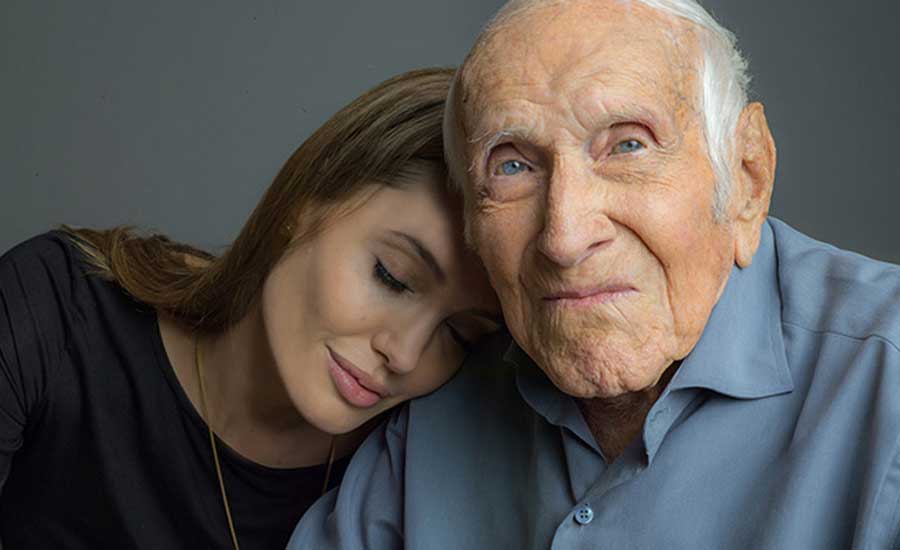
The story of Louis Zamperini is either well known or not known at all. If you’ve read Laura Hillenbrand’s beautifully crafted biography of the Olympic athlete and World War II hero, you’ll understand why someone like Angelina Jolie was anxious to get his story on the big screen. If you haven’t read the book, the Jolie-directed film, Unbroken, which was released almost two years ago, might have been your first introduction to the man whose life is a testament to the strength of the human spirit.

Perhaps the best way to describe Louis Zamperini is to say he was a rebel. As a young boy, he got into his fair share of trouble, but his brother Pete pushed him to better himself. If he could run from the law, Pete reckoned, Louis could run on a track, and through hard work and a determination to prove his naysayers wrong, Louis became an Olympic athlete, competing for his home country in the 1936 games.

READ MORE: LOUIE ZAMPERINI: THE POWER OF FORGIVENESS

If Louis’s story ended there, it would still be enough to be admired, but it doesn’t.

In 1943, Louis, who was a bombardier during WWII, was stranded at sea for seven weeks, fighting dehydration, starvation and shark attacks in a tiny raft with two fellow officers who survived when their plane crashed into the Pacific. Two of the officers, Louis and Russell Allen Phillips, were rescued by a Japanese ship and promptly taken to a POW camp where Louis spent the next two years enduring beatings, torture and humiliation at the hands of a man called ā€œThe Birdā€ – a commanding officer for the Japanese military famous for his brutality.

Louis’s story is one of self-sacrifice, survival and indomitable will, and it took 57 years for it to finally have its Hollywood moment. Before the film was released, Luke Zamperini and Cynthia Garris, spoke with Guideposts.org about their dad and about the movie they say they’ve been waiting for, well, all their lives.

The fact that a superstar like Angelina Jolie spent months vying for the opportunity to helm the movie assured Luke that this was the right time for his father’s story to be told. ā€œI’ve been praying for years that it wouldn’t just be some director that was handed the job from the studio, but it would be a director that had a passion to tell the story,ā€ he said.

Passion is something everyone involved with the project had ample amounts of. The siblings don’t mind rattling off stories of Jolie, who spent two hours on the phone with producer Matt Baer at 2 in the morning, sharing her vision for the film, or of star Jack O’Connell — who was given the heavy task of bringing their father to life onscreen – and his first meeting with their dad, who warmed to the young Brit from Derby immediately:

ā€œIt was a very, very sweet meeting and Louis of course took to him right away,ā€ Cynthia said. ā€œJack was so nervous because he was meeting this man and it was being filmed. He brought him a lovely bottle of wine, our dad loved his wine.ā€

To this day, both Luke and Cynthia refer to O’Connell as ā€œdadā€ and joke that he’s now an honorary Zamperini for life, and while O’Connell’s performance in the film is awe-inspiring and award-worthy, watching some of the worst moments of their father’s life play out on screen wasn’t easy for his children.

ā€œReading about our father being tortured is horrible and heartbreaking, but for us, seeing the actual acts of hitting him in the face with a kendo stick and the beatings and the kickings, it was just very difficult,ā€ Cynthia said.

READ MORE: ‘UNBROKEN’ [REVIEW]

Violence is featured heavily in the film, but so is faith. The story of Louis Zamperini couldn’t be told without faith. After surviving as a POW, Zamperini came home only to battle more demons. Struggling with PTSD, Louis, who’d made a promise while still a prisoner to dedicate his life to God, reverted back to drinking and fighting as a way to deal with the lingering effects of war.

It wasn’t until one night, when the young hero attended a sermon delivered by a man named Billy Graham, that Louis finally found his way:

ā€œMy mother was taken to see a young evangelist in Los Angeles called Billy Graham and she became a Christian and came home and convinced my dad to go down and see him speak,ā€ Luke recalled.

ā€œAfter much resistance he finally decided to go. He walked out [on the sermon, but], came back the next night and it got to the point in the sermon where he was going to storm out of the place again and it just suddenly all hit him that he had made all of these promises to God that he would seek to serve Him if He got him home alive. He said ā€˜God kept his part of the bargain, I didn’t keep mine. I felt like a heel. So instead of getting up and leaving I went down behind the stage, met with the young man there, got on my knees and prayed and said at that very moment I knew I was done getting drunk, I knew that I was done fighting, and I knew I’d forgiven all of my prison guards,’ including the Bird who he’d had this recurring nightmare of for five years up to this point. So he went home that night and it was the first night that he hadn’t had that nightmare and he never had it again for the rest of his life.ā€

It was Louis’s faith that shaped the rest of his extraordinary life.

In 1952, Louis started a camp for young boys hoping to lead them on a straighter path, much like his brother Pete had done for him. He gave motivational speeches at conferences and schools. Luke explains that he can’t go to a church without someone sharing a story of how his dad had once visited and gave a talk that changed their life and Cynthia shares that working with children was her father’s greatest passion. When Hillenbrand’s book came out, the author, who suffers from a severe case of chronic fatigue was unable to tour and promote her story, so Louis, then 94, did it for her, proving that age was just another thing that couldn’t conquer the Southern California native.

Sadly, in April of 2014, Louis was stricken with a case of pneumonia. Family, friends and crew from the film were at his bedside while he spent three months in the hospital. It was there that Jolie shared a rough cut of the film, watching in twenty minute increments as Louis saw his story come to life for the very first time. In July, at the age of 97, Louis passed away, surrounded by those who loved him, including Jolie and her husband Brad Pitt.

ā€œShe was absolutely devastated and heartbroken when she found out that Louis wasn’t going to make it,ā€ Cynthia explained. ā€œI don’t know the content of her email to Laura Hillenbrand but part of it was ā€˜I can’t lose him now. I just can’t lose him.’ She had just found him and in him she found a father figure, and a great hero and someone that she fell in love with.ā€

It’s hard for anyone not to fall in love with Louis, his spirit and his heartbreakingly beautiful story of survival and redemption which is why this film is one his children hope will leave a mark on everyone who sees it.

ā€œWe hope it affects people profoundly,ā€ Cynthia said. ā€œWe hope they’re entertained and they think about it for days afterward because this is our father’s legacy, it’s his life and we want it for him.ā€

For Luke, the end of his father’s incredible story is the thing he’s most proud of. ā€œHe was the most joyful, happy person I’ve ever known and boy did he go out in style. 97 years old, the world beating down his door and arguably the world’s most fabulous woman throwing her arms around his neck and confessing her love to him.ā€

Unbroken is now available on DVD.

Alex Kendrick on the Surprising Success of ‘War Room’

When War Room landed in theaters Labor Day weekend, no one could’ve predicted the low-budget faith-based film focused on prayer would ever end up No.1 at the box office. Fast-forward a couple of months, the film has now made millions of dollars, been seen by hundreds of thousands of movie-goers and started a prayer revival across the country.

We had the opportunity to talk to director Alex Kendrick before the film was released earlier this year – when he and his brother, fellow filmmaker Stephen Kendrick, were unsure yet hopeful about the reach and impact their small movie might have – and we thought it be a good idea to check back in with him now that the film is set to hit shelves in DVD form later this month.

From the incredible reception by audiences to how the brothers prayed War Room into being, and yes, those poor movie reviews, Kendrick shared what went into making the film and how the journey isn’t over yet.

War Room debuted huge in terms of audience numbers. What was it like seeing that reaction and reception from movie-goers?

It’s thrilling but it’s obviously an indication that it really touched the audience. We’ve heard of people seeing it four, five, even six times. There’s a sweet, older lady that had never been to see a movie in a theater and her children talked her into going to see it. She was so moved by the film that she went back five times, taking her friends and neighbors to go see it. It just proves the movie really did touch a nerve.

You’ve been vocal about how important is to you to have your films inspire people’s faith life. Have you had any feedback from fans of the film?

To hear people’s testimonies about how they’ve renewed their passion for prayer, making it a priority, it’s amazing. We spoke with a pastor up in Minnesota, he was talking with a local construction contractor and the contractor told this pastor, ā€˜The weirdest thing is going on. I’ve been hired eight times this month to remodel closets to make space for prayer in these people’s homes.’ He hadn’t seen the movie at the time but once he did, he understood. We would never say the magic is in the closet itself, but people are making prayer a priority, finding a place where they’re not distracted in order to pray.

Do you think the success of the film is a product of timing, good content or both?

All we knew to do was to spend that season of prayer saying, ā€˜God, what do you want this next movie to be about?’ He prompted us to make it about strategic praying. So when we did it, we prayed that the Lord guide the entire team to the right release date, the right marketing strategy. We devoted the whole project to prayer and I see how God responded to that. I would never say that we’re smart enough to figure out how to make a hit movie. All I know to do is to pray and do our best, but we really did seek the Lord and I really did see his fingerprints on each part of this movie. It did seem like the timing was appropriate, with everything going on in our culture, with racial issues with the need for prayer and everything going on in politics – I think it just encouraged a lot of people.

Each of the films you’ve made focuses on a specific theme. Why make a movie about prayer?

Most people, especially believers, would say that they pray to some degree but almost all of them say that they do not pray enough. That was telling for us. When we asked people, ā€˜Do you have a strategy for finances, or retirement or your health?’ many people did. When we’d ask, ā€˜Well, how do you pray strategically?’ we’d often get blank looks. Prayer is what we’re called to do on a regular basis to seek the Lord. You never regret spending time in prayer. You never say ā€˜Wow that was totally pointless.’ No one says that that has a walk with God.

Was prayer a big part of your life growing up and did it influence your decision to venture into faith-based filmmaking?

My father was a minister, my mom was a Christian school teacher, so we did grow up in that atmosphere but I would say it wasn’t until I was in my 20s that I made my own walk with God a priority. The fact that I grew up in a faith-friendly home, I took it for granted. I didn’t know what else to compare it to because it was all that I knew, but in making my faith my own — where I’m not a believer in Jesus Christ just because my parents are, where I now have my own relationship with the Lord — that was very important to me. In my 20s, that developed and is continuing to develop. The Lord continues to give me milestone events in my life that increase my faith, increase my understanding, and increase my thirst.

It’s not just the film that you’ve dedicated to this idea of strategic prayer, you also have devotionals, bible resources and a book accompanying the film. Is it important to you to reach out to audiences after they leave the theater and offer them something more than just entertainment?

It’s very important to us that the movie not just be this event that you go to where you’re entertained or inspired for a couple of hours. When people walk out of the theater, we don’t want to stop there, we want to present them with whatever tools we can to help them continue walking that path. The Battle Plan for Prayer was written specifically for someone who saw War Room and said ā€˜I need to pray more specifically but how do I do that?’ It gives you a better understanding of what prayer is and what it is not. It’s not just treating God like a genie in a lamp. It’s part of a two-way communication where we acknowledge the Lord and open our hearts for Him to communicate back to us. Our goal is, what can we provide to help people take that next step and learn what prayer can be?

Historically, critics haven’t been kind to most faith-based films. How do you handle having a huge success with movie-goers but poor reviews by movie critics?

There is an element of low-budget quality to a lot of faith-based films and I’m happy that it’s slowly growing, but it takes time for that to happen. There are some valid criticisms of Christian films, but that’s slowly getting better. From a spiritual standpoint, critics that review Hollywood movies have a steady diet of films that aren’t interested in faith themes and honoring the Lord, they’re just interested in pure entertainment. When you have a steady diet of those things and then you’re jerked into the nurture and nutrition of a faith film, it can catch you off guard and they don’t know what to do with it. If you look at all of our films on Rotten Tomatoes, instead of critics and audiences agreeing, we usually have very high audience approval ratings and very low critic ratings. There’s an ocean between those two. What that tells us is that the critics that review Hollywood movies don’t necessarily resonate with our films. You know, that’s okay. We don’t make these movies trying to win Academy Awards, we make them to minister to people. We definitely want to improve the quality and craftsmanship, but our goal is to honor the Lord by drawing people to Him.

Alexa Vega on Holding on to Faith in Hollywood

Many actors can only dream of having a career like Alexa Vega’s. At 26 years old, she’s been acting for most of her life—over 20 years—and has inhabited roles so varying, courageous and challenging that chameleon should be added to her exhaustible list of talents.

You probably recognize her most for her work in Spy Kids, the family-friendly film she shot when she was just thirteen, but since then, she’s been working hard to shed her child star image for something lasting.

Guideposts spoke to Vega about her new movie 23 Blast, a faith-based film that follows the true story of high school football star Travis Freeman who lost his sight as a teenager but continued to play the game he loved.

A Character Most Like Herself

In the movie, Vega plays Ashley, Freeman’s childhood friend who eventually has a big role in helping the young athlete overcome his disability and get back out on the gridiron.

One thing that drew the experienced actress to the film was being able to do what she hasn’t had the chance to do in the two decades she’s been working in the business: be herself. Much like Vega, Ashley is a tough, no nonsense type of character and one that was refreshing for the actress to take on.

ā€œShe doesn’t condone laziness,ā€ Vega explained. ā€œShe’s definitely more ā€˜let’s push through this, we can overcome it,’ and I really liked that about her. She’s such an encouraging character, she doesn’t baby people but she’s still sympathetic.ā€

ā€œThis is a character that’s the most like me that I’ve played in a really long time,ā€ Vega told Guideposts.org.

Vega credits her own strong sense of self and faith in God to the foundation her mother instilled in her and her siblings. While Los Angeles, California is her current address, she was raised on a ranch down South in Florida in a religious household.

But the actress admits to undergoing plenty of spiritual growth in her years in the entertainment industry. Vega, who began acting when she was just 5 years old, is no stranger to the pitfalls of Hollywood. Plenty of her peers have struggled with some of the nastier aspects of the business, but Vega has leaned on her faith to stay grounded in who her mother raised her to be.

ā€œWe all go through seasons, we all go through times in our life where we aren’t as grounded as we would like to be and that’s all part of learning,ā€ Vega said. ā€œBut the reason why I’ve never fallen into [the dangers of fame] is my mom. She created a very solid foundation for me and my sisters. She taught us the importance of our faith at a very young age and as we got older, we were able to explore that truly on our own and find out why we loved the Lord.ā€

Finding her Faith

For Vega, that true understanding of what her love for God meant in her life as an actress didn’t come right away.

ā€œFor a long time, it’s not that I didn’t believe — I absolutely believed — but I didn’t realize what the commitment took,ā€ Vega said. ā€œIt wasn’t until I really started diving into the Word that I started realizing, ā€˜Ok, you know what? Some of the roles that I take have to change. Some of the movies that I used to be okay with doing, I’m no longer okay with filming anymore.’ And that just comes with growth and time as you find out where you are in your faith.ā€

And once you have your footing, she says, it’s important to be surrounded with people who share your mindset.

ā€œIn this business, it’s such a ‘yes’ business. You have people catering to you all the time, so if you’re not surrounded by like-minded people, if you aren’t surrounded by people who are willing to say ‘no’ to you and keep your attitude in check, then it is very easy to get lost.ā€

ā€œIt’s heartbreaking to watch because you’re seeing great people who are given an incredible platform and it’s going to waste and it’s a shame because you know they don’t see it now but it’s something they’re going to see later on. All you can do is pray and love on them and hope for the best.ā€

In addition to her mother, Vega has her husband, Big Time Rush star Carlos PenaVega, to help remind her to stay on the path she has chosen.

The two, who were married earlier this year, met during a Bible study group and the actress says they’re each other’s biggest supporters in faith, work and life. They are even working together on his upcoming movie Spare Parts, alongside George Lopez and Jamie Lee Curtis.

ā€œWe make sure that we stay on track,ā€ Vega said. ā€œWe both lift each other up.ā€

A Will to Persevere

Being more selective in the roles she chooses hasn’t slowed the actress down a bit. In fact, her spiritual journey has landed her on one of the most popular dramas on TV, ABC’s Nashville, back down South in Tennessee, where she can really be herself, even off-screen.

ā€œI love the South,ā€ the actress gushed. ā€œThe people there, the crew, honestly it’s the first time where I’ve ever been on a set when you go to lunch and everyone’s actually praying over their meals. You don’t see that at all in California or Vancouver or anywhere else that you shoot. It was really cool to see people do it there. It’s such a community and it’s so positive and just a great energy out there.ā€

That positive energy is something Vega hopes the audience will take away from her latest film.

ā€œI want people to be encouraged. I love that [23 Blast] is a feel-good movie. It’s a story about an over-comer and somebody who could’ve let [tragedy] in their life take them down but they didn’t. In some sort of way we all go through that struggle,ā€ but how we handle that struggle is completely up to us.

If there’s one thing the actress would like to change about the way people view her commitment to her faith, it’s the ā€œperfection misconception.ā€ ā€œI feel like there’s such a misunderstanding of Christians. Everyone is like ā€˜Well, you guys are perfect,’ and it’s like, ā€˜Oh my gosh, no! We are not perfect,’ but we have our faith,ā€ Vega said.

Her relationship with God is something the actress admits to constantly working on. ā€œWe have our Bible study every Monday night here at the house and we have all our friends come over and it’s just a great feeling of community, of having like-minded people,ā€ Vega said.

ā€œYou’re surrounded by people you love who understand you, who understand the struggles and what it’s like to live by faith. It’s really nice to have people who understand.ā€

23 Blast is in theaters everywhere Oct. 24th.

A Historic Philadelphia Church: Cathedral Basilica of Saints Peter and Paul

Philadelphia’s Cathedral Basilica of Saints Peter and Paul is one of four famous churches Pope Francis visited during his apostolic journey to the United States. Get a glimpse inside this church and discover what its design reveals about American religious history. By Ansley Roan

A Hero Beyond the Finish Line

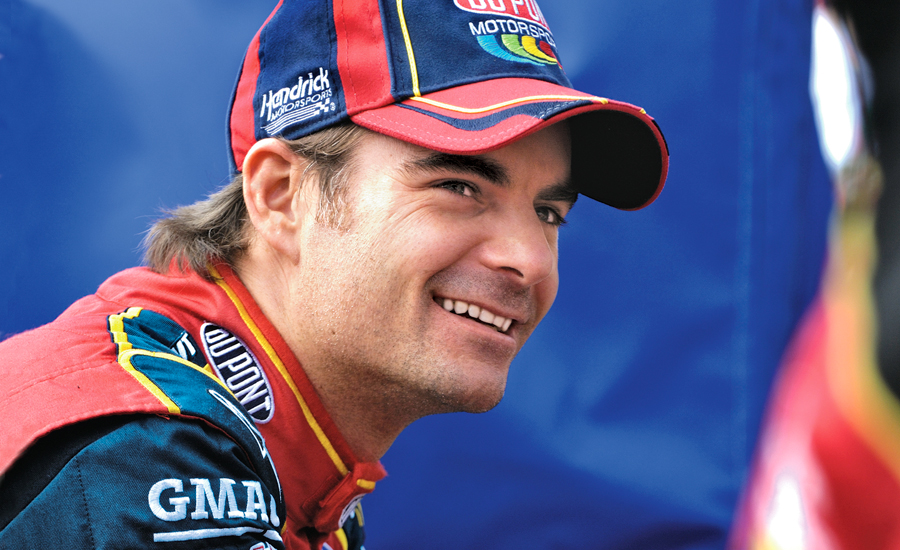
My stepdad got me hooked on racing when I was five years old. After I won my first race, that was it. From then on, chasing that next checkered flag was the goal. Life was about winning races.

Everything I did was geared to going fast and crossing the finish line first. Everything in between was just filler. Two things changed that. Two kids, actually. Ray J and a boy I’ll call Gil.

Ray J is the son of my former crew chief, Ray Evernham. Ray and I were like brothers. We clicked from the moment we met. He worked tirelessly to forge a winning team. I did the driving, but we won races together.

I got to know his family too, especially Ray J, who was only one year old at the time.

One day in our first NASCAR season together, Ray wasn’t at the track when I got there. Something had to be very wrong. Ray was always there.

ā€œRay caught the first flight back home this morning,ā€ a crew member told me. ā€œThere’s something wrong with Ray J. The doctors think it might be leukemia.ā€

A chill went through me. Leukemia. Cancer. Ray J was a healthy, energetic kid. How could this happen? I couldn’t imagine what Ray and his wife must be going through. I called Ray immediately.

ā€œYou know I’m there for you, buddy. Whatever we can do, let us know.ā€ Ray sputtered something about hating to miss work for even a day. ā€œForget it,ā€ I interrupted. ā€œYour family comes first.ā€

And I meant it. For one of the first times in my life the next race didn’t seem so important. Racing and life weren’t the same thing.

For the next few months Ray kept us up to date on his son’s progress, but it was tough going. Chemotherapy, radiation, long stays in the hospital. Little Ray J’s hair fell out and there were times he was so weak he could barely play.

With every new round of treatment, Ray would cling to hope, but, boy, was it hard. Wasn’t there something I could do? I always met challenges by going faster, pushing myself harder. How could a stock-car driver like me make a difference to a kid who was battling cancer?

I thought of Geoffrey Bodine, a fellow racer. He had hosted Make-A-Wish Foundation families at the track, and I’d had the pleasure of meeting some of those remarkable kids.

These children were facing some of life’s toughest challenges with determination and great spirit, and I wanted to become more involved.

Some people warned me that it could be really hard to see kids so ill. But if I wasn’t afraid to drive a car around an oval track at 200 miles an hour plus, then why should I let myself be afraid to visit with sick kids?

I signed up with Make-A-Wish. I was nervous–but excited–as the date of my visit grew closer. A six-year-old boy with osteogenesis imperfecta, a rare bone disease, was coming to the track. Gil.

His bones were so weakened by his condition that several broke during birth. By now he’d become so fragile that if I even hugged him I might break one of his bones. ā€œHe can’t wait to meet you,ā€ a coordinator from Make-A-Wish told me.

There he was, sitting in a wheelchair, his family standing behind it. His legs were gnarled and atrophied and his torso was as small as a three-year-old’s.

He had a hat with a ā€œ24ā€ā€“my number–and a Jeff Gordon shirt that looked to be about three sizes too big. His grin was three sizes too big too, stretching from ear to ear.

ā€œHey, buddy,ā€ I said. ā€œHow are you?ā€

ā€œFine.ā€ Gil raised his hand for a high five. Now I was nervous. If I hit his hand, wouldn’t I shatter his bones? If I acted like he was too fragile to touch, I’d risk shattering his spirit.

In a race we think about everything beforehand. We try to plan for every possibility. But this was something I was unprepared for. I looked at his family. They seemed as stymied as I was. Quickly I said a prayer that I’d do the right thing. I held up my hand. He tapped it and then pulled his hand back.

That big smile got even bigger. ā€œOw!ā€ I said. ā€œDon’t hurt me, man. Wow, you’re so strong.ā€

I knelt down and we talked. He was a huge NASCAR fan. He couldn’t get outside and run around, but watching the races and learning everything he could about the drivers distracted him from his pain. ā€œI love it when you win, Jeff.ā€

Win. That word again. A concept, really. Had I ever thought much about what it meant? Was it all about just crossing the finish line first? It was as though someone was showing me how big winning could be, how it was about more than me and my car and my team and that next checkered flag.

ā€œHey, man,ā€ I said, ā€œI’ll be thinking about you out there. I promise.ā€

I have too. I’ve seen tons of other kids through the Make-a-Wish Foundation. I’ve also worked with the Leukemia Society and the Marrow Foundation. And we started our own, The Jeff Gordon Foundation. It’s all about helping sick kids, kids who are immeasurably brave, the true winners.

As for Ray J, all the prayers and treatments and hospital stays had their effect. One night two years after Ray J’s diagnosis, Ray called me from his home. ā€œYou’re missing a great party here, buddy,ā€ he said.

ā€œFor the race?ā€ We’d just won one and I thought that’s what he was talking about.

ā€œBetter than that,ā€ Ray said. ā€œRay J is in full remission. The doctors say he’s finished with chemo. He’s all better.ā€

That Christmas I did celebrate with Ray and Ray J. I’d bought the kid a big plastic electric car. Ray J climbed inside and grabbed the wheel. ā€œBe careful with that, son,ā€ his dad said. Ray J put his pedal to the floor and drove straight into the Christmas tree. We laughed so hard we couldn’t stop.

I’m not going to try and fool you. Winning on the track is what I’m always aiming for. That’s my job, how I support my family and my foundation. But winning is best when it’s about something bigger and better than crossing the finish line first.

I can make a difference–any one of us can–in ways far beyond what’s humanly possible to imagine. Two kids taught me that.

Did you enjoy this story? Subscribe to Guideposts magazine.

A Grueling Thru-Hike on the Appalachian Trail Reacquainted Him with God

Eight months after setting out on the 2,190-mile Appalachian Trail, I was a mere 120 miles from finishing.

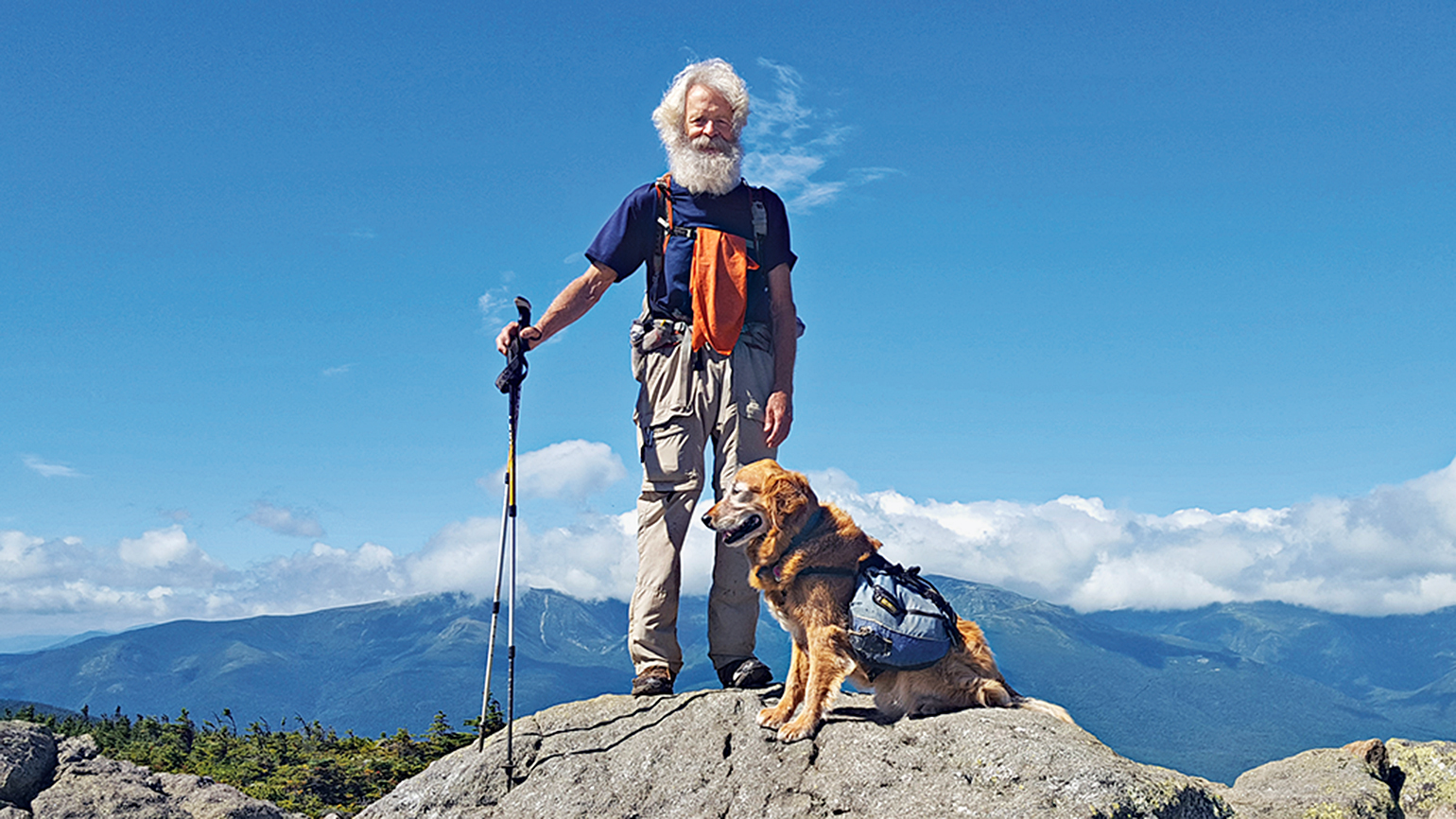
It was October. Ahead lay Maine’s One Hundred Mile Wilderness, one of the most remote and unforgiving stretches of country in the eastern United States. I was 75 years old, and I was exhausted, mentally and physically. I’d lost 30 pounds since starting the trail at Springer Mountain, Georgia. My white hair and beard were long and unkempt.

I was in the hospital. Tendons in both arms were torn after frequent falls. My right shoulder was swollen, hot and useless.

Did I plan to quit? Absolutely not.

All my life, I’d wanted to hike the Appalachian Trail—the AT, as we hikers call it. I’d postponed that dream through decades of work and family life. The call to thru-hike the trail—hike it from one end to the other in a single year—came from some deep part of me I still didn’t fully understand. Who or what was calling me? I had to get back out there to find out.

I’d first encountered the Appalachian Trail in the White Mountains of New Hampshire during summer camp when I was 12. The AT passes through the heart of the Whites, traversing a spine of bare rock called Franconia Ridge. Our backpacking route had followed the trail across the ridge, which is often buffeted by strong winds. Hiking that ridge, blown by the wind, surrounded by the peaks of the Presidential Range, I’d felt a strange exhilaration.

Two years later, I suggested to a school friend that we hike the entire trail. Life went on, and the hike never happened. I went to college, got married, became a father and opened a law practice in Lancaster, Pennsylvania, where my wife, Bonnie, had grown up. We had five kids, three boys and two girls.

Though the AT was 50 miles from our house, I never set foot on it. I did some camping with the kids but otherwise did exactly what the world expected of a responsible husband, lawyer and father of five. That did not include spending eight months walking in the woods.

There’s a reason I was so responsible. My parents were alcoholics. They fought a lot when I was a kid. Life was unpredictable. My brother was the rebel. I was the good son.

I did all I could to make sure my own kids’ upbringing was steady, secure. Bonnie and I were active at our local parish and in prayer groups. Work, family and church were my top priorities.

The kids grew up and went off to college. Bonnie and I were in our sixties. One day, nearing my sixty-fifth birthday, a thought jumped into my head: Wouldn’t it be neat to celebrate that birthday on top of Katahdin?

Mount Katahdin—Penobscot Indian for ā€œChief Mountainā€ā€”is the northern terminus of the AT. Summiting this mound of rocks, just 13 feet shy of a mile high, is the crowning achievement of a northbound thru-hiker.

I hadn’t thought of the trail in years, yet suddenly I was hooked. I announced to Bonnie that I planned to hike the Appalachian Trail. I didn’t ask. Just announced.

ā€œMm-hmm,ā€ she said, looking at me as if she would have appreciated some input. But the desire to hike that trail welled up from some deep part of me, where the memories of that boyhood hike on Franconia Ridge were stored. There was something wild out there, more true and life-giving than the routines of everyday life.

True to form, I didn’t walk out the door that minute. I wound down my law cases and hiked more than 400 miles in Vermont and Pennsylvania to prepare myself and my golden retriever, Theo, who would accompany me on the trail.

It took me 10 years to get ready.

On Valentine’s Day, 2016, my family gathered to bid me farewell. I gave Bonnie a ring with three precious stones, representing our love for each another. On February 18, I kissed her goodbye and headed for Springer Mountain. Theo and I were on our way. They say a thru-hiker takes five million steps on the AT. Theo might take twice that many.

It was winter. An experienced thru-hiker cautioned against starting the trail so early. A native New Englander, I wasn’t bothered by cold and snow. I had a tent with room for Theo and me, a sleeping bag, cooking gear, rainwear, emergency supplies and warm clothing. Down booties at night were a real plus.

We passed through the Great Smoky Mountains in heavy snow, the Virginia highlands in sun, the Shenandoah Ridge in rain, then West Virginia and Maryland. We settled into a comfortable rhythm of walking all day, pitching camp (while Theo rolled in the dirt or leaves to rub off the feel of his saddle bags), filtering water, preparing food and sitting together peaceably in the gloaming. I reveled in the endless woods, the majestic views and the silence.

Most of all, I loved not knowing where I’d sleep or what was over the hill. I was free from the routines of society. AT thru-hikers traditionally adopt trail names. Mine was Sojo, for Sojourner. I was on a journey, led by God.

After 500 miles, I switched to summer gear. A few miles later, I realized my low-cut boots were causing blisters between my toes. I developed plantar fasciitis. By the time I reached Pennsylvania, known as ā€œRocksylvania,ā€ things were rough. Theo was managing fine. My feet, however, were killing me.

In Port Clinton, at the foot of a steep descent, I took a break. Bonnie met me. She looked at me, thin and exhausted, and said, ā€œYou need to come home.ā€ I knew she was right.

At home, Bonnie was amazed how I downed a full blender of milkshake in one gulp. She shopped for the best health foods for me to take on the trail. My doctor wanted me to stop for fear of dehydration, but I told him I’d be fine. I saw a podiatrist, who showed me how to protect my toes with toe spacers and moleskin pads. Using the spacers and pads and wrapping my feet in duct tape, I headed back to the trail after a three-day break. My feet gradually healed.

My shoulders didn’t. I fell more than 30 times on the rocky trail, bracing myself and my 30-pound pack every time I landed. For a long time, I ignored the pain. I made it through the mid-Atlantic states and headed into New England at the height of summer. By August, I was back in the White Mountains, back on Franconia Ridge, back in the rocky, windswept terrain that had first inspired my love of the AT. The strong winds and kaleidoscopic fanfare of clouds and sunbeams made me feel as if God himself were welcoming me.

It took me days to get through the Whites. After some of the trail’s most difficult stretches, including a mile of huge boulders, some requiring that I remove my pack and crawl underneath, I arrived in Monson, Maine, at the start of the One Hundred Mile Wilderness. I could ignore my shoulders no longer. I feared my right shoulder was infected.

A doctor drew 45 ccs of cloudy fluid out of my shoulder and put me in the hospital for four days of IV antibiotics. He wanted to operate.

I knew that the trail up Katahdin closes by mid-to-late October. I would never make it if I had surgery. I told the doctor I wanted to hike.

Summiting Katahdin in October can be hazardous. I had to break up the last section of the trail and tackle the mountain while the weather held. I took a shuttle van to the base of Katahdin. Theo and I got up at 3 a.m., summited at noon and made it back for a shuttle ride back to Monson that same day.

Then we set off through the One Hundred Mile Wilderness, the last leg of the trail. It took us 10 days. I was numb in body and spirit. A thunderstorm turned to snow for seven days. I walked through rivers in full gear. My fingers and toes were frozen. The whole time, I’d picture Bonnie and the kids and chant in rhythm with my footsteps: ā€œTheir… love…will…see…me…through.ā€

On October 27 at 1:45 p.m., I took my five millionth step, exiting the trail. My thru-hike was over.

There was no elation. No celebration. Katahdin was under five inches of snow. I’d made the right decision to summit it earlier.

Bonnie flew to Bangor, Maine, and rented a car to meet me. It was wonderful to see her, but we were both too dazed for excitement.

Now I was done. And I was different. But how?

Back home, I felt alienated from everyday life. The trail was like a river running through my mind. Memories flowed past of the trees, the streams, the sky, the clouds, the wind and the peaks.

What had I found on the trail that had been calling to me for so long?

There was my love at the end for Bonnie and the kids. But that love, I knew, was embedded in a larger love. For so long my love for my family, my sense of responsibility, came before hiking the AT. I never questioned that decision.

But when at last I said yes to the trail’s call, I discovered why it was so powerful. It wasn’t just woods and water and rocks and sky that I found. I found God himself. He accompanied me every step. He showed me sides of himself I’d never experienced. On the AT, I found a wild God, the God of all creation, the God of love, companionship, protection and support. The God who saw me through a difficult childhood and gave me answers to the questions I didn’t even know to ask. God’s love never ends. For a thru-hiker, neither does the AT.

For more inspiring stories, subscribe to Guideposts magazine.

A Gold Medal in Positive Thinking

Let me tell you about a little girl named Wilma Rudolph. Wilma was born in the back woods of Tennessee in a shack to very poor people. She was a premature baby born at four and a half months and very frail. It was doubtful as to her longevity.

When she was four years old, she had double pneumonia and scarlet fever, a combination that left her with a paralyzed and useless left leg. As a result, she had to wear an iron brace and was told by a doctor that she would never walk normally.

Fortunately for little Wilma, she had a mother who instilled in her that despite her leg, she could do whatever she wanted to do with her life. And, she told her that all she needed to do was to have faith, persistence, courage and an indomitable spirit.

So, at nine years of age, Wilma took away the brace and took a step that the doctor told her she never could take. In four years time, she had developed a rhythmic stride, which was a wonder medically.

Then, Wilma got the notion—the incredible notion—that she would like to be the world’s greatest woman runner. Seems like an impossibility for a person who once had a paralyzed leg, but Wilma was determined. So, at 13, in high school, she entered a race. She came in last—way, way last.

She entered every race they had, and every race she came in last. And, they begged her in the name of pity to quit it. But, one day, she came in next to last. And there came a day when she won the race, and from then on, she won every race that she ran.

Then she went to Tennessee State University, where she met a coach named Ed Temple. And, Ed Temple saw the indomitable spirit of this girl—that she was a believer and that she had great natural talent. And he trained her so well that she went to the Olympic Games along with Mr. Temple.

And, there, she was pitted against the greatest woman runner of those times, a German girl named Yetta Heine. Nobody had ever beat Yetta Heine. But, in the 100 meter, little Wilma beat her; and again in the 200 meter. Now she had two gold medals.

But, when they handed the baton to Wilma, in her excitement, she dropped it, to see Yetta taking off down the track. It was impossible that anybody could catch this fleet and nimble girl, but Wilma did. And, she had now three gold medals.

How did she do it? She wanted to. And you will never become what you want to be, unless you want to. And, second, she knew what she wanted to become, and you’ll never in the world become what you want to be unless you know what you want to be. And, in the third place, she was a reader of the Bible and a follower of the one who said, “Nothing is impossible, if you have faith.”

After 40 Years, This Dental Hygienist Becomes a Singing Sensation

It landed in my mailbox like a blast from the past. A small manila envelope with a return address from Brooklyn, New York, and a name I didn’t recognize. Inside was a CD, its title, Parallelograms, in loopy script over the image of a young woman with long hair in a miniskirt and boots, walking in a blue-tinted field.

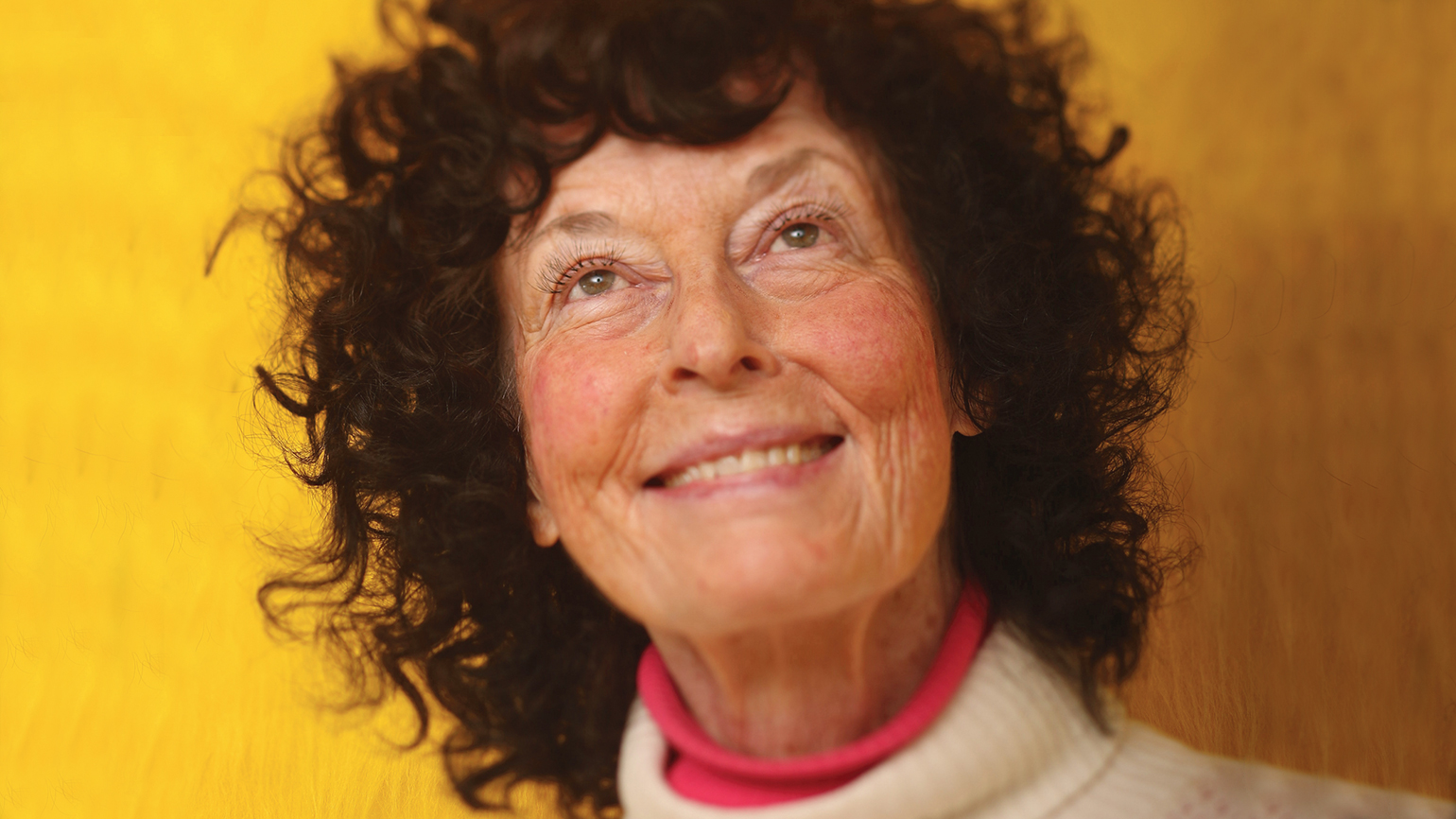
I flipped the CD box over. Had I really written and sung all those songs? It seemed impossible. These days I might sing to myself, driving to work as a dental hygienist. My 12-string Martin [guitar] was buried deep in a closet, the reel-to-reel masters of those long-ago recording sessions gathering dust somewhere. Linda Perhacs, the CD said. That was me all right. Me a million years ago.

It was 1970, to be exact. I was a dental hygienist working for a Beverly Hills periodontist on Rodeo Drive. The patients were a roster of Hollywood stars—Paul Newman, Cary Grant, Henry Fonda among them—who depended on their perfect smiles for their work.

My then husband and I lived in a tiny bungalow out in Topanga Canyon. It seemed tinier still when we fought, which was always. To get away, I’d grab my Martin and sit under an old oak, the scent of eucalyptus in the air, a sea breeze rustling the mustard in the fields. Songs would come to me. Lyrics spilled out of me: ā€œIn the soar of the leaves, and needle tufts and form, in the grasses and the reeds, and the spilling over stonesā€¦ā€

Not that anyone would mistake me for Joni Mitchell or Joan Baez. Yet the music was healing. I soothed myself with song and felt close to God. I need you more than I ever have, Lord.

One day, one of our patients, Leonard Rosenman, looked at me while taking his bib off. ā€œLinda, you must have talents besides scaling teeth,ā€ he said. Leonard wrote movie scores. His latest was for Beneath the Planet of the Apes, starring Charlton Heston.

ā€œI’ve written a couple of songs,ā€ I said. ā€œI’m not really a songwriter or anything. I just like doing it for myself.ā€

ā€œI’d love to hear them,ā€ he said. ā€œCan you get me a tape?ā€

That night, I sat in my kitchen and recorded four songs on my cassette player, convinced I’d never actually have the courage to share them with Leonard. Except the next time Leonard was in the office, I gave him the tape. He called me as soon as he got home.

ā€œLinda, your voice, these songs, they’re incredible. I want you to make an album.ā€

I didn’t believe him. Was he just being nice? Nice enough to convince Universal Records to sign me to a recording contract. Whenever I could get off work, I’d drive to the studio where some of the best session players in the business—usually a guitarist, drummer and bass player but in one song a full 100-piece orchestra—backed me up. It wasn’t really even a dream come true because I had never dared to dream of something this amazing. It was a kind of miracle.

It took several months to lay down all the tracks. With each one done, I got the master—the original reel-to-reel tape. Remember, this was the seventies.

The title track came to me one night while I was driving home from Leonard’s house in Bel Air. I looked up at the sky. Luminous bands of yellow, green and blue formed a perfect parallelogram. Music rumbled inside my head. I have since learned my ability to see vibrant colors whenever I hear certain sounds is a phenomenon called synesthesia. For some it’s a distraction, a nuisance. I think of it as a gift from God.

I pulled off the next exit and got out a piece of paper. I scribbled a picture of what I’d seen in the sky and jotted down some lyrics: ā€œParallelo-lelogram… Spiralelo-lelo-gramā€¦ā€

ā€œThat’s it,ā€ Leonard said later. ā€œIt’s going to be a huge hit.ā€

The first I saw of the finished LP was in a music executive’s office in Studio City. ā€œWe need to talk about a tour,ā€ he said. ā€œWe want you to go on the road and perform. It’ll help sell the album.ā€

ā€œA tour?ā€ My palms turned sweaty. I couldn’t do that. I’d never done that! It would be a disaster. ā€œI’m sorry,ā€ I said. ā€œI can’t do a tour. I just can’t.ā€

That was that, the end of my career as a recording artist. The record simply disappeared. I never saw it in a single store, never heard any of the songs played on the radio. Parallelograms vanished. By then so had my marriage.

Still, my faith grew stronger. God felt as present as that parallelogram in the sky, as if the reason I’d made the LP was to grow closer to him, which was just fine. More than fine. A kind of miracle. I didn’t pick up the Martin for decades. I continued my career as a dental hygienist, only occasionally wondering ā€œwhat if.ā€ Now, some 30 years later, the record had come back. As a CD in a manila envelope with a note attached. ā€œIf this is the right Linda, I’ve been searching for you,ā€ the note read. ā€œWould you please call me? Michael Piper.ā€

I called him. ā€œI can’t believe it’s really you,ā€ Michael’s voice boomed through the phone. ā€œI’m, like, your biggest fan.ā€

Michael had started an independent label selling small-batch CDs of records that were no longer available. He wanted to sell mine. ā€œI came across your album in a used record store. That song ā€˜Parallelograms.’ It gives me goose bumps.ā€

I told Michael I had the masters and would be glad to lend them to him. We stayed in touch. The CD of Parallelograms caught on, more and more people buying it and sharing comments online. The record had a second life—or rather the life that it had never had the first time around. I started writing new songs.

In 2008, Parallelograms was rereleased, this time by Sunbeam Records. One night, my phone rang. It was a DJ from an internet radio station. ā€œLinda,ā€ he said, ā€œwe’re doing a show at a small theater in downtown L.A. We want you to be one of the performers.ā€

ā€œI’ve never really sung for an audience,ā€ I said, that same dread from years before threatening to overwhelm me.

ā€œThis audience will love you.ā€

I couldn’t say no, not when all of this seemed meant to be.

A few weeks later, I walked onstage to the cheers of nearly 300 people. ā€œI’m sorry if I kept you waiting,ā€ I said. That got a few gentle laughs. I’d been waiting too, for almost 40 years, though I didn’t know it. Almost 40 years! I leaned into the microphone and my fear…it was gone. All I felt was love.

Since 2012, I’ve recorded two albums, most recently one called I’m a Harmony. I wrote my second and third albums as messages of peace and love for a world in desperate need of both. A lot of my fans are decades younger than me. I’m amazed and flattered when groups I’ve never heard of, like Wilco and Daft Punk, cover my songs. I still work in a periodontist’s office five days a week, polishing smiles.

The rest is music. Beautiful, radiant music that had waited for me all these years. A kind of miracle, isn’t it?

For more inspiring stories, subscribe to Guideposts magazine.