Embrace God's truth with our new book, The Lies that Bind

Books Bring People Together

I’ve been an editor for more than 30 years—where did the years go? I read books for living—it’s the best job in the world as far as I’m concerned.

I’m always surprised when I meet people who struggle through a book or hated English in high school. Those are the same people who can’t believe I can’t fix anything in the house (although I buy books about home repair), hate to deal with numbers, and find sports confusing.

I can read about people who can do all the things I can’t. Although I’ve lived in New York all my life, I read about people in small towns, on farms, or in distant lands. I’ve learned to trust authors to describe life in these places as they’ve often drawn on their own experiences. I’ve worked with authors to help them create a world for the reader that is at once entertaining and informative.

What I’ve learned through the hundreds of books I’ve read and edited is that people are more alike than different. There are types of people I encounter every day whom I’ve also encountered in books.

So many women editors I meet were first captured by Jo in Little Women—a book loving, tomboy—like so many of us. I’ve seen hints of Huckleberry Finn in many grown men as well as men who strive to be Atticus Finch from To Kill a Mockingbird.

I can understand people who are different from me because I’ve encountered them in books. Books change the lives of people who read them—they bring people together. It’s just one of the reasons I love being an editor.

Elizabeth Kramer Gold
GuidepostsBooks

—–
Check out the latest titles from GuidepostsBooks in our shop!

Bobby Flay: His Winding Path to Success

A while back I took on a big commitment. I committed to a year volunteering at a public vocational high school in Queens. I went every week to teach a class, and just cooked with the kids.

It was a pretty amazing experience. I saw myself in a lot of them. The uncertainty, the insecurities were all there. These kids were a lot like me. Maybe that sounds surprising, coming from someone who’s been a success in the restaurant business. Let me tell you more.

Growing up, I never really thought about becoming a chef—much less owning restaurants or being on TV. The truth is, I didn’t really have any goals. I didn’t like school. I was unfocused.

ENJOYING THIS STORY? SUBSCRIBE TO GUIDEPOSTS MAGAZINE

Most of all, I liked hanging out with my buddies on the corner of Lexington Avenue and 84th Street, on Manhattan’s Upper East Side, where I was born and raised. Just shooting the breeze. That was the life I imagined for myself when I dropped out of high school. But someone had other plans for me.

I was lounging around at home one day, watching TV, when the phone rang. It was my dad. “Come to my office,” he said. “We need to talk about your life.”

My life? I was 17! Was I supposed to have it all figured out? It felt like being called to the principal’s office—but worse. My dad is a great guy. He’s also very scholarly, so my leaving school must have hit him hard. I didn’t want to let him down. But it seemed that was exactly what I was doing.

Part of me was scared. Part of me tried to play it cool: just Dad being Dad. I went down to his office at Joe Allen—a famous restaurant in the theater district that he was a partner in. “Go get a job,” he said. “You can’t just hang out with your friends on a street corner.”

“Okay,” I said nonchalantly, shrugged my shoulders and headed out to meet my friends. Where was I gonna find a job?

The next day, Dad called again. He sounded exasperated. I guess he figured out that my hunt hadn’t just been a bust, but a complete nonevent. “The busboy had to leave to take care of his grandmother. You’re going to fill in.”

Dad didn’t ask me; he told me. “And don’t forget: no special treatment. Because you’re my son, you better work harder than anyone else. Put your head down, do your job and don’t aggravate anybody—including me.”

I had my marching orders, and showed up at the restaurant the next day. And the day after that. I didn’t have much interest in the business, but I didn’t want to upset Dad. I showed up late sometimes—only to spot Dad waiting for me, eyes on his watch—but I did my job.

It wasn’t so bad. Clearing tables. Setting tables. Two weeks went by pretty fast. Now what? I wondered. “Do you want a job?” the chef asked me as I was walking out of the kitchen. I think the guy took pity on me.

“Sure,” I said.

He had me start in the pantry. That’s when my career really began. I stocked the pantry, washed dishes, learned how to clean lettuce. Used a knife. Made salad dressing. I didn’t think I had any natural skill, but it was gratifying to learn something. And my salads did taste pretty good.

About six months into my job at Joe Allen, something unexpected happened. I remember waking up one morning, staring at the ceiling and saying to myself, I’m really looking forward to going to work today.

Where did that come from?! Little things, I think. Learning new cooking techniques, watching my knife skills improve. From that point forward, I looked at work differently. I enjoyed it. I felt I was contributing. Slowly, I was shedding my irresponsible 17-year-old skin.

I was prepping in the kitchen one day when my dad and his business partner—and the restaurant’s namesake—Joe Allen, sauntered in. “We want to talk to Bobby about something,” Joe said to the chef. Uh-oh. What had I done wrong?

They took me up to the office. “There’s a new school opening,” Joe said. “It’s called The French Culinary Institute. Do you want to go?”

“Nah,” I said, “I don’t think so.” School and I didn’t get along so well. In truth, I thought I wasn’t good enough to go to cooking school. I had the idea in my head that, as a cook, you either had it or you didn’t. It didn’t come naturally to me.

Cleaning produce was one thing. But if I didn’t have “it” at 18, how could I ever possibly be a chef?

They talked me into it. I didn’t want to let them down. I studied for my high school equivalency test—a requirement to enter culinary school—and passed. That felt good, like I’d achieved something tangible.

To my surprise, I was looking forward to going back to school. It sounded like a great opportunity.

It was. The French Culinary Institute had just opened its doors. There were only nine students, but it was a mix of interesting people. I was the youngest by about six years.

Our teacher was a great guy—an old-school, formally trained Alsatian chef named Antoine Shaeffers. He was obviously a terrific cook; he also had a wonderful, buoyant personality.

Even the most mundane cooking-school tasks—like “turning” vegetables, paring them into perfect, uniform shapes—started to seem kind of interesting. But by then, anything having to do with food had become interesting to me.

And since I was still working at the restaurant by night and going to school by day, food really took over my life, 24/7.

The culinary program lasted six months. It was intense. I learned a lot. I went back to Joe Allen, thinking I’d move up the ranks in his restaurant. “Get out of here!” he said. “You’re not gonna learn anything else here.”

Wait a minute! I thought. I finally got comfortable doing something I liked, and Joe and my dad were pushing me out?

I couldn’t believe it. “I want to stay,” I pleaded. “I want to be the chef here someday. This is my career.” Did I say career? I guess I had grown up, at least a little.

They were unmoved. It was time for me to leave Joe Allen. I sent out résumés and pounded the pavement. I was hired as a sous-chef at a hot new restaurant on the Upper East Side. It was called Brighton Grill. They’d hired a chef from New Orleans.

Two days after the restaurant opened, I showed up at work (on time!) at 8:00 a.m. “We’ve got a problem,” one of the owners said to me. Uh-oh, I thought—again. But I knew I hadn’t done anything wrong. It was the chef.

“We found him passed out on the laundry bag. He apparently hit the tequila last night. Lots of it. He’s fired. You’re the chef now.”

I was in shock. It was like I’d been the understudy in a Broadway show, and was about to get my big break. But was I ready to perform? I could cook okay. I didn’t have much of a repertoire yet. But somehow I managed.

I stayed at Brighton for a year, learning every day. Then I was itching to move on, to try something new. At The French Culinary Institute I met a woman named Gail Arnold who was cooking in one of Jonathan Waxman’s restaurants.

Jonathan was known as one of the most inventive chefs around. I jumped at the chance to work at Bud’s—his place on the West Side.

That’s where I fell in love with the flavors of the southwest. Believe it or not, I’d never been to New Mexico or Arizona or Texas. But there was something about this food that I just instantly got, instantly loved.

We were cooking on a high level at Bud’s, with great ingredients. Things I’d never tasted before—papayas and mangoes, chili peppers and blue corn tortillas. All that stuff was completely new to me. And it was awesome.

And the crew was amazing—energetic cooks, eager to experiment. We all learned from each other. It was a rare, special, inspiring place.

I wound up working at all three of Jonathan’s restaurants. One was a tiny French bistro called Hulot’s. It was closed on Sundays. But here’s how passionate I’d become about cooking: Another chef and I would get the keys from the manager and show up there on Sunday afternoons—when the place was closed—just to cook. For fun.

That’s when I knew cooking was my life. I woke up every morning thinking about what I’d cook that day. I still do.

I worked in more kitchens. I kept learning, and experimenting. Finally, I was feeling ready to open a place of my own that would feature the bold, southwestern flavors I love. I wanted a bigger stage.

Of course I talked to my dad about it. If he agreed I was ready to make this move, that would be my green light. By then I knew to trust his judgment better than my own!

We started scouring the city for a good location. Then Jerry Kretchmer—who owned a famous restaurant called Gotham Bar and Grill—came by to talk to me about opening a place. “Do you want to open up a southwestern restaurant with me?” he asked.

That was a little awkward. I explained to him I’d been looking for a place with my dad.

“Well, think about it,” he said.

I went back to Dad. He actually seemed relieved. “Do it with him,” he urged me. “That way you and I can just be father and son.” Once again, wise counsel from my most trusted advisor. And soon my first restaurant, Mesa Grill, opened its doors.

That was more than 17 years ago. I still love every minute of it. I still wake up thinking about flavors, about new dishes to try. I still love the family atmosphere in the kitchen. (One of my rules? No yelling. I find it totally unproductive. We try to keep it fun and upbeat—like our food.)

I’m still amazed I was once that confused kid, without any clear sense of direction—and that there’d been a time when I worried I wasn’t good enough to go to culinary school. Do I ever have doubts? You bet.

It’s hard for me to think of myself as a great chef. I think of myself as someone who’s always learning, always wanting to cook better, more delicious food.

And that’s what I saw in those kids I met at the public high school in Queens—a desire to learn, a commitment to give it their best. At the end of that year, thanks to The French Culinary Institute, I was able to give one of them a scholarship. It was too hard to pick one kid. There was some real talent there.

I narrowed it down to five, and came up with a plan to secure scholarships for all of them. Sure, they’re a little rough around the edges, and have a long way to go, just like I did when I was their age.

But in my dad and his partner, Joe, I was blessed with supportive—and demanding—mentors who not only helped turn my life around, but also helped me find my passion. I can’t think of a better way to pay them back than to encourage other young people to find their passion too.

Did you enjoy this story? Subscribe to Guideposts magazine.

Betrayed CEO Finds Forgiveness Through His Faith

It’s never good news when your business adviser calls out of the blue and says, “Wes, we need to talk.”

That’s what happened to me one spring morning in 2000 not long after I’d arrived at my office. I own a small agency that handles speaking engagements and literary rights for Christian entertainers, authors and leaders. I started the business in my twenties and it grew to about a dozen employees, earning me enough to provide a comfortable living for my family and to send my kids to college.

That year, though, the company hit a rough patch, so I’d hired a business consultant to give me some ideas for improvement. He’s the one who called that April morning.

“Wes,” he said, “your company is in more trouble than you know. We need to get together. Soon.”

Before I could ask what was wrong he told me he had already been in touch with my banker and my accountant. “How about we meet at your house tonight?” I stammered out an okay and spent the rest of the day in a knot.

That evening, Ken, the consultant, Ed, my banker, and Tom, my CPA, sat down in my living room. Normally they were laid-back Southern guys. Tonight they looked deadly serious. Tom pulled out some spreadsheets and other documents. “Wes,” he said, “do you realize how deeply your company’s in debt?”

My eyes widened. A while back I’d transferred much of the day-to-day running of the company to two people I trusted. One was my chief operating officer. The other was Tim, my vice president. Tim had joined the business eight years earlier soon after graduating college. The COO had been with me 14 years. We were a team and close friends besides. Most weeks we spent far more time with each other than we did with our families.

Ed, the banker, said, “Wes, I’ve been getting these phone calls from Tim asking questions about the company’s accounts I didn’t think were proper.”

“Did you know about this line of credit?” Ed continued, pointing to a paper with my signature authorizing the loan for a substantial sum of money. I didn’t remember agreeing to borrow that much.

“Take a look at these expenses,” Ken said, indicating high-priced hotel rooms and restaurant bills Tim and the COO had charged to the company.

I felt the color drain from my face. What on earth was going on? Yes, the past year had been difficult at work. I was in my fifties and eager to dial back, but I often disagreed with where Tim and the COO wanted to take the company. Still, none of our arguments ever suggested either of them wanted to deceive me.

“The bottom line, Wes,” said Ken, “is it’s pretty clear these guys are taking advantage of you. We need to do some more research, but at the very least you’re going to have to let these guys go. Legal charges may even be in order.”

I was stunned. The three of them went over some more figures then told me to lie low till we’d gathered enough documentation to make a clear case for dismissal. “In the meantime we’re going to have to figure out how to get your company’s finances back in order,” said Tom. “You’re in a pretty deep hole and it’ll take some doing to climb out.”

They left and I stumbled upstairs. My wife, Linda, was getting ready for bed. I told her everything. Her face turned ashen. “Wes,” she said, “I can’t believe it. Those guys are our friends. They betrayed you! Why?”

I shook my head. Until Linda used that word I hadn’t thought of it as betrayal. These men were among my best friends. For some reason they’d taken advantage of my trust and drained money from the business we’d worked so hard to build. Maybe there was some explanation. Maybe it wasn’t so utterly awful.

The next morning in the office I knew it was that awful. Shock and dismay must’ve been written all over my face because the minute I said hello to Tim and the COO they stiffened and gave each other a look. The company’s offices were small, a two-story brick building in a complex outside Nashville. My office was downstairs. The other two guys worked on the second floor. That day and the days following I sat at my desk listening to the profound silence upstairs. The office was unbearably tense.

A stream of shocking revelations came from my advisers. They compiled paperwork on Tim first. The day I let Tim go I called him into the conference room with Ken and me, laid out the evidence and said, “Tim, we’ve come to the end of the road here. I know what’s been happening and the company’s in real trouble. I need to fire you, effective immediately.” Tim didn’t say a word except that he needed to get some things from his desk. On the way out he surreptitiously turned off his computer, effectively locking it since only he knew the password. He didn’t say goodbye.

With the help of a computer expert, we got into Tim’s computer and discovered the full extent of what he and the COO had been up to. They’d aimed to drain resources and clients from my company into a new shadow company they’d created. They intended to put me out of business then walk away with my clients. I now had enough evidence to fire the COO. The day I planned to let him go, he resigned. I immediately went to see a lawyer. The lawyer, surprisingly, told me that though I could sue both men successfully, he wouldn’t recommend it.

“It’ll eat up years of your life when you should be working to repair your company,” he said. A lawyer, willingly turning down business! Maybe it was a sign from God.

Except I didn’t want to hear from God. I was over the initial shock and now I was just angry. Bitterly angry. Tim and the COO even had the nerve to set up their new company right across the parking lot from my office! What had I done to deserve this?

I thought back over all our years together, our good times in the office, our celebrations when we landed a particularly big client. I knew they chafed at my authority, especially when I started handing them more responsibility. They didn’t like me weighing in on all their decisions. But it was my company! I’d built it and I had a right to say where it should go. No, I simply needed to admit that this was the reality of human relationships, especially in business. People were cutthroat, kindness was an illusion and trust was for fools.

I went on like this for months. One day I found myself driving along I-40, returning to Nashville after dropping off my daughter at college in Knoxville. The rolling green hills unspooled out the window and it seemed like I was heading from nowhere to nowhere. I felt weighted down and alone. Alone with my anger.

I often stayed up late at night poring over financial documents. Sometimes I screamed at the wall. My relationship with Linda was strained. I was terse and grim at the office too. It was no way to live, but what was I supposed to do when every day I pulled into work and saw my former friends’ cars parked right across the lot? Surely no one expected me to forgive them?

The moment that thought entered my mind I felt a kind of stilling of my heart. Forgiveness. I’d heard plenty of sermons about forgiveness. Heck, I’d scheduled plenty of speakers on the topic. But senseless betrayal by close friends? Who could forgive something like that?

The hills rolled by, silent and serene. I heard no voice, felt no presence—indeed, I’d never felt emptier. Yet all of a sudden a prayer came unbidden to my lips: “Lord, fill my emptiness with your presence.” I spoke those words and it was as if a film was immediately lifted from my eyes. Not only was forgiveness possible, it was required. It was the only way to fill the emptiness and stop the anger. Forgiveness was the presence of God. I would have laughed except I was so dismayed. I knew what I had to do. I just didn’t know how to do it.

In fact, it took me three years, a Christian men’s retreat and a final face-to-face meeting with Tim to reach that place of forgiveness. Along the way I let go of my self-righteousness and admitted that I’d been unfair, expecting two subordinates to take the reins as I neared retirement and yet still follow my direction. That didn’t excuse their betrayal, but it felt right to acknowl­edge my own role in our failed relationship.

I read those powerful words in Matthew, “Love your enemies,” and I realized that in the end I had to forgive both men whether or not they ever apologized. I opened my heart to reconciliation.

Sometime later Tim got in touch with me (I still haven’t heard from the COO). By that point their new business had foundered and Tim was at loose ends. I didn’t offer him a job, though my company’s back on sound financial footing. What I offered was friendship. We’re still in touch and I can honestly say I hold no bitterness toward either man.

Of course I can’t take credit for my newfound peace. I prayed for God’s presence and God answered in a way I least expected. He showed me the way to forgiveness and forgiveness set me free.

Download your FREE ebook, Paths to Happiness: 7 Real Life Stories of Personal Growth, Self-Improvement and Positive Change

Being Kind

I know when you look at a photograph of a hawk your first thoughts are not of kindness. But if it were not for kindness, this photograph would not exist.

My son went on a mission trip with his school to Honduras, so I had to be up super early to see him off. Since I was already up, I drove to Dacula, GA, to photograph the birds at Little Mulberry Park. I arrived well before sunrise, so I waited in my car.

Finally it started to get lighter. I got out of my car and immediately heard the geese making all kinds of noise to the left of the lake.

There are docks in either direction where birds love to hang out. I prayed about which way I should start–right or left? Trying both, I still could not find the birds I normally see. I knew of one more place further around the trail, so I headed there.

As I walked around a bend, I stopped in my tracks. There before me was a beautiful red-shouldered hawk sitting on a post.

I started photographing him, then heard the footsteps of joggers behind me. I turned and asked if they would not mind walking on the other side of the trail so they would not scare the hawk off.

“Do you want us to wait a minute?” one of them asked. I thanked them and thought that was very sweet. Then another one said they could go in the other direction.

The trail is 2.2 miles around the lake, and they turned around and ran in the other direction! Another jogger came up, and I said I was sorry. When I turned around to thank him for waiting, he had already turned around and run in the other direction too.

Because the joggers were kind enough to do that for me, I was able to photograph the hawk for 20 minutes. The first two joggers had actually jogged the whole trail and were back to where I first met them. I thanked them again.

If your gift is to encourage others, be encouraging. If it is giving, give generously. If God has given you leadership ability, take the responsibility seriously. And if you have a gift for showing kindness to others, do it gladly. (Romans 12:8, NLT)

There are so many fruits of the spirit that we can display. I am thankful the joggers showed kindness to me. It was something so small, but it meant getting my shot. They were willing to put me before themselves.

But the fruit of the Spirit is love, joy, peace, patience, kindness, goodness, faithfulness, gentleness, self-control; against such things there is no law. (Galatians 5:22-23, NASB)

What fruit of the spirit can you display to others today?

‘Be a Neighbor’ Campaign Honors Fred Rogers’ Legacy

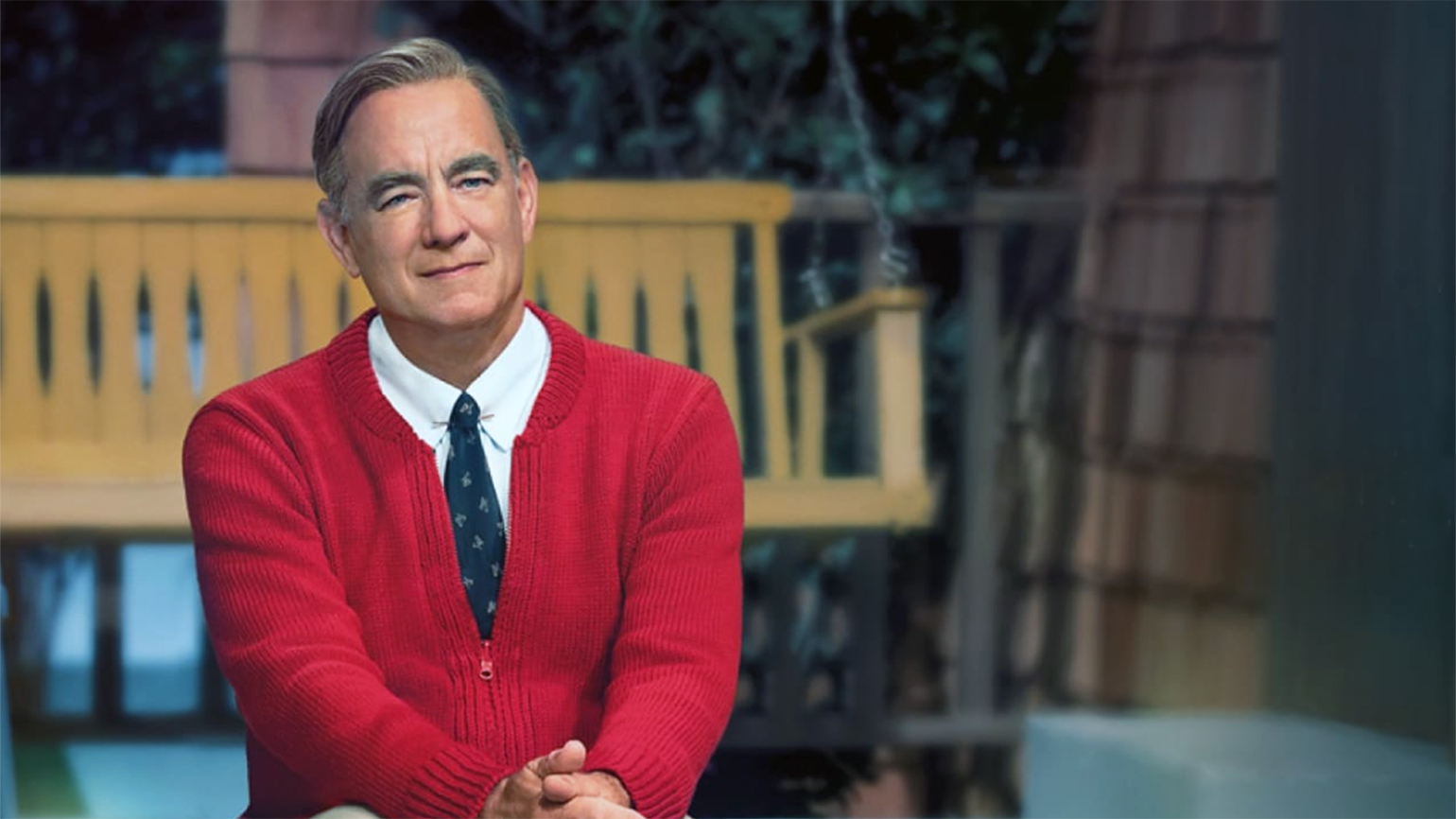
It’s been nearly two decades since Mister Rogers’ Neighborhood last aired new episodes on public television. In that time, Rogers’ life has been celebrated with books and a documentary, and soon with the film A Beautiful Day in the Neighborhood.

In association with the new movie, the Be A Neighbor campaign is encouraging people to serve their community. The national campaign has dubbed November 16 “Be A Neighbor” day, a time for serving those in your community.

The campaign, a joint project between VOMO, a technology platform for organizing and mobilizing volunteers, and Sony Pictures, was inspired by the new movie about Rogers’ life, Robert Peabody, the CEO of VOMO, told Guideposts.org.

“What would it look like to tangibly live out Mister Rogers’ legacy of being a neighbor in our day-to-day lives and communities?” Peabody said in a press release. “It could be as easy as learning your neighbor’s name, writing a letter, mowing your neighbor’s lawn, or even volunteering at your local food bank.”

Peabody said the goal of the campaign, which will last as long as the film is in theaters, was to honor the legacy of Fred Rogers by helping people embody his neighborly spirit.

People interested in joining the project can visit BeANeighborCampaign.com to sign up to complete a task. The site features specific service opportunities for five target cities, and more general tasks that people can independently complete anywhere.

“I believe that volunteering is the best thing that you can do for humanity,” Peabody said. “Going out and serving somebody else [is] the most selfless thing that you can do.”

Volunteers are also encouraged to post pictures of their neighborly activity and use the hashtag #BeANeighborCampaign. Peabody said his team will be giving away t-shirts and movie tickets to select participants.

For more information visit BeANeighborCampaign.com.

Be a ‘Doer’

I’ve often heard it said that there are three kinds of people in life: Those who make things happen; those who watch things happen; and those who ask, “what just happened?” At different stages of my life, I’ve probably fallen into all three categories, and I bet you have, too.

But it’s my desire to always be in that first group—the movers and the shakers, the doers, the ones who are making things happen.

Maybe that’s why I love the story found in Mark 2 about the four men who made sure their friend received his miracle. These friends were most definitely in the first group, and I think there are three things we can learn from these “make it happen kind of guys” that we can apply to our lives.

First, let’s look at this passage together:

When Jesus returned to Capernaum several days later, the news spread quickly that he was back home. Soon the house where he was staying was so packed with visitors that there was no more room, even outside the door. While he was preaching God’s word to them, four men arrived carrying a paralyzed man on a mat. They couldn’t bring him to Jesus because of the crowd, so they dug a hole through the roof above his head. Then they lowered the man on his mat, right down in front of Jesus. Seeing their faith, Jesus said to the paralyzed man, “My child, your sins are forgiven.” (Mark 2:1-5, NLT)

1) Be Available
Can’t you just picture this scenario? The paralyzed man says to his buddies, “Hey, the Healer is in town! Now, I’m gonna need your help to get there today, but if you can get me to Jesus, I will be healed.”

I’m sure these four men had jobs and families and other commitments, but they obviously put all of those things on the backburner in order to help their friend get to the Master and receive His miracle.

If we truly want to be a mover and shaker in the Kingdom of God, we have to make ourselves available to Him. Like these four men in the story, you may be the only one who can lead someone down the path to meet Jesus.

READ MORE: REACHING OUT TO OTHERS

2) Be a Risk Taker
So the four friends carry him on a mat to the house where Jesus is staying, only to find the crowds are blocking them from the One they’d come to see. So, being the kind of guys who make things happen, they come up with a plan to get their paralyzed pal to Jesus. And, it was a pretty gutsy plan at that!

Don’t you imagine they could’ve gotten into big trouble for cutting a hole in the roof of a home that wasn’t theirs, not to mention lowering a person through the hole to Jesus, disrupting the meeting? But that didn’t stop these four faith-filled fellows. They risked it all to help their friend.

In order to do big things, we have to possess big faith. We can’t always play it safe. Sometimes, we have to be willing to take a risk for the Kingdom’s sake. Sometimes, God will ask us to do something that is way out of our comfort zone, and we have to simply say “yes” despite our fears.

3) Be a Blessing
You know what else I love about this story? All four men worked together so that their friend who desperately needed a miracle could receive one that very day. Now, the Bible doesn’t tell us, but I’m sure that everything wasn’t perfect for these four guys. Surely, one or more of them also needed a touch from Jesus (maybe not a physical healing but a touch in some other area of their lives) yet they weren’t concerned about their own blessing; they were happy to help their friend get his blessing.

See, when we’re willing to put aside our own agendas and help a friend, that pleases God. And, when we’re able to celebrate and rejoice over a miracle in someone else’s life, then we’re setting ourselves up for promotion. Be available to be a blessing…if not you, who?

If you’ve been watching things happen or asking, “what just happened?’” for far too long, then step on over into the “those who make things happen” group. Let’s be difference makers, working for the Difference Maker.

Pray this with me:

Father, help me to be available for You to use, and help me to step outside my comfort zone and be a risk taker for the Kingdom. Also, Lord, help me to get my eyes off myself, and keep them on You so that I can be a blessing to others and rejoice with them over their breakthroughs. Lastly, I pray for Your discernment and grace as I move forward in all of these areas. In the Mighty Name of Your Son Jesus, Amen.

Autumn Inspiration Turns to the Bible

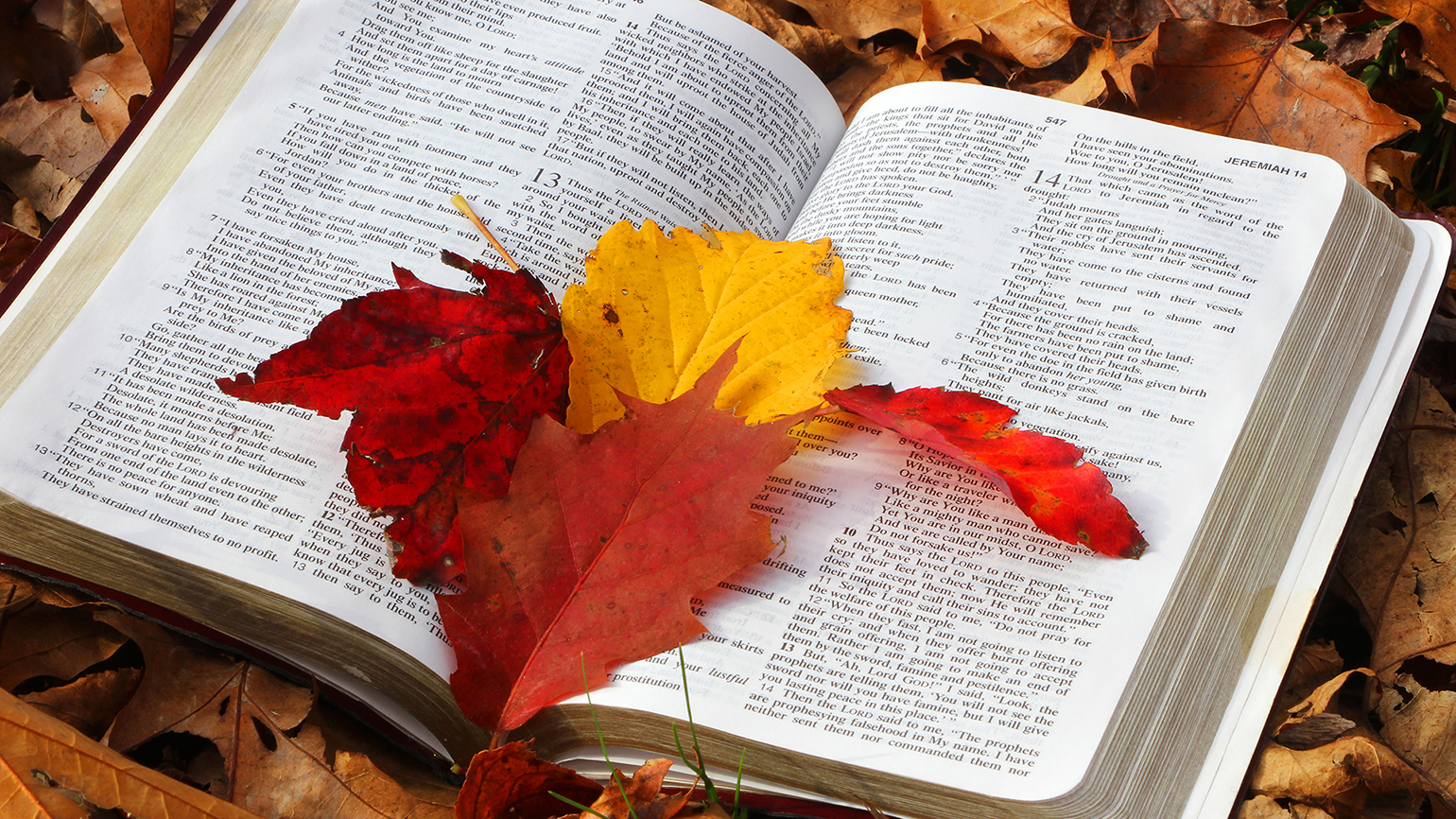
Here in the mountains of North Carolina, fall is a spectacular time when God paints the leaves in vibrant red, bright yellow and vivid orange. Add in burgundy, green and brown, and it’s beautiful beyond words. And since our house is surrounded by woods on three sides, I get a fresh new view every day.

Yesterday, I stood at the window and watched falling leaves float gracefully in the wind. It almost looked like it was snowing leaves. As I walked out on my deck, I smiled as I heard the sound of dry leaves crunching underfoot.

Read More: How Grace Finds Us

But there’s one more thing that I think of when I look at God’s autumn handiwork on the leaves, and that’s His “leaves” in the Bible. I thought I’d share some of them with you today:

For He Himself has said, “I will never LEAVE you nor forsake you.” (Hebrews 13:5)

No man shall be able to stand before you all the days of your life; as I was with Moses, so I will be with you. I will not LEAVE you nor forsake you. (Joshua 1:5)

And the Lord, He is the One who goes before you. He will be with you, He will not LEAVE you nor forsake you; do not fear nor be dismayed. (Deuteronomy 31:8)

Behold, I am with you and will keep you wherever you go, and will bring you back to this land; for I will not LEAVE you until I have done what I have spoken to you. (Genesis 28:15)

And David said to his son Solomon,“Be strong and of good courage, and do it; do not fear nor be dismayed, for the Lord God—my God—will be with you. He will not LEAVE you nor forsake you, until you have finished all the work for the service of the house of the Lord. (I Chronicles 28:20)

I will not LEAVE you comfortless: I will come to you. (John 14:18)

I think that’s so awesome that I can see His promises and tie them into the seasons of my life. Thank You, God, for the colorful display of the autumn leaves and for the sweetness of the “leaves” that You’ve left for us in Your Word.

For more inspiring stories, subscribe to Guideposts magazine.

August Is Happiness Happens Month

Most of us can recall the children’s song “If You’re Happy and You Know It.” Well, the Secret Society of Happy People want us to do more than just clap our hands. They have, since 2000, worked to have August designated Happiness Happens month.

The celebration was created to counter cynicism and negativity and spread expressions of happiness. They believe that happiness is contagious. Therefore if folks talk about their happy moments and experiences, positive attitude will prevail and good feelings will go viral.

To do our part in the happiness conspiracy, we contacted Maria Diaz, an embroidery designer, and asked her to craft a Happiness Happens design. Use our instructions and pattern to create your own Happiness Happens pillow.

Or you can go to our Facebook page and tell us what makes you happy. Simply finish the sentence: Happiness Happens when…

A Teacher’s Hair Loss Proves to Be a Blessing for a Student

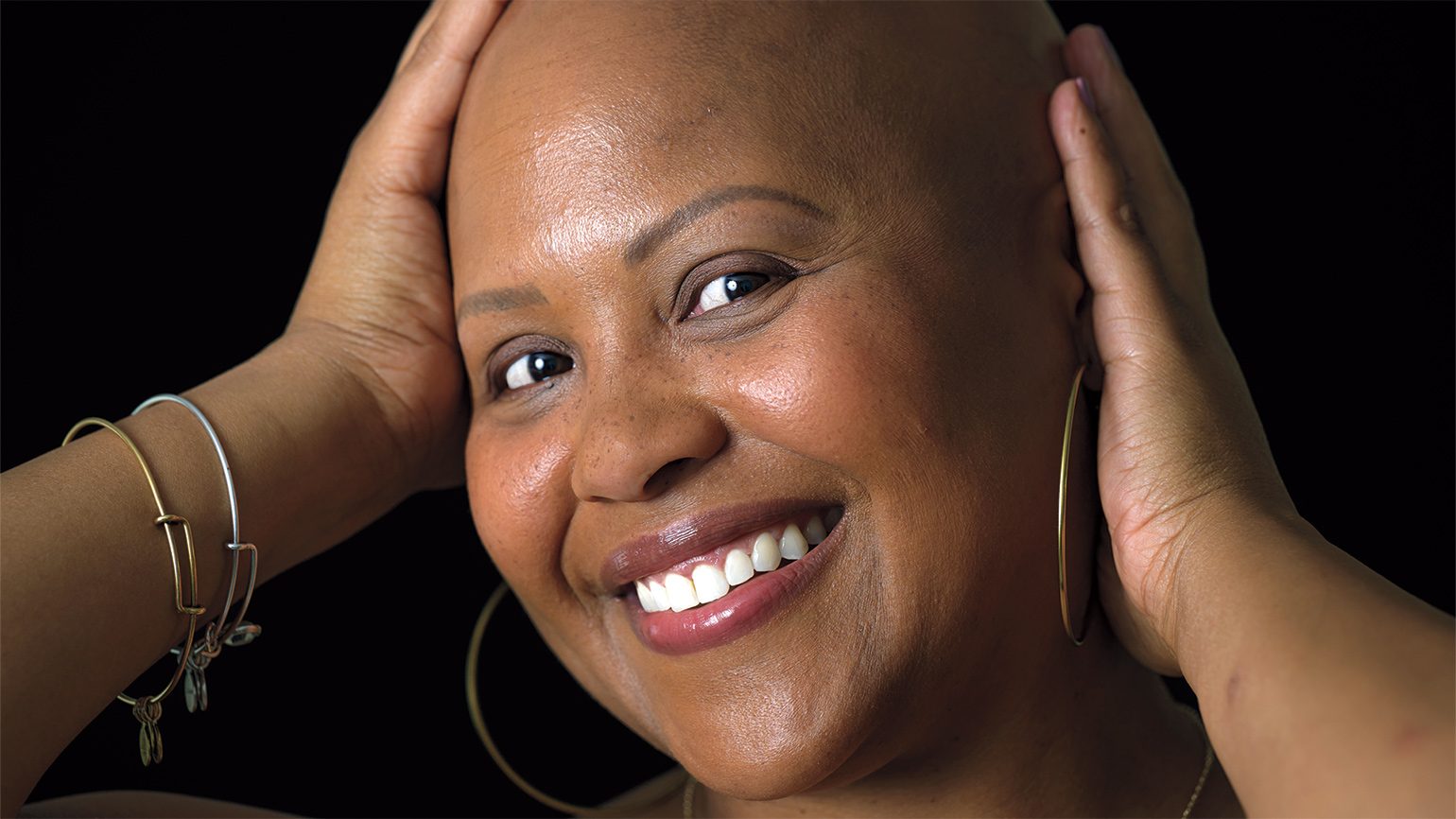
The first day of school, fall of 2014. I’m a high school Spanish teacher, and I was getting ready to go to work. I looked in my bathroom mirror, and all I could focus on was my bald head. Never mind my carefully penciled eyebrows, my more-confident-than-I-felt smile. My eyes were drawn to my hairless scalp, and I knew everyone else’s would be too. My colleagues, my students…was I ready to have them all staring at me, wondering or even asking if something was wrong? I’d never liked calling attention to myself.

So much had changed in the two and a half years since I’d noticed the first signs of hair loss. I’d never given my hair much thought before that. In high school, I’d been an athlete, so I mostly kept my hair in a ponytail. During college, then my early years as a teacher and wife, I wore it long, curls cascading to my shoulders. My first daughter was born in 2009. A few minutes of styling before work or church was all I had time for.

That’s what I was doing one morning in January 2012 when I saw pea-size bald patches on my head. I made an appointment with a dermatologist. She did a cursory examination. “I wouldn’t worry about it,” she said. “Call me if they get bigger.”

In March, I learned I was pregnant again. I was so excited, I forgot about the bald spots until I found a clump of hair in the bathtub drain. The patches had grown to the size of a quarter.

Worried, I went to a new dermatologist in Philadelphia. She examined my scalp and asked about everything from my hair care routine to the stress in my life. “You have alopecia areata,” she said. “It’s an autoimmune disease. No one’s sure what triggers it, but your immune system mistakenly attacks your hair follicles. The important thing to know is, alopecia is not a health concern.

”There was nothing physically wrong with me?“

For some people, it’s a temporary condition with partial hair loss,” the doctor said. “Others lose all the hair on their scalp and body permanently.”

Temporary condition. I clung to those words. The doctor said there were treatments that could help reduce hair loss, but I didn’t want to risk any side effects while I was pregnant.

Mercifully, I was able to style my hair to cover the worst of the patches so no one noticed as the school year wound down. By summer, the hair on the sides and back of my head was thinning. I hadn’t wanted to worry my mother, but I needed her reassurance. She had lost her hair while she was undergoing cancer treatment years earlier. She would understand what I was going through.

I went to her house. “I need to show you something,” I said. I pushed my hair aside so she could see the bald patches. “It’s alopecia.”

“You’ll be okay, Tabitha,” she said. “You can deal with this.”

She led me upstairs, where she kept a collection of scarves and head wraps. Mom showed me different ways to tie them. “Remember, with or without hair, you’re always beautiful in God’s sight,” she said. “You are fearfully and wonderfully made.”

I marveled at my mother’s faith and strength. Even dealing with cancer, she’d been a rock. I wished my faith were as unshakable.

As the bald spots grew, so did my questions and doubts. I wondered if I’d done something wrong, something to bring this upon myself. I started losing the hair on my eyebrows, the rest of my body. “God, what’s happening to me?” I asked. “I just want to understand.”

Unlike my mother, who thrived on being front and center, I was more comfortable staying in the background. I’d never liked drawing attention to myself, but with my hair loss, there was no avoiding it. Even with a scarf covering my head, I felt exposed.

All summer, I left the house only when I had to. I told people I was focusing on my three-year-old and my pregnancy. Really, I was hiding, pulling away from everyone, even God.

I dreaded going back to work. I called the principal to tell him about my condition and that I’d be wearing a scarf. “Whatever you’re comfortable with,” he said. “We’ll support you.”

The first day of school, I sat in my car in the parking lot, trying to work up the nerve to walk into the building. I retied my scarf, making sure it was secure. It could be worse, I told myself, imagining the humiliation of teaching with my balding head uncovered.

I hurried into my classroom before the first bell. Teachers sometimes share personal anecdotes with their students, to build a relationship while maintaining professional boundaries. I hadn’t figured out what to say if a student asked about my scarf. To my relief, my students were too caught up in their own lives to ask about mine. One young woman wearing a wide headband, the kind some athletes wear, smiled warmly. I gave her a tentative smile back and turned to the day’s lesson. After the last bell, I rushed home to hide again.

That became my pattern. Soon I’d lost nearly all the hair on my body. I went back to the dermatologist.

She explained that I had alopecia universalis, a type of alopecia areata with the most advanced hair loss. “Your hair is unlikely to grow back,” she said. Then she took a long look at me. “I don’t say this to everyone, but, sister, you can really rock the bald.”

I was crushed. I forced back the tears. This was never going to get better. I yanked my scarf around my head and left. In the safety of my car, I let go and sobbed. “God, what do I need to do to fix this? Please tell me!”

The semester passed in a kind of numb grief. It seemed as if I had lost more than my hair. I’d lost my sense of myself. A teacher was supposed to explain things and find answers, yet I wasn’t able to find an explanation for my condition. I couldn’t shake the feeling that it was a punishment for some failing of mine, like an Old Testament curse.

My baby was born in December, a beautiful girl. I was grateful she was healthy. Maternity leave gave me a chance to shut myself away again. I made excuses for not seeing friends and family. In my isolation, my feelings of unworthiness increased.

I went back to teaching when my leave ended, counting the days until summer break. I wore scarves and stayed away from mirrors. I avoided talking to people too. The few I chose to tell about my condition were supportive, but that didn’t change how I felt about myself. It wasn’t that I thought I looked ugly. I felt shame because I believed my baldness was calling attention to the fact that something was wrong with me spiritually.

If only I knew how I’d let God down. Had I not been obedient enough? Good enough? Was I no longer worthy of his love? Thinking I had to earn his grace, I read my Bible with greater purpose than before, delving deep into his Word. I watched online sermons, taking careful notes.

I stuck with this regimen through summer and the following school year. My alopecia didn’t improve—I lost what little hair remained—but slowly something inside me shifted. Instead of looking at myself and worrying that I was spiritually lacking, I looked to God. Trusting him absolutely, the way my mother did, was what made us spiritually complete.

One day, I was reading Luke 12. Verse 7—“Indeed, the very hairs of your head are all numbered. Don’t be afraid; you are worth more than many sparrows”—resonated with me. God knew every hair I’d lost, even better than I did. I was fearfully and wonderfully made. Like the sparrows, I was created by God. Known by him. Loved by him.

My spiritual growth was what had me standing at my bathroom mirror on the first day of school in 2014, wondering if it was time to stop hiding and reveal my bald self to my students and colleagues. I dressed in the plainest, least attention-getting outfit I owned and pulled on a scarf. I was keeping my options open.

In the school lot, I sat in my car for a moment. It’s now or never, I prayed. God, I trust your love. I pulled off my scarf, grabbed my bag and walked to the building. I reached up and touched my smooth scalp. I could hardly believe it…. I was out in public with my head uncovered! My first-period students filed into my classroom. They did a double-take when they saw me. I pointed to my bald head. “Y ves que no tengo pelo (You see I have no hair),” I said. “No estoy enferma, pero es que tengo alopecia (I’m not sick, but I have alopecia). Soy fuerte y sana (I’m strong and healthy).”My students nodded. It was no big deal to them. I was rocking the bald!

Between class periods, an old student dropped by. I remembered her, the one with the sporty headband and warm smile. “Ms. Williams! It’s so good to see you,” she said, giving me a big hug.

“There’s something I want to share with you,” she said. “You’ve probably noticed I always wear a headband.”

She reached up to pull it off. Underneath were bald patches.“I’ve been afraid to tell anyone I have alopecia,” she said. “But seeing you today, hearing how up-front you’re being…it’s given me the courage to share my secret.”

Never could I have imagined my alopecia being a source of inspiration to others, a way of serving God. But he had known all along.

“Thank you,” I said. “You don’t know how much you’ve helped me.”

The bald patches were barely noticeable, her face was so aglow with newfound confidence. “I want you to know that you’re beautiful,” I said. “Fearfully and wonderfully made.”

For more inspiring stories, subscribe to Guideposts magazine.
A Soup Kitchen Blessing

At our church’s Saturday kitchen we serve our guests a hot meal and some bread and fruit to go, but I like to think we also give a dose of hope. Or at least they can do that for us.

The whole operation is volunteer-run and that we can feed some 200 people Saturday after Saturday seems a minor miracle.

My role among the volunteers is small. I’m not a cook or server or pot washer but sort of a busboy assembling and re-assembling place settings through the course of the morning.

“Morning…Welcome…Glad you’re here…Thanks for coming,” I say dozens of times during the day, squeezing in between tables, wiping up spills with the sponge, setting up another placemat with napkin and fork.

I also like to sing. (No surprise there.) So in the midst of scraping food scraps into the composting bin and dumping trash, I’ll burst into a tune and see if I can get our guests to join in.

On the Fourth of July weekend we sounded pretty good on a slew of patriotic songs. Christmas is coming up and I have no doubt we’ll be launching into a few carols. And “Amazing Grace” works for any season.

But last Saturday I led a song we’d never done before. There was a mom with two kids eating at one table. The oldest daughter looked to be about five years old and seemed mighty shy.

“Would you help me sing?” I asked. She nodded hesitantly. “I’ll bet you know this one,” I said.

I started in on “This little light of mine…” and sure enough, she was right there with me. “I’m gonna let it shine,” she burst out proudly. She sang the whole thing without hesitating.

I don’t know what the other guests thought, but I think it was one of the best duets I’ve ever sung. “You’re a star!” I told her. She blushed.

The song was over, and there were plenty of tables that needed new placemats, napkins, forks. I went back to work. The line of guests snaked around the serving line.

But we were all singing that song to ourselves. “It’s going to be stuck in my head all day,” said Ned, one of the stalwart volunteers.

Seemed to me that song offers a pretty good description of what we are all doing there. We’ve all got lights to shine and gifts to offer. What a privilege when we can share them with those whom Jesus might have described as “the least of these.”

Thanksgiving is coming up. Let your light shine.

Asking for God’s Wisdom

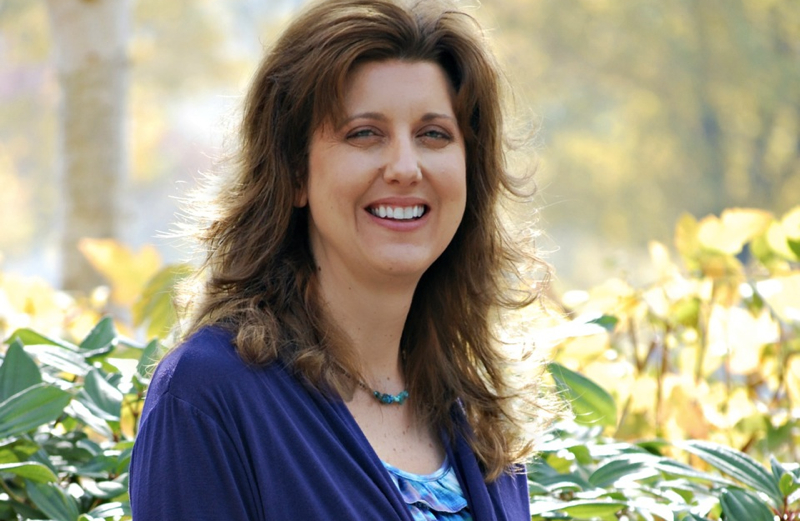
Melanie Dobson is the author of The Courier of Caswell Hall from the American Tapestries series.

I graduated from college in Virginia 20 years ago, ready to embark on a career in journalism. I began sending out dozens of résumés to newspapers across the country, but instead of landing a job, a stack of rejection letters accumulated in the tiny bedroom I rented from a girlfriend. Fear began to overwhelm me, and I felt as if I might implode from anxiety.

A friend’s parents owned an old home near Williamsburg, and I escaped there one weekend for a retreat. Just like the character Lydia Caswell in my latest novel, The Courier of Caswell Hall, I sat under the shade of a tree, overlooking the wide James River, and sought wisdom from God. I desperately needed direction, but wasn’t sure which way to turn.

Since I was sitting along the James, I opened my Bible to the book by the same name. This is what I read:

If any of you lacks wisdom, you should ask God, who gives generously to all without finding fault, and it will be given to you. But when you ask, you must believe and not doubt, because the one who doubts is like a wave of the sea, blown and tossed by the wind. That person should not expect to receive anything from the Lord. Such a person is double-minded and unstable in all they do. (James 1:5-6)

I stared at the words in awe. I was the one lacking wisdom, the one being blown and tossed by the wind, scattered and unstable as I floundered about in my search for a job. That morning along the river, God spoke directly to me and put an incredible peace in my heart. Trust me, he seemed to whisper when I asked him for wisdom. And so I decided to trust.

I returned to my little room in Virginia Beach, but this time I stopped throwing résumés to the wind. I began a slow, deliberate, prayerful search for a job and less than a month later, God opened the door for a position in Colorado (where I had always wanted to live), working with an organization I loved. I remained in awe. Looking back, I now see clearly why I had to wait and, most of all, why I had to learn to trust him and his timing.

Last year I had the opportunity to return to the James River to do research for The Courier of Caswell Hall. As I visited the old plantation homes with my daughter, God reminded me of his faithfulness over the past two decades.

I don’t always understand the way he works, but I’m so grateful that in the midst of chaos and confusion, I can ask him for the gift of wisdom. And he gives it generously every time, without finding fault.

Are You Under Construction?

I’d griped for weeks, ever since I first saw the sign that the Craggy Bridge over the French Broad River would be closed for several weeks. We live out in the country and that’s my favorite back way into town since traffic is often a mess on the main roads.

When construction started, it was as bad as I’d imagined. More cars were now funneled onto the already busy main roads, adding 30 minutes or longer each way. It didn’t help that I’d leave home each time forgetting that the bridge was closed, meaning that I’d get almost to it and would then have to detour, adding even more time.

I griped some more as I knew it would be weeks before the bridge opened again. It seemed like it took forever. But my first drive over the repaired bridge was eye-opening.

The old one had been filled with potholes, and I’d often bumped my way across it to the stop sign. The sidewalks had been crumbling, and I’m sure there had been safety issues under the bridge that I couldn’t see—like deteriorating concrete and rusting metal.

Now, riding over it feels like driving across silk because it’s so smooth. Not a pothole anywhere. The structure is safer and looks so much nicer. The construction and repairs made it worth every minute I’d had to detour.

And that’s when God whispered, “It’s exactly the same way for My children. Sometimes I have to shut you down for repairs so I can make you a better Christian.”

Our Father sees those safety issues, the flaws in us that will keep us from serving Him at full capacity. So He puts up His “Under Construction” sign and goes to work, strengthening the areas that are weak and filling the potholes in our lives with His grace and forgiveness.

And we often gripe as we go through those times, fussing as we think God’s forgotten us, that He doesn’t care. But he puts us under construction because He does care about us—and the final result is worth it, to experience His new and improved version of us.

Does God have you under construction today? Are you going through tough times? Then rest assured that He’s making something strong and beautiful out of you.

Being confident of this very thing, that He who has begun a good work in you will complete it until the day of Jesus Christ. (Philippians 1:6 )