

Embrace God's truth with our new book, The Lies that Bind

The Spiritual Lessons She Learned on Her Horse Farm

Cara Whitney had a busy life in Las Vegas. The successful radio personality and author, the wife of comedian Dan Whitney, better known as ‘Larry the Cable Guy,’ was also a mom of two. But when she decided a change of scenery was in order, she moved the family to a horse farm in Nebraska. There, Cara began to explore and deepen her relationship with God.

“As I was learning about God, I was working with my animals,” she told Guideposts. “I realized I could correlate a lot of what I was trying to figure out about God with that farm work. I could get my questions about God answered by comparing my relationship with the animals.”

In her newest book, Fields of Grace, Cara shares the spiritual lessons she learned on her farm and how readers can incorporate those lessons into their daily life. Cara shared a few of those profound lessons with us.

  1. God provides what you need.

While caring for a pony named Tucker, Cara fed him Rice Crispie treats as a special snack. “It made him happy,” she said, “but then it made him very sick.” Cara stopped feeding Tucker the snack and he got well again. She realized this was a lesson in how God knows what we need—sometimes better than we do.

“This is why God doesn’t give us everything we want when we pray,” she said. “Even if it makes us happy, it’s not always good for us.”

  1. Let God lead you.

Cara says her work with horses taught her about the role of leadership in faith. “A horse’s focus is on survival,” she said. “If you don’t step up and be a leader to them, then they’re going to take over.” However, it was always easier on the horses if Cara led them. Cara connects this to how God leads us in our lives. “It taught me to listen to God and surrender myself,” she said.

Leading her horses also showed Cara how trusting in God’s goodness will help us keep moving forward. “He’s directing us,” she said. “We can trust where He’s taking us, no matter what is happening in our life. He is in control.”

  1. Be in the moment with God

Going on trail rides with her horses is one of Cara’s favorite activities. Even these leisurely strolls taught her an important spiritual lesson. One day she took a trail ride after putting a fresh shoe on her horse. She was worried the shoe wouldn’t hold and kept looking down to check on it. “I realized if I kept waiting for the shoe to drop, I would miss out on everything that’s happening on the trail ride,” she said.

Her trail rides were a chance to take in the beauty of nature and remember why she moved to the farm in the first place. “These rides show me the amazing creation that God has given us,” she said. “To enjoy it, I had to stop waiting for that shoe to drop and just be in that moment with God.”

  1. Personal space can deepen your faith.

Life on a farm is not without its challenges, especially when you treasure your alone time. “I have a busy life,” Cara said. “We have two teenagers that we homeschool.”” She says working in the barn is her time to be with herself. “I love spending time with my animals,” she said. “I’m thankful for that. That is my time.”

Cara says the quiet is vital to working on her relationship with God–whether it’s praying, meditating, or just taking a moment to listen. “There’s a lot of calmness out in the pasture,” she said. “It is quiet enough that I can hear God.”
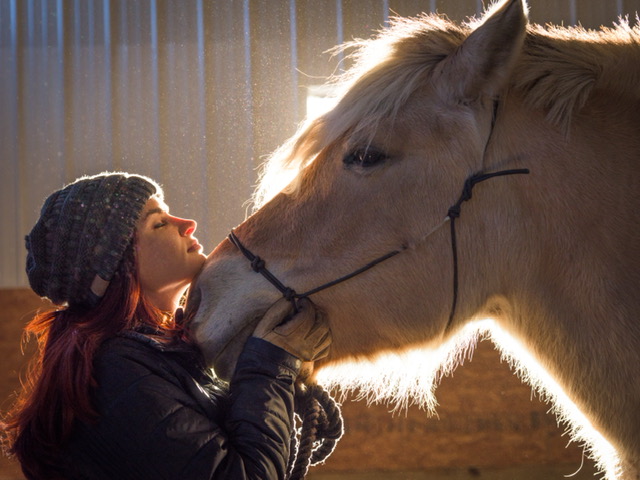
Cara Whitney has a moment of peace with one of her horses.
  1. Understanding comes from patience and listening.

Many of the horses Cara works with on her farm are rescue animals, which means they require a lot of extra care. “You get these horses with a past,” Cara said. “Some of them have trauma. You just have to be patient enough to see what helps them along, what makes them tick, what don’t they like, how do they learn. You have to do that patiently.”

One horse, Gus, was particularly skittish and wary of people. It took a lot of patience but Cara finally got him to trust her. “I just needed to take the time to understand him,” she said.

Cara likens this to the relationship we all have with God. “We are trying to figure out who God is,” she said, “and why He does the things He does. We don’t always get those answers, but as we learn to trust Him, we learn to accept that He has our back.”

  1. Connect with God daily.

Another thing that helped Gus trust Cara was spending time together every day. The consistent time was key to them better understanding one another. “If I only spent an hour with Gus a week—just like if I only went to church for one hour a week, or if I only worked on my marriage with my husband for an hour a week—there’s no relationship there,” Cara said.

This taught Cara a valuable lesson in taking time for God every day, even if briefly. “Consciously take that time, make it a part of your routine,” she said, “so that over time, you know God better and your relationship with Him becomes more genuine.”

For daily animal devotions, subscribe to All God’s Creatures magazine.
The Morning Prayer That Helped Her Survive Captivity

When we Americans were first taken hostage in Iran, we were terrified. We didn’t know who our captors were, or what their demands would be. What were they going to do with us? Outside the embassy compound, the rage of the crowd added to the ugly atmosphere. Their screaming would go on until two in the morning, then start up again at six a.m.—mobs of people yelling their hatred, their triumph, their anger.

One time after I’d fallen asleep, I was awakened by the distinct impression that someone had sat down on my bed. I turned over quickly, expecting to see one of my guards. But no one was there. Instantly, I was reminded of the Holy Spirit, the Comforter. And with the sense of His presence came a very real knowledge that I had a source of strength that the students and mobs didn’t have.

Then a hymn came into my mind, one I’d learned way back when I was a freshman in high school: “Have Thine own way, Lord! Have Thine own way! Thou art the potter; I am the clay. Mold me and make me after Thy will, while I am waiting, yielded and still.”

How those words spoke to me! I knew I couldn’t do anything to change my situation as a political prisoner. But when I accepted that fact, I could say, “Okay, Lord, here I am. I don’t know what’s going to happen in this situation. But use me. While I am waiting, yielded and still.

As a diplomat, I was especially aware that my government could not give in to terrorists’ demands in order to free us. I told my guards, “We may be here for the next fifteen years! And my job is to sit here and wait.”

They couldn’t believe I could take that attitude. But I did, and I set about ordering my morning hours in a kind of contemplative system for myself—Bible studies, prayer and meditation, reading.

I developed a morning prayer that went like this: “Thank You, Lord, for bringing me through the night. Thank You for giving me today. I give it back to You. Show me what You would have me do with it.”

There were a lot of days when it seemed He wasn’t having me do anything. But He was. He was teaching me to love, He was teaching me to accept, He was teaching me to try to be open to new ideas and to new understanding.

And that’s something that can happen in anyone’s life, in your life, if you let yourself be open to His will—if you are “waiting, yielded and still.”

This story first appeared in the July 1982 issue of Guideposts magazine.

The Joy of Cookies

Have you ever felt divinely inspired to create something?

That’s what happened to me last month during Christmas. I felt a nudge to bake butter cookies and hand them out to friends and acquaintances to spread some holiday cheer.

In spite of my limited skills in the kitchen, the cookies turned out pretty good, though the recipe didn’t make nearly as many cookies as I thought it would. Possibly because my sister and I ate about a quarter of them after they came out of the oven…for research purposes, of course. (You can check out the recipe I used here.)

I bundled up the remaining cookies in Santa-themed treat bags. And, on Monday morning, I brought a bag to my neighbor, who I don’t know too well. She seemed delighted to receive a bag. “I smelled them baking this weekend!” she said. Mission accomplished. Cheer had been spread!

Read More: The Christmas Gift That Kept on Giving

Next, I left bags on the desks of my Mysterious Ways co-workers Adam Hunter and Dan Hoffman. They both seemed just as delighted as my neighbor. In fact, Dan ate about half his bag before lunch. I was so encouraged by the response that I decided to bake some more. I passed out the next batch of cookies to anyone who popped into my head as someone to give the gift of sugar too.

The more cookies I passed along, the more people popped into my head, from friends to people whose names I didn’t even know. Like the guy I buy my Diet Snapple from in the morning. Or the employees at Chipotle who sometimes add a free soda to my order. Or the cashier at my neighborhood corner store who jokingly rings up my order total as $500 when it’s really $5. There were so many people!

Suddenly I was overwhelmed. There was no way I could bake enough cookies for all of them.

And then it hit me. Maybe I didn’t have to. Maybe there was another gift I could give those people. One they might never know about, but could still work wonders. I could pray for them. And thank God for them. My way of sending a little cheer their way.

So, the cookie project continues, in the form of sweet prayers. And who knows? Maybe by Valentine’s Day I’ll figure out a way to bake enough cookies for everyone!

Their Shared Love of Coffee Gave Her Husband Hope and Purpose Following TBI

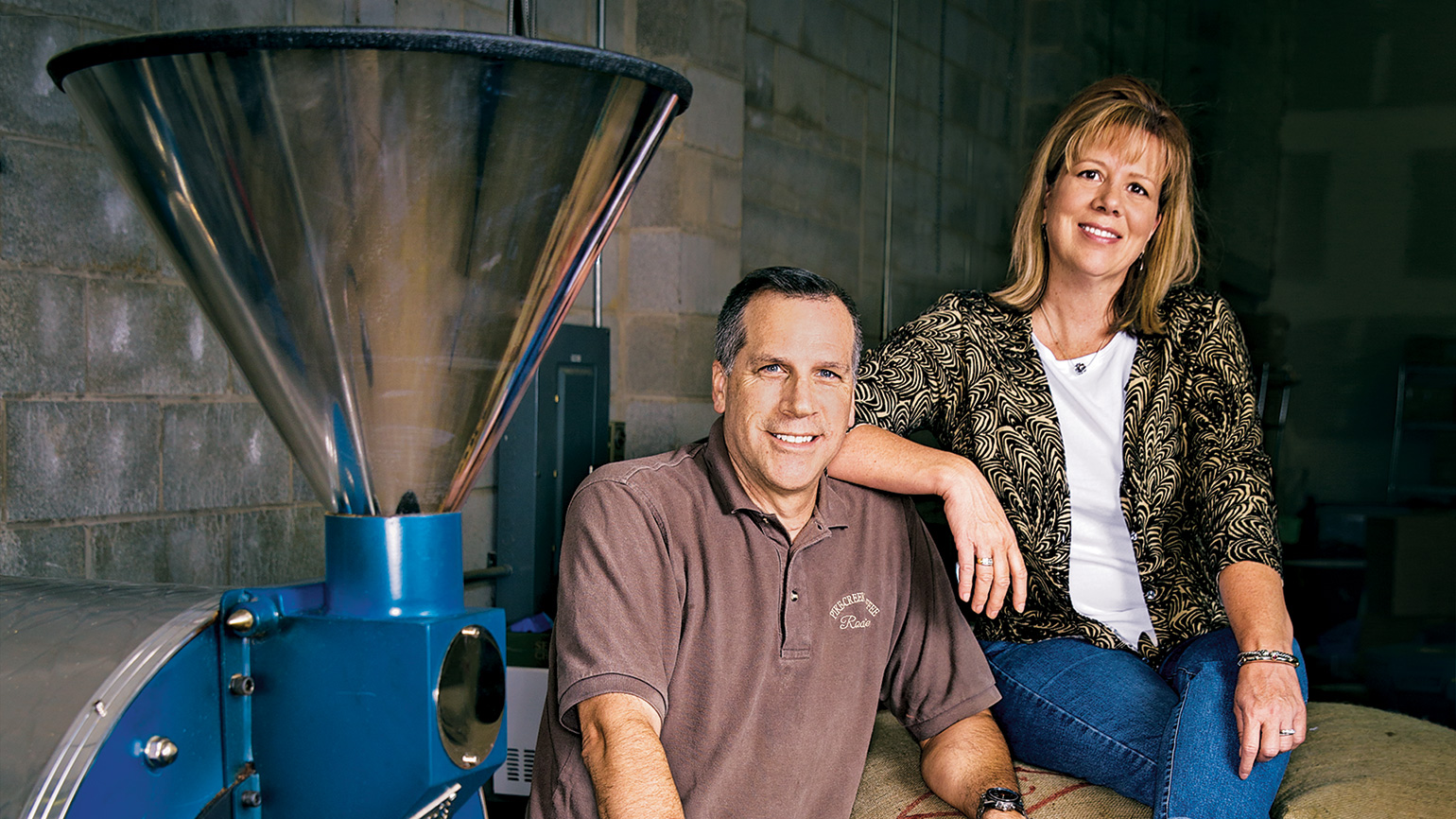
My husband, Peter, and I love coffee. Good coffee, the kind you grind just before you brew it, so all the complex flavors of the beans waft up as you take that first perfect sip of the morning. The prep time is no hassle. I love the ritual of it, the way it slows me down and helps me to savor the prom­ise of a new day.

A few years ago, that ritual was more than pleasure. It was my lifeline. Measuring beans, grinding them, pouring the water—I could stay on top of that. Everything else in our family was falling apart.

Peter had been in a car accident. Another driver broadsided him as he waited at a stop sign. By the time I reached the accident site, Peter was on the ground having a seizure.

He’d suffered a traumatic brain injury. He was a vice president at a home-building company, a numbers guy who could calculate 30-year mortgages in his head. After the accident, he struggled with basic math and lost his career. He had trouble walking. He was sent for a month to a hospital specializing in brain injuries, then for therapy at a rehab center in Philadelphia, followed by months spent working with physical-therapy students at the University of Delaware.

After all that, he was able to walk, but he still puzzled over how many quarters are in a dollar. He couldn’t recognize his niece in a family photo.

If it had just been an injury followed by recovery, I could have handled it. We are faithful people, and I prayed every day for strength and guidance. Peter did too.

Those prayers didn’t help Peter’s spirit. He sank into a profound depression. He’d been a successful professional, tethered to his cell phone, always working and achieving. A year after the accident, he was struggling to find meaning in life. Our nine-year-old son, A.J., was thrilled to have his dad home. But Peter was only half home. He confessed to me he didn’t see the point of living anymore.

“I hate it when people at church tell me how great I’m looking,” he told me one day. “They see me walking and think I’m fine. I’m not fine. I’m damaged.”

I couldn’t reassure Peter. Maybe it was because I felt the loss of his old self too. I felt that huge missing piece of him and it scared me. Our life had been good before the accident. Peter loved his work, and his salary enabled me to work part-time as a freelance graphic designer while A.J. was at school. We’d been all set to build our dream home. We’d picked out property, finalized building plans and arranged financing.

Now I was our sole source of income, and we had huge medical bills after Peter’s insurance ran out. The dream home, obviously, was out of the question. I worked nonstop and still we struggled. I was exhausted, growing frantic about Peter. He was caught in a vortex of negative thoughts, dark thoughts. But what could I do? Physical caregiving I could handle. But how do you care for the soul?

Early one morning, I was by myself in the kitchen. I measured coffee beans into the grinder and pushed the button. As always, the whir of the machine settled me. I closed my eyes, taking in the rich, fresh smell.

Opening my eyes, I saw the scoop I’d just used to measure the beans. The other day I’d watched Peter using it to make himself some coffee. I’d been pleased to see he could measure the coffee correctly.

Wait a minute, I thought. Was there more to that? Peter and I loved coffee. It was our morning ritual and made both of us happy. Peter felt competent making coffee.

I’d heard of people buying raw coffee beans and roasting them at home. I’d always chuckled at that. Foodies and their fancy fads! But…what if it could help Peter?

“We should try roasting our own coffee beans,” I said to him when he got up. “Wouldn’t that be fun?” “We don’t have a roaster,” Peter said.

“We could buy one if it’s not too expensive. Why don’t you do some research online?”

Peter looked at me quizzically. Then I saw a spark of something. A little bit of the Peter who liked to tackle a project. To work. To achieve.

“I guess I can try,” he said.

One byproduct of Peter’s injury was a tendency toward thoroughness bordering on obsession. He found it hard to remember basic tasks, yet he could arrange the glasses in our cupboards by shape, size and color. He went at the coffee-roaster project the same way. Soon he had read everything he could get his hands on about roasting coffee. Now it was time to get him roasting.

On eBay I stumbled across a guy named Chris who sold coffee roasters. One day, while A.J. was in school, Peter and I drove to Chris’s warehouse. He showed us a small roaster, about two and a half feet long.

Peter watched as Chris poured in some raw green coffee beans and turned the roaster on. The machine heated to just above 400 degrees, slowly rotating the beans in a small drum. Soon we heard crackling sounds as the beans dried and the oils burst to the surface—the sound reminded me of popcorn popping. Ten minutes later, Chris opened a small hatch and dark, fragrant coffee beans poured out.

Peter’s eyes lit up. He peered at the roaster. “Wow,” he said. “That’s what I want to do.”

“We’ll take it,” I said.

That afternoon, A.J. watched as we roasted our first batch of raw beans, bought from Chris. We ground the roasted beans and brewed them. The kitchen smelled like a café, though the roaster produced a lot of smoke.

Peter took the first sip. “This is amazing!” he exclaimed. The coffee truly was delicious. Complex. Bright. Full of flavors I’d never tasted in a cup of coffee before. This was a completely different experience.

“Let’s make some for the neighbors,” Peter said.

“Let’s put the roaster in the shed first,” I said, fanning my hands to disperse the smoke.

The next several mornings, Peter disappeared into the shed. He tried different temperatures, different roasting times. We got very caffeinated. I didn’t care. For the first time since the accident, my husband was happy and absorbed in a task. Concentrating in a way he hadn’t in ages.

The neighbors were impressed with the samples and asked for more. Soon we had more coffee than we could give away. I didn’t tell Peter to stop. I ordered small bags online and had them printed with a logo I designed, a hen (for Delaware’s state bird) sitting on some coffee beans. We decided to call our operation Pike Creek Coffee, after our community.

I took one of the bags to a farm produce stand and asked if they’d sell it. “Sure—on consignment,” they said. I brought several bags. They sold out.

I went to our local family-owned supermarket with some coffee.

“Your husband’s the guy who was in the car accident?” the manager asked. “Sure, we’ll sell it. I’d love to try some.”

Our town newspaper wrote a story about us. Soon we were selling quite a bit of coffee at the grocery store and people were asking if they could buy it online. I designed a simple website. The story in the paper must have gotten passed around. Suddenly we had a lot of customers!

The little roaster couldn’t keep up with demand. Peter was out there for much of the day. Sometimes he lost track and burned beans. But he kept at it. And the orders kept coming. Then a neighbor complained about the coffee smoke wafting from our shed and the county told us we could no longer roast in our backyard. We faced a decision. We’d either have to expand and turn this operation into a real business, with employees, or we’d have to shut down the website.

We couldn’t shut down. Peter needed this work. Every morning he headed out to the shed with a clear sense of purpose. With optimism.

“When I go roast coffee, I feel like I’m going to work,” he said to me one day. “I’m pretty good at it now. People like it.”

The look in his eyes said even more. Yes, Peter was no longer a vice president. We had less money. More stress. He still struggled with feelings and everyday challenges in a way we never could have expected.

But he was home every day for dinner. He went to A.J.’s lacrosse games. And he roasted coffee. We loved knowing that people from all over the country woke up in the morning and enjoyed a gift he gave them. Peter felt valued again and he knew that in God’s eyes, he always had been and always would be.

So we expanded. I found some cheap warehouse space to rent. We bought a larger roaster and hired help.

The profit from the coffee sales is modest. The spiritual profit is incalculable. You could say our lives are like good coffee in so many ways now. We’ve been through the fire and we came out deeper and stronger. Some days there is bitterness, yes. But the flavor is so much more complex. And with it comes greater liveliness. A sense that this day too holds promise and blessings. How do you care for someone’s soul? God showed me how, one bracing, satisfying cup at a time.

For more inspiring stories, subscribe to Guideposts magazine.

The Inspiring Tales of Douglas Scott Clark

Leader of the Pack

At 13 years old, Douglas felt confident enough to run his trap line alone in the snow-covered Tennessee mountains. Although his father warned him about the dangers of going out into the mountains alone, Douglas grabbed his .22 caliber rifle and went on his way. It wasn’t long before he found himself being chased by a pack of wild dogs. He dropped his rifle on the ground as he clung to the branch of a tree, hoping to stay away from the six dogs that were barking and scratching at the tree trunk below him.

His chances of survival were slim, so Douglas began to pray. Before he knew it, the figure of a man appeared with his arms reaching out towards the dogs. What happened next is something Douglas remains grateful for to this day; a life-saving encounter he’ll never forget.

Guided by a Heavenly Voice

When a snowstorm leaves Douglas and his younger brother, Buddy Earl, stranded at their bus stop from school, the two decide to walk the three-mile commute home. Normally, their father drove them to and from the bus stop, but because the school closed suddenly due to a heating system failure, their father had no way of knowing they were on their back. The temperature continued to drop, as the two made their way through the biting cold.

Douglas, determined to protect his brother, led the way and held on tightly to the plain cross that hung around his neck. A gift from his grandmother. His breath grew shallow and his chest burned, while Buddy fell to his knees. He prayed that they would make it home alive, when suddenly he fell into a warm light and a sweet voice told them not to worry. Douglas and his brother woke up wrapped around their mother’s arms⁠—but who had carried them there?

Miracle Rain Shower

Douglas headed up to Chestnut Mountain on a hunt for a bear that was raiding his family’s beehives. He followed his dogs as they picked up a scent in the huckleberry bushes and before he knew it, they were a mile deeper into the mountains than he intended to be. Douglas knew it was time to give up his hunt at the first sight of dry lightning. It hadn’t rained in the area for over seven weeks and the forest was dry. That coupled with the dry lighting, Douglas thought, was a recipe for disaster.

He was heading home with the dogs far ahead of him, when a sudden burst of lightning covered the entire sky and brought upon a trail of flames that quickly began to cover the ground. It wasn’t long before the forest around him became engulged in flames. He was about to accept his faith and return “home with God,” when he felt the rain. Or was it? When Douglas got home with his still-dripping clothes, his mother asked how’d he gotten so wet, since their side of the mountain hadn’t gotten a drop of rain.

An Angel from Mamaw

As a child, Douglas was always in awe of his grandmother’s special weaving skills. He was eight years old when he first saw Mamaw weaving, or ‘tatting,’ a strange shape together. She weaved a strand of thread through her fingers at a quick speed and held delicate white beads together with knots and loops. She explained that she was making an angel before sending him off to bed. When he woke the following morning, Douglas saw the angel that Mawma had made hanging from a string above his bed. Her wings were laced with small beads and her color was whiter than snow. He’s much older now and Mamaw has since passed, but he always keeps the angel she made by his bed as a reminder that she, along with the angel, are always watching over him.

An Angel’s Dazzling True Colors

Easter was a special holiday for Douglas, because it meant candy, chocolates and of course, his mom’s horehound candy. He joined Mama in the kitchen as she prepared this year’s batch. She asked Douglas to bring some of the horehound over to Granny Tipton, an elderly neighbor who most of the neighborhood kids referred to as Granny Witch, because she lived all alone in an old house with just a scary black cat to keep her company. Douglas hesitated to deliver the candy to her house, but after realizing Mama wasn’t giving him a choice, he went on his way.

Once there, Tipton opened the door and invited him in. He was taken aback by all the vibrant colors that shined bright as he entered her house—particularly a colorful candy dish. It was then Douglas realized that Tipton wasn’t a witch at all, but rather a lonely lady who simply needed a friend. Douglas went on to invite Tipton to church that Easter weekend, and Tipton so grateful for his friendship, gifted him a colorful heirloom Douglas has gone on to treasure for the rest of his life.

An Angel Named Jim

In 1949, Douglas and his family moved from the mountains to the city so his dad could work as a mechanist at a tool and die shop. Douglas and his brother, Buddy Earl, would spend most afternoons walking along the railroad tracks near their rented home to collect any coal that fell off the passing train. Their dad was on sick leave after coming down with pneumonia and they were running low on money so Douglas and Buddy collected as much coal as they could to take home for warmth, even if it wasn’t the best quality.

During one of their coal runs on a cold afternoon, a fire man from the engine cab of the train stopped Douglas and his brother to ask why they were dangerously running the tracks and digging in the snow. Douglas explained what they were doing and the man, named Jim, did something incredible that day, two days later and three days a week throughout the winter. Although Douglas and his family moved back to the mountains once spring approached, he remembered his guardian angel in his prayers and continues to do so, even all these years later.

Angelic Treasure in the Henhouse

When Douglas was in the sixth grade, he was forced to get new glasses which prompted the kids in his class to call him ‘Four-eyes’ and ‘Blind Berry’. Although his mom assured him the teasing would end soon, Douglas was discouraged to return to school. During dinner one evening, Mama sent Douglas to the henhouse to gather some eggs. Even more upset now after being teased by his siblings for being assigned a girl’s job, he grabbed a basket and headed towards the henhouse.

Upon arriving to the henhouse, Douglas noticed something unusual. A pure white egg lay among the brown ones, an unusual sight considering their chickens were Rhode Island Reds and Dominickers, therefore weren’t capable of laying white eggs. Douglas excitedly returned home to show Mama what he had found and was pleased to find out that his special white egg could possibly contain a message from an angel. All that needed to be done was to boil the egg and leave it in an icebox overnight. After much anticipation, Douglas cracked the egg open the following morning and slowly peeled the shell. He then rotated the egg to read a special message, his mother told him, from his guardian angel.

A Poultice and a Prayer

Douglas would often walk along the creek at the forest’s edge with Mamaw to gather plants and herbs to take home. Mamaw was a fourth generation medicine woman who knew all about home remedies and nature’s healing. People in the Great Smoky Mountains swore by her cures so when their neighbor, Jim Reed, discovered his daughter was sick, he turned to Mamaw for help.

Little Sally was so sick that Douglas could hear her wheezing even before he and Mamaw entered their cabin. Mamaw handed Sally’s mother some herbs to boil in water and sent Douglas to collect stump water from a chestnut tree for Sally’s chest. They spent the night at Jim’s cabin so Mamaw could keep an eye on Sally and pray for her well being. Douglas slept through the night and woke the following morning to find Sally sleeping peacefully without a fever or difficulty breathing. Douglas wasn’t sure what had happened, or what secret he had missed, but he discovered his Mamaw’s faith and willingness to believe.

The Healing Power of Music During a Pandemic

Almost a year ago, in March 2020, the Covid-19 pandemic shut down most of the country. People sheltered at home. Businesses closed. Churches suspended services.

Everywhere, music fell silent. Artists feared for their livelihoods. People of faith wondered when they’d sing together again.

The silence didn’t last long. Turns out, it takes a lot more than a pandemic to suppress our human need to sing, play and be transported by music.

Singers, songwriters, choral groups and instrumental players devised new creative ways to bring God’s glorious gift of music to their communities.

Guideposts went in search of these resilient musicians. Across the United States, we found people of faith and goodwill meeting the challenge of the pandemic with a song in their heart and music at their fingertips. We’d like to introduce you to a few of these inspiring artists.

Dimitri Pittas and Leah Edwards, Charleston, South Carolina

Married opera singers Dimitri Pittas and Leah Edwards were stuck at home. Singing engagements were canceled. “It could have been so easy to step away from it all and say, ‘What’s the point?’” Dimitri says.

Yet something compelled the couple to keep practicing, singing arias and scenes from operas. The lockdown was depressing, but they sang anyway.

One day, a neighbor said she’d enjoyed overhearing them practice. That gave Dimitri and Leah an idea.

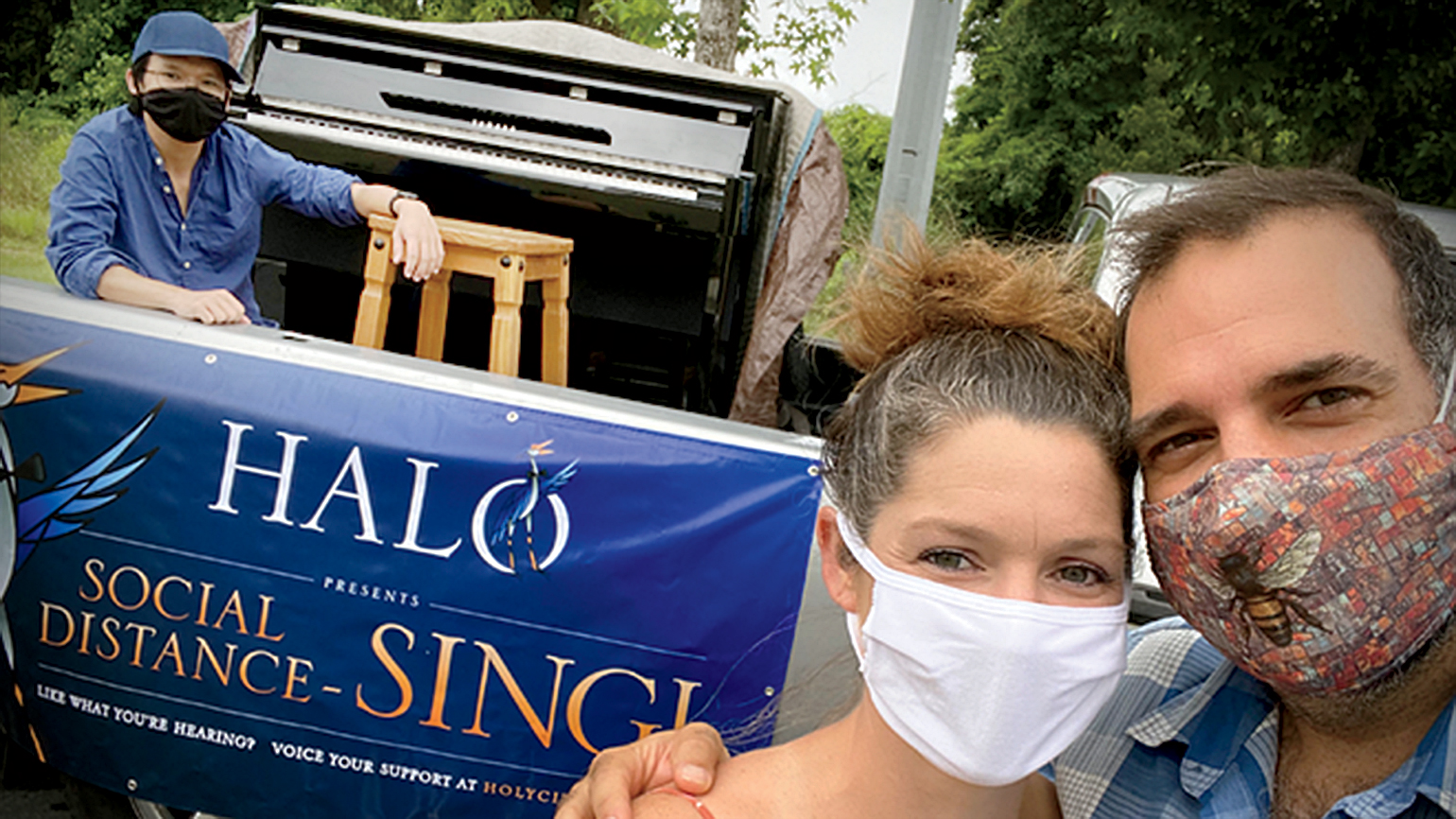
“We thought it could be fun to stage a mini concert outside,” Leah says. A pianist friend played in the driveway while Dimitri and Leah sang from the porch. Neighbors listened from their yards.

“It was just supposed to be a one-off,” Leah says. “Then neighbors asked if we could do it again next week.”

Soon the couple was singing weekly all over Charleston. They started a nonprofit to offer live outdoor opera and musical theater to even more people: Holy City Arts & Lyric Opera (HALO). They called their concert series “Social Distance-SING!”

Rave reviews poured in. One woman said the concert she’d attended didn’t just change her day—it changed her whole month.

“The most surprising part has been the catharsis,” Leah says. “Not just for us as performers but for them as listeners. Everyone is having big feelings right now without having a way to express them. Music lets us do that.”

“We knew people were missing an emotional connection,” Dimitri says. “We were able to give them that with music.” Find out more and request a local performance at holycityarts.org.

Association of Lutheran Church Musicians, Valparaiso, Indiana

For church musicians, the pandemic struck at the heart of their calling. Group singing was identified as a major risk for spreading the coronavirus, shutting down in-person church services and silencing organs and choirs.

The 35-year-old Association of Lutheran Church Musicians refused to stay quiet. Inspired by the Episcopal Church, which gathered more than 600 participants around the world for an online Easter Day rendition of the hymn “The Strife Is O’er,” the ALCM invited all 1,700 of its members to contribute to a similar production for Pentecost.

The goal was 400 participants. In the end, 960 singers and 364 instrumentalists signed up. With the help of the production company that worked on the Episcopal hymn, Inside Music Nashville, the artistic director and eight singers from the National Lutheran Choir recorded online guide tracks of the hymn “O Day Full of Grace.” Using those recordings as a guide, musicians around the country made and submitted their individual recordings. The 1,324 submitted recordings were combined into a single recording that sounded like a massive, nationwide choir.

The hymn was streamed online and distributed to every Lutheran church that wanted to include it as part of the Pentecost service. Even the smallest, least tech-savvy church “had a way to keep music in their worship,” says Jim Rindelaub, ALCM’s executive director.

“Imagine if all the worship services had no music whatsoever,” he says. “Music brings a healing element to worship. It provides joy and allows us to process feelings of anger, fear and doubt so we can then move to a space of hope and faith.” For resources on how to create your own virtual choir, visit alcm.org.

Olga Morkova and Dan Kurfirst, New York, New York

New York City bore the brunt of the pandemic’s first wave. Streets emptied. Sirens wailed. Hospitals overflowed. Tourists vanished. Broadway went dark.

Olga Morkova, a performing arts producer, and Dan Kurfirst, composer, drummer and percussionist, were determined not to let the city’s lights dim completely.

They gathered friends and colleagues who played saxophone, tuba, drums and other instruments for some impromptu outdoor jazz concerts.

“We focused on positive music,” says Dan. “We understood that everyone just wanted a way to feel good.”

To stay safe, musicians played from their cars, hanging out the window or sitting in their trunks. Concerts From Cars was born.

“New York is a city of music,” Olga says. “There are usually hundreds of concerts happening on the same night. In those early days, we were some of the only musicians playing outdoors together in the city.”

People sent requests. One woman asked the musicians to come play for her sister, who had been confined at home with two young children in Queens. “When we played, she just came outside and cried with relief,” Olga says.

People watched from windows or stoops. Some even followed the musicians from location to location in their own cars. Other musicians came outside and joined them.

“Being a professional musician in New York, you can become a little jaded,” says Dan. “This experience helped us remember why we love music in the first place.” Keep up with Concerts From Cars at centerpointarts.com.

Eloy Garza, Roma, Texas

When the pandemic shut schools, student musicians were cut off from their bands, orchestras and choirs.

Eloy Garza is musical director at Roma High School, which has one of the country’s most unusual student bands: an ensemble called Mariachi Nuevo Santander.

Mariachi is a traditional Mexican genre of music comprised of guitars, violins and trumpets. It is especially popular along the U.S.- Mexico border. For generations, mariachi music has played from car radios and accompanied family and community celebrations in Roma and throughout the border region.

Eloy’s students are some of the top high school mariachi performers in the country. “Our competition season was canceled for the whole year,” Eloy says. Figuring out how to keep playing “kept a lot of our students moving forward.”

Eloy encouraged each student to record themselves playing at home. He combined the performances online to create a virtual mariachi band. “I’d never done anything like this before,” he says. “I figured, let’s just try it and see what happens.”

The finished product became more than just another school assignment. “We wanted to share it, to encourage the whole district, the teachers and students, that we can do this together,” Eloy says.

He posted the video on Facebook. Within two weeks, it had more than one million views. People from around the world shared the video and posted comments encouraging the band.

Eloy says he was “blown away” by the worldwide response. Even better, he says, was how the video inspired his own students. “It helped my students not feel discouraged,” he says. “Whatever our circumstances, we know we can still make music together.” Watch the band’s videos at facebook.com/romaisdmariachiprogram.

Dr. Suzanne Hanser, a music therapist and president of the International Association for Music and Medicine, says it’s no accident that people reached for the comfort and inspiration of music during the pandemic.

Music activates neurological processes that flood the brain with what Suzanne calls “feel-good chemicals,” neurotransmitters associated with feelings of joy, peace and well-being. Music can steady a person’s heart rate, slow breathing and lower blood pressure.

“If you have memories with that music—whether from religious services, your wedding, your prom— music can immediately put you back in that time. You can feel all the sensations you felt then,” Suzanne says.

“Music can help us focus our attention on emotions, instead of burying them,” she says. “Then we can process and release those feelings in a way that is constructive”—something all of the musicians we talked to know.

Opera singers Dimitri and Leah say they will perform concerts in Charleston as long as they keep getting requests, which haven’t slowed down.

Olga and Dan are brainstorming ways to keep Concerts From Cars going in New York year-round.

Lutheran musician Jim Rindelaub says the ALCM is putting together another massive virtual choral arrangement.

Eloy Garza and his students have released more videos of their virtual mariachi band.

Music brings us together. As the beloved spiritual says: Lift every voice and sing!

For more inspiring stories, subscribe to Guideposts magazine.

The Faith Behind Nature Nate’s Raw & Unfiltered Honey

Content provided by Nature Nate’s Raw & Unfiltered ​Honey

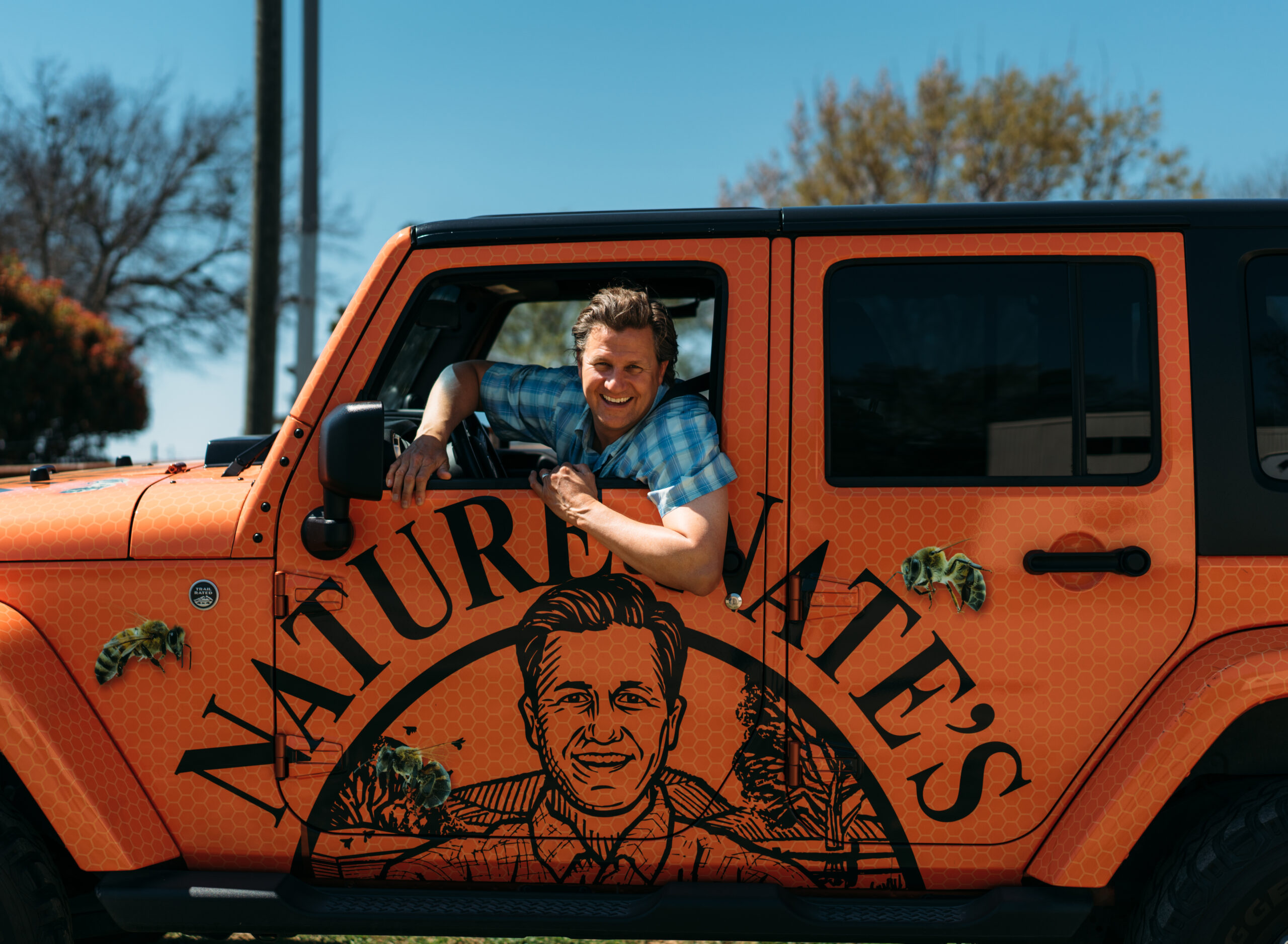
Nathan Sheets never dreamed one hive could turn into a business success story. Nature Nate’s Honey Company started as a post-honeymoon hobby for Nathan Sheets and his wife Patty. Twenty years after buying his first beehive, the hobby has flourished into a booming honey business with global sales and a commitment to betterment of communities and families across the US. But it wasn’t an easy start.

After losing his long-time advertising job, Sheets realized he couldn’t support his family with the part-time honey business he ran.

With encouragement from Patty, Sheets mustered the courage to bring his “no name” honey to Wal-Mart. Relying on his belief and his wife’s encouragement, Sheets approached Wal-Mart and within weeks, Sheets had a single sale that would cover the cost of living for an entire year.

Encouraged and energized by the sale, Sheets continued to grow his honey company. The past seven years have exceeded Sheets’ expectations, with new manufacturing facilities in Texas and Georgia and the company’s first retail store in Florida.

“Five years ago, we bought 200 pounds of honey. Only a short time later, we’re buying 25 million pounds of honey and we have become a top brand in honey. The only thing this can be attributed to is God and faith,” Sheets tells Guideposts.

Sheets points out that that God doesn’t shower believers with money or material reward. Instead, hard work and commitment is integral to the rewards they then turn back into helping as many people as possible.

Sheets says that the Nature Nate’s business is driven by more than a single bottom line: “We measure success not just by what we achieve, but also by what we contribute and how we work with others.”

Honeybees are by nature great at working with others: they are cooperative and build strength from team work. Sheets says that Nature Nate’s is nourished and grown because like honeybees, they work together well and share the many blessings granted to them.

Honeybees are an interesting metaphor for Sheets’ life. He never dreamed of a starting a honey business. But from an early age, he imagined how he could use his resources to sweeten the world and make it better for the people around him.

Sheets’ college nickname, “Nature Boy,” inspired by his love of the outdoors, fishing and exploring the beauty of nature developed into the company name, Nature Nate’s. Sheets’ affectionate nickname made sense for the company he leads with unwavering respect for nature and the people around him.

A devout Christian and former missionary in countries around the world, Sheets says that his experience doing mission work influenced his approach to the honey business. He continued this mission work well into the early years of Nature Nate’s. He traveled widely in Africa, sharing his faith and supporting ministries in Sudan, Kenya, Rwanda and Ethiopia.

Despite the everyday challenges of running a large organization and supporting so many, Sheets’ core of mission work remains central to how he runs his honey company today.

While his days of frequent mission trips are now replaced with leading Nature Nate’s, the company is committed in everything they do to the mission of serving others and to the betterment of families and communities across the US, and works actively toward that mission.

“God brought me on this journey of making a difference in people’s lives,” Sheets says. “When I started Nature Nate’s full-time, I had the same motivation that I had when I was doing ministry: wanting to make a difference for eternity, wanting to make a difference in people’s lives.”

Today, Sheets says, he runs Nature Nate’s in a way that aligns with Biblical principles, encouraging Nature Nate’s employees “to share a core belief and think of other people as more important than yourselves.”

Sheet’s team coined “Honey Makes It Better” and it is essence by which they live. For the people of Nature Nate’s, honey is a natural replacement for sweeteners containing high-fructose corn syrup or other fillers. At the same time, “Honey Makes It Better” means that Nature Nate’s can use its resources and profits to treat employees well and reinvest in the betterment of people across the US.

“We pay double the Texas minimum wage and we pay time off for employees to take mission trips and I’ll match whatever money they raise,” Sheets says of his business practices.

Sheets developed a national program under Nature Nate’s called “Honey Gives Hope” to fund important initiatives supporting women with breast cancer, impoverished families, educational advancement and more.

“Honey Gives Hope is more than just a corporate giving program. It’s a philosophy that we put into practice every day and a way of giving back — both locally and globally,” says Sheets.

This Mother’s Day, for example, in lieu of an expensive marketing campaign or other investments into the company, Sheets decided to instead have a direct, positive impact on women and mothers around the country. Program facilitators coordinated generous donations to ten shelters that serve and protect victims of domestic violence and work to prevent the abuse and neglect of women and children.

“Honey Gives Hope is the heart of Nature Nate’s and allows us to put a priority on taking care of families and helping those in need,” says Sheets. “We let the bees take care of making the honey. We take care of the community.”

This care for community stems from Sheets unwavering commitment to bring in staff that will lead the business and mission by treating others the way they want to be treated, pulling from the familiar Christian adage. It is the core value system on which he leads Nature Nate’s.

“The Lord has blessed us so we can be a blessing to others,” Sheets says. Nathan Sheets makes sure this goal is reached every day.

The Best Thing to Do for Spiritual Growth

There’s something that happens to me about once a month that always shakes me out of my spiritual torpor and makes me realize I’m meant to be doing a little better in the “Love your neighbor as yourself” department.

It’ll all start out innocently enough. I will have asked someone to do me a favor, maybe not even that big a favor, but big enough that it’s going to have cost them some time and energy. I won’t hear from the person for days or weeks and I’ll start fretting, wishing they could just do what I asked. How hard would it be? Don’t I deserve it?

Then just in the middle of my irritation, I’ll get a phone call or an email from someone asking me to do a big favor. The timing is never ideal, the request seems presumptuous if not outlandish. I’ll feel burdened and put upon and start thinking about all the ways I can say no. I delay, I procrastinate, I avoid the request that’s sitting in the inbox. Then it dawns on me: “Someone is asking me to do the kind of nice thing that I’m expecting for myself.”

This might seem small in the area of spiritual growth, but I think it’s HUGE. It must be something that makes the angels weep. If we want the heaven and earth from God, shouldn’t we be willing to offer a small piece of it to X or Y?

So here’s my suggestion—I’m making a mental note to myself. When you’re feeling a little blocked in your spiritual life, when you’re stymied, look at those good things that you can do for others. No good deed goes unpunished? I’m waiting for the moment when I can tally up more giving from me than I’ve ever been given.

Rick Hamlin is the executive editor at GUIDEPOSTS.

The Bad Good Friday and the Inspiring Easter That Followed

It began as such a happy day, Good Friday one year ago. The snow which had been coming down for two days let up which meant that my husband Lowell fly to Fairbanks, and get back in time for us to have all of Easter weekend together.

The children and I waved goodbye as he drove off to the airport, then shut the door quickly because it was still below freezing outside. About five o’clock, feeling lonesome for him, Anne, eight, David, six, and I went upstairs to watch TV. Anne and David were wearing blue jeans and cotton T-shirts; I had on a wool dress and nylon stockings. We took off our shoes so we could sit on the bed.

It was half an hour later that I heard a rumbling sound. Although we frequently hear a similar roaring—the firing of guns at a nearby Army base—I knew instantly that this was the sound of an impending earthquake.

I leaped up, called to the children to follow, and raced for the stairs. By the time we reached the front hall the whole house was beginning to shake. We ran outside into the snow, David crying, “Mommy, I’m in bare feet!”

We were about 10 feet beyond the door when the world around us fell apart. We were flung violently to the ground which was jolting back and forth with unbelievable force.

The hallway through which we had just run split in two. We heard the crashing of glass, the ear-rending sound of splintering wood. In front of us a great tree crashed full length onto the ground. Our garage collapsed with a sharp report.

Now the earth began breaking up and buckling all about us. Suddenly between Anne and me a great crack opened in the snow. I stared in disbelief as the trench widened, apparently bottomless, separating me from my child. I seized the hand she stretched out to me in time to pull her across the chasm to my side.

By now the whole lawn was breaking up into chunks of dirt, rock, snow and ice. We were left on a wildly bucking slab; suddenly it tilted sharply, and we had to hang on to keep from slipping into a yawning crevasse. Though sobbing, Anne had the presence of mind to hang on by herself—thank God, for I was holding David with one hand, our bit of ground with the other.

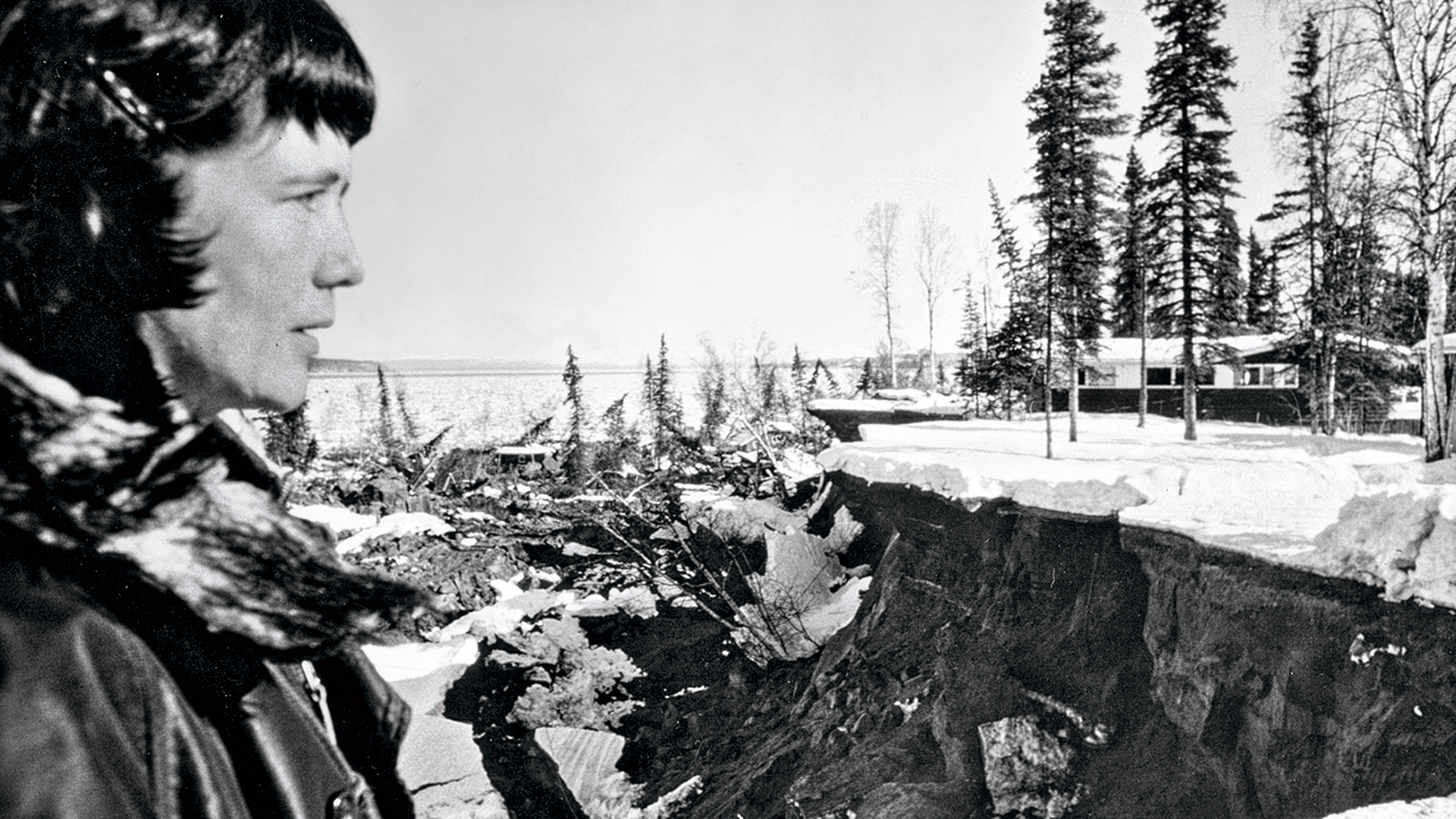
Now the earth seemed to be rising just ahead of us. I had the weird feeling that we were riding backward on a monstrous Ferris wheel, going down, down toward the water (our house had stood on a high bluff overlooking Cook Inlet). When the worst of the rocking stopped, I looked around and saw that the entire face of the bluff had fallen to sea level. A few feet away, at the water’s edge, lay the roof of our house.

All I could think of was that the water would rise as earth tumbled into it and we would be trapped. The cliffs above us were sheer, with great sections of sand and clay still falling.

The children both were hysterical, crying and saying over and over, “We’ll die! We’ll die!” I realized we’d have to find a way up that cliff but the children were too frightened to walk.

I suggested that we say a prayer asking Jesus to take care of us and guide us. Both children stopped crying, closed their eyes and fervently pleaded with Him to come and help us. This had an extraordinary effect on them and on me, and we set out with the first real stirrings of hope.

The next 20 minutes were one great nightmare as we clambered up and down the great slabs of earth and snow, our bare feet aching and raw in the cold. I found a large tree leaning against the cliff and thought for a few moments that we might be able to shinny up it, but we gained only a few feet. We kept moving to the right, trying to avoid holes which opened at our feet and rubble still falling from the cliff.

Suddenly a man appeared above us. “Help!” we called to him. He shouted down that he would hunt for a rope, then disappeared. As we waited we were aware for the first time that we were soaked to the skin from lying in the snow; the children were shaking and their lips were blue.

At last six or eight men appeared at the top of the cliff. One of them, a stranger to us, started down toward us, finding one less steep spot. The children threw their arms around him as he reached us. He took off his black wool jacket, put it around Anne, then boosted David into his arms and led us all back up along the rope.

At the top there was a steep, sheer rim which I doubt I could have scaled by myself. But willing hands hauled us up and tucked us into a waiting car. When I turned to thank our rescuer, he had gone. But nearby I saw the strained, white face of our neighbor Wanda Mead. Someone told me that two of her five children were missing.

We were driven to the home of friends who lived well away from the devastated area. They wrapped us in blankets, but there was no heat in the house nor any way to make a hot drink.

The children were offered beds but refused to leave my side where I huddled with the others over the portable radio; they finally curled up in sleeping bags on the floor. Sleep for me was impossible until two questions were answered: had Fairbanks, where Lowell was, felt the quake, and how could we get word to him that we were all right?

The radio reported all the homes along our street destroyed, and that the two Mead children were still missing. I winced at the frequent pleas, “Urgent to Dr. Mead…needed immediately at Providence Hospital.”

Perry Mead, Alaska’s only neurosurgeon, spent the next 24 hours going from bed to bed at the hospital, tending to the needs of others while tears for his children streamed down his face.

The radio listed tremendous damage in the downtown area. We, living in Anchorage, watching it grow day by day, had felt personal pride in each new building that rose. Now the tally of damaged schools, stores and office buildings mounted by the hour.

There was a continuous stream of “Tell John his father and mother are at the Stewarts,” or “The Johnson family wants to know the whereabouts of daughter Ann.” It seemed an eternity to me before radio contact was reestablished with Fairbanks and we learned that it had felt merely a strong jolt. Planes were arriving from there with doctors and supplies, and I knew Lowell would be aboard one of them.

Then suddenly the announcer’s voice said, “If anyone knows the whereabouts of Mrs. Lowell Thomas and family, please contact us immediately.” I ran to the telephone and was so overwhelmed to find it working that I could hardly talk to the person who answered. But I got the essentials through, and just half an hour later Lowell walked through the door.

Words cannot describe our reunion. The kids and I were tremendously relieved, but Lowell’s emotions were those of a man who had not known for many hours whether his family was dead or alive.

Next morning, Easter Sunday, Lowell, Anne, David and I rose early. We put on the same clothes we had been wearing for two days: Anne the coat provided by our unknown rescuer, far more meaningful to her than any Easter bonnet; David a pair of pants too small to button, me some men’s corduroy trousers.

Many in the Easter congregation wore similar misfits, and the air in the heatless church was so cold that our breaths hung white above us as we sang “Hallelujah!” But it was an Easter service to remember.

At the rear of the church the minister had pinned two sheets of paper, one to be signed by the “haves”—those who had clothing and household goods to contribute—and one where the homeless could write down what they needed. At least 20 families there that morning had lost everything, yet as we left the church I saw that not one person had signed the “have not” list.

For what was there that we did not have? We had new gratitude for the gift of life and for the fact that, in one of history’s worst earthquakes, loss of life had been as small as it had. We had a state to rebuild with a new love for the word “Alaska” born the night we watched our neighbors rise to heroism. Above all we had the Easter message ringing in our hearts.

For the first Christians, too, lived through a sorrowful Friday, a Friday when their dreams collapsed, their hopes lay in ruins, when by every earthly standard they had lost everything. And then on Sunday morning they were the first to whisper the news that has transformed every loss from that day on, the news that love had won, that God had the final word, that death was overcome, that He had risen.

For more inspiring stories, subscribe to Guideposts magazine.

Thank God for Snow Days

I didn’t grow up with snow. At least not falling outside my window. In my Southern California childhood the only snow we saw was up in the mountains. Now whenever it comes, it still seems like a novelty.

Okay, I know it can be an annoyance. The mess it makes of the roads, the back-breaking work of shoveling it, the need to cancel flights or school.

And yet, and yet. A snow day feels like a message from God saying: Slow down. Savor my creation. You don’t have to rush, rush, rush. Watch what I can do to the sky. Look at how I can paint my world.

I was a freshman in college when I experienced my first snow storm. I was studying for finals, fearing that I would fail miserably, then I looked out and saw the snow swirling in the air, brushing the trees, adding highlights where there were none.

It was as though the Creator was telling me: You’ll be fine. I’m right here. Then we ran outside and had a snowball fight and slid up and down the hill outside my dorm room.

I still have that feeling when life is interrupted by a snow day. It seems like a heavenly reminder that all we can accomplish, all that we work hard for, is nothing compared to what the Lord can do with his own magnificent brush. A gray world turns white. Everything is transformed.

Spring is coming soon enough. The crocuses are there ready to burst into bloom. In the meanwhile, as the old song goes, let it snow, let it snow, let it snow.

Glorify the Lord, O chill and cold, drops of dew and flakes of snow. Frost and cold, ice and sleet, glorify the Lord, praise him and highly exalt him forever.

Telling My Story

I wrote a story for the April issue of GUIDEPOSTS magazine. When it came out, I showed it to a few people, then carefully filed my copies away and went back to work. I didn’t really tell many people, and I didn’t do much to celebrate. Hopefully, my story would inspire someone, and that would be celebration enough.

Then last week I got a frantic email from my mother: “WHY DIDN’T YOU TELL ME YOU HAD A STORY IN GUIDEPOSTS MAGAZINE?!” I could practically hear the hurt in the email.

My first reaction was frustration. Who had outed me? I demanded to know who told her about it. Apparently my mom’s friend Leta is a subscriber and had brought the magazine in to work and shown it around to all my mom’s co-workers. Argh. So now not only did my mom know, but all of my mom’s friends knew too.

I wrote back and told my mom something about how I just hadn’t quite gotten around to mentioning it yet, and promised I’d send her a copy of the magazine. Then I bent over and hit my head on my desk. I should have known that with 5 million readers, someone would have pointed the story out to my mom. I should have just told her about it.

So why didn’t I?

The truth is, my story, like all stories in GUIDEPOSTS, is very personal. It’s about a time when I was incredibly vulnerable and questioning everything I thought I knew. The life my parents had built for me and the faith my mom had passed down to me was a part of that.

Somehow, I was kind of embarrassed for her to know about that. I guess I didn’t really want her to see how badly I had struggled. For some reason, telling my story to the 5 million readers of GUIDEPOSTS didn’t seem like a big deal, but opening up to the people I love about what was really going on in one of the most difficult periods of my life felt a lot more scary.

Isn’t it funny how the people we love most are the hardest to be honest with?

After my mom’s reaction, I sent a copy to my grandfather, and he called me last night to tell me he’d shown it off at church as soon as it came in the mail. He also said he was proud of me, which I think is what my mom was trying to say too. So I guess opening myself up was worth it in the end—I know at least two people who the story helped.

Actually, counting me, I know three.

Beth Adams is the creator and editor of GUIDEPOSTS’ Home to Heather Creek fiction series.

Summer Inspiration

The NBA playoffs are over (LeBron finally got the championship for which he always seemed destined), which means summer is truly here on this first full day of the season.

It sure feels like summer here in the east. The heat has been a beast. We’ve taken refuge in the mountains for a few days, where at least it cools off a bit at night.

Last night Millie woke me up in the wee hours with a quiet little whine at the back door. This usually denotes an emergency, so I threw on a T-shirt, trotted downstairs and let her out. I went to the window and tracked her through the dark from the kitchen window. She briefly disappeared in the shadows from the woods, then reappeared in the middle of the yard. There she sat, very still, ghostly white in the luminosity of a crystal-clear night, head tilted up, staring at the sky.

What on earth was she doing? What was she seeing? It seemed to me she was looking at the stars, at the silvery heavens above, the Milky Way smeared across the horizons. I didn’t call her in. I let her stay that way for a while, just gazing up at the sky on the first night of summer.

Who knows what goes through a dog’s mind sometimes, what powers God has granted them that we can only imagine. What they see that we don’t see. What they feel.

After a while Millie rose and headed back toward the house. I heard a little scratch at the door and let her in. Her tail was swishing. She took a quick drink of water, trotted upstairs and put herself back to bed.

I almost followed but instead I wrote the foregoing. I didn’t want to wake up in the morning and think it was only a dream.

Happy summer, everyone.