Embrace God's truth with our new book, The Lies that Bind

Easter’s Not Over!

You might have finished eating up all those jelly beans and chocolate eggs but Easter has only just begun. It’s not like an early spring day that fades into storms.

Easter is forever.

We associate Easter with spring–naturally–because here in the Northern Hemisphere the two go hand in hand. Easter eggs and daffodils on the new green grass with the sun blazing in the sky.

But what if Easter happened at a different season?

Two years ago my wife and I celebrated Easter at a South African monastery. It was a magical experience, getting up with the brothers in the early morning hours to await the dawn.

The sun rose, shining in the chapel window just as we exclaimed, “The Lord is risen. The Lord is risen indeed. Alleluia.”

The rolling hills were gorgeous, the grass tall and golden, the bushes a reddish green. But no new buds on the trees, no daffodils. Why? Because on that bottom half of the world it was fall. Not spring.

Still we sang our Alleluias and ate our Easter eggs. The experience reminded me of how God meant this holiday to say that all our expectations are reversed, fall or spring.

“For we know that Christ being raised from the dead will never die again; death no longer has dominion over him,” the apostle Paul wrote. “The death he died he died to sin, once for all, but the life he lives he lives to God.”

Once for all. Unlike the seasons which are cyclical. Spring will be followed by summer, by fall and then by winter. They repeat themselves. But the Resurrection is once for all time. Forever.

Happy Easter! You can say that today, tomorrow, in the heat of July, in the bitter cold of January, in any continent in any season in any time zone. Easter is always here. It’s forever.

If you do have a few more chocolate eggs to munch on, hand ‘em over. I love them. At any season!

Drawn Together by a Daily Devotion

Adapted from Edward Grinnan’s Editor’s Note for the November 2018 issue of Guideposts. If you’d like to subscribe, click here.

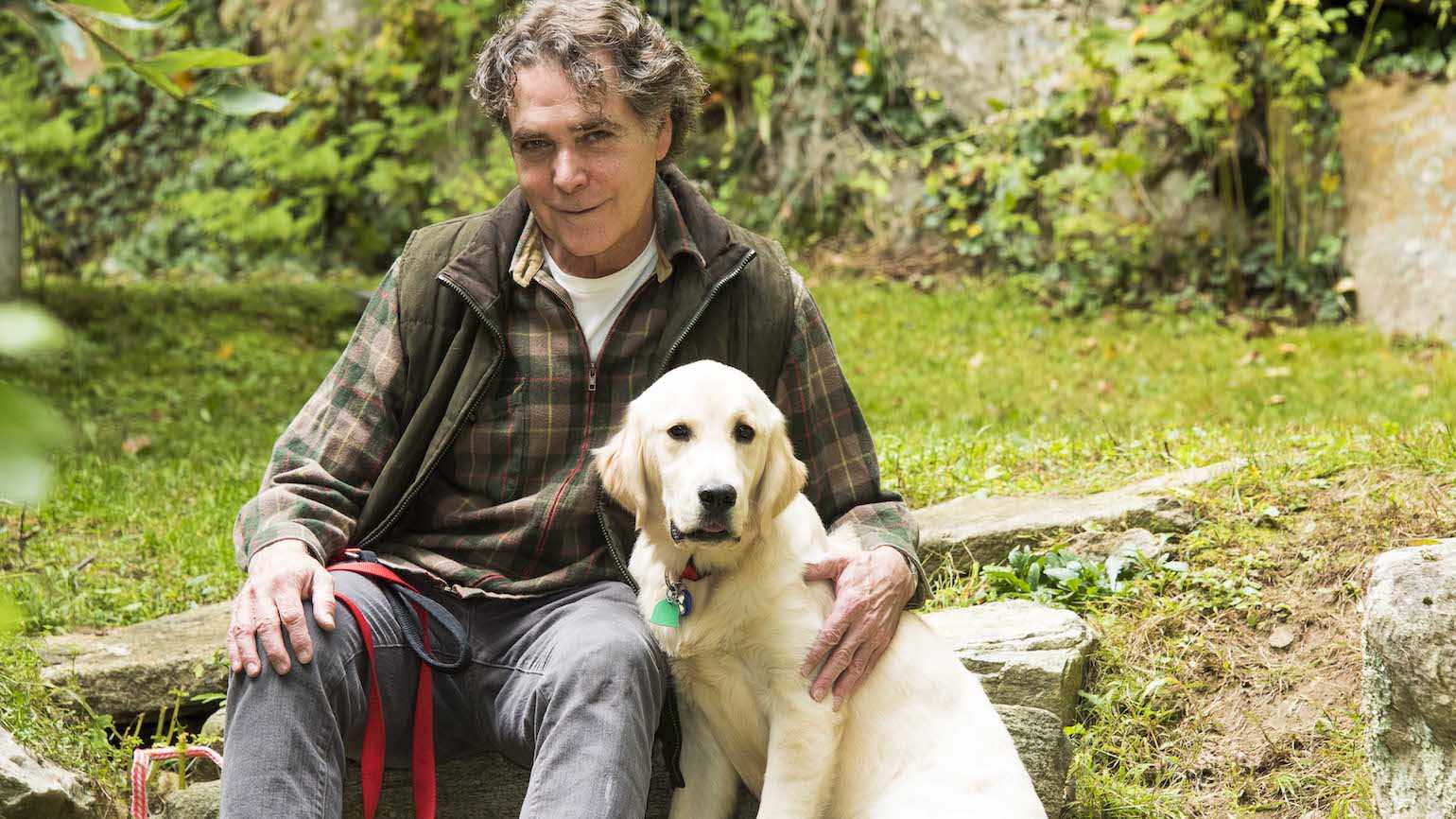
I contribute devotions—little spiritual stories with a takeaway lesson and a prayer—to our annual devotional book, Daily Guideposts. This morning when I got to work, I opened up an e-mail from another Daily Guideposts writer, Carol Kuykendall, who had just finished reading my devotion for the day. Carol and I have a few things in common, including dogs, especially golden retrievers.

I write a lot about my dogs and what they teach me. In fact, I wrote a book for Guideposts about my late golden retriever called Always By My Side: Life Lessons From Millie and All the Dogs I’ve Loved. When my wife and I lost Millie to cancer a few years ago, we were devastated. Eventually we overcame our grief and found another golden, a puppy we named Grace.

Carol’s golden, Kemo, saw both Carol and her husband through several years of cancer treatments. Kemo was always by their side. Recently Kemo passed on. Carol was so heartbroken, she wasn’t sure she could ever get another dog. Finally she was ready. Until she read my devotion.

I’d written about what a handful Gracie had been as a puppy, masticating almost everything in her path, including TV remotes, phone chargers, credit cards, a shower curtain—you name it.

“Edward, I’m not sure I could handle another puppy.”

I assured her Gracie had grown into a magnificent, responsible adult dog, one my world practically revolved around. “Didn’t you read my prayer at the end of the devotion? I asked God for the gift of greater patience. That’s exactly what he and Gracie gave me.”

I hope I reassured Carol. What struck me as more interesting, though, was the way a devotion had brought us together. That’s what stories do. They draw us closer. I can’t help but mention that readers love stories about God’s creatures. If you haven’t heard by now, we have a new magazine, All Creatures: The Animals Who Share Our Lives. If you’re still working on your Christmas list, I have three suggestions: Daily Guideposts, All Creatures and Always By My Side.

Diversity Has Strengthened the Bonds of This Pastor’s Congregation

Three simple words that have divided our nation. Black lives matter.

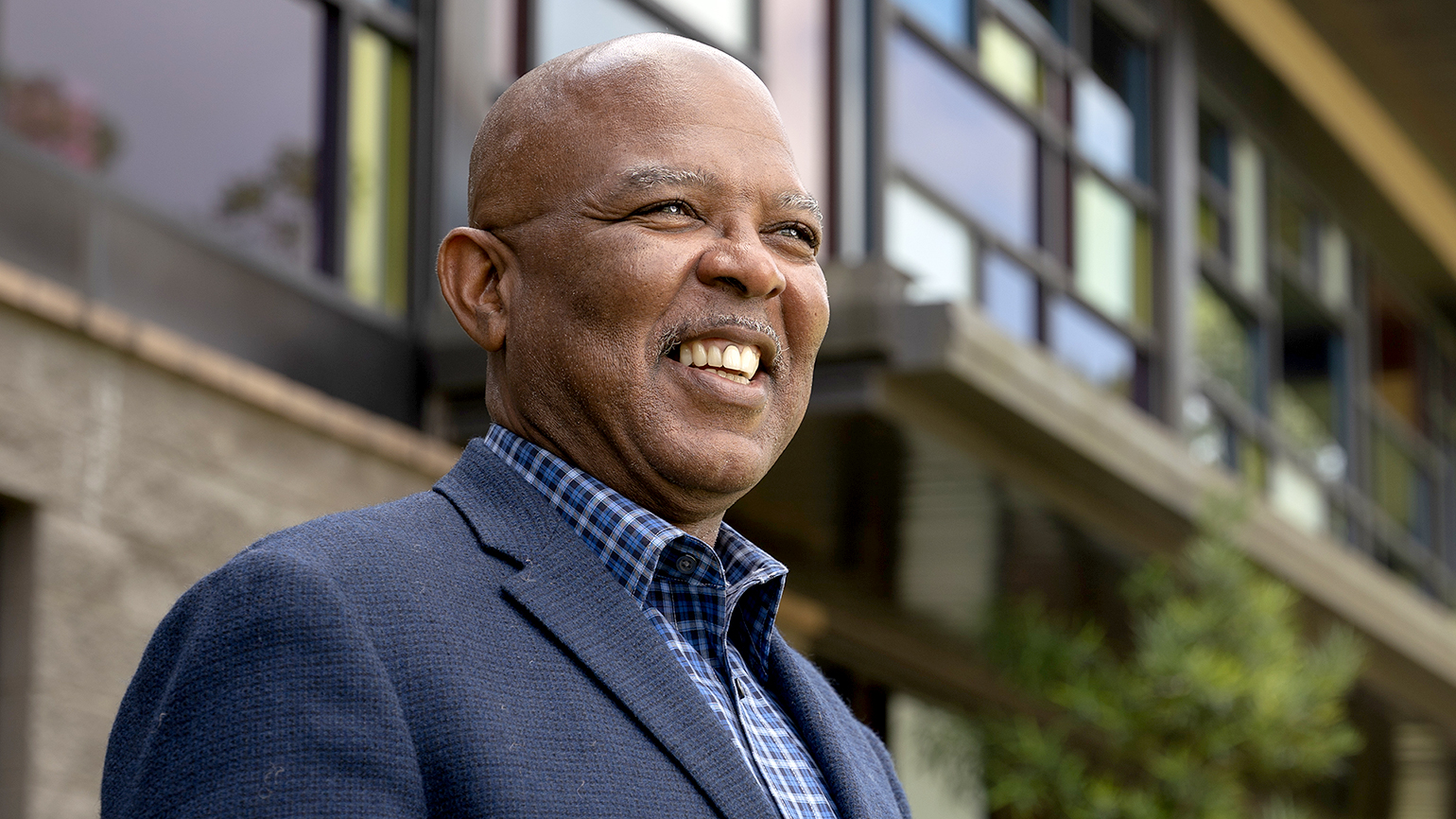
Even at the church where I am lead pastor—a multiracial congregation founded more than two decades ago—there isn’t universal agreement about the meaning or significance of those words.

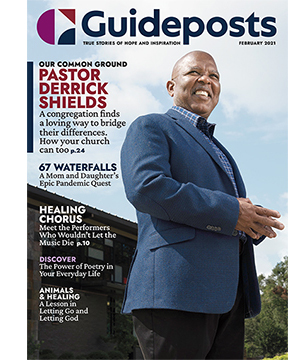
Pastor Derrick Shields on the cover of the February 2021 issue of Guideposts
As seen in the February 2021
issue of Guideposts

Yet our disagreement is not bitter. We don’t all agree. We love each other anyway. We keep talking. We keep worshiping. We acknowledge our common bond in God. We don’t pretend to have all the answers.

I have preached about racial justice here at Christ Community Church, which was founded with an intention of bridging the racial divide in Columbus, Georgia. I have encouraged the formation of small groups to discuss this vital issue. Some members of our church joined peaceful protests in Columbus. Other members did not.

Here’s one thing I know. Jesus commands us to love God and others—and no wiggle room in the word others.

At Christ Community, we do that by getting to know one another. We ground ourselves in the love of God and build trust through friendship with people of different backgrounds.

We are a rarity in America: a proudly multiracial church where differences are neither fought over nor swept under the rug.

How do we do it? In one sense, we don’t. God does it. We see our job as trusting God and, with his help, learning to trust one another. Trust enables us to disagree and express our feelings about difficult issues without coming apart.

It’s not a random choice. Jesus’ ministry was founded on relationships. Jesus didn’t grab the spotlight of his day and hobnob with people in power. He traveled around a remote corner of the Roman Empire, making friends with whoever crossed his path and speaking the truth about God. When he died, a handful of friends stuck by him.

And yet he changed the world.

The road to where we are at Christ Community was not easy. We made mistakes and learned. Above all, we learned how to experience God’s love in the midst of—maybe even because of—our differences. I tell our story in hopes that it can help you do the same.

I am not the founder of Christ Community. I succeeded the founding pastor, Keith Cowart. Keith, who is white, grew up in a small segregated town in Georgia, where his friends’ parents pulled their kids out of public schools following desegregation. Keith’s parents
believed in public education and kept their son there.

Keith was called to ministry early and became a Free Methodist pastor after college and seminary. At his first church, in another small Georgia town, members forced him to cancel an after-school program because they objected to Black children using the church basketball court.

Keith left that church and settled in Columbus, determined to make racial reconciliation the heart of his ministry. Together with a few friends, he and his wife started a new church in their living room and later located the sanctuary where railroad tracks once divided the white and Black neighborhoods of Columbus.

Despite extensive outreach to the Black community, the new church remained stubbornly white. Keith could not figure out why. At last he committed the congregation to a week of prayer. “We can’t seem to crack this nut,” he said to God. “Help us.”

Black people began showing up at church. “God told us to check this place out,” they said.

Keith listened to new members and learned that key to being a truly welcoming church is putting a diversity of people up front and playing a variety of music during worship. Newcomers know that they belong because they see people who look like them.

Keith invited Black members into leadership. He broadened the music mix. He preached about racial justice and reconciliation.

And he began encouraging members to join small groups that met in people’s homes for meals, Bible study and friendship.

It was the small groups that cemented the church’s identity. The groups were designed to mix people from different backgrounds. It’s one thing to open up in prayer with people just like you. It’s a whole new level of trust to be vulnerable with someone whose life experiences are very different from yours.

That’s what brought me to Christ Community and to ministry.

I served in the Army for 20 years, then retired and went into real estate. I read Rick Warren’s book The Purpose-Driven Life and felt a call to share Jesus with others. But I didn’t know how.

I attended a weekend Methodist retreat called Walk to Emmaus. I was the only Black person participating, an unusual situation for someone who served in the military, which I found racially diverse.

Praying and sharing my feelings with this group of men who were so different from me was transformative. We connected on a deep level, finding our common bond in God. I wanted more of that.

My wife, Andrea, also participated in Walk to Emmaus. Keith happened to be the spiritual director of the cohort she was in. Andrea was struck by his friendliness and his commitment to racial justice. She suggested checking out his church.

Stepping through the doors of Christ Community, we knew we’d found home. Keith helped us connect with the congregation and encouraged my interest in ministry by giving me leadership positions.

I attended seminary and was ordained a Free Methodist pastor. When Keith was called to be a bishop in 2018, Christ Community chose me to replace him.

Since the death of George Floyd last year and throughout the nationwide racial justice movement that followed, I have done my best to steer our congregation through a tumultuous time while also navigating the Covid-19 pandemic.

I have preached about God’s commandment to Christians to love all people and be a force of healing in a nation with racial wounds. Christ Community has provided online resources about racial justice and connected members with online conversations in our denomination. I invited members to join me at peaceful protests.

The heart of our approach has been personal. We have 26 groups, mostly of 12 to 14 members, in our 900-member congregation, plus groups devoted specifically to prayer. Each group has a different focus: fellowship, Bible study, jail ministry, healing.

I encouraged the formation of a new group focused specifically on racial reconciliation. Members of that group will go on to start their own groups on the topic. The idea is to gather different people together, get to know one another, pray, study God’s Word and, with that foundation, talk through difficult questions about race.

For some members at Christ Community, the words Black lives matter are a rallying cry. Others hear a devaluing of other races. It can be a struggle to remain loving with people who disagree about fundamental issues. We think it’s a struggle worth waging. God helps us persevere.

You’d be amazed how overcoming one barrier can help people overcome others. Brad and Amanda Newman began attending Christ Community about six years ago after making the difficult decision to leave their previous church.

Brad and Amanda encountered a warm welcome at Christ Community, but they also encountered something more: our small groups, where people from different backgrounds open up to one another in a spirit of trust.

“When you know the details of people’s lives and what their hurt was, it opens up your heart in new ways,” Amanda says. “It becomes safe to ask questions. Where we are weak, God is strong.”

One of my favorite stories in the Gospels is Jesus’ encounter with the woman at the well. The story takes place in a region called Samaria. Jews and Samaritans regarded one another as enemies. They disagreed about fundamental theological issues. To Jews, Samaritans were unclean.

If you want to feel the full impact of this story, picture a person with whom you disagree profoundly. Now picture an entire neighborhood full of people like that.

On his way home from a preaching tour, Jesus says to his disciples, we’re going to travel through that neighborhood, the one with all those people you don’t like. And we’re going to hang out there for a while.

To top it off, Jesus strikes up a conversation with a Samaritan woman, something no self-respecting rabbi would do. He offers her the water of life. She recognizes him as the Messiah and runs off to tell everyone she knows. The disciples are shocked.

“A new command I give you: Love one another,” Jesus says to his disciples shortly before his death. He means it.

Like the rest of America, we at Christ Community are feeling our way forward in an uncertain and difficult time. We are not blind to the injustice in our nation. We are aware that we don’t agree about everything.

We also are grounded in the love of God. And we are committed to serving and worshipping together with a common purpose.

That foundation has served us well. We believe that it could also help our nation. We pray that you too can be inspired to reach out to someone different and take a small step toward the healing so many of us seek.

For more inspiring stories, subscribe to Guideposts magazine.

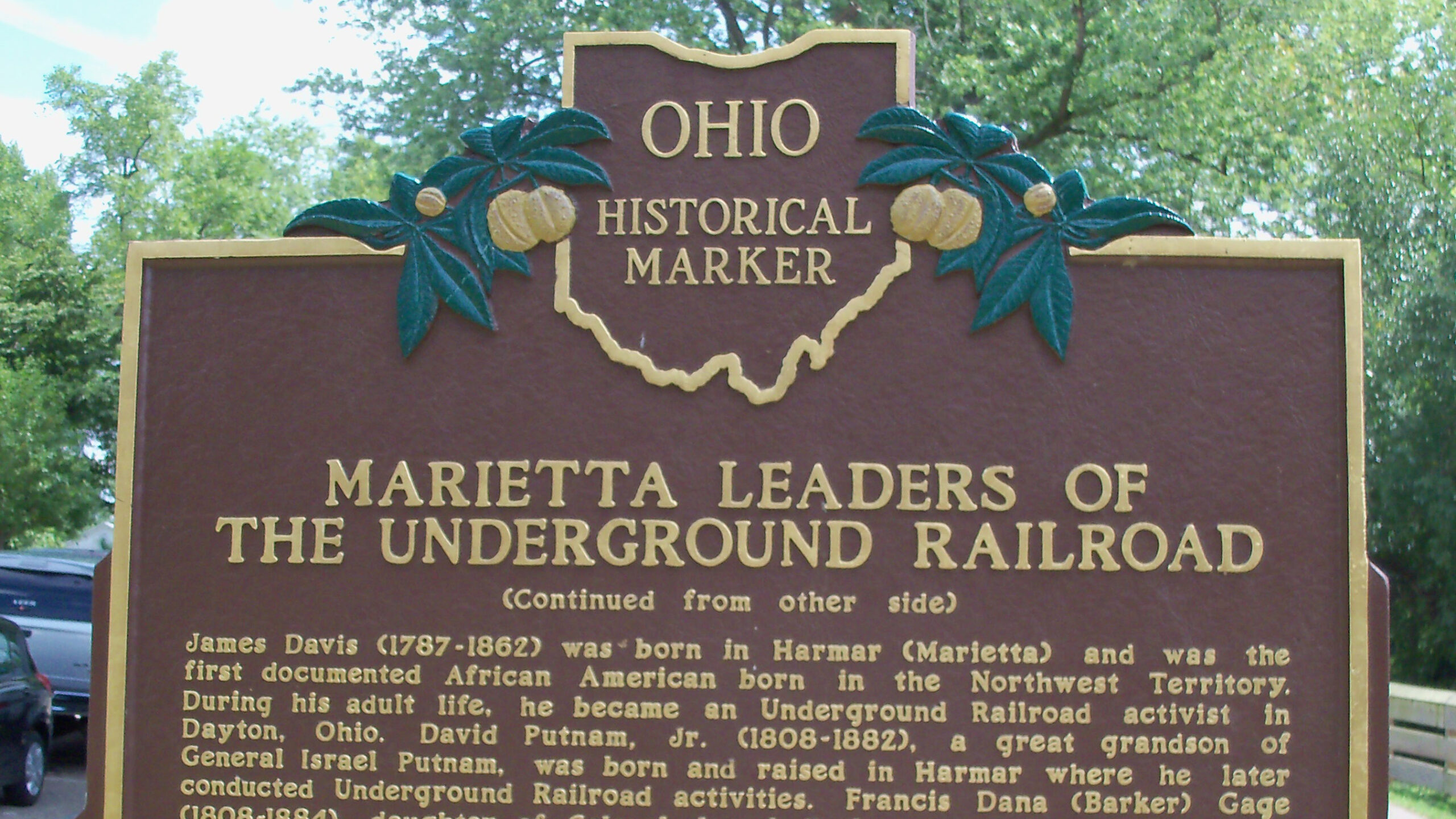
Crossing to Freedom: The Marietta Stop on the Underground Railroad

Guideposts’ new fiction series, Secrets of Wayfarers Inn, is set in historic Marietta, Ohio. This southern Ohio town is known as the birthplace of the Underground Railroad, a network of secret routes and safe houses for those escaping slavery. Because of the necessity of secrecy, it’s hard to know the exact courses and buildings that were used on the Underground Railroad, but Ohio was a free state, home to many abolitionists, and a safe haven for many. A historic hotel now known as the Levee House buildings is believed to have been one of the “stops” on the Railroad.

Honoring the true history of the area, the thrilling mystery series Secrets of Wayfarers Inn follows three retired best friends who find a historic hotel (inspired by the Levee House) for sale in Marietta and turn it into a bed and breakfast. When mysterious events start happening at the inn, the three friends discover secret passageways used by abolitionists and people escaping slavery and believe their new home might have been an Underground Railroad safe-haven.

Though the Levee House is now closed for business in Marietta, the building still stands, along with another historic house believed to be a stop on the Underground Railroad named The Anchorage is still open for visitors.

Though there’s no way of knowing for sure whether specific local homes such as the Anchorage were used on the Underground Railroad, some clues in the house’s history and location explain why historians believe it was.

Slavery was outlawed in Ohio, which is just across the river from Virginia and Kentucky, former slaveholding states. Marietta, Ohio, known as the “Riverboat Town,” is located where the Ohio and Muskingum Rivers meet—the boundary between slavery and freedom—making it a prime stop among the places offering help to enslaved people seeking freedom.

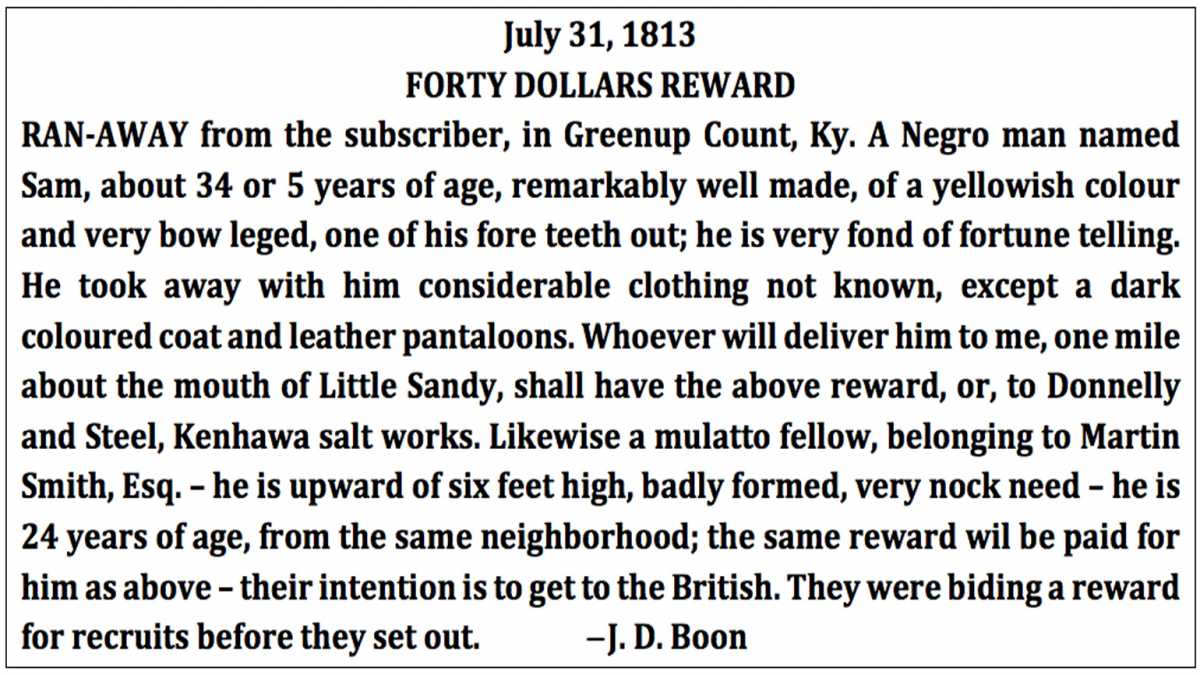
Advertisement for runaway slaves, which appeared in the Marietta, Ohio newspaper The American Friend, on August 21, 1813.

Ohio, then seen as the western frontier, did not permit slavery due to a federal statute known as the Northwest Ordinance, and white settlers from New England states brought with them free black abolitionists, who had already begun assisting self-emancipated people to find freedom. The Putnams were one family that relocated to Marietta.

Douglas Putnam built the Anchorage and Douglas’s wife Eliza, an ardent abolitionist, was active in planning the design of the house. Three features in particular have convinced many historians that it was a stop on the Railroad.

The first piece of evidence of the Anchorage’s Underground Railroad involvement is a network of large tunnels in the basement leading into the surrounding hillsides; many believe they originally went as far as the riverbank, where runaway slaves from Kentucky or Virginia might enter them. Otherwise, their purpose is unknown.

The second mysterious feature is a tiny room directly beneath the kitchen in the basement. To enter the room, one would have to squeeze through a concealed opening. The space is just over five feet high and only big enough to stand or sit in.

Finally, the mansion’s imposing tower, with windows on all sides, could be seen from both the Ohio and the Muskingum Rivers and would have provided the perfect place for a candlelight “beacon” to those seeking freedom.

Were places such as the Anchorage and the Levee House truly stops on the Underground Railroad? We might never know for certain, but it is clear that Marietta played a critical role in helping thousands of once enslaved people escape to a life of freedom and is a most interesting setting for people today to discover and honor historical struggles of the past.

Order your copy of Secrets of Wayfarers Inn!

Comfort in the Face of Evil

A few weeks ago someone got hold of my husband’s Social Security number, opened a joint bank account with him (without his knowledge), then accessed our main account and transferred all our assets elsewhere.

We found out within an hour, but the money was already gone. The bank says it will reinstate the assets once the theft has been proven.

It’s tempting to allow myself to be weighed down by this. We’ve spent hours upon hours undoing what one selfish person did, and the sense of violation is discouraging. Yet I remind myself that we’ve also met scores of good-hearted people as we’ve navigated the inner workings of the bank, the Social Security office and the police station.

Evil is never the whole story. It’s sometimes all we see, for a while. But it’s never all there is. I find this a comfort this week, as I contemplate the horrific events that took place in Newtown, Connecticut.

It is surely good and right to weep and mourn deeply over what is wrong with the world. But it is also good and right to remember all the rest, all the tremendous goodness and compassion and kindness and love. The Gospel doesn’t end at the slaughter of the innocents… unless we let it. Don’t let it.

Caught in a Tornado, a Heavenly Voice Reassured Her

I live near Omaha, in southeastern Nebraska. If I ran to the basement every time I heard a tornado siren go off, I’d never get anything done. So when a siren wailed one Friday in June, just two days before Father’s Day, I didn’t pay it much mind. I wanted to get my dusting done before settling down for the day. Besides, it wasn’t even raining, with barely a cloud in the early-evening sky. Maybe they’re testing the system, I thought. They do that a lot around here.

Asher, our 12-year-old grandson who lived with us, winced at the insistent wail. “Are we going downstairs?” he asked.

I looked out the window, the sky still blue. “Let me do a little more work,” I said. “Then we can get a snack and go downstairs and turn on the TV.”

“Maybe we should pray?”

I nodded but stubbornly polished a spot on the bookcase. Truth was, I’d been feeling spiritually stuck lately. I used to wake up early every morning and devote the first half hour of my day to prayer and Scripture reading. But it had been months since I’d prayed intentionally. I barely opened my Bible anymore.

It’s not as if I were angry at God. I’d simply fallen into the habit of checking my Facebook feed first thing in the morning, then checking my e-mail. By then it was time for breakfast with my husband, Jake, seeing to Asher, getting the chores underway.

Over the din of the siren, I could hear another sound, distant yet unmistakable. A speeding freight train. There were no railroad tracks anywhere near our home.

“Run!” I yelled to Asher. “Get downstairs! Now!”

We barreled down the steps to our basement and sat on the floor. I held Asher tight against me, my heart pounding. Asher’s fists were balled, trembling. “Do you think Grandpa’s okay?” he said.

Jake! He was at church for a pre–Father’s Day men’s event. “I’m sure that he and everyone at the church are fine,” I said, hoping my shaky voice didn’t betray my fear. “They’re probably praying.”

I looked to the two small windows in the cinder-block wall. The light shining through them had an eerie shade of green. My mouth went dry. Why hadn’t I taken the siren seriously? Asher and I were in the safest part of the house. Still, if those windows shattered, it would send shards of glass everywhere. I stood, legs shaking, searching for something solid to cover the windows. No luck. I sank back onto the floor. The roar was right on top of us.

The house shook. The windows rattled as if they would give way any second. I thought of The Wizard of Oz, how Dorothy had dreamed of her house being sucked into the funnel cloud. Or, just as terrible, what if the house collapsed on top of us? The green light, darker and more ominous, pervaded the basement, evil and deadly.

Praise me and speak my word. The words penetrated the tumult with brilliant clarity. I tried for a second to make sense of it. I was too scared to praise anything. Maybe if I got through this….

Praise me and speak my word! Not a suggestion. A command.

I wobbled to my feet and croaked out, “Great are you, oh Lord, and greatly to be praised!” I shouted above the roar of the tornado, raising my hands above me.

The winds bore down on us relentlessly, but my fear? Gone. God had taken it from me. It was as if he held Asher and me in his mighty hands. Even Asher could sense the change. He looked at me in amazement.

I strode confidently back and forth, the length of our basement, calling out every biblical promise of protection I knew. God’s covenant with Noah. Daniel in the lions’ den. Jesus taming the Sea of Galilee. “Why are you so afraid, you with little faith?” Jesus had asked the disciples.

I’d always thought of faith as a cloak one would wear, a physical assurance that would never forsake me. That cloak had slipped off when I’d let my relationship with God slide. But faith was the only thing now standing between us and the tornado.

“Great is thy faithfulness,” I shouted. The louder the tornado screamed, the more my confidence grew. “Father, I praise you!”

Then, as suddenly as it started, the storm stopped. Dimming light filtered through the windows. Slowly it dawned on me that the room was silent. The chirp of my cell phone shattered the stillness. It was Jake. “Honey, are you and Asher okay?”

I took a deep breath. I couldn’t remember when I’d felt more okay. “Yes, we’re safe. Be careful coming home.”

Asher and I climbed the stairs. Through the dining room window, our yard looked like a war zone, with massive tree limbs, trash, patio chairs, pieces of insulation and shingles strewn everywhere. I walked about the house in a daze. The shaking had shifted furniture nearly six inches, but our home’s foundation had held. I felt as if I had found my own foundation.

The storm wreaked havoc across the Omaha area, though thankfully no one died. Two twisters with winds estimated at more than 110 miles per hour had hit. No wonder it took Jake more than an hour to make the short drive home from church.

In the driveway, I collapsed in his arms. “I was so worried about you,” Jake said. “I hated the idea of you and Asher being alone.”

I could hear the sound of chainsaws filling the air around me as neighbors helped neighbors. Just two days from now would be Father’s Day. I couldn’t wait to celebrate—beginning with my Father above, first thing in the morning.

For more inspiring stories, subscribe to Guideposts magazine.

Carrie Morey’s Biscuit-Baking Tips for Beginners and Experts

I’m all about a good biscuit, and homemade biscuits have no equal. Making them from scratch is a surprisingly simple process, using simple ingredients, but with love the simplest things can be the most beautiful. Like the manger that held Christmas’s perfect gift.

Biscuits were part of every meal around our Southern table when I was growing up. Both my grandmothers were biscuit makers from way back. My mother’s mother, Grandmama, was a sophisticated lady who believed it wasn’t ladylike to eat a big biscuit. She taught my mom how to make elegantly small buttermilk biscuits that would become the staple of my business.

My father’s mother, Mama (pronounced ma-MA), came from more practical roots. With a husband and five hungry boys to feed, Mama knew the value of serving big hot biscuits on demand. She always kept plenty of dough in the fridge for baking Angel Biscuits.

Her recipe calls for a key ingredient. Instead of using only self-rising flour or all-purpose flour with baking powder and baking soda, Angel Biscuits also include yeast. This elevates the basic biscuit to new heights. Plus, using shortening instead of butter allows the dough to keep nicely for a few days without excessive hardening. You can pull it out of the fridge when you’re ready to bake.

For us, Angel Biscuits make a hearty Christmas breakfast, before my husband, three daughters and I start preparations for the holiday dinner party we host every year. Use your thumb to push in the top of the tall biscuit and fill the well with maple syrup—my girlhood treat that required many napkins.

For our fancy Christmas dinner, I serve Grandmama’s “ladylike” biscuits with an array of whipped butters, both savory and sweet. We set up a buffet in our kitchen but showcase the biscuits and butters on the dining table (safely out of reach of our white English Lab named Butter).

No need to be intimidated if you’ve never made biscuits from scratch. If I can do it, anyone can. With Mom, Grandmama and Mama vying for space in the kitchen, I didn’t make my first biscuit until I was in my thirties. I started my business with the idea that Mom would make the biscuits while I ran the operations, so I named the company for her.

When the Callie of Callie’s Hot Little Biscuit decided to retire, it was time to become a baker myself. Like most things, the more you make biscuits, the better at it you become. And butter is a fantastic form of insurance: Melt the butter and brush it on top, and just about any biscuit is bound to taste good.

I’ve got a few tips to help you along if you’ve got misgivings. Some recipes will say that you can use a pastry cutter to mix ingredients, but the best biscuit makers get a feel for the dough. Let your bare hands tell you just how much liquid to add a little at a time so that the dough is neither too wet nor too dry. I like to call it “wetty.”

Will your hands get gooey? Yep, but embrace the mess and use a gentle touch. I don’t recommend hand mixing when you’re rushed or frazzled—the dough will know! Even though biscuits are my livelihood, making the dough is a comforting ritual, never a chore. One more tip: When you put your biscuits in the pan, make sure they’re touching. This helps the rise. Just like families during the holidays, biscuits love to get close.

Try Carrie’s Angel Biscuits and Flavored Butters at home!

Cover of Hot Little Suppers by Carrie Morey

Carrie Morey is the author of Hot Little Suppers: Simple Recipes to Feed Family and Friends, Harper Horizon, November 2021.

Can You Have Faith Without Being Religious?

You hear a lot these days about people being less than happy with religion. They say that they are spiritual, not religious, or that they want more Jesus, less religion. Novelist Anne Rice drew a lot of attention a couple of weeks ago by saying that she was quitting Christianity, but still believes in Christ. Her lament, if you consider it closely, is against people who use religion as a means of hurting or oppressing others, which doesn’t match up with the ideals of Jesus. For more on Rice, see also Brian McLaren’s thoughtful response.

While Rice is perhaps reacting to the recent controversies in Roman Catholicism, there are others who come from the Protestant evangelical world who are likewise so frustrated with what sometimes passes for Christianity that even they no longer want to be called Christians. Author and podcaster Nick Fielder is one such person.

I don’t think most people really want to be “one of those religious nuts.” When you pair away those who grab the headlines with some alarming stunt or statement, or the inevitable super-achiever at church (which even yours truly admits to being at times), there are a vast number of people who are dedicated to taking their faith and quietly finding some way to articulate it, share it, and have it hold them up. They want to tap into the way others have practiced religion for years, centuries, or millennia.

Although those who reject formalized religion nevertheless seem to yearn for it, they’re still having much trouble getting things to gel. In many areas across America, when you find a group of people that call themselves a church, you’ll also find much change and movement. Whether they have lost touch and are losing members, or doing something exciting and gaining members, there’s a struggle to find a sense of settledness about who they are and where they belong—even if that feeling of belonging means being rebellious against convention, the essence of the Christian call.

So it’s no wonder that many people come to the point where they want to say that they believe in God, have strong values, pray, or study the Bible even in a group, but don’t want to be associated with the label “Christian.”

My own take on all this is that you can’t really have the one without the other. You can’t really be spiritual unless you have a little skill at being religious. Likewise, you can’t be very good at religion unless you’re a little spiritual. So the challenge for most of us right now seems to be, simply, how to just do it.

Billy Graham on God’s Secret Agents

Some time ago, when I decided to preach a sermon on angels, I found practically nothing in my library. Upon investigation, I soon discovered that little had been written on the subject in this century. This seemed a strange and ominous omission. Bookstores and libraries have shelves of books on demons, the occult and the devil.

Why was the devil getting so much more attention from writers than angels? Angels have a much more important place in the Bible than the devil and his demons. Therefore, I undertook a Biblical study of the subject of angels. Not only has it been one of the most fascinating studies of my life, but I believe the subject is more relevant today than perhaps at any time in history.

The Bible says, “For He will give His angels charge of you, to guard you in all your ways.” (Psalm 91:11, RSV) Are there supernatural beings today who are able to influence our affairs? Dr. S.W. Mitchell, a celebrated Philadelphia neurologist, had gone to bed after an exceptionally tiring day. Suddenly he was awakened by someone knocking on his door.

Discover Billy Graham’s Wisdom on Aging Well in His Book, Nearing Home

Opening it, he found a little girl, poorly dressed and deeply upset. She told him her mother was very sick and asked him if he would please come with her. It was a bitterly cold, snowy night, but though he was bone-tired, Doctor Mitchell dressed and followed the girl. As Reader’s Digest reports the story, he found the mother desperately ill with pneumonia.

After arranging for medical care, he complimented the sick woman on the intelligence and persistence of her little daughter. The woman looked at him strangely and then said, “My daughter died a month ago.” She added, “Her shoes and coat are in the clothes closet there.” Doctor Mitchell, amazed and perplexed, went to the closet and opened the door.

There hung the very coat worn by the little girl who had brought him to tend to her mother. It was warm and dry and could not possibly have been out in the wintry night. Could the doctor have been called in an hour of desperate need by an angel who appeared as this woman’s young daughter? Was this the work of God’s angels on behalf of the sick woman?

When the Reverend John G. Paton was a missionary in the New Hebrides Islands, hostile natives surrounded his mission headquarters one night, intent on burning the Patons out and killing them. John Paton and his wife prayed all during that terror-filled night that God would deliver them. When daylight came they were amazed to see the attackers unaccountably leave.

A year later, the chief of the tribe was converted to Jesus Christ, and Mr. Paton, remembering what had happened, asked the chief what had kept him and his men from burning down the house and killing them. The chief replied in surprise, “Who were all those men you had with you there?” The missionary answered, “There were no men there; just my wife and I.”

The chief argued that they had seen many men standing guard hundreds of big men in shining garments with drawn swords in their hands. They seemed to circle the mission station so that the natives were afraid to attack. Only then did Mr. Paton realize that God had sent His angels to protect them. The chief agreed that there was no other explanation.

During my ministry I have heard or read literally thousands of similar stories. Could it be that thee were all hallucinations or accidents or fate or luck? Or were real angels sent from God to perform certain tasks? Just a few years ago such ideas would have been scorned by most educated people. Science was king, and science was tuned in to believe only what could be seen or measured.

The idea of supernatural beings was thought to be nonsense—the ravings of the lunatic fringe. All this has changed. Think, for example, of the morbid fascination the occult has for modern society. Walk into a bookstore; visit any newsstand; go to a university library. You will be confronted by shelves and tables packed with books about the devil, Satan worship and demon possession.

This theme, which intellectuals would have derided a generation ago, is now being dealt with seriously by university professors such as John Updike and Harvey Cox. Some polls indicate that 70 percent of Americans believe in a personal devil. The Bible does teach that Satan is a real being who is at work in the world together with his emissaries, the demons.

In the New Testament they intensified their activities and bent every effort to defeat the work of Jesus Christ, God’s Son. The apparent increase in satanic activity against people on this planet, today may indicate that the Second Coming of Jesus Christ Is close at hand. The eminent British surgeon-psychiatrist, Dr. Kenneth McAll, is an authority on the subject of Satanology.

He spent many years in China, but was forced to return to England, where he took up psychiatry. When he became convinced that hundreds of his patients would not be helped by his surgeon’s scalpel or his psychiatrist’s couch, he remembered the demonism he had observed firsthand in China in the 1930s.

Today he is an international figure who acts as a liaison between the medical profession and the Church on matters having to do with Satanism, demon possession and exorcism. Doctor McAll is convinced that ostensibly innocent pastimes such as fortunetelling, Ouija boards, tarot cards, white magic, seance experiments and astrology are but the thin edge of the wedge into the realm of Satanism and should be studiously avoided by children and adults alike.

He insists that there are now hundreds of documented cases of individuals who began by dabbling in these things innocently and who ended by being either partially controlled or totally possessed by Satan. Because all the powers of the evil world system seem to be preying on the minds of people already disturbed and frustrated in our generation, I believe the time has come to focus on the positives of the Christian faith.

The Bible testifies that God has provided assistance for us in our spiritual conflicts. We are not alone in this world! The Bible teaches us that God’s Holy Spirit has been given to empower us and guide us. In addition, the Bible also teaches that God has countless angels at His command. Furthermore, God has commissioned these angels to aid His children in their struggles against Satan.

I am convinced that these heavenly beings exist and that they provide unseen aid on our behalf. I do not believe in angels because I have ever seen one—because I haven’t. I believe in angels because the Bible says there are angels; and I believe the Bible to be the true word of God.

Angels belong to a uniquely different dimension of creation which we, limited to the natural order, can scarcely comprehend. God has given angels higher knowledge, power and mobility than us. They are God’s messengers whose chief business is to carry out His orders in the world.

The Bible states that angels, like men, were created by God. It seems that they have the ability to change their appearance and shuttle in a flash from the capital glory of Heaven to earth and back again. Intrinsically they do not possess physical bodies, although they may take on physical bodies when God appoints them to special tasks.

The traditional concept of angels with wings is drawn from their ability to move instantaneously and with unlimited speed from place to place and wings were thought to permit such limitless movement. The empire of angels is as vast as God’s creation. If you believe the Bible, you will believe in their ministry.

They crisscross the Old and New Testaments, being mentioned directly or indirectly nearly three hundred times. As to their number, David recorded 20,000 coursing through the skyways of the stars. Even with his limited vision he impressively notes, “The chariots of God are twenty thousand, even thousands of angels.” (Psalm 68:17)

In the New Testament John tells us of having seen ten thousand times ten thousand angels ministering to the Lamb of God in the throne room of the universe. (Revelation 5:11). From the earliest antiquity, when the angel guardians of the gates to the glory of Eden sealed the entrance to the home of Adam and Eve, angels have manifested their presence in the world.

Witness the unprecedented and unrepeated pageantry at Mount Sinai where the Ten Commandments were handed down. When God moves toward man, it is an event of the first magnitude and can include the visitation of angelic hosts. In the billowing clouds that covered Sinai, an angelic trumpeter announced the presence of God, The whole mountain seemed to pulsate with life.

Consternation gripped the people below. The earth seemed convulsed with a nameless fear. As God came to the mountaintop, He was accompanied by thousands of angels. Moses, the silent, lone witness, must have been overcome with even a limited vision of the forces of God, “And so terrible was the sight, that Moses said, ‘I exceedingly fear and quake.’” (Hebrews 12:21)

The history of virtually all nations and cultures reveals at least some belief in angelic beings. Some of the descriptions of angels in the Bible, including the one of Lucifer in Ezekiel 28, indicate that they are exotic to the human eye and mind. The Bible seems to indicate that they do not age, and it never says that one was sick.

Except for those who fell with Lucifer, the ravages of sin that have brought destruction, sickness and chaos to our earth have not affected them. The Bible also teaches that angels are sexless. Jesus said that in Heaven men “neither marry, nor are given in marriage, but are as the angels of God in Heaven.” (Matthew 22:30)

This may indicate that angels enjoy relationships that are far more thrilling and exciting than sex. The joy of sex in this life may be only a foretaste of something that believers will enjoy in Heaven that is far beyond anything man has ever known. Angels speak. They appear and reappear. They feel with apt sense of emotion.

While angels may become visible by choice, our eyes are not constructed to see them ordinarily any more than we can see the dimensions of a nuclear field, the structure of atoms or the electricity that flows through copper wiring. Can you imagine a being as white and dazzling as lightning?

Gen. William Booth, founder of the Salvation Army, describes a vision of angelic beings, stating that every angel was surrounded with an aura of rainbow light so brilliant that were it not withheld, no human being could stand the sight of it. The angel who rolled away the stone from the tomb of Jesus was not only dressed in white, but also shone as a flash of lightning with dazzling brilliance. (Matthew 28:3)

The keepers of the tomb shook and became as dead men. Incidentally, that stone weighed several times more than a single mall could move, yet the physical power of the angel was not taxed in rolling it aside. Who has not thrilled to read the account of the three Hebrew youths, Shadrach, Meshach and Abednego? They refused to worship the king of Babylon.

They learned that the angel presence can be observed on occasion by people in the unbelieving world on the outside. After they had refused to bow, the angel preserved them from being burned alive or even having the smell of smoke on their garments. The angel came to them in the midst of the flame without harm and was seen by the king who said, “I see four men … in the midst of the fire.”(Daniel 3:25)

As an evangelist I have often felt too far spent to minister from the pulpit to men and women who have filled stadiums to hear a message from the Lord. Yet again and again my weariness has vanished and my strength has been renewed. I have been filled with God’s power not only in my soul, but physically.

On many occasions God has become especially real and has sent His unseen angelic visitors to touch my body to let me be His messenger for Heaven. Some people believe strongly that each Christian may have his or her own guardian angel assigned to watch over them.

This guardianship possibly begins in infancy, for Jesus said, “Take heed that ye despise not one of these little ones; for I say unto you that in Heaven their angels do always behold the face of My Father, Which is in Heaven.” (Matthew 18:10) The great majority of Christians can recall some incident in which their lives, in times of critical danger, have been miraculously preserved—an almost plane crash, a near car wreck, a fierce temptation.

Though they may have seen no angels, their presence could explain why tragedy was averted. Few people realize the profound part angelic forces play in human events. Angels are watching; they mark your path. They superintend the events of your life and protect the interest of the Lord God, always working to promote His plans and to bring about His highest will for you.

Angels are interested spectators and mark all you do, “for we are made a spectacle unto the world, and to angels, and to men.” (I Corinthians 4:9) God assigns angelic powers to watch over you. What fact could provide a greater motivation to righteous living than that? I must say to myself, “Careful, angels are watching!” Not only does God love you, but the angels love you too.

They are anxious for you to repent and turn to Christ for salvation before it is too late. They know the terrible dangers of hell that lie ahead. They want you to turn toward Heaven, but they know that this is a decision that you and you alone will have to make. It is clear in Scripture that angels will be God’s emissaries to carry out His judgment against those who deliberately reject Jesus Christ and the salvation God offers through Him.

While all men are sinners by nature, choice and practice, it is their deliberate rejection of Jesus Christ as Savior and Lord that causes the judgment of eternal separation from God. In the Acts of the Apostles, the Philippian jailer asked the Apostle Paul, “What must I do to be saved?” Paul gave him a very simple answer. “Believe on the Lord Jesus Christ and thou shalt be saved.” (Acts 16:30, 31)

This is so simple that millions stumble over it. The one and only way you can be converted is to believe on the Lord Jesus Christ as your own personal Lord and Savior. You don’t have to straighten out your life first. You don’t have to try to give up some habit that is keeping you from God. You have tried all that and failed many times. You can come “just as you are.”

The blind man came just as he was. The leper came just as he was. The thief on the cross came just as he was. You can come to Christ right now wherever you are and just as you are—and the angels of Heaven will rejoice! Are you ready to face life? Are you ready to face death? No one is truly ready to die who has not learned to live for the glory of God.

You can put your confidence in Jesus because He died for you, and in that last moment—the greatest crisis of all—He will have His angels gather you in their arms to carry you gloriously, wonderfully into Heaven. In popular thinking, you and I have heard people speaking of death as “crossing the Jordan.” It is found in spirituals and hymns.

It comes, of course, from the victorious march of the Israelites who crossed the Jordan to enter the Promised Land. They passed over Jordan on dry ground. By analogy we can consider that the ministering angels will see us safely across the Jordan River of death as we enter the promised land of Heaven. Hundreds of accounts record the heavenly escort of angels at death.

When my maternal grandmother died, for instance, the room seemed to fill with a heavenly light. She sat up in bed and almost laughingly said, “I see Jesus. He has His arms outstretched toward me. I see Ben (her husband who had died some years earlier) and I see the angels.”

She then slumped over, absent from the body, but present with the Lord. The Scripture says there is a time to be born and a time to die. And when my time to die comes, an angel will be there to comfort me. He will give me peace and joy even at that most critical hour and usher me into the presence of God, and I will dwell with the Lord forever. Thank God for the ministry of His blessed angels!

Did you enjoy this story? Subscribe to Guideposts magazine.

A Young Filmmaker Finds His Faith Restored

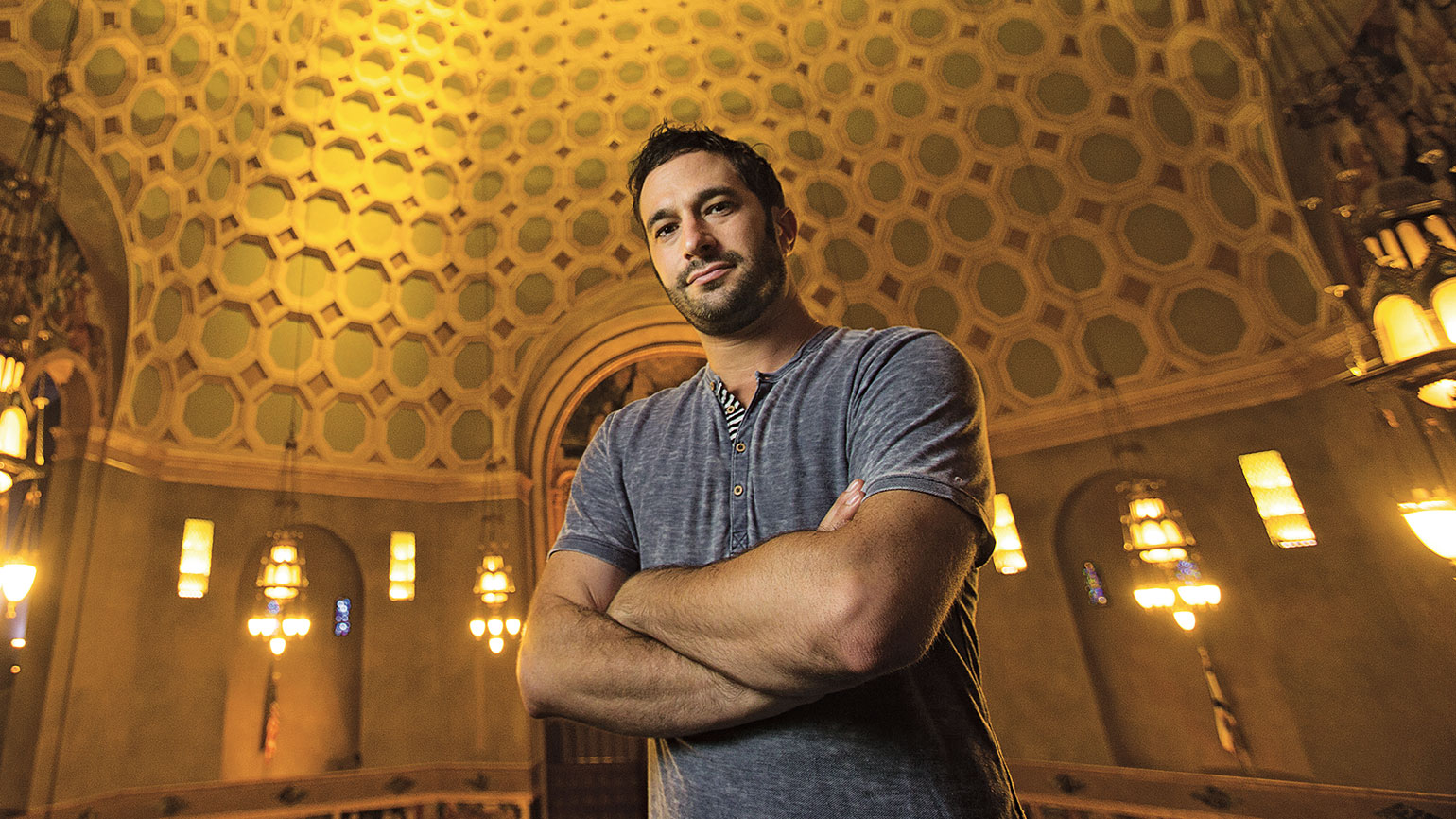
One of my greatest accomplishments began during one of the lowest points in my life. I was in my rabbi’s office at the synagogue where I’d grown up and where my beloved grandfather, Alfred Wolf, had been a senior rabbi decades earlier.

I had so many cherished memories of this place. Wilshire Boulevard Temple is a landmark synagogue in the heart of Los Angeles where stars and studio moguls worshipped during Hollywood’s golden age. Martin Luther King, Jr., gave a historic address there.

I spent my childhood worshipping under the sanctuary’s soaring 10-story dome and scampering upstairs from Hebrew class to my grandfather’s office, where we’d play games or he’d enthrall me with one of his wise stories. The synagogue was showing its age by that time, and the congregation was dwindling, but I was too young to notice. I was always happy there.

STRENGTHEN YOUR FAITH WITH THESE BOOKS FROM OUR SHOP

I was not happy now. I was nearing 30, a professional filmmaker. A few weeks earlier, just a month before our wedding, my fiancée and I had abruptly broken up. I was crushed and bewildered.

The whole reason I was back at the synagogue after years of lapsed membership was my approaching marriage. Like so many young people, I’d abandoned my faith in college. Yes, I treasured my Jewish upbringing. But God and worship seemed like relics from my childhood.

I poured out my heart to Rabbi Leder. He consoled me and tried to help me understand that, though today felt awful, it wouldn’t always feel this way.

Now I was meeting with him in his spacious office, with its fireplace and beautiful, if worn, wood-paneled walls, when he said something unexpected.

“I have an idea that might take your mind off your romantic troubles. As you know, we’re about to start a big renovation project here. The temple is falling apart. I’m sure you’ve seen the tarp we put up in the sanctuary to catch the plaster falling from the dome. Hebrew-school classes are shrinking. People have even advised us to sell the campus to one of the big Korean churches in this neighborhood.”

He looked at me intently. “We are not going to sell. We are going to save this place and reinvent it as a vital place of Jewish community. It’s going to cost more than a hundred million dollars, but we’re going to do it right. What if you and your film company documented the process, making a few online videos for us to keep donors abreast of our progress? You seem to have enjoyed being back here. This would give you a reason to stick around.”

READ MORE: A SANCTUARY FOR ALL

I wasn’t sure how to respond. My company mostly makes narrative and commercial films, not documentaries. It seemed like a huge responsibility. But then something struck me. Rabbi Leder was right. I had enjoyed being back at the temple. Anticipating marriage and kids had changed my thinking about faith.

I didn’t necessarily want to become a regular worshipper. But I didn’t want to lose touch with my spiritual heritage either. And yes, making a new kind of film would distract me from my heartbreak.

“Okay,” I said. “I’ll give it a try.”

Soon I was setting up interviews and documenting the start of renovation. I quickly realized that I would have to film more than construction. The temple’s legacy was at stake. I’d have to explain what it all meant.

I talked with temple leaders and learned about the synagogue’s history. It was Los Angeles’s first Jewish congregation, founded in 1862 as Congregation B’nai B’rith (“Children of the Covenant”), with a handful of families, when L.A. was just a small frontier town. The original building was designed to look like a church, to deflect anti-Semitism.

The congregation grew until, by the 1920s, temple leaders realized that the city’s Jewish population was moving west, closer to the movie studios that were making Hollywood a household name.

The current temple was dedicated in 1929. It featured the lavish domed sanctuary, along with black marble, gold inlay, and murals commissioned by the Warner brothers who had founded the iconic film studio.

For decades, the temple was nationally prominent, the hub of Jewish Hollywood. But beginning in the 1980s, just as I began attending as a kid, decline set in. L.A.’s Jews moved out to the suburbs. The neighborhood around the temple got rougher.

READ MORE: FASTING FOR YOM KIPPUR

Photos from the Hebrew school show gradually diminishing classes, until just a few kids were being confirmed each year. My family probably wouldn’t have attended the temple if my grandfather hadn’t been a rabbi there.

In recent years, though, the neighborhood had changed yet again to become a magnet for Korean immigrants and young hipsters—including young Jewish families. I filmed the construction, but by that point I knew the building wasn’t the whole story.

Wherever I went with my camera, people talked not about architecture but about their lives at the temple. Their faith. Their memories. Their family history. A past president of the congregation told me about how he fainted at his own wedding and my grandfather, who was officiating, caught him.

A longtime member opened a photo album for me in her living room. Every milestone in her life seemed to involve the temple. She too had known and loved my grandfather.

I could hardly keep track of how many lives this grand place of worship had touched. The building, I realized, mattered only insofar as it drew people together.

The reality of the place was the relationships it fostered. And the countless ways people experienced God during Friday prayers, at High Holiday services, in Hebrew school, even at the Jewish summer sleepaway camp my grandfather had founded in Malibu, the first of its kind in the western United States.

The ways people experienced God.

How long had it been since I’d thought seriously about God? By the time I started college, I naïvely considered myself too worldly for faith. But things had happened since then. A few years earlier, I’d been staying over at a friend’s when I woke up in the middle of the night and felt a powerful urge to get back to my parents’ house right away.

I could neither explain nor resist the urge. Alone on the road, I began thinking about death and I felt very frightened. Then, out of nowhere, a strange calm came over me and I thought of my grandparents. I pulled into the driveway at home and saw the lights on.

My mom and younger sister were inside, crying. My grandfather had had a stroke and died—right at the moment I’d felt that sudden calm in the car.

I hardly told a soul about that experience. Now, interviewing people for what was growing into a full-length film, I realized what a strong force faith was in people’s lives. Was it strong like that for me? I thought back to my most formative faith experiences.

READ MORE: COOKING TO SHOW YOU CARE

To be honest, not many happened during worship at the temple, which I found kind of boring as a kid. No, I’d experienced God more indirectly, often through my grandfather.

He wasn’t just the wise, vigorous man who’d taken me on hikes and played games with me in his office. He’d shown me what it looked like to love people well. To take care of countless souls gathered together in the temple he helped to lead.

One day, I turned my camera on myself and began telling my own story. How I’d grown up at the temple, always sitting with my family in Row H of the sanctuary, on the left-hand side. How I’d gone through Hebrew school. Been a counselor at the temple sleepaway camp. Then gradually abandoned my faith.

“I took this place for granted,” I said. Now I couldn’t imagine my life without it.

The renovation took nearly five years. The entire inside of the sanctuary was taken apart and rebuilt. The Hebrew school was overhauled. Work began on a new cultural center. The decrepit classrooms where I’d learned Bible stories got sleek rows of computers and brightly colored desks and chairs.

A historical exhibit was installed outside the sanctuary, with photos of past members—Louis B. Mayer, Jack Benny—and even a counselor’s red jacket from the camp. The project was a huge gamble. What if all those millions were spent and no one came?

They came. Today, attendance is up and High Holiday services are full. The early-childhood program is growing. There is a rooftop sports complex. Neighborhood people of all faiths and ethnicities come for help at the social-services center. Everyone is welcome.

I’m one of those new members. Or maybe I should say I’m a returning member. I pledge regularly and I’m here for every High Holiday service. Since my film was completed and I’ve begun showing it to audiences, the temple has become a second home to me, as I speak at screenings or give tours to people who’ve seen it.

The film is called Restoring Tomorrow. I’m showing it at film festivals and theaters, and ultimately I plan to air it on PBS, Netflix and Amazon.

I screened it for an audience that included members of an African-American church here in L.A., and afterward church members came to me with tears in their eyes, saying that the movie made them even more determined to ensure the survival of their own house of worship.

The film ends with me sitting in my family’s row in the sanctuary. I explain to the camera what the temple means to me now, how important it is that this place—indeed, all such holy places—is preserved and handed on to future generations.

The camera cranes up until it’s almost at the ceiling, taking in the sanctuary, filling the viewer with the same sense of religious awe I get every time I come here.

The film’s title, I think, says it all. The temple has been restored for tomorrow. And so have I.

Did you enjoy this story? Subscribe to Guideposts magazine.

A Vision of Hope, A Message from the Hereafter

I lay on my side in bed, a week after the attack, waiting for the comfort of sleep, still trying to make sense of everything that had happened. Tomorrow, I was supposed to return to work at Euro Brokers’ new office space. I was one of the company’s executives. People expected me to be there, but was I really ready to go back? After what I’d been through?

It was still so surreal. I’d survived. Scrambled down 84 floors from my office in the South Tower of the World Trade Center. Some in the media were calling me a hero, because I’d stopped to pull a man from the rubble on the 81st floor. But surely anyone would have done the same. The truth was, Stanley Praimnath had saved my life as much as I’d saved his. If not for him…I shuddered at what might have been. Just minutes after we got out, the building collapsed. I thought of the colleagues I’d lost, more than 60 in all. I’d never see them again.

I closed my eyes and I was back there in the South Tower with Stanley, holding onto each other, the stairwell lit only by my flashlight, pushing past huge pieces of drywall, water cascading down the steps. The air was thick with dust. Hacking, coughing, we got to the seventy-fourth floor, and suddenly it was like we’d entered another world. The lights were on. I could breathe again. We hurried on.

On the 68th floor we met a man coming up. José Marrero. He’d worked in Euro Brokers’ security department for years, a friend to everyone he met. He was a handsome man, in his mid-thirties, with a 100-watt smile that told everyone that things were right with the world. But that day he was drenched in sweat, breathing hard, holding a walkie-talkie to his ear.

“José,” I said, “where are you going?”

“I can hear Dave Vera’s voice up above,” he said. “I’m going to help him.”

“Dave’s a big boy,” I said. “He’ll get out on his own. Come on down with us.”

“No,” José said. “Dave needs help. I’ll be all right.”

It was the last I saw of him alive. I opened my eyes, staring into the empty darkness of my bedroom. My wife stirred and put her arm around me. Had José made it all the way up to Dave Vera? Where was he when the tower came crashing down? He’d never again know his wife’s touch. He’d had his whole life ahead of him. Like so many of the others. Now, there was nothing.

My thoughts faded: tired…

I was awake again. I’ve gotta get some sleep. I was lying on my back looking at the foot of the bed. I never sleep like this. Why don’t I turn over? And then, suddenly, there was the image of José, standing inches from my feet. He was wearing the most unusual shirt, blousy and brilliant white. I stared at him. José, you’re alive. How did you do it?

He just smiled that glorious ear-to-ear grin. He was okay, joyful even, like he was in on some kind of wonderful secret, and he seemed to be telling me, “You’ll figure it out.”

Then he was gone. As quickly as he had appeared. Still, there was something that lingered. A powerful, reassur­ing presence. José is with God, I thought. But more than that, I sensed God was with me.

There was the alarm: 5:30 a.m. I reached over and turned it off. I wanted to get to work and see my colleagues. I wanted to help in any way I could. Whatever awaited us, we’d get through it together. And with God.

Five years ago I retired from Euro Brokers. But never a day goes by that I don’t think of José. In fact, I wear a silver bracelet engraved with his name. It reminds me of his sacrifice and abiding optimism, a message that I feel called to share with others.

I give speeches around the country. I tell people how Stanley and I made our way out of the tower and how José came to me that morning one week later. I watch as their eyes grow wide with amazement. Life is precious, I tell them. It can be gone in an instant.

A couple of years ago I was speaking at a church in Connecticut as part of its annual September 11 remembrance. At the end of the service there was a video playing, a photo montage of all the victims. The focus grew tighter and tighter until at last just one picture remained. It was José, smiling out at the congregation.

I felt his warmth all over again and it hit me, what José knew all along. Hope never dies. It is with us always.

Read more inspirational stories about 911.

Download your FREE ebook, True Inspirational Stories: 9 Real Life Stories of Hope & Faith

A Veteran’s Emotional Visit to the Vietnam Veterans Memorial

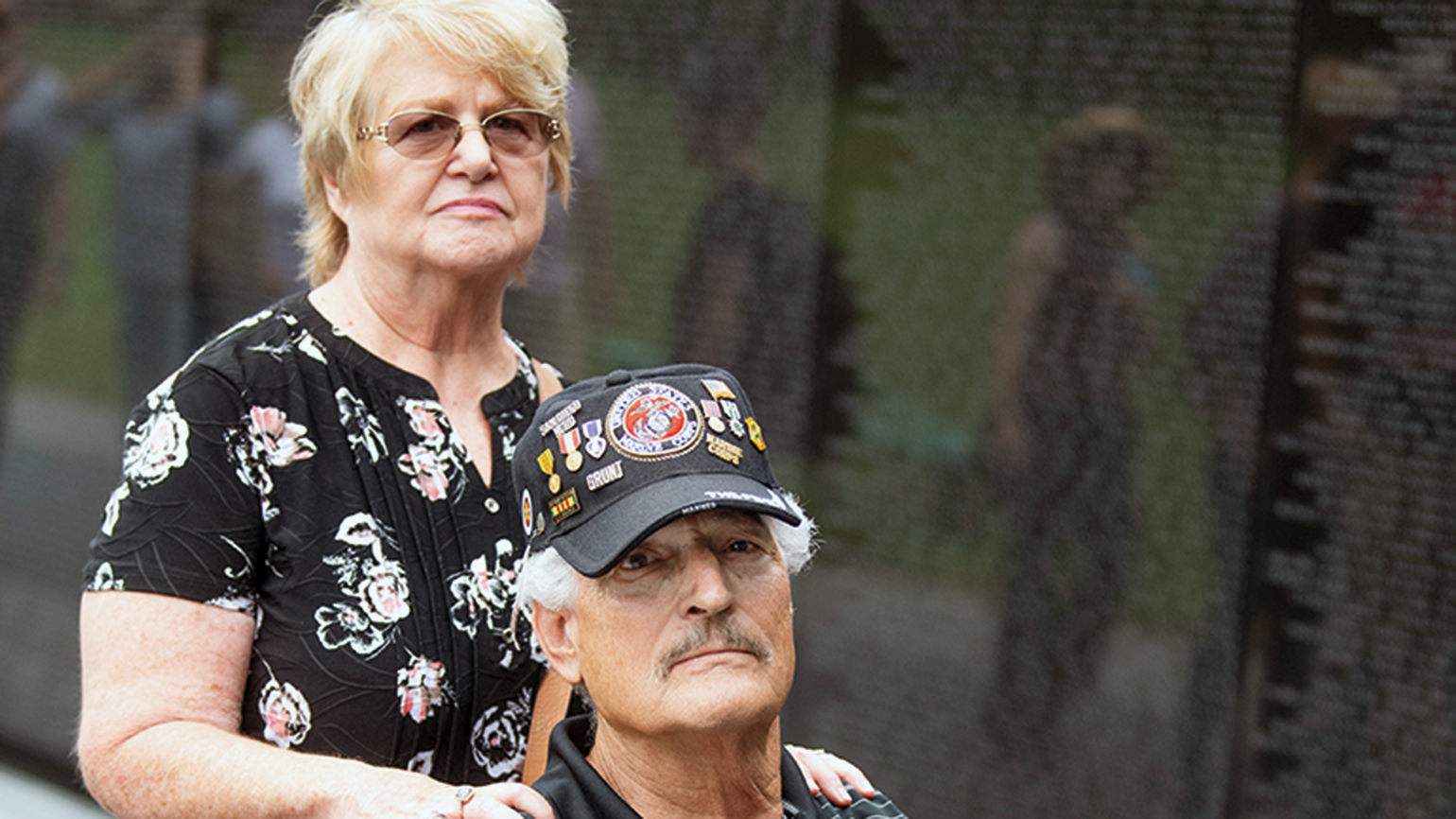
I wheeled myself down the walkway, following the rise of the black granite wall. Connie, my wife, walked beside me. My eyes fixed on the names, almost 60,000 of them. Each one a memorial to a soldier killed in the Vietnam War, the war I’d fought in as a Marine 30 years before. The one that took my legs.

I’d put off coming here for more than a decade. Connie had urged me to make the trip. But I wasn’t sure I could face all those tragic names without asking myself the question that haunted me: Why had I lived while so many others died?

I’d grown up in a poor Oklahoma farm family, the eighteenth of 21 children. My mother had instilled in me my faith. The last thing I heard every night was her prayers. But I couldn’t see any future for myself in tiny Beggs. One day in my junior year of high school, I skipped classes and hitchhiked to Tulsa. Outside a recruiting office, I saw a poster of Marines in their dress blues. I saw myself marching out of Beggs. A life with purpose. What I wanted. I was 17. My father had to sign for me.

I loved being a Marine, the discipline, the sense of mission, being part of a tight team. Out of boot camp, I was assigned to a platoon sent to Hawaii. Our commander was 1st Lt. James Mitchell.

I was 19 by then, the lieutenant only six years older. But he had a determination and a maturity I aspired to have. He inspired us. He pushed us high school dropouts to take night classes during the 14 months we were stationed in Hawaii. Thanks to him, I got my GED. My confidence soared. I was later promoted to corporal.

In May of 1965, we deployed to Vietnam. Lieutenant Mitchell still made time for each of us. He asked about our families. Our future plans. He told us about his wife, Jan, in California and the baby they were expecting. When word came that they’d had a daughter and named her Erin, the whole platoon cheered.

Our platoon was charged with protecting the Chu Lai airfield. Every day, we patrolled the bush that surrounded us. It could be nerve-racking, especially the threat of hidden land mines.

On August 31, we went on patrol. I was on point, the tip of the spear. By 9:30 a.m., we’d been patrolling for 90 minutes in 110-degree heat. We came to a hedgerow. I put my leg through an opening, then jumped back. Below my foot was a mine, beside a hole in the ground. We’d disrupted someone in the midst of planting it.

I called for the lieutenant. He and a corporal arced around me, coming in on the other side of the hedge. A sergeant charged up from the rear and squeezed past. I stepped back—

BOOM! I’d triggered a different, buried mine. It shot up beneath my legs and went off with a deafening explosion, blasting shrapnel directly at Lieutenant Mitchell and the corporal. I landed on my back on the other side of the hedge, nearly 20 feet away.

I heard the lieutenant yelling to set up a perimeter and call for choppers. The air smelled of gunpowder and burning flesh. I looked down. Jagged bones stuck out from where my feet should have been.

I tried to remember the Twenty- Third Psalm, but the words jumbled in my mind. I begged God not to let me die, not here, not now.

A corpsman rushed to my side, his expression telling me this was serious. He whipped off his belt and another corpsman’s and tightened tourniquets on my legs. In the distance, someone screamed, “He’s dying!” I heard choppers. Someone put me on a poncho and loaded me in along with other injured Marines. We lifted off.

I was shipped to five different hospitals for surgeries before landing at the Naval Hospital Oakland, in California. My new life was coming into focus, and it wasn’t a pretty picture. What good was a man without legs? Why had I lived? Most men with my wounds bled to death on the battlefield or in transit. Yet I had survived, one of the military’s first bilateral above-the-knee amputees since the Korean War. Some distinction. It was at Oakland that I learned Lieutenant Mitchell had been killed.

Why had God spared me? The lieutenant had a wife and a baby daughter. I couldn’t stop thinking of the agony they must be going through. I considered writing them a letter, but I didn’t know what to say. I didn’t want to add to their sorrow.

I tried not to think about it. Pushed the whole thing down inside me. Or tried. Just figuring out how I was supposed to go on living was overwhelming. The hospital let me keep a bottle of bourbon. The one thing I could depend on to kill the memories.

A little after Christmas, I awoke bleary-eyed to find a gorgeous USO hostess at my bedside. I rubbed my eyes. “Are you real?” I asked. She just smiled, a dazzling smile. Her name was Connie, and she wasn’t fazed by my missing legs. She stopped by more and more. Her father had been a Navy corpsman. I guessed she had a soft spot for a man in a uniform.

We married six months after meeting and moved to Oklahoma. I went to college for a teaching degree. I’d been fitted for prostheses, but this being the late 1960s they were difficult to use. Mostly I stuck to my wheelchair. On campus there were protests against the war. No one hassled me, but it was clear no one thought of me as a hero. That I could deal with. It was the guilt I felt over being alive that was killing me. I told Connie about the lieutenant, how I felt almost responsible for his death. After all, I was the one who’d stepped on the land mine. Over and over again, she told me it wasn’t my fault. I knew she was trying to make me feel better.

I prayed for healing but found no answers there either. The guilt only got worse. One summer, Connie and I went to California to visit her family. I remembered Lieutenant Mitchell’s widow, Jan, lived in the area. I thought I might check on her and her daughter, Erin, now almost three. I found Jan’s number in the phone book. I stared at that number for what seemed like forever, too scared to lift the receiver.

“Do you want me to dial the number for you?” Connie asked.

“No,” I said. “I can’t.”

I graduated from college but veered away from teaching. I started my own business installing wheelchair lifts into vans. Who better than me? I created a tractor lift for a quadriplegic farmer. I met other disabled people. One day a friend invited me to join a wheelchair basketball team. I’d done well in business, but now I was excelling physically. I loved the competition, the teamwork. It was like being back in the Marines. But the better my life became, the more I felt I didn’t deserve any of it. There was an inverse relationship between my blessings and my guilt.

I was never comfortable talking about Vietnam. Even with Connie. The Vietnam Veterans Memorial in Washington, D.C., was dedicated in 1982. I told myself I’d make the trip to see the Wall…someday. I was afraid it would be like one massive indictment against my life, almost 60,000 charges. The hardest days were the anniversaries of my injury and Lieutenant Mitchell’s death. Connie gave me my space. I’d brood alone, reliving the moment, how it could have gone differently. I’d think about Jan and Erin, but after so many years it seemed pointless to contact them. Then one day, I realized almost 30 years had gone by since I stepped on that mine. All at once I felt an urgency to make that trip to the Wall. “It’s as if it’s calling me,” I told Connie. I couldn’t explain it.

And so on that next anniversary we’d come. Staring at the rows and rows of names before me, I wondered if I really was ready. I’d worn my dress blues. Slowly I pushed my wheelchair forward. An older couple stood next to the wall, holding each other. The woman rubbed her fingers back and forth over a name on the stone, sobbing. Another man I took for a vet scanned the names until he found one, then covered his eyes and ran down the walkway.

I was looking for panel 2E. I wheeled my way there and gazed up at the names. Then I found it. What I’d traveled so far to see: James M. Mitchell Jr.

Why God? There was still no answer, but losing myself in that sea of names, there was a peace, an understanding, that came over me. I was a kid. It was war. Chaos. I could see I was far from the only vet suffering. I thought of the people I’d helped in my business, how grateful they were. These were all the things Connie had told me, and now I found myself believing them in my heart.

I went home and searched in earnest for Jan. But all my internet queries turned up nothing. I spread the word with Marine buddies that I was looking to talk with her.

Veteran’s Day 1999. Connie answered the phone. “Give me just a minute,” I heard her say. She covered the receiver. “It’s Jan,” she said.

I froze. Memories from a lifetime ago rushed back. I said a prayer and then took the phone. We talked for nearly an hour. Jan had remarried and was living in Arizona. She sounded completely happy and at peace. I told her how much Lieutenant Mitchell meant to me.

“I know how important you guys were to him,” she said. She told me she was writing a book about him, then added that Erin was eager to talk with me and gave me her number.

I talked with both of them over the phone several times, but I wanted to see them in person. In August 2000, Connie and I drove to North Carolina to visit Erin and her family.

She met us at the door, and I saw her father in her. We spent the day talking, but it seemed we were both skirting the reason I’d come. I told her how excited her father had been when she was born, how much the men respected him. But not about the land mine. The day he died. Finally I couldn’t take it anymore. I told her everything. She looked at me, perplexed. “Eddie, no one blames you. Not me and definitely not Mom. Thank God you survived.” Then she wrapped her arms around me.

It wasn’t Erin or Jan’s forgiveness I needed. I needed to forgive myself.

A year later, soldiers were again being sent in harm’s way, this time in Afghanistan and then Iraq. The news was filled with images of wounded vets coming home, many with amputated limbs. I remembered how there had been no role model for me. I began visiting military hospitals and sharing my story.

One day Connie and I visited Walter Reed National Military Medical Center. There I saw a mother sitting outside a room, sobbing. “My son is 19, a Marine corporal,” she said. “He lost his legs, and now he won’t leave his room. He wishes he’d died.”

I wheeled myself inside. The corporal stared back at me. In his eyes, I saw myself 41 years earlier. “I don’t really feel like talking,” he said.

“That’s okay. I get it.” I told him what had happened to me. “Your life is just beginning. Don’t give up hope.”

Hope was what kept me alive, a hope buried so deep I didn’t know I had it until I faced the Wall. Until I was finally free from the guilt I felt for something that was never my fault. Things happen in war that we will never understand, like the combat death of a good man with a life ahead of him. We who survive can only understand that God is with us not just in war but in peace.

For more inspiring stories, subscribe to Guideposts magazine.