Embrace God's truth with our new book, The Lies that Bind

Someone Cares: Healing Handiwork

My husband, Clinton, and I were married for 68 years and raised four children. After he died, I was so lonesome I didn’t know what to do. Until I read a magazine article about Knitted Knockers—soft, comfortable prosthetics for women who have undergone mastectomies. The knockers are light and can be slipped into a regular bra. Volunteers around the world make and donate them to breast cancer survivors.

I like to knit and have made everything from baby booties to snuggly long johns. What’s more, a lady from our church had recently had a double mastectomy. Would she like some knockers? I wondered. I whipped up a pair. And wow! She loved them so much, she thanked me three times…and asked for more!

In the seven years since then, I’ve made more than 1,300 knockers, mostly while relaxing and watching TV. I pray over each one I knit, asking that it be a comfort to whoever receives it. Then I mail off 80 at a time to a location where other volunteers distribute them to women all over the country. Knitted Knockers are a double blessing: They not only help others but have given me a sense of purpose again.

Learn more about Someone Cares greeting cards!

Did you enjoy this story? Subscribe to Guideposts magazine.

Someone Cares: Dose of Laughter

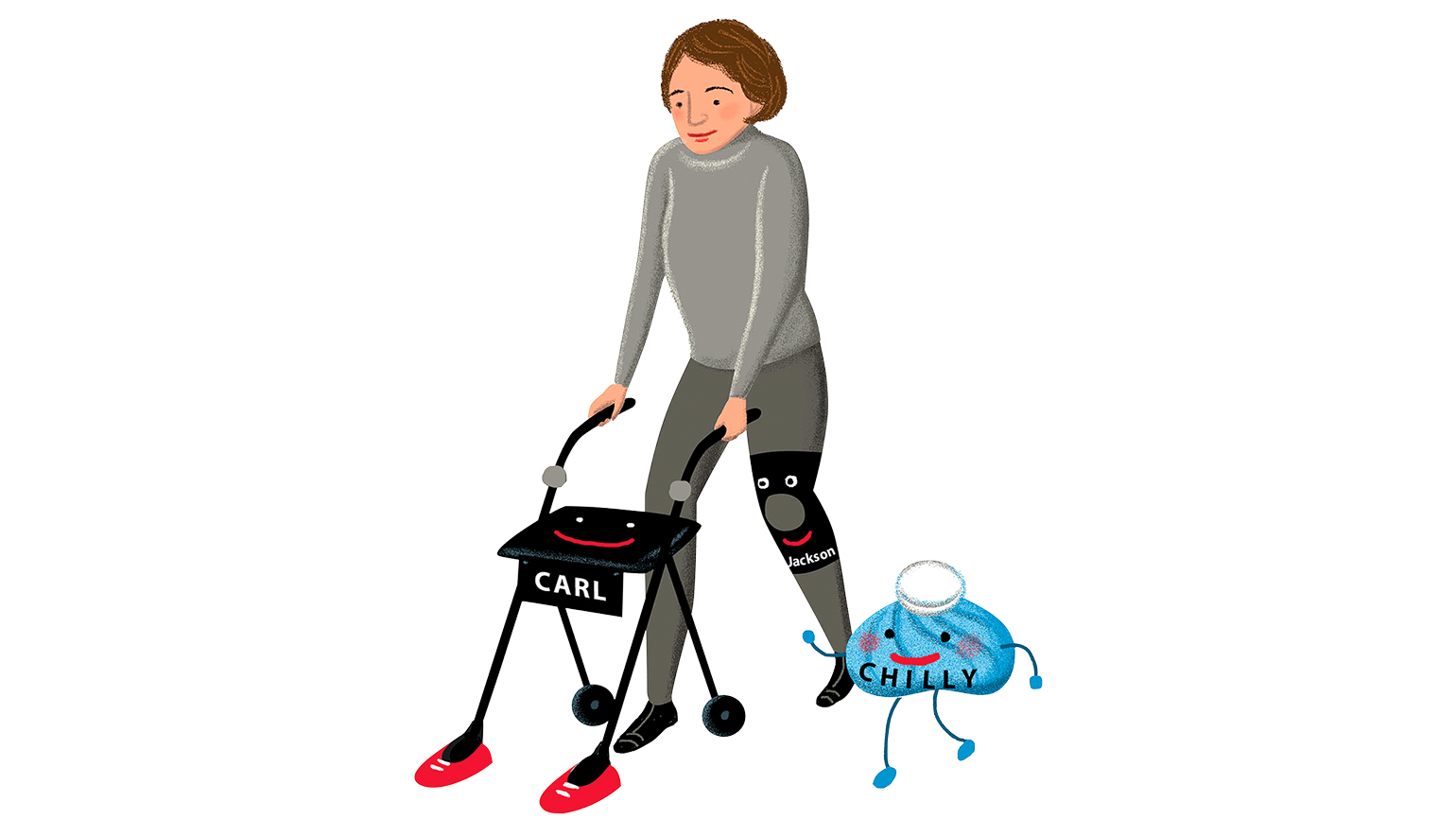
Waiting for my doctor’s office to call me back about an appointment for my aching knee, I dug out my aunt’s age-old quad cane and rickety walker. I tried to cheer myself up by making a sign for the quad cane that read: “My name is Pete. God pulled me out of the closet to help a lady be thankful.” I added a smiley face.

Then my 13-year-old grandson, Zane, came to visit. Quite the comedian himself, he made a sign for the walker, naming it Carl. “Pete needs a friend,” he said. “He can’t do this alone.”

Long after Zane went home, I still chuckled every time I used the cane and walker.

At my doctor’s appointment, a man in the waiting room told me he liked Pete’s sign. I said, “We have to laugh through the pain, don’t we?” He broke into a smile and nodded.

The doctor prescribed a knee brace. Zane said we should call it Jackson. But after several weeks, it was clear I needed a total knee replacement. Following surgery, an ice bag became my new best friend. I called on my grandson again for naming advice. “Oh, Granny, that’s easy,” Zane said. “Call it Chilly.”

With the help of Pete, Carl, Jackson, Chilly and Zane, how could I not laugh through the pain?

Learn more about Someone Cares greeting cards!

Did you enjoy this story? Subscribe to Guideposts magazine.

Someone Cares: Devoted

Every year, I get an extra copy of my favorite devotional (full disclosure: it’s Walking in Grace, formerly titled Daily Guideposts), and I pray about who I should give it to. I ask God to direct me to a person who would benefit from reading it each day, just the way I do.

Last spring, my extra devotional copy was still sitting on a bookshelf. One Thursday, I bumped into Carlie, a former student from my time as a high-school English teacher. I asked her what she planned to do after her ​​upcoming graduation. Carlie said she was taking a gap year before heading off to college. She would be teaching children at a school and helping support new mothers at a clinic in Knynsa, South Africa. Immediately, I knew who would be getting my extra devotional.

Now, as I read the devotions each day, I pray for Carlie, supporting her as she helps others far from home.

Learn more about Someone Cares greeting cards!

Did you enjoy this story? Subscribe to Guideposts magazine.

Someone Cares: Cheerful Giver

My heart broke when I saw the e-mail from my coworker Renda. Her parents’ home had burned down. Renda’s people were safe. But they’d lost everything. Renda asked folks at work to donate gently used items to help get her parents back on their feet.

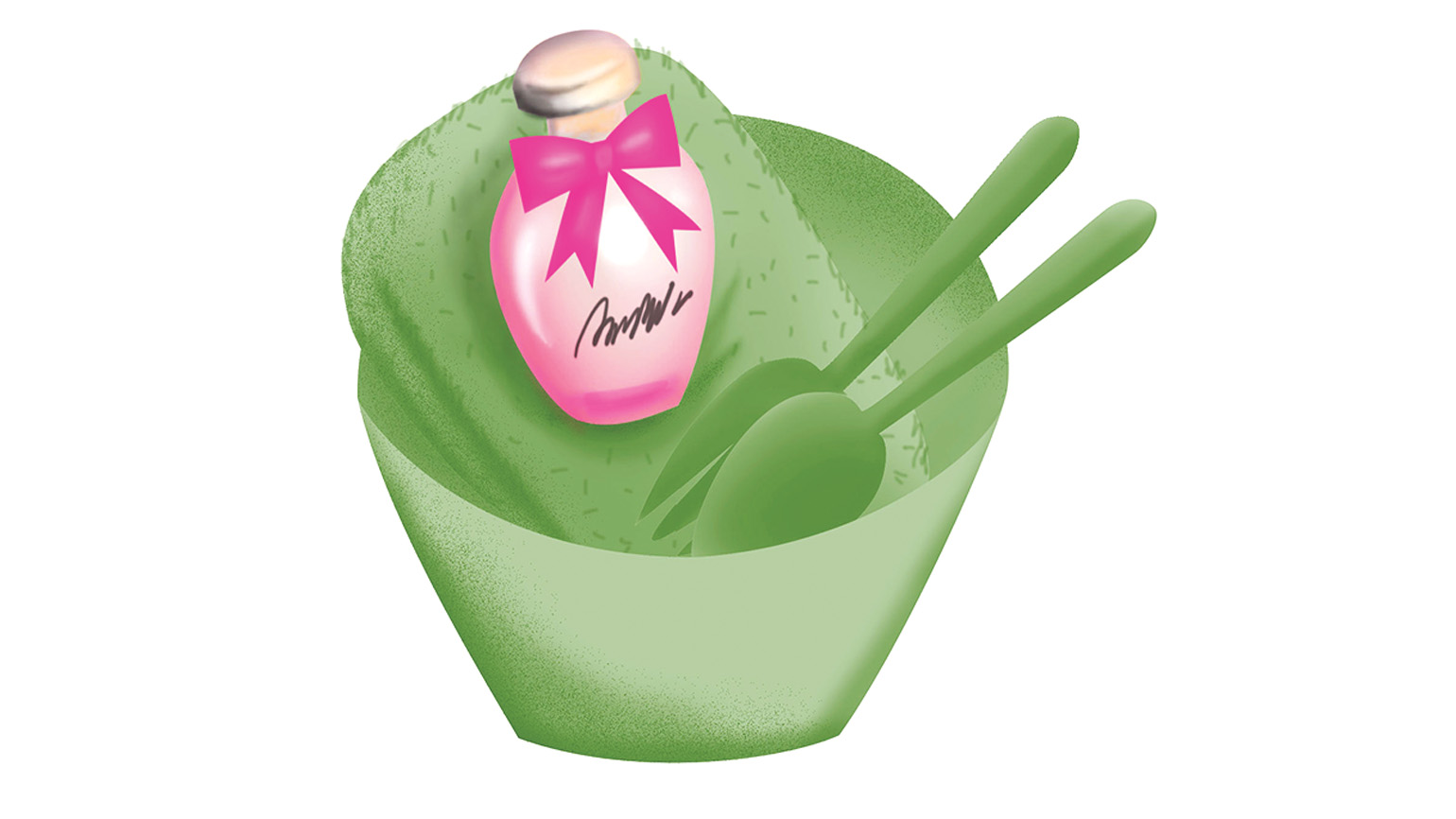
I packed a box with towels, some kitchen utensils and a set of bowls. Then a thought bubbled up. Give Renda’s mom a bottle of perfume. She’d probably enjoy something personal.

I reached for a rarely used scent. Another thought came. Hey, don’t give her a cast-off. Make it one of your favorites. I’d just bought an angelic fragrance that made my senses sing. Could I part with it for a stranger? I tucked it in with the everyday items, feeling suddenly cheerful.

A few days later, Renda confirmed my impulse. “My mom loved the perfume,” she said. “She appreciated getting something delicate among all the practical stuff.” Now whenever someone has a need, I look for a treasure to share. It makes giving even sweeter.

Learn more about Someone Cares greeting cards!

Did you enjoy this story? Subscribe to Guideposts magazine.

Someone Cares: Card Care

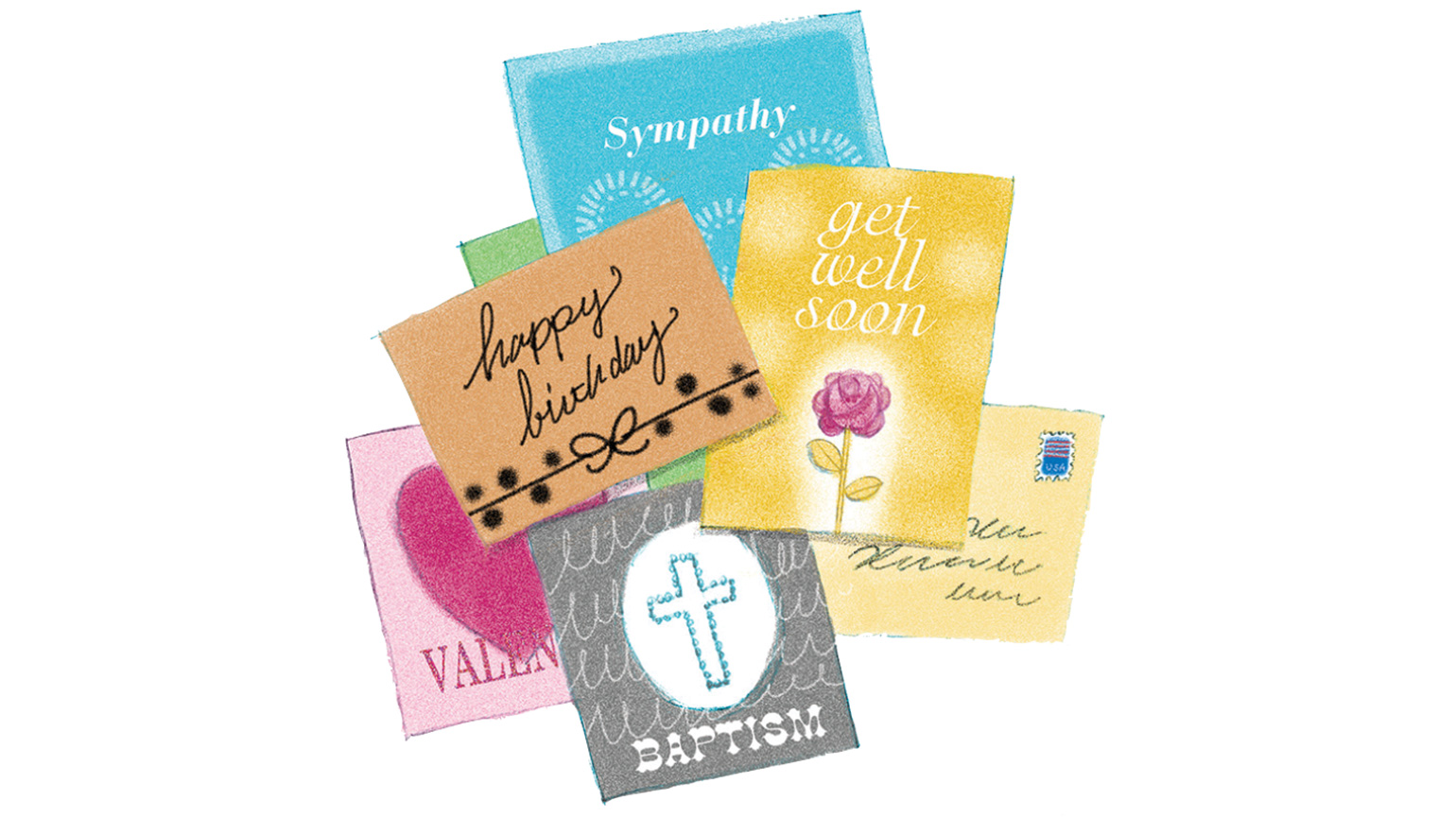
“What if there was a ministry at church that did nothing but send cards?” my husband, Ed, asked at breakfast. “It would be a great way for older, less mobile members to be involved again.” Our friend Katherine had just passed away. At her funeral, her son had told us that though she couldn’t get out much, she stayed connected to our Latrobe Presbyterian Church family by sending cards.

The board of deacons gave Ed and me the go-ahead for what we called the Caring Christians Ministry. Within two weeks, nine people joined us. A former Marine said she’d embellish the cards with flowers and Scripture. Sending cards and praying from home was perfect for a retired policeman and minister.

Congregants donated cards and stamps. Our pastors gave us the names of people who might appreciate cards and prayers. Eight years later, there are 18 of us sending cards every week to fellow congregants and their loved ones around the world. We’re staying connected indeed.

Learn more about Someone Cares greeting cards!

Did you enjoy this story? Subscribe to Guideposts magazine.

Someone Cares: Attitude of Gratitude

The question at the end of one November morning’s devotion gave me pause: For what are you most thankful in this season?

Hmm… I’m always thankful for my home and family, but that didn’t seem specific enough. I walked around the house, looking for the latest reasons to be thankful. New chair, new freezer, new computer? All nice—but not why I was most thankful. Then my eye fell on the basket hanging on my living room wall.

Whenever I get a thank-you note, a birthday card or a letter from someone thinking of me, I put it in that basket. Of course! I’m most thankful for the people who take the time to tell me they care. With a grateful heart, I sat down to send Thanksgiving cards to the people who’ve reached out to me.

It has since become a favorite Thanksgiving tradition, one I look forward to every year. I hope receiving the cards enhances the season for my friends as much as sending them does for me.

Learn more about Someone Cares greeting cards!

Did you enjoy this story? Subscribe to Guideposts magazine.

Someone Cares: A Riddle Day

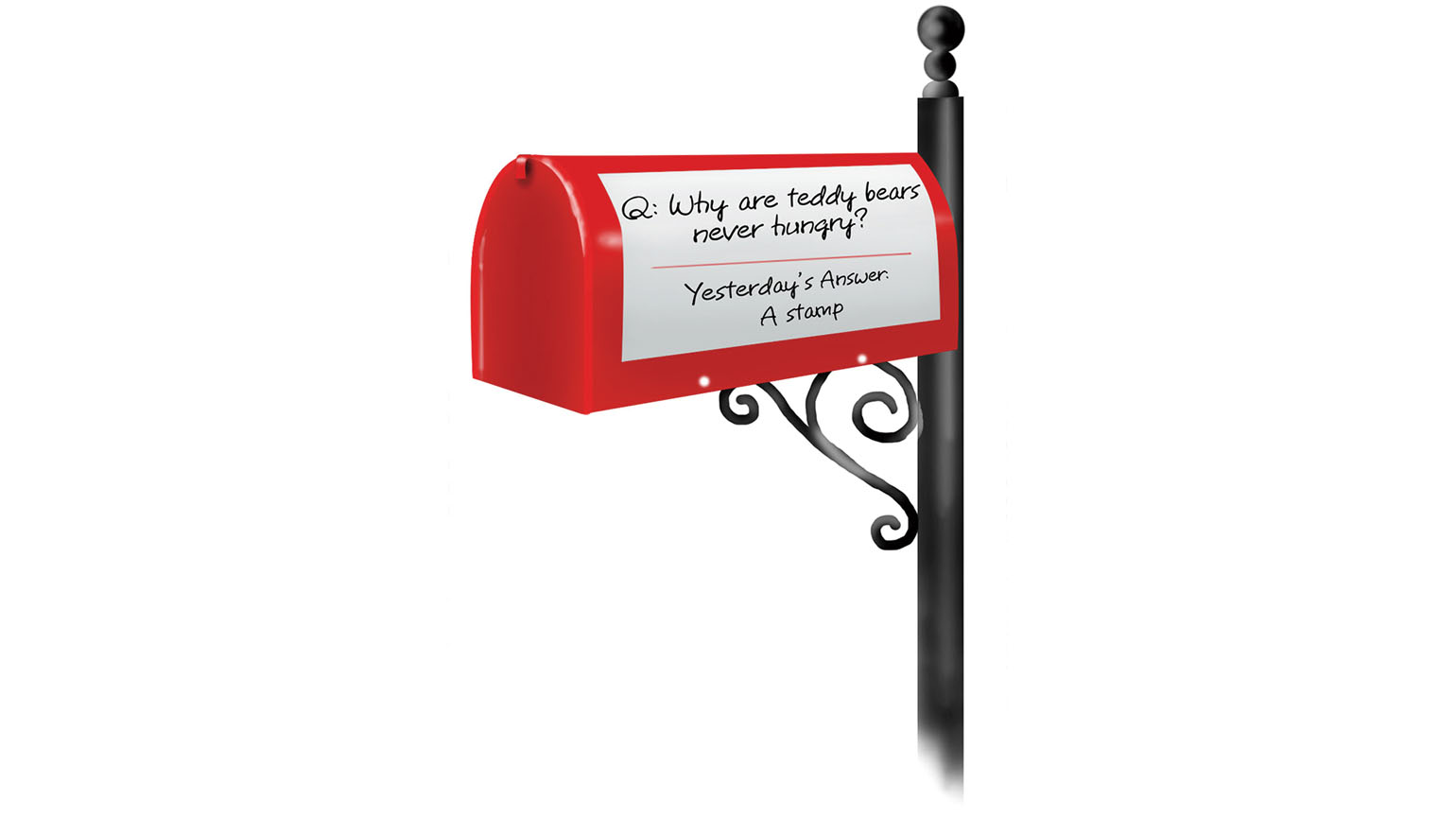
I was working in my flower bed when a young boy stopped his bike next to my mailbox. He read the sign I’d posted: “Why are teddy bears never hungry?” The boy looked at me and shrugged. I grinned and said, “Come back tomorrow to find out.”

The next morning, I put the answer on the poster board, as well as a new riddle. The boy laughed at the answer—“Because teddy bears are stuffed!”—and it made my day.

I live alone and started posting a daily riddle to try to connect with my neighbors safely during the pandemic. I could hardly believe the response. When I went for walks, people called out their guesses. Neighbors left little gifts and thank you notes with more riddles on my doorstep. The best was the grandmother who took photos of the riddles to send to her grandchildren. It made me smile to think I was helping someone else connect with their loved ones.

Turns out, a riddle a day can keep loneliness at bay.

Learn more about Someone Cares greeting cards!

Did you enjoy this story? Subscribe to Guideposts magazine.

Someone Cares: 40 Handwritten Blessings for Lent

Last year, I wanted to offer time and intentional appreciation during Lent instead of forgoing chocolate or sweets. Something simple enough to continue all 40 days.

I made a list of 40 people who make my life better and hand wrote a note to each of them. My wonderful sister. A friend who mows my yard because I have chronic back pain. My mother. A friend who faithfully prays for me. My veterinarian, who helps me care for my aging German shepherd. The baggers at my favorite grocery store. “You came to mind as I was counting my blessings,” I wrote. “I wanted to write to tell you how much I appreciate you. You really bless my life!”

So many people said they were touched to be remembered out of the blue that Lenten season. But I’m thankful for their kindness all year.

READ MORE ABOUT THINGS TO DO FOR LENT:

Learn more about Someone Cares greeting cards!

For more inspiring stories, subscribe to Guideposts magazine.

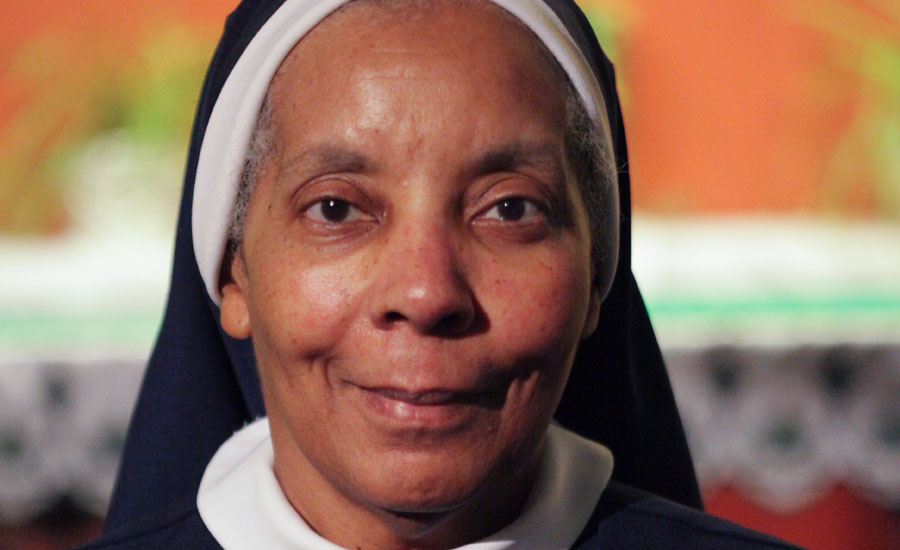
Sister Chala Hill Serves the Poor

Turning 50 prompts some people to start dreaming of retirement. Others may imagine a second career or a moving to a vacation spot year round. Sister Chala Marie Hill felt a different calling. She wanted to become a nun.

Around her 50th birthday, Sister Chala, a widow, was washing the dishes in her kitchen and looking outside of her window, when she had this very strong feeling. “I felt like I was watching my first 50 years of life,” she tells Guideposts.org. I thought, ‘My first 50 years was for man. My next 50 years will be for God.”

Still, the Caribbean native and lifelong Catholic wasn’t sure just how her service to God would manifest. She’d been a social worker in New York City for years in a homecare agency in quality assurance. Though faith wasn’t directly involved, she’d always dedicated her life to serving others, ever since her family moved to New York in 1923.

“Growing up, I strayed away from the Church, but I always had faith. I got married, had children and grandchildren and was practicing my faith ‘cafeteria style’: I’ll take some of this, some of that. But my friends, people around me, could see that I had an anointing.”

READ MORE: GIVING LOVE WITH VOLUNTEERS OF AMERICA

At work, when people were arguing, Sister Chala could calm people down just by placing a hand on their shoulders.

“I didn’t hear God’s call too well at first, but other people would notice the effect I had, that I was peaceful and joyful and wanted to share the joy of the Lord with others. They’d ask me, ‘Have you ever thought about being a nun?’”

Sister Chala put the thought from her mind because at the time there was an age-limit for becoming a nun set at below 45 years old for the Franciscan Handmaids of the Most Pure Heart of Mary (FHM) . Some orders of nuns didn’t want women with children, even if the children are adults, thinking that mothers will always have to put the needs of their children above any needs a nun must serve. At the time Sister Chala was over 50 years old, with children and grandchildren. She decided to become involved in other activities in her Harlem, New York, church, such as street ministry, or sidewalk counseling.

Still, she would see sisters from FHM around Harlem and appreciate their ministry. The FHM, located on 124th between 5th Avenue and Lenox Avenue, is one of only three African American orders of nuns in the country.

Created in Savannah, Georgia in 1916 as a result of segregationist laws that banned White religious leaders from educating or providing pastoral care to Black people, FHM continues to provide care to the poor in Black communities 100 years later. In 1923, the same year Sister Chala moved to New York, FHM relocated to Harlem and launched one of the first preschool programs in the country.

“I would see the sisters and talk with them from time to time,” Sister Chala says. “I admired them very much for their ministry with the poor in Harlem. All of those things attracted me to this order because I was a social worker. I just felt like it was the place for me. Somewhere in my mind I had this feeling that I would one day be living in Harlem with them.”

In 2002, Sister Chala called and met with FHM’s vocation director to express her interest in being a nun. As is customary, she also wrote a letter expressing her interest in being considered as a candidate. During her 9-month candidacy period, she lived with the sisters but continued to work as a social worker, helping out at FHM where she could. After her candidacy was over, in 2003, she wrote another letter expressing her continued interest in becoming a nun. She resigned from her job and entered into formal training as a novice. On October 16, 2010, after FHM’s 8-year formation period from candidacy to final vows, Sister Chala became a nun.

“I would definitely be called an exception,” Sister Chala says of becoming a nun later in life. But she’s convinced her social worker background prepared her for ministry.

“The nuns take vows of poverty, chastity and obedience. Social workers are never going to make a lot of money and you have to follow so many rules,” she laughs.

In addition to caring for the senior sisters in their independent living center, Kittay House, Sister Chala and the other sisters feed the hungry and provide clothing to those in need, including Christmas gifts and toys for children. For the past 100 years, the sisters have operated the St. Edward Food Pantry, serving more than 20,000 families a year. They have also led several preventative care medical missions to Nigeria, serving about 2,000 people per mission since 2000. To celebrate their centennial of service, the sisters initiated 100 Days of Kindness, asking people too commit an act of kindness a day until April 17. Sister Chala is also informally know as the “House Mommy” for the sisters in her house, “serving the sisters and making sure all is well with them,” she says.

Like this article? Sign up for “Your Weekly Inspiration”, a weekly newsletter of Inspirational stories of hope and faith – Click Here.

“I come to ministry with a clear understanding of human development and psychology,” says Sister Chala, explaining why her social worker background is essential to her ministry. That work has given her an awareness of “some of the systemic challenges that many of my brothers and sisters have to deal with, like the impact of the neighborhood you live in and affordable housing on your chances of going to college, of having good health and access to health care.”

“I come with the understanding that not everyone can pull themselves up by their bootstraps. Depending on who they are and how they look, people are held back and restricted and they find life very challenging getting ahead. I understand the intricacies and the layerings of how things work. So I think that helps with ministry.”

Sharing Her Dream with Homeless Teens

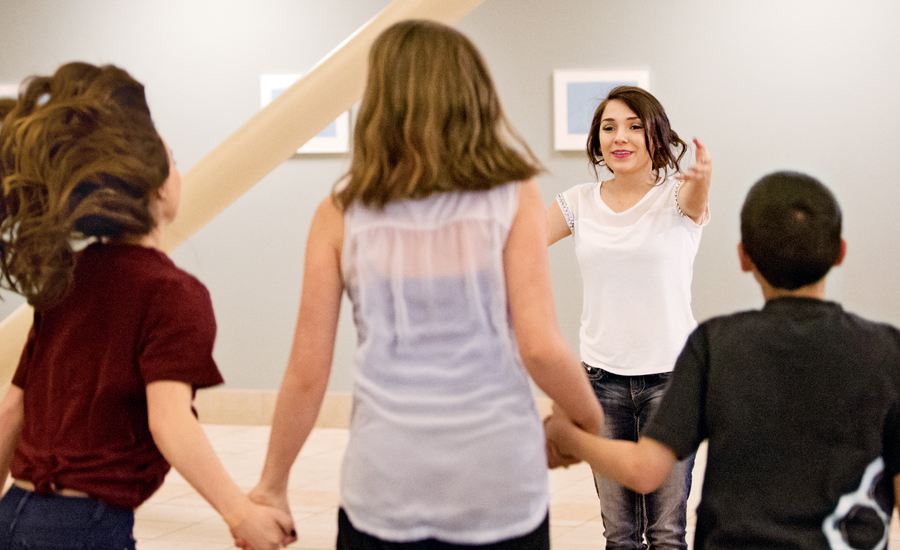
At six o’ clock sharp the curtain rises. Two hundred audience members, including the mayor of Reno, Nevada, look to the stage. Dozens of talented, elaborately costumed actors break out into the first number of The Lion King.

But this is not your typical production. The gifted cast is made up of homeless children living at the Volunteers of America family shelter in Reno. Children who’ve been given a chance to escape their problems and live their dreams onstage, thanks to volunteer acting coach Nasya Mancini.

“I see so much of myself in these kids,” says Nasya. “I tell them their current circumstance doesn’t have to be their destiny. If they are determined they can do anything they want.”

ENJOYING THIS STORY? SUBSCRIBE TO GUIDEPOSTS MAGAZINE!

Determination is something Nasya knows all about. She and a twin sister were born prematurely. Her sister died shortly after birth, and Nasya—who weighed one pound, four ounces—was given little chance of survival. But Nasya kept fighting.

She had open-heart surgery at two weeks old. Doctors predicted she’d be in the hospital for five months. She came home in nine weeks. Her very name (pronounced “Nah- SY-ah”) means “miracle” in Hebrew.

Nasya was small, but quickly proved that her talents were as big as her will to survive. She started dancing at two. By six she’d been spotted by an acting coach, who encouraged her parents to enroll her in drama classes. “There was something about being onstage,” Nasya says. “It made my spirit come alive.”

Her enthusiasm didn’t sit well with some of her schoolmates. In first grade, Nasya was in the hallway telling friends about her classes. “I’m going to be an actor. One day I’m going to be a star.”

Some sixth graders overheard. “You? You’re a shrimp. You’re not even pretty. No one will ever know who you are.”

Nasya came home in tears. “Mom hugged me and said, ‘Don’t listen to them! You can be whatever you want to be. Stand up for yourself.’ But I couldn’t. What if they were right?”

Nasya kept being bullied for her passion for acting. “I tried to ignore it,” she says. “Because every time I got up onstage and delivered a performance, it gave me a boost of confidence and encouragement. Like I was doing what I was meant to do.”

One day, in fifth grade, Nasya was in music class, playing her recorder. “One of the popular girls told me, ‘I can play better than you. And if you’re not better than me, then how can you be an actor? Give. It. Up.’”

This time Nasya kept her cool. She replied, “I love to act. I’m going to make it. And I don’t really care what you or anyone else thinks of me.”

When her mother asked if she’d been bullied that day, Nasya said, “Yes, but today was the day I stood up for myself.” By high school, Nasya was winning awards in theater competitions. As a sophomore, she entered the Miss Northern Counties Outstanding Teen pageant and needed to choose a community-service platform.

Her acting coach mentioned that she taught drama to children at the Volunteers of America shelter…and that there were more than 300 people living there, all from the Reno area.

Nasya was stunned. “I was so blessed that I didn’t realize how blessed I was!” she says. “I’m healthy, have wonderful parents, a great home. I couldn’t believe how many homeless children there were right in my own backyard.”

Nasya knew she’d found her cause: She would work with her acting coach to teach drama to the children at the shelter. “The first day, we played icebreaker games to get to know each other. Then we practiced improvised dialogue. My goal was to take their minds off their problems. Some of the kids were really talented and funny—I was blown away!”

At the end of the class, a little girl asked where she was going.

“I have to go home now,” Nasya said.

“Can I go with you? People tease me because I don’t have a place to live.”

Hearing that broke Nasya’s heart, reminding her of the bullying she’d endured growing up. She gave the little girl a hug and said, “You tell them you might not have a place to live but you have a home here with me. And you can do whatever you want in life.”

Nasya wanted the kids at the shelter to discover the confidence and empowerment that acting could give. The best way to do that, she decided, was to put on a big play. It would be a combination of the kids’ favorite Disney movies: The Lion King, The Little Mermaid and Aladdin.

She contacted a drama company that she’d performed for, TheatreWorks of Northern Nevada, and it offered to help with costumes, tickets and programs.

“I got the word out to everyone I could, but I still couldn’t believe it when I heard the mayor was coming,” she says. The production was a hit. The kids took several curtain calls. Donations to the shelter rolled in.

Long after Nasya won the title of Miss Northern Counties Outstanding Teen, she has stayed committed to the kids at the Volunteers of America shelter. For the last three years she’s been teaching weekly drama classes there. She’s helped the kids put on big productions like Peter Pan and Wishes, a Magical Gathering of Disney Dreams.

At each class she reminds the kids of something she knows with every part of her spirit to be true: “Believe in yourself. The world is your stage.”

America’s Angels tells stories of how Volunteers of America helps our nation’s most vulnerable. Learn more at voa.org/guideposts.

Did you enjoy this story? Subscribe to Guideposts magazine.

Scarves for the Homeless

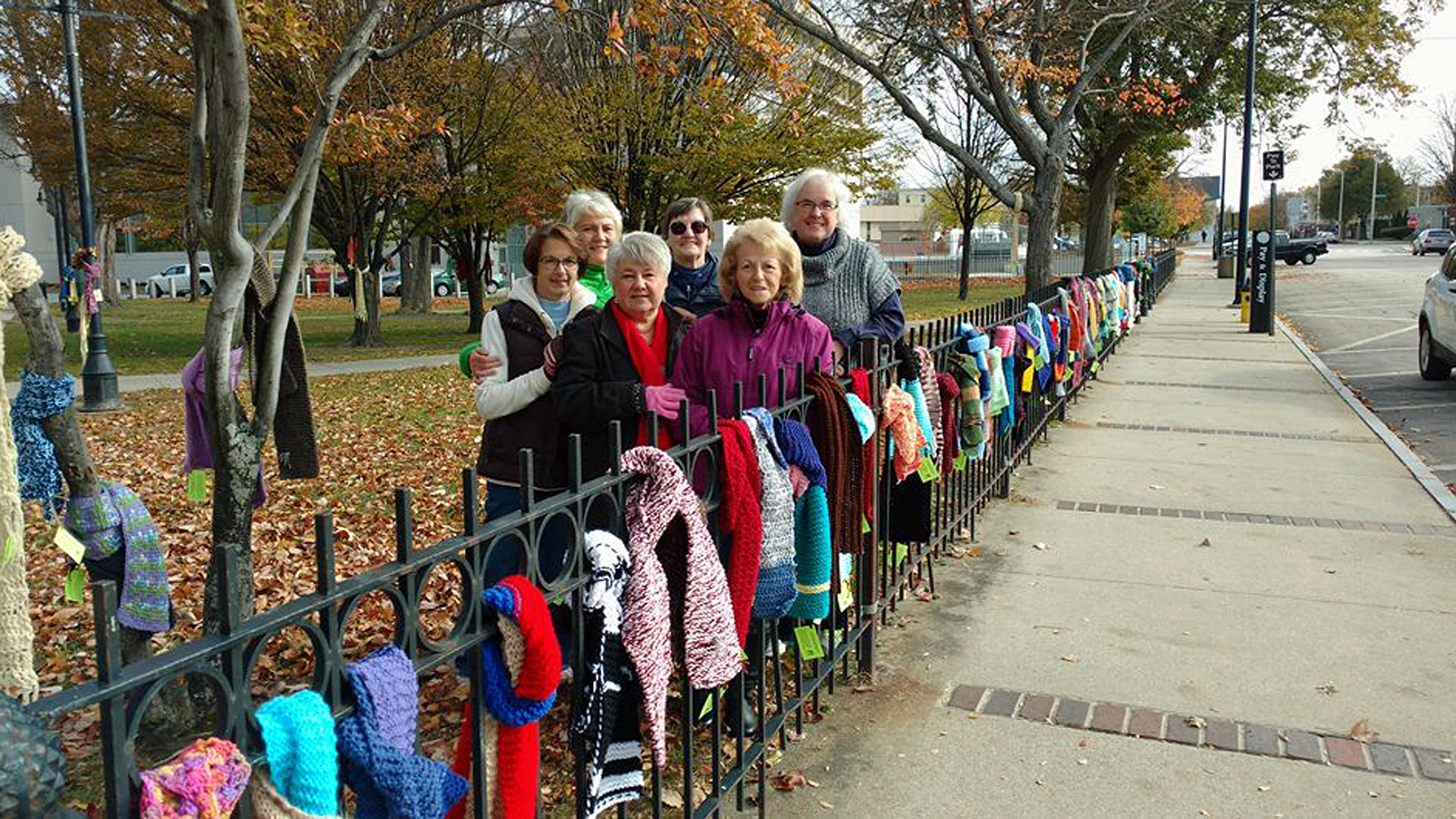
A small church community in Auburn, New Hampshire is decorating their local park for the holidays. They’re not hanging lights or wreaths. Instead, they are putting up knitted scarves for the homeless.

For a second year, parishioners at Longmeadow Congregational Church, United Church of Christ stitched together more than 400 scarves, hats and mittens to hang on fences, bushes and trees in Veteran’s Memorial Park in Manchester. “I liked the idea that it engaged people beyond just writing a check,” Reverend Ruth Gallot tells Guideposts.org of her church’s initiative.

READ MORE: SWIMMER DIANA NYAD’S NEW CHALLENGE: TO GET US WALKING

Gallot’s church is just a short distance away from the park and the members chose to hang the scarves there because Manchester has a large, underserved homeless community. The park is also within walking distance of several lower income communities. “The scarves, all gone within about 24 hours, were a drop in the bucket compared to the need,” she explains. “But if some people were a bit warmer that day, then it was worth it.”

Gallot was inspired by a similar project carried out a year after the Boston Marathon bombing. She read an article on how Old South Church in Boston was trying to gather blue and yellow scarves to give to all the runners participating in the race that year. She invited some of her congregation’s most dedicated knitters to participate, and the church was able to donate 40 scarves to the marathon fund that year.

In 2015, when her church’s mission outreach team was brainstorming a new project for the summer, Gallot brought up the idea of knitting again – this time to help people in her own community during those cold New England winters. She invited members of the church to contribute, created a community Facebook page for the initiative and collected 75 scarves that year.

“I was blessed to be able to engage some women in our church who are not able to get out easy because of illness or age, but whose faith calls them to find a way to serve,” Gallot explains. “This was a wonderful opportunity for them to serve in a way that really makes a difference in the world and it afforded me the opportunity to spend more time with them as their Pastor, delivering yarn, picking up scarves and thanking them for their ministry.”

It was such a hit that this year, church members started asking Gallot how early they could begin knitting items for the winter drive. “There are many people who fall through the cracks, who struggle to make ends meet, sacrificing their own needs for those of their children,” Gallot shares, saying that some people might feel uncomfortable seeking help from local shelters and organizations. “We also know that there are people who are struggling with many other wounds, who just need to feel that someone cares. We left the scarves for anyone who needed them, for whatever reason.”

It’s all part of the church’s mission to serve in whatever way it can, no matter the time of year.

“We believe that it is our call to serve, not just at the holidays, but throughout the year,” Gallot says. “There are a lot of wonderful efforts that happen around the holidays but then, as winter proceeds, food pantry shelves empty. In the summer, giving and serving decline. We do engage in a number of projects during the holidays, but we also seek to serve in those other times, when people are more often forgotten.”

Gallot hopes other church leaders can do what she did: recognize a wonderful idea to help the community and then put their own spin on it.

READ MORE: CHILD WHO LOST BOTH PARENTS LAUNCHES ‘SMILE EXPERIMENT’

“We didn’t invent this idea; we just read about it and then asked ‘How can this work for us, in our setting?’ We are a small church in a small town in New Hampshire. Alone, we cannot solve the problem of homelessness and hunger in the world. We are simply called to do what we can, where we are, with what we’ve got.”

She says it’s important to remember ego has no place in giving: “Jesus didn’t stop and ask, ‘Does this person deserve my help?’ He just helped,” she explains.

And the best way for churches to meet the needs of their communities is by listening to their members.

“Start simple,” Gallot says. “Engage people’s gifts, give thanks for any success, and listen to how the Spirit is working through it all and calling you to serve. It can be a small local project like this, it can be something reaching beyond your community, it can be engaging issues of peace and justice in the world; it doesn’t matter, as long as there is a heart for it in your church.”

Recipe for Sharing

If the kitchen is the heart of the home, the food court is the heart of a shopping mall. But at West Acres Shopping Center here in Fargo there’d never been one.

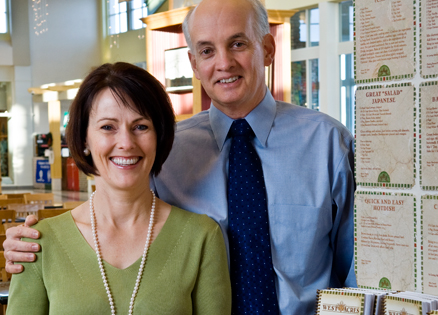
In 2000 the West Acres partners and I, the CEO, decided to revamp the center and add more heart—and a food court—to our mall. We wanted the design to reflect our community’s values, especially its generosity.

Our company had helped the Great Plains Food Bank, which gives food to needy families, find a headquarters in Fargo. Now we wondered if there was a way we could help fill its shelves. Our team gathered at the mall office to brainstorm.

“What if we put recipes on tiles to decorate the walls?” someone said. “People could share favorite dishes.”

“And with each tile,” someone else said, “they could make a twenty-five dollar donation to the food bank.”

The food bank and the mall partners loved the idea, so we created order forms and put them in kiosks across the mall. Forms disappeared and reappeared in the mall office, full of family favorites: caramel rolls, green tomato pie, duck fajitas. My wife, Carol, offered up her white chili recipe, a dish so good our kids agreed on it.

In a few months, the community raised fourteen thousand dollars for the food bank and we had more than 550 recipes for our walls.

Soon after the food court reopened in 2001, I strolled through with a staff member. The tiles gleamed in the sun beaming through the skylight. Off to the side a family wandered through the court, peering at the walls like a museum exhibit. What are they doing? I wondered.

Then the boy jumped up and down, pointing at a tile. “That’s ours!” he cried. “Yes, it is,” his mom said. She nodded toward a tile a row over, “That’s a recipe I want!” She whipped out pen and paper. My coworker and I looked at each other. “We should make a cookbook!” he said. And that’s what we did.

Recipe for Sharing, published in late 2001, is still selling well. So far it has raised forty-six thousand dollars for the food bank. The tiles started as part of a remodeling project, but I see them as much more than great décor.

I see the wonderful things that are possible when people share the best of themselves.

Try Carol Schlossman’s Warmhearted White Bean Chili!