

Embrace God's truth with our new book, The Lies that Bind

Oseola McCarty Created a Scholarship Fund—One Load of Laundry at a Time

This story originally appeared in the September 1996 issue of Guideposts.

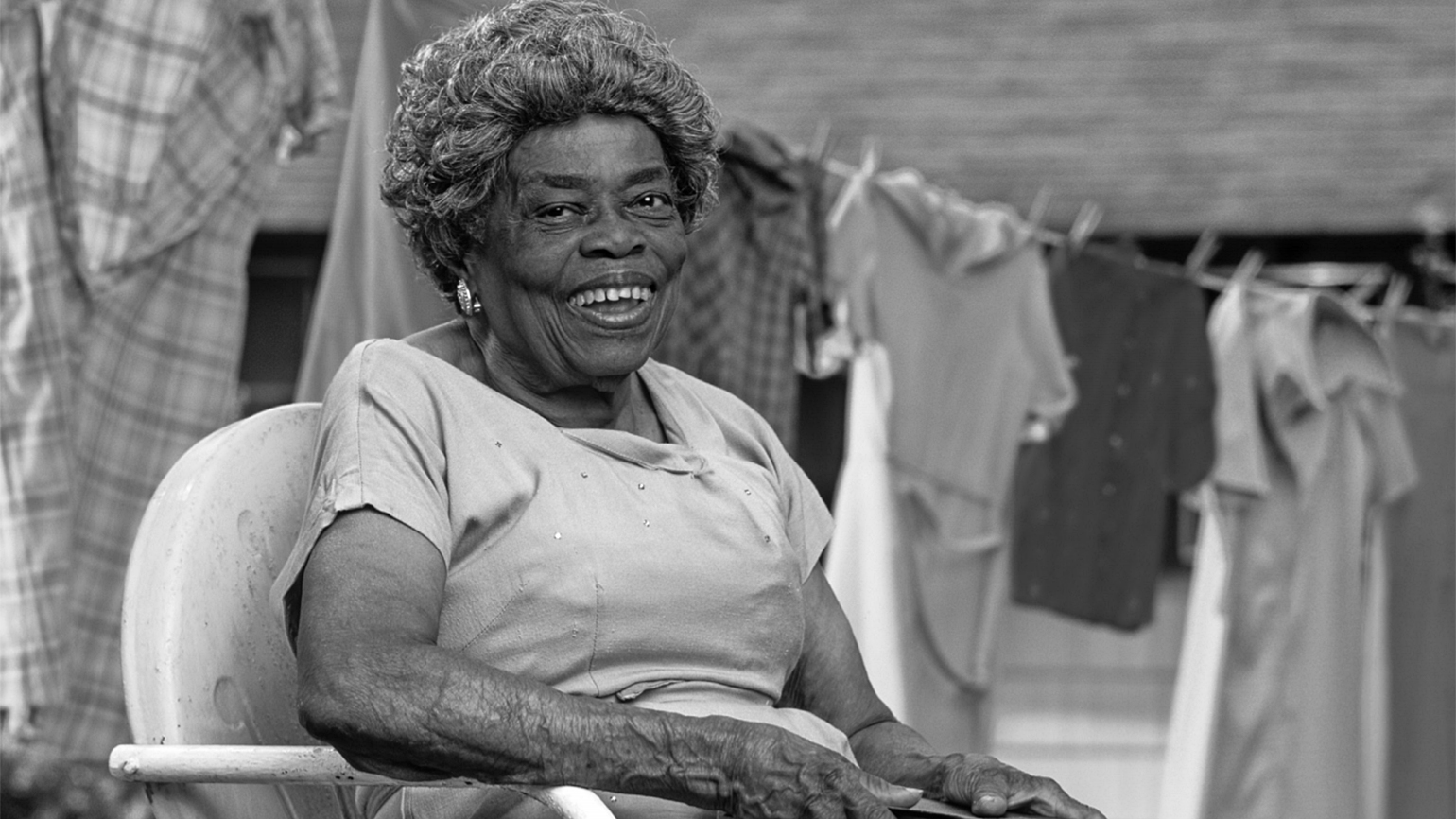
I was born on a farm in Wayne County, Mississippi, 88 years ago. I lived there with my mama, grandmother, and aunt. We raised corn, peas, potatoes, watermelons and cane. And we used to wash our clothes outside in a big black cast-iron pot.

When the four of us moved to Hattiesburg in 1916, we brought that pot with us. Like a treasure pot, it helped us make a living. In it my grandmother and mother did washing for white folks. They carried the water from a hydrant and filled up three big pots they had on a bench in the backyard of our little frame house.

Mama boiled the clothes—she wouldn’t scrub them—then rinsed and hung them on the line with wooden clothespins.

I can remember being just a small child trying to throw some of the washing in the pot. I thought I was helping, but really I was just tossing clothes around and messing everything up.

Like this article? Sign up for “Your Weekly Inspiration”, a weekly newsletter of Inspirational stories of hope and faith – Click Here.

My great-grandmother, who was there at the time, called over to Mama: “Lucy, let that child wash the smaller pieces, the socks and things!” And so Mama let me stand on a wooden box and put a few pieces into the water. That was how I began.

I loved to wash and iron. When I started going to Eureka Elementary School, I washed my own clothes on Saturday mornings, standing on my box so I could toss them into the pot. Then I took my box out to the clothesline so I could reach up and hang the wash in the morning sun.

In the evening, I heated up that heavy old iron on the cookstove and did my ironing while standing on the box. And so I had all my clothes ready for the next week.

I loved school and every one of my teachers, especially Miss Hill. I must have been about 10 or 11 when one day she said, “Oseola, come up to the desk.” So I went up and she talked to me low so nobody else could hear: “Oseola, who irons your clothes?”

“I do.”

You do? Oh, my. Well, I’ve got a linen dress I’d like you to iron. What do you charge?”

I said, “Ten cents.” But when I returned the dress, freshly washed and ironed, she paid me a quarter. As time went on one person told another about my washing and ironing, and the work just seemed to come. The more I did, the more money I made.

Some children in the household where my grandmother worked had discarded a doll and buggy, so Grandma brought them home for me. I started putting my dimes and nickels and quarters under the pink lining of the doll buggy.

When I was 12 my aunt took sick, so I dropped out of the sixth grade to look after her. I was sad to miss out on learning, but felt good about helping my aunt. The next year my classmates had moved on, and I felt so far behind I never went back to school. Instead, I kept washing and ironing and tucking money under the pink lining of that buggy.

READ MORE: A JEWISH VIEW ON GIVING

I was the one who went round to the grocer and the milkman to pay our bills each month. One day I passed the bank and it seemed to be the thing to do to keep my money there. I took in all my coins and dumped them on the counter—I can’t tell you how much I had, maybe five dollars.

The teller put my money away in a checking account, and every month, when I paid the bills, I dropped off more coins at the bank. All, that is, except for what I put in the collection plate at the Friendship Baptist Church. Nobody instructed me to do that. It just seemed fitting to give God back something of what he had given me.

The years passed. When I was in my 20s the Depression came, and I kept on taking in washing. I still used the old cast-iron pot, but now I didn’t need to stand on a box. On my days off, if anybody needed help for a party or something, I made some extra money.

I loved to work. I always asked the Lord to give me a portion of health and a portion of strength and some work to do. And over the years he did just that.

I hear some people today have financial advisors to tell them how to save their money and what to spend it on. Or people want more of this or more of that to make them happy, they just can’t get enough. Well, the Lord portioned out the good things in life to me just fine. Who needs any more?

I made a rule that I would always keep up my church giving, and once a year I made a payment on my insurance and on my burial plot. And every month I paid my water and electricity and gas bills, and set aside a certain amount for groceries and everyday needs.

Over the years God showed me how to spend a certain portion on this, how to spend a certain portion on that, and how to save the rest. It must have been him because nobody else showed me.

One day, when I went to the bank to deposit my money, the teller said, “Oseola, if you put your money in a savings account, you’ll get some interest on that money.”

“Yes, ma’am. When can I do it?” I asked.

“You can do it now.” And I did.

Then on another visit one of the people at the bank said to me, “Oseola, you ought to put your money in CDs and build up more money.”

And I said, “Yes, ma’am. When can I do that?”

And she said, “Right now.” So I did, and I just kept on adding. Sometimes twenty dollars a month, sometimes fifteen dollars. I only went to the bank to put my change and dollar bills in, not to get them out. As long as I was able to keep working, I didn’t see any need to take out that money and buy things I didn’t have to have.

Once a man down on Third Street was making a cedar chifforobe, and I paid him forty dollars for it. But that was the first and last check I wrote.

READ MORE: DEALING WITH A GODSEND

I also got my license as a hairdresser, and for about 14 years I washed and fixed people’s hair. But when Mama got sick with cancer, I went back to washing and ironing at home so I could take care of her.

Things were changing after the war. I had been charging two dollars and fifty cents for a bundle of laundry, but as time passed people gave me ten dollars a bundle. Some folks were switching to hand-cranked washing machines, but I kept using my cast-iron pot and the line out back.

I never needed much. If somebody gave me a pair of shoes that didn’t fit, I just cut out the toes. And my Bible got so tattered from use, I had to tape it up to keep the pages in. Never needed a car; I always walked wherever I went. Pushed a shopping cart back and forth to the grocery store about a mile down the road. I’ve got an old black-and-white TV; it gets one channel. But I never watch it. I’d rather read my Bible.

In ’64, Mama died; in ’67, my aunt passed on. So I’ve been by myself ever since. I was alone, except for the Lord.

I kept on working, even after the age most people retire. It was December of ’94 when my hand started swelling. I was doing washing for Lawyer McKenzie and his wife, and Mrs. McKenzie asked, “What’s the matter with your hand?”

“Creeping arthritis,” I said. “I’ve had a touch of it before, but it’s got me now.” It was mighty distressing that I had to quit work at the age of 86. But I said, “Lord, I want you to stay by me and guide me and protect me in all things.” And he sure did.

At the bank one day they asked me where I wanted my money to go when I passed on. Mr. Paul Laughlin—he’s one of the officers there—sat down with me and spread out ten dimes, and he told me that each dime represented ten percent of my money. So I took a dime for the church and a dime for each cousin. That left six dimes for a dream I had always had.

“I want to help some child go to college,” I said. “I’m going to give the rest of my money to the University of Southern Mississippi, so deserving children can get a good education. I want to help African-American children who are eager for learning like I was, but whose families can’t afford to send them to school.”

READ MORE: SCHOOL SUPPLIES AND MORE!

Mr. Paul looked at me funny and said, “Miss Oseola, that means you’ll be giving the school a hundred and fifty thousand dollars.”

One hundred and fifty thousand dollars! I had never realized how much I had, and the amount ’bout took my breath away! Lawyer McKenzie talked to me to make sure I still really wanted to follow through with my plan. Then we drew up the papers. He made sure I would still have enough money if I ever needed it, and the rest would be given out over the years ahead, year by year.

When the news of what I had done got out, folks from newspapers and magazines came round to find out who I was. I didn’t see what all the fuss was about, but invitations started arriving—to come visit the President in Washington, D.C., and the United Nations in New York City.

I had never been outside of Mississippi, except to Niagara Falls one time long ago and the roar scared me so! But I went and got a Presidential Citizens Medal and was honored by the UN. Who would have thought I would be making trips like that?

But of all the new people I met, the one who meant most to me showed up right in my own front yard. Last August a lovely young girl ran up and threw her arms around me. “Thank you, Miss McCarty,” she said, “for helping me go to college.”

It was Stephanie Bullock, about to begin her freshman year and the first to receive a one-thousand-dollar Oseola McCarty Scholarship. Stephanie had brought along her mother, who is a schoolteacher, and her grandmother, who is a seamstress, and her twin brother, who was entering college also—and we all sat visiting on the screened-in front porch. Right off, we felt like family.

Stephanie had wanted with all her heart to go to USM, but since her twin brother was starting his freshman year at Jones County Junior College, money was pretty tight. Even though her grades were good and she had been president of the student body at Hattiesburg High, she kept missing out on scholarships.

Nonetheless, she had gone ahead and applied to USM on faith, and her family had asked the Lord for help. Everyone in the Bullock family prayed for something to happen. Stephanie’s mama, Leedrester Bullock, kept telling her not to worry but to trust in the Lord that something good would come through.

“Lord, you’ve told us that if we asked, we would receive,” Stephanie had said, “so I’m asking for your help.” Then she received a phone call telling her she would be the first person to receive an Oseola McCarty Scholarship. “Within minutes,” Stephanie’s mother told me, “the whole neighborhood knew.”

I’m so proud. I told Stephanie right away that I’m planning to be there for her graduation. Now I feel like I’ve got a granddaughter.

I’m always surprised when people ask me, “Miss McCarty, why didn’t you spend that money on yourself?” I just smile.

Thanks to the good Lord, I am spending it on myself.

Did you enjoy this story? Subscribe to Guideposts magazine.

Norman Vincent Peale: I Remember Three Christmases

I am Gabriel, that stand in the presence of God….—Luke 1:19

So it comes again, this marvelous Christmas season, the time of chimes and carols, of joy and wonder. A time of fond memories, too, when people look back with love and longing to other Christmases.

There are three particular Christmases in my own past that had a special warmth for me. As everyone knows, gold and frankincense and myrrh were the first Christmas offerings.

The gifts given to me on those three occasions were invisible, but they were no less real. Each came unexpectedly—and each left me a changed person.

I. Some of my most impressionable boyhood years were spent in Cincinnati. I still remember the huge Christmas tree in Fountain Square—the gleaming decorations, the streets ringing with the sound of carols.

Up on East Liberty Street, where we lived, my mother always had a Christmas tree with real candles on it, magical candles which, combined with the fir tree, gave off a foresty aroma, unique and unforgettable.

One Christmas Eve when I was 12, I was out with my minister father doing some late Christmas shopping. He had me loaded down with packages and I was tired and cross.

I was thinking how good it would be to get home when a beggar—a bleary-eyed, unshaven, dirty old man—came up to me, touched my arm with a hand like a claw and asked for money. He was so repulsive that instinctively I recoiled.

Softly my father said, “Norman, it’s Christmas Eve. You shouldn’t treat a man that way.”

I was unrepentant. “Dad,” I said, “he’s nothing but a bum.”

My father stopped. “Maybe he hasn’t made much of himself, but he’s still a child of God.” He then handed me a dollar—a lot of money for those days and for a preacher’s income.

“I want you to take this and give it to that man,” he said. “Speak to him respectfully. Tell him you are giving it to him in Christ’s name.”

“Oh, dad,” I protested, “I can’t do anything like that.”

My father’s voice was firm. “Go and do as I tell you.”

So, reluctant and resisting, I ran after the old man and said, “Excuse me, sir. I give you this money in the name of Christ.”

He stared at the dollar bill, then looked at me in utter amazement. A wonderful smile came to his face, a smile so full of life and beauty that I forgot that he was dirty and unshaven. I forgot that he was ragged and old.

With a gesture that was almost courtly, he took off his hat. Graciously he said, “And I thank you, young sir, in the name of Christ.”

All my irritation, all my annoyance faded away. The street, the houses, everything around me suddenly seemed beautiful because I had been part of a miracle that I have seen many times since—the transformation that comes over people when you think of them as children of God, when you offer them love in the name of a Baby born two thousand years ago in a stable in Bethlehem, a person who still lives and walks with us and makes His presence known.

That was my Christmas discovery that year—the gold of human dignity that lies hidden in every living soul, waiting to shine through if only we’ll give it a chance.

II. The telephone call to my father came late at night, and from a most unlikely place—a house in the red-light district of the city. The woman who ran the house said that one of the girls who worked there was very ill, perhaps dying.

The girl was calling for a minister. Somehow the woman had heard of my father. Would he come?

My father never failed to respond to such an appeal. Quietly he explained to my mother where he was going. Then his eyes fell upon me. “Get your coat, Norman,” he said. “I want you to come too.”

My mother was aghast. “You don’t mean you’d take a fifteen-year-old boy into a place like that!”

My father said, “There’s a lot of sin and sadness and despair in human life. Norman can’t be shielded from it forever.”

We walked through the snowy streets and I remember how the Christmas trees glowed and winked in the darkness. We came to the place, a big old frame house.

A woman opened the door and led us to an upstairs room. There, lying in a big brass bed, was a pathetic, doll-like young girl, so white and frail that she seemed like a child, scarcely older than I was.

Before he became a minister, my father had been a physician and he knew the girl was gravely ill. When he sat on the edge of the bed, the girl reached for his hand. She whispered that she had come from a good Christian home and was sorry for the things she had done and the life she had led.

She said she knew she was dying and that she was afraid. “I’ve been so bad,” she said. “So bad.”

I stood there listening. I didn’t know what anybody could do to help her. But my father knew. He put both his big strong hands around her small one. He said, “There is no such thing as a bad girl. There are girls who act badly sometimes, but there are no bad girls—or bad boys either—because God made them and He makes all things good. Do you believe in Jesus?”

The girl nodded. He continued, “Then let me hear you say, ‘Dear Jesus, forgive me for my sins.’ “She repeated those words. “Now,” he said, “God loves you, His child who has strayed, and He has forgiven you, and no matter when the time comes, He will take you to your heavenly home.”

If I live to be a hundred, I will never forget the feeling of power and glory that came into that room as my father then prayed for that dying girl. There were tears on the faces of the other women standing there, and on my own, too, because everything sordid, everything corrupt was simply swept away.

There was beauty in that place of evil. The love born in Bethlehem was revealing itself again on a dark and dismal street in Cincinnati, Ohio, and nothing could withstand it. Nothing.

So that was the gift I received that Christmas, the frankincense-knowledge that there is good in all people, even the sad and the forlorn, and that no one need be lost because of past mistakes.

III. It was Christmas Eve in Brooklyn. I was feeling happy because things were going well with my church. As a young bachelor minister I had just had a fine visit with some parishioners and was saying good-by to them on their porch.

All around us houses were decorated in honor of Christ’s birthday. Suddenly a pair of wreaths on the house across the street caught my eye.

One had the traditional red bow, bright and gay. But the ribbon on the other was a somber black—the symbol of a death in the family, a funeral wreath.

Something about that unexpected juxtaposition of joy and sorrow made a strange impression on me. I asked my host about it. He said that a young couple with small children lived in the house but he did not know them. They were new in the neighborhood.

I said good night and walked down the street. But before I had gone far, something made me turn back. I did not know those people either. But it was Christmas Eve and if there was joy or suffering to be shared, my calling was to share it.

Hesitantly I went up to the door and rang the bell. A tall young man opened the door. I told him that I was a minister whose church was in the neighborhood. I had seen the wreaths, I said, and wanted to offer my sympathy.

“Come in,” he said quietly.

The house seemed very still. In the living room a coal fire was burning. In the center of the room was a small casket. In it was the body of a little girl about six years old. I can see her yet, lying there in a pretty white dress, ironed fresh and clean.

Nearby was an empty chair where the young man had been sitting, keeping watch beside the body of his child.

I was so moved that I could barely speak. What a Christmas Eve, I thought. Alone in a new neighborhood, no friends or relatives, a crushing loss. The young man seemed to read my thoughts.

“It’s all right,” he said, as if he were reassuring me. “She’s with the Lord, you know.” His wife, he said, was upstairs with their two smaller children. He took me to meet her.

The young mother was reading to two small boys. She had a lovely face, sad yet serene. And suddenly I knew why this little family had been able to hang two wreaths on the door, one signifying life, the other death.

They had been able to do it because they knew it was all one process, all part of God’s wonderful and merciful and perfect plan for all of us. They had heard the great promise that underlies Christmas: “Because I live, ye shall live also.”—John 14:19

They had heard it and they believed it. That was why they could move forward together with love and dignity, courage and acceptance.

So that was the gift I received that year, the reaffirmation that the myrrh in the Christmas story is not just a reminder of death, but a symbol of the love that triumphs over death.

The young couple asked if they could join my church. They did. We became good friends. Many years have passed since then, but not one has gone by without a Christmas card from some member of that family expressing love and gratitude.

But I am the one who is grateful.

Moving Company Offers Free Service to Domestic Violence Survivors

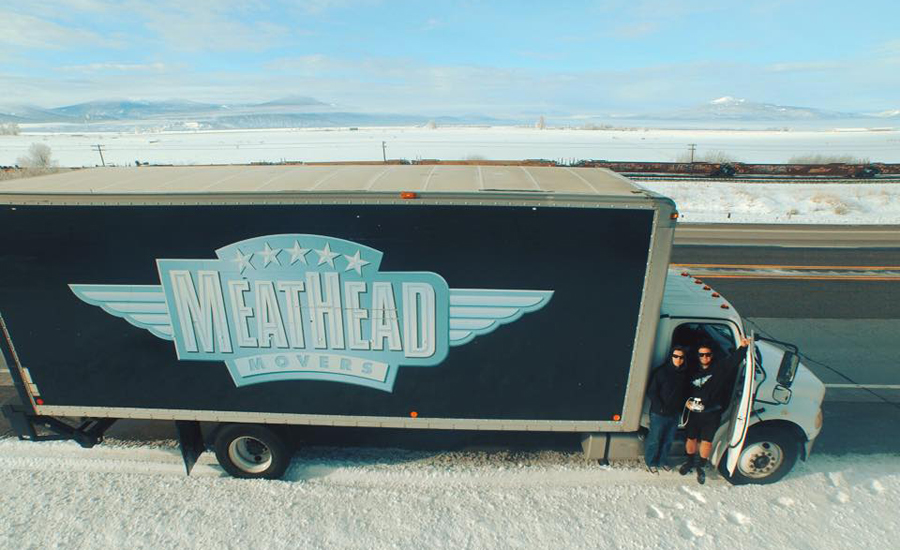
In the March/April issue of Angels on Earth magazine, Aaron Steed shared the inspiring story of his company, Meathead Movers. In 1997, when he and his brother were high school athletes, they started a moving company to make extra spending money. One day, they got a call from a potential customer that changed everything.

A woman called who sounded scared, saying, “I need to be gone before my husband gets home.”

“She was obviously in danger,” writes Steed, so they decided that they’d move her quickly and for free.

“Free moves for people in abusive relationships became our policy, and we coordinated with shelters to make sure everyone was safe,” says Steed.

Download our FREE e-book ‘Overcoming Fear and Anxiety’ by Guideposts Founder Norman Vincent Peale

In 2015, a story about their continued work with domestic violence survivors and shelters went viral and they started the social media campaign, #MoveToEndDV.

“We challenged businesses to offer what they could [for survivors]: free haircuts, pet boarding, job placement, baked goods,” says Steed, whose Meathead Movers still employs high school student athletes in California. The company encourages everyone to raise awareness for domestic violence survivors and to help them wherever possible.

“Every day I’m in awe of the strength and courage it takes for these abuse [survivors] to decide to start their lives over,” he says. “They each deserve our support.”

Mother Teresa: Doing Small Things with Great Love

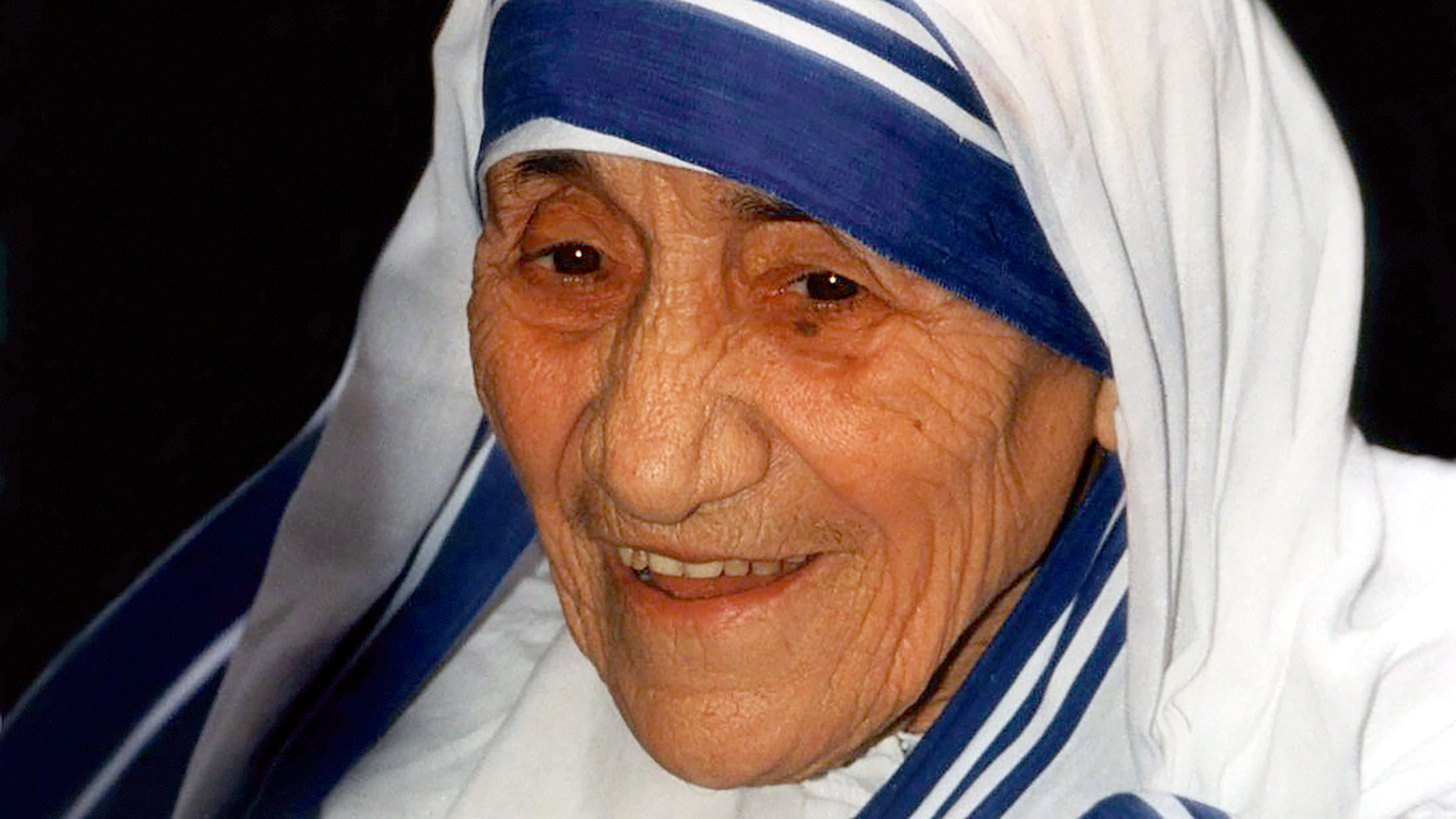
On September 5, 1997, the world lost a true living saint. Mother Teresa touched the lives of millions, often one person at a time. Here are three ordinary Americans who knew her…

It was a fall day in 1968. I had just come off my nursing shift and was on my way to an orphanage in our suburban Dallas neighborhood, where I planned to meet the children I had volunteered to bring home for the holidays. I felt good about what I was doing, but frustrated too. There were so many people who needed help, and I could only do so much.

Celebrating Guideposts' 75th Anniversary

When I opened the front door of the orphanage I was stunned. A group of kids and several reporters crowded around a small woman in a nun’s habit. Mother Teresa! I had just read an article about her. She reached out to touch the cheek of a little girl. Now there’s someone who truly makes a difference, I thought.

I moved closer, drawn in by the force of her personality. Just before she left she turned to me and smiled, her eyes crinkling at the corners. “You look like someone I would like to take back to Calcutta to help in my work.”

I laughed and shook my head. “I’d miss my family too much,” I said.

She handed me a small red card. “Then write me,” she said, looking intently in my eyes.

At home, I didn’t even change out of my nurse’s uniform before sitting down at the dining room table with my stationery and a pen. I started a letter several times, only to crumple up the paper and toss it away. What do you say to Mother Teresa? Finally, I began by telling her how she reminded me of my own mother. Then the words flowed.

I wrote about my married daughter, my job, even admitted something I had never really admitted to myself: Though I had gone to church regularly since I was a little girl, I had never really felt God’s presence in my life. I didn’t expect a response from her, but it was good to get those things down on paper. I mailed the letter the next day.

A few weeks later, after an exhausting day at work, I got the mail and listlessly shuffled through the letters. I saw one stamped “air mail” and tore it open. It was a simple note from Mother Teresa, thanking me for my letter and urging me to try to connect to God through prayer. “You can get so close to God that nothing can hurt you,” she wrote.

A short while later I wrote back. And so it went. I babbled on about my joys, my troubles, my questions, and she sent short but powerful replies, always ending with “God bless you.” Gradually I learned to share my thoughts with God as openly and comfortably as I shared them with Mother Teresa—a lesson I hadn’t even known she was teaching me.

I asked what I could give her to show how grateful I was. She wrote that she needed nothing, but she knew some little girls who could use dresses. Oh, how perfect, I thought. One of my earliest memories was of my mother teaching me how to work a sewing machine. I filled several boxes with dresses, and mailed them to Mother Teresa, telling her I wished I could make hundreds more.

Out of her next letter fell a picture of her with two little girls wearing my creations. She wrote, “It’s not how much you do but how much love you put into what you are doing.”

I thought often of those words after giving up nursing and moving back to Alabama. I focused on helping the elderly. I did their shopping, took them to church activities and administered their medication.

Years passed. I grew older; my grandchildren grew up. But Mother Teresa’s letters continued, as dependable as the seasons. Often when I read her letters—typed on gray, grainy paper, with cross-outs and missed punctuation just like mine—it was hard to remember the woman was a larger-than-life figure for people around the world.

One day I needed more from her than words on paper. I felt overwhelmed by tragedy. My sister had recently died of cancer and another family member had just been diagnosed with a serious illness. All afternoon I cried, searching for the reassurance Mother Teresa said could always be found in God.

At last I called her, not even realizing it was four in the morning there. But when she heard me crying Mother Teresa immediately began praying and continued until I calmed down. “Never be upset with God for what he takes away from you,” she wrote me soon after. “There is a reason he takes anything away, and when he does he gives you something to fill that empty place.”

Those words comforted me years later when I realized Mother Teresa’s own health was worsening. In her last letter, a few months before her death, she asked me not to be upset if she didn’t write anymore, saying, “We are all getting old.” I knew that was her way of saying goodbye.

I still carry the card she gave me thirty years ago. Sometimes I open the mailbox expecting to see her familiar handwriting. She was right. The empty place in my heart is filled—by the reassuring words she once wrote me.

“We don’t die. We just get transferred to heaven and go to work there.” I no longer despair over how little I’m able to do for others. I’ve learned that great impact can come from small gestures—like a simple invitation to write a letter.

—Ruby Steed, Birmingham, Alabama

During the summer of 1993, right in the middle of graduate school, I was a volunteer at Mother Teresa’s Home of the Destitute Dying in Calcutta. I never thought it would be easy, but when I awoke in the oppressive heat each morning I wondered how I would get through the day.

First I had to wash the patients’ saronglike garments (called lungis). Then I helped serve meals and clean up. I mopped the ward and helped patients with their personal hygiene. The work was unending. Soon I became sick. This is horrible, I thought. I feel as weak as the patients I’m supposed to take care of.

One morning after Mass, Sister JosMa came up to me. “Wait here,” she said. “Mother will see you today. She likes to meet all of the volunteers herself.” My pulse quickened. I couldn’t believe she could find time for me.

Sitting on a balcony bench overlooking the clinic’s walkways, I watched Mother Teresa as she hurried to her appointments. Finally, not wanting to intrude on her schedule, I got up to leave when suddenly she came over and asked how I was faring.

“I’m not handling India well, Mother,” I confessed.

Reaching up with her strong hands, she pulled my head down to hers. “Yah. Yah. India can be very hard. But you must pray to Jesus for strength and you must come to Mass.” There was compassion but no compromise in her voice. From her robe she pulled out a small metal crucifix, which she kissed. “You must put this on the chain around your neck,” she said. She rested her hand on my chest for an instant, then left.

That cross remained around my neck through the rest of that long, hot summer in India, then through the rest of graduate school, a new career in social work and a bout with cancer. When I say my prayers at night I can still hear Mother’s heavily-accented English: “You must pray to Jesus for strength.” Strength she shared with so many others.

—Richard Dickens, New York, New York

One night I was returning from a business trip, tired and a little homesick. I finished my meeting notes just as the jet touched down in Detroit. Wearily, I stuffed the papers in my briefcase and shuffled off the plane and into the nearly deserted corridor, my footfalls echoing hollowly.

My gaze fell on three nuns coming toward me. As they neared, I recognized Mother Teresa and called her name. She stopped and smiled. I put down my briefcase and walked up to her, my arm outstretched. She took my hand and held it in a friendly way.

“Will you please pray for me?” I asked.

She patted my hand, and surprised me by replying, “You pray for me.”

While driving home, I did. I asked God’s blessing on her ministry and thanked him for the gift of meeting her.

Eight years have passed since Mother Teresa asked me to pray for her. I have pondered her words many times. At first I marveled that she thought I could help her. It occurred to me that not only did Mother Teresa want me to pray for her, but she knew that through prayer I would be closer to God.

—Charles Zech, Grand Rapids, Michigan

For more inspiring stories, subscribe to Guideposts magazine.
Mercy Ships: Her Voyage of Healing

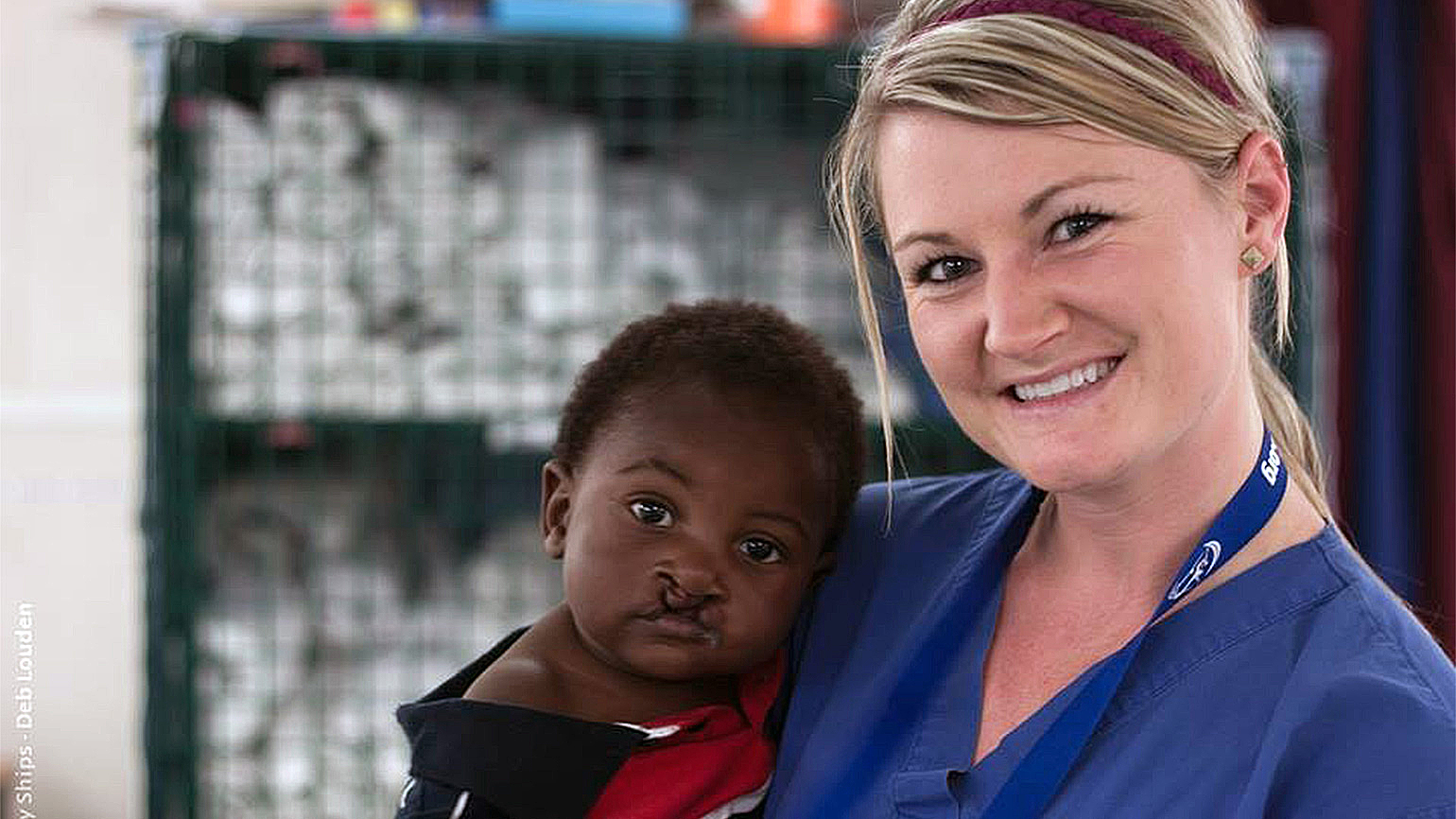
Why? I couldn’t stop asking that question. I was a nurse in the maxillofacial ward of a surgical ship docked in the African nation of Madagascar. I had worked on the ship for more than a month, treating patients with facial tumors, cleft lips and other ailments too severe for local hospitals. The job was a dream come true. The ship was operated by Mercy Ships, a global Christian medical charity. I had long yearned to use my nursing skills for God. Now on board the Africa Mercy, I felt as if I had found my calling.

But I’d found something else too. Just a moment ago, I’d been hugging four-year-old Armel. His mother had brought him to the ship seeking treatment for facial tumors. Armel had neurofibromatosis, a genetic condition that causes tumors to form in nerve tissue. The tumors on his forehead and cheek were so large, they covered his right eye.

Armel laughed and ran around the ward like any other child. I loved his antics. But I found it hard to laugh with him. His condition was untreatable. Even after doctors on board removed his tumors, they would eventually grow back. And more would form as he grew older.

Despite the daily success stories, the setbacks weighed on me. The patients we couldn’t help. The children whose pain and disfigurement we couldn’t heal. Even if we successfully treated every one of the thousands of people who came to us during the time we were docked in Madagascar, we would not even scratch the surface of the medical need in this impoverished region of the world. The hope, the sense of call that had brought me to Africa—I felt them draining away.

I watched Armel run to another nurse, smiling and raising his arms to be swung around. Don’t you see him, Jesus? Why can’t we help him? Why?

I never thought I’d be asking such questions when I boarded the plane to Africa from my home in Oregon. I had been consumed with excitement. Certain I was doing what God intended.

I’d wanted to be a nurse ever since I was a child. An old friend from my college days emailed me about Mercy Ships. Launched in 1978, the organization sends fully equipped and staffed medical ships to ports in developing nations. The Africa Mercy, serving coastal Africa, is 500 feet long, with eight decks, a crew of 400 volunteers from 40 nations and four wards that provide surgery and treatment for everything from tumors and malformed limbs to burns and eye diseases.

I was intrigued by my friend’s email but too busy to follow up. I’d been on mission trips before, but I shied away from anything long-term. I grew up in a small town. Portland, Oregon, where I got my first nursing job, seemed way too big and crowded for me—and it’s not exactly a giant metropolis.

And yet, as I settled into a new job in the labor and delivery ward at a small hospital near where I grew up, I found myself thinking about Mercy Ships again. Labor and delivery can be inspiring work—it’s the daily miracle of new life. But sometimes I wondered whether my patients really needed me. We are blessed with so many resources here in America. It didn’t help that friends and siblings began to get married and settle down. I hadn’t found the right person yet. I felt superfluous.

Recalling my old friend’s email one day, I looked up Mercy Ships online. Almost instantly I felt a tug. Resources? Many sick children in Africa have next to none. Superfluous? Every ounce of my skills and compassion would be needed there. Suddenly I knew where I was meant to be. I signed up for a seven-week commitment in Congo.

My certainty only intensified when I came aboard the Africa Mercy. The ship was huge, painted bright white and blue. Inside were the familiar hospital sights and smells. Yet everything felt imbued with urgency and purpose. The crew, volunteers from all over the world, welcomed me. They seemed happy and focused. I dropped my bags in the berth I shared with five other women. And I got to work.

I loved every minute. Before a Mercy Ships vessel docks, advance teams go to regional hospitals encouraging doctors to send the patients they are unable to treat locally. Word spreads and soon thousands are coming to the ship. Each person is screened on shore and sent aboard if the ship can help.

I saw so many people board with tumors, bent over by injuries, nearly blind. After life-saving surgery, they left with new hope. My seven-week posting in Congo flew by, and I volunteered for a longer commitment: 18 months in Tamatave, Madagascar.

I was assigned to the maxillofacial ward, where one of my first patients was a child brought by a young mother. “Tonga soa!” I said to her—“welcome” in the Malagasy language. She regarded me warily, unsure whether I could help her son, who had a severe cleft lip.

I asked if I could hold him and her eyebrows rose, skeptical I really wanted to touch her disfigured child. Through an interpreter, I explained the surgery the child would receive and how we would care for him afterward.

The next day, I stood at the boy’s bedside and watched as his mother gazed down at him after his surgery. “Faly be,” she murmured quietly. “Faly, faly, faly.” I’m so happy, happy, happy.

I could barely contain my joy. And yet, as the initial excitement of my longer assignment wore off, I became more attuned to the reality of health care in Africa. During time off, friends and I would sometimes leave the ship to go to the beach. I was overwhelmed by the poverty I saw. People living in tents. Children begging for food. There were thousands of such children. Millions in Africa.

On board, as I treated more patients, the ratio of happy to unhappy endings seemed to even out. I had probably just overlooked the harder cases earlier. Now they loomed large. Mothers tearful over untreatable children. Wounds that wouldn’t heal. Surgeries that helped but didn’t fix a problem. Why did some people get miracles while others didn’t? Where was God? Sometimes it seemed cruel to help a select few while countless others suffered.

A few days after working with little Armel, I stood in a circle with eight other nurses praying for a patient whose wounds weren’t healing. Four weeks earlier, William had had a large tumor removed from his jaw. The plan had been to replace part of his jaw with a titanium plate and then with a bone graft. But the tumor had turned out to be cancerous, and the presence of cancer meant doctors couldn’t go through with the bone graft. William’s surgical incision remained stubbornly infected. Half of his jaw was permanently gone.

We had been praying for William for a long time. Day after day, he sat with his face in his hands, massaging a headache. It was my job to change his bandages and explain why we had to stop treatment. Even with an interpreter, I couldn’t be sure I was getting through. How do you tell someone with a gaping hole in his face that he will be like that for the rest of his life? Especially when that person came to you confidently expecting an answer to his prayer?

“William, are you discouraged?” I’d asked him a few days earlier. He’d raised his eyebrows resignedly, which I knew meant “yes.”

Now in the prayer circle, I couldn’t help feeling helpless. Bitter, even.

We said amen, and I looked over at William, expecting to see him massaging his relentless headache. Instead, he was reading. With glasses wedged around his bandage, he was gazing intently at his Bible. His face was serene.

I stared. Then reality crashed in like a wave from the sea outside. I had wanted so badly to see William healed physically—to see everyone on board healed—that I had forgotten the myriad ways God was already at work on this ship. I remembered in Scripture how Jesus rarely heals a person’s body without also saying, “Your sins are forgiven.” God’s definition of healing was different, larger than mine.

And here was William, getting to know his true Healer. Who was I to say the care I had shown him was in vain?

I didn’t get to see William discharged— I had been assigned to other patients by then. But I knew God continued to care for him, in ways visible and invisible. Gradually my sense of hopelessness faded. Even if we aboard the Africa Mercy couldn’t cure everyone, we could show God’s love to people who had felt abandoned and alone. We could be part of a larger healing we might never fully understand.

When at last I returned home from Africa, I felt a renewed sense of purpose about nursing, even in the labor and delivery ward of a small-town hospital. Recently, I’ve signed on with another international aid organization to serve a few times each year in places devastated by war or disaster. I just got back from a few weeks in Mosul, Iraq, treating people fleeing that country’s deadly war zone.

In a way, it doesn’t matter where I work. What matters is that I know why I work. I am called to be a nurse. To heal. Most of all, to be God’s hands and heart wherever he sends me. That’s the most important healing of all.

For more inspiring stories, subscribe to Guideposts magazine.

Meet the Medical Missionary Teaching The Next Generation

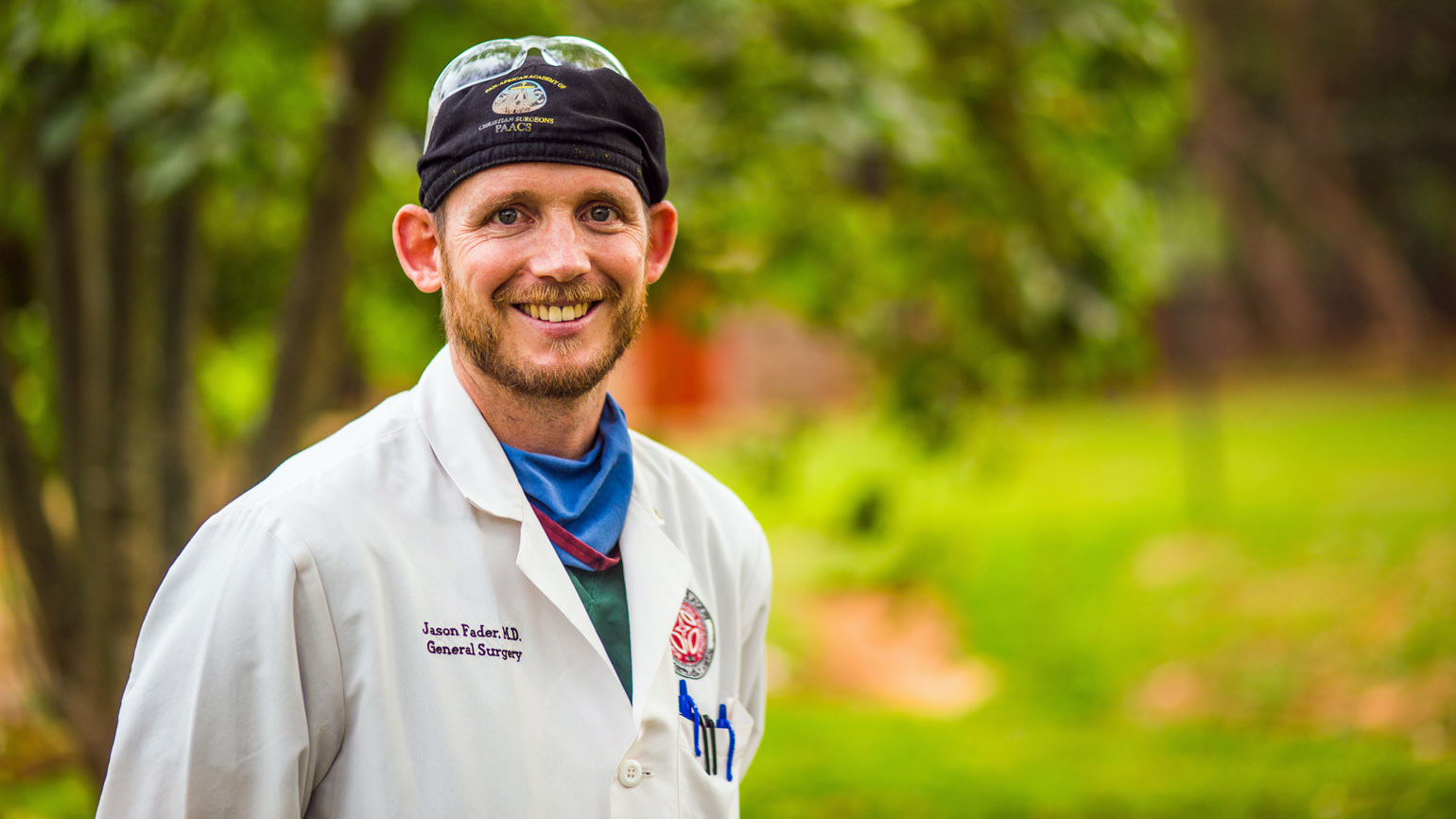
Jason Fader isn’t the average American doctor. The 39 year-old medical missionary, currently serving at the Kibuye Hope Hospital in Burundi, can do up to eight surgeries a day and treat dozens of people in between. His patients number in the thousands and he’s responsible for more than forty students currently studying at the hospital. His workload is heavy but according to Dr. Fader, he wouldn’t have it any other way.

“God gives us talents that we’re meant to use to serve others,” Dr. Fader tells Guideposts.org. “I feel obligated to use mine in this way.”

Missionary work is in the doctor’s blood. His father, a surgeon, and his mother, a nurse, both worked in Kenya during his early years. When he was in the fifth grade, Dr. Fader saw his father perform surgery for the first time.

“He’d take me to the clinic to see the work he was doing there,” Dr. Fader recalls.

As he grew older, he discovered a love for fixing things and a passion for medicine. He returned to the U.S. to finish his secondary education. He earned a degree in medicine and served out his residency at St. Joseph Mercy Hospital in Michigan. Having seen his parents serve in the field, he knew working in an ordinary hospital setting in the U.S. just wasn’t what he felt called to do.

Fader and his wife connected with other families wanting to serve as medical missionaries and raised money to spend a year abroad in France, learning French and Kirundi – the two languages most prominent in Burundi. He spent time serving as a medical missionary in Kenya, learning alongside other long-term missionaries, before heading to Burundi. He chose the nation because of its shortage of doctors (there are just 13 surgeons for 10 million people) and for its teaching hospital.

Recently, the surgeon made history as the first ever recipient of the Gerson L’Chaim Prize for Outstanding Christian Medical Missionary Service. The award is from the African Mission Healthcare Foundation (AMHF)-founded by New York entrepreneur Mark Gerson and Dr. Jon Fielder, a medical missionary serving in Kenya. It comes with a $500,000 gift that will add a critically needed new surgery ward with more beds to help patients recover faster. The gift will also help create Burundi’s first postgraduate training program.

For Dr. Fader, the prize means getting to help even more people.

“I could work myself silly and make just a drop in the bucket in terms of surgical needs in Burundi,” Dr. Fader, who’s been serving the country for three and a half years, says. “But I can teach 40 students who will go on to treat even more people. That’s the goal.”

Educating the next generation extends to his own family as well. A father of two young girls, Fader knew it was important that missionary work be a family affair. He remembered the wonderful lessons of his own childhood and wanted to pass those down to his girls.

“We’re giving them an experience and a worldview they wouldn’t get back home,” Dr. Fader says.

Fader hopes his award and any recognition that might come with it can go a long way towards educating others about the true nature of missionary work.

“It gets romanticized a lot,” Dr. Fader admits. “I go to work every day and face many of the same problems I would in the U.S. There’s nothing glamorous about missionary work, but it’s work that’s needed.”

He also hopes his story can encourage others thinking about entering in the missionary field.

“Just do it,” Dr. Fader says. “It’s easy to stay at home and stay in your comfort zone. It’s much harder to follow a calling,” he says. “But it’s worth it.”

Knit for Kids Is Helping the World One Stitch at a Time

For millions of children around the world—vulnerable and living in poverty, many in dangerously cold climates—keeping warm throughout the year is a struggle. That’s where Knit for Kids steps in.

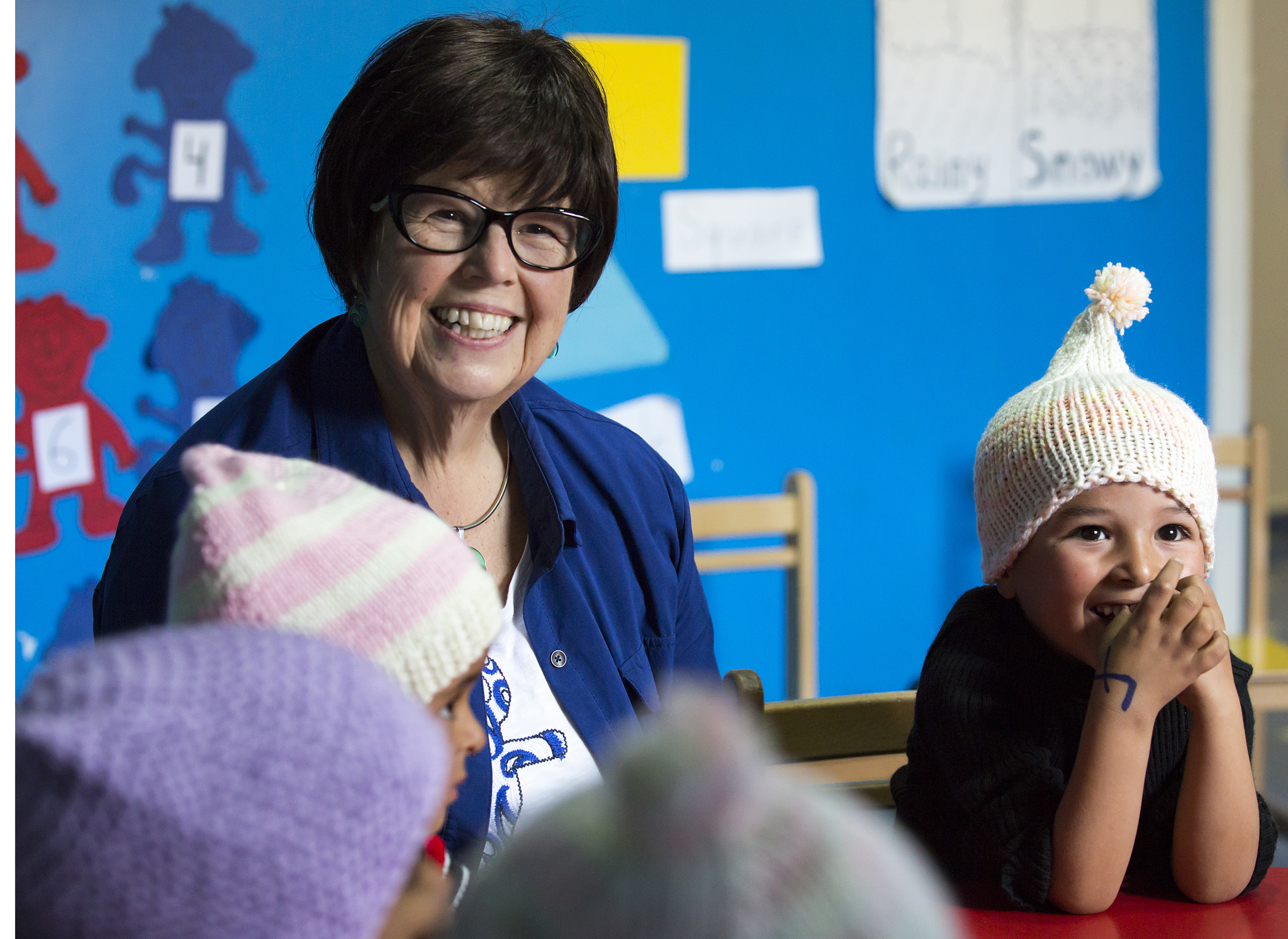
The program, which began in 1996 by Guideposts before being turned over in 2009 to World Vision, a Christian humanitarian organization, distributes hand-knit or crocheted sweaters, caps, scarves and blankets to families in need.

“A handmade item is not something these kids are usually getting, so to be gifted a piece that somebody put love into stitch by stitch, while thinking of you is really powerful for them,” Lauren Fisher, World Vision’s Director of Public Relations told Guideposts.org. “This is a way to fulfill the crafting urge knitters have while combining it with the opportunity to help others.”

The items are knitted or crocheted by thousands of nation-wide volunteers who have heard of the initiative through Guideposts or World Vision. They’re given the option of choosing one of six available patterns on the Knit for Kids website and then mail their completed knitted items to the program’s sorting facility in Pennsylvania, where these are processed and delivered to destinations throughout the world, including Africa, Asia and parts of Europe.

Guideposts’ longtime friend, Debbie Macomber, serves as World Debbie Macomber & kids Vision’s international spokesperson for their Knit for Kids charity initiative. The best-selling novelist, who is an avid knitter, brings knitters together by providing them with ways of giving back using their love for knitting. She’s previously owned a yarn store, wrote an entire series about a knitting shop and has hosted knitting events, such as knitting cruises and reader retreats.
“Through the years of meeting my readers, I’ve come to realize many of them are crafters, and they all come with a generous heart,” Macomber said. “Every item they create contains love within it.”

Knitting with Love

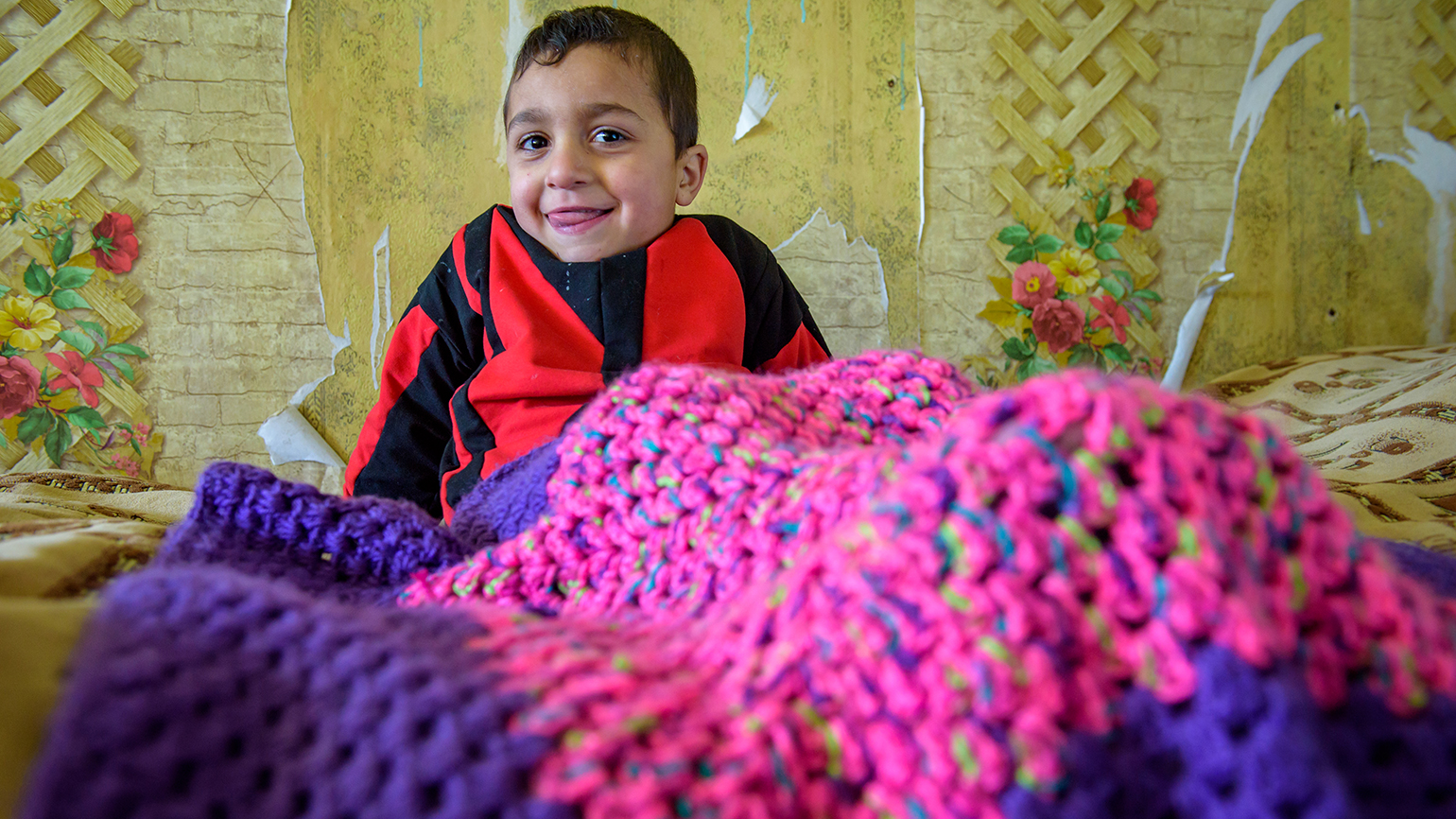
Love was not the only thing the Knit for Kids items brought Lyness Kholomana and her twins, Glory and Praise, from Malawi; the baby blankets also provided her comfort and hope.

“It’s difficult to get all we need as a family,” Kholomana told World Vision. “And it is not easy to give something to someone these days, but these people were able to give to people they do not even know.”

Kholomana’s family were one of many families chosen as beneficiaries, which according to World Vision, all received baby blankets in an effort to improve the wellbeing of children in the community.

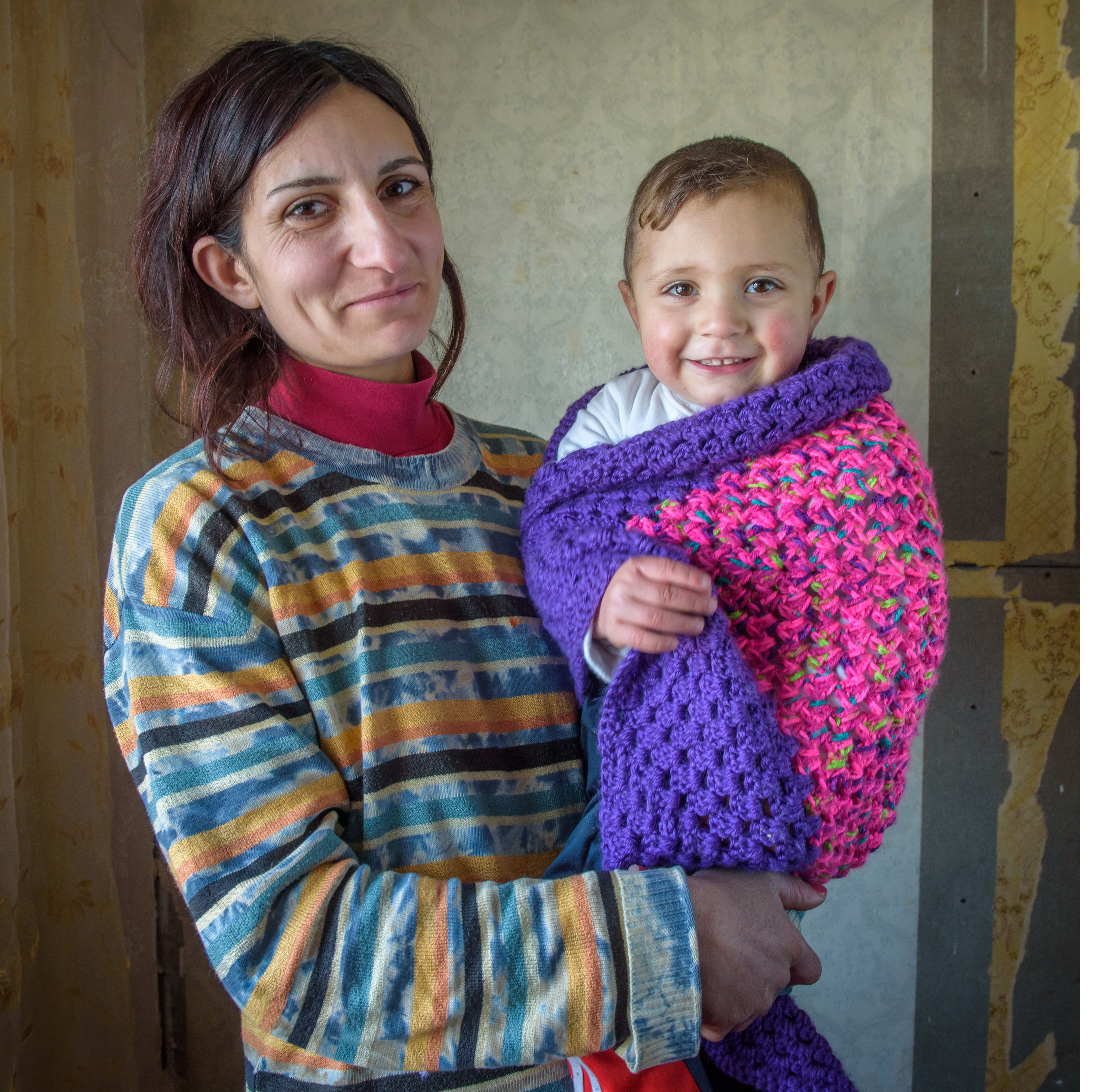
Margo Mikayelyan and her 2-year-old son, Gorgun
Margo Mikayelyan and her son, Gorgun

The organization also provided the Mikayelyan family, from Armenia, with warm clothing as well as blankets and pillows during a time in which they couldn’t afford rent or clothes.

“The old clothes were so worn out, we burned them for heat,” Sarine Khachatryan, the maternal grandmother who lives with the family, told World Vision. “It’s good to be reminded to show love and respect, to teach children to be peaceful and to get along well with others.”

Knitting During Covid Pandemic

In 2019, Knit for Kids shipped 128,429 hand-crafted items to over half a million children in need all around the world. The items—accepted year-round—are distributed to locations where the need is the greatest.

Most recently, World Vision again teamed up with Macomber to protect families during the Covid-19 pandemic. Macomber is rallying her community of crafters by giving them the opportunity to make and donate masks to families in need. This project assists low-income families who can’t afford masks, which are required to attend church, work, school or the grocery store.

Knit for Kids hopes to continue connecting knitters and crafters with others who desperately need the items they’re producing. According to Macomber, knitters benefit in knowing they have given away a part of themselves with the products they’re creating.

“They are making the world a better place, one loving item at a time.”

Hurricane Harvey: 7 Inspiring Stories from Houston

Texas has been left devastated after Hurricane Harvey dropped a torrential amount of rain, flooding big cities like Houston and forcing tens of thousands of residents to seek shelter. Despite many national organizations and charities sending aid (you can find a list of where to donate here), local rescue crews who have reported saving over 13,000 people at this point, still need help. That’s where these Good Samaritans come in.

These eight rescue stories prove that even when disaster strikes, people can band together.

1. A SWAT Rescue

One story that’s been making headlines is that of Cathy Pham, a young mother stranded with her one-year-old son and husband in a loft in their Houston home after their first floor flooded. Pham’s husband flagged down Houston SWAT members and civilian volunteers after kayaking up the street to look for help. The Dallas Morning News‘ photo of Pham and her sleeping son being rescued by Houston SWAT Team member Daryl Hudeck has since gone viral.

“We were just so grateful because I don’t know if we hadn’t ran into them and seen them, I don’t know how long I would’ve been up there, like how long it would’ve taken for somebody to find us,” Pham told TODAY.

2. Mattress Mack

Jim “Mattress Mack” McIngvale, a local businessman and owner of Houston-based furniture store, opened up two of his locations to people in need. As flooding began forcing people out of their homes, McIngvale took to social media to share a video offering food and shelter at the store. “We’ve got lots of beds, we’ve got lots of food, we’ve got lots of water and you can even bring your animals,” he said.

People listened. Over 300 Houstonians showed up to each Gallery Furniture store. While one has reached capacity, the other is still taking evacuees. This isn’t the first time McIngvale has opened his doors for a good cause. He offered his store as a shelter when Katrina hit 12 years ago. His daughter shared a photo on Facebook, praising her dad’s generosity and compassion.

3. A Sheriff’s Duty

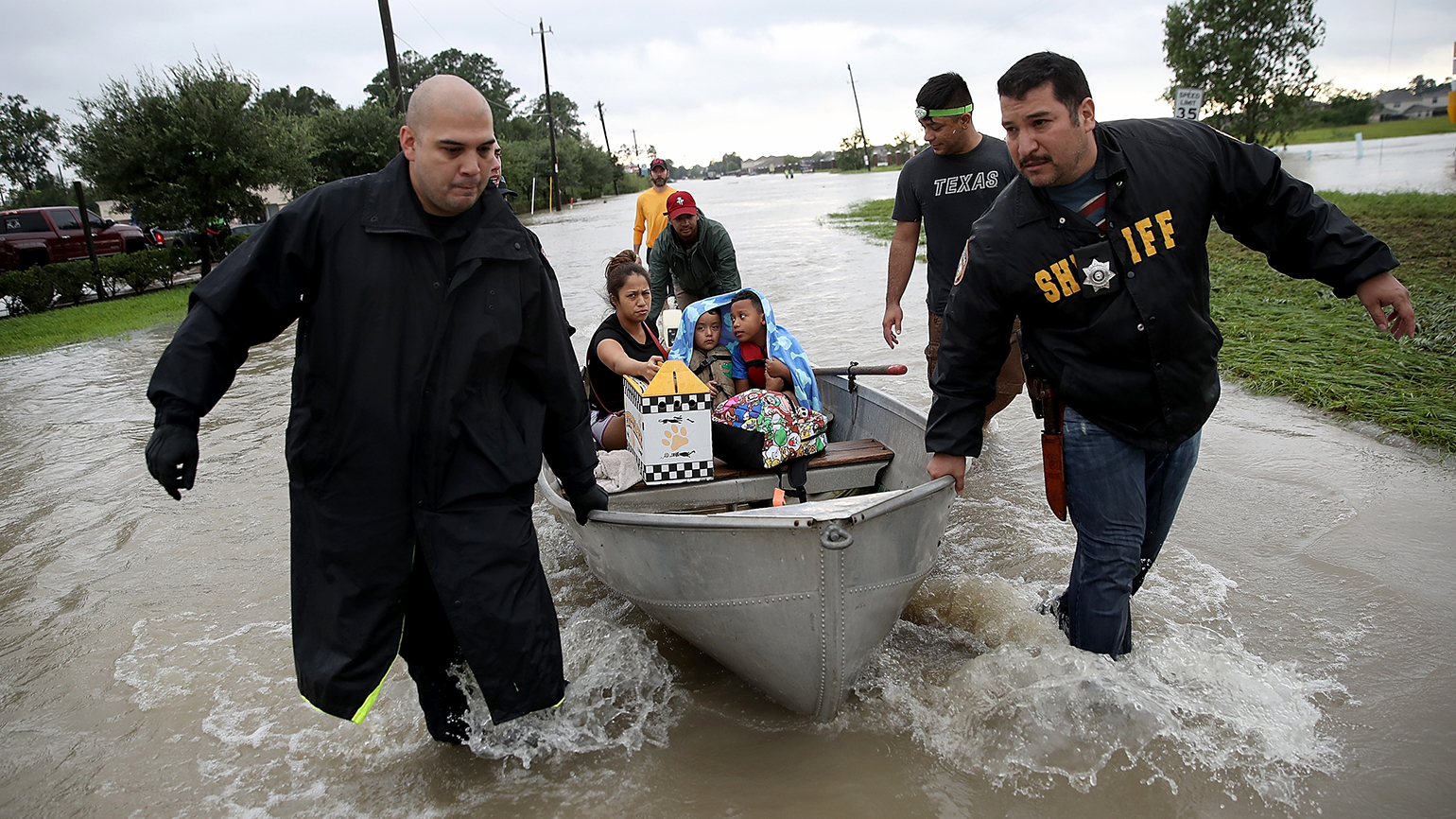
Another touching moment came when Harris County Sheriff’s Deputy Rick Johnson was photographed carrying two children to safety as waters continued to rise in Cypress, Texas. Johnson was going around the neighborhood, checking to see if anyone needed assistance when he offered to carry the young boy and girl while their parents gathered important personal items from their home before fleeing to safety.

Johnson is a military veteran who served in Afghanistan and Iraq and has four children of his own, something that made helping these kids a no-brainer. “There’s a person in need,” he told TODAY. “I have the means to help you. I’m here to help you. Let’s go and make this happen. That’s what it was.”

4. Airboat Patrol

Getty Image

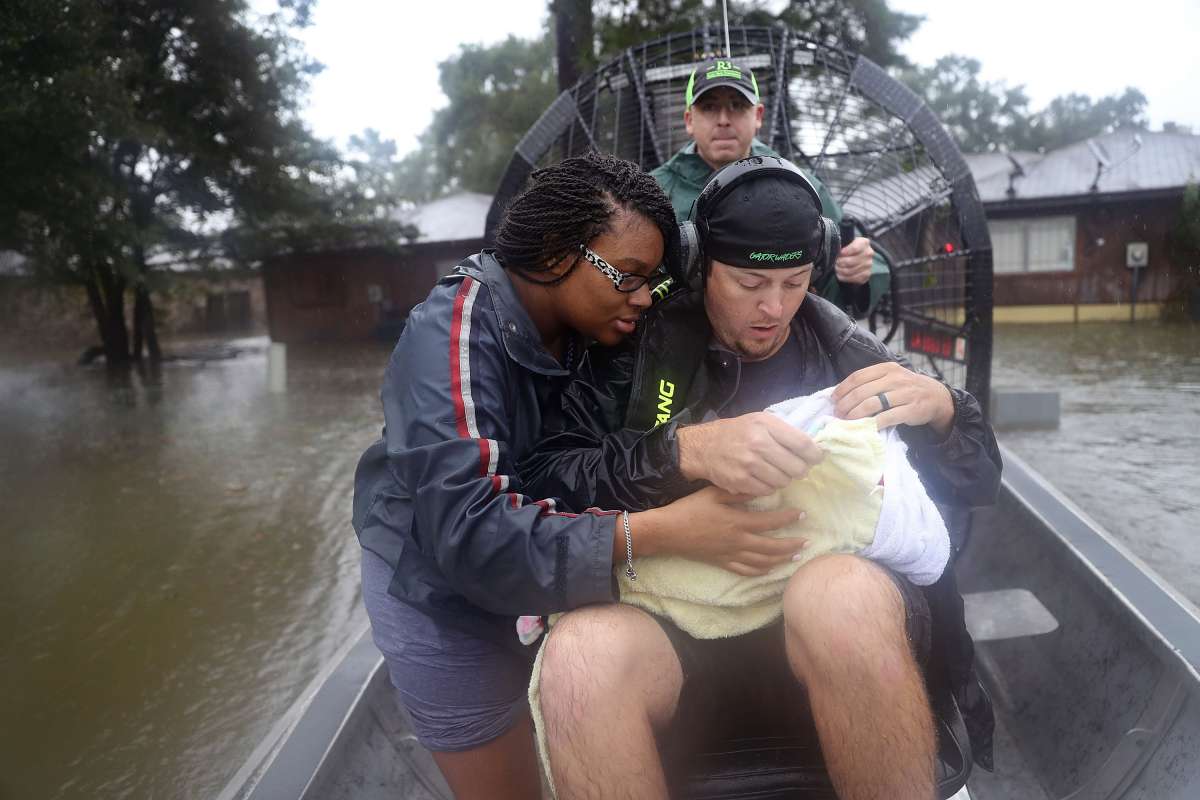
Shardea Harrison and her three week old baby were rescued from their rapidly flooding home by Dean Mize and Jason Legnon, two friends who patrolled the neighborhood on an airboat.

5. A Live Rescue

A CNN reporter in Dickinson, Texas was broadcasting live on the devastating damage from Hurricane Harvey when he was alerted that an elderly couple was trapped inside their home. With a little help, he was able to get them safely onboard his boat and to dry land.

6. Out of State

A local reporter from Arkansas shared coverage on Twitter of residents heading to Texas to help in any way they can. One video shows a line of cars with boats attached heading to areas hit by heavy rains while another features a man gassing up his truck, preparing to rescue as many people as possible from the floods.

7. The Cajun Navy

The Cajun Navy, volunteer online grass-roots effort working with the “Cajun Coast Search and Rescue Team,” took their boats from Louisiana to Texas to help those affected by Hurricane Harvey. The army of private boats came after first responders in Texas asked for help from anyone who knew how to operate a boat and could assist in saving victims of the floods. Cajun Navy member Benji Terro and his cousin Todd Gaspard said they rode for four hours through flooded neighborhoods helping people floating on air mattresses with their belonging in trash bags.

Hurricane Florence: 5 Stories of Hope

Hurricane Florence is one of the most devastating storms to have hit the eastern seaboard of the United States in recent decades. The storm has caused 47 deaths so far, and floodwaters continue to threaten the safety of residents. Moody’s Analytics estimates the storm caused between $17 to $20 billion in damages. In South Carolina alone, 1,555 homes were destroyed and 1,500 people in North Carolina are still living in shelters.

Yet in the midst of the hurricane, normal people came together to rescue, help and uplift their communities. Here are just a few of the inspiring stories that took place in the aftermath of the storm:

1. Girl Named Florence Helps Victims of Hurricane Florence

Florence Wisniewski, a four-year-old girl from Chicago, decided to use her name to raise money for recovery efforts after her parents told her and her siblings about the storm.

“We brought it to her [attention] to show her, like, the world doesn’t revolve around you, look at all of these things happening,” Trish Wisniewski told ABC news. “We asked her, ‘Do you want to help them? How do you think you should do it?’”

Florence decided she wanted to help, and with her dad’s assistance, designed a poster and brought a box to school to collect supplies. The family received enough donations to fill their garage, and are working with Matthew 25 Ministries, a nonprofit organization, to deliver the donations to the areas hit by Hurricane Florence.

2. Man Transforms School Bus into “Noah’s Ark” for Rescue Animals

Tony Alsup, a truck driver from Tennessee, used a converted bus to house 53 dogs and 11 cats from shelters in the impact area.

“I’m like, look, these are lives too,” Alsup told The Washington Post. “Animals—especially shelter pets—they always have to take the back seat of the bus. But I’ll give them their own bus. If I have to I’ll pay for all the fuel, or even a boat, to get these dogs out of there.”

Alsup bought the bus after seeing how overcrowded animal shelters became in the wake of Hurricane Harvey in 2017. He removed the seats and filled the bus with kennels and pet food. Before Hurricane Florence hit, he visited several animal shelters in South Carolina, rescuing any pets they hadn’t been able to find homes for.

Once the bus was full, Alsup drove the bus to Alabama, where a friend who ran an animal shelter, housed the animals.

3. Evacuated Woman Finds Heartwarming Note on Windshield

Ashleigh Gilleland, a South Carolina resident who had evacuated to Florida in preparation for Hurricane Florence, found a note tucked on her windshield when exiting a restaurant shortly after the evacuation. She assumed it would be an unkind note about her parking. Instead, she found a $5 Walmart gift card and a kind letter.

“Saw your license plate is from South Carolina. Not sure if you evacuated from the storm, but just know Florida is praying for you and your state,” the letter read according to Southern Living. “When we had Irma, we evacuated to Alabama and received a similar letter on our car because we had a Florida license plate, so I wanted it pass it on. We understand how it feels to evacuate.”

Gilleland was touched and began thinking about how she could pay the kindness forward.

“The smallest gestures can make the biggest impacts on people’s lives,” she said.

4. Dog Befriends Squirrel Frightened by Storm

North Carolina resident, Meg Baker DeMolet, was walking her dog, Rosie, before the worst of Florence hit, when Rosie began acting strangely. Rosie tugged DeMolet toward a clump of foliage on the side of the road and gently pulled out a squirrel. At first, DeMolet thought the squirrel was dead, but after warming it in her hands, it began to wake up.

DeMolet told Myrtle Beach Online that Rosie’s’ reaction to the squirrel was unexpected.

“It was so uncharacteristic,” DeMolet said. “She just plopped him down in front of me. She carried him in her mouth like she would have carried her own puppy.”

DeMolet named the squirrel Rocky and took him in for the duration of the storm. Several animal groups have offered to help care for the squirrel, and DeMolet hopes he can eventually return to the wild.

5. Strangers Step Up to Save Couple’s Dream Wedding

Kerriann Otano and Dane Suarez were devastated when Florence forced them to evacuate from North Carolina—where they were supposed to get married in a matter of days.

The couple are performers and travel often for work. They had been planning the wedding for two years and friends and family from around the world were flying in to join them.

They drove to Otano’s home on Long Island, along the way posting on Facebook about their wedding troubles. Within 12 hours, strangers and friends alike had stepped in to give them the wedding of their dreams in New York.

“People sharing it from people who weren’t even invited to the wedding just asking how can we help these people, what can we do?” Suarez told ABC.

Before they had finished the drive to New York, someone had volunteered to donate flowers. Someone else donated a venue. One of Otano’s teachers from high school volunteered to officiate. The wedding went off on time without a hitch.

“People from all around the world have been part of it,” Otano told News Observer. “It’s better than I could have imagined.”

How One Man Is Giving Poverty the Boot

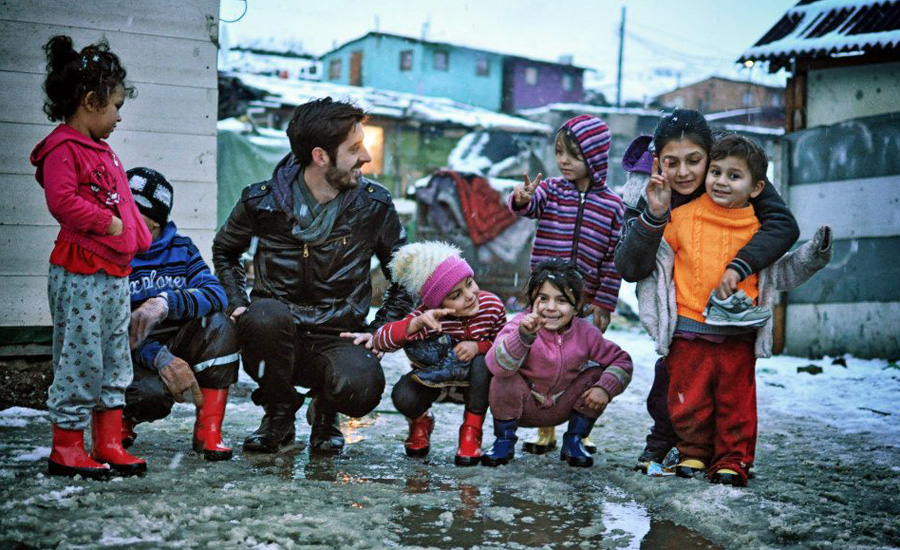
Samuel Bistrian is merging fashion and philanthropy with his socially conscious, buy-one-give-one boot company, Roma Boots. The charitable corporation—which gives away a pair of boots for every pair sold—launched in 2010 and now operates in 25 countries across five continents, bringing durable, colorful footwear to kids in need and promoting education in impoverished areas.

Last year alone, the company was able to hand out 30,000 boots to children in seven different countries.

For Bistrian, the gift of rubber boots has roots that reach into his own childhood in Romania.

When Bistrian was just six-years-old, he received his first pair of boots—faded orange and well-worn by his older siblings (he was ninth out of 11 children in his family), the rubber footwear meant he could help work the small plot of land his family depended on for food without worry of injury.

READ MORE: THIS VIDEO GAME IS HELPING KIDS WITH SPECIAL NEEDS

“I was just this excited kid with his first pair of rain boots,” Bistrian tells Guideposts.org. “They meant so much to me.”

When Bistrian was eight-years-old, his family migrated to the United States. Though his days of eating molded bread for dinner were gone, Bistrian’s new life in America was far from charmed.

The family settled in a 13-story high-rise in a gang-infested neighborhood, living off welfare and sharing a two-bedroom apartment. Still, Bistrian remembers his early years with nostalgia.

“Something I recall from a very young age was that my parents instilled in us a sense of hope and gratitude,” Bistrian explains. “We knew we had this opportunity that was given to us and we wanted to make the best of it and eventually use that opportunity to help others.”

Bistrian grew up and took his parent’s lessons to heart, spending time in Cuba and Colombia doing humanitarian work before eventually getting married and landing a job at Neiman Marcus. The experience was both rewarding and eye-opening.

“[In America,], people are paying thousands of dollars for a coat which is a salary for people in these poor countries,” Bistrian says. The disparity made him want to act.

It was during this time that he met Blake Mycoskie, the founder of Toms Shoes, a nonprofit footwear company that gives a pair of shoes to someone in need for every pair sold.

The concept sparked an idea in Bistrian. While Mycoskie’s company was committed to selling and giving canvas footwear, Bistrian saw a vacuum for the kind of shoes he treasured as a boy growing up in Romania.

“Rain boots are a much more practical, sanitary, durable product,” Bistrian explains. “And I remember how much they meant to me as a kid.”

Bistrian went to colleagues at Neiman Marcus and his siblings—some of whom had started their own non-profits to help abused and impoverished children here in the States and overseas—for financial help.

“I had no idea what I was doing,’ Bistrian says. “I just said, ‘I’m going to start a rain boots company.”

He spent four-years, working 17-hour days without pay, selling his car and other valuables on E-Bay and recruiting volunteers, to help him get his company off the ground. It’s name, Roma, is “amor” spelled backwards – a testament to the labor of love involved to get his shoes to kids in need.

The Christmas following the company’s launch, Bistrian was able to go back to his hometown in Romania and hand out 5,000 boots to the community. The experience was life-changing.

“It was just gloomy and gray outside that day, and then we pull up with this van full of bright, colorful rain boots,” Bistrian explains. “I said, ‘Wow, I really want to dedicate my time to not only creating this experience for kids throughout Romania, but throughout the world.’”

Six years later, Roma Boots is not only donating shoes, the company has also launched a foundation, partnering with learning centers and schools in impoverished areas to encourage kids in their quest for an education.

READ MORE: SHARING HER DREAM WITH HOMELESS TEENS

“Our endgame is not to fill every community around the world with Roma Boots, but to educate and help them break the cycle of poverty by inspiring hope, by educating them, by helping them understand that they can do what we’re doing,” Bistrian says. “The boots aren’t a handout. They’re simply a conduit for something greater.”

Bistrian says the reason he does what he does is to give back what he was given as a child: hope.

“Every person, at the end of their life, reflects on it and says ‘Was my life meaningful? Did I leave my footprints in this world?’” he says. “When I see what I can do for just one child, it fills me with a joy that I can’t explain.”

He’ll consider his job done when his company is able to truly give poverty the boot.

“If, as a result of Roma Boots going into this village in Uganda or this village in Nepal or Nicaragua, those kids are off to college or are off doing something meaningful for other people in the world, that’s when [I’ll consider] Roma Boots a success.”

How Jewish Neurosurgeon Ludwig Guttmann Gave People Hope

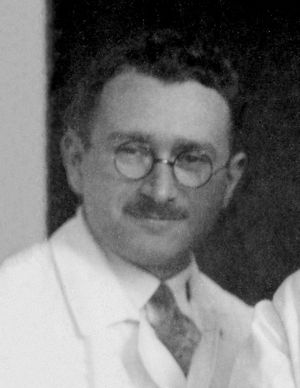
The work of German neurosurgeon Ludwig Guttmann, a remarkable figure in history, was vital to the treatment and rehabilitation of people with spinal injuries, including giving them hope. But equally fascinating is a deed that is not as well known—when Guttmann’s act of bravery saved 60 men from the Nazis.

Guttmann was born in 1899 in Germany. While volunteering at a hospital for coal miners when he was only 18 years old, Guttmann encountered a man with paraplegia. At the time, there were no treatments to help those with the condition. The man eventually died of sepsis. This patient’s suffering stuck with Guttmann and motivated him to find a way to not only save people with spinal injuries, but to also help them thrive.

Ludwig Guttmann inspiring story of hope
Ludwig Guttmann

Another pivotal moment in Guttmann’s life happened in 1938, when he was working as a neurologist at the Jewish Hospital in Breslau. From November 9th – 10th Nazi paramilitary forces and German citizens attacked and destroyed Jewish businesses, homes, and synagogues. Over 300,000 Jewish males were rounded up during the pogrom, later named Kristallnacht or “The Night of Broken Glass,” and sent to concentration camps.

“On the 9th of November I took my car and went to the synagogue,” he said, according to Hey Alma. “And there, the whole thing was surrounded by hundreds of people, burning, and SS men playing football with prayer books. I stood there and realized that my tears were running down. But I became quite determined to help persecuted people.”

Laws at the time stated that, as a Jewish physician, Guttmann could only treat Jewish patients. Yet during Kristallnacht, Guttmann defied the law. He welcomed anyone coming to the hospital for refuge, no matter their belief or background. The next day, Gestapo and SS officers came to his hospital and demanded to know why he had so many patients. Guttmann bravely faced their scrutiny and took them to each bed to justify why they were there. According to Guttmann’s daughter, he even taught his patients how to act ill so they wouldn’t be detained. Though he could not help them all, Guttmann saved 60 men from the concentration camps.

In 1939, Guttmann and his family fled Germany and moved to Oxford, England. Four years later, he established the National Spinal Injuries Unit at Stoke Mandeville Hospital in Buckinghamshire. The purpose of the unit was to treat and rehabilitate pilots for the Royal Air Force. While working as director, Guttmann did not forget the coal miner he’d met so many years before. He knew people with spinal injuries needed something more than just treatment. They needed hope. 

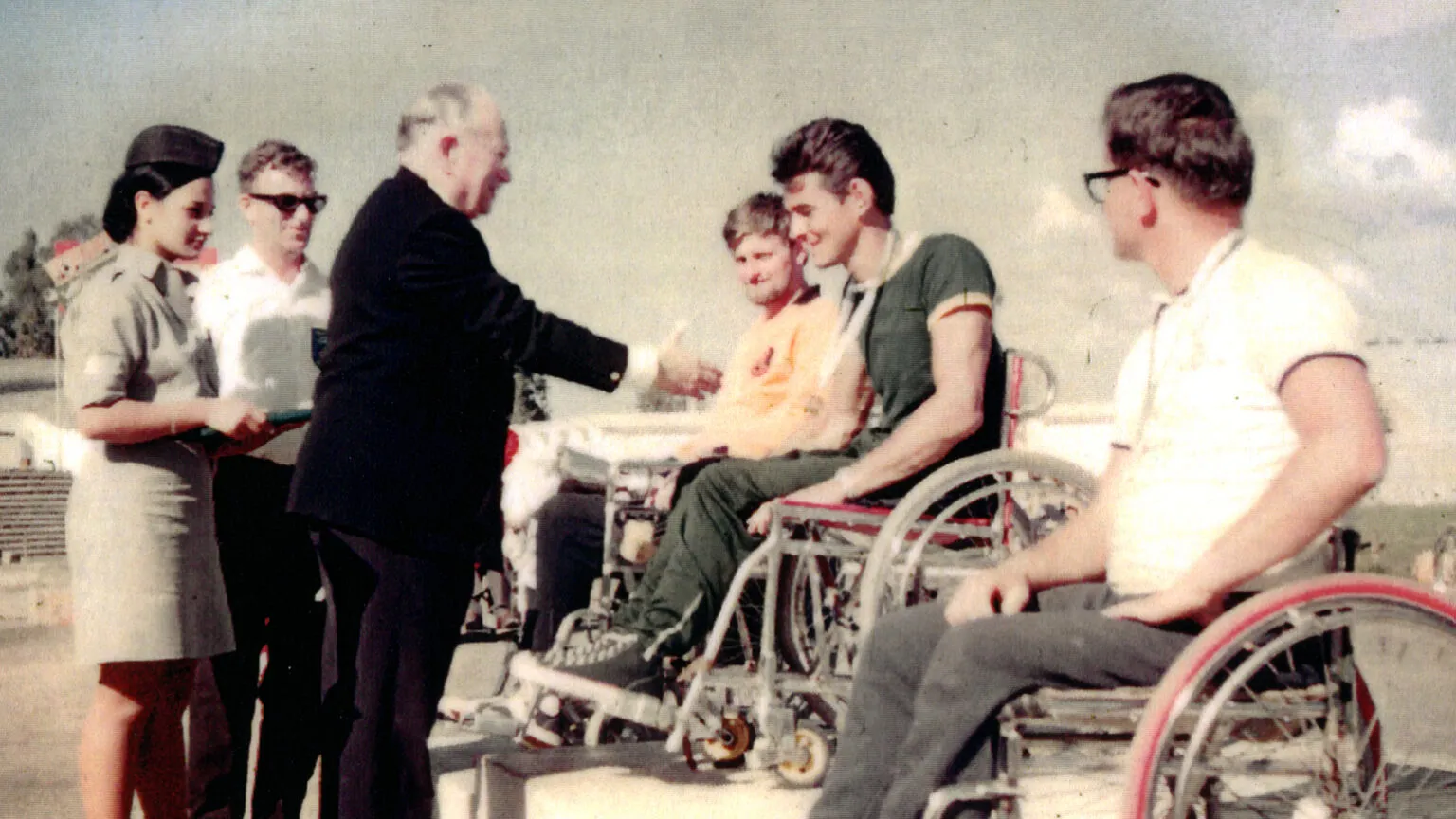
Guttmann believed a vital key to helping injured patients strive for greatness was through sports. But not just any sports— competitive sports, even on the Olympic level. In 1948, he organized the first Stoke Mandeville Games for war veterans with disabilities. They held them on the hospital grounds and included polo, basketball, and archery. The games grew, with even more international competitors participating each year. Soon, the games opened to anyone with a disability. In 1960, Guttmann’s vision finally came to life when the International Stoke Mandeville Games officially became part of the official Summer Olympics in Rome. The games would later be named the Paralympic Games.

Guttmann’s brilliance as a physician and bravery as a Jewish man changed the course of many lives. Queen Elizabeth II knighted him in 1966. “If I ever did one good thing in my career,” Guttmann said, “it was to introduce sport into the rehabilitation of disabled people.”

In March 2022, the 13th Winter Paralympic Games were held in Beijing. The 2024 Summer Paralympics will take place in Paris starting August 28, 2024. Ludwig Guttmann died of heart failure in 1980, yet his legacy of instilling hope lives on.

How Could This Homeless Veteran Get Back on Track?

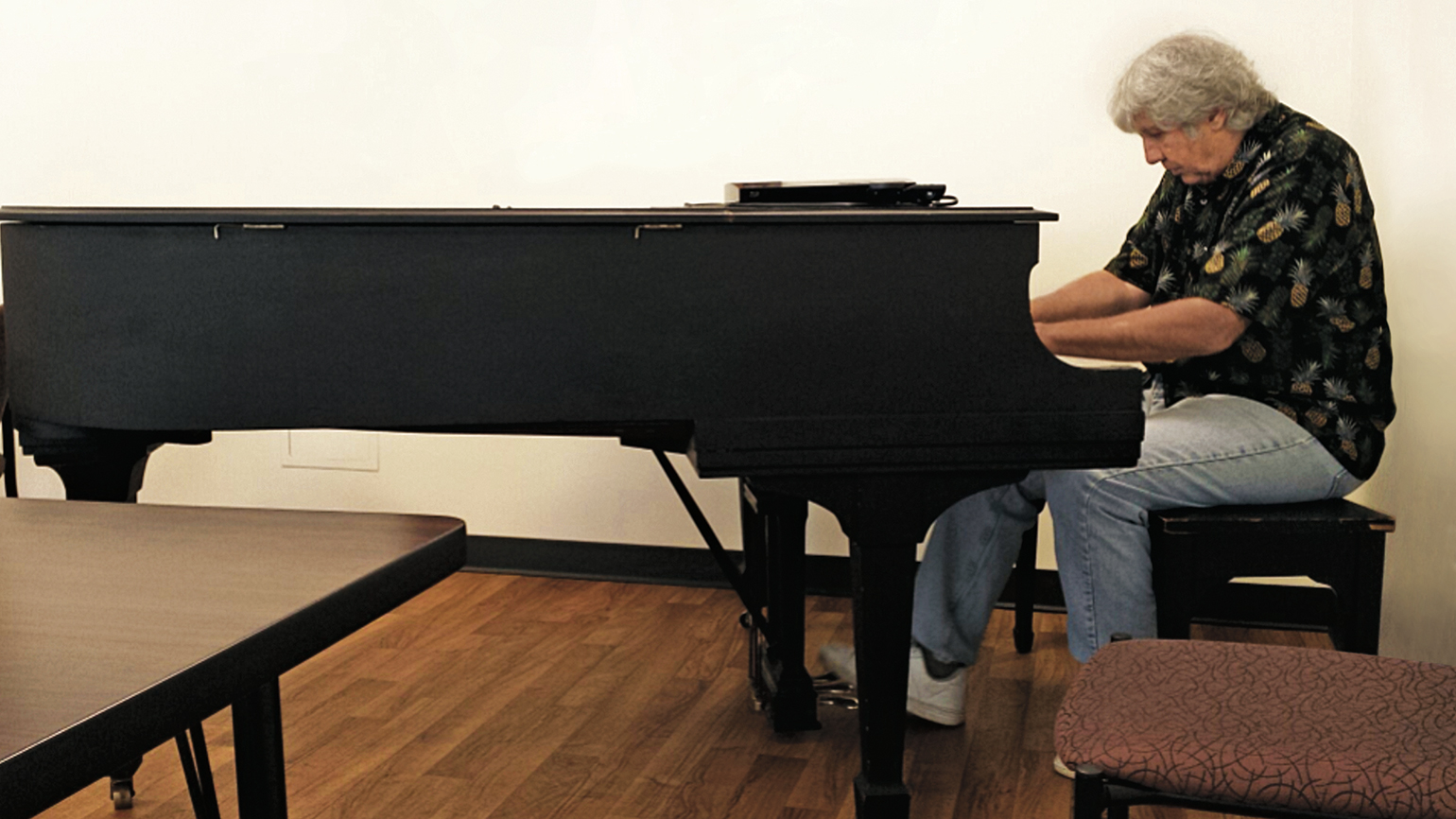
Music is my first love. I can sit down at the piano and forget all about time and space, all about my problems. During the lowest moment in my life, music was my salvation, and I have pianos at two Volunteers of America facilities to thank.

I’m a Vietnam-era vet, a Marine. After I got out of the service, I began a career in music, then became an ironworker. A few years ago, the one-bedroom bungalow I rented in Massachusetts was sold. The developer planned to tear it down. The property manager, Ray Randle, gave me two months rent-free to find a new place to live. Nothing affordable turned up. It didn’t help that I’d been disabled from an accident at work and was living on Social Security.

In quiet desperation and with the help of two friends, Jackie and Anne, I packed up my belongings and moved everything—including my electronic keyboard and my Yamaha upright—into storage. I slept in my Ford Focus Wagon, thinking it would only be temporary. But weeks turned into months and the months into years. My car had become my home.

The one thing that kept me alive was music. The wonderful gal at the storage unit would let me play my piano anytime, day or night. I would lose myself in music. I had developed cataracts, but nothing could keep my fingers from finding the right keys.

I hit my real low one Christmas Eve. I was driving down a narrow back road to where I would park my car and sleep at night. Another car came around the corner and into my lane. I veered to the right and struck a sewer drain. My car—my only home—lost its right front end.

At that point, I really had no place to live. I moved in temporarily with a friend. I felt as if all hope for me had gone, as if my life were out of tune and would never get back on key again.

Prayers for Military Veterans

Bruce Knight, a retired firefighter from Sandford, Maine, and president of The Patriot Raiders of Maine Chapter One, drove down to get me. “Veterans do not live in their cars,” my friend said. And that was that.

He drove me to the York County homeless shelter, up in Maine, where I stayed 75 days. That’s where I met with case managers from Volunteers of America’s Veterans Services. They helped me move into their transitional housing, a place called The Arthur B. Huot House. I was able to sign up for Veterans Administration benefits through social worker Susie Whittington and get the cataract surgery I needed to recover my eyesight.

Ken Darby, manager of Huot House, told me to move toward life and embrace it. One of the first things I did when I got settled was get my electronic keyboard out of storage and set it up in the TV room at Huot House.

I’d play for hours, totally lost in the music. People would gather around my piano, humming, singing, clapping. It was nice. Then the VOA folks told me about The Paul Hazelton House for Seniors and the Disabled in Saco, Maine. Every year, there is a “Day of Caring” held by the United Way and partners. We went to volunteer for the day.

I struck gold! At Hazelton, I discovered a Steinway baby grand in the community room. I could barely restrain myself from sitting down and playing it immediately. “Play all you want,” Missy, the supervisor, said. Music, the universal medium that had helped me, was a joy to others.

I’m doing much better these days. My health has improved, and I continue to play the piano for different audiences. When I think back to what Bruce said about veterans living in their cars, I realize how blessed I’ve been that people have stepped up and helped me when I couldn’t see how to help myself. They took me in, put me back on the right path, encouraged me to make music. God gave me a gift, and VOA helped me share it.

For more inspiring stories, subscribe to Guideposts magazine.