Embrace God's truth with our new book, The Lies that Bind

How Could She Make Her Dream to Become a Nurse Come True?

Christine Rowsey didn’t know how she would go on. The last three years had been hard, some of the hardest in her life, but she’d at least felt as if she was making progress toward her goal of becoming a nurse. She was working full-time to support her 5-year-old son, Bryson, all while taking prerequisite science courses at a community college in the evenings. Then she was laid off from her job as a financial risk analyst and, perhaps most devastating for a native Detroiter, her car was repossessed.

“I didn’t have any money. I didn’t have anything—just a dream,” she recalled.

That dream came out of the tragic loss of her infant son, Christian, three years before. Christine had been only six months pregnant when she was rushed to the ER with what turned out to be an inflamed gallbladder. Her baby had to be delivered premature.

BROWSE OUR SELECTION OF BOOKS ABOUT PERSONAL GROWTH

Christine recovered, but her son was another story. She spent the next seven months in the neonatal intensive care unit with him, as he underwent more than a dozen operations that, in the end, couldn’t save him.

Christine’s main source of support during that ordeal had been the hospital’s nursing staff. “I really loved the way they helped me throughout that time, when there were so many unknowns,” she said.

That’s when Christine had a realization: She didn’t want to be a risk analyst any longer. “I wanted to do something with my life that mattered,” she said. Christine became determined to become a nurse and help people the way she had been helped.

Now despite all her efforts, her work toward that dream had come to a halt, just as she was ready to start nursing courses. How could she continue without a car? It was then that she discovered the Volunteers of America Michigan’s “Cars Helping People” lot in Pontiac, where donated vehicles are available at fair prices for those in need, and she worked out a reasonable payment plan. There was no way she would have been able to take her classes without her own car. The VOA program made it all possible.

Inspiring Quotes about Strength

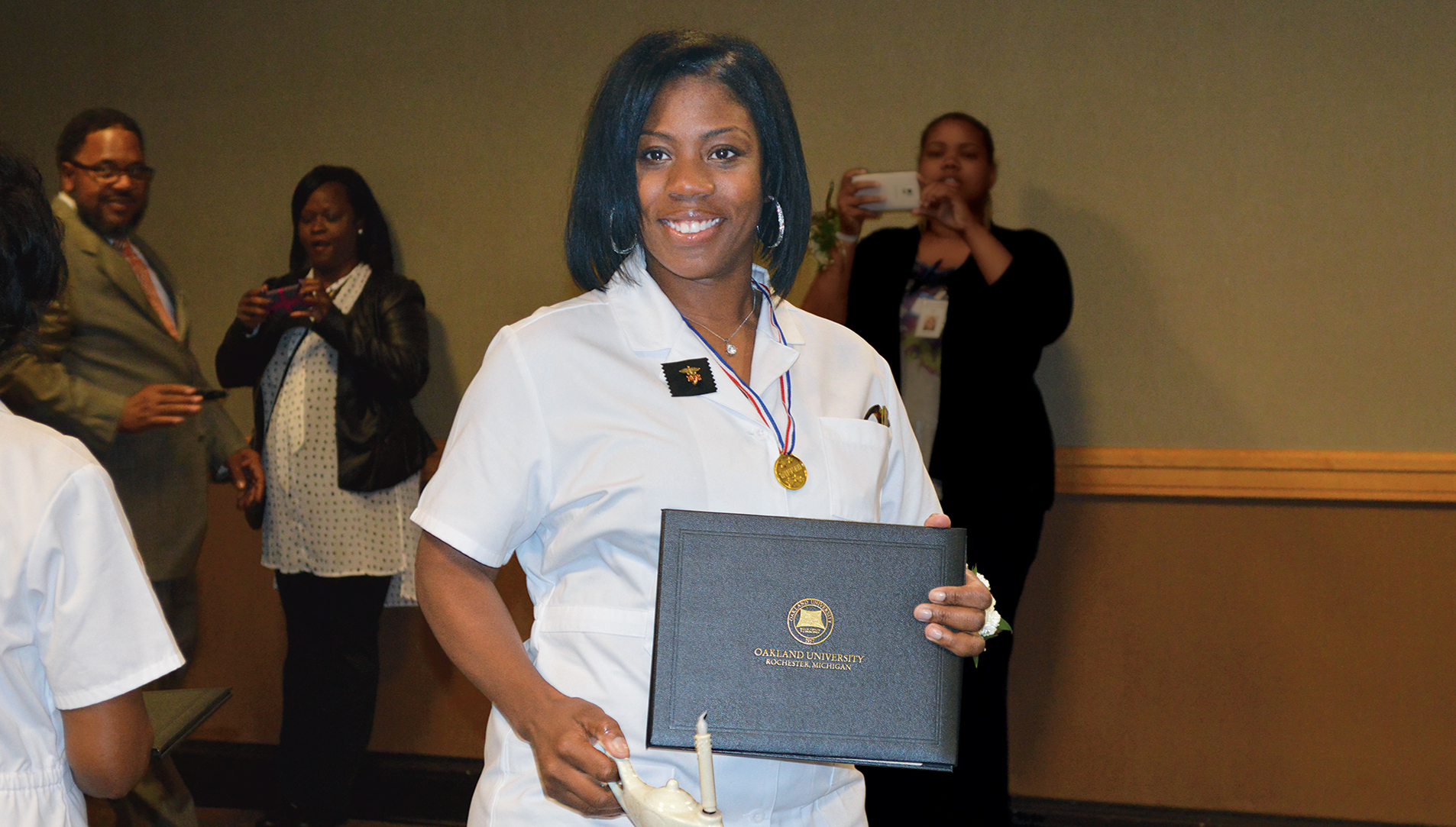
She was able to enroll in Oakland University’s one-year licensed practical nursing (LPN) program. She took out loans and worried about how she would repay them. She became her class’s star student but struggled to take care of Bryson and study at the same time, and the bills would have to be paid eventually. “I had the vision, but I wasn’t quite sure how I was going to get it all done,” Christine said. With scholarships, she was able to cover about half of her costs. For the rest, she just had to have faith that “somehow God would provide.”

That’s when Christine found out about another VOA program, the Health Profession Opportunity Grants. She applied and was accepted. The program not only paid for her tuition but offered her a stipend to cover gas and food for Bryson—it even covered fees for her tests.

Christine was also able to link up with Rene DeLoach, a health profession employment specialist for VOA, who guided her and gave her support while she completed her coursework, earned her license and applied for jobs.

“The VOA program was a real blessing. I was at the end of my rope before I found it,” Christine said. “I wouldn’t have been able to continue going to class if VOA hadn’t been there for me.”

Christine now works as an LPN at Riverview Health in Detroit, where she cares for patients on the ventilator floor. She’s already taking classes toward her RN certificate. Through VOA, she gives talks to young people about the nursing profession.

“Nursing school was the hardest thing I’ve ever done, and VOA helped me through it,” Christine said. “They helped me rewrite my life, the way I wanted it to be written.”

America’s Angels tells stories of how Volunteers of America helps our nation’s most vulnerable. Learn more at voa.org/guideposts.

For more inspiring stories, subscribe to Guideposts magazine.

How Baking Cookies Changed Her Life

While out shopping one day, Janie Deegan spotted something on a shelf that she knew she needed. An electric hand mixer. Despite the price being way out of her small budget, she purchased it and brought it back to her tiny apartment in Manhattan’s East Village.

“It seemed like such an obscene amount of money at the time,” Deegan says, “but it was such a beautiful act of self-care.”

At the time, Deegan was working as a building superintendent in New York City. She was trying to put her life back together after experiencing homelessness and struggling with addiction.

Despite having a good childhood, Deegan’s earliest memories were of discomfort and not belonging. She first started using alcohol and drugs when she was in her teens to deal with her anxiety. “I didn’t know any other techniques to cope,” she said. “Drugs and alcohol felt like an easy solution.”

As she entered her twenties, Deegan’s life started to spin out of control. Because of her addiction, she couldn’t support herself and pushed away nearly everyone in her life. Eventually, she became homeless. For about a year, she survived by sleeping on subways, living in shelters, and being hospitalized a few times. She tried to get and stay sober, but it never stuck. Then, at 25 years old, she reached a defining moment of desperation.

While talking with one of her only friends, Deegan finally opened up about what she had been dealing with and how her addiction had taken control of her life. “It was this moment of authenticity,” she said. “It felt so good to tell the truth and not be pushed away.” Deegan finally asked for help.

Though she was sober and receiving support, Deegan still dealt with feelings of anxiety and emptiness. But her new hand mixer gave her something to focus on: baking. Something she’d enjoyed as a child. Her parents were artistic and encouraged Deegan and her brother to express themselves in the kitchen through baking and cooking. It was the meticulous art of baking that brought Deegan exactly what she needed during that time. “My life was so out of control,” she said, “but baking is such a controlled science. You need to follow the rules before you can break them. And you end up with beautiful results.”

READ MORE: Her Biscuits Gave This Widow a New Purpose in Life

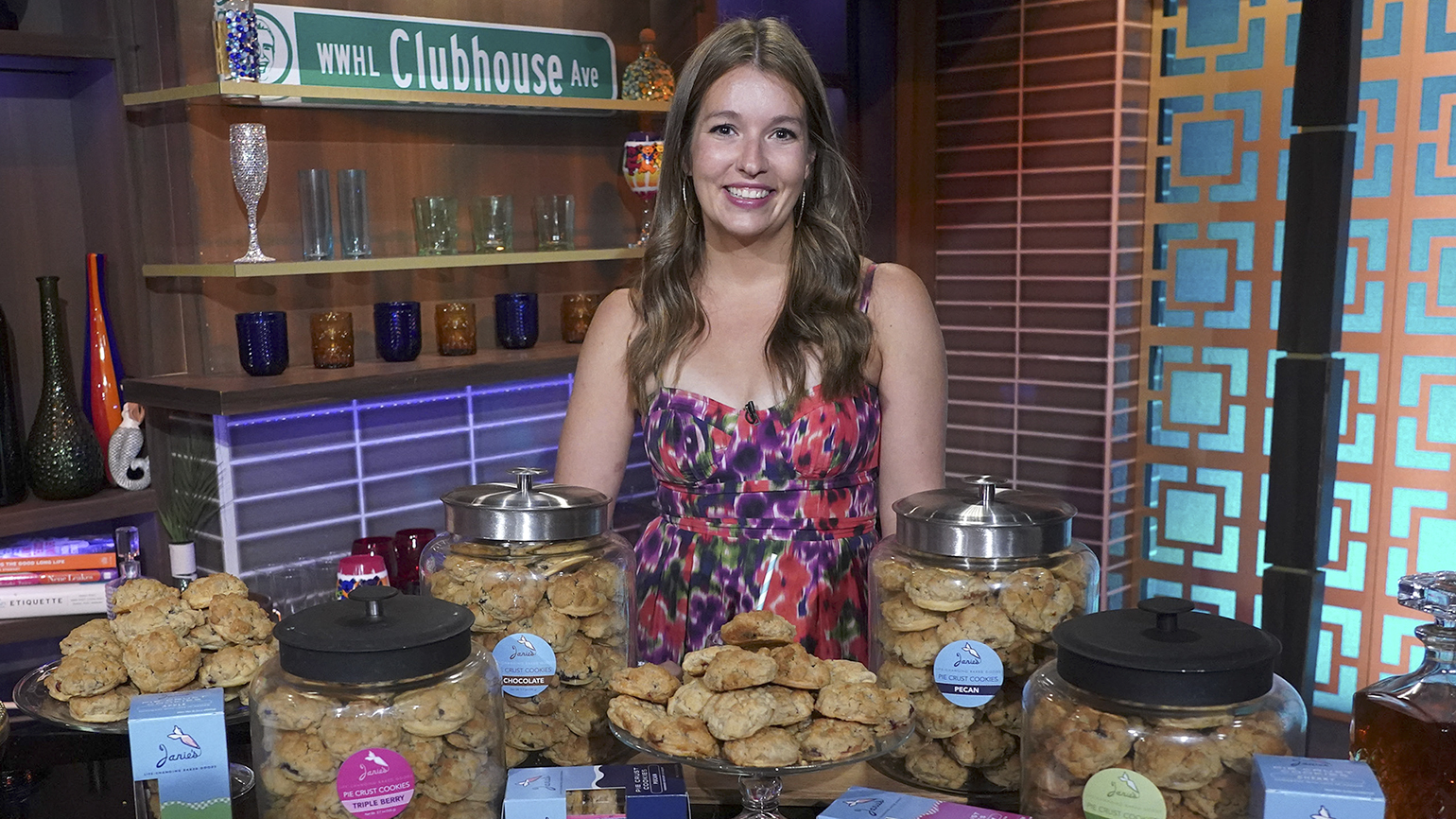
Deegan started by making brownies and cupcakes to bring to friends’ birthday celebrations. Then someone she knew asked to buy one of her cakes to bring to an event. Then, one year for Thanksgiving, Deegan built a small website where people could order pies from her. Through the support of her friends and word of mouth, Deegan’s baking became more and more popular. “Even after all this time,” she said, “I had to remind myself that vulnerability and accepting help from people who want to help is beautiful.” Eventually, she was doing well enough to take the leap and open a bakery. In 2015, on the Upper Westside of Manhattan, she opened Janie’s Life-Changing Baked Goods.

This was also when she invented the now famous pie crust cookie. A combination of pie crust, filling, and streusel, flavors include strawberry rhubarb, pecan, chocolate, and peach. Deegan describes it as the perfect bite of pie in cookie form. It has become one of New York City’s most sought after cookies.

Now Deegan is using the success of her company to help other women who need a second chance. She has an opening hiring policy at the bakery. Team members don’t need prerequisites or even any experience in baking. Just enthusiasm and a willingness to work.

“It has worked out beautifully in so many ways,” Deegan said. “I put myself into such dangerous situations, it’s a miracle I’m still here. For so many people they don’t have that moment of grace… I succeeded because people believed in me, so I want to do that for others. Believe in them.”

How an Act of Kindness Never Ends

The world can be a better place because of one, small act of kindness. In the same way a pebble creates waves when dropped in a pond, an act of kindness ripples outwards, touching other lives, inspiring even more acts of kindness. As someone once said, every act of kindness creates a ripple with no end.

Many years ago I worked for the Rev. Vahac Mardirosian, a Baptist minister and educational reformer in California who was driven to help others through his kind and caring acts. He didn’t talk much about his past, but slowly I learned about his family history and how the kindness of others had shaped him.

Born in Syria, Vahac and his family escaped the atrocities of the Turkish genocide of the Armenian people by moving to Mexico in 1927. Their hope was to eventually move to California to be with extended family, but tragedy struck when Vahac’s mother died in Mexico. Vahac was seven and his little sister, Graciela, was four. Vahac stepped in to care for and protect his sister who, sadly, became very ill when she was 12.

It was during this painful time that Vahac’s pastor, Leonardo, attended to the family, visiting and praying for Graciela. When she died, Vahac’s heart was once again broken by loss. Pastor Leonardo did everything he could to comfort Vahac and his father. The pastor’s small acts of kindness made a significant impact on young Vahac who eventually went to seminary in Los Angeles and became a pastor himself.

As a pastor and community leader, Vahac helped hurting and struggling families. After retiring from the ministry, he started an educational non-profit to empower parents to help their children succeed in school.

Although Vahac is no longer with us, the organization continues his mission today. His acts of kindness continue to inspire others in the same way Pastor Leonardo did for him. What small act of kindness can you do for someone today? Imagine how it might spread to help even more people.

High School Girls Develop a Solar Powered Shelter for the Homeless

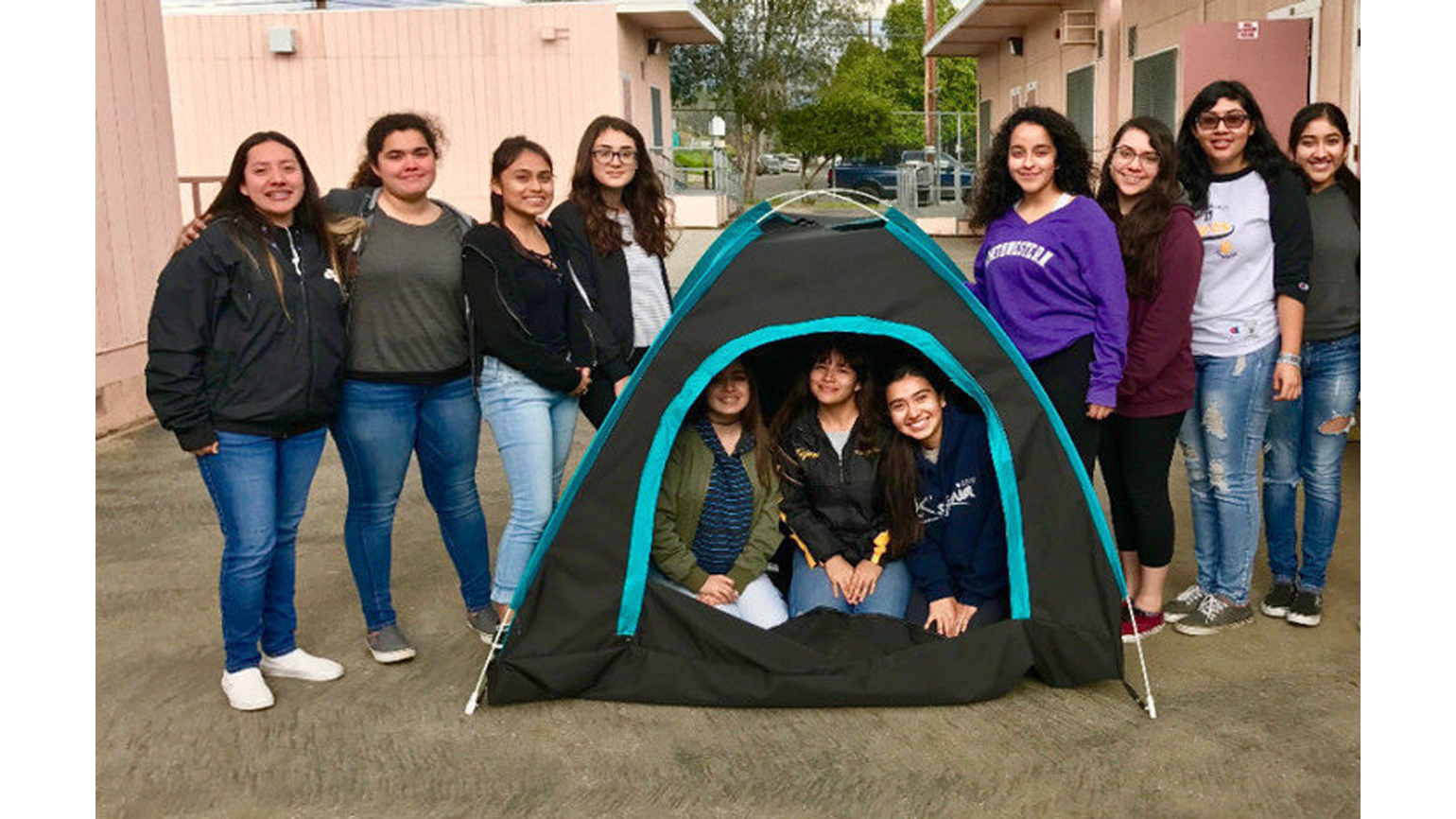
Massachusetts Institute of Technology has granted 15 teams of high school students across the country $10,000 to solve a real-world problem. When the only all-female team of engineers–12 junior and senior San Fernando High School students called DIY Girls InvenTeam—received their grant, they knew they wanted to tackle homelessness.

San Fernando sits in the northwest region of Los Angeles County, California, a county where the Los Angeles Homeless Services Authority study shows there were 43,000 people who lived on the streets or in tents in 2016. Seeing homelessness first hand, the DIY Girls spent the past year, after school, spring and winter breaks building a rechargeable solar-powered tent for the homeless, with insulated fabric, a UV system and even a safety locking system.

“I’ve learned a lot about helping others, helping the community and being selfless and showing a better world to other people and changing someone else’s life,” seventeen-year-old team member Maggie Mejia tells HuffPost of the experience.

Now, the team is reaching out to the community for help, as well. The DIY Girls are raising money on GoFundMe for travel expenses to MIT to present their solar-powered tent at EurekaFest in June, along with the other high school teams across the country.

“It’s not about us,” Mejia tells CBS Los Angeles. “It’s not about what we do or how great we can be. It’s what we can do to make this world a better place for these people, a better place for everyone.”

Help Guideposts Give the Gift of Hope

I was all of five years old when I asked my dad why he always wrote a note to God and put it in the offering plate at church. Most everybody else put in money. “That’s a check,” he explained to me. “It’s just like money.” “But what’s the money for?” I asked. “To help people do God’s work,” he replied.

That was as good a lesson in giving as anyone has ever given me. I grew up in a family of givers. If someone on our block was sick or otherwise struggling, Mom got busy baking. As soon as I was old enough, I followed her lead, making brownies or muffins or spaghetti dinners.

At age 16, I organized my first fundraiser, a swim-a-thon for our local chapter of the Red Cross that entailed finding enough pools for us to use, then recruiting kids to swim 25 or 30 laps at, say, a quarter a lap from any donors they solicited. Recruiting the participants was the toughest part. I remember watching kids’ eyes glaze over at my first lackluster presentation.

Click here to donate to Guideposts’ outreach programs.

What I learned to do, and hope I still do, was find out what they were interested in (swimming!) and connect it to what all those quarters could do (blood drives, CPR classes, lives saved). God’s work covers a lot of ground. Not to brag, but under my leadership the swim-a-thon’s take went up by 400 percent. That’s a lot of quarters.

Today I am the senior vice president for philanthropy at Guideposts. My husband, Kevin, would tell you I’m a do-gooder, but any good I do comes through the good a lot of people do. It’s a collaborative effort.

READ MORE: INSPIRED BY THE GUIDEPOSTS FOUNDATION

For instance, thanks to donations from Guideposts readers we’re able to supply inspirational literature to veterans’ hospitals, nursing homes, prisons, military bases and homeless shelters. You help us bring hope to those who need it most, and hope is a most precious commodity.

Maybe my five-year-old self had it right. A check can be a note to God. Especially when it supports the work God calls us to do.

Did you enjoy this story? Subscribe to Guideposts magazine.

Healing the Planet

In 15 years as an emergency room doctor, I saw thousands of patients. I gave each one the very best care I could. But there were some patients I could never get out of my mind. You could say they’ve haunted me.

Almost every day I think about one little girl I met early in my medical training. It was a “triple H” summer day: hot, hazy and humid. “Elderly people and people with illnesses should stay indoors,” the TV weatherman had warned that morning. A few hours later, I started my shift in the pediatric ER at a big city hospital.

A rescue unit radioed ahead to tell us that they were on their way. “Eight-year-old female. Severe asthma attack,” the EMT said. In the small area reserved for asthma cases, there were already 15 children—and only eight beds. A nurse prepped the trauma room for the arrival.

The ambulance crew burst through the ER’s double doors with the patient. A paramedic transferred the little girl to a trauma gurney and quickly put a mask over her mouth and nose to force air into her lungs from an Ambu bag. Her airways were so tight it was nearly impossible to compress the bag. “Matthew,” the team leader called to me, “go ahead and intubate.”

I glanced at the paperwork. The girl’s name was Etta. She and her brother had gone to their neighborhood playground to run through a sprinkler and cool off. But as soon as she started to exert herself, she had the attack.

“Etta,” I whispered, leaning down so I could look right into her frightened eyes, “I’m Dr. Matt. I’m going to put a tube in your mouth and get you breathing right.” Her left hand rested in mine. I felt a weak squeeze. “I won’t let anything bad happen to you, sweetheart,” I promised.

“Quiet!” the team leader yelled. He held his stethoscope to Etta’s chest. “Give her a breath, Matthew.” I squeezed down on the bag. Etta had on a bright green bathing suit. On its front was a smiling appliquéd whale, blowing a spout of water.

I wanted to watch that whale lift up as soon as I forced air into her lungs. But the whale stayed put. Despite the intubation and the efforts of the whole pediatric emergency department, Etta died. I had broken my promise to her.

It took a long time before I grasped what had killed Etta: air pollution. Her asthma was probably controllable otherwise. By then, I ran an ER in a small seaside town in New England. I imagined the air there was as clean as you’d find anywhere.

But something was terribly wrong. I read up on the statistics. A single power plant in Massachusetts caused 1,200 ER visits, 3,000 asthma attacks and 110 deaths a year.

In my own small community, more and more people were coming to the emergency room with asthma and other chronic illnesses. Despite all our advances in medicine, my patients were sicker than ever. And I wasn’t doing enough to help them.

{C}

One night, although I was drained after a 24-hour shift, I couldn’t sleep. I tossed and turned. I couldn’t get the patients I’d seen that day out of my mind. My thoughts shifted back more than a decade, to Etta. “Matthew, what’s wrong?” my wife, Nancy, asked.

“All this asthma and chronic disease,” I said. “It’s not the patients. It’s the environment. The air we breathe is making us sick.”

I needed guidance. I found myself praying more intensely than ever. I thought about the Psalms, where I’d read, as a child, that God makes the rain fall, that he hears the cry of a hungry blackbird. That he sends the snow and wind, and knows each star by name.

One of my greatest joys as a dad is going outside at night with my kids, Clark and Emma, and looking at the stars with them. I pray that they’ll be able to share that joy with their children someday.

But I know that bright starry skies—and fewer cases of asthma—will only be seen in the future if the air is less polluted. Lord, how can I do more to help people? I prayed. How can I be a better servant?

The answer surprised me: I had to start looking at the planet as though it were my patient too. To be a good doctor, I had to be a good steward.

Weigh in.
The first step in treating my new patient, planet Earth, was for me to take more responsibility for the way I lived. When my patients go on diets to improve their health, we start with a weigh-in.

So my family started with a weigh-in too: an energy audit. We had a big house and a couple of nice cars, but I thought we were pretty “green.”

We weren’t. Looking at our most recent electricity, oil and gas bills and adding the quantities of gasoline we used in our cars and other means of transportation to calculate our usage, we were shocked by what we discovered.

The average Italian household uses about 1,800 gallons of gas a year. The average American household uses 4,483 gallons a year. My family wasn’t using much less. We needed to make some basic changes as energy consumers.

Keep it simple.
Learning how much energy our family used came as a surprise. But just as big a surprise was the realization that green values weren’t anything new.

In a way, I grew up with those values on a Maryland farm, surrounded by fields and low rolling hills that seemed to go on forever. I can still summon up the blissful feeling of lying in the cool, soft grass and looking up to watch birds flying south overhead in the fall. Life’s pleasures were simple, but deep.

So was my grandmother’s advice: Whenever I said I wanted to buy something—a new toy, usually—she’d urge me to wait a month. “By the end,” she predicted, “you’ll have forgotten it, or you’ll no longer want it.”

She was right. I didn’t think of Grandma as an environmentalist (I didn’t know what the word meant back then), but she understood one of the core values of stewardship: Surrounding ourselves with stuff we don’t need wastes the planet’s resources and doesn’t make us any happier.

Our audit made it clear: We had too much stuff. We hardly ever used most of the long-forgotten sporting goods, outgrown clothing, hastily purchased cleaning products and electric gadgets around us—and all of it could wind up in a landfill someday.

We matched up many of these things with people who would use them. We gave away more than half of what we owned, and we don’t miss a thing. Now, whenever I’m tempted to buy something, I wait a month, just like Grandma suggested. I also ask myself: “Will buying this bring me closer to God?” The answer is usually, no.

Does a family of four need 3,500 square feet and four bathrooms? I wondered. Our audit prompted us to move into a place less than half the size. We had reservations: What about comfort and privacy?

Turns out, living in closer quarters has made our family closer. While Nancy grades essays at the kitchen table, I read and the kids do homework. Quietly, but together. Huge living spaces literally keep people apart.

Simplifying means having and wanting less. It doesn’t mean feeling dissatisfied or unfulfilled. My greatest treasures—my family, my faith—are not my possessions. Real treasures don’t rust or rack up credit card debt.

Cut back.
Next, we looked for ways to cut back on fuel consumption. Finding the most energy-efficient appliances helped. So did switching from incandescent light bulbs to compact fluorescent ones.

The whole family got into the habit of turning off the lights whenever we left a room. You might not think that would make a difference, but it all adds up. Our electric bill—only twenty dollars a month—is proof.

We were shocked to learn how much energy the dishwasher and dryer eat up. We wash dishes by hand now and hang laundry on a clothesline (not only does this use much less energy, it also makes our clothes last longer). Does this take more time? Of course. But when we do these chores as a family, they don’t feel like chores because they give us more time together.

Rest up.
I grew up with a “no work” Sabbath. I enjoyed it, and then I lost it. Today, I’ve reclaimed it. Sundays in our family are now reserved for rest, reflection and prayer. Nancy takes long prayer walks. Clark and Emma finish their homework the day before. We save so much energy—no last-minute trips to the store, no mad dashes to the movies—and we gain so much peace.

When we, as a family, changed our habits, we wanted the environment to benefit. We didn’t realize how much we would benefit. Nancy and I came home from work recently and found Clark and Emma deep in conversation while hanging laundry. They don’t just take pride in their energy-saving duties; they also enjoy them.

My patients taught me that my work as a caregiver cannot stop at the ER doors. It has to extend to the Earth itself. We’re all connected, and the Earth is our common bond. Our actions, great and small, really can make a difference.

If I can help make a cleaner, healthier world, it’s not just for me, my wife or my kids. It’s also for God. And for that eight-year-old girl whose hand I held in mine that summer day all those years ago.

Guideposts Launches a New Initiative to Celebrate Everyday Heroes

Guideposts is pleased to announce its new initiative EVERYDAY GREATNESS. Everyday Greatness is a multi-media project created to celebrate the everyday heroes that have touched our lives. Beginning in June we’re welcoming people into our online community of kindness and courage that pays tribute to the heroes in our lives.

Readers will learn about acts of greatness and share their own stories that center on the heroes that walk among us. Find encouragement through the sight-impaired man who, despite his disability, came to the rescue of a neighbor and be inspired by the little girl who, in spite of developmental challenges, willed herself to victory on the playground!

Each week we’ll feature a hero to honor, someone whose story provides inspiration to people everywhere so that they too can expect greatness in their lives by exploring the power of their own faith. Guideposts CEO John Temple says, “Guideposts inspires the world to believe anything is possible with hope, faith, and prayer. What better way to demonstrate that than to honor the hero right next door.”

Our community is open and we invite anyone who’s experienced EVERYDAY GREATNESS to inspire us with their story. We accept story submissions through the website and through email heroes@guideposts.org.

About Guideposts: Guideposts is a non-profit organization that inspires the world to believe anything is possible with hope, faith and prayer. Through magazines, books, prayer networks and robust outreach programs, Guideposts reaches people in their time of need, with timely and timeless messages of hope, reassurance and faith. For more information on Guideposts, please visit www.guideposts.org and follow Guideposts on Facebook.

Guideposts Foundation Inspiration

From September 19 through 22, I was fortunate to attend the annual meeting of the Guideposts Foundation National Cabinet, an advisory group of individuals and families committed to the mission of Guideposts and its outreach ministries.

Cabinet members give generously of their time, talents and resources to further our mission in communities near and far. They’re fun, faith-filled, inspirational, creative, giving people. I feel blessed by the time shared with them.

This year the Cabinet meeting took place in Dana Point, California, one of the prettiest spots on the West Coast. The weather was perfect—bright sun, blue skies and lovely sea breezes. The heavenly setting lent a sense of openness and peace, just right for hearing from people who have been touched, profoundly, by Guideposts, its outreach ministries, or Grandma and Grandpa Peale.

I was brought to tears listening to their stories. There was Gail Sare, who spoke of how she, despite multiple health issues, shares Guideposts publications with her community to help those struggling with loss, grief, stress, loneliness or helplessness.

Then came Jim and Lindy Wilson, whose story is featured in the October issue of Guideposts. They talked about how their faith was deepened and their strength renewed through Jim’s healing from a near-fatal motorcycle accident.

We also heard from Lieutenant Colonel David Deppmeier, an Army chaplain, who spoke about the history of the chaplaincy in the military. This was highly educational for me and intensely moving as we learned about the impact chaplains of all faiths have, and have had, on American soldiers’ lives in battle and back home.

Guideposts distributes inspirational materials—more than 1 million booklets, magazines, books, calendars and greeting cards each year—free to the military and their families. Chaplain Deppmeier shared with us the deep gratitude the military has for Guideposts’ help in providing spiritual sustenance to our servicemen and women and their families.

But more importantly, we were able to learn, through specific anecdotes, how soldiers have been lifted and comforted at the most painful, frightening and uncertain times of their lives. How could I not be overwhelmingly moved by that?

Leaving the National Cabinet meeting was not easy—and not just because Southern California is such a lovely place. It was hard to leave because being surrounded by people who have such faith in and devotion to the mission of Guideposts was incredibly inspiring. I will carry their stories and inspiration with me as I lead my life back on the East Coast. And I will remain open to opportunities to help further the mission Grandma and Grandpa Peale started long ago and that so many work so hard to carry forward today.

Guideposts Classics: Raymond Burr on Giving Yourself Away

Three of us—a doctor, his wife and I were sitting on a sandy beach listening to the pounding surf and discussing what it takes to have the Good Life.

“A life that’s dynamic and harmonious is in balance,” said the doctor. “There’s intake and outflow. Activity without strain,”

“Activity without strain,” I repeated. “I’d like that. Tell me how it’s done.” “

I think,” said his wife, “it has to do with the art of giving yourself away. There is an art to it, you know.”

I thought of the days when I had done things I needn’t have done, and others where I neglected those I ought to have done. There was far too much strain in my activity, too little balance, too little joy in the doing.

“What is this art of giving yourself away?” I questioned.

“Ask any man who’s mastered it,” suggested the doctor. “Ray Burr has, for one.”

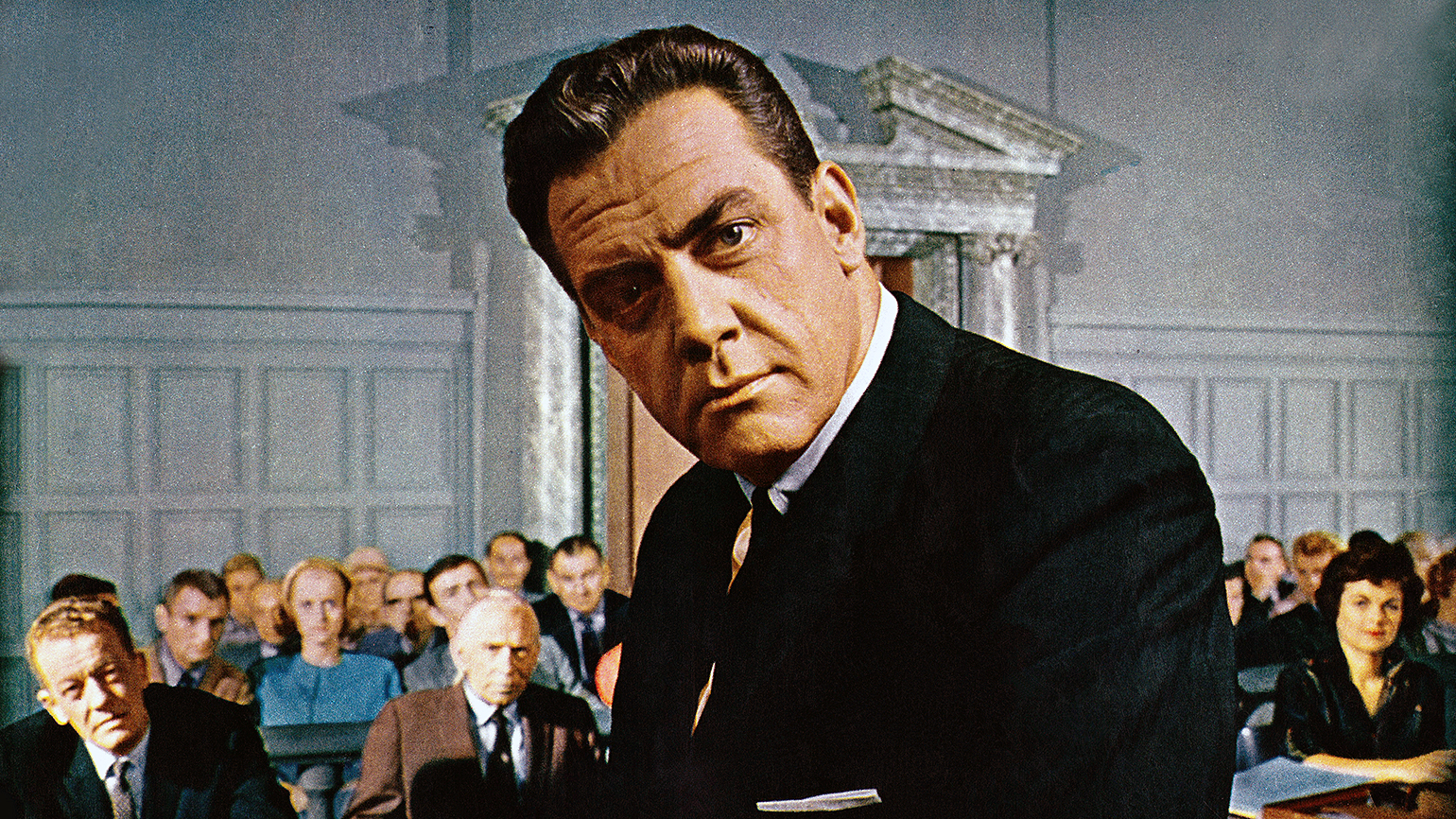
Raymond Burr is one of Hollywood’s hardest workers. Before he became famous as Perry Mason in the television series, he had acted in over 90 motion pictures. Yet he always has found time to “give himself away.”

I began checking facts and found there were seven trips to Korea to entertain troops; yearly benefit performances which he gives for a Catholic convent; scholarships donated to needy college students, and six orphans abroad, adopted by proxy. There also were countless civic and charitable appearances.

A few weeks later, facing him across a wide desk in the study of his studio bungalow, we talked, leading up to the question:

“How do you give yourself away?”

Raymond Burr looked thoughtful. “I don’t think any of us has the complete answer. But one thing that helps me is the funnel idea.”

I must have looked puzzled for he laughed, and then went on to explain what he called the “funnel approach” to life.

“An actor,” he said, “wants to make the right move or intonation at exactly the right time; to do that I believe he must leave his life open, like a funnel, not become so wholly involved with himself that he is unaware of the things and people around him.

“He should be able to identify with the lame, the deaf, the blind—to appreciate the beauty of a sunset, the feel of mud and rain, the sound of laughter, the cry or sigh of pain, the taste of tears. He needs to have a feel for books, painting, music, and people in all occupations.

“The trick is to draw all this experience into the big end of the funnel, letting it become a part of your total awareness, an enlarging of the reservoir that is you.

“When it’s time for a particular performance, out of this (funneled in) experience will come the right move or the right intonation. But,” concluded Mr. Burr, “an actor can’t give until first he receives. And what he gives is not his own.”

I nodded. “This makes good sense—for actors. My problem is that I need it every day of my life.”

“All right,” he said, “you can apply the funnel illustration to any person’s way of living. It simply requires that you accept life as it is and do not become so involved with self that you fail to recognize other people and their needs. When you let the passing scene come into your life you are immediately in communication with your fellow man and with the world.”

This statement helped explain a number of Raymond Burr’s quiet acts: the weekend flight all the way to a New England hospital to visit a badly burned girl who had asked for a picture of Perry Mason; the time when he sat up until dawn at the bedside of a make-up man who had collapsed on his set; the occasion several years ago when he welcomed at his beach home refugees from a fire that devastated the hills above Malibu.

“There’s one thing I still don’t follow,” I said. “Through our open funnel approach we recognize the needs of others. But what else do you believe comes in that helps, strengthens or guides us?”

He didn’t hesitate an instant. “When I speak of leaving yourself open to communication, I’m referring not only to an awareness of others but to communication with God. While I seldom pray formally, there isn’t an hour of the day or night that I am not in a state of communication or prayer. Every once in a while I catch myself saying, ‘Please, God, I’ve been good; now I want this badly next Monday.’ After a minute’s thought I have to say—’Disregard the first statement.’

“To me acceptance is an important part of prayer. However, ‘Thy Will Be Done’ isn’t a passive statement. It’s an offer of cooperation in whatever God can do through us. Our part is the right hand of action, beginning with our home life and our work, because until these are in order we aren’t ready to function beyond our own front yard.”

“And when they are in order,” I said, “you’d suggest we consider the whole world an area of need?”

“Exactly,” said Mr. Burr. “I believe we are in trouble today because we haven’t been concerned enough about each other.”

“All of us, of course, complain about how little time we have.”

“That’s avoiding responsibility,” said Mr. Burr. “To be sure, there are relentless demands on all of us. I often have to say ‘no,’ but I’ve said it more infrequently of late because I’ve discovered there is almost always a way to do the things that confront us if we have the will to do them.

“Some persons use the excuse: ‘What can I—just one person—do in such a big world?’…as if any contribution, large or small, was insignificant. There isn’t anything more I can offer than myself.”

In a reflective mood so familiar to millions of Perry Mason fans, he paused, then leaned forward in his chair and continued:

“Let’s pretend for a moment,” said Raymond Burr, “that the universe is an ocean and God is a huge bright stone. We drop the stone into the middle of this ocean. As long as the world lasts there will be a ripple. Now, let’s consider that man, made in the image of God, is a pebble. No matter how small the pebble, if we drop it in this same ocean, there will be a ripple. In the same sense, then, man’s life will have an effect on the universe.”

It’s an awesome thought to consider that what we are doing this minute, one way or another, is going to have some effect on the world.”

Raymond Burr’s philosophy since has helped me find a new sense of perspective about my own place in the world. Giving is not something you do just when it’s convenient. It is, in itself, the key to the Good Life.

For more inspiring stories, subscribe to Guideposts magazine.

God Led Her to Open a Non-Profit Repair Shop for Low-Income Drivers

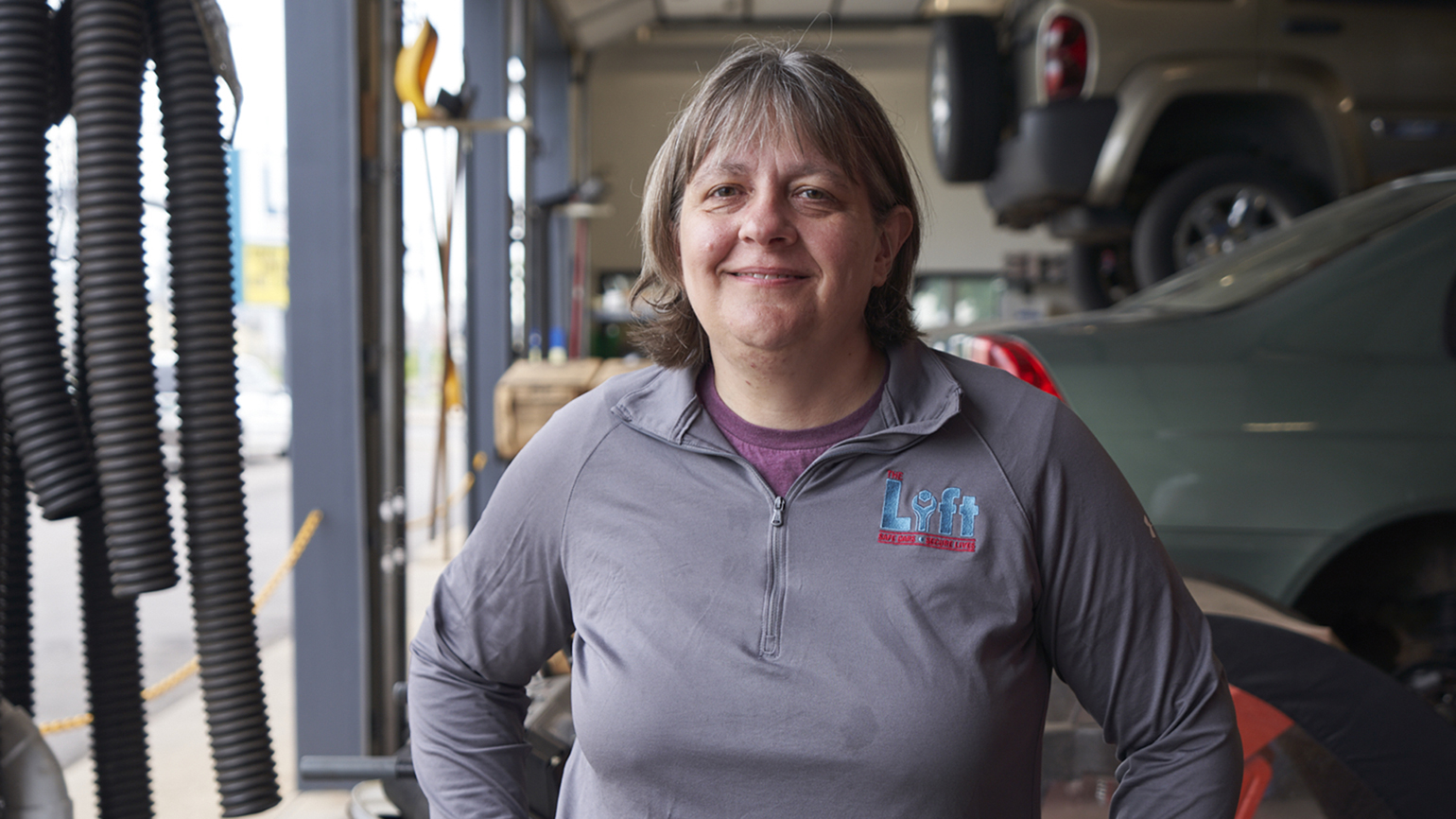
You’d think someone who had spent the past 20 years in min­istry, who felt called by Mat­thew 25:40 to serve the most vulner­able, would have no issues trusting God. But the minute I stepped into that cavernous garage one day in June, I questioned where I was being led. What the heck am I doing here?

Lifts ran down one side of the space. Tools and auto parts hung from the walls, spilled out of cabinets. The air smelled of engine oil and axle grease. The room was a cacophony of male voices. Nothing like the quiet church I was used to working in.

I walked toward the source of the noise, a knot of young men half my age—18, 19 years old. Suddenly ev­erything went quiet. Some 20 pairs of eyes stared at me.

“I’m Cathy Heying,” I said. “Here to start automotive school.”

The burly instructor, Dave DuVal, said, “Join us, Heying!” It was more of an order than a welcome. “First, pair off into lab partners,” Mr. DuVal barked like a drill sergeant. “You’ll be working together for the next two years.”

Two years! Was I really committing myself for that long? My mind flew to how I’d ended up here at Dunwoody College of Technology at age 38. May­be I’d find reassurance in the memory.

I had always been sensitive to peo­ple’s struggles. I got a degree in social work, with a minor in religious stud­ies. Then a master’s in pastoral min­istry. It seemed natural to work in a church. I started as a youth and young adult minister, then became director of social justice outreach at St. Ste­phen’s in Minneapolis. A job I loved. Nine years of engaging our parishio­ners on systemic issues that keep peo­ple in poverty and reinforce racism.

St. Stephen’s actively worked to an­swer the Gospel question: “When did we see you hungry, thirsty, naked or a stranger in need?” The neighbors came with their requests.

Most memorable to me were the at­tachments people had to their cars.

They would tell me, “I need my car to get to my job in the suburbs.” Or a doctor’s appointment. A relative they cared for. Their vehicle was a place to keep their few possessions, a place to be during the day—or to sleep in at night if they couldn’t get a bed at our shelter. Their car was safety and home.

I was ready to offer a shelter bed, a meal from the meal program or access to free clothes, but I had nothing to help with car repairs or maintenance.

Someone should take this on, I thought. I called other social service agencies looking for a place I could refer these clients to. No group—no one—in all of Minneapolis could help. I certainly couldn’t. I didn’t know a thing about cars. I’d never even changed a tire.

People kept coming into St. Ste­phen’s asking for help with car re­pairs. God, this is obviously an urgent need, I prayed time and again. Please find someone to step up and do some­thing about it. I listened for his still, small voice. Looked for signs. Finally I heard what I didn’t want to acknowl­edge. God wanted me to take this on.

I had the germ of an idea. What if I opened a nonprofit auto garage that offered affordable repairs? Okay, but who would do the repairs? God’s an­swer was the same.

So I’d found myself at Dunwoody College of Technology in the spring of 2008 to ask about its automotive program. I met Mr. DuVal and told him about my idea of starting a garage to serve low-income folks. He nodded and said gruffly, “The program’s al­most full. If you’re serious, I need your application tomorrow.”

The cost for the two-year program was some $40,000. Though I was still paying off student loans from grad school, I knew I had to try to make my idea a reality. I felt I was being called.

All my good intentions didn’t mean a thing in the Dunwoody garage on the first day of automotive school. I could tell by the way my teenage classmates tossed around terms like torque and power train that they were gearheads, guys who were totally into how cars worked. I was a middle-aged woman, a social worker and minister with zero mechanical inclination. I was all about feelings, emotional connections. I couldn’t have been more out of place.

No surprise that none of the guys rushed to be my lab partner. I ended up paired with a young man who was too shy to look up from his shoes.

“Everyone, line up facing the wall with the crankshafts,” Mr. DuVal said. My gaze roamed over the engine parts that covered the walls. Any of them could be a crankshaft for all I knew. My only recourse was to watch my classmates and copy what they did.

Come on, Cathy. I gave myself a pep talk. You’re a quick learner. You earned a master’s. How hard can this be?

Harder than anything I’d ever done, as it turned out. Automotive school kicked my butt. Every word out of Mr. DuVal’s mouth sounded foreign. Pis­tons. Manifolds. Gudgeon pins. I couldn’t connect what I read and reread in the textbook to the cars in lab. I felt un­coordinated, humiliated and inade­quate—every single day. The barrage of testosterone-fueled talk, banging tools and rapid-fire instructions threw me off. I studied late into the night while dreading the next morning’s class.

Halfway through the semester, we were assigned to flare brake lines, us­ing a tool to cut the end of the tube that carries fluid to the brakes so that it maintains a tight connection. No matter how hard I tried, I couldn’t do it.

“Heying, what’s taking so long?” Mr. DuVal yelled from across the room.

My hands were shaking so badly, I couldn’t hold the tubing steady. Tears of frustration streamed down my cheeks. My lab partner seemed embarrassed for me.

At the end of class, the other stu­dents trooped out. I went to Mr. DuVal. “My brain doesn’t work this way,” I said. “I’m quitting.” I was still working part-time at St. Stephen’s. God would have to find someone else.

Mr. DuVal glared at me. “Heying, I’m not going to let you quit!” he said, his voice rising. “I believe in you. I be­lieve in your vision. You can do this. And I’ll be there to help you every step of the way. I’m going to watch you walk across that stage as a graduate in two years. Now get over there and flare those brake lines.”

It felt as if I’d been dropped into one of those inspirational movies with the tough-as-nails coach leading his hapless team to the championship. Ex­cept there was no rousing soundtrack. No teammates lifting me up. Just Mr. DuVal. And the knowledge that there was no way out but through.

I trudged back to my workstation. Tried again. And again. On the fourth try, I flared those brake lines. “You’ll get there, Heying!” Mr. DuVal said.

Eighteen months and many more tears and after-class sessions with Mr. DuVal later, I graduated in June 2010. There was still so much to learn. I worked mornings at St. Stephen’s and got an afternoon job at a Sears service center to keep up my tech skills.

Mak­ing connections with anyone who’d listen to my vision, I found a business mentor and wrote a detailed four-year plan for opening my garage, including fundraising and marketing, forming a nonprofit board, dealing with the legal paperwork, searching for a location.

The summer of 2012, I launched a nonprofit called The Lift Garage. Dave DuVal was one of the first board members. Not long afterward, one of my connections called. An auto shop owner, she was struggling finan­cially and needed some rental income. “I think you should lease one bay from me,” she said.

I laughed. “I don’t have the funding, the tools, the mechanics, nothing.”

A few months later, she called back. Again, I said no. In January 2013, she called a third time. “I really feel like you need to do this,” she said.

I was about to tell her I was nowhere near ready, but something in her tone gave me pause.

In that moment, I heard another voice. Not the still, small voice I’d al­ways tried to listen for, but a loud and demanding one. Honestly it sounded a lot like Mr. DuVal. Heying! I’m opening the door here. You need to step through!

It was time to let go and let God.

I went to my board. “I know this is crazy,” I said. “We’re not ready, but I think we need to do this.” The board agreed, and we signed the lease. The first thing we’d need was insurance. Thirteen companies rejected us before we got coverage at a very high cost.

For the next year, The Lift Garage operated out of the single bay one day a week. When I wasn’t doing repair work, I was writing grant proposals and fundraising letters. Almost im­mediately, I had a full schedule of cus­tomers, people who shared the same stories I’d heard at St. Stephen’s. This time, however, I could offer help.

One day, a woman named Kelly came to the garage, hoping I could get her car running again. When I told her she needed a new starter and the charge would be $100, she burst into tears of relief. She told me that she was in an abusive relationship. “I’ve been trying to save enough money to get my car fixed so I could leave,” she said. “I don’t know how to thank you!”

Seeing how a simple repair would change Kelly’s life was thanks enough.

Today The Lift Garage employs five full-time mechanics and three ser­vice writers, doing about 120 repairs a month. By charging for parts at cost and only $15 an hour for labor, our bills are about 75 percent less than what a for-profit shop would charge. We’ve saved low-income Minnesotans more than two million dollars in car repairs.

There’s always more demand than we can meet. I hear from people across the country who want to follow in our footsteps. I could never have pictured any of this happening. Good thing God has a much better imagination!

For more inspiring stories, subscribe to Guideposts magazine.

#GivingTuesday: The Movement Changing the Way We Help Others

#GivingTuesday is Dec.3rd 2019. Discover the story behind the global day of giving in this original 2015 interview with the founder of #GivingTuesday.

Everyone knows about the blockbuster deals available on Black Friday and Cyber Monday. But what if, instead of crossing off items on shopping lists and getting deals on high definition TVs, we used the holidays to give to those in need?

That’s the simple idea #GivingTuesday creator Henry Timms had while chatting with his wife at their breakfast table just three years ago. The executive director of the 92nd Street Y (92Y), one of New York’s most respected cultural institutions, established the Tuesday after Thanksgiving as a global day of giving to charities and non-profits.

Now #GivingTuesday has grown into a worldwide social media event, with over 30,000 partners in 68 countries, and 40 civic campaigns in communities across the U.S. It’s generated 32.7 million Twitter impressions and a 470 percent increase in online donations to charities on the Tuesday after Thanksgiving since Timms first launched the campaign.

Click here to donate to Guideposts and support our outreach programs for veterans and for sick children.

“Philanthropy isn’t just for billionaires,” Timms says. “Everyone is capable of giving to others. I think, as we’ve seen #GivingTuesday grow around the world, it really reinforces that message. For all of the many things that divide people all around the world, the one thing we all share is our capacity to care for one another. If you wanted an ultimate goal of #GivingTuesday, it would be, in some way, to emphasize that capacity.”

Teachers in schools around the country are crafting curriculum around #GivingTuesday as a way to educate their students on philanthropy and why it matters. Many charities have also launched their own events to coordinate with the global phenomenon, like Dress for Success, which started #GivingShoesday, asking people to donate shoes that will go to women re-entering the workforce.

Participate in #GivingTuesday with a Contribution to Guideposts Military Outreach.

“You’ll hear stories on the day about how much has been donated, increases in giving, but the driving idea behind #GivingTuesday is about values,” Timms tells Guideposts.org. “We wanted to start a conversation about how you can have public conversations about values in very positive ways.”

The movement hasn’t just impacted donations to charities or volunteer work on the ground, it’s also illustrated the power of social media activism. #GivingTuesday relies in large part on social media – the reach it can have and its ability to inspire people to a cause. It’s something Timms thinks more NGO’s should take advantage of.

“The easy and lazy criticism of social media is this idea of slactivism, that things that are digital are insubstantial and inhuman,” Timms admits. “Neither of those things is true. In fact, they’re increasingly untrue. What we’re beginning to see is people finding ways to use social media to make profound differences in people’s lives. #GivingTuesday has been a catalyst in a small way for that kind of thinking and behavior.”

Timms has seen the result of the power of social media first hand. Of all the #GivingTuesday stories he’s heard over the years, one has stayed with him. A contracting firm outside Philadelphia started a #GivingTuesday campaign where crews spent an entire day cleaning a local homeless shelter that desperately needed it. At the end of the day, one of the crew members approached his boss and shared what it meant to him to be able to give back.

Support Guideposts on #GivingTuesday–Here’s How You Can Help.

“He said ‘It’s the first time I’ve been invited to be part of a giving chain,’” Timms explains. “I thought that was such a lovely frame for what #GivingTuesday is trying to do, which is create a chain. This isn’t just a movement that moves bottom up. It’s also a movement that moves sideways. It’s connecting people to the people next to them.”

Giving from the Heart

I was recently reminded that even small giving can be a very big thing.

I heard the musical toll of a Mississippi riverboat as I pushed a son in the tire swing. The music often floats from a paddlewheel boat and drifts through our small town. The sound is similar to that of the ice cream truck that travels our streets in the summer.

As I pushed my son higher, I remembered another small son who also once heard the music. Gabriel was just five back then, and he thought the sound meant ice cream. I found him waiting on the driveway, thin, brown arms looped over summer-scraped knees. He peered down the road, and his small treasure chest was beside him.

“What are you doing, Gabe?” I asked.

His gap-tooth smile broke wide. “Treating the family,” he said. “Look what I have!”

He opened the latch of his treasure chest and his life-savings lay inside. Crumpled dollars. A plethora of change.

I was sad to explain that the truck wouldn’t be coming around the corner. And Gabriel and I talked about safety, too. But what touched my spirit was his generosity. This little one didn’t have much, but it was his desire to give what he had. It reminded me of Jesus and His followers in the temple. They watched as a widow came by and gave an offering. It was a pittance compared to the giving of the wealthy, but it was great because it was all she had.

The giving was significant.

Sacrificial.

Jesus said, “I tell you the truth, this poor widow has put more into the treasury than all the others. They gave out of wealth, she gave out of her poverty.” (Mark 12:43)

If Jesus thought enough of this offering to speak attention to the giving, I should listen.

The act of giving reflects the soul.

Gabriel and I left the drive that day. His treasure chest went back on the shelf beside soccer trophies and a plastic pirate sword. But it didn’t stay there for long. A trip into town meant a stop at the ice cream shop where older brother Grant worked.

We all had single scoops in sugar cones.

Gabriel’s treat.

As I listened to the music and remembered that day, I recognized that Gabriel had given from a deep place.

A heart gift, when it comes with sacrifice, is anything but small.

Lord, help me to give sacrificially today…of my possessions, my attention and my time. Amen.