Embrace God's truth with our new book, The Lies that Bind

A Small Gift with a Big Impact

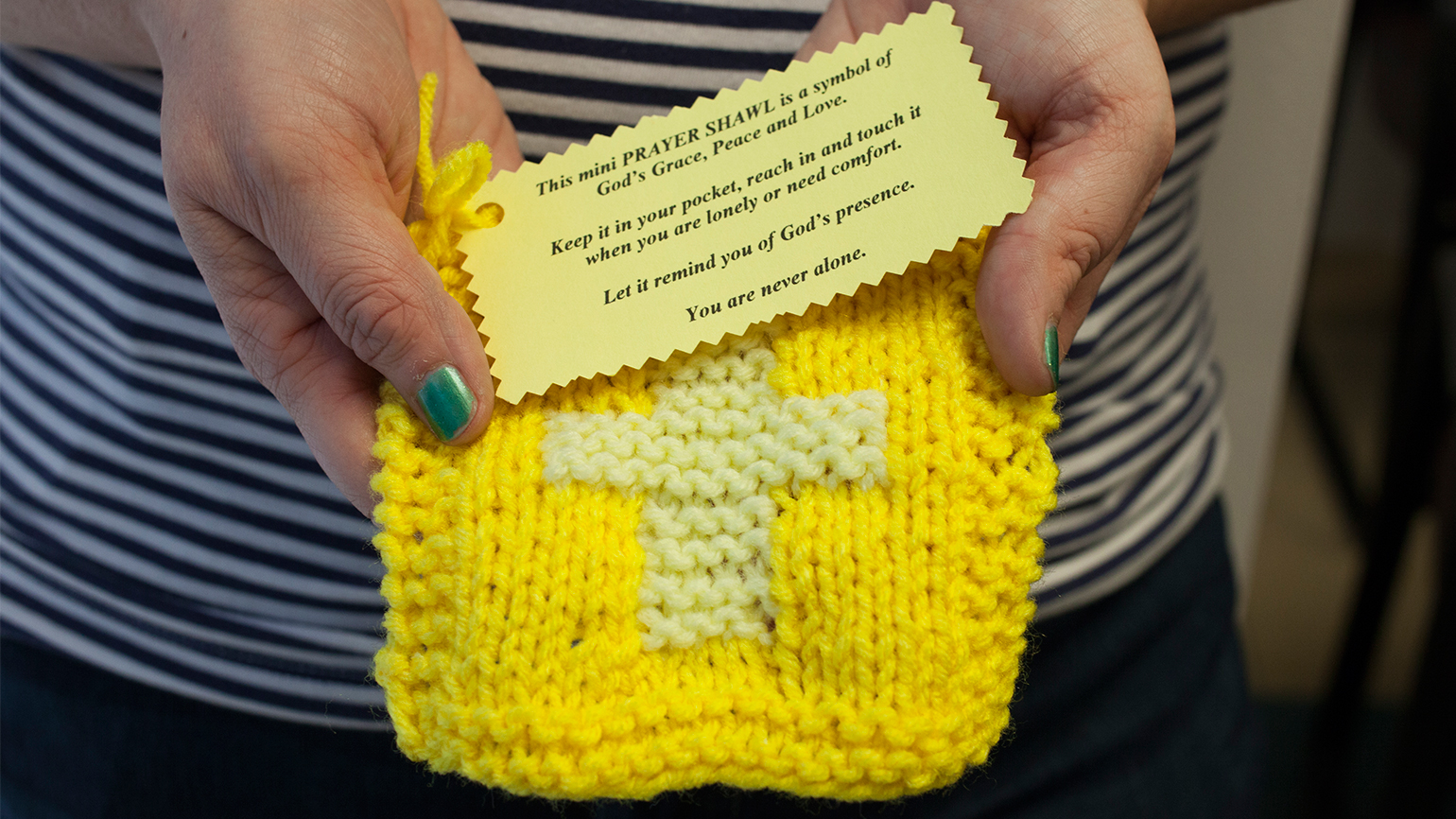
I read Karen Jason’s story, Someone Cares: Cross Fit, in the March 2017 issue of Guideposts, about her friend who cross-stitches pocket crosses, with great interest. I liked the idea of giving people who need support something tangible. Then a friend gave me a mini prayer shawl, five by five inches with a cross in the middle. That was something I could make…. I had plenty of yarn.

I’ve now knit more than 50. I attach a prayer printed on a small card to remind people that God is always with them. I translated the prayer into German for my cousin in Germany. I put a mini prayer shawl in a condolence card for a widow; she told me she clutches it when she goes to bed. And I plan on giving out even more this fall, when my church celebrates its 150th anniversary. I’m glad that something so small can have such a big impact.

To knit your own mini-prayer shawls, check out Doris’ pattern below. To download the pattern in PDF format, just right-click (control-click on a Mac) here to save the file to your desktop.

MINI PRAYER SHAWL

(Cross can be knit in second color; I use no. 5 needles for this project)

Cast on 20 stitches, 4 rows garter stitch
Row 5—K3, P14, K4
Row 6—K3, K5 (K4 second color) K5, K3
Row 7—K3, P5, K4 (second color) P5, K3

Repeat rows 6 & 7, three times more

Row 14—K5, K10 (keep 4 in Knit-2nd color), K3
Row 15—K3, P2, K10, P2, K3

Repeat rows 14 & 15 twice more.

Row 20—Knit across row K3, K5 (4 sts 2nd color) K5, K3
Row 21—K3 P5, K4 P5, K3

Repeat Rows 20 & 21 twice more

Row 26—Knit across (main color)

Row 27—K3, purl across, K3

Knit 3 more rows in garter stitch

Bind off.

A Shout-out to the Staff

This is the time of year when we count our blessings and I am getting to the age when I don’t have enough fingers and toes to tally them all. This is also the time of year at Guideposts when we managers give our performance reviews to our employees, a good opportunity not only to evaluate the job someone is doing but also to thank them for doing it.

And thankful I am. It takes the dedication of a lot of folks to put out our books, magazines and websites, to say nothing of our outreach programs and the thousands of volunteers who help us answer more than 850,000 prayer requests a year at OurPrayer. Most of our employees work behind the scenes, from our customer service reps to our marketing people and the people in finance who make sure the numbers add up. For every one of us who writes a book or a blog or a column or an article in the magazine, there are scores of people whose names you never see on the masthead who help make that happen. To recoin a phrase, I didn’t build this blog all by myself.

No, I get a lot of help from people here at Guideposts who are uniquely dedicated to their jobs, because by doing their jobs they know they help inspire, reassure and deepen the faith of millions. If you’d like to join me in thanking the employees of Guideposts, like this blog. And please join us in the Guideposts Thanksgiving Day of Prayer this Monday.

A Sexual Abuse Survivor Helps Fight Human Trafficking

The Christian writer Frederick Buechner once described a person’s life calling as “the place where your deep gladness and the world’s deep hunger meet.”

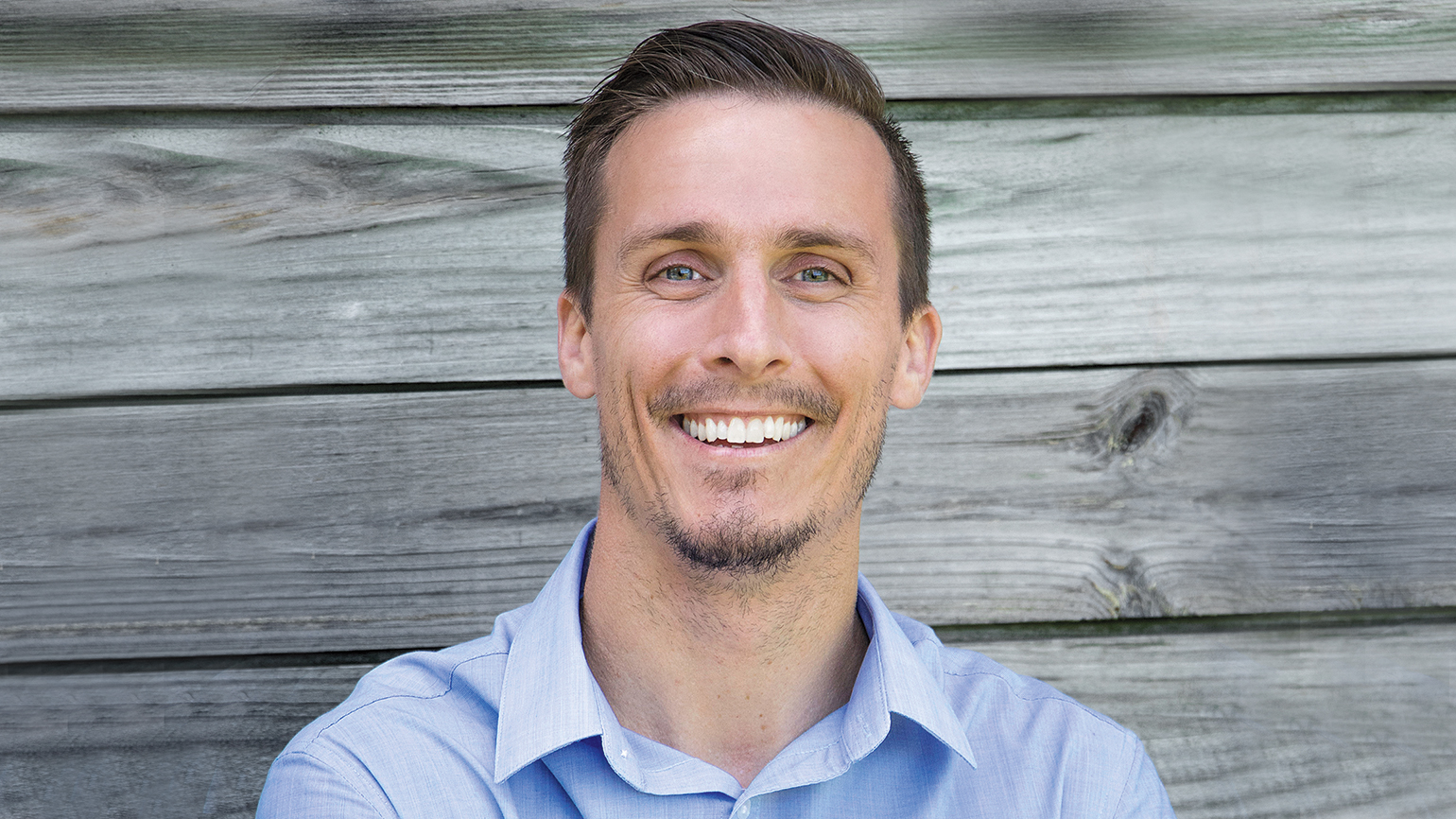
To my own astonishment, that’s what my work feels like every day. I’m director of strategic partnerships for an organization called Destiny Rescue, which liberates women and children from sexual enslavement, concentrating mostly in Asia.

Why am I so astonished that I landed this job? Well, if you’d known me 10 years ago, you’d be astonished too. Back then, I was the one with deep hunger. I was jobless, bankrupt, living in my dad’s basement. I carried the deep wounds of childhood sexual abuse. I hungered for work, for purpose. For a reason to hope. But I was lost.

God met me in that dark place. He brought me to where I am now. Maybe my deepest gladness comes from doing work that, in its own small way, extends the mercy that was shown to me.

I was a teenager when everything fell apart. My parents announced to my three brothers and me that they were divorcing. We were shocked. As far as we could tell, Mom and Dad were a loving couple united by faith. They’d planted several churches in our rural community outside Fort Wayne, Indiana.

Dad moved out. Not long after, someone took advantage of my distress and sexually abused me. I was too young, too scared, too unmoored to tell anyone. I lived consumed by fear and bitterness.

I could have abandoned my faith, blaming God for the end of my parents’ marriage and the trauma of what came after. Instead, in college, I sought church as a refuge. I prayed more, not less. And I felt God’s grace. I forgave my dad, whom I’d blamed for the divorce because he was the one who moved out. I even forgave my abuser after he admitted what he’d done and told me how sorry he was.

I thought I was moving on. I earned a degree in landscape architecture and found a job at a firm in Atlanta. I bought a house. A car. I hoped to marry someday.

The economy crashed in 2008, and optional expenditures like new landscaping were one of the earliest casualties. My salary was reduced; then I was laid off. I searched coast-to-coast for work, but no one was hiring. Mortgage and car payments piled up. I owed more on my house than it was worth.

I had no choice. I declared bankruptcy, held a garage sale to get rid of furniture and moved into the basement bedroom of my dad and stepmom’s house. I wasn’t even 30. I had felt as if God were leading me on a good path. Where did the path go now?

One morning, I awoke and tried doing some devotions. The basement wasn’t a cozy place. The floor wasn’t carpeted, just finished concrete. A dingy lamp by my bedside provided reading light. I came to a passage in Isaiah: “The Lord has anointed me to bring good tidings to the afflicted. He has sent me to bind up the brokenhearted, to proclaim liberty to the captives.”

A voice spoke inside me: “Cory, I want you to set captives free.”

What? Where did that come from? The feeling intensified. A powerful sense that God wanted me to free captives. What did that even mean?

I was an unemployed landscape architect. I had to rack my brains to come up with anything in my background that connected with that command.

I remembered learning about American slavery in fifth grade. I grew so outraged, I wanted to be reborn in the nineteenth century to fight on behalf of slaves. In high school, I stood up for an overweight girl bullied by a couple of star basketball players.

Not the résumé of an antislavery crusader. And there were no slaves in America to free—or so I thought.

I couldn’t shake the feeling. Not knowing how else to respond, I got more involved in a church my dad and stepmom had planted. I shared my story with the congregation—the breakup of my family, my sexual abuse, the loss of my job and bankruptcy.

People identified with my financial struggles and family turmoil. They were inspired by the healing in my relationship with Dad. I started getting invitations to speak at other churches.

“You have an amazing story, and you’re so honest. Have you ever thought of writing a blog?” a friend at church asked one day.

I barely knew what a blog even was. One thing I did know: Bloggers were a dime a dozen. Did I have anything unique to offer?

Still, I wondered. People at church seemed moved by my story. Could it inspire others too? What did I have to lose? I signed up for a free blogging service and began writing.

The response was slow at first but positive. Soon I had a small audience of regular readers. “Every day, the first thing I do when I get to work is look for a new blog post from you,” someone wrote. “Your writing really ministers to me and helps me get unstuck in life.”

Really? Something I wrote did that?

It would have been nice if the blog also provided a salary. I was still pretty much broke. I tried starting a landscaping business with one of my brothers, but we didn’t make good partners, especially as I spent more time writing.

Then one day an e-mail came to me from an editor at The Good News, a Christian news publication. “We came across your blog, and we love it. We want you to become a contributing writer for us.”

A job! It wasn’t landscape architecture. But it paid. And I’d begun to wonder whether writing was something God wanted me to do.

Not long after, a representative from a Christian organization called Destiny Rescue came to talk at an event at church. The nonprofit was headquartered near Fort Wayne. I’d never heard of it, and I knew nothing about human trafficking.

The speaker rattled off statistics about human slavery in the modern world. I was astounded to hear that at least 40 million people are enslaved, more than a tenth of them in sexual slavery.

Most slavery—forced labor, prostitution, forced marriage—occurs outside the United States. But the U.S. is not immune. Thousands of people live as slaves in present-day America, forced to work in the sex trade, in farm fields and in sweatshops. Americans spend $144 billion annually on computers, clothes and other products made in places where slavery is prevalent.

Hearing those shocking numbers, I felt something well up inside me. Pain. Fear. Memories I thought I’d dealt with years ago.

I had dealt with them. I had genuinely forgiven my abuser. But the pain, obviously, was still there.

Free the captives. Compared to the suffering of child prostitutes in Thailand, my episode of sexual abuse had been minor. But it had still scarred me. The speaker described how Destiny Rescue was saving children from sexual slavery. I couldn’t just sit there. I had to do something. But what could I do?

When the talk was over, I approached the speaker and blurted out, “I would love to write about your organization.”

A few months later, I was on a plane to Southeast Asia, where Destiny Rescue’s founder, Tony Kirwan, oversaw a network of safe houses providing children rescued from the sex trade with shelter and help reintegrating into their communities once conditions were safe.

I was taken to a red-light district in Thailand. It was a miniature Las Vegas, with blinking lights, blaring music and women and girls outside bars and clubs, beckoning to western businessmen and tourists.

I saw a young girl in front of a bar. “There’s no way that girl is 18,” I said to someone in our group. The girl’s eyes were glazed. She looked as if every reason to live had been taken from her.

For a moment, panic gripped me. Maybe I shouldn’t have come. I knew all too well the violation that lay behind those eyes.

Yet this time my memories did not get the better of me. New feelings welled up alongside the despair. Anger at this corrupt system. And a burning desire to do something about it.

That desire must have been obvious for the duration of the trip. A few days after I interviewed Tony Kirwan, he offered me a job. “You seem to have a passion for this issue that goes beyond reporting,” he said. “We need a writer on our staff, someone who can help spread the word about what we do.”

Did I jump at this opportunity? Ashamedly, no, not at first. The prospect of living overseas was too intimidating to me. I told Tony no and returned home. I couldn’t sleep for two weeks. At last I asked Tony if the job was still open.

“Of course,” he said.

I’ve been working for Destiny Rescue since 2012. One thing I tell audiences about our efforts is that two of the leading causes of child slavery are poverty and family breakdown.

I have known poverty and family breakdown. Not like some of the children I’ve seen in Southeast Asia. But I was reduced to what felt like almost nothing. What had seemed safe and secure vanished. Only God endured.

I feel blessed and privileged to do this work God has called me to. Truly, it is a place where deep hunger and deep gladness meet.

For more inspiring stories, subscribe to Guideposts magazine.

A Reason for Hope

I was riding in the backseat of an SUV when I first saw New Orleans. It was a gauzy, muggy morning, three days after Hurricane Katrina hit.

The storm had reduced this most mythical of American cities to a vision of the apocalypse. A photographer and I were driving over the Mississippi River with the words of a police officer at a checkpoint still buzzing in our ears, “If you go there, you’ll probably be killed.”

We pulled to the side of the bridge and looked over the railing. The city, drowned in still, black water, reflected the sky and the rising sun in a lattice of submerged streets. A funnel of smoke from a chemical warehouse fire trailed to the horizon. God has left this place, I thought.

Twenty-four hours earlier I had been sitting at my desk in New York, where I am a newspaper reporter. My phone rang. “Can you be on a plane to Louisiana this afternoon?” my editor asked. “Yes,” I said. Then I put the phone down and stared at the wall. What had I just done?

I went home to pack and say goodbye to my wife, Kate. We had just moved to New York in July from California, and married only two months before that. Our life together was just beginning, mine as a reporter for a New York daily and hers as a priest at an Episcopal church. Was I about to jeopardize our future by plunging into a disaster zone?

Most of my career as a journalist consisted of calling people and cajoling them into giving me tidbits of information. As I sat in my seat on the plane to Baton Rouge I could do nothing more than pray. Let me get through this, Lord. Show me what to do when I get there. Help me get home safe to Kate.

I met the photographer, Matt, at the airport and we loaded our rented SUV with food, water and rubber boots. We took back roads toward the city and used a flashing orange emergency light to get past checkpoints.

When we reached the city we found bodies lying on the sidewalks and, farther on, floating in poisoned water that rose to the roofs. We saw office buildings toppled into chunks of brick and left to burn by a fire department with no running water. And we saw the roaming, desperate survivors clustered along the sides of the highways.

By this time they had gone days with no food or water. Babies were dehydrated. Grandparents sat in broken wheelchairs under a pitiless sun.

Matt and I waded into crowds, and people called out to us, even grabbed us. Several cried with relief that someone had come to tell their story. And, strangely enough, that’s when my fears left me. From a distance the city had looked moribund, desolate. Now, among the people, we saw that the city was alive. Desperate, but alive. What mattered was finding and telling these people’s stories.

I discovered glimmers of dignity and generosity. Picking my way through the urine-soaked, trash-strewn streets in front of the convention center, I met Roynell Joshua, a 72-year-old man who sat with limbs askew in a folding chair on the blistering pavement. He was surrounded by thousands waiting for evacuation buses that had been promised but hadn’t arrived.

Roynell, who had climbed out a window of his flooded home into a rescue boat, needed dialysis. He had missed three treatments since the storm hit. He was weak almost to the point of incapacity. Each leg was the diameter of a baseball bat. When someone tried to move him, his face seized with pain and he cried out, “No! No! No!”

His situation seemed impossible. But then a woman sitting next to him spoke up: “He fell in the street trying to cross over here. I got some guys to help get him. We’ve been on this spot for two days. We sit and talk. It keeps me busy.”

The woman was Darleen Morgan. She had lost her house and her family. She had never met Roynell, but when she saw him slip in a puddle and fall she helped him up. Now she sat beside him, shielding him with an umbrella and holding a bottle of water to his lips.

“She’s doing a good job,” Roynell said.

And there was Brad Mercer, a special-education mediator from a Dallas suburb who drove 500 miles in a 50-foot-long amphibious tourist ferry called the Duck to pull the lost and the frail from drowned New Orleans homes.

I rode with Brad on his boat through a flooded neighborhood near downtown and he told me how watching news images after the storm got him increasingly agitated, until he impulsively cleared out his work calendar for a week and drove the Duck with a friend to New Orleans.

Their boat looked like a giant soap dish with wheels. Rescue workers rejoiced at it because it could plunge into streets too shallow for most boats and too deep for trucks. The afternoon I rode the Duck we motored through streets that bobbed with sodden sofas, police cars and swimming dogs. We reached a school where 25 survivors had been stranded for days.

They loaded in, carrying bags that held all they owned. Cornelius Victor, 52, had sloshed his way to the school with his wife and younger brother, Ronnie, who was so horrified by what he had seen in the hurricane’s aftermath that he couldn’t speak. But Cornelius told me how, each day, he had lathered himself with Vaseline and plunged into the murky waters to take food to elderly neighbors and stranded pets.

For every scene of despair I witnessed in New Orleans, there was a Cornelius Victor. Or a Brad Mercer, who, in his haste to get to New Orleans, drove in shifts with his friend and slept in the metal hull of the Duck. Or a Darleen Morgan. I had witnessed devastation here. But none of my fears were realized.

Instead, I found courage and tears where I expected to find violence. I found ragged attempts to preserve dignity where I expected to find the breakdown of civilization. I found faith where bitterness could have taken hold. And I found that in a fallen world where people so often think only of themselves, the horror of disaster can prompt a selflessness we would otherwise never achieve.

And most important, I found a kind of answer to the question formed by disaster: “Where are you, God, in this?” He was everywhere. I could feel his presence with the suffering of his people.

Perhaps it sounds perverse to say so, but in New Orleans, where all love seemed lost, I found a deeper love that holds the afflicted close enough to offer them redemption. For God is never closer to us than when we are suffering, and hope is never nearer than when we need it most.

An Iraq Veteran’s Journey of Healing

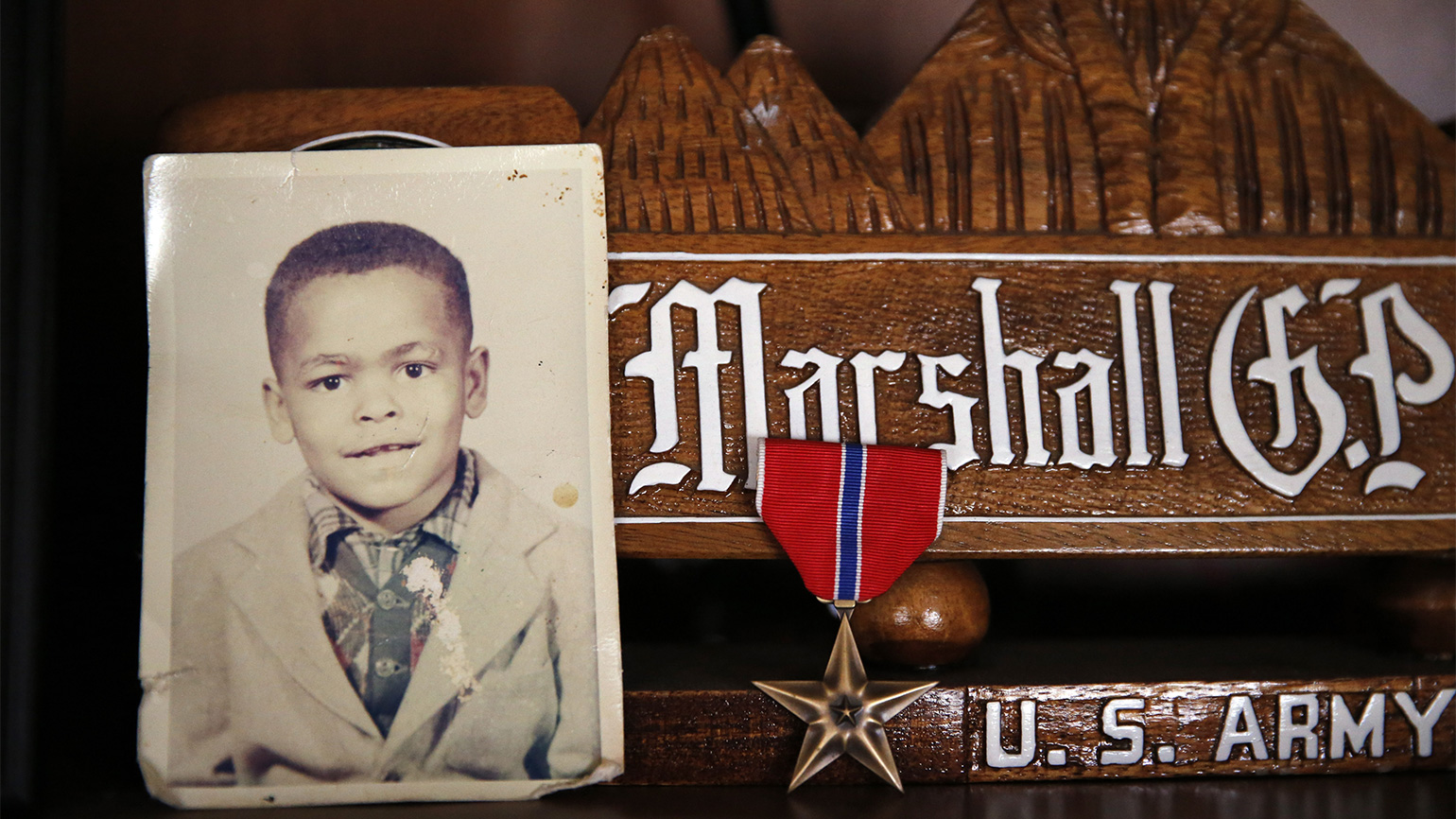
In 2007, the now-Retired U.S. Army Sgt. 1st Class Marshall Powell served as a medic in Iraq. After his deployment, he returned home with an injury that wasn’t visible to the eye. He had suffered what is now termed “moral injury”: the internal suffering that results from an action that goes against one’s moral code.

As he details in his story in the May 2017 issue of Guideposts, Sergeant Marshall was faced with a decision no one should face while dealing with the aftermath of a bombing in Mosul, Iraq. That decision has haunted him ever since, but with the assistance of some fellow veterans in group therapy, he came to realize that he wasn’t alone, and he has slowly but surely found peace and healing.

Amazing Acts of Compassion During the Covid Crisis

John was the first Covid-19 patient I spoke with over the phone at Norton Women’s & Children’s Hospital, where I am a chaplain.

According to my patient list, John was 33, Hispanic. It was March 2020. He had been in our hospital two days. That spring, as the deadly virus was first diagnosed in Kentucky, we chaplains were encouraged to comfort patients by phone to conserve protective equipment and reduce the risk of infection. It was difficult not being able to see them.

“How are you?” I asked.

“Better,” John said. His labored breathing indicated otherwise. He sounded as if he was suffocating, every breath a battle.

He said he had no family nearby. “I’d be happy to pray with you,” I said.

“I don’t believe….” A long pause.

I tried to complete his thought: “You don’t believe in God?”

With his last ounce of strength, he gasped, “I will recover.”

I wasn’t sure what he meant, but it felt wrong to keep him on the phone any longer. I promised to call him the next day. He thanked me. By evening he was dead. My first Covid-related death. We were both Hispanic, soon to be defined as a high-risk demographic. He could have been me, I thought.

A novel virus, Covid-19, had arrived on American shores in January. For weeks, I’d lived with the hope that the virus would be contained before it reached Kentucky. I hadn’t let myself consider any other scenario. Reality shook me to my core.

“Covid has arrived, and now we walk through a dark valley…and I am very much afraid,” I wrote in my journal.

Part of my job as a hospital chaplain—a position I’ve served in for 14 years—is to help calm the anxieties of the patients I minister to. I understand the fear that comes with facing a medical trauma. As a teenager, I survived a brain tumor. I saw how God worked through the love of others. As a chaplain, I got to pay that love forward. But Covid felt different. It was hard to be hopeful, hard to know if I was helping.

Until I turned my focus to the people around me, looking outward instead of inward. I began noticing acts of compassion. And the more I looked, the more I found—a practice I continue to this day. Compassion is everywhere, as contagious as any virus.

One of the first times this struck me was early in the pandemic, during a code blue. I saw Deb, a pharmacist nine months pregnant, literally running from our Covid unit to the ICU and back.

Even in the urgency of the moment, Deb’s selflessness seemed remarkable. Everyone would have understood if she hadn’t. Yet it was a lesson that would stay with me throughout the hard months to follow: Compassion demands courage. It takes great courage not to turn away from those in such desperate need, to put yourself at risk for the good of others.

Later I asked Deb about it. “If you’re not willing to run for someone who is dying, when will you ever do it?” she told me. “We have husbands and wives and mothers and daughters dying of Covid in the hospital. If I run fast enough, maybe we can save at least one of them.”

After our conversation, I remembered a Jewish proverb: “Before every person, there marches an angel proclaiming, ‘Behold, the image of God.’” During the code, I beheld the image of God. And it was lovely. That moment stayed with me.

It’s been said that when we watch a film together, none of us sees the same film. The same is true for traumatic events. We all experienced the pandemic together but felt it differently. Some grieved; some raged; some took action; some retreated into denial.

At times I tried to escape. But everywhere I ran led me right back to Covid. The virus was all-consuming, relentless. So often I wanted to flee, to spend time with my wife and my pets, away from the pain, the sorrow, the anguish I dealt with daily at work. My home was quiet and less anxious than anywhere else.

At one point, my wife and I discussed living in separate quarters for safety, but the thought of doing so was infinitely more stressful than going through this together, whatever the outcome. So we limited our time together, and I had a ritual of throwing my clothes in the washer as soon as I entered the house. I mostly stayed downstairs, and she mostly stayed upstairs. It was simple yet proved effective.

Even at home, people were contacting me late at night to share their anxiety. I often didn’t know what to say. I admitted to a friend once, “I have nothing to offer you. I have only tears.” I felt as if I’d failed her, but those words gave her comfort. They reminded her she wasn’t the only one struggling with the pandemic.

Similarly, that April, a chaplain friend told me, “I don’t feel safe anywhere because I don’t think anyone knows what safe is.” Her vulnerability filled me with compassion. I reminded her (and myself), “Covid is strong, but we are stronger.” I wasn’t sure if I totally believed it, but I wanted to believe that strength, like faith, comes not from what we can see with our eyes but what we feel in our hearts.

The governor of Kentucky chose the color green to honor all Covid-19 victims and their families. Homes, banks, landmarks, hospitals and universities across the state were lit up with green lights. Each night in my own neighborhood, most of the homes were lit in green. Many places across the country, indeed all around the world, were displaying similar acts of support for their community.

My friend Carola told me how people in Nova Scotia created a Facebook page to support each other through music, recipes, crafts and uplifting photos. Another friend, Laura, said that when her upstate New York community went into lockdown, within 24 hours free lunch stations were set up all over town to ensure no child would go hungry, especially those who depend on school meals.

My high school friend Julia’s husband died two weeks before Covid slammed into her northern Virginia community. Forced separation from friends made Julia’s grief even harder to bear. She said what really saved her from spiraling into the abyss was that her local YMCA provided virtual support.

Every day, instructors came into her home via her computer, providing connection, motivation, inspiration and prayer. Despite having to navigate their own personal life challenges, they were faithful visitors, giving her what she needed during this incredibly difficult time.

Hearing all these stories made me ponder. So much of the love and solidarity in the world we’re unaware of—or at least I am. And yet when you stop to think about it, the impact is incalculable, awe-inspiring, like trying to count the stars that fill the heavens.

I switched my work hours so that I could support our second- and third-shift employees. An ICU nurse named Hannah shared her first experience with a Covid patient. She was new to nursing and very afraid of contracting the virus. This patient was extremely ill. It was Christmastime.

She cared for him nine days straight, even coming in on her days off. Being that she couldn’t be with her family and his family couldn’t be with him, she decided “we would be family for each other.”

Then Hannah told me, “There is the Christmas story where Mary and Joseph get to Bethlehem and there is no room in the inn for them. Well, there was room in my heart for my patient. He wouldn’t be left out in the cold by himself. I was going to be his angel even if he never knew it.” He never did know because he was intubated his entire hospitalization. Sadly, he died. “Taking care of him gave me the courage to help other Covid patients,” Hannah said. “I will never forget him.”

My friend Caroline, who lives in Belgium, told me about her 73-year-old neighbor, who had been taken to the hospital with Covid. It was touch and go for a bit, but she finally came home. “I put in front of her door a beautiful basket full of vegetables, fruits, biscuits, chocolates…and even a small bottle of Italian spritz prosecco,” Caroline said. “She was so happy. I know doctors and nurses are working all hours, and it is horrible to see. This is my contribution to the effort.”

In April 2020, an ICU nurse in my hospital, Myra, was caring for a Covid patient who eventually died. It was scary being in a Covid-positive room in those early days. When it came time to clean the room, Myra told the environmental service employee not to come in. “I will clean,” she said. “Don’t enter and risk infection.” Then she started mopping the room while we watched from the safety of the hallway.

What Myra did was an extraordinary act of compassion. The whole world, according to Paul in Romans, stands on tiptoes waiting to see the marvelous things of God. It’s true. I felt blessed—as I have so many times during this pandemic—simply to bear witness.

Now it is 2021. The Delta variant sweeps the country, and there is a long way to go before we get to the other side of Covid. I am a different person than I was in the spring of 2020. I am more hopeful because I know I am not alone. There are billions of us around the world on this journey together. That thought alone gives me peace and reassurance.

I am greatly encouraged when I remember that the majority of people have mobilized to protect and sustain the most vulnerable among us. While Covid has had a devastating impact, the human spirit has not been extinguished or laid low. Quite the contrary.

Heroes great and small, acts of kindness and compassion publicly acknowledged or privately treasured, all bear witness to the goodness of humankind. We have walked through this darkest of nights together, and we are also witnesses to the light that overcomes the darkness. Faced with sorrow, chaos and pain, our response has been love. Courage. Compassion. May it always be so.

For more inspiring stories, subscribe to Guideposts magazine.

A Good Neighbor Inspired by God’s Love

I went to see an elderly widow friend of mine recently and noticed there was another car parked next to hers in the carport.

“Did you get a second car?” I asked her. “Or do you have a visitor?”

My friend told me that the second car belonged to some next-door neighbors of hers. One of the teenagers in the family had gotten his first car, and getting it into and out of their driveway meant someone always had to move a car.

“I suggested they park a car here. Now they just come over and get it whenever they need to. They solved a space issue, and I solved a safety issue,” she explained. “When I go out, it looks like someone’s home, and when I’m home alone, it looks like I have company.”

What a great way for my friend to feel safer and help her neighbors at the same time.

Learn more about Someone Cares greeting cards!

Did you enjoy this story? Subscribe to Guideposts magazine.

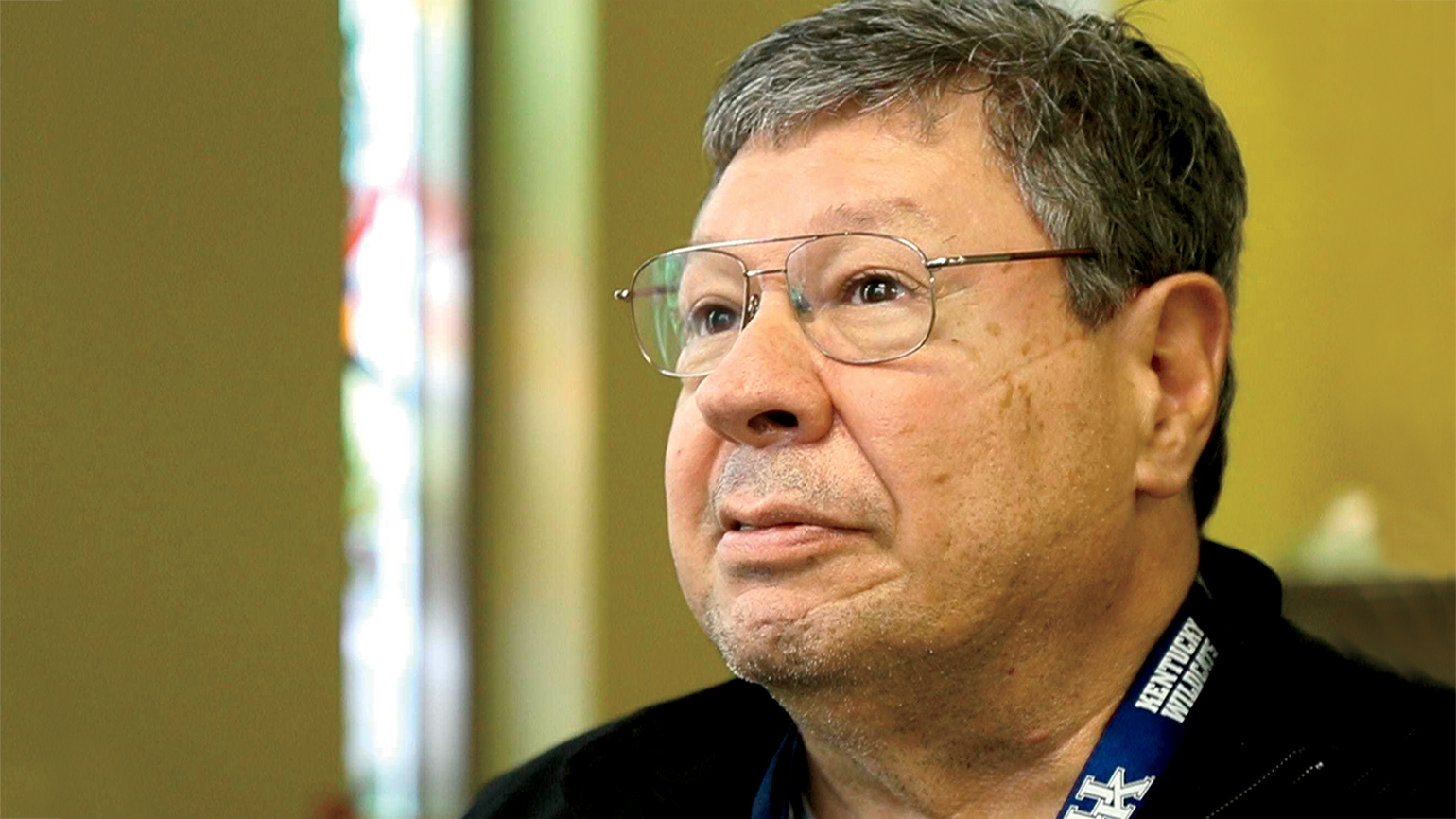
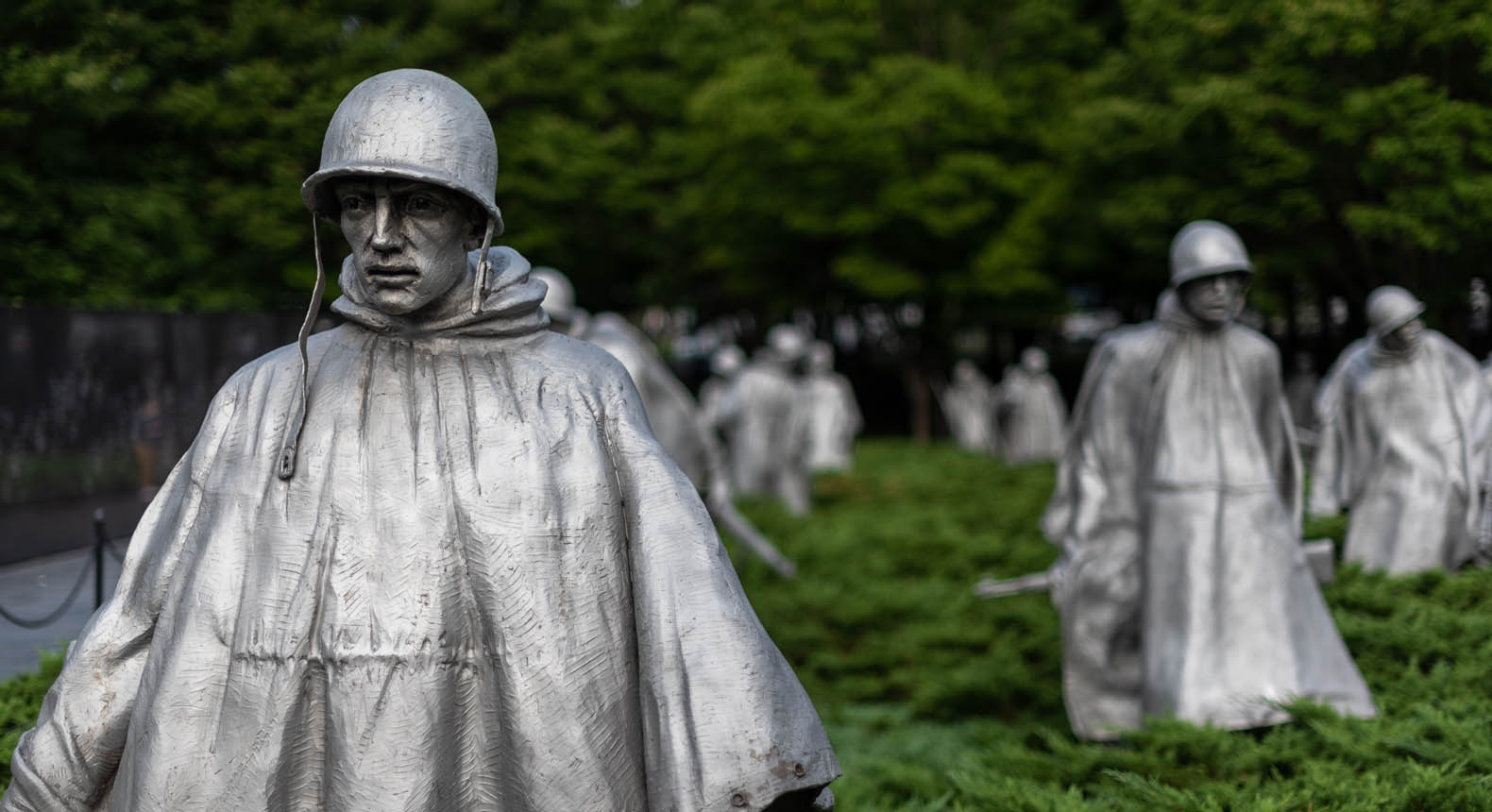
After 60 Years a Korean War Veteran Gets Diagnosed with PTSD

“Oh, Jesus, help me! Jesus, help me!” On that 30 below-zero night in Korea, on November 30, 1950, agonizing cries to heaven were all I heard. China had suddenly gotten into the war, and 300,000 of their troops had brutally attacked my 2nd Infantry Division.

The Chinese completely surrounded our little unit of 138 men. When morning at long last dawned—on that coldest night in Korea’s past 100 years—there were only 12 of us still alive or who had not been captured.

I was one of them. My very best buddies, two brothers from back home in West Virginia, had been taken away. I had barely escaped.

We’d had to travel over the Kunu-ri mountain pass. I was charged with driving the Captain’s jeep on the all-weather road. Men were dying everywhere. They were screaming for help, but there was no way to help. I could feel something soft—the dead bodies of my comrades—as I drove over them on my mission.

I’d graduated high school in 1946, and after two years of college, I was bored. A popular ad at the time caught my attention: “Join the Army and see the world!” It sounded interesting. Fun, even. There were no wars or anything going on. So I signed up and went to basic training. After the war broke out on June 30, 1950, we were the first ones to leave the states for Korea.

When we arrived, the North Koreans had already taken just about all of South Korea. Barely one day after we got off the ship, we were on the front lines. Despite the hot, hot weather, we were successful in starting to drive the North Koreans back. We took Seoul, the capitol, and went into North Korea. By that November, we were tired and freezing, and just waiting, thinking the war was over and we were going to get to go home in time for Christmas.

Until that brutal attack I would never, ever forget.

Ten months after the attack I finally returned home. It was September 1951, and all I thought about was that one horrific night. If you hadn’t gone on ahead of the others, Jim, you would have been captured too, like Cecil and Alva. Or killed on the spot like your good friend Al.

At night, I climbed the walls and had terrible nightmares that caused me to fall out of bed and walk in my sleep, sometimes wandering outside to who knows where. Finally, before going to bed, I zipped myself into a sleeping bag, so if I fell to the floor, I’d at least still stay warm. It sort of reminded me of the foxholes I padded with bundles of rice straw that I slept in back in Korea.

During the daytime, thoughts of my dead friends, or the ones who had been taken prisoner, tormented me. Always, I couldn’t get the sound of the agonizing cries to Jesus out of my mind.

There wasn’t a name for my mental suffering back then. Folks just called it “the war nerves.” I’d hear people talking about it in hushed voices. “That’s all in the past,” they’d say. “Those veterans need to just move on with their lives now.”

So I tried. And I prayed—a lot. Wherever I happened to be, I’d cry out to Him: “Lord, you know what I’m going through. Help me to cope with it and somehow live for you.”

I joined a local Baptist church and started working with the college-age kids, taking them fishing and on all-night camping trips. I eventually finished college, started teaching school, and married Phyllis.

All the locals wanted to know what it was like to fight in Korea. I had sent home film to my mother that she had processed into slides. Service organizations and churches asked if I might give presentations. One of my talks took me back to the Deep Water Baptist Church, where I’d given my life to Christ.

After I spoke, someone from the church cornered me and said: “We’re without a pastor, Jim. The way you speak from your heart was simply wonderful. We’d love it more than anything if you’d be our pastor.”

Me, lead a church, Lord? I prayed. I’d never even dreamed of such a thing. I had a new wife and a baby on the way. I knew absolutely nothing about being a pastor. I’d never even been to church much, let alone delivered sermons. But in my spirit, I felt God saying: I need you to serve me at Deep Water. Just take one step and then the next. I’ll show you what to do.

So that’s what I did. I was scared out of my wits, but the Lord helped me at every turn. Amazingly, the church membership more than doubled in the five years that I was their pastor.

As time went on, I got called to other churches as well. For six years, I taught school and pastored at the same time, often travelling. In one year, I held 13 two-week long revival meetings.

I was always busy. I remember a time in Beckley, West Virginia when I held four different funerals for four different families in a single day. As I comforted all those grieving people, my heart seemed to beat with real purpose. That night, as I drove home in my trusty old Chevrolet, I reflected. As draining as it had been, I’d loved giving of myself to those folks.

And you didn’t think of the war one time, Jim, I marveled.

When an old-time preacher told me: “Son, when you have problems in your life, pray—and saw wood, I took the message to heart and stayed busy. Whether I was leading a church in West Virginia, Iowa, Pennsylvania, or California, or hosting my local radio show, Songs in the Night, I filled my days visiting with parishioners, planning sermons, and counseling folks in crisis. Praying and staying busy helping others created an amazing circle of joy.

At personally stressful times, though, like when my sons were in harm’s way during their own military service , the horrible thoughts and nightmares returned—with a vengeance. For months, while my eldest son Buddy, a C130 Air Guard Pilot, was in Desert Storm “my war nerves” raged out of control. Day and night, I grieved for my fallen soldiers back in Korea, felt my jeep running over those bodies, smelled the nauseating stench of death. The same thing happened when my second son Brad was in danger in Kuwait.

Yet like always, I told no one about my tormenting thoughts, not even my family. I suffered in silence.

At one point Highlawn Baptist, in Huntington, West Virginia, sent me on a mission trip to the mountains of Korea. As I walked on the soil that had forever changed my life, I didn’t experience any traumatic memories or nightmares; in fact, I felt such adoration for those people. I also remembered my promise to God. And when I spoke at a cotton thread factory on the love Jesus had for them, over 200 women rose from their seats on the concrete floor to come forward and give their very lives to God.

Still, at other times, the unwelcome memories intruded. One of the worst periods occurred in 1998 when Phyllis and I were in a near-fatal car accident. A wheel and tire that flew through our windshield landed on her chest, causing her to massively hemorrhage.

“Oh, Jesus, help me!” Phyllis cried out before lapsing into unconsciousness.

Those words were all it took to transport me back to the war-ravaged mountains of Korea and that horrendous November night. In the warmth of our car, my body began to shake and my teeth rattle as if it were bitter cold. I thought I was going to vomit from the smell of dead soldiers that consumed our vehicle. For weeks after when I’d visit Phyllis in the hospital, fear consumed me.

I retired from full-time pastoring in 1994, but continued to speak and preach until about eight years ago. It was then that memories of the war came crashing in frequently. Isolated from people other than my immediate family—Phyllis, our sons Buddy and Brad, and our daughter Lisa—I became anxious, moody, depressed, and often couldn’t sleep.

I still had my radio show but by now I was in my late eighties and wondering what in the world an old fellow like me was doing on the airwaves.

One day, I went to the local VA to get some copies of my medical records; I had watched Saving Private Ryan on TV the night before. Perhaps it was the vivid war scenes that caused me to do something I’d never before done in public. I cried.

Actually, I began to sob uncontrollably. I cried as if I’d never grieved for Cecil and Alva and Al and all the others. Cried for the way I’d sheltered my heart from those I cared about in an attempt to shield all the pain of combat.

Then I looked up to see a young employee with long hair that looked like spun gold. She was smiling at me as if I were the only veteran there. I surprised myself by saying, “You have a friendly face. Could I talk with you for a moment?”

The kind lady motioned me over to a quiet corner where I poured out my whole story, how I’d been haunted by war memories I couldn’t drive from my mind no matter what I did. She nodded, understanding.

“For years I’ve been hearing a term called PTSD,” I said to her. “I’m wondering if that could be what’s wrong with me.”

The lady put into motion a series of referrals. Three months later, I finally learned exactly what had plagued me all these years: I was officially diagnosed with PTSD. There just hadn’t been a name for it way back then. When the letter came in the mail I felt validated. Someone finally understood. I met with a wonderful therapist who listened intently to my story and answered many of the questions I’d silently grappled with.

“You Korean veterans are the forgotten ones,” she said clasping my hand. We’re trying to change that here at the VA. Your era of soldiers had an unbelievably strong work ethic, Jim,” she explained. “You came home, put your hand to the plow, and didn’t talk about things because you thought that was what you were supposed to do.”

I hung on her every word. “In your case, you found both a career and a calling, one that fulfilled you and gave you a better way to live than to be eaten alive with PTSD,” she continued. “Your pain made you so much more attentive to the needs of others, better equipped to serve them. Being a soldier helped you understand so many human emotions. Fear. Loss. Isolation. Even love. Everything the war took from you, God fashioned into a strength. That’s why you’ve been so effective, Jim.”

“When you serve God through your work, Jim, you feel his pleasure. Maybe you need to keep hosting that radio show.”

I followed my therapist’s suggestion and continued my folksy program geared to being a lifeline for the lonely and the hurting. When November 30 rolled around, the anniversary of that horrible night in Korea, I began by playing Kate Smith singing God Bless America. Breathing a prayer for guidance, I found the courage to have a heart-to-heart chat with my listeners about my war experiences, as well as my PTSD diagnosis.

I didn’t know how my radio friends would take it but I soon found out. Cards, e-mails and phone calls poured in with words of affirmation and support. Some even called me a hero.

But the biggest surprise of all was a letter from the lady with the long golden hair at the VA hospital. “I suffer from PTSD, too,” she wrote. “Only I never served in a war. I was robbed and could have been killed. Try as I might, I couldn’t let go of things, couldn’t give it to God. But after hearing your story, I’ve decided: If Jim can do it, I can too. I know that’s why God had us come to know each other.”

I will serve you. When I made that promise to God back in 1950, I had no idea what I was vowing to do with my life. But he did. I believe he earmarked me to do a special work. His work. I’m not forgotten anymore.


9 Ways to Give That Lead to Happiness

Adapted with permission from The Giving Way to Happiness: Stories and Science Behind the Transformative Power of Giving by Jenny Santi. © 2015 by Jennifer Rose W. Santi. Tarcher Books, Penguin Group USA, Penguin Random House.

I believe that givers start giving because they are moved by a cause, but they endure because giving brings them happiness and fulfillment. Modern science sheds new light on this phenomenon. More than twenty years ago, Allan Luks brought forward the concept of the “helper’s high,” resulting from studies showing that groups who had helped through time and/or money experienced a “euphoria” similar to that of those who had completed a physical challenge such as a race. Giving is the source of true happiness; the meaning of life; the source of hte greatest emotional and psychological returns.

Here are 9 ways to give that lead to happiness and fulfillment:

1) Find your passion. I strongly believe that your passion should be the foundation for your giving. Giving should be personal. If your heart isn’t fully into it, you’re very likely to get bored, distracted, and apathetic. Reflect on your personal experiences in order to decide what issues you want to focus on, whom you want to help, and where you want to act.

Click here to support Guideposts’ outreach programs.

2) Form your vision. A vision describes what you want the world to look like. It is both idealistic and long term, and it serves as both inspiration and motivation. Your vision will be of central importance to you as you explain and share with others what you hope to accomplish. It helps to write down this vision.

3) Find your niche. Armed with an understanding of your motives and what you can contribute, decide on the focus of your giving. Once you get started, you have a better chance of refining your course of action and ending up doing what you really want to do.

4) Give your time. Giving is by no means limited to gifts of money. The gift of time is sometimes even more valuable to the receiver, and more satisfying for the giver. We don’t all have the same amount of money, but we all do have time on our hands, and can give some of this time to help others, whether that means we devote our lifetimes to service, or just give a few hours each day or a few days a year.

5) Chunk your giving. In a study led by psychologist Sonja Lyubomirsky, people performed five random acts of kindness every week for six weeks. Happiness increased when people performed all five giving acts in a single day, rather than doing one a day. So although performing random acts of kindness can give us a high, we can reach greater heights if we actually schedule our giving.

6) Ask for transparency. Giving is not risk free. There is a likelihood of failure. Even the best projects led by the most dedicated people can fail, or even unwittingly make things worse. To mitigate risk, it is important to conduct due diligence on potential recipients and partners. For many of us, this simply means asking for transparency.

7) Do something that makes a real impact–and see it for yourself. The greatest reward is often said to be the impact one has on an issue. This is why it’s better to give while you live, rather than waiting for people to do things on your behalf once you have gone.

8) Be proactive. If you find yourself considering a gift to charity that called you on the phone, you’ve already lost most of the battle to do as much good as possible. Your efforts will go furthest if you set time aside, think about all your options, and then find the best charity for your values. If you wait for charities to come to you, you’re just rewarding the ones that are most aggressive–not the ones that do the most good.

9) Accept gratitude. There’s a debate about which kind of giving is more moral: giving anonymously, or letting your identity as the giver be known. Harvard Business School’s Michael Norton says that the happier giver is the one who lets his identity be known.

10 Acts of Kindness to Do for Easter

Easter is a time to reflect on a God who loved us so much that He gave His life for us. As we think about how blessed we are on this day, take this opportunity to be a blessing to someone else. Make acts of kindness a new part of your yearly Easter traditions. Here are ten inspiring deeds you can do for your friends, family, loved ones, and even strangers.

Young people laughing during dinner for their Easter acts of kindness

1. Invite someone to Easter dinner at your house

Easter dinner is a wonderful tradition that brings the whole family together for good food and cherished memories. Why not share the love this season? Make a tradition of inviting someone to your Easter dinner every year. Pick one of your kids’ friends, a coworker, a friend you haven’t seen in a while, or a neighbor. Keep in mind that holidays can be lonely when someone doesn’t have family to spend it with. Share the gift of your family with someone else. Plus, sometimes it’s a rare treat for folks to have a home cooked meal. Even if your family traditionally heads to a restaurant for Easter, you can still invite someone along.

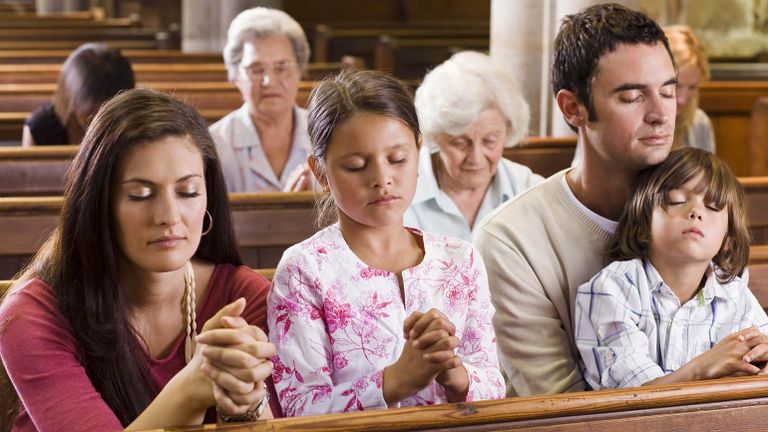
Family praying together for their Easter acts of kindness

2. Ask someone to go to church with you on Easter Sunday

Does your family have a tradition of attending church service on Easter Sunday? Every year, invite someone you know who goes to church alone or wants to attend a service in a new place. Ask them about the traditions at their own church or the kind of Easter services they attended as a child. Share what your own church does so they can get excited. For example, many churches have dramas about the Easter story or special choral presentations. It’s a great time to take a friend with you to hear the message of Easter.

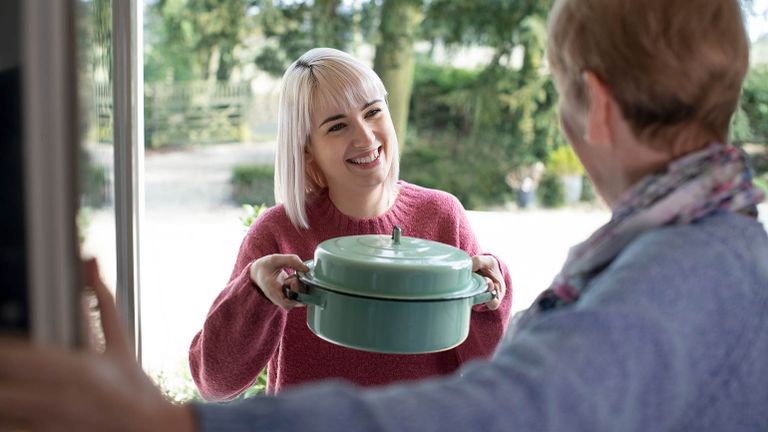
Woman doing an Easter act of kindness by bringing her elderly neighbor a meal

3. Take a meal to someone alone on Easter

Many of us know someone—a neighbor, a coworker, a family friend—who will be spending Easter alone. Even if you are not able to invite them to join your own festivities, you can still brighten their day with acts of kindness on Easter. Find out their favorite foods and cook them a delicious Easter meal. Drop it off on Easter Sunday morning and spend some time with them before heading to your own celebrations.

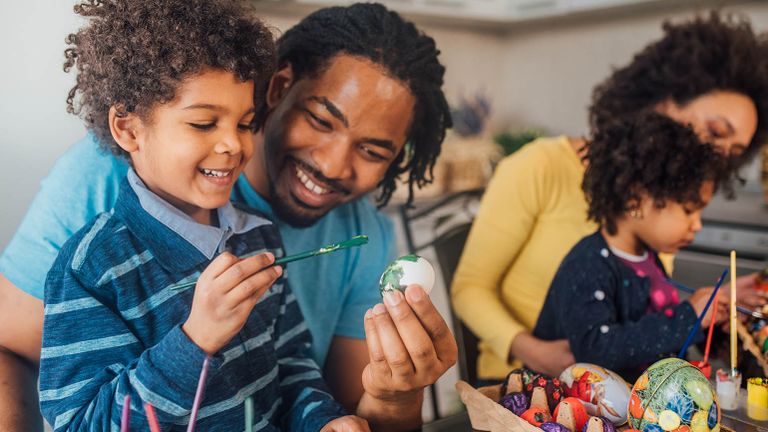
Two friends do an act of kindness by painting eggs and making Easter baskets

4. Fix Easter baskets for your friends and family

Nothing brings joy like receiving an Easter basket, even if you are an adult. Take on a tradition of putting together Easter baskets for your friends and family, not just the kids. See the smile it will bring to their faces. You could put the usual jellybeans, Easter eggs, and chocolate bunnies in the basket, but here are some other ideas:

  • A pot of cheery flowers that will keep on blooming
  • A “gift card” to mow their lawn or clean their house
  • A small decoration for their home
  • A gift card to a local restaurant
Hands holding up heart shapes for Easter acts of kindness

5. Share your bounty

Do you know a family that’s going through difficult times financially? If you have the means, offer to help make this an Easter season they will love, even if times are hard. Give them a sweet Easter gift, offer to help them around the house or with babysitting. Take the kids shopping for an Easter outfit or for some treats for an Easter basket. See how even small acts of kindness can make a difference on Easter. If we all took the time to help someone this Easter (and all the days after) how much more hope and love could we be sharing throughout our communities?

READ MORE: 7 Ways to Support a Loved One in Financial Trouble

Young couple volunteers as an act of kindness outside for Easter

6. Volunteer your time

Easter may be a Sunday, but there are plenty of jobs that still need doing. If you have some free time over your Easter weekend, sign up to volunteer within your community. See if a local food shelter is doing a canned food drive. Check for a nearby soup kitchen and see if you can help serve Easter dinner to those less fortunate. Look up your county’s parks department and volunteer to plant some new spring flowers in the parks around the area. No matter how you do it, spending your time serving others will truly put you in the Easter spirit.

Woman praying outside with her Bible as her easter act of kindness

7. Pray for others

Never underestimate the power of praying for others. This year, as you hunt for eggs, sit down for Easter dinner, or attend a church service, take the time to show someone acts of kindness by praying for them. Let your Easter prayers for others focus on what this season is all about: hope, renewal, and new beginnings. Here are a couple Easter prayers to get you started:

  • Lord, the resurrection of Your son has given us a new life and renewed hope. Help us to live as new people in pursuit of the Christian ideal. (From New Saint Joseph People’s Prayer Book)
  • Glory and praise to you, Risen Savior, for you bring light to our darkness, joy to our sorrow, and the fullness of love to our reluctant hearts.
Five kids doing an Easter egg hunt for their act of kindness
Getty Images/iStockphoto

8. Organize a neighborhood Easter egg hunt

Do you live in a neighborhood with lots of kids? Consider starting a new Easter tradition the whole block will love. Hide Easter eggs all over the area and then invite the nearby kids to join in and hunt. Make a map to help them search. Offer up a fun prize for the winner and be sure to have other prizes for everyone who participates. Encourage them to help each other as they run around the neighborhood and maybe even make new friends. Invite all the parents to join in or watch the childhood memories being made from your porch.

two orange rabbits outside in the grass during easter

9. Donate to an animal shelter

The days after Easter can be a difficult time for animal shelters, particularly ones that take in rabbits. Because people want to give rabbits as an Easter gift (without learning how to care for them), many shelters report high numbers of rabbits being abandoned. To help, consider doing an Easter act of kindness for the animals. Donate your money or time to an animal shelter or rabbit rescue. Your gift will help these rabbits get healthier, find forever homes, and bring joy to others even after Easter is over.

Family decorating easter eggs together

10. Share the message of Easter with your family, friends and children

Don’t forget what Easter is all about. Share the message of Easter with everyone in your life. Read the Easter story in the Bible. Put some coins in a plastic Easter egg and then tell your children about the price that Jesus paid for us. As you dye eggs, talk about how the red eggs represent God’s sacrifice for us, the blue eggs are a reminder of the sky He made, the green eggs represent the grass He created, and the white eggs are a symbol of having a pure heart for God. And as they enjoy their candy, talk about the sweetness of Jesus. Make the fun traditions a celebration of God’s amazing gift of love for us—His Son.

Make any of these Easter acts of kindness a part of your yearly Easter traditions or try a new one every year. Easter is the season to be grateful for the blessing of a risen Lord, and for the opportunity that gives us to be a blessing to others.

5 Ways Churches Can Thrive by Embracing Diversity

This interview is part of our What Our Faith Calls Us To series.

America has embarked on a national reckoning over racial justice. What role should churches play?

Guideposts posed that question to several pastors around the country. While these ministers may lead churches of very different sizes and ethnic makeup they all agreed on one point: Followers of Jesus are required—no exceptions—to embrace people from all backgrounds.

“I go to (the biblical book of) Revelation and we see this picture in heaven of every tribe, nation, language and tongue,” says Chuck Mingo, a pastor at Crossroads Church in Cincinnati, Ohio. “This is our gospel. This is how our church is supposed to express itself.”

Martin Luther King, Jr. once called Sunday mornings “the most segregated hour in America.” Fifty years later, that observation remains true. A 2014 Pew Research Center study found that the majority of Christian denominations are still overwhelmingly mono-racial.

Close to 90 percent of Presbyterians, Methodists and Lutherans are white, as are 85 percent of Southern Baptists, according to the study. The most diverse religion in America is Islam, whose adherents are a roughly even mix of white, Black and Asian. Seventh Day Adventists (37 percent white, 32 percent Black, 15 percent Latino) are among the only Christian denominations approaching such numbers.

The United States as a whole is 60 percent white, 18 percent Hispanic, 13 percent Black and six percent Asian. The Census Bureau estimates a majority of Americans will be non-white by the middle of this century.

How should churches respond? Five pastors weighed in on their top recommendations for guiding congregations toward full inclusion of all people.

1. Reach out. Church leaders should form their own personal relationships with people of different backgrounds. This might require reaching out to pastors or members of other churches. Leaders cannot guide a congregation toward inclusivity if they are not inclusive in their own lives.

2. Learn. Read about the history of racial injustice in the United States and learn how Christians have both helped and hindered the cause of equality. A good place to start: Christianity Today magazine’s resource page on racial justice.

3. Connect. Talk to friends, colleagues and church members about how race has affected their lives. Form racially inclusive small groups—partnering with another church if necessary—to foster such discussions. The Undivided program at Crossroads Church in Cincinnati helps churches form groups that are constructive, supportive and rooted in Scripture. More information here.

4. Act. Commit to making your church a place that promotes justice and inclusivity in your community.

5. Be open to change. People have a deep emotional connection to their church and can be reluctant to change worship styles or embrace new members with different priorities. Remember that Jesus commanded his followers to “make disciples of all nations.” It is impossible to fulfill that commandment in a church where everyone looks, thinks and acts alike.

Pastors interviewed include: Chuck Mingo of Crossroads Church in Cincinnati, Ohio; Derrick Shields of Christ Community Church in Columbus, Georgia; Kevin Haah of New City Church in Los Angeles, California; Jack Peebles of First Presbyterian Church in Orlando, Florida; and John Alarid of Freedom City Church in Springfield, Missouri.

5 Inspiring Stories of People Helping Those Most in Need

As panic continues to spread across the country, the concern over the less fortunate, as well those who are at high risk of Covid-19, continues to rise. The uncertainty and fear, however, hasn’t stopped people from stepping up; showing compassion and grace to others continues to be at the forefront of people’s day-to-day.

Here are five inspirational people who have demonstrated the power behind a simple act of kindness.

Woman Designs Postcards to Help Self-Isolating Neighbors

Becky Wass, from Falmouth, Cornwall in the United Kingdom is bringing her community together by encouraging others to look after neighbors who are self-isolating and in need of a helping hand. She and her husband designed a postcard to be printed, distributed and used as a form of communication between those willing to help and those who may need support; whether it’s picking up groceries or urgent supplies, such as the elderly or people with mobility issues. Users are encouraged to fill out the postcards with their contact information and leave them on neighbors’ doorsteps to avoid direct contact.

“Because fear has spread so quickly, it’s really important to try to spread kindness,” she told BBC News.

NBA Player Kevin Love Donates $100k to Help Support Arena Staff

One day after the NBA announced they would indefinitely suspend its season due to the rapid spread of the virus, Cleveland Cavaliers’ Kevin Love pledged $100,000 to help arena workers who have had “a sudden life shift” due to the organization’s decision. His donation will help support over a thousand workers that make up the Cavaliers’ support staff.

In an Instagram post announcing his act of kindness, Love wrote, “I encourage everyone to take care of themselves and to reach out to others in need—whether that means supporting your local charities that are canceling events, or checking in on your colleagues and family.”

Since his announcement, Love has inspired other athletes to do the same. According to Cleveland News, Milwaukee Bucks star Giannis Antetokunmpo and Detroit’s Blake Griffin have followed in Love’s footsteps. The 19-year-old Zion Williamson of the New Orleans Pelicans also announced his plans to cover all salaries for the team’s arena staff during the suspension.

Woman Volunteers to Shop for Elderly Neighbors to Prevent Their Exposure to the Coronavirus

A North Carolina woman is making the most out of her time at home by helping her elderly neighbors. Becky Hoeffler, who works at Duke University and is currently working from home, is using her hour-long lunch breaks to make grocery runs for the seniors in her community.

The idea came about during a conversation with her 91-year-old grandfather, whose trip to the grocery store raised some concerns. This prompted her to post flyers in her neighborhood, letting her neighbors know she was available to grocery shop for those who are at risk and immunocompromised.

“If you’re able to decrease, even by a little bit, the number of patients that have to seek care because they’ve been exposed to something, it’s good for the community as a whole,” she told Good News Network.

Corner Store Owner Gives Away Thousands of Dollars in Supplies to Seniors Facing Self-Isolation

A 34-year-old shop owner in Scotland is helping people over the age of 65, as well those with mobility issues, by delivering “coronavirus kits” consisting of toilet paper, antibacterial soap, tissues and anti-flammatories for their homes—free of charge. Zahid Iqbal owns the Day-Today convenience store in Drylaw, Edinburgh and has given away over one thousand kits, worth more than $6,000. Although the initiative has already cost his business thousands of dollars, he is committed to continue offering help to those who need it.

“Money can be made in the future,” he told Good News Network. “Right now we need to do our part for the community…We want to help out for as long as we can manage.”

Pennsylvania Restaurants Offer Free Lunches to Children During School Shutdown

With schools across the country continuing to close to reduce the spread of coronavirus, many children—the approximate 22 million U.S. children who depend on the National School Lunch Program’s subsidized breakfast and lunch—are left wondering where their next meal will come from. As school officials come up with plans to assist these children, Pennsylvania small businesses are stepping up to offer help.

According to The Pittsburgh Tribune-Review, Rocco Pifferetti, owner of Rocco’s Pizzeria in Youngwood is serving lunch menus consisting of pizza, salad and chicken tenders to anyone under the age of 18—at no cost.

Meanwhile, Patyn McCune did the same at her restaurant, Lelulu’s Pizzeria in Plum. She received donations and support from the community, such as water, milk, apple slices and carrots. McCune, who qualified for free school lunches as a child, was more than happy to help kids she strongly related to.

Other business owners, such as Eric and Julie Jones, have also opened up their doors to feed hungry children, as a way to pay the community back.

“We’ve been a member of the community for a while, and we’ve had support from them,” Eric Jones said. “So in my eyes, it’s not a big deal.”