

Embrace God's truth with our new book, The Lies that Bind

The Journey of Archbishop Samuel and the Dead Sea Scrolls

I first heard the story from my mom when I was a kid. About the tall, Aramaic-speaking archbishop from the Middle East. Athanasius Yeshue Samuel, or Mar Samuel, as he was often called. A man who came to the United States in January 1949 with four scrolls in his suitcase. Scrolls that would change the world.

He first caught wind of the scrolls in Jerusalem in 1947. How Archbishop Samuel had ended up in the Holy Land is itself the stuff of legend. He was born in Syria in 1907. During the Armenian Genocide, he became separated from his family. He ended up stranded on the side of a dirt road, weak and feverish. A priest found him and brought him to safety. According to Father John Meno, who served as Archbishop Samuel’s secretary in the U.S. for 25 years, “after that, he couldn’t help but feel in his heart that God had something in mind for him.”

That something is what led Samuel to Jerusalem. After he reunited with his mother, in 1917, she recounted a promise she’d made to God. That if she ever found her son alive, she would take him to Jesus’ homeland. She kept that promise. Samuel eventually became the archbishop of Jerusalem, residing at St. Mark’s Syrian Orthodox Monastery, the very site where the Last Supper is thought to have taken place.

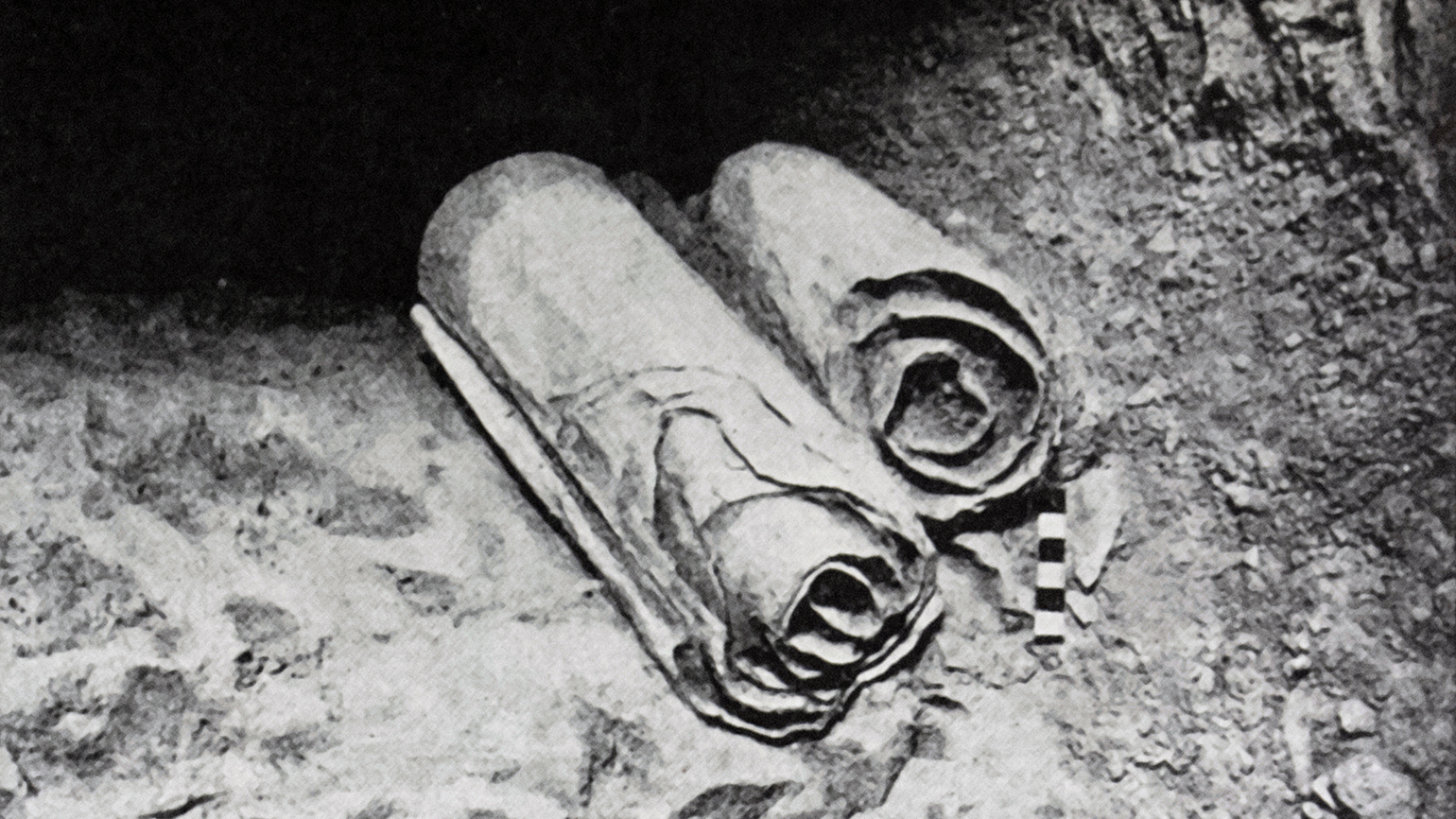
It was there in the monastery, in early 1947, that he was approached by an antiquities dealer from Bethlehem named Kando. As the two sat drinking Turkish coffee, Kando pulled a newspaper-wrapped package from his robe and launched into a strange tale. About a Bedouin shepherd boy who’d been herding his goats off the northwest shore of the Dead Sea, in an area known as Qumran.

One of the goats wandered off. The boy, fearing the goat had fallen into a nearby cave, tossed a stone through the cave’s opening. Instead of a goat’s cry, he heard the sound of pottery shattering. The boy returned days later to investigate, bringing other members of his tribe with him, and found several cloth-wrapped scrolls carefully preserved inside tall, narrow clay pots.

Kando was hoping the archbishop would be able to decipher the scroll inside the newspaper-wrapped package, a scroll he assumed had been written in Aramaic. The moment Archbishop Samuel unrolled the package, it was as if the earth stopped spinning, says Father Meno. The scroll was written on animal skin and presumably very old. The text was Hebrew, however, not Aramaic.

Archbishop Samuel couldn’t read Hebrew. Yet he couldn’t deny there was something about the scroll. Something he felt compelled to protect. “He knew it wasn’t just an old document,” Father Meno says. “It was of great importance. And that God, in his divine providence, had brought it into his hands.”

Archbishop Samuel offered to purchase the scroll, as well as the others the shepherd boy had found. Kando wondered aloud what on earth the archbishop would do with scrolls he couldn’t even read. “I do not know yet,” the archbishop replied. “But I wish to buy them nonetheless.”

Strengthen Your Faith with Free eBooks on Prayer, Bible Study and More

He bought four of the scrolls. Archbishop Samuel showed them to one expert after another. Each one told him that his intuition about the scrolls was wrong. “Your Grace, you have a romantic imagination,” a concerned member of his congregation told him. “Bedouins are forever finding ancient things in the desert and passing them on to… gullible buyers.”

Still, Archbishop Samuel’s inexplicable feeling about the scrolls didn’t fade. “To find words to explain the intangible certitude that persisted within me was impossible,” he later wrote in his autobiography. “Intuition is a precarious framework for fact.”

Months passed. Finally, in 1948, John C. Trever, an American Biblical scholar, confirmed that one of the scrolls was the Book of Isaiah and sent photos of the scrolls to William F. Albright, an expert at Johns Hopkins University. On March 15, 1948, Albright authenticated the scrolls as “the greatest manuscript discovery of modern times,” dating them to before the birth of Christ.

Meanwhile, tensions between the Jews and Palestinians in the Holy Land were ramping up. Archbishop Samuel sent the scrolls to Beirut, Lebanon, where they were kept safe in a bank vault. Just in time too. Shortly afterward, his monastery in Jerusalem, St. Mark’s, sustained damage from the fighting. Archbishop Samuel was sent to the United States to raise money for the refugees in the Holy Land and to help build the fledgling Syriac Orthodox church in North America. He picked up the scrolls in Beirut and headed for the U.S. with the ancient treasure in his suitcase.

He hadn’t been planning on staying in America for good. But the Syriac community there was in desperate need. At the same time, Archbishop Samuel had come under fire for bringing the scrolls into the U.S. “He had a decision to make,” Father Meno says. “And he made what he believed to be, in God’s guidance, the right one.”

On June 1, 1954, an advertisement appeared in The Wall Street Journal, under miscellaneous items for sale: “Biblical Manuscripts dating back to at least 200 BC.”A month later, the archbishop traveled to the Waldorf-Astoria in New York City and sold the scrolls to an American buyer for $250,000. It was only later that he discovered the buyer was actually working on behalf of the Israeli government. The four scrolls ultimately ended up back in the Holy Land, right where their journey had started.

Those four scrolls, and the many more that would eventually be discovered in the caves of Qumran, changed the Biblical and scholarly world as we know it. Archbishop Samuel is sometimes an overlooked figure in that story. Forgotten to some, but not to me.

It was Archbishop Samuel who picked up my uncle Jack from Pier 42 in Manhattan when he first arrived from Turkey in 1963. And invited my father for weekly dinners at his home in New Jersey after he immigrated in 1965. The archbishop also married my parents in 1971. Until his death in 1995, he supported an entire community of believers in the U.S. and abroad, many of whom were victims of religious persecution.

Thanks in part to funds provided by four scrolls that had found their way to a man who had himself suffered the horrors of genocide. A man compelled to safeguard the gift God had sent his way. A man I’ll always remember as the protector of the Dead Sea Scrolls.

Did you enjoy this story? Subscribe to Mysterious Ways magazine.

11 Fascinating Facts About the Dead Sea Scrolls

The Inspiring Bond Between Brothers

Today’s guest blogger is Mysterious Ways assistant editor Daniel Kessel.

Do you believe that siblings share a powerful, even inexplicable bond?

I know whenever I’m with my brother, we can finish each other’s thoughts and rehash inside jokes with a single word or phrase. It’s almost like we have our own secret language.

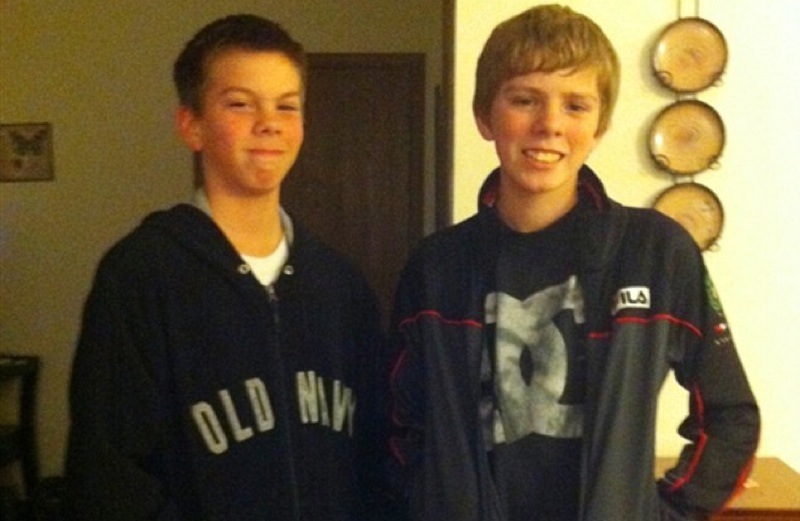
Maybe that’s why I’m drawn to stories that show just how great the connection between siblings can be. Take the chance meeting that reunited Isaac Nolting and Dakotah Zimmer, two brothers separated as infants who were nevertheless drawn to each other when they met more than a decade later.

The meeting took place on a hot day in June. Isaac, 12, went to cool down at his local community pool in Washington, Missouri, the same one he’d been visiting for years. But that day there was someone new: a friend of a friend, a 13-year-old named Dakotah.

You might say Isaac and Dakotah got along swimmingly. One of their pals even joked that the two boys acted like brothers. On second thought… what if it was more than a joke? Comparing their features, Isaac and Dakotah noticed a striking resemblance. They had the same nose, same hair; some said they even walked alike. Besides, they talked similarly and had the same sense of humor. That night, before bed, Isaac broached the topic with his mom.

“He looked at me with his big, black eyes and asked, ‘Mom, am I adopted?’” Dawn told the Today show. “I said, ‘What makes you think that?’ And he said, ‘Because I think I found my brother.’”

Dawn was shocked. She had just consulted with her pastor and begun praying for guidance on the topic: When should she tell Isaac about his adoption? She knew she needed to have the conversation soon–next year he would enter the same middle school as his older brother–but the right moment never seemed to come.

Until now. Dawn told Isaac that his biological mother was very young when she had him. The teen mom, now deceased, knew she needed help raising her second child. Dawn took Isaac in when he was only nine days old, and they’d been together ever since.

Dawn and her son burst into tears as they shared this moment of revelation. Since then, though, the family has been all smiles as Isaac and Dakotah get acquainted.

“You can just tell they’re brothers,” Dawn says. “It’s the strongest bond that I’ve ever seen. It’s like they were never separated. For being apart for 10 years… they picked up right where they left off.”

How about you? Do you have a story about the incredible power of sibling bonds? Send it our way!

The Incredible Miracle of Her First Son

I’ve seen a lot of miracles in my life. After all, I’ve been talking to God since I was a little girl! But there is one event in my life that I keep going back to. Many times. An occurrence that even now still leaves me amazed. A moment back in the summer of 1964…

At the time, I was a young wife and mother. I’d met my husband, Perry, a few years prior. Those twinkling eyes and Marine physique were hard to resist. After he proposed several times, I accepted, and we were married. We spent a year on the Marine Corps base in California before moving back to Oklahoma. A few months later, I gave birth to a daughter and, a couple years after that, another girl. We eventually felt the call to move back to California and settled near Bakersfield.

One afternoon, as usual while Perry was at work, I sat on a blanket in the backyard of our little duplex, overlooking the rolling hills, and watched the girls play with a ball in the grass. I took a deep breath and, for a minute, let the stillness of the day surround me. This, right here, was heaven. A little home with a grassy yard and a family of my own. I sat back, soaked it in and—

“You are to have a son.”

I sat up straighter. I knew God’s voice. But me…have a son? My younger daughter was only eight months old. We couldn’t afford a third child. This was not a good time. And my last pregnancy had been difficult. So I brushed the voice aside.

But every time I took the girls outside to play in the backyard, I heard it: “You are to have a son.” Again and again. Sometimes I’d argue back. “God, we can’t right now,” I’d say, presenting all my excuses. Still the voice persisted. This went on for a good three weeks.

Finally, one night, I broke down and told Perry. “Every day I take the girls outside to play and I hear God telling me to have a son,” I said, the words coming out in a rush. To my surprise, he smiled. “Well,” he said, “if that’s what God wants.”

Two weeks later, I was pregnant. In those days there was no way to tell what the baby’s gender was before birth, but I trusted what God had said. My church group even threw me a shower with all things “boy.” I couldn’t wait to meet the son God had promised me.

The pregnancy went smoothly and around my due date, I went into labor. But the closer the contractions got, the more I hemorrhaged. Nine hours in, the nurse came to check on me again. After she examined me, she placed a call to the doctor. “You need to get here immediately,” I heard her say.

I was wheeled into the delivery room, and Perry was told to wait outside the double doors. The doctor rushed into the room, still putting on his white coat. He and two nurses stood on either side of me, pressing on my stomach, trying to move the baby down. I screamed out in pain.

“Give her oxygen!” the doctor yelled, urgency in his voice.

“I can’t,” the nurse said, trying to put an oxygen mask on me.

I could hear the terror in their voices. And I knew then—I was dying. My baby was dying too. “Don’t touch me!” I yelled. The nurses held up their hands, and the room stood still.

“Lord, you promised me a son! Why are you taking him now?” I shouted, my eyes filling with tears.

It happened then in an instant. One second, I was on the delivery table. The next, I was hovering above it. I saw myself sitting up and screaming in pain, a nurse on either side of me. But I couldn’t hear any sound. And in the quiet, I felt it. Surrounding me, lifting me up. Peace. I was being cared for. As I continued to watch the scene below, I saw the doctor catch a baby. My baby! But he looked…blue. The nurses took the baby to a table, massaging his arms and legs. I wasn’t afraid. Because God had made me a promise.

I dropped back to my body. Before I could ask about the baby, one of the nurses walked toward me, a bundle in her arms. “Mildred,” she said, “you have a son.”

When the pediatrician came by the next day to check on us, he was astounded. My placenta had started to detach too soon. He couldn’t believe that my son was healthy. “He’s going to be okay,” he said. “It’s a miracle.”

A miracle that, even almost 60 years later, leaves me amazed. I can still recall that scene, that great sense of calm. Later in life, when I became a caretaker for Perry, who suffered from Lewy body dementia, it became even more of a comfort. Watching him succumb to his illness and dealing with the aftermath was heartbreaking. But whenever I despaired, I’d revisit the incredible miracle that happened the day my son was born. And I knew, without a doubt, that God was lifting me up. Just as I know he always will.

The Improbable Is Probable

In the new book The Improbability Principle, British statistician David J. Hand argues that the things we call “miracles” due to their sheer improbability of happening naturally are nothing more than quirks of mathematical inevitability.

To boil down his argument: Things that have a statistically small chance of occurring happen all the time, and as human beings, we’re wired to notice them when they do. He concludes that randomness causing extraordinary coincidences is far more likely than any supernatural or spiritual explanation.

He uses many examples of extraordinary coincidences in his book, but the one he begins with–by sheer coincidence, he’d say–is the first celebrity story we shared in the very first issue of Mysterious Ways: the story of George Feifer’s book The Girl From Petrovka that actor Anthony Hopkins discovered on the London Underground.

It’s clear why Hand begins with this example. It’s crazy enough to give even the greatest skeptic something to puzzle over. The only explanations seem to be that something or someone set the whole thing up, or that Hopkins and Feifer are accomplished liars. Hand, however, offers up a third explanation that fits with his area of expertise: the law of truly large numbers. “With a large enough number of opportunities, any outrageous thing is likely to happen,” he writes.

I’m not arguing with him here. Unlikely events do happen every day–that’s what we believe at Mysterious Ways too. Our inbox is overflowing with your stories that prove that point. But while I respect his statistical analysis, I don’t believe it does anything to prove that a greater force isn’t at work. After all, just because something is likely doesn’t account for how “random” events so often become transformative moments in our lives. It wasn’t “any outrageous thing” that happened to Anthony Hopkins on that train–he found the exact book he was looking for, at the exact time he needed it, and it was the exact copy that belonged to the author. That level of precision–the fact that this “outrageous thing” fulfilled his needs, supplied a missing piece to a life that, at the time, was going dangerously off the rails… how many opportunities were there for that event to occur? It needed to happen, and it did.

I’m not saying that’s proof of God. No one can say that for sure. There’s no way to prove the divine–that’s why we call it faith. But as we go through life and these moments pile up on us, they serve as touchstones for our faith. They establish that the randomness of life is very often beneficial to us, even though we may not think so at the time.

Statistics determine that these moments are possible by random chance, the same way it is possible that a thousand monkeys banging away at typewriters may someday recreate the works of William Shakespeare. Monkeys, however, have yet to produce a single sonnet. The clockwork of the universe, whatever force we believe turns the gears, has given us far more than that.

The Importance of Dreams in the Bible

Years ago, after reading a book by a therapist and minister who showed that God can often speak to us in our dreams, I began writing down my own. Every morning, while I still remember them, I make a quick note in a journal about what I dreamed.

What I’ve learned through this practice is that our dreams are sometimes just a jumble of inconsequential things—what you ate for dinner, a TV show you watched, an article you read. It can be your subconscious mind reorganizing thoughts. But every once in a while, you’ll have a dream that leaves you feeling as if God really is trying to get your attention. And as long as the message of that dream aligns with God’s will by encouraging positive change and positive outcomes, chances are good that he very well might be.

Take, for example, the dream I had just the other night as I was preparing to write this story—and feeling a little anxious about it. In the dream, I was packing up words to put in the refrigerator, just the right ones to make a meal. And the message came: “He is the creative one.”

Me, the creative one, being challenged to put together words for us to feast on. Or then again, maybe it was a heavenly nudge to focus on how our Creator can and has used dreams to communicate to us ever since biblical times. Go back to the source.

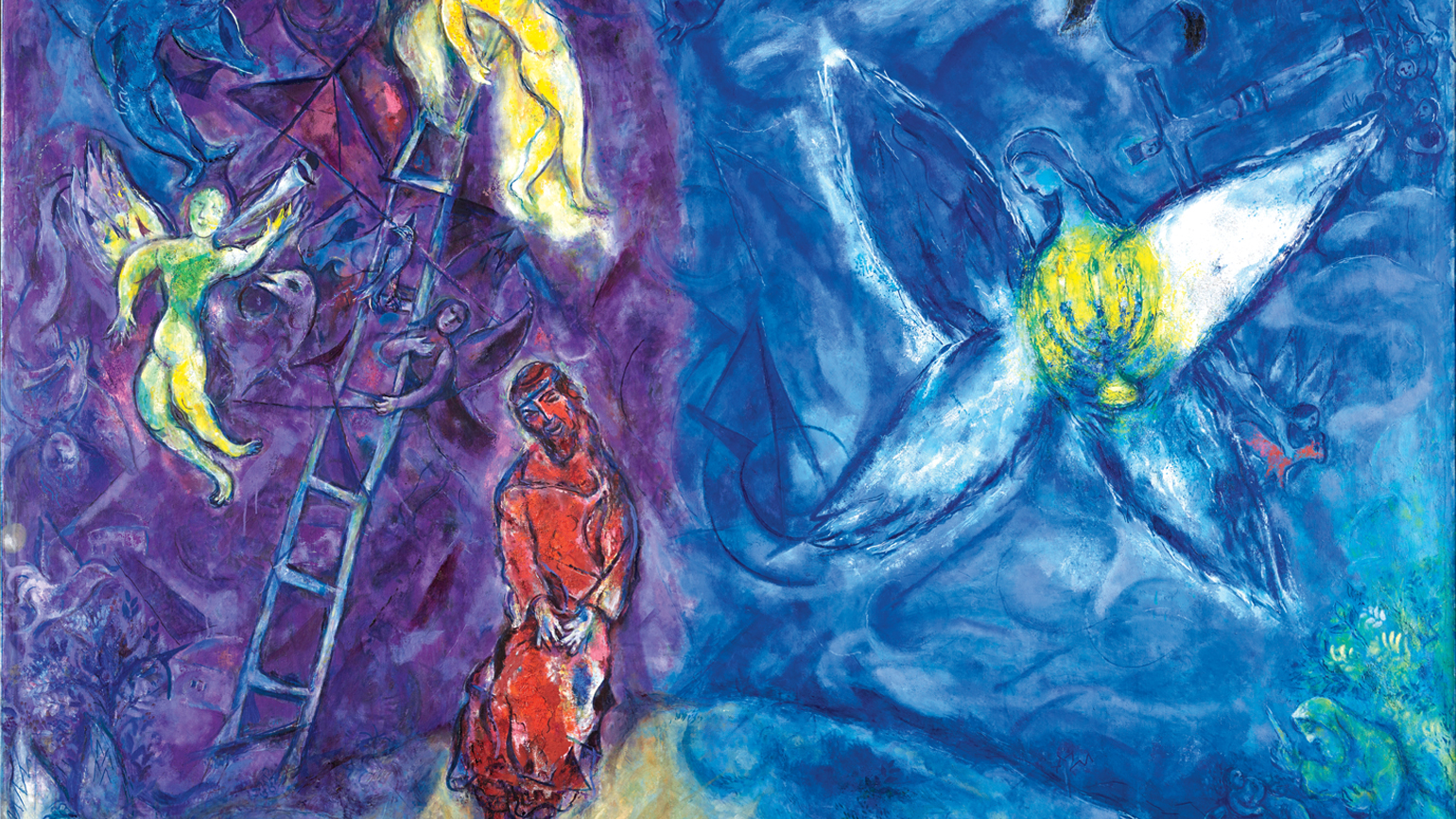
There are 21 dreams recorded in the Bible, most of them in the Old Testament, only six in the New. Some you’ll remember right away. How could any of us forget Jacob’s ladder, the dream he had when he made a swift escape from stealing his brother Esau’s birthright and had to sleep in the great outdoors, a rock for his pillow? That’s when the angels appeared to him in his dream, ascending and descending a celestial staircase.

Dreams have a crucial distinction from the other mysterious ways in which God communicates with us. They obviously happen only when we’re asleep. As we read often enough in the Bible, God or his angels will appear in visions or speak to people in their waking moments, but a dream is a message in slumber. It’s from the subconscious mind or God—or both.

The more you pay attention to your dreams, the more you’ll get from them. And the more likely you are to remember them. (I’ve found this from writing down mine.)

We also see this happen in the Bible. The people who dream often have more than one dream—they’ve been paying attention.

And then there’s Daniel, who paid attention to someone else’s dream and thereby saved his own skin.

The Old Testament’s Daniel is in a tough situation. Along with the rest of the Israelites, he’s taken to Babylon and put under the yoke of the king. Bright, young and strong, Daniel catches the king’s attention. But this only increases the courtiers’ jealousy. The only way for Daniel to survive is to interpret the king’s dreams. God tells him what they mean. He discovers a gift—which ends up saving his life—that he never knew he had. But it’s a gift. Nothing he aspired to.

It is easy to dismiss Daniel’s powers of interpretation as something extraordinary. “I’m not like Daniel,” we might say as we ponder what our own dreams mean. But Daniel didn’t read a pile of books or get a Ph.D. or consult with a visionary. His gift came from God, a mark of his own humility.

With that thought in mind, let’s take a look at the six dreams that appear in the New Testament, four of them to the same person: Joseph. In the narratives of Jesus’ birth, we usually focus on Mary. How God appeared to her through an angel—in a vision, mind you—telling her that she would give birth to this baby who would be the Son of God. It is her future husband who gets the message in a dream.

He has heard through the rumor mill that Mary is with child—clearly not his—and so he is going to quietly call off the marriage. Then he has a dream. He is told to take Mary as his wife because the baby is not the offspring of any other man. The child will fulfill the ancient prophecy and be called Emmanuel, which means “God with us,” and he is to be named Jesus. Joseph heeds the dream, as shocking and bewildering as it must have been. He does exactly what the dream said.

When Jesus is born, the tyrannical King Herod learns of this supposed new king. In a jealous rage, he has every male child aged two or under in and around Bethlehem put to death. Fortunately, Joseph has another dream, warning him of what Herod is up to. He takes his wife and child and flees to Egypt. Then, after Herod dies, a dream alerts Joseph that it is okay to return home. As the family is making their way through Judea, however, he has a fourth dream, in which he learns that Herod’s son, perhaps as murderous as his father, has taken the throne, so they avoid Jerusalem and head to Galilee and Nazareth, where Jesus grows up.

Joseph is a lowly carpenter, not a rabbi, not a Pharisee, not of any exalted status, Yet he is the one who is entrusted with the safety of the Son of God. And he gets the message through dreams.

The wise men too are alerted to danger through a dream. How we refer to them may sound grand, but it is likely they were simply amateur astronomers. They certainly weren’t Jewish and didn’t know the Scriptures. But they did know how to read and act on signs from God—the star they followed in the sky, all the way to Bethlehem.

On their journey, they stop to visit Herod. The wicked king tries to trick them, telling them to let him know when and where the child is so that he might also pay homage. But in a dream, the wise men are warned of his duplicitousness and avoid Herod, returning home “by another route.”

Doing what a dream tells you can take you a different way than you ever intended. It can help you avoid danger too.

The last dream mentioned in the New Testament is the only one in the Bible attributed to a woman.

Pilate’s wife. And the dream she has is actually a nightmare. Pontius Pilate is the governor of Judea. Jesus is brought before him by the chief priests and elders, who are full of accusations. “Are you the King of the Jews?” Pilate asks. “You say so” is Jesus’ equivocal answer. Jesus’ fate is in the governor’s hands.

At that moment, Pilate’s wife rushes in. “Leave that righteous man alone,” she tells her husband. “I have suffered much today in a dream because of him.”

We know how the story ends, of course. Pilate does not act on his wife’s dream. Sometimes I wish we knew the rest of her dream. Or is it enough simply to know that God chose her, someone apparently not a follower of Christ, someone outside the fold, to communicate his message? Through her we can see that God reaches out to everyone through dreams, even to people who don’t deem themselves to be people of faith.

What I hope all these biblical examples do is reassure you that, by listening to your dreams and acting on them, you can change the course of your own life and the lives of people around you. It’s so easy to say dismissively, “I’m not called to do something extraordinary like Joseph” or “I’m no Daniel, in the service of a king,” but like all of them, we have dreams. And the biggest difference I see is how they trusted what they heard, learned and acted. Can’t you? Can’t I?

I’d like to think this article is an attempt. Putting words into the refrigerator—or at least into cold type.

The Hidden Miracles of Purim

To those not of the Jewish faith, Purim must seem like a pretty strange Jewish holiday. I am Jewish, and it always seemed odd to me. We dress up in costumes, shake and wave noisemakers around and eat triangle-shaped cookies meant to resemble either an evil man’s hat or his ears (depending on your interpretation).

But the strangest part of this “Jewish Halloween” may be the story of the holiday itself. Unlike other events commemorated by the Jews, this story is missing a pretty major character: God.

The Purim story begins at a feast for the king of the Persian Empire. Upset that his wife disobeys his orders to appear, the king gets rid of her. He summons all the single women of the kingdom to his court in search of a new bride. He chooses a beautiful orphan, Esther, not knowing she is Jewish.

Shortly afterward, Esther’s uncle, Mordechai, who has raised her since she was a little girl, uncovers a plot to murder the king. He reports it to Esther, who saves the king’s life.

Years later, Mordechai offends the king’s grand vizier, Haman, by refusing to bow down before him. He says that Jews only bow down before God. Haman vows to kill the man and all the Jews in the kingdom. He convinces the king that all Jews are treacherous and must be destroyed. He casts lots to pick the day the deed is to be done.

Mordechai finds out about Haman’s plot and tells Esther. Esther approaches the king and tells him it was Mordechai who was responsible for saving his life. The king finally rewards Mordechai for his noble act. Esther then reveals that she is Jewish. Confronted with the fact that two Jews saved his life (and one is his wife), the king puts the kibosh on Haman’s evil plan. Haman is executed (and ever since, when we say his name, we blot it out with the noisemakers).

Esther and Mordechai save the Jews through their bravery and cunning. So where are the miracles?

I read an excellent article today by Rabbi Eliyahu Yaakov that explains why this holiday is very much one for celebrating God’s love:

“Who would have thought that in the Bible, there’d be an entire section without God showing up? But show up He did, just not in a revealed manner. This is what the Purim holiday is all about—seeing God in the supposed ‘chance,’ ‘luck’ and ‘coincidences’ in our lives; seeing God in the natural events and the political maneuvering. For this reason, we dress up in costumes and wear masks on Purim, heightening our awareness of the reality that God is constantly enclothing and masking Himself within the natural and within the mundane. When we internalize this, we come to see that really it’s not a question of the miraculous versus the natural, but a question of the revealed miracle versus the hidden miracle.”

He goes on to tell about a young student, Eric, who took home a kitten from his volunteer job at an animal shelter. It’s a beautiful read, a true Mysterious Ways story.

So today, no matter what your faith, take some time to reflect on the hidden miracles in your life. Maybe you’ll find something you didn’t know was there before.

As always, you can send your Mysterious Ways stories here, or to mw@guideposts.org

The Heaven-Sent Miracle of This Family’s Profound Story

Every family has a favorite story. The one they tell over and over. In my family the story begins in Springfield, Ohio, where Paw-Paw lived in the 1940s. Growing up, spending summers with my grandparents, I never tired of hearing it. I can still see myself sitting out on the porch, listening to Paw-Paw intently, though I already knew every word by heart. Paw-Paw was a tough man. Men of color weren’t given a lot of opportunities back then, but he started several successful businesses, including a company that provided windows for commercial buildings, and a popular neighborhood grocery. He even owned real estate. He wasn’t the type of man to make up a story.

“The doctors diagnosed me with esophageal cancer,” Paw-Paw explained again one summer night in his low, gravelly voice as we sat outside on the porch. “Probably from all those years of cigar smoking.” Paw-Paw consulted with doctors at Ohio State University of Medicine and was sent to a clinic in Cleveland for treatment. “In those days, if you were diagnosed with cancer, the odds you would survive were pretty slim.” Six other men with the same condition went with him. They were all scheduled for surgery.

“It was the night before mine,” Paw-Paw said, looking up at the stars. “I’d been a patient long enough to know all the staff, the routines. But that night a new nurse appeared. I’d never seen her before. She didn’t check my temperature or fluff my pillows. She brought me a message.”

“What was the message, Paw-Paw?” I asked, on cue.

“She told me I was not to have my surgery in Cleveland,” he answered. “Well, that didn’t make any sense. Where else would I have it? I asked her to explain, but she just repeated that I ought to cancel my surgery. Then she left.”

I tried to picture my grandfather as a younger man, sitting in a hospital bed after that strange encounter.

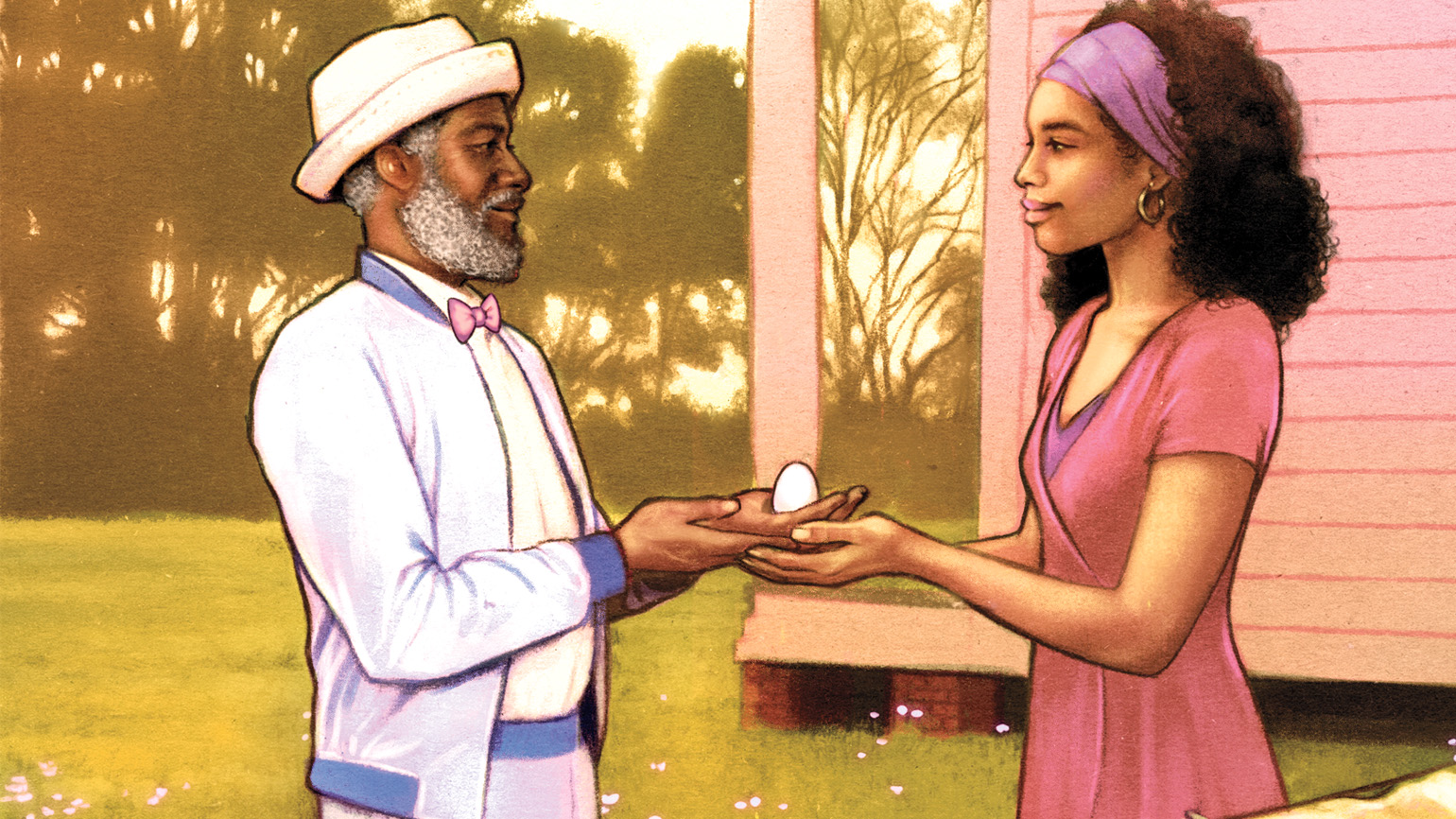
“I might have just dismissed the whole thing,” Paw-Paw said, “if it wasn’t for your Maw-Maw and the Egg Man.”

I grinned. Oh yes, I knew about the Egg Man. I could tell this part of the story as well as he could. “It was a Monday afternoon, years before you met that nurse,” I said. “Monday was Maw-Maw’s wash day. She was out in the yard hanging clothes on the line when she saw a man walk up the drive. ‘Want to buy some eggs?’ the man asked, holding some out in his hand. Maw-Maw didn’t need any eggs. But she and the man got to talking.”

“Your grandmother’s never met a stranger,” Paw-Paw said with a chuckle. “She talked to everyone she met like a friend.”

The conversation turned to good health. The Egg Man said there was one man responsible for how good he felt. “Chevrolet Jackson,” he declared. “A surgeon out in Philadelphia. If you ever have a throat problem, especially if you need surgery, don’t let anyone touch you but him. Chevrolet Jackson. Remember that name.”

In the end Maw-Maw did buy a few eggs. She also called everyone she knew and told them about the Egg Man. “And she never forgot that name,” I said. “Chevrolet Jackson.”

“Neither did I,” Paw-Paw said. “Your maw-maw made sure of it. Her encounter at the clothesline all came back to me in the hospital that night. I got right up out of bed and got dressed. The doctors and nurses all thought I was crazy, but I canceled my surgery and left with my X-rays and medical records all the same. Then Maw-Maw and I drove home, wondering how on earth we’d ever find this Chevrolet Jackson in Philly.”

They must have been scared. I thought, looking up at Paw-Paw on the porch. They didn’t even know if this surgeon existed. And Chevrolet Jackson didn’t even sound like a real name!

It was the middle of the night when Paw-Paw and Maw-Maw got back to Springfield, but a neighbor across the street noticed their light on and went over to investigate. “We were both pretty upset,” Paw-Paw admitted. “We had no idea what to do next, and bounced some ideas off our neighbor. He went home, determined to help. He spent all night making phone calls, talking to Philadelphia operators and hospitals to see if anyone had heard of this doctor. All his detective work revealed that, in fact, Dr. Jackson existed. Not only that. Thanks to our neighbor’s persistence, the doctor was expecting us on the next train!”

Seven hours later my grandparents were sitting patiently in the doctor’s office. Less than 24 hours after that, he was in surgery. “I had to remove your larynx,” Dr. Jackson said when Paw-Paw woke up. “I also took some extra tissue from your esophagus to make sure I got all the cancer. God allows me to feel what I need to take.”

Paw-Paw tried to respond to this news, but he couldn’t. A metal tube had been inserted in his neck. Dr. Jackson put a hand on his shoulder. “You’ll have to relearn to talk, controlling your breathing around your vocal chords,” he said. “But you will live. That’s the important thing. I can’t guarantee that you won’t ever die of cancer, but I know it won’t be from this kind of cancer.”

Paw-Paw and Maw-Maw stayed in Philadelphia for six weeks while Paw-Paw learned to speak without his larynx. That’s what gave him that familiar, gravelly tone I’d come to love so well. Eventually they were able to return to Springfield. Dr. Jackson arranged for a one-year follow-up visit back at the Ohio State University of Medicine. Paw-Paw leaned in close to me on the porch. “When I walked in there, the doctor who had sent me to Cleveland for surgery looked like he’d seen a ghost. I soon found out why. He remembered me from that group of men the year before. By then I was the only one still alive.”

Despite the warm summer night, I shivered. Who was the Egg Man? The nurse? Why had they been sent with this life-saving message for Paw-Paw? As a child I didn’t doubt they were angels. They had to be. As an adult, of course, I became more skeptical. Yes, Paw-Paw had survived esophageal cancer at a time when few people did; a heart problem ended his life, not a returning cancer. But maybe the colorful cast of characters in the story had been exaggerated. Chevrolet Jackson? What kind of a name was that?

That was the attitude I had the night I attended a performance of a one-man show about President Harry Truman. It wasn’t the kind of entertainment I would have sought out on my own, but it was a fundraiser and I went as the guest of a friend. Midway through the show the Truman character started talking about exceptional Americans he knew. One of them was a surgeon from Philadelphia, a pioneer in discovering new techniques for treatment of disorders related to the voice.

No, not Chevrolet Jackson. Chevalier Jackson. The Egg Man or Maw-Maw had gotten the name wrong. But with the help of a mysterious nurse and a neighborhood detective, Paw-Paw found our family’s unforgettable story.

For more angelic stories, subscribe to Angels on Earth magazine.

The Heavenly Harvest in a Widow’s Garden

Weeds in my lily patch! I couldn’t abide by it, especially on this day. Amidst my lovingly tended lilies, there were two out-of-place green sprouts. I knelt in the dirt and sighed. It was May 19, the day I would have celebrated 24 years of marriage with my late husband, Harry. It was our first anniversary since he died.

Every time I took care of my lilies, I thought of Harry. At the other end of the yard opposite my flowers was where his beloved vegetable garden had been. Tomatoes, beans, bell peppers, green onions—you name it and Harry could grow it. We were never short of supplies for delicious garden salads—my favorite. Inevitably we couldn’t eat it all so the leftovers always went to our church. Our whole community knew about Harry’s vegetables.

Harry’s garden had been around nearly as long as we’d been together. We were both divorced when we met at a Parents without Partners meeting in 1982. After we were married, Harry moved into my house from his apartment, and right away he got his crops growing.

Then, at age 83, Harry was diagnosed with lung cancer. He battled it for six months and tended to his garden for as long as he had the strength to make it outside. In December of that year, he passed on.

I let his legendary garden go. I didn’t have his talent for growing vegetables. By now it was nearly indistinguishable from the rest of the lawn, although I couldn’t help but look towards the spot every time I went out back. A few months after he died, on Easter Sunday, I bought a special lily to put on my church’s altar for the service, then brought it back and planted it in my lily patch. At least my flowers would continue his legacy in the backyard.

I carefully parted my lilies and grasped the intruding plant, tugging slowly so I could get the root out too. The weed came out easily. I shook off the soil. That’s when I realized my mistake. These weren’t weeds!

They were green onions, perfect for my garden salads. Someone had put them right where I was sure to find them.

Read More: 5 Spiritual Lessons from a 4-Mile Run

The Healing Power of Faith

We hear or say the words anytime someone we know is in the hospital: “Please pray.” And whether we have faith or not, scientific studies have shown that prayer can have real, measurable effects on health.

For the April/May issue of Mysterious Ways, assistant editor Daniel Kessel spoke to a number of hospital chaplains to learn more about their dual role–part clergy, part healer.

It might surprise you to know that our founder, Norman Vincent Peale, didn’t always believe prayer could measure up to modern medicine. “I always took a rather coldly scientific view of the healing process. I had an abhorrence of anything that smacked of quackery,” he once wrote.

But that changed one evening when he was a young minister in Syracuse, New York, and was awakened from a sound sleep by a phone call:

“I snapped on the light and looked at my clock. Two A.M. Picking up the telephone, I heard the familiar voice of a very close friend, a leading physician in the city. ‘Norman,’ he said, ‘I’m sorry to awaken you at this hour of the night, but I have a patient about whom I am greatly concerned. I need help. Will you come and join me here?’ ”

“What in the world can I do to help you except pray?” Norman asked.

The physician rebuked him, saying, “What could possibly be more powerful than prayer?”

Norman got dressed and traveled to the patient’s house. Before entering, he stopped and asked the Lord to guide his faltering efforts.

He looked at the woman in the bed. Her face was white. She seemed to be in a deep coma. “What are her chances?” Norman whispered.

“I’ve had consultations,” the physician answered. “I’ve done all I can. It is now in the hands of the Great Physician. But he has great power.”

Norman and the physician sat on opposite sides of the woman’s bed, praying “silently and in depth for her, trying to drive our prayers through into her consciousness.”

The young minister even quoted passages of scripture he didn’t feel he could remember in their entirety, but he found the words came to him. “My conscious mind didn’t know them, but my unconscious mind did, and God gave them back to me.”

As the two men continued to pray, color began to come into the woman’s cheeks. Then the most amazing thing happened: She opened her eyes wide and started to recite scripture passages herself.

The crisis had passed. “I’m sure she will get well,” the physician told Norman. The woman did, and lived for many years thereafter.

“It was by this time five o’clock in the morning,” Norman wrote. “Sleep was of no concern to me at all, I was so excited. I had never felt more alive, more awake, in my life. I could hardly contain myself. I remember that I walked for a long time, overwhelmed by the wonder and the glory and the majesty of it all, with a whole new consciousness of the power of God dawning in my mind–that we heal through God’s servants the doctors, and we also heal through our own faith.”

Has faith helped you or a loved one heal? Read some of our Mysterious Ways Miracles & Healings stories, here, here and here, and get inspired to share your own experiences with us.

The Healing Power of a Gift from Above

The C-141 Starlifter had just returned from a cargo run. My husband, Jeff, an airman 1st class, checked the life support equipment—the oxygen masks, the parachutes. All in working order, nothing out of place. Except for something odd left behind on one of the seats. A crocheted white cross, three inches long. It didn’t belong to any of the crew. No one knew how it got there.

Jeff brought it home for me. He thought it would provide some comfort. I’d been five months pregnant with our first child, Aurora, when we left our home in West Virginia and moved to a two-bedroom apartment near Jeff’s base in Tacoma, Washington. I was having trouble adjusting to a new place, thousands of miles away from our friends and family, while caring for a newborn. I rarely left the apartment. To keep sane, I read the Bible and leaned on my Catholic faith. But the moment Jeff walked into the kitchen and put the crocheted cross in my hands, I had a strong feeling it was meant for someone else.

The woman who lives across the hall. Give it to her. She needs it right now.

Did she really? I didn’t know a thing about her. Only that she was blonde, in her early 20s, a military wife like me. Was she even a Christian? How would she react to the cross? I hoped to make friends—not drive people away who might think I was too religious.

I spent all night debating it. In the morning, I decided I had to follow that little voice, even if it meant embarrassment. My neighbor wasn’t home, so I wrote a card, slipped the cross inside, and left it in her mailbox.

Several weeks passed, no response. Then one day, my neighbor showed up at my door with her young daughter. “Would you like to join us at the park?” she asked.

“Sure!” I said. Maybe that cross had made a good impression.

I bundled up Aurora and we went along. We spread a blanket on the grass and sat down.

“I’m sorry I didn’t respond to you sooner,” my neighbor said. “A few months ago, I was diagnosed with ovarian cancer.”

“I’m so sorry,” I said. “I had no idea…”

“It’s okay.” She smiled. “You see, I was praying for a sign from above that the doctors would heal me. Then I received your cross. Today I found out… I’m cancer-free!”

It was a sign from above all right, I told her. Delivered from 40,000 feet.

The Good Soldier

Dad was a storyteller. He spoke often about the experiences he had as a young man in World War II. His favorite story, the one he told most often, was about the time he and some other soldiers captured some German prisoners of war.

Dad was part of George Patton’s Third Army, Sixth Armored division that landed in Normandy on D-Day. A few days after that great battle, Dad and a few members of his unit were on patrol in the French countryside. Walking along the hedgerows, they arrived at a clearing atop a small hill—the same time two German soldiers did. Quickly, Dad and his fellow soldiers raised their guns. Outnumbered, the Germans surrendered their weapons.

“We should kill them right now,” said one member of Dad’s unit. After what he’d seen at Normandy, Dad was inclined to agree. This was war, and these were enemy soldiers.

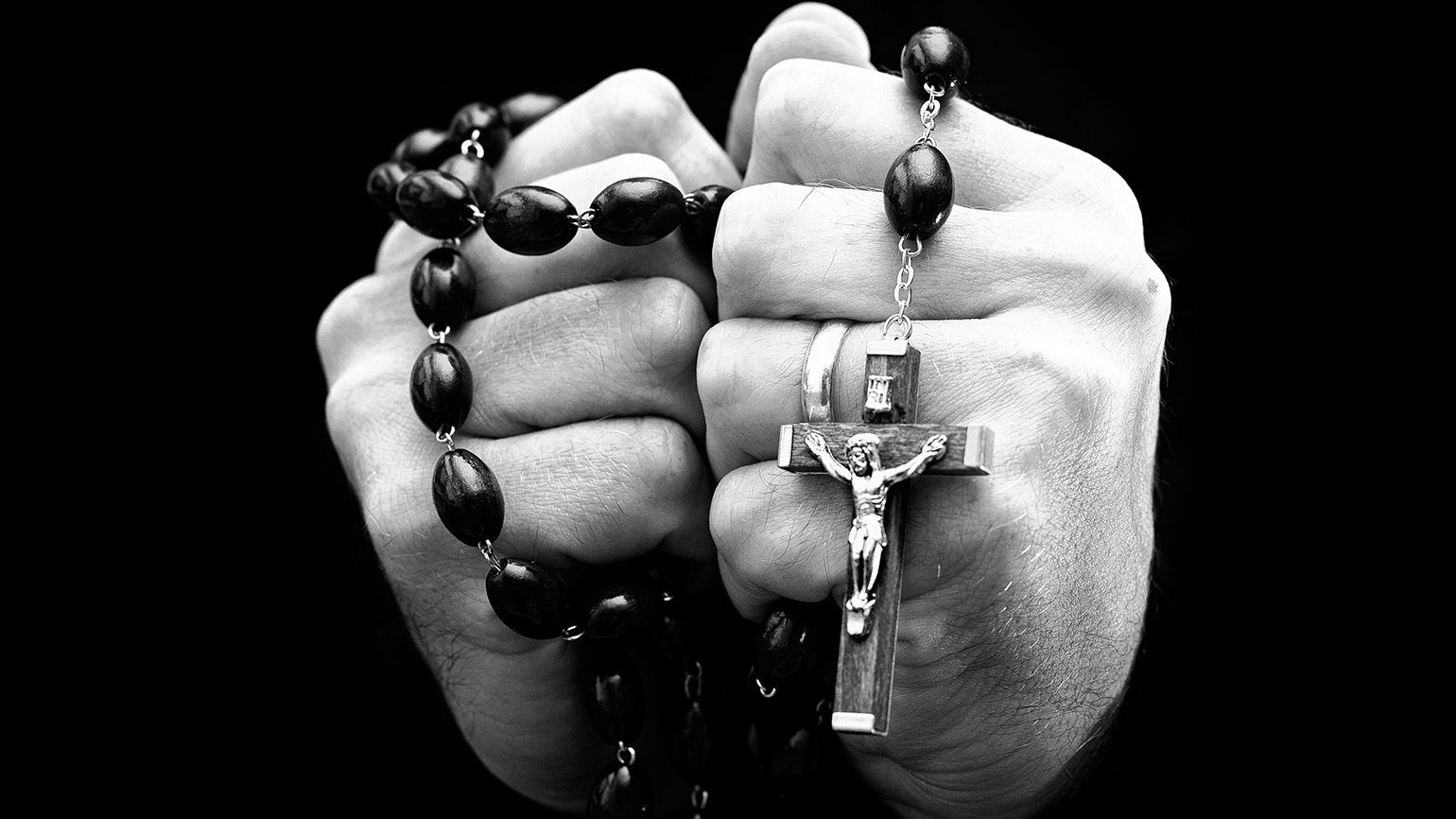
But Dad hesitated. He ordered the soldiers to empty their pockets. One of the Germans held out a string of beads and a cross. A rosary.

Dad took them from the soldier. The sight of the beads made him think twice. He handed them back to the man. Dad knew how to speak German, so he spoke to the man.

“Pray for the war to be over, so we can all go home,” Dad said.

The German was surprised. “You are not going to kill us?”

Dad shook his head.

“If you are not going to kill us, there are some more of us who want to surrender,” the German said.

Dad and the other American soldiers stood awestruck as German after German came out of their hiding place on the other side of the hill. Thirty-seven in all. They left behind their weapons: machine guns, heavy artillery, loaded and ready for action. If they’d killed the first two men, Dad and his buddies would have been gunned down on the spot.

The Fourth Watch: Listening for God at Night

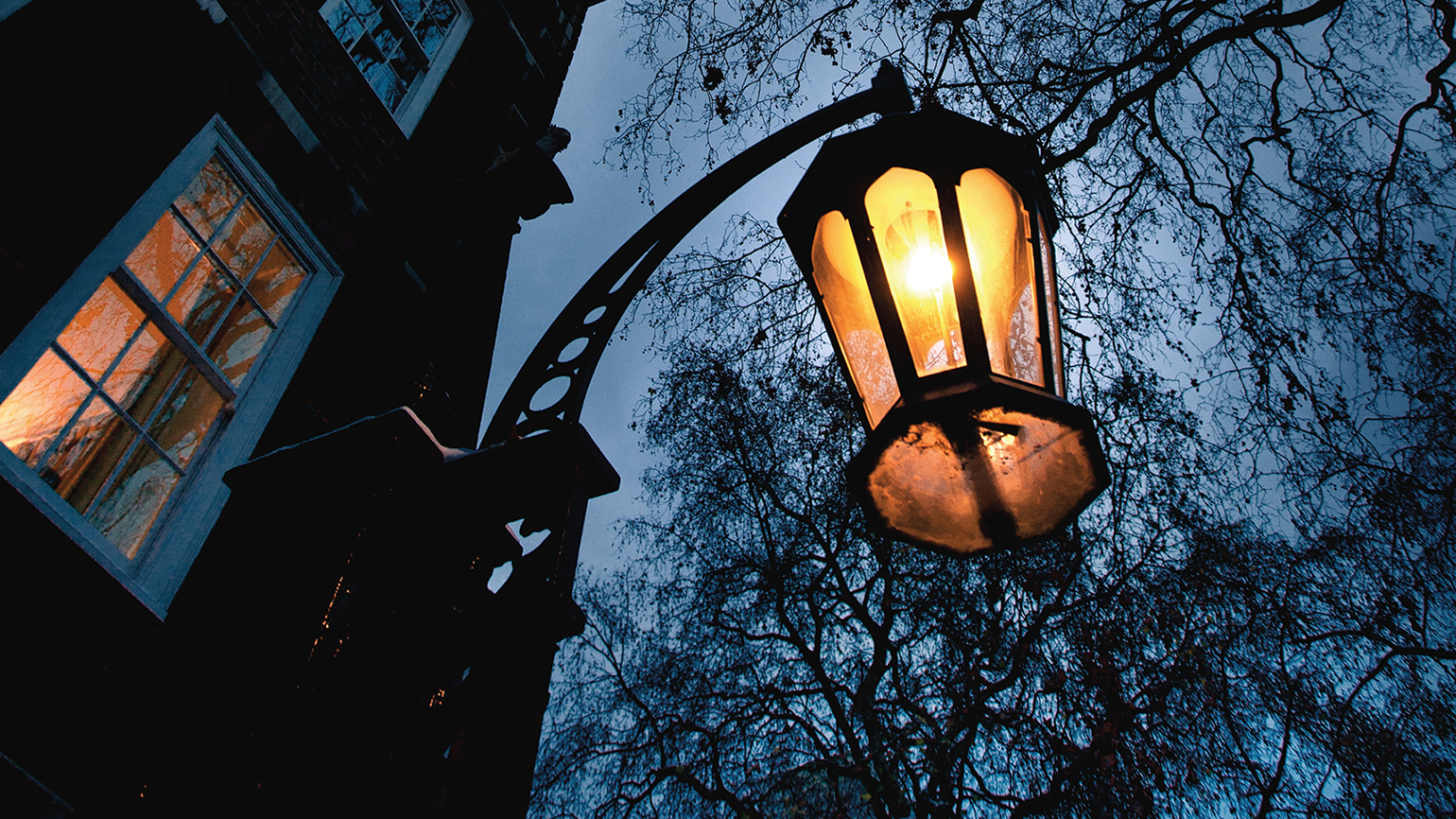
My alarm went off at 3 a.m. I sat on the edge of my bed and waited for my eyes to adjust to the dark, then crept out of my bedroom. On a mis­sion. To encounter the divine in the deep of the night.

I’m not a fan of the dark. As a kid, I rarely slept without a night-light. That’s one reason I love living in New York City—there’s always a light on somewhere. The darkness holds unknown terrors, nightmares, end­less tossing and turning. I never thought of the nighttime as sacred. Until I came across something on­line. All about how some believe God works most actively under the cover of darkness, particularly between the hours of 3 a.m. to 6 a.m.—“the fourth watch of the night,” so called be­cause the ancient Romans divided the night into four watches of the military guard.

The term shows up in one Biblical story referenced in both the Gospels of Matthew and Mark: “Now in the fourth watch of the night, Jesus went to them, walking on the sea…. Jesus spoke to them, saying, ‘Be of good cheer! It is I—do not be afraid.’”

BROWSE OUR SELECTION OF BOOKS ON MIRACLES

However, the predawn hours show up just about everywhere else in Scripture. Jacob wrestled with an angel until the breaking of day. Peter was fast asleep, in chains, when he was miraculously freed from prison. Samuel heard his name called not once, but four times, in the middle of the night. Many of the Bible’s heroes seemed to be partial to the dark. Did they know something our modern, light-filled society doesn’t? Could it be that the dead of night is not something to be feared but rather embraced?

I called Clark Strand, author of Waking Up to the Dark: Ancient Wisdom for a Sleepless Age. Strand is a former Zen Buddhist monk who frequently writes about the world’s spiritual traditions. The nighttime, he says, is important to just about every major religion.

“The great visionary experiences in religion have occurred in the night,” Strand says. “Jesus would rise be­fore sunrise. David hung a special harp over his bed to wake him in the middle of the night to write the Psalms. The Buddha saw the morn­ing star and became enlightened. The list goes on.”

The dawn of artificial light changed mankind’s relationship with the night, Strand says. Days got longer. Our sleep patterns changed too. Prior to the Industrial Revolution, it’s thought that humans slept for four hours, woke up for two, and then slept for another four hours.

This theory is supported by re­search conducted by psychiatrist Thomas Wehr. In one sleep study, Wehr exposed volunteers to a world without artificial light, i.e., 14 hours of darkness every day. After a month, study participants began to sleep in about two four-hour stretches with a period of wakefulness in between. What’s more, during that time of wakefulness, participants had higher levels of the hormone prolactin, which is associated with greater tranquility.

“Wehr’s subjects reported feeling more alert, happy, confident and at peace during those two hours in the middle of the night,” Strand says. “His subjects were neither awake nor asleep. They seemed to occupy a state of mind all its own. A state of mind that experiences ordinary reality in a very different way.”

That in-between state is what Strand calls the “Hour of God,” a time thought to have been one of great creativity and mysticism in the pre-Industrial age. Strand has been willingly waking up in the middle of the night since he was a child and has experienced great moments of sacredness and inspiration in the dark. He’s not alone. Strand points to the nineteenth-century meditative practice of hitbodedut, originated by Rebbe Nachman of Breslov, founder of the Breslov Hasidic movement, who encouraged his followers to talk aloud to God for an hour in the middle of the night in a field or secluded place.

Then there are the great monastic traditions of keeping vigil and praying through the night. Brother Aidan Owen, a Benedictine monk and vo­cations minister at Holy Cross Mon­astery, in West Park, New York, regularly rises around 4 a.m. to spend time alone with God in the silence. He’s occasionally been awakened from sleep after vivid dreams and has heard God speak in the middle of the night.

“The Celts talk about thin places in the world—physical places where the boundary between heaven and earth is very thin,” Brother Owen says. “I think of the early morning and late night as thin times of day.”

What is it about the middle of the night that’s “thin”? It could be that we’re simply more receptive at night, Brother Owen says. Less bombarded by the worries and endless to-do lists of the day. More vulnerable and maybe more ourselves in the way God truly sees us. “The world has quieted down, it’s dark, and there are fewer distractions,” says Brother Owen. “We are, in a sense, defense­less. We haven’t put on the persona that we are during the day. We’re more likely to hear God call.”

Clark Strand notes that our night­time senses are on high alert too. “By daylight, everything is clearly defined and the visual part of our brain is acti­vated,” he says. “But in the darkness, a different part of the psyche comes to the floor. Your senses of touch, smell and hearing are much more acute. There’s something very close and intimate about the dark. There’s a relaxing of normal rules that govern our reality.”

Baptist pastor David R. Smith, who has led early-morning and 24-hour prayer services at his church in In­verness, Florida, agrees that the odd hours of the day can be a great time to encounter God. “God hears us perfectly at all hours of the day. But we can’t so easily dismiss him at 3 o’clock in the morning,” Smith says. “He’s okay with calling you out of a comfortable sleep. He doesn’t oper­ate on our time.”

That’s not to say you actually have to be awake for the night to be fruitful. Reverend Masud Ibn Syedullah, an Episcopalian priest in Hyde Park, New York, stresses the necessity of rest in the spiritual life. Dreams can also be God’s way of speaking to us. “What am I doing between 3 a.m. and 6 a.m.?” Syedullah says. “I’m sleeping. But God is working on me even in my unconscious state.”

If the darkness is so illuminating, then why do many of us fear it? According to Syedullah, the terrors of the night are closely tied to the fears of the day. “We often have our masks on during the day,” he says. “It’s at night, when no on else is around and we’re out of the public sphere, that our fears and troubles surface.”

Of course, the prospect of getting up close and personal with the divine in the middle of the night can be for­bidding. “We all have psychological defenses we put in place to maintain our sense of being in charge,” Brother Owen says. “So it’s frightening to let those defenses down and con­sciously move into a relationship where God is in charge.”

Perhaps that’s one reason Jesus told his disciples “do not be afraid” during his visitation in the fourth watch of the night. In fact, a key line in that story may shed light on the significance of the dark, Smith says.

“In Mark’s telling of the story, Je­sus was going to pass them by,” says Smith. “That doesn’t mean Jesus was going to walk around the boat and avoid them. The best under­standing of the Greek word means he was going to reveal himself. Jesus was revealing himself to them in the middle of the night.”

Could it be that Jesus was reas­suring his followers not to fear this time of revelation? After speaking to the experts, I had to find out for myself. I challenged myself to wake up in the middle of the night for a whole week, even if just for a few minutes to pray.

After the first night, I wasn’t sure who was waking me up—my alarm clock or God. Then I started to crave our time together. On the last night of my experiment, I woke up at 3 a.m. to talk aloud to God and, inspired by Rebbe Nachman of Breslov, left the comfort of my bed­room to sit in my kitchen, staring out the window at the cityscape. Then I spoke into the darkness.

I’m not sure where the tears came from, but I couldn’t stop them. The words too bubbled up from places unknown. I didn’t see a vision; I didn’t hear a voice. An hour passed in no time. Afterward, I felt strangely serene. There was no doubt in my mind. I’d experienced the Hour of God myself. I tiptoed back to my room and fell fast asleep, one of the deep­est sleeps I’ve ever known.

5 Tips for Making the Most of the Nighttime