Embrace God's truth with our new book, The Lies that Bind

‘God, You Are Amazing’

Today’s guest blogger is Pastor David Carey, a spiritual giant in my life. He is one of the most brilliant Bible teachers I have ever encountered. I’m so thankful Pastor Carey was willing to share with us today.

But we will not boast beyond limits, but will boast only with regard to the area of influence God assigned to us, to reach even to you. (2 Corinthians 10:13, ESV)

I was nearing the end of a busy day and had just finished writing a blog on the importance of knowing that God assigns us people and places to influence, when I decided I had time for one more task before leaving the office.

It was then that I remembered I needed to make a phone call to the insurance company of a man who had run into my car months earlier. I was still dealing with some minor physical problems from the accident, and this insurance company had requested I keep them updated on my recovery. They had not heard from me in a while and had written recently to request I call whenever possible. Honestly, I had been meaning to call them for several weeks. (Someday I will work on my procrastination!)

Pastor David CareyMaking the call, I found myself talking to a pleasant woman who seemed to show real concern for my wellbeing. After a discussion of my status, she noted that according to her information, I worked for a church. I confirmed that I did, wondering where this conversation was going.

“Then you must know the power of prayer,” she said enthusiastically.

“Yes,” I answered, “And you must be a Christian!”

After she answered affirmatively, we had a nice discussion about the Lord. At one point she said, “I’m not really supposed to be talking about…”

I stopped her in mid-sentence and said, “You don’t have to worry about political correctness with me.”

I then told her that I had just finished writing about how God assigns us people to whom we are to minister. “So either you’re supposed to be talking to me, or I’m supposed to be talking to you,” I said with a smile.

After a few more minutes of conversation, I asked her if I could pray for her before we hung up. She answered, “yes,” eager to receive prayer. So I prayed. My prayer was one of those Holy Spirit-led prayers that has you praying in ways that you know are not coming from you. By the time I finished, she was in tears.

After we hung up, I sat back in my chair and said, “God you are amazing.” A few minutes after I had finished writing about how God-ordained encounters are given to us to influence the lives of others, He had done exactly that with me.

Often when we least expect it, we will find ourselves on assignment for God. Moses was led to the Pharaoh; Elijah to King Ahab; and Peter to Cornelius. Be looking for your next God assignment…

Apostle David Carey and his wife, Nancy, planted Word of Life Christian Center in Newark, Delaware. They are founders of Word of Life School of Ministry and have planted or assisted Bible schools in several nations. Carey is the author of Now Elijah! (Straight Street Books, August 2015).

God’s Word and Mandy’s Miracle

Elkanah lay with Hannah his wife, and the Lord remembered her. So in the course of time Hannah conceived and gave birth to a son. She named him Samuel, saying, “Because I asked the Lord for him.” (First Samuel 1:19-20)

Since tomorrow is my oldest niece’s birthday, and since Mother’s Day is just around the corner, I thought I’d share a story with you that’s very special to our family.

Every time I think about Mandy’s struggle to conceive or tell others about the miracle that followed, I am once again reminded that God’s Word is alive. You see, the Bible is more than just a good book filled with great stories. It’s the Good Book full of great promises. It’s your lifeline! So why do so many of us leave it on the coffee table instead of discovering its power and relevance every day?

Mandy found out just how powerful and pertinent the Word of God is in a personal way. She and her husband Chris had tried for several years to have a baby, but every month the pregnancy test came back negative. The doctor didn’t have a very good prognosis for Mandy, and with every day that passed, she wondered if she’d ever have a child of her own. She was so discouraged. Lots of well-meaning people gave her advice: “Take this vitamin and it will help you get pregnant.” Or “Try conceiving when there is a full moon.” Or “Stop eating acidic food.” Or “Drink lots of carrot juice.” Mandy followed every piece of advice, trying desperately to become pregnant, but the only thing she became was depressed and a little orange from the carrot juice.

Then her mother said, “Mandy, honey, why don’t you find some scriptures in the Bible to stand on? Find your promises in the Word of God and pray them over yourself every single day. The Word works!”

Mandy had been a Christian since she was a little girl, so she was certainly open to this suggestion… and she had pretty much tried everything else. She dug into the Bible and found the story of Sarah and Abraham and read about how Sarah, who was physically too old to conceive, had given birth to Isaac. Then she found the story of Hannah and how Hannah had prayed for a baby and finally given birth to Samuel and later several other children.

Mandy had her precedent in the Word of God, and since God is no respecter of persons, she believed God would do the same for her.

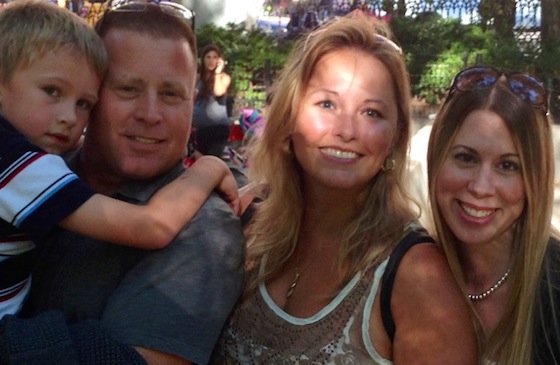
He did, and it didn’t take long! Mandy stood on those scriptures and several others for three months. She prayed them over herself on her way to work every single day, and one Monday night, the pregnancy test came back positive! Mandy gave birth to a healthy 8-pound, 13-ounce baby boy–Walker–on February 15, 2006. Then on March 19, 2008, Waverly came into the world, and Mandy was once again amazed at God’s goodness.
God has a promise for you, too. Dust off that Bible and find out what God says about your situation. That doesn’t mean you’ll necessarily have your happy ending in three months just like Mandy, but you could. And wouldn’t it be better to stand in faith believing for your miracle than to remain depressed and sad over your negative circumstances?

Let God’s Word and Mandy’s miracle encourage you today as you believe God for your breakthrough. The Bible is full of promises just for you–so stand on those promises today! (Oh, and happy birthday, Mandy. I love you!)

God’s Perfect Timing

I’m constantly amazed at God’s perfect timing. He can turn something as simple as a 5-minute mental break into something far more wondrous.

That’s what happened to my fellow editor Nicole Notare. Last week, just as I was packing up to head home for the night, she rushed up to my desk with a big smile on her face. It could only mean one thing.

“I have a small lunch-break miracle for you!” she said.

Here’s Nicole’s story:

I’m blessed to have a job I love, but it was a day of back-to-back deadlines, and I was feeling the stress! Before I knew it, it was almost 5 pm, and I hadn’t eaten lunch. I grabbed a sandwich from the deli around the corner and hurried back to my desk to tackle the next item on my to-do list.

Although, taking a quick Facebook break seemed much more appealing…

Nah, I’ve got to keep going! I told myself, trying to fight the urge to procrastinate. But I gave in.

The first item on my newsfeed was a photo of One World Trade Center posted by my aunt Tammy. The building is just a few blocks from the Guideposts office!

“Are you here now?” I commented, unsure if the photo was recent or not. “I work nearby!” My husband and I live nearly three hours from her and my uncle and hadn’t seen them since our wedding two years earlier.

A few seconds later, a notification popped up on my screen. “Yes!” she said. “We knew you worked here, but we thought you’d be home by now. We’re at Duane Park. We’d love to see you!”

I grabbed my purse and dashed over there. There was my aunt with my uncle and little cousin, Jack. Turns out they’d been a few minutes early for their dinner reservation, and they’d planned to head home after that. If I hadn’t taken that little Facebook break I would’ve missed them.

I never imagined a little procrastination would lead to a mini family reunion that completely turned my day around! But that’s how God works, isn’t it?

Has God ever amazed you with his perfect timing? Share your story below.

God’s Loving Sense of Humor

Kaboom! My husband and I bolted upright. “What was that?” I asked. It was 3:00 a.m. Freezing rain pelted our bedroom window. The wind howled.

A picture of the tree that fell on Debra's house“I think a tree just fell on our house,” my husband said.

Our home was surrounded by trees, some 50 feet tall. A fallen one could cause major damage. “Jesus, Jesus, Jesus!” I shouted, the only prayer I could muster. I flung off the covers.

We raced from room to room. Everything looked okay, but I dreaded seeing the kitchen, which had etched-glass entry doors and a breakfast nook with lots of windows. Judging from the sound we’d awakened to, the impact would have shattered them all. “Jesus, Jesus, Jesus…”

Through the nook’s windows, we could see a massive tree leaning against our roof. Incredibly, the kitchen was undisturbed. Except for one thing. I began to laugh.

“What’s so funny?” my husband asked.

I pointed to the sign that hung above the breakfast nook. It was tilted and wedged against the window trim. RELAX, it read.

We did. The tree had caused no major damage—and now we have a huge stack of firewood.

The "Relax" sign in Debra's breakfast nook

God’s Glory Illuminated by Rare Fire Rainbow

I’m always on the hunt for miracles and “mysterious ways.” So much so that it’s now a running joke with my friends and family. Whenever something wondrous or mildly mysterious happens, we’ll turn to each other and say, “mysterious ways?”

Yesterday, my sister Priscilla messaged me just that. She had taken a break from work and was scrolling through Facebook when she saw something that caught her attention. A post from an old co-worker that said: “…And we wonder if there is a God!!!”

The post was a link to an article about a fire rainbow, or circumhorizontal arc, that recently appeared in Mount Pleasant, South Carolina. Yes, you read that correctly. A fire rainbow!

Apparently the phenomenon is quite unusual.

“To produce the rainbow colors the sun’s rays must enter the ice crystals at a precise angle to give the prism effect of the color spectrum,” meteorologist Justin Lock told CBS station WCSC. “Again, it has to do with getting the precise angle.”

The fire rainbow in Mount Pleasant looked somewhat like a rainbow-hued fish tail. (Although, I’m sure my friends at Angels on Earth magazine would say it looks more like angel wings!)

Whatever you see, though, it’s pretty remarkable. A natural miracle. No wonder those who witnessed it were simply blown away.

“The world today is so full [of] strife,” spectator Tiffany Jenks told CBS News, “but just for that brief moment–when looking at the fire rainbow myself, the others around me and those seeing the photo–I seemed to step back and remember how beautiful our planet really is and how blessed we are to be a part of it.”

Or, as Priscilla’s co-worker said in her Facebook post, “…And we wonder if there is a God!!!”

What about you? What do you see in the fire rainbow photo? Share your thoughts below.

God Promised Her a Man Who Fit the Bill

“Woman seeking man named Bill.”

I stared at my words in print. My personal ad in the classifieds section of the morning newspaper, complete with a P.O. box address so potential suitors could send me letters. It was one of the weirdest things I’d ever done, but I so wanted to take a chance on love.

I’d recently gotten divorced and was feeling lonely. A friend suggested praying for someone new to come into my life. While I had always been spiritual, I’d fallen away from church. I couldn’t remember the last time I’d prayed for something so specific. But I gave it a try, not quite knowing what to expect. Please, God, bring into my life the love you intend for me.

I was surprised when I received an answer, whispered into my heart: The man you’re looking for is named Bill. The message felt too strong to ignore. I told my daughter, Margie, and my friend Pam about my conviction. They thought I was crazy.

“I can’t explain it,” I said. “I just know in my heart that I’m meant to marry a Bill.”

And so my search began. After I put out the personal ad, a few Bills responded. I went out with all of them—but clicked with no one. Just as I knew I was destined to meet my Bill, I knew none of them were right. None of them…fit the Bill.

Meanwhile, Pam was encouraging me to put myself out there in a more conventional way. She’d learned of a singles’ ski trip to Taos, New Mexico. I was a Texas girl through and through. My idea of a fun vacation was relaxing poolside, not speeding down a mountain in the snow. But Pam was insistent. “Just try it!” she said. “You might like it. And who knows? Maybe you’ll meet your Bill on the slopes!”

Why not? I decided. I’d never been skiing before, but Pam was a skier and let me borrow her equipment.

Pam was right—I had a great time! By the end of the ski trip, I still hadn’t graduated from the bunny slope but I’d discovered a love of skiing. I had met a lot of people too, but none named Bill.

The bus back to Texas was scheduled to leave the resort at 4 P.M. Anyone late would be left behind, we were warned. Everyone arrived on time. Well, almost everyone. “We’re waiting on one more person,” the bus driver told us as we sat idling in the parking lot. Apparently, this man had called ahead, saying he would be unavoidably late.

Eventually, the man in question burst through the door of the bus, his snowsuit still on. The only seat left was right next to me. He sat down, still panting from his sprint to the bus.

“I’m Don,” he said. I introduced myself and asked what happened. Don said he’d been stuck on the side of the mountain. A skier had broken both of her legs, and he’d waited with her until the ski patrol arrived to take her to safety.

What a gentleman! I thought. And handsome too…

We actually had a lot in common. The conversation between us flowed easily. Don and I chatted for almost the entire 12-hour drive to Fort Worth. At the end of the trip, we exchanged phone numbers. We went on one date. Then two. Then three. Don was everything I’d ever wanted in a man…except for his name, of course.

“Nobody’s perfect,” Pam said with a laugh. I had to agree. But Don sure came close.

Then Don invited me to attend a banquet with him. It was being held by the crisis intervention hotline where he volunteered once a week, answering calls from people in trouble. Many callers intended to commit suicide. It was Don’s job to connect them with the help they needed. It was a worthy cause, and Don was a dashing date.

That night at the banquet, there was a registration table at the front door. On it we found preprinted name tags for each guest. Don picked up one with Billon it. As he affixed the name tag to the lapel of his jacket, a chill crept up my spine.

“Why does your name tag say Bill?” I asked.

“Oh, we don’t use our real names at the center,” said Don. “It’s for privacy. So around here, I’m Bill!”

I don’t think I stopped smiling that entire evening. When I got home that night, the first thing I did was call Pam. It was late, but she picked up.

“Hello?” she said, sleepily.

“I’ve found my Bill!” I cried out in delight.

“Bill” and I have been together for almost 30 years now and got married in 2001. Deep down, I knew he was the man God intended for me since the moment we first met. It just took a name tag to prove it.

Did you enjoy this story? Subscribe to Mysterious Ways magazine.

God Lets Us Know We Are on the Right Track

Last month, we welcomed a new editor to Guideposts, Danielle Lyle. She moved into the empty cubicle right next to mine and it’s been a blast working with her already.

I’ve always felt like I was called to Guideposts–probably because I applied for my job on Easter Sunday! So I couldn’t help but wonder about Danielle’s own journey. Had she been called here too?

Well, the other day, Danielle and I were discussing miracles (yes, that’s all I talk about!) and I got some answers.

“I have a little miracle for you,” she said, smiling from ear to ear. “It’s about this book…”

It had a black, shiny cover with gold writing that looked like stringed light bulbs and a gold feather. A book of inspirational stories on my mom’s bookshelf. It drew my attention from a very young age. I’d read the stories over and over again. But I made sure I never creased the cover. I’d open it up ever so slightly.

I read that book all through my childhood and teenage years. It became a part of me. Until I left for college, and other books got in the way. It wasn’t until I started working for Guideposts that I remembered that special book. I had just attended my first editorial meeting and I needed some inspiration. I wanted to be a positive addition to the team. But after my first pitch, I thought I was off to a rocky start.

So I tried to think of inspiring stories I’d come across. The book I’d loved so much came to mind. I could see the cover as if it was my eye’s wallpaper, but I couldn’t make out the title; it had completely slipped my mind. I called my mom and we bounced around possible titles. “I’ve Been Touched by an Angel?” she suggested. “That’s it!” I Googled it and Della Reese popped up. Great actress; no book.

I texted my sister. “Do you remember that book I was obsessed with as a kid?” I wrote. She responded immediately: “It Must Have Been An Angel!” I went home that night and ordered it for 43 cents. Super excited. When I opened the package, though, I was completely underwhelmed. The cover had changed. It was plain and ivory. No gold feather.

But the next morning something happened. On the subway to work, I read the first story in the book. I flipped to the index to find out more… and I couldn’t believe it. It was first told by Tay Thomas in the April 1965 issue of Guideposts magazine!

The book I pored over as a kid–the first story was originally published in the magazine I work for today! God has a way of letting us know we are on the right track. His blessings and surprises show he’s there, rockin’ with us. The cover had changed, but this little miracle proved it–I belonged at Guideposts!

Has God ever given you a clue about your destiny? Share your story below or via email!

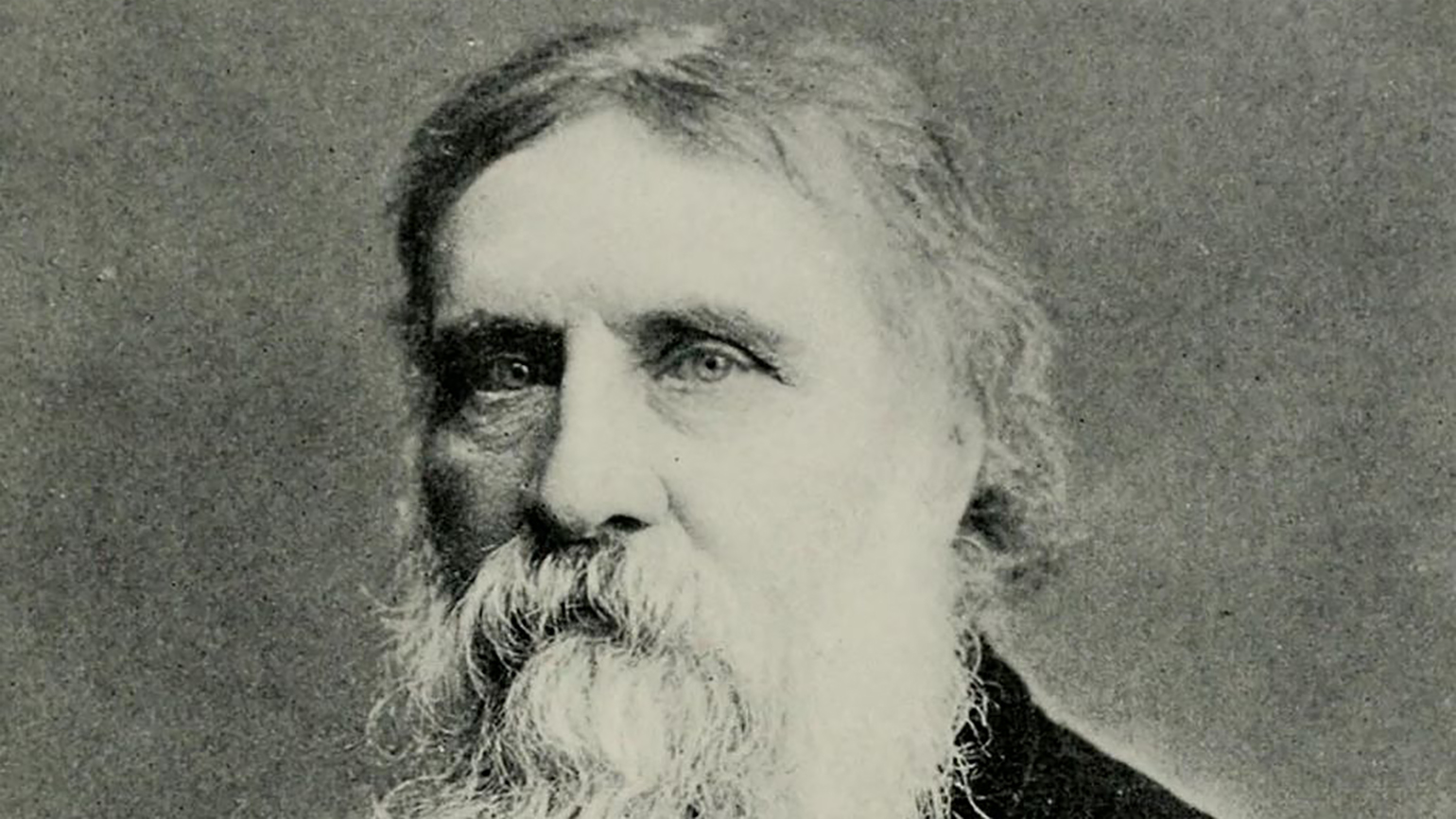
George MacDonald: The Fantasy Writer Who Shaped C.S. Lewis, J. R.R. Tolkien and Madeleine L’Engle

One nineteenth century man defined fantasy writing for a generation of writers. W.H. Auden called him “one of the most remarkable writers of the nineteenth century.” G.K. Chesterton said his writing “made a difference to my whole existence.” C.S. Lewis referred to him as his “master.” He was close friends with Mark Twain and Lewis Carroll. His name? George MacDonald.

MacDonald wrote prolifically during his life—publishing more than 50 books and numerous essays. His most well-known books Phantastes, The Princess and the Goblin and Lilith, were groundbreaking works that used the medium of fantasy to explore faith and the human condition.

His books did not sell particularly well while he was alive, but later writers preserved his literary style for future generations. Here are a few authors who credited MacDonald with influencing their work:

Lewis Carroll
Lewis Carroll, the creator of Alice in Wonderland, was a close friend of the MacDonald family. In 1863, Carroll brought MacDonald a draft of a story he was working on about a girl named Alice who fell down a hole and went on an adventure. MacDonald gave the story to his wife and children to read—they loved it. MacDonald advised Carroll to lengthen the story and encouraged him to publish it. Carroll was also a photographer and took pictures of many of MacDonald’s 11 children.

C. S. Lewis
MacDonald died before C.S. Lewis had heard of him, but had a direct impact on Lewis’ faith and work. Lewis referred to MacDonald as his story “master.” In particular, MacDonald’s book Phantaste, had a huge influence on Lewis’ faith. He wrote about the experience in his book, Surprised by Joy, “It is as if I were carried sleeping across the frontier, or as if I had died in the old country and could never remember how I came alive in the new.” Lewis admired MacDonald so much he put together a spiritual collection of MacDonald’s words called George MacDonald: An Anthology. Lewis wrote, “I have never written a book in which I did not quote from him.” Many readers came to know of MacDonald’s work because of Lewis.

J. R. R. Tolkien
Although he would later criticize MacDonald’s work for being too moralizing (something he also criticized in his own novel The Hobbit), scholars believe MacDonald influenced Tolkien’s stories. Tolkien enjoyed some of MacDonald’s fantasy stories when he was young and read The Princess and the Goblin to his children. Tolkien said that MacDonald’s goblins and talking trees may have had a “remote” influence on the ents and orcs that inhabit his Lord of the Rings series.

Madeleine L’Engle
Madeleine L’Engle’s seminal work A Wrinkle in Time follows in the steps of Lewis and MacDonald by using using the genre of fantasy to explore faith. She said MacDonald gave her “renewed strength during times of struggle.” L’Engle even wrote an essay about how his work influenced her view of God called “George MacDonald: Nourishment for a Private World.” She called MacDonald “the grandfather of us all–all of us who struggle to come to terms with truth through imagination.”

MacDonald was not well-known in his lifetime, but his faith and legacy live on in the generations of writers he inspired with his fantastical stories.

Franklin D. Roosevelt’s Healing Waters

George Foster Peabody was impatient to end his meeting. He was one of the richest men in the nation in 1923, a banker and philanthropist. The man in front of him was desperate to keep his 300-room inn afloat. He’d come from tiny Bullochville, in southwest Georgia, to New York City for a loan. But what did Peabody care about a down-on-its-luck resort in the middle of nowhere?

“One more thing,” the inn’s owner said. “There’s this boy. He has polio.” He told the story of Louis Joseph, whose family had brought him to swim at the inn’s naturally warmed pools for the past three summers.

“I can’t explain it,” the innkeeper said. “The boy uses two canes. But he’s walking.”

Peabody leaned forward, suddenly intrigued. “I have this friend,” he said. “This could be the news he’s been waiting for…”

The friend in question was Franklin Delano Roosevelt, a man whose name was synonymous with East Coast power and privilege. Harvard-educated, he’d served as a New York state senator and assistant secretary of the Navy in the Wilson administration. Men looked up to him. Women swooned over him. His distant cousin Teddy had been a popular president, and there seemed little doubt that Roosevelt would follow in his footsteps. He’d even been preparing a run for governor of New York.

Then the unthinkable happened.

In 1921, he went sailing with his wife, Eleanor, and their five children. A day capped by a long swim in the ocean. Roosevelt was 39, in the prime of his life. But the next morning, he woke to stabbing pains in his legs. By evening, he could no longer stand. Too weak to even grip a pencil. Completely dependent on Eleanor for his care. Polio—an incurable, paralyzing virus—was sweeping the country, infecting thousands of people. Often spread through untreated sewage, it was the scourge of lower- to middle-class families. Not someone of Roosevelt’s stature. Yet, after weeks of misdiagnoses, a doctor finally broke the news: Roosevelt would never walk again.

It was a devastating blow. There was no chance, it seemed, that the onetime state senator would hold political office again. “He felt as if God had betrayed him,” says Christine Wicker, a journalist and author of the recently published The Simple Faith of Franklin Delano Roosevelt. “He went into a deep, deep depression.”

Still, Roosevelt refused to believe he would never walk again. Securing his legs with steel braces, he dragged himself, hour after hour, along parallel bars, the pain excruciating. He tried ultraviolet light, massage therapy, electric currents. He worked his muscles in warm water and cold water. He consulted with the nation’s top doctors. There was no progress. With braces and crutches, he could take only a few steps before the pain overwhelmed him.

Even so, Roosevelt stayed in the public eye. In the summer of 1924, he agreed to make the nominating speech for Al Smith, the Democratic presidential candidate. With the help of his son and a crutch under each arm, Roosevelt approached the lectern, dragging one foot after the other, to the pity of the crowd. It was later that evening that he ran into George Peabody and learned about the miraculous pools of southwest Georgia.

That’s how Roosevelt found himself in Bullochville that October. His destination—the Meriwether Inn—was a three-story monstrosity. A money pit ever since its construction in the late 1800s. And no wonder. This was an area of struggling farmers, hardly a tourist draw. Roosevelt himself would have never come if not for the inn’s pools of mineral water, pumped from nearby Pine Mountain.

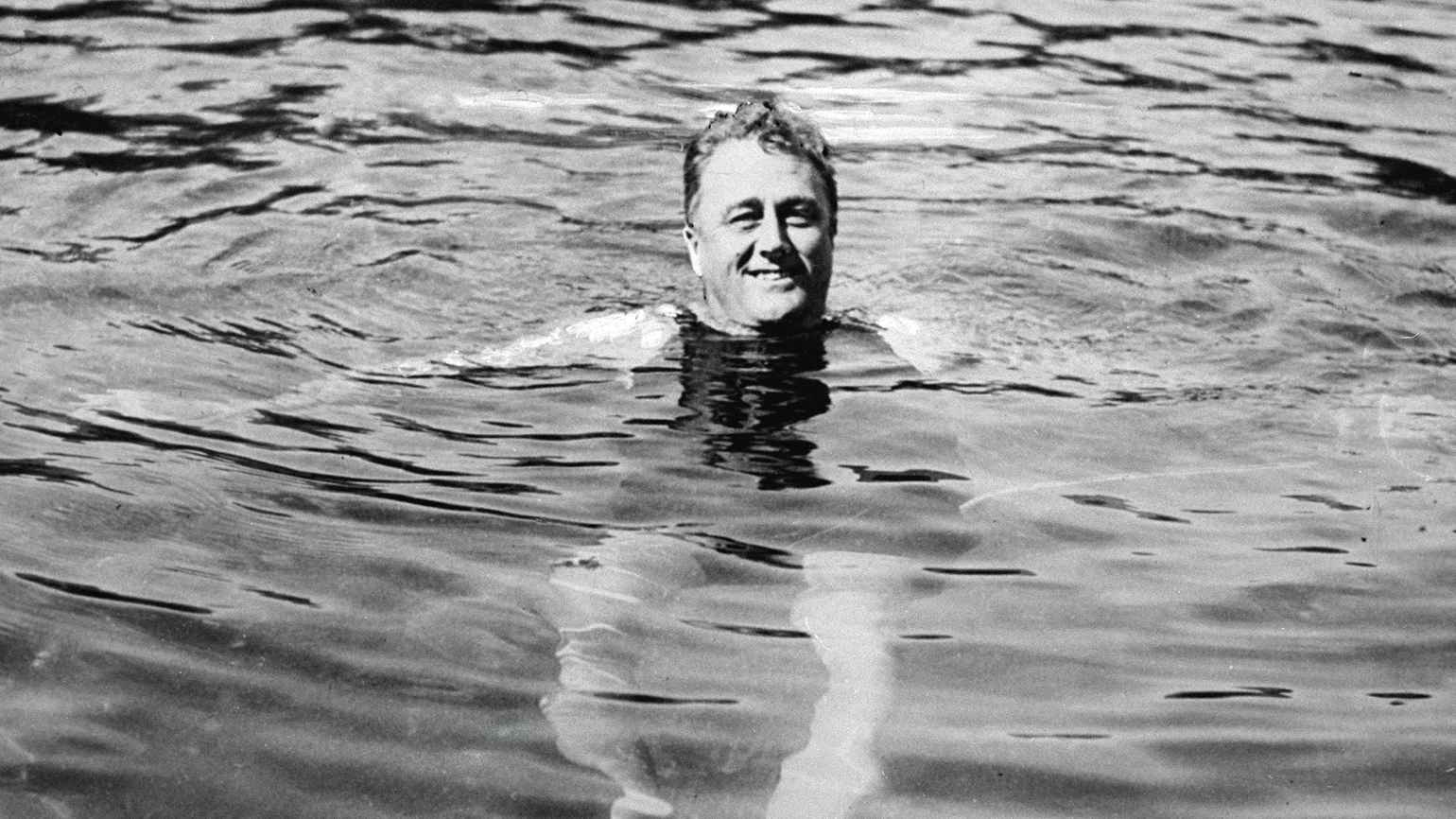
Inside the inn were two small rectangular pools, and outside another pool, unremarkable in every way. News of little Louis Joseph hadn’t yet spread. And so, when Roosevelt dipped his legs into the 88-degree water, he was practically alone. In the four-foot-deep pool, he was able to stand and even take steps. Instantly energized, he splashed about for hours, carefree. And he met Louis Joseph—living proof of the answer Roosevelt had been searching for.

Folks in Bullochville were abuzz about Roosevelt’s stay. An Atlanta newspaper published a story. The following April, when Roosevelt returned, he found himself in the company of a dozen other “polios,” as they were known. Roosevelt exercised with them daily, teaching them what he’d learned, cheering them on. There was no medical staff at the Meriwether. “We’ll be our own nurses and doctors,” Roosevelt said. As Wicker tells it, every time a new polio survivor arrived, Roosevelt personally welcomed them, bringing them to the pool and doing a formal evaluation of “how each of their muscles functioned, its strength and range of motion.” Visitors started calling him Dr. Roosevelt.

More polio survivors arrived each week. Thirty-one the first year, 50 the next year and 70 the year after that. Though Roosevelt’s own progress had stalled, he found himself returning to the dilapidated inn, staying for weeks, then months, at a time. His friends, even Eleanor, couldn’t understand the appeal. But Roosevelt felt at home there. He enjoyed mingling with the other survivors, the easy banter. Some of them were getting stronger, walking even. But his interest in them was becoming less about their physical struggles and more about who they were as people.

It was as if he were seeing the world through new eyes. In 1926, he bought the Meriwether Inn for $200,000, some two thirds of his net worth. Friends warned him against it, afraid he wasn’t focusing enough on himself or finding his way back into politics. Roosevelt ignored them. Not long afterward, he led a campaign to change the town’s name to the more appealing Warm Springs.

In 1927, Roosevelt spent half the year in Georgia. It wasn’t just the polio survivors he was warming to, though more than a dozen had found jobs at the Meriwether Inn. Roosevelt tooled about the countryside in his Ford Model A, stopping to talk to farmers, tradespeople and shopkeepers. He asked about their families, crop prices, the hardships they faced. “He was always the squire,” a resident recalled in the book The Squire of Warm Springs: FDR in Georgia, 1924 to 1945, by Theo Lippman. “But he was genuinely liked and seemed to like everybody.”

Folks would volunteer how they’d been out of work, how they wished for a better life for their children, how they worried about being unable to provide for themselves in old age. Many of the homes Roosevelt visited lacked electricity. The sagging economy was already hitting people hard.

Roosevelt never found the physical healing he’d sought in Warm Springs. He spent most of his time in a wheelchair. But he wasn’t the same man who’d arrived in 1924. In the three years since, he’d come to see polio as a test of his faith. He’d found a new strength in the enduring friendships he made with people he seemingly had little in common with.

Five years later, Roosevelt was elected president in a landslide. The country was hurting from the Great Depression. But Roosevelt was specially equipped for the job. He remembered the courage, the perseverance, of the folks he’d met in Warm Springs. Fear was their biggest obstacle, one he was all too familiar with. Many New Deal programs were a direct result of the time he’d spent in Georgia. The Tennessee Valley Authority to supply electricity throughout the South. The Social Security Administration to provide a safety net for the aged. The Civilian Conservation Corps to give the unemployed work and create parks, dams and roads. All of them needs Roosevelt had encountered while driving the Georgia countryside.

“The polios came to him, weakened, their spirits crushed…,” Wicker writes. “He had no cure. Just some water and his own faith.”

In the end, it wasn’t only Roosevelt, or those affected by polio, who found hope at the inn. The faith Roosevelt gained there strengthened an entire nation to get back on its feet. An unexpected healing from the healing waters of Warm Springs.

7 of the World’s Healing Waters

Finding the Perfect Greeting Card

Have you ever felt divinely led to buy the perfect greeting card or gift for someone?

That’s what happened to me back in March when I visited the Frick Collection, a museum in New York City. I stepped inside the Frick’s gift shop, hoping to find a greeting card for Roberta Messner, a frequent Guideposts contributor. There was a whole wall of cards and many, many options to choose from. But one card in the middle of it all seemed to be calling out to me.

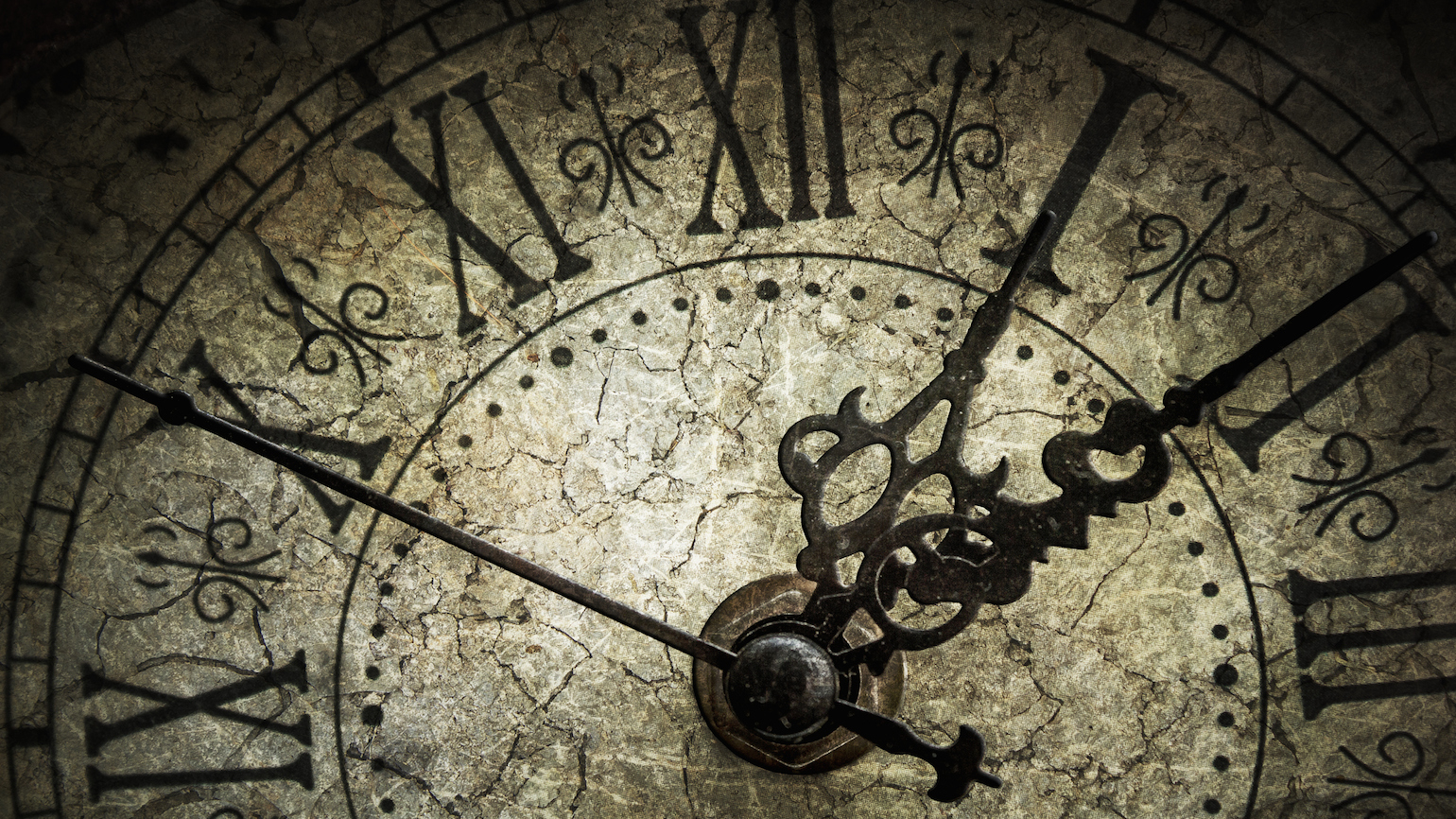
It was square-shaped and had a photo of an antique clock on it. Apparently the clock was one of the many treasures on display at the museum, though I hadn’t seen it on my visit.

“That’s the card,” I thought. “Get it for Roberta.”

I purchased it, wrote a message inside and dropped it in the mail.

About a week later, I got an email from Roberta. “I ADORE MY CLOCK CARD!” the subject line read.

“It is so wonderful,” Roberta wrote in her email. “It reminds me of so many memories of my dad who was an antique clock dealer.”

An antique clock dealer? I couldn’t believe it. I had no idea Roberta’s dad was a clock dealer. Had I been divinely nudged to pick out that card for her?

What do you think? Share your thoughts below. Plus, don’t forget to share your own divine shopping stories in the comments or by emailing us at mw@guideposts.org!

Finding the Mystic Within: A Conversation with Christine Valters Paintner

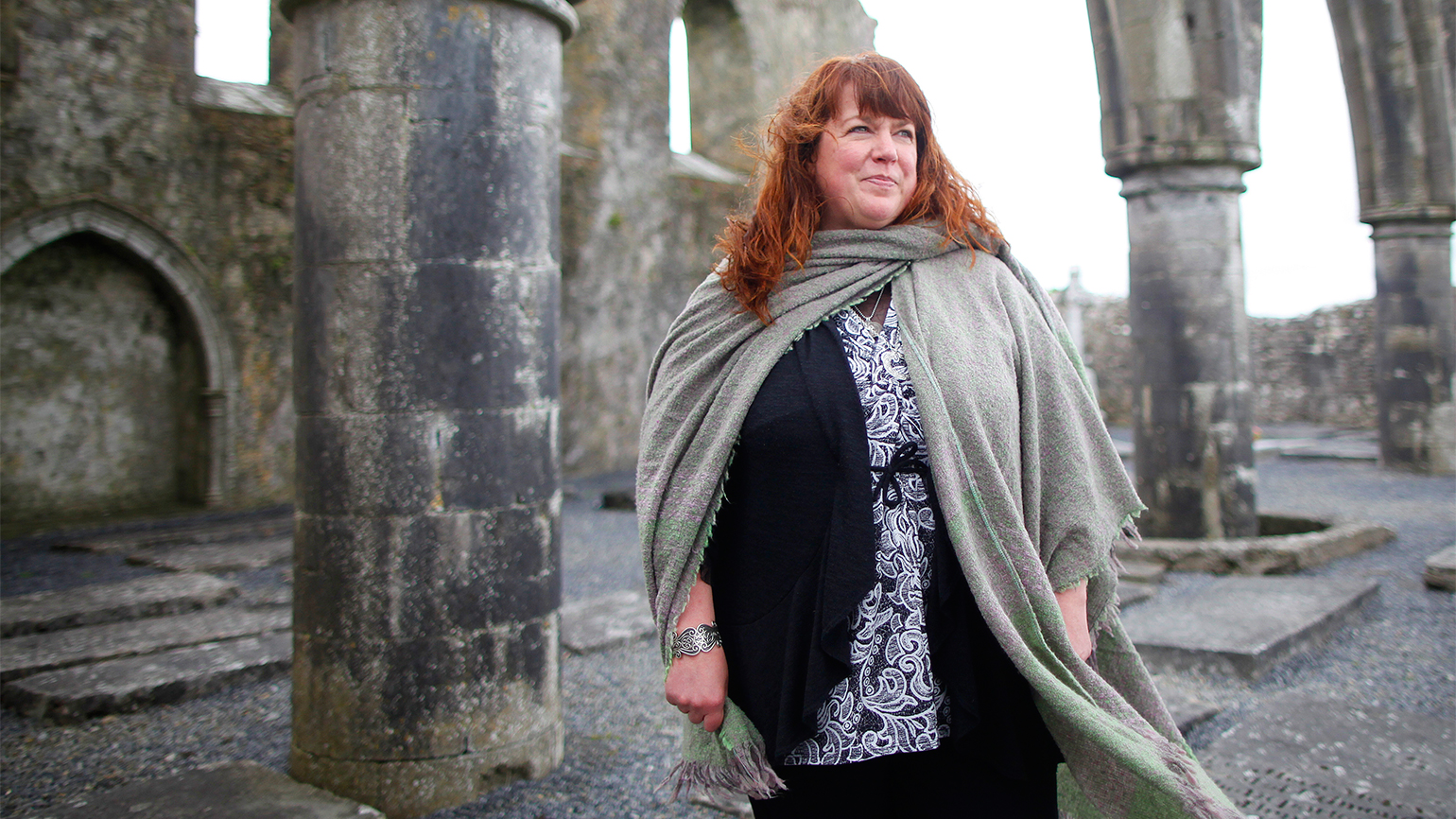
Poet, teacher and photographer Christine Valters Paintner is a modern-day mystic. She’s the author of 10 books, including the best-selling The Soul of a Pilgrim; abbess of the online retreat center Abbey of the Arts, at AbbeyOfTheArts.com; and a Benedic­tine oblate, a layperson affiliated with a monastic community. Five years ago, she and her husband sold all their possessions and moved from Seattle to Europe, eventually settling in Galway, on the western coast of Ireland, attracted by its monastic traditions and Celtic mysticism. We Skyped Paintner to find out more about her pilgrimage and how we can cultivate our own inner mystic.

What drew you to a life of monks and mysticism?

I’ve always had a contemplative heart, which means I’ve always been drawn to periods of silence and solitude, even though I grew up in New York City. When I was 21, I was diagnosed with rheumatoid arthritis, and I quickly became aware of the rush of life and the push to produce and keep your schedule as full as possible. I couldn’t ignore what my inner voice was tell ing me—my inner monk, if you will. I needed to find a gentler way.

Does everyone have an inner monk, just waiting to come out?

That desire for a different way of being in the world is often the first spark that brings people to our abbey. A long­ing for a way to live that’s not quite so hectic and allows time for savoring. A voice deep inside that knows the importance of rest. We don’t always have a name for that longing, but we all have it within us.

How can you take what a monk does and apply it to “normal” life?

At the heart of it is spiritual practice. For instance, an important monastic principle is radical hospitality, wel­coming the stranger in our midst. That can also mean welcoming the as­pects of ourselves that we pay less attention to—our secret yearnings and needs. We need to acknowledge them in our contemplative practice.

READ MORE FROM CHRISTINE VALTERS PAINTNER: HOW TO CHANNEL YOUR INNER MONK

Is that what it means to cultivate your inner monk?

The monk strives to glimpse the sacred in all things, in all people and in the self. We need to slow down enough to be able to receive those little shim­mering moments in which we can actually see beneath the surface of our everyday lives. Succeeding at that takes time, practice and commitment. That’s why we do it in community.

We have people come here to Ireland on pilgrimage from all over the world. We’ll have an afternoon when we do photography, which is another way of seeing things differently and paying attention. I talk about the difference between taking photos and receiving the gift of images that arrive to us in many ways.

That’s a lovely concept. How does it work?

The language of photography is quite aggressive. It’s all about shooting or capturing or taking. I encourage people to look for whatever is calling their attention. The camera becomes a lens into how you might see a bit more deeply. It’s whatever has your attention for that moment. You may suddenly notice a flower that’s dying and, because you’re looking at it in this more reverential way, it becomes a thing of beauty. You receive it.

How does your camera connect you with God?

It becomes a practice of intention. Instead of whipping out your camera and trying to capture everything you see right away, slow down and move into a relationship with the environ­ment, really paying attention to how God might be at work in the world.

You use the word peregrination. What is that?

Peregrination, or peregrinatio, is an ancient monastic practice that is unique to Ireland. It basically means taking a pilgrimage without a specific destination. In the early days, monks would get into a boat called a coracle without any rudder or oar, and they would let the current and the wind—what they believed to be the Spirit—guide them. Wherever they landed, they would set up new monasteries and new communities. It’s a beauti­ful image of seeing where God takes us.

Our call in life is to find our way through the wilderness by following divine guidance, step by step. If we just listen and slow down enough, we can hear the invitation.

How can we slow down and become more monklike with a 9-to-5 job?

It might play out in striving less. Grasping less. Trying to direct rela­tionships less. It’s more of an attitude that you bring to all the parts of your life, honoring ways in which the divine enters our world through conversa­tions or spending time in nature. Being more monklike doesn’t mean you have to sell your house and take a vow of silence. You can take a pilgrimage, for example, without trav­eling very far or even leaving your house. When you sit in silence and are present, you discover the mystery of yourself and God, which is the most sacred pilgrimage you can take.

Sitting in silence and praying like a monk can be intimidating….

In our community, there’s less empha­sis on perfection and more on prac­tice. We’re always on a journey in our lives, never fully arrived. It helps if you have a community or a soul friend. In the Celtic tradition, that’s someone who can help you notice when you start to drift away from what you origi­nally committed yourself to.

You talk about “threshold moments” on the journey. What are those?

A threshold is where the old has fallen away and the new comes to be. When you go on a pilgrimage, you’re actually creating a turning point in your life when the divine feels closer because you have to let go of your preconceived ideas. A lot of times, people have so much fear around these threshold moments that they immediately revert to old patterns—for example, staying in a job they hate because it’s better than moving into the unknown. I’ve found, however, that the more I trust those unknowing times and step into them, the more the divine has been there with me. But it can be a very scary place at first.

And sometimes you get lost.

One day, shortly after we’d moved to Galway, I was trying to find the office of an osteopath. The house number was 45. But after I passed 42, the numbers jumped to 50 and continued up from there. I asked for help from a woman getting out of her car. “Oh, don’t go by the numbers, love,” she said in her charming Irish accent. Sometimes we cling to the wrong way of seeing. We need to look for a new way.

What’s the next threshold for you?

In three years, I turn 50. In the biblical tradition, there is this idea of the jubilee at 50. I’ve been pondering what that might look like and how the Spirit might be calling me into renewal.

Of course, the challenge is to be open and not plan too much.…

Yes. [Laughs.] I have all kinds of won­derful things I could be doing. But I’m holding myself open to what God has in store.

Read our exclusive story from Christinas Valters Paintner, How to Channel Your Inner Monk

Finding the Divine Spark in Everyday Life

I was working on a piece on the wonders of the galaxy for Mysterious Ways—and I was stuck. I’d been staring at the document so long that my eyes were burning. I had zeroed in on the concept and had all the information, but I just couldn’t figure out the best way to structure the piece. Then, suddenly, seemingly out of nowhere, it hit me. A thought entered my mind, clear and concise. As if someone had placed it there. Make it centered around the image.

Of course! That was it. The very image that had inspired wonder and awe in me should be the springboard for the piece. The Hubble Telescope shot of a dark corner of the galaxy, the size of the tip of a pencil, which upon closer examination revealed more than 10,000 galaxies, gleaming like diamonds in the darkness of space. I placed my fingertips on the keys and furiously began typing.

I finished the galaxy piece. We moved forward and published it, and the story became Statistically a Miracle, featured in our April/May 2019 issue. Afterward, I still couldn’t stop thinking about that mysterious moment of inspiration—how had it just popped into my head like that? Where had it come from? Was it possible that I’d tapped into something greater than myself? I shied away from that thought.

The only time I’d ever heard of the divine working through humans was in the case of the Bible itself, divinely inspired but recorded by human hands. I’m no prophet, no genius. And yet the question remained: Do other people experience inspiration the way I did? If so, what if that divine spark is something that everyone can experience in some capacity? I dug deeper to find out.

Historically, accounts of miraculous inspiration are common in the art world. Many renowned creative works have been attributed to a source bigger than the artists themselves. Often, the inspiration is delivered in a dream or a vision. Like the one experienced by Harriet Beecher Stowe, author of the pivotal book Uncle Tom’s Cabin.

In February of 1851, Stowe was seated in the twenty-third pew at Brunswick’s First Parish Church in Maine when she was struck by the violent and “almost tangible” scene of an enslaved person being abused. It was so visceral, so powerful, that she had to stifle her sobs. At the end of the service, Stowe rushed home. In her haste, she grabbed a paper grocery bag and began writing. Her son Charles later wrote in a biography of his mother that it was “as if what she wrote was blown through her mind as with the rushing of a mighty wind.”

Harriet herself said in a third-person recounting of her process that the book was less “composed by her than imposed on her,” and that she didn’t write it; “God wrote it.” Uncle Tom’s Cabin was a best-selling novel, credited with shedding light on the oppression of slavery and helping pave the way for abolition in America. Because Stowe’s book, inspired by a mysterious vision, effected a historic change, it’s tempting to view it as divinely inspired.

This kind of divine spark isn’t just relegated to the past. It still happens to artists today. Artists like Akiane Kramarik. Heralded as a genius and a prodigy, Kramarik rose to fame when, at age eight, she painted the globally recognized masterpiece Prince of Peace. The portrait of Jesus’ face is set against a black background, his eyes peering deep into the viewer’s soul. Imparting joy, wisdom, reassurance. And something else. Mystery.

How could such a young girl paint something so transcendent, so skilled, so universal? What’s more, Kramarik wasn’t even raised in a religious household. So where were these images coming from? Dreams and visions, Kramarik says. They began when she was four and persist to this day. “These dreams and visions can be so transformative, where I am right there in the experiential reality I am shown, or with a viewing ‘window,’ where I am just as a spectator with one distinct goal—to paint what has been revealed,” she explained.

They show beautiful things. Glimpses of heaven. Peeks into the future. All of which she has captured on canvas. After the initial inspiration strikes, Kramarik invites God to be an active part of the process by remaining open, she says. Sometimes that means painting over an image that has taken months to create, a painful proposition for any artist. But, as Kramarik says, “I must be faithful to the voice that guides me.… My connection to God reminds me of the grandness of the infinity guiding me along the narrow path.”

These incredible, mysterious and otherworldly accounts brought me to my second question: Does divine inspiration extend beyond professional artistry to all of us? The answer is yes, according to J. Scott McElroy, author of Finding Divine Inspiration: Working With the Holy Spirit in Your Creativity. Though we may not experience anything as seismic as a vivid dream of heaven, or a chapter of a book delivered to the mind like a clip from a movie, everyone has the ability to experience moments of divine elucidation.

“I know plumbers who ask God for solutions. Moms who ask God for solutions,” McElroy says. “There’s no limit to how we can collaborate with God if we’re willing to hear his voice and are sensitive to it.”

His remark reminded me of a story recently sent to our Mysterious Waysin-box by reader Patrick Moran. A person of faith, Moran is not an artist or creative by trade but a registered nurse. Early in his career, he’d noticed that one of his patients, a terminally ill little boy, needed cheering up. Moran was suddenly struck with an idea: to use two mini sword-shaped toothpicks that he’d forgotten to take out of his pocket to challenge the little boy to a sword fight.

The result: The last days of the little boy’s life were filled with make-believe and fun. If Moran experienced that divine spark in his work, I thought, then divine inspiration can be behind all creative solutions that bring good into the world.

McElroy agrees: “Creativity is something God put in each one of us. One of his greatest gifts to us is the ability to participate in it with him.” McElroy contends that the key to unleashing divine inspiration in everyday life is about inviting God into our problem-solving. McElroy encourages people to think about inspiration as a collaborative effort—one that can be cultivated through prayer, meditation and journaling—rather than as God controlling us.

Then, when the time comes to address a problem, it’s second nature to be open to God’s input. God wants to work with us, says McElroy, not only to reflect his greatness but also because it offers another way to choose to lean on your faith. “Creativity is making all of these choices, and when you’re trying to hear his voice in it, you’re trying to align your free will with his will. And when that happens, there’s this great joy.”

We’re all not destined to paint a masterpiece. Or write a novel. But each creative act, as big as composing an award-winning score, or as seemingly modest as baking a pie for loved ones, can bring the divine into our earthly realm. God wants to help make each of our lives a masterpiece. Whether or not we consider ourselves creative people, divine inspiration is innate in all of us. It’s just waiting for us to invite it in.