Embrace God's truth with our new book, The Lies that Bind

Finding Faith at Christmas

I’d grown to dread the holiday season. Each year we celebrated less. Gone were the lights, the banister greens, the creche. All we had left was the tree, now standing half-decorated in our living room. All of the holiday bustle had become too stressful. I was burned out on Christmas. I even resisted going to midnight mass.

I teach at an orthodox Jewish high school. The students, boys wearing yarmulkes and the girls in their long skirts, start their days at synagogue followed by studying the Hebrew Scriptures before they come to my class.

I’d envied their faith. I too had once believed deeply in God, and in the wonder of faith. But my faith—my wonder—had faltered over time. Not completely, but like a beach being eroded by the tide.

“Open your books to chapter five,” I said to my class one morning. We were reading the novel Night about a teenage concentration-camp prisoner who had lost his faith. He had even stopped praying and fasting. “He should have prayed and fasted anyway,” said one student.

“Wouldn’t that have been hypocritical?” I asked.

“No,” said another. “The Torah says you should do what God tells you, even when you don’t know why. You read Scripture and eventually you understand. It’s called Na’aseh V’ Nishma—we will act and understand.”

Her words stayed with me. Could it be that I’d had things backward? I’d always thought my faith preceded my acts. But maybe sometimes it was the other way around.

At home I dug out the Christmas lights and strung them on the tree. Then I sat down and started rereading the Bible. I kept it up all season long. By Christmas Eve I looked forward to midnight mass. You see, my Jewish students brought me a Christmas miracle. I had acted, and by acting as if I had faith, I found faith.

Download your free ebook, Paths to Happiness: 7 Real Life Stories of Personal Growth, Self-Improvement and Positive Change.

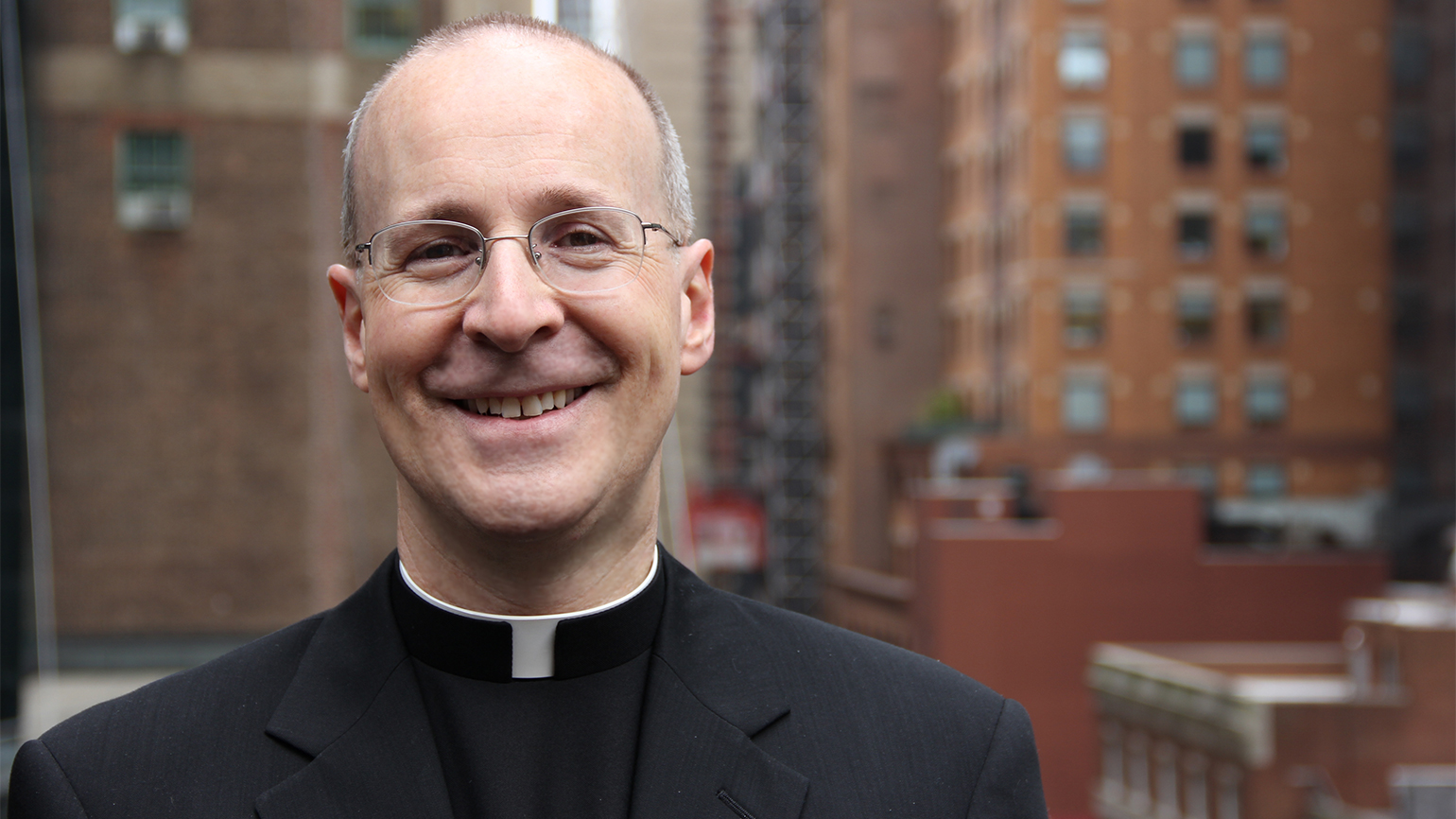
Father James Martin on the Sacredness of Laughter

We spoke to Father James Martin, Jesuit priest and best-selling author of Between Heaven and Mirth: Why Joy, Humor, and Laughter Are at the Heart of the Spiritual Life, about the sacred link between humor and spirituality…

What first got you interested in the spiritual side of humor?

As I went around the country talking about my book My Life with the Saints, I found that people were often shocked by stories I shared of the humor of the saints. It reminded me that we don’t understand the place of joy that humor and laughter in the spiritual life.

Why do you think that is?

I think we have a fundamental misunderstanding of who Jesus was. He was fully human. So he had a fully human sense of humor. The image Jesus chooses for heaven is a banquet or a party. It’s very significant that his first miracle is to make more wine at a party. That symbolism would not have been lost on the people of his time. Jesus’ miracles would have been occasions of joy for people.

How do you think humor is significant when it comes to a relationship with God?

God became human so we would be able to approach and encounter God. If we always see God as serious and judging and angry, then our ability as people of joy to relate to God is going to be limited. It’s going to really prevent our entering into a relationship with God on a deep level because we’re going to be afraid of God. You might even think, for example, that God frowns on laughter, which couldn’t be further from the truth.

You mention humor, joy and laughter as virtues. Can you explain what you mean by that?

Jesus continually says, “I have come so that your joy may be complete.” Humor is a virtue because it helps us not to take ourselves so seriously. Laughter is an enjoyment of God’s world. It’s a wonderful gift from God. Each of these things is holy in their own right.

Are there any Biblical examples of Jesus’ humor?

Sure! Many scripture scholars say we don’t understand the humor of first-century Palestine. Many of the parables probably would have been laugh-out-loud funny. Stories about a man who built his house on sand or gave his son a scorpion instead of a fish would have been seen as humorous. Jesus told clever stories and funny parables.

One of my favorite examples of biblical humor is that at one point Jesus said to the Pharisees, “You strain out a gnat and you swallow a camel.” The Aramaic word for camel is gamlâ’ and for gnat is qalmâ’. It’s a little wordplay. He’s doing a little pun. You can imagine his hearers thinking that’s pretty clever. But when we translate it into English, it doesn’t retain that sense of playfulness.

Are there any Old Testament examples of humor that we gloss over?

The first one would be Abraham and Sarah. When Abraham and Sarah, who are very old, find out they’re going to have a child, Sarah laughs at God. God says, “Why did you laugh?” and she says, “I didn’t laugh.” God says, “Oh, yes, you did.” And when Abraham and Sarah’s son is born, they name him Isaac, which means “he laughs.” The beginning of the three great monotheistic religions is a laugh!

I’ve never thought about it that way! All of my associations with that story are negative—Sarah disobeying God by laughing…

Right! But if I walked up to a 90-year-old woman and asked when she’s going to have a baby it would be funny!

So what do you think the spiritual significance of laughter is?

I think [laughter] is a spiritual release. Many times we laugh at something that is ridiculous so there’s a sense of perspective that the world is not perfect. If we can laugh at ourselves, it’s even better. It’s a sense that we’re not God. Even if we just laugh at a joke, we can enjoy life. There’s a release of spiritual energy. It’s like saying “I love this life” or “I enjoy this world” or “I’m not so perfect after all.” How can we say that each of those insights is not spiritual?

How can we cultivate a more joyful perspective of the world?

Well that’s a good question. I think the first thing would be to interact with people who have a joyful perspective and try to see the world through their eyes. The second thing is creating a joy inventory where you list all the things that make you joyful or make you laugh. And the third thing is taking every opportunity to laugh at yourself. That’s invaluable. There’s good laughter and there’s bad laughter. Good laughter builds up, bad laughter tears down. Good humor is self deprecating. Bad humor tries to make fun of someone else. It’s important to keep those things in perspective.

Read more: Divine Humor: How Laughter Benefits Us Spiritually

Far from Home

I felt a pang of sadness watching the farms and fields of Kansas shrink outside my window as the plane rose into the sky.

My visit to my hometown of Wichita from college in San Diego had been painfully short.

My cousin had passed away, and the cheapest flight I could get to attend his funeral routed me through Minneapolis, Detroit and Memphis—22 hours of travel for only 13 short hours at home.

Just enough time to pay my respects and see my family, but not enough to even call any of my friends, let alone see them.

I didn’t have the money to return to Wichita often, and I missed my friends back home, especially my best friend, Sherry, and our crew from church.

We’d sung in the choir, gone roller skating, worked in youth groups together ever since middle school. A trip home without seeing them, especially when I needed comfort so badly, just felt incomplete.

I walked slowly through the Detroit airport to my connecting flight in a desolate mood. Yet an­other long layover, dozing fitfully in waiting-area chairs and eating bad airport food.

“Carlota!” I heard someone shout behind me.

Was someone shouting for me? Or for a different Carlota? I wondered. Who would know me here, a thousand miles from home?

I turned around. “Sherry! I was just thinking about you!” I exclaimed, amazed. “I was just back in Wichita for my cousin’s funeral. I wished I could have stayed long enough to see you and the gang.”

We gave each other a big hug. “When’s your flight?” Sherry asked.

I rolled my eyes. “Not for another two hours,” I said.

“Walk me to my gate,” Sherry said. “We’ll catch up.” Sherry explained that she was here because our former pastor, who had moved to Detroit, had been honored in a special ceremony there. “Our flight back to Wichita has been delayed.”

“Our flight?” I asked.

Sherry pointed toward the gate. There, gathered in the waiting area, were all of my old church crew, in town for the ceremony—and to give me the comfort I so longed for.

Download your FREE ebook, Mysterious Ways: 9 Inspiring Stories that Show Evidence of God's Love and God's Grace

Family Finds Comfort in a Mysterious Camera

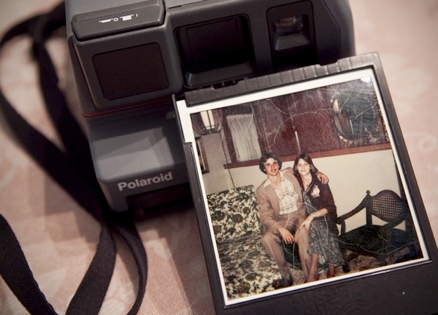
Last Thursday, 13-year-old Addison Logan of Wichita, Kansas, was spending time with his grandmother, Lois, visiting garage sales around town. About a mile away from his grandmother’s house, one item caught his eye. An old Polaroid camera.

How much did it cost? Only a dollar. After all, Polaroid doesn’t make the cameras or their film anymore. It’s obsolete. But even the popular photo-sharing app Instagram has recognized how iconic the look of those instant photos has become. There’s a whole cult of devotees out there nostalgic for the square, washed-out, glossy photos. Addison figured his dollar was money well spent, if he could get the camera working. It was, in his words, “pretty cool.”

When he got home, Addison got on the Internet and looked up how to take a picture with his garage-sale find. He managed to open up the camera. He was surprised to find an exposed photograph still stuck inside. It had been there for Lord knows how long.

Addison took the photo out and studied it. A young man and woman, sitting on a sofa. Addison took it to his grandmother.

Lois held the photo in her hands. “Where did you get this?” she asked her grandson. He told her.

“Addison, this picture is of my son, Scott. Your uncle,” Lois said.

Scott had died in a car accident 23 years before. Lois guessed the picture was taken 10 years or so before his death. Never seen by her, or anyone in the family, until now. The picture was taken with an old girlfriend. The home selling the camera had no connection with Scott, or the girlfriend. The seller said he’d picked it up at another garage sale, but he couldn’t remember when or where.

“I’m just shocked,” Addison’s father and Scott’s brother, Blake, told The Wichita Eagle. “The more time that passes, the more in disbelief I am. So many things have to come together for that to happen. It just seems supernatural. It’s almost like he’s reaching out to us, saying he’s still with us.”

At Guideposts, we’ve heard so many stories of a mysterious photograph providing solace to loved ones. In our June issue, you’ll read a story from Marie Olson of Colton, Oregon, who found comfort at a campsite while greiving the loss of her husband.

And its not just comfort that can be found in a photo—a discovered snapshot can also fulfill a wish, as it did for Kathy Pierce of Houston, Texas, on her trip to Israel.

Has a photograph comforted you in an unexpected way, a snapshot you discovered under strange circumstances? Did a photo reveal something wonderful and previously unknown? Send your photo to us, and your story. We’d love to share it with our readers!

cc
Read morhere: http://www.kansas.com/2012/05/25/2349030/wichita-boys-garage-sale-buy-holds.html#storylink=cpyThfccccc
Read more here: http://www.kansas.com/2012/05/25/2349030/wichita-boys-garage-sale-buy-holds.html#storylink=cp

Faith Provides Shelter from the Storm

A teacher’s supposed to have the answers. I can teach my fourth graders the state capitals and how to write cursive; I can list all the books in C. S. Lewis’s Chronicles of Narnia series.

But I can’t explain why some children died in the tornado that hit our school last May and the ones with me survived. All I can tell you is that the tragedy doesn’t mean God was absent.

My colleagues and I went back three weeks later to see the devastation where Plaza Towers Elementary once stood. Most of the debris had been hauled away. We brought chalk and Sharpies to write on the remaining rubble, a way to say goodbye. I stepped over concrete blocks to where my classroom had been.

“The best class ever,” I scrawled on the dusty linoleum. My first class, my first full year of teaching. I never imagined it ending like this. From here I could see the path we’d taken, down the hall and into the bathroom, our shelter from the storm. I remembered everything.

The Sunday before the storm, I was in our living room, getting things together for school. Tornado warnings had run on TV all weekend. They’re a fact of life here in Oklahoma, and our school frequently ran tornado drills. But I had never been in a twister’s path. The thought terrified me.

I was trained to teach and respond to a disaster, but was I ready? Every weather update increased my anxiety. Lives were in my hands. What if I faltered under pressure when my students needed me most?

I was putting away some manila folders when it happened. I looked up, and the living room wall seemed to melt away. In its place was an image of destruction. I could see myself walking in debris: wood, dirt, glass, bricks.

I closed my eyes, wishing the vision away. I opened them. It was still there. The disaster had come. And I wasn’t brave, I was completely paralyzed.

I called to my husband. “Preston, come here!” He came running. I rubbed my eyes; the image vanished. “Something bad is going to happen,” I told him, hardly able to breathe. And I was powerless to stop it.

“We should pray about it,” Preston said.

All at once, Psalm 91 came to mind. In my Bible study, we’d been analyzing it. “He will cover you with his pinions, and under his wings you will find refuge….”

Pinions, we’d learned, were the strongest feathers in a bird’s wing, able to withstand the most pressure without breaking. The psalm wasn’t just about protection… it was about making us strong in the face of danger. That’s what I needed. Preston and I prayed, and I felt my courage rising.

Monday at school started out quiet, but the tornado warnings persisted. In the afternoon, I gathered my children around me to read C. S. Lewis’s The Magician’s Nephew, but didn’t get far.

“All teachers and students, please seek safety immediately,” our principal announced over the intercom. “Tornado drill.” The sky was dark, lightning flashed, thunder roared, hail pelted the roof. In the distance, sirens wailed.

This is no drill. I felt the panic, the paralysis creep in. But I remembered I had to draw on God’s strength. “Follow me, students,” I said to my class. I led them into the hall, just as we’d drilled.

The other teachers and I debated whether to take an additional step—cramming into the bathrooms, which at least were away from the windows. I spoke up, as did some others. “Let’s go.” Forty of us crowded in. Some crawled under sinks, some huddled in stalls.

The approaching tornado was deafening. The ground shook. The power flickered, and the light streaming in from the hallway faded. The air smelled dank, rotten.

My phone rang. Preston! I held it to my ear. “Nikki,” he said, “I love you.” “I love you too,” I shouted back. The line went dead. Then the power went out completely.

My fear was so great I couldn’t think of what to do. Then those words from Psalm 91 came to me, the lines I’d prayed with Preston. “Crouch down,” I urged the children. “Backpacks and books over your heads. Fold your legs under you. Keep your backs to the wall.”

I sank down by the doorway. One girl started crying. I threw my arms around her.

I prayed, calling out to the screaming winds, “He will cover you with his pinions, and under his wings you shall find refuge….” Others prayed too.

The air pressure plummeted. Walls crashed, the roof lifted up, pipes broke, shards of metal and concrete flew. The wind sucked the air out of my lungs. I kept praying. Then I felt a hand against my back. Someone comforting me. I glanced up. No one was there. I shut my eyes again.

The hail stopped, the whipping winds ceased. The next time I looked up, there was nothing but sky above us. I peered out the doorway. The hall wasn’t there anymore.

We stepped carefully over the concrete blocks and bricks. First responders guided us out, holding our hands. I looked over the debris. Fallen beams, rain-soaked insulation, shattered glass. Devastation no one could have been prepared for.

Yet I’d seen it before, that Sunday. Everything, the awesome destruction, laid out before me. I had been ready. When the tornado came, I’d done what I thought I couldn’t—what I needed to do.

I wanted to thank God for that. So I’d come back, weeks after the disaster, Sharpie in hand. I walked through the rubble to the bathroom.

I knew what I wanted to write, what I had to say. The only answer I had found amid all the unanswerable questions. But the words were already written there by someone else. “Under his wings you shall find refuge….”

I don’t know why terrible things happen. But I know how we get through them. We are covered by pinions, the strongest feathers, ready to face whatever comes next.

Download your FREE ebook, Mysterious Ways: 9 Inspiring Stories that Show Evidence of God’s Love and God’s Grace

Faith Behind Bars: A Falsely Accused Child Finds Hope in God

Never did Hillary “Henry” Tumwesige think he’d spend the last 2 years of his childhood in prison for murders he didn’t commit.

In 2008, Hillary was just a normal 15 year-old boy growing up in Hoima, Uganda, a city in the country’s western region.

He’d wake up early in the morning to help his mother make chapatti (unleavened bread) to sell at local restaurants. Then, he’d head to school with his two younger brothers, Joseph and Herbert, where he was ranked first in his class. Hoping to achieve his dreams of going to university—a feat neither of his parents were able to do—he’d be in school from 8:00 a.m. to 5:00 p.m., then he’d study with other students until 9:00 p.m.

READ MORE: DEFEAT WORRY WITH THESE 3 PROMISES OF GOD

On Sundays, his family would go to church. That was where he built the strong faith he would need to get through the worst ordeal of his life.

On a sunny day that May, his whole life changed. Hillary went to school as usual, but during his entrepreneurship class, his headmaster walked through the door and motioned for Hillary to leave with him. Always obedient, Hillary followed anxiously after his headmaster, wondering what instructions he would have to follow.

Waiting around the corner for him was a police officer. As Hillary’s classmates looked on, the officer held Hillary up against a wall and arrested him for the murder of a man who was found buried in Hillary’s family’s backyard. When he was put into the police vehicle, he saw his younger brother Joseph and his mother in the car, both also arrested for the same crime.

Though he was shocked that they were all being accused of a crime they didn’t commit, “I never reacted negatively,” Hillary tells Guideposts.org of his arrest. “When I was taken to the police captain, I expected to be released in three days,” he says, remembering what he’d always heard about the procedure for people who had been arrested by mistake.

The night before his arrest, Hillary’s youngest brother Herbert had run outside to meet Hillary in front of their home in a panic, explaining that a man had been murdered in their yard. The man was an employee of Hillary’s father who had recently stolen Hillary’s mother’s chapattis and their savings from their home before going into hiding. A mob spotted the man in town and, despite Hillary’s father’s attempts to restrain them, the mob killed the man in front of Hillary’s home and left him dead at about 8:30 a.m., when Hillary and his brothers had been at school.

Feeling the police were too corrupt to be trusted not to accuse him of the murder, Hillary’s father buried the man in the backyard himself. None of them ever dreamed that Hillary, his mother, father and little brother Joseph would all be arrested and accused of the crime.

The three days Hillary thought it would take for him to be released came and went, uneventfully. Though Hillary’s mother was released after two weeks in prison, Hillary and Joseph and their father stayed in the Hoima prison for two months before getting a court hearing.

“I still had hope that I was going to be released,” he says, until he learned in court that his case had to be heard by the high court and they would have to wait until the next time the high court met. “‘When will the court sit?’ I asked, and the magistrate told me he didn’t know the time, the date, the hour and even the judge who was going to work upon our case. The only thing [to do] was go, relax and wait until that date. That’s when I realized, ‘Uh oh. It’s going to take a long time.’”

Hillary and Joseph were moved to Ihungu Remand Home, a juvenile prison in Masindi, to wait for the high court to meet, while their father remained in the Hoima prison.

Every day in prison, Hillary says, “I was praying and asking one thing: for God to help me out.” In the meantime, he made sure to take care of his little brother as best as he could. Being the great student and obedient child that he was, Hillary soon became the katikiro (prime minister) of his fellow juvenile prisoners.

“I was the one taking care of them,” he says. “I would take them to the hospital if they got sick. I took them to the public hospital to only get help from one doctor. Unfortunately, this one doctor wasn’t working appropriately.”

Hillary says the doctor would neglect them because they were juvenile prisoners. The doctor would make them wait very long periods of time and only treat one or two of them before leaving the office, or treating the doctor’s close friends first, making the juveniles spend the whole day standing around waiting for the doctor to treat them. “The doctor wasn’t having any empathy on the patients,” Hillary says, and it upset him greatly.

“I told God, if I am released, I will become a doctor and I will make a difference.”

As the months went on, however, it was looking less and less likely that Hillary and Joseph’s case would be heard quickly. To make matters worse, in December 2009, one of the juvenile prisoners died of asthma, but Hillary was accused of that death as well, since he was the leader, all but ensuring he would either face the death penalty or spend the rest of his life in prison.

His mother would come to visit him and Joseph whenever she could and she helped them stay strong as they waited for justice to be served.

READ MORE: FINDING STRENGTH IN THE JOY OF GOD

“Mom used to tell me always, ‘Don’t give up [Hillary] with prayers. Keep your faith strong. Nothing lasts forever, except the Word of God.’ And she was right.”

Hillary continued to fast and pray while in prison that God would deliver him and Joseph from this nightmare.

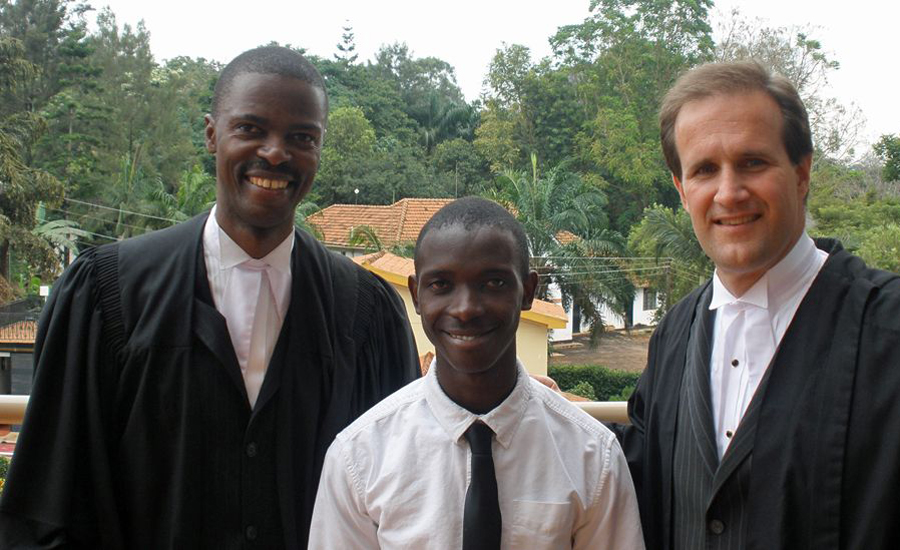
After 18 months, a team of pro bono lawyers, including Guideposts writer Jim Gash, helped to clear Hillary’s name of the first murder, along with Joseph and their father. But Hillary had to remain in prison alone as he faced the second murder charge. Six months later, at the age of 17, he was released on probation before finally being cleared of the second murder charge in 2015. Both brothers were enrolled in the Restore Leadership Academy so they could catch up on the years of education they missed.

Hillary never forgot his promise to God and went back to his studies more determined than ever to be a doctor. Despite every setback, Hillary kept the faith and at age 23, is now studying to be a medical doctor at Kampala International University. He will graduate in 2020.

As for the last years of his childhood that he lost to being falsely accused of horrific crimes, Hillary says he has no anger at all. “I believe God had plans for me,” he tells Guideposts.org. “All that happened happened for His name to be glorified.”

“It’s hard to believe the conditions I went through. I can’t imagine [going through] the suffering I went through again,” says Hillary, “But I’m still willing to go back to the prison to give a message of hope to the prisoners that, after every suffering, God is in control.”


Facebook Strangers Share More Than a Name

Today, technologies like Facebook connect people in ways few could have ever imagined. In some extraordinary cases, those ways seem to be aided by some unseen force…

Lael Kershaw Boyd of Mt. Pleasant, South Carolina, wasn’t getting the joy out of decorating for Christmas this year. Her mother had passed away in March, and she was missing her terribly. Lael took a break and went on Facebook.

“With a name like ‘Lael,’ I’m always excited and interested when I hear or learn of another Lael,” she told us. “Where did ‘that’ Lael get her name?”

That day, she searched for Lael and found one living about about 45 minutes away. She messaged her, never expecting to hear back. But she did:

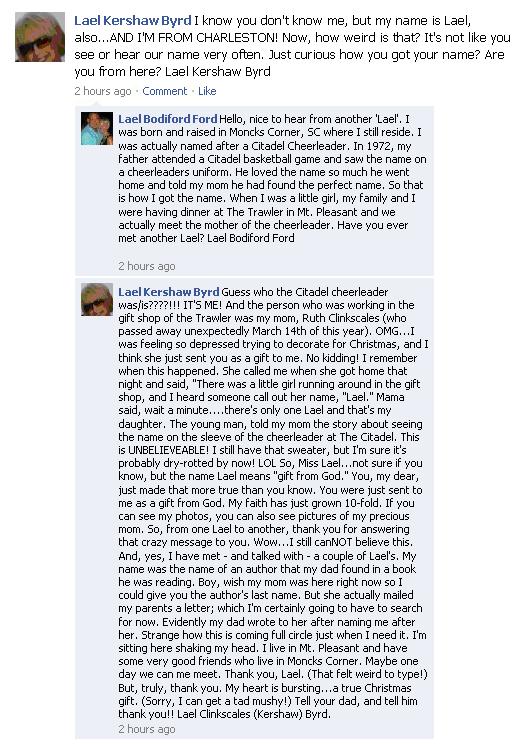
I know you don't know me, but my name is Lael, also...AND I'M FROM CHARLESTON! Now, how weird is that? It's not like you see or hear our name very often. Just curious how you got your name? Are you from here? Lael Kershaw Byrd . Hello, nice to hear from another 'Lael'. I was born and raised in Moncks Corner, SC where I still reside. I was actually named after a Citadel Cheerleader. In 1972, my father attended a Citadel basketball game and saw the name on a cheerleaders uniform. He loved the name so much he went home and told my mom he had found the perfect name. So that is how I got the name. When I was a little girl, my family and I were having dinner at The Trawler in Mt. Pleasant and we actually meet the mother of the cheerleader. Have you ever met another Lael? Lael Bodiford Ford . Guess who the Citadel cheerleader was/is????!!! IT'S ME! And the person who was working in the gift shop of the Trawler was my mom, Ruth Clinkscales (who passed away unexpectedly March 14th of this year). OMG...I was feeling so depressed trying to decorate for Christmas, and I think she just sent you as a gift to me. No kidding! I remember when this happened. She called me when she got home that night and said, "There was a little girl running around in the gift shop, and I heard someone call out her name, "Lael." Mama said, wait a minute....there's only one Lael and that's my daughter. The young man, told my mom the story about seeing the name on the sleeve of the cheerleader at The Citadel. This is UNBELIEVEABLE! I still have that sweater, but I'm sure it's probably dry-rotted by now! LOL So, Miss Lael...not sure if you know, but the name Lael means "gift from God." You, my dear, just made that more true than you know. You were just sent to me as a gift from God. My faith has just grown 10-fold. If you can see my photos, you can also see pictures of my precious mom. So, from one Lael to another, thank you for answering that crazy message to you. Wow...I still canNOT believe this. And, yes, I have met - and talked with - a couple of Lael's.  My name was the name of an author that my dad found in a book he was reading. Boy, wish my mom was here right now so I could give you the author's last name. But she actually mailed my parents a letter; which I'm certainly going to have to search for now. Evidently my dad wrote to her after naming me after her. Strange how this is coming full circle just when I need it. I'm sitting here shaking my head. I live in Mt. Pleasant and have some very good friends who live in Moncks Corner. Maybe one day we can me meet. Thank you, Lael. (That felt weird to type!) But, truly, thank you. My heart is bursting...a true Christmas gift. (Sorry, I can get a tad mushy!) Tell your dad, and tell him thank you!! Lael Clinkscales (Kershaw) Byrd.

For two people with the same name to find each other on Facebook isn’t amazing on its own. But to find the one that was named after you? And what are the chances that the younger Lael would share the story of meeting the other Lael’s mother, at the exact moment when the other Lael was missing her mom so much?

A gift from God indeed.

Congratulations to Laurie Savage, winner of the last giveaway of 2010. Laurie will receive the 2010 edition of His Mysterious Ways!

Merry Christmas everyone! I’ll be back in the New Year to share more incredible stories of providence, serendipity and kismet that we call Mysterious Ways.

Facebook Live: When Bubba Met God

A freak accident left James “Bubba” Bay convinced he’d die. Until a figure of light brought him hope—and a message he’ll never forget. Now, Bubba is sharing the story of his near-death experience in a special Facebook Live event.

Read his story from Mysterious Ways Magazine, Bubba’s Miraculous Encounter with God.

Join us May 30 at 3 p.m. EST at Facebook.com/MysteriousWays.

Have a question for Bubba? Email us in advance at mw@guideposts.org

Experience Has Taught This Nurse to Trust Her Intuition

I was 19 years old, studying for my associate’s degree in nursing. It was the winter of my last semester, and I was headed for the library. “Come eat lunch with us and study for the psych quiz tomorrow,” one of my classmates said. “The neurology exam isn’t until next week. We can cram for it later.” I shook my head. I couldn’t explain it. But I just couldn’t shake the feeling that I had to study my neurology materials for class right now.

I found a secluded spot in the library, peeled off my heavy wool coat and opened my textbook to a sec­tion the teacher hadn’t yet covered—the signs and symptoms of head injuries. I found myself absorbed in the material. Like nothing else in the world mattered. When I glanced at my watch, three hours had passed. I hurried home to my mother’s…and found Mom lying on the porch steps. She’d slipped on a patch of ice.

I helped her to the sofa. One moment she was alert, the next she was groggy. A list of symptoms popped up in my mind. Things I’d just read about. I rushed Mom to the hospital, where she underwent surgery to remove a blood clot in her brain. “Had she gone to bed tonight,” the neuro­surgeon told me later, “she probably would’ve died in her sleep.”

That was my first experience with nurse’s intuition. But not the last. I’ve been a nurse for more than 40 years. I’ve worked in every field the profes­sion has, from critical care to geron­tology. I’ve authored more than 100 articles in medical journals, I’ve written four award-winning nursing text­books and I have a Ph.D. in health and human services. My expertise has served me well.

It’s my intuition, though, that’s been my greatest guide. It has told me things about my patients that no chart, journal or textbook ever could. Though some scientists may scoff at the phenome­non, for which there is little beyond anecdotal evidence, there’s no deny­ing its existence. Whether you call it a hunch, a sixth sense, a nudge or a special inner knowing, nurses have been relying on their instincts to treat the patients in their care since before the days of Florence Nightingale.

Some, it seems, use it more than others. Nursing is both art and sci­ence, and not every nurse is intuitive. It’s a skill that must be honored and honed. In fact, according to the Uni­versity of Minnesota, it’s more experienced nurses who are more likely to use intuition. Research also indicates that those who are intuitive share certain traits. They’re introspective, highly observant. And they listen, really listen, to people.

READ MORE: CHECK OUT THESE REMARKABLE NURSING TALES!

Take nurse practitioner and instructor Sylvia Gardner, a former colleague. She re­calls a patient, an alcoholic, who walked into her clinic in West Virginia one day, limping and staggering. He claimed he hadn’t had a drink in days. No one believed him. “Everyone assumed he was fine,” Sylvia says. “They said he just ‘needed to go home and sleep it off.’”

But Sylvia had a different reaction. Warning bells went off in her head, unlike anything she’d ever experienced. She listened to her inner voice and examined the patient more closely. In fact, he had a fracture in his leg. Had Sylvia suc­cumbed to stereotypes, the patient would’ve been discharged and for­gotten. “I learned very early on,” Sylvia says, “that you simply cannot short­cut listening.”

Listening to oneself is important, even if doing so seems unorthodox. That’s what happened to post-anesthesia care nurse Kimberly Full­er, who relied on her instincts to treat a diabetic patient in his thirties three days after he underwent a cardiac catheterization and stent placement. The doctor had already written the patient’s discharge orders. But Kim­berly had a funny feeling about the “funny feeling” the patient casually mentioned in his right arm. She recognized the patient was in trouble, even though heart attack victims typically feel discomfort in their left arm, not their right.

“I know your wife’s on her way to pick you up,” Kimberly told the patient, “but let’s get a quick EKG. If everything’s okay, we’ll send you home.” The patient was annoyed by Kimberly’s interference. Until the test proved Kimberly’s own funny feeling and the patient was rushed back into the cath lab for another stent placement.

There’s no doubt that intuitive abili­ties like Kimberly’s stem, to a good degree, from experience. But part of a nurse’s intuition remains a mystery. From my numerous interviews with fellow nurses, it’s clear that many see their instincts as closely intertwined with spirituality. Could it be that God equips nurses with an intuitive gift, one that helps them see what others miss?

Gwen Skidmore, a longtime ER nurse, certainly thinks so. She told me her intuition is a “spiritual thing” that makes her hyperaware when something isn’t right. She prays for God’s guidance before each and every shift. After praying, she’ll often get a hunch that urges her to “do something more” for a particular pa­tient. She describes it as an uneasy feeling that propels her to get help before a crisis occurs. “I just know,” she says. “It’s not anything you can learn. There’s often just something about a patient that you can’t put your finger on.”

Gwen’s interventions have helped alter the course of many lives. So much so that patients seek her out to thank her. Doctors too. “I always tell new nurses to ‘go with your gut,’” she says. “It will never fail you.”

That’s a lesson I learned the night my instincts saved my mother’s life. And again, seven years later, on the last day of my Bachelor of Science nursing program. My professor ended class with words that would define the rest of my career: “Whenever you have a hunch about one of your patients, pay special attention. It will lead you in a direction that no theory ever can.”

The next day, I headed for the hospital, where I worked as a gastro­enterology nurse clinician. It was a Friday, and the support staff had gone home for the day. So it was up to me to wheel my patient, Roger, to his car. He’d just received a clean bill of health after an outpatient pro­cedure on his esophagus. On the elevator down to the lobby, though, a hunch like my teacher described completely overcame me.

When Roger and I exited the elevator, I ducked into the ladies’ room and grabbed a paper towel. I jotted my home number on it, something I nev­er did, and gave it to Roger’s wife. Just in case, I told her. Early the next day, the phone rang. It was Roger’s wife. She said Roger’s skin was clammy and he was vomiting blood. I hung up and immediately called for an ambulance. I met Roger and his wife at the ER. If he hadn’t gotten there just when he did, he would’ve bled to death.

Somehow my intuition got me to do something I’d never done before. Just the right thing.

Everyday Wonders

As I ponder the start of spring, I can’t help but think of the words of the theologian Karl Barth, “I find myself confronted by the wondrous reality of the living God.”

Although I can’t see all of nature at work, what I do see marvels me. The days are getting longer, sun rays warmer, and after a long gray winter, the world will grow green again!

Yet unless we deliberately stop to behold the signs of the season, we will miss them. The demands of everyday living can distract us from beholding God’s wondrous works. Even in the midst of hardships, if we look… we will find God’s miracles all around us. In the book of Job, a younger man tells him, “Hear this, O Job; stop and consider the wondrous works of God.”

In his autobiography, A Long Walk to Freedom, Nelson Mandela recalls the scene when he laid eyes on his granddaughter for the first time.

During the 14th year of imprisonment, Mandela gained permission for a visit from his daughter. She ran across the room and embraced him. He had not held her since she was a young girl.

Then his daughter placed her own newborn baby into his callused, leathery hands. He wrote, “To hold a newborn baby, so vulnerable and soft in my rough hands, hands that for too long had held only picks and shovels, was profound joy. I don’t think a man was ever happier to hold a baby that day.”

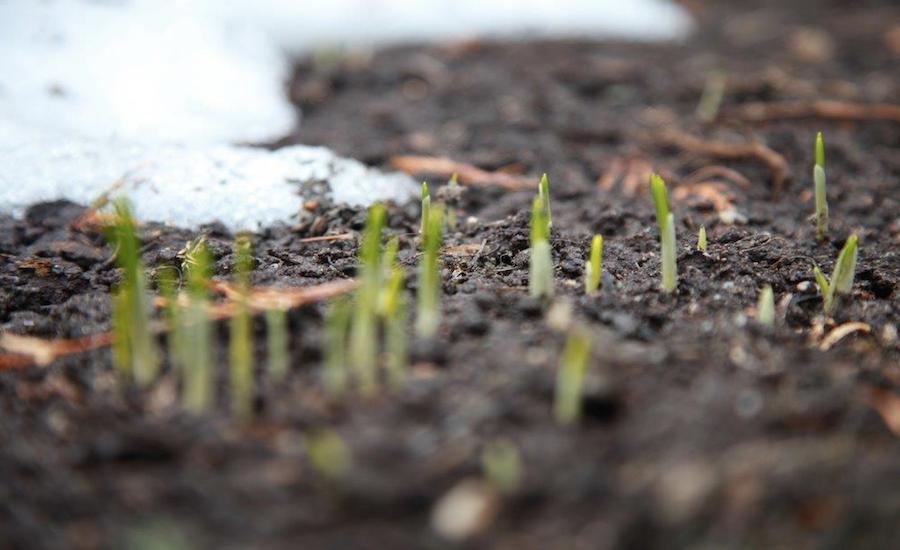
Whether we stop to embrace a newborn baby, observe spring’s tender sprouts, or see the sun setting at the end of a busy day, our spirit is renewed with hope as we consider God’s awesome handiwork. “His wondrous works declare that He is near.” (Psalm 75:1)

Albert Einstein said, “One cannot help but be in awe when he contemplates the mysteries of eternity, of life, of the marvelous structure of reality. It is enough if one tries merely to comprehend a little of this mystery every day. Never lose a holy curiosity.”

Do you have a holy curiosity? What in the world around us lifts your spirit? How has the wonder of God’s marvelous works shaped your spiritual life? Tell us your story.

Lord, no matter what a day holds, help me to stop and pray that I might see and experience Your wondrous works!

Emergency Landing

In 1971, as a newly licensed pilot, I was flying with my flight instructor from Vero Beach, Florida, to Longview, Texas. That night we hit bad weather over Mobile, Alabama, and air-traffic controllers suggested we fly north toward Jackson, Mississippi, to avoid an approaching storm.

As we rose above the clouds, I noticed the instrument panel lights flicker. A minute later, radios and instruments started going dead, then all our lights went out. Our situation was desperate, and as we flew an emergency triangle, we prayed for protection. We decided to drop below the clouds and try to see the ground. Soon we spotted the distant lights of Jackson and headed for the airport’s rotating beacon.

We circled the control tower twice, then got a green light to land. Without any electrical power, we had to lower the landing gear manually. At that moment, all the strobe landing lights came on, and slowly, safely we touched ground. Then the landing lights went off. That’s odd, I thought. At least they could have waited until we taxied to the ramp. It was even odder when a man from the tower asked us, “Who gave you permission to land?”

And then, little by little, we learned that no one in the tower had seen us circling overhead. The green light had been flashed by a traffic controller, who was explaining to his visiting pastor what he would do in case a plane ever attempted to land without radio communication. The emergency landing lights were part of the same demonstration.

Though the whole story can never be explained, I accept it with gratitude, knowing the Lord is watching out for me every day.

Easter Monday

Got a full stomach from all those chocolate Easter eggs? Picking out shreds of that green plastic Easter Bunny grass from beneath the couch and under the dining room table? Bringing a baggie to work of some of those leftover jelly beans? Ready to move on and put Easter behind you?

Stop. Easter is the holiday that lasts all year long. We should be able to wish each other “Happy Easter!” 365 days of the year. After that first Easter, it is here. It is always here.

So often we use spring as a metaphor to describe Easter. The daffodils coming up, the brown grass turning green again, the whole world coming to flower–aren’t these all signs of the Resurrection and new life?

But spring is cyclical, the seasons blend into one another, the rains of April leading to the flowers of May to the cherries of June to the autumn leaves of October to the harvest of November to the frigid snows of January to the bursting of the crocuses in March.

The Resurrection trumps all that. It is something entirely new. The world has been turned upside down. In Paul’s words, “We know that Christ has been raised from the dead and He will never die again. Death no longer has power over Him.”

And it no longer has power over us. So pass out those jelly beans and chocolate eggs and Easter Bunny grass all year long. You have gotten to Easter. You don’t have to ever leave it again.

There is a wonderful story a writer, Patt Barnes, told in Guideposts many years ago. He went to the cathedral on an Easter Monday and as he was leaving, he greeted an old disheveled woman sitting on the steps, selling flowers. He bought a boutonniere for his lapel.

“You’ve been sitting here for many years now,” he said. “And always smiling. You wear your troubles well.”

“You can’t reach my age and not have troubles,” she replied. “Only it’s like Jesus and Good Friday…”

“Yes?” he asked.

“Well, when Jesus was crucified on Good Friday, that was the worst day for the whole world. And when I get troubles I remember that, and then I think of what happened only three days later–Easter and our Lord arising. So when I get troubles, I’ve learned to wait three days…somehow everything gets all right again.”

Those words stayed with him whenever he faced trouble. “Give God a chance…wait three days.”

Happy Easter today and tomorrow and many days to come.

Read More: Mornings with Jesus Devotional