Embrace God's truth with our new book, The Lies that Bind

Lemon-Ricotta Pancakes

This is the most requested recipe from Shutters on the Beach, a seaside resort on the Santa Monica coast. There must be something irresistible about these remarkably light pancakes with a tangy whiff of lemon. The secret is to fold fluffy egg whites into the batter and not to overdo the sugar. I’ve been known to eat them for dinner. Fresh berries on the side add a splash of color.

Ingredients

4 large egg yolks

¼ cup granulated sugar

2 teaspoons grated lemon zest

½ teaspoon lemon extract or lemon oil

¼ cup cake or all-purpose flour

Pinch of kosher salt

1 cup ricotta cheese

2 tablespoons unsalted butter, melted and cooled slightly

4 large egg whites

Canola oil or nonstick spray, for cooking

Confectioners’ sugar, for serving

Mixed berries, optional

Preparation

1. In a medium bowl, combine the egg yolks, sugar, lemon zest and lemon extract; whisk until light in color and aerated, about 2 minutes.

2. Whisk in the flour and salt, then whisk in the ricotta cheese and melted butter until just incorporated.

3. In a separate bowl, whisk the egg whites to stiff peaks. Fold them into the batter, being careful not to overmix. The batter can be prepared the night before and refrigerated.

4. Heat a griddle or a large sauté pan over medium heat and coat it lightly with oil. Pour ½-cup circles of batter and cook until bubbles begin to form on the tops of the pancakes and the bottoms are golden. Then flip carefully and continue cooking until the pancakes are golden on the other side and dry in the middle.

5. Transfer the pancakes to serving plates and sprinkle with confectioners’ sugar, or keep them warm in a 200°F oven until ready to serve. Serve with syrup and berries on the side.

Makes 6 large pancakes; serves 2-3

From the book The Summertime Anytime Cookbook: Recipes from Shutters on the Beach by Dana Slatkin. Copyright © 2008 by Beverly HIlls Farmers Market, Inc. Published by Clarkson Potter/Publishers, a division of Random House, Inc.

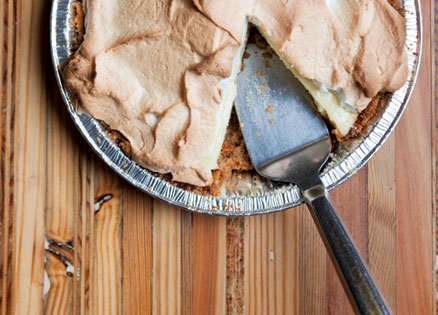
Lemon Icebox Pie

Pie Lab, a Greensboro, Alabama restaurant specializes in, well, pies–and bringing the community together. Try this lemon delight, a perfect ending for a summer meal!

Ingredients

Graham Cracker Crust

¾ c. graham cracker crumbs

¼ c. sugar

3 tbsp. melted butter

Filling and Merengue

3 eggs

1 ½ cans sweetened condensed milk

⅓ c. lemon juice

3 tbsp. sugar

Preparation

Graham Cracker Crust

1. Mix ingredients together and press into 9-inch pie plate.

2. Cook at 350°F for about 7 minutes (before pie filling goes in).

Filling and Merengue

1. Preheat oven to 350°F.

2. Separate eggs. Place yolks in a bowl and beat.

3. Add condensed milk and lemon juice; whisk together with yolks. Pour mixture into crust.

4. In separate bowl beat egg whites till stiff, adding 1 tablespoon of sugar at a time.

5. Scrape down bowl and beat 2-3 minutes.

6. Spoon meringue onto pie and bake for 10-15 minutes till browned.

7. Let cool to room temperature and place in fridge for 2-3 hours. Serve cold.

Read about how Pie Lab creates a strong sense of community in Greensboro, Alabama!

Led by Faith to Conquer the Appalachian Trail

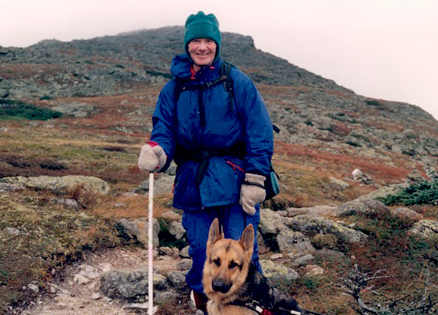
November 8. We'd been on the trail for two and a half hours that freezing morning when I had to stop to thaw out my feet. Orient, my dog, curled up for a quick nap and Dave McCasland, my companion for this final tough stretch in Maine, heated water for cocoa. I yanked off my hiking boots and rubbed my throbbing toes.

There are basically three types of Appalachian Trail hikers: the ones who walk on it just to say they've been there; the ones who hike it in modest stretches; and that driven breed, like me, who try to "thru-hike" from Georgia to Maine, a grueling 2,143 miles of unforgiving terrain that defeats 90 percent of thru-hikers who attempt it. And those were hikers who could see.

For the thousandth time since I left Springer Mountain, Georgia, on March 8, I asked myself what in heaven's name a 50-year-old blind man and his Seeing Eye dog were doing out on the trail. All I wanted now was to reach the end at Mount Katahdin, less than 200 miles away, so that I could go home and stop hurting.

But we had to keep moving if we were going to cover the remaining 15 miles to the town of Monson, our ambitious goal for the day. Yesterday we'd made only 5.3 miles. Ice on Moxie Bald Mountain had given me and Orient fits. I was a mass of scrapes and bruises.

I laced on my boots and called for Orient. "We'll never make Monson at this rate," I grumbled.

Late in the afternoon we reached the confluence of Bald Mountain Stream and the West Branch of the Piscataquis River. Rain and snow had swollen the waters to a torrent. Dave said the river was divided into three branches, each about 30 feet wide. I could hear the roar of the rapids not far downstream, where the three branches joined.

I unharnessed Orient and told him to find his way across. He was a good strong swimmer. "See you on the other side, boy," I said, patting his flank. With arm's linked and backpacks loosened in case we had to lose them in a hurry, Dave and I inched into the icy water, using our hiking sticks for stability. We managed to reach a marshy island safely. But halfway across the next section, waist-deep in the surging current, Dave lost his footing and went under. I heard him sputtering and thrashing. An instant later I was swept off my feet and sucked downstream.

I bobbed to the surface, clawing at the water. Dave had managed to reach shore and was yelling to me. I heard Orient whining anxiously. But I was making no headway toward their voices. In desperation I went to the bottom of the stream and tried to pull myself along with my hands. Each time I shot up for a gasp of air, Dave would frantically try to guide me. Yet his voice was getting farther away and the thundering rapids closer and closer.

I dug my fingers deep between underwater rocks. I was literally crawling underwater. Finally, with my strength about to give, I thought I sounded close enough to grab Dave's outstretched hand.

"Come on, Bill!" he screamed. "Right here!"

I lunged toward the steep bank but all I grabbed was air. I began slipping back into the current and downstream again. Suddenly I hit a branch and held tight. Dave was able to clutch my arm and pull me through the mud and onto the riverbank, where I lay gasping and choking. Orient ran to my side, quaking with fear.

We needed to get warm fast. We had an hour till dark and less than that before hypothermia would begin playing its strange tricks on our minds. We forded the last fork then struggled up a long ridge for half an hour before Dave found a spot to pitch camp. Progress was slowed by our numb fingers, and there was not enough dry wood at hand to build a fire. Finally we got the tent up and ate some food, calories our bodies desperately needed to generate heat.

Shivering in our sleeping bags, an exhausted Orient wedged between us, we kept reliving the crossing. Had we lost our packs we would have been stranded without food or protection; many crossings still lay ahead on the way to Katahdin. Then for a long time we were silent. The only sounds in the dark were the chattering of our teeth and the wind lashing the tent. "Bill," Dave said softly at last, "how are we ever going to make it the rest of the way?"

It was high time I asked that question of myself.

Actually my journey began in a tent not unlike the one Dave and I shared. I had never been much of an outdoorsman, but the previous summer I went camping in Virginia with one of my sons, Billy, and his son, Jonathan. That outing was an attempt to make amends for the life I had led until recently, and the harm it had caused my family, particularly my three kids.

I'd lost my vision completely in 1976 after a lengthy battle with chorioretinitis. But in a sense I'd been a blind man long before that, blind to anything in life that didn't have to do with my own selfish desires. I had four failed marriages to my dismal credit. The first produced my children and the last broke up after I'd gone blind. The common thread in the wreckage of all four was my drinking. After my last wife left me I was content to work as a training director for a clinical laboratory by day, and spend evenings quietly boozing myself into oblivion. I guess I gave added definition to the term "blind drunk."

Then, mysteriously, wonderfully, as if someone else's plan for it suddenly kicked in, my life changed. My other son, Jeff, entered a substance-abuse treatment center. To my dismay, I was asked to spend a week there in family therapy sessions with him—without a drink. I scoffed but I went. I lashed out at counselors and was my usual arrogant self.

But by the end of that week it became painfully clear to me that I was an alcoholic, and I had to stop drinking or I'd die. I stopped with the help of a 12-step program. I also quit a five-pack-a-day cigarette habit. Then, a few months later, I made a Christian commitment. It all happened so fast that sometimes it seemed like it was happening to someone else. But I knew there was a lot of unfinished business in my life. That's why I wanted to get away from it all with Billy and my grandson on that camping trip to Virginia and see if I could begin repairing relationships.

We happened to be camped not far from the Appalachian Trail, and Billy told me a little bit about it. That night, before sleep, I felt so overjoyed at my new life that I begged God to give me a way to show my gratitude.

That's when the dreams started. I saw myself and Orient hiking from Georgia to Maine. It seemed like one of those absurd dreams, as if your mind is just taking out the mental trash in your sleep. Yet the dream came back again and again with such vivid clarity that finally I understood: The Lord wanted to put me on the Appalachian Trail so that along the way I could tell people about my new life.

Which is what I eventually did, when I wasn't falling down and breaking ribs or crawling through boulder fields that sighted hikers negotiated in minutes. Yet it was an inward journey as well. I'd done 85 percent of the trail with just Orient at my side. Since everything you will need on the trail you carry on your back, you soon learn how light you can travel. You also begin to shed emotional baggage: resentments, intolerance, pride.

Hiking the trail was also a way of understanding the burden of possessing too much, both materially and emotionally. Each day and night, I had a clear mind and time to examine who I was, and long-forgotten memories rose to the surface. For instance, I discovered that I'd never really come to terms with the deaths of my parents. I hadn't started out to do the trail as some sort of quest for healing, but that healing happened.

Ever present was the danger of getting too far into myself the farther I went on the trail. I'd heard tales of thru-hikers who never readjusted to life away from the trail. Some hiked it again and again. Those were the ones who were desperately looking for something the trail couldn't give. In a way, they'd become addicted.

Now, shivering in my tent on this frigid Maine night, once again having failed to reach our goal for the day, and having put the lives of my friend and my dog in jeopardy, I had to ask myself if I hadn't become one of those desperate thru-hikers.

After all, no one else was out on the trail this far into cold weather, so there was no one for me to tell about what God had done with my life. The most recent entry on the last trail log, 50 miles back, was three weeks old. I couldn't shake the feeling that I was running on pure ego, the very egotism that had made such a fiasco of my life.

Dear Lord, I finally prayed, if it is your will that we go on, please show me a sign. I was kind of hoping I'd have another dream, this one of me and Orient warming ourselves by a lodge fire and packing for the trip back home to Burlington.

But instead, the most amazing thing happened. Suddenly, inexplicably, I stopped shaking. Just stopped. An incredible warmth came over me. I felt warmer than I'd felt in weeks. Even my toes, which never seemed to thaw out completely, were warm.

More than just physical warmth, it was a warmth that seeped all the way into my soul. "Dave," I said. "Dave, I believe we'll go on."

Thirteen days later Dave, Orient and I reached Mount Katahdin, the end of the trail. Awaiting my finish were several national news crews; my sons; my daughter, Marianne; a host of friends; and 15 people from my church in Burlington who'd driven 36 hours so they could sing "Amazing Grace" to me.

I knew it was the love and prayers of these and many other people that made it possible for me to become the first blind person to ever thru-hike the Appalachian Trail.

But I hiked the trail with Orient not just to show people what a "handicapped" person can do; I also wanted them to see what God can do through the power of his love, the love that guided and protected me every step of the way.

It even kept me warm one night when I felt I'd never feel warm again, a mysterious warmth I will never forget.

One of the things I decided about my life when I was on the hike was how much I wanted to be a family counselor. That's what I do today. I still do a little hiking too. And I still meet a lot of long-distance hikers out there trying to find themselves and resolve issues that can't be resolved by a trail, no matter how long.

As a counselor I know they're just buying time, not solving their problems.

The answer is not on the trail. It's in you and your relationship with God. I've found that when you choose his path, he will do everything to help you stay on it forever.

About the Appalachian Trail

The Appalachian Trail—the longest continuously marked hiking trail in the world—stretches for more than 2,175 miles from Georgia to Maine. It followers the peaks and valleys of the Appalachian Mountains through 14 states and, unlike other hiking trails, which developed from the routes of Native Americans and pioneers, most of the trail was created where no footpath had existed before.

Benton MacKaye is credited as the father of the trail. An article he wrote in an architectural journal in 1921 fired people's imaginations. in less than 20 years the trail was a reality. Today it is overseen by federal, state and local governments, and partly maintained by thousands of volunteers. Because of the trail's length and location along the eastern seaboard, two-thirds of the people in the U.S. live within a day's drive of it. There is no fee for hiking the trail. For more information, go to the National Park Service site at nps.gov/appa/ or visit the website of the Appalachian Trail Conservancy at appalachiantrail.org.

Read Bill Irwin's account of working with his wife to build a house in rural Maine.

Download your FREE ebook, The Power of Hope: 7 Inspirational Stories of People Rediscovering Faith, Hope and Love


Lauren Daigle: God Showed Me My Future

I was 15 when I got sick, really sick. At first everybody thought it was mono. All I wanted to do was sleep. All I could do was sleep. No going to school, no seeing my friends, just lying in bed or on the sofa in front of the TV.

My mom’s a teacher. She was gone all day. So were my older brother and younger sister. Dad worked in pharmaceutical sales and would come home to fix me lunch. “Maybe I should quit my job to take care of you,” Mom said. I told her that would be ridiculous. Why stay home just to watch me sleep?

Lauren Daigle on the cover of the February 2019 issue of Guideposts
As seen in the February 2019 issue
of Guideposts

I figured I’d get better. Get back to a normal life. Go to school, hang with my friends, listen to music. Instead I got worse. I was so exhausted that I couldn’t even lift the remote to change the TV channel. My parents took me to doctor after doctor, specialist after specialist. The doctors asked me a million questions and did a million tests. In the end, they said it was a disease called cytomegalovirus—a nasty, stronger cousin of mono—that can attack the liver and other organs.

The doctors told me to rest. Which was all I could do anyway. I dragged myself around the house, wishing I could be someone else, somewhere else. My old self. Calling friends, doing homework, staying up late, singing in the choir—just singing, period. That was the worst. I was too weak to sing.

Why was this happening? Would I be like this for the rest of my life? What kind of life would that be? No life at all. Yet I just couldn’t imagine ever feeling better again. At 15, it felt as if my life were over. My dreams were just a joke. I sank deeper into despair. And still the doctors could promise nothing. Rest, they said. But it felt like I was dying.

I yearned for some escape. We had a loft in our house in Lafayette, Louisiana, and after everybody left I literally crawled up there, grabbing onto the stair rail—using every bit of strength I had. I would stack a few pillows underneath me and lie in the sunshine that streamed through the windows. It was my secret place, my prayer closet. Mom had bought a devotional on sale someplace: One Minute of Praise, the book was called. That was about all I was good for. One minute.

I would close my eyes and try to imagine another person, another Lauren Daigle, someone I used to be, someone I barely resembled now. Confident, exuberant, sure of herself. A singer. I remember when I was just three and the music director at church asked me to be the camel in the Christmas pageant. She handed me a piece of music that I was supposed to sing. “Solo,” it said. I recognized the word: S-O-L-O. “Does this mean I get to sing by myself?” I asked, just to be sure.

“Yes, it does,” she said.

The part was only two or three lines long, but the first time I sang it, I thought, I want to do this forever. Once, in rehearsal, the director skipped my part. “I’m supposed to sing here,” I announced, stopping everything. “Yes, you are,” she said. She never made that mistake again.

Mom called me her little music box. You didn’t even have to wind me up. I’d sing around the house, mimicking Whitney Houston or Celine Dion. “Can’t you get her to stop?” my older brother, Brandon, asked.

“I wouldn’t ever do that,” Mom said. No more than she’d ask him to stop shooting hoops out back.

One rainy day, the kind we often had in Cajun country, I saw the water mix with dirt and turn into mud. It was beautiful, like chocolate milk. My mind leaped forward, verses forming in my head. I wrote them down and drew pictures to go with them. “It can be a book,” Mom said. I worked on the pictures with crayon and marker, then Mom showed me how to staple the pages together. We’d sit together reading it aloud. I couldn’t quite believe I had written a poem. And somehow I knew that a poem could be a song. It was a revelation.

Now that energy, that wonder, was gone, stripped from me. I lay on the floor in my prayer closet, the sunlight streaming through the windows, warming the floor. Why couldn’t it penetrate me? Why couldn’t it heal me?

“What are you trying to tell me, God?” I asked. “Who am I supposed to become now?” I’d had all sorts of notions about what I would do someday. Be a missionary somewhere and help poor people. Go into the medical field and help the sick. Now I was sick. I needed help.

I read that five-dollar devotional and listened for God’s voice. Day after day, I kept going back to the loft, struggling up the stairs, pausing on each step to catch my breath. I’d always had a strong faith. Or thought I did. Now it was being tested beyond my endurance. Even if I survived this disease physically, could I survive it spiritually?

One day I was in the bathroom, standing in front of the mirror, staring at the wan girl in her pj’s, too tired to brush her teeth. The oddest thing happened. Someone else looked back at me. Another Lauren Daigle. Literally. Some impossible image of myself. Vivid and real. Was I delirious? No. This felt God-given.

I saw a girl—me—singing in front of thousands of people in an outdoor stadium. Then I saw myself getting on and off a tour bus. I saw this person writing songs, her own songs, and singing them. And going into a studio to record.

The images kept coming to me that day and the next and the next. It was like a movie playing in my head, a multipart serial featuring the person I wished I could be—a dream I thought was being stolen from me by my illness. Words came to me: Lights, camera, action. What was that about? How could that ever happen?

Finally it struck me: This was God’s answer to my prayers. He was giving me his promise. Yes, I would get well, but I would be sick first. Yes, I would be able to go back to normal life but not as the person I thought I was. This time alone—this horrible isolation—was meant to give me strength. All those friends I missed. Even if I had the energy to see them, the doctors were wary of me being exposed to any germs in my fragile state. What I had was my prayer loft. And these images of a promise.

My health improved little by little. It took way longer than the doctors had thought it would—almost two years. I missed the homecoming dance and the prom. With my strength returning, I studied at home for six months, then graduated from a charter school. I did manage to go to Brazil as a missionary—one dream accomplished—then enrolled at Louisiana State University.

I sang in the choir at LSU, reconnecting at last with the joy that singing had always given me. I tried out for American Idol. Lights, camera, action? All the lights were on me, singing in front of an audience. I did pretty well in a couple of seasons, only to get cut at the last moment. That was all right. There was another path for me.

I’d been exposed to all kinds of music. Dad loved classic rock; he was a big Led Zeppelin fan. On long car rides, he’d play a game with us—the Dollar Game, we called it. We listened to the radio and had to name whoever we heard performing. If we got it right, he’d give us a buck. Mom had her own loves—jazz, pop, old standards. I loved Adele as much as I loved Tony Bennett. But after those gigs on American Idol, I wanted to write my own songs, songs about what I believed. What was true. What was holy. Isn’t that what I’d been shown in the mirror?

Opportunities opened up for me. I performed in bigger and bigger venues. Recorded songs—my own songs. I released my first full-length album in 2015 and the second just this past year. I have won Dove Awards and been nominated for multiple Grammys. It can be overwhelming at times! Critics have compared me to Amy Grant, a singer with Billboard chart numbers that would make any mainstream artist happy.

And yet it is not the acclaim or the success that makes those two years of being really sick worth it. That’s not how it works. Success can disappear as quickly as it comes, and suffering is a part of life. What was true about those days I spent lying in that patch of sunlight in the loft is that God made himself known to me and in that knowing I found myself.

For more inspiring stories, subscribe to Guideposts magazine.

Latkes in a Wok

“Are they done yet?” I’d ask my late great-grandmother, whom I called Bubbe, on the first day of Hanukkah. She prepared latkes, a type of potato pancake made just for the holidays.

“Almost, bubbula,” she’d call back. I’d watch her hands deftly glide across the potatoes as she grated and chopped. “Someday you’ll make these,” Bubbe would declare, handing me that first latke from the frying pan.

I grew up in the town of Hingham, Massachusetts, in a dual-faith home (my mother is Jewish and my father, Catholic). We celebrated the traditions of both faiths, decorating our tree with angels, Santas and reindeer and menorahs and bagels. “Be thankful, Stacey, you have so much to celebrate,” Bubbe would say. She taught me that holidays are for surrounding yourself with family, friends and good food.

But in 2005 I wasn’t sure how to do that. I was far from home. Far from Bubbe’s delicious latkes. Thonburi, Thailand, to be exact. My fiancé, Dan, and I were there to teach English at a boys’ Catholic school. Our fellow teachers came from all over the globe—Australia, China, England, South Africa and the Philippines. Dan and I visited temples, wore Thai clothing and adopted the Thai saying, “Same, but different.” We felt at home, but part of me couldn’t imagine Hanukkah without Bubbe’s latkes. Same, but different. What did that mean for the holidays?

Our colleagues invited us to help decorate the school grounds for Christmas. We swathed the outdoor halls and courtyards in red and green garlands, and festooned the trees in white lights. Christmas carols blared over the loudspeaker. A papier maché Santa Claus was erected at the front gate of the school. It looked spectacular. But something was missing. “We need latkes!” I told Dan. “Let’s host a Hanukkah party for the teachers.” I called my mom in Massachusetts. “I need Bubbe’s latkes recipe,” I said.

She was excited. “I’ll send over some Hanukkah decorations,” she said. Several days later the box arrived—just in time for the first day of Hanukkah. We decked out the teachers’ meeting room with dreidels, Stars of David, menorahs and strings of white lights. On the table we had napkins and plates that read “Happy Hanukkah!”

Dan and I headed to a small Western grocery store in town. We hit the jackpot! They had all the ingredients. Back in the kitchen, we grated, chopped and mixed. Just one thing was missing: the frying pan. Dan pulled an electric wok from a shelf. “Think this’ll work?” Thais prepare almost all their dishes over an open flame with a wok. “Let’s try it!” I said. It worked.

The aroma soon lured teachers from all over the complex. Suddenly I wasn’t the little girl spying on her bubbe in the kitchen anymore, but a woman passing her family’s traditions along. “What is that delicious smell?” asked a teacher from China. Dan and I could hardly cook enough latkes to please the crowd—they devoured them with abandon and peppered us with questions too. “What is Hanukkah?”

“Hanukkah, also known as the Festival of Lights, is a Jewish holiday that lasts for eight days,” I explained. “It commemorates the rededication of the Temple in Jerusalem. Each day of the holiday a candle is lit in a menorah until on the eighth day all the candles are aglow. The candles represent the miracle that occurred when the eternal light burned for eight days with just one small jar of holy oil. There are gifts and special foods like the latkes you’re eating.”

I looked around the room and saw people from different cultures celebrating together. The spirit of the holidays can unite people regardless of their faith. I was far from family—but with Bubbe’s latkes and friends to share them with, it felt just like home. Same, but different.

Try Bubbe’s Latkes!

Lady Antebellum’s Hillary Scott Heals with New Album ‘Love Remains’

Hillary Scott’s new album has been a year-long labor of love.

The Lady Antebellum front-woman began crafting the record early last summer after her grandfather passed away. Losing the man who had helped raise her felt a lot like losing her anchor in life, she says.

“He was constant and he was safe,” Scott tells Guideposts.org. “There was such a security in being in his presence.”

READ MORE: LADY ANTEBELLUM’S HILLARY SCOTT HAS A NEW FAITH-BASED ALBUM

After Scott and her family had taken some time to mourn her grandfather’s passing, they decided they wanted to do something to express their gratitude to the people who had supported them, friends and fans alike. Scott, along with her mom, dad and younger sister, began writing an album that would become both a “thank you” to everyone who had said a prayer or sent their love in the family’s time of need and a way for the singer to heal and process her own grief.

The result: a 13-track record that blends down-home southern gospel, country, pop, bluegrass and soul. Titled Love Remains, the new album features originals penned by members of the Scott family and producer Ricky Skaggs and some covers of contemporary favorites, like Crowder’s popular “Ain’t No Grave.”

Hillary Scott with mom Linda, dad Lang and younger sister, Rylee.

“We really wanted to kind of bridge the old with the new,” Scott says of the eclectic-sounding collection. “We’ve got a couple of traditional hymns and some contemporary songs we really fell in love with as well. It’s a melting pot.”

Scott and her family have been working in and out of the studio for months in order to get the new music ready and though the recording process has been a beautiful way for the clan to reconnect and make new memories, it’s also helped Scott heal from another tragedy.

Last fall, the singer suffered a miscarriage while working on the record. The debut track “Thy Will” is one Scott wrote while grieving the loss.

“It was a huge part of the healing process,” the artist says. “Having my faith tested so much in the midst of making a faith-based record – I just had to do it. I had to really make the choice to keep forging ahead, even in one of the most spiritually vulnerable places I’ve ever been.”

READ MORE: WINTLEY PHIPPS: FINDING MY VOICE

Scott said spending time with her family and penning her struggles to paper helped her get past those dark times – something she hopes to help others suffering through similar tragedy do as well.

“I felt not sharing it would’ve been withholding a huge part of my story — the story of my life that was going to forever change the rest of my life,” Scott says. “The second you see those two lines on the pregnancy test, you’re already envisioning this son or daughter crossing the stage at high school graduation. It’s not just this physical thing that happens. It’s the future, it’s the dream, it’s the ‘what could’ve been’ and I think it’s really important to let yourself go through grieving that because if you don’t, there’s a part of you that kind of dies with that experience.”

Though the album was born from a difficult time in Scott’s life, the process of making it has been one filled with joy.

“We had some of the most precious moments I’ve ever had in the studio with my family,” Scott says.

The singer hopes fans will hear and feel that same joy when listening to the record.

“It’s not a sad album,” Scott says. “It’s an honest depiction of life, the ups and downs. Our heart is that, when people listen to these 13 songs, they’re left full of hope.”

Lacey Chabert’s Great-Grandmother’s Sweet Potato Casserole

Ingredients

Casserole
3 c. peeled and boiled sweet potatoes.
1 c. sugar
½ c. melted butter
1 Tbsp. vanilla extract
Topping
1 c. brown sugar
1 c. chopped pecans
½ c. melted butter
½ c. flour

Preparation

1. Puree or mash sweet potatoes and combine with sugar, vanilla extract and 1/2 cup of melted butter. Pour into buttered casserole dish.

2. For topping, combine brown sugar, pecans, flour and 1/2 cup of melted butter and pour evenly over sweet potatoes.

3. Bake at 350° for approximately 30-40 minutes or until golden brown.

Kristin Chenoweth’s Holiday ‘Grits’

Ask anyone who knows me and they’ll tell you that besides performing in theater, in movies and on TV, I love to eat. Cooking, not so much. I try, but my kitchen forays are mostly limited to cutting open a bag of lettuce and sprinkling on a handful of croutons.

The real pro in the kitchen is my mom. From Thanksgiving to Christmas she was nonstop at her stove back home in Broken Arrow, Oklahoma, the little town where I grew up, just outside Tulsa. Turkey, stuffing, mashed potatoes and all the fixings you’d expect in the heartland are on the menu. Twice.

Our Christmas traditions never get old. Mom has this tall ceramic tree she made years ago when the hobby seemed to go viral. Her loving creation sits in the middle of our dining room table and on each bough of the tree is a slender candle. My parents, brother and I each light one and say what we are most thankful for. Some are tear-inducing. Like when my dad said the thing he was most thankful for was “how my kids live their lives,” and how extremely proud of us he was.

On Christmas Eve, we do it all over again, and then we read the story from the Bible about the birth of Jesus. Time for services at First Baptist Church in Norman, where my parents now live. We open one gift that night, but the rest of the gifts wait for Christmas morning.

READ MORE: KRISTIN CHENOWETH FINDS COMFORT IN PRAYER

Okay. Now the feast. Thanksgiving all over again and it includes something we Chenoweths call “grits.” Oh my gosh, it’s so much more than that! For almost 50 years Mom has been making this recipe passed down from Grandma.

She knew good eats. It’s a concoction of sausage, egg, cheese and hominy grits, all baked to a golden brown, topped with a sprinkle of paprika. Red for Christmas. No one can resist. To compensate, we all wear our holiday expandable waistbands!

I’ve had to spend a lot of Thanksgivings and Christmases in New York, performing in shows. Mom knew how much I missed home. One Thanksgiving when I was in Wicked she flew out to have the holiday here with me. My New York apartment had your typical teeny-tiny kitchen. New Yorkers don’t cook! They eat out! How on earth could Mom put together a big heartland meal?

Ha! She whipped up a dinner for eight friends and me, complete with “grits.” It was delicious. Or as I like to say, Chenolicious! With food like that, my friends wondered how I could have ever left Broken Arrow. I am thankful that, in a pinch, Mom brings it to Broadway.

“Grits”

Ingredients

1 lb. hot bulk sausage ¼ lb. cheddar cheese
1 c. hominy grits ¼ tsp. garlic powder
4 c. boiling water ½ c. milk
1 tsp. salt 3 eggs, slightly beaten
½ c. margarine paprika

Preparation

1. Fry sausage, drain in strainer and then on paper towels.

2. Cook grits in boiling salted water over direct heat, stirring frequently, for 5 minutes.

3. Add margarine, cheese and garlic powder. Stir until melted and removed from heat.

4. Add milk, eggs and sausage. Mix thoroughly and pour in a 9×13-inch greased casserole dish. Sprinkle with paprika for color. Bake at 350° for 30-45 minutes.

Serves 6-10.

Nutritional Information: Calories: 350; Fat: 25g; Cholesterol: 115mg; Sodium: 740mg; Total Carbohydrates: 17g; Dietary Fiber: 1g; Sugars: 1g; Protein: 14g.

Kristin Chenoweth Finds Strength and Comfort in Prayer

I’ve never been shy. And I’m definitely not shy about my faith. I grew up in the Bible Belt, in Oklahoma. I’m a Christian and proud of it. I’ve sung about it, mentioned it on talk shows and it’s been an important part of some of the characters I’ve played.

In the new ABC show Good Christian Belles, about a group of women who grew up together in a Dallas church, I play Carlene. She’s a bit of a villain and stirs things up, which is certainly not me (it’s just acting, okay?).

But just because I’m frank about my faith doesn’t mean I’ve got everything all figured out. I struggle too. We all do. It’s kind of like developing your vocal range when you’re a singer. You’ve got to experience the highs and lows in life to develop your spiritual range and grow in your faith. Stick with me here and I’ll tell you what I mean.

ENJOYING THIS STORY? SUBSCRIBE TO GUIDEPOSTS MAGAZINE!

Keep asking the questions.
My Grandma Chenoweth was one of the most fervent, loving Christians I’ve ever known. She had friends in every denomination. Or as we used to say back home, she was a Southern Baptist who played canasta with the Methodists and dominoes with the Church of Christ-ers. In every tough situation she’d do what I’d call a Jesus test to figure out what was the right thing to do. And this was years before WWJD came along.

When Grandma died, her friends kept bringing us food to comfort us, lemon bars and shoofly pie and every casserole known to man (church-lady cuisine is something I sure miss out in Hollywood). Later we went through her things: her jewelry, her hats, her purses, her handkerchiefs. But her Bible was the real treasure.

I’d always heard that you could tell how important the word of God was to a person by looking at their Bible. Grandma’s had a crocheted cover she made herself (it needed a cover because it had gotten so worn and dog-eared over the years) and had notes in her handwriting on practically every page.

“I don’t understand this verse and need some help,” Grandma would write or “I tried to do this and it’s hard for me” or “This is my cross to bear” or “I need to pray about this” or “I’m not sure I’m in 100 percent agreement here.” Sometimes she had questions for her minister, sometimes for God, and all of her questions and notes showed what a real relationship she had with the Lord. Nothing was taken for granted. Belief was something she worked at and lived.

I’ve got my own questions for God, everything from “Why is forgiveness so hard?” and “Why do people get cancer?” to “Where on earth do the mates to my socks disappear to?” Sure, I’d love to know the answers one day, but I learned from Grandma that what matters is to keep asking the questions. Write them down, talk to friends and to your minister, and pray your way through them.

READ MORE: 5 THINGS YOU DIDN’T KNOW ABOUT KRISTIN CHENOWETH

Pray big.
I pray all the time. Sometimes I think I pray too much, if that’s possible. I pray for my mom and my dad, my brother and my sister-in-law. I pray if I have to travel (I have the worst travel luck and I just hate to fly). I pray for my friends. I pray for complete strangers.

Jesus said we’re supposed to pray for those who mistreat us. Not long ago I was feeling mighty mistreated by a flight attendant who bumped me from the seat I’d bought (I got delayed in security) and then wouldn’t help me get my bag in the overhead bin (hey, when you’re not even five feet tall, it’s hard to reach up there!). I told her I’d pray for her. Lord knows, we both needed it.

What’s really important is to make your prayers big, to ask for things that go deep and seem impossible. You might even get more than you ask for. I’ll tell you a story:

Some years ago in the town of Broken Arrow, Oklahoma, there was a young couple who had a son and longed for a daughter to round out their family. Then the wife was told she needed to have a hysterectomy and wouldn’t be able to conceive again. She and her husband put their names on every adoption list they could find but hadn’t gotten any calls. She knew the wait would be long, maybe forever. Still, she prayed and prayed for a little girl. The day came when she checked into the hospital for surgery.

At that very same hospital, a young unmarried flight attendant (no connection to the one I just mentioned, of course) was about to give birth to a baby she planned to give up for adoption. Her doctor had helped line up a loving couple to adopt and raise the baby. Then that wife discovered to her surprise that she was pregnant. “Please let the baby go to another couple,” she told her doctor. The ob-gyn consulted the young couple from Broken Arrow. “You mean we could have our new baby now?” they asked. Absolutely, they were told. And wouldn’t you know, that baby turned out to be a girl?

“I went into the hospital to have surgery,” my mother liked to tell me, “and I came home with you.” I marvel at how many people’s prayers were answered: my parents’, the couple who was originally going to adopt the baby, my birth mother’s.

Leave it up to God.
Remember I said I have trouble flying? Did I mention it’s partly because I get migraines and I have this disease with a big fancy name called Ménière’s that makes motion sickness seem like a walk in the park?

The first time it hit me was 15 years ago. I was in New York City, rehearsing a Broadway musical called Steel Pier. I woke up that morning with a ringing in my ears, got out of bed and landed on the floor. The ground was tilting at a 90-degree angle and the walls were coming at me. I crawled to the bathroom and got very sick. So sick I was convinced I had a brain tumor or a stroke.

I peeled myself off of the bathroom floor and called my mom. She came to New York and went with me to countless doctors’ appointments. I had all kinds of tests. Nothing showed up in a CT-scan. The doctors ruled out brain tumors and strokes, but they couldn’t quite figure out the diagnosis. They decided it was some sort of vertigo and it would go away. It did, but then it came back six months later. And again and again after that.

How could I go on performing with my ears ringing and the floor rolling like the deck of a storm-tossed boat? I prayed hard about it, and I recalled something my beloved voice teacher, Florence Birdwell, said to me back at Oklahoma City University when I had strep throat and wanted to back out of a competition.

“You can’t make excuses in the real world,” she said. “People will have more respect for you if you sing through it. Just do your best.” So that’s what I did in show after show like You’re a Good Man, Charlie Brown and the incredibly popular Wicked and as Miss Noodle on Sesame Street and in my own short-lived TV show, Kristin.

Finally I got a diagnosis: Ménière’s disease. According to the medical literature, it’s “an inner ear disturbance that causes vertigo,” which sounds so much milder than it is. There is no cure or relief with the possible exception of a surgical procedure called a cochleosacculotomy (another fancy word). I can’t risk that because it could cause hearing loss.

So I do what I can to control Ménière’s without surgery. I limit the sodium in my diet. I sleep on an incline (you can imagine how popular this makes me with hotel staffs). I take anti-nausea medication. When I’m feeling really sick, I call up my mom and my six aunts and ask them to pray for me, sometimes right there on the phone.

I’ve got a magnet on my fridge that says, “Good morning, this is God. You don’t need to worry about all your problems. I will be handling them today.” That’s what I do with the terrible brain-churning, room-spinning, think-you’re-gonna-die problem of Ménière’s. If the misery is on a scale of one to 10, I’ve discovered I can still perform at a six or seven.

Doctors have asked, “How do you do it?” How do you walk onstage, let alone dance, if the ground is swaying beneath you and you think you’re going to throw up? I’ll ask, “Why me?” a hundred times. I’ll say, “This is my cross to bear.” In the end, though, I leave the whole thing in God’s hands. I just hand it over and let it go.

One of my favorite Bible stories is when Jacob wrestles with the angel. He won’t let go until he gets the angel’s blessing. “You seem so happy” people say to me, and it’s true, I’m usually upbeat. Still, staying positive takes work. It doesn’t always come easy. I get depressed, I gripe, I get into a perfectionist’s funk.

And yet I’m thankful every day. For my family, my friends, my career, my voice, even for setbacks and struggles like this nasty disease that I wish would go away. I believe in wrestling that angel to the ground until I can claim my blessing.

Like my grandma, I have lots of questions, but I’ve never doubted that God is listening to me. I know I’ll get the answers to most of my questions someday—and maybe I’ll even find out where all of my missing socks are.

Did you enjoy this story? Subscribe to Guideposts magazine.

Kristin Chenoweth: A Career Founded on Faith

You’ve got to have a lot of things go right for you to make it on Broadway. Not just the obvious, like a strong voice and the ability to bring a character to life. You also have to find the right characters to play. And you need a thick skin because this is a competitive business. Great roles, I’ve been fortunate to have. But I’m still struggling to develop that thick skin.

I’ve always been sensitive. Too sensitive, my mom might argue. I can’t help taking to heart what people say about me. Back home in Broken Arrow, Oklahoma, that wasn’t a problem. I loved to sing and dance, and folks encouraged me, even when I got it into my head that I wanted to be in show business. In my high school yearbook, classmates sent me off with, “Become the famous singer you hope to be.”

Community Newsletter

Get More Inspiration Delivered to Your Inbox


The New York theater world is just a little tougher. Don’t get me wrong. I’ve been blessed with my share of praise, and I’m grateful. But all it takes sometimes is one critical remark to cut me to the bone. Like the comment I heard—well, overheard—in the ladies’ room of a Broadway theater one day after auditioning for a new show. Two women came in.

READ MORE: 5 THINGS YOU DIDN’T KNOW ABOUT KRISTIN CHENOWETH

“I mean, she can sing—I’ll give her that,” I heard one of the women say. I recognized her voice right away, an established Broadway star. “But funny? Come on! How hard is it to play a cartoon character? I don’t get all the hoopla!”

They’re talking about me, I realized. I’d just won a Tony Award for my role as Sally Brown in You’re a Good Man, Charlie Brown. Sure, the part was based on a comic strip character, but I’d put all of myself into playing it.

One of the biggest names in the business, and she thinks I’m overrated. What if she’s right? I wondered. What if all the hoopla really is for nothing?

That’s when a little voice inside me said, You’re better than that, Kristin. Don’t doubt yourself. The voice I’d listened to—listened for—ever since my very first performance.

I was seven years old and playing a bunny rabbit in The Nutcracker at the Tulsa Ballet Theatre. (They wrote in parts for all the little kids.) Opening night I took my spot beside the Sugar Plum Fairy. I watched girls dressed in beautiful gossamer gowns dance and twirl across the stage with vines in their hands. As the last dancer finished I noticed something lying on the stage. A vine.

Someone must have dropped it, I thought. You’re not supposed to have anything on the floor during a ballet. Someone might trip on it.

The Sugar Plum Fairy was staring at the vine too. How could we get it off the stage without stopping the show?

Go, Kristin, said a voice deep inside me. Hop to it. So I did. I hopped over to the vine, put it in my mouth and hopped back to my spot. The audience erupted. I was one proud rabbit.

READ MORE: KRISTIN CHENOWETH FINDS COMFORT IN PRAYER

When the curtain went down, the artistic director exclaimed, “What a smart little bunny you are! How did you know to do that?”

I shrugged. I didn’t know then whose voice it was. But in the years to come I would hear it and depend on it time and again.

In 1993, for example. I’d just completed a master’s degree in opera performance at Oklahoma City University and won a scholarship to The Academy of Vocal Arts in Philadelphia. The Lord was laying out a pretty clear path for me, I thought. Then I came to New York City to help my best friend move into his apartment.

On a whim I flipped through the audition listings in Back Stage. One jumped out at me. “The Marx Brothers’ musical Animal Crackers, singers and dancers needed.”

I want you to try. What have you got to lose? There was that voice again. The voice that had never failed me.

That’s why I walked into the Paper Mill Playhouse for the audition. All the other girls had headshots, résumés, an air of confidence. And I had no idea what I was doing! The only thing that kept me from walking out was that inner voice. Just have fun with it, Kristin. Show them what you’ve got.

I sang and I danced. I read the scene they gave me. I was in my element, enjoying the moment. I never expected one of the producers to ask, “Who’s your agent?”

“Agent? I was just doing this for fun,” I tried to explain. “My dad, I guess. I mean—I don’t really have an agent.”

Right then and there they offered me a part. A lead. Arabella. I told them I’d have to think about it.

READ MORE: KRISTIN CHENOWETH’S HOLIDAY ‘GRITS’

I called home as soon as I got back to my friend’s apartment.

“Mom, you’ll never guess what happened,” I said excitedly. “I got a part, a real part in a musical!”

“But what about your scholarship?” Mom said. “The academy only takes five people a year. Are you sure you want to walk away from that?”

“Mom, I’m supposed to be Arabella. I just know it,” I said. “I was sent to that audition for a reason.”

Mom and Dad gave me their blessing. After all, they had raised me to trust that guiding voice. Faith and church were at the center of our family, and we always sought God’s blessing on whatever we undertook.

I called the academy director and explained my situation. “I’m sorry, but I’m giving up my spot.”

She didn’t say a word at first. Then she let me have it.

“You are making the biggest mistake of your life,” she said. “Once you wake up and realize what you’ve done, the door is going to be shut. Don’t even think about trying to come back here.”

She slammed down the receiver. I felt sick, listening to the loud, empty dial tone. Her words really hurt.

I’m glad I trusted my inner voice, though, and took the role of Arabella. It led to other parts. Two jobs came up at once; a lead in Annie Get Your Gun and a minor role in You’re a Good Man, Charlie Brown.

The director of Charlie Brown called me. “Kristin, I want to expand a role just for you,” he said. “I can’t tell you about it until I get Charles Schulz’s approval, but please take it on faith, it’s perfect for you.”

READ MORE: KRISTIN CHENOWETH’S MYSTERIOUS ENCOUNTER

Take it on faith. For a month I prayed about the decision, listened for that voice. Everyone from my friends in the business to my grandmother back home in Oklahoma thought that I should choose Annie Get Your Gun, a tried-and-true show.

But I was drawn to the role of Sally Brown, Charlie’s little sister. The dialogue and the characters were simple, yet honest and genuine. The entire play was about being happy with who you are—something I believed in.

Almost as deeply as I believed in the inner voice pointing me to Sally. It was the right role for me, a role that earned me the Tony Award.

The day after the Tonys I was on a high. A high that came crashing down with one phone call.

“I really hate to tell you this, Kristin, but the show is closing,” the producer said. “We’re just not making expenses.”

I was devastated. Doubts about my decision came seeping into my brain. If I’d listened to everyone else, I’d still have a job. I hung up the phone. You just won a Tony, I told myself. Move on.

READ MORE: BEN VEREEN ON USING GOD’S GIFTS

I tried. I went to an audition. Only to wind up in the ladies’ room afterward, overhearing that catty comment about all the hoopla over my performance. It hurt.

But I knew what I had to do. I couldn’t give in to doubt. I had to stand up for the show and the role I put all my faith in. I had to stand up for myself. Lord, please help me handle this with class.

I pushed the stall door open and walked up to the row of sinks. I stood right next to the Broadway star. Silence. I washed my hands and headed for the exit. I turned around and looked back at the pair.

“I don’t get all the hoopla, either,” I said with a wink and walked out of the ladies’ room, head held high.

And really, that’s the truth. What does all the hoopla matter in comparison to that inner voice, that voice deep in our hearts that always keeps us true to ourselves, that never fails us. It is the voice I listen to—and for—each and every day.

Did you enjoy this story? Subscribe to Guideposts magazine.

‘King Richard’ Demonstrates the Power of Resilience, Faith and Family

The names Venus and Serena Williams are synonymous with tennis. Arguably the most popular siblings in the history of professional sports, the two have made a shattering impact in the world of tennis. Venus is a seven-time Grand Slam singles title winner, while Serena has held the title twenty-three times, more than any other woman or man. Together, the sisters have won fourteen Grand Slam doubles titles and three doubles Olympic gold medals.

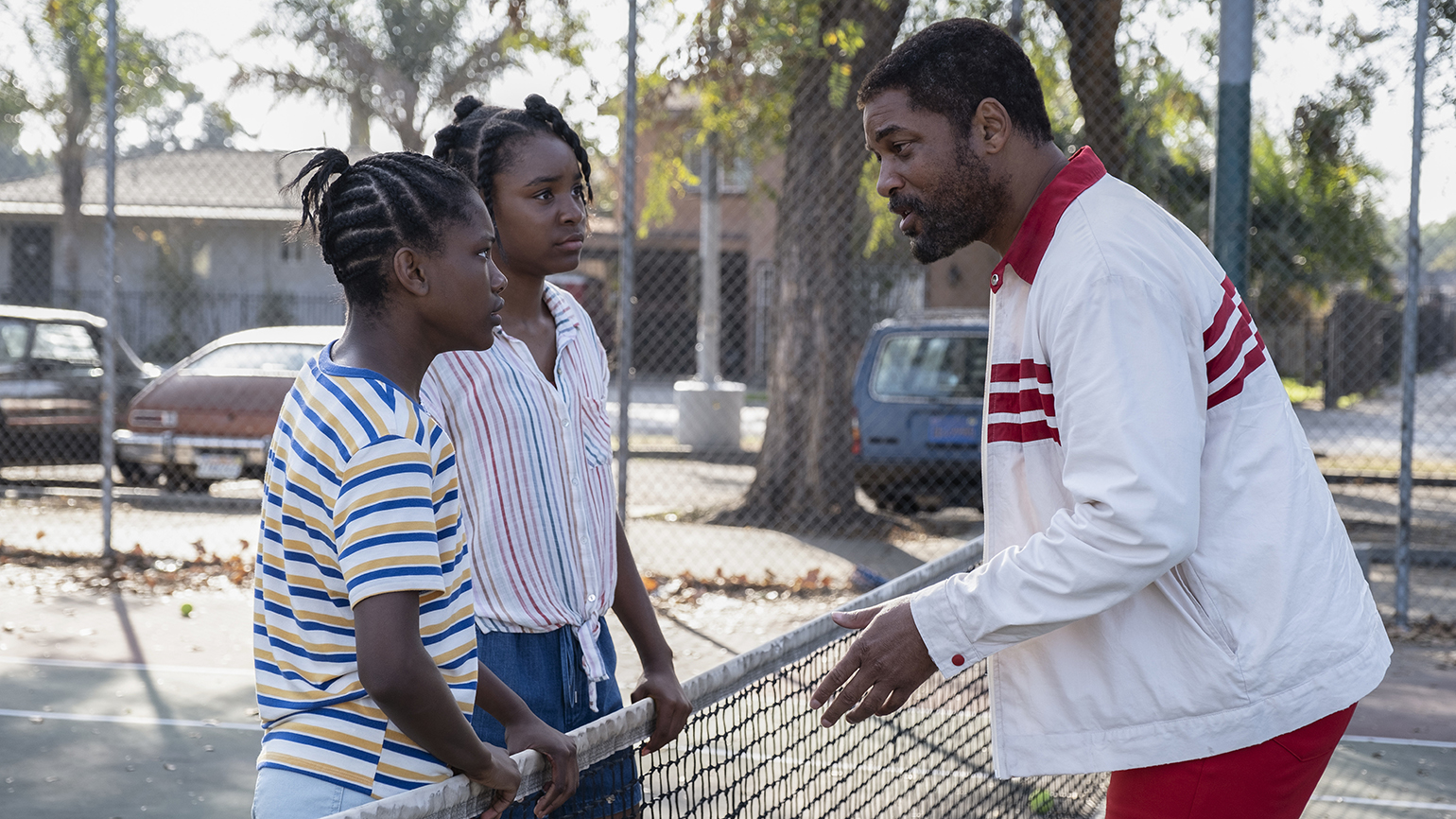
What many people don’t know is that, in addition to Venus and Serena’s dedication, talent and skills, their father, Richard Williams, was instrumental in helping them reach their potential. King Richard follows Williams (Will Smith), as he trains his daughters on the tennis courts of Compton, California during their teenage years, eventually helping them become two of the most talented athletes of all time. But their success was also in large part thanks to their mother, Oracene “Brandy” Williams (Aunjanue Ellis), who not only helped train them, but served as the family’s backbone.

“Richard was the architect of their careers, but Ms. Oracene was the builder of that,” Ellis told Guideposts.org. “She was on the tennis court just as much as he was, but she also was cooking, cleaning, holding down jobs, sewing their dresses, doing their hair—the things that mothers do.”

Oracene’s guidance and intuition helped the family get through hard times, particularly moments of defeat.

“Ms. Oracene tried to keep the kids grounded as much as possible,” Ellis said. “Grounded but at the same time [she] gave them wings.” During a turning point in the film, Richard struggles to not only listen to, but trust his daughter until Oracene steps in. “She was always a protector, a warrior for her children,” Ellis added. “She protected her girls from the world’s—and sometimes their father’s— demanding expectations.”

Venus and Serena have shattered every glass ceiling in the world of sports, while creating a legacy that’s inspired more Black children to play tennis. Thanks to their parents, the sisters remain connected to their roots. In one scene, Oracene is seen braiding Venus’ hair before making her professional debut at 14. “With them wearing those beads on the court, that was her way of saying, ‘Listen, you come from a long line of black women achievers,’” Ellis said. “And when they walked on the court, she was insisting that they carry that history with them.”

Throughout the film, Richard and Oracene are also shown going out of their way to ensure their kids have a childhood, even letting Venus miss an important practice for a family day at Disney World. This parenting approach, Ellis said, is one she admires. “They insisted that Venus and Serena be children first before they were tennis players,” she said. “They wanted them to be highly-educated, excel at school and go to church. And you can see that in the women that they’ve become now.”

A driving force for the family, especially Oracene, was their faith. “I think that was a guiding principle for them,” Ellis said. “Faith is at the core of their family life and particularly for Ms. Oracene, influencing not just the mother she was but the wife that she was—it was central to all of that.”

Ellis, who has had a valuable family experience of her own, is inspired by the tight-knit and trusting relationship between Richard, Oracene and their five daughters.

“I think that’s what’s so great about the Williams family,” she said. “They loved each other. Their weapon against a world that would often attack them was their love for one another.”

King Richard, directed by Reinaldo Marcus Green, is available in theatres and on HBO Max starting November 19th.

Kid President: How a YouTube Star Is Inspiring a Generation

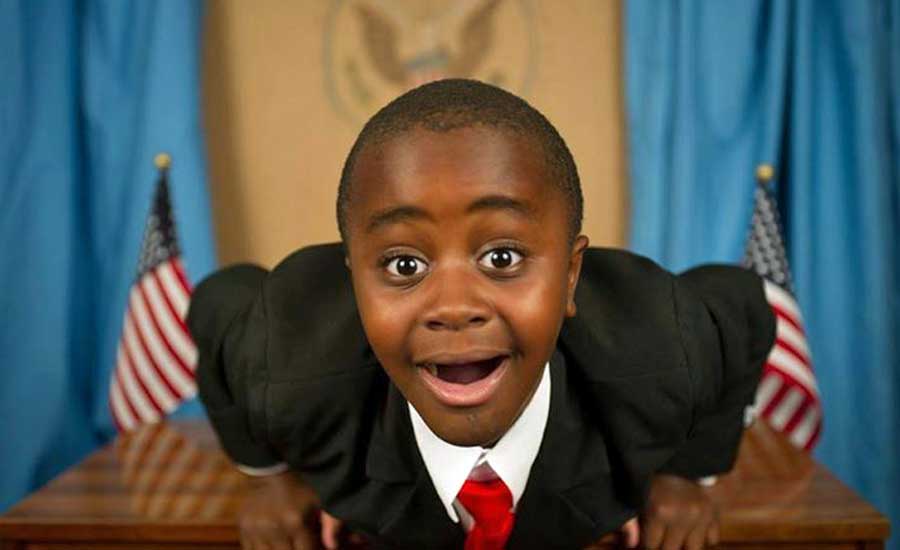
You might not be familiar with Brad Montague and Robby Novak but chances are you’re one of the tens of millions of people who have seen their wildly popular YouTube videos. The two are the creators of the character Kid President – the self-appointed voice of a generation.

Novak — the 11-year-old kid who dons a suit and sunny personality to embody the feel-good character – and Montague, the adult who’s usually behind the camera during production, teamed up three years ago with a single idea: to inspire people with positivity and encouragement by looking at real issues through a kid filter.

From pep talks to teachers, open letters to moms and their latest on summer vacations, the topics for the videos have a wide range but an all-encompassing theme: how great would it be if we could approach life with an open mind and an optimistic attitude like children do?

For Montague, the idea sprang after he and his wife started Go! Camp, a place for kids who want to change the world. He recruited his then ten-year-old brother-in-law (Novak) to be the face of Kid President. Novak was only too happy to help. His own story of battling Osteogenesis Imperfecta – a brittle bone disease that’s caused him to suffer 70 fractures and undergo multiple surgeries in his own life – is so inspiring, and ultimately, the two have been able to reach millions of people with their message.

“I’ve always had an interest in seeing how kids react to grown up issues,” Montague told Guideposts.org. “Kid President grew out of our desire to put something online that would make grown-ups pause and take a moment to see through the eyes of a kid. We started in 2012, it was the midst of the presidential race, you couldn’t go anywhere without hearing aggressive political statements. So we put Robby in a cheap suit and just had fun in front of the camera. We wondered if people would listen to a small voice over the older, loud ones, and as it turned out…they did, and still do.”

The videos, the most popular of which has been viewed over 36 million times, have allowed the pair to meet with some pretty important people –President Obama and Beyoncé make the top of their list – and have given them a platform to spread their message of positivity and encouragement while talking about things that matter to the both of them – be it silly or serious.

“The videos are inspired by what we’re doing every day! Sometimes we get more topical and other times we just feel like we want to tell people they’re awesome,” Montague said.

Though the idea of Kid President may have began as just a fun side project meant to encourage and inspire others, it’s morphed into a bit of a movement. Book deals, giving talks to schools across the country and a partnership with SoulPancake – the media company founded by actor Rainn Wilson and dedicated to making people laugh, cry and really think about those big life issues – are just a few things to sprout from Montague’s and Novak’s inital seed of positivity.

Even so, they’re both remaining grounded in why they started making the videos to begin with.

“We want people to choose to be happy about how amazing life could be if they worked to make the world better – instead of getting angry about how the world just isn’t good enough already,” Montague said. “We hope people take action with a joyful rebellion.”

Check out Kid President’s latest video on what kids really want out of a vacation.

Want to know who inspires Kid President? His mom, of course! Don’t miss our interview with her in the December issue of Guideposts magazine—subscribe today!