



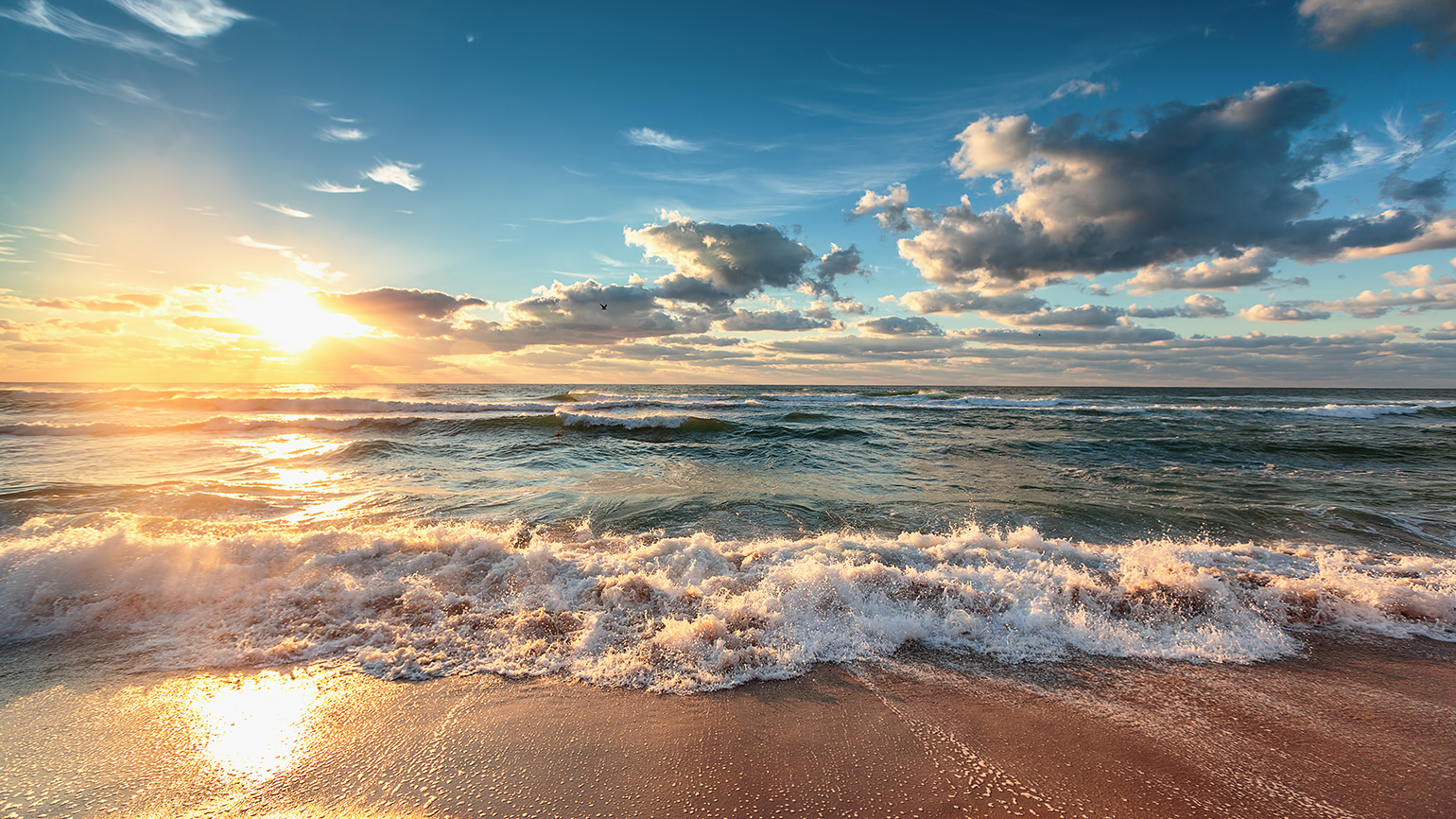
From the calming waves to the warm sand and the sun’s rays, there’s so much to love about the beach! Escape from your day with these images and inspiring quotes about the beach.
Battling Banana Breads
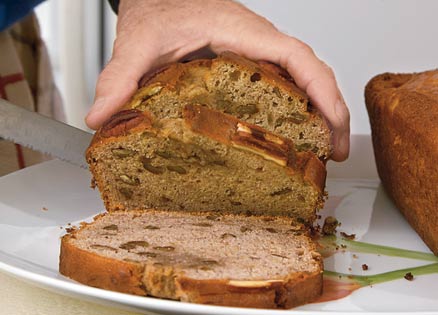
Two guys walked up to us in the strip mall parking lot just as my husband and I were about to get in our car. They were carrying a cooler. Something about them gave me a strange vibe, so I opened the passenger door and climbed in.
“Would you like to buy some banana bread?” I heard one of the men ask David.
What do they really want? I wondered.
“No, thanks,” David said. “My wife makes the best banana bread.”
“I understand,” the man said. “Please take this, though.” He handed David some sort of paper.
“Sure,” David said casually, no tension in his voice as he opened the driver’s side door. He’s a retired Houston cop, and if alarm bells weren’t ringing for him, I figured there was nothing to worry about.
Besides, it wasn’t as if I didn’t have enough on my mind. The oldest of my three kids, my son Wesley, had been addicted to drugs since his early teens. But I’d never seen him as hopeless as he was now, at 20. Lately every time my phone rang, I expected it to be the morgue asking me to come identify his body.
Really, I’d worried a lot about Wes right from the start. Changes that other toddlers got used to with just a little fussing totally threw him. Everyday things like wearing long sleeves, taking time-outs and putting on sunscreen triggered huge tantrums that took him forever to come down from. It tore at my heart to see the frustration and misery in his big blue eyes. Even worse, sometimes there was nothing I could do to ease his pain. It was as if he didn’t want me to help him.
The only place I could turn was my faith. Every night when I tucked Wes into bed, I would lay one hand on him and ask God aloud to protect him, our family and anyone we knew who was having a tough time. Then I’d say a silent prayer, not wanting to put pressure on my little boy, who already struggled with so much. God, please make life easier for Wesley, I prayed. Bring him peace.
I hoped he’d grow out of his oversensitivity once he was in school, but if anything, his moods grew more extreme. At one point, I tried making all his food from scratch, hoping that if I eliminated additives and preservatives it might help him. We took him to a chiropractor, an acupuncturist, a psychologist and a psychiatrist, who diagnosed Wes with ADHD and put him on medication. Thank you, Lord, I thought. This is what I’ve been praying for. The meds didn’t bring him much relief, though.
When Wes was a teenager, I took a job as a flight attendant, which had me away from home only on weekends so it wouldn’t disrupt the kids’ routines. Still, he had frightening outbursts—he’d bang his head against the wall, beat things with his fists. I worried about his younger sister and brother too. They weren’t getting as much attention from me and Wes’s behavior had to be traumatizing for them.
Wes’s dad and I had our own issues—dealing with a troubled child puts a tremendous strain on a marriage and ours wasn’t the strongest—but we did everything we could for Wes. We gave him love. We gave him rules. He broke them all.
Wes was over at a friend’s one day when I called to check in. He sounded off, his words slurred. “You okay, Wes?” I asked.
“Yeah, Mom…” he mumbled. “I’m…fine.”
He’s lying, I thought. The minute Wes got home, I confronted him. He admitted to smoking pot. “But I don’t have a problem,” he said. I dropped to my knees and sobbed. I knew life was a constant struggle for Wes, but drugs at 14? “Why couldn’t I have seen this coming and stopped it?” I cried out to God. “Why didn’t you? You say in your Word that you love Wes and me, so why are you allowing this to happen?”
Wes was right. He didn’t have a problem. He had a full-blown addiction. He was caught at school hiding a joint. I found more pot and a pipe in the attic above his room. From there it was tranquilizers, narcotic painkillers, hallucinogens. When Wes was 16, his dad and I divorced and Wes went to live with him. Even though we weren’t in the same house, his addiction consumed me.
I managed to keep things together at home, barely, and take care of my other two kids. On the road, though, I’d lock myself into my hotel room and scream, not caring who heard me. I was that desperate to release my own pain. God, why haven’t you brought my son the peace I asked for? Can’t you see he’s suffering? Don’t you care?
If it hadn’t been for another flight attendant I met at work, a wonderful man named David, my spirit would have been completely broken. David was kind, supportive and strong. His background as a narcotics officer gave him insight and understanding about my son’s struggles. And mine. “We’re going to get through this. So will Wes,” he told me. “We’ve got God on our side.” Having David in my life made me want to believe that again, hope again.
David and I got married when Wes was 17. As much joy as our marriage brought me, it was tempered by the heartache of watching my son plummet further and further into the hell of addiction. I can’t remember how many times I confronted him, pleaded with him to get clean. Or how many times he landed in hospitals or rehab, only to start using again as soon as he got out.
Now Wes was 20 and I felt like I was in mourning, with the terrible grief of a mother who knows her child is lost to her, beyond prayer, beyond hope. I wanted to rest my head against the dash and cry. Instead I put on my seat belt and watched the two guys walk away with their cooler. And their banana bread. What was that all about, anyway?
David got in the driver’s seat. “I think you need to see this,” he said, handing me the paper he’d been given.
It was a flyer. “Victory Family Center: The Road to Recovery Starts Here” the front proclaimed. A shiver ran down my spine.
David had started to drive away. “Wait!” I said. “Turn around.”
Back in the parking lot we spoke to one of the men with the banana bread. “Victory Family Center has a six-month live-in recovery program,” he told us. “Residents participate in daily chapel services, group sessions, Bible studies and various work activities designed to motivate and build character. All our services are free.” To help support the center, residents sold banana bread, which also gave them an opportunity to tell others about the ways God had worked in their lives.
I felt that shiver again, and I knew he had to be at work right here and right now. I called Wes on my cell phone. “There’s this place I think you should check out,” I said. “It’s a rehab center that really focuses on God. Please just see how it is. Not for me. For yourself.”
Silence. Was he going to hang up or tell me to stay out of his life? I braced myself.
“Yeah, okay,” Wes said. “I’ll go, I guess.”
David was the one who took Wes to Victory Family Center that very night. I couldn’t bring myself to go. If he refused to check himself in, I wouldn’t be able to take it. As soon as David got home, I ran to him. “Please tell me he stayed,” I said. “Please tell me something good.”
“The first thing the counselors did was open their arms and hug Wes,” he said. “They told him they loved him and were there for him no matter what.”
On my first visit to the Victory Family campus, I saw that love in action. The place was very structured—no TVs, no couches to lounge on. Every resident was given a job, something to take responsibility for. “I love it here,” Wes told me. “I feel like I have a purpose.”
Still, after he finished up the six months, he relapsed. But now I understood that relapse was part of the disease. He got clean again and recommitted to Victory Family for a two-year program. He traveled all over the Houston area with a cooler full of banana bread, helping addicts get on the road to recovery. Helping others get straight helped him stay straight. David and I talked to him all the time, and we visited regularly with his sister and brother too.
One afternoon David and I took Wes out for lunch. “Mom, if I hadn’t gone through everything that I did,” Wes said, “I never would have changed or given my life to Christ.” His big blue eyes were filled with light, with life—and something else I couldn’t quite put my finger on.
“I’m so proud of you, Wes,” I said to him. “I…”
Before I could finish, he spoke again.
“And, Mom, when I wake up in the morning I am at peace. And when I go to bed at night, I have peace.”
My deepest prayer for my son was answered, a miracle as sweet as banana bread.
This story first appeared in the March 2013 issue of Guideposts magazine.
Barb’s Best Waffles

Drizzle with pure maple syrup or Barb’s favorite, boysenberry syrup.
Ingredients
4 cups Bisquick
1 cup millet flour
Pinch baking soda
¼ cup canola oil
3 eggs
3 cups buttermilk (or more to thin)
¼ cup water
Preparation
1. Mix ingredients together and beat well to eliminate all lumps.
2. Pour batter into the waffle iron. Cook waffles till golden brown.
3. Refrigerate any leftover dough.
Serves 10
Read how Barb used this recipe to change her life!
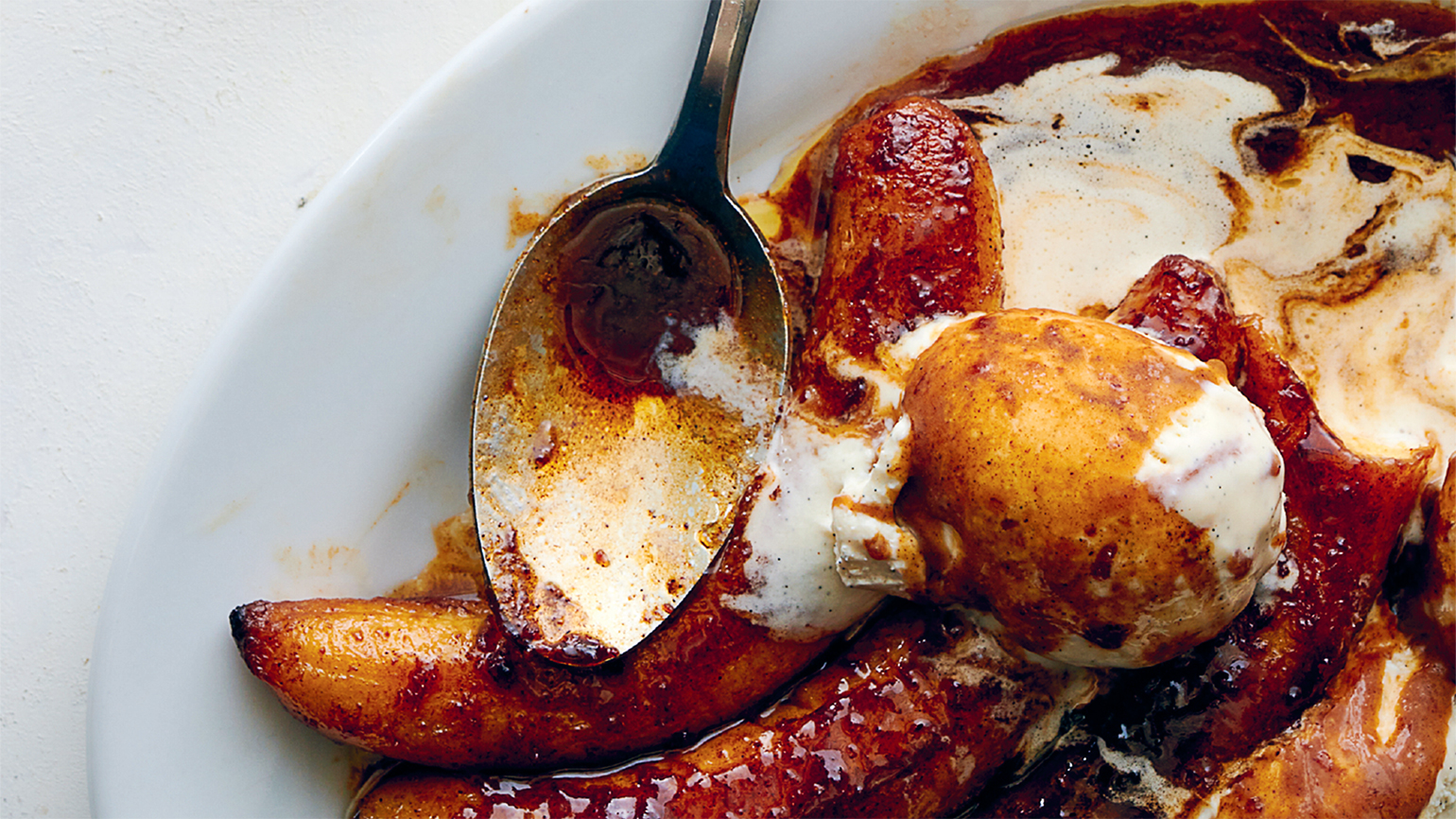
Bananas Foster
Ingredients
| 6 bananas |
| 6 Tbsp. unsalted butter |
| 3 Tbsp. dark brown sugar |
| 2 oz. dark rum (optional) |
Preparation
1. Peel bananas, then sauté the fruit in a lot of foaming unsalted butter in a large pan on the stove top.
2. Sprinkle ground cinnamon and a tablespoon or so of dark brown sugar over them as they grow golden and crisp. This won’t take much more than 5 or 6 minutes. Add a few ounces of dark rum to the pan at the end, if you wish.
3. Place a banana on each plate with a little drizzle of the butter, and serve with vanilla ice cream.
Serves 6.
Nutritional Information (without rum or ice cream): Calories: 230; Fat: 12g; Cholesterol: 30mg; Sodium: 0mg; Total Carbohydrates: 33g; Dietary Fiber: 3g; Sugars: 20g; Protein: 1g.
Read Sam’s inspiring story from the December-January 2021 issue of Guideposts!
Recipe is an edited excerpt from See You on Sunday. Copyright © 2019 by Sam Sifton. Photographs © 2019 by David Malosh. Reprinted with permission by Random House, an imprint of Penguin Random House, LLC.
Banana Pudding

This delicious recipe has been handed down from mother to daughter, and now you can try it at home!
Ingredients
| 2 c. plus 4 Tbsp. sugar | 1 Tbsp. vanilla extract |
| 4 Tbsp. flour | 4 bananas, sliced |
| 1 12-oz. can evaporated milk | 1 box vanilla wafers |
| 1 ½ c. regular milk | ¼ tsp. cream of tartar |
| 8 large eggs, separated |
Preparation
1. Preheat oven to 350°F. Mix 2 cups sugar and the flour in a 2½-quart saucepan (using no heat yet).
2. Add evaporated milk slowly, stirring to make sure all lumps are gone. Rinse can out with about half a can of water and add to mixture.
3. Add regular milk and stir well. Beat egg yolks well with a fork; add to milk mixture.
4. Place saucepan on stove at medium-high heat and cook, stirring constantly, until mixture starts to thicken and comes to a light boil, about 10 minutes. Remove from heat. Stir in vanilla.
5. Layer the vanilla wafers flat on bottom of an oven-safe Pyrex dish, standing some up around the sides if desired, for looks. (You can also use smaller Pyrex dishes for individual servings.)
6. Spread banana slices evenly and pour pudding mixture on top.
7. Beat egg whites with cream of tartar and 4 tablespoons sugar until meringue is stiff. Spread on top, making sure edges are sealed, and bake until peaks are golden brown, around 10 minutes.
Serves 8 to 10.
Nutritional Information: Calories: 330; Fat: 7g; Cholesterol: 15mg; Sodium: 150mg; Total Carbohydrates: 66g; Dietary Fiber: 2g; Sugars: 53g; Protein: 8g.
Don’t miss Adrian’s inspiring story about her banana pudding helped to create jobs and foster growth in her community.
Download your FREE ebook, The Power of Hope: 7 Inspirational Stories of People Rediscovering Faith, Hope and Love.
Baked Tilapia with Spicy Tomato-Pineapple Relish

With warm weather on the way, this is the perfect meal for the whole family.
Ingredients
| 4 6-oz. tilapia fillets | 1 plum tomato, diced |
| ¼ tsp. kosher salt | 1 teaspoon hot chili paste, such as sriracha (or more to taste) |
| ½ c. crushed pineapple, well drained |
Preparation
1. Preheat the oven to 375°F. Line a baking sheet with aluminum foil; coat foil with oil spray.
2. Place the tilapia on the prepared baking sheet and season with salt.
3. In a small bowl, combine pineapple, tomato and chili paste. Divide topping evenly among fillets.
4. Bake for 12 to 15 minutes, or until fish flakes easily with a fork.
Serves 4.
Nutritional Information: Calories: 180; Fat: 3g; Cholesterol: 85mg; Sodium: 210mg; Total Carbohydrates: 4g; Dietary Fiber: 1g; Sugars: 4g; Protein: 34g.
Baked Stuffed Tomatoes
A twist on the usual stuffed tomatoes, the combination of cheese and garlic give this dish a flavorful aroma and hearty taste.
Ingredients
6 firm tomatoes, at room temperature, washed
2 tablespoons oil
2 tablespoons fresh parsley, chopped
1 tablespoon scallions, chopped
1 clove garlic, chopped
1 cup dry breadcrumbs
6 tablespoons Swiss cheese, grated
Preparation
1. Preheat oven to 325°F.
2. Slice off top of tomatoes. Using a spoon, hollow out tomatoes, keeping an inch of meat on bottom and sides. Discard pulp.
3. Turn tomatoes upside down on paper towel to drain.
4. In a saucepan, heat oil, parsley, scallions, garlic and breadcrumbs. Mix together until just heated through and moist.
5. Place tomatoes in well-oiled casserole dish. Fill with stuffing.
6. Top each with 1 tablespoon cheese. Brush tomatoes with oil.
7. Bake for 45 minutes, basting with oil drippings occasionally.
Find out the story behind Peggy’s tomatoes in Red Thumb.
Baked Spaghetti
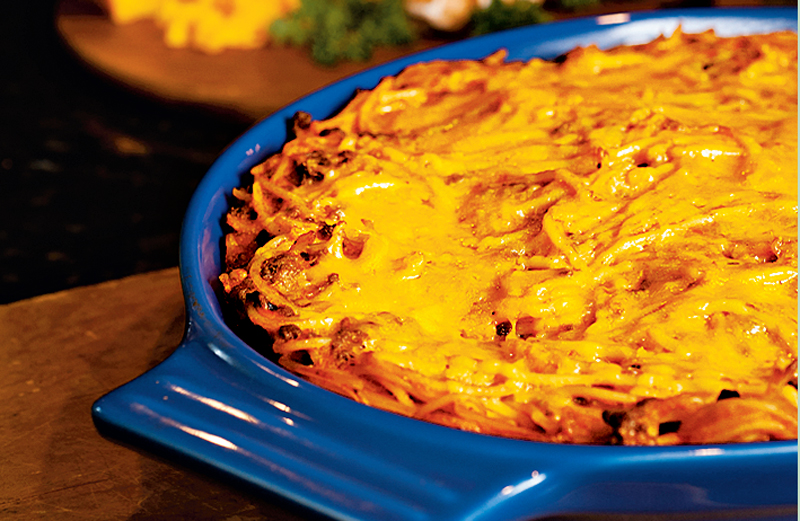
Carol, then in her teens, and the nice young man who would eventually become her husband bonded over this baked noodle dish the first time they met. We can’t promise you’ll find romance if you try this recipe at home, but you’ll enjoy a tasty and satisfying meal!
Ingredients
| 2 lbs. ground beef | 6 tablespoons Worcestershire sauce |
| 1 onion, chopped | 2 soup cans water |
| 3 cans tomato soup | 1 ½ lbs. shredded cheddar cheese |
| 2 cans cream of mushroom soup | 1 16-oz. box spaghetti noodles |
Preparation
1. Preheat oven to 350°F. Put water on to boil for noodles. In a large skillet, brown ground beef and onion together until meat is cooked through. Drain.
2. In a large pot over low heat, combine soups and Worcestershire sauce with the meat mixture, mixing well. Add cheese a handful at a time, reserving ½ cup.
3. Stir in water. Cook on low at no higher than a simmer, stirring occasionally, until the cheese melts.
4. Meanwhile, cook spaghetti until tender. Drain. Add to the rest of the ingredients and simmer 5 minutes, stirring occasionally.
5. Pour into two 9×13-inch baking pans. Cover with foil and bake 30 minutes.
6. Remove foil and sprinkle remaining cheese onto spaghetti. Continue baking, uncovered, for 15 more minutes.
Serves 12.
Nutritional Information: Calories: 680; Fat: 34g; Cholesterol: 125mg; Sodium: 1140mg; Total Carbohydrates: 45g; Dietary Fiber: 3g; Sugars: 8g; Protein: 42g.
Don’t miss Carol’s inspiring story about getting to know her future husband over a second helping of this dish!
Baked Potato Soup with Cheddar and Bacon

Ingredients
3 tablespoons butter
3 tablespoons all-purpose flour
5 cups milk
3 reserved baked potatoes, peeled and cubed (about 3 cups)
4 scallions, chopped (green and white parts)
¾ cup shredded Cheddar cheese
½ cup sour cream
4 slices bacon (regular or turkey bacon), cooked until crisp and crumbled
Salt and freshly ground black pepper
Preparation
1. Melt the butter in a large saucepan over medium-high heat. Whisk in the flour and cook for 2 to 3 minutes, until the mixture is blended and smooth. Whisk in the milk until blended. Stir in the potatoes and scallions and bring to a simmer, stirring frequently. Simmer for 5 minutes.
2. Reduce the heat to low, add the cheese, sour cream and bacon, and simmer for 1 to 2 minutes, until the cheese melts. Season to taste with salt and pepper.
Serves 4
Baked Lemon Cod and Broccoli
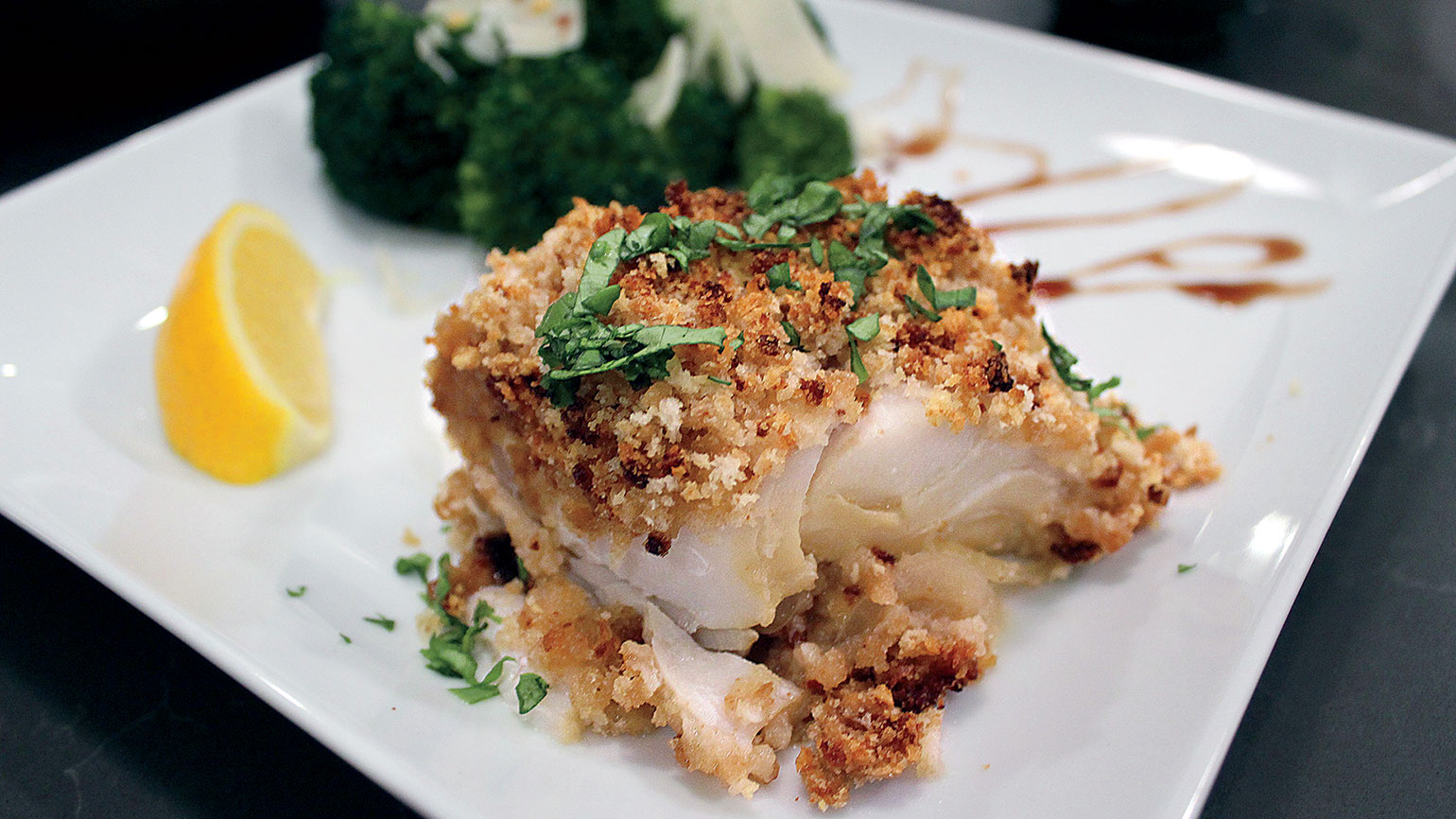
My husband, John, and I moved to Rhode Island shortly after we got married. Rhode Island offered tons of fresh seafood, but so much of it was fried. I wanted a healthier option. Enter baked lemon cod, which has become a staple in our household.
Ingredients
| 1 lb. cod fillets |
| 1 medium sweet onion, thinly sliced |
| Olive oil |
| Juice of 1 lemon |
| ½ c. white wine |
| ½ tsp. red pepper flakes, plus more for seasoning |
| 1 c. bread crumbs |
| ⅛ c. butter |
| Small handful parsley, chopped |
| ½ head broccoli, cut into bite-size pieces |
| Parmesan, shaved |
Preparation
1. Preheat the oven to 375°. Sauté onions in olive oil in a medium skillet over medium-low heat until translucent, being careful not to let them brown.
2. Add half the lemon juice, the wine and 1/2 teaspoon red pepper flakes and cook for 2 to 3 minutes more.
3. Pour onion-and-wine mixture into an 8 x 8 x 2-inch baking pan and lay cod on top; set aside.
4. In the still-warm skillet, melt the butter, then add the remaining lemon juice and mix; pour over bread crumbs and mix until moist.
5. Cover fish with the moistened bread crumb mixture. Bake for 18 to 25 minutes.
6. Place broccoli in a steamer and cook 5 to 8 minutes or to desired tenderness.
7. Season with red pepper fl akes, to taste, and sprinkle with shaved Parmesan. Plate and serve with cod.
Serves 2.
Nutritional Information: Calories: 940; Fat: 27g; Cholesterol: 130mg; Sodium: 1020mg; Total Carbohydrates: 99g; Dietary Fiber: 4g; Sugars: 14g; Protein: 62g.
A Young Artist’s Surprising Mission
Two little children in Calcutta, India, a teeming city of millions, most of them poor. Urchins, they would have been called in a Dickens novel. The boy maybe eight, the girl 12 or so. They might have been brother and sister. I don’t know.
They tugged at my jacket as I walked down a packed street. “Sir, sir, spare some money?” the girl asked. I tried to move on. Because of the crushing poverty, begging was practically an industry in Calcutta. It was 1988. I was 24, a struggling artist just out of Brooklyn’s Pratt Institute. Like generations of young people before me, I traveled to India in search of something vaguely spiritual. I just wasn’t sure what.
The kids persisted. The boy thrust up his fingers. “Please, sir,” he said. His fingers were mangled stubs. The girl held her hands up too. They were the same. I wasn’t shocked. This was standard begging strategy, and I couldn’t give what I didn’t have.
“We’re lepers,” the girl cried. I didn’t know whether to believe them. I quickened my step. So did they. What did they want from me? I was just a scraggly young American with a backpack. There were many more prosperous-looking tourists all around. “Come and see where we go for lunch,” the boy said, keeping up.
I thought about how I must look to them. A fairly clean pair of jeans and a backpack must’ve seemed so affluent. “Okay,” I said, not sure why. Maybe my conscience had something to do with it. How could I turn them away?
They led me down a back street to a drab stucco building. The girl reached up and pulled on a bell. The door opened. A nun appeared. “Welcome,” she said. From within I heard voices—children’s voices. I was led into a room lined with about 20 cots. “This is our orphanage,” said a nun. “Some, like these two, just eat here.” Maybe it was the look on my face that said I was losing my heart to these kids. “Let me take you to meet the sister who runs our place,” the nun said.
She showed me to an unadorned room off the main quarters. It was empty, save for a plain wooden table, two chairs, a bare lightbulb hanging over the table and a curtain for a door. One of the walls was inscribed with a prayer by St. Francis. A moment passed. I studied the prayer. There was nothing else to do. A nun wearing a white head shawl bordered in blue finally stepped through the curtain. She was short and energetic with a remarkable aura about her. “I’m Mother Teresa,” she said.
I’d never heard of her. But I could see she was smart and charismatic. She drew me right in. I’d come to India to travel and soak up its culture until my money ran out. So I was shocked to hear myself say, “Could I stay here and help you?”
Mother Teresa looked at me appraisingly, then spoke. “Are you a doctor?” she asked, almost sharply. “A nurse? A psychologist? Do you have any medical training?”
“No,” I said.
“Then how can you help us?”
How could I argue with this tiny nun? All I had to offer was my middle-class American sympathy. What they needed were doctors and medicine and therapy, not pity. I’m sure I looked crestfallen. Mother Teresa spoke in a soft tone. “We can use you in Kali temple,” she said. It was a home for the dying, she explained, that she’d established in a Hindu temple in a poor district of Calcutta. “The only skills you need there are gentleness and patience.” I stayed in the old temple for about a month, caring for those in the last days of life. I washed and fed them, and sat and talked with those who could speak.
“I used to be a schoolteacher,” said one. “I was a government worker,” said another. They spoke with honesty and with poignancy—mostly about how they had entered adulthood hoping to better their lives and the lives of their families. “But I had so little money,” said the schoolteacher. “The lack of opportunity just beats you down,” the government worker said. Remorse and sadness seemed to shroud them. Each day some would die and others would walk through the door and take their place. Each day I would ask myself, Is this what I sought when I came to India?
At night I retreated to my room. With my money dwindling, without knowing anyone, there was little to do but sit and think. Here I was just starting out and I was spending my time with people at the end of their lives. The work was hard, but it spoke to me. One thing I knew: When I returned to the comforts of home, India would never be far from my mind.
Broke, I headed back to the States and settled into an artist’s loft in Jersey City, doing sculpture and helping other, better-known artists with their large installations. Nights, though, it wasn’t just my art I was thinking about. The images of the kids, of those dying people, of Mother Teresa, played in my head. Art is meant to be inspiring. But I didn’t see how my talent would better the life of any of those I’d left behind in India. If I would’ve thought to pray I would have pleaded for guidance.
I didn’t need to. One day I was rummaging through an abandoned storage space on the floor beneath my studio loft. I was searching for odds and ends I might use for a sculpture I was working on—a series of wooden panels with everyday objects. I spotted an old frame buried in a pile of junk. I yanked it out. It was a painting—a portrait. I recognized the man in the picture: Ossie Clark, a well-known designer from the 1960s. But more important, I recognized the style of the artist and the signature in the bottom right-hand corner: DH. It was a long-lost work by David Hockney, one of the most important artists of the latter half of the 20th century!
I took it to Sotheby’s, the famous art auction house. The appraiser offered me $18,000, more money than I’d ever had at one time. Friends asked what I was going to do with it. Move to a bigger studio? Be free to create more art? The odd thing was, I knew instantly. I packed a bag and flew to see Mother Teresa. Again I stood in the orphanage, in that same barren room. She walked through the curtain exuding that same energetic strength.
“Mother Teresa,” I said, “I’ve come back.” I explained the circumstances of my return.
She studied me carefully. “So many young people like you cluster in the cities. You should go to a rural area, where there are so few volunteers and so much need. The Lord will show you.”
The train took 10-and-a-half hours to get to Orissa, the poorest state in India. I stopped at a destitute village named Juanga. I sat under a shade tree where villagers gathered and, with the help of an interpreter, asked what they needed. “Doctors,” said one. “Medicine,” said another. “People die because there are no pharmacies.”
There, under the tree, the answer came to me, as if this Lord Mother Teresa spoke about had whispered in my ear: Build them a hospital. And staff it.
It took three years, all of my seed money plus a ton of fundraising and the sweat of a lot of locals, but in 1996 we opened a 30-bed hospital with round-the-clock physician care. The day we opened, everyone in Juanga and the surrounding villages came. Some had stitched a huge net of lotus flowers and jasmine, and draped it over the building. That first month, we treated more than a thousand people, many who had never been to a doctor. “You don’t know how much this means,” a farmer, whose wife had been bedridden for months for want of penicillin, said.
I returned home and established Citta (Sanskrit for “compassionate mind”), a charitable organization that provides assistance to destitute communities around the world. We’ve opened hospitals, schools, women’s centers and orphanages in rural India, Nepal and Mexico. Today, I spend much time traveling between them and back to the States.
I started out an artist. I still am in a sense. Like great art, helping others inspires. It empowers both the giver and the receiver and appeals to a deep human beauty. Compassion, I learned from Mother Teresa, illuminates the soul. It may be the greatest art of all.
A World of Wonder Down Under
“How many koalas did you see?”
My wife and I were entering Flinders Chase National Park on Australia’s Kangaroo Island, an island which, despite its name, is known primarily as the home to the world’s largest koala population. There are more koalas than people on the island, our guide had assured us; we were guaranteed to see more than one of the sleepy-eyed lumps nestled among the trees. But the two backpacking women who were leaving as we came in looked frustrated when we asked about their experience. “How many koalas?” one of the women huffed. “None.” Her friend nodded. “Must be the weather.”
No koalas? But we’d come all this way!
A three-week journey to Australia, a trip of a lifetime. We’d flown into Sydney almost two weeks earlier, and immediately caught a prop-plane to Hamilton Island for our first experience: a two-day, two-night catamaran sail around the Whitsunday Islands. There we’d gone swimming with stingrays and lemon sharks amid the blinding white sands and impossibly blue waters of Whitehaven Beach; we’d snorkeled with the tropical fish on the southernmost reaches of the Great Barrier Reef system; and spent the evenings in a sheltered lagoon under a canopy of stars, watching giant sturgeon (so big, we thought they were dolphins) dart in and out of the dim glow of the boat’s taillights.
At our next stop, Port Douglas, we took a tour of the Daintree Rainforest, where we were fortunate enough to catch a rare glimpse at the elusive cassowary—known colloquially as the “last dinosaur”—an odd-looking emu with a bright blue neck, red waddle, and mohawk-like horn atop its head.
Around Sydney, we’d hiked through the Blue Mountains, discovering serene waterfalls and babbling brooks at every turn, before spending New Year’s Eve at the Royal Botanical Gardens, overlooking the Sydney Opera House and Harbor Bridge for the most fantastic fireworks display I’d seen in my life.
Now we’d gone out of our way to stop here, an island off southern Australia, to see one of my favorite animals, koalas, in the wild before flying to meet my wife’s relatives in Perth. I’d fulfilled my dream of holding one at a wildlife park in Port Douglas, but while that was a cute photo op, I wanted the authentic experience. How could there be no koalas here? It was an overcast day, windy, cold—but did that mean the koalas had gone into hiding?
“Just look up,” our guide said. “Look with the right eyes.”
We followed the trail, weaving in and out of the eucalyptus trees, both shelter to the koalas and their primary food source. A poisonous plant, the leaves are so difficult to digest that eating them expends nearly all of a koala’s energy. No, koalas don’t get “high” off the plant—they get the mother of all tummy aches. As a result, they spend most of the time sleeping, curled up in the high branches.
“Look! Up there!” my wife called out.
I looked up. The branches were silhouetted against the sky, it was difficult to make out much of anything. I squinted, then widened my eyes as far as they would open. Where was he?
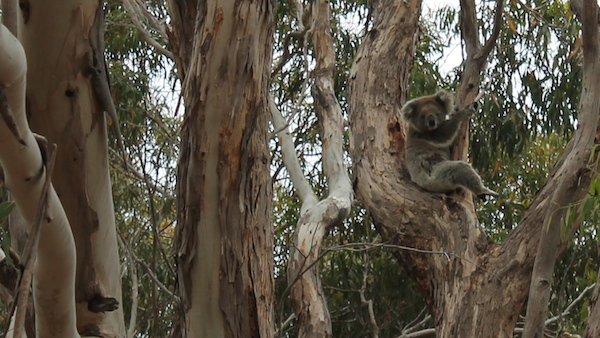
Then I followed the trunk up from the ground to where it began to branch out. And I saw him. The light seemed to form a halo around him. His furry face stared at me from high above.
My wife proved to be pretty good at spotting koalas—she spotted 11. I wasn’t quite as good—though I did spot some kangaroos, lounging in the shade. As I left the park, I thought about those two women who’d seen nothing. They had koalas all above them! Where had they been looking? Had they known what to look for?
How many amazing things do we miss every day? Walking the path, our minds somewhere else, our eyes fixed on our iPhones. After my day on Kangaroo Island with the koalas, I’ll remember to look up. Look longer, deeper. Pay more attention. There are koalas all around us (metaphorically)… we just need to look with the right eyes.
What have you seen when you’ve stopped to look? What’s surprised you? Tell us about your unexpected discoveries, at home and abroad.