Brrrr. I shivered, stepping out of the rental car into the cold Michigan night. I helped my husband, Carl, unload our bags. He didn’t say a word to me, but after three decades of marriage, I could tell that he was less than thrilled with the vacation destination I had chosen for our weeklong trip.
Carl likes it warm, and it was clear that late autumn here was going to be much colder than even the dead of winter back home on the Texas Gulf Coast. We had taken a late flight and had just arrived at our hotel in Midland.
Carl and I did a lot of things well together, but travel wasn’t really one of them. We had completely opposite vacation attitudes. I loved to wake up early and fill each day with activities and long, scenic drives. Carl’s m.o.? Sleep late, then lounge by a sparkling pool or on a sunny beach.
“I feel like a plow mule hitched to a race horse,” he’d complain.
More than once we had cut a vacation short, relieved to head home to our comfortable routines. I envied those couples who had a regular vacation spot. Carl and I couldn’t seem to agree on anywhere.
“Michigan?!” Carl exclaimed when I mentioned the idea. “That’s the middle of nowhere! You’re kidding, right?” “We have never dipped a toe in a Great Lake!” I said. “Besides, the leaves are supposed to be amazing this time of year.”
Neither of us had ever experienced a real autumn. We were lifelong coastal Texans, and the vacations we took while raising our children were always tied to summers, spring breaks and Christmas holidays.
A few months earlier, however, the manager at my new job sent me to corporate headquarters in Midland, Michigan, on a sweltering June day.
“You’ve got to come back in the fall!” my colleagues insisted, shocked that I had never witnessed the leaves turn. My first real autumn had to be in Michigan!
Grudgingly, Carl had agreed. Before we left I said a prayer: Lord, if only Carl and I can overcome our different vacation styles! Please make this trip special for us.
That first morning, I woke up early. I tugged one edge of the heavy drapes and peeked out the window. The trees in the valley below glowed red, orange and yellow like embers through the morning fog.
I shrugged on a sweater and tiptoed downstairs. I grabbed a cup of coffee in the lobby and went outside. My sandals crunched against frosted blades of grass. I pulled my sweater tighter. Good thing I’d packed a jacket for Carl at the last minute.
I finished my coffee, scooped up a handful of leaves and headed back inside to wake Carl.
“Good morning,” I whispered. Carl muttered something. I sprinkled the flame-colored leaves across the pillow. “Wake up!” I said.
Carl blinked sleepily as I jerked the curtains wide. A sunbeam raced across the valley. The trees looked like they were on fire. “Wow!” Carl said, sitting up.
We set off toward Petoskey, a resort town my colleagues had told us about.
“Let’s not go straight to the hotel,” I begged. “Let’s take the scenic route.”
At Traverse City we traced the Leelanau Peninsula to Sleeping Bear Dunes. We hiked the sandy hills hugging the shoreline. I reached the top of the largest dune and got my first glimpse of the sparkling waters of Lake Michigan. Even by Texas standards, this was big!
We got to our hotel and checked in. “Look,” Carl exclaimed. “They have a hot tub!”
“I guess we can relax for a little while,” I said, as we headed to our room to change.
A few minutes later I settled back next to Carl in the hot tub. “Tomorrow we should probably dip our toes in a Great Lake…?” I suggested.
“You’re going to miss this when you do!” Carl teased.
The next morning, Carl lounged and I paced like a caged animal. “Check out isn’t till noon,” he said, yawning. “Chill.”
We made it to the complimentary breakfast buffet 10 minutes before it closed.
“Let’s get this show on the road!” I exclaimed, then caught myself and asked God for patience, reminding myself our different styles is what makes my husband and me click on some level.
Finally, we got to the lake and parked. I took off my shoes and socks. “Are you sure you don’t want to dip a toe in?” I asked Carl.
“You first.”
Whoa! “Smile!” Carl said, lifting the camera. Click! One frozen smile for posterity, 10 frozen toes for me!
The day was one photo op after another. The road twisted through a tunnel of trees. One curve revealed a stunning vista of Lake Michigan, the next led us into a fern-laced forest populated by wary deer.
We emerged from the woods and stopped for a late lunch at the Leg’s Inn, a rustic building cobbled together from rocks and logs. A pay-per-view telescope looked out over the water. A sign read that we could see four lighthouses in the distance. I’d never seen even one.
“Got a quarter?” I asked Carl. We both took a look. Then we took a picture with the lake behind us. Click.
The next day we drove farther and dipped our toes in frigid Lake Huron, then took the long, narrow Mackinac Bridge, the third longest suspension bridge in the world, to the Upper Peninsula. I twisted myself like a pretzel to capture the moment through the car’s sunroof with the camera.
We followed the rural highway along the northern shore of Lake Michigan. Signs fronting Mom and Pop shops all proclaimed: “Smoked Whitefish” and “Pasties.”
“Let’s make a picnic,” I said.
We picked up the meat pies and smoked fish, along with ripe Honeycrisp apples and fresh cider. We pulled into the parking lot of a church with a picnic table under the trees. We ate in silence, but it wasn’t the uncomfortable silence of that first night. Lord, thank you.
I hummed a favorite hymn, “It Is Well with My Soul.” This was the place we could go Carl’s speed and mine at the same time. The right trip, the right one for both of us.
The leaves rustled in the breeze. A few floated down. Carl reached out and plucked one from the air. He gently tucked it behind my ear. “You wear it well,” he said.
“Maybe I’ll take it with me to remember this place,” I said.
“Well,” he said, “you still have more Great Lakes to dip your toes in! Next autumn?”
My heart soared. “Absolutely!”
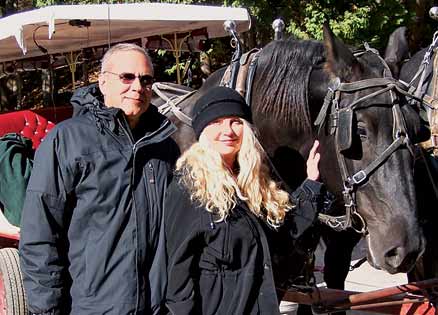
Every fall since, we’ve come back to Michigan. We’ve ridden a horse-drawn carriage on Mackinac Island; we’ve hiked to the root beer-colored waters of Tahquamenon Falls; we’ve eaten our share of smoked whitefish and pasties. We’ve even hung out in the hot tub of a rented cabin, then snuggled up while Texas chili simmered on the stove.
Carl and I have never felt more at home—on vacation.
For more inspiring stories, subscribe to Guidepostsmagazine.
“Cindy, I’m not interested,” I said, trying not to sound too irritated at my agent. “I’m not auditioning for some dumb comic-book movie.”
“Ms. Dorothy,” she said. “I wish you’d at least think about it. It’s going to be really big.”
Community Newsletter
Get More Inspiration Delivered to Your Inbox
“Nope, not doing it,” I said. “Besides, I don’t have the faintest idea how to do an African accent.” I hung up, anxious to return to my baking. My grandson, Niles, was coming over, and I was making sweet potato pie, his favorite.
Ten years ago, if someone had told me that at age 90 I’d be arguing with an agent about a movie role, I would have thought they were flat-out crazy. Me playing a tribal elder in some make-believe African country called Wakanda? Who’d ever heard of such a thing?
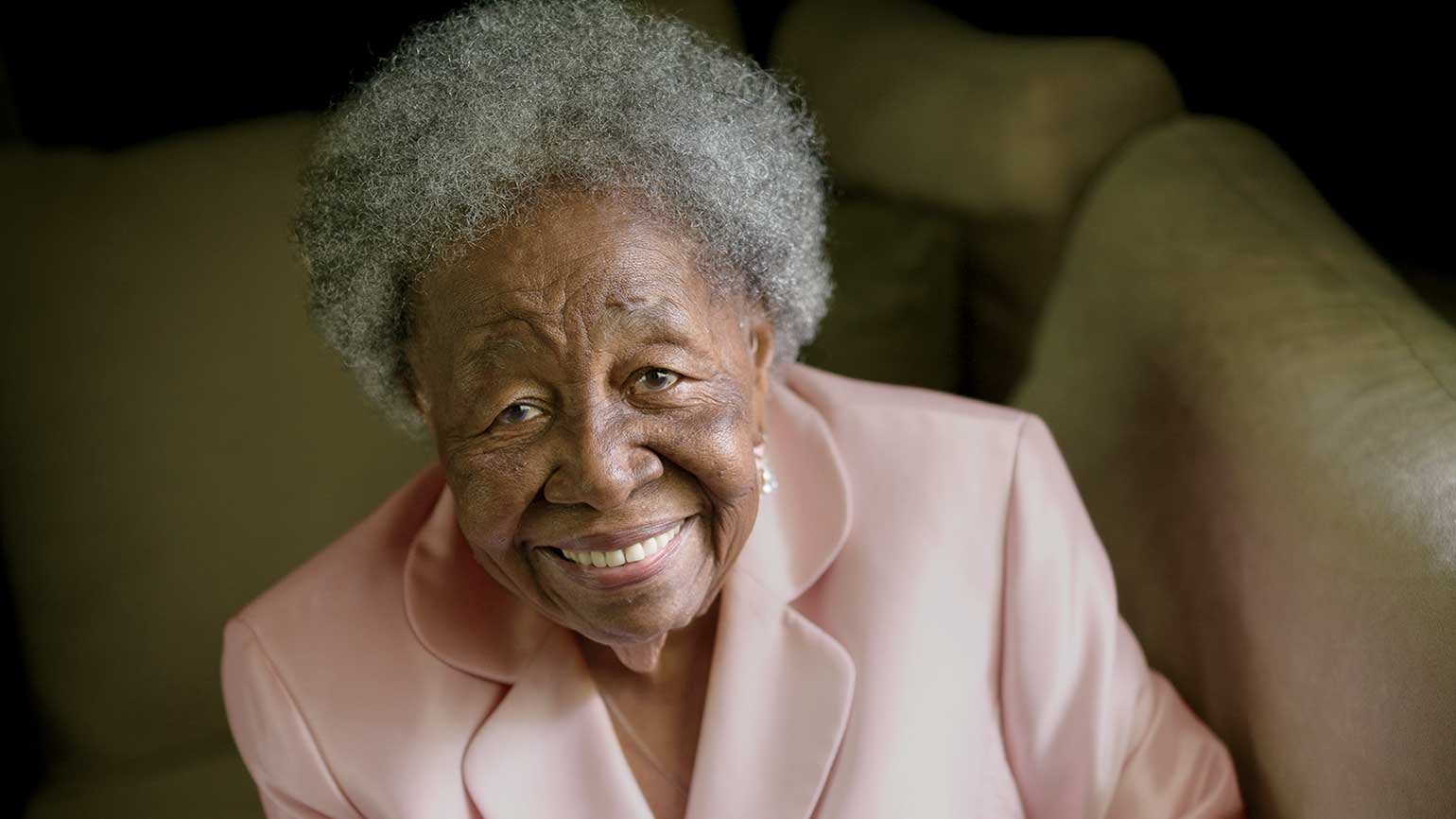
Dorothy Steel as the Merchant Tribe
Elder in Black Panther
It was enough to make me think about retiring from acting. I’d had my fun, been in some commercials—even a soap opera, Saints and Sinners, for a season on Bounce TV; a short film, Black Majik; a full-length movie called Daisy Winters; and a made-for-TV movie, Baby’s First Christmas. That was plenty. I’d never planned on being an actress in the first place, never in a million years.
The whole thing started one day at the senior center when I was 82. They were putting on a play called It’s Christmas and looking for volunteers. Why not? I thought. I figured I could squeeze in the rehearsals between my bowling leagues, church and cooking special meals and desserts for Niles and my son, Scott. They might be grown men, but I never tired of spoiling them.
I got the part of a sassy teenager. Can you imagine? I don’t know what got into me, but on stage I became that girl—wisecracking, self-centered, with attitude to spare. I started ad-libbing my lines. Folks in the audience were cracking up. I fed off their energy. It was great.
The whole experience was so out of character for me. I’d always thought of myself as shy, more interested in watching others than being in the spotlight. “Why are you always analyzing everyone and everything?” my older sister would ask.
I’d worked most of my career for the IRS, a divorced single mother. The last 14 years, I’d worked as a senior revenue officer, assigned to the Virgin Islands. After I retired, I traveled. Everywhere I went, I watched people, studying the way they spoke, noting how some slouched while others held themselves at attention.
At 82, I settled in Atlanta to be close to family. That’s where I found the senior center. After that first play, I was in a couple more, just for fun. A man came to one of our productions and afterward introduced himself as Greg Alan Williams. He was an actor and dean of an acting school called Actors’ Breakthrough. He said that if any of us wanted to study there, we could for half price.
Well, I was interested and told my sister and nephews, who ridiculed me for such an idea. My son said, “Go for it.” Scott, by then retired, had been an award-winning cameraman for WSB, a local TV station. He offered to drive me. Folks in the class joked, “Here comes Scott. Driving Miss Daisy!”
I was the oldest person there by far. The instructor took us through the basics, teaching us how to get into character, not to overdo it, that it should feel natural, picking up on the little quirks and idiosyncrasies that make a person real. The very things I’d been studying for years. We were advised to get a tablet, a good phone, a Facebook account, some head shots and an agent. I signed up with Cindy Butler at iSubmit Talent Agency.
Not long afterward, a casting director called her with a role he thought I’d be perfect for: Mother Harris in Saints and Sinners. That was the beginning of my professional acting career at 88 years old.
I was still worked up over that conversation I’d had with Cindy. A movie called Black Panther? Honestly, what was she thinking? I put the pie in the oven and sat down to read while I waited for Niles. By the time he arrived, I’d nearly forgotten about the whole thing.
Niles had finished off a piece of pie and I was clearing the table when for some reason it popped in my head. “Cindy, my agent, called with the craziest idea,” I said. “Me in some movie called Black Panther. I told her no way.”
Niles’s mouth dropped open. “Are you kidding?” he said. “Grandma, this is Marvel Comics. A billion-dollar company. You know, like Spider-Man.”
I frowned, suddenly wishing I’d never brought it up. “I don’t want to do cartoons,” I said. “And they’re wanting me to have some African accent. I don’t even know how to do that.”
“Grandma, you’re always talking about how we need to step out in faith,” Niles said. “This is huge. Either man up or shut up!”
The nerve of him! “Niles, don’t you be telling me what I should be doing,” I said. Niles gave me one last imploring look and scooted out the door to his truck. “As if he thinks he’s gonna teach me something about faith,” I grumbled.
I sat down and opened my book, but I couldn’t focus on the words. I started thinking about how I’d stepped out in faith.
In September 1958, when Scott was 10, I was hospitalized with an abdominal pregnancy. I was five months pregnant. There was no saving the baby, and the chances of my surviving were slim. My heart stopped during surgery, and the doctors had to give me two shots directly into it to start it beating again. I have scars on my ankle, where they gave me all the B-positive blood they had on hand, and two white marks on my chest, where they gave me the shots to my heart.
Back in my hospital bed, I heard my doctor tell the nurse, “Don’t let her suffer. I know she’s going to die.” My insides were so tangled up, I couldn’t even eat a teaspoon of soup or drink water without unbearable pain. All I could do was lie there and stare at the hospital room wall.
Then I remembered King Hezekiah, who lay dying and prayed to the Lord to give him 15 more years of life. The Lord had. So I prayed, “Lord, give me eight more years, until my son is grown, and I will bless your name all my days.” I heard an inner voice: “Get up from your hospital bed, and walk out to the street. Then come back in, and I will heal you.”
I got up out of bed and made my way down the stairs to the street. It might have looked as if I were stepping out on nothing leaving the hospital, but as the Bible says, the everlasting arms of the Lord were supporting me. I came back inside, exhausted. Slowly, my health turned the corner. I was healed.
I got divorced not long after that and struggled to support Scott on my own. One day I drove from Detroit, where we lived, to Flint because I felt led there. I happened upon an IRS office and went in and asked a supervisor for a job, a position his secretary said didn’t exist. I became the first black female promoted to revenue officer in the Flint office.
I’d been blessed; I surely had. But there’d been so many times when all I could do was trust in God. He’ll always see you through. I’d been telling Niles that since he was a baby, hadn’t I? Why was I so intent on not auditioning? Was I afraid of making a fool of myself? As if I had some big image to protect. Niles, my agent—they thought I’d be perfect for the part. What would it hurt to try? It wasn’t as if I had any realistic chance of landing it.
Mandela. The word came to me with crystal clarity, like a message meant just for me. Nelson Mandela. Now there was someone with a distinct African accent! I got on YouTube and watched several of his speeches, listening to the pronunciation, where the emphasis fell. After a few days, I began to pick it up.
I was watching a speech one night when Scott came over for a meal I’d made. “What’s this?” he said. I told him the whole story. “What are you waiting for?” he said. I didn’t need to hear any more.
The next day, I called Cindy. “I’d like to give that Black Pantherpart a try,” I said. When the script came over, I reviewed my lines. There weren’t that many. But the character was in a key scene where the lead actor faces a ritual wrestling match to prove himself worthy of being king. And in a palace scene where the elder offers words of wisdom: “We’ve protected our borders for thousands of years, and now it’s your turn to lead. We don’t need a warrior. We need a king.”
I repeated the lines over and over. When I thought I had it down pretty well, I asked Scott if he could tape me doing it. He had a home studio, and I thought I nailed it on my first take. “Let’s do it again,” Scott said. Lordy. He made me do those lines 10 times. He narrowed it to two, then picked one. An hour after Cindy sent off the tape, the casting director was on the phone with her. “Who is this old woman?” they said. “We want her.”
I called Niles first thing. “I got the part!” I said. “And I want to thank you for what you said. I didn’t like it much at the time, but Lord knows I needed to hear it.”
“Grandma, I knew you could do it!” Niles said. That gave me goose bumps. He wasn’t the only one who’d believed in me. God had been opening doors for me my whole life, preparing for the role I was born to play.
Black Panther went on to become one of the biggest movies in worldwide ticket sales ever. It still seems as if I dreamed the whole thing. And to think I got to rub shoulders with actual movie stars like Angela Bassett, Forest Whitaker and Chadwick Boseman. Now when my agent calls, I listen. Even at 90, you never know what role God has in store for you.
For more inspiring stories, subscribe to Guidepostsmagazine.
This is Mrs. Voight’s original recipe. Feel free to make your own additions. I use Sunkist Almond Accents™ sliced almonds to add to the flavor.
Ingredients
5 Tbsp. butter
3 15-ounce cans asparagus
5 Tbsp. flour
5 hard-boiled eggs, sliced
¾ c. milk
¾ c. blanched almonds
¾ c. juice from canned asparagus
¾ c. cracker crumbs
¾ c. mayonnaise
Preparation
1. Melt butter in skillet. Add flour and blend. Add milk and asparagus juice. Cook over low heat until thick. Add mayonnaise and mix well until sauce is formed.
2. In bottom of 2-quart baking dish arrange a layer of asparagus, eggs and almonds. Cover with half the sauce. Repeat. Top casserole with cracker crumbs.
This excerpt has been reprinted with permission from Joy’s Simple Food Remedies by Joy Baur. The book can be found online at hayhouse.com or amazon.com. Photograph by Lucy Schaeffer.
My mom makes a dish of spaghetti squash by adding the squash to the pasta water right before the pasta is done. As a chef who’s always looking to shave minutes off cooking times, I thought this was great. That’s why I cook the vegetables and pasta in the same pot in this recipe. Guess you never stop learning from your mom.
Ingredients
1 lb. dried spaghetti
Salt and freshly ground black pepper
1 lb. medium shrimp, peeled, deveined and tails removed
1 lb. asparagus, tips only
4 Tbsp. Bertolli® extra-virgin olive oil
1 ½ c. onion chopped
1 tsp. Amore® garlic paste or 1 clove garlic, chopped
¼ c. chopped tomato
⅓ c. dry white wine
½ c. Parmigiano-Reggiano cheese
1 c. chopped parsley
⅛ tsp. crushed red pepper flakes
Preparation
1. Cook the pasta according to the package directions, in heavily salted water. When the pasta is almost cooked, add the shrimp and cook for an additional 3 minutes. Add the asparagus and cook another 1 to 2 minutes. Drain everything, reserving one cup of the cooking liquid.
2. Meanwhile, heat a large sauté pan over high heat. When the pan is hot, add 2 tablespoons of the olive oil. Add the onions and sauté until translucent, about 2 minutes. Add the garlic and sauté until fragrant, about 1 minute. Season to taste with salt and pepper. Add the tomato and wine and simmer until the wine is almost evaporated, about 2 minutes.
3. Add the pasta mixture with a little bit of the cooking liquid to the sauté pan. Add the cheese, parsley, and crushed red pepper. Toss gently until everything is well combined and sauce is slightly thickened. Season to taste with salt and pepper, if necessary, and serve.
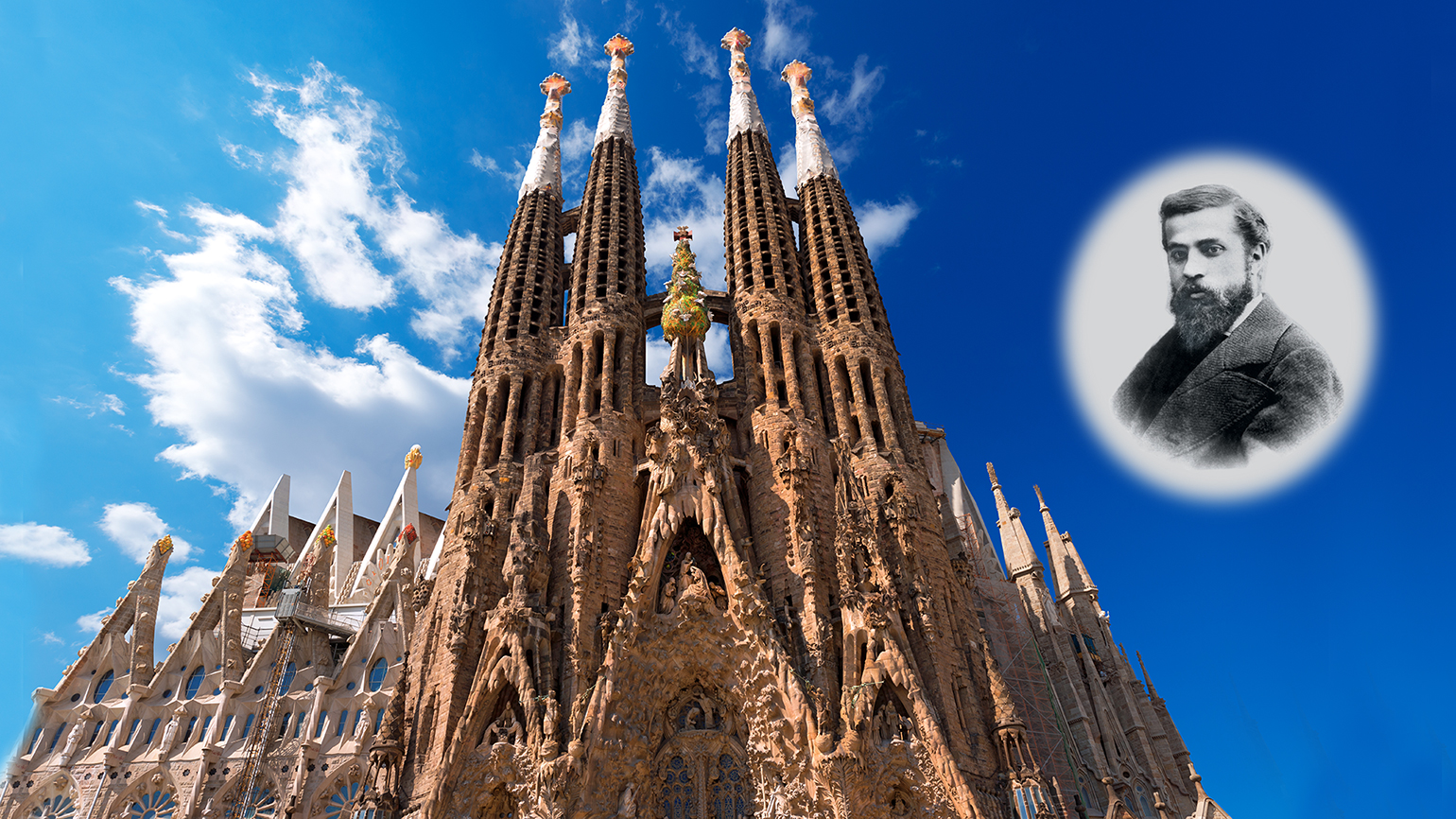
It rises like a many-peaked mountain from the heart of the city. Caverns on its steep slopes hold Bible scenes. Birds, plants, frogs and insects inhabit this landscape too. It’s the Basilica de la Sagrada Familia—the Church of the Holy Family—in Barcelona, Spain. And it’s one of Europe’s biggest tourist attractions. I stood in a long line, clutching my ticket, waiting in the hot sun to be admitted. When I was inside at last, the heat and the wait were forgotten. The vast interior pulsed with light in a thousand shades. With each step, breathtaking vistas opened, immense columns branching like trees in an otherworldly forest. All of it based on the vision of an astonishing genius, Antoni Gaudí.
In downtown Barcelona on June 7, 1926, a shabbily dressed old man was struck by a tram. Passersby stopped to stare at the crumpled form. Frayed trousers, threadbare jacket, much-patched shoes, unkempt white beard—one of the city’s many beggars. “He’s alive!” someone shouted. Men picked up the unconscious tramp and carried him to the closest clinic.
His injuries were far too severe to handle there. A nurse searched his pockets for identification. In one, she found a handful of raisins and peanuts. In another, a much-thumbed copy of the Gospels. Nothing else. The injured man was taken by ambulance to the paupers’ hospital, but doctors there could do nothing either. He lay on the narrow iron bed, dying, like so many in that place, homeless and nameless.
Elsewhere in Barcelona, an increasingly urgent search was going on for one of the world’s most famous living architects. He was not in his workshop at La Sagrada Familia, where he also lived. Workers and friends were contacted; he had no family. Despite debilitating arthritis that had plagued him since childhood, the 73-year-old architect had never missed a day of work. At last, hospitals too were searched.
When inquiries finally reached the paupers’ hospital, Gaudí was still breathing but too weak to move. And so he died in a crowded ward among the city’s poorest. Which, I think, would have been fine with him. Although his work had made him a wealthy man, he’d grown up in poverty, the youngest son of a humble coppersmith near the industrial Spanish city of Reus. When Antoni’s arthritis kept him from walking, his father would carry him to the forge where he beat out the great cauldrons that hung in every Catalan kitchen. For hours little Antoni would watch the swirling shadows cast by the smith’s fire.
The family owned a small plot of land outside the city. Antoni would perch on a donkey for the hour-and-a-half walk. There, while the others dug and weeded, Antoni would watch spiders weave their incredible structures, and study the design of flowers and the spirals of snails.
In poor families, even disabled children had to earn an income. At 11, Antoni became a bellows boy in one of Reus’s cotton mills. It was hot, mind-numbing work, fanning the fire beneath a steam boiler from dawn till dark, seven days a week. Antoni’s escape was reading. Many days, he’d smuggle a book into the mill beneath his black smock and sneak a few minutes to read when the foreman wasn’t near.
One day, the owner of the factory came upon him crouched over a book. “What’s that you’re reading?” he thundered at the frightened boy. An adventure story or some forbidden adult romance, no doubt.
“It’s a book about arithmetic, sir,” Antoni said.
The answer was so unexpected that instead of firing him on the spot, as the foreman would have done, the factory owner asked further questions. In the end, he offered to help finance an education for this inquiring young mind. Which is how Antoni left the factory and achieved the impossible for a working-class boy: secondary school!
With school came holidays—the first he’d ever known. Antoni used them to explore northeast Spain, its breathtaking scenery and ancient ruins. He fell in love with the rocky needles of Montserrat, Catalonia’s holy mountain—shapes that decades later would be echoed in the spires of La Sagrada Familia. He discovered that he understood at a glance how a Roman aqueduct worked. Why a gothic arch did not fall down. He knew now that he’d been born to build things. At 18, he traveled to Barcelona to study to become a master builder.
The Barcelona of the 1870s was almost as squalid and crowded as Dickens’s London. The teenager shared a bed in an unheated room in a dismal boarding house as he attended classes at a Barcelona technical school. By the time he finished, eight years later, the name of his field had changed. Gaudí graduated not as a master builder but with a new title: architect.
His first commissions were humble: a display case for gloves, a newsstand, a lamppost. From the start, his love of nature showed in the organic shapes he gave each object. Gradually he attracted adventurous clients who allowed him to experiment with a curving facade for an office building, a spiral pattern for a roof.
As the congested old medieval city exploded outward, Gaudí’s daring style attracted clients from around Spain. He designed apartment complexes, banks, churches, mansions, convents, government buildings. He brought natural shapes into interiors too. For each project, he designed distinctive doorknobs, furniture, light fixtures. For his many public parks, the design of the benches was as important to him as the placement of the flower beds. He commanded top prices, wore hand-tailored suits, smoked expensive cigars and drove an elegant carriage with a pair of high-stepping horses.
A poor stepchild among his commissions was a church dedicated to the Holy Family. It was the brainstorm of a bookseller named Bocabella, who’d spent many years trying to raise money to get it started. When Gaudí inherited the project, all that existed was a hole in the ground. On his way to meet some wealthy client, Gaudí would halt his carriage at the forlorn site and bark instructions to the handful of laborers toiling there. Although he’d designed many religious buildings, he was a man in a hurry, with no time for churchgoing.
Which makes what happened all the stranger. What is certain is that as the years passed, Gaudí found himself neglecting high-profile commissions for a project that had no client and offered no pay. Was it the word familia in the church’s name? I wonder. The family that the architect himself no longer had? By his mid-twenties, Gaudí had lost his mother and all four of his siblings, leaving only his father, the sturdy old coppersmith, and an invalid niece, whom he cared for until her early death.
Or was it the fact that Barcelona’s elite contemptuously called this project—supported by laborers out of their meager wages and by housewives with coins scrimped from the week’s budget—the people’s cathedral? Despite the carriage and fashionable clothes, Gaudí was at his heart a working-class boy from Reus. Now that he had money, he discovered how little it meant to him. When one client refused to pay Gaudí for his sumptuous townhouse, the architect sued and won the full amount. His professional pride satisfied, Gaudí gave the entire sum to a convent.
It is certain too that he began going to church—not just on Sunday but every day—attending early Mass on his way to the construction site, immersing himself in the Gospels as he commissioned sculptures telling the story of Jesus to occupy the caverns on the huge building’s exterior. The intricate designs he’d once lavished on the dressing room for a banker’s wife were now devoted to every inch of La Sagrada Familia. Gone were the rich meals he’d enjoyed after the hungry days of youth; he assumed a spartan diet. The man who’d gloried in his pair of matched horses now poured his money into La Sagrada Familia and walked to work despite arthritis so severe that he often wrapped his legs in bandages to ease the pain. The architect who’d gone to the finest tailors and had his beard trimmed in the latest fashion lost all interest in his own appearance.
Following World War I, prices soared, including those of building materials. The humble people who’d given a weekly pittance to the church now struggled to feed their families. No longer earning money from commissions, Gaudí would sometimes stand in the street, holding out his crumpled hat to beg donations.
Not that dates and deadlines occupied him anymore. In place of the tight schedules he’d prided himself on, Gaudí saw his work now in the light of eternity. In the 1920s, while work had stopped again for lack of funds, architects from all over Spain came to Barcelona and viewed the unfinished eyesore. “How much longer will it take?” they wanted to know. “My client,” Gaudí replied, “is in no hurry.”
I don’t think Gaudí was in a hurry either as he walked from that early church service to the work site that June morning. Perhaps he was contemplating an additional angel for the east facade depicting Jesus’ birth, or another salamander for the cavern of the Last Supper. I doubt he ever heard the tram speeding toward him. Sounds from a more distant place called more urgently.
For more inspiring stories, subscribe to Guidepostsmagazine.
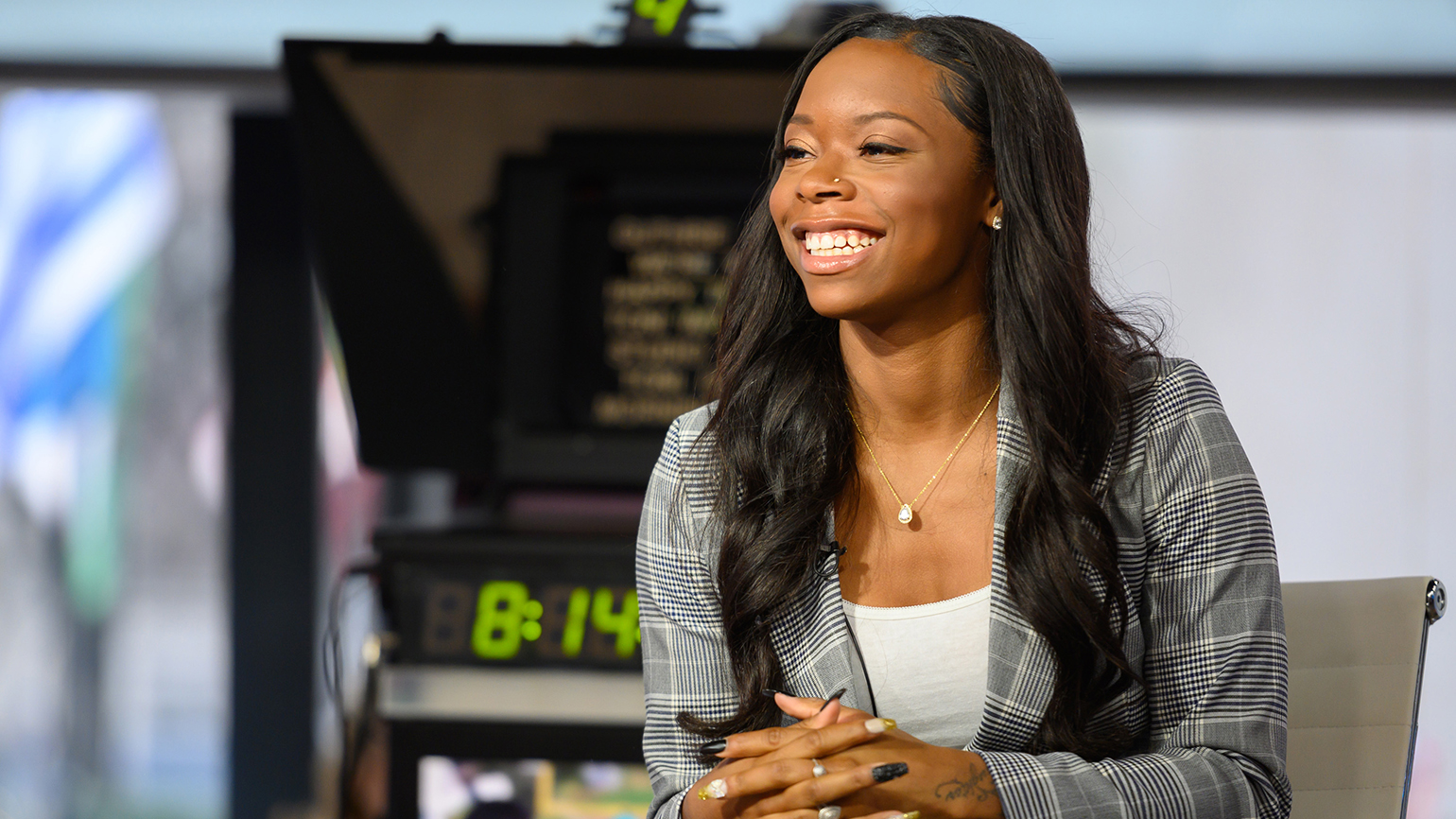
Antoinette “Toni” Harris is making history, on the field and off.
The 22-year-old sophomore from East Los Angeles College has become the first woman to be offered a full football scholarship. Harris, who currently serves as a defensive back for her school’s team in California, has signed a letter of intent to play for Central Methodist University in Missouri, making her one of just a handful of women to be offered a scholarship to play a sport historically dominated by men.
Community Newsletter
Get More Inspiration Delivered to Your Inbox
While a few women have been offered partial scholarships to serve as kickers on collegiate teams, Harris is the first to receive a full scholarship to play a skilled position on the field. It’s a landmark for the sport to be sure, but for Harris, breaking glass ceilings is something she’s been doing since she was six-years-old.
The Detroit native picked up a pigskin young, playing for Redford Union High School in Michigan as a wide receiver and cornerback before finding her footing as a free safety. According to her mother, Uriia Jones, Harris had to petition school officials to let her play ball with the boys and fought against coaches who routinely warned her there was no place for her in a sport like football.
“I had a coach tell me before that I would never get to the next level because I was a lot smaller and not as fast as the other guys, so that moment taught me to never give up,” Harris tells CNN. “From that moment then I told myself no one’s ever going to decide what I am going to do with my life. That’s my decision.”
Instead, she went on to play for East Los Angeles College, helping her team go 4-6 after battling back from health issues.
In fact, compared to what she’s been fighting off the field, facing sexism in her sport doesn’t seem like such a big hurdle for Harris.
The athlete was diagnosed with ovarian cancer when she was 18. She went into remission two years ago, but not before losing half her body weight and having her dreams of playing at the professional level nearly dashed. Harris credits her strong work ethic, and her faith, for seeing her through that difficult time.
“I always try to push myself every single day and keep my faith in God to let me go as far as I want to go,” she explains.
During last month’s Super Bowl, the defensive back appeared in a Toyota commercial about shattering perceptions. In it, Harris can be seen putting in work on the field, tackling opponents twice her size, lifting tires in the air, racing against the clock, as a voiceover lists all of the things people have told the young star she couldn’t do. It’s an inspiring clip, but for Harris, the attention she’s receiving after making history is just more motivation to perform well on the turf.
“In the end, you’ve got to push yourself,” Harris tells ESPN. “I’m going to focus on my goals. My ultimate goal is to excel at a four-year [university] and become the first female NFL player. I know I can get there.”
Where were you on December 19, 1971? That was the night that CBS aired a TV movie called The Homecoming: A Christmas Story. The story, set in the mountains of Virginia in 1933, concerned a poor family whose father had lost his mill job and had to take a job 90 miles away. As the movie opened, he was trying to make his way back home to be with his family before a snowstorm hit.
It was a simple tale of a not-so-simple time, but it quickly won the hearts of viewers across the country and spawned The Waltons, a hugely popular series that ran for 221 episodes over nine seasons and inspired six more TV movies after it was canceled. It was a wholesome but not saccharine, nostalgic but not overly sentimental series that appealed to people of all ages.
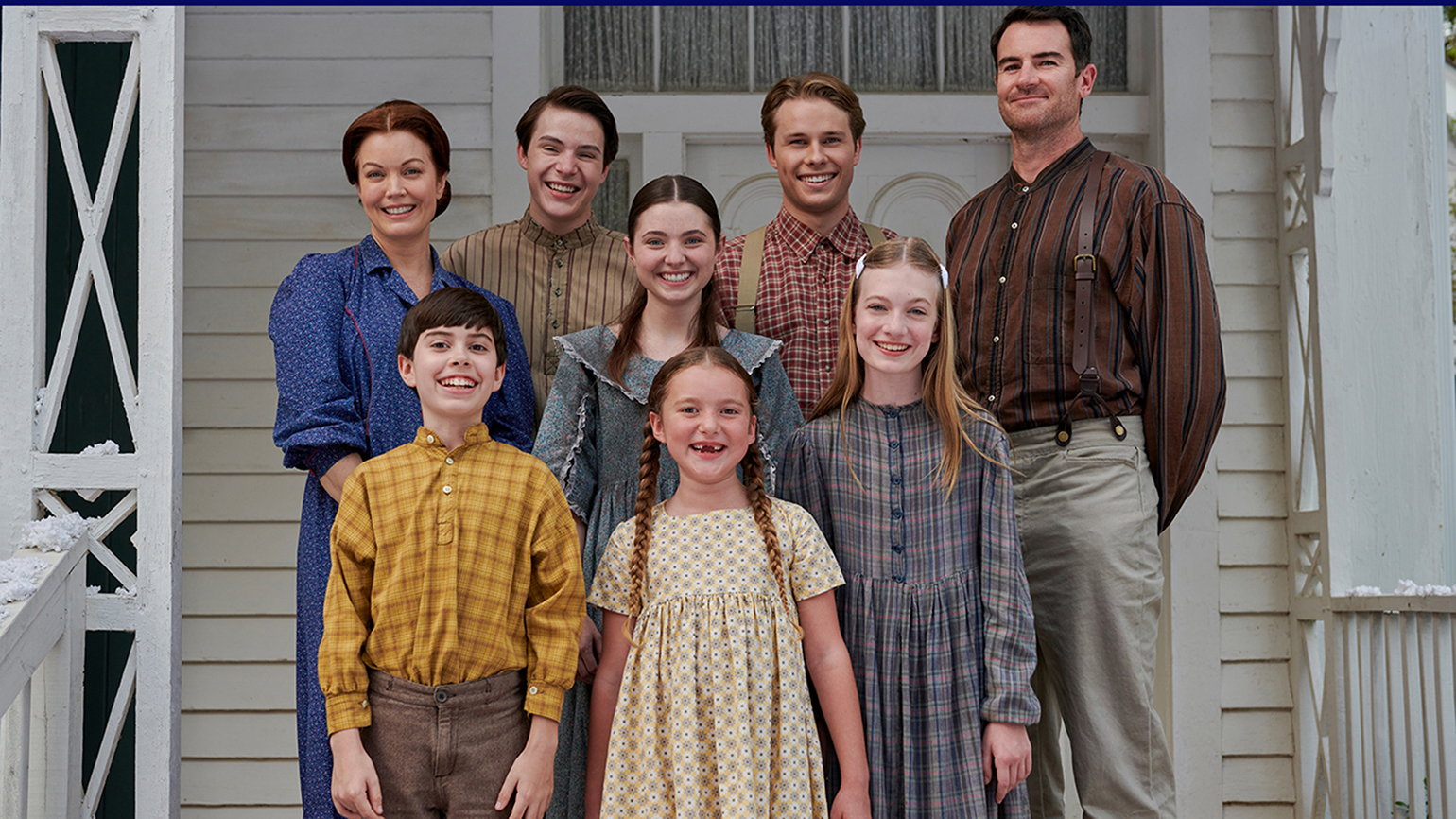
Now, in this era of reboots, the CW is betting that Americans are ready to once again embrace John and Olivia Walton and their offspring, as it airs a remake of that 1971 telefilm entitled The Waltons’ Homecoming, with a whole new cast (and one very familiar holdover).
Sam Haskell, the Emmy-winning executive producer behind the film, feels the time is right for another visit to Walton’s Mountain. “We could never have predicted what was going to happen to this country as a result of the pandemic,” said Haskell told The Atlanta Journal-Constitution. “I believe people looked inside themselves and rediscovered family.”
Actor Richard Thomas
One holdover from the original cast did take part. Richard Thomas, who played eldest son John-Boy on the original series, provides narration for the film. Most of the other actors are from the South, where the remark, like the original film, is set (it was filmed largely in and around Covington, Georgia).
Bellamy Young and Ben Lawson portray Olivia and John Walton in the new film, while Logan Shroyer steps into Thomas’ shoes as John-Boy. It’s a happy coincidence that in real life, Shroyer is good friends with Thomas’ grandson.
“When they called me and said, ‘We’re doing it again! We’re doing The Homecoming!,’ it’s like, what a tribute,” Thomas told ksitetv.com. “What a terrific compliment to all of us who made the original show, that people want to do it again.”
In one welcome update from the original film, Olivia Walton is friends with the wife of a preacher at a nearby Black church. The preacher’s wife, played by Marilyn McCoo, former member of the popular singing group The Fifth Dimension and former host of the TV show Solid Gold, invites Olivia and her family to spend Christmas at her husband’s church.
The scheduling of the film—it airs on Sunday night, November 28, at 8 p.m. ET, and again on Satureday, December 11, also at 8 p.m. ET—surely was no accident. The holidays bring families together, which is just what Haskell hopes the film will do.
“What I’m trying to do with the Waltons,” said Haskell, “is not only bring back the parents and grandparents who know the show but have the kids come to the TV set and watch this movie as well.”
Haskell admits to hoping that history will repeat itself, that his film will lead to a new Waltons TV series. If his wish comes true, we may again be hearing “G’night, John-Boy” on a weekly basis for years to come.
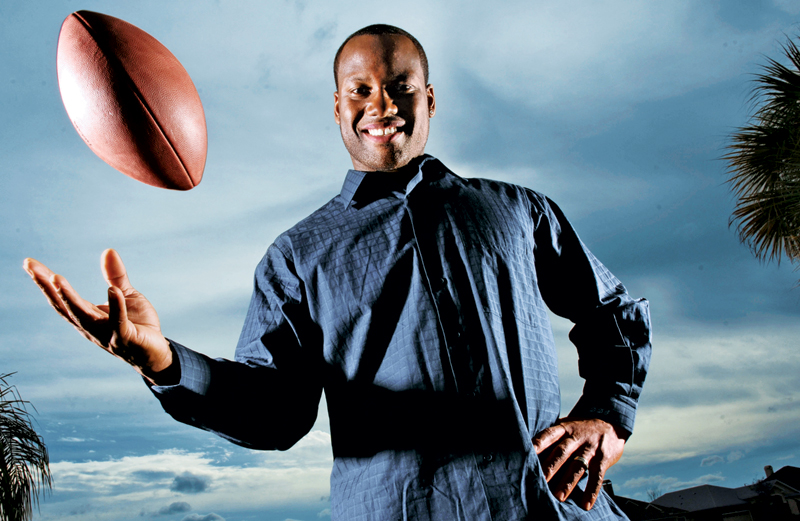
I’m a football player, a quarterback with the NFL’s Jacksonville Jaguars. I’m used to pain. You get hit, you get up and keep going.
But I’d never felt anything like the pain that ripped through my gut that January afternoon in 2004. One minute I was sitting in my lounge chair at home watching TV, the next minute I was doubled over. Not even Ravens linebacker Ray Lewis hitting me from the blind side hurt that bad. For a few minutes, I could hardly breathe. Finally the pain went away.
I’d just sat up again when it came back, worse than before. I was sweating and shivering at the same time. “Mary, come here,” I called to my wife. “I feel like my stomach’s about to explode.” She had to help me up from the chair.
The next 24 hours, the pain came and went in waves. Then it stopped. Some kind of nasty bug, I figured, and put it out of my mind.
I had to focus on getting in top shape, stronger than I’d ever been. My goal that year was to finally win the starting job at quarterback, a job I’d been dreaming of—and working for—almost all my life.
I still remember the day I fell in love with the game. I was six. My mom took me to my older brother Anthony’s football practice. The sunshine, the guys running around in their uniforms, the smell of the grass—everything about it was magic. This is me, I thought. This is what I want to do when I grow up.
Not only did I want to play football, I wanted to be the quarterback, the team leader. By middle school, I was. My mother might not have understood the x’s and o’s, but she understood my passion. She felt the same way about nursing, lifting her patients’ spirits, tending to their bodies and souls.
She was always telling me I could achieve anything I dreamed if I believed in myself and in God. Not that I should expect everything to come easy.
“You’ve got to put in the effort, then trust in the Lord. With his help, you’ll succeed,” she said. “Don’t let anything keep you down.”
Mom didn’t. Not when she and my father got divorced and she had to raise us on her own. Not even when she got breast cancer.
“My strength comes from my faith,” she told me. I didn’t really know what she meant, not then, but I know I never once saw her spirits flag. Right to the end—she died when I was 14—she had joy in her heart.
Her example and my brother’s—Anthony put his own life on hold and moved back home to raise my younger sister and me—drove me. I dedicated myself to football in high school, picked my coaches’ brains, trained like crazy, stuck to my guns about playing QB even though some college recruiters wanted me to try tight end or fullback because of my size.
I didn’t let up in college, at East Carolina University, where I became the starting quarterback partway through freshman year. My teammates might chill out at the dorm after practice. I studied game tape, did extra workouts.
Okay, I’ll admit, I didn’t spend all my time outside the classroom at the football complex—I also met and fell in love with another student named Mary Knox, a tennis player who was as much of a sports nut as I was.
My extra effort paid off. In April of 2002, my senior year, the Jaguars selected me in the fourth round of the NFL draft. There were no guarantees, but their starting quarterback was nearing retirement. They drafted me expecting I’d replace him in a year or two.
I spent the 2002 NFL season on the bench, but I felt so close to achieving my dream, it was almost like heaven. I worked harder than I had in college, training, watching game film, peppering the veterans and the QB coach with questions. I soaked up as much knowledge of the pro game as I could.
“When I get my chance, I want to be ready,” I told Mary, who, by then, was my wife.
But then came the 2003 NFL draft. The Jags had a first-round pick and they chose Byron Leftwich, the most heralded QB to come out of college that year. Mary and I heard the news on the car radio. I almost drove off the road. “I guess they just don’t believe in me,” I said.
Mary gave me a look, kind of like Mom would have. “He still has to beat you out.”
He did. I tried my best, but Leftwich won the starting job. The job that was supposed to be mine. I was relegated to backup again. My confidence took a hit. For the first time I questioned my ability. I wondered about the dream I’d had since I was six. What if I’d gotten it wrong?
Watching from the sidelines as Leftwich led the offense, I had plenty of time to think. What I thought about, mostly, was my mother. That inner strength of hers, I could really use some of it now. I remembered how she used to tell me, With the Lord’s help, you’ll succeed.
One night toward the end of that trying season, I lay in bed and prayed. Not that I’d take over as the starter, but that I could be as strong as Mom had been. I asked for faith like hers. I woke up feeling reinvigorated. Next year—2004—would be my year. Hand in hand with the Lord, I’d find my way back to the field.
That’s why I shrugged off that bout of abdominal pain in January and stepped up my workouts. But two months later, when I reported to Jacksonville for the team’s off-season conditioning program, I still didn’t feel right. The trainer sent me to a gastroenterologist. The doctor ran a bunch of tests and took X rays. He told me I had something called Crohn’s disease.
“Just give me whatever pill I need to clear it up,” I said. I figured if I’d never heard of it, it couldn’t be that serious.
But it was. The doctor explained that Crohn’s is a chronic autoimmune disease that causes inflammation of the small intestine, making it all but impossible for food to pass through. “No one knows exactly how or why you get it,” he said. He’d put me on medication to control the inflammation, but there was no cure. It was a disease I’d have to live with.
I called Mary and told her the diagnosis. By the time I got home, she’d printed out a ton of information from the internet. She looked worried. “Dave, a lot of people who have Crohn’s don’t do that well maintaining an active lifestyle.”
We’d see about that. The medication helped. I modified my diet. No more spicy food, roughage or sweets that would irritate my small intestine. Within a few weeks I felt well enough to go out to a Thai restaurant with my teammates. Big mistake. I awoke in the middle of the night vomiting. Mary found me curled on the bathroom floor, so wracked by abdominal cramps I couldn’t move.
“I’m taking you to the E.R., Dave.” She had to help me—her 250-pound NFL quarterback husband—into my clothes.
I was laid up in the hospital for four days, unable to eat a thing. They put me on IV fluids. Still I dropped 30 pounds. I felt weak, woozy. Mom kept floating in and out of my thoughts. Maybe it was because I was light-headed, but I swear, one night it felt like she was right there beside me.
I started talking to her. “I need you to be here. Help me come through this so I can live my life the way I know you want me to—with strength, confidence and faith.”
Then it hit me. I wasn’t talking to my mom so much as praying to my heavenly Father, trusting him with my life the way Mom did with hers. I told Mary about my prayer. “I think I finally understand what Mom meant about strength coming from faith,” I said.
I ended up having surgery to remove a section of my diseased intestines. Six weeks later I was on the field again, practicing hard, getting back into game shape. “I don’t know what’s in store for me,” I said to Mary, “but I know in my heart I can play.” When Byron Leftwich went down with an injury in November, I was ready to step in.
On game day, I jogged out of the tunnel onto the field at Jacksonville Municipal Stadium. The roar of the crowd fired me up. We played Detroit. The game had plenty of drama. We pulled ahead early, then the Lions caught up and sent us into overtime. I threw a touchdown pass to win the game. The crowd roared even louder. It was every bit as magical as the day I discovered football.
That was five years ago. I’m the starting quarterback for the Jaguars now, living the dream God put in my heart. My Crohn’s is under control. It might flare up again, but I’m not worried. I know with the Lord’s help, I can handle whatever happens.
It’s like I tell kids who share my disease: You might have Crohn’s, but it doesn’t have you. Don’t let it keep you down. Go and live your dream.
Did you enjoy this story? Subscribe to Guidepostsmagazine.
On Thursday, Clayton Kershaw of the Los Angeles Dodgers became the first pitcher to win the National League Most Valuable Player award in almost half a century. The previous day, Kershaw won his third Cy Young Award in four years. But Kershaw, who is just 26 years old, is more than just the top pitcher of his generation. The baseball player is also a role model, both on and off the field.
In 2014, Kershaw missed the first month of the season with a back injury, but still won 21 games – and had just three losses. He had a 1.77 earned run average, best in baseball by a wide margin, and 239 strikeouts this season, pitched his team into the playoffs and threw a no-hitter in June that some say was the best pitching performance in MLB history.
“You never in a million years think you’re going to win an MVP, let alone win a Cy Young Award ,” Kershaw told MLB.com Thursday. “It really is amazing. Individual awards aren’t why we play this game, but I definitely don’t take this honor lightly, especially being a pitcher and winning the MVP. It’s pretty awesome.”
But what Kershaw has done off the field with his fame and fortune is arguably as impressive as his feats on the field. Kershaw puts his faith, not baseball, as the most important thing in his life, and says that what matters most to him is “the legacy you leave off of the field,” not on the baseball diamond. The pitcher says that “giving up my life to God has put” his life “in control.”
To that end, Kershaw and his wife Ellen started an orphanage in Zambia to help needy children in the country. The Dodger first traveled to Africa after the 2010 season, and told the New York Times that the visit changed his life: “You come home and you see people striving to get more money, more cars, bigger houses and more possessions, thinking that will make them happier,” but that after seeing Zambia, “you realize where happiness comes from, and it’s not from material goods.”
During that trip, the Kershaws met Hope, an HIV-positive 11-year-old girl whose parents died of AIDS. The couple vowed to do something to help her and other orphans. They did. After that trip, Kershaw’s Challenge, the pitcher’s charity, was born.
The organization says its mission is to “encourage people to use whatever God-given passion or talent they have to make a difference and give back to people in need.” So Kershaw’s Challenge partnered with the faith-centered charity Arise Africa to start Arise Home, an orphanage that is currently home to nine Zambian children.
The pitcher’s charity also helps fund Destiny Community School in Lusaka, Zambia and CURE International, an organization that works to “transform the lives of children with physical disabilities in the developing world through medical and spiritual healing.” In addition, Kershaw’s Challenge is working to help the needy in the United States, including helping homeless families in Los Angeles and building a Little League baseball field in Kershaw’s hometown of Dallas.
Aside from the MVP and Cy Young Awards, and the success of their no- profit organization, Clayton and Ellen Kershaw have something else to celebrate this winter. The couple is expecting their first child, a daughter, in January.